
André Frossard (1915–1995)
Author of "Forget Not Love": The Passion of Maximilian Kolbe
About the Author
Image credit: Andre Frossard en 1989
Works by André Frossard
The Gospel According to Ravenna 2 copies
Słuchaj, Izraelu ! 1 copy
Não Tenham Medo 1 copy
C'è un altro mondo 1 copy
nu va temeti! 1 copy
La France En Général 1 copy
Bronię Papieża 1 copy
Hay otro mundo? 1 copy
La France en général 1 copy
L’arte di credere 1 copy
Tagged
Common Knowledge
- Canonical name
- Frossard, André
- Legal name
- Frossard, André Louis
- Birthdate
- 1915-01-14
- Date of death
- 1995-02-02
- Gender
- male
- Short biography
- André Frossard (14 January 1915 - 2 February 1995) was a French journalist and essayist.
- Nationality
- France
- Birthplace
- Colombier-Châtelot, Doubs, Bourgogne-Franche-Comté, France
- Place of death
- Versailles, Yvelines, Île-de-France, France
- Map Location
- France
- Associated Place (for map)
- France
Members
Reviews

A conversion memoir, yes, but a bit of an odd one. In this 114 page book that was a bestseller in France, published in 1969 and translated into English in 1970, high profile French journalist Andre Frossard spends the first 108 pages trying to establish why he should have had no religion at all, before he relates the one unexpected moment that changed everything, the "I have met Him" moment of the book's title. The book lacks any sort of preachiness, its sometimes humorous tone more show more reflecting the shock that Frossard feels that this encounter should have ever happened. Frossard would later write, according to his 1995 obituary in the Independent, "I was as surprised to find myself a Catholic when I left the chapel as I would have been to find myself a giraffe when I left the zoo."
Frossard's father was very active in socialist politics, and growing up between the world wars there was no question of religion in his household or social circles. God did not exist, and the matter was not worth any attention. He writes, "We were what could be called perfect atheists, the kind that no longer ever question their atheism. The militant anti-clericals who still survived and spent their time speaking at public meetings against religion seemed to us rather touching and rather ridiculous, as might an historian intent on debunking the tale of Little Red Riding Hood."
His father was moving up the ranks of party politics, and in an interesting few pages the reader is told about how the elder Frossard was one of two men sent to the Soviet Union shortly after the communist revolution as representatives of the French Socialist Party. Somewhat taken aback on their visit, where they "suffered from various unexpected changes of approach, which resulted in their finding themselves received icily one day and hugged on the next", and ominously finding that "the Russians were far less aware of individual shades of opinion, of which the Western meetings took account even in their most modest forms", nevertheless "all these problems vanished in face of the spectacle of the city of the future being built in front of their very eyes by workmen whose lineage stemmed from the Convention of 1893 and even from the Commune." Frossard's father shortly thereafter became the first Secretary General of the French Communist Party.
Naturally the young Andre internalized the beliefs and attitudes of his parents and friends. They were not unaware of the tenets of Christianity, of course, in a Catholic country such as France. If they were hostile to the institutional Church and its political hierarchy, they were not towards the figure of Jesus Christ himself. They felt some sympathy due to his "love of the poor, his censure of those in power and above all because he had been a victim of the priests." Indeed, "the general opinion was that if its mythical superstructure were removed, the Gospel could pass as a reasonably good introduction to socialism. We were even willing to admit this to any Christians who pressed the point. But, having made this concession, we were more than surprised that they did not immediately become socialists. As for our becoming Christians, such an idea never entered our minds. Anything that had preceded socialism had merely heralded its birth."
As a young man, nothing had changed Frossard's general outlook. But the thunderbolt arrives when he enters a chapel in search of a friend of his. He writes, "I had no curiosity about things relating to religion, for religion seemed to me to belong to another age. It is now ten minutes past five. In two minutes' time I shall be a Christian." Entering the chapel and looking around, it happens. Understandably commenting that he cannot really describe the event in terms that do it justice, he tries, writing that a different world suddenly arose before him and he knew for certain that there was order in the universe and in its beginning and that God was present, and that God was gentle "and that his was not the passive quality that is sometimes called by the name of gentleness, but an active shattering gentleness, far outstripping violence, able to smash the hardest stone and to smash something often harder than stone, the human heart." Certainly it was what we would call a vision.
How is one who has never had such a vision to judge such an account? Skepticism, awe, appeals to psychiatry? It is one thing to engage something like the writings of C.S. Lewis, which put forward an intellectual argument for God and belief. They can be argued, debated, judged either wanting or convincing using logic and reason. One man's vision is another thing entirely, falling into the realm of mysticism.
Frossard shares little of his life after that vision, ending the book with only a few more pages. He does write that he experienced highs and lows in future times, as anyone does, including twice the death of a child, causing him to live with a "sword piercing my heart, all the while knowing that God is love."
He does not write in this book of his later experiences as a member of the French resistance, surviving torture at the hands of the Gestapo after his arrest, and testifying at the war crimes trial of Klaus Barbie. Knowing the steadfastness throughout the rest of his life of his belief in God and in God's goodness after experiencing the evil and destruction of World War II, being tortured at the hands of the Nazis, and the deaths of two of his children, does highlight the extraordinary impact that one moment in the chapel must have had on him. show less
Frossard's father was very active in socialist politics, and growing up between the world wars there was no question of religion in his household or social circles. God did not exist, and the matter was not worth any attention. He writes, "We were what could be called perfect atheists, the kind that no longer ever question their atheism. The militant anti-clericals who still survived and spent their time speaking at public meetings against religion seemed to us rather touching and rather ridiculous, as might an historian intent on debunking the tale of Little Red Riding Hood."
His father was moving up the ranks of party politics, and in an interesting few pages the reader is told about how the elder Frossard was one of two men sent to the Soviet Union shortly after the communist revolution as representatives of the French Socialist Party. Somewhat taken aback on their visit, where they "suffered from various unexpected changes of approach, which resulted in their finding themselves received icily one day and hugged on the next", and ominously finding that "the Russians were far less aware of individual shades of opinion, of which the Western meetings took account even in their most modest forms", nevertheless "all these problems vanished in face of the spectacle of the city of the future being built in front of their very eyes by workmen whose lineage stemmed from the Convention of 1893 and even from the Commune." Frossard's father shortly thereafter became the first Secretary General of the French Communist Party.
Naturally the young Andre internalized the beliefs and attitudes of his parents and friends. They were not unaware of the tenets of Christianity, of course, in a Catholic country such as France. If they were hostile to the institutional Church and its political hierarchy, they were not towards the figure of Jesus Christ himself. They felt some sympathy due to his "love of the poor, his censure of those in power and above all because he had been a victim of the priests." Indeed, "the general opinion was that if its mythical superstructure were removed, the Gospel could pass as a reasonably good introduction to socialism. We were even willing to admit this to any Christians who pressed the point. But, having made this concession, we were more than surprised that they did not immediately become socialists. As for our becoming Christians, such an idea never entered our minds. Anything that had preceded socialism had merely heralded its birth."
As a young man, nothing had changed Frossard's general outlook. But the thunderbolt arrives when he enters a chapel in search of a friend of his. He writes, "I had no curiosity about things relating to religion, for religion seemed to me to belong to another age. It is now ten minutes past five. In two minutes' time I shall be a Christian." Entering the chapel and looking around, it happens. Understandably commenting that he cannot really describe the event in terms that do it justice, he tries, writing that a different world suddenly arose before him and he knew for certain that there was order in the universe and in its beginning and that God was present, and that God was gentle "and that his was not the passive quality that is sometimes called by the name of gentleness, but an active shattering gentleness, far outstripping violence, able to smash the hardest stone and to smash something often harder than stone, the human heart." Certainly it was what we would call a vision.
How is one who has never had such a vision to judge such an account? Skepticism, awe, appeals to psychiatry? It is one thing to engage something like the writings of C.S. Lewis, which put forward an intellectual argument for God and belief. They can be argued, debated, judged either wanting or convincing using logic and reason. One man's vision is another thing entirely, falling into the realm of mysticism.
Frossard shares little of his life after that vision, ending the book with only a few more pages. He does write that he experienced highs and lows in future times, as anyone does, including twice the death of a child, causing him to live with a "sword piercing my heart, all the while knowing that God is love."
He does not write in this book of his later experiences as a member of the French resistance, surviving torture at the hands of the Gestapo after his arrest, and testifying at the war crimes trial of Klaus Barbie. Knowing the steadfastness throughout the rest of his life of his belief in God and in God's goodness after experiencing the evil and destruction of World War II, being tortured at the hands of the Nazis, and the deaths of two of his children, does highlight the extraordinary impact that one moment in the chapel must have had on him. show less
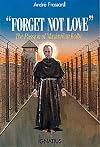
The famous French author's unique writing style captivates the reader with the heroic story of Saint Maximilian Kolbe, a modern apostle of Catholic evangelization, Marian spirituality, and a martyr of charity. With the encouragement of Pope John Paul II and the help of documentation (some unpublished) given to him by the Vatican, Frossard chronicles the dramatic and moving life of this Polish Franciscan who volunteered to die in place of a fellow prisoner in Auschwitz.
An incredible story of the charity of this great saint... it's very biographical, but captivating like a great novel.
Awards


You May Also Like


Statistics
- Works
- 55
- Members
- 502
- Popularity
- #49,319
- Rating
- 4.0
- Reviews
- 13
- ISBNs
- 82
- Languages
- 13
