
Daniel Goleman
Author of Emotional Intelligence: Why It Can Matter More Than IQ
About the Author
Psychologist Daniel Goleman was born on March 7, 1946 in Stockton, California. He earned a Ph.D. from Harvard. Goleman wrote his first book, "The Meditative Mind" after studying ancient psychology systems and meditation practices in India and Sri Lanka. Goleman wrote about psychology and related show more fields for the New York Times for 12 years beginning in 1984. In 1993 he co-founded the Collaborative for Academic, Social, and Emotional Learning. He is also a co-chairman of The Consortium for Research on Emotional Intelligence in Organizations and a member of the Mind and Life Institute's board of directors. Goleman has written several popular books, including "Emotional Intelligence," "Social Intelligence," "Ecological Intelligence" and "Focus: The Hidden Driver of Excellence." He received a Career Achievement award for journalism from the American Psychological Association and was elected a Fellow of the American Association for the Advancement of Science to recognize his efforts to communicate the behavioral sciences to the public. (Bowker Author Biography) show less
Series
Works by Daniel Goleman
Primal Leadership: Learning to Lead with Emotional Intelligence (2002) — Author — 1,468 copies, 13 reviews
Altered Traits: Science Reveals How Meditation Changes Your Mind, Brain, and Body (2017) 488 copies, 21 reviews
Ecological Intelligence: How Knowing the Hidden Impacts of What We Buy Can Change Everything (2009) 463 copies, 12 reviews
HBR's 10 Must Reads on Managing People (with featured article "Leadership That Gets Results," by Daniel Goleman) (2011) 327 copies, 1 review
Healing Emotions: Conversations with the Dalai Lama on Mindfulness, Emotions, and Health (1997) 240 copies, 4 reviews
Emotional Intelligence: Why It Can Matter More Than IQ / Working with Emotional Intelligence (2004) 94 copies
Ecoliterate: How Educators Are Cultivating Emotional, Social, and Ecological Intelligence (2012) 50 copies, 2 reviews
Harvard Business Review Everyday Emotional Intelligence: Big Ideas and Practical Advice on How to Be Human at Work (2017) 30 copies
Ecology, Ethics, and Interdependence: The Dalai Lama in Conversation with Leading Thinkers on Climate Change (2018) — Editor — 20 copies, 1 review
Mindfulness @ Work: A Leading with Emotional Intelligence Conversation with Jon Kabat-Zinn (2007) 13 copies
Working with Presence: A Leading with Emotional Intelligence Conversation with Peter Senge (2006) 12 copies
The Power of Truth: A Leading with Emotional Intelligence Conversation with Warren Bennis (2006) 6 copies
The Buddha on Meditation and Higher States of Consciousness: The Wheel Publication Nos. 189/190 (1973) 6 copies
Emotional intelligence: Why it can matter more than IQ [abridged audiobook] (2003) 2 copies, 1 review
Rest & Relax [DVD] 1 copy
Mística e Ciência 1 copy
EmotionalIntelligence 1 copy
The Power of Truth: A Leading with Emotional Intelligence Conversation with Warren Bennis (2011) 1 copy
Mulheres e eleições - eBook 1 copy
Poder e Impacto - eBook 1 copy
Resonate: The Art of Connecting (The Executive Edge: An Insider's Guide to Outstanding Leadership Book 3) (2015) 1 copy
Kecerdasan Emosional 1 copy
Associated Works
Happiness: A Guide to Developing Life's Most Important Skill (2003) — Foreword; Foreword — 1,003 copies, 21 reviews
This Will Make You Smarter: New Scientific Concepts to Improve Your Thinking (Edge Question Series) (2012) — Contributor — 904 copies, 17 reviews
Raising an Emotionally Intelligent Child: The Heart of Parenting (1997) — Foreword — 717 copies, 12 reviews
What Is Your Dangerous Idea? Today's Leading Thinkers on the Unthinkable (2007) — Contributor — 668 copies, 8 reviews
The Joy of Living: Unlocking the Secret and Science of Happiness (2007) — Foreword, some editions — 647 copies, 12 reviews
Train Your Mind, Change Your Brain: How a New Science Reveals Our Extraordinary Potential to Transform Ourselves (2007) — Preface — 612 copies, 17 reviews
Yes to Life: In Spite of Everything (1946) — Introduction, some editions; Foreword, some editions — 566 copies, 9 reviews
50 Psychology Classics: Who We Are, How We Think, What We Do; Insight and Inspiration from 50 Key Books (2006) — Contributor — 562 copies, 11 reviews
Search Inside Yourself: The Unexpected Path to Achieving Success, Happiness (and World Peace) (2012) — Foreword — 501 copies, 7 reviews
The Attention Revolution: Unlocking the Power of the Focused Mind (2006) — Foreword — 290 copies, 6 reviews
Resonant Leadership: Renewing Yourself and Connecting with Others Through Mindfulness, Hope, and Compassion (2005) — Foreword, some editions — 245 copies, 2 reviews
Emotional Awareness: Overcoming the Obstacles to Psychological Balance and Compassion (2008) — Foreword, some editions — 235 copies, 5 reviews
Building Emotional Intelligence: Techniques to Cultivate Inner Strength in Children (1946) — Introduction — 83 copies
HBR's 10 Must Reads on Collaboration (with featured article "Social Intelligence and the Biology of Leadership," by Daniel Goleman and Richard Boyatzis) (2013) 65 copies, 1 review
The Emotionally Intelligent Workplace: How to Select For, Measure, and Improve Emotional Intelligence in Individuals, Groups, and Organizations (2001) — Editor — 60 copies, 1 review
Schools with Spirit: Nurturing the Inner Lives of Children and Teachers (2001) — Foreword — 36 copies
Buddha, the Brain and the Science of Happiness (2007) — Foreword, some editions — 24 copies, 2 reviews
The Handbook of Emotional Intelligence : Theory, Development, Assessment, and Application at Home, School and in the Workplace (2000) — Foreword — 19 copies
Tagged
Common Knowledge
- Other names
- Гоулман, Дэниел
Ґоулман, Деніел
Голман, Даниъл
高曼, 丹尼爾
ゴールマン, ダニエル
دانيال جولمان (show all 9)
דניאל גולמן
Goulmens, Daniels
Goleman, Danijel - Birthdate
- 1946-03-07
- Gender
- male
- Education
- Amherst College
Harvard University - Occupations
- science journalist
psychologist - Organizations
- The New York Times
Rutgers University - Awards and honors
- Fellow of the American Association for the Advancement of Science
Lifetime Career Award (American Psychological Association)
Washburn Award (science journalism) - Nationality
- USA
- Birthplace
- Stockton, California, USA
- Places of residence
- Stockton, California, USA
- Associated Place (for map)
- Stockton, California, USA
Members
Reviews
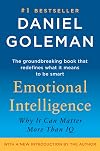
I don't usually find myself buying or reading books labeled "Self-Help." Not that I don't like myself, or consider myself unworthy of help--or beyond the realm of needing help--but I find the books labeled and marketed this way to be largely vapid and boring.
This was not the case with Daniel Goleman's Emotional Intelligence. This is a thoughtful, sober, and careful analysis of specific issues related to character formation and the steady slide of young people in society into a situation of show more being incapable of articulating, let alone controlling, their passions--as they would have been called in the 18th century--and directing their attentions and efforts in pursuits likely to lead to productive, healthy, and contented lives. What could be more urgent and important?
The book details interesting scientific discoveries, data from studies and experiments, and intelligent and non-pedantic descriptions of complex phenomenon with ease. While offering ideas for solutions, Goleman is never so obnoxious as to pretend that providing training in emotional intelligence to young people will solve all of society's ills. In an age of mass shootings, youth nihilism and despair, and generations lacking the ability to toss their phones aside and pay attention to something for more than two minutes, focusing on a way to drive home the usefulness and almost unlimited upside of character formation (which Goleman concedes is actually what he's talking about at the end) seems a tremendous imperative. While the book begins with philosophy--where the answers ultimately lay--Goleman hopes to avoid that field by keeping the majority of the book in the hard(ish) sciences.
However, if he wishes to succeed in reforming education along the conservative/classical (though thoroughly secular and traditionally liberal) lines he proposes here, he will need to get a bit more explicitly philosophical. There, I fear he will collapse into a heap of utilitarianism and collectivism and squander the good that this book hints towards and wishes to promise. show less
This was not the case with Daniel Goleman's Emotional Intelligence. This is a thoughtful, sober, and careful analysis of specific issues related to character formation and the steady slide of young people in society into a situation of show more being incapable of articulating, let alone controlling, their passions--as they would have been called in the 18th century--and directing their attentions and efforts in pursuits likely to lead to productive, healthy, and contented lives. What could be more urgent and important?
The book details interesting scientific discoveries, data from studies and experiments, and intelligent and non-pedantic descriptions of complex phenomenon with ease. While offering ideas for solutions, Goleman is never so obnoxious as to pretend that providing training in emotional intelligence to young people will solve all of society's ills. In an age of mass shootings, youth nihilism and despair, and generations lacking the ability to toss their phones aside and pay attention to something for more than two minutes, focusing on a way to drive home the usefulness and almost unlimited upside of character formation (which Goleman concedes is actually what he's talking about at the end) seems a tremendous imperative. While the book begins with philosophy--where the answers ultimately lay--Goleman hopes to avoid that field by keeping the majority of the book in the hard(ish) sciences.
However, if he wishes to succeed in reforming education along the conservative/classical (though thoroughly secular and traditionally liberal) lines he proposes here, he will need to get a bit more explicitly philosophical. There, I fear he will collapse into a heap of utilitarianism and collectivism and squander the good that this book hints towards and wishes to promise. show less

As I work on cataloging online the older books in our holdings, I sometimes raise an eyebrow at how dated some books have become, and send them off to to the thrift shop.
This work stands out and holds up as a jewel of the late 1980s still relevant for today. Goleman starts with an overview of meditation, and explains a view of the two primary purposes of contemplative practices: concentration and insight.
Goleman describes concentration as "the meditators mind is unaffected both by outer show more distractions, such as nearby sounds, and the turbulence of his own assorted thoughts and feelings. Although the sounds are heard, and his thoughts and feelings are noticed, they do not disturb the meditator." Golemen continues this chapter describing other details and levels of concentration practices. The following chapter addresses insight type meditations as "the clear and single-minded awareness of what actually happens to us and in us, at the successive moments of perception." As in the first chapter he continues to describe various types and levels of insight.
Part two is a brief survey of a wide variety of mystical traditions, a few contemplative or meditative practices from each tradition, and how each practice retaliates both to the classifications of concentration and insight, as well as to the tradition they come from and that traditions related practices. He also touches on spiritual ethics and virtues (precepts, adab, yama and niyama...) in the sections on most of the covered traditions.
After discussing the particulars of many mystical paths and practices, Goleman includes part three on aspects of underlying unity or similarities of contemplative mystical paths, and finishing with part four on the psychology of meditation. Recommended for those new or interested in meditation as well as those further along the meditative path. -- Happy reading, Jennifer K, css library director show less
This work stands out and holds up as a jewel of the late 1980s still relevant for today. Goleman starts with an overview of meditation, and explains a view of the two primary purposes of contemplative practices: concentration and insight.
Goleman describes concentration as "the meditators mind is unaffected both by outer show more distractions, such as nearby sounds, and the turbulence of his own assorted thoughts and feelings. Although the sounds are heard, and his thoughts and feelings are noticed, they do not disturb the meditator." Golemen continues this chapter describing other details and levels of concentration practices. The following chapter addresses insight type meditations as "the clear and single-minded awareness of what actually happens to us and in us, at the successive moments of perception." As in the first chapter he continues to describe various types and levels of insight.
Part two is a brief survey of a wide variety of mystical traditions, a few contemplative or meditative practices from each tradition, and how each practice retaliates both to the classifications of concentration and insight, as well as to the tradition they come from and that traditions related practices. He also touches on spiritual ethics and virtues (precepts, adab, yama and niyama...) in the sections on most of the covered traditions.
After discussing the particulars of many mystical paths and practices, Goleman includes part three on aspects of underlying unity or similarities of contemplative mystical paths, and finishing with part four on the psychology of meditation. Recommended for those new or interested in meditation as well as those further along the meditative path. -- Happy reading, Jennifer K, css library director show less
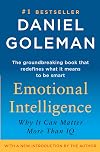
I've been meaning to read this for ten years or so - it's a little out of date but still relevant. In the midst of all of our hand-wringing about gun violence and the wilding of young people, here's a proposal to cultivate (officially, and in public schools) this thing known to the ancient Greeks as "character." The thesis here is that emotional management skills can be taught and can ward off depression and anxiety and reduce rates of violence, crime, drug abuse, etc. The question is, can show more we all agree that this sort of thing falls under the purview of the public school? show less
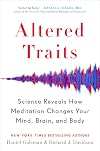
In the last twenty years, meditation and mindfulness have gone from being kind of cool to becoming an omnipresent Band-Aid for fixing everything from your weight to your relationship to your achievement level. Unveiling here the kind of cutting-edge research that has made them giants in their fields, Daniel Goleman and Richard Davidson show us the truth about what meditation can really do for us, as well as exactly how to get the most out of it.
Sweeping away common misconceptions and show more neuromythology to open readers' eyes to the ways data has been distorted to sell mind-training methods, the authors demonstrate that beyond the pleasant states mental exercises can produce, the real payoffs are the lasting personality traits that can result. But short daily doses will not get us to the highest level of lasting positive change--even if we continue for years--without specific additions. More than sheer hours, we need smart practice, including crucial ingredients such as targeted feedback from a master teacher and a more spacious, less attached view of the self, all of which are missing in widespread versions of mind training. The authors also reveal the latest data from Davidson's own lab that point to a new methodology for developing a broader array of mind-training methods with larger implications for how we can derive the greatest benefits from the practice.
Exciting, compelling, and grounded in new research, this is one of those rare books that has the power to change us at the deepest level. show less
Sweeping away common misconceptions and show more neuromythology to open readers' eyes to the ways data has been distorted to sell mind-training methods, the authors demonstrate that beyond the pleasant states mental exercises can produce, the real payoffs are the lasting personality traits that can result. But short daily doses will not get us to the highest level of lasting positive change--even if we continue for years--without specific additions. More than sheer hours, we need smart practice, including crucial ingredients such as targeted feedback from a master teacher and a more spacious, less attached view of the self, all of which are missing in widespread versions of mind training. The authors also reveal the latest data from Davidson's own lab that point to a new methodology for developing a broader array of mind-training methods with larger implications for how we can derive the greatest benefits from the practice.
Exciting, compelling, and grounded in new research, this is one of those rare books that has the power to change us at the deepest level. show less
Lists
Awards


You May Also Like


Associated Authors
Statistics
- Works
- 99
- Also by
- 31
- Members
- 19,452
- Popularity
- #1,121
- Rating
- 3.7
- Reviews
- 222
- ISBNs
- 785
- Languages
- 30
- Favorited
- 9

