
Mark Holborn
Author of Don McCullin
About the Author
Works by Mark Holborn
Black Sun: The Eyes of Four, Roots and Innovation in Japanese Photography (1986) 32 copies, 1 review
Associated Works
Tagged
Common Knowledge
- Canonical name
- Holborn, Mark
- Birthdate
- 1949
- Gender
- male
- Nationality
- UK
- Associated Place (for map)
- UK
Members
Reviews

An anthology of the four seminal photobooks that form the foundation of Daido Moriyama’s photographic career: Japan, A Photo Theater, A Hunter, Farewell Photography and Light and Shadow.
Quartet explores Daido Moriyama’s early career through four foundational photobooks that highlight his place as one of Japan’s most radical photographers: Japan: A Photo Theater; A Hunter; Farewell Photography; and Light and Shadow.
Rooted in the complexities of Japan during a transformative era from show more 1968 to the early 1980s, these seminal photobooks not only offer profound insights into the nation’s evolving cultural, economic and social landscape, but also trace the emergence and development of Moriyama’s distinct style.
Mark Holborn – A Performance
Holborn places Daido Moriyama’s raw and restless images against Japan’s sweeping transformation—from postwar ruins to the neon streets of Shinjuku. He shows how Moriyama forged a “photography of performance,” capturing chaos, fleeting gestures, and fragments of memory in a society caught between tradition and modernity. This essay reads like a cultural history in motion, showing how Moriyama turned the street into his stage and his camera into a restless actor.
Daido Moriyama – Unexpected Encounters (1960s)
Moriyama reflects on his explosive debut, Japan: A Photo Theater. Through fragments of theatre, American military bases, and Tokyo’s underbelly, he reveals how his collaboration with poet Shuji Terayama unlocked a personal photographic language. These pages are less memoir than confession, tracing the urgency of a young artist who found his voice by dismantling reality and reassembling it into a new, unsettling vision of Japan.
Daido Moriyama – A Hunter
In this chapter, Moriyama recounts his restless years of wandering, camera in hand, turning highways, stray dogs, and industrial sprawl into a metaphor for modern Japan. His approach was less about documenting than “hunting” reality—shooting relentlessly, as if photography itself was survival. This text embodies the fierce independence that made A Hunter one of his most legendary works, a visual road novel echoing Jack Kerouac in Japanese streets.
Tadanori Yokoo – A Cowering Eye
Graphic designer and provocateur Yokoo offers an intimate, sometimes unsettling portrait of Moriyama. Struggling with the language of praise, he describes the photographer as both victim and assailant, detached yet frighteningly beautiful. For Yokoo, Moriyama’s pictures are like bad dreams—sexually charged, political in spite of themselves, and impossible to shake off. The essay bristles with tension and admiration, itself a mirror of Moriyama’s uneasy gaze.
Daido Moriyama – Farewell Photography
Here Moriyama recounts his most radical and nihilistic project—a book that tore apart the very medium of photography. Scratched negatives, sprockets, and found images collapse into a torrent of chaos, rejecting clarity and narrative. This is the voice of an artist who had lost faith in images, society, even himself, but who dared to turn that despair into one of the most daring photo-books ever made.
Daido Moriyama – Unexpected Encounters (1972–82): Towards Light and Shadow
This essay is Moriyama’s reckoning with a turbulent decade of addiction, disillusionment, and slow renewal. Between workshops, failed projects, and deep personal struggles, he clawed his way back to clarity with Light and Shadow (1982)—a book that distilled his style into pure contrast and form. It reads as a testimony to survival, showing how even in darkness, fragments of light can redefine an artist’s path. show less
Quartet explores Daido Moriyama’s early career through four foundational photobooks that highlight his place as one of Japan’s most radical photographers: Japan: A Photo Theater; A Hunter; Farewell Photography; and Light and Shadow.
Rooted in the complexities of Japan during a transformative era from show more 1968 to the early 1980s, these seminal photobooks not only offer profound insights into the nation’s evolving cultural, economic and social landscape, but also trace the emergence and development of Moriyama’s distinct style.
Mark Holborn – A Performance
Holborn places Daido Moriyama’s raw and restless images against Japan’s sweeping transformation—from postwar ruins to the neon streets of Shinjuku. He shows how Moriyama forged a “photography of performance,” capturing chaos, fleeting gestures, and fragments of memory in a society caught between tradition and modernity. This essay reads like a cultural history in motion, showing how Moriyama turned the street into his stage and his camera into a restless actor.
Daido Moriyama – Unexpected Encounters (1960s)
Moriyama reflects on his explosive debut, Japan: A Photo Theater. Through fragments of theatre, American military bases, and Tokyo’s underbelly, he reveals how his collaboration with poet Shuji Terayama unlocked a personal photographic language. These pages are less memoir than confession, tracing the urgency of a young artist who found his voice by dismantling reality and reassembling it into a new, unsettling vision of Japan.
Daido Moriyama – A Hunter
In this chapter, Moriyama recounts his restless years of wandering, camera in hand, turning highways, stray dogs, and industrial sprawl into a metaphor for modern Japan. His approach was less about documenting than “hunting” reality—shooting relentlessly, as if photography itself was survival. This text embodies the fierce independence that made A Hunter one of his most legendary works, a visual road novel echoing Jack Kerouac in Japanese streets.
Tadanori Yokoo – A Cowering Eye
Graphic designer and provocateur Yokoo offers an intimate, sometimes unsettling portrait of Moriyama. Struggling with the language of praise, he describes the photographer as both victim and assailant, detached yet frighteningly beautiful. For Yokoo, Moriyama’s pictures are like bad dreams—sexually charged, political in spite of themselves, and impossible to shake off. The essay bristles with tension and admiration, itself a mirror of Moriyama’s uneasy gaze.
Daido Moriyama – Farewell Photography
Here Moriyama recounts his most radical and nihilistic project—a book that tore apart the very medium of photography. Scratched negatives, sprockets, and found images collapse into a torrent of chaos, rejecting clarity and narrative. This is the voice of an artist who had lost faith in images, society, even himself, but who dared to turn that despair into one of the most daring photo-books ever made.
Daido Moriyama – Unexpected Encounters (1972–82): Towards Light and Shadow
This essay is Moriyama’s reckoning with a turbulent decade of addiction, disillusionment, and slow renewal. Between workshops, failed projects, and deep personal struggles, he clawed his way back to clarity with Light and Shadow (1982)—a book that distilled his style into pure contrast and form. It reads as a testimony to survival, showing how even in darkness, fragments of light can redefine an artist’s path. show less
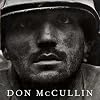
An important but troubling book. McCullin is probably the best photographer of war and conflict to come out of the 20th Century; by which I mean that his images are disturbing and powerful.
This book is an overview of his career up to about 2001, and it is bookended by images he took of the Somerset Levels and other landscapes after his "retirement". Even these images, taken in monochrome in wintry conditions, have a bleakness about them that suggests that after a career exposed to and show more exposing real-world horror, McCullin shuns conventional beauty in favour of truth.
The book then chronicles his early work as a documentary photojournalist in London and other parts of the UK, and then plunges us into conflict, starting with Cyprus in 1964 and ending in Beirut in 1982. The dark side of the 20th century is exposed here for all to see; and some of his non-conflict work, such as pictures of industrial decline from Britain in the 1970s or homelessness in London in 1969, is set in chronological order so we can see that darkness was not absent from our own shores in that time.
The book ends with a section called 'Upriver', which contains images of indigenous peoples of Asia and Indonesia, all linked with themes of rivers and seas, before ending with some final images of the Somerset Levels again.
McCullin was in the thick of the action and was wounded in Cambodia in 1970. He has recently announced that at the age of 77 he is going to go to Syria to photograph the conflict there, probably as an act of defiance towards the state of modern commercial news photography, with its emphasis on celebrity and citizen photojournalism, with all its baggage of potential bias and free use by lazy news editors. It is an honest intention, and this book reflects that stark honesty in McCullin's whole career. show less
This book is an overview of his career up to about 2001, and it is bookended by images he took of the Somerset Levels and other landscapes after his "retirement". Even these images, taken in monochrome in wintry conditions, have a bleakness about them that suggests that after a career exposed to and show more exposing real-world horror, McCullin shuns conventional beauty in favour of truth.
The book then chronicles his early work as a documentary photojournalist in London and other parts of the UK, and then plunges us into conflict, starting with Cyprus in 1964 and ending in Beirut in 1982. The dark side of the 20th century is exposed here for all to see; and some of his non-conflict work, such as pictures of industrial decline from Britain in the 1970s or homelessness in London in 1969, is set in chronological order so we can see that darkness was not absent from our own shores in that time.
The book ends with a section called 'Upriver', which contains images of indigenous peoples of Asia and Indonesia, all linked with themes of rivers and seas, before ending with some final images of the Somerset Levels again.
McCullin was in the thick of the action and was wounded in Cambodia in 1970. He has recently announced that at the age of 77 he is going to go to Syria to photograph the conflict there, probably as an act of defiance towards the state of modern commercial news photography, with its emphasis on celebrity and citizen photojournalism, with all its baggage of potential bias and free use by lazy news editors. It is an honest intention, and this book reflects that stark honesty in McCullin's whole career. show less
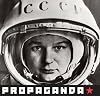
The Communist world was the only alternate reality we could ever directly experience. These photographs, culled from the Novosti Press Agency's collection, show what the Soviets would like us to think that reality consisted of. Nowadays, we know differently - but not entirely. Living in a society is the only way to experience it for real. These pictures are a glimpse of a vanished world - and one that some look back on with affection for its positive values, notwithstanding what we now know show more about its negative ones.
There was a very strong tradition of powerful photography in the Soviet Union, hearking all the way back to the Constructivists and photographers like Aleksander Rodchenko. Although these pictures are from the 1960s, 1970s and 1980s - well after Rodchenko's time - the developed eye and sometimes imaginative composition displays the Rodchenko heritage. Strange that a society that relied so much on manipulating the mindset of the citizen should encourage innovative photography when innovation in the arts generally was frowned upon. show less
There was a very strong tradition of powerful photography in the Soviet Union, hearking all the way back to the Constructivists and photographers like Aleksander Rodchenko. Although these pictures are from the 1960s, 1970s and 1980s - well after Rodchenko's time - the developed eye and sometimes imaginative composition displays the Rodchenko heritage. Strange that a society that relied so much on manipulating the mindset of the citizen should encourage innovative photography when innovation in the arts generally was frowned upon. show less
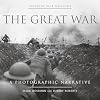
1914 marks the 100th anniversary of the start of World War I. 'The War to End All Wars" was like no conflict before, embracing many nations worldwide and resulting in horrifying casualties. THE GREAT WAR, A PHOTOGRAPHIC NARRATIVE commemorates that epic struggle, offering up almost 400 photographs depicting all aspects of the war. The pix depict a myriad of scenes - soldiers on the march, in trenches and in hospitals; battleground scenes; ruined villages; airplanes on the ground and airborne; show more ships at sea, etc. Holborn and Roberts' book is a comprehensive, compelling visual guide to that terrible conflict.
show less
Mike O. / Marathon County Public Library
Find this book in our library catalog.
Lists
THE WAR ROOM (1)
You May Also Like


Associated Authors
Statistics
- Works
- 32
- Also by
- 2
- Members
- 651
- Popularity
- #38,782
- Rating
- 4.3
- Reviews
- 10
- ISBNs
- 53
- Languages
- 4