
Anthony Horowitz
Author of Stormbreaker
About the Author
Author and television scriptwriter Anthony Horowitz was born in Stanmore, England on April 5, 1956. At the age of eight, he was sent to a boarding school in London. He graduated from the University of York and published his first book, Enter Frederick K. Bower (1979), when he was 23. He writes show more mostly children's books, including the Alex Rider series, The Power of Five series, and the Diamond Brothers series. The Alex Rider series is about a 14-year-old boy becoming a spy and was made into a movie entitled Stormbreaker. He has won numerous awards including the 1989 Lancashire Children's Book of the Year Award for Groosham Grange and the 2003 Red House Children's Book Award for Skeleton Key. He also writes novels for adults including The Killing Joke and The Magpie Murders. He has created Foyle's War and Midsomer Murders for television as well as written episodes for Poirot and Murder Most Horrid. He made The New York Times Best Seller list with his titles The House of Silk Russian Roulette: The Story of an Assassin and Moriarity.Most recently he was commissioned by the Ian Fleming Estate to write the James Bond novel Trigger Mortis. Anthony was awarded an OBE for his services to literature in January 2014. (Bowker Author Biography) show less
Series
Works by Anthony Horowitz
WALKER The Diamond Brothers In...The Blurred Man & I Know What You Did Last Wednesday (2015) 84 copies
The Diamond Brothers in the French Confection & The Greek Who Stole Christmas (2015) 68 copies, 1 review
Power of Five Books Collection 5 Books Set by Anthony Horowitz (Raven's Gate, Evil Star, Night Rise, Necropolis, Oblivion) (2013) 18 copies
Midsomer Murders: The Killings at Badger's Drift [1997 TV Series Episode] (1997) — Screenplay — 16 copies, 1 review
Foyle's War: Sets 1-5 - From Dunkirk to VE-Day — Creator — 13 copies
Crime Traveller: The Complete Series [1997] [DVD] — Creator — 7 copies
Alex Rider Series 13 Books Collection Set By Anthony Horowitz: 13 Explosive Adventures (2025) 4 copies, 1 review
Foyle's War: Sets 3-4 — Creator — 4 copies
Foyle's War: Sets 1-2 — Creator — 4 copies
Foyle's War: Sets 5-6 — Creator — 4 copies
Alex Underground 3 copies
Midsomer Murders: Complete Season 25 2 copies
Foyle's War: Sets 7-8 2 copies
A Hawthorne and Horowitz Mystery Anthony Horowitz 3 Books Collection Set (The Word Is Murder, The Sentence is Death & A Line to Kill) (2023) 2 copies
Foyle's War: Sets 1-7 — Creator — 2 copies
The Diamond Brothers Detective Agency Collection Anthony Horowitz 7 Titles in 5 Books Set (2017) 2 copies
Alex Rider Adventure 9-12 2 copies
Coda 2 copies
The Switch {video} — Author — 2 copies
Alex Rider 1-11 1 copy
喜鵲謀殺案 1 copy
Foyle's War: Set 8, Episode 2: Trespass — Creator — 1 copy
Foyle's War: Set 8, Episode 1: High Castle — Creator — 1 copy
Poisoned Pen 1 copy
Alex Rider & K©Þ©Þrmeenp©Þ©Þ 1 copy
Foyle's War (Series 4, Episodes 01-02 / Series 5, Episodes 01-02 / Series 6, Episodes 01-02) — Creator — 1 copy
Foyle's War (Series 2, Episodes 03-04 / Series 3, Episodes 01-04) — Creator — 1 copy
Foyle's War (Series 1, Episodes 01-04 / Series 2, Episodes 01-02) — Creator — 1 copy
Point Blank 1 copy
The Gatekeepers Set 1 copy
Crime Traveller - Part Two 1 copy
The Word Is Murder 1 copy
Alex Rider, Band 5 - Scorpia 1 copy
Alex Rider Graphic Novels Pack, 5 books, RRP £59.95 (Eagle Strike; Point Blanc; Scorpia; Skeleton Key; Stormbreaker). (2016) 1 copy
Crime Traveller - Part One 1 copy
Associated Works
Reader's Digest Select Editions 2019 v03 #365: Past Tense / Hope on the Inside / Forever and a Day / The Last Road Trip (2019) — Author — 5 copies
Válogatott könyvek 2014/2 David Baldacci - Az ártatlan; Dorothy Koomson - Barátnőm kislánya; Anthony Horowitz - A Selyemház titka; Eowyn Ivey - A hóleány (2014) — Contributor — 1 copy
Tagged
Common Knowledge
- Legal name
- Horowitz, Anthony John
- Birthdate
- 1955-04-05
- Gender
- male
- Education
- University of York
Orley Farm, Harrow, Middlesex, England, UK - Occupations
- screenwriter
novelist
creator of television series - Awards and honors
- Order of the British Empire (Officer, 2014)
Commander of the Order of the British Empire (2022) - Agent
- Jonathan Lloyd
- Short biography
- Anthony Horowitz's life might have been copied from the pages of Charles Dickens or the Brothers Grimm. Born in 1956 in Stanmore, Middlesex, to a family of wealth and status, Anthony was raised by nannies, surrounded by servants and chauffeurs. His father, a wealthy businessman, was, says Mr. Horowitz, "a fixer for Harold Wilson." What that means exactly is unclear -- "My father was a very secretive man," he says-- so an aura of suspicion and mystery surrounds both the word and the man. As unlikely as it might seem, Anthony's father, threatened with bankruptcy, withdrew all of his money from Swiss bank accounts in Zurich and deposited it in another account under a false name and then promptly died. His mother searched unsuccessfully for years in attempt to find the money, but it was never found. That too shaped Anthony's view of things. Today he says, "I think the only thing to do with money is spend it." His mother, whom he adored, eccentrically gave him a human skull for his 13th birthday. His grandmother, another Dickensian character, was mean-spirited and malevolent, a destructive force in his life. She was, he says, "a truly evil person", his first and worst arch villain. "My sister and I danced on her grave when she died," he now recalls.
A miserably unhappy and overweight child, Anthony had nowhere to turn for solace. "Family meals," he recalls, "had calories running into the thousands&. I was an astoundingly large, round child&." At the age of eight he was sent off to boarding school, a standard practice of the times and class in which he was raised. While being away from home came as an enormous relief, the school itself, Orley Farm, was a grand guignol horror with a headmaster who flogged the boys till they bled. "Once the headmaster told me to stand up in assembly and in front of the whole school said, 'This boy is so stupid he will not be coming to Christmas games tomorrow.' I have never totally recovered." To relieve his misery and that of the other boys, he not unsurprisingly made up tales of astounding revenge and retribution.
Anthony Horowitz is perhaps the busiest writer in England. He has been writing since the age of eight, and professionally since the age of twenty. He writes in a comfortable shed in his garden for up to ten hours per day. In addition to the highly successful Alex Rider books, he has also written episodes of several popular TV crime series, including Poirot, Murder in Mind, Midsomer Murders and Murder Most Horrid. He has written a television series Foyle's War, which recently aired in the United States, and he has written the libretto of a Broadway musical adapted from Dr. Seuss's book, The 5,000 Fingers of Dr. T. His film script The Gathering has just finished production. And&oh yes&there are more Alex Rider novels in the works. Anthony has also written the Diamond Brothers series. - Nationality
- UK
- Birthplace
- Stanmore, Middlesex, England, UK
- Places of residence
- North London, England, UK
Orford, Suffolk, England, UK - Map Location
- England, UK
Members
Discussions
The House of Silk in Baker Street and Beyond (January 2012)
Reviews

I read Magpie Murders, the first book in this series, a few years ago and thought it was a readable pastiche of Christie et al which also featured a smugly self-satisfied authorial voice. This sequel fails to build on the strengths of the previous book, and has far more weaknesses.
Some of these are structural weaknesses. The pacing is poor. I get that writing in this genre requires some level of plot contrivance/coincidence, but there were just too many here, and too many things that Susan show more doesn’t do/think/follow up on for me to be able to ignore.And “evidence” presented that doesn’t prove jack shit. One of the identifying things about the killer is that they claimed to have read a book when it’d previously been established that there’d been a nationwide issue with distributing this one specific bestselling book series for months, months! Impossible for them to have been able to procure a copy of the novel, ergo lying about having read it, ergo killer! Except like… sometimes book shops won’t shift copies of something for a while? Or, since this book is set in the 2020s, there are ebooks? There are libraries? Hell, we also explicitly get told that there are many charity shops in the local town which might well have copies of a book series that we are told repeatedly is a bestseller.
Just as in the first previous installment, this is about clues to a real life murder being embedded in a fictional text, and you get that entire “book” reproduced within this one, down to its front matter, at the centre of the book. We're told that someone read the novel, realised that the wrong person had been convicted for a murder that was committed almost a decade ago, and was killed for that knowledge. Our amateur detective, Susan, waits like a week to then sit and read Atticus Pund Takes the Case because.... well, if she read it like anyone else realistically would have, on the plane from Crete back to England, there would have been a whole other novel inserted after about Chapter Three and that would have been disconcerting for the reader. But we’ve got to wait, for Doyleist rather than Watsonian reasons, to get to this text which we are told is vital for solving the murder. And what we’re given as this embedded novella is just unbelievable as something that would have multiple people recognise themselves in, would worry about someone else recognising their hotel in, or would make the average person say “wait, there are embedded metafictional clues in this!”
This book is like 600 pages long. It’s such a long, long way to walk to get to the big reveal of whodunnit, when whodunnit is pretty obvious fairly on, for reasons to do both with the plot and with Anthony Horowitz’s characterisation tics.
And whoo boy, what issues there are with the characters. (This is even setting aside the fact that none of these characters are really people, they’re just 2D stock types. Flat. Which, okay, it’s a cosy murder mystery. They can be perfectly enjoyable when peopled only with the literary equivalent of paper dolls.) I'm going to bet a quid that Anthony Horowitz describes himself as a political "moderate" or a "commonsense centrist" or something like that, but that he's also at some point made dinner table comments about why these LGBTQ people insist on rubbing things in your face, he'd be fine with them if they weren't so obvious about it. There’s so much of an undercurrent here of “well you can’t say anything these days because of the PC brigade!” or “of course I’m not racist/homophobic, but!”
Yet again we’ve got men who sleep with other men (I’m using that phrasing deliberately here) framed as perverse, devious, manipulative, camp, and generally dead, their sexual identities and practices equated very firmly with their personal and moral flaws. We’ve got lies about how an off-stage dead queer character contracted HIV, because of course those people lie about their status. There are repeated clear microaggressions, or sometimes just aggressive aggressions, about the gay characters that are generally preceded by “I don’t care that he’s gay of course, but…” which never once are challenged, even in her inner monologue, by our “good person” main character.
The framing of a character who is fat and who has some kind of unspecified learning difficulty is cringey. The frequent linking of unfuckability with shrillness/hysteria in female characters (particularly one who has a facial scar) is telling. The only Black character—in fact I'm pretty sure the only non-white character in the book, when England in the 2020s is roughly 20% non-white—is also the only person whom the narrative ever explicitly tells us is racist (against Romanian people). Despite being the only person who actually has the authority to investigate a murder, as a police officer, he is a passive character hovering on the edge of the narrative. He’s incompetent and of him we are told: "That was his manner... always on the edge of violence. It was as if he had caught something, some sort of virus perhaps, from the criminals he investigated."
To be clear, this is not me saying that LGBTQ people can’t be flawed, or that non-white characters can only be depicted as angelic, or that people are always going to think in the “correct” ways about people with intellectual disabilities, but that Horowitz seems incapable of writing such characters in anything other than a certain set of very narrow ways, and unaware of the connotations of what he’s writing. I don’t think he sees such characters as human in the same way that he’s human—and given that crime/mystery fiction only really works when it’s grounded in specific, recognisable, and believable human behaviour and emotions, well, maybe it shouldn’t be a surprise then that Horowitz doesn’t seem capable of delivering a good example of the genre. show less
Some of these are structural weaknesses. The pacing is poor. I get that writing in this genre requires some level of plot contrivance/coincidence, but there were just too many here, and too many things that Susan show more doesn’t do/think/follow up on for me to be able to ignore.
Just as in the first previous installment, this is about clues to a real life murder being embedded in a fictional text, and you get that entire “book” reproduced within this one, down to its front matter, at the centre of the book. We're told that someone read the novel, realised that the wrong person had been convicted for a murder that was committed almost a decade ago, and was killed for that knowledge. Our amateur detective, Susan, waits like a week to then sit and read Atticus Pund Takes the Case because.... well, if she read it like anyone else realistically would have, on the plane from Crete back to England, there would have been a whole other novel inserted after about Chapter Three and that would have been disconcerting for the reader. But we’ve got to wait, for Doyleist rather than Watsonian reasons, to get to this text which we are told is vital for solving the murder. And what we’re given as this embedded novella is just unbelievable as something that would have multiple people recognise themselves in, would worry about someone else recognising their hotel in, or would make the average person say “wait, there are embedded metafictional clues in this!”
This book is like 600 pages long. It’s such a long, long way to walk to get to the big reveal of whodunnit, when whodunnit is pretty obvious fairly on, for reasons to do both with the plot and with Anthony Horowitz’s characterisation tics.
And whoo boy, what issues there are with the characters. (This is even setting aside the fact that none of these characters are really people, they’re just 2D stock types. Flat. Which, okay, it’s a cosy murder mystery. They can be perfectly enjoyable when peopled only with the literary equivalent of paper dolls.) I'm going to bet a quid that Anthony Horowitz describes himself as a political "moderate" or a "commonsense centrist" or something like that, but that he's also at some point made dinner table comments about why these LGBTQ people insist on rubbing things in your face, he'd be fine with them if they weren't so obvious about it. There’s so much of an undercurrent here of “well you can’t say anything these days because of the PC brigade!” or “of course I’m not racist/homophobic, but!”
The framing of a character who is fat and who has some kind of unspecified learning difficulty is cringey. The frequent linking of unfuckability with shrillness/hysteria in female characters (particularly one who has a facial scar) is telling. The only Black character—in fact I'm pretty sure the only non-white character in the book, when England in the 2020s is roughly 20% non-white—is also the only person whom the narrative ever explicitly tells us is racist (against Romanian people). Despite being the only person who actually has the authority to investigate a murder, as a police officer, he is a passive character hovering on the edge of the narrative. He’s incompetent and of him we are told: "That was his manner... always on the edge of violence. It was as if he had caught something, some sort of virus perhaps, from the criminals he investigated."
To be clear, this is not me saying that LGBTQ people can’t be flawed, or that non-white characters can only be depicted as angelic, or that people are always going to think in the “correct” ways about people with intellectual disabilities, but that Horowitz seems incapable of writing such characters in anything other than a certain set of very narrow ways, and unaware of the connotations of what he’s writing. I don’t think he sees such characters as human in the same way that he’s human—and given that crime/mystery fiction only really works when it’s grounded in specific, recognisable, and believable human behaviour and emotions, well, maybe it shouldn’t be a surprise then that Horowitz doesn’t seem capable of delivering a good example of the genre. show less
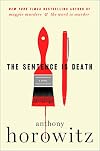
The Game is Afoot again for Hawthorne & Horowitz
Review of the Harper Collins paperback edition (2019) of the original 2018 hardcover.
I've added Anthony Horowitz to my limited list of ever reliable mystery writers. The Daniel Hawthorne series where cranky private detective/ex-policeman Hawthorne is partnered with a fictional version of Anthony Horowitz himself in the Dr. Watson partner/chronicler role are especial favourites, and this 2nd one does not disappoint.
Aside from the meta-fictional show more fun of Horowitz constantly referring to the scriptwriting and/or production issues of his Foyle's War television series, there is the old-school bonus of either Hawthorne or Horowitz pointing out when clues have occurred in the story although in most cases the reader (and the fictional Horowitz) are oblivious to them or unaware of their significance. This 2nd in the series also provides an opportunity for a glimpse at Hawthorne's seemingly unlikely Book Club hobby along with evidence of his Hawthorne Irregulars support network. For further fun, a clue from the first Sherlock Holmes novel A Study in Scarlet (1887) leads towards a clue and solution in The Sentence is Death as well. show less
Review of the Harper Collins paperback edition (2019) of the original 2018 hardcover.
I've added Anthony Horowitz to my limited list of ever reliable mystery writers. The Daniel Hawthorne series where cranky private detective/ex-policeman Hawthorne is partnered with a fictional version of Anthony Horowitz himself in the Dr. Watson partner/chronicler role are especial favourites, and this 2nd one does not disappoint.
Aside from the meta-fictional show more fun of Horowitz constantly referring to the scriptwriting and/or production issues of his Foyle's War television series, there is the old-school bonus of either Hawthorne or Horowitz pointing out when clues have occurred in the story although in most cases the reader (and the fictional Horowitz) are oblivious to them or unaware of their significance. This 2nd in the series also provides an opportunity for a glimpse at Hawthorne's seemingly unlikely Book Club hobby along with evidence of his Hawthorne Irregulars support network. For further fun, a clue from the first Sherlock Holmes novel A Study in Scarlet (1887) leads towards a clue and solution in The Sentence is Death as well. show less
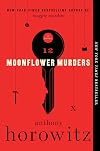
Background: Alan Conway is the author of the successful Atticus Pund detective series and Susan Ryland is his editor. Conway is murdered in the first book, Magpie Murders, and Susan investigates both the author’s death and the lack of a final chapter in the last completed manuscript, putting herself in grave danger.
Moonflower Murders finds Susan managing a small hotel in Crete with her boyfriend Andreas. She is restless, not enjoying the day to day running of a somewhat run-down hotel, show more doubting her relationship with Andreas and missing her editing career, a career that was essentially her life.
Along come Lawrence and Pauline Treherne, owners of a posh hotel in Suffolk, England, seeking out Susan. Eight years earlier, on the day of their daughter Cecily’s wedding at their hotel, a guest, Frank Parris, was bludgeoned to death. Stefan Codrescu, a Romanian ex-convict who worked as a handyman at the hotel confessed to the crime and was imprisoned.
Several weeks after the crime, Alan Conway stayed at the hotel. On the pretext of being an interested observer, he questioned family and staff regarding Parris’ murder, recording all the interviews. Unbeknownst to the interviewees, Conway used what he learned to write Atticus Pund Takes the Case, a coded fictional reinterpretation on Parris’ murder. Based in the 1950s instead of 2000s, it recounts the murder of beautiful young actress, Melissa James, who has a handsome, younger husband, and the chance of landing a major movie role to rejuvenate a lagging career. She is murdered before she gets the role.
The Trehernes told Susan that several days earlier, Cecily phoned her parents and told them the wrong man was convicted of the crime. She had just finished reading Atticus Pund Takes the Case, and based on what she read she knew who the real murderer was. She has since disappeared without a trace.
As Conway is dead and Cecily is missing, Lawrence Treherne thought Susan, who edited the book and was as close to Conway as anyone, might be able to discern what Cecily read and offered her 10,000 pounds to investigate. Being at loose ends in Crete, Susan accepts and flies off to Suffolk, to Andreas’s consternation.
Moonflower Murders is a book within a book or mystery within a mystery. The first third of the book recounts Susan’s investigation into both Frank Parris’ murder and Cecily’s disappearance. Having spoken to all those involved, she then reads Atticus Pund Takes the Case, which is presented in its entirety, including title and publication pages, dedication, author bio and celebrity endorsements. Initially, the similarities between the two murders eludes her, but, of course, I’m not giving anything away when I say she has an epiphany. Finally, she wraps up the case in grand style.
Despite its 600 pages, Moonflower Murders is a fast and totally enjoyable, escapist mystery. Horowitz pays homage to the Golden Age of Mysteries with a Hercule Poirot-like character in German born Atticus Pund. Susan’s wrap up of the case by getting everyone in a room, pointing the finger at each individual as they all had motive to kill Frank Parris, and finally identifying the killer is pure Agatha Christie, as well. Conway’s obsession with wordplay, anagrams and puns play a role in solving the puzzle.
Midway through the book is a list of golden age of mystery authors, some of whom are not currently popular. It is the start of a great reading list. One reviewer said it is “…brimming with red herrings and deliciously devious suspects.” Another said “This is a flawless update of classic golden age whodunits.” I whole heartedly agree with both.
I for one, cannot wait to see this on the screen as well as read any forthcoming Susan Ryland/Atticus Pund mysteries. show less
Moonflower Murders finds Susan managing a small hotel in Crete with her boyfriend Andreas. She is restless, not enjoying the day to day running of a somewhat run-down hotel, show more doubting her relationship with Andreas and missing her editing career, a career that was essentially her life.
Along come Lawrence and Pauline Treherne, owners of a posh hotel in Suffolk, England, seeking out Susan. Eight years earlier, on the day of their daughter Cecily’s wedding at their hotel, a guest, Frank Parris, was bludgeoned to death. Stefan Codrescu, a Romanian ex-convict who worked as a handyman at the hotel confessed to the crime and was imprisoned.
Several weeks after the crime, Alan Conway stayed at the hotel. On the pretext of being an interested observer, he questioned family and staff regarding Parris’ murder, recording all the interviews. Unbeknownst to the interviewees, Conway used what he learned to write Atticus Pund Takes the Case, a coded fictional reinterpretation on Parris’ murder. Based in the 1950s instead of 2000s, it recounts the murder of beautiful young actress, Melissa James, who has a handsome, younger husband, and the chance of landing a major movie role to rejuvenate a lagging career. She is murdered before she gets the role.
The Trehernes told Susan that several days earlier, Cecily phoned her parents and told them the wrong man was convicted of the crime. She had just finished reading Atticus Pund Takes the Case, and based on what she read she knew who the real murderer was. She has since disappeared without a trace.
As Conway is dead and Cecily is missing, Lawrence Treherne thought Susan, who edited the book and was as close to Conway as anyone, might be able to discern what Cecily read and offered her 10,000 pounds to investigate. Being at loose ends in Crete, Susan accepts and flies off to Suffolk, to Andreas’s consternation.
Moonflower Murders is a book within a book or mystery within a mystery. The first third of the book recounts Susan’s investigation into both Frank Parris’ murder and Cecily’s disappearance. Having spoken to all those involved, she then reads Atticus Pund Takes the Case, which is presented in its entirety, including title and publication pages, dedication, author bio and celebrity endorsements. Initially, the similarities between the two murders eludes her, but, of course, I’m not giving anything away when I say she has an epiphany. Finally, she wraps up the case in grand style.
Despite its 600 pages, Moonflower Murders is a fast and totally enjoyable, escapist mystery. Horowitz pays homage to the Golden Age of Mysteries with a Hercule Poirot-like character in German born Atticus Pund. Susan’s wrap up of the case by getting everyone in a room, pointing the finger at each individual as they all had motive to kill Frank Parris, and finally identifying the killer is pure Agatha Christie, as well. Conway’s obsession with wordplay, anagrams and puns play a role in solving the puzzle.
Midway through the book is a list of golden age of mystery authors, some of whom are not currently popular. It is the start of a great reading list. One reviewer said it is “…brimming with red herrings and deliciously devious suspects.” Another said “This is a flawless update of classic golden age whodunits.” I whole heartedly agree with both.
I for one, cannot wait to see this on the screen as well as read any forthcoming Susan Ryland/Atticus Pund mysteries. show less
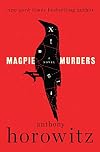
English Country Mystery, and More
Reading English country mysteries—well, pretty much any mystery—requires a huge suspension of disbelief. And no one explains why better than Anthony Horowitz through Detective Superintendent Richard Locke, who appears to be in the modern day part two mystery for no other reason than to utter these curmudgeonly words about murderers to Susan Ryeland, intrepid book editor and mystery chaser: “People don’t plan these things. They don’t sneak into their show more victims’ houses and throw them off the roof and then send out letters hoping they’re going to be misinterpreted, as you put it. They don’t put on wigs and dress up like they do in Agatha Christie.” Of course they don’t, but maybe they should to keep things interesting, instead of commonly grotesque.
If you’re of that mind, and you love nothing more than an engrossing who-done-it, intricate, twisty, and loaded with enough red herrings to keep you dizzy most of the way to the end, read Magpie Murders. You will not be disappointed. And, a bonus, you get two such mysteries for the price of one. You get something additional, as well, which we’ll get to in moment.
Alan Conway is a bestselling writer of English country mysteries. He has a mind for detail and a tremendous grasp of words and how to manipulate them. He has just sent his latest and it turns out last novel in his Atticus Pünd series to his publisher. It concerns two murders and a theft in the village of Saxby-on-Avon, set in the mid 1950s. A young woman comes to renowned private detective Pünd’s office in London to ask his help. At first he declines, but later decides to look into the matter. It will be his last case, as his doctor has just advised him of his impending demise from cancer. In other words, Alan Conway is killing off his and his publisher’s breadwinner. His editor, Susan Ryeland, reads the new mystery, Magpie Murders. We readers read it, as well, and like her find ourselves taken aback when we discover the final chapter missing, and, thus, the solution to an engrossing mystery. Still more, Susan also learns that Alan Conway, like Atticus, is dying of cancer.
Susan sets off to locate the final pages of the novel, when Alan decides to end his life by jumping from the third story of his little palace in the country. Wait, though, did he commit suicide, or was he murdered? Some people, including his sister, believe the latter. Not only does she find herself searching for the missing chapter, Susan is trying to work out if Alan, indeed, was murdered, and by whom. For readers, it adds up to two mysteries in one volume, both challenging to figure out (though, not to spoil anything for you, the modern day murder doesn’t measure up to the 1950s one.)
Now for that additional something Horowitz chucks your way. As Susan goes about figuring out if someone killed Alan Conway and who it might be, she analyzes his technique, and through him the technique of all mysteries. So, not only do you enjoy two mysteries in one volume, you also get an entertaining tutorial on the craft of writing these types of mysteries, a treat for readers of this genre and maybe a lesson for aspiring mystery franchise authors. show less
Reading English country mysteries—well, pretty much any mystery—requires a huge suspension of disbelief. And no one explains why better than Anthony Horowitz through Detective Superintendent Richard Locke, who appears to be in the modern day part two mystery for no other reason than to utter these curmudgeonly words about murderers to Susan Ryeland, intrepid book editor and mystery chaser: “People don’t plan these things. They don’t sneak into their show more victims’ houses and throw them off the roof and then send out letters hoping they’re going to be misinterpreted, as you put it. They don’t put on wigs and dress up like they do in Agatha Christie.” Of course they don’t, but maybe they should to keep things interesting, instead of commonly grotesque.
If you’re of that mind, and you love nothing more than an engrossing who-done-it, intricate, twisty, and loaded with enough red herrings to keep you dizzy most of the way to the end, read Magpie Murders. You will not be disappointed. And, a bonus, you get two such mysteries for the price of one. You get something additional, as well, which we’ll get to in moment.
Alan Conway is a bestselling writer of English country mysteries. He has a mind for detail and a tremendous grasp of words and how to manipulate them. He has just sent his latest and it turns out last novel in his Atticus Pünd series to his publisher. It concerns two murders and a theft in the village of Saxby-on-Avon, set in the mid 1950s. A young woman comes to renowned private detective Pünd’s office in London to ask his help. At first he declines, but later decides to look into the matter. It will be his last case, as his doctor has just advised him of his impending demise from cancer. In other words, Alan Conway is killing off his and his publisher’s breadwinner. His editor, Susan Ryeland, reads the new mystery, Magpie Murders. We readers read it, as well, and like her find ourselves taken aback when we discover the final chapter missing, and, thus, the solution to an engrossing mystery. Still more, Susan also learns that Alan Conway, like Atticus, is dying of cancer.
Susan sets off to locate the final pages of the novel, when Alan decides to end his life by jumping from the third story of his little palace in the country. Wait, though, did he commit suicide, or was he murdered? Some people, including his sister, believe the latter. Not only does she find herself searching for the missing chapter, Susan is trying to work out if Alan, indeed, was murdered, and by whom. For readers, it adds up to two mysteries in one volume, both challenging to figure out (though, not to spoil anything for you, the modern day murder doesn’t measure up to the 1950s one.)
Now for that additional something Horowitz chucks your way. As Susan goes about figuring out if someone killed Alan Conway and who it might be, she analyzes his technique, and through him the technique of all mysteries. So, not only do you enjoy two mysteries in one volume, you also get an entertaining tutorial on the craft of writing these types of mysteries, a treat for readers of this genre and maybe a lesson for aspiring mystery franchise authors. show less
Lists
Indie Next Picks (1)
Childhood books (1)
Metafiction (1)
Magic schools (1)
Best Spy Fiction (1)
To Read (1)
Awards


You May Also Like


Associated Authors
Statistics
- Works
- 235
- Also by
- 17
- Members
- 83,976
- Popularity
- #135
- Rating
- 4.0
- Reviews
- 2,172
- ISBNs
- 2,507
- Languages
- 34
- Favorited
- 77


