
Simon Ings
Author of The Weight of Numbers
About the Author
Simon Ings, a science writer and novelist, is the author of A Natural History of Seeing: The Art and Science of Vision, He edits the culture section of New Scientist and regularly contributes to publications including the Guardian, Times (UK), Telegraph, Independent, and Nature. He lives and works show more in London. show less
Series
Works by Simon Ings
Zoology (in When It Changed - RYMAN) 3 copies
The Black Lotus 2 copies
Elephant 2 copies
The Convert 2 copies
Menage 2 copies
Grand Prix 2 copies
Drones (short story) 1 copy
The Wedding Party 1 copy
Volatile 1 copy
Associated Works
The Year's Best Science Fiction: Nineteenth Annual Collection (2002) — Contributor — 559 copies, 6 reviews
The Year's Best Science Fiction: Fifteenth Annual Collection (1998) — Contributor — 469 copies, 2 reviews
Lethal Kisses: 18 Tales of Sex, Horror, and Revenge (1996) — Contributor, some editions — 76 copies, 5 reviews
The Best Science Fiction and Fantasy of the Year, Volume 10 (2016) — Contributor — 60 copies, 3 reviews
Scheherazade # 3 — Contributor — 2 copies
Tagged
Common Knowledge
- Birthdate
- 1965-07
- Gender
- male
- Education
- King's College, London
Birkbeck College - Occupations
- science writer
novelist - Nationality
- UK
- Birthplace
- Horndean, England, UK
- Places of residence
- Horndean, England, UK (birth)
London, England, UK - Map Location
- England, UK
Members
Reviews
Wolves by Simon Ings

I missed reading this earlier in the year even though it was shortisted for the BSFA Award. (It lost out to the disappointing Ancillary Sword.) I’d actually read five of the eight shortlisted books, but had I read Wolves when I filled in my ballot I might well have made it my first choice. I’m surprised it didn’t make it the Clarke. Anyway, the narrator works for a start-up which is developing Augmented Reality – a combination of Google Glasses, Heads-Up Displays and VR – which is show more bought out by a media mogul. Much of the novel, however, covers the narrator’s past, when he grew up in a hotel used chiefly as a hospice for blinded soldiers, who were fitted with a form of seeing-eye technology by his inventor father. His mother suffered from mental health problems, and would often disappear often to some Greenham Common-type protest camp for weeks at a time. One day, he finds her body in the boot of his father’s car. She has committed suicide. Too scared to tell his father, he disposes of the body himself. It is never found. The mystery of her “disappearance” is one of the narrative threads in Wolves. Another describes the slow collapse of country (I may be misremembering, but I don’t think its setting is categorically stated). And then there’s the identity of the mogul, who proves to be one of his father’s patients all those years ago. The plot is perhaps a little confused in places, but the writing is excellent, the dark surreal tone extremely well done, and, like Marcel Theroux’s Strange Bodies, I’m surprised this book didn’t generate more of a fuss when it was published. But then, like Theroux’s novel, it’s not the sort of book that fits in with the genre’s current narrative… show less
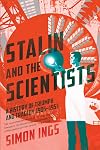
Titlul este înșelător, fiindcă Stalin apare extrem de puțin și indirect, iar cartea nu e de fapt despre savanți în general, ci aproape toată despre biologi/agronomi. Pe acea nișă, în schimb, chiar e captivantă, abordând mai puțin teoriile propriu-zise și mai degrabă oamenii și motivațiile lor, sorțile evident tragice și pe larg celebrul "război" Lisenko vs genetică (din nefericire câștigat politic de Lisenko, cu prețul morții de foame a milioane de sovietici și a show more distrugerii științei și economiei). show less
There is actually not that much Stalin in this book all things considered, with most of the first third being devoted to what it meant to practice science in the early Soviet Union, Though since much of the story is being told through the prism of the Lysenko Affair, the “Boss” is a big part of this tale. As for what is really going on, Ings is examining how the pretensions of Marxists to being the practitioners of a science conflicted with the actual practice of theoretical science. The show more foundational issue is that the Marxist conception of science was a very mechanistic and reductionist affair and they had a hard time dealing with the efflorescence of nuclear physics; at the very least these developments profoundly disturbed Lenin enough to write a very wrong-headed essay criticizing the new physics.
Even more problematic though were what developments in the human and life sciences meant for the Bolshevik program. The implications there being that the Bolshevik ambition to be “engineers of human souls” was not achievable, and this was a total anathema. As it was, it took the demise of Stalin, and the craze for Cybernetics, to finally put Lysenko in his place, whereas my impression is that Russian psychology and psychiatry has only started to recover in the wake of the fall of the Soviet state.
The note that Ings chooses to conclude on is to make a nod to Nicolai Fedorov and Russian Cosmism, with its twin obsessions of perfecting humanity and transcending the natural world, if one only had enough will and enough knowledge; the implication there being that the natural world was expendable in the pursuit of perfection and immortality. Ings actually has some respect for this vision, not to mention the desperate Soviet efforts to transform society with the weak tools at hand. What Ings looks askance at in the end is our version of scientism in the West, which allows us to entertain delusions that our power will always allow us transcend our own burn rate in regards to natural resources that have a hard cap. show less
Even more problematic though were what developments in the human and life sciences meant for the Bolshevik program. The implications there being that the Bolshevik ambition to be “engineers of human souls” was not achievable, and this was a total anathema. As it was, it took the demise of Stalin, and the craze for Cybernetics, to finally put Lysenko in his place, whereas my impression is that Russian psychology and psychiatry has only started to recover in the wake of the fall of the Soviet state.
The note that Ings chooses to conclude on is to make a nod to Nicolai Fedorov and Russian Cosmism, with its twin obsessions of perfecting humanity and transcending the natural world, if one only had enough will and enough knowledge; the implication there being that the natural world was expendable in the pursuit of perfection and immortality. Ings actually has some respect for this vision, not to mention the desperate Soviet efforts to transform society with the weak tools at hand. What Ings looks askance at in the end is our version of scientism in the West, which allows us to entertain delusions that our power will always allow us transcend our own burn rate in regards to natural resources that have a hard cap. show less
Wolves by Simon Ings
Posted on my blog : http://www.susanhatedliterature.net/2014/02/wolves/
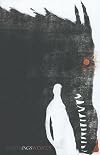
I totally agree with that old saying “never judge a book by its cover”, but more often than not it is the cover that piques your interest. If it didn’t all books would look the same surely? Cover art is an important part of a book. It is the major thing I miss when buying ebooks. And the cover of Wolves is certainly an attention grabbing one. I first spotted it on Carl’s January Covers post and although I knew show more nothing about the book I picked it up when I spotted it in the library.
Wolves by Simon Ing
Wolves by Simon Ing (click through for a larger version)
It is a fantastic cover.
But while the cover might prompt you to pick up a book it is the story itself that is the really important thing. Otherwise I’d just buy cool looking postcards1 . I knew nothing about the story before I started reading, I hadn’t even glanced at the blurb apart from knowing that it was about augmented reality and set in the near future. So I’m not sure how much I should reveal.
Conrad narrates the story. It begins when an old friend contacts him after Conrad has been in an accident and his girlfriend has been seriously injured. Michael and he used to be best friends, but life happened and they drifted apart. The story often relives moments from Conrad’s past, when he and Michael used to go to school together. There are a couple of incidents revealed through the novel that offer an insight into why Conrad is the way he is. Because, to be honest, at the start of the novel I found him to be a dick. And he certainly has his dickish moments, and some of those actions are unforgivable, in my opinion, but he has issues. With a capital I S S U E S. It isn’t an excuse, but it made me somewhat more of a relate-able character. The problem is it comes out through the course of the story and I was tempted to give up before those incidents were revealed.
Luckily for me I didn’t give up on the book, because by the end is a hugely rewarding novel. It isn’t a sci-fi novel in the hard sense. It is set in the near future and the technological advances are only beginning, as are the problems that might, or might not, end up in The Fall of society, as Michael fears. But the science plays a hugely important part in the story, which is the story of Conrad growing up and becoming an adult, as well as solving the mysteries of his past. So you could describe this book as a coming of age novel, even though our protagonist is no teenager at the start of the book.
It is a huge pity that the start is so slow, but I don’t know how it could have been changed, because it all pays off so well in the end. But I can’t rate it any higher than an 82 even though the final third of the book was very much unput-downable. It is also a book that I think would really reward a reread. Hopefully at some stage I’ll get a chance to revisit Conrad and Michael and their world. show less
I totally agree with that old saying “never judge a book by its cover”, but more often than not it is the cover that piques your interest. If it didn’t all books would look the same surely? Cover art is an important part of a book. It is the major thing I miss when buying ebooks. And the cover of Wolves is certainly an attention grabbing one. I first spotted it on Carl’s January Covers post and although I knew show more nothing about the book I picked it up when I spotted it in the library.
Wolves by Simon Ing
Wolves by Simon Ing (click through for a larger version)
It is a fantastic cover.
But while the cover might prompt you to pick up a book it is the story itself that is the really important thing. Otherwise I’d just buy cool looking postcards1 . I knew nothing about the story before I started reading, I hadn’t even glanced at the blurb apart from knowing that it was about augmented reality and set in the near future. So I’m not sure how much I should reveal.
Conrad narrates the story. It begins when an old friend contacts him after Conrad has been in an accident and his girlfriend has been seriously injured. Michael and he used to be best friends, but life happened and they drifted apart. The story often relives moments from Conrad’s past, when he and Michael used to go to school together. There are a couple of incidents revealed through the novel that offer an insight into why Conrad is the way he is. Because, to be honest, at the start of the novel I found him to be a dick. And he certainly has his dickish moments, and some of those actions are unforgivable, in my opinion, but he has issues. With a capital I S S U E S. It isn’t an excuse, but it made me somewhat more of a relate-able character. The problem is it comes out through the course of the story and I was tempted to give up before those incidents were revealed.
Luckily for me I didn’t give up on the book, because by the end is a hugely rewarding novel. It isn’t a sci-fi novel in the hard sense. It is set in the near future and the technological advances are only beginning, as are the problems that might, or might not, end up in The Fall of society, as Michael fears. But the science plays a hugely important part in the story, which is the story of Conrad growing up and becoming an adult, as well as solving the mysteries of his past. So you could describe this book as a coming of age novel, even though our protagonist is no teenager at the start of the book.
It is a huge pity that the start is so slow, but I don’t know how it could have been changed, because it all pays off so well in the end. But I can’t rate it any higher than an 82 even though the final third of the book was very much unput-downable. It is also a book that I think would really reward a reread. Hopefully at some stage I’ll get a chance to revisit Conrad and Michael and their world. show less
Lists
Awards


You May Also Like


Associated Authors
Statistics
- Works
- 35
- Also by
- 27
- Members
- 1,374
- Popularity
- #18,723
- Rating
- 3.5
- Reviews
- 36
- ISBNs
- 72
- Languages
- 6
- Favorited
- 3