
Elnathan John
Author of Born on a Tuesday
About the Author
Image credit: hazlett.net
Works by Elnathan John
Associated Works
Lusaka Punk and Other Stories: The Caine Prize for African Writing 2015 (2015) — Contributor — 17 copies, 1 review
The Daily Assortment of Astonishing Things and Other Stories: The Caine Prize for African Writing 2016 (2016) — Contributor — 16 copies
Tagged
Common Knowledge
- Birthdate
- 1982
- Gender
- male
- Nationality
- Nigeria
- Birthplace
- Kaduna, Nigeria
- Associated Place (for map)
- Kaduna, Nigeria
Members
Reviews
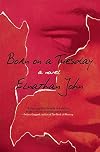
Dantala Ahmad (aka “Born on a Tuesday”) is the protagonist and narrator of Elnathan John’s coming-of-age novel set in Northern Nigeria during the early years of the 21st Century. Dentala is likeable and articulate. Despite being quite naïve, he is intelligent and eager to learn about his society and the wider world. John effectively evokes Dentala’s personality with a series of journal entries that he writes in longhand, defining English words and asking questions about society and show more his place in it. Moreover, John gives us a well-balanced view of a people, struggling with religious and political unrest while also evoking the humanity of many of his characters.
Dentala is what is known in Nigeria as an almajiri, a young man who is sent away from home to study Islam. After completing his studies, he does not have the means to return to his home village. Instead he is recruited into political activism that results in an unfortunate violent incident. He is forced to flee to Sokoto, a neighboring city, where a local imam, Sheikh Jamal, begins to mentor him. In addition to his indoctrination to Islam, Dentala also finds friendship, explores sex and finds romance.
At its core, the novel represents a critique of violent Islamic fundamentalism. Hypocrisy and corruption are prevalent and frequently manifest in violence between the two factions of the Muslim faith. Dantala’s brothers become estranged from him after their indoctrination into the Shia sect. Unfortunately, John demonizes Shiites while portraying Sunnis more favorably. Sheikh Jamal is a progressive and erudite Sunni cleric while Mallam Abdul-Nur is a distasteful man who preaches violence against all non-believers, a tendency that spills over into his private life and is characterized by spousal abuse and brutality toward his brother, Jibril.
Jibril is worldlier than Dentala. Their friendship develops from an exchange of language skills. Jibril teaches Dentala English, while Dentala teaches Jibril Arabic. Jabril also introduces Dentala to sex. This can be problematic in a society where men have few avenues to develop healthy relationships with women. John deftly deals with issues surrounding sex and romance in this society with Dentala’s thwarted infatuation with Sheikh Jamal’s daughter, Aisha; and with Jabril’s romantic involvement with Abdul-Nur’s estranged wife. The latter begins with in a sense of protectiveness but ends unfortunately.
John’s language engenders feelings for the people trapped in this fractured culture. Regrettably, however, the prevalence and severity of violent eruptions can only leave one with an overwhelming sense of pessimism about their future. show less
Dentala is what is known in Nigeria as an almajiri, a young man who is sent away from home to study Islam. After completing his studies, he does not have the means to return to his home village. Instead he is recruited into political activism that results in an unfortunate violent incident. He is forced to flee to Sokoto, a neighboring city, where a local imam, Sheikh Jamal, begins to mentor him. In addition to his indoctrination to Islam, Dentala also finds friendship, explores sex and finds romance.
At its core, the novel represents a critique of violent Islamic fundamentalism. Hypocrisy and corruption are prevalent and frequently manifest in violence between the two factions of the Muslim faith. Dantala’s brothers become estranged from him after their indoctrination into the Shia sect. Unfortunately, John demonizes Shiites while portraying Sunnis more favorably. Sheikh Jamal is a progressive and erudite Sunni cleric while Mallam Abdul-Nur is a distasteful man who preaches violence against all non-believers, a tendency that spills over into his private life and is characterized by spousal abuse and brutality toward his brother, Jibril.
Jibril is worldlier than Dentala. Their friendship develops from an exchange of language skills. Jibril teaches Dentala English, while Dentala teaches Jibril Arabic. Jabril also introduces Dentala to sex. This can be problematic in a society where men have few avenues to develop healthy relationships with women. John deftly deals with issues surrounding sex and romance in this society with Dentala’s thwarted infatuation with Sheikh Jamal’s daughter, Aisha; and with Jabril’s romantic involvement with Abdul-Nur’s estranged wife. The latter begins with in a sense of protectiveness but ends unfortunately.
John’s language engenders feelings for the people trapped in this fractured culture. Regrettably, however, the prevalence and severity of violent eruptions can only leave one with an overwhelming sense of pessimism about their future. show less
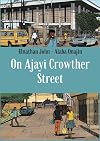
A domestic drama/soap opera set in Lagos, Nigeria. At the center of this book is an evil man -- rapist, homophobe, fraud, hypocrite -- who gets off too easy in the end, with most of his tiny comeuppance happening "off screen" as it were. So even if parts of the book are engaging, it is not worth wading through all the rape, homophobia, and a suicide.
The art is mediocre with some characters barely looking the same from panel to panel. The writing makes use of a lot of African dialect and show more Pidgin English that was occasionally difficult for me to follow. It's also choppy and seemed to frequently skip over important moments.
This reminds me of the much better Aya of Yop City series by Marguerite Abouet and Clément Oubrerie. show less
The art is mediocre with some characters barely looking the same from panel to panel. The writing makes use of a lot of African dialect and show more Pidgin English that was occasionally difficult for me to follow. It's also choppy and seemed to frequently skip over important moments.
This reminds me of the much better Aya of Yop City series by Marguerite Abouet and Clément Oubrerie. show less
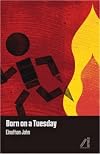
A book that deserves wide readership. A novel by a Nigerian writer of the life of a young man, a muslim, born into typical rural poverty in the north of the country. Lack of money, opportunity and education sends him away from home at a young age to a traditional religious school. The straightforward timeline of a plot follows him from street crime to trusted administrator and fixer at a mosque in Sokoto. Along the way his experience mirrors recent political events in Nigeria with the growth show more and threat of Boko Haram, though the movement is never named as such by the author. To a non Nigerian, non Muslim everyday life is used to illustrate the bigger picture. A well told story with great relevance. The author is not a stylist by any means and lets his imagination flow only intermittently especially during a passage on detention and torture, all too routine, in police cells. show less
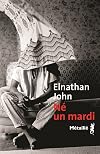
> Babelio : https://www.babelio.com/livres/John-Ne-un-mardi/1007345
> Dantala vit dans la rue avec les voyous de Bayan Layi, fume la wee-wee sous le baobab, fait le coup de poing pour le Petit Parti. Souvent, les bagarres tournent mal mais, comme on dit, tout ce qui arrive est la volonté d'Allah. Un soir d'émeutes, pris en chasse par la police, il doit s'enfuir. Sans famille, il trouve refuge à Sokoto auprès d'un imam salafiste. Il apprend l'anglais avec son ami Jibril, tombe amoureux, show more psalmodie l'appel à la prière, lit tout ce qu'il peut.
Le gamin naïf mais curieux découvre l'étendue de ses contradictions et la liberté de la pensée, et gagne sa place et son nom dans un monde chaotique et violent. Alors que les tensions entre communautés ne cessent de croître, un imam irascible fait sécession et part à la campagne fonder une secte extrémiste. Loin de l'exotisme et du tiers-mondisme bien-pensant, Elnathan John nous emmène dans une région dont on ignore presque tout : harmattan, poussière des routes, vendeurs de koko, et le goût du dernier morceau de canne à sucre – le meilleur.
On brandit des machettes, on assiste à des matchs de lutte, on prend toutes sortes de transports, on marche, on court, on aime, on est Dantala de bout en bout, passionnément. Un formidable roman d'apprentissage, sensible et poignant, dont on sort complètement retourné ...
--LeFigaro.fr show less
> Dantala vit dans la rue avec les voyous de Bayan Layi, fume la wee-wee sous le baobab, fait le coup de poing pour le Petit Parti. Souvent, les bagarres tournent mal mais, comme on dit, tout ce qui arrive est la volonté d'Allah. Un soir d'émeutes, pris en chasse par la police, il doit s'enfuir. Sans famille, il trouve refuge à Sokoto auprès d'un imam salafiste. Il apprend l'anglais avec son ami Jibril, tombe amoureux, show more psalmodie l'appel à la prière, lit tout ce qu'il peut.
Le gamin naïf mais curieux découvre l'étendue de ses contradictions et la liberté de la pensée, et gagne sa place et son nom dans un monde chaotique et violent. Alors que les tensions entre communautés ne cessent de croître, un imam irascible fait sécession et part à la campagne fonder une secte extrémiste. Loin de l'exotisme et du tiers-mondisme bien-pensant, Elnathan John nous emmène dans une région dont on ignore presque tout : harmattan, poussière des routes, vendeurs de koko, et le goût du dernier morceau de canne à sucre – le meilleur.
On brandit des machettes, on assiste à des matchs de lutte, on prend toutes sortes de transports, on marche, on court, on aime, on est Dantala de bout en bout, passionnément. Un formidable roman d'apprentissage, sensible et poignant, dont on sort complètement retourné ...
--LeFigaro.fr show less
Awards


You May Also Like


Associated Authors
Statistics
- Works
- 6
- Also by
- 4
- Members
- 178
- Popularity
- #120,888
- Rating
- 3.7
- Reviews
- 4
- ISBNs
- 18
- Languages
- 1