
Daniel Kahneman (1934–2024)
Author of Thinking, Fast and Slow
About the Author
Daniel Kahneman received the 2002 Nobel Prize in Economic Sciences for his pioneering work with Amos Tversky on decision-making. (Bowker Author Biography)
Image credit: Prof. Daniel Kahneman. Photo credit: Denise Applewhite (photo courtesy of Princeton University)
Series
Works by Daniel Kahneman
La falsa ilusión del éxito (Imprescindibles): Cómo el optimismo socava las decisiones ejecutivas (2020) 9 copies, 1 review
Myslenie rýchle a pomalé 1 copy
Probabilistic Reasoning 1 copy
Associated Works
This Will Make You Smarter: New Scientific Concepts to Improve Your Thinking (Edge Question Series) (2012) — Contributor — 904 copies, 17 reviews
Tagged
Common Knowledge
- Canonical name
- Kahneman, Daniel
- Birthdate
- 1934-03-05
- Date of death
- 2024-03-27
- Gender
- male
- Education
- Hebrew University of Jerusalem (BA|1954)
University of California, Berkeley (Ph.D|1961) - Occupations
- professor
psychologist - Organizations
- Princeton University
University of California, Berkeley
University of British Columbia
Hebrew University of Jerusalem
Israel Defense Forces - Awards and honors
- Nobel Prize (Economics, 2002)
Presidential Medal of Freedom (2013)
American Philosophical Society (2004)
Real Academia Española (Corresponding Academician, 2012)
British Academy (Corresponding Fellow, 2008)
American Academy of Arts & Sciences (1993) (show all 26)
National Academy of Sciences (2001)
National Academy of Sciences Communication Award (2011)
Los Angeles Times Book Award for Current Interest (2011)
Talcott Parsons Prize (2011)
American Economic Association (Distinguished Fellow, 2011)
Leontief Prize (2010)
Frank P. Ramsey Medal (2006)
Thomas Schelling Prize (2006)
Kampe de Feriet Award (2006)
Grawemeyer Award (2003)
American Psychological Association's Award for Outstanding Lifetime Contributions to Psychology (2007)
Decision Analysis Publication Award (2005)
Warren Medal (1995)
Hilgard Award (1995)
Society for Consumer Psychology Distinguished Scientific Contribution Award (1992)
American Psychological Association Award for Distinguished Scientific Contributions (1982)
SAGE-CASBS Award for Social Science (2013)
Golden Plate (2019)
Helen Dinerman Award (2023)
McGovern Award (2013) - Relationships
- Treisman, Anne (wife)
Tversky, Barbara (partner)
Tversky, Amos (collaborator)
Kahan, Irah (wife) - Cause of death
- medically assisted death
- Nationality
- Israel (birth)
USA - Birthplace
- Tel Aviv, British Palestine
- Places of residence
- New York, New York, USA
Berkeley, California, USA
Paris, Île-de-France, France
Jerusalem, Israel - Place of death
- Nunningen, Switzerland
Members
Reviews

In order to write these comments I must set aside my natural system 1 mode of being (lazily automatic) and enter the far more arduous mode, System 2, and THINK for MYSELF. We don't spend as much time actually thinking in this mode as we would like to believe we do (which is itself a non-rational and emotionally based stance of System 1). Thinking is HARD WORK. Our brains and bodies are programmed to conserve energy as well as to protect us from . . . well . . . ourselves as THINKING not only show more uses a lot of energy but is often bewilderingly difficult and overwhelming. (As in, having to change your mind, admit you have no idea what to do, etcetera.) You know the difference between 1 and 2. The former tends to work smoothly and automatically and you like best being in that mode. Anything you prefer to put off or avoid doing altogether is probably a System 2 activity, from balancing your checkbook to deciding who to vote for or choosing the right school for your child or evaluating care for your grandmother. All of these choices most of you (including me) would love to leave to others. (And all too often do.)
Possibly the most crucial takeaway is accepting that we are not capable, not a single one of us, of making rational decisions all the time. Some may succeed more often than others, but really, no one. In fact, those who insist on rationality as the basis for all human endeavor are likely to be the most deluded of all. They want to believe themselves purely rational, but belief is emotionally based and not rational. Sorry.
Are you aware that the way a question is put to you affects how you answer it? (The researches call this 'focalism'.) So if you are asked to put a check in a box to donate your organs (on yr driver's license renewal) you are less likely to check that box. However, if you are asked to check that box if you DON'T want to donate your organs you leave the box blank. Why? Didn't you immediately have an ugh feeling for the former? I did. And pretty much no feeling at all at the second choice? I'm fine with that. You have to overcome an instinctive reluctance (System 1) to make the rational (System 2) choice. Or how about this. Are you aware that all unconsciously your answer to an unrelated question is affected by very recent luck or loss (literally, like finding a dime before someone asks you how you are feeling generally about almost anything, if it is a nice day or whatever.) Or that the way the Experiencing self, moment to moment, is supplanted by the story the Remembered self (which is a System 2 creation) has put together. (Official word is Duration Neglect and you add to it Peak-End Rule-that the most recent thing, the last thing in an experience is what you remember the most, both from System 1). System 1 is a mighty broth of basic instincts, deeply learned skills (driving would be one most of us share), habits that allow us all to make instant decisions, choices, opinions. Usually for the best, but not always. A useful acronym is WYSIATI (What You See Is What There Is) -- what you don't know or see before you, you don't (can't) include in your decisions. (Food labelling is fiendishly clever in this regard. As are many media outlets.) The reality of how we think and decide what to do with our lives is a complicated dance between the two and the better you are at recognizing which mode is needed, the better off you will be.
Much of the research involves having people choose between types of bets -- often bets that appear to be weighted one way or another because of the wording, but are either the same in outcome or biased the opposite of what your System 1 tends to be attracted to. System 2 has to be engaged to make the 'right' choice. I had difficulties with ALL of these questions as my instinct is to recoil (and I mean that) as I find betting and gambling so pointless (losing is the only outcome for the majority, duh) I couldn't wrap my head around any of it. I would likely have been dismissed by the researchers.
An intriguing find in the research is that as regards overall happiness or satisfaction our lives appear to depend on two foundations: Enough money for needs to be met -- curiously, more than that provides nothing, happiness and satisfaction flatten right out. The second piece is having goals and ambitions that are achievable (for some it is making money, btw). This fits in well with the (more philosophical) book on agency that I read not so long ago, by [[Agnes Caillard]]. Another undeniable factor is luck. Good or bad. Although the likelihood is, given the fact that this erratic thing, while beyond our control, tends to affect us all rather evenly--although in greater and lesser degrees depending on what risks a person takes, I would imagine. We must all take some, of course.
Another gem is that we tend to expect happiness from acquisition of material objects rather than from friendships and doing things with others. The officialese for this is using 'affective forecasting' that results in 'miswanting' (oh how I love that word!). Things never win out over fellowship. Take that to heart.
The end of each chapter has a kind of 'summary' in the form of statements that illustrate the points Kahneman just made and they are really helpful. He's a good writer, the clarity is stunning. I cannot recommend [Thinking Fast and Slow] more highly. It is a thoroughly System 2 read from beginning to end, so be patient with yourself if you do take it on. And please do.
***** and then some. show less
Possibly the most crucial takeaway is accepting that we are not capable, not a single one of us, of making rational decisions all the time. Some may succeed more often than others, but really, no one. In fact, those who insist on rationality as the basis for all human endeavor are likely to be the most deluded of all. They want to believe themselves purely rational, but belief is emotionally based and not rational. Sorry.
Are you aware that the way a question is put to you affects how you answer it? (The researches call this 'focalism'.) So if you are asked to put a check in a box to donate your organs (on yr driver's license renewal) you are less likely to check that box. However, if you are asked to check that box if you DON'T want to donate your organs you leave the box blank. Why? Didn't you immediately have an ugh feeling for the former? I did. And pretty much no feeling at all at the second choice? I'm fine with that. You have to overcome an instinctive reluctance (System 1) to make the rational (System 2) choice. Or how about this. Are you aware that all unconsciously your answer to an unrelated question is affected by very recent luck or loss (literally, like finding a dime before someone asks you how you are feeling generally about almost anything, if it is a nice day or whatever.) Or that the way the Experiencing self, moment to moment, is supplanted by the story the Remembered self (which is a System 2 creation) has put together. (Official word is Duration Neglect and you add to it Peak-End Rule-that the most recent thing, the last thing in an experience is what you remember the most, both from System 1). System 1 is a mighty broth of basic instincts, deeply learned skills (driving would be one most of us share), habits that allow us all to make instant decisions, choices, opinions. Usually for the best, but not always. A useful acronym is WYSIATI (What You See Is What There Is) -- what you don't know or see before you, you don't (can't) include in your decisions. (Food labelling is fiendishly clever in this regard. As are many media outlets.) The reality of how we think and decide what to do with our lives is a complicated dance between the two and the better you are at recognizing which mode is needed, the better off you will be.
Much of the research involves having people choose between types of bets -- often bets that appear to be weighted one way or another because of the wording, but are either the same in outcome or biased the opposite of what your System 1 tends to be attracted to. System 2 has to be engaged to make the 'right' choice. I had difficulties with ALL of these questions as my instinct is to recoil (and I mean that) as I find betting and gambling so pointless (losing is the only outcome for the majority, duh) I couldn't wrap my head around any of it. I would likely have been dismissed by the researchers.
An intriguing find in the research is that as regards overall happiness or satisfaction our lives appear to depend on two foundations: Enough money for needs to be met -- curiously, more than that provides nothing, happiness and satisfaction flatten right out. The second piece is having goals and ambitions that are achievable (for some it is making money, btw). This fits in well with the (more philosophical) book on agency that I read not so long ago, by [[Agnes Caillard]]. Another undeniable factor is luck. Good or bad. Although the likelihood is, given the fact that this erratic thing, while beyond our control, tends to affect us all rather evenly--although in greater and lesser degrees depending on what risks a person takes, I would imagine. We must all take some, of course.
Another gem is that we tend to expect happiness from acquisition of material objects rather than from friendships and doing things with others. The officialese for this is using 'affective forecasting' that results in 'miswanting' (oh how I love that word!). Things never win out over fellowship. Take that to heart.
The end of each chapter has a kind of 'summary' in the form of statements that illustrate the points Kahneman just made and they are really helpful. He's a good writer, the clarity is stunning. I cannot recommend [Thinking Fast and Slow] more highly. It is a thoroughly System 2 read from beginning to end, so be patient with yourself if you do take it on. And please do.
***** and then some. show less
Daniel Kahneman is a psychology professor and the winner of a Nobel Prize in economics. In this book he delves into how the human mind works when we're evaluating situations, solving problems, and making decisions. In particular, he talks about two kinds of mental processing we employ. One, which he refers to as "System 1" (a phrase he emphasizes is simply a convenient label for a particular kind of thinking, not a physical thing that exists in your brain), works quickly, draws on show more associations between the problem before us and things we've seen before, simplifies complex problems to make them easier to handle, and produces results that just feel right. It's what we might like to call intuition. "System 2," on the other hand, proceeds slowly, logically, and analytically, for instance, when you're solving a complicated math problem. System 2 can be used to double-check on the intuitions provided by System 1, but it can also accept the conclusions System 1 feeds it and use those in its analysis. Or it can simply leave things to System 1 and never kick in at all.
Both systems are useful, even crucial, in their proper domains. Without System 2, we'd never pass calculus, and without System 1, we'd be like the proverbial centipede who couldn't walk because he couldn't keep track of what all his legs were doing. But relying on System 1 can lead us astray in all kinds of ways. And Kahneman shows us many of the ways it does that, as well as exploring the difference between real people and the idealized economists' model of human beings as perfectly rational agents invariably acting in their own best self-interest.
I thought most of this book was just really fantastic. I'd read a fair bit about this sort of topic before, and was a little afraid that it'd just hash over a lot of familiar ground for me, but, while I did get to be smug at having already developed the critical thinking skills not to fall for some of the trick questions designed to expose our irrationality, there was a lot here that I found really worthwhile and interesting, either because I was learning new things or because the already familiar concepts were just so wonderfully expressed.
I will say that there was one multi-chapter section of the book I felt slightly less satisfied with. Mostly, that involved a lot of examination of how people say they would respond to an offered gamble or deal, and whether their responses are rational or not. There was definitely some good stuff in these chapters, but I found them much less interesting, and somewhat harder to get through than the others. In part, that's probably because the way economics types approach these kinds of problems always kind of irritates me. Even when they're trying really hard, they always seem to me to fail to appreciate how real people feel about real money, treating it as some kind of contextless shiny thing that's just abstractly nice to have. It tends to leave me wanting to grab them by the lapels and say things like, "Of course the possibility of losing money that you already have feels more significant than the possibility of winning the same amount. People fear losing money for the same reason they fear losing blood. You have a limited amount of it, can only replenish it so fast, and you need that stuff to live." I mean, come on, guys.
Still, that may just be a personal quirk. Overall, it's an extremely valuable book, one that teaches some important, perhaps even utterly critical, lessons on the ways in which we can all be very, very wrong about things while being convinced we're completely, unquestionably right. Which is a perspective and a level of self-awareness that we desperately need more of in the world right now. I'd certainly like to force every politician to read it. show less
Both systems are useful, even crucial, in their proper domains. Without System 2, we'd never pass calculus, and without System 1, we'd be like the proverbial centipede who couldn't walk because he couldn't keep track of what all his legs were doing. But relying on System 1 can lead us astray in all kinds of ways. And Kahneman shows us many of the ways it does that, as well as exploring the difference between real people and the idealized economists' model of human beings as perfectly rational agents invariably acting in their own best self-interest.
I thought most of this book was just really fantastic. I'd read a fair bit about this sort of topic before, and was a little afraid that it'd just hash over a lot of familiar ground for me, but, while I did get to be smug at having already developed the critical thinking skills not to fall for some of the trick questions designed to expose our irrationality, there was a lot here that I found really worthwhile and interesting, either because I was learning new things or because the already familiar concepts were just so wonderfully expressed.
I will say that there was one multi-chapter section of the book I felt slightly less satisfied with. Mostly, that involved a lot of examination of how people say they would respond to an offered gamble or deal, and whether their responses are rational or not. There was definitely some good stuff in these chapters, but I found them much less interesting, and somewhat harder to get through than the others. In part, that's probably because the way economics types approach these kinds of problems always kind of irritates me. Even when they're trying really hard, they always seem to me to fail to appreciate how real people feel about real money, treating it as some kind of contextless shiny thing that's just abstractly nice to have. It tends to leave me wanting to grab them by the lapels and say things like, "Of course the possibility of losing money that you already have feels more significant than the possibility of winning the same amount. People fear losing money for the same reason they fear losing blood. You have a limited amount of it, can only replenish it so fast, and you need that stuff to live." I mean, come on, guys.
Still, that may just be a personal quirk. Overall, it's an extremely valuable book, one that teaches some important, perhaps even utterly critical, lessons on the ways in which we can all be very, very wrong about things while being convinced we're completely, unquestionably right. Which is a perspective and a level of self-awareness that we desperately need more of in the world right now. I'd certainly like to force every politician to read it. show less
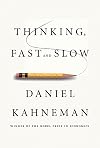
This was a bit of a mindblower. I'm always open to some counterintuitive conclusions, assuming the premises are reasonable and the logic is sturdy. And Kahneman's book is full of such ideas. But what was continually surprising was how much sense these revelations made. It's useful, though, to have labels to apply to them—confirmation bias, availability bias, the halo effect, etc. As the author himself points out, it's not necessarily going to change the way you act day-to-day. But it does show more at least give you a bit of insight and understanding, which I think gradually has some effect. And even if it doesn't, insight and understanding are worthwhile goals all on their own. show less
This novel was a solid read but was slightly let down by its long-winded commentary on unrelated topics and the insistence that economics expects rationality from humans. Yes, I got it the first time!
It is striking how much even slightly-well-off people will argue about the irrationality of the masses and how much 'thinking' instead of 'feeling' they are - only to expose themselves as hypocrites in the next five minutes of conversation. Thinking, Fast and Slow tells us why. It is heartening show more to find that it's possible to improve these facets of our personality to the point where we're not dictated solely by our intuition. In good news for pedants everywhere, Kahneman concludes that it's difficult, albeit doable, to spot yourself slipping into a hasty decision - but you can ask others to check if you're doing so.
The analogy of system 1 ('gut feeling') vs system 2 (rational, but lazy) and the experiencing self vs remembering self were remarkable psychological constructions, and I could see how Kahneman got his Nobel. All in all, this is not just a read for economists and psychologists - it should be essential reading for everyone if you can get past the verbiage. show less
It is striking how much even slightly-well-off people will argue about the irrationality of the masses and how much 'thinking' instead of 'feeling' they are - only to expose themselves as hypocrites in the next five minutes of conversation. Thinking, Fast and Slow tells us why. It is heartening show more to find that it's possible to improve these facets of our personality to the point where we're not dictated solely by our intuition. In good news for pedants everywhere, Kahneman concludes that it's difficult, albeit doable, to spot yourself slipping into a hasty decision - but you can ask others to check if you're doing so.
The analogy of system 1 ('gut feeling') vs system 2 (rational, but lazy) and the experiencing self vs remembering self were remarkable psychological constructions, and I could see how Kahneman got his Nobel. All in all, this is not just a read for economists and psychologists - it should be essential reading for everyone if you can get past the verbiage. show less
Lists
My wishlist (1)
Obama Reads (1)
How Humans Work (1)
Awards


You May Also Like


Associated Authors
Statistics
- Works
- 24
- Also by
- 2
- Members
- 17,484
- Popularity
- #1,266
- Rating
- 4.0
- Reviews
- 299
- ISBNs
- 167
- Languages
- 21
- Favorited
- 11