
Greg King (1964–2025)
Author of The Assassination of the Archduke: Sarajevo 1914 and the Romance That Changed the World
About the Author
Image credit: Greg King
Works by Greg King
The Assassination of the Archduke: Sarajevo 1914 and the Romance That Changed the World (2013) 300 copies, 12 reviews
The Last Empress: The Life and Times of Alexandra Feodorovna, Tsarina of Russia (1994) 145 copies, 1 review
Twilight of Empire: The Tragedy at Mayerling and the End of the Habsburgs (2017) 131 copies, 9 reviews
The Court of the Last Tsar: Pomp, Power and Pageantry in the Reign of Nicholas II (2006) 129 copies, 1 review
Lusitania: Triumph, Tragedy, and the End of the Edwardian Age (2015) — Author — 126 copies, 16 reviews
The Last Voyage of the Andrea Doria: The Sinking of the World's Most Glamorous Ship (2020) 113 copies, 5 reviews
The Man Who Killed Rasputin: Prince Felix Youssoupov and the Murder That Helped Bring Down the Russian Empire (1995) 103 copies, 2 reviews
The Resurrection of the Romanovs: Anastasia, Anna Anderson, and the World's Greatest Royal Mystery (2010) 102 copies, 5 reviews
Nothing but the Night: Leopold & Loeb and the Truth Behind the Murder That Rocked 1920s America (2022) 70 copies, 7 reviews
Twilight of Splendor: The Court of Queen Victoria During Her Diamond Jubilee Year (2007) 47 copies, 1 review
Gilded Prism: The Konstantinovichi Grand Dukes & the Last Years of the Romanov Dynasty (2006) 25 copies, 1 review
A Life for the Tsar: Triumph and Tragedy at the Coronation of Emperor Nicholas II of Russia (2016) 6 copies, 1 review
Associated Works
The Other Grand Dukes: Sons and Grandsons of Russia's Grand Dukes (2013) — Contributor — 10 copies, 1 review
Tagged
Common Knowledge
- Canonical name
- King, Greg
- Birthdate
- 1964
- Date of death
- 2025-04-25
- Gender
- male
- Occupations
- writer
editor-in-chief (Eurohistory) - Short biography
- GREG KING is the author of eleven internationally published works of history, specializing in late Imperial Russia and on social history. A frequent contributor and onscreen expert for historical documentaries, he serves as Editor-in-Chief of the bi-monthly European Royal History Journal, and his work has appeared in Majesty Magazine, Royalty Magazine, Royalty Digest, Atlantis Magazine, and the European Royal History Journal. His newest book is The Assassination of the Archduke.
- Nationality
- USA
- Places of residence
- Seattle, Washington, USA
- Map Location
- USA
Members
Reviews
Nothing but the Night: Leopold & Loeb and the Truth Behind the Murder That Rocked 1920s America by Greg King
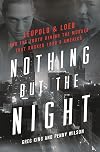
I received an advance copy of this title from Net galley, this has not influenced my review.
True crime cases, particularly murders, and particularly gruesome murders committed under odd circumstances, regularly tend to be exaggerated and become overblown with lurid and morbid retellings. The Leopold and Loeb case is a textbook example of this fact. A hundred years on and the events surrounding their shocking and brutal crime are still fixed, if somewhat vaguely, in the public imagination. show more This continued fascination has spawned movies, documentaries, and fiction and non-fiction titles alike, to this day.
In the crowded field that is historical true crime (to say nothing of the crowded field of Leopold & Loeb writings) the authors of this title distinguish themselves and achieve an engaging, deeply informative book. A volume, I think, that will become a requisite for anyone wanting to know the full history of this case. In addition to excellent pacing, a compelling writing style, and relevant historical context, the authors avoid veering into sensationalism. The murder of Bobby Franks is placed squarely in the center of the story as nothing less than a heinous and outrageous crime, all the background and context we get about the perpetrators never goes so far as to imply anything close to exoneration. The authors also treat the whole case with professionalism and rigor, background, the crime itself, and the trial and aftermath all have their allotted space and each is covered well.
This was a lively and compelling book and I would recommend it to anyone interested in this particular case or in historical true crime in general. show less
True crime cases, particularly murders, and particularly gruesome murders committed under odd circumstances, regularly tend to be exaggerated and become overblown with lurid and morbid retellings. The Leopold and Loeb case is a textbook example of this fact. A hundred years on and the events surrounding their shocking and brutal crime are still fixed, if somewhat vaguely, in the public imagination. show more This continued fascination has spawned movies, documentaries, and fiction and non-fiction titles alike, to this day.
In the crowded field that is historical true crime (to say nothing of the crowded field of Leopold & Loeb writings) the authors of this title distinguish themselves and achieve an engaging, deeply informative book. A volume, I think, that will become a requisite for anyone wanting to know the full history of this case. In addition to excellent pacing, a compelling writing style, and relevant historical context, the authors avoid veering into sensationalism. The murder of Bobby Franks is placed squarely in the center of the story as nothing less than a heinous and outrageous crime, all the background and context we get about the perpetrators never goes so far as to imply anything close to exoneration. The authors also treat the whole case with professionalism and rigor, background, the crime itself, and the trial and aftermath all have their allotted space and each is covered well.
This was a lively and compelling book and I would recommend it to anyone interested in this particular case or in historical true crime in general. show less
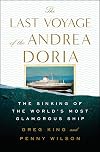
Ships weren’t supposed to sink this way in 1956. By the middle of the 20th century, humans figured that they had invented enough technology and made enough safety improvements to vessels that a disaster such as the Titanic could never happen again. In fact, many passengers on the Andrea Doria’s final voyage were reading the recently published novel A Night to Remember, about the Titanic’s demise. But while the Andrea Doria was not in danger of icebergs, it was in danger of collision show more with another vessel in dense fog off Nantucket, mere hours before it was due to arrive in port.
I started and finished this in a single day. It was a great reconstruction, and authors King and Wilson do a great job at relating the personal histories of the passengers before, during, and after the disaster. It is a well-documented story because by this time, television existed, and the incident’s proximity to New York City meant that news crews could be gathering stories immediately. But perhaps strangely enough I hadn’t heard of the Andrea Doria before reading this book—thank goodness the book exists and is so comprehensive. I especially liked how the authors situated this incident in its historical context, in the end of the era of the glamorous ocean liners and the beginning of the jet age. And how strange that the celebrities on board included Mike Stoller of Leiber and Stoller, the partnership behind many fine songs, including “Hound Dog”, which had just scored a hit with Elvis Presley when Stoller arrived in port.
This is a great book if you are interested in shipwrecks, and especially if you enjoyed King and Wilson’s book on the Lusitania. show less
I started and finished this in a single day. It was a great reconstruction, and authors King and Wilson do a great job at relating the personal histories of the passengers before, during, and after the disaster. It is a well-documented story because by this time, television existed, and the incident’s proximity to New York City meant that news crews could be gathering stories immediately. But perhaps strangely enough I hadn’t heard of the Andrea Doria before reading this book—thank goodness the book exists and is so comprehensive. I especially liked how the authors situated this incident in its historical context, in the end of the era of the glamorous ocean liners and the beginning of the jet age. And how strange that the celebrities on board included Mike Stoller of Leiber and Stoller, the partnership behind many fine songs, including “Hound Dog”, which had just scored a hit with Elvis Presley when Stoller arrived in port.
This is a great book if you are interested in shipwrecks, and especially if you enjoyed King and Wilson’s book on the Lusitania. show less
Nothing but the Night: Leopold & Loeb and the Truth Behind the Murder That Rocked 1920s America by Greg King
Fantastic book. My only complaint is that section 3 - The Experts - was really a slog. It starts out pretty good, but most of this section is made up of the interviews and court testimonies of the experts, and is frankly boring. We cotton on pretty quickly that the prosecution thinks one thing and the defense thinks another, and so several chapters diving into how this can be is, frankly, boring. The authors will state that the defense attorney is a blow-hard gasbag, and then quote verbatim show more whole pages-worth of his speeches! This section is necessary for the historical record, but casual readers are going to suffer through it. Actually, I just skimmed through (read: skipped) most of this section, and picked it back up at the next one, when it got good again. show less
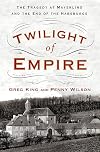
3.5 Several months back I read [book:The Radetzky March|54258], and realized how little I knew about the Hungarian, Austrian empire. The March was about the end of this huge empire, but told from a military standpoint, soldiers fighting for the empire that could see the end coming. This book shows the inner imploding of the empire and the beginning of the end of power of the Hapsburgs. When the crown prince Rudolf is found dead, alongside his seventeen years old mistress, leaving the empire show more without a direct heir, the end of this powerful house is near. These deaths would cause gossip, speculation and conspiracy theories that have reverberated through the decades. What really happened at Mayerling?
I love nonfiction that is not dry, told in an easy but through way, additionally I enjoyed how this book was arranged. In four distinct parts, the author takes us through the royal family, how Rudolf was raised, his marriage, his partying, drinking and his frustration with his life. The second section sets the stage for what was found at Mayerling, and how it was handled, covered up, things hidden. Then we hear about the conspiracies suspected, world reaction to the event, and different interpretations about the event. We learn what happened to those directly or indirectly and indirectly involved, and lastly the interpretations of all the evidence to date, which conclusion makes the most sense and seems to fit the best.
Quite well done. It covers much more than just the deaths, it also looked inside the inbreeding of the royal family. The state of their marriages and family. The political background of the time, and what was going on in this empire. Blackmail, a mother selling her daughter for entry into higher echelons of influence, and s young girl caught in the middle of these machinations. Quite sad, but fascinating. show less
I love nonfiction that is not dry, told in an easy but through way, additionally I enjoyed how this book was arranged. In four distinct parts, the author takes us through the royal family, how Rudolf was raised, his marriage, his partying, drinking and his frustration with his life. The second section sets the stage for what was found at Mayerling, and how it was handled, covered up, things hidden. Then we hear about the conspiracies suspected, world reaction to the event, and different interpretations about the event. We learn what happened to those directly or indirectly and indirectly involved, and lastly the interpretations of all the evidence to date, which conclusion makes the most sense and seems to fit the best.
Quite well done. It covers much more than just the deaths, it also looked inside the inbreeding of the royal family. The state of their marriages and family. The political background of the time, and what was going on in this empire. Blackmail, a mother selling her daughter for entry into higher echelons of influence, and s young girl caught in the middle of these machinations. Quite sad, but fascinating. show less
Awards

You May Also Like


Associated Authors
Statistics
- Works
- 31
- Also by
- 2
- Members
- 1,994
- Popularity
- #12,907
- Rating
- 4.0
- Reviews
- 78
- ISBNs
- 113
- Languages
- 5
- Favorited
- 2

