
Andy Kubert
Author of Marvel 1602
About the Author
Image credit: Comic Book Resources
Series
Works by Andy Kubert
Superman - Action Comics Volume 1: Superman and the Men of Steel (2012) — Illustrator — 283 copies, 14 reviews
Marvel 1602 #1 - In Which We are Introduced to Some of Our Featured Players (2003) — Illustrator — 30 copies
Marvel 1602 #3 - In Which There Is Much to Be Learned and the Queen Is Given a Gift (2003) — Illustrator — 21 copies
Before Watchmen: Nite Owl #1 (2012) — Illustrator; Cover artist, some editions — 20 copies, 2 reviews
Marvel 1602 #4 - In Which Much is Explained and Things Do Not Always Work Out for the Best (2004) — Illustrator — 17 copies
Marvel 1602 #7 - In Which Many Patterns May Be Discerned, By Those with Eyes to See Them (2004) — Illustrator — 16 copies
Before Watchmen: Nite Owl #2 (2012) — Illustrator; Cover artist, some editions — 12 copies, 1 review
Before Watchmen: Nite Owl #3 (2013) — Cover artist, some editions; Illustrator — 11 copies, 1 review
Before Watchmen: Nite Owl #4 (2013) — Illustrator; Cover artist, some editions — 10 copies, 1 review
Rise of the Midnight Sons: Ghost Rider/Morbius/Darkhold/Nightstalkers/Spirits of Vengeance (1993) 7 copies
Flashpoint 3 copies
The Punisher War Journal #31 - The Kamchatkan Konspiracy, Part 1: Pipeline (1991) — Illustrator — 3 copies
Damian Son of Batman #1 (of 4) 2 copies
Robin Rises: Omega #1 1 copy
Origin 1 copy
Wolverine: Origini 1/3 — Illustrator — 1 copy
Wolverine: Origini 2/3 — Illustrator — 1 copy
Brothers 1 copy
Wolverine: Origini 3/3 — Illustrator — 1 copy
The Amazing X-Men #1 1 copy
Associated Works
Robin 80th Anniversary 100-Page Super Spectacular (2020) #1 (2020) — Illustrator — 10 copies, 1 review
Green Lantern: Special Edition / Flashpoint (Free Comic Book Day 2011) (2011) — Illustrator — 5 copies, 1 review
Avengers (Vol.3) #45 — Cover artist — 4 copies
Avengers (Vol.3) #44 — Cover artist — 3 copies
Tagged
Common Knowledge
- Legal name
- Kubert, Andrew
- Birthdate
- 1962-02-27
- Gender
- male
- Education
- Joe Kubert School of Cartoon and Graphic Art
- Occupations
- artist
instructor
comic book artist - Awards and honors
- British Fantasy Award
- Relationships
- Kubert, Joe (father)
Kubert, Adam (brother) - Nationality
- USA
- Associated Place (for map)
- USA
Members
Reviews

Morrison does a really great job rebooting Superman -- in the first arc. He then immediately in the second starts miring it in complicated lore and time travel logic, but oh well. Morales' artwork is still fantastic. And Fisch's back-up features are really quite good, especially the two on the Kent's background.
Whatever Happened to the Caped Crusader?: The Deluxe Edition, With other tales of the Dark Knight (Batman) by Neil Gaiman

This is close to the end of my Sandman spin-off runthrough. It's also stretching the definition of "Sandman spin-off," though no moreso than when I included Gaiman's early DC work like Black Orchid and Legend of the Green Flame. Whatever Happened to the Caped Crusader? actually teases you with an appearance of someone who might be Death... but turns out not to be. (Or so I think, anyway. Some evidently disagree!) The story takes place after Batman's death in Grant Morrison's Batman R.I.P. show more and Final Crisis, with all of his old allies and enemies gathering in Gotham to pay homage to him. Only... everyone thinks they did it. So we get a succession of stories told, by Catwoman, Alfred, the Mad Hatter, Joker, Robin, Clayface, Superman, each telling completely contradictory stories about something they did (or did not do) that lead to the death of Batman.
The stories range from a few pages to a panel or two to just dialogue, but each of them manages to be completely and utterly Batman. It's the greatest hits of Batman deaths, if he was allowed to have more than one. There are a lot of nice details-- my favorite part is the guy outside the club where the funeral is being held who watched the villains' cars-- in both the (beautiful) art (by Andy Kubert) and the writing. It's the perfect tribute to the Batman, the man who never gave up, no matter how crazy he seemed.
The whole funeral is overlaid by two people talking in caption boxes, who turn out to be Batman and not Death ("I don't think death is a person, Bruce."), and Batman passes from the funeral, from life, into something greater and beyond reality. Here, Bruce gets a chance to reflect on who he was and why he did everything he did. There are a lot of great lines, my favorite being, "Do you know the only reward you get for being Batman? You get to be Batman." And then he's done... or as done as Batman can ever be, because he's apparently got to pass on somewhere else. I know that when Darkseid kills Batman in Final Crisis, Batman actually goes tumbling into the past, so I assume this is all tied into that, but it works on its own as a story about the endurance and struggle of Batman, too.
The still-thin book is padded out by everything else Gaiman wrote related to Batman, which amounts to a weird set of stories. "A Black and White World" is about what Batman and the Joker do "off-panel" in their comics, but Simon Bisley's art is just a little too "gritty 1990s" to work for me. Check out those ears on the Batman! And those R. Crumb-style women. "Pavane" is about a Suicide Squad agent trying to recruit Poison Ivy, giving her origin story-- pretty good stuff. "Original Sins" and "When is a Door" are two linked stories about a news team visiting Gotham to do a feature on supervillains.
I like the frame a lot, being filled with big and small character moments, and jokes at the Penguin's expense, but "When is a Door," the teams encounter with the Riddler, ended up being a long metafictional rant about the death of fun in superhero comics. Well, Neil Gaiman, go write some fun superhero comics then. This is your world; as I was just reminded, Batman and the Riddler just live in it.
Neil Gaiman's The Sandman Spin-Offs: « Previous in sequence | Next in sequence » show less
The stories range from a few pages to a panel or two to just dialogue, but each of them manages to be completely and utterly Batman. It's the greatest hits of Batman deaths, if he was allowed to have more than one. There are a lot of nice details-- my favorite part is the guy outside the club where the funeral is being held who watched the villains' cars-- in both the (beautiful) art (by Andy Kubert) and the writing. It's the perfect tribute to the Batman, the man who never gave up, no matter how crazy he seemed.
The whole funeral is overlaid by two people talking in caption boxes, who turn out to be Batman and not Death ("I don't think death is a person, Bruce."), and Batman passes from the funeral, from life, into something greater and beyond reality. Here, Bruce gets a chance to reflect on who he was and why he did everything he did. There are a lot of great lines, my favorite being, "Do you know the only reward you get for being Batman? You get to be Batman." And then he's done... or as done as Batman can ever be, because he's apparently got to pass on somewhere else. I know that when Darkseid kills Batman in Final Crisis, Batman actually goes tumbling into the past, so I assume this is all tied into that, but it works on its own as a story about the endurance and struggle of Batman, too.
The still-thin book is padded out by everything else Gaiman wrote related to Batman, which amounts to a weird set of stories. "A Black and White World" is about what Batman and the Joker do "off-panel" in their comics, but Simon Bisley's art is just a little too "gritty 1990s" to work for me. Check out those ears on the Batman! And those R. Crumb-style women. "Pavane" is about a Suicide Squad agent trying to recruit Poison Ivy, giving her origin story-- pretty good stuff. "Original Sins" and "When is a Door" are two linked stories about a news team visiting Gotham to do a feature on supervillains.
I like the frame a lot, being filled with big and small character moments, and jokes at the Penguin's expense, but "When is a Door," the teams encounter with the Riddler, ended up being a long metafictional rant about the death of fun in superhero comics. Well, Neil Gaiman, go write some fun superhero comics then. This is your world; as I was just reminded, Batman and the Riddler just live in it.
Neil Gaiman's The Sandman Spin-Offs: « Previous in sequence | Next in sequence » show less
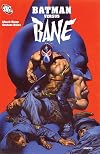
This is an oddly conceived collection for a pair of reasons. Firstly, Batman is barely in it. Sneeze and you'll miss the few panels he's in. Obviously they stuck his name on the cover in hopes to sell more copies. Second, we start with the origin story of Bane; a dark, gripping story based almost entirely in a fictional South (or is it Central?) American jail, and then the second half of the book jumps to a time *much* later in Bane's history with a multitude of references to what came show more in-between. Yes, the in-between that's not in this book. So unless you're up on your Bane continuity, prepare to be confused, as I was. show less

Access a version of the below that includes illustrations on my blog.
The Man of Two Worlds is definitely a product of the time that brought us Animal Man and Green Arrow: The Longbow Hunters: this is a darker reinvention of the Adam Strange story. Adam is a archaeologist periodically transported from Earth to the planet Rann by the zeta beam, which allows him to adventure there (complete with jet pack) for a short time before he's zapped back to Earth until the next zeta beam hits. On Rann, show more he has a wife named Alanna, whose father, Sardath is the inventor of the zeta beam and the leader of the council that rules Ranagar, the foremost citystate of Rann.
Bruning questions this whole setup in classic late 1980s/early 1990s fashion. Why would Adam be so willing to give up his home planet? Why can't the people of Rann solve their own problems? He explore Adam's family history, and also the political and biological situation on Rann: the planet is sterile, both literally and spiritually. Thanks to technology, reproduction rates and sexual interest are plummeting, and the Rannians lack the spiritual energy to do anything about their own problems. They can't do anything without Adam, but they resent him for that fact, which Sardath is careful to keep from him, since he needs Adam to reinvigorate Rann: Alanna is pregnant with Adam's child, the first child to be born on Rann in a generation.
It's a "dark" and "gritty" take on what was a pretty clear-cut superhero archetype. On Earth for the last time before the "mega zeta beam" whisks him to Rann permanently, Adam visits his sister and his dying father, and remembers the aspects of his childhood that turned him into a loner and an outcast, the kind of person who would be eager to give up his life and start a new one that is fundamentally a fantasy. But for reasons Adam doesn't quite understand, he's afraid of moving to Rann permanently, and he almost cheats on Alanna with Eve Fox, the doctor caring for his father. It would be easy to dismiss this as gratuitous "grittiness," but it really works on a couple levels.
First, is that life on Rann never feels fully real to Adam, mostly because of how much Sardath hides from him. I don't think he views Alanna as a real person, but as a sort of masculine fantasy: the attractive woman he constantly gets to save and then have sex with. Eve is very much a real, complex character with her own ups and downs, and the scenes between her and Adam were the real emotional heart of the book for me. The second is that Adam has always been a runner, as Eve points out near the book's end, but if he settles on Rann, he's not going to be able to run from what makes him uncomfortable any more. Overall, I like how the book deftly makes an interesting characterization for Adam out of the book's original kooky Silver Age setup.
Meanwhile, things are falling apart on Rann. With Adam's imminent permanent settlement, Rannian sentiment against him and Sardath has reached a peak, which is exacerbated when the mega zeta beam temporarily drives Adam mad, causing him to attack Sardath. Suddenly the fears of the dissidents are validated, and without Sardath, the Ranagarian council (all made up of duplicates of Sardath) begins to fall apart. The rival citystate of Zared takes advantage of this chaos, and begins advancing a plan to conquer Ranagar. This part of the book was less successful for me: the Ranagar dissidents are often pretty simply characterized as jealous of Adam, which diminishes their understandable objections to Sardath's plan. That said, Captain Delaken, who is the head of the Cityguard (and thus supplanted when Adam became the city's protector), goes from uncontrollably jealous (he was also an old flame of Alanna's, which seemed unnecessary to me) to a reluctant ally, which was a pretty well done transformation. He apparently also appeared in some of the space-based issues of Starman; I'll have to look back at them and see. I also liked Marleah, one of the leaders of the rebels, though she's summarily disposed of when her contribution to the plot is over.
Throughout, though, Andy Kubert really impresses as an artist, as does his brother Adam as a colorist. Some of their characters look a little same-y, but they handle both the sci-fi vistas and the ordinary Earth sections of the book really well, combining expansive sci-fi visuals with a slightly grotty tone that reveals the darkness beneath the wondrous surface. The last few pages of the story give Kubert some splash pages that really let him strut his stuff as artist, and he's great with facial expressions and (to a lesser extent) action.
Overall, the middle of the book has Adam scrabbling around in the Rannian desert while things spiral out of control back in Ranagar. It's competently done, but not as interesting as the insight Bruning provided into Adam's character in the earlier parts of the story. Things get pretty nuts in the very last part, as a number of big events happen: 1) Evelyn Fox is brought to Rann by the mega zeta beam, 2) Zared invades Ranagar, 3) Adam brings Alanna's exiled mother back into the city, 4) Alanna dies giving birth to her daughter, Aleea, 5) Sardath snaps and discovers the joys of nonsense, and 6) Ranagar is launched into space in a giant egg, saving it from Zared by placing it in orbit.
I'm sort of torn by most of these events. On the one hand, they promise interesting future developments, but on the other hand, they irrevocably change the setup of Adam Strange stories. Bruning might have got away The death of Alanna seems unequivocally a mistake, though; the whole point of the end of the story is that Adam Strange can no longer run from his problems, yet the death of Alanna allows him to permanently escape his fear of commitment. Any imagined follow-ups to this book would have been more interesting with Alanna than without. And really, follow-ups are the problem. If this had been an out-of-continuity tale like its contemporaries Watchmen or The Dark Knight Returns, I think all the other changes would have worked: the end implies great adventures to come of a new, more realistic sort. The working title for the book was The Fall of Adam Strange, and it really does feel like the last Adam Strange story, like Dark Knight Returns was for Batman.
But it's not; in theory, I think this was a set-up for a whole new cycle of Adam Strange adventures. Much as The Longbow Hunters transformed the basic setup of Green Arrow and was followed by an ongoing, this seems like it was supposed to as well: instead of Adam constantly zeta beaming between Earth and Rann, and smooching Alanna, we'd get Adam trying to build a new society inside the space-egg of Ranagar, with the help of a nonsensical Sardath, Doctor Evelyn Fox, and Alanna's mother, while trying to raise his child on his own. I can imagine an ongoing series with this setup would have been good (though Bruning really shouldn't have killed off Alanna), but it never happened. If an ongoing series had resulted from this, I think I'd view this ending differently, but as it is, it seems like Bruning broke all the toys when he was done with them. Adam Strange has been "deconstructed," and that has left him nowhere to go.
A brief coda: I actually already read the follow up to this story, though I didn't know it at the time. Adam Strange and an orbital Ranagar appear in 1996's Green Lantern vol. 3 #74-5, a two-part epilogue to The Darkstars. We don't see any Adam Strange characters other than Adam himself (indeed, Evelyn Fox has never appeared again at all), but Ranagar needs defending by the Darkstars because of the events of The Man of Two Worlds. Adam tells John Stewart, "A few years ago Ranagar was at war with Zared, another city on the surface of Rann. Ranagar was lifted into orbit. What saved us then makes us sitting ducks now." At the end of the story, Green Lantern safely lowers Ranagar back to the surface of Rann to save it from a decaying orbit, apparently beginning a slow process of undoing all the changes to the status quo made by Man of Two Worlds.
DC Comics Space Heroes: « Previous in sequence | Next in sequence » show less
The Man of Two Worlds is definitely a product of the time that brought us Animal Man and Green Arrow: The Longbow Hunters: this is a darker reinvention of the Adam Strange story. Adam is a archaeologist periodically transported from Earth to the planet Rann by the zeta beam, which allows him to adventure there (complete with jet pack) for a short time before he's zapped back to Earth until the next zeta beam hits. On Rann, show more he has a wife named Alanna, whose father, Sardath is the inventor of the zeta beam and the leader of the council that rules Ranagar, the foremost citystate of Rann.
Bruning questions this whole setup in classic late 1980s/early 1990s fashion. Why would Adam be so willing to give up his home planet? Why can't the people of Rann solve their own problems? He explore Adam's family history, and also the political and biological situation on Rann: the planet is sterile, both literally and spiritually. Thanks to technology, reproduction rates and sexual interest are plummeting, and the Rannians lack the spiritual energy to do anything about their own problems. They can't do anything without Adam, but they resent him for that fact, which Sardath is careful to keep from him, since he needs Adam to reinvigorate Rann: Alanna is pregnant with Adam's child, the first child to be born on Rann in a generation.
It's a "dark" and "gritty" take on what was a pretty clear-cut superhero archetype. On Earth for the last time before the "mega zeta beam" whisks him to Rann permanently, Adam visits his sister and his dying father, and remembers the aspects of his childhood that turned him into a loner and an outcast, the kind of person who would be eager to give up his life and start a new one that is fundamentally a fantasy. But for reasons Adam doesn't quite understand, he's afraid of moving to Rann permanently, and he almost cheats on Alanna with Eve Fox, the doctor caring for his father. It would be easy to dismiss this as gratuitous "grittiness," but it really works on a couple levels.
First, is that life on Rann never feels fully real to Adam, mostly because of how much Sardath hides from him. I don't think he views Alanna as a real person, but as a sort of masculine fantasy: the attractive woman he constantly gets to save and then have sex with. Eve is very much a real, complex character with her own ups and downs, and the scenes between her and Adam were the real emotional heart of the book for me. The second is that Adam has always been a runner, as Eve points out near the book's end, but if he settles on Rann, he's not going to be able to run from what makes him uncomfortable any more. Overall, I like how the book deftly makes an interesting characterization for Adam out of the book's original kooky Silver Age setup.
Meanwhile, things are falling apart on Rann. With Adam's imminent permanent settlement, Rannian sentiment against him and Sardath has reached a peak, which is exacerbated when the mega zeta beam temporarily drives Adam mad, causing him to attack Sardath. Suddenly the fears of the dissidents are validated, and without Sardath, the Ranagarian council (all made up of duplicates of Sardath) begins to fall apart. The rival citystate of Zared takes advantage of this chaos, and begins advancing a plan to conquer Ranagar. This part of the book was less successful for me: the Ranagar dissidents are often pretty simply characterized as jealous of Adam, which diminishes their understandable objections to Sardath's plan. That said, Captain Delaken, who is the head of the Cityguard (and thus supplanted when Adam became the city's protector), goes from uncontrollably jealous (he was also an old flame of Alanna's, which seemed unnecessary to me) to a reluctant ally, which was a pretty well done transformation. He apparently also appeared in some of the space-based issues of Starman; I'll have to look back at them and see. I also liked Marleah, one of the leaders of the rebels, though she's summarily disposed of when her contribution to the plot is over.
Throughout, though, Andy Kubert really impresses as an artist, as does his brother Adam as a colorist. Some of their characters look a little same-y, but they handle both the sci-fi vistas and the ordinary Earth sections of the book really well, combining expansive sci-fi visuals with a slightly grotty tone that reveals the darkness beneath the wondrous surface. The last few pages of the story give Kubert some splash pages that really let him strut his stuff as artist, and he's great with facial expressions and (to a lesser extent) action.
Overall, the middle of the book has Adam scrabbling around in the Rannian desert while things spiral out of control back in Ranagar. It's competently done, but not as interesting as the insight Bruning provided into Adam's character in the earlier parts of the story. Things get pretty nuts in the very last part, as a number of big events happen: 1) Evelyn Fox is brought to Rann by the mega zeta beam, 2) Zared invades Ranagar, 3) Adam brings Alanna's exiled mother back into the city, 4) Alanna dies giving birth to her daughter, Aleea, 5) Sardath snaps and discovers the joys of nonsense, and 6) Ranagar is launched into space in a giant egg, saving it from Zared by placing it in orbit.
I'm sort of torn by most of these events. On the one hand, they promise interesting future developments, but on the other hand, they irrevocably change the setup of Adam Strange stories. Bruning might have got away The death of Alanna seems unequivocally a mistake, though; the whole point of the end of the story is that Adam Strange can no longer run from his problems, yet the death of Alanna allows him to permanently escape his fear of commitment. Any imagined follow-ups to this book would have been more interesting with Alanna than without. And really, follow-ups are the problem. If this had been an out-of-continuity tale like its contemporaries Watchmen or The Dark Knight Returns, I think all the other changes would have worked: the end implies great adventures to come of a new, more realistic sort. The working title for the book was The Fall of Adam Strange, and it really does feel like the last Adam Strange story, like Dark Knight Returns was for Batman.
But it's not; in theory, I think this was a set-up for a whole new cycle of Adam Strange adventures. Much as The Longbow Hunters transformed the basic setup of Green Arrow and was followed by an ongoing, this seems like it was supposed to as well: instead of Adam constantly zeta beaming between Earth and Rann, and smooching Alanna, we'd get Adam trying to build a new society inside the space-egg of Ranagar, with the help of a nonsensical Sardath, Doctor Evelyn Fox, and Alanna's mother, while trying to raise his child on his own. I can imagine an ongoing series with this setup would have been good (though Bruning really shouldn't have killed off Alanna), but it never happened. If an ongoing series had resulted from this, I think I'd view this ending differently, but as it is, it seems like Bruning broke all the toys when he was done with them. Adam Strange has been "deconstructed," and that has left him nowhere to go.
A brief coda: I actually already read the follow up to this story, though I didn't know it at the time. Adam Strange and an orbital Ranagar appear in 1996's Green Lantern vol. 3 #74-5, a two-part epilogue to The Darkstars. We don't see any Adam Strange characters other than Adam himself (indeed, Evelyn Fox has never appeared again at all), but Ranagar needs defending by the Darkstars because of the events of The Man of Two Worlds. Adam tells John Stewart, "A few years ago Ranagar was at war with Zared, another city on the surface of Rann. Ranagar was lifted into orbit. What saved us then makes us sitting ducks now." At the end of the story, Green Lantern safely lowers Ranagar back to the surface of Rann to save it from a decaying orbit, apparently beginning a slow process of undoing all the changes to the status quo made by Man of Two Worlds.
DC Comics Space Heroes: « Previous in sequence | Next in sequence » show less
Lists
Awards


You May Also Like


Associated Authors
Statistics
- Works
- 70
- Also by
- 32
- Members
- 7,555
- Popularity
- #3,230
- Rating
- 3.7
- Reviews
- 233
- ISBNs
- 185
- Languages
- 15