

Joe Kubert (1926–2012)
Author of Before Watchmen: Nite Owl/Dr. Manhattan
About the Author
Joseph Kubert was born on September 18, 1926 in the shtetl of Yzeran, Poland. He came to the United States with his family as an infant and was raised in Brooklyn, New York. At 11 or 12, he landed an after-school job as an office boy for a comic-book publisher. By the time he was a teenager, he had show more worked sweeping up, erasing, inking and eventually drawing comic books. The first comic he illustrated himself, Volton, was published when he was 16. After graduating from the High School of Music and Art in Manhattan, he served stateside in the Army before becoming a full-time artist. He was most closely associated with DC, for whom he drew Sgt. Rock, a World War II infantryman he created with the writer Robert Kanigher, and Hawkman, an airborne crime fighter. He also created Tor, a prehistoric hero, and, with Kanigher, Enemy Ace, whose antihero is a German pilot. He was also considered one of the definitive interpreters of Tarzan. In the early 1950s he helped develop the methods of drawing and reproduction that made possible the 3-D comic book. From 1967 to 1976, he was DC's director of publications. He wrote and illustrated several graphic novels including Fax from Sarajevo, Yossel, Jew Gangster, and Dong Xoai. He also illustrated the mid-1960s newspaper comic strip Tales of the Green Beret and a comic strip The Adventures of Yaakov and Yosef for the children's magazine The Moshiach Times. In 1976, he founded the Kubert School in Dover, New Jersey, the country's only accredited trade school for comic-book artists, where he helped train a generation of young colleagues. He died of multiple myeloma on August 12, 2012 at the age of 85. (Bowker Author Biography) show less
Image credit: Luigi Novi
Series
Works by Joe Kubert
Superhelden tekenen 3 copies
Tarzan #243 (DC Series) — Author — 2 copies
Tarzan #239 (DC Series) — Author — 2 copies
Star Spangled War Stories #161 2 copies
El origen del hombre mono 2 copies
Tor, Vol. 2 # 1 — Author — 2 copies
G.I. Combat 280 1 copy
G.I. Combat 281 1 copy
G.I. Combat 285 1 copy
G.I. Combat 287 1 copy
G.I. Combat 277 1 copy
The Brave and the Bold [1955] #44 (Hawkman) — Illustrator — 1 copy
The Brave and the Bold [1955] #42 (Hawkman) — Illustrator — 1 copy
The Brave and the Bold [1955] #34 (Hawkman) — Illustrator — 1 copy
Lunar Station 1 copy
The Brave and the Bold [1955] #35 (Hawkman) — Illustrator — 1 copy
The Man-eating Lizards — Author — 1 copy
The Brave and the Bold [1955] #43 (Hawkman) — Illustrator — 1 copy
The Brave and the Bold [1955] #36 (Hawkman) — Illustrator — 1 copy
Tarzan Keräilykirja 1 copy
Nightmare #10 1 copy
What Of Tomorrow? 1 copy
Joe Kubert's TOR #3 (#3) 1 copy
Tor 3D; Nos. 1-2 1 copy
Big G. I. Combat 1 copy
G. I. War Tales No. 3 1 copy
G. I. War Tales No. 2 1 copy
DC Special (1968) #5 1 copy
Associated Works
9-11: The World's Finest Comic Book Writers & Artists Tell Stories to Remember (2002) — Contributor — 256 copies, 1 review
"Corpse on the Imjin" and Other Stories (The EC Comics Library) (2012) — Illustrator — 73 copies, 1 review
Heroes: The World's Greatest Super Hero Creators Honor The World's Greatest Heroes 9-11-2001 (2001) — Illustrator — 25 copies, 1 review
Marvel Masterworks, Volume 147: Atlas Era Journey Into Mystery Volume 3 [#21-30] (2010) — Illustrator — 18 copies
DC Finest: Justice Society of America: The Plunder of the Psycho-Pirate (2025) — Illustrator — 8 copies
Alter Ego, No. 4, Spring 2000 — Interview — 2 copies
Kamandi, The Last Boy on Earth #36 — Cover artist — 1 copy
All-Star Comics #21 — Illustrator — 1 copy
All-Star Comics #24 — Illustrator — 1 copy
The Superhero Book of Goodies #2 — Cover artist — 1 copy
Tagged
Common Knowledge
- Legal name
- Kubert, Joseph
- Birthdate
- 1926-09-18
- Date of death
- 2012-08-12
- Gender
- male
- Education
- High School of Music and Art, New York
- Occupations
- artist
instructor - Organizations
- New York Press Club
Society of Illustrators
National Cartoonist Society (past president)
International Museum of Cartoon Art advisory board - Awards and honors
- Burroughs Award (1972)
National Cartoonist Society awards (1974, 1980)
Inkpot Award (1977)
Big Five Collectors Society Award (1977)
Bob Clampett Humanitarian Award (1997)
Comic Con award for teaching (1997) (show all 12)
United Kingdom art award, special achievement (1997)
Will Eisner Award (1997)
Harvey Award (1997)
Jack Kirby Award (1997)
Will Eisner Award Hall of Fame (1998)
Hero Initiative Lifetime Achievement Award (2007) - Nationality
- USA
- Birthplace
- Yzeran (Jezierzany), Galicia, Poland
- Places of residence
- Brooklyn, New York, USA
- Place of death
- Morristown, New Jersey, USA
- Associated Place (for map)
- USA
Members
Reviews

I can still recall my entry to comics reading as an adult. It began with the early issues of Grimjack from Chicago-based First Comics, written by John Ostrander, with art by Timothy Truman. That book got me excited about the comics medium in a way that traditional capes never could, and I really liked Truman's art. In the many years since, I've come to respect Truman's own talents as a writer, and I've been pleased with the work I've seen him do on the Dark Horse Conan books. Ironically, my show more affection for him as an artist has not been so durable. The Free Companions collection of issues 14 and 16 through 21 of the Conan the Cimmerian title does a fine job of showcasing Truman's writing, while his art suffers by comparison to the two other artists whose work is presented in the same volume: Joe Kubert and Tomas Giorello.
Kubert's distinctive style is well-suited to sword and sorcery, and his contribution is a frame-story for "Home for the Hunt": Kubert shows the court of Khoraja, while Truman's interior tale is a recollection of Conan's Cimmerian youth. The body of the book is the "Free Companions" novella, recounting Conan's early blunders in national politics. Truman's art is central here, but it is framed by a story in Giorello's images, which continues into the epilogue "Kozaki." There are also some full-page interstitial pieces by artists Cary Nord and Joseph Michael Linsner. Of all these artists, Giorello and Nord do the best job of capturing Conan and the Hyborian Age, as far as I'm concerned.
Truman's development of a continuous narrative to cover the activities of the still-young adventuring Conan invites comparison to the many such developed by pastiche writers since the 1950s. Truman does as well as any and better than most. His work as a comics scripter is doubtless informed by his experience as an artist, and he is adept at letting the pictures carry the bulk of the storytelling, while his dialogue is credible and dynamic, and his narrator's voice captures the feel of the Robert E. Howard original. show less
Kubert's distinctive style is well-suited to sword and sorcery, and his contribution is a frame-story for "Home for the Hunt": Kubert shows the court of Khoraja, while Truman's interior tale is a recollection of Conan's Cimmerian youth. The body of the book is the "Free Companions" novella, recounting Conan's early blunders in national politics. Truman's art is central here, but it is framed by a story in Giorello's images, which continues into the epilogue "Kozaki." There are also some full-page interstitial pieces by artists Cary Nord and Joseph Michael Linsner. Of all these artists, Giorello and Nord do the best job of capturing Conan and the Hyborian Age, as far as I'm concerned.
Truman's development of a continuous narrative to cover the activities of the still-young adventuring Conan invites comparison to the many such developed by pastiche writers since the 1950s. Truman does as well as any and better than most. His work as a comics scripter is doubtless informed by his experience as an artist, and he is adept at letting the pictures carry the bulk of the storytelling, while his dialogue is credible and dynamic, and his narrator's voice captures the feel of the Robert E. Howard original. show less
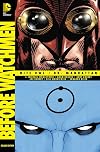
When I first heard about the Before Watchmen series, I was somewhat curious but mostly skeptical. My opinion was that the original graphic novel provided a great deal of back story on its characters already (one of the many reasons I love that book so much), so this would be superfluous. Add to the mix that the original author as well the illustrator of Watchmen were neither involved in the project, and my doubts were high. Still, curiosity prevailed and I finally decided to check out Before show more Watchmen, starting with the bound book covering Nite Owl and Dr. Manhattan. Besides my unbeatable curiosity, another thing this book had going for it was that DC had gathered a team of highly prized creators to helm this effort.
In the original novel, Nite Owl/Dan Dreiberg was one of my favorite characters but also the one with the least back story, so it was a given that I’d want to read his prequel. Turns out I was rather disappointed. Dan struck me as one the nicest and least problematic characters in the original book, someone who simply got in to the costumed hero business because he idolized the first Nite Owl so much. Here he is given an abusive past with a father who victimized Dan’s mother while he was unable to help. There are also several allusions to the first Nite Owl having done something horrible, which was again sad to see, as he also struck a chord as a genuinely “good guy” in the original novel. Furthermore, this section of the book doesn’t read like Watchmen; it’s more or less any costumed hero getting his bearings, finding mentors and partners, and getting ensnared by a buxom woman - in this case, a high-class madam who seems to be a masked vigilante herself. As a superhero story, it’s entertaining escapism; as part of the Watchmen universe, it simply isn’t up to par. Likewise, the illustrations throughout are well done, but they are also pretty standard fare for comics in terms of being straightforward grid sequencing. This section’s rating is only three stars in my opinion.
As he wasn’t really a beloved character for me in the original story, I probably wouldn’t have read Dr. Manhattan’s prequel if it weren’t included in the same bound book with Nite Owl. In this case, that ended up being a good thing. I really enjoyed this part of the book, which touched on deeper themes and gave the reader pause for thought. While a lot of Dr. Manhattan’s back story was already explored in the original Watchmen, new details are created here, including 10-year-old Jon’s harrowing escape from Nazis – an event that later played in to his watchmaker father’s decision to abandon his trade and spurred Jon into his career as a physicist. We also see the building blocks here of the main crux of the Watchmen conflict and climax, with a brief look into the thoughts of Adrian Veidt as he pulls the wool over the Dr. Manhattan and talks him into re-creating his energy signature. The illustrations are far more interesting here, and there’s more creative license taken with the comics layout. My particular favorite is when the book literally reverses as we’re pulled into Veidt’s thoughts, a very clever and effective device. While this still isn’t exactly Watchmen, this seems like a suitable homage to it and a worthy contribution to its universe. I’d rate this section with all five stars.
An unexpected bonus at the end of the book is the inclusion of the back story to Moloch, one of the longtime enemies of the Minutemen/Watchmen. Being a relatively minor character in the original story, his background was really never explored nor one that seemed necessary to do so. The origins imagined here is comparatively trite – he looks funny, people make fun of him, he turns to crime in revenge. The real piece of interest here is again seeing how Veidt manipulates Moloch in to being a player in his master plan without revealing the details of that scheme. The religious overtones in this one were perhaps a bit much, but it did bring another layer to the story at hand. Like with the first section, the illustrations here are well done but nothing particularly spectacular. This section gets a three and a half star rating.
Overall, I do appreciate how the creators here were able to fashion something new out of an older story, incorporating elements of the original novel throughout but without necessarily simply re-creating them nor entirely re-imagining them. It’s more like they took the original events and discovered new life around them, putting them into a broader context. Inevitably, these Before Watchmen comics will strike strong chords – purists will hate anyone touching the source material while those just wishing there was more Watchmen to read will eagerly clamor towards them. For myself, I found this title both sadly lacking (the Nite Owl story), surprisingly on target (the Dr. Manhattan story), and giving new perspective (the Moloch story). While I wasn’t overwhelmed by what I found in its pages, it was certainly well done enough that I will go on to seek out further titles in the Before Watchmen series. show less
In the original novel, Nite Owl/Dan Dreiberg was one of my favorite characters but also the one with the least back story, so it was a given that I’d want to read his prequel. Turns out I was rather disappointed. Dan struck me as one the nicest and least problematic characters in the original book, someone who simply got in to the costumed hero business because he idolized the first Nite Owl so much. Here he is given an abusive past with a father who victimized Dan’s mother while he was unable to help. There are also several allusions to the first Nite Owl having done something horrible, which was again sad to see, as he also struck a chord as a genuinely “good guy” in the original novel. Furthermore, this section of the book doesn’t read like Watchmen; it’s more or less any costumed hero getting his bearings, finding mentors and partners, and getting ensnared by a buxom woman - in this case, a high-class madam who seems to be a masked vigilante herself. As a superhero story, it’s entertaining escapism; as part of the Watchmen universe, it simply isn’t up to par. Likewise, the illustrations throughout are well done, but they are also pretty standard fare for comics in terms of being straightforward grid sequencing. This section’s rating is only three stars in my opinion.
As he wasn’t really a beloved character for me in the original story, I probably wouldn’t have read Dr. Manhattan’s prequel if it weren’t included in the same bound book with Nite Owl. In this case, that ended up being a good thing. I really enjoyed this part of the book, which touched on deeper themes and gave the reader pause for thought. While a lot of Dr. Manhattan’s back story was already explored in the original Watchmen, new details are created here, including 10-year-old Jon’s harrowing escape from Nazis – an event that later played in to his watchmaker father’s decision to abandon his trade and spurred Jon into his career as a physicist. We also see the building blocks here of the main crux of the Watchmen conflict and climax, with a brief look into the thoughts of Adrian Veidt as he pulls the wool over the Dr. Manhattan and talks him into re-creating his energy signature. The illustrations are far more interesting here, and there’s more creative license taken with the comics layout. My particular favorite is when the book literally reverses as we’re pulled into Veidt’s thoughts, a very clever and effective device. While this still isn’t exactly Watchmen, this seems like a suitable homage to it and a worthy contribution to its universe. I’d rate this section with all five stars.
An unexpected bonus at the end of the book is the inclusion of the back story to Moloch, one of the longtime enemies of the Minutemen/Watchmen. Being a relatively minor character in the original story, his background was really never explored nor one that seemed necessary to do so. The origins imagined here is comparatively trite – he looks funny, people make fun of him, he turns to crime in revenge. The real piece of interest here is again seeing how Veidt manipulates Moloch in to being a player in his master plan without revealing the details of that scheme. The religious overtones in this one were perhaps a bit much, but it did bring another layer to the story at hand. Like with the first section, the illustrations here are well done but nothing particularly spectacular. This section gets a three and a half star rating.
Overall, I do appreciate how the creators here were able to fashion something new out of an older story, incorporating elements of the original novel throughout but without necessarily simply re-creating them nor entirely re-imagining them. It’s more like they took the original events and discovered new life around them, putting them into a broader context. Inevitably, these Before Watchmen comics will strike strong chords – purists will hate anyone touching the source material while those just wishing there was more Watchmen to read will eagerly clamor towards them. For myself, I found this title both sadly lacking (the Nite Owl story), surprisingly on target (the Dr. Manhattan story), and giving new perspective (the Moloch story). While I wasn’t overwhelmed by what I found in its pages, it was certainly well done enough that I will go on to seek out further titles in the Before Watchmen series. show less
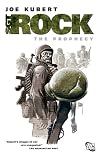
Let's admit it: You read Sgt. Rock because you love when a lull in the action leads to a giant splash page of a panzer "sneaking" up on Easy Company. Am I right? How often this group of grizzled veterans is taken by surprise by a tank while seated in the snowy woods or desolate cityscape is a testament to the stealth technology employed by the Nazis during WWII. And in The Prophecy, TWO tanks sneak up on the company--and Sgt. Rock takes one out with a knife and a grenade. Yeah, yo' Rock.
But show more the "tanks scene" is just window dressing here, a little something-something for the fellas to gush over approvingly. The main plot is more bewildering--Easy Company is shipped in 1943 to the Russian front to pick up an important "package" which will help end the war. It's not technology, it's not war plans, it's...well, read for yourself.
But the package is unrealistic, and while I can easily accept a grizzled Sgt. Rock taking out a tank with a knife and grenade, I cannot suspend disbelief for the heavy-morale of moving the package out. It's not as believable. When the package is picked up by a heliocopter--in 1943--on the Russian front with no American forces for hundreds of miles--I'm puzzled. Doesn't make sense. And Easy Company's decision at the end actually made me laugh out loud. Actually, it reminded me of the cinematic masterpiece The Three Amigos where the three heroes get their enthusiasm and confidence up to tear off into the desert to fight for the heroine; the next scene has them more sober and asking, "How far did we ride before we stopped for directions?" Easy Company is left in limbo at the end of the piece--and it doesn't make sense on so many levels.
So: Should you read it? If you're a fan of Sgt. Rock, you already have. If you're not a fan of Sgt. Rock, shame on you and, no, don't start here. This is not Sgt Rock at his height. show less
But show more the "tanks scene" is just window dressing here, a little something-something for the fellas to gush over approvingly. The main plot is more bewildering--Easy Company is shipped in 1943 to the Russian front to pick up an important "package" which will help end the war. It's not technology, it's not war plans, it's...well, read for yourself.
But the package is unrealistic, and while I can easily accept a grizzled Sgt. Rock taking out a tank with a knife and grenade, I cannot suspend disbelief for the heavy-morale of moving the package out. It's not as believable. When the package is picked up by a heliocopter--in 1943--on the Russian front with no American forces for hundreds of miles--I'm puzzled. Doesn't make sense. And Easy Company's decision at the end actually made me laugh out loud. Actually, it reminded me of the cinematic masterpiece The Three Amigos where the three heroes get their enthusiasm and confidence up to tear off into the desert to fight for the heroine; the next scene has them more sober and asking, "How far did we ride before we stopped for directions?" Easy Company is left in limbo at the end of the piece--and it doesn't make sense on so many levels.
So: Should you read it? If you're a fan of Sgt. Rock, you already have. If you're not a fan of Sgt. Rock, shame on you and, no, don't start here. This is not Sgt Rock at his height. show less
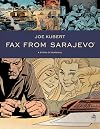
This memoir deals with how a comics writer dealt with living in Sarajevo, Bosnia, during the war in—and invasion of—former Yugoslavia.
His family is, like the rest of the population of Sarajevo, under constant attacks which are perpetrated by Serbs. Say what you want about the war and invasion, but the Serbs are The Evil.
I've no qualms with somebody recanting their story. I mean, this story is theirs both in what I surmise is their truths and their memory. The main problem I have with show more this book is that the author has written a story that is so filled with minimalistic constant that it is extremely hard to digest.
An example: a father gets ready to go buy bread for his family. He kisses his wife. He kisses his kids. He says goodbye to a micro utopia. He leaves his family's home for his city square. The city square is bombed to shreds by Serb and the man dies. The family is displayed in tatters, crying, with an outro text saying 'war is Hell'.
Next story: an old man gets ready to leave his home to get food from a UN truck. He envisages freedom, daydreams a Serb-free existence where they are not, for Serbs are Evil. The man walks out and sees the UN truck. Serb-infested arms explode into combat, repelling the UN troops while killing the poor old man. An outro text says 'Beware of Evil Serbs!'.
OK, the examples are made by me, not to invoke pity—I'm of Serbian heritage—but to emphasise that the book should have been edited a lot harder to make it breathe. The entire book is filled with utterly horrible stories but the style is ultimately what ruins this book. I fully accept the contents of the book and absolutely agree that Serbs committed atrocities during the civil war. The style of this book drips of pity-invoking scenes that, early on, invites antipathy; it's a shame, for this story could have been wondrously told.
The illustrations are old-school US-style: sharp imagery of the old biff-boom-bang style abound. No nuance, all contrast.
I wish this book had been tightly edited to highlight tension and make it nuanced; even though war can be one-sided, this book is, simply put, far too simple to engage me and think it's a human experience that's not absolutely lopsided.
PS. The atrocities committed by NATO, the USA, the UN, Croatia, and even Bosnia, aren't in this book. show less
His family is, like the rest of the population of Sarajevo, under constant attacks which are perpetrated by Serbs. Say what you want about the war and invasion, but the Serbs are The Evil.
I've no qualms with somebody recanting their story. I mean, this story is theirs both in what I surmise is their truths and their memory. The main problem I have with show more this book is that the author has written a story that is so filled with minimalistic constant that it is extremely hard to digest.
An example: a father gets ready to go buy bread for his family. He kisses his wife. He kisses his kids. He says goodbye to a micro utopia. He leaves his family's home for his city square. The city square is bombed to shreds by Serb and the man dies. The family is displayed in tatters, crying, with an outro text saying 'war is Hell'.
Next story: an old man gets ready to leave his home to get food from a UN truck. He envisages freedom, daydreams a Serb-free existence where they are not, for Serbs are Evil. The man walks out and sees the UN truck. Serb-infested arms explode into combat, repelling the UN troops while killing the poor old man. An outro text says 'Beware of Evil Serbs!'.
OK, the examples are made by me, not to invoke pity—I'm of Serbian heritage—but to emphasise that the book should have been edited a lot harder to make it breathe. The entire book is filled with utterly horrible stories but the style is ultimately what ruins this book. I fully accept the contents of the book and absolutely agree that Serbs committed atrocities during the civil war. The style of this book drips of pity-invoking scenes that, early on, invites antipathy; it's a shame, for this story could have been wondrously told.
The illustrations are old-school US-style: sharp imagery of the old biff-boom-bang style abound. No nuance, all contrast.
I wish this book had been tightly edited to highlight tension and make it nuanced; even though war can be one-sided, this book is, simply put, far too simple to engage me and think it's a human experience that's not absolutely lopsided.
PS. The atrocities committed by NATO, the USA, the UN, Croatia, and even Bosnia, aren't in this book. show less
Awards


You May Also Like


Associated Authors
Statistics
- Works
- 194
- Also by
- 51
- Members
- 1,898
- Popularity
- #13,568
- Rating
- 3.9
- Reviews
- 33
- ISBNs
- 136
- Languages
- 12
- Favorited
- 2