
Will Eisner (1917–2005)
Author of A Contract with God and Other Tenement Stories
About the Author
Will Eisner was born March 6, 1917 in Brooklyn, NY. As a child he worked for printers and sold newspapers. He attended De Witt Clinton High School in the Bronx, where his artwork first appeared in the school newspaper. His first job was at the New York American, but he lost that and found a job show more with WOW What a Magazine! in 1936. He created two features for the magazine, Harry Karry and The Flame. After the magazine went under, for a short time, he freelanced and drew stories for Comic Magazines before he and friend Jerry Iger formed a the Eisner-Iger studio. The two went their separate ways when Eisner joined the Quality Comics Group to produce a syndicated 16-page newspaper supplement. It was there that Eisner created his most well known character, the Spirit. In 1942, Eisner was drafted into the army where he produced posters and strips for the troops. After the war, he continued the Spirit strip until 1952. It was during this time that he created the American Visuals Corporation, a commercial art company that created comics for educational and commercial purposes. Some of the company's clients included RCA Records, the Baltimore Colts, and New York Telephone. Eisner had given up on the Spirit strip, but still produced new material for it from time to time. He chose to focus his efforts on a more mature storyline and so produced A Contract With God, which was published in 1978. It was the beginnings of the graphic novel. Eisner also taught cartooning at the School of Visual Arts in New York, in addition to writing Comics and Sequential Art and Graphic Storytelling. The Eisner Awards, one of only two comics industry awards, are named for Eisner and were established in 1988. Eisner's work was showcased in the Whitney Museum's 1996 "NYNY: City of Ambition" show. Will Eisner passed away on Monday January 3, 2005 at the age of 87 after undergoing quadruple bypass heart surgery. (Bowker Author Biography) show less
Image credit: Photo (cropped) by Alan Light 1982. SDCC
Series
Works by Will Eisner
Comics and Sequential Art: Principle and practices from the legendary cartoonist (1985) 947 copies, 3 reviews
Graphic Storytelling and Visual Narrative: Principles and practices from the legendary cartoonist (1996) 576 copies, 4 reviews
Minor Miracles: Long Ago and Once upon a Time, Back When Uncles Were Heroic, Cousins Were Clever, and Miracles Happened on Every Block (2000) 154 copies, 3 reviews
Expressive Anatomy for Comics and Narrative: Principles and Practices from the Legendary Cartoonist (Will Eisner Library (Hardcover)) (2008) 110 copies
Jewish Comix Anthology: Volume 1: A Collection of Tales, Stories and Myths Told and Retold in Comic Book Format. (2014) 19 copies
Will Eisner's Gleeful Guide to Communicating With Plants to Help Them Grow (1976) 14 copies, 1 review
A Contract with God and Other Stories of Dropsie Avenue: A Norton Critical Edition (Norton Critical Editions) (2022) 5 copies, 1 review
Will Eisner's Gleeful Guide to Living with Astrology: An Every-Day Manual for Coping with People, Events, and Afflictions Through Astrology (1974) 5 copies
Mit navn er Nigelle 4 copies
Spirit. Nr. 1 4 copies
The Spirit #5 3 copies
The Spirit #2 3 copies
Torpedo 1936 (Torpedo #1) 3 copies
Narrativas Graficas - Principios E Praticas Da Lenda Dos Quadrinhos (Em Portuguese do Brasil) (2008) 3 copies
Spirit, Vol.1 3 copies
De vrouwen van de Spirit 3 copies
Bronx 1930 2 copies
Spirit: Silk Satin 2 copies
Spirit, Het juweel van Gizeh 2 copies
PS Preventive Maintenance: 68 (1958) 2 copies
Spirit, Caramba 2 copies
Spirit - Ebony 2 copies
Spirit, qui a tué Cox Robin? 2 copies
The Spirit, 2 2 copies
Spirit(magazine) - nr. 2 2 copies
All About P'Gell 2 copies
The Collected Will Eisner's John Law 2 copies
The Collector's Spirit (Bag) 3 2 copies
Spirit 4 2 copies
The Spirit #50 2 copies
The Daily Spirit #04 2 copies
The Spirit #20 2 copies
Baseball Comics 2 copies
The Spirit #10 2 copies
The Spirit Magazine issue 26 2 copies
The Spirit #11 2 copies
The Daily Spirit #03 2 copies
The Spirit, nº 53 2 copies
The Spirit #3 2 copies
The Spirit #1 2 copies
The Spirit #24 2 copies
The Spirit: The origin years 2 copies
The Spirit #49 2 copies
The Spirit #47 2 copies
The Spirit #46 2 copies
The Spirit, nº 6 1 copy
The Spirit, nº 23 1 copy
The Spirit #71 1 copy
Spirit #01 1 copy
Spirit #02 1 copy
Spirit #03 1 copy
The Spirit #19 1 copy
Spirit #04 1 copy
Spirit #05 1 copy
The Spirit, nº 5 1 copy
Spirit #06 1 copy
The Spirit, nº 10 1 copy
Spirit(magazine) - nr. 3 1 copy
The Spirit #73 1 copy
The Spirit #18 1 copy
The Spirit #17 1 copy
The Spirit, nº 2 1 copy
The Spirit #22 1 copy
The Spirit, nº 68 1 copy
The Spirit, nº 64 1 copy
The Spirit, nº 65 1 copy
The Spirit, nº 67 1 copy
The Spirit No. 32 1 copy
The Spirit, nª69 1 copy
Starjaws 1 copy
The Spirit, nº 70 1 copy
The Spirit, nº 76 1 copy
The Spirit, nº 75 1 copy
The Spirit, nº 74 1 copy
The Spirit, nº 73 1 copy
The Spirit, nº 72 1 copy
Katu Bronxissa: sivukujat 1 copy
Tirez pas sur le Spirit 1 copy
The Spirit, nº 55 1 copy
Les femmes fatales du Spirit 1 copy
The Spirit, nº 56 1 copy
The Spirit, nº 57 1 copy
The Spirit, nº 59 1 copy
The Spirit, nº 60 1 copy
The Spirit, nº 61 1 copy
The Spirit (1983) #80 1 copy
The Spirit Paperback 1 copy
Comic Art n.69 - Luglio 1990 — Cover artist — 1 copy
não sei 2 1 copy
Spirit Archives, Vol. 12 1 copy
The Spirit - Volume 2 1 copy
The Spirit [complete] 1 copy
Spirit - Opgør med Octopus 1 copy
AVENIDA DROPSIE 1 copy
The Spirit Case 1 1 copy
New York, a grande cidade 1 copy
The Spirit Nº 13: El asesino/La elección del señor Bowser/La máquina de pelear/Dinero, dinero 1 copy
The Spirit N⁰ 9: Cuentos de hadas para jóvenes delincuentes/Canijo Adam/La lámpara/Competencia 1 copy
The Spirit Vol. 2 1 copy
The Spirit - Ng # 06 1 copy
The Spirit - Ng # 05 1 copy
The Spirit - Ng # 04 1 copy
The Spirit - Ng # 02 1 copy
The Spirit - Ng # 01 1 copy
The Spirit Magazine # 4 1 copy
O NOME DO FOGO 1 copy
The Spirit 23. El asesino 1 copy
The Spirit (1983) #06 1 copy
The Spirit (1983) #05 1 copy
The Spirit (1983) #04 1 copy
The Spirit (1983) #03 1 copy
The Spirit (1983) #02 1 copy
The Spirit (1983) #01 1 copy
The Spirit Special 1 1 copy
The Spirit (1983) #07 1 copy
The Spirit numero 2 1 copy
The Spirit (1983) #08 1 copy
The Spirit (1983) #09 1 copy
Unsichtbare Menschen 1 copy
SPIRIT PORTFOLIO 1 copy
City People Notebook 1 copy
The Spirit (1983) #48 1 copy
The Spirit N⁰ 6 1 copy
The Spirit N⁰15 1 copy
The Spirit (1983) #52 1 copy
The Spirit (1983) #51 1 copy
The Spirit #56 1 copy
The Spirit #54 1 copy
Spirit: På sporet 1 copy
The Spirit . 3 1 copy
Super the Spirit 1 copy
The Spirit #31 1 copy
Spirit Album nr. 1 1 copy
Spirit - Volume 2 1 copy
Den ¤hvide hval 1 copy
Spirit 3 : 1943 - 1944 1 copy
Spirit 2 : 1942 - 1943 1 copy
Spirit 1 : 1941 - 1942 1 copy
Spirit hæfte nr. 3 1 copy
Black Special 2/1991 1 copy
Black Special 1/1991 1 copy
Spirit, nº 2 1 copy
Spirit, nº 1 1 copy
The Real Thing 1 copy
SPIRIT - der intelligenste Gangsterjäger der Welt, Bd. 1, 66 Seiten (Will Eisner Comic in Farbe) (1977) 1 copy
Spirit hæfte nr. 1 1 copy
Spirit hæfte nr. 2 1 copy
Spirit nr. 1 1 copy
The Spirit #9 1 copy
The Spirit #8 1 copy
The Spirit #7 1 copy
Gamut # 02 1 copy
De stad 1 copy
Will Eisner's 3-D Classics 1 copy
Spirit Album nr. 2 1 copy
Spirit Album nr. 4 1 copy
Spirit Album nr. 5 1 copy
The Spirit, nº 11 1 copy
The Spirit #27 1 copy
The Spirit, nº 49 1 copy
The Spirit #26 1 copy
The Spirit #25 1 copy
The Spirit #30 1 copy
The Spirit #28 1 copy
The Spirit, nº 52 1 copy
The Spirit, nº 51 1 copy
The Sìpirit, nº 50 1 copy
The Spirit, nº 47 1 copy
The Spirit, nº 41 1 copy
The Spirit No. 3 1 copy
Der Spirit 1 copy
Spirit, Vol.4 1 copy
Spirit, Vol.2 1 copy
Big City Blues 1 copy
The Spirit, nº 28 1 copy
The Spirit, nº 15 1 copy
Associated Works
The Graphic Canon, Vol. 1: From the Epic of Gilgamesh to Shakespeare to Dangerous Liaisons (2012) — Illustrator — 304 copies, 7 reviews
9-11: The World's Finest Comic Book Writers & Artists Tell Stories to Remember (2002) — Contributor — 256 copies, 1 review
L. Ron Hubbard Presents Writers of the Future, Volume 4 (1988) — Illustrator, some editions — 107 copies, 1 review
Strip AIDS U.S.A.: A Collection of Cartoon Art to Benefit People With AIDS (1988) — Contributor — 65 copies
L. Ron Hubbard Presents Writers of the Future, Volume 19 (2003) — Contributor — 56 copies, 2 reviews
Vixens, Vamps & Vipers: Lost Villainesses of Golden Age Comics (2014) — Illustrator — 42 copies, 9 reviews
Comics About Cartoonists: Stories About the World's Oddest Profession (2013) — Contributor — 18 copies
Comics 8 — Contributor — 1 copy
Tagged
Common Knowledge
- Canonical name
- Eisner, Will
- Legal name
- Eisner, William Erwin
- Other names
- Rensie, Willis B.
Erwin - Birthdate
- 1917-03-06
- Date of death
- 2005-01-03
- Gender
- male
- Education
- Art Students League of New York
- Occupations
- artist
comic book packager
creator of instructional materials
teacher - Organizations
- Eisner and Iger Studio
- Awards and honors
- Will Eisner Comic Industry Awards (named in his honor)
Reuben Award (1998)
Grand Prix de la ville d'Angoulême (1975)
Academy of Comic Book Arts Hall of Fame (1971)
Kirby Award (Hall of Fame, 1987)
Squiddy Award (Best Cartoonist, 2004) (show all 7)
Sparky Award (2001) - Cause of death
- complications from heart surgery (quadruple bypass )
- Nationality
- USA
- Birthplace
- Brooklyn, New York, USA
- Places of residence
- Brooklyn, New York, New York, USA
White Plains, New York, USA
Florida, USA - Place of death
- Lauderdale Lakes, Florida, USA
- Burial location
- Mount Pleasant Cemetery, Hawthorne, New York, USA
- Associated Place (for map)
- New York, USA
Members
Discussions
What is your favorite Will Eisner work? in Comics (November 2011)
Will Eisner in Comics (October 2007)
Reviews
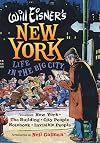
After the amazing collection The Contract With God Trilogy with the classic novel of the same name, more New York stories seemed like overkill. Little did I realize, New York was Will Eisner's home, and his muse.
While not connected to the Dropsie avenue stories per se (there's only one mention of it), this book collects many stories that just didn't fit anywhere else. Some are mediocre, but iffy Will Eisner is like bad sex: Even when it's bad, it's good.
And there are gems here! The Treasure show more of Avenue C shows the life of a grate. A would-be courtier fumbles an engagement ring, a murder weapon is disposed of... all hidden treasure casually divided up by a pair of young boys. The Building features the prototypical Gilda Green, who falls for an unpublished poet.
Mostly vignettes a few pages long: Illicit sex; the illusion of privacy in city living; and above all, butterfly-effect-style stories, where one small event opens a chain of events ending in tragedy, litter these pages.
Easily the most disturbing story in the book, the slightly longer story Sanctum deserves special mention. Pincus Pleatnik stays away from others, leading a solitary life. When a newspaper mistakenly and stubbornly reports him dead, his life falls apart in disturbing ways.
Mr. Eisner's trademark casual visual style is at its most eclectic and beautiful. A few of the stories are a little out of voice for the author, but these were obviously testing grounds for longer works. a few out-takes at the end reinforce this feeling. show less
While not connected to the Dropsie avenue stories per se (there's only one mention of it), this book collects many stories that just didn't fit anywhere else. Some are mediocre, but iffy Will Eisner is like bad sex: Even when it's bad, it's good.
And there are gems here! The Treasure show more of Avenue C shows the life of a grate. A would-be courtier fumbles an engagement ring, a murder weapon is disposed of... all hidden treasure casually divided up by a pair of young boys. The Building features the prototypical Gilda Green, who falls for an unpublished poet.
Mostly vignettes a few pages long: Illicit sex; the illusion of privacy in city living; and above all, butterfly-effect-style stories, where one small event opens a chain of events ending in tragedy, litter these pages.
Easily the most disturbing story in the book, the slightly longer story Sanctum deserves special mention. Pincus Pleatnik stays away from others, leading a solitary life. When a newspaper mistakenly and stubbornly reports him dead, his life falls apart in disturbing ways.
Mr. Eisner's trademark casual visual style is at its most eclectic and beautiful. A few of the stories are a little out of voice for the author, but these were obviously testing grounds for longer works. a few out-takes at the end reinforce this feeling. show less

There is a tiny irony in the fact that when Will Eisner coined the phrase "graphic novel" in 1978 to describe his work A Contract with God, the book in question did not have the single plot of a unified novel. It was instead a set of four shorter narratives joined by a common setting at No. 55 Dropsie Avenue in the Bronx. The first of these is the properly-titled "A Contract with God," and it concerns the moral vicissitudes of a Jewish immigrant in New York. The other three stories center on show more a Depression-era "street singer," the building superintendent at No. 55, and a summer vacation season.
The Contract with God Trilogy collects the original book with its two sequels, both of which fully merit the "graphic novel" label. The Life Force is a complex story centered on the carpenter Jacob Starkah, and taking place mostly in 1934. Dropsie Avenue spans more than a century of transformations of the Dropsie neighborhood, pulling the events together into a single tale of striving, corruption, and transformation. The Trilogy volume is supplied with a preface and some new interstitial art from Eisner.
When he composed these pages, Eisner had already developed his techniques of visual storytelling to a high pitch, and throughout the work the characters and plots are presented with startling efficiency, while the compositions are striking and effective. The illustration is all in monochrome inks, presented in this handsome hardcover with uniform dark brown line art on ivory paper.
All of these stories raise powerful moral and emotional concerns, leavening them with occasional humor. They also clearly incorporate a level of memoir that powerfully documents 20th-century cultural history for the Bronx. I read a copy borrowed from the local public library, and I strongly believe it deserves a place in such collections. show less
The Contract with God Trilogy collects the original book with its two sequels, both of which fully merit the "graphic novel" label. The Life Force is a complex story centered on the carpenter Jacob Starkah, and taking place mostly in 1934. Dropsie Avenue spans more than a century of transformations of the Dropsie neighborhood, pulling the events together into a single tale of striving, corruption, and transformation. The Trilogy volume is supplied with a preface and some new interstitial art from Eisner.
When he composed these pages, Eisner had already developed his techniques of visual storytelling to a high pitch, and throughout the work the characters and plots are presented with startling efficiency, while the compositions are striking and effective. The illustration is all in monochrome inks, presented in this handsome hardcover with uniform dark brown line art on ivory paper.
All of these stories raise powerful moral and emotional concerns, leavening them with occasional humor. They also clearly incorporate a level of memoir that powerfully documents 20th-century cultural history for the Bronx. I read a copy borrowed from the local public library, and I strongly believe it deserves a place in such collections. show less

Access a version of the below that includes illustrations on my blog.
I've long been fascinated by Blackhawk. About a squadron of unaffiliated pro-Allies fighter pilots, Blackhawk began as a feature in Quality's Military Comics in Aug. 1941. This very World War II–focused comic lasted through all of that title's run, surviving a name change and the end of the war, until what was now Modern Comics came to an end with issue #102 in Oct. 1950. In the meantime, though, it had picked up its own show more self-titled book, which ran for ninety-nine issues until Dec. 1956. At that point, DC acquired the title from Quality without skipping a beat, and under DC, it ran another 166 issues until Nov. 1984 (albeit with a couple hiatuses). It then got a few post-Crisis revivals (including a three-issue 1988 miniseries and a sixteen-issue 1989-90 ongoing), and even an eight-issue "New 52" run (2012-13). Plus some of the characters have made appearances elsewhere; Blackhawk himself appeared in a 1996-97 arc of Sandman Mystery Theatre, Lady Blackhawk in Guy Gardner and Birds of Prey, and both together in Batman Confidential. And on top of all that, there was a Blackhawk novel!
That's quite a history for a comic which, to be honest, doesn't strike me as having a very adaptable premise, and over the years the premise has had to be reinvented repeatedly. If your comic is all about stopping the Nazis from overunning Europe, what can its point be in 1950, or 1960, or 1970, or 1980, or 1990? How have our conceptions of the Second World War changed over time? That's what I want to find out, starting from its 1941 debut and going all the way through its last pre-Flashpoint incarnation in 1990. (Based on previous experience with writer Mike Costa, I have no desire to subject myself to the New 52 run.) That's fifty years of comics history!
It all begins here, with the seventeen stories collected in this DC Archive Edition. The archive editions feature high-quality hardcover reprints of Golden Age material, but there must not have been much of a demand for Blackhawk, because twenty-three years on, a second volume has yet to appear. Like many Golden Age comics, Military Comics was an anthology title, with a variety of features, in this case half were about the Army and half about the Navy. Blackhawk is the only one to have had any lasting permanence, and only the Blackhawk stories are represented here.
These seventeen issues give little characterization but lots of Blackhawks-on-Nazi and Blackhawks-on-Japanese action. The earliest issues take place in the European theatre, but as the series goes on, we get more stories that focus on Japan. Ususually the Blackhawks fly somewhere, get involved in some kind of Nazi plot, foil it, and move on. To be honest, I don't think dogfighting plays to the strengths of the comics medium; it comes across as a series of still images of airplanes. So, the plots often revolve around the Blackhawks infiltrating or extricating or committing acts of sabotage.
In the early stages, the make-up of the group is pretty vague, but soon it settles down into a set of regulars, each from a different European country: Blackhawk, Hendrikson, André, Stanislaus, Olaf, and Chuck. (Plus Chop-Chop, but more on him later.) I know Blackhawk himself is eventually named Janos Prohaska, but that's not in this book. Most of these characters get little in the way of distinctive dialogue; André is the vaguely smooth French one, Olaf is an oaf, and that's about it. I couldn't pick the other three out of a line-up.
The earliest issues, written by Will Eisner and illustrated by Chuck Cuidera, have them getting involved in different Nazi plots: Blackhawk hunts down the German baron who killed his family and spars with a nurse, they steal radium from Paris before the Nazis can use it to build a bomb, the meet up with the nurse again to help her defend a refugee column, they try to stop the Nazis from capturing a munitions ship in the Suez Canal, and so on. None of it's high art, with crude but powerful writing and art, but it's fun if often ridiculous. There's a bit where André realizes that they need an avalanche to stop some Nazis... and so he flings himself down a mountainside, killing himself in order to be the incitement of an avalanche!
Even without the credits, you can tell a new writer takes over with #5, because suddenly things get less war-focused and more fantastic. Weird-looking people called the Scavengers, killer germs, an island that suddenly appears in the middle of the Atlantic, a haunted castle, and so on... These stories are written by Dick French, and left me wondering how the title had run out of ideas so quickly! The haunted castle one is pretty stupid—the ghost turns out to be André wearing a suit of armor because he's embarrassed by his disfigurement—but at least it has strong art by Chuck Cuidera, with lots of cool layouts that really capture the vibe of the castle. The next story is even stupider, though, as the Blackhawks kidnap a Jewish plastic surgeon from a concentration camp to repair André's face but because he's mad with grief he makes a mistake, but this turns out to be that he looks exactly like the Nazi general who kidnapped the surgeon's daughter, so André replaces him! Like, lol, wut?
Thankfully Bill Woolfolk soon takes over as writer and Reed Crandall on art, and I found their vibe much closer to the first four issues', and more consistently enjoyable. Woolfolk also gives the other team members more to do, especially Olaf... though he also has more of a thing for phonetic accents. Blackhawk gets to face down Von Tepp's brother "the Butcher," though he also keeps meeting Asian women who have fallen in love with him and switch allegiance. Crandall is a good artist, but I do kind of miss how Cuidera drew Blackhawk's face!
Chop-Chop is a Chinese man who is sent by Blackhawk's Red Cross nurse flame in Military Comics #3 to ask for the Blackhawks' help; he fixes up a busted Nazi plane and manages to to fly it to Blackhawk Island all by himself. He's a weird character, in that visually, he's an offensive racist caricature, and also the white characters mostly don't respect him... but he's sometimes a buffoon and sometimes surprisingly competent, perpetually underestimated even by his own teammates. Also he can curse up a storm! I am not totally sure what the writers are going for with him other than "Chinese people are victims of imperial aggression yet also hilarious," but I guess I'll see what future creators make of him as I go on.
The Blackhawks: Next in sequence » show less
I've long been fascinated by Blackhawk. About a squadron of unaffiliated pro-Allies fighter pilots, Blackhawk began as a feature in Quality's Military Comics in Aug. 1941. This very World War II–focused comic lasted through all of that title's run, surviving a name change and the end of the war, until what was now Modern Comics came to an end with issue #102 in Oct. 1950. In the meantime, though, it had picked up its own show more self-titled book, which ran for ninety-nine issues until Dec. 1956. At that point, DC acquired the title from Quality without skipping a beat, and under DC, it ran another 166 issues until Nov. 1984 (albeit with a couple hiatuses). It then got a few post-Crisis revivals (including a three-issue 1988 miniseries and a sixteen-issue 1989-90 ongoing), and even an eight-issue "New 52" run (2012-13). Plus some of the characters have made appearances elsewhere; Blackhawk himself appeared in a 1996-97 arc of Sandman Mystery Theatre, Lady Blackhawk in Guy Gardner and Birds of Prey, and both together in Batman Confidential. And on top of all that, there was a Blackhawk novel!
That's quite a history for a comic which, to be honest, doesn't strike me as having a very adaptable premise, and over the years the premise has had to be reinvented repeatedly. If your comic is all about stopping the Nazis from overunning Europe, what can its point be in 1950, or 1960, or 1970, or 1980, or 1990? How have our conceptions of the Second World War changed over time? That's what I want to find out, starting from its 1941 debut and going all the way through its last pre-Flashpoint incarnation in 1990. (Based on previous experience with writer Mike Costa, I have no desire to subject myself to the New 52 run.) That's fifty years of comics history!
It all begins here, with the seventeen stories collected in this DC Archive Edition. The archive editions feature high-quality hardcover reprints of Golden Age material, but there must not have been much of a demand for Blackhawk, because twenty-three years on, a second volume has yet to appear. Like many Golden Age comics, Military Comics was an anthology title, with a variety of features, in this case half were about the Army and half about the Navy. Blackhawk is the only one to have had any lasting permanence, and only the Blackhawk stories are represented here.
These seventeen issues give little characterization but lots of Blackhawks-on-Nazi and Blackhawks-on-Japanese action. The earliest issues take place in the European theatre, but as the series goes on, we get more stories that focus on Japan. Ususually the Blackhawks fly somewhere, get involved in some kind of Nazi plot, foil it, and move on. To be honest, I don't think dogfighting plays to the strengths of the comics medium; it comes across as a series of still images of airplanes. So, the plots often revolve around the Blackhawks infiltrating or extricating or committing acts of sabotage.
In the early stages, the make-up of the group is pretty vague, but soon it settles down into a set of regulars, each from a different European country: Blackhawk, Hendrikson, André, Stanislaus, Olaf, and Chuck. (Plus Chop-Chop, but more on him later.) I know Blackhawk himself is eventually named Janos Prohaska, but that's not in this book. Most of these characters get little in the way of distinctive dialogue; André is the vaguely smooth French one, Olaf is an oaf, and that's about it. I couldn't pick the other three out of a line-up.
The earliest issues, written by Will Eisner and illustrated by Chuck Cuidera, have them getting involved in different Nazi plots: Blackhawk hunts down the German baron who killed his family and spars with a nurse, they steal radium from Paris before the Nazis can use it to build a bomb, the meet up with the nurse again to help her defend a refugee column, they try to stop the Nazis from capturing a munitions ship in the Suez Canal, and so on. None of it's high art, with crude but powerful writing and art, but it's fun if often ridiculous. There's a bit where André realizes that they need an avalanche to stop some Nazis... and so he flings himself down a mountainside, killing himself in order to be the incitement of an avalanche!
Even without the credits, you can tell a new writer takes over with #5, because suddenly things get less war-focused and more fantastic. Weird-looking people called the Scavengers, killer germs, an island that suddenly appears in the middle of the Atlantic, a haunted castle, and so on... These stories are written by Dick French, and left me wondering how the title had run out of ideas so quickly! The haunted castle one is pretty stupid—the ghost turns out to be André wearing a suit of armor because he's embarrassed by his disfigurement—but at least it has strong art by Chuck Cuidera, with lots of cool layouts that really capture the vibe of the castle. The next story is even stupider, though, as the Blackhawks kidnap a Jewish plastic surgeon from a concentration camp to repair André's face but because he's mad with grief he makes a mistake, but this turns out to be that he looks exactly like the Nazi general who kidnapped the surgeon's daughter, so André replaces him! Like, lol, wut?
Thankfully Bill Woolfolk soon takes over as writer and Reed Crandall on art, and I found their vibe much closer to the first four issues', and more consistently enjoyable. Woolfolk also gives the other team members more to do, especially Olaf... though he also has more of a thing for phonetic accents. Blackhawk gets to face down Von Tepp's brother "the Butcher," though he also keeps meeting Asian women who have fallen in love with him and switch allegiance. Crandall is a good artist, but I do kind of miss how Cuidera drew Blackhawk's face!
Chop-Chop is a Chinese man who is sent by Blackhawk's Red Cross nurse flame in Military Comics #3 to ask for the Blackhawks' help; he fixes up a busted Nazi plane and manages to to fly it to Blackhawk Island all by himself. He's a weird character, in that visually, he's an offensive racist caricature, and also the white characters mostly don't respect him... but he's sometimes a buffoon and sometimes surprisingly competent, perpetually underestimated even by his own teammates. Also he can curse up a storm! I am not totally sure what the writers are going for with him other than "Chinese people are victims of imperial aggression yet also hilarious," but I guess I'll see what future creators make of him as I go on.
The Blackhawks: Next in sequence » show less

Published quietly in 1978, Will Eisner's revolutionary literary work A Contract With God marked the invention of the modern graphic novel, took on a life of its own, and inspired a generation of "sequential artists."
Will Eisner (1917–2005) saw himself as "a graphic witness reporting on life, death, heartbreak, and the never-ending struggle to prevail." The publication of A Contract With God when Eisner was sixty-one proved to be a watershed moment both for him and for comic literature. It show more marked the birth of the modern graphic novel and the beginning of an era when serious cartoonists could be liberated from their stultifying comic-book format.
More than a quarter-century after the initial publication of A Contract With God, and in the last few months of his life, Eisner chose to combine the three fictional works he had set on Dropsie Avenue, the mythical street of his youth in Depression-era New York City.
As the dramas unfold in A Contract With God, the first book in this new trilogy, it is at 55 Dropsie Avenue where Frimme Hersh, the pious Jew, first loses his beloved daughter, then breaks his contract with his maker, and ends up as a slumlord; it is on Dropsie Avenue where a street singer, befriended by an aging diva, is so beholden to the bottle that he fails to grasp his chance for stardom; and it is there that a scheming little girl named Rosie poisons a depraved super’s dog before doing in the super as well.
In the second book, A Life Force, declared by R. Crumb to be "a masterpiece," Eisner re-creates himself in his protagonist, Jacob Shtarkah, whose existential search reflected Eisner’s own lifelong struggle. Chronicling not only the Crash of 1929 and the Great Depression but also the rise of Nazism and the spread of left-wing politics, Eisner combined the miniaturist sensibility of Henry Roth with the grand social themes of novelists such as Dos Passos and Steinbeck.
Finally, in Dropsie Avenue: The Neighborhood, Eisner graphically traces the social trajectory of this mythic avenue over four centuries, creating a sweeping panorama of the city and its waves of new residents―the Dutch, English, Irish, Jews, African Americans, and Puerto Ricans―whose faces changed yet whose lives presented an unending "story of life, death, and resurrection."
The Contract With God Trilogy is a mesmerizing, fictional chronicle of a universal American experience and Eisner’' most poignant and enduring literary legacy. show less
Will Eisner (1917–2005) saw himself as "a graphic witness reporting on life, death, heartbreak, and the never-ending struggle to prevail." The publication of A Contract With God when Eisner was sixty-one proved to be a watershed moment both for him and for comic literature. It show more marked the birth of the modern graphic novel and the beginning of an era when serious cartoonists could be liberated from their stultifying comic-book format.
More than a quarter-century after the initial publication of A Contract With God, and in the last few months of his life, Eisner chose to combine the three fictional works he had set on Dropsie Avenue, the mythical street of his youth in Depression-era New York City.
As the dramas unfold in A Contract With God, the first book in this new trilogy, it is at 55 Dropsie Avenue where Frimme Hersh, the pious Jew, first loses his beloved daughter, then breaks his contract with his maker, and ends up as a slumlord; it is on Dropsie Avenue where a street singer, befriended by an aging diva, is so beholden to the bottle that he fails to grasp his chance for stardom; and it is there that a scheming little girl named Rosie poisons a depraved super’s dog before doing in the super as well.
In the second book, A Life Force, declared by R. Crumb to be "a masterpiece," Eisner re-creates himself in his protagonist, Jacob Shtarkah, whose existential search reflected Eisner’s own lifelong struggle. Chronicling not only the Crash of 1929 and the Great Depression but also the rise of Nazism and the spread of left-wing politics, Eisner combined the miniaturist sensibility of Henry Roth with the grand social themes of novelists such as Dos Passos and Steinbeck.
Finally, in Dropsie Avenue: The Neighborhood, Eisner graphically traces the social trajectory of this mythic avenue over four centuries, creating a sweeping panorama of the city and its waves of new residents―the Dutch, English, Irish, Jews, African Americans, and Puerto Ricans―whose faces changed yet whose lives presented an unending "story of life, death, and resurrection."
The Contract With God Trilogy is a mesmerizing, fictional chronicle of a universal American experience and Eisner’' most poignant and enduring literary legacy. show less
Lists
Read (3)
Awards


You May Also Like


Associated Authors
Statistics
- Works
- 666
- Also by
- 32
- Members
- 11,948
- Popularity
- #1,963
- Rating
- 4.1
- Reviews
- 276
- ISBNs
- 646
- Languages
- 17
- Favorited
- 37

