
Jay Lake (1964–2014)
Author of Mainspring
About the Author
Jay Lake was born in Taiwan on June 6, 1964, and was raised there and in Nigeria. He graduated from the University of Texas in 1986. During his lifetime, he published over 300 short stories and nine novels including Kalimpura, Calamity of So Long a Life, and The Last Plane to Heaven. He received show more several awards including the John W. Campbell Award for Best New Writer in Science Fiction in 2004. He was also the subject of a documentary called Lakeside - A Year with Jay Lake, which follows his fight against cancer, and is scheduled for release in 2014. He died from colon cancer on June 1, 2014 at the age of 49. (Bowker Author Biography) show less
Image credit: At Aussiecon IV
Series
Works by Jay Lake
A Long Walk Home 6 copies
The Big Ice 6 copies
The Goat Cutter 6 copies
To Raise a Mutiny Betwixt Yourselves — Author — 3 copies
Martyrs' Carnival 2 copies
The American Dead 2 copies
Dark Flowers Inverse Moon 2 copies
The Hangman isn't Hanging 2 copies
White Boyz 2 copies
The Angel's Daughter 2 copies
Untitled 2 copies
Those Boiled Bones 2 copies
The God-clown Is Near 2 copies
Skinhorse Goes to Mars 2 copies
Fading Away 2 copies
Clown Eggs 2 copies
Devil On The Wind 1 copy
The Man with One Bright Eye 1 copy
Two All Beef Patties 1 copy
Midnight at Valdosta's 1 copy
The Git 1 copy
Apologising to the Concrete 1 copy
Going Bad [short story] 1 copy
Two Stories 1 copy
You Know What Hunts You 1 copy
Loving Julius 1 copy
Elf Shit 1 copy
Rock of Ages (Novella) 1 copy
Number of the Bus 1 copy
Water Castle [short fiction] 1 copy
The Rose Egg 1 copy
The Bull Dancers 1 copy
Hierophant Bridge 1 copy
The Set Of All Even Primes 1 copy
The Lizard Of Ooze 1 copy
Arrange the Bones 1 copy
The Dying Dream Of Water 1 copy
The Trick Of Disaster 1 copy
G.o.d. 1 copy
Small Magic 1 copy
The Future By Degrees 1 copy
Alien Dreams 1 copy
April 1 copy
Beer Of The Damned 1 copy
Bird Of Leaves 1 copy
Brightly Shining 1 copy
Champy's Monster Bitter 1 copy
Christmas Season 1 copy
Clean 1 copy
A Conspiracy of Dentists 1 copy
The Courtesy Of Guests 1 copy
Pax Agricola 1 copy
Many-Splendored 1 copy
The Leopard's Paw 1 copy
A Tower To the Sun 1 copy
A Mythic Fear of the Sea 1 copy
You Will Go On 1 copy
The Fly And Die Ticket 1 copy
Crimson Mud Drying Blood 1 copy
Stephenson's Rocket 1 copy
Real North 1 copy
Chewing Up The Innocent 1 copy
Eating Their Sins And Ours 1 copy
The Golden Whip 1 copy
All Our Heroes Are Bastards 1 copy
The Cleansing Fire Of God 1 copy
The Dead Man's Child 1 copy
Golden Pepper 1 copy
Speciation 1 copy
Stars In The Sky 1 copy
Stinkpot's Private Reserve 1 copy
The Symbols At Their Doors 1 copy
This Is A Story 1 copy
Three The Rivals 1 copy
Under The Purplefan Trees 1 copy
You Want Candy 1 copy
A Man Falls 1 copy
Proud Walkers 1 copy
Mr. Scalpel And Mr. Gloves 1 copy
The Passing of Guests 1 copy
Witness to the Fall 1 copy
Fat Man 1 copy
Jesus and the Cowboys 1 copy
Smoke 1 copy
Passive Voices 1 copy
The Decline Of Purpose 1 copy
Headed West 1 copy
Deka Logos 1 copy
Dressed All In Green-oh 1 copy
Eleven Went To Heaven 1 copy
February 1 copy
Feghoot In Uruk 1 copy
For The Twelve 1 copy
Gospel Truth 1 copy
Imago 1 copy
One Is All Alone 1 copy
In The Green Jungles Of Envy 1 copy
The Inertia Of Corpses 1 copy
January 1 copy
June 1 copy
Keel's Mothman Lager 1 copy
Mandrill's Ass Red 1 copy
March 1 copy
May 1 copy
Old Ghengis Two-steppe 1 copy
Associated Works
The Thackery T. Lambshead Pocket Guide to Eccentric and Discredited Diseases (2003) — Contributor — 809 copies, 20 reviews
The Year's Best Science Fiction: Twenty-Third Annual Collection (2006) — Contributor — 567 copies, 5 reviews
The Thackery T. Lambshead Cabinet of Curiosities: Exhibits, Oddities, Images, and Stories from Top Authors and Artists (2011) — Contributor — 491 copies, 17 reviews
The Year's Best Science Fiction: Twenty-Fourth Annual Collection (2007) — Contributor — 458 copies, 6 reviews
The Year's Best Science Fiction: Twenty-Sixth Annual Collection (2009) — Contributor — 424 copies, 2 reviews
Extraordinary Engines: The Definitive Steampunk Anthology (2008) — Contributor — 366 copies, 17 reviews
The Year's Best Science Fiction: Twenty-Eighth Annual Collection (2011) — Contributor — 329 copies, 3 reviews
The Year's Best Science Fiction: Twenty-Seventh Annual Collection (2010) — Contributor — 321 copies, 6 reviews
The Year's Best Science Fiction: Twenty-Ninth Annual Collection (2012) — Contributor — 275 copies, 5 reviews
The Year's Best Science Fiction: Thirtieth Annual Collection (2013) — Contributor — 255 copies, 3 reviews
Writing Fantasy & Science Fiction: How to Create Out-of-This-World Novels and Short Stories (2013) — Contributor — 226 copies, 1 review
The Best Science Fiction and Fantasy of the Year, Volume 1 (2007) — Contributor — 217 copies, 6 reviews
The Year's Best Science Fiction: Thirty-Second Annual Collection (2015) — Contributor — 205 copies, 8 reviews
The Year's Best Science Fiction: Thirty-First Annual Collection (2014) — Contributor — 203 copies, 3 reviews
Clockwork Fairy Tales: A Collection of Steampunk Fables (2013) — Contributor — 191 copies, 5 reviews
The Final Frontier: Stories of Exploring Space, Colonizing the Universe, and First Contact (2018) — Contributor — 72 copies, 4 reviews
L. Ron Hubbard Presents Writers of the Future, Volume 19 (2003) — Contributor — 56 copies, 2 reviews
The Steampunk Megapack: 26 Modern and Classic Steampunk Stories (2013) — Contributor — 43 copies, 1 review
Last Drink Bird Head : A Flash Fiction Anthology for Charity (2009) — Contributor — 33 copies, 1 review
That Is Not Dead: Tales of the Cthulhu Mythos Through the Centuries (2015) — Contributor — 19 copies
Postscripts Magazine, Issue 15: Worldcon 2008 Special (2008) — Contributor, some editions — 15 copies
Clarkesworld: Issue 005 (February 2007) — Contributor — 6 copies
Best of the Rest 4: The Best Unknown Science Fiction & Fantasy of 2005 — Contributor — 6 copies
Subterranean Magazine Summer 2010 — Contributor — 2 copies
Clarkesworld: Issue 018 (March 2008) — Author — 2 copies
Tagged
Common Knowledge
- Canonical name
- Lake, Jay
- Legal name
- Lake, Joseph, Edward, Jr.
- Other names
- Lake, Joseph E., Jr.
Edwards, Joe (pseudonym) - Birthdate
- 1964-06-06
- Date of death
- 2014-06-01
- Gender
- male
- Education
- University of Texas, Austin (BA ∙ Plan II)
- Occupations
- marketer
business writer
product manager - Organizations
- Science Fiction and Fantasy Writers of America
- Awards and honors
- John W. Campbell Award (2004)
- Agent
- Jennifer Jackson (DMLA)
- Cause of death
- colon cancer
- Nationality
- USA
- Birthplace
- Taiwan
- Places of residence
- Portland, Oregon, USA
- Place of death
- Portland, Oregon, USA
- Associated Place (for map)
- Portland, Oregon, USA
Members
Reviews
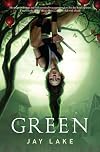
Surprisingly, given the nature of a number of the reviews I've seen for this book, I really enjoyed it.
Let me rephrase. I opened it up briefly to peek at it and see what the writing was like, and ended up carting the book up and down the stairs with me while I got ready for work, reading over breakfast, reading the moment I got home, and reading well past my bedtime to find out what happened. I loved this book.
I think the author did very well communicating the depths of Green's lack of show more understanding about the world around her; I think he did well following her journey to understanding about her own nature; I think the journey itself had mythic qualities that not only follow the quintessential hero's journey, but the tales of folklore.
I also loved the writing style. For some reason, I found it almost lyrical and meditative. show less
Let me rephrase. I opened it up briefly to peek at it and see what the writing was like, and ended up carting the book up and down the stairs with me while I got ready for work, reading over breakfast, reading the moment I got home, and reading well past my bedtime to find out what happened. I loved this book.
I think the author did very well communicating the depths of Green's lack of show more understanding about the world around her; I think he did well following her journey to understanding about her own nature; I think the journey itself had mythic qualities that not only follow the quintessential hero's journey, but the tales of folklore.
I also loved the writing style. For some reason, I found it almost lyrical and meditative. show less
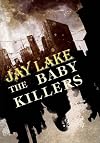
Rating: 4* of five
The Publisher Says: "Within our tale, gentle reader, you will see writ before you a palimpsest of low living and high misdemeanor, and the curious redresses that are visited as a result thereof . . ."
In The Baby Killers, Jay Lake restages mankind's Fall from Grace as an alternate-history steampunk fable. Written in a style of rambunctious Victoriana-that-never-was, this novella is set in Philadelphia in 1907, when that city serves as the seat of the British Dominion of the show more Americas, and as a Pandora's Box of sin and vice. The Governor-General has a taste for violating innocents, while the good Dr. Scholes uses them to fashion his mechanized agents of Justice. The Gollinoster, a feminine incarnation of angry retribution, wanders beneath the city streets - and an undying creature of ancient destruction is rushing to meet her. Villains and heroes (categories that overlap significantly) battle in a story of debauchery, degradation, radical experimentation, mad metaphysics . . . and a farting Frenchman.
Both popular culture and actual history are mined here to create a tale in which the use of idealized technology meets our darkest desires . . . and the result is positively electric.
My Review: Never let it be said or implied or even thought that Jay Lake is anything other than adventurous. This is an exuberant trip into a sick, weird vision of a sick, weird culture.
Much like our own.
Don't believe me?
If this doesn't remind you of the response of the owners to the Bangladeshi clothing-factory collapse, and the BP America president's response to the Deepwater Horizon disaster, you're not paying attention.
The Baby Killer of the title isn't what you think it is. Well, it sort-of is; but not really because it's so much worse than what you think it is: Dr. Scholes uses the living brains of babies to power his retribution machines, his Robocops of steam, which of course means the babies qua babies are dead, though their "lives" are continuing and are augmented by Countess Lovelace's punchtape difference engines.
Drone-using teenaged soldiers, anyone?
So that's the book's level of success. It's a dark and bitter look at the endless and boundless vileness of humanity, and it's a cautionary tale told too late about the price extracted from us all for the sin of hubris, and it's darkly funny as well as starkly moral. It's compact, at 68pp, and so it's impossible to overdose on the grims. It's got a farting Frenchman as its Angel of Justice. It's, well, it's surreal and it's weird and I can think of no good reason for you not to buy and read it.
So go already. Amazon doesn't run on air.
This work is licensed under a Creative Commons Attribution-NonCommercial-ShareAlike 3.0 Unported License. show less
The Publisher Says: "Within our tale, gentle reader, you will see writ before you a palimpsest of low living and high misdemeanor, and the curious redresses that are visited as a result thereof . . ."
In The Baby Killers, Jay Lake restages mankind's Fall from Grace as an alternate-history steampunk fable. Written in a style of rambunctious Victoriana-that-never-was, this novella is set in Philadelphia in 1907, when that city serves as the seat of the British Dominion of the show more Americas, and as a Pandora's Box of sin and vice. The Governor-General has a taste for violating innocents, while the good Dr. Scholes uses them to fashion his mechanized agents of Justice. The Gollinoster, a feminine incarnation of angry retribution, wanders beneath the city streets - and an undying creature of ancient destruction is rushing to meet her. Villains and heroes (categories that overlap significantly) battle in a story of debauchery, degradation, radical experimentation, mad metaphysics . . . and a farting Frenchman.
Both popular culture and actual history are mined here to create a tale in which the use of idealized technology meets our darkest desires . . . and the result is positively electric.
My Review: Never let it be said or implied or even thought that Jay Lake is anything other than adventurous. This is an exuberant trip into a sick, weird vision of a sick, weird culture.
Much like our own.
Don't believe me?
{She} stood sobbing in front of her house. She, who had not cried since age ten when her brother took her virginity in the upstairs maid's room. ... There had probably been six people in the house when {the girl} exploded into flames. Two were girls from her list, valuable members of her stock book.
If this doesn't remind you of the response of the owners to the Bangladeshi clothing-factory collapse, and the BP America president's response to the Deepwater Horizon disaster, you're not paying attention.
The Baby Killer of the title isn't what you think it is. Well, it sort-of is; but not really because it's so much worse than what you think it is: Dr. Scholes uses the living brains of babies to power his retribution machines, his Robocops of steam, which of course means the babies qua babies are dead, though their "lives" are continuing and are augmented by Countess Lovelace's punchtape difference engines.
Drone-using teenaged soldiers, anyone?
So that's the book's level of success. It's a dark and bitter look at the endless and boundless vileness of humanity, and it's a cautionary tale told too late about the price extracted from us all for the sin of hubris, and it's darkly funny as well as starkly moral. It's compact, at 68pp, and so it's impossible to overdose on the grims. It's got a farting Frenchman as its Angel of Justice. It's, well, it's surreal and it's weird and I can think of no good reason for you not to buy and read it.
So go already. Amazon doesn't run on air.
This work is licensed under a Creative Commons Attribution-NonCommercial-ShareAlike 3.0 Unported License. show less
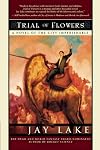
Rating: 4.25* of five
The Publisher Says: The City Imperishable's secret master and heir to the long-vacant throne has vanished from a locked room, as politics have turned deadly in a bid to revive the city's long-vanished empire.
The city's dwarfs, stunted from spending their childhoods in confining boxes, are restive. Bijaz the Dwarf, leader of the Sewn faction among the dwarfs, fights their persecution. Jason the Factor, friend and apprentice to the missing master, works to maintain show more stability in the absence of a guiding hand. Imago of Lockwood struggles to revive the office of Lord Mayor in a bid to turn the City Imperishable away from the path of destruction.
These three must contend with one another as they race to resolve the threats to the city.
My Review: What a trip. The back cover copy calls it an "urban fantasy," which to my mind doesn't conjure images of Perdido Street Station (which this book reminds me of) so much as it does Dead Until Dark et. seq. But the key factor here is to be found in the word "fantasy."
I read a fantasy novel.
There, I said it.
I not only read it, I enjoyed it. BUT DON'T FOR GAWD'S SAKE TELL ANYONE. I will swear an oath that you're lying and that you must be the one who hacked my account and wrote a glowing heap of praise for a book with dwarves, an ancient city declining under an empty throne, a reluctant hero...well, you see my predicament. I can't admit out loud that I liked this kind of guff. "The city is," runs the motto Lake gives the City Imperishable. Yeeesh, really? Portentous much?
But seriously, who wouldn't like a book with this in it:
The abjection of a powerful character, the absolute fall, the hitting bottom with a resounding *crunch* is unsettlingly well-limned.
And some regulars among you might recall my utterances on the subject of majgicqk. They have been uniformly derisory and occasionally cachinnatory. But here again Lake subverts and alters my wall of defense against balderdash:
When you put it that way....
The City Imperishable is, like all places and cultures, built on a bargain. The bargain has costs and it has benefits. Those who pay the costs aren't always the ones who reap the benefits. Each main character, Bijaz the dwarf, Imago the Lord Mayor, and Jason the fector, pays dearly for the City Imperishable to derive the final benefit: Remaining alive. But each of these men, in their turn, finds a greater benefit in his sacrifice. They become whole in their brokenness, and anneal the metal of their character, and in the testing of their different mettles, bring life raging anew through the City Imperishable.
The city is. show less
The Publisher Says: The City Imperishable's secret master and heir to the long-vacant throne has vanished from a locked room, as politics have turned deadly in a bid to revive the city's long-vanished empire.
The city's dwarfs, stunted from spending their childhoods in confining boxes, are restive. Bijaz the Dwarf, leader of the Sewn faction among the dwarfs, fights their persecution. Jason the Factor, friend and apprentice to the missing master, works to maintain show more stability in the absence of a guiding hand. Imago of Lockwood struggles to revive the office of Lord Mayor in a bid to turn the City Imperishable away from the path of destruction.
These three must contend with one another as they race to resolve the threats to the city.
My Review: What a trip. The back cover copy calls it an "urban fantasy," which to my mind doesn't conjure images of Perdido Street Station (which this book reminds me of) so much as it does Dead Until Dark et. seq. But the key factor here is to be found in the word "fantasy."
I read a fantasy novel.
There, I said it.
I not only read it, I enjoyed it. BUT DON'T FOR GAWD'S SAKE TELL ANYONE. I will swear an oath that you're lying and that you must be the one who hacked my account and wrote a glowing heap of praise for a book with dwarves, an ancient city declining under an empty throne, a reluctant hero...well, you see my predicament. I can't admit out loud that I liked this kind of guff. "The city is," runs the motto Lake gives the City Imperishable. Yeeesh, really? Portentous much?
But seriously, who wouldn't like a book with this in it:
There was nothing left of himself that he wanted, save the vague glimmer of peace that he found somewhere inside the violet smoke. Finally he understood the place to which his wife had long since retreated.
Sometimes, when the snow was not so deep and he'd managed a little soup or coffee, {he} thought about making his way {home} and apologizing to his wife. He wasn't sure she'd understand him though--the crap dust had begun to rot his teeth, getting in all too quickly through the breaks, and his tongue was always dry as leather and twice too big.
The abjection of a powerful character, the absolute fall, the hitting bottom with a resounding *crunch* is unsettlingly well-limned.
And some regulars among you might recall my utterances on the subject of majgicqk. They have been uniformly derisory and occasionally cachinnatory. But here again Lake subverts and alters my wall of defense against balderdash:
"Everything carries the seeds of its own opposition, in equal measure. Have you ever toppled a wall? ... You must press as much as it takes to move the stones. They react as they are pushed. What people care to call magic works the same way. No one calls lightning from the summer sky without burning a hole in something, somewhere."
When you put it that way....
The City Imperishable is, like all places and cultures, built on a bargain. The bargain has costs and it has benefits. Those who pay the costs aren't always the ones who reap the benefits. Each main character, Bijaz the dwarf, Imago the Lord Mayor, and Jason the fector, pays dearly for the City Imperishable to derive the final benefit: Remaining alive. But each of these men, in their turn, finds a greater benefit in his sacrifice. They become whole in their brokenness, and anneal the metal of their character, and in the testing of their different mettles, bring life raging anew through the City Imperishable.
The city is. show less
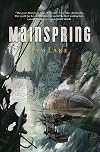
Rating: 4.75* of five
The Publisher Says: Jay Lake's first trade novel is an astounding work of creation. Lake has envisioned a clockwork solar system, where the planets move in a vast system of gears around the lamp of the Sun. It is a universe where the hand of the Creator is visible to anyone who simply looks up into the sky, and sees the track of the heavens, the wheels of the Moon, and the great Equatorial gears of the Earth itself.
Mainspring is the story of a young clockmaker's show more apprentice, who is visited by the Archangel Gabriel. He is told that he must take the Key Perilous and rewind the Mainspring of the Earth. It is running down, and disaster to the planet will ensue if it's not rewound. From innocence and ignorance to power and self-knowledge, the young man will make the long and perilous journey to the South Polar Axis, to fulfill the commandment of his God.
My Review: Several things militate against my discovery of pleasure in this book, such as a Low Tolerance for Capitalization Errors, a complete and oft-expressed disdain for the kind of god present in this book, and its celebration of the Love that Should Shut The Hell Up Already, aka heterosexuality.
But there's an exception to every rule, and this is one.
I confess that the thoroughly requited love story elicited weary, disgusted sighs, and I did a bit of flippity-flip to get past the bits that made me most annoyed, but there's not a whole helluva lot of it, thank goodness.And working for the couple is the fact that she's a different species, sort of.
But the central joke of the book, the mainspring (!) of the humor, the drama, and the action, is the brass track in the sky that the Earth runs on. The Universe IS the clockwork that the famously disproved watchmaker-parable proof of god's existence posits! (If one finds a watch, that is proof there is, somewhere, a watchmaker...the rest is just as silly, so no need to go into it here.)
This I love. This alone gets five whole gold stars with an oak-leaf cluster. This is a new Universe, not just a warmed-over Operation-Sealion-worked yawnfest of an alternative history. (Side note to writers: WWII? Done, done, done, done, done. Aliens even. DONE. Pick something else! ANYthing else!) (Except the American Civil War, also DONE.)
Also because of this complete re-imagining of the laws of physics (good one, Mr. Lake!), I put aside my abiding mistrust of majgicqk as deus ex machina. After all, there's a giant brass track in the sky that emits a mechanical rumble forming the backdrop of all life, the gears of the track must be navigated to go from Northern to Southern Hemisphere, and there are airships! In for a penny, in for a pound. Majgicqk it is.
But it's like all the other tropes that annoy me in fiction (indeed in life), it's *used* in Lake's novel. It's not a Get-Out-Of-Jail-Free card. It's a necessary component of the kind of world this clockmaker god would create. It makes sense. And it happens to be made of desperate needs, which is more like the way the world works anyway.
Hethor, like all heroes, suffers on his quest to save the world, and loses his sense of himself outside his quest. He defines himself as his quest, and is forced to confront the inevitable end of such a self-definition: Complete and utter aloneness and alienation. Because Lake is on the Hero's Journey, the Hero must lose it all.
But Lake is on the Hero's Journey. So, in losing it all, Hethor is rewarded with his heart's desire, and it is not the one he started the quest desiring. That, in my well-read opinion, is how a writer of great gifts ends a Hero's Journey: Wishes granted; now what will those be?
A quarter star off for a villain who isn't a villain but a collection of nasty until far too late in the story to matter. His villainy, as finally expressed, would've launched me into six-star orbit had it been explicit earlier in the narrative.
Whipping back through Mainspring convinces me that a thoroughgoing re-read cannot come amiss. It's that good. It's that rich and dense and satisfying. Just wonderful, and thank you for it, Jay Lake. show less
The Publisher Says: Jay Lake's first trade novel is an astounding work of creation. Lake has envisioned a clockwork solar system, where the planets move in a vast system of gears around the lamp of the Sun. It is a universe where the hand of the Creator is visible to anyone who simply looks up into the sky, and sees the track of the heavens, the wheels of the Moon, and the great Equatorial gears of the Earth itself.
Mainspring is the story of a young clockmaker's show more apprentice, who is visited by the Archangel Gabriel. He is told that he must take the Key Perilous and rewind the Mainspring of the Earth. It is running down, and disaster to the planet will ensue if it's not rewound. From innocence and ignorance to power and self-knowledge, the young man will make the long and perilous journey to the South Polar Axis, to fulfill the commandment of his God.
My Review: Several things militate against my discovery of pleasure in this book, such as a Low Tolerance for Capitalization Errors, a complete and oft-expressed disdain for the kind of god present in this book, and its celebration of the Love that Should Shut The Hell Up Already, aka heterosexuality.
But there's an exception to every rule, and this is one.
I confess that the thoroughly requited love story elicited weary, disgusted sighs, and I did a bit of flippity-flip to get past the bits that made me most annoyed, but there's not a whole helluva lot of it, thank goodness.
But the central joke of the book, the mainspring (!) of the humor, the drama, and the action, is the brass track in the sky that the Earth runs on. The Universe IS the clockwork that the famously disproved watchmaker-parable proof of god's existence posits! (If one finds a watch, that is proof there is, somewhere, a watchmaker...the rest is just as silly, so no need to go into it here.)
This I love. This alone gets five whole gold stars with an oak-leaf cluster. This is a new Universe, not just a warmed-over Operation-Sealion-worked yawnfest of an alternative history. (Side note to writers: WWII? Done, done, done, done, done. Aliens even. DONE. Pick something else! ANYthing else!) (Except the American Civil War, also DONE.)
Also because of this complete re-imagining of the laws of physics (good one, Mr. Lake!), I put aside my abiding mistrust of majgicqk as deus ex machina. After all, there's a giant brass track in the sky that emits a mechanical rumble forming the backdrop of all life, the gears of the track must be navigated to go from Northern to Southern Hemisphere, and there are airships! In for a penny, in for a pound. Majgicqk it is.
But it's like all the other tropes that annoy me in fiction (indeed in life), it's *used* in Lake's novel. It's not a Get-Out-Of-Jail-Free card. It's a necessary component of the kind of world this clockmaker god would create. It makes sense. And it happens to be made of desperate needs, which is more like the way the world works anyway.
Hethor, like all heroes, suffers on his quest to save the world, and loses his sense of himself outside his quest. He defines himself as his quest, and is forced to confront the inevitable end of such a self-definition: Complete and utter aloneness and alienation. Because Lake is on the Hero's Journey, the Hero must lose it all.
But Lake is on the Hero's Journey. So, in losing it all, Hethor is rewarded with his heart's desire, and it is not the one he started the quest desiring. That, in my well-read opinion, is how a writer of great gifts ends a Hero's Journey: Wishes granted; now what will those be?
A quarter star off for a villain who isn't a villain but a collection of nasty until far too late in the story to matter. His villainy, as finally expressed, would've launched me into six-star orbit had it been explicit earlier in the narrative.
Whipping back through Mainspring convinces me that a thoroughgoing re-read cannot come amiss. It's that good. It's that rich and dense and satisfying. Just wonderful, and thank you for it, Jay Lake. show less
Lists
Awards


You May Also Like


Associated Authors
Statistics
- Works
- 220
- Also by
- 126
- Members
- 3,768
- Popularity
- #6,725
- Rating
- 3.5
- Reviews
- 194
- ISBNs
- 88
- Languages
- 6
- Favorited
- 6

