

Meyer Levin (1905–1981)
Author of Compulsion
About the Author
Series
Works by Meyer Levin
The Haggadah. Retold by Meyer Levin. 3 copies
The New Bridge 2 copies
Reporter: A novel 2 copies
Kibbutz Buchenwald Selections From The Kibbutz Diary (Palestine Pioneer Library, No. 9) (1946) 1 copy
Israel Haggadah for Passover 1 copy
Reporter 1 copy
Associated Works
The Jewish caravan : great stories of twenty-five centuries (1965) — Contributor, some editions — 140 copies
The Best Short Stories of 1941 and the Yearbook of the American Short Story (1941) — Cover artist — 11 copies
Tagged
Common Knowledge
- Canonical name
- Levin, Meyer
- Birthdate
- 1905-10-07
- Date of death
- 1981-07-09
- Gender
- male
- Education
- University of Chicago
- Occupations
- reporter
novelist
editor
film critic
war correspondent
autobiographer - Organizations
- Chicago Daily News
Jewish Telegraphic Agency
Esquire - Relationships
- Torres, Tereska (wife)
Levin, Gabriel (son)
Levin, Mikael (son) - Nationality
- USA
Israel - Birthplace
- Chicago, Illinois, USA
- Place of death
- Jerusalem, Israel
- Associated Place (for map)
- Chicago, Illinois, USA
Members
Reviews
Classic Hassidic Tales: Marvellous Tales of Rabbi Israel Baal Shem and of His Great-Grandson, Rabbi Nachman, Retold from Hebrew, Yiddish and German Sources by Meyer Levin

These are not Mulla Nasruddin type stories…these stories tell parables which require thought and insight in order to pierce the veil hiding their spiritual messages. The stories are troubling, often a bit too subtle, confusing and yet intriguing. And, in the end, difficult. But then, they're not for the masses. They also read pretty quickly (not counting the time required for 'thought'); and sometimes seem lighter than they are. It's also notable that the messages get a bit clearer as you show more progress through the book and begin to learn the symbolism within the messages that Lewin is recounting.
And, after all that, it's intriguing to consider the differences among the darkness of this sample of Hassidic mysticism, the drunken ribaldry of Sufi mysticism and the mesmerizing beauty of Christian mysticism. It's obvious that the three traditions (yes, and Zen and Hindu and Mayan) describe the same cosmic truths. And yet I can't help but feel that esoteric Judaism carries some baggage that Christianity and Sufism don't. show less
And, after all that, it's intriguing to consider the differences among the darkness of this sample of Hassidic mysticism, the drunken ribaldry of Sufi mysticism and the mesmerizing beauty of Christian mysticism. It's obvious that the three traditions (yes, and Zen and Hindu and Mayan) describe the same cosmic truths. And yet I can't help but feel that esoteric Judaism carries some baggage that Christianity and Sufism don't. show less
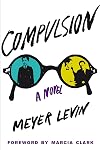
"This was a crime for its own sake. It was a crime in a vacuum, a crime in a perfectly frozen nothingness where the atmosphere of motive was totally absent."
This is a fictionalized account of the Leopold and Loeb kidnapping and murder case from the 1920's. The author was a cub reporter for a Chicago newspaper at the time and covered the case. He was also a fraternity brother and slight acquaintance of one of the perpetrators, and so had an interest in and some inside knowledge of the case. show more This book was written in the 1950's and is considered a worthy predecessor of In Cold Blood and other "nonfiction novels."
The point of view in the novel alternates between the Leopold and Loeb characters (in the book Judd and Artie) and that of Sid, the reporter persona. We follow Leopold and Loeb's obsessive friendship, their planning of what they consider to be the perfect crime (due to their self-perceived super-intelligence), and then the execution of the crime. Then the media frenzy began, and all the clues they left behind despite their superior intelligence, soon led to their capture. The novel continues with a detailed description of their trial and their ultimate conviction.
At the time of the trial, Freudian theory was just beginning to gain popular acceptance, and a great number of psychiatric theories were expounded at the trial to try to explain the crime. The book went on at great length about some of the theories, and I sometimes tired of them. (I note that when the book was written in the1950's Freudian analysis was perhaps approaching the height of its popularity.)
Although perhaps slightly dated, the book is well-written, and a complete picture of this so-called "crime of the century." Recommended.
3 stars show less
This is a fictionalized account of the Leopold and Loeb kidnapping and murder case from the 1920's. The author was a cub reporter for a Chicago newspaper at the time and covered the case. He was also a fraternity brother and slight acquaintance of one of the perpetrators, and so had an interest in and some inside knowledge of the case. show more This book was written in the 1950's and is considered a worthy predecessor of In Cold Blood and other "nonfiction novels."
The point of view in the novel alternates between the Leopold and Loeb characters (in the book Judd and Artie) and that of Sid, the reporter persona. We follow Leopold and Loeb's obsessive friendship, their planning of what they consider to be the perfect crime (due to their self-perceived super-intelligence), and then the execution of the crime. Then the media frenzy began, and all the clues they left behind despite their superior intelligence, soon led to their capture. The novel continues with a detailed description of their trial and their ultimate conviction.
At the time of the trial, Freudian theory was just beginning to gain popular acceptance, and a great number of psychiatric theories were expounded at the trial to try to explain the crime. The book went on at great length about some of the theories, and I sometimes tired of them. (I note that when the book was written in the1950's Freudian analysis was perhaps approaching the height of its popularity.)
Although perhaps slightly dated, the book is well-written, and a complete picture of this so-called "crime of the century." Recommended.
3 stars show less

This period piece is set in the "modern times" of the 1920s and '30s. It's a decade-long bildungsroman detailing the adolescence and young adulthood of a dozen or so young Jews as they come of age in depression-era Chicago. Some go east, some go west, all struggle with self-doubt, loss of identity, loss of livelihood, loss of life. Some marry, some divorce, some just sleep around. Some find what they're looking for, others don't.
The book is refreshingly sharp for its time and pulls no show more punches. I have to admit that the first few hundred pages dragged a bit (it's about 970 pages long), but the next few hundred made up for the poor pace of the opening chapters. By page 600 I'd come to appreciate that Levin had considerable skill in characterization: though his characters were slow to take shape, they aged subtly and suitably, and by the time I'd spent several hundred pages with them, they all made sense.
In fact, I was at the top of page 565 in the edition I've now read when I mused about how wonderful it was I'd come to know well all of the novel's characters, how their lives, once fully fictitious, now seemed very real. I thought about how it is that our own friends and family develop like the characters in the novel: a new friendship is rarely made overnight, but instead takes shape over the course of years. New friends tell stories, share secrets, reveal themselves to one another in fits and starts, and after several years have passed the new friends have become old friends.
Of the "old bunch" I identified most closely with Joe Freedman (the wanderlust-stricken artist) and Sam Eisen (the idealist attorney). These two characters seemed to me the most real; in their searches for self I sense a sort of universal searching, a truly human enterprise.
For instance, Joe travels the world over in trying to find his muse. More than once he finds his inspiration, only to let it go again each time. At the novel's end one senses he's no closer to his goal than where he began. His struggle through the novel's nearly thousand pages could stand for that of anyone who's ever felt lost, betrayed, confused, at sea.
Levin writes well. He lacks Potok's style and Singer's simply incomparable knack for storytelling, but his characterizations are deft and strong, and his plot is engaging. show less
The book is refreshingly sharp for its time and pulls no show more punches. I have to admit that the first few hundred pages dragged a bit (it's about 970 pages long), but the next few hundred made up for the poor pace of the opening chapters. By page 600 I'd come to appreciate that Levin had considerable skill in characterization: though his characters were slow to take shape, they aged subtly and suitably, and by the time I'd spent several hundred pages with them, they all made sense.
In fact, I was at the top of page 565 in the edition I've now read when I mused about how wonderful it was I'd come to know well all of the novel's characters, how their lives, once fully fictitious, now seemed very real. I thought about how it is that our own friends and family develop like the characters in the novel: a new friendship is rarely made overnight, but instead takes shape over the course of years. New friends tell stories, share secrets, reveal themselves to one another in fits and starts, and after several years have passed the new friends have become old friends.
Of the "old bunch" I identified most closely with Joe Freedman (the wanderlust-stricken artist) and Sam Eisen (the idealist attorney). These two characters seemed to me the most real; in their searches for self I sense a sort of universal searching, a truly human enterprise.
For instance, Joe travels the world over in trying to find his muse. More than once he finds his inspiration, only to let it go again each time. At the novel's end one senses he's no closer to his goal than where he began. His struggle through the novel's nearly thousand pages could stand for that of anyone who's ever felt lost, betrayed, confused, at sea.
Levin writes well. He lacks Potok's style and Singer's simply incomparable knack for storytelling, but his characterizations are deft and strong, and his plot is engaging. show less

I had to prompts to finally read this novelization of the Leopold and Loeb murder. I recently enjoyed again the Orson Welles depiction of Clarence Darrow in the Compulsion film. Then, I found an inscribed copy of the same hardcover edition. So, I will read the un-unscribed one and then put it in a Little Free Library.
I really enjoyed this telling, which I am sure comes very close to the truth, at least how it was perceived at the time since Levin as a young reporter was assigned to cover the show more trial and uses many direct quotes from testimony, etc.
Along with Caril, this also really undermines any support I have for the death penalty. show less
I really enjoyed this telling, which I am sure comes very close to the truth, at least how it was perceived at the time since Levin as a young reporter was assigned to cover the show more trial and uses many direct quotes from testimony, etc.
Along with Caril, this also really undermines any support I have for the death penalty. show less
Lists
Awards


You May Also Like


Associated Authors
Statistics
- Works
- 39
- Also by
- 7
- Members
- 1,416
- Popularity
- #18,162
- Rating
- 3.9
- Reviews
- 25
- ISBNs
- 77
- Languages
- 5