
Thomas Locker (1937–2012)
Author of Water Dance
About the Author
Thomas Locker was born in New York City in 1937. In the 1960s, he began his career as a landscape painter. In 1982, he decided to try his hand at writing and illustrating children's books. His first, Where the River Begins, was named one of the 10 best illustrated children's books of 1984 in the show more New York Times Book Review. During his lifetime, he illustrated more than 30 children and young adult books, several of which he also wrote. Some of his works include John Muir: America's Naturalist, Anna and the Bagpiper, The Ice Horse, and The Man who Paints Nature. The books he worked on have received numerous awards including the Christopher Award, the John Burroughs Award, and the New York Times Award for best illustration. He died on March 9, 2012 at the age of 74. show less
Image credit: Thomas Locker teaching at Shimer College Public Domain, https://commons.wikimedia.org/w/index.php?curid=26379897
Works by Thomas Locker
American Landscapes 2 copies
Study of Bierstadt 1 copy
Associated Works
Thirteen Moons on Turtle's Back: A Native American Year of Moons (1992) — Illustrator — 1,138 copies, 17 reviews
Between Earth & Sky: Legends of Native American Sacred Places (1996) — Illustrator — 335 copies, 20 reviews
Snow Toward Evening: A Year in a River Valley/Nature Poems (1990) — Illustrator — 121 copies, 3 reviews
Tagged
Common Knowledge
- Birthdate
- 1937-06-26
- Date of death
- 2012-03-09
- Gender
- male
- Education
- University of Chicago (BA, Art History)
American University (MA) - Occupations
- author
painter
illustrator - Nationality
- USA
- Birthplace
- New York, New York, USA
- Places of residence
- Stuyvesant, New York, USA
East Jewett, New York, USA
Washington, D.C., USA - Place of death
- Albany, New York, USA
- Associated Place (for map)
- New York, USA
Members
Reviews

In spring, a snapping turtle lays her eggs on the hillside beneath the tree. In autumn, leaves fall as squirrels scamper up the trunk carrying nuts. And on a winter night, a backdrop of twinkling stars shines through the branches. Each day, the tree changes with the purple and pink of a sunset or a nip of cold air. But the tree is more than a thing of beauty--its changes represent the passage of time in nature.
"Sky Tree" combines the artistic beauty and the scientific wonder of ever-changing show more nature into a satisfying experience for the soul and the mind.
Each page poses a discussion question, and at the back of the book is an explanation of how Thomas Locker created each beautiful oil painting. show less
"Sky Tree" combines the artistic beauty and the scientific wonder of ever-changing show more nature into a satisfying experience for the soul and the mind.
Each page poses a discussion question, and at the back of the book is an explanation of how Thomas Locker created each beautiful oil painting. show less

In his introduction to Home: A Journey through America—a book of thirteen of his own American landscape paintings, each accompanied by a poem, blessing, or prose—artist Thomas Locker writes:
Home is more than just the place we return to after being away. Home is something that becomes part of us as we live in it. For artists and writers, home can become part of how we see the world and how we shape our words and our artwork. For everyone, the place we call home becomes part of our show more lives.
Locker goes on to say that his collection “defines what home is to many of us.” He expresses the hope that his book will provide “a vision of our varied and special land,” the US, and will inspire readers to celebrate the special places they call home.
Does this book actually do what Locker aspires to? Is it appropriate for the target audience of seven to ten-year-olds, as stated on the book’s back cover? I’d say “sort of” in answer to the first question: a vision of the varied American landscape is certainly there. The feeling of these places being “home,” however, often doesn’t come through. As to the second question—the book’s suitability for grade-school children: My view is that it’s not. I estimate that only a third of the texts selected to accompany Locker’s paintings would be accessible to kids in grades 2 to 5: environmentalist John Muir’s observation about the replenishment of the spirit one gets by climbing a mountain; Willa Cather’s stunning description of the Nebraska prairie from My Ántonia; Carl Sandburg’s brief poem “Fog”; and perhaps the excerpt from Robert Frost’s sonnet “Once by the Pacific.” The syntax, abstraction, and sophisticated concepts in the other passages just aren’t right for a young audience. Joseph Bruchac’s “Children of the Sky,” a poem inspired by the writer’s trip to the ancestral territory of the Apache in Texas, is particularly impenetrable. In it, for example, Bruchac observes that the wind’s whisper is “A breathless chant between promise and prayer.” What does this even mean? Maybe you need to know the Apache culture to get it.
One can’t deny that Locker’s book is attractive, but I grew tired of the hazy, muddy orange tones that dominate several of the paintings, many of which depict sunsets. Human figures, when they do appear in the artworks, are tiny, often alone and in the foreground, dwarfed by the grandeur of the scenes behind them. How this is supposed to convey a sense of home or somehow suggest the way a person is shaped by the landscape he lives in is beyond me.
Home: A Journey through America strikes me as a coffee table book for adults. I certainly liked the concept well enough and I’ll allow that the book is beautiful, but I don’t think the goal was achieved here. I really can’t imagine sharing it with children.
I will, however, conclude on a more positive note, with two favourite passages:
Climb the Mountains (John Muir)
Climb the mountains and get their good tidings.
Nature’s peace will flow into you as sunshine flows into trees.
The winds will blow their own freshness into you, and the storms their energy,
while cares will drop off like autumn leaves.
From My Ántonia (Willa Cather)
As I looked about me I felt that the grass was the country, as the water is the sea. The red of the grass made all the great prairie the colour of wine-stains, or of certain seaweeds when they are first washed up . . . I felt motion in the landscape; in the fresh, easy-blowing morning wind, and in the earth itself, as if the shaggy grass were a sort of loose hide, and underneath it herds of wild buffalo were galloping, galloping . . . The light air about me told me that the world ended here: only the ground and sun and sky were left, and if one went a little farther there would only be sun and sky. show less
Home is more than just the place we return to after being away. Home is something that becomes part of us as we live in it. For artists and writers, home can become part of how we see the world and how we shape our words and our artwork. For everyone, the place we call home becomes part of our show more lives.
Locker goes on to say that his collection “defines what home is to many of us.” He expresses the hope that his book will provide “a vision of our varied and special land,” the US, and will inspire readers to celebrate the special places they call home.
Does this book actually do what Locker aspires to? Is it appropriate for the target audience of seven to ten-year-olds, as stated on the book’s back cover? I’d say “sort of” in answer to the first question: a vision of the varied American landscape is certainly there. The feeling of these places being “home,” however, often doesn’t come through. As to the second question—the book’s suitability for grade-school children: My view is that it’s not. I estimate that only a third of the texts selected to accompany Locker’s paintings would be accessible to kids in grades 2 to 5: environmentalist John Muir’s observation about the replenishment of the spirit one gets by climbing a mountain; Willa Cather’s stunning description of the Nebraska prairie from My Ántonia; Carl Sandburg’s brief poem “Fog”; and perhaps the excerpt from Robert Frost’s sonnet “Once by the Pacific.” The syntax, abstraction, and sophisticated concepts in the other passages just aren’t right for a young audience. Joseph Bruchac’s “Children of the Sky,” a poem inspired by the writer’s trip to the ancestral territory of the Apache in Texas, is particularly impenetrable. In it, for example, Bruchac observes that the wind’s whisper is “A breathless chant between promise and prayer.” What does this even mean? Maybe you need to know the Apache culture to get it.
One can’t deny that Locker’s book is attractive, but I grew tired of the hazy, muddy orange tones that dominate several of the paintings, many of which depict sunsets. Human figures, when they do appear in the artworks, are tiny, often alone and in the foreground, dwarfed by the grandeur of the scenes behind them. How this is supposed to convey a sense of home or somehow suggest the way a person is shaped by the landscape he lives in is beyond me.
Home: A Journey through America strikes me as a coffee table book for adults. I certainly liked the concept well enough and I’ll allow that the book is beautiful, but I don’t think the goal was achieved here. I really can’t imagine sharing it with children.
I will, however, conclude on a more positive note, with two favourite passages:
Climb the Mountains (John Muir)
Climb the mountains and get their good tidings.
Nature’s peace will flow into you as sunshine flows into trees.
The winds will blow their own freshness into you, and the storms their energy,
while cares will drop off like autumn leaves.
From My Ántonia (Willa Cather)
As I looked about me I felt that the grass was the country, as the water is the sea. The red of the grass made all the great prairie the colour of wine-stains, or of certain seaweeds when they are first washed up . . . I felt motion in the landscape; in the fresh, easy-blowing morning wind, and in the earth itself, as if the shaggy grass were a sort of loose hide, and underneath it herds of wild buffalo were galloping, galloping . . . The light air about me told me that the world ended here: only the ground and sun and sky were left, and if one went a little farther there would only be sun and sky. show less

It can be hard to write an educational picture book. You don't have any plot (or you DO and it feels tacked on and weird), and it may be a subject - like the water cycle - that seems to go best with dry, flat, boring diagrams with arrows on them.
The author has completely eschewed the normal approach to go with beautiful, evocative paintings and poetry.
It's not as informative, maybe, as an early science reader approach, but for an introduction to the subject or a younger child - or just for show more having around the house! - I think this is the better option. So get one standard, run of the mill book on the water cycle, but be SURE to get this one as well. You won't regret it. show less
The author has completely eschewed the normal approach to go with beautiful, evocative paintings and poetry.
It's not as informative, maybe, as an early science reader approach, but for an introduction to the subject or a younger child - or just for show more having around the house! - I think this is the better option. So get one standard, run of the mill book on the water cycle, but be SURE to get this one as well. You won't regret it. show less
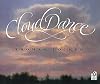
In a series of paintings all depicting the same piece of land in rural New York, artist Thomas Locker invites young readers to look at the sky, and particularly the clouds, through the seasons, at different times of the day, and during different types of weather. In every painting, the sky takes up at least half (and usually more) of the canvas. Children will notice the same woman and child. Often they’re walking around some part of the path that circles the lake in the centre of the show more acreage. When the season and weather permit, they’re out in a rowboat on the lake, and once we see them completing a snowman in the glowering winter dusk.
This is a book that encourages children’s observational skills. There is only minimal text, but it provides some guidance about what to look for. (I do feel this aspect of the book could have been a little stronger.) Because the human figures are small, it’s probably best to read this work with a very small group or a single child.
The book concludes with a discussion of different kinds of clouds, how they’re formed, and where they are found in the troposphere (the layer of the atmosphere nearest the Earth that extends five to ten miles up). Some easy (art and writing) activities are also suggested.
This is a lovely book, and I can imagine that sharing it with a child would be a special meditative experience.It indirectly addresses the changeability and transience of natural phenomena. show less
This is a book that encourages children’s observational skills. There is only minimal text, but it provides some guidance about what to look for. (I do feel this aspect of the book could have been a little stronger.) Because the human figures are small, it’s probably best to read this work with a very small group or a single child.
The book concludes with a discussion of different kinds of clouds, how they’re formed, and where they are found in the troposphere (the layer of the atmosphere nearest the Earth that extends five to ten miles up). Some easy (art and writing) activities are also suggested.
This is a lovely book, and I can imagine that sharing it with a child would be a special meditative experience.It indirectly addresses the changeability and transience of natural phenomena. show less
Lists
Awards


You May Also Like


Associated Authors
Statistics
- Works
- 25
- Also by
- 7
- Members
- 4,283
- Popularity
- #5,868
- Rating
- 4.1
- Reviews
- 356
- ISBNs
- 81
- Languages
- 1
- Favorited
- 1