
John Lyly (–1606)
Author of Euphues: the anatomy of wit; and, Euphues and his England
About the Author
Lyly wrote eight elegant and refined comedies for the boy companies and for court performance. His witty and elaborate prose style, drawing many allusions from classical mythology, was honed in his prose romance, "Euphues: The Anatomy of Wit" (1578), and its sequel, "Euphues and His England" show more (1580). These works are the basis for the "euphuistic" style, characterized by an intensity of antithesis, alliteration, and simile. Lyly's comedies are notable for their graceful and incisive portraits of women. (Bowker Author Biography) show less
Disambiguation Notice:
Alexander and Campaspe is a single play, also known just as Campaspe. However, Gallathea and Midas are two separate plays, sometimes published in the same volume. Euphues: The Anatomy of Wit is sometimes published alone, and sometimes along with its sequel Euphues & his England.
Works by John Lyly
The descent of Euphues, three Elizabethan romance stories: Euphues, Pandosto [and] Piers Plainness (2015) 10 copies
Pappe with an hatchet. : Alias, a figge for my God sonne. Or cracke me this nut. Or a countrie cuffe, that is, a sound boxe of the eare, for the idiot Martin to hold his peace,… (2015) 6 copies, 1 review
"Galatea" and "Midas" (Revels Plays) 2 copies
The Complete Works Of John Lyly: Life; Euphues; The Anatomy Of Wyt; And Entertainments V1 (2006) 2 copies
Complete Works of John Lyly 1 copy
Dramatic Works Vol. 2 1 copy
Dramatic Works Vol.1 1 copy
Associated Works
The Delphian Course : Part Seven : Story of the Drama, Nature Study — Contributor — 4 copies
The Ancient British drama, in three volumes — Contributor — 2 copies
Tagged
Common Knowledge
- Other names
- Lilly, John
- Birthdate
- c. 1554
- Date of death
- 1606-11-30
- Gender
- male
- Education
- University of Oxford (Magdalen College)
- Occupations
- playwright
Member of Parliament - Nationality
- UK
- Birthplace
- Kent, England
- Places of residence
- London, England
- Place of death
- London, England
- Burial location
- St Bartholomew-the-Less, London, England, UK
- Map Location
- England, UK
- Disambiguation notice
- Alexander and Campaspe is a single play, also known just as Campaspe. However, Gallathea and Midas are two separate plays, sometimes published in the same volume. Euphues: The Anatomy of Wit is sometimes published alone, and sometimes along with its sequel Euphues & his England.
Members
Reviews

First performed before Queen Elizabeth I in 1588, Endymion was a prototype of the comedies that Shakespeare would become famous for a decade later. The story is mythical but was undoubtedly allegorical, as the "cult of Elizabeth" was in high gear. Much has been written about that, but the allegorical associations may be entirely ignored if one chooses merely to enjoy the action at face value.
Endymion is bewitched by Cynthia, goddess of the Moon. But he is loved by Tellus, who becomes jealous show more and does what scorned women do in Elizabethan comedies: She resolves to punish him. She conspires with Dipsas, a sorceress, to have a spell put upon him so that he will neither live nor die but sleep eternally. The play revolves around finding a cure for Endymion's enduring sleep, but in the meantime there is high jinx among other lesser characters.
There is Sir Tophas and his servant Epiton, who remind one of Don Quixote and Sancho Panza, but on a less elevated plane. Sir Tophas also puts one in mind of Shakespeare's Falstaff but he is more of a braggart, and he has a pretentious Latin proverb at the ready for every occasion.
There is Endymion's great friend Eumenides who goes off in search of a remedy at the behest of Cynthia. Eumenides loves Semele who cannot see him for dust.
So many years pass while Eumenides is away, that Cynthia and her court despair of Endymion's plight. At last, Eumenides returns with the cure, which prescribes that Cynthia has it in her power to waken Endymion. Cynthia in her wisdom attempts to resolve all disagreements in the wake of Endymion's ordeal.
The plot, such as it is, is pure fluff, but the writing is extraordinary, both in the comic byplay as well as in serious musings. For example, Endymion's apostrophe to Cynthia is almost inspiring. It begins this way:
"O fair Cynthia; oh unfortunate Endymion!
Why was not thy birth as high as thy thoughts, or
Her beauty less than heavenly? Or why are not
thine honors as rare as her beauty or thy fortunes
as great as thy deserts?"
Eumenides delivers a magnificent paean to friendship in which mere romantic love "only tickleth the head with hopes and wishes; friendship the image of eternity in which there is nothing movable, nothing mischievous."
People don't talk or write like this anymore, so it takes some getting used to, but for fans of Elizabethan comedy, the wonderful plays on words and extended metaphors are delightful to read. show less
Endymion is bewitched by Cynthia, goddess of the Moon. But he is loved by Tellus, who becomes jealous show more and does what scorned women do in Elizabethan comedies: She resolves to punish him. She conspires with Dipsas, a sorceress, to have a spell put upon him so that he will neither live nor die but sleep eternally. The play revolves around finding a cure for Endymion's enduring sleep, but in the meantime there is high jinx among other lesser characters.
There is Sir Tophas and his servant Epiton, who remind one of Don Quixote and Sancho Panza, but on a less elevated plane. Sir Tophas also puts one in mind of Shakespeare's Falstaff but he is more of a braggart, and he has a pretentious Latin proverb at the ready for every occasion.
There is Endymion's great friend Eumenides who goes off in search of a remedy at the behest of Cynthia. Eumenides loves Semele who cannot see him for dust.
So many years pass while Eumenides is away, that Cynthia and her court despair of Endymion's plight. At last, Eumenides returns with the cure, which prescribes that Cynthia has it in her power to waken Endymion. Cynthia in her wisdom attempts to resolve all disagreements in the wake of Endymion's ordeal.
The plot, such as it is, is pure fluff, but the writing is extraordinary, both in the comic byplay as well as in serious musings. For example, Endymion's apostrophe to Cynthia is almost inspiring. It begins this way:
"O fair Cynthia; oh unfortunate Endymion!
Why was not thy birth as high as thy thoughts, or
Her beauty less than heavenly? Or why are not
thine honors as rare as her beauty or thy fortunes
as great as thy deserts?"
Eumenides delivers a magnificent paean to friendship in which mere romantic love "only tickleth the head with hopes and wishes; friendship the image of eternity in which there is nothing movable, nothing mischievous."
People don't talk or write like this anymore, so it takes some getting used to, but for fans of Elizabethan comedy, the wonderful plays on words and extended metaphors are delightful to read. show less
Euphues: the Anatomy of Wit and Euphues and His England (Revels Plays Companion Library) (Revels Plays Companion Library MUP) by John Lyly
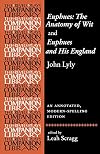
Euphues: The anatomy of Wit and Euphues and his England - John Lyly edited by Leah Scragg
These courtly expressions of the language of love excited my love of language. Lyly’s two novels published in 1578 and 1580 are largely an exercise in style over content, but oh! what a style: delightful passages of prose tumble over one another in a gushing rhetoric that are witty, clever and delight the senses. There are turgid passages where Lyly is more interested in moralising or keeping his nose show more clean, but for much of these two books it is Lyly’s wit and language skills that carry the reader through.
The art of conversation is alive and well in Euphues and he makes his conversations into an art form. One of the major themes throughout the novels is youth versus old age and the education of the young. Here is an example of the prose where the youthful Euphues challenges his father:
“Put you no difference between the young flourishing bay-tree and the old withered beech, no kind of distinction between the waxing and the waning of the moon, and the rising and setting of the sun? Do you measure the hot assaults of youth by the cold skirmishes of age. whose years are subject to more infirmities than our youth? We merry, you melancholy; we zealous in affection, you jealous in all your doings; you testy without cause, we hasty for no quarrel, you careful, we careless; we bold, you fearful; we in all points contrary unto you, and you in all points unlike unto us.”
It is clever in that the schematically constructed sentences are designed to enforce opposition to give a duality, a contrast and it delights the senses with the word play, the sound patterning (syllabic repetition, assonance and alliteration). It should be remembered that Lyly was writing for an educated audience, his target group were probably the courtiers and their allies hovering around the court of Queen Elizabeth I. These people would have been educated in typical sixteenth century fashion to appreciate dialect and rhetoric, as scholastic disputations were an essential part of their education. Lyly uses analogies from proverbial wisdom, classical history and mythology to make his points, but intersperses them in such a way that they are not entirely lost on the less classically educated modern reader. If we don’t always understand the references we can still appreciate the word play and are rarely lost because of the multitude of examples used in any one sentence or paragraph.
Lets have some more Lyly: in the second book Euphues friend Philautus is trying to win the hand of Camilla, a virtuous young lady that has given him no encouragement. He takes the opportunity at a masked ball to declare his love for Camilla and she firmly puts him in his place:
“I will end where you begun, hoping you will begin where I end. You let fall your question which I looked for, and picked a quarrel which I thought not of, and that is love. But let her that is disposed to answer your quarrel, be curious to demand your question. And this gentleman, I desire you, all questions and quarrels set apart: you think me as a friend so far forth as I can grant with modesty or you require with good manners; and as a friend I wish that you blow no more this fire of love, which will waste you before it warms me, and make a coal in you before it can kindle in me. If you think otherwise, I may as well use a shift to drive you off, as you did a show to draw me on. I have answered your custom, lest you accuse me of coyness, no otherwise than I might, mine honour saved and your name unknown.”
The Anatomy of Wit is an apt title for the book and it is the wit and style that Samuel Johnson would appreciate and use later in the eighteenth century. I can just imagine him sitting in the Lamb and Flag with his circle of cronies having boned up on John Lyly, making their puns and witticisms. Oscar Wilde’s famous epigrams owe much to Lyly as well and if you enjoy that style of writing then it is worth going back to Lyly who probably took this style as far as it could go.
E M Forster in his Aspects of the Novel identified essential requisites for a novel, which were: story and plot, people, pattern and rhythm and it is worth using those aspects on Lyly’s books as their are many claims that they are the earliest novel books in the English Language. There are earlier claimants for example; Malory’s Le Morte dArthur; yet this was a collection of stories without much discernible pattern and later George Gascoigne’s The Adventures of master F J, but this was part of a collection of poetry. The weakness of Euphues is its lack of story line and plot; there is one, but it is very simple. In the Anatomy of Wit, it is little more than two friends and gentleman courtiers of Naples: Euphues and Philautus’ rivalry for Lucilla whose change of mind from one to the other causes a break in their friendship. The resolution to the story is laid out in a series of letters between the two men and Euphues takes the moral high ground and lectures Philautus with his Cooling Card for Philautus and all Fond Lovers. The book peters out with more lectures on the education of Young men, a missive to The Grave Matrons and Honest Maidens of Italy, a debate between Euphues and the atheist Atheos and finally various letters from Euphues to all and sundry to tie up loose ends. Euphues and his England starts with a reconciled Euphues and Philautus on their way to make a show at Queen Elizabeth’s court in England. It features a succession of stories within stories as Euphues tells the story of Callimachus to Philautus while he is hanging his head over the side of the boat with sea-sickness. It is a good story of a prodigal son which was a popular theme of the times. The two gentlemen arrive in Dover explore the town and seek the road to London. On the way they look for accommodation and stop at the house of Fidus; a beekeeper, there is some suspicion between them, but once this is resolved Fidus tells a story from his own past; when he himself was a courtier and of his love affair with Iffida. The two men eventually make it to London where Euphues is a big hit at court with his wit and manners. Philautus is not so fortunate in that he falls in love with Camilla; a lady in waiting and finds himself out of his depth. This near disastrous love affair leads to Euphues retiring from courtly life and again becoming estranged from Philautus. Again the story is resolved through a series of letters and Philautus and Euphues draw closer together but it ends with Euphues back in Greece and the relationship still not certain. The book ends with a panegyric on England and its wonderful Queen.
John Lyly was one of the first authors not to rely on patronage for his work, but he did rely on his writings to gain himself a position at court. His criticisms of courtiers that ended the first novel is vehemently put to right at the start of the second book where he apologises for any offence caused claiming that he was only criticising courtiers in Italy and Greece. The panegyric to the Queen and her court which ends the second novel cements his position on this issue and there is no dichotomy here, however this is not true of the story telling proper, where during most conversations, the duality and contrasts in the witty ripostes sometimes provides more questions than answers. It certainly adds to the depth within the novel, which might have otherwise been a pretty dull story. Male friendship under attack from heterosexual love, nature versus nurture, education of the young and the duties and position of courtiers are all themes explored through these two works, however no final position is ever apparent while Lyly is writing in his euphuistic style.
His two novels were popular during the 1580’s being reprinted several times and did enough to gain him a position at court, it has been said that his books had an influence on the way courtiers to the queen made use of language and he was certainly revered by his contemporaries, however after this period he went fairly quickly out of fashion and has never really been in fashion since. It would seem to me that Lyly’s so distinctive style of writing would be a hard act to follow and would soon lead to a dead end; for example how far can you take witticism without destroying the purpose of the novel, this to my mind was a problem for Lyly hence the use of the epistolary device to bring some shape and form to his books. There is no doubt that he influenced other writers and for this reason alone it is worth reading him, as well as the fact that their are some purple patches of prose that are a sheer delight to read. 4.5 stars. show less
These courtly expressions of the language of love excited my love of language. Lyly’s two novels published in 1578 and 1580 are largely an exercise in style over content, but oh! what a style: delightful passages of prose tumble over one another in a gushing rhetoric that are witty, clever and delight the senses. There are turgid passages where Lyly is more interested in moralising or keeping his nose show more clean, but for much of these two books it is Lyly’s wit and language skills that carry the reader through.
The art of conversation is alive and well in Euphues and he makes his conversations into an art form. One of the major themes throughout the novels is youth versus old age and the education of the young. Here is an example of the prose where the youthful Euphues challenges his father:
“Put you no difference between the young flourishing bay-tree and the old withered beech, no kind of distinction between the waxing and the waning of the moon, and the rising and setting of the sun? Do you measure the hot assaults of youth by the cold skirmishes of age. whose years are subject to more infirmities than our youth? We merry, you melancholy; we zealous in affection, you jealous in all your doings; you testy without cause, we hasty for no quarrel, you careful, we careless; we bold, you fearful; we in all points contrary unto you, and you in all points unlike unto us.”
It is clever in that the schematically constructed sentences are designed to enforce opposition to give a duality, a contrast and it delights the senses with the word play, the sound patterning (syllabic repetition, assonance and alliteration). It should be remembered that Lyly was writing for an educated audience, his target group were probably the courtiers and their allies hovering around the court of Queen Elizabeth I. These people would have been educated in typical sixteenth century fashion to appreciate dialect and rhetoric, as scholastic disputations were an essential part of their education. Lyly uses analogies from proverbial wisdom, classical history and mythology to make his points, but intersperses them in such a way that they are not entirely lost on the less classically educated modern reader. If we don’t always understand the references we can still appreciate the word play and are rarely lost because of the multitude of examples used in any one sentence or paragraph.
Lets have some more Lyly: in the second book Euphues friend Philautus is trying to win the hand of Camilla, a virtuous young lady that has given him no encouragement. He takes the opportunity at a masked ball to declare his love for Camilla and she firmly puts him in his place:
“I will end where you begun, hoping you will begin where I end. You let fall your question which I looked for, and picked a quarrel which I thought not of, and that is love. But let her that is disposed to answer your quarrel, be curious to demand your question. And this gentleman, I desire you, all questions and quarrels set apart: you think me as a friend so far forth as I can grant with modesty or you require with good manners; and as a friend I wish that you blow no more this fire of love, which will waste you before it warms me, and make a coal in you before it can kindle in me. If you think otherwise, I may as well use a shift to drive you off, as you did a show to draw me on. I have answered your custom, lest you accuse me of coyness, no otherwise than I might, mine honour saved and your name unknown.”
The Anatomy of Wit is an apt title for the book and it is the wit and style that Samuel Johnson would appreciate and use later in the eighteenth century. I can just imagine him sitting in the Lamb and Flag with his circle of cronies having boned up on John Lyly, making their puns and witticisms. Oscar Wilde’s famous epigrams owe much to Lyly as well and if you enjoy that style of writing then it is worth going back to Lyly who probably took this style as far as it could go.
E M Forster in his Aspects of the Novel identified essential requisites for a novel, which were: story and plot, people, pattern and rhythm and it is worth using those aspects on Lyly’s books as their are many claims that they are the earliest novel books in the English Language. There are earlier claimants for example; Malory’s Le Morte dArthur; yet this was a collection of stories without much discernible pattern and later George Gascoigne’s The Adventures of master F J, but this was part of a collection of poetry. The weakness of Euphues is its lack of story line and plot; there is one, but it is very simple. In the Anatomy of Wit, it is little more than two friends and gentleman courtiers of Naples: Euphues and Philautus’ rivalry for Lucilla whose change of mind from one to the other causes a break in their friendship. The resolution to the story is laid out in a series of letters between the two men and Euphues takes the moral high ground and lectures Philautus with his Cooling Card for Philautus and all Fond Lovers. The book peters out with more lectures on the education of Young men, a missive to The Grave Matrons and Honest Maidens of Italy, a debate between Euphues and the atheist Atheos and finally various letters from Euphues to all and sundry to tie up loose ends. Euphues and his England starts with a reconciled Euphues and Philautus on their way to make a show at Queen Elizabeth’s court in England. It features a succession of stories within stories as Euphues tells the story of Callimachus to Philautus while he is hanging his head over the side of the boat with sea-sickness. It is a good story of a prodigal son which was a popular theme of the times. The two gentlemen arrive in Dover explore the town and seek the road to London. On the way they look for accommodation and stop at the house of Fidus; a beekeeper, there is some suspicion between them, but once this is resolved Fidus tells a story from his own past; when he himself was a courtier and of his love affair with Iffida. The two men eventually make it to London where Euphues is a big hit at court with his wit and manners. Philautus is not so fortunate in that he falls in love with Camilla; a lady in waiting and finds himself out of his depth. This near disastrous love affair leads to Euphues retiring from courtly life and again becoming estranged from Philautus. Again the story is resolved through a series of letters and Philautus and Euphues draw closer together but it ends with Euphues back in Greece and the relationship still not certain. The book ends with a panegyric on England and its wonderful Queen.
John Lyly was one of the first authors not to rely on patronage for his work, but he did rely on his writings to gain himself a position at court. His criticisms of courtiers that ended the first novel is vehemently put to right at the start of the second book where he apologises for any offence caused claiming that he was only criticising courtiers in Italy and Greece. The panegyric to the Queen and her court which ends the second novel cements his position on this issue and there is no dichotomy here, however this is not true of the story telling proper, where during most conversations, the duality and contrasts in the witty ripostes sometimes provides more questions than answers. It certainly adds to the depth within the novel, which might have otherwise been a pretty dull story. Male friendship under attack from heterosexual love, nature versus nurture, education of the young and the duties and position of courtiers are all themes explored through these two works, however no final position is ever apparent while Lyly is writing in his euphuistic style.
His two novels were popular during the 1580’s being reprinted several times and did enough to gain him a position at court, it has been said that his books had an influence on the way courtiers to the queen made use of language and he was certainly revered by his contemporaries, however after this period he went fairly quickly out of fashion and has never really been in fashion since. It would seem to me that Lyly’s so distinctive style of writing would be a hard act to follow and would soon lead to a dead end; for example how far can you take witticism without destroying the purpose of the novel, this to my mind was a problem for Lyly hence the use of the epistolary device to bring some shape and form to his books. There is no doubt that he influenced other writers and for this reason alone it is worth reading him, as well as the fact that their are some purple patches of prose that are a sheer delight to read. 4.5 stars. show less
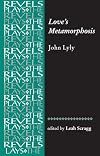
This completes my reading of John Lyly's plays and with it's pared down style, which does not sacrifice the wit of the playwright it was for me the most enjoyable to read. It is a difficult play to date as there are no records of a performance during Lyly's most productive years in writing for the theatre (1584 - 1592). His concerns were to write amusing and provocative drama for a sophisticated court audience. His use of allegory is open to interpretation and he seems to have been careful show more never to let it get in the way of providing an entertainment.
The play is set in Arcadia. Three foresters are in love with three completely unkind nymphs of the God Ceres, who embody three unpleasant traits: indifference, inconstancy, and pride. The foresters pray that Cupid will punish the nymphs by metamorphosing them to the natural objects that they most resemble; a rock, a bird, and a rose. However the foresters cannot live without the Nymphs and beg Cupid to change them back, however the three nymphs are even more determined not to have the foresters as husbands. It is only with the intervention of Ceres herself they reluctantly accept the men who are by now under no allusions about the difficulties of marriage. At the same time Erisicthon, a wealthy farmer, cuts down a tree sacred to Ceres which houses the nymph Fidelia who is killed, Ceres in revenge sends famine to gnaw at his vitals and Erisicthon is forced to sell his daughter Protea to pay for more food. Protea seeks the help of the sea God Neptune in saving her lover Petulius from the grip of a siren, she is successful and they appear before Ceres and beg her to call off famine from torturing Erisicthon.
It is all neatly worked through by Lyly in his delightful prose style, happy endings but not happy ever after endings, with only Lyly's description of famine to mar the lightness of the mood:
"Shee lyeth gasping, and swalloweth nothing but air, her face pale, and so leane, as easily thou maiest through the very skin as in a glass thy shadow; her hair long, black and shaggie, her eyes sunk so far in her head that she lloketh out the nape of her neck, her lips white and rough, her teeth hollow and red with rustiness; her skin so thin, that thou maiest as lively make an anatomie of her body as she were cut up with chiurgions (surgeons), her maw like a drie bladder; her heart swollen big with wind; and all her bowels like snakes working in her bodie."
The three nymphs enjoy flouting love, they stir up the amorous foresters, but they want to remain chaste, for their part the foresters question their need for love and are content to admit that they cannot fight against the desires of their blood. Lyly is intent on providing a commentary on the parallels of spotless virginity, chastity and constancy in love. Cupid seems to have the most power amongst the gods with his idea that love conquers all, even though he is derided because of his blindness and his nakedness. There is so much to read into Lyly's prose that the play can be read on a number of levels; the simple working out of a complicated plot, the parallels between the two strands of storytelling and an admiration as to how Lyly brings them together, an interesting rhetoric on the need for love, and an allegorical overlay that does not intrude but gives plenty of food for thought. I would like to think that this short play was the last that Lyly wrote because for me it encapsulates all that made his plays so vital and so different from the plays that were performed before the general public in the grand open air theatres. As a piece of drama it lacks dramatic appeal, but the delightful conversations that always point to a much deeper level of ideas do bear out a careful reading. If you want to get a flavour of the master of providing entertainment to Elizabeth's courtiers then this delightful fluff will do the job.
4 stars. show less
The play is set in Arcadia. Three foresters are in love with three completely unkind nymphs of the God Ceres, who embody three unpleasant traits: indifference, inconstancy, and pride. The foresters pray that Cupid will punish the nymphs by metamorphosing them to the natural objects that they most resemble; a rock, a bird, and a rose. However the foresters cannot live without the Nymphs and beg Cupid to change them back, however the three nymphs are even more determined not to have the foresters as husbands. It is only with the intervention of Ceres herself they reluctantly accept the men who are by now under no allusions about the difficulties of marriage. At the same time Erisicthon, a wealthy farmer, cuts down a tree sacred to Ceres which houses the nymph Fidelia who is killed, Ceres in revenge sends famine to gnaw at his vitals and Erisicthon is forced to sell his daughter Protea to pay for more food. Protea seeks the help of the sea God Neptune in saving her lover Petulius from the grip of a siren, she is successful and they appear before Ceres and beg her to call off famine from torturing Erisicthon.
It is all neatly worked through by Lyly in his delightful prose style, happy endings but not happy ever after endings, with only Lyly's description of famine to mar the lightness of the mood:
"Shee lyeth gasping, and swalloweth nothing but air, her face pale, and so leane, as easily thou maiest through the very skin as in a glass thy shadow; her hair long, black and shaggie, her eyes sunk so far in her head that she lloketh out the nape of her neck, her lips white and rough, her teeth hollow and red with rustiness; her skin so thin, that thou maiest as lively make an anatomie of her body as she were cut up with chiurgions (surgeons), her maw like a drie bladder; her heart swollen big with wind; and all her bowels like snakes working in her bodie."
The three nymphs enjoy flouting love, they stir up the amorous foresters, but they want to remain chaste, for their part the foresters question their need for love and are content to admit that they cannot fight against the desires of their blood. Lyly is intent on providing a commentary on the parallels of spotless virginity, chastity and constancy in love. Cupid seems to have the most power amongst the gods with his idea that love conquers all, even though he is derided because of his blindness and his nakedness. There is so much to read into Lyly's prose that the play can be read on a number of levels; the simple working out of a complicated plot, the parallels between the two strands of storytelling and an admiration as to how Lyly brings them together, an interesting rhetoric on the need for love, and an allegorical overlay that does not intrude but gives plenty of food for thought. I would like to think that this short play was the last that Lyly wrote because for me it encapsulates all that made his plays so vital and so different from the plays that were performed before the general public in the grand open air theatres. As a piece of drama it lacks dramatic appeal, but the delightful conversations that always point to a much deeper level of ideas do bear out a careful reading. If you want to get a flavour of the master of providing entertainment to Elizabeth's courtiers then this delightful fluff will do the job.
4 stars. show less

This book was neither witty, nor euphuestic (allegedly, it is from here that the word "euphemism" is derived), nor an anatomy of anything, save for extreme unreadability in the first part, a rehashed attempt to expound on Ecclesiastes in the second part, and boring missives in the third. It has renown for being the first English novel, but it is not a novel at all. It's a hodgepodge of excruciating words, it's inconsistent in its narrative, and way too long even at 152 pages. It does not show more belong on the list of 1,001 Books to Read Before You Die. The honor should be given to whatever English novel is next that was better than this one; an easy bar to clear. show less
Lists
Awards


You May Also Like


Associated Authors
Statistics
- Works
- 42
- Also by
- 17
- Members
- 371
- Popularity
- #64,991
- Rating
- 4.0
- Reviews
- 10
- ISBNs
- 55
- Favorited
- 3