Thomas K. McCraw (1940–2012)
Author of Prophet of Innovation: Joseph Schumpeter and Creative Destruction
About the Author
Thomas K. McCraw is Straus Professor of Business History Emeritus at the Harvard Business School. His book Prophets of Regulation (Harvard) was awarded the 1985 Pulitzer Prize in history.
Works by Thomas K. McCraw
The Founders and Finance: How Hamilton, Gallatin, and Other Immigrants Forged a New Economy (2012) 124 copies, 4 reviews
Prophets of Regulation: Charles Francis Adams, Louis D. Brandeis, James M. Landis, Alfred E. Kahn (1984) 93 copies
Creating Modern Capitalism: How Entrepreneurs, Companies, and Countries Triumphed in Three Industrial Revolutions (1997) 62 copies
The Intellectual Venture Capitalist: John H. McArthur and the Work of the Harvard Business School, 1980-1995 (1999) 6 copies
America versus Japan: A Comparative Study of Business-Government Relations Conducted at Harvard (1986) 5 copies
Tagged
Common Knowledge
- Canonical name
- McCraw, Thomas K.
- Legal name
- McCraw, Thomas Kincaid
- Birthdate
- 1940-09-11
- Date of death
- 2012-11-03
- Gender
- male
- Education
- University of Mississippi (BA | 1962)
University of Wisconsin-Madison (MA ∙ PhD ∙ history) - Occupations
- historian (business)
professor - Organizations
- Harvard Business School (Isidor Straus Professor of Business History ∙ Emeritus)
United States Navy
University of Texas at Austin - Awards and honors
- Pulitzer Prize (History ∙ 1985)
Thomas Newcomen Award (1986) - Relationships
- Cruikshank, Jeffrey L. (co-editor)
- Nationality
- USA
- Birthplace
- Corinth, Mississippi, USA
- Place of death
- Cambridge, Massachusetts, USA
- Associated Place (for map)
- USA
Members
Reviews
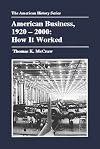
A very optimistic account of business growth in the United States from 1920 to 2000. I think the main argument here is the importance of innovation and a decision making model that is a mixture of centralization and decentralized. I would like to see how McCraw would cover the last twenty years. There is a brief chapter at the end on the rise of Silicon Valley, but it was written when there was still a very optimistic view of the internet and globalization. I wonder how a chapter covering show more the expansion of the internet (with its dark side), the rise of China (which is not mentioned in this book), social media, collection and selling of personal information, and the changes caused by the 2008 great recession play out. show less
The Founders and Finance: How Hamilton, Gallatin, and Other Immigrants Forged a New Economy by Thomas K. McCraw
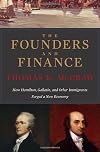
Let's take a difficult subject to explain, a potential snoozer, and do so in a way to inform your readers of the central importance of the people and the institutions they created at the beginning of the United States in a lively and engaging manner. Exceptionally well written and a delight to read. If you succeed against the odds, you'll finish with this book. Excellent.
The Founders and Finance: How Hamilton, Gallatin, and Other Immigrants Forged a New Economy by Thomas K. McCraw
Basically a double-biography of Alexander Hamilton (America's first Treasury secretary) and Albert Gallatin (America's third Treasury secretary), with a focus on their financial policies. Hamilton, of course, is having a bit of a national moment. But Gallatin — the longest-serving Treasury secretary in U.S. history, and the principal economic adviser to both presidents Thomas Jefferson and James Madison — is much more obscure.
As someone who's read Ron Chernow's biography, there was show more little in the Hamilton section that was new. But it was well-done and concise.
The Gallatin section was more interesting, because I knew less about Gallatin.
But I felt the book didn't really transcend the sum of its parts. It did a good job highlighting Hamilton's and Galatin's similarities — their immigrant backgrounds, their support for banks and commerce (versus agriculture), their role as administrators and advisers to Virginian presidents. This is interesting stuff, especially McCraw's thesis that a shared immigrant background made the two men more open to commerce.
Where it fell short was in contrasting the two. As a brief section discussing Gallatin's tenure in Congress highlights, the Pennsylvanian had some big differences with Hamilton's financial system. But the chapters on Gallatin's service as Treasury secretary largely wave these away. Instead they focus on their similarities. Gallatin's preference for less regulation and a smaller debt than Hamilton are mentioned almost in passing. A sharper focus on the differences between their worldview would have not only been helpful new information but it would have also brought their similarities into sharper relief. show less
As someone who's read Ron Chernow's biography, there was show more little in the Hamilton section that was new. But it was well-done and concise.
The Gallatin section was more interesting, because I knew less about Gallatin.
But I felt the book didn't really transcend the sum of its parts. It did a good job highlighting Hamilton's and Galatin's similarities — their immigrant backgrounds, their support for banks and commerce (versus agriculture), their role as administrators and advisers to Virginian presidents. This is interesting stuff, especially McCraw's thesis that a shared immigrant background made the two men more open to commerce.
Where it fell short was in contrasting the two. As a brief section discussing Gallatin's tenure in Congress highlights, the Pennsylvanian had some big differences with Hamilton's financial system. But the chapters on Gallatin's service as Treasury secretary largely wave these away. Instead they focus on their similarities. Gallatin's preference for less regulation and a smaller debt than Hamilton are mentioned almost in passing. A sharper focus on the differences between their worldview would have not only been helpful new information but it would have also brought their similarities into sharper relief. show less
The Founders and Finance: how Hamilton, Gallatin, and other immigrants forged a new economy by Thomas K. McCraw
A superb history and a great understanding of Hamilton and Gallatin and the early years of this country. I am most surprised that a Harvard Business School professor is so sympathetic to the needs of the common people. The footnotes are a joy to read. He even cites White's "It's Your Misfortune And None Of My Own" which is by far the best history of the American West that I have ever read.
Lists
Awards


You May Also Like


Statistics
- Works
- 12
- Members
- 581
- Popularity
- #43,162
- Rating
- 4.0
- Reviews
- 9
- ISBNs
- 26
- Languages
- 3