
Sylvia Nasar
Author of A Beautiful Mind: The Life of Mathematical Genius and Nobel Laureate John Nash
About the Author
Sylvia Nasar was born in Rosenheim, Germany on August 17, 1947. She received a bachelor's degree in literature from Antioch College in 1970 and master's degree in economics from New York University in 1976. She is an economist and author. Her books include A Beautiful Mind, which inspired the show more academy award winning movie, and Grand Pursuit: The Story of Economic Genius. She was an economics correspondent for the New York Times and is the John S. and James L. Knight Professor of Business Journalism at Columbia University. Her work has appeared in several publications including the New Yorker, Vanity Fair, and Newsweek. (Bowker Author Biography) show less
Disambiguation Notice:
(yid) VIAF:39524434
Image credit: Image taken from Columbia.edu/news. http://www.columbia.edu/cu/news/00/10/sylviaNasar.html
Works by Sylvia Nasar
A Beautiful Mind: The Life of Mathematical Genius and Nobel Laureate John Nash (1998) 5,227 copies, 66 reviews
A Beautiful Mind: The Life of Mathematical Genius and Nobel Laureate John Nash, Abridged Version (2001) 32 copies, 3 reviews
Associated Works
Tagged
Common Knowledge
- Canonical name
- Nasar, Sylvia
- Other names
- NASAR, Sylvia
- Birthdate
- 1947-08-17
- Gender
- female
- Education
- Antioch College (1970 | BA | literature)
New York University (1976 | MA | economics) - Occupations
- economist
journalist
professor
author - Organizations
- The New York Times
Columbia University
Fortune
U.S. News & World Report - Awards and honors
- National Book Critics Circle Award (1998)
Los Angeles Times Book Prize (2011)
Pulitzer Prize (1998) - Relationships
- McLeod, Darryl (husband)
- Short biography
- Sylvia Nasar is a German born economist, author and journalist. Educated in Turkey and the USA she is now the Knight Chair at the Graduate School of Journalism in Columbia University.
- Nationality
- Germany (birth)
USA - Birthplace
- Rosenheim, Germany
- Places of residence
- Ankara, Turkey
Yellow Springs, Ohio, USA
New York, New York, USA
Tarrytown, New York, USA - Map Location
- USA
Members
Reviews
https://nwhyte.livejournal.com/3806914.html
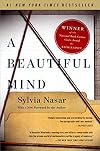
I got a lot more out of the book than the film. It is honest where the film is not about Alicia's origins, John Nash's sexuality and the nature and course of his illness and career. It goes a bit into the mathematics without trying too hard; in the end, the non-specialist has to take the word of the specialist that this was all Really Important Stuff.
But where the book excels is in its examination of the social and political construction of the show more environment where Nash worked. It had not occurred to me that the Princeton of Einstein (and Nash) was very different from the Princeton of Woodrow Wilson, just a few decades before. Nasar maps out very carefully how the decision of a few intellectual centres of excellence to invest in mathematics - or rather, in mathematicians - was driven by wider political and social currents, including McCarthyism and antisemitism (Nash himself also lurched into antisemitism, and not only when deluded). Her behind-the-scenes account of how Nash almost didn't get the 1994 Nobel Prize is one of the most gripping things I've ever read in a scientific biography. (Yeah, I know it's not technically a Nobel Prize. Sue me.)
Some of Nash's friends queried whether the biography was ethical, given that it was written without his consent or cooperation. In fact his attitude was studiedly neutral, and Nasar clearly had full cooperation from his colleagues and lovers, which he could presumably have deterred if he had really wanted to. He was apparently pleased enough with it in the end, and enjoyed the film too, though he commented (rightly enough) that it wasn't really about him. show less
I got a lot more out of the book than the film. It is honest where the film is not about Alicia's origins, John Nash's sexuality and the nature and course of his illness and career. It goes a bit into the mathematics without trying too hard; in the end, the non-specialist has to take the word of the specialist that this was all Really Important Stuff.
But where the book excels is in its examination of the social and political construction of the show more environment where Nash worked. It had not occurred to me that the Princeton of Einstein (and Nash) was very different from the Princeton of Woodrow Wilson, just a few decades before. Nasar maps out very carefully how the decision of a few intellectual centres of excellence to invest in mathematics - or rather, in mathematicians - was driven by wider political and social currents, including McCarthyism and antisemitism (Nash himself also lurched into antisemitism, and not only when deluded). Her behind-the-scenes account of how Nash almost didn't get the 1994 Nobel Prize is one of the most gripping things I've ever read in a scientific biography. (Yeah, I know it's not technically a Nobel Prize. Sue me.)
Some of Nash's friends queried whether the biography was ethical, given that it was written without his consent or cooperation. In fact his attitude was studiedly neutral, and Nasar clearly had full cooperation from his colleagues and lovers, which he could presumably have deterred if he had really wanted to. He was apparently pleased enough with it in the end, and enjoyed the film too, though he commented (rightly enough) that it wasn't really about him. show less

Sylvia Nasar's biography of John Nash tells the story of this mathematical genius with precision, excellent scholarship and attention to background details that puts the motivations and actions of this man in the context of the time in which he was most active. She describes Cold War politics and McCarthyism, both of which had profound effects on mathematicians and physicists during the 50s, 60s and 70s. So why am I giving this book only 3 stars? Well, quite frankly, I didn't like the man! show more As we all know from the movie (which I actually haven't seen), he becomes schizophrenic, which occurs half way through the book. Before that, he was an insecure, arrogant tyrant who belittled anyone whose intellect did not measure up to his standards. Although blessed with positions at some of our most prestigious institutions, he was an indifferent teacher at best and a nasty one on the bad days. I kept thinking, "why do I have to wait for him to become schizophrenic (in the second half of the book) to develop empathy for this guy?" However that was the case. I certainly have enjoyed books about far worse people (e.g. Adolf Eichmann). I guess the way he treated his lovers, wife and children really got to me. Nevertheless, the book is really an excellent biography, well-researched and worth reading. Also, the story of him recovering his intellectual abilities, conquering schizophrenia as well as winning a Nobel Prize and reestablishing a life with his loved ones is very inspiring and redeeming. show less

Some interesting articles, a lot that struck me as Reader's Digest level 'science'. Doctors are being paid by drug reps! Inappropriate medications are being prescribed for children! There's a rare genetic disease that makes people bite off their fingers! Hmmph. Al Gore's discussion of global warming was interesting, primarily because it's a lot more nuanced than the usual reporting on the subject - we can't destroy the world, but we _can_ make it a lot less pleasant for humans to live in. show more And some of the genetic discussions were also interesting - commercial gene-sequencing, and global seed storage. Overall, though, the book was a lot less interesting than I thought it would be - there was not one reporting of a real discovery, nor anything in the hard sciences. In the intro the editor mentioned that medicine was the major focus that year - but personally I'd have found some hard science to replace at least one of the three doctors-doing-bad-stuff RD-level stories. I don't think I'll bother to seek out others in the series - though if some have other editors they might be worth my while. show less
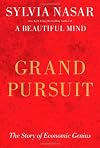
This book is to economic theory as "Lives of the Great Composers" is to music, but it is still a very good read. The book is billed as an exploration of economic thought since the mid-nineteenth century. Rather than thought per se, however, the book focusses on the people who thought the thoughts, and the times in which they lived.
The book is a welcome reminder that economic thought isn't wholly irrelevant. Since 2008, the reputation of economics as a serious discipline has taken a beating. show more This reflects the failure of most economists to forecast the financial collapse and the enthusiastic collaboration of some as proponents of the policies and practices that led to that collapse. But Ms. Nadler's book reminds us that economics is indeed a serious enquiry into a key question -- assuming that people's material condition has some bearing on their welfare, how can life be made better for humanity as a whole? In examining that question,economics contributes much beyond short-term forecasting. Moreover, the book argues convincingly that economics as a discipline made some real contributions to bettering the human condition, for example by helping policy makers in 1945-47 avoid the mistakes of 1918.
Beyond adressing the broad issue of the worth of economics as a discipline, this is a great read. I probably find it more interesting than most, since I am a retired economist, and studied the theories of most of the people she discusses. But she turns the discussion from pure theory (which can bore even retired economists) to a fascinating story about the evolution of the discipline, and to many fascinating stories about some very interesting people. This book is a worthy successor to Robert Heilbroner's "The Worldly Philosophers".
The strongest impression I took away from this book wasn't about economic theory, but about economic fact. For 10,000 years, most people spent their lives in misery, caught in the Malthusian trap of limited resources and population pressure. Over the last 200 years, however, most of humanity has escaped the Malthusian trap. Ms. Nadler points out that the average Chinese now lives better than the average English person did in 1950, while her book demonstrates over and over again that the average English person lived many times better in 1950 than they did in 1840. This isn't new news, and it doesn't mean that this is the best of all possible worlds -- far from it. It is, however, a good reminder that our world is a long way from the worst. show less
The book is a welcome reminder that economic thought isn't wholly irrelevant. Since 2008, the reputation of economics as a serious discipline has taken a beating. show more This reflects the failure of most economists to forecast the financial collapse and the enthusiastic collaboration of some as proponents of the policies and practices that led to that collapse. But Ms. Nadler's book reminds us that economics is indeed a serious enquiry into a key question -- assuming that people's material condition has some bearing on their welfare, how can life be made better for humanity as a whole? In examining that question,economics contributes much beyond short-term forecasting. Moreover, the book argues convincingly that economics as a discipline made some real contributions to bettering the human condition, for example by helping policy makers in 1945-47 avoid the mistakes of 1918.
Beyond adressing the broad issue of the worth of economics as a discipline, this is a great read. I probably find it more interesting than most, since I am a retired economist, and studied the theories of most of the people she discusses. But she turns the discussion from pure theory (which can bore even retired economists) to a fascinating story about the evolution of the discipline, and to many fascinating stories about some very interesting people. This book is a worthy successor to Robert Heilbroner's "The Worldly Philosophers".
The strongest impression I took away from this book wasn't about economic theory, but about economic fact. For 10,000 years, most people spent their lives in misery, caught in the Malthusian trap of limited resources and population pressure. Over the last 200 years, however, most of humanity has escaped the Malthusian trap. Ms. Nadler points out that the average Chinese now lives better than the average English person did in 1950, while her book demonstrates over and over again that the average English person lived many times better in 1950 than they did in 1840. This isn't new news, and it doesn't mean that this is the best of all possible worlds -- far from it. It is, however, a good reminder that our world is a long way from the worst. show less
Lists
Awards


You May Also Like


Associated Authors
Statistics
- Works
- 8
- Also by
- 3
- Members
- 6,089
- Popularity
- #4,044
- Rating
- 3.8
- Reviews
- 86
- ISBNs
- 84
- Languages
- 13
- Favorited
- 6