
Robert Kanigel
Author of The Man Who Knew Infinity: A Life of the Genius Ramanujan
About the Author
Robert Kanigel teaches at MIT and lives in Cambridge, Massachusetts.
Image credit: Credit, Michael Lionstar
Works by Robert Kanigel
Vintage Reading : From Plato to Bradbury : A Personal Tour of Some of the World's Best Books (1998) 116 copies, 4 reviews
High Season: How One French Riviera Town Has Seduced Travelers for Two Thousand Years (2002) 49 copies
Eyes on the Street 1 copy
TheManWhoKnewInfinity 1 copy
Tagged
Common Knowledge
- Birthdate
- 1946
- Gender
- male
- Education
- Stuyvesant High School (1962)
Rensselaer Polytechnic Institute (1966) - Occupations
- professor of science writing (1999-2012)
mechanical engineer (1966-1969)
writer (1970-) - Organizations
- Massachusetts Institute of Technology
Authors Guild
Society for the History of Technology
American Conference for Irish Studies - Awards and honors
- Guggenheim Fellowship (2008)
National Book Critics Circle Award finalist (1992)
Los Angeles Times Book Prize finalist (1991)
New York Public Library "Books to Remember" (1992)
Alfred P. Sloan Foundation grants ( [1992] ∙ 2005 ∙ [2013])
Grady-Stack award for science writing, American Chemical Society [1989] (show all 7)
Michael J. Durkan Prize (2012) - Agent
- Michael Carlisle
Vicky Bijur - Nationality
- USA
- Birthplace
- Brooklyn, New York, USA
- Places of residence
- Baltimore, Maryland, USA ( [1966-1971, 1975-1999, 2011-])
Cambridge, Massachusetts, USA (1999-2011)
San Francisco, California, USA (1971-1975)
Brooklyn, New York, USA (1946-1962) - Associated Place (for map)
- USA
Members
Reviews

A stunning piece of nonfiction embodied by a sense of melancholy and loss, much appropriate for a story so intrinsically Irish. A century ago, scholars began to visit the isle of Great Blasket just off Ireland's west coast. Much of Ireland no longer spoke Irish, thanks to the heavy hand of English dominion, and isolated Great Blasket was one of the few places where the old language and stories were still known and available for study.
This book isn't simply about these scholars acting as show more 'noble saviors' for the peasantry. These men and women were deeply changed by their experiences on the island, yes, but even more they didn't simply take from the island citizens, but gave them a chance for their voices to be heard, literally. This was an early, unusual instance of an #OwnVoices movement encouraged by ardent allies. Storytellers on Great Blasket published books on their lives, to great international acclaim. More scholars and tourists came. This attention was not enough to save the island, though. Since earlier in the 19th century, its residents (young women in particular) had departed for America or the Irish mainland. Really, these visiting scholars came in time to help the citizens preserve what was known of the 'old ways' before the island itself was fully vacated.
This is a fast, fascinating read. I came to really care about these people. This books provides incredible insights into a pivotal time in Irish history, and into a place that sounds stunning in its beauty and isolation. In this year when travel is near impossible, this was the type of read that felt like it moved me in time and place for a brief while. show less
This book isn't simply about these scholars acting as show more 'noble saviors' for the peasantry. These men and women were deeply changed by their experiences on the island, yes, but even more they didn't simply take from the island citizens, but gave them a chance for their voices to be heard, literally. This was an early, unusual instance of an #OwnVoices movement encouraged by ardent allies. Storytellers on Great Blasket published books on their lives, to great international acclaim. More scholars and tourists came. This attention was not enough to save the island, though. Since earlier in the 19th century, its residents (young women in particular) had departed for America or the Irish mainland. Really, these visiting scholars came in time to help the citizens preserve what was known of the 'old ways' before the island itself was fully vacated.
This is a fast, fascinating read. I came to really care about these people. This books provides incredible insights into a pivotal time in Irish history, and into a place that sounds stunning in its beauty and isolation. In this year when travel is near impossible, this was the type of read that felt like it moved me in time and place for a brief while. show less
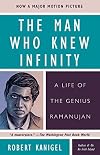
Mostly because if it were titled The Man Who Knew Number Theory it wouldn’t sell as many copies. If you do a biography of a great musician or great artist or great author, you’ve got it easy. There may well be people who won’t understand why Mozart was a great musician or Monet a great artist or Dickens a great author just based on text, but you can always include a CD or illustrations or quotes from novels. What do you do with Ramanujan? Well, there are some equations in this book, show more and well-presented explanations of things like the prime number theorem and partition theory and tau functions, but it’s unlikely that the casual reader will get much out of them. In fact, one of author Robert Kanigel’s points is that even genius-level mathematicians often were mystified by Ramanujan. Thus trying to explain Ramanujan is like trying to explain Mozart to somebody who’s been profoundly deaf since birth.
Ramanujan (sometimes Aiyangar Srinivasa Ramanujan, but Aiyangar is a caste name and Srinivasa is his father’s name; he sometimes prefixed it just to make it seem like he had a surname and make English speakers more comfortable) was born in South India in 1887. His parents were lower middle class Brahmins (Dad was a clerk in a sari shop). Kanigel never suggests Ramanujan was on the autism spectrum, but a few of the anecdotes he recounts are consistent – for example, he liked to arrange things (pots and pans, for example) in neat rows. He wasn’t particularly remarkable in elementary school but as he went on to the equivalent of middle and high school people began to notice. In another trait possibly suggestive of autism, Ramanujan didn’t have the slightest interest in anything outside his focus, mathematics; he failed (repeatedly) his examinations for admission to the equivalent of junior college, ending up as an accounting clerk. Somewhere along the line, Ramanujan was given a textbook by English mathematician George Carr, which was sort of a “Cliff’s Notes” for mathematics; many short problems and theorems without rigorous proofs, designed to assist students studying for examinations, particularly the “Tripos”.
Kanigel then switches his attention to the life of English mathematician Godfrey Harold Hardy, who also came from a middle class family but whose mathematical ability was recognized early on – and who was more willing to follow conventional rules on how to approach education. Of considerable interest is Kanigel’s explanation of the English higher education system; I had heard such terms as “colleges” at Cambridge before, and the Tripos exam, and the rank of “Senior Wrangler”, but (to my embarrassment) had never investigated what they meant. Capsule definitions: the Colleges at Cambridge are something like the American states under the Articles of Confederation: a loose association jealously guarding their own privileges while giving lip service to central authority. The “Tripos” is an intense examination (originally in mathematics but eventually in other subjects” given to senior students. The “Senior Wrangler” was the student who scored highest on the Tripos; interestingly the best mathematicians were often those who scored second (the “Second Wrangler”); Kanigel suggests the test was often excessively focuses on arcane applied mathematics problems and didn’t measure students’ ability in pure mathematics.
Kanigel also seems to devote an inordinate amount of space to Hardy’s putative homosexuality. He has no particular evidence for this other than noting that Hardy never married or formed even a moderately close relationship with a woman, and that many of the men in Hardy’s circle also never married. Maybe; the idea is worth thinking about for a biographer but Kanigel never goes anywhere with it; he never even offers a slight hint that it had anything to do with Hardy’s relationship with Ramanujan.
Ramanujan, back in Madras, went through Carr’s book and began generating theorems. He wrote these up in a fair hand and kept them in notebooks. A friend suggested he send examples to noted mathematicians in England; Hardy was the third one he tried.
Kanigel notes that mathematicians (and scientists in general) are always getting mail from enthusiasts claiming (for example) to have developed a unified field theory or squared the circle or proved Goldbach’s conjecture. Some have polite form letters saying “I have received your letter showing your method of squaring the circle. Your first error is in equation __ on page __. Most, of course, just don’t have the time to go through pages of gibberish and just trash them. To further complicate matters, Ramanujan had no access to European (or, to a large extent, even Indian) mathematical journals and thus had no knowledge of current work; and, for the same reason, had developed his own idiosyncratic notation. Thus Hardy was presented with pages of initially incomprehensible equations in longhand.
There was just enough understandable for Hardy to persevere. Hardy was famous as a master of rigorous proof, and Ramanujan offered no proofs at all – just assertions with at most a suggestion of how a proof might be approached. Hardy later said he decided Ramanujan’s theorems had to be true, because no one could possibly have the imagination to invent them.
Another Cambridge mathematician was visiting India; Hardy asked him to interview Ramanujan and persuade him to visit England. The catch was Ramanujan was a Brahmin and, as such, prohibited from crossing the ocean. Eventually Ramanujan received instructions from a goddess (in a dream) that a trip to England was a good idea, and set off in 1913.
It was pretty hard for him. England was brutally cold for somebody coming from a place where the average January daily low was 70° F. A fellow Indian visited him in his rooms and inquired if Ramanujan had enough blankets; Ramanujan allowed that he did but further investigation disclosed that Ramanujan didn’t understand that he was supposed to sleep under the blankets rather than leaving them neatly folded on the bed. As the First World War developed, it became harder and harder to get vegetarian food; Ramanujan cooked for himself on a gas ring when he bothered to cook at all.
It’s ironic there’s less information about Ramanujan’s life at Cambridge than his previous life in Madras. He and Hardy collaborated on a number of papers, but there was no family to keep track of him and he had few visitors other than Hardy and an occasional fellow Indian (most of Cambridge was off at the war, and off course travel to and from the Continent and America was impossible). Somewhere along the line he metamorphosed from chubby to emaciated, and moved to series of tuberculosis sanitaria – where he was an extremely uncooperative patient. He became a Fellow of the Royal Society, an honor which was extremely gratifying, but that doesn’t cure TB. When the war ended he went back to India, and although he received a fellowship far in excess of his needs he had continuing trouble with demands from his family. He died of tuberculosis in 1920, 32 years old.
Hardy and many other mathematics have speculated on what might have happened if Ramanujan had received a more formal education; Hardy was cautious, speculating that he have just become an ordinary mathematics professor. There is still a major mathematics “industry” in proving Ramanujan’s theorems; most turn out to be correct (although some were dramatically wrong, due to his lack of background – for example, his claim that he had an equation that reduced the error term in the Prime Number Theorem to zero (i.e., that he had devised a method for predicting prime numbers)). Ramanujan’s method was completely intuitive; he just looked at numbers and saw patterns that others didn’t. When he made errors, it was usually because the patterns weren’t quite what he expected. He was not a “lightening calculator”, but could often solved computational problems amazing fast, not because he worked out the answer by mental calculation but because he could quickly see an equation that made the calculation simple.
Kanigel does debunk a couple of Ramanujan myths. There’s a famous anecdote about Hardy visiting Ramanujan in the hospital, commenting that he had come in cab number 1729, and noting that it was not a very interesting number. Ramanujan immediately replied that it was an interesting number indeed, since it was the smallest integer that can be expressed as the sum of two cubes in two different ways. This is usually given as an example of Ramanujan’s lightening calculation ability but it is in fact something that he noted in his notebooks years before. A second myth is a comment attributed to Hardy that he knew two kinds of geniuses: ordinary geniuses and magical geniuses. Ordinary geniuses were those who you could imagine equaling if you were 100 times smarter. Magical geniuses were those you couldn’t imagine equaling at all. It’s true that a comment something like this was made about Ramanujan, but Kanigel attributes it to the Polish mathematician Mark Kac, not to Hardy.
Sad but true; probably as well done as a biography of a magical genius can be. show less
Ramanujan (sometimes Aiyangar Srinivasa Ramanujan, but Aiyangar is a caste name and Srinivasa is his father’s name; he sometimes prefixed it just to make it seem like he had a surname and make English speakers more comfortable) was born in South India in 1887. His parents were lower middle class Brahmins (Dad was a clerk in a sari shop). Kanigel never suggests Ramanujan was on the autism spectrum, but a few of the anecdotes he recounts are consistent – for example, he liked to arrange things (pots and pans, for example) in neat rows. He wasn’t particularly remarkable in elementary school but as he went on to the equivalent of middle and high school people began to notice. In another trait possibly suggestive of autism, Ramanujan didn’t have the slightest interest in anything outside his focus, mathematics; he failed (repeatedly) his examinations for admission to the equivalent of junior college, ending up as an accounting clerk. Somewhere along the line, Ramanujan was given a textbook by English mathematician George Carr, which was sort of a “Cliff’s Notes” for mathematics; many short problems and theorems without rigorous proofs, designed to assist students studying for examinations, particularly the “Tripos”.
Kanigel then switches his attention to the life of English mathematician Godfrey Harold Hardy, who also came from a middle class family but whose mathematical ability was recognized early on – and who was more willing to follow conventional rules on how to approach education. Of considerable interest is Kanigel’s explanation of the English higher education system; I had heard such terms as “colleges” at Cambridge before, and the Tripos exam, and the rank of “Senior Wrangler”, but (to my embarrassment) had never investigated what they meant. Capsule definitions: the Colleges at Cambridge are something like the American states under the Articles of Confederation: a loose association jealously guarding their own privileges while giving lip service to central authority. The “Tripos” is an intense examination (originally in mathematics but eventually in other subjects” given to senior students. The “Senior Wrangler” was the student who scored highest on the Tripos; interestingly the best mathematicians were often those who scored second (the “Second Wrangler”); Kanigel suggests the test was often excessively focuses on arcane applied mathematics problems and didn’t measure students’ ability in pure mathematics.
Kanigel also seems to devote an inordinate amount of space to Hardy’s putative homosexuality. He has no particular evidence for this other than noting that Hardy never married or formed even a moderately close relationship with a woman, and that many of the men in Hardy’s circle also never married. Maybe; the idea is worth thinking about for a biographer but Kanigel never goes anywhere with it; he never even offers a slight hint that it had anything to do with Hardy’s relationship with Ramanujan.
Ramanujan, back in Madras, went through Carr’s book and began generating theorems. He wrote these up in a fair hand and kept them in notebooks. A friend suggested he send examples to noted mathematicians in England; Hardy was the third one he tried.
Kanigel notes that mathematicians (and scientists in general) are always getting mail from enthusiasts claiming (for example) to have developed a unified field theory or squared the circle or proved Goldbach’s conjecture. Some have polite form letters saying “I have received your letter showing your method of squaring the circle. Your first error is in equation __ on page __. Most, of course, just don’t have the time to go through pages of gibberish and just trash them. To further complicate matters, Ramanujan had no access to European (or, to a large extent, even Indian) mathematical journals and thus had no knowledge of current work; and, for the same reason, had developed his own idiosyncratic notation. Thus Hardy was presented with pages of initially incomprehensible equations in longhand.
There was just enough understandable for Hardy to persevere. Hardy was famous as a master of rigorous proof, and Ramanujan offered no proofs at all – just assertions with at most a suggestion of how a proof might be approached. Hardy later said he decided Ramanujan’s theorems had to be true, because no one could possibly have the imagination to invent them.
Another Cambridge mathematician was visiting India; Hardy asked him to interview Ramanujan and persuade him to visit England. The catch was Ramanujan was a Brahmin and, as such, prohibited from crossing the ocean. Eventually Ramanujan received instructions from a goddess (in a dream) that a trip to England was a good idea, and set off in 1913.
It was pretty hard for him. England was brutally cold for somebody coming from a place where the average January daily low was 70° F. A fellow Indian visited him in his rooms and inquired if Ramanujan had enough blankets; Ramanujan allowed that he did but further investigation disclosed that Ramanujan didn’t understand that he was supposed to sleep under the blankets rather than leaving them neatly folded on the bed. As the First World War developed, it became harder and harder to get vegetarian food; Ramanujan cooked for himself on a gas ring when he bothered to cook at all.
It’s ironic there’s less information about Ramanujan’s life at Cambridge than his previous life in Madras. He and Hardy collaborated on a number of papers, but there was no family to keep track of him and he had few visitors other than Hardy and an occasional fellow Indian (most of Cambridge was off at the war, and off course travel to and from the Continent and America was impossible). Somewhere along the line he metamorphosed from chubby to emaciated, and moved to series of tuberculosis sanitaria – where he was an extremely uncooperative patient. He became a Fellow of the Royal Society, an honor which was extremely gratifying, but that doesn’t cure TB. When the war ended he went back to India, and although he received a fellowship far in excess of his needs he had continuing trouble with demands from his family. He died of tuberculosis in 1920, 32 years old.
Hardy and many other mathematics have speculated on what might have happened if Ramanujan had received a more formal education; Hardy was cautious, speculating that he have just become an ordinary mathematics professor. There is still a major mathematics “industry” in proving Ramanujan’s theorems; most turn out to be correct (although some were dramatically wrong, due to his lack of background – for example, his claim that he had an equation that reduced the error term in the Prime Number Theorem to zero (i.e., that he had devised a method for predicting prime numbers)). Ramanujan’s method was completely intuitive; he just looked at numbers and saw patterns that others didn’t. When he made errors, it was usually because the patterns weren’t quite what he expected. He was not a “lightening calculator”, but could often solved computational problems amazing fast, not because he worked out the answer by mental calculation but because he could quickly see an equation that made the calculation simple.
Kanigel does debunk a couple of Ramanujan myths. There’s a famous anecdote about Hardy visiting Ramanujan in the hospital, commenting that he had come in cab number 1729, and noting that it was not a very interesting number. Ramanujan immediately replied that it was an interesting number indeed, since it was the smallest integer that can be expressed as the sum of two cubes in two different ways. This is usually given as an example of Ramanujan’s lightening calculation ability but it is in fact something that he noted in his notebooks years before. A second myth is a comment attributed to Hardy that he knew two kinds of geniuses: ordinary geniuses and magical geniuses. Ordinary geniuses were those who you could imagine equaling if you were 100 times smarter. Magical geniuses were those you couldn’t imagine equaling at all. It’s true that a comment something like this was made about Ramanujan, but Kanigel attributes it to the Polish mathematician Mark Kac, not to Hardy.
Sad but true; probably as well done as a biography of a magical genius can be. show less
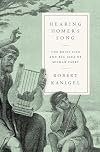
Such a great biography. I've never read Homer before, heard of Milman Parry, nor am I a Classicist, yet this book is wonderful. Learned so much. No fears, this is not a dry book on an academic topic wrapped in the veneer of a "big idea". It's difficult to explain why this book is so good because it started a bit boring/confusing, but the elements begin to pile on and it just works: the biography, adventure travel in 1920s Balkans, mysterious death, a big revolutionary idea that has changed show more the field of literary studies, a brilliant young man and his untimely death who becomes a sort of heroic figure mirroring his subject. And Kanigel is an excellent writer, he has a knack for picking the precise word, it feels carefully done. Richard Poe is the right narrator, the text compliments him to an extent I had not noticed in earlier readings, there is a synergy here.
Why should you care about this topic? Well,we tend to have a bias towards written cultures and view oral as something less. This is why Bob Dylan was reviled for winning the Nobel (even though it is technically written) he was merely a bard, a song writer, is that really literature? Another reason is that Parry showed how self-learning, conviction and hard work can cause an academic revolution. He did nothing but learn Ancient Greek, read Homer, and write down a thesis - in his early 20s. Now he is immortal, there is BP (Before Parry) and AP (After Parry) - even if you disagree he can not be avoided, like a literary Darwin who discovered the key to understanding ancient epic literature. show less
Why should you care about this topic? Well,we tend to have a bias towards written cultures and view oral as something less. This is why Bob Dylan was reviled for winning the Nobel (even though it is technically written) he was merely a bard, a song writer, is that really literature? Another reason is that Parry showed how self-learning, conviction and hard work can cause an academic revolution. He did nothing but learn Ancient Greek, read Homer, and write down a thesis - in his early 20s. Now he is immortal, there is BP (Before Parry) and AP (After Parry) - even if you disagree he can not be avoided, like a literary Darwin who discovered the key to understanding ancient epic literature. show less

Born in 1887, S. Ramanujan grew up in a small town in Southern India, his intellectual powers undiscovered due in part to a highly rigid educational structure. He persisted in the attempt to pursue his passion for mathematics, writing to various famous scholars in England. Eventually, he was noticed and invited to Trinity College by British professor G.H. Hardy. On one hand, it proved a fruitful collaboration between a man of intuition and one dedicated to the formality of proof, which show more advanced the field of mathematics. On the other hand, it proved disastrous in that Ramanujan’s cultural, religious, and emotional well-being atrophied, leading to a severe decline in his health. Overall, I liked this biography. It brought to my attention a genius who overcame significant barriers to become one of the most renowned mathematical scholars. I had a few issues with the book, including repetition and unnecessary levels of detail on matters not critical to the story. In addition, I thought some of the concepts covered in the book may be inaccessible to a person not well-versed in advanced mathematics. Recommended to those interested in the history of mathematics and biographies of geniuses. show less
Lists
Awards


You May Also Like


Statistics
- Works
- 15
- Members
- 1,941
- Popularity
- #13,253
- Rating
- 3.8
- Reviews
- 33
- ISBNs
- 63
- Languages
- 4
- Favorited
- 2

