
Robert Skidelsky (1939–2026)
Author of How Much Is Enough? Money and the Good Life
About the Author
Robert Skidelsky, a professor of political economy at Warwick University, is also the author of Politicians and the Slump and Oswald Mosley. (Bowker Author Biography)
Series
Works by Robert Skidelsky
The Road from Serfdom: The Economic and Political Consequences of the End of Communism (1996) 43 copies
Keynes for Our Times 1 copy
Para ve Devlet 1 copy
Associated Works
Tagged
Common Knowledge
- Canonical name
- Skidelsky, Robert
- Legal name
- Skidelsky, Robert Jacob Alexander, Baron
- Other names
- Skidelsky, Baron Robert
- Birthdate
- 1939-04-25
- Date of death
- 2026-04-15
- Gender
- male
- Education
- Jesus College, University of Oxford
Nuffield College, University of Oxford - Occupations
- university professor emeritus
economic historian - Organizations
- University of Warwick
- Awards and honors
- British Academy (Fellow, 1994)
Lionel Gelber Prize for International Relations (2002)
Wolfson History Prize (1992)
Arthur Ross Book Award for International Relations (2002)
Life Peerage (Baron Skidelsky ∙ 1991) - Relationships
- Skidelsky, Edward (son)
Skidelsky, William (son) - Nationality
- UK (born in China to British parents)
- Birthplace
- Harbin, China
- Places of residence
- Tianjin, China
England, UK
Japan
Manchuria, China - Associated Place (for map)
- China
Members
Discussions
The Relevance of Keynes in Pro and Con (May 2011)
Reviews
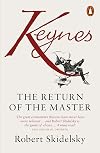
This little booklet - perhaps monograph is the best word - is packed with interesting info and thought provoking ideas. First off, Skidelsky is clearly a fan: Keynes appears to have been not only a great mind but a nice bloke - rare combination. He had a moral conscience as well as a broad cultural background, unlike most economists - a paid up member of the Bloomsbury group he saw that economic activity had a point - the good life, which philosophers have been wondering about since the dawn show more of thought. And what is the good life? - friends, family and the enjoyment of the arts. He thought economic growth would reach an equilibrium where most needs were satisfied and we could all relax. That point does not seem to have happened, though Skidelsky argues that it still could: today's inequality distorts the figures. Keynes' humanism also lead him to oppose the mathematising of economics. Skidelsky shows how classical and neo-classical economists distort reality in order to make elegant models and equations seeming not to care about the distortions. The quants are still evidently in business today. Keynes also simplified: his main model omits foreign trade, which has been a significant factor since the Stone Age and ever more so today.
Does the Keynesian approach work? Skidelsky demonstrates that the period in which Keynesianism rode high (from 1945 Bretton Woods to its breakdown and the oil crisis in early '70s), the Western economies did better on most counts than in the subsequent years of Thatcher/Reagonomics. But his point is slightly weakened by the admission that policies at the time did not follow Keynes in all respects.
The most graphic image in the book is Keynes analogy for the stock market: voters at a beauty contest who vote not for the prettiest girl but for the one they think other people will think the prettiest. Of course this is a simplified model too: they could abstain, spoil their ballot-papers, or go round the corner and vote in a trans-gender contest instead. Or just buy some candy-floss.
It's aimed at the layman but even with my third of a degree in economics some parts were hard going. For example, the distinction between"risk" and "uncertainty" seems important but still escapes me. Still, inclines me to read more of Skidelsky and perhaps of Keynes himself show less
Does the Keynesian approach work? Skidelsky demonstrates that the period in which Keynesianism rode high (from 1945 Bretton Woods to its breakdown and the oil crisis in early '70s), the Western economies did better on most counts than in the subsequent years of Thatcher/Reagonomics. But his point is slightly weakened by the admission that policies at the time did not follow Keynes in all respects.
The most graphic image in the book is Keynes analogy for the stock market: voters at a beauty contest who vote not for the prettiest girl but for the one they think other people will think the prettiest. Of course this is a simplified model too: they could abstain, spoil their ballot-papers, or go round the corner and vote in a trans-gender contest instead. Or just buy some candy-floss.
It's aimed at the layman but even with my third of a degree in economics some parts were hard going. For example, the distinction between"risk" and "uncertainty" seems important but still escapes me. Still, inclines me to read more of Skidelsky and perhaps of Keynes himself show less
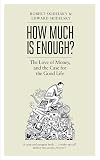
The Skidelsky brothers have written a succinct book arguing that neoliberal economic ideology is failing the developed world. They suggest replacing the imperatives of economic growth and productive efficiency with an ethic of the ‘good life’, cobbled together from the democratic socialism of the mid-20th century, older philosophical works, and Catholic teachings. Although I’ve read other books with very similar central themes (notably [b:Growth Fetish|1230190|Growth Fetish|Clive show more Hamilton|https://images.gr-assets.com/books/1316132164s/1230190.jpg|1218764] and [b:I Spend Therefore I Am: How Economics Has Changed the Way We Think and Feel|18209316|I Spend Therefore I Am How Economics Has Changed the Way We Think and Feel|Philip Roscoe|https://images.gr-assets.com/books/1382354377s/18209316.jpg|25630087]), this one has a distinctive voice. Unfortunately, that voice can sometimes seem a little, how can I put this, supercilious. The authors have strongly academic backgrounds, yet this book is clearly intended for a wider audience. Whilst it is certainly readable and avoids ostensible obscurantism (looking at you, Žižek), the tone does sometimes come off as patronising. This is a pity, as it’s a carefully-argued and thought-provoking work, for the most part.
The central point is one that needs constant reiteration until it becomes better understood: that the neutral neoliberal state is a myth. As the book puts it, 'A neutral state state simply hands power to the guardians of capital to manipulate public taste in their interests'. Moreover, economics is not a miraculously neutral discipline, objectively studying human behaviour. As the brothers put it:
It has not always been the case that public policy research uses econometric methods; today those are virtually the only methods used. Economics has taken over the social sciences, as well as politics. This book gives an interesting account of how this conquest occurred, as part of the wider explanation of why the rich world has so much less leisure than Keynes predicted back in 1930. To be honest, though, the arguments about moving beyond economic growth and considering wider wellbeing weren’t new to me, nor did I need to be convinced of them. They are well expressed here, with the caveat regarding tone that I mentioned earlier. The novel chapters to me were those dismissing two other popular justifications for challenging neoliberal economic ideology: on the basis of happiness and of environmental limits. The former makes some excellent points about the nature of happiness and the great difficulty of measuring it. Whilst these criticisms sometimes seemed to overstate the incompatibility of happiness measurement with the book’s good life ethic, the central points were solid.
The other chapter, on environmental limits, was considerably weaker. The Skidelsky brothers essentially dismiss climate change as a pretext for reconsidering the imperative of economic growth. I cannot agree with their stance, that the seriousness of climate change has been overstated, as it rest on misunderstandings of uncertainty and risk. They argue that the range of potential climate scenarios is wide and disputed and climate science is ‘politicised’. (How it could possibly avoid being so, given its monumental implications, they do not contemplate.) Essentially, without greater certainty about the costs of climate change, the authors don’t think action is justified. I am frankly horrified by this interpretation, which is substantially shared by the discipline of economics. Such thinking ignores, firstly, that the range of potential climate outcomes does not have a normal distribution but a ‘long tail’. This implies a much greater than zero probability of near-infinite costs (in other words, the end of human civilisation). Cost-benefit analysis and other econometrics cope poorly with such a probability distribution. Secondly, the risks of climate change aren’t linear but multiplicative. An unstable climate is a risk multiplier, increasing the likelihood of violent conflict and political instability as well as making disaster response more difficult. This is on top of the more readily understood direct consequences, such as greater likelihood of droughts, floods, and storms. Thirdly, climate change is irreversible on human timescales. Carbon dioxide pumped into the atmosphere now will stay there for around 10,000 years. Coupled with the existence of serious threshold effects, caution appears warranted. Fourthly, it is too easy to be dismissive of climate change in the developed world. It is a problem created by the rich and suffered by the poor, on a global scale. The developing world is already experiencing the effects of climate change. Low income equatorial countries will see the greatest loss of productive agricultural land; coastal cities without the funds for flood defense will suffer most from sea level rise. Fifthly and finally, pleading uncertainty about climate change costs is intellectually lazy. In what other context would risks of such scale require endless niggling over costs? Consider the amount spent annually on nuclear weaponry in the developed world. What is that a defense against, exactly? Those unwilling to sacrifice economic growth to climate change should be able to acknowledge path dependence in their thinking - emissions mitigation seems difficult because it goes against the fossil fuel dependence that has become comfortably familiar in the past few centuries. That does not mean such action isn’t justifiable, merely that it requires more imaginative effort to grasp the practical implications of climate science findings. Climate change is existentially terrifying, which is all the more reason not to disregard or trivialise it in an endless argument over the exact economic optimality of the response.
Subsequent chapters explore what the ‘good life’ requires and how its pursuit could be encouraged. This was clearly explained in terms of ‘basic goods’: health, security, respect, harmony with nature, friendship, and leisure. Such terminology causes slight cognitive dissonance to those accustomed to economics, as in that world goods equal that which is bought and sold. Here, by contrast, ‘The basic goods are essentially non-marketable: they cannot properly be bought or sold. An economy geared to maximising market value will tend to crowd them out or to replace them with marketable surrogates.’ The conclusion then states firmly that promoting these basic goods should not be dismissed as paternalism (basically every new policy has to refute this tired accusation nowadays), reiterating the critical point about mythical neutrality.
I am torn when picking a rating for this book. It was for the most part thoughtful and interesting, albeit a reiteration of material I’d largely read before with a slightly new emphasis. I liked the concept of basic goods, though, and found the critique of happiness accounting valid. On the other hand, the dismissal of environmental considerations in general and climate change in particular is hard to excuse. I’d still recommend 'How Much is Enough?' but in combination with something else that gives climate change its due. The Skidelsky brothers' conclusions are certainly consistent with books on tackling climate change, such as [b:Whole Earth Discipline: An Ecopragmatist Manifesto|6411373|Whole Earth Discipline An Ecopragmatist Manifesto|Stewart Brand|https://images.gr-assets.com/books/1442547227s/6411373.jpg|6600313], [b:The Bridge at the Edge of the World: Capitalism, the Environment, and Crossing from Crisis to Sustainability|2411757|The Bridge at the Edge of the World Capitalism, the Environment, and Crossing from Crisis to Sustainability|James Gustave Speth|https://images.gr-assets.com/books/1328826395s/2411757.jpg|2418934], [b:Heat: How to Stop the Planet From Burning|340289|Heat How to Stop the Planet From Burning|George Monbiot|https://images.gr-assets.com/books/1328770104s/340289.jpg|330676], and [b:The World We Made: Alex McKay's Story from 2050|17899465|The World We Made Alex McKay's Story from 2050|Jonathon Porritt|https://images.gr-assets.com/books/1378707119s/17899465.jpg|25073551]. show less
The central point is one that needs constant reiteration until it becomes better understood: that the neutral neoliberal state is a myth. As the book puts it, 'A neutral state state simply hands power to the guardians of capital to manipulate public taste in their interests'. Moreover, economics is not a miraculously neutral discipline, objectively studying human behaviour. As the brothers put it:
Economics is not just any academic discipline. It is the theology of our age, the language that all interests, high and low, must speak if they are to win a respectful hearing in the courts of power. Economics owes its special position in part to the failure of other disciplines to impress their stamp on political debate.
It has not always been the case that public policy research uses econometric methods; today those are virtually the only methods used. Economics has taken over the social sciences, as well as politics. This book gives an interesting account of how this conquest occurred, as part of the wider explanation of why the rich world has so much less leisure than Keynes predicted back in 1930. To be honest, though, the arguments about moving beyond economic growth and considering wider wellbeing weren’t new to me, nor did I need to be convinced of them. They are well expressed here, with the caveat regarding tone that I mentioned earlier. The novel chapters to me were those dismissing two other popular justifications for challenging neoliberal economic ideology: on the basis of happiness and of environmental limits. The former makes some excellent points about the nature of happiness and the great difficulty of measuring it. Whilst these criticisms sometimes seemed to overstate the incompatibility of happiness measurement with the book’s good life ethic, the central points were solid.
The other chapter, on environmental limits, was considerably weaker. The Skidelsky brothers essentially dismiss climate change as a pretext for reconsidering the imperative of economic growth. I cannot agree with their stance, that the seriousness of climate change has been overstated, as it rest on misunderstandings of uncertainty and risk. They argue that the range of potential climate scenarios is wide and disputed and climate science is ‘politicised’. (How it could possibly avoid being so, given its monumental implications, they do not contemplate.) Essentially, without greater certainty about the costs of climate change, the authors don’t think action is justified. I am frankly horrified by this interpretation, which is substantially shared by the discipline of economics. Such thinking ignores, firstly, that the range of potential climate outcomes does not have a normal distribution but a ‘long tail’. This implies a much greater than zero probability of near-infinite costs (in other words, the end of human civilisation). Cost-benefit analysis and other econometrics cope poorly with such a probability distribution. Secondly, the risks of climate change aren’t linear but multiplicative. An unstable climate is a risk multiplier, increasing the likelihood of violent conflict and political instability as well as making disaster response more difficult. This is on top of the more readily understood direct consequences, such as greater likelihood of droughts, floods, and storms. Thirdly, climate change is irreversible on human timescales. Carbon dioxide pumped into the atmosphere now will stay there for around 10,000 years. Coupled with the existence of serious threshold effects, caution appears warranted. Fourthly, it is too easy to be dismissive of climate change in the developed world. It is a problem created by the rich and suffered by the poor, on a global scale. The developing world is already experiencing the effects of climate change. Low income equatorial countries will see the greatest loss of productive agricultural land; coastal cities without the funds for flood defense will suffer most from sea level rise. Fifthly and finally, pleading uncertainty about climate change costs is intellectually lazy. In what other context would risks of such scale require endless niggling over costs? Consider the amount spent annually on nuclear weaponry in the developed world. What is that a defense against, exactly? Those unwilling to sacrifice economic growth to climate change should be able to acknowledge path dependence in their thinking - emissions mitigation seems difficult because it goes against the fossil fuel dependence that has become comfortably familiar in the past few centuries. That does not mean such action isn’t justifiable, merely that it requires more imaginative effort to grasp the practical implications of climate science findings. Climate change is existentially terrifying, which is all the more reason not to disregard or trivialise it in an endless argument over the exact economic optimality of the response.
Subsequent chapters explore what the ‘good life’ requires and how its pursuit could be encouraged. This was clearly explained in terms of ‘basic goods’: health, security, respect, harmony with nature, friendship, and leisure. Such terminology causes slight cognitive dissonance to those accustomed to economics, as in that world goods equal that which is bought and sold. Here, by contrast, ‘The basic goods are essentially non-marketable: they cannot properly be bought or sold. An economy geared to maximising market value will tend to crowd them out or to replace them with marketable surrogates.’ The conclusion then states firmly that promoting these basic goods should not be dismissed as paternalism (basically every new policy has to refute this tired accusation nowadays), reiterating the critical point about mythical neutrality.
I am torn when picking a rating for this book. It was for the most part thoughtful and interesting, albeit a reiteration of material I’d largely read before with a slightly new emphasis. I liked the concept of basic goods, though, and found the critique of happiness accounting valid. On the other hand, the dismissal of environmental considerations in general and climate change in particular is hard to excuse. I’d still recommend 'How Much is Enough?' but in combination with something else that gives climate change its due. The Skidelsky brothers' conclusions are certainly consistent with books on tackling climate change, such as [b:Whole Earth Discipline: An Ecopragmatist Manifesto|6411373|Whole Earth Discipline An Ecopragmatist Manifesto|Stewart Brand|https://images.gr-assets.com/books/1442547227s/6411373.jpg|6600313], [b:The Bridge at the Edge of the World: Capitalism, the Environment, and Crossing from Crisis to Sustainability|2411757|The Bridge at the Edge of the World Capitalism, the Environment, and Crossing from Crisis to Sustainability|James Gustave Speth|https://images.gr-assets.com/books/1328826395s/2411757.jpg|2418934], [b:Heat: How to Stop the Planet From Burning|340289|Heat How to Stop the Planet From Burning|George Monbiot|https://images.gr-assets.com/books/1328770104s/340289.jpg|330676], and [b:The World We Made: Alex McKay's Story from 2050|17899465|The World We Made Alex McKay's Story from 2050|Jonathon Porritt|https://images.gr-assets.com/books/1378707119s/17899465.jpg|25073551]. show less

What would Keynes have done? That, superficially, is the main thrust of historian Robert Skidelsky's analysis of today's Great Recession. Skidelsky is the foremost biographer of John Maynard Keynes (1883-1946), the English economist who effectively created the field of macroeconomics and whose theories were mainstream economic orthodoxy from the 1950s to the 1980s. Keynes's Depression-era economic analysis and proposals provided a game plan for policy-makers confronted with economic show more stagnation and massive unemployment in the 1930s. In other words, a situation similar (if much more dire) to the one we face today.
Skidelsky's argument is that Keynes's ideas remain relevant, despite falling out of fashion in the tumultuous, inflationary 1970s, and that policy-makers should heed what Keynes had to say as they correct the massive mistakes that led to the 2008-2009 economic crisis. More importantly, he makes the case that the macroeconomic orthodoxy that supplanted Keynesianism, based on New Classical theories formulated by Milton Friedman and others, is the source of the current crisis. Writing in a clear, non-technical style, with surprising fluency, Skidelsky shows how New Classical ideas, and the anti-government “free market” ideology they inspire and support, have created a recipe for disaster.
Keynes famously remarked that “The ideas of economists and political philosophers, both when they are right and when they are wrong, are more powerful than is commonly supposed. Indeed the world is ruled by little else.” Skidelsky's critique of the New Classical theories shows just how right the Master was. The Reagan-Thatcher Revolution of the 1980s ushered in the golden age of the New Classicals, whose elegant mathematical models demonstrated that “rational” markets (especially for wages and prices) adjust instantaneously to new information or conditions; that “rational” workers will respond to business-cycle “shocks” by deciding to work for lower pay, work fewer hours, or spend more time with their families; and that “efficient” financial markets are capable of precisely quantifying risk.
But these outcomes, Skidelsky demonstrates, are based on some heroically unrealistic assumptions about human behavior. By assuming away much of the messiness of real economic life, the New Classical models “prove” that market outcomes are everywhere and always the most efficient outcomes; that government intervention (including regulation) can never improve market outcomes (market failures simply don't exist) and will usually make those outcomes worse; and that with perfect information, markets will always assess and price risk correctly. Other recent writers, most notably economist Joseph Stiglitz ("Freefall: America, Free Markets, and the Sinking of the World Economy "), have similarly criticized New Classical theory.
The "free market" ideology these ideas inspired still pervades American politics – government regulation is unjustified, market solutions are always the best solutions, rules put in place to protect workers and consumers or moderate income inequalities are the slippery slope to socialism. This ideology has particularly benefitted firms looking to escape constraints on their actions (such as the Glass-Steagall separation of retail and investment banks, abolished in 1999) or pursue risky financial “innovations” (such as securitized mortgages and credit default swaps). Regulators and firms alike came to assume that markets had all the data needed to assess, price and insure against the failure of financial instruments (credit default swaps are, in effect, insurance policies).
Keynes faced a similar kind of economic orthodoxy in the 1930s, based on old classical economics. Like the newer, fancier versions, classical economic models did not include the possibility of involuntary unemployment. It was assumed that after an economic shock, markets would adjust. Period. But the models said nothing about how long it might take markets to “adjust” (Keynes highlighted this glaring failure of classical theory by wryly noting that "In the long run we are all dead") and offered no guidance to governments looking to alleviate massive unemployment (over 25% in the United States in 1933, nearly three times the 2010 rate).
In fact, classical economic orthodoxy called for reduced spending and budget surpluses (sound familiar?), even in the face of financial collapse and escalating unemployment, and the Treasury and the Federal Reserve obliged, plunging the US economy into deep depression in 1932. Keynes challenged orthodoxy by arguing that more government spending, not less, was needed prop up aggregate demand (investment and consumption), keep the financial system afloat, and prevent widespread business failures and worker layoffs. Ultimately, it was just such spending – first for limited New Deal public works and other programs, then for the massive military needs of World War II – that pulled the US out of the Depression. It was also Keynesian spending of this type that prevented the current crisis from becoming worse in 2008-2009. (For a Keynesian approach to the situation that prevailed in August 2010, see economist Laura Tyson's op-ed piece, "Why We Need a Second Stimulus," in the August 29 New York Times.)
Skidelsky argues that from 1951 to 1973, when Keynesian orthodoxy ruled, the United States enjoyed one of the longest periods of low unemployment and high growth in its history, a substantially better record than the 1980-2008 New Classical era, which saw higher unemployment, slower growth, and five global recessions. He acknowledges that the Keynesian-influenced economists and policy-makers of the 1950s and 1960s were overconfident in their ability to keep the economy at full employment without incurring inflationary costs, but it's hard to argue with his point that since the Fed substituted inflation targeting for full employment goals in the 1980s, lower- and middle-class income growth has stagnated and the gap between the rich and the rest of us has turned into a yawning chasm.
Skidelsky is also highly critical of the financial industry's reliance on risk models that share the same New Classical flaws. Bankers use these mathematical models to make precise, quantitative judgments about the probability that financial instruments (like mortgage-backed securities) will fail and what measures (like credit default swaps) are needed to offset that risk. But Skidelsky argues that because these risk models are based on the same unrealistic assumptions found in New Classical theories, they are not as reliable as their users believe.
Keynes demonstrated long ago that uncertainty dominates financial markets and that there simply is not enough data in most cases to calculate reliable risk probabilities. Financial markets are not like insurance markets – reliable demographic and actuarial data provide a firm basis for calculating insurance risk and pricing policies, and the fact that, say, one house unexpectedly burns down has no effect on the risk of others sharing the same fate. But such reliable risk data does not exist for most financial securities (especially highly-complex “innovative" instruments)and the failure of some can indeed lead to the default of others.
Skidelsky, in contrast to other analysts of the current crisis, is rather charitable toward Wall Street bankers. Rather than simply condemning their unregulated greed, he suggests that otherwise well-meaning people were mesmerized (willingly or not) by their risk models into thinking they had it under control. He notes in passing that the economists whose Nobel Prize-winning derivative pricing model was utilized by the Long Term Capital Management hedge fund believed firmly in their risk program until the day the fund collapsed in 1998 and nearly brought on a national financial crisis.
In the end, Skidelsky's recommendations are simple and straight-forward: Restore the division between retail (where deposits are government-insured) and investment banking (which gambles private money), and take steps to prevent investment banks from becoming “too large to fail.” Use discretionary fiscal policy to maintain stability and keep the economy on a path to full employment, “minus the 'fine-tuning' obsession” of the earlier Keynesian period. And more idealistically, try to reach a societal consensus about the goal of economic activity.
Keynes was a philosopher as much as an economist, and he argued that economic activity is not an end in itself (as sterile, abstract New Classical theories imply) but a tool to achieve a better life for society. “We do not wish,” he said, “to be at the mercy of world forces working out...some uniform equilibrium according to the ideal principles of laissez-faire.” Rather he argued for policies (such as measures that help put people to work) that would give individuals opportunities to maximize their own prosperity – “We each have our own fancy. Not believing that we are saved already, we each would like to have a try at working out own salvation.” Keynes, to use current lingo, was about societies empowering their members to enjoy a prosperous life. I agree with Skidelsky that that is the ideology we should embrace. show less
Skidelsky's argument is that Keynes's ideas remain relevant, despite falling out of fashion in the tumultuous, inflationary 1970s, and that policy-makers should heed what Keynes had to say as they correct the massive mistakes that led to the 2008-2009 economic crisis. More importantly, he makes the case that the macroeconomic orthodoxy that supplanted Keynesianism, based on New Classical theories formulated by Milton Friedman and others, is the source of the current crisis. Writing in a clear, non-technical style, with surprising fluency, Skidelsky shows how New Classical ideas, and the anti-government “free market” ideology they inspire and support, have created a recipe for disaster.
Keynes famously remarked that “The ideas of economists and political philosophers, both when they are right and when they are wrong, are more powerful than is commonly supposed. Indeed the world is ruled by little else.” Skidelsky's critique of the New Classical theories shows just how right the Master was. The Reagan-Thatcher Revolution of the 1980s ushered in the golden age of the New Classicals, whose elegant mathematical models demonstrated that “rational” markets (especially for wages and prices) adjust instantaneously to new information or conditions; that “rational” workers will respond to business-cycle “shocks” by deciding to work for lower pay, work fewer hours, or spend more time with their families; and that “efficient” financial markets are capable of precisely quantifying risk.
But these outcomes, Skidelsky demonstrates, are based on some heroically unrealistic assumptions about human behavior. By assuming away much of the messiness of real economic life, the New Classical models “prove” that market outcomes are everywhere and always the most efficient outcomes; that government intervention (including regulation) can never improve market outcomes (market failures simply don't exist) and will usually make those outcomes worse; and that with perfect information, markets will always assess and price risk correctly. Other recent writers, most notably economist Joseph Stiglitz ("Freefall: America, Free Markets, and the Sinking of the World Economy "), have similarly criticized New Classical theory.
The "free market" ideology these ideas inspired still pervades American politics – government regulation is unjustified, market solutions are always the best solutions, rules put in place to protect workers and consumers or moderate income inequalities are the slippery slope to socialism. This ideology has particularly benefitted firms looking to escape constraints on their actions (such as the Glass-Steagall separation of retail and investment banks, abolished in 1999) or pursue risky financial “innovations” (such as securitized mortgages and credit default swaps). Regulators and firms alike came to assume that markets had all the data needed to assess, price and insure against the failure of financial instruments (credit default swaps are, in effect, insurance policies).
Keynes faced a similar kind of economic orthodoxy in the 1930s, based on old classical economics. Like the newer, fancier versions, classical economic models did not include the possibility of involuntary unemployment. It was assumed that after an economic shock, markets would adjust. Period. But the models said nothing about how long it might take markets to “adjust” (Keynes highlighted this glaring failure of classical theory by wryly noting that "In the long run we are all dead") and offered no guidance to governments looking to alleviate massive unemployment (over 25% in the United States in 1933, nearly three times the 2010 rate).
In fact, classical economic orthodoxy called for reduced spending and budget surpluses (sound familiar?), even in the face of financial collapse and escalating unemployment, and the Treasury and the Federal Reserve obliged, plunging the US economy into deep depression in 1932. Keynes challenged orthodoxy by arguing that more government spending, not less, was needed prop up aggregate demand (investment and consumption), keep the financial system afloat, and prevent widespread business failures and worker layoffs. Ultimately, it was just such spending – first for limited New Deal public works and other programs, then for the massive military needs of World War II – that pulled the US out of the Depression. It was also Keynesian spending of this type that prevented the current crisis from becoming worse in 2008-2009. (For a Keynesian approach to the situation that prevailed in August 2010, see economist Laura Tyson's op-ed piece, "Why We Need a Second Stimulus," in the August 29 New York Times.)
Skidelsky argues that from 1951 to 1973, when Keynesian orthodoxy ruled, the United States enjoyed one of the longest periods of low unemployment and high growth in its history, a substantially better record than the 1980-2008 New Classical era, which saw higher unemployment, slower growth, and five global recessions. He acknowledges that the Keynesian-influenced economists and policy-makers of the 1950s and 1960s were overconfident in their ability to keep the economy at full employment without incurring inflationary costs, but it's hard to argue with his point that since the Fed substituted inflation targeting for full employment goals in the 1980s, lower- and middle-class income growth has stagnated and the gap between the rich and the rest of us has turned into a yawning chasm.
Skidelsky is also highly critical of the financial industry's reliance on risk models that share the same New Classical flaws. Bankers use these mathematical models to make precise, quantitative judgments about the probability that financial instruments (like mortgage-backed securities) will fail and what measures (like credit default swaps) are needed to offset that risk. But Skidelsky argues that because these risk models are based on the same unrealistic assumptions found in New Classical theories, they are not as reliable as their users believe.
Keynes demonstrated long ago that uncertainty dominates financial markets and that there simply is not enough data in most cases to calculate reliable risk probabilities. Financial markets are not like insurance markets – reliable demographic and actuarial data provide a firm basis for calculating insurance risk and pricing policies, and the fact that, say, one house unexpectedly burns down has no effect on the risk of others sharing the same fate. But such reliable risk data does not exist for most financial securities (especially highly-complex “innovative" instruments)and the failure of some can indeed lead to the default of others.
Skidelsky, in contrast to other analysts of the current crisis, is rather charitable toward Wall Street bankers. Rather than simply condemning their unregulated greed, he suggests that otherwise well-meaning people were mesmerized (willingly or not) by their risk models into thinking they had it under control. He notes in passing that the economists whose Nobel Prize-winning derivative pricing model was utilized by the Long Term Capital Management hedge fund believed firmly in their risk program until the day the fund collapsed in 1998 and nearly brought on a national financial crisis.
In the end, Skidelsky's recommendations are simple and straight-forward: Restore the division between retail (where deposits are government-insured) and investment banking (which gambles private money), and take steps to prevent investment banks from becoming “too large to fail.” Use discretionary fiscal policy to maintain stability and keep the economy on a path to full employment, “minus the 'fine-tuning' obsession” of the earlier Keynesian period. And more idealistically, try to reach a societal consensus about the goal of economic activity.
Keynes was a philosopher as much as an economist, and he argued that economic activity is not an end in itself (as sterile, abstract New Classical theories imply) but a tool to achieve a better life for society. “We do not wish,” he said, “to be at the mercy of world forces working out...some uniform equilibrium according to the ideal principles of laissez-faire.” Rather he argued for policies (such as measures that help put people to work) that would give individuals opportunities to maximize their own prosperity – “We each have our own fancy. Not believing that we are saved already, we each would like to have a try at working out own salvation.” Keynes, to use current lingo, was about societies empowering their members to enjoy a prosperous life. I agree with Skidelsky that that is the ideology we should embrace. show less

An almost perfect intellectual biography, thought-provoking, well-constructed, and enjoyable. I didn't want to buy this because I couldn't imagine really reading something so long. Then one day I found a copy in a box of books on the street and decided to give it a shot. I'm glad I did. So far--I'm about 100 pp. into vol. 2--it's not at all a burden even at this extraordinary length.
The first vol. really captures the elitism and creativity of prewar Cambridge, discussing K's relationships show more to figures like G.E. Moore, Lytton Strachey, and the Bloomsbury group. I can't think of another book in which sex and philosophy are both discussed with such lucidity and common sense. My only gripe is that the discussions of economic policy were a bit technical, seeming to presume a reader who already knows a bit of macroeconomics. But these are not too much of the book, and Skidelsky is the kind of writer that makes you at least eager to learn more about what you don't know. show less
The first vol. really captures the elitism and creativity of prewar Cambridge, discussing K's relationships show more to figures like G.E. Moore, Lytton Strachey, and the Bloomsbury group. I can't think of another book in which sex and philosophy are both discussed with such lucidity and common sense. My only gripe is that the discussions of economic policy were a bit technical, seeming to presume a reader who already knows a bit of macroeconomics. But these are not too much of the book, and Skidelsky is the kind of writer that makes you at least eager to learn more about what you don't know. show less
Lists
Awards


You May Also Like


Associated Authors
Statistics
- Works
- 41
- Also by
- 1
- Members
- 2,222
- Popularity
- #11,536
- Rating
- 3.7
- Reviews
- 34
- ISBNs
- 125
- Languages
- 10
- Favorited
- 5