
F. N. Monjo (1924–1978)
Author of The Drinking Gourd: A Story of the Underground Railroad
About the Author
Image credit: Ferdinand Nicolas Monjo (1924-1978)
Series
Works by F. N. Monjo
Grand Papa and Ellen Aroon: Being an Account of Some of the Happy Times Spent Together by Thomas Jefferson and His Favorite Granddaughter (1974) 60 copies
Letters to Horseface: Being the Story of Wolfgang Amadeus Mozart's Journey to Italy 1769-1770 when He Was a Boy of Fourteen (1975) 37 copies
Willie Jasper's Golden Eagle: Being an Eyewitness Account of the Great Steamboat Race Between the Natchez and the Robert E. Lee (1976) 17 copies
A Namesake for Nathan: Being an Account of Captain Nathan Hale by His Twelve-Year-Old Sister, Joanna (1977) 13 copies
The Vicksburg Veteran 1 copy
The sea beggar's son 1 copy
THE DRINKING GOURD 1 copy
the drinking ground 1 copy
Associated Works
Clarence and the Burglar: Adapted from a chapter in Clarence the TV Dog (1973) — Adapter — 52 copies
The Lively Adventures of a Burly Woodcutter, a Pint-Sized Inventor, Two Pretty Pastry Cooks, and a Gang of Desperate Criminals (1983) — Translator, some editions — 6 copies, 1 review
Cricket Magazine, Vol. 2, No. 12, August 1975 — Contributor — 2 copies
Cricket Magazine, Vol. 2, No. 11, July 1975 — Contributor — 2 copies
Tagged
Common Knowledge
- Other names
- Monjo, Ferdinand Nicholas III
- Birthdate
- 1924-08-28
- Date of death
- 1978-10-09
- Gender
- male
- Education
- Columbia University (1946)
- Occupations
- editor
assistant director
vice-president
editorial director in Books for Boys and Girls - Relationships
- Monjo, Justin (son)
- Short biography
- F. N. Monjo’s grandson, Ferdinand Nicholas Monjo III (1924–1978), became a popular children’s author, and wrote about his grandfather’s business in several of his books.
Ferdinand Nicolas Monjo was born August 28, 1924 in Stamford, Connecticut. He graduated from Columbia University in 1946 and worked as an editor and later assistant director and vice-president and editorial director in Books for Boys and Girls at several major publishing companies. In 1968, he published his first book for children, Indian Summer, the story of a frontier woman's struggle to save her family.
During the 1970s, Mr. Monjo published many other works of historical fiction, most written from "a child's point of view in an effort to humanize our forefathers." Critics praised his writing style for making "the child's voice authentically his own" and also lauded his attention to detail and "historical fact." Critics also praised his writing style for giving children "a fresh and appealing look at any number of otherwise overworked periods of history" and called him one of the best "in the writing of easy-reading history books." F. N. Monjo received several honors for his works: Poor Richard in France (1973) won the National Book Award in 1974 and The Drinking Gourd (1970) was an ALA (American Library Association) Notable Book. Today, it is perhaps his most remembered book.
He and his wife raised their four children in New York City. His youngest son, Justin Monjo, found an unfinished manuscript of his father's, which he subsequently finished: 3 Kinds of Scared was published by Allen & Unwin in September, 2003. F. N. Monjo died on October 9, 1978. - Nationality
- USA
- Birthplace
- Stamford, Connecticut, USA
- Places of residence
- New York, New York, USA
- Associated Place (for map)
- USA
Members
Reviews

Why is this not better known? The story is both educational and engaging. In fact, it's exciting, because not only does this peaceful Friend have to dodge both British and Americans, he's smuggling so his family doesn't starve, and he's doing so alone in a small sailboat in a shoal-ridden channel.
And the bit of history recounted is less well-known; I had never fully realized that these Nantucket whalers, being Friends, did not fight in our Revolutionary War, and were therefore despised by show more both main parties to it.
And the illustrations are appealing. And the author's note explains that this is all based on known history.
If I were an educator, home or classroom, I would definitely use Monjo's books. Even though I am not a fan of historical fiction, I will continue to read what works of his I can find. show less
And the bit of history recounted is less well-known; I had never fully realized that these Nantucket whalers, being Friends, did not fight in our Revolutionary War, and were therefore despised by show more both main parties to it.
And the illustrations are appealing. And the author's note explains that this is all based on known history.
If I were an educator, home or classroom, I would definitely use Monjo's books. Even though I am not a fan of historical fiction, I will continue to read what works of his I can find. show less

Wanted the illustrations by Egielski, after enjoying Hey Al. Turns out this is historical fiction for the upper MG/ YA reader. The heroine is very much a teen girl, self-absorbed and passionately 'in love with' the poet Lord Byron. But the history is wonderful - the details and the thorough explanation of the background for each... even though I'm tired of HF, Kitty's curiosity was infectious, and to learn about so much related to trading with China in the early 19th century was show more fascinating. The illustrations were, imo, unfortunately disappointing, but I'm glad that I read this bright charmer anyway. show less
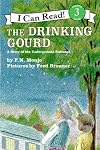
The Drinking Gourd
Summary:
While sitting in church Tommy used an apple core and some fishing line to catch a goose, Tommy disrupted the church congregation when he caught the goose. Tommy's father sent him home, where Tommy discovered four runaway slaves in the barn. The slaves were Jeff,Vinnie, Little Jeff, and Pearl, when Tommy's father got home he allowed Tommy to come with him to transport the slaves by following the Big Dipper, but the slaves called it the Drinking Gourd. The slaves used show more the Drinking Gourd to follow the North Star to get to Canada. They took a wagon full of hay, Jeff and his family hid in the hay during the trip. After the slaves were taken to a boat at a river Tommy was sent home with the wagon where he waited for his father to return home later that night.
Reaction:
I thought this was a good story about the underground railroad. I thought it showed how the underground railroad worked and escaping slavery very well. Tommy's father is a character that wants to help the slaves and wants slavery to be illegal. The setting was the countryside of South Carolina. I can relate to this by the want to help people, like Tommy's' father helping Jeff and his family.
Extension Ideas:
1. The story could be an introduction on a unit on the underground
railroad.
2.The story can teach about slavery.
3.The story can show what slaves had to do to escape. show less
Summary:
While sitting in church Tommy used an apple core and some fishing line to catch a goose, Tommy disrupted the church congregation when he caught the goose. Tommy's father sent him home, where Tommy discovered four runaway slaves in the barn. The slaves were Jeff,Vinnie, Little Jeff, and Pearl, when Tommy's father got home he allowed Tommy to come with him to transport the slaves by following the Big Dipper, but the slaves called it the Drinking Gourd. The slaves used show more the Drinking Gourd to follow the North Star to get to Canada. They took a wagon full of hay, Jeff and his family hid in the hay during the trip. After the slaves were taken to a boat at a river Tommy was sent home with the wagon where he waited for his father to return home later that night.
Reaction:
I thought this was a good story about the underground railroad. I thought it showed how the underground railroad worked and escaping slavery very well. Tommy's father is a character that wants to help the slaves and wants slavery to be illegal. The setting was the countryside of South Carolina. I can relate to this by the want to help people, like Tommy's' father helping Jeff and his family.
Extension Ideas:
1. The story could be an introduction on a unit on the underground
railroad.
2.The story can teach about slavery.
3.The story can show what slaves had to do to escape. show less
Sometime during the first half of the 19th century, a little boy named Tommy meets a family of escaped slaves traveling on the Underground Railroad and helps them to escape a group of US Marshalls. This transitional chapter book, first published in 1970, tells an inspiring story of a troublemaking boy who redeems himself through a selfless act. The African-American slaves in the story, while depicted sympathetically, still suffer from the stereotypes of the time when the book was written. show more Referred to as “Negroes” in the story, they speak in a uneducated southern patois that today might be considered borderline racist. Tommy’s father, a noble abolitionist, introduces a moral quandary that many elementary school children might struggle to understand. “I believe in obeying the law,” he says, “but you and I broke the law tonight...I can’t obey that law... It’s wrong!”
Monjo works up to this ethical question by painting a picture of an era much different from our own. Children sit in church for hours, segregated by sex and separated from their parents. Corporal punishment is accepted as part of daily life. To many kids this will be a completely unfamiliar world where the unnamed father's speech on human dignity is the only point of commonality with modern thought. The line-heavy illustrations are typical of the 70s but not ridiculously dated. Recommended for grades 3-5. show less
Monjo works up to this ethical question by painting a picture of an era much different from our own. Children sit in church for hours, segregated by sex and separated from their parents. Corporal punishment is accepted as part of daily life. To many kids this will be a completely unfamiliar world where the unnamed father's speech on human dignity is the only point of commonality with modern thought. The line-heavy illustrations are typical of the 70s but not ridiculously dated. Recommended for grades 3-5. show less
Lists
Awards


You May Also Like


Associated Authors
Statistics
- Works
- 28
- Also by
- 7
- Members
- 3,343
- Popularity
- #7,640
- Rating
- 3.8
- Reviews
- 22
- ISBNs
- 71
- Languages
- 1
- Favorited
- 1