
Robert Lawson (1) (1892–1957)
Author of Ben and Me
For other authors named Robert Lawson, see the disambiguation page.
About the Author
Robert Lawson was born in 1892 in New York City. He studied art for three years under illustrator Howard Giles. His career as an illustrator began in 1914, when his illustration for a poem about the invasion of Belgium was published in Harper's Weekly. In 1922, he illustrated his first children's show more book, The Wonderful Adventures of Little Prince Toofat. Subsequently he illustrated dozens of children's books by other authors, including such well-known titles as The Story of Ferdinand by Munro Leaf and Mr. Popper's Penguins by Richard and Florence Atwater. He has illustrated as many as forty books by other authors, and another seventeen books that he himself was author of, including Ben and Me: An Astonishing Life of Benjamin Franklin By His Good Mouse Amos and Rabbit Hill. His work was widely admired, and he became the first, and so far only, person to be given both the Caldecott Medal (They Were Strong and Good, 1941) and the Newbery Medal (Rabbit Hill, 1945). Ben and Me earned a Lewis Carroll Shelf Award in 1961. Lawson died in 1957 at his home in Westport, Connecticut, in a house that he referred to as Rabbit Hill, since it had been the setting for his book of the same name. He was 64. (Bowker Author Biography) show less
Series
Works by Robert Lawson
Robert Lawson, Illustrator: A selection of his characteristic illustrations (1972) — Illustrator — 13 copies
A Newberry Awards Library: Rabbit Hill, Roller Skates, Strawberry Girl, the Twenty-one Balloons, a Wrinkle in Time (5 Volumes) (1975) 1 copy
Young Wings, the Magazine of the Boys' and Girls' Book Club, v. 15, no. 12, Dec. 1944, Christmas. — Contributor, some editions — 1 copy
Associated Works
The Illustrated Treasury of Children's Literature, Volumes 1-2 (1955) — Contributor — 524 copies, 4 reviews
The Little Woman Wanted Noise (New York Review Books Children's Collection) (2004) — Illustrator, some editions — 46 copies, 1 review
Four and Twenty Blackbirds: A Collection of Old Nursery Rhymes (1937) — Illustrator — 44 copies, 3 reviews
A Newbery Zoo: A dozen animal stories by Newbery Award-winning authors (1995) — Contributor — 39 copies, 2 reviews
The Treasure of the Isle of Mist: A Tale of the Isle of Skye (1959) — Illustrator, some editions — 34 copies, 1 review
The Best of Both Worlds: An Anthology of Stories for All Ages (1968) — Contributor — 25 copies, 1 review
Spaceships and Spells: A Collection of New Fantasy and Science-fiction Stories (1987) — Contributor — 24 copies
I hear America singing;: An anthology of folk poetry, (1937) — Illustrator, some editions — 18 copies
Gaily we parade; a collection of poems about people, here, there & everywhere (1967) — Illustrator, some editions — 13 copies
Swords and Statues: A Tale of Sixteenth Century Italy (1937) — Illustrator, some editions — 11 copies
Evergreen Tales Group 2 — Illustrator, some editions — 5 copies
The Connecticut Cookbook, being a collection of recipes from Connecticut kitches, equally adapted for wartime and peacetime — Illustrator, some editions; Illustrator, some editions — 2 copies
A Checklist of Drawings and Watercolors 1922-1957 for Books Illustrated By Robert Lawson in the Free Library of Philadelphia (1977) — Illustrator — 2 copies
The wonderful adventures of little Prince Toofat — Illustrator — 2 copies
Miranda is a princess; a story of old Spain — Illustrator, some editions — 2 copies
The American Girl The Magazine for all girls by the Girl Scouts — Illustrator, some editions — 1 copy
The Dolphin : A Periodical for all People who find Pleasure in Fine Books — Contributor, some editions — 1 copy
Betsy Ross — Illustrator — 1 copy
Francis Scott Key — Illustrator, some editions — 1 copy
Wychwood — Illustrator, some editions — 1 copy
The Bicentennial Pageant of George Washington : issued in cooperation with the United States George Washington Bicentennial commission and with its approval : twenty original… — Illustrator, some editions — 1 copy
The New People and Progress - Ben and Me — Contributor, some editions — 1 copy
Rabbit Hill [1967 - Film] — Based on his Book — 1 copy
The Shoelace Robin — Illustrator, some editions — 1 copy
In Secret Service: A Mystery Story of Napoleon's Court — Illustrator, some editions — 1 copy
Tagged
Common Knowledge
- Legal name
- Lawson, Robert Ripley
- Birthdate
- 1892-10-04
- Date of death
- 1957-05-27
- Gender
- male
- Education
- New York School of Fine and Applied Arts
- Occupations
- illustrator
- Organizations
- U.S. Army
- Awards and honors
- Society of American Etchers. John Taylor Arms Prize (1931)
- Relationships
- Lawson, Marie (spouse)
- Nationality
- USA
- Birthplace
- New York, New York, USA
- Places of residence
- Montclair, New Jersey, USA
New York, New York, USA
Westport, Connecticut, USA - Place of death
- Westport, Connecticut, USA
- Associated Place (for map)
- USA
Members
Reviews

Having won a Caldecott Honor in 1939, for Munro Leaf's Wee Gillis - he also worked with Leaf on the classic picture-book, The Story of Ferdinand - Robert Lawson went on to win the Caldecott Medal itself in 1941, for this exploration of his family tree. First telling the story of his maternal grandmother and grandfather - the one a Scottish sea captain in New York, the other a Dutch farm girl from New Jersey - and then of his mother, raised in Minnesota; Lawson turns next to the story of his show more paternal grandfather and grandmother - an Englishman in Alabama, who fought Indians, the Devil and the Yankees, and a young Alabama girl who loved the preacher's voice - and then his father, who also fought in the Civil War as a young boy, before coming North to make a living. Although neither great nor famous, they were "strong and good," Lawson maintains, helping to build America and to leave a heritage that their children could be proud of.
They Were Strong and Good is a book with some admirable qualities, from the gorgeously detailed, etching-like illustrations - I have loved Lawson's work since the time I was a little girl, and would pore over my tattered copy of The Story of Ferdinand incessantly - to the concept of family history as American history. I like the idea of tracing one's ancestors' stories, and of showing pride in their accomplishments. That said, there was also some content here that made me extremely uncomfortable: the way in which the Indians in Minnesota are depicted as frightening food thieves that would descend upon Lawson's mother's house (apparently the language was changed in later editions, from "tame Indians" to just "Indians"); and the portrait of Lawson's father's idyllic hunting childhood, with his two beloved dogs and his slave, Dick. Lawson depicts racist realities from our past - the hatred of Native Americans, the enslavement of African-Americans - and he is not explicitly condemnatory in his depiction. Moreover, he presents his white characters - his grandparents and parents - as "strong and good," despite their participation in the racist culture of their day.
I don't doubt that they were strong and good, in many ways - and I have little tolerance for the viewpoint that we have nothing to be proud of in our history, because we have sometimes done wrong - and I think that deserves to be celebrated. But this celebration just felt a little tone-deaf to me, ignoring some of the elements of our history (whether as a nation or a family) that weren't strong and good, even though they appeared right there in the story. All in all, I think this title would work best for older children, perhaps those reading together with an adult, who can point out and discuss some of the problematic aspects of the text and artwork. show less
They Were Strong and Good is a book with some admirable qualities, from the gorgeously detailed, etching-like illustrations - I have loved Lawson's work since the time I was a little girl, and would pore over my tattered copy of The Story of Ferdinand incessantly - to the concept of family history as American history. I like the idea of tracing one's ancestors' stories, and of showing pride in their accomplishments. That said, there was also some content here that made me extremely uncomfortable: the way in which the Indians in Minnesota are depicted as frightening food thieves that would descend upon Lawson's mother's house (apparently the language was changed in later editions, from "tame Indians" to just "Indians"); and the portrait of Lawson's father's idyllic hunting childhood, with his two beloved dogs and his slave, Dick. Lawson depicts racist realities from our past - the hatred of Native Americans, the enslavement of African-Americans - and he is not explicitly condemnatory in his depiction. Moreover, he presents his white characters - his grandparents and parents - as "strong and good," despite their participation in the racist culture of their day.
I don't doubt that they were strong and good, in many ways - and I have little tolerance for the viewpoint that we have nothing to be proud of in our history, because we have sometimes done wrong - and I think that deserves to be celebrated. But this celebration just felt a little tone-deaf to me, ignoring some of the elements of our history (whether as a nation or a family) that weren't strong and good, even though they appeared right there in the story. All in all, I think this title would work best for older children, perhaps those reading together with an adult, who can point out and discuss some of the problematic aspects of the text and artwork. show less
Mr. Revere and I: Being an Account of certain Episodes in the Career of Paul Revere, Esq. as Revealed by his Horse by Robert Lawson

Paul Revere didn't make his famous midnight ride alone. Meet a patriot unlike any other: Scheherazade, the mare who doesn't mind mentioning she was once the fastest and most admired horse in the King's army. But on arrival in America, "Sherry" is quickly let down by her British rider and recruited by Sam Adams to join the Sons of Liberty. Before long, she finds herself teamed with Raul Revere to play a key - if unnoticed - role in the American Revolution. Full of wit and wisdom, this beloved show more classic presents an unforgettable view to the birth of a nation - straight from the horse's mouth! show less
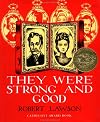
Lawson tells the story of his parents and grandparents, and how they came to help shape the history of America. He accompanies the stories with detailed pen and ink drawings, for which he won the Caldecot medal. Some of these illustrations are delightful – I liked the contrast between “modern” city and the farm land that was just two generations pervious, and laughed at the illustration of the aftermath when a parrot nearly devoured a Panama hat. I also appreciate Lawson’s show more acknowledgment of oral story telling traditions, and of children listening and learning their own family histories from their elders. I certainly spent many an enjoyable evening listening to my grandparents, aunts and uncles regaling us with stories of our family’s past.
So why the low rating? I realize this is a product of its time (originally published in 1940), and that Lawson was proud of his ancestors and their accomplishments. But I am disturbed by the racism within. The depictions of “happy slaves” and “thieving Indians” just leave a really bad taste in my mouth. And now that I know this is the “revised” edition (see WIKIPEDIA entry for some of the original language), I’m even more unhappy. Perhaps it offers an opportunity for parents to have difficult discussions with their children about those episodes in America’s history, and the changing attitudes over the years. But I just don’t like it. show less
So why the low rating? I realize this is a product of its time (originally published in 1940), and that Lawson was proud of his ancestors and their accomplishments. But I am disturbed by the racism within. The depictions of “happy slaves” and “thieving Indians” just leave a really bad taste in my mouth. And now that I know this is the “revised” edition (see WIKIPEDIA entry for some of the original language), I’m even more unhappy. Perhaps it offers an opportunity for parents to have difficult discussions with their children about those episodes in America’s history, and the changing attitudes over the years. But I just don’t like it. show less

His is a fantastic story, about a little boy in Connecticut who finds a tiny baby mole and feeds it from a box of breakfast cereal. This virtually non-nutritious cereal, hyped by its manufacturers in a most obnoxious manner, is described by Lawson in a way that will make even a jaded 21st Century consumer smile. Unbeknownst to everyone, the box of cereal fed to the mole is filled with pure Vitamin X. The Vitamin X should have been distributed in thousands of cereal boxes, but due to the show more mistake of Mr. Twigg, an employee at the cereal company, it all ends up in our hero's box.
What happens to the little mole as he eats the cereal, day after day, is the heart of this delightful story. The artwork is as funny as this preposterous story. You'll enjoy it (although watch out for some of the dated nonsense that sometimes lurks when the black maid, Pearlacy, is present). show less
What happens to the little mole as he eats the cereal, day after day, is the heart of this delightful story. The artwork is as funny as this preposterous story. You'll enjoy it (although watch out for some of the dated nonsense that sometimes lurks when the black maid, Pearlacy, is present). show less
Lists
1970s (1)
4th Grade Books (1)
al.vick-series (1)
Ambleside Books (1)
Awards


You May Also Like


Associated Authors
Statistics
- Works
- 28
- Also by
- 72
- Members
- 11,489
- Popularity
- #2,042
- Rating
- 3.9
- Reviews
- 140
- ISBNs
- 149
- Languages
- 6
- Favorited
- 7

