
Pagan Kennedy
Author of The Secret History of the Rape Kit: A True Crime Story
About the Author
Image credit: Courtesy of the author
Works by Pagan Kennedy
The First Man-Made Man: The Story of Two Sex Changes, One Love Affair, and a Twentieth-Century Medical Revolution (2007) 163 copies, 7 reviews
Zine: How I Spent Six Years of My Life in the Underground and Finally Found Myself... I Think (1995) 121 copies, 22 reviews
Black Livingstone: A True Tale of Adventure in the Nineteenth-Century Congo (2002) 106 copies, 3 reviews
Elvis's Bathroom {short story} 3 copies
The Secret History of the Rape Kit: A True Crime Story — Author — 2 copies
Glitter (in Pretext - MAGRS) 1 copy
Queer (short work) 1 copy
Associated Works
The Year's Best Fantasy and Horror: Eighth Annual Collection (1995) — Contributor — 330 copies, 6 reviews
The Dictionary of Failed Relationships: 26 Tales of Love Gone Wrong (2003) — Contributor — 61 copies
Adrenaline 2000: The Year's Best Stories of Adventure and Survival 2000 (2000) — Contributor — 54 copies
An Immense New Power to Heal: The Promise of Personalized Medicine (2012) — Author — 8 copies, 1 review
Tagged
Common Knowledge
- Canonical name
- Kennedy, Pagan
- Birthdate
- 1962
- Gender
- female
- Education
- Wesleyan University (1984)
- Relationships
- Donna Kossy (former housemate)
- Nationality
- USA (birth)
- Places of residence
- Boston, Massachusetts, USA
- Associated Place (for map)
- Massachusetts, USA
Members
Reviews
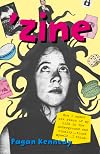
Santa Fe Writers' Project is to be commended for bringing this compilation of Pagan Kennedy's late 80s and early 90s zines back into print. The decision to bring it back as initially published, however, is a bit surprising: read in 2014, this is a drastically different book than the identical one published in the mid-1990s. It must have been tempting to add a breathless introduction crediting Kennedy with being one of the inventors of blogging before blogging existed, and I find myself show more admiring the restraint and letting the work speak for itself.
The material feels oddly double-dated now: while the crassness of the tail-end of the Reagan years and the acrid fumes of the first Bush administration clearly comes through at points, the reader is also reminded of the early to mid-2000s, when seemingly everyone started writing online using a voice not dissimilar from Kennedy's. From this distance, it can be harder to see how singular Kennedy's voice would have been when initially published: it seems familiar if only because it's been so widely emulated.
But what's interesting about reading this now is what's unfamiliar. While publishing a zine is superficially similar to blogging, the relationship between authors and readers is different. Kennedy's readers reach out to her – and she reaches out to them – but one is struck by how much effort is involved (driving a motorcycle cross-country, in one case). There's a richness to the experience which is less common in online writing; reading this feels like rediscovering a vanished world. show less
The material feels oddly double-dated now: while the crassness of the tail-end of the Reagan years and the acrid fumes of the first Bush administration clearly comes through at points, the reader is also reminded of the early to mid-2000s, when seemingly everyone started writing online using a voice not dissimilar from Kennedy's. From this distance, it can be harder to see how singular Kennedy's voice would have been when initially published: it seems familiar if only because it's been so widely emulated.
But what's interesting about reading this now is what's unfamiliar. While publishing a zine is superficially similar to blogging, the relationship between authors and readers is different. Kennedy's readers reach out to her – and she reaches out to them – but one is struck by how much effort is involved (driving a motorcycle cross-country, in one case). There's a richness to the experience which is less common in online writing; reading this feels like rediscovering a vanished world. show less
 This review was written for LibraryThing Early Reviewers.
Before Martha “Marty” Goddard (c. 1941-2015) came up with an idea for a “rape kit” in the 1970s, there was no systematic way for medical professionals to gather physical evidence after a sexual assault. Unfortunately, a corrupt cop took credit for Marty’s concept, created the kit, and trademarked it under his own name. Despite this injustice, Marty devoted her life to promoting usage of the kit, until mental illness and alcoholism led to her descent into poverty and obscurity. show more
Marty wasn’t really close to anyone except her nephew, and did not leave behind much of a paper trail. Author and journalist Pagan Kennedy does her best to reconstruct what little evidence of Marty’s life that remains. Kennedy also shares horrifying stories of her own experiences of sexual assault. The result is a compelling feminist exploration of the past fifty years of social attitudes towards rape and how such attitudes have influenced forensic practice. show less
Marty wasn’t really close to anyone except her nephew, and did not leave behind much of a paper trail. Author and journalist Pagan Kennedy does her best to reconstruct what little evidence of Marty’s life that remains. Kennedy also shares horrifying stories of her own experiences of sexual assault. The result is a compelling feminist exploration of the past fifty years of social attitudes towards rape and how such attitudes have influenced forensic practice. show less
This book is an important and unsettling read that shines a light on a subject many people rarely think about, but absolutely should. It traces the origins of the rape kit and the long, frustrating struggle to have sexual assault treated as a serious crime supported by proper forensic science. It is informative and often eye-opening, especially in how it exposes the systemic indifference victims have faced.
I found Marty Goddard to be a compelling figure whose role in developing the rape kit show more was both crucial and, sadly, underappreciated. While reading, I found myself wanting more. I felt that Goddard’s story deserved deeper exploration. It needed a deeper level of understanding. What were her motivations? Why did she have such persistence in getting the kit developed? I would have liked to learn more about what became of her beyond this innovation. The book touches on her importance, but it left me with the sense that there was more to uncover, more that could have been said.
The book feels a little unfinished in how it ties together its narrative threads. Some sections felt rushed or not fully developed. In my opinion, the story ends before it has been completely settled. A more thorough or reflective conclusion might have strengthened its impact.
The book succeeds in what matters most: it informs, it unsettles, and it challenges the reader. It highlights just how recent progress has been in handling sexual assault cases. It underscores that while the rape kit has been essential, it is only part of the solution. Culture itself needs to change. Victims need to be believed, supported, and treated with dignity from the moment they come forward.
This book is a worthwhile and necessary read. Even with its shortcomings, it brings attention to a critical issue and the people who fought to address it. It reminds us that justice is not just about technology, but also about empathy, persistence, and societal will. show less
I found Marty Goddard to be a compelling figure whose role in developing the rape kit show more was both crucial and, sadly, underappreciated. While reading, I found myself wanting more. I felt that Goddard’s story deserved deeper exploration. It needed a deeper level of understanding. What were her motivations? Why did she have such persistence in getting the kit developed? I would have liked to learn more about what became of her beyond this innovation. The book touches on her importance, but it left me with the sense that there was more to uncover, more that could have been said.
The book feels a little unfinished in how it ties together its narrative threads. Some sections felt rushed or not fully developed. In my opinion, the story ends before it has been completely settled. A more thorough or reflective conclusion might have strengthened its impact.
The book succeeds in what matters most: it informs, it unsettles, and it challenges the reader. It highlights just how recent progress has been in handling sexual assault cases. It underscores that while the rape kit has been essential, it is only part of the solution. Culture itself needs to change. Victims need to be believed, supported, and treated with dignity from the moment they come forward.
This book is a worthwhile and necessary read. Even with its shortcomings, it brings attention to a critical issue and the people who fought to address it. It reminds us that justice is not just about technology, but also about empathy, persistence, and societal will. show less
Zine: How I Spent Six Years of My Life in the Underground and Finally...Found Myself...I Think by Pagan Kennedy

Self-publishing is a weird old thing. Why go to all the effort of creating something that often will only be read by family and friends, but takes you weeks or even months of effort to produce, then costs you too much money to get printed, and then can be incredibly difficult to distribute to complete strangers? Why not just do it electronically or just try and get it published properly? It’s surely just pure self-indulgence…
Well yeah, in a way it kind of is. And I say that as someone show more who has been happily, and not cheaply, indulging his silliest ideas for about five years now. I am struck with a deeply silly idea (what if I wrote something like “Roy of the Rovers” but from my own perspective of not caring or understanding a single thing about the kicking game?) that makes me chuckle and then doodle it down and hope it makes someone else laugh as much as I did (if you want to find out if that person is you, by the way, the resulting “Roy of the Rovers” parody is called “Johnny Kickfoot” and can be found in “The Common Swings Variousness Spectacular” available from, well, me). So in many ways it’s, yes, indulging myself in a very real way. But it’s also a wonderful way of spontaneously taking an idea and getting it down on the page very quickly. To me this is one of the most profoundly wonderful things about zines and mini comics: it’s quick to produce and is frequently (once you get the hang of doing them) pretty much the equivalent of opening up your head and allowing the ideas to plop out directly onto the page.
And the delight of it all is… you don’t have to care or worry about what readers might think about it. You’re not doing it for them. You’re doing it for you. No second guessing. As long as it’s not entirely self-obsessed, boring navel gazing that you’re producing (that’s what blogs are for, surely) you’ve got a good chance of finding someone who finds what you do enjoyable. I’ve had many baffled looks at my zines, but I’ve also found that one thing usually appeals to each person who reads them. Just one thing. And it’s usually the most unexpected thing in the world. My wife’s favourite was a kid’s book idea I basically knocked up on the spot about a vain pony called “Carl the Splendid Horse”. Just mentioning it sends her into giggles and I have no idea why. And I don’t’ think about it too much either, because by then I’m usually trying to think of another silly gag to make someone else chuckle.
This is a roundabout way of saying that I understand a lot of the world that “Zine” comes from. I may not have been creating an autobiographical, mainly text based zine like Pagan Kennedy did, but by golly did this book resonate with me. Kennedy started “Pagan’s Head” as a way of not trying to second guess what other people – and Pagan herself - expected from her attempts to write the Great American Novel ™. This was the Great American Novel’s idiot, carefree brother who just gadded about on the sofa and watched the telly while his precious sibling vexed for hours pondering how many times is too many when it comes to saying “said” on one page. In other words, this was a spontaneous, slight, silly, wildly creative outlet for the kind of ideas that she deemed unusable for her “proper work”. And before she knew it, that spontaneous, slight, silly and wildly creative outlet had actually become, in many ways, as important – if not more so - as the Proper Novel itself.
And that’s because a zine is like a dialogue. A dialogue between the creator and the reader. It’s a letter to people you initially know and then, hopefully, some you have yet to meet. It’s a bulletin straight from your brain. And having Kennedy’s insights into the creative process – and then being able to see that creative process itself – are fascinating. In many ways the quality of the zine itself is not important (although, handily, “Pagan’s Head” is a great read as it moves slowly from self-indulgence to finding a very real and confident voice, as Pagan moves towards the more themed issues: it’s a lovely companion piece to something like John Porcellino’s “King Cat Classix”, a similar collection of juvenilia slowly becoming bolder and more adventurous as the writer and artist grows in confidence in using his skills) – it’s the story of how it got there that really holds the attention.
Because in many ways zines, mini comics and the whole world of self-publishing are more about the journey than they are about the destination itself. Many novels suffer from being so focussed on the destination, they don’t take the time to enjoy dawdling and take in the view on the route. In the hurry to say something important about the human condition, writers don’t suddenly get waylaid by a comical cat or an unusual street name. The zine writer absolutely thrives on those tiny details. Most zine writers and mini comic writers couldn’t give a stuff about the destination. Some of them have barely left the house. Some of them could probably knock out ten issues of something based purely on their front door. Which is why they’re so wonderful. They’re entirely the work of a creative mind wanting to scoop out the overflow from their brain and pin it down on the page. Even the dullest zine or mini comic can contain something uniquely brilliant and vivid. And to read someone’s story about how they progressed along that route makes it even more wonderful. A great, great book. show less
Well yeah, in a way it kind of is. And I say that as someone show more who has been happily, and not cheaply, indulging his silliest ideas for about five years now. I am struck with a deeply silly idea (what if I wrote something like “Roy of the Rovers” but from my own perspective of not caring or understanding a single thing about the kicking game?) that makes me chuckle and then doodle it down and hope it makes someone else laugh as much as I did (if you want to find out if that person is you, by the way, the resulting “Roy of the Rovers” parody is called “Johnny Kickfoot” and can be found in “The Common Swings Variousness Spectacular” available from, well, me). So in many ways it’s, yes, indulging myself in a very real way. But it’s also a wonderful way of spontaneously taking an idea and getting it down on the page very quickly. To me this is one of the most profoundly wonderful things about zines and mini comics: it’s quick to produce and is frequently (once you get the hang of doing them) pretty much the equivalent of opening up your head and allowing the ideas to plop out directly onto the page.
And the delight of it all is… you don’t have to care or worry about what readers might think about it. You’re not doing it for them. You’re doing it for you. No second guessing. As long as it’s not entirely self-obsessed, boring navel gazing that you’re producing (that’s what blogs are for, surely) you’ve got a good chance of finding someone who finds what you do enjoyable. I’ve had many baffled looks at my zines, but I’ve also found that one thing usually appeals to each person who reads them. Just one thing. And it’s usually the most unexpected thing in the world. My wife’s favourite was a kid’s book idea I basically knocked up on the spot about a vain pony called “Carl the Splendid Horse”. Just mentioning it sends her into giggles and I have no idea why. And I don’t’ think about it too much either, because by then I’m usually trying to think of another silly gag to make someone else chuckle.
This is a roundabout way of saying that I understand a lot of the world that “Zine” comes from. I may not have been creating an autobiographical, mainly text based zine like Pagan Kennedy did, but by golly did this book resonate with me. Kennedy started “Pagan’s Head” as a way of not trying to second guess what other people – and Pagan herself - expected from her attempts to write the Great American Novel ™. This was the Great American Novel’s idiot, carefree brother who just gadded about on the sofa and watched the telly while his precious sibling vexed for hours pondering how many times is too many when it comes to saying “said” on one page. In other words, this was a spontaneous, slight, silly, wildly creative outlet for the kind of ideas that she deemed unusable for her “proper work”. And before she knew it, that spontaneous, slight, silly and wildly creative outlet had actually become, in many ways, as important – if not more so - as the Proper Novel itself.
And that’s because a zine is like a dialogue. A dialogue between the creator and the reader. It’s a letter to people you initially know and then, hopefully, some you have yet to meet. It’s a bulletin straight from your brain. And having Kennedy’s insights into the creative process – and then being able to see that creative process itself – are fascinating. In many ways the quality of the zine itself is not important (although, handily, “Pagan’s Head” is a great read as it moves slowly from self-indulgence to finding a very real and confident voice, as Pagan moves towards the more themed issues: it’s a lovely companion piece to something like John Porcellino’s “King Cat Classix”, a similar collection of juvenilia slowly becoming bolder and more adventurous as the writer and artist grows in confidence in using his skills) – it’s the story of how it got there that really holds the attention.
Because in many ways zines, mini comics and the whole world of self-publishing are more about the journey than they are about the destination itself. Many novels suffer from being so focussed on the destination, they don’t take the time to enjoy dawdling and take in the view on the route. In the hurry to say something important about the human condition, writers don’t suddenly get waylaid by a comical cat or an unusual street name. The zine writer absolutely thrives on those tiny details. Most zine writers and mini comic writers couldn’t give a stuff about the destination. Some of them have barely left the house. Some of them could probably knock out ten issues of something based purely on their front door. Which is why they’re so wonderful. They’re entirely the work of a creative mind wanting to scoop out the overflow from their brain and pin it down on the page. Even the dullest zine or mini comic can contain something uniquely brilliant and vivid. And to read someone’s story about how they progressed along that route makes it even more wonderful. A great, great book. show less
This review was written for LibraryThing Early Reviewers.Lists
Awards


You May Also Like


Associated Authors
Statistics
- Works
- 16
- Also by
- 4
- Members
- 1,233
- Popularity
- #20,820
- Rating
- 3.5
- Reviews
- 76
- ISBNs
- 52
- Languages
- 3
- Favorited
- 5

