
John Pipkin
Author of Woodsburner
About the Author
Image credit: KennethGall.com
Works by John Pipkin
Tagged
Common Knowledge
- Gender
- male
Members
Reviews

It is a delight to read a novel that doesn't assume I'm limited to a fifth grader's command of the English language.
Altho the inspiration for this story came from an entry in [[Thoreau]]'s [Journal], Pipkin skillfully interleaves the perspectives of a handfull of other people, each of whom views the fire as a personally fated event. And, like all crises, some meet the challenge, growing in inner strength, while others fail. As the blind woman (herself a symbol of Fate) soliloquizes "If the show more New World does not grant men the freedom to rise above the dark paths mapped by fate, then what is the point of coming here?"(p.350) Thoreau (as Pipkin has him say) sees it similarly: "These men have had a precious opportunity to act as men, and now they will return to their groveling lives. They will return to the ordained destruction of land and living things that pretends offense at accidental loss." (p. 342) show less
Altho the inspiration for this story came from an entry in [[Thoreau]]'s [Journal], Pipkin skillfully interleaves the perspectives of a handfull of other people, each of whom views the fire as a personally fated event. And, like all crises, some meet the challenge, growing in inner strength, while others fail. As the blind woman (herself a symbol of Fate) soliloquizes "If the show more New World does not grant men the freedom to rise above the dark paths mapped by fate, then what is the point of coming here?"(p.350) Thoreau (as Pipkin has him say) sees it similarly: "These men have had a precious opportunity to act as men, and now they will return to their groveling lives. They will return to the ordained destruction of land and living things that pretends offense at accidental loss." (p. 342) show less
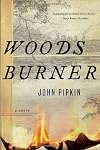
I wish I could give this book 6 stars, because it does so well the strange job of capturing that certain spirit that infuses much of my favorite American mid-19th century literature: A compelling mix of questing, Westward Expansion tempered by a sorrow for the loss of innocence of the New World, with an overlay of bizarre spiritual beliefs ranging from Puritanism to pantheism. I have a soft place in my heart for Henry David Thoreau, perhaps because he reminds me of the better angels of my show more own adolescent nature. I want to shake him and hug him at once. Yes, he did set fire to the woods. Yes, it was a stupid and tragic accident. But he did help stop the fire, and Pipkin imagines Thoreau taking such lessons from this episode as to have made Walden a direct beneficiary -- a piece of writing that might not have otherwise been possible. show less
What a skillful, accomplished, confident debut novel. In fact, had I not attended the book signing and presentation by the author, I would have never guessed it was the writer's first work - each character, even besides Henry David Thoreau, is so unique in this book. We always think of Thoreau as a serious philosopher, thinker. John Pipkin gives us a different Thoreau - a vulnerable young man whose opinions of the surrounding world were just forming. I loved the way John Pipkin puts life show more into his characters with his exquisite language style - I just loved his wording. I kept having this urgent feeling of wanting to quote him, to write down this or that sentence, just for the sheer beauty of it, and eventually I did write down a few things. Also, his style clearly rings of the authenticity of the period.
During the author's book signing and presentation at a local library, I admit, I was a little biased against Mr.Pipkin when somebody from the audience asked him whether he had often been to Walden Pond for inspiration to write this book, and John Pipkin said no... I remember thinking then: well, how could one not to... But then I read the book and was quite taken by his talent. I have only one small note of criticism: I found some ideas and ruminations a little repetitive at some points of the book (though, I am sure it had some hidden purpose), but for me, it hardly took anything from its value. show less
During the author's book signing and presentation at a local library, I admit, I was a little biased against Mr.Pipkin when somebody from the audience asked him whether he had often been to Walden Pond for inspiration to write this book, and John Pipkin said no... I remember thinking then: well, how could one not to... But then I read the book and was quite taken by his talent. I have only one small note of criticism: I found some ideas and ruminations a little repetitive at some points of the book (though, I am sure it had some hidden purpose), but for me, it hardly took anything from its value. show less
Historical Fiction is probably one of the harder genres for an author to succeed in, especially when it is not written as a sub-genre of Mystery, True Crime or Romance novels. Taking historical people and events and placing them within a fictional narrative can be a precarious balancing act; too much historical accuracy can weigh down a story, while taking too many liberties can unintentionally turn the whole thing into a farce. Tackling a historical literary figure can be even more show more daunting, as readers familiar with the author's works will no doubt possess their own vision of his or her personality.
With this in mind, John Pipkin took a perilous task in hand when he decided to pen a fictionalized account of Henry David Thoreau's accidental act of wildfire arson in Woodsburner: A Novel. His theory that Thoreau's unintentional decimation of 300 acres of woodland forest might have sparked the emotional and philosophical journey that would inspire much of his later works (most notably Walden) is intriguing. But Pipkin's interest isn't merely academic; Woodsburner strives to understand and examine the spiritual journey that would sprout from such a traumatic event, and on this level he succeeds.
The pace and tone of Woodsburner matches the style of its subject. Not a thrilling page-turner, it is instead casual and reflective, admiring the landscape (of both the Massachusetts wilderness and mid 1800s) the as it examines and dwells upon it. Switching the narrative between three other main (fictional) characters besides Thoreau as the fire spreads and builds gives the reader a perspective of perceptions and realities that aids in the illustration of Thoreau's personal journey, and helps to further explore the time period. In short, Pipkin handily succeeds in turning a historical footnote into a provoking and engaging novel.
Woodsburner has enough heart and soul for readers interested in the motivations and decisions characters make, flavor and detail for people looking for the historical perspective of the time period, and penetrating prose for those hungry for a more personal look at a famous literary figure. show less
With this in mind, John Pipkin took a perilous task in hand when he decided to pen a fictionalized account of Henry David Thoreau's accidental act of wildfire arson in Woodsburner: A Novel. His theory that Thoreau's unintentional decimation of 300 acres of woodland forest might have sparked the emotional and philosophical journey that would inspire much of his later works (most notably Walden) is intriguing. But Pipkin's interest isn't merely academic; Woodsburner strives to understand and examine the spiritual journey that would sprout from such a traumatic event, and on this level he succeeds.
The pace and tone of Woodsburner matches the style of its subject. Not a thrilling page-turner, it is instead casual and reflective, admiring the landscape (of both the Massachusetts wilderness and mid 1800s) the as it examines and dwells upon it. Switching the narrative between three other main (fictional) characters besides Thoreau as the fire spreads and builds gives the reader a perspective of perceptions and realities that aids in the illustration of Thoreau's personal journey, and helps to further explore the time period. In short, Pipkin handily succeeds in turning a historical footnote into a provoking and engaging novel.
Woodsburner has enough heart and soul for readers interested in the motivations and decisions characters make, flavor and detail for people looking for the historical perspective of the time period, and penetrating prose for those hungry for a more personal look at a famous literary figure. show less
Lists
Favorites (1)
Awards


You May Also Like


Statistics
- Works
- 4
- Members
- 332
- Popularity
- #71,552
- Rating
- 3.8
- Reviews
- 9
- ISBNs
- 15
