
D. D. Raphael (1916–2015)
Author of Moral Philosophy
About the Author
D.D. Raphael is Emeritus Professor of Philosophy at Imperial College, London.
Series
Works by D. D. Raphael
The moral sense 3 copies
Tagged
Common Knowledge
- Birthdate
- 1916
- Date of death
- 2015
- Gender
- male
- Occupations
- Professor Emeritus of Philosophy
- Organizations
- Imperial College London
- Relationships
- Daiches, David (brother-in-law)
- Nationality
- UK
- Associated Place (for map)
- UK
Members
Reviews

This collection of scholarly essays examines Adam Smith's theory of moral sentiments.
Even though Adam Smith always considered The Theory of Moral Sentiments to be his most authoritative work, it never achieved the same prominence as his other work, The Wealth of Nations. TMS has often been misunderstood for at least two reasons:
1) Many of the commentators have been economists who have looked at TMS simply in order to find some relevance for WN. This gave rise to the so-called "Adam Smith show more problem" -- an inconsistency between the psychological assumptions of the two books.
2) A failure to note whether a particular passage was written for the 1st (1759) or for the 6th edition (1790). The 1st edition reflected Smith's youthful idealism, whereas the 6th edition included a whole new part, on the character of virtue, and other revisions. In fact, it was so drastically altered that it could be considered a different book altogether.
The primary purpose of this work is to expound a "theory" of ethics. Here, "theory" is a name for the subject matter, rather than the theory in Smith's TMS. The content of the book consists primarily of philosophical analysis of Smith's theory of moral sentiments, focusing on the two key ideas of "sympathy" and "impartial spectator."
Each of the 14 essays is analytical, effective, and well-written. show less
Even though Adam Smith always considered The Theory of Moral Sentiments to be his most authoritative work, it never achieved the same prominence as his other work, The Wealth of Nations. TMS has often been misunderstood for at least two reasons:
1) Many of the commentators have been economists who have looked at TMS simply in order to find some relevance for WN. This gave rise to the so-called "Adam Smith show more problem" -- an inconsistency between the psychological assumptions of the two books.
2) A failure to note whether a particular passage was written for the 1st (1759) or for the 6th edition (1790). The 1st edition reflected Smith's youthful idealism, whereas the 6th edition included a whole new part, on the character of virtue, and other revisions. In fact, it was so drastically altered that it could be considered a different book altogether.
The primary purpose of this work is to expound a "theory" of ethics. Here, "theory" is a name for the subject matter, rather than the theory in Smith's TMS. The content of the book consists primarily of philosophical analysis of Smith's theory of moral sentiments, focusing on the two key ideas of "sympathy" and "impartial spectator."
Each of the 14 essays is analytical, effective, and well-written. show less

A brief but useful overview of Smith's major works. The book refutes some earlier comparisons of the idea of "sympathy" in Moral Sentiments versus Wealth of Nations and adds some of its own. If you were time poor and had to choose between this book and Smith's two main tomes, this book would be adequate but it assumes some prior knowledge of the eccentric "Father of Capitalism".
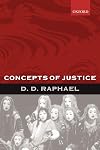
The author gives a philosophical survey of the development of the idea of justice from ancient roots to the present day. The framework is historical, but the aim is philosophical analysis and criticism.

Lists
You May Also Like


Associated Authors
Statistics
- Works
- 20
- Members
- 392
- Popularity
- #61,821
- Rating
- 3.7
- Reviews
- 4
- ISBNs
- 56
- Languages
- 6