
Peter Mark Roget (1779–1869)
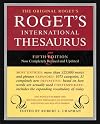
Author of Roget's International Thesaurus
About the Author
Image credit: Internet Archive.
Series
Works by Peter Mark Roget
Roget's Thesaurus of English Words and Phrases: Classic American Edition (1988) 144 copies, 1 review
Roget's Thesaurus of English Words and Phrases (Penguin Reference Books) (2003) — Author — 47 copies
Roget's Thesaurus 25 copies
Roget's Thesaurus — Author — 20 copies
Roget's II The new thesaurus 7 copies
ROGET'S THESAURUS OF ENGLISH WORDS AND PHRASES New Edition Revised and Enblarged by Samuel Romilly Roget (1879) 2 copies
Roget Thesaurus 1 copy
Roget's II, The New Thesaurus and The American Heritage College Dictionary. Two volume boxed set. Deluxe Third Edition. (1995) 1 copy
Associated Works
Tagged
Common Knowledge
- Canonical name
- Roget, Peter Mark
- Legal name
- Roget, Peter Mark
- Other names
- Roget, P. M.
- Birthdate
- 1779-01-18
- Date of death
- 1869-09-12
- Gender
- male
- Occupations
- philologist
physician - Organizations
- Portico Library, Manchester
- Relationships
- Romilly, Samuel (uncle)
Roget, Samuel Romilly (grandson) - Nationality
- UK
- Birthplace
- Soho, London, England, UK
- Places of residence
- Manchester, Lancashire, England, UK
- Place of death
- West Malvern, Worcestershire, England, UK
- Burial location
- Churchyard of Saint James, West Malvern, Worcestershire, England, UK
- Map Location
- England, UK
Members
Discussions
Help needed: Roget's Thesaurus of English Words and Phrases (edited by George Davidson) in Book talk (October 2014)
Reviews

I love, love, LOVE this edition. It doesn't just throw skimpy words your way, it gives you entire categories of concepts. Like an analog Internet, one concept leads to another and sparks endless ideas. It's ideal for anyone who seeks to expand their knowledge of the universe and transfer that into richer and more thought-provoking writing without the side trips to email, twitter, facebook, news sites.
Roget's unique categorical organization of words makes it an enduring classic. It was, perhaps, slightly more difficult to figure out how to use when I was a child than alphabetically-organized thesauri, but once I understood the system, Roget's helped engender a love of words in me that assured me top marks on the SAT, GRE, and the verbal sections of all other standardized tests. I actually read this thesaurus for fun!
It seems odd to be so passionate about a reference book, but the fact show more remains: no other thesaurus will ever be allowed in my house. show less
It seems odd to be so passionate about a reference book, but the fact show more remains: no other thesaurus will ever be allowed in my house. show less
I got a personal message on Goodreads the other day by somebody spruiking his new book site. It was great, he said, you can chat to people about books on it. After making the obvious point that he was telling me that on a site where people chat about books, he enthusiastically assured me that if I just went and had a look, I'd see....
So I did. Book-talks.com You need a login to see chat rooms, but you can see books and their blurbs without that. I zeroed in on The Great Gatsby on account of show more how it's more or less my favourite book. And this is what I read:
Something odd is going on here. It's either been written by a non-native person with a thesaurus...or an algorithm? I put a sentence into google and discovered the answer.
The blurb has been taken lock stock and barrel from wiki's The Great Gatsby entry and a thesaurus loving algorithm has changed some words to make it 'original'. The comparisons between the two are hilarious. It would make a nice lesson for school kids on understanding what a thesaurus is and the dangers of using it. show less
So I did. Book-talks.com You need a login to see chat rooms, but you can see books and their blurbs without that. I zeroed in on The Great Gatsby on account of show more how it's more or less my favourite book. And this is what I read:
The Great Gatsby is a 1925 novel composed by American creator F. Scott Fitzgerald that follows a cast of characters living in the anecdotal towns of West Egg and East Egg on prosperous Long Island in the late spring of 1922. The story essentially concerns the youthful and baffling mogul Jay Gatsby and his eccentric energy and fixation on the excellent previous debutante Daisy Buchanan. The Great Gatsby investigates topics of debauchery, vision, protection from change, social change and abundance, making a representation of the Roaring Twenties that has been depicted as a useful example in regards to the American Dream.
Something odd is going on here. It's either been written by a non-native person with a thesaurus...or an algorithm? I put a sentence into google and discovered the answer.
The Great Gatsby is a 1925 novel written by American author F. Scott Fitzgerald that follows a cast of characters living in the fictional towns of West Egg and East Egg on prosperous Long Island in the summer of 1922. Many literary critics consider The Great Gatsby to be one of the greatest novels ever written.[1][2][3][4]
The story of the book primarily concerns the young and mysterious millionaire Jay Gatsby and his quixotic passion and obsession with the beautiful former debutante Daisy Buchanan. Considered to be Fitzgerald's magnum opus, The Great Gatsby explores themes of decadence, idealism, resistance to change, social upheaval and excess, creating a portrait of the Roaring Twenties that has been described as a cautionary[a] tale regarding the American Dream.[5][6]
The blurb has been taken lock stock and barrel from wiki's The Great Gatsby entry and a thesaurus loving algorithm has changed some words to make it 'original'. The comparisons between the two are hilarious. It would make a nice lesson for school kids on understanding what a thesaurus is and the dangers of using it. show less
I got a personal message on Goodreads the other day by somebody spruiking his new book site. It was great, he said, you can chat to people about books on it. After making the obvious point that he was telling me that on a site where people chat about books, he enthusiastically assured me that if I just went and had a look, I'd see....
So I did. Book-talks.com You need a login to see chat rooms, but you can see books and their blurbs without that. I zeroed in on The Great Gatsby on account of show more how it's more or less my favourite book. And this is what I read:
Something odd is going on here. It's either been written by a non-native person with a thesaurus...or an algorithm? I put a sentence into google and discovered the answer.
The blurb has been taken lock stock and barrel from wiki's The Great Gatsby entry and a thesaurus loving algorithm has changed some words to make it 'original'. The comparisons between the two are hilarious. It would make a nice lesson for school kids on understanding what a thesaurus is and the dangers of using it. show less
So I did. Book-talks.com You need a login to see chat rooms, but you can see books and their blurbs without that. I zeroed in on The Great Gatsby on account of show more how it's more or less my favourite book. And this is what I read:
The Great Gatsby is a 1925 novel composed by American creator F. Scott Fitzgerald that follows a cast of characters living in the anecdotal towns of West Egg and East Egg on prosperous Long Island in the late spring of 1922. The story essentially concerns the youthful and baffling mogul Jay Gatsby and his eccentric energy and fixation on the excellent previous debutante Daisy Buchanan. The Great Gatsby investigates topics of debauchery, vision, protection from change, social change and abundance, making a representation of the Roaring Twenties that has been depicted as a useful example in regards to the American Dream.
Something odd is going on here. It's either been written by a non-native person with a thesaurus...or an algorithm? I put a sentence into google and discovered the answer.
The Great Gatsby is a 1925 novel written by American author F. Scott Fitzgerald that follows a cast of characters living in the fictional towns of West Egg and East Egg on prosperous Long Island in the summer of 1922. Many literary critics consider The Great Gatsby to be one of the greatest novels ever written.[1][2][3][4]
The story of the book primarily concerns the young and mysterious millionaire Jay Gatsby and his quixotic passion and obsession with the beautiful former debutante Daisy Buchanan. Considered to be Fitzgerald's magnum opus, The Great Gatsby explores themes of decadence, idealism, resistance to change, social upheaval and excess, creating a portrait of the Roaring Twenties that has been described as a cautionary[a] tale regarding the American Dream.[5][6]
The blurb has been taken lock stock and barrel from wiki's The Great Gatsby entry and a thesaurus loving algorithm has changed some words to make it 'original'. The comparisons between the two are hilarious. It would make a nice lesson for school kids on understanding what a thesaurus is and the dangers of using it. show less
Lists
Awards

You May Also Like


Associated Authors
Statistics
- Works
- 75
- Also by
- 1
- Members
- 11,873
- Popularity
- #1,979
- Rating
- 4.1
- Reviews
- 65
- ISBNs
- 235
- Languages
- 1
- Favorited
- 1