
Veronica Roth
Author of Divergent
About the Author
Veronica Roth was born on August 19, 1988 in New York. She graduated from Northwestern University's creative writing program. She is a full-time author whose books include Divergent, Insurgent, and Allegiant. Divergent was adapted into a movie in 2014. In 2015 Insurgent made The New York Time Best show more Seller List. She also wrote four short stories from Divergent's character, Tobias Eaton's point of view. That book, entitled Four: A Divergent Collection, made the New York Times bestseller list in 2014. She wrote Carve the Mark which made the bestseller list in February 2017. The Fates Divided, which is the sequel to Carve the Mark, was publised April 2018. (Bowker Author Biography) show less
Series
Works by Veronica Roth
Untitled (The Chosen Ones, #2) 11 copies
Untitled (Untitled Duology, #1) 5 copies
The Sixth Faction 2 copies
Preview: Carve the Mark 2 copies
The Sixth Faction #2 2 copies
Four: The Transfer (Kindle Single): A Young Adult Divergent Story About How Tobias Became Four 1 copy
BESNIKJA V.II 1 copy
KRYENGRITËSJA V.I 1 copy
Inertia [novelette] — Author — 1 copy
apoklisi / απόκλιση 1 copy
Associated Works
The Far Reaches Collection: Stories to Take You Out of This World (2023) — Contributor — 3 copies, 1 review
Tagged
Common Knowledge
- Legal name
- Roth, Veronica Anne
- Birthdate
- 1988-08-19
- Gender
- female
- Education
- Northwestern University (BA|2010|Creative Writing)
Barrington High School
Carleton College - Occupations
- author
novelist
short story writer - Agent
- Joanna Stampfel-Volpe of Nancy Coffey Literary
- Relationships
- Fitch, Nelson (husband)
- Nationality
- USA
- Birthplace
- New York, New York, USA
- Places of residence
- Chicago, Illinois, USA
Barrington, Illinois, USA - Associated Place (for map)
- Illinois, USA
Members
Discussions
Divergent in Book talk (January 27)
Reviews
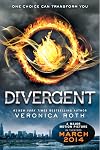
~I believe in ordinary acts of bravery, in the courage that drives one person to stand up for another.~
I know that people speak very poorly of YA fiction these days, putting it all into the same class and category as Twilight.. but they're wrong. And not only are they wrong, they're missing out on some great writing as well. Sure, there's a smattering of teen-aged angst here, but frankly, you could take this entire book, slap some adults in it instead, and have the same book. In other words, show more it's good. It's well written. It's got good pacing. The plot is interesting. The characters are engaging. And most of all, I really, really want to know what is going on!
I think that a lot of today's writers are being quite savvy hitting the YA market, especially in the dystopian genre. When you're dealing with the ills of society, whether from the breaking down a supposedly perfect one, or building up a horribly destroyed one, youth are the perfect protagonists for this. In real world terms, youth are the ones who will be taking up any mantle of change that is to be brought about. And in story terms, youth act as a perfect catalyst in the dynamics of the story cycle that science fiction and fantasy use (that is, the enabling of change through the disenfranchised).
Could it be better written? Probably. Have I read worse? Dear gods, yes. Was this worth my time to read and would I recommend it? Oh, hells, yes. And I do. show less
I know that people speak very poorly of YA fiction these days, putting it all into the same class and category as Twilight.. but they're wrong. And not only are they wrong, they're missing out on some great writing as well. Sure, there's a smattering of teen-aged angst here, but frankly, you could take this entire book, slap some adults in it instead, and have the same book. In other words, show more it's good. It's well written. It's got good pacing. The plot is interesting. The characters are engaging. And most of all, I really, really want to know what is going on!
I think that a lot of today's writers are being quite savvy hitting the YA market, especially in the dystopian genre. When you're dealing with the ills of society, whether from the breaking down a supposedly perfect one, or building up a horribly destroyed one, youth are the perfect protagonists for this. In real world terms, youth are the ones who will be taking up any mantle of change that is to be brought about. And in story terms, youth act as a perfect catalyst in the dynamics of the story cycle that science fiction and fantasy use (that is, the enabling of change through the disenfranchised).
Could it be better written? Probably. Have I read worse? Dear gods, yes. Was this worth my time to read and would I recommend it? Oh, hells, yes. And I do. show less
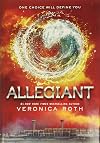
Summary: Now that the factions have been dissolved, the situation inside the city is worsening. There's violence between the factionless and the former faction members, the city is being controlled by former factionless leader (and Tobias's mom) Evelyn, who is proving herself little better than Marcus and Jeanine. Tris is approached by a group that calls themselves Allegiant, and they make plans to leave the city in the hopes of finding out the truth behind their existence... but what they show more find is not what anyone expected.
Review: I will start out by saying that I am by no means a squealing fangirl when it comes to this series. I enjoyed the first book quite a bit, mostly due to the compelling story and fast-paced action, although I found the worldbuilding premise remarkably silly. The second book left me mostly cold; too many undeveloped secondary characters, and the plot holes were really starting to bug. Still, I read this third book with the hopes that the explanation would finally be coming, and that it would make sense, and that maybe this book would recapture some of the spirit that made the first one so lively.
Nope!
This book has a lot of problems. A LOT of problems. For one thing, there are roughly a thousand secondary/tertiary characters, most of whom are only on screen for brief periods of time, and who I had a really, really hard time keeping straight. Maybe if I'd re-read the first two books immediately before, I'd have had an easier time, but as it was, I barely remembered anyone's faction identity, their history, their relationships, or their motivations, and what's more, I didn't care enough about them to even bother looking it up on Wikipedia. Everyone felt flat, and I just wasn't emotionally involved with any of the characters.
Even Tris and Tobias, the main characters, didn't engender much sympathy. Their relationship, again, felt flat, their fights felt artificial and repetitive, and their making-up bits felt dull. This book, unlike the previous two, gives Tobias his own POV chapters. Unfortunately, Roth doesn't give him his own voice. There were multiple times where I'd breeze past the header at the top of the chapter letting me know whose chapter it was, and then I'd get several pages in and be unable to remember which POV I was reading. I understand not wanting to be tied to Tris's first-person narration, but because Tobias's voice was so similar to Tris's, his perspective really didn't add anything to the story.
But my biggest problem, as it has been all along, is the plot holes. The giant, gaping, city-sized plot holes. HERE THERE BE SPOILERS, so if you want to discover the (exceedingly silly and nonsensical) explanation behind the faction system for yourself, you may want to stop reading here. But you cannot put an explanation that relies on genetics down in front of a biologist and expect her not to get her rant on.
Okay, so, the explanation behind the factions, and the city, was that back in the day, some scientists started tinkering with human genes, and began "correcting" the gene for selfishness, for aggression, for cowardice, etc. That right there is problematic, since, as should be obvious to anyone who has taken a basic genetics class, there is no one-to-one gene-to-behavior match. But let's assume that this part was possible... these genetic manipulations then started having unforseen consequences, actually making people's behavior worse. That's plausible. Then there was a "Purity War" between the damaged people and the normal people, and then all of the damaged people were shut into the cities and left until interbreeding had produced people with no damage - i.e. the Divergent. This is where things get ridiculous. If the scientists had the ability to manipulate genes in the first place, why would they not just change them back once they realized that there were negative side effects? Why would they keep making a whole population's worth of them? And even if they were unable to change them back, why would they shut all of the damaged people into cities and hope that they would by chance produce Divergent? Why not set up a structured breeding program (which: totalitarian government, so clearly not beyond the realm of possibility) to systematically eliminate the deleterious alleles? Or have them out-cross with the rest of the population? Or sterilize the genetically damaged people? Or anything instead of shutting up all of the damaged alleles inside a fence and hope that through mutation or inbreeding you'll get undamaged, instead of people with extremely damaged. Basic Punnett squares, people! The entire backstory makes no sense, and it certainly seems like Roth came up with the idea for the factions because she thought it would make a cool story, wrote that cool story, and then went "Oh, shit, now I need to figure out what's going on and ret-con the rest of the story to make it fit."
(Also problematic: if you're going to have a totalitarian government shutting people up for generations inside a city, it should be much, much harder for people to get in and out. Seriously, in this book, Tris & co. stroll back and forth across the border of Chicago like it's no big deal. Why did the people stay put inside for so long?)
So, since my main motivation in reading this book was to figure out what was going on in Roth's world, I was highly disappointed. The one thing I wasn't disappointed in, however, was the ending. It seems like the ending is a sticking point for a lot of fans of the series, and may be what's causing a lot of backlash. The ending didn't upset me - I wasn't attached enough to any of the characters to have that emotional response. In fact, I rather liked the ending. It was a brave choice on Roth's part, but not one that felt like it was done just for the sake of being shocking; rather, it was one of the few thing that happened that felt organic to the characters as established. The subplot that led up to the ending had just as many holes as the rest of the book, but even with the faulty premise, I thought the way that events played out was unexpected but fitting. But the good ending didn't save the rest of the book. The weak-sauce explanation made this book a disappointment, and ultimately let down the rest of the series as well. 2 out of 5 stars.
Recommendation: If you've read the first two and are dying to know what happens, then read it, but don't go into it with high hopes for things making a lot of sense. If you're new to the trilogy, I'd say skip the whole thing. The first book has a lot of potential, but the last book fails to deliver on any of it. show less
Review: I will start out by saying that I am by no means a squealing fangirl when it comes to this series. I enjoyed the first book quite a bit, mostly due to the compelling story and fast-paced action, although I found the worldbuilding premise remarkably silly. The second book left me mostly cold; too many undeveloped secondary characters, and the plot holes were really starting to bug. Still, I read this third book with the hopes that the explanation would finally be coming, and that it would make sense, and that maybe this book would recapture some of the spirit that made the first one so lively.
Nope!
This book has a lot of problems. A LOT of problems. For one thing, there are roughly a thousand secondary/tertiary characters, most of whom are only on screen for brief periods of time, and who I had a really, really hard time keeping straight. Maybe if I'd re-read the first two books immediately before, I'd have had an easier time, but as it was, I barely remembered anyone's faction identity, their history, their relationships, or their motivations, and what's more, I didn't care enough about them to even bother looking it up on Wikipedia. Everyone felt flat, and I just wasn't emotionally involved with any of the characters.
Even Tris and Tobias, the main characters, didn't engender much sympathy. Their relationship, again, felt flat, their fights felt artificial and repetitive, and their making-up bits felt dull. This book, unlike the previous two, gives Tobias his own POV chapters. Unfortunately, Roth doesn't give him his own voice. There were multiple times where I'd breeze past the header at the top of the chapter letting me know whose chapter it was, and then I'd get several pages in and be unable to remember which POV I was reading. I understand not wanting to be tied to Tris's first-person narration, but because Tobias's voice was so similar to Tris's, his perspective really didn't add anything to the story.
But my biggest problem, as it has been all along, is the plot holes. The giant, gaping, city-sized plot holes. HERE THERE BE SPOILERS, so if you want to discover the (exceedingly silly and nonsensical) explanation behind the faction system for yourself, you may want to stop reading here. But you cannot put an explanation that relies on genetics down in front of a biologist and expect her not to get her rant on.
Okay, so, the explanation behind the factions, and the city, was that back in the day, some scientists started tinkering with human genes, and began "correcting" the gene for selfishness, for aggression, for cowardice, etc. That right there is problematic, since, as should be obvious to anyone who has taken a basic genetics class, there is no one-to-one gene-to-behavior match. But let's assume that this part was possible... these genetic manipulations then started having unforseen consequences, actually making people's behavior worse. That's plausible. Then there was a "Purity War" between the damaged people and the normal people, and then all of the damaged people were shut into the cities and left until interbreeding had produced people with no damage - i.e. the Divergent. This is where things get ridiculous. If the scientists had the ability to manipulate genes in the first place, why would they not just change them back once they realized that there were negative side effects? Why would they keep making a whole population's worth of them? And even if they were unable to change them back, why would they shut all of the damaged people into cities and hope that they would by chance produce Divergent? Why not set up a structured breeding program (which: totalitarian government, so clearly not beyond the realm of possibility) to systematically eliminate the deleterious alleles? Or have them out-cross with the rest of the population? Or sterilize the genetically damaged people? Or anything instead of shutting up all of the damaged alleles inside a fence and hope that through mutation or inbreeding you'll get undamaged, instead of people with extremely damaged. Basic Punnett squares, people! The entire backstory makes no sense, and it certainly seems like Roth came up with the idea for the factions because she thought it would make a cool story, wrote that cool story, and then went "Oh, shit, now I need to figure out what's going on and ret-con the rest of the story to make it fit."
(Also problematic: if you're going to have a totalitarian government shutting people up for generations inside a city, it should be much, much harder for people to get in and out. Seriously, in this book, Tris & co. stroll back and forth across the border of Chicago like it's no big deal. Why did the people stay put inside for so long?)
So, since my main motivation in reading this book was to figure out what was going on in Roth's world, I was highly disappointed. The one thing I wasn't disappointed in, however, was the ending. It seems like the ending is a sticking point for a lot of fans of the series, and may be what's causing a lot of backlash. The ending didn't upset me - I wasn't attached enough to any of the characters to have that emotional response. In fact, I rather liked the ending. It was a brave choice on Roth's part, but not one that felt like it was done just for the sake of being shocking; rather, it was one of the few thing that happened that felt organic to the characters as established. The subplot that led up to the ending had just as many holes as the rest of the book, but even with the faulty premise, I thought the way that events played out was unexpected but fitting. But the good ending didn't save the rest of the book. The weak-sauce explanation made this book a disappointment, and ultimately let down the rest of the series as well. 2 out of 5 stars.
Recommendation: If you've read the first two and are dying to know what happens, then read it, but don't go into it with high hopes for things making a lot of sense. If you're new to the trilogy, I'd say skip the whole thing. The first book has a lot of potential, but the last book fails to deliver on any of it. show less

I borrowed Carve the Mark without knowing anything about it - I liked Divergent and was curious about what sort of stories Veronica Roth would tell next. The answer: a story about two teenagers in a world of fates, magical abilities and interplanetary travel.
Akos and Cyra belong to very different societies and very different - albeit both important - families. Akos is the youngest son of Thuvhe’s sitting oracle, while Cyra is the youngest member of the Shotet ruling family; Cyra has an show more adversarial relationship with her brother, whereas Akos is determined to rescue his no matter what. When Cyra and Akos are forced into each other’s company, they discover their survival could depend on learning to work together.
The title comes from the Shotet custom of “carving a mark” in one’s arm after killing someone. If I’d known that beforehand, I might have decided against reading this. I am idiosyncratically (and some have said, illogically) squeamish about some things: certain types of violence, poisons, things that destroy memories. Between this and my empathy for a character dealing with chronic pain, parts of this book made me - uncomfortable. A purely subjective reaction that leaves me doubting my ability to be objective. I don’t think that Carve the Mark is exceptionally dark, or even just darker than other stories I’ve loved - I suspect it’s simply dark in a way that happens to really bother me - but I’m not sure.
Nevertheless, I am really glad I kept reading. The worldbuilding is intriguing, the family dynamics are nuanced, and I became unexpectedly and fiercely attached to the characters.
I especially like the way this is so forcefully Cyra’s story. At first I thought this was an oddly paced book, for the way it begins with Akos, quickly upends his life and then abruptly switches to Cyra’s POV. When we next see Akos, some time - and several traumatic, life-altering experiences - later, it is through Cyra’s eyes.
This seemed like odd pacing because part of me expects that of course this story is going to focus on the teenage boy as he unwillingly leaves home, deals with grief and revelations about his destiny, develops his currentgift, learns to fight and so on. Because that’s what fantasy stories are about, right? Instead we get Cyra dealing with her family and her currentgift and her pain. Akos is important, and the book returns to his POV later on, but the story doesn’t revolve around him the way it so easily could.
I want to reread this, to see if I can look at it more clearly - I feel like it deserves more eloquence and objectivity than I can manage right now.
“Let me cook, okay?” He took the pot from her. The water sloshed, spilling on his shoes. “I guarantee I won’t see anything on fire.”
“That happened one time,” she said. “I’m not a walking, talking hazard.”
Like so much of what she said about herself, it was both a joke and not a joke. show less
Akos and Cyra belong to very different societies and very different - albeit both important - families. Akos is the youngest son of Thuvhe’s sitting oracle, while Cyra is the youngest member of the Shotet ruling family; Cyra has an show more adversarial relationship with her brother, whereas Akos is determined to rescue his no matter what. When Cyra and Akos are forced into each other’s company, they discover their survival could depend on learning to work together.
The title comes from the Shotet custom of “carving a mark” in one’s arm after killing someone. If I’d known that beforehand, I might have decided against reading this. I am idiosyncratically (and some have said, illogically) squeamish about some things: certain types of violence, poisons, things that destroy memories. Between this and my empathy for a character dealing with chronic pain, parts of this book made me - uncomfortable. A purely subjective reaction that leaves me doubting my ability to be objective. I don’t think that Carve the Mark is exceptionally dark, or even just darker than other stories I’ve loved - I suspect it’s simply dark in a way that happens to really bother me - but I’m not sure.
Nevertheless, I am really glad I kept reading. The worldbuilding is intriguing, the family dynamics are nuanced, and I became unexpectedly and fiercely attached to the characters.
I especially like the way this is so forcefully Cyra’s story. At first I thought this was an oddly paced book, for the way it begins with Akos, quickly upends his life and then abruptly switches to Cyra’s POV. When we next see Akos, some time - and several traumatic, life-altering experiences - later, it is through Cyra’s eyes.
This seemed like odd pacing because part of me expects that of course this story is going to focus on the teenage boy as he unwillingly leaves home, deals with grief and revelations about his destiny, develops his currentgift, learns to fight and so on. Because that’s what fantasy stories are about, right? Instead we get Cyra dealing with her family and her currentgift and her pain. Akos is important, and the book returns to his POV later on, but the story doesn’t revolve around him the way it so easily could.
I want to reread this, to see if I can look at it more clearly - I feel like it deserves more eloquence and objectivity than I can manage right now.
“Let me cook, okay?” He took the pot from her. The water sloshed, spilling on his shoes. “I guarantee I won’t see anything on fire.”
“That happened one time,” she said. “I’m not a walking, talking hazard.”
Like so much of what she said about herself, it was both a joke and not a joke. show less
Trilogies are tricky. There’s so much pressure put on the final book. With this particular series there was a lot of pressure to explain the entire experiment and the world outside of Chicago. The first two books were heavy on the action, but not on the explanation and so there was a style shift in the final book, which doesn’t always work, but in this one I think it did. Roth still keeps the action level high.
One thing I loved about this book was the emphasis put on grief, both living show more with it and the guilt that can come with it. Grief affects everyone in different ways because we all cope differently. It makes some people hard, others weak. This book deals heavily with the cycle of abuse and how that affects both the abuser and the abused. I like that despite the chaos of a dystopian society, Roth still looked at the complicated family relationships of the main characters.
“I have only hazy memories of my own grief over my mother, just the feeling that I was separate from everything around me, and this constant sensation from everything around me, and this constant sensation of needing to swallow something. I don’t know what it’s like for other people.”
I also really appreciate how Tris and Tobias’ relationship matures through the series. Both of them start to realize that talking through things is important. You can’t keep secrets. You can’t take your love for granted. They start to understand that true self-sacrifice is not just running blindly into danger.
“I fell in love with him. But I don’t just stay with him by default as if there’s no one else available to me. I stay with him because I choose to, every day that I wake up, every day that we fight or lie to each other or disappoint each other. I choose him over and over again, and he chooses me.”
***SPOILERS***
About the ending… I unfortunately had the ending spoiled for me by the stupid internet about half the way through the book. So I knew what was going to happen and I don’t think there’s any way to avoid having that affect the way I read the book. Knowing Tris was going to die at the end helped the event itself not be as shocking as it was for others. It didn’t feel wrong to me. People die in war and Tris had a tendency to gravitate towards dangerous situations. I really loved Tobias and Tris together, but to me the story was actually more powerful this way. Tris is the one who helped Tobias heal. She showed him that he deserved to be loved and between that and Evelyn’s decision to choose him I think he can possibly lead a healthier and happier life in the long run. I would have loved it if they ended up together, but I like that Tris didn’t rush into danger this time, she sacrificed herself for others out of love, it was the opposite of what she did in Insurgent.
**SPOILERS OVER***
BOTTOM LINE: The trilogy isn’t perfect and I know a lot of people are furious about the ending, but I’m not one of them. The story was interesting, the characters had chemistry and the writing was good. The whole series kept me hooked and I loved that it dealt with deeper issues. I’d recommend it if you enjoy dystopian books, but know going into it that it has got some flaws.
“I don’t belong to Abnegation, or Dauntless, or even the Divergent. I don’t belong to the Bureau or the experiment or the fringe. I belong to the people I love, and they belong to me—they, and the love and loyalty I give them, form my identity far more than any word or group ever could.”
“Sometimes it’s hard to know how to take care of people.”
“He makes the acquisition of knowledge feel like a secret, beautiful thing, and an ancient thing. I feel like, if I read this book, I can reach backward through all the generations of humanity to the very first one, that I can participate in something many times larger and older than myself.”
“That’s what love does, when it’s right – it makes you more than you were, more than you thought you could be.” show less
One thing I loved about this book was the emphasis put on grief, both living show more with it and the guilt that can come with it. Grief affects everyone in different ways because we all cope differently. It makes some people hard, others weak. This book deals heavily with the cycle of abuse and how that affects both the abuser and the abused. I like that despite the chaos of a dystopian society, Roth still looked at the complicated family relationships of the main characters.
“I have only hazy memories of my own grief over my mother, just the feeling that I was separate from everything around me, and this constant sensation from everything around me, and this constant sensation of needing to swallow something. I don’t know what it’s like for other people.”
I also really appreciate how Tris and Tobias’ relationship matures through the series. Both of them start to realize that talking through things is important. You can’t keep secrets. You can’t take your love for granted. They start to understand that true self-sacrifice is not just running blindly into danger.
“I fell in love with him. But I don’t just stay with him by default as if there’s no one else available to me. I stay with him because I choose to, every day that I wake up, every day that we fight or lie to each other or disappoint each other. I choose him over and over again, and he chooses me.”
***SPOILERS***
About the ending… I unfortunately had the ending spoiled for me by the stupid internet about half the way through the book. So I knew what was going to happen and I don’t think there’s any way to avoid having that affect the way I read the book. Knowing Tris was going to die at the end helped the event itself not be as shocking as it was for others. It didn’t feel wrong to me. People die in war and Tris had a tendency to gravitate towards dangerous situations. I really loved Tobias and Tris together, but to me the story was actually more powerful this way. Tris is the one who helped Tobias heal. She showed him that he deserved to be loved and between that and Evelyn’s decision to choose him I think he can possibly lead a healthier and happier life in the long run. I would have loved it if they ended up together, but I like that Tris didn’t rush into danger this time, she sacrificed herself for others out of love, it was the opposite of what she did in Insurgent.
**SPOILERS OVER***
BOTTOM LINE: The trilogy isn’t perfect and I know a lot of people are furious about the ending, but I’m not one of them. The story was interesting, the characters had chemistry and the writing was good. The whole series kept me hooked and I loved that it dealt with deeper issues. I’d recommend it if you enjoy dystopian books, but know going into it that it has got some flaws.
“I don’t belong to Abnegation, or Dauntless, or even the Divergent. I don’t belong to the Bureau or the experiment or the fringe. I belong to the people I love, and they belong to me—they, and the love and loyalty I give them, form my identity far more than any word or group ever could.”
“Sometimes it’s hard to know how to take care of people.”
“He makes the acquisition of knowledge feel like a secret, beautiful thing, and an ancient thing. I feel like, if I read this book, I can reach backward through all the generations of humanity to the very first one, that I can participate in something many times larger and older than myself.”
“That’s what love does, when it’s right – it makes you more than you were, more than you thought you could be.” show less
Lists
al.vick-series (1)
Female Author (1)
um actually (1)
H (1)
Read in 2014 (1)
Great Audiobooks (1)
Elaina's (3)
Series (1)
Fantasy Fiction (1)
Science Fiction (1)
Pageturners (1)
Read in 2011 (1)
Best Dystopias (2)
Best Young Adult (2)
Awards


You May Also Like


Associated Authors
Statistics
- Works
- 59
- Also by
- 10
- Members
- 90,897
- Popularity
- #106
- Rating
- 3.8
- Reviews
- 3,341
- ISBNs
- 768
- Languages
- 28
- Favorited
- 81
