
Ann Rule (1935–2015)
Author of The Stranger Beside Me
About the Author
Ann Rule was born on October 22, 1931 in Lowell, Michigan. She received a bachelor's degree from the University of Washington in creative writing, with minors in psychology, criminology and penology. She began writing for magazines including True Detective, Master Detective, Inside Detective, Front show more Page Detective, and Office Detective in 1969. During her lifetime, she wrote more than 30 books including The Stranger Beside Me; Green River, Running Red; Practice to Deceive; Ann Rule's Crime Files series, and Lying in Wait. She died on July 26, 2015 at the age of 83. (Bowker Author Biography) show less
Disambiguation Notice:
Ann Rule has also written books under the pen name Andy Stack.
Image credit: http://www.annrules.com/
Series
Works by Ann Rule
Every Breath You Take: A True Story of Obsession, Revenge, and Murder [Abridged] (2001) 824 copies, 10 reviews
In the Still of the Night: The Strange Death of Ronda Reynolds and Her Mother's Unceasing Quest for the Truth (2010) 486 copies, 9 reviews
[Small Sacrifices: A True Story of Passion And Murder] [Author: Rule, Ann] [November, 1995] (1995) 7 copies
Cruel Sacrifice 3 copies
Too Late to Say Goodbye [2009 TV movie] — Author — 2 copies
Dead by Sunset by Rule, Ann Published by Pocket Books 1st (first) edition (1996) Mass Market Paperback (1996) 2 copies
The Stranger Beside Me 2 copies
Withoiut Pity 1 copy
Everything She Ever Wanted [2009 Television Mini Series] — Based on the book by — 1 copy
In the Still of the Night 1 copy
Morderca znad Green River: Historia polowania na najokrutniejszego zabójcę w historii Stanów Zjednoczonych (2022) 1 copy
But I Trusted You and Other True Cases (Ann Rule's Crime Files Series #14) by Ann Rule (2009) 1 copy
No title 1 copy
Associated Works
Reader's Digest Today's Best Nonfiction 26 1993: Everything She Ever Wanted / Martyr's Day / Marilyn Monroe: The Biography / Days of Grace: A Memoir (1993) — Author — 3 copies
Stay Sexy and Don't Get Murdered | The Stranger Beside Me | I'll Be Gone in the Dark (2019) 2 copies
Reader's Digest Today's Best Nonfiction 65 — Author — 1 copy
Tagged
Common Knowledge
- Canonical name
- Rule, Ann
- Other names
- Stack, Andy (pseudonym)
Rule, Ann Stackhouse
Stackhouse, Ann Rae (birth name) - Birthdate
- 1935-10-22
- Date of death
- 2015-07-26
- Gender
- female
- Education
- University of Washington (BA|Creative Writing|1953))
- Occupations
- police officer
writer - Organizations
- True Detective
- Agent
- Joan Foley
Joe Foley - Relationships
- Rule, Leslie (daughter)
- Cause of death
- multiple health issues
congestive heart failure - Nationality
- USA
- Birthplace
- Lowell, Michigan, USA
- Places of residence
- Renton, Washington, USA
- Place of death
- Burien, Washington, USA
- Disambiguation notice
- Ann Rule has also written books under the pen name Andy Stack.
- Associated Place (for map)
- Washington, USA
Members
Discussions
Adult fiction novel in Name that Book (November 2015)
Reviews
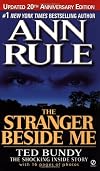
This was Rule's first book and it truly launched her career in true crime, though she had been a true crime magazine writer before. And before that, she was a cop.
Rule had volunteered at a crisis hotline in the early 70's and happened to work many of the same shifts as a young student named Ted Bundy. Like lots of women, Rule enjoyed Bundy's company, though because of their age difference, Rule saw him as an interesting friend, not a potential boyfriend. She didn't recognize that he was a show more sociopath.
This book covers more than 15 years of both Rule and Bundy's lives, in which Rule gets divorced, goes to Hollywood to write her first screenplay, raises her children and pursues her career as a writer. Bundy became a transient murderer and rapist who kidnapped, tortured and killed young women and a twelve year-old child. Law enforcement was often outmatched by Bundy, both because he could appear so normal and blend in, but also because once he was in custody they expected him to behave like a normal person, not to starve himself to fit through a tiny hole in the ceiling, or to jump out a two story window, which he did.
Bundy's multiple trials are included, for which Rule had a press pass. Bundy's ability to antagonize one minute and plead for mercy the next is on full display, and we see a man who prized his own skin above all else.
I've always found it confusing to hear Bundy described as handsome, as he is by many women here, including Rule. I don't get it, he's always looked like a thin-lipped, scrawny nerd to me, not good-looking at all.
I'm also a little on the fence about Rule's friendship with Bundy, which lasted for years and saw them exchange many letters and phone calls even while he was being charged with a litany of horrible crimes. Rule includes many of Bundy's written passages and transcribes many of their phone calls, which makes me lean towards the obvious, that Rule, and especially, Bundy were using each other. Rule wanted to get a career as a book author started and she happened to know a serial killer. Most people, especially women of that time, would have run the other way when a guy they knew was accused of murdering women, but Rule seems to have hung onto Bundy with both hands, claiming she didn't believe in his guilt for years, even in spite of her having worked with many of the cops who were charging Bundy. To me, it defies belief that a former cop who writes up crime cases thought that he could be wrongly charged with so many heinous crimes by multiple states. She wanted the story, and to get it, she had to be Bundy's friend so he'd keep in contact with her. And Bundy, knowing Rule talked to her former co-workers often, used Rule to get inside information about how much the police knew, but he also surely knew she would write about him and he wanted to be famous.
I have the anniversary edition, which has an epilogue, an afterward and a new final chapter, making it a real doorstop. It's a remarkable feat in true crime writing and I see why it's a famous book. show less
Rule had volunteered at a crisis hotline in the early 70's and happened to work many of the same shifts as a young student named Ted Bundy. Like lots of women, Rule enjoyed Bundy's company, though because of their age difference, Rule saw him as an interesting friend, not a potential boyfriend. She didn't recognize that he was a show more sociopath.
This book covers more than 15 years of both Rule and Bundy's lives, in which Rule gets divorced, goes to Hollywood to write her first screenplay, raises her children and pursues her career as a writer. Bundy became a transient murderer and rapist who kidnapped, tortured and killed young women and a twelve year-old child. Law enforcement was often outmatched by Bundy, both because he could appear so normal and blend in, but also because once he was in custody they expected him to behave like a normal person, not to starve himself to fit through a tiny hole in the ceiling, or to jump out a two story window, which he did.
Bundy's multiple trials are included, for which Rule had a press pass. Bundy's ability to antagonize one minute and plead for mercy the next is on full display, and we see a man who prized his own skin above all else.
I've always found it confusing to hear Bundy described as handsome, as he is by many women here, including Rule. I don't get it, he's always looked like a thin-lipped, scrawny nerd to me, not good-looking at all.
I'm also a little on the fence about Rule's friendship with Bundy, which lasted for years and saw them exchange many letters and phone calls even while he was being charged with a litany of horrible crimes. Rule includes many of Bundy's written passages and transcribes many of their phone calls, which makes me lean towards the obvious, that Rule, and especially, Bundy were using each other. Rule wanted to get a career as a book author started and she happened to know a serial killer. Most people, especially women of that time, would have run the other way when a guy they knew was accused of murdering women, but Rule seems to have hung onto Bundy with both hands, claiming she didn't believe in his guilt for years, even in spite of her having worked with many of the cops who were charging Bundy. To me, it defies belief that a former cop who writes up crime cases thought that he could be wrongly charged with so many heinous crimes by multiple states. She wanted the story, and to get it, she had to be Bundy's friend so he'd keep in contact with her. And Bundy, knowing Rule talked to her former co-workers often, used Rule to get inside information about how much the police knew, but he also surely knew she would write about him and he wanted to be famous.
I have the anniversary edition, which has an epilogue, an afterward and a new final chapter, making it a real doorstop. It's a remarkable feat in true crime writing and I see why it's a famous book. show less
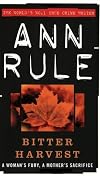
So it's weird. I have owned this book for a while, but never got around to reading it. I think it's because I watched this on a couple of television shows (Forensic Files and Murderous Affairs). So to read Ann Rule's insight into a couple that ended up in a toxic marriage that resulted in a fire that killed two of their children will have you reading each page while holding your breath.
The incident takes place in 1995, but we go back to see the beginning of the married couple (Doctor Debora show more Green and her husband Doctor Michael Farrrar). Initially attracted to his skinner and more lively wife (the number of times it's said that Debora is not attractive anymore due to her weight gain, haircut, and clothes is unreal) when he first meets her, Michael realizes pretty quickly he made a bad decision. I don't even know what to say about this, because I know a lot of friends who have married in haste and repented in leisure. In Michael's case he realized it was a mistake on their wedding night. I also get from the story that includes quotes from Debora (Rule did visit with her) I don't think she ever really liked him too. Instead, I think they both stayed with each other due to expectations foisted on them by what society expects of a man/woman.
I didn't like Debora, but I also didn't like Michael Farrar. I felt for their three kids (Tim, Kelly, and Lissa) and just felt as if the two adults in this situation were acting like children. You are also going to get to read about Farrar having an affair. I like that Rule doesn't pull any punches with her depictions of everyone in this one. I don't think she cared for Farrar that much either. Even so, I did have sympathy for the man when you realize what he and his family (his kids) have been put through. One wonders if there could have been anything he could have done if more people had been willing to call out something that they saw was wrong (a mother who was being emotionally manipulative of her kids and an actual danger to her husband).
We also get an insight into a woman that Farrar has an affair with (I had some thoughts about her) as well as the law enforcement and prosecution that is involved with this.
I really enjoyed the writing in this one. Probably because Rule managed to keep the story moving along without any huge digressions into other things. I think her having just one story to tell and not an anthology helped things along the way.
The setting is primarily focused in Kansas and you do get a great sense of the area/neighborhood and how tight knit the community was before and after the events in this book.
Even when you think you are at an end, Rule comes back and shows you what Debora's side of the story is/was and you just end up shaking your head all over again. show less
The incident takes place in 1995, but we go back to see the beginning of the married couple (Doctor Debora show more Green and her husband Doctor Michael Farrrar). Initially attracted to his skinner and more lively wife (the number of times it's said that Debora is not attractive anymore due to her weight gain, haircut, and clothes is unreal) when he first meets her, Michael realizes pretty quickly he made a bad decision. I don't even know what to say about this, because I know a lot of friends who have married in haste and repented in leisure. In Michael's case he realized it was a mistake on their wedding night. I also get from the story that includes quotes from Debora (Rule did visit with her) I don't think she ever really liked him too. Instead, I think they both stayed with each other due to expectations foisted on them by what society expects of a man/woman.
I didn't like Debora, but I also didn't like Michael Farrar. I felt for their three kids (Tim, Kelly, and Lissa) and just felt as if the two adults in this situation were acting like children. You are also going to get to read about Farrar having an affair. I like that Rule doesn't pull any punches with her depictions of everyone in this one. I don't think she cared for Farrar that much either. Even so, I did have sympathy for the man when you realize what he and his family (his kids) have been put through. One wonders if there could have been anything he could have done if more people had been willing to call out something that they saw was wrong (a mother who was being emotionally manipulative of her kids and an actual danger to her husband).
We also get an insight into a woman that Farrar has an affair with (I had some thoughts about her) as well as the law enforcement and prosecution that is involved with this.
I really enjoyed the writing in this one. Probably because Rule managed to keep the story moving along without any huge digressions into other things. I think her having just one story to tell and not an anthology helped things along the way.
The setting is primarily focused in Kansas and you do get a great sense of the area/neighborhood and how tight knit the community was before and after the events in this book.
Even when you think you are at an end, Rule comes back and shows you what Debora's side of the story is/was and you just end up shaking your head all over again. show less
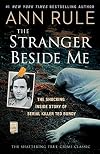
I’ve read other Ann Rule books but somehow never got around to this, probably her most famous. It wasn’t as riveting as I expected considering the hype/infamy of Bundy and how she knew him.
The first half of the book is slow because it mostly deals with Ann’s background with Bundy and what she knew of his life as it intersected with her own. However, most of the book bogged down with back and forth over whether she believed him. She repeated ad nauseum how she couldn’t believe the man show more she knew had committed these crimes, but then pivoted to say how she was swayed by the detectives’ beliefs and circumstantial evidence against him. In fact, she didn’t seem to be fully convinced until he finally confessed right before his execution -and that was in one of the epilogues written years after publication! It is well publicized that Bundy was extremely charismatic and often swayed people to his side, but I found her hand-wringing less credible (and downright annoying) as the book went on. I expect such denial from his mother, but not a former policewoman, current crime writer who had close relationships with many investigators on the case. It went way beyond trying to be objective.
The second half went by more quickly as Ann finally began piecing together the disappearances and murders with the investigation and Bundy’s known whereabouts. This was the part I found most interesting – how they stopped him. However, the annoyance of the first half gave way to disgust in the second half. Bundy’s crimes were beyond horrific, but I found HER actions increasingly disturbing. She went above and beyond trying to help him, even as her doubts became substantial and the evidence mounted. She kept up a running correspondence, especially while he was incarcerated. She sent him money with nearly every letter: “How many $10 checks had I sent over the years?” After he was arrested in Florida, she became convinced he was ready to confess if only he could be brought back to Washington to a mental hospital – which she endeavored to make happen by calling state authorities and investigators she knew, asking them to intercede. “I tried, literally, to save his life.” In a way, I felt like she was one of the Bundy groupies she made point of pitying. Moreover, she went after Florida with a vengeance: “Florida, the “Buckle of the Death Belt” – was the worst possible state to which he could have run.” This seems overzealous because it wasn’t the only state with the death penalty. Colorado, where he had been on trial for murder, also had the death penalty. However, it had decided to remove that option from consideration in his trial. She goes on to describe that Aspenites had found him to be a “lovable rogue.” Yeah, a lovable rogue that brutally slaughtered dozens of women. I would have expected her to be frustrated with Colorado – the state that let him escape custody TWICE; the second time of which led directly to the murders he committed in Florida. But she was more concerned with how his escape led to him being arrested in a state that fully intended to use the death penalty if it convicted him.
The epilogues (and there are several in this edition) help to mitigate some of my feelings in that second half as she provided the fallout on years of appeals and his confessions before execution. She finally accepted what he did, and I can understand regret and sadness over who he could have been, but it wasn’t enough to redeem this book for me. show less
The first half of the book is slow because it mostly deals with Ann’s background with Bundy and what she knew of his life as it intersected with her own. However, most of the book bogged down with back and forth over whether she believed him. She repeated ad nauseum how she couldn’t believe the man show more she knew had committed these crimes, but then pivoted to say how she was swayed by the detectives’ beliefs and circumstantial evidence against him. In fact, she didn’t seem to be fully convinced until he finally confessed right before his execution -and that was in one of the epilogues written years after publication! It is well publicized that Bundy was extremely charismatic and often swayed people to his side, but I found her hand-wringing less credible (and downright annoying) as the book went on. I expect such denial from his mother, but not a former policewoman, current crime writer who had close relationships with many investigators on the case. It went way beyond trying to be objective.
The second half went by more quickly as Ann finally began piecing together the disappearances and murders with the investigation and Bundy’s known whereabouts. This was the part I found most interesting – how they stopped him. However, the annoyance of the first half gave way to disgust in the second half. Bundy’s crimes were beyond horrific, but I found HER actions increasingly disturbing. She went above and beyond trying to help him, even as her doubts became substantial and the evidence mounted. She kept up a running correspondence, especially while he was incarcerated. She sent him money with nearly every letter: “How many $10 checks had I sent over the years?” After he was arrested in Florida, she became convinced he was ready to confess if only he could be brought back to Washington to a mental hospital – which she endeavored to make happen by calling state authorities and investigators she knew, asking them to intercede. “I tried, literally, to save his life.” In a way, I felt like she was one of the Bundy groupies she made point of pitying. Moreover, she went after Florida with a vengeance: “Florida, the “Buckle of the Death Belt” – was the worst possible state to which he could have run.” This seems overzealous because it wasn’t the only state with the death penalty. Colorado, where he had been on trial for murder, also had the death penalty. However, it had decided to remove that option from consideration in his trial. She goes on to describe that Aspenites had found him to be a “lovable rogue.” Yeah, a lovable rogue that brutally slaughtered dozens of women. I would have expected her to be frustrated with Colorado – the state that let him escape custody TWICE; the second time of which led directly to the murders he committed in Florida. But she was more concerned with how his escape led to him being arrested in a state that fully intended to use the death penalty if it convicted him.
The epilogues (and there are several in this edition) help to mitigate some of my feelings in that second half as she provided the fallout on years of appeals and his confessions before execution. She finally accepted what he did, and I can understand regret and sadness over who he could have been, but it wasn’t enough to redeem this book for me. show less
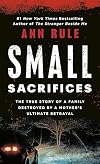
Last year I watched a 20/20 episode that had me spellbound. It was called My Mother's Sins, and is the story of Diane Downs, the mom that was accused of trying to murder her children in the early 1980's. One of her daughter's names was Christie (mine is Christi), and being a child of the 80's myself, I latched onto this story immediately. While still watching the episode I was on Amazon downloading a copy of Small Sacrifices, and instantly attempted to devour this horrific yet mystifying show more story.
It took me months to get through, thanks to moving and building a house, but I have to say that I preferred to take this novel slow. There is so much information, and the story itself so unimaginable and heartbreaking, that I needed to take in the information in doses. How could a woman attempt to murder her children for a man?? This is the question that plagued me the entire time I read.
In saying that, learning about Diane Downs was fascinating. I've never known anyone that could be so selfish, making herself the victim despite her children really being the ones who truly suffered, and showing the most inappropriate emotions at the most inopportune times. Not showing emotion about her dying children, and twisting everything to be about herself, Diane is the textbook definition of a narcissist and a severe one at that. I've truly never seeing anything like it!
Though I am a true crime buff, this is the first novel I've had the opportunity to read by the late Ann Rule, and all I can say is wow! The attention to detail is unparalleled, giving every nugget of information, showing every side of a multifaceted story, leaving no stone unturned, and no questions remaining.
The entire novel is captivating, but what really left me spellbound was during Diane's trial, when Christie, Diane's only surviving daughter, took the stand as an eyewitness. The bravery that sweet little girl showed was unmatched. I also couldn't wait to read the account of Diane Downs taking the stand in her own defense, and it did not disappoint.
Astonishingly detailed, and written in the most professional manner, you can feel the respect that Ann had for the victims, those precious children, and her passion to tell the truth of this heinous act to the world. Small Sacrifices gives you the full account of one of the most unthinkable acts done to innocent children by one of the most evil killers, Diane Downs. show less
It took me months to get through, thanks to moving and building a house, but I have to say that I preferred to take this novel slow. There is so much information, and the story itself so unimaginable and heartbreaking, that I needed to take in the information in doses. How could a woman attempt to murder her children for a man?? This is the question that plagued me the entire time I read.
In saying that, learning about Diane Downs was fascinating. I've never known anyone that could be so selfish, making herself the victim despite her children really being the ones who truly suffered, and showing the most inappropriate emotions at the most inopportune times. Not showing emotion about her dying children, and twisting everything to be about herself, Diane is the textbook definition of a narcissist and a severe one at that. I've truly never seeing anything like it!
Though I am a true crime buff, this is the first novel I've had the opportunity to read by the late Ann Rule, and all I can say is wow! The attention to detail is unparalleled, giving every nugget of information, showing every side of a multifaceted story, leaving no stone unturned, and no questions remaining.
The entire novel is captivating, but what really left me spellbound was during Diane's trial, when Christie, Diane's only surviving daughter, took the stand as an eyewitness. The bravery that sweet little girl showed was unmatched. I also couldn't wait to read the account of Diane Downs taking the stand in her own defense, and it did not disappoint.
Astonishingly detailed, and written in the most professional manner, you can feel the respect that Ann had for the victims, those precious children, and her passion to tell the truth of this heinous act to the world. Small Sacrifices gives you the full account of one of the most unthinkable acts done to innocent children by one of the most evil killers, Diane Downs. show less
Lists
Books About Murder (10)
Read This Next (1)
Same Title (1)
Multiples (1)
Awards


You May Also Like


Associated Authors
Statistics
- Works
- 76
- Also by
- 7
- Members
- 22,637
- Popularity
- #937
- Rating
- 3.7
- Reviews
- 390
- ISBNs
- 587
- Languages
- 13
- Favorited
- 74