
Cavan Scott
Author of Doctor Who: Who-ology
About the Author
Series
Works by Cavan Scott
Journey to Star Wars: The Rise of Skywalker A Finn & Poe Adventure (A Choose Your Destiny Chapter Book) (2019) 95 copies
Star Wars: Choose Your Destiny (Book 1) A Han & Chewie Adventure (A Choose Your Destiny Chapter Book) (2018) 93 copies, 1 review
The Mask of Power: Gill Grunt and the Curse of the Fish Master #2 (Skylanders Universe) (2013) 92 copies, 2 reviews
The Mask of Power: Terrafin Battles the Boom Brothers #4 (Skylanders Universe) (2014) 28 copies, 1 review
The Phantom of the Opera - Official Graphic Novel (Phantom of the Opera Collection) (2021) 23 copies, 2 reviews
Claws of the Genestealer (Volume 2) (Warhammer Adventures: Warped Galaxies) (2019) 14 copies, 1 review
2000 Ad Regened: A Thrill-Powered Comics Collection for Earthlets of All Ages!: Volume 1 (2021) 10 copies
Blake's 7: The Liberator Chronicles, Volume 6: Incentive, Jenna's Story and Blake's Story (2013) — Author — 9 copies
Blake's 7: The Liberator Chronicles, Volume 9: Defector, Planetfall and Secrets (2014) — Author — 6 copies, 1 review
The Heroic Legends Series - Solomon Kane: Where the Whitethorn Meets the Black (2026) 4 copies, 1 review
Doctor Who: The Ninth Doctor #5 4 copies
Doctor Who: The Nu-Humans and The Empty House: Two Audio-Exclusive Adventures Featuring the 11th Doctor (2012) 4 copies
Star Wars: Yoda (2022-) #10 3 copies
Gwenpool (2025-) #2 (of 5) 3 copies
Iron & Frost (2025) #2 (of 3) 2 copies
Iron & Frost (2025) #1 (of 3) 2 copies
Star Wars Adventures: Return to Vader's Castle #1 (of 5) (Star Wars Adventures: Return to Vader's Castle) (2019) 2 copies
Gwenpool (2025-) #3 (of 5) 2 copies
Gwenpool (2025-) #4 (of 5) 2 copies
Gwenpool (2025-) #5 (of 5) 2 copies
Wonder Woman: Agent of Peace #18 2 copies
Vikings Uprising #3 Cvr A 2 copies
Just Do It 1 copy
Doctor Who Ninth Doctor #8 1 copy
The Feast Of Stone 1 copy
Doctor Who Ninth Doctor #7 1 copy
Past Mistaken 1 copy
First Duty 1 copy
Time of Death 1 copy
Time of Death {short story} 1 copy
Star Wars Adventures: Return to Vader's Castle #2 (of 5) (Star Wars Adventures: Return to Vader's Castle) (2019) 1 copy
Star Wars #205 (Panini 080) 1 copy
Star Wars #206 (Panini 081) 1 copy
Star Wars #207 (Panini 082) 1 copy
Dead Seas #4 (of 6) 1 copy
Vikings #2 1 copy
The Transformers/Back to the Future #3 — Author — 1 copy
Titans United (2021-) #1 1 copy
The Transformers/Back to the Future #4 — Author — 1 copy
Titans United (2021-) #3 1 copy
Titans United (2021-) #2 1 copy
Godfather of Hell Vol. 1 1 copy
Star Wars Adventures: Return to Vader's Castle #5 (of 5) (Star Wars Adventures: Return to Vader's Castle) (2019) 1 copy
Star Wars Adventures: Return to Vader's Castle #4 (of 5) (Star Wars Adventures: Return to Vader's Castle) (2019) 1 copy
Star Wars Adventures: Return to Vader's Castle #3 (of 5) (Star Wars Adventures: Return to Vader's Castle) (2019) 1 copy
Vikings: Godhead 2 1 copy
Vikings: Godhead 3 1 copy
Vikings: Godhead 4 1 copy
Star Wars Adventures 11 1 copy
Dead Seas #1 (of 6) 1 copy
Associated Works
From a Certain Point of View: 40 Stories Celebrating 40 Years of Star Wars (2017) — Contributor — 1,061 copies, 41 reviews
From a Certain Point of View: 40 Stories Celebrating 40 Years of The Empire Strikes Back (2020) — Contributor — 515 copies, 8 reviews
The Other Side of Never: Dark Tales from the World of Peter & Wendy (2023) — Contributor — 32 copies
The Hopes and Fears of All the Years and Other Doctor Who Christmas Short Trips — Contributor — 1 copy
The Lonely Computer and Other Internet Doctor Who Short Trips, 2004-21 — Contributor — 1 copy
Tagged
Common Knowledge
- Legal name
- Scott, Cavan
- Birthdate
- 1973-04-17
- Gender
- male
- Education
- University of Manchester (BA|1994)
- Occupations
- comic book writer
author
journalist
editor - Organizations
- Lucasfilm
Marvel Entertainment
Strange Matter Media
DC Comics - Nationality
- UK
- Birthplace
- Bristol, Gloucestershire, England, UK
- Map Location
- England, UK
Members
Reviews
Originally posted on Just Geeking by.
Content warnings:
Violence, blood, gore, cannibalism, torture and ground hog day-esque reliving death scenes.
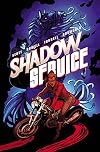
If you’ve read the first volume of Shadow Service and were impressed, hold onto your seats because things get even better in volume two! In the first volume we were introduced to the MI666 team and other people in Gina’s life, however, we only learned the origin story of one of them; Coyle. In this volume, we learn how Gina met Edwin the rat show more and Quinn, and the origin story of agent Aashi, as well as the illusive MI666 leader Hex. There’s still much more we still need to know about Hex, but we are given the basic information about who he is and where his supernatural life began.
Shadow Service Vol 2 delves much deeper into everything and as you’d expect there are a lot of plot twists which bring even more questions just as we get some answers. The wonderful artwork from volume one continues, with Corin Howell and Triona Farrell’s work growing stronger with each issue. There are some stunning scenes in the later issues as the two artists really get to dig into London’s supernatural world, bringing the demonic and the celestial to life. One thing I love about this series is the moody colour scheme and grungy textures, and they fit so well alongside Scott’s writing. They both add layers to the story which you can only get in the comic/graphic novel medium.
Scott takes us on an emotional rollercoaster as we follow Gina as she tries to work out where she belongs; is it on her own, with Quinn who has helped her out before or with MI666? The problem is that she’s no longer an obscure nobody and London’s underworld has begun to notice her… can she get away with fading back into obscurity and going back to chasing after cheating partners again? (Does she even want to?). As with volume one, Scott’s writing is on point, and the nice tip of a hat in acknowledgement to the British public who have had to live with Tories making a complete hash of things during the pandemic will go down well with many readers. It’s a scene that would not have been out of place in a Constantine issue, so if you’re a Constantine fan, then I’d suggest giving Shadow Service a shot.
The volume ends with a huge openly for the next one, and I can’t wait to see where it goes. I have so many questions!
For more of my reviews please visit my blog! show less
Content warnings:
If you’ve read the first volume of Shadow Service and were impressed, hold onto your seats because things get even better in volume two! In the first volume we were introduced to the MI666 team and other people in Gina’s life, however, we only learned the origin story of one of them; Coyle. In this volume, we learn how Gina met Edwin the rat show more and Quinn, and the origin story of agent Aashi, as well as the illusive MI666 leader Hex. There’s still much more we still need to know about Hex, but we are given the basic information about who he is and where his supernatural life began.
Shadow Service Vol 2 delves much deeper into everything and as you’d expect there are a lot of plot twists which bring even more questions just as we get some answers. The wonderful artwork from volume one continues, with Corin Howell and Triona Farrell’s work growing stronger with each issue. There are some stunning scenes in the later issues as the two artists really get to dig into London’s supernatural world, bringing the demonic and the celestial to life. One thing I love about this series is the moody colour scheme and grungy textures, and they fit so well alongside Scott’s writing. They both add layers to the story which you can only get in the comic/graphic novel medium.
Scott takes us on an emotional rollercoaster as we follow Gina as she tries to work out where she belongs; is it on her own, with Quinn who has helped her out before or with MI666? The problem is that she’s no longer an obscure nobody and London’s underworld has begun to notice her… can she get away with fading back into obscurity and going back to chasing after cheating partners again? (Does she even want to?). As with volume one, Scott’s writing is on point, and the nice tip of a hat in acknowledgement to the British public who have had to live with Tories making a complete hash of things during the pandemic will go down well with many readers. It’s a scene that would not have been out of place in a Constantine issue, so if you’re a Constantine fan, then I’d suggest giving Shadow Service a shot.
The volume ends with a huge openly for the next one, and I can’t wait to see where it goes. I have so many questions!
For more of my reviews please visit my blog! show less
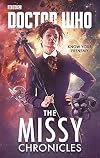
A collection of short Doctor Who stories focusing on Missy, aka the latest incarnation of the Master, the Doctor's old friend and long-term nemesis. Personally I adore Missy; I think she's enormous fun, and the best version of the Master since the original. So how could I resist?
To address each of the six stories included here individually:
"Dismemberment" by James Goss: Shortly after regenerating, Missy visits her favorite evil gentlemen's club, discovers she is no longer welcome as a show more member, and wreaks horrible vengeance on the people who kicked her out. There's some genuinely funny moments, and some darkly satiric sensibilities. And Missy gets some great lines. But the sheer levels of horror and gruesomeness to some of her actions actually made me feel a little uncomfortable by the end. I think this particular kind of villainous depravity might almost be a little over the top, even for Missy.
"Lords and Masters" by Cavan Scott: The Time Lords send Missy off on an assignment for them. They really ought to know better. I liked the concept of this one, and the way it offers up some rather dark little details about how things have been going on Gallifrey. I do wish the "companion" she was given for the job felt less two-dimensional, though. And it's genuinely a little unsettling to get a Doctor Who story like this where the Doctor doesn't get to show up to make things right in the end.
"Teddy Sparkles Must Die!" by Paul Magrs: A weird, weird little send-up of kids' adventure stories, featuring evil governess Missy and a magical talking teddy bear. I honestly can't quite decide whether this one is pleasantly ridiculous or just plain ridiculous.
"The Liar, the Glitch and the War Zone" by Peter Anghelides: An adventure in Venice featuring a damaged TARDIS, a temporal rift, and an army of angry space gryphons. But despite the fact that there's a lot going on here, I found it a bit dull. There's less good Missy dialog here than in the other stories, too. I did like her villainous plan to flood Venice, though.
"Girl Power!" by Jacqueline Rayner: An epistolary story, also featuring the Twelfth Doctor and Nardole, in which Missy hatches a plan that gives new meaning to the phrase "smash the patriarchy.". Now, this one was pleasantly ridiculous. Delightfully ridiculous, even. I was laughing out loud through pretty much the whole thing.
"Alit in Underland" by Richard Dinnick: This one is told from the POV of Alit, the little girl from the episodes "World Enough and Time"/The Doctor Falls," and is set during the period between those episodes when the Doctor is unconscious. I don't know that it's a bit from that story that really needed filling in, but it does give us the opportunity for a little more interaction between Missy and her previous incarnation, and I will never say no to that.
Rating: It's enough of a mixed bag that I'm going to call it 3.5/5, but the best stories are fun enough that I'd say it's worth checking out if you're a fan of the character. show less
To address each of the six stories included here individually:
"Dismemberment" by James Goss: Shortly after regenerating, Missy visits her favorite evil gentlemen's club, discovers she is no longer welcome as a show more member, and wreaks horrible vengeance on the people who kicked her out. There's some genuinely funny moments, and some darkly satiric sensibilities. And Missy gets some great lines. But the sheer levels of horror and gruesomeness to some of her actions actually made me feel a little uncomfortable by the end. I think this particular kind of villainous depravity might almost be a little over the top, even for Missy.
"Lords and Masters" by Cavan Scott: The Time Lords send Missy off on an assignment for them. They really ought to know better. I liked the concept of this one, and the way it offers up some rather dark little details about how things have been going on Gallifrey. I do wish the "companion" she was given for the job felt less two-dimensional, though. And it's genuinely a little unsettling to get a Doctor Who story like this where the Doctor doesn't get to show up to make things right in the end.
"Teddy Sparkles Must Die!" by Paul Magrs: A weird, weird little send-up of kids' adventure stories, featuring evil governess Missy and a magical talking teddy bear. I honestly can't quite decide whether this one is pleasantly ridiculous or just plain ridiculous.
"The Liar, the Glitch and the War Zone" by Peter Anghelides: An adventure in Venice featuring a damaged TARDIS, a temporal rift, and an army of angry space gryphons. But despite the fact that there's a lot going on here, I found it a bit dull. There's less good Missy dialog here than in the other stories, too. I did like her villainous plan to flood Venice, though.
"Girl Power!" by Jacqueline Rayner: An epistolary story, also featuring the Twelfth Doctor and Nardole, in which Missy hatches a plan that gives new meaning to the phrase "smash the patriarchy.". Now, this one was pleasantly ridiculous. Delightfully ridiculous, even. I was laughing out loud through pretty much the whole thing.
"Alit in Underland" by Richard Dinnick: This one is told from the POV of Alit, the little girl from the episodes "World Enough and Time"/The Doctor Falls," and is set during the period between those episodes when the Doctor is unconscious. I don't know that it's a bit from that story that really needed filling in, but it does give us the opportunity for a little more interaction between Missy and her previous incarnation, and I will never say no to that.
Rating: It's enough of a mixed bag that I'm going to call it 3.5/5, but the best stories are fun enough that I'd say it's worth checking out if you're a fan of the character. show less
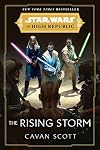
Cavan Scott’s “The Rising Storm” is the follow-up to Charles Soule’s “Light of the Jedi”, the underwhelming first novel in the High Republic series, Disney/Lucasfilm’s answer to the question, “What the hell do we do now, after “Rise of Skywalker”?”
“The Rising Storm” is slightly better than the first novel, which is, sadly, not saying too much. Don’t get me wrong: I was still entertained by the book. It kept me engaged, at least.
One of the problems, I figured out, show more is that everyone involved in the High Republic experience—-from writers, artists, publishers, up to the ones in charge of footing the bill (the producers)—-has made a conscious effort to not become like the Star Wars Expanded Universe (SWEU) “old canon” series, where continuity wasn’t always followed to a “t”.
Now, I loved the old canon, but I understand that, occasionally, storylines didn’t always mesh up. This was partly because some of the prequels hadn’t come out yet. It was also because teams of writers were working on novel series, and they didn’t always confer with the teams of writers working on the comic books or the video games. Hence, lack of continuity. Hence, problems.
Adhering to an extremely strict continuity, however, engenders its own problems. Hence, “The Rising Storm”.
One of the problems is that not everybody who reads novels reads graphic novels, and vice versa. And this novel requires readers to understand not only what happened in the last novel but also what happened in the concurrent graphic novel series. Thankfully, I have read the comic book series of The High Republic, an excellent series and one that I recommend highly.
But when references are made to storylines that are happening concurrently and from sources that readers may not even want to bother with, confusion arises.
I never had this problem with the old canon. I understood that a whole slew of stuff was happening in the video game worlds of Star Wars, but it never affected me, because it never spilled over into the worlds of the novels. I also detest video games, so I knew that I was never going to play them. Likewise, the stuff going on in the comic books stayed within the world of the comic books, which was great since I didn’t really read comic books at that time either.
But it seems like this High Republic series is trying way too hard to be all-inclusive and multi-media, which may not appeal to all readers. Like me.
Then again, what the hell do I know? From a purely profit-motive business perspective, it’s probably brilliant. Because it basically forces readers to go out and gather all the books and comic books and YA novels and video games just in case they missed any references. Consume, you lemmings! Consume!
Maybe I’m just being a curmudgeon. (And a hypocrite. I am, after all, consuming as much as the next lemming.)
Anyway, here’s an actual review of the book: Scott does a decent job of balancing numerous (way too many, still, in my opinion) characters in numerous locations. In some ways, Scott does as decent a job as some of the writers of the SWEU (the late Aaron Allston comes to mind, an author who wrote some of my favorite old canon stuff), given that he is dealing with characters that still aren’t nearly as developed or established as they should be.
Logistically, Scott focuses on a few characters and tries to develop them further. I like Elzar Mann, a Jedi Knight who has “issues” with the Force, as well as personal hang-ups, one of which is that he’s a horndog. (OMG! Sex in Star Wars?) I also like Ty Yorrick, a former Jedi Padawan who got tired of the Jedi bullshit and became a rogue monster-hunter-for-hire.
Scott’s attempts to develop Marchion Ro, the villain of the novel, fall flat, however. Probably not his fault, as I feel Ro is just a lame villain. I actually think the Nihil—-a disorganized band of multiple species working together as pirates and ne’er’do-wells—-is the lamest group of villains to ever be featured in Star Wars. They remind me too much of an attempt at the Pirates of the Caribbean in space. Disney already tried this. It was called “Treasure Planet”, and it kinda sucked.
Overall, though, despite my problems with the book, it had plenty of action and suspense, including light-saber duels and spaceship dogfights, which managed to check off some of my personal boxes. show less
“The Rising Storm” is slightly better than the first novel, which is, sadly, not saying too much. Don’t get me wrong: I was still entertained by the book. It kept me engaged, at least.
One of the problems, I figured out, show more is that everyone involved in the High Republic experience—-from writers, artists, publishers, up to the ones in charge of footing the bill (the producers)—-has made a conscious effort to not become like the Star Wars Expanded Universe (SWEU) “old canon” series, where continuity wasn’t always followed to a “t”.
Now, I loved the old canon, but I understand that, occasionally, storylines didn’t always mesh up. This was partly because some of the prequels hadn’t come out yet. It was also because teams of writers were working on novel series, and they didn’t always confer with the teams of writers working on the comic books or the video games. Hence, lack of continuity. Hence, problems.
Adhering to an extremely strict continuity, however, engenders its own problems. Hence, “The Rising Storm”.
One of the problems is that not everybody who reads novels reads graphic novels, and vice versa. And this novel requires readers to understand not only what happened in the last novel but also what happened in the concurrent graphic novel series. Thankfully, I have read the comic book series of The High Republic, an excellent series and one that I recommend highly.
But when references are made to storylines that are happening concurrently and from sources that readers may not even want to bother with, confusion arises.
I never had this problem with the old canon. I understood that a whole slew of stuff was happening in the video game worlds of Star Wars, but it never affected me, because it never spilled over into the worlds of the novels. I also detest video games, so I knew that I was never going to play them. Likewise, the stuff going on in the comic books stayed within the world of the comic books, which was great since I didn’t really read comic books at that time either.
But it seems like this High Republic series is trying way too hard to be all-inclusive and multi-media, which may not appeal to all readers. Like me.
Then again, what the hell do I know? From a purely profit-motive business perspective, it’s probably brilliant. Because it basically forces readers to go out and gather all the books and comic books and YA novels and video games just in case they missed any references. Consume, you lemmings! Consume!
Maybe I’m just being a curmudgeon. (And a hypocrite. I am, after all, consuming as much as the next lemming.)
Anyway, here’s an actual review of the book: Scott does a decent job of balancing numerous (way too many, still, in my opinion) characters in numerous locations. In some ways, Scott does as decent a job as some of the writers of the SWEU (the late Aaron Allston comes to mind, an author who wrote some of my favorite old canon stuff), given that he is dealing with characters that still aren’t nearly as developed or established as they should be.
Logistically, Scott focuses on a few characters and tries to develop them further. I like Elzar Mann, a Jedi Knight who has “issues” with the Force, as well as personal hang-ups, one of which is that he’s a horndog. (OMG! Sex in Star Wars?) I also like Ty Yorrick, a former Jedi Padawan who got tired of the Jedi bullshit and became a rogue monster-hunter-for-hire.
Scott’s attempts to develop Marchion Ro, the villain of the novel, fall flat, however. Probably not his fault, as I feel Ro is just a lame villain. I actually think the Nihil—-a disorganized band of multiple species working together as pirates and ne’er’do-wells—-is the lamest group of villains to ever be featured in Star Wars. They remind me too much of an attempt at the Pirates of the Caribbean in space. Disney already tried this. It was called “Treasure Planet”, and it kinda sucked.
Overall, though, despite my problems with the book, it had plenty of action and suspense, including light-saber duels and spaceship dogfights, which managed to check off some of my personal boxes. show less

This is one big story, and I don't have meaningfully distinct comments about each volume, so this review takes in both.
Titan's Doctor Who crossovers got bigger every year. This one is eight issues and two collected editions, and crossed through its ongoings (instead of just featuring characters from them), taking in issues of The Tenth Doctor: Year Three, The Eleventh Doctor: Year Three, and The Twelfth Doctor: Year Three. It also features the ninth Doctor, Rose, Jack, Tara, Madame Vastra, show more and Jenny; Jenny, the Doctor's daughter; the fourth Doctor and second Romana; and River Song in a set of specials. Plus every other incarnation of the Doctor puts in at least a one-scene cameo. Is that enough already?
It is, in fact, too much. It follows the Big Finish model: the characters are mostly separate for most of it, which means they undertake pretty generic adventures, and then the characters come together at the end, which means the narrative doesn't have room for anything other than simple solutions and generic Doctor sniping... something we've seen twice in the past two years! I have posited in the past that Big Finish's nostalgic crossovers are pointless because they bring together characters we see in ongoing adventures all the time already, and the same is true here. There is no novelty to bringing "back" the tenth Doctor, Gabby, and Cindy when I read their adventures already. The only characters we don't already see all the time in Titan adventures are Jenny, the fourth Doctor and Romana, and River, but the first of those I had no desire to see come back, and the others I listen to the adventures of already via Big Finish. (Plus, I didn't find the stories or dialogue very good; the River story in particular was confusingly written and poorly illustrated.)
If we aren't getting nostalgia, then we're not getting anything, because this story isn't really about anything. A dimension turns people into mindless zombies... as Doctor Who threats go, it's definitively bottom tier and generic. Does this story have any interesting themes or clever characterization? Basically, no. The one exception is the Eleventh Doctor issue, which isn't by any of the regular Eleventh Doctor writers but is at least by regular Eleventh Doctor artists Leandro Casco and I. N. J. Culbard. It's a decent tale of the eleventh Doctor and Alice being trapped on ancient Gallifrey and becoming inadvertently involved with the Time Lord's early TARDIS experiments. The rest of it all is sound and fury, signifying nothing. I'm glad that after three goes, Titan finally abandoned these annual events; I had mixed thoughts about Four Doctors, but it was overall pretty interesting. The latter two have been exercises in tedium.
Titan Doctor Who: « Previous in sequence | Next in sequence » show less
Titan's Doctor Who crossovers got bigger every year. This one is eight issues and two collected editions, and crossed through its ongoings (instead of just featuring characters from them), taking in issues of The Tenth Doctor: Year Three, The Eleventh Doctor: Year Three, and The Twelfth Doctor: Year Three. It also features the ninth Doctor, Rose, Jack, Tara, Madame Vastra, show more and Jenny; Jenny, the Doctor's daughter; the fourth Doctor and second Romana; and River Song in a set of specials. Plus every other incarnation of the Doctor puts in at least a one-scene cameo. Is that enough already?
It is, in fact, too much. It follows the Big Finish model: the characters are mostly separate for most of it, which means they undertake pretty generic adventures, and then the characters come together at the end, which means the narrative doesn't have room for anything other than simple solutions and generic Doctor sniping... something we've seen twice in the past two years! I have posited in the past that Big Finish's nostalgic crossovers are pointless because they bring together characters we see in ongoing adventures all the time already, and the same is true here. There is no novelty to bringing "back" the tenth Doctor, Gabby, and Cindy when I read their adventures already. The only characters we don't already see all the time in Titan adventures are Jenny, the fourth Doctor and Romana, and River, but the first of those I had no desire to see come back, and the others I listen to the adventures of already via Big Finish. (Plus, I didn't find the stories or dialogue very good; the River story in particular was confusingly written and poorly illustrated.)
If we aren't getting nostalgia, then we're not getting anything, because this story isn't really about anything. A dimension turns people into mindless zombies... as Doctor Who threats go, it's definitively bottom tier and generic. Does this story have any interesting themes or clever characterization? Basically, no. The one exception is the Eleventh Doctor issue, which isn't by any of the regular Eleventh Doctor writers but is at least by regular Eleventh Doctor artists Leandro Casco and I. N. J. Culbard. It's a decent tale of the eleventh Doctor and Alice being trapped on ancient Gallifrey and becoming inadvertently involved with the Time Lord's early TARDIS experiments. The rest of it all is sound and fury, signifying nothing. I'm glad that after three goes, Titan finally abandoned these annual events; I had mixed thoughts about Four Doctors, but it was overall pretty interesting. The latter two have been exercises in tedium.
Titan Doctor Who: « Previous in sequence | Next in sequence » show less
Lists
Awards


You May Also Like


Associated Authors
Statistics
- Works
- 379
- Also by
- 33
- Members
- 6,508
- Popularity
- #3,772
- Rating
- 3.7
- Reviews
- 145
- ISBNs
- 517
- Languages
- 8
- Favorited
- 1