
Dean Wesley Smith
Author of Invasion!: The Soldiers of Fear
About the Author
Dean Wesley Smith is the editor of the previous three Strange New Worlds anthologies as well as many other works of science fiction. His "Star Trek" credits include "Captain Proton", "Double Helix Book 2", & "New Earth Book 2 & 5". (Bowker Author Biography)
Series
Works by Dean Wesley Smith
Science Fiction Writers of America Handbook: The Professional Writer's Guide to Writing Professionally (1990) — Editor — 23 copies, 1 review
Writing a Novel in Five Days While Traveling: The Tricks and Techniques of Writing Fiction While Away from Home (2018) 3 copies
Autumn: A Bryant Street Surreal Stories Collection (Bryant Street: The Four Seasons) (2024) 3 copies
Summer: A Bryant Street Surreal Stories Collection (Bryant Street: The Four Seasons) (2024) 3 copies
Spring: A Bryant Street Surreal Stories Collection (Bryant Street: The Four Seasons) (2024) 3 copies
Cattitude: The Best Cat Stories from the First Three Years of Pulphouse Fiction Magazine (2021) 3 copies
Winter: A Bryant Street Surreal Stories Collection (Bryant Street: The Four Seasons) (2024) 3 copies
The Magic Bakery: Copyright in the Modern World of Fiction Publishing (A WMG Writer's Guide) (2017) 2 copies
Ball of Confusion 2 copies
Don't Touch My Magic! 2 copies
PULPHOUSE - A Fiction Magazine - Volume 1, number 5 - September Sept 1991: The Eclectic Muse; Debb & Nina's Excellent Vi (1991) 2 copies
PULPHOUSE - A Fiction Magazine - Volume 1, number 6 - October Oct 1991: The Eclectic Muse; The Castle's Haunted Parking (1991) 2 copies
PULPHOUSE - A Weekly Fiction Magazine - Volume 1, number 4 - August Aug 17, 1991: The Eclectic Muse; A Voice from the Vo (1991) — Editor — 2 copies
The Not Only Humans Bundle 1 copy
Death Finds A Perfect House 1 copy
Pulphouse Issue 19 1 copy
Stillborn in the Mist 1 copy
Smith's Monthly #19 1 copy
Strained relations 1 copy
Stories from July 1 copy
Associated Works
Nebula Awards 32: SFWA's Choices for the Best Science Fiction and Fantasy of the Year (1998) — Contributor — 98 copies, 1 review
L. Ron Hubbard Presents Writers of the Future, Volume 35 (2019) — Contributor — 49 copies, 3 reviews
L. Ron Hubbard Presents Writers of the Future, Volume 40 (2024) — Contributor — 27 copies, 9 reviews
Among the Stars — Contributor — 2 copies
Legacies — Contributor — 1 copy
Tagged
Common Knowledge
- Other names
- Smith, D. W.
Schofield, Sandy - Birthdate
- 1950-11-10
- Gender
- male
- Occupations
- science fiction author
- Relationships
- Rusch, Kristine Kathryn (wife)
- Nationality
- USA
- Birthplace
- USA
- Associated Place (for map)
- USA
Members
Discussions
L. Ron Hubbard Presents Writers of the Future, Vol 39, APR 2023 LTER in Reviews of Early Reviewers Books (June 2023)
Reviews
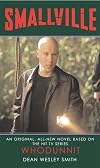
Dean Wesley Smith did a great job with this Smallville entry. Whodunnit is an entry in the second of two series based on the show. The first series was targeted more at middle-school readers, and some of those like Flight are very fun, but Whodunnit comes from the series for older teens and adults who enjoyed the show, and is a bit more meaty.
I see that a few have complained that this one doesn’t have a lot of Clark’s abilities in the spotlight — though his super speed comes into play show more eventually — but to me, that’s what makes this such a great read. As a huge fan of the show, this really excellent story afforded me some nostalgic time with Clark, Lex, Lana, Pete, Lex’s dad and Clark’s dad, Jonathan, and of course Alison Mack’s, Chloe, who is a favorite for me. And it is a really good mystery to boot. We know who Clark is, but here we get to see the human side, the high school side.
One portion of the narrative is a resonating murder mystery, as Clark and the gang stumble upon a marsh with a body in it; it proves to be someone from school they all know, and there is palpable sobering sadness. In a related story — though it takes a bit of time for the Smallville gang to connect the dots — Lex’s father is violently abducted and held for ransom.
Smith does a terrific job of painting the Smallville characters we came to love just as they were. Each personality is easily recognizable and at times smile-inducing for fans of the show. It’s still high school here, so yeah, Pete’s still annoying, and yes, Clark still has a thing for Lana that makes Chloe — and us — roll our eyes. The Wall of Weird is a big deal still, and Chloe’s reporter instincts, which Clark both admires and finds annoying, come into play here in a big way.
Serious at times, sad and reflective of the lost — more bodies drop before they get to the truth — Smith still manages to inject humor and the dynamic of high school friendships into the Smallville gang’s interactions. Lex’s story as he weighs his options about his father’s situation, attempting to figure out who is behind it all — not to mention that fractured relationship between Lex and Lionel — is so well written that despite how much we’re involved in the gang’s attempt to find out who murdered their friend, and what happened to the rural family, we become just as involved in Lex’s story. Eventually of course, the two connect.
Whether Dean Wesley Smith already had this story idea and just adapted it to fit the Smallville universe, or whether he planned it out from scratch doesn’t matter, because it’s a real winner, with some really terrific moments that might surprise you if you didn’t watch this fine series when it was on.
Just a great read that I flew through which was atmospheric and nostalgic, and had a pretty good mystery to boot. I have Hauntings when I’m in the mood, and hope Holder, who can be hit and miss for me when she tackles television series books, brings her A-game to it, because Smith really nailed this entry based on the series. For me at least, this was a fantastic trip down memory lane. show less
I see that a few have complained that this one doesn’t have a lot of Clark’s abilities in the spotlight — though his super speed comes into play show more eventually — but to me, that’s what makes this such a great read. As a huge fan of the show, this really excellent story afforded me some nostalgic time with Clark, Lex, Lana, Pete, Lex’s dad and Clark’s dad, Jonathan, and of course Alison Mack’s, Chloe, who is a favorite for me. And it is a really good mystery to boot. We know who Clark is, but here we get to see the human side, the high school side.
One portion of the narrative is a resonating murder mystery, as Clark and the gang stumble upon a marsh with a body in it; it proves to be someone from school they all know, and there is palpable sobering sadness. In a related story — though it takes a bit of time for the Smallville gang to connect the dots — Lex’s father is violently abducted and held for ransom.
Smith does a terrific job of painting the Smallville characters we came to love just as they were. Each personality is easily recognizable and at times smile-inducing for fans of the show. It’s still high school here, so yeah, Pete’s still annoying, and yes, Clark still has a thing for Lana that makes Chloe — and us — roll our eyes. The Wall of Weird is a big deal still, and Chloe’s reporter instincts, which Clark both admires and finds annoying, come into play here in a big way.
Serious at times, sad and reflective of the lost — more bodies drop before they get to the truth — Smith still manages to inject humor and the dynamic of high school friendships into the Smallville gang’s interactions. Lex’s story as he weighs his options about his father’s situation, attempting to figure out who is behind it all — not to mention that fractured relationship between Lex and Lionel — is so well written that despite how much we’re involved in the gang’s attempt to find out who murdered their friend, and what happened to the rural family, we become just as involved in Lex’s story. Eventually of course, the two connect.
Whether Dean Wesley Smith already had this story idea and just adapted it to fit the Smallville universe, or whether he planned it out from scratch doesn’t matter, because it’s a real winner, with some really terrific moments that might surprise you if you didn’t watch this fine series when it was on.
Just a great read that I flew through which was atmospheric and nostalgic, and had a pretty good mystery to boot. I have Hauntings when I’m in the mood, and hope Holder, who can be hit and miss for me when she tackles television series books, brings her A-game to it, because Smith really nailed this entry based on the series. For me at least, this was a fantastic trip down memory lane. show less
L. Ron Hubbard Presents Writers of the Future Volume 39: The Best New SF & Fantasy of the Year by Jody Lynn Nye
Disclaimer: An electronic copy of this book was provided in exchange for review by publishers, Galaxy Press, via Library Thing.
~ ~ ~ ~ ~
Fans of the science fiction / fantasy genre might as well go ahead and budget every year to purchase the current entry in this compendium, now on the cusp of its fourth decade of presenting the work of talented newcomers in the field. This review will not go into the selection process. Those who are interested will find ample information in the book itself, show more as its producers and presenters are definitely not shy when it comes to self-promotion. But why should they be? They consistently present outstanding work in these collections, and Volume 39 is no exception.
As usual, there are a dozen original works by new and emerging writers and illustrators of science fiction and fantasy, along with a few technical essays and an almost-obligatory reprint of one of Hubbard’s pulp-era tales. The raving completist will devour every word from cover to cover; the more casual reader will skim the garnish and dive right into the 12-course feast.
The winning stories run the gamut from hard-core science fiction to fantasy of all flavors, and include two time-travel tales, a bit of humor, a couple of dystopian stories, and some first-contact accounts.
The illustrators get a chance to shine here, too. The image for each story is presented in full color, and introductory material provides links to the artists’ other works. Science fiction and fantasy, probably more than any other genre, can really get a boost from skillfully-presented artwork. Readers can pretty easily conjure up mental images of a roadside diner or a kindergarten classroom or a Christmas tree, but they may need some help visualizing a shape-shifting carnivore, the living room of a sentient squid, or a ritual cloak from a vanished civilization on Alpha Centauri. The essay on art direction is one of the more interesting nonfiction entries in the volume.
The stories, however, continue to be the centerpiece for most readers, and there is plenty to think about here.
Arthur H. Manners’ “The Withering Sky” gets this reviewer’s vote for the most compelling and most original of the bunch. A truly weird and gripping tale of the exploration of an alien artifact, it grows more frightening and malevolent by the moment.
Samuel Parr gets bonus points for setting “The Last History”, his complex and thoughtful fantasy, in an almost-Imperial-China rather than in an almost-Medieval-Europe. His main character has embarked on a deadly competition for a coveted position in the Imperial government, but she is also playing a dangerous multi-level game in a competition of a very different kind. This is imbued with an other-ness that in no way keeps it from being a beautifully realized tale.
J.R. Johnson’s “Piracy for Beginners” gets Reviewer’s Choice. It’s straight-up space opera with a sense of humor and a kickass heroine. What’s not to like?
The least satisfying of the selections, at least for this reviewer, was Spencer Sekulin’s “The Children of Desperation”. There is a novel’s worth of ideas in this tale of a man compelled to take a morally reprehensible action in order to save someone he loves, but the restrictions inherent in the short story form mean many of them remain undeveloped, and some of the actions leave the reader wondering if a few pages of the manuscript have fallen by the wayside. The Big Reveal near the end has no emotional punch because the very thing it reveals has not been foreshadowed, referred to, or even acknowledged as existing until the moment it happens. It’s as if the writer, two pages before the climax, jumps in and says “Oh, wait! I forgot to tell you! The hero has an invisibility cloak, a twin brother, and a raging allergy to shellfish – all of which are going to be really important in the next page and a half, okay?” Sekulin is probably going to be around for a while, and one hopes he will get the opportunity to give full rein to his complex background next time.
Vampires, dragons, a soul-sucking tax collector, high-tech AIs, a spacefaring civilization looking for a new home, and assorted time-travelers round out the collection, which is well worth the investment of time it takes to absorb and think about the stories. show less
~ ~ ~ ~ ~
Fans of the science fiction / fantasy genre might as well go ahead and budget every year to purchase the current entry in this compendium, now on the cusp of its fourth decade of presenting the work of talented newcomers in the field. This review will not go into the selection process. Those who are interested will find ample information in the book itself, show more as its producers and presenters are definitely not shy when it comes to self-promotion. But why should they be? They consistently present outstanding work in these collections, and Volume 39 is no exception.
As usual, there are a dozen original works by new and emerging writers and illustrators of science fiction and fantasy, along with a few technical essays and an almost-obligatory reprint of one of Hubbard’s pulp-era tales. The raving completist will devour every word from cover to cover; the more casual reader will skim the garnish and dive right into the 12-course feast.
The winning stories run the gamut from hard-core science fiction to fantasy of all flavors, and include two time-travel tales, a bit of humor, a couple of dystopian stories, and some first-contact accounts.
The illustrators get a chance to shine here, too. The image for each story is presented in full color, and introductory material provides links to the artists’ other works. Science fiction and fantasy, probably more than any other genre, can really get a boost from skillfully-presented artwork. Readers can pretty easily conjure up mental images of a roadside diner or a kindergarten classroom or a Christmas tree, but they may need some help visualizing a shape-shifting carnivore, the living room of a sentient squid, or a ritual cloak from a vanished civilization on Alpha Centauri. The essay on art direction is one of the more interesting nonfiction entries in the volume.
The stories, however, continue to be the centerpiece for most readers, and there is plenty to think about here.
Arthur H. Manners’ “The Withering Sky” gets this reviewer’s vote for the most compelling and most original of the bunch. A truly weird and gripping tale of the exploration of an alien artifact, it grows more frightening and malevolent by the moment.
Samuel Parr gets bonus points for setting “The Last History”, his complex and thoughtful fantasy, in an almost-Imperial-China rather than in an almost-Medieval-Europe. His main character has embarked on a deadly competition for a coveted position in the Imperial government, but she is also playing a dangerous multi-level game in a competition of a very different kind. This is imbued with an other-ness that in no way keeps it from being a beautifully realized tale.
J.R. Johnson’s “Piracy for Beginners” gets Reviewer’s Choice. It’s straight-up space opera with a sense of humor and a kickass heroine. What’s not to like?
The least satisfying of the selections, at least for this reviewer, was Spencer Sekulin’s “The Children of Desperation”. There is a novel’s worth of ideas in this tale of a man compelled to take a morally reprehensible action in order to save someone he loves, but the restrictions inherent in the short story form mean many of them remain undeveloped, and some of the actions leave the reader wondering if a few pages of the manuscript have fallen by the wayside. The Big Reveal near the end has no emotional punch because the very thing it reveals has not been foreshadowed, referred to, or even acknowledged as existing until the moment it happens. It’s as if the writer, two pages before the climax, jumps in and says “Oh, wait! I forgot to tell you! The hero has an invisibility cloak, a twin brother, and a raging allergy to shellfish – all of which are going to be really important in the next page and a half, okay?” Sekulin is probably going to be around for a while, and one hopes he will get the opportunity to give full rein to his complex background next time.
Vampires, dragons, a soul-sucking tax collector, high-tech AIs, a spacefaring civilization looking for a new home, and assorted time-travelers round out the collection, which is well worth the investment of time it takes to absorb and think about the stories. show less
 This review was written for LibraryThing Early Reviewers.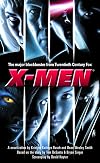
I read this novelization years ago, right after the movie came out. I loved the film - it was one of the first films I saw more than once in the theatre. This novelization follows the film fairly well except for one, glaring, cringe-inducing issue: Wolverine has four claws on each hand instead of three. Now, I get that the book was written before the film, probably well before, but Wolverine has been a staple of the comics for decades. Every time he "popped his claws," one from each knuckle, show more it made me grind my teeth because it was wrong. Other than that, the book was fast-paced, with a little extra expansion on what characters were thinking and feeling during pivotal parts of the movie.
If the claws don't annoy the crap out of you, as they did me, this book was a decent read. show less
If the claws don't annoy the crap out of you, as they did me, this book was a decent read. show less
Writing into the Dark: How to Write a Novel without an Outline (WMG Writer's Guides) by Dean Wesley Smith
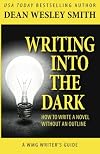
Smith offers advice for those exploring the path of being unburdened by overly prescribed plotting in this short book, but it is important to recognize that he is a rare gem of an author who is capable of something few others are. His advice, therefore, comes with a bit of "survivorship bias", so to speak.
His advice is:
- Write with your creative voice and ignore your critical voice.
- Discover your characters and story as you write, as a reader would.
- Write in blocks, then review what you show more just wrote, revise as needed, then move on. "Cycling".
- Do NOT write a second draft. Your story should be done at the end of your first draft and you should only revise in response to editorial requests.
- If you can't figure out where to end your story, just keep writing and reviewing what you wrote every couple of pages. Eventually, you'll discover you "wrote past your ending". Choose the right line and cut everything after.
Smith began his career in a different time. The "don't write a second draft; only revise on editorial request' ethos worked well for him from his very first publishing, but the 70s were a different time in the publishing and magazine industry. Most people are incapable of "one perfect draft". This advise is a bit like a lottery winner giving you the advice "just buy one ticket on your birthday and you can't lose!".
Even Hemingway stated "the first draft of anything is shit."
There is value in this short book, but as even he admits, you should build the method that works for you. show less
His advice is:
- Write with your creative voice and ignore your critical voice.
- Discover your characters and story as you write, as a reader would.
- Write in blocks, then review what you show more just wrote, revise as needed, then move on. "Cycling".
- Do NOT write a second draft. Your story should be done at the end of your first draft and you should only revise in response to editorial requests.
- If you can't figure out where to end your story, just keep writing and reviewing what you wrote every couple of pages. Eventually, you'll discover you "wrote past your ending". Choose the right line and cut everything after.
Smith began his career in a different time. The "don't write a second draft; only revise on editorial request' ethos worked well for him from his very first publishing, but the 70s were a different time in the publishing and magazine industry. Most people are incapable of "one perfect draft". This advise is a bit like a lottery winner giving you the advice "just buy one ticket on your birthday and you can't lose!".
Even Hemingway stated "the first draft of anything is shit."
There is value in this short book, but as even he admits, you should build the method that works for you. show less
Lists
Awards


You May Also Like


Associated Authors
Statistics
- Works
- 349
- Also by
- 73
- Members
- 9,378
- Popularity
- #2,565
- Rating
- 3.4
- Reviews
- 114
- ISBNs
- 403
- Languages
- 7
- Favorited
- 1
