
Tom Rob Smith
Author of Child 44
About the Author
Image credit:
www.vjbooks.com
Series
Works by Tom Rob Smith
Untitled 2 Ha 3 copies
The Assassination of Gianni Versace: American Crime Story [2018 TV mini series] — Developer — 2 copies
گزارش محرمانه 1 copy
Il richiamo del freddo 1 copy
Тајниот говор 1 copy
Il Bambino numero 44 1 copy
Leo Demidov 01: Child 44 1 copy
Leo Demidov 03: Agent 6 1 copy
Associated Works
Reader's Digest Condensed Books: A Prisoner of Birth • Child 44 • The Choice • The Crystal Skull 4 copies, 1 review
O Inocente; A Quinta; A Menina de Neve; Dezembro Perdido — Contributor — 1 copy
Tagged
Common Knowledge
- Birthdate
- 1979-02-19
- Gender
- male
- Education
- University of Cambridge
- Occupations
- screenwriter
author - Awards and honors
- Ian Fleming Steel Dagger Award 2008
Galaxy Book Award - Agent
- St. John Donald (United Agents)
Bob Bookman (CAA) - Short biography
- Tom Rob Smith (born 1979) is an English writer. The son of a Swedish mother and an English father, Smith was raised in London where he lives today. After graduating from Cambridge University in 2001, he completed his studies in Italy, studying creative writing for a year. After these studies, he worked as a scriptwriter.
His first novel, Child 44, about a series of child murders in Stalinist Russia, appeared in early 2008 and was translated into 17 languages. - Nationality
- UK
- Birthplace
- London, England, UK
- Places of residence
- London, England, UK
- Associated Place (for map)
- London, England, UK
Members
Reviews

I don't usually read thrillers, but something about the concept of Child 44 grabbed me. I was born in 1980. The Soviet Union was the big bad guy. I haven't read much on the subject of communist Russia, and this book seemed like a good opportunity. Wow, was it ever. I was hooked within the first page.
First of all: this is not a happy book. It's bleak. It's hopeless. At the same time, it's beautiful. Smith does a masterful job of showing how horrid things were in Russia, from the mass show more starvation to the ease of betrayal. People need to be reminded of the horrible things they are capable of so that we learn to never, ever do such things again. But that darkness still made this a difficult read at times.
Leo is a strong lead character. He's a decorated war hero who becomes a victim of the very system he has believed in his entire life. In the first chapters, it's easy to understand his idealism, even as he commits terrible acts as an MGB agent. There is still that sense that he's a good person beneath all of that. The mystery itself develops in layers as more bodies are found and the web of betrayal around Leo grows more intricate.
My one concern was that the end was almost too tidy, but in retrospect I can't see how it could have ended any other way. show less
First of all: this is not a happy book. It's bleak. It's hopeless. At the same time, it's beautiful. Smith does a masterful job of showing how horrid things were in Russia, from the mass show more starvation to the ease of betrayal. People need to be reminded of the horrible things they are capable of so that we learn to never, ever do such things again. But that darkness still made this a difficult read at times.
Leo is a strong lead character. He's a decorated war hero who becomes a victim of the very system he has believed in his entire life. In the first chapters, it's easy to understand his idealism, even as he commits terrible acts as an MGB agent. There is still that sense that he's a good person beneath all of that. The mystery itself develops in layers as more bodies are found and the web of betrayal around Leo grows more intricate.
My one concern was that the end was almost too tidy, but in retrospect I can't see how it could have ended any other way. show less
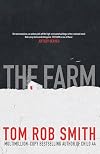
I thought this book was going to be dull; the premise, as billed certainly didn't seem that original: a woman alleges a horrible crime. Is she crazy or is it a coverup? Probably one of the most cliche plots. In addition, I tend to avoid literary depictions of "crazy" that don't resemble reality -- for example, highly organized improbable thoughts, being presented calmly and rationally. (I'm biting back a long digression here about the history of psychiatry as a tool to discredit women. By show more the way, the most coherent psychotic episode I've ever witnessed included a patient telling us how groundhogs were equipped with satellites to spy on her -- they're very rarely calm, realistic and difficult to dissect from reality.)
But the Farm, while it skirts that cliched territory, avoids it, rather being something much deeper about people, and their relationships to each other.
I first got drawn in in the first chapter. The (ostensible) narrator, Daniel, notes that he hasn't told his parents that he's gay, even though he considers himself close to them, because they tried so hard to create a happy childhood for them and he doesn't want them to doubt that he was happy. This paragraph, a virtual aside, I found so twisted, so illogical and so compelling that I had to read further to find out if it was intentional. The answer is unequivocally yes: this is the world Smith has created for Daniel. A world where people keep relatively benign, mundane secrets from each other for no good reason, except the desire to keep a completely perfect facade. This is one example of money that will come forth in the book and Smith makes it quite clear: the premise of the book -- where either Daniel's mother has either been completely psychotic for about a year, or where Daniel's father is involved in a conspiracy to commit murder and has been for several months, all the while Daniel thinking that they were happily living on a farm -- is only possible in the context where secrets are habitually kept under the guise of emotional "closeness." I thought this had particular relevance to today's age and facebook culture, where people post a carefully curated life and keep their feelings under close wraps.
The bulk of the book, while still officially narrated by Daniel, is really the exposition of his mother, Tilde, her "evidence" for the conspiracy and her story of what has happened. Far from being an over-the-top portrayal of psychosis or the depiction of a completely normal woman taken for insane for no clear reason, Smith's depiction here is nuanced: it's impossible to get through this section without believing that Tilde is extrapolating quite a lot from quite a little and, conversely, without believing that there are at least some goings-on that are not totally on the up-and-up.I found out after I read the book that it is based on an autobiographical episode, wherein Smith's mother, who had been living on a farm in Sweden, flew to see him, alleging that his father was involved in a conspiracy, and was declared psychotic. I think the experience and the realism really shows through, here. I loved little touches like the episode where Tilde is mushroom picking and realizes she's got a basket full of leaves instead, and by that point it's so clear she's been hallucinating, but she instead confabulates a story about being gaslit. It's so clear to the reader and so, so sad.
The other thing that I'll note, is in the genre of Shocking Family Secrets! which I usually avoid, because it's usually one of three secrets anyway (affair! homosexuality! abuse!) The Farm built up this shocking secret, about how Tilde, while she claims to lime and respect her parents, ran away and hasn't spoken to them since she was sixteen. And I was convinced that it would be a canonical secret, and it wasn't and indeed, I was shocked:Tilde had a best friend, Freja, who believed in trolls, and they tried to run away together, but it failed and afterwards Freja denied she'd ever been friends with Tilde, and then died under suspicious circumstances. And Tilde ran away because she knew that her parents believed that she killed Freja, even though she didn't. I finished this section and it was chilling -- this idea of "they don't believe me, I'm going to run away from the country forever and never look back" was so beyond the norm and so beyond what I expected, and it really established the tone for the stakes of Tilde's narrative. If I could nest spoilers I would, because once I worked through the matryoshka doll of this secret to find a classic family secret at the middle (Tilde's narrative, in which nests the imputed murder of Freja/Tilde's first psychotic break, in which nests Tilde's father's first story about Freja being imaginary, in which nests Tilde's abuse at her father's hands) I was already sufficiently impressed with the delicate psychology that Smith worked to be impressed show less
But the Farm, while it skirts that cliched territory, avoids it, rather being something much deeper about people, and their relationships to each other.
I first got drawn in in the first chapter. The (ostensible) narrator, Daniel, notes that he hasn't told his parents that he's gay, even though he considers himself close to them, because they tried so hard to create a happy childhood for them and he doesn't want them to doubt that he was happy. This paragraph, a virtual aside, I found so twisted, so illogical and so compelling that I had to read further to find out if it was intentional. The answer is unequivocally yes: this is the world Smith has created for Daniel. A world where people keep relatively benign, mundane secrets from each other for no good reason, except the desire to keep a completely perfect facade. This is one example of money that will come forth in the book and Smith makes it quite clear: the premise of the book -- where either Daniel's mother has either been completely psychotic for about a year, or where Daniel's father is involved in a conspiracy to commit murder and has been for several months, all the while Daniel thinking that they were happily living on a farm -- is only possible in the context where secrets are habitually kept under the guise of emotional "closeness." I thought this had particular relevance to today's age and facebook culture, where people post a carefully curated life and keep their feelings under close wraps.
The bulk of the book, while still officially narrated by Daniel, is really the exposition of his mother, Tilde, her "evidence" for the conspiracy and her story of what has happened. Far from being an over-the-top portrayal of psychosis or the depiction of a completely normal woman taken for insane for no clear reason, Smith's depiction here is nuanced: it's impossible to get through this section without believing that Tilde is extrapolating quite a lot from quite a little and, conversely, without believing that there are at least some goings-on that are not totally on the up-and-up.
The other thing that I'll note, is in the genre of Shocking Family Secrets! which I usually avoid, because it's usually one of three secrets anyway (affair! homosexuality! abuse!) The Farm built up this shocking secret, about how Tilde, while she claims to lime and respect her parents, ran away and hasn't spoken to them since she was sixteen. And I was convinced that it would be a canonical secret, and it wasn't and indeed, I was shocked:

I read The Farm by Tom Rob Smith in 2014 and I can still remember the gasp I made when I realised the predicament the main character was in. In 2014, I published my first ever Top 5 Books list and The Farm was proudly featured.
Next came Child 44, later made into a movie on the big screen starring Tom Hardy, Gary Oldman and Noomi Rapace. I gave this 4 stars in my review and went on to become the first Australian blogger to interview Tom Rob Smith.
So, when a copy of Cold People arrived in my show more mailbox, I knew the author could convincingly set a plot in the harshest climate in the world, as the freezing Russian conditions in Child 44 were expertly conveyed to the reader. I also knew that Tom Rob Smith could spin a terrific yarn - as he did in The Farm - so I rugged up and started reading.
By page 8, he was off to a cracking start with this description of a ship's captain living 150 years ago:
"...[Captain] Moray was an expert in choosing his crew from the variety of outcasts on offer, his preference being for the melancholic, the sexual deviants and the thieves. For the thieves there was nothing to steal, for the melancholic there was the ocean to meditate upon and for the deviants there were other deviants. Moray never shared the secrets of his own past, cultivating the appearance of a forceful but fair man, a bastion of order in this otherwise barbarous industry. There was room for only one murderer on this ship." Page 8
Wow! I was hooked right there and then! The premise of Cold People is that all of humanity has to relocate to Antarctica in 30 days in order to survive. The 'event' that kicks off the action was very well written and I enjoyed experiencing it from a few character's points of view, in the same way we did when the dome dramatically came down in Under the Dome by Stephen King.
The plotting style reminded me of Matthew Reilly, and I know you'll be thinking "that's probably because of Ice Station", but actually it's because of the action in The Great Zoo of China. Cold People felt cinematic in scale at times and if you enjoy Matthew Reilly, I think you'll enjoy this too.
It's probably relevant to acknowledge that I don't read many dystopian novels or books set in a post apocalyptic world. Just as I followed Maggie O'Farrell blindly into her memoir based purely on my love of her writing, Tom Rob Smith beckoned me into his glacially cold dystopian future and I'm glad I followed.
Cold People by Tom Rob Smith is inventive and optimistic about humanity while pointing out our flaws and I'm glad I stepped into this frightening futuristic portrayal.
* Copy courtesy of Simon & Schuster * show less
Next came Child 44, later made into a movie on the big screen starring Tom Hardy, Gary Oldman and Noomi Rapace. I gave this 4 stars in my review and went on to become the first Australian blogger to interview Tom Rob Smith.
So, when a copy of Cold People arrived in my show more mailbox, I knew the author could convincingly set a plot in the harshest climate in the world, as the freezing Russian conditions in Child 44 were expertly conveyed to the reader. I also knew that Tom Rob Smith could spin a terrific yarn - as he did in The Farm - so I rugged up and started reading.
By page 8, he was off to a cracking start with this description of a ship's captain living 150 years ago:
"...[Captain] Moray was an expert in choosing his crew from the variety of outcasts on offer, his preference being for the melancholic, the sexual deviants and the thieves. For the thieves there was nothing to steal, for the melancholic there was the ocean to meditate upon and for the deviants there were other deviants. Moray never shared the secrets of his own past, cultivating the appearance of a forceful but fair man, a bastion of order in this otherwise barbarous industry. There was room for only one murderer on this ship." Page 8
Wow! I was hooked right there and then! The premise of Cold People is that all of humanity has to relocate to Antarctica in 30 days in order to survive. The 'event' that kicks off the action was very well written and I enjoyed experiencing it from a few character's points of view, in the same way we did when the dome dramatically came down in Under the Dome by Stephen King.
The plotting style reminded me of Matthew Reilly, and I know you'll be thinking "that's probably because of Ice Station", but actually it's because of the action in The Great Zoo of China. Cold People felt cinematic in scale at times and if you enjoy Matthew Reilly, I think you'll enjoy this too.
It's probably relevant to acknowledge that I don't read many dystopian novels or books set in a post apocalyptic world. Just as I followed Maggie O'Farrell blindly into her memoir based purely on my love of her writing, Tom Rob Smith beckoned me into his glacially cold dystopian future and I'm glad I followed.
Cold People by Tom Rob Smith is inventive and optimistic about humanity while pointing out our flaws and I'm glad I stepped into this frightening futuristic portrayal.
* Copy courtesy of Simon & Schuster * show less

It is astonishing how a novel that begins so promisingly—as a stark portrayal of the true face of the Soviet regime in the 1950s—can suffer such a collapse of plot and ultimately turn into a literary disappointment. The Orwellian reality of Stalinist USSR, so convincingly rendered in the first half, quickly gives way in the second to a fast-paced action thriller, closer in spirit to Agent 007 than to political fiction.
Glaring plot holes begin to emerge, and illogical developments follow show more one another to the point of eroding the narrative’s credibility. The protagonist is subjected to extreme physical and psychological torture—reduced, in a single night, to a “hunched and shrunken old man”—yet almost immediately afterward he proceeds to overpower a dozen opponents single-handedly. Even with a torn hand, stripped flesh, and severe blood loss, he continues to prevail in unequal confrontations against numerous, well-armed soldiers.
And then there is the ending: an excessively sweetened resolution in which the author seems to have forgotten the very brutality of the system he set out to depict. The “bad” are duly punished, the “good” fully rewarded, and the nightmarish communist regime is, implausibly, allowed a moment of self-correction—as though it could recognize and amend its own crimes.
Tom Rob Smith demonstrates solid research into life in the Soviet Union, yet appears to miss a fundamental truth: the machinery of a totalitarian state does not operate with remorse. It demands absolute loyalty—right up to the moment it turns on its most devoted servants. show less
Glaring plot holes begin to emerge, and illogical developments follow show more one another to the point of eroding the narrative’s credibility. The protagonist is subjected to extreme physical and psychological torture—reduced, in a single night, to a “hunched and shrunken old man”—yet almost immediately afterward he proceeds to overpower a dozen opponents single-handedly. Even with a torn hand, stripped flesh, and severe blood loss, he continues to prevail in unequal confrontations against numerous, well-armed soldiers.
And then there is the ending: an excessively sweetened resolution in which the author seems to have forgotten the very brutality of the system he set out to depict. The “bad” are duly punished, the “good” fully rewarded, and the nightmarish communist regime is, implausibly, allowed a moment of self-correction—as though it could recognize and amend its own crimes.
Tom Rob Smith demonstrates solid research into life in the Soviet Union, yet appears to miss a fundamental truth: the machinery of a totalitarian state does not operate with remorse. It demands absolute loyalty—right up to the moment it turns on its most devoted servants. show less
Lists
Read These Too (1)
Booker Prize (1)
Awards


You May Also Like


Associated Authors
Statistics
- Works
- 26
- Also by
- 3
- Members
- 9,116
- Popularity
- #2,637
- Rating
- 3.8
- Reviews
- 540
- ISBNs
- 294
- Languages
- 21
- Favorited
- 20
