
Robin Stevenson
Author of Pride: Celebrating Diversity & Community
About the Author
Image credit: David Lowes
Works by Robin Stevenson
Kid Activists: True Tales of Childhood from Champions of Change (Kid Legends) (2019) 118 copies, 2 reviews
Kid Innovators: True Tales of Childhood from Inventors and Trailblazers (Kid Legends) (2021) 57 copies, 1 review
Kid Trailblazers: True Tales of Childhood from Changemakers and Leaders (Kid Legends) (2022) 22 copies, 1 review
Kid Olympians: Summer: True Tales of Childhood from Champions and Game Changers (Kid Legends) (2024) 17 copies, 1 review
Kid Musicians: True Tales of Childhood from Entertainers, Songwriters, and Stars (Kid Legends) (2024) 8 copies
Kid Olympians: Winter: True Tales of Childhood from Champions and Game Changers (Kid Legends Book 11) (English Edition) (2025) 4 copies
Meet Me Halfway 1 copy
Big guy 1 copy
GIRL:IT Kumma juttu 1 copy
Associated Works
Tagged
Common Knowledge
- Gender
- female
- Awards and honors
- The Lieutenant Governor's Award for Literary Excellence (2023)
- Agent
- Eric Smith (P.S. Literary)
Members
Reviews
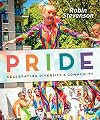
Being familiar with Robin Stevenson's work, and the work of the publisher (Orca Books), I was utterly thrilled to see this book announced. I was so excited to receive a copy for LibraryThing's Early Reviewers program. And I can't believe I've been so remiss in posting my review.
Despite my existing predisposition toward the book and author, I really enjoyed this book. As an adult reader, I learned tons of stuff not taught to me in school. I also appreciated how the book didn't gloss over the show more bad stuff, or lay blame and judgement. The facts were presented as neutrally as possible, and I think PRIDE did an excellent job at depicting this difficult and emotional history. I learned about history without having guilt unnecessarily burdened upon the wrong-doers.
Along with a difficult history, PRIDE also presented a sense of resilience and celebration. For young readers, reenforcing these points is so important; the struggles aren't just in the past, they are current and they are future, but they don't have to be dire.
Highly recommended read—for parents and children and teachers. Read together, discuss, let's help make the world a better place. show less
Despite my existing predisposition toward the book and author, I really enjoyed this book. As an adult reader, I learned tons of stuff not taught to me in school. I also appreciated how the book didn't gloss over the show more bad stuff, or lay blame and judgement. The facts were presented as neutrally as possible, and I think PRIDE did an excellent job at depicting this difficult and emotional history. I learned about history without having guilt unnecessarily burdened upon the wrong-doers.
Along with a difficult history, PRIDE also presented a sense of resilience and celebration. For young readers, reenforcing these points is so important; the struggles aren't just in the past, they are current and they are future, but they don't have to be dire.
Highly recommended read—for parents and children and teachers. Read together, discuss, let's help make the world a better place. show less
 This review was written for LibraryThing Early Reviewers.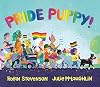
LGBTQIA + ABC + dog = fun!
This queer-centric alphabet book follows a young light-brown–skinned protagonist of ambiguous gender, their moms (an interracial couple), baby sibling, and rambunctious dog as they get ready to head off to a Pride parade. Disaster looms, however, when a tumble leads to a loose dog and a chase through the parade to reunite the four-legged member of the family with its bipedal owners. Each page introduces the next letter of the alphabet, advancing the story and show more along the way offering a plethora of vocabulary words (sometimes in print, sometimes in illustrations—a concluding search-and-find word list will send readers back through the book). While the story is sweet, the illustrations are the real stars of the show, depicting realistic characters and a crowd that is diverse in age, skin tone, racial presentation, size and shape, ability, and body modification. The cartoon illustrations are highly detailed, which may make the book challenging for large-group storytimes, but it will keep lap-readers invested as they pore over the characters, designs, and background actions. The only thing missing is a flag identification guide to help caregivers identify the variety of identities found and supported within the book. That quibble aside, the book is sheer delight and will be a welcome addition to shelves everywhere.
Highly—and proudly—recommended. (Picture book. 4-6)
-Kirkus Review show less
This queer-centric alphabet book follows a young light-brown–skinned protagonist of ambiguous gender, their moms (an interracial couple), baby sibling, and rambunctious dog as they get ready to head off to a Pride parade. Disaster looms, however, when a tumble leads to a loose dog and a chase through the parade to reunite the four-legged member of the family with its bipedal owners. Each page introduces the next letter of the alphabet, advancing the story and show more along the way offering a plethora of vocabulary words (sometimes in print, sometimes in illustrations—a concluding search-and-find word list will send readers back through the book). While the story is sweet, the illustrations are the real stars of the show, depicting realistic characters and a crowd that is diverse in age, skin tone, racial presentation, size and shape, ability, and body modification. The cartoon illustrations are highly detailed, which may make the book challenging for large-group storytimes, but it will keep lap-readers invested as they pore over the characters, designs, and background actions. The only thing missing is a flag identification guide to help caregivers identify the variety of identities found and supported within the book. That quibble aside, the book is sheer delight and will be a welcome addition to shelves everywhere.
Highly—and proudly—recommended. (Picture book. 4-6)
-Kirkus Review show less

Essentially a middle-school-level textbook structured around Pride celebrations, this provides a concise but strong grounding in LGBTQ history and contemporary LGBTQ cultures, for kids who may have no personal connection to the LGBTQ community, or who know LGBT adults, or are themselves queer or questioning. Stevenson doesn't talk down to her audience, at times tackling tough subjects like oppression, AIDS, and struggle within the LGBTQ community. She maintains a broad perspective with show more emphasis on the roles young people may play, buttressed by interspersed personal stories (including her own) and a survey of LGBTQ experience in countries beyond the US and her native Canada. This is clearly a labor of love, as seems to be the focus of the publisher, but Stevenson and her editorial support have maintained a high standard to tell the LGBTQ story with as much candor and integrity as the book possibly can. show less
This review was written for LibraryThing Early Reviewers.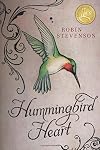
The gemlike hummingbird that graces the cover of Robin Stevenson’s fine new young adult novel is emblematic of the beauty, fragility, and evanescence of life. It is a particularly apt metaphor for her sensitive and searching central character, Dylan Jarvis, who sees so many signs of what’s wrong in the world—from holes in the ozone layer, to pesticides in food and “thousands of toxic chemicals coursing through our veins”—that she has developed vertical lines between her eyebrows show more and despairs as to whether there is really anything we can do to save the planet.
Dylan lives with her free-spirited, artsy, tattooed, and occasionally dope-smoking single mother, Amanda, and an adopted sister, Karma. Even if she is the product of Amanda’s one-night stand with a selfish “asshole” whom her mother says should be regarded a sperm-donor only, Dylan has also been assured that Amanda has had no regrets about bringing her into the world. The hummingbird tattooed on Amanda's wrist with its “wings spread midbeat” speaks to the centrality of Dylan in her mother's life. According to Amanda, the image relates to the sound of Dylan’s heartbeat in utero. As it turns out, however, that explanation is “a much better story than the real one” and Dylan is faced with untangling the web of her mother's lies about her biological father.
As the novel opens, Dylan is taking an annual birthday picture, one of many she believes her mother has mailed over the years to the father Dylan has never met. The earliest photographs were school ones, but when these elicited no response from this unknown man, family groupings seemed less embarrassing. Now, within days of the sixteenth birthday photo being snapped, Dylan’s father, an Ontario lawyer, has arrived on the west coast, apparently eager to meet her but really to make an urgent request that only a biological daughter can fulfill. To tell what that request is would give away some of the pleasure of reading this story, which covers some of the same terrain and themes of American young adult author Sarah Dessen: the fallibility of parents and our first painful efforts to understand them as confused people not so different from ourselves, family secrets, sexuality, and the many negotiations one makes along the road to adulthood. Stevenson’s telling is perhaps slightly rawer, however.
It is difficult for those of us who have always known who our parents are to fully appreciate the situation of those who have not--the urgency of the need to identify where we came from as well as the fear and trepidation of piecing together the puzzle. Stevenson explores these mixed feelings well in her book. At the same time, she also shows her beautiful, anxious and awkward teenaged protagonist trying to cope with some of the more run-of-the-mill adolescent problems related to friendship, sexuality, and drugs. Overall, Dylan's experiences with her peers, while portrayed convincingly in the book, work mainly to amplify the young woman’s main challenge, which is to uncover the truth of what really occurred between her mother and biological father, Mark Wheatcroft years before, when they were almost exactly her age.
Dylan’s emotional response to seeing her father for the first time and her reaction to the difficult request he makes force her to move closer to an acceptance of the fragility of life and the inevitability of death (which preoccupies her throughout the book.) At one point, Dylan observes that the planet’s troubles are so severe that “even if we do everything we can do, it might not be enough.” By the end, though, Dylan seems to recognize the value of one individual to another. Her "hummingbird heart" has exerted itself enough to do the small hopeful bit it can to help one tiny vulnerable part of the planet at least. She is also able to gain some hard-won understanding of where she comes from.
Recommended for ages 14 and up.
I thank Orca Book Publishers for providing me with an advance reading copy of the uncorrected proofs for reviewing purposes. show less
Dylan lives with her free-spirited, artsy, tattooed, and occasionally dope-smoking single mother, Amanda, and an adopted sister, Karma. Even if she is the product of Amanda’s one-night stand with a selfish “asshole” whom her mother says should be regarded a sperm-donor only, Dylan has also been assured that Amanda has had no regrets about bringing her into the world. The hummingbird tattooed on Amanda's wrist with its “wings spread midbeat” speaks to the centrality of Dylan in her mother's life. According to Amanda, the image relates to the sound of Dylan’s heartbeat in utero. As it turns out, however, that explanation is “a much better story than the real one” and Dylan is faced with untangling the web of her mother's lies about her biological father.
As the novel opens, Dylan is taking an annual birthday picture, one of many she believes her mother has mailed over the years to the father Dylan has never met. The earliest photographs were school ones, but when these elicited no response from this unknown man, family groupings seemed less embarrassing. Now, within days of the sixteenth birthday photo being snapped, Dylan’s father, an Ontario lawyer, has arrived on the west coast, apparently eager to meet her but really to make an urgent request that only a biological daughter can fulfill. To tell what that request is would give away some of the pleasure of reading this story, which covers some of the same terrain and themes of American young adult author Sarah Dessen: the fallibility of parents and our first painful efforts to understand them as confused people not so different from ourselves, family secrets, sexuality, and the many negotiations one makes along the road to adulthood. Stevenson’s telling is perhaps slightly rawer, however.
It is difficult for those of us who have always known who our parents are to fully appreciate the situation of those who have not--the urgency of the need to identify where we came from as well as the fear and trepidation of piecing together the puzzle. Stevenson explores these mixed feelings well in her book. At the same time, she also shows her beautiful, anxious and awkward teenaged protagonist trying to cope with some of the more run-of-the-mill adolescent problems related to friendship, sexuality, and drugs. Overall, Dylan's experiences with her peers, while portrayed convincingly in the book, work mainly to amplify the young woman’s main challenge, which is to uncover the truth of what really occurred between her mother and biological father, Mark Wheatcroft years before, when they were almost exactly her age.
Dylan’s emotional response to seeing her father for the first time and her reaction to the difficult request he makes force her to move closer to an acceptance of the fragility of life and the inevitability of death (which preoccupies her throughout the book.) At one point, Dylan observes that the planet’s troubles are so severe that “even if we do everything we can do, it might not be enough.” By the end, though, Dylan seems to recognize the value of one individual to another. Her "hummingbird heart" has exerted itself enough to do the small hopeful bit it can to help one tiny vulnerable part of the planet at least. She is also able to gain some hard-won understanding of where she comes from.
Recommended for ages 14 and up.
I thank Orca Book Publishers for providing me with an advance reading copy of the uncorrected proofs for reviewing purposes. show less
This review was written for LibraryThing Early Reviewers.Lists
Awards


You May Also Like


Associated Authors
Statistics
- Works
- 45
- Also by
- 2
- Members
- 1,471
- Popularity
- #17,463
- Rating
- 3.7
- Reviews
- 125
- ISBNs
- 202
- Languages
- 4

