
Leon Trotsky (1879–1940)
Author of History of the Russian Revolution
About the Author
Leon Trotsky was born Lev Davidovich Bronshteyn on November 7, 1879 in Yanovka, Ukraine. As a teenager, he became involved in underground activities and was soon arrested, jailed and exiled to Siberia where he joined the Social Democratic Party. He escaped from exile in Siberia by using the name of show more a jailer called Trotsky on a false passport. During World War I, he lived in Switzerland, France, England, and New York City, where he edited the newspaper Novy Mir (New World). In 1917, after the overthrow of Tsar Nicholas II, he went back to Russia and joined Vladimir Lenin in the first, abortive, July Revolution of the Bolsheviks. A key organizer of the successful October Revolution, he was People's Commissar for Foreign Affairs in the Lenin regime. He was then made war commissar and in this capacity, built up the Red Army which prevailed against the White Russian forces in the civil war. Antagonism developed between him and Joseph Stalin during the Civil War of 1918-1920. When Lenin fell ill and died, Stalin became the new leader and Trotsky was thrown out of the party in 1927. Trotsky fled across Siberia to Norway, France, and finally settled in Mexico in 1936. He began working on the biography of Stalin. He was able to complete 7 of the 12 chapters before an assassin, acting on Stalin's orders, stabbed Trotsky with an ice pick. He died on August 21, 1940. The construction of the remaining five chapters was accomplished by the translator Charles Malamuth, from notes, worksheets, and fragments. (Bowker Author Biography) show less
Image credit: George Grantham Bain Collection, Library of Congress Prints and Photographs Division, Reproduction Number: LC-DIG-ggbain-35130
Series
Works by Leon Trotsky
The History of the Russian Revolution. Volume 1, The Overthrow of Czarism (1973) 96 copies, 1 review
The History of the Russian Revolution. Volume 2, The Attempted Counter-Revolution (1967) 69 copies, 1 review
Problems of Everyday Life: Creating the Foundations for a New Society in Revolutionary Russia (1973) 67 copies
Trade Unions in the Epoch of Imperialist Decay (Featuring Trade Unions: Their Past, Present, and Future by Karl Marx) (1990) 19 copies
The Serge Trotsky Papers: Correspondence and Other Writings Between Victor Serge and Leon Trotsky (1994) 19 copies
Stalinism and Bolshevism: Concerning the Historical and Theoretical Roots of the Fourth International (1974) 14 copies
Det verkliga läget i Ryssland 7 copies
Problems of civil war 5 copies
How the Revolution Armed: 1919 v. 2: Military Writings and Speeches of Leon Trotsky (1979) 5 copies, 1 review
Compagni di strada 5 copies
Guerra e rivoluzione 5 copies
Trotsky in 1917: The most complete English-language collection of Leon Trotsky's writings from the year of the Russian revolution (2018) 4 copies
How the Revolution Armed Volume 4: 1921-1923 (The Military Writings and Speeches of Leon Trotsky) (1981) 4 copies
Perspectives and tasks in the East; speech on the third anniversary of the Communist University for Toilers of the East, April 21, 1924 (1973) 4 copies
Lessons of Spain 4 copies
Per conoscere Trotskij 3 copies
I stake my life 3 copies
Chto Takoe SSSR i kuda on idet? [What is the USSR and Where is it Going? (The Revolution Betrayed)] 3 copies, 1 review
Leon Trotsky on the Labor Party 3 copies
Overgangsprogramma de doodsstrijd van het kapitalisme en de taken van de vierde internationale 3 copies
Between red & white: A study of some fundamental questions of revolution, with particular reference to Georgia (1975) 3 copies
Scritti 1929-1936 3 copies
Revolução e Contra Revolução 3 copies
The position of the republic and the tasks of young workers: Report to the 5th All-Russian Congress of the Russian Commu (1972) 3 copies
Escritos sobre Sindicato 3 copies
The living thoughts of Karl Marx : based on Capital: a critique of political economy / presented by Leon Trotsky (1946) 3 copies
On Lenin, Notes Towards a Biography 2 copies
The Paris Commune 2 copies
The Young Lenin 2 copies
Lenin 2 copies
Problemes de la Revolution allemande 2 copies
Soviet Economy in Danger 2 copies
The Class Nature of the Soviet State / The Workers' State and the Question of Thermidor and Bonapartism (1968) 2 copies
The Zimmerwald Manifesto 2 copies
Zrazena Revoluce 2 copies
Saggio sul Capitale di Marx 2 copies
Les crimes de Staline 2 copies
Problems of the Chinese Revolution (Appendices by Zinoviev, Vuyovitch, Nassunov and Others) 2 copies
Trotsky's Diary in Exile 1935 2 copies
What Hitler Wants 2 copies
Stalin, 2 vols. 2 copies
Political Profiles 2 copies
Die russische Revolution 1905. 2 copies
Leon Trotsky on Britain 2 copies
Ecrits 1928-1940 Tome 3 : la tragédie de la classe ouvrière allemande et la révolution espagnole 2 copies
La Segunda Revolucion China 2 copies
පාවා දුන් විප්ලවය 2 copies
L'appareil policier du stalinisme - Préface de Denise Avenas - Traduction de Anne Saint-Girons - Edition originale (1976) 2 copies
The Only Road 2 copies
Marxismus und Gewerkschaft 2 copies
Problems of the Chinese Revolution: With Appendices by Zinoviev, Vuyovitch, Nassonov, and Others 2 copies
La Revolution Espagnole, 1930-1940 2 copies
Stalin [Stalin], 2 vols. 2 copies
Portrety [Portraits] 2 copies
Die wirkliche Lage in Russland 2 copies
Trotzki Schriften / Trotzki Schriften Band 3.3: Linke Opposition und IV. Internationale (1928-1934) (2001) 2 copies
Moral e Revolução 2 copies
El fascismo 2 copies
May Day in the West and the East on the 35th anniversary of the May Day holiday: speech at the commemorative plenum of t (1973) 2 copies
Leon Trotsky on Engels and Kautsky 2 copies
Programa de transição para a revolução socialista: a agonia mortal do capitalismo e as tarefas da IV Internacional (2005) 2 copies
Writings of Leon Trotsky 2 copies
The Transitional Program (Annotated): Death Agony of Capitalism and the Tasks of the Fourth International (2020) 2 copies
Scritti letterari 2 copies
História da Revolução Russa - Vol. II: Tentativa de Contrarrevolução (Portuguese Edition) (2020) 2 copies
A HISTÓRIA DA REVOLUÇÃO RUSSA - Vol. III: O Triunfo dos Soviets (Portuguese Edition) (2020) 2 copies
La révolution trahie 1 copy
I problemi della rivoluzione cinese: altri scritti su questioni internazionali 1942-1940 (215) 1 copy
Scritti 1929-1936 1 copy
Stalinisme en bolsjewisme 1 copy
Yo Acuso 1 copy
Revolution in Deutschland: Reden und Schriften 1915 - 1924 (Dokumente der Arbeiterbewegung) (2018) 1 copy
El Testamento de Lenin 1 copy
Der neue Kurs 1 copy
Vingt lettres 1 copy
Годы великого перелома (Война и техника) [The Years of the Great Break (War and Technology.) ] 1 copy
Carlo Marx 1 copy
La nature de l'URSS 1 copy
La Guerre et la Révolution 1 copy
The Death Agony of Capitalism and the Tasks of the Fourth International "The Transit Program" 1 copy
Eurocomunismo x leninismo (Coleção Polêmica) — Composer — 1 copy
Terrorisme et communisme (L'Anti-Kautsky) [édition intégrale revue et mise à jour] (French Edition) (2013) 1 copy
Before the 9th of January 1 copy
The only necessary thing 1 copy
Articles on the Revolutionary Press, Volume 2: Trotsky — Contributor — 1 copy
Ecrits 1928-1940 Tome 1 1 copy
Jean Jaurès 1 copy
Journal d'exil 1935 1 copy
Resultados y Perspectivas 1 copy
L'année 1917 (163) 1 copy
Lettres de Léon Trotsky 1 copy
Letteratura, arte, libertà 1 copy
Nouvelle étape 1 copy
Rapport de la delegation Siberienne. Trotsky contre Lenin / par Leon Trotsky; Preface, traduction et notes de Denis Authier (1969) 1 copy
Ma vie, tome 1 (1870-1905) 1 copy
De la révolution 1 copy
Écrits 1928-1940, tome 1 1 copy
Der junge Lenin 1 copy
Scritti letterari 1 copy
Scelta di scritti: 1905-1940 1 copy
Literatur und Revolution 1 copy
Můj život 1 copy
Trockij 1905 1 copy
Diário do Exílio 1 copy
Minha vida 1 copy
Escritos sobre España 1 copy
Correspondance: 1933-1938 1 copy
Trotskij - scritti 1 copy
Marxismo e scienza 1 copy
Marxism and Terrorism 1 copy
Correspondencia (1933-1938) 1 copy
O Anti-Kautsky 1 copy
A Revolução de Outubro 1 copy
Letteratura e rivoluzione 1 copy
La revolución traicionada 1 copy
DEN UNGE LENIN 1 copy
La Revolución desfigurada 1 copy
Hun moraal en de onze 1 copy
Carta a la juventud obrera 1 copy
Den unge Lenin 1 copy
Literatura y revolución 1 copy
Littérature et Révolution... 1 copy
The Kirov Assassination 1 copy
The Trotsky papers 1917-1922 1 copy
Der Einzige Weg 1 copy
Our Revolution: Essays on Working-Class and International Revolution (1904-1917): Original Version by Trotsky (2017) 1 copy
La revolución china 1 copy
Da Noruega ao México 1 copy
Correspondance: 1933-1938 1 copy
Octubre 1 copy
El pensamiento de Marx 1 copy
A arte da insurreição 1 copy
La revolución rusa 1 copy
La revolución china 1 copy
Salin 1 copy
The Labor Party 1 copy
Escritos filosóficos 1 copy
A revolução traída 1 copy
Balanço e perspectivas 1 copy
මගේ ජීවිතය 1 copy
නොනවතින විප්ලවය 1 copy
Unity & Strategy: Ideas for Revolution / The Transitional Program for Socialist Revolution and other writings (2015) 1 copy
The Third International 1 copy
Our Political Tasks 1904 1 copy
A revolução de outubro 1 copy
Schedule for a Revolution 1 copy
Whither Russia? 1 copy
A Revolução de Outubro 1 copy
Letter to Shachtman 1 copy
Nuovo corso 1 copy
Cómo hicimos la revolución 1 copy
Histoire de la Révolution russe tome 1 : Février ; tome 2 : Octobre: édition intégrale (French Edition) (2013) 1 copy
Germany: What next 1 copy
La nature de l'U.R.S.S. 1 copy
Sobre la liberación nacional 1 copy
The Writings of Leon Trotsky 1 copy
Trotsky on Black Nationalism 1 copy
Programa de Transição 1 copy
The Class Nature of the Soviet State and The Workers' State and the Question of Thermidor and Bonapartism (1973) 1 copy
Revolução e guerra civil 1 copy
Problemas da Guerra Civil 1 copy
Oeuvres 9 1 copy
The Transitional Programme 1 copy
Leon Trotsky on China 1 copy
Leon Trotsky on China 1 copy
La Révolution Défigurée 1 copy
Problems of Life 1 copy
'On the National Question' 1 copy
Programma di Transizione 1 copy
Where Is Britain Going? 1 copy
Die Geburt Der Roten Armee 1 copy
Los Gangsters de Stalin 1 copy
Leon Trotsky Speaks 1 copy
Oeuvres (Second series), 1928-1933. V.1, Jan-Jul 1928; V. 2, Jul. 1928-Feb. 1929; V. 3, Feb-May 1929 1 copy
The Real Situation in Russia 1 copy
Sobre la Liberacion Nacional 1 copy
Fascism, A Compilation 1 copy
Literatura y Revolution 1 copy
O kwestii ukrainskiej [three articles on the question of independence of the Ukraine in Polish] 1 copy
Overgangs Programmet 1 copy
Military Writings 1 copy
Lenin's Last Testament (On the Suppressed Testament of Lenin) (Bengali translation by U.N. Roy) 1 copy
Mein Leben 1 copy
1905; Bilan et Perspectives 1 copy
The Early Years of the British Left Opposition, Five Previously Unpublished Letters by Leon Trotsky 1 copy
Marxism in the United States 1 copy
What Is a Peace Programme? 1 copy
Whither Europe? 1 copy
My Flight from Siberia, 1907 1 copy
Associated Works
Theories of Modern Art: A Source Book by Artists and Critics (1968) — Contributor — 854 copies, 6 reviews
An American Album: One Hundred and Fifty Years of Harper's Magazine (2000) — Contributor — 146 copies, 1 review
The German Revolution and the Debate on Soviet Power: Documents, 1918-1919; Preparing the Founding Congress (1986) — Contributor — 30 copies
A Documentary History of Communism and the World: From Revolution to Collapse (1960) — Contributor — 14 copies
The Revolutionary Philosophy of Marxism: Selected Writings on Dialectical Materialism (2018) — Contributor — 9 copies
Teoría económica y economía política en la construcción del socialismo — Contributor — 3 copies
Dialectical Materialism: An Introduction to Marxist Philosophy — Contributor — 1 copy
Tagged
Common Knowledge
- Canonical name
- Trotsky, Leon
- Legal name
- Bronshtein, Lev Davidovich
Bronstein, Lev Davidovich - Other names
- Троцкий, Лев Давидович
- Birthdate
- 1879-11-07
- Date of death
- 1940-08-21
- Gender
- male
- Education
- Realschule zum Heiligen Paulus
Odesa I. I. Mechnykov National University - Occupations
- Russian revolutionary
political theorist
politician
journalist - Organizations
- Mensheviks
Fourth International
Communist Party of the Soviet Union - Relationships
- Trotsky, Natalia (spouse)
Kameneva, Olga (sister)
Reissner, Larissa (comrade) - Cause of death
- assassination
- Nationality
- USSR
- Birthplace
- Yanovka, Kherson Governorate, Russian Empire
- Places of residence
- Odessa, Russian Empire
Nikolayev, Russian Empire
Siberia, Russian Empire
London, England, UK
St. Petersburg, Russian Empire
Vienna, Austro-Hungarian Empire (show all 12)
Switzerland
France
New York, New York, USA
Moscow, Russia, USSR
Alma Ata, Kazakhstan, USSR
Büyükada, Turkey - Place of death
- Mexico City, Mexico
- Burial location
- Coyoacan, Mexico
- Map Location
- Russia
Members
Reviews
‘You know, with Kautsky, the more I learn about that guy, the more I don’t care for him’ - Norm MacDonald
I’m going to attempt the possible and defend Trotsky in the face of a seemingly insuperable wave of MLM sycophants; an admittedly difficult task to be sure.
Fine, Mao supersedes Trotsky in his understanding of the peasantry, Trotsky is a tad too abstract and not as concrete as the venerable Chairman, he overestimated the upper crust of the working class yadda yadda. But here we show more have a cutthroat and effective evaluation of lived Soviet reality. Surely someone can’t read this and come away detesting the man? The militarisation of labour goes a hell of a long way in deflating the aspirations of some of the most enervating so-called ‘Marxists’ of my generation who see themselves becoming poets as soon as the class struggle has progressed somewhat, even the notion of egalitarianism (contra the utopian notion of egalitarianism, where the necessity of momentarily maintaining wages, rewarding impressive labour etc. is construed as some immoral sin) is dispelled, a notion all too often misunderstood. As well as this, Trotsky demonstrates the necessity of the State in a way I have found unmatched by other Marxist writers within the tradition — I know it’s a cliche at this point but I do really think that anarchists dwell in some idealistic stupor.
That being said.... do any of these writings carry any weight anymore? Must we solely speak in the language handed down to us by neoliberalism? As I grow older I feel like this is most likely the case. However, this work does stand as a Romantic, passionate haranguing by a man gripped by the most intense and critical conditions imaginable, and he was truly fighting for something novel and in my eyes very important. Perhaps all of these writings surrounding the Internationals are beyond antiquarian at this point of time, but maybe there is something to be salvaged within these silverfish-addled tomes that could cut through the current miasma of our lost futures. Something concerning a steel will, an organised strength, something that may not be a cure-all but will alleviate some ails, some pretty bloody big ones at that.
Even if all of this discourse amounts to nil at least when you’ve read this you’ll no longer need to stare at a closeted liberal with a glazed over expression while swallowing their tepid notions of revolution. Trotsky’s notion of Revolution and violence may belong to a bygone era, but let us not allow these snivelling knaves to diminish and denigrate what once was. Oh and just to mention, no other Marxist has been this unabashedly sincere and open on the sheer horror and terror that civil war, class struggle and the road to socialism involve: Trotsky gives it to you like a pear cider made out of 100% pears. show less
I’m going to attempt the possible and defend Trotsky in the face of a seemingly insuperable wave of MLM sycophants; an admittedly difficult task to be sure.
Fine, Mao supersedes Trotsky in his understanding of the peasantry, Trotsky is a tad too abstract and not as concrete as the venerable Chairman, he overestimated the upper crust of the working class yadda yadda. But here we show more have a cutthroat and effective evaluation of lived Soviet reality. Surely someone can’t read this and come away detesting the man? The militarisation of labour goes a hell of a long way in deflating the aspirations of some of the most enervating so-called ‘Marxists’ of my generation who see themselves becoming poets as soon as the class struggle has progressed somewhat, even the notion of egalitarianism (contra the utopian notion of egalitarianism, where the necessity of momentarily maintaining wages, rewarding impressive labour etc. is construed as some immoral sin) is dispelled, a notion all too often misunderstood. As well as this, Trotsky demonstrates the necessity of the State in a way I have found unmatched by other Marxist writers within the tradition — I know it’s a cliche at this point but I do really think that anarchists dwell in some idealistic stupor.
That being said.... do any of these writings carry any weight anymore? Must we solely speak in the language handed down to us by neoliberalism? As I grow older I feel like this is most likely the case. However, this work does stand as a Romantic, passionate haranguing by a man gripped by the most intense and critical conditions imaginable, and he was truly fighting for something novel and in my eyes very important. Perhaps all of these writings surrounding the Internationals are beyond antiquarian at this point of time, but maybe there is something to be salvaged within these silverfish-addled tomes that could cut through the current miasma of our lost futures. Something concerning a steel will, an organised strength, something that may not be a cure-all but will alleviate some ails, some pretty bloody big ones at that.
Even if all of this discourse amounts to nil at least when you’ve read this you’ll no longer need to stare at a closeted liberal with a glazed over expression while swallowing their tepid notions of revolution. Trotsky’s notion of Revolution and violence may belong to a bygone era, but let us not allow these snivelling knaves to diminish and denigrate what once was. Oh and just to mention, no other Marxist has been this unabashedly sincere and open on the sheer horror and terror that civil war, class struggle and the road to socialism involve: Trotsky gives it to you like a pear cider made out of 100% pears. show less

A bit like Marx, Trotsky is ace at reading the situation, but pants at predicting the future.
His reading of the UK Labour Party is astoundingly accurate. His hope for the British Communist Party a trifle less on the button.
Considering that this book is now almost 100 years old, it is astonishing to read so much which is still relevant.
His reading of the UK Labour Party is astoundingly accurate. His hope for the British Communist Party a trifle less on the button.
Considering that this book is now almost 100 years old, it is astonishing to read so much which is still relevant.
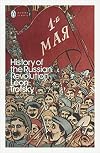
Tackling this marvellous but massive book is a challenge – but it is also very rewarding.
Marxism is often accused of being “deterministic”, that is, of focusing on historical forces and classes and of ignoring individuals. But this is an unfair criticism. After all, Marx himself said that it is people who make history, “but they do not make it under circumstances chosen by themselves...”
This dialectic of the interaction between objective circumstances and subjective human action is show more at the core of this book.
So in Chapter One we have Trotsky applying the law of uneven and combined development to Russia’s history; and throughout the book Trotsky shows how class forces underlie political activities and attitudes.
But we also see the crucial importance of the actions of individuals. One example of this is the vital role played by Lenin (and by Trotsky himself, of course). Another example is the Cossack, sent to suppress a demonstration, who winked at one of the workers, thus showing that the Cossacks would not violently put down the revolutionary workers.
Trotsky was in exile when he wrote this book. He had gone from being one of the key leaders of the revolution in 1917 to being a fierce critic of Stalin’s bureaucratic tyranny, arguing for a new revolution by Russia’s workers to overthrow Stalin’s dictatorship.
Unfortunately, Trotsky clung to the view that Russia under Stalin was a “degenerated workers’ state”. In fact I find much more convincing the theory that was first fully developed by Tony Cliff: that Stalinist Russia was a bureaucratic state capitalist society, as were the other so-called “communist” regimes that appeared later.
But despite this weakness, Trotsky did keep alive the fundamental Marxist idea that socialism must be based on internationalism and workers’ democracy. (The “dictatorship of the proletariat” was meant to mean the DEMOCRATIC control of society by the working class, not a small group ruling OVER the working class.)
Lenin and Trotsky saw the soviets (democratic workers’ councils) as being the form that working class rule would take, and in this book Trotsky gives us a wonderful description of the relationship between individuals, the Bolshevik Party, the soviets, and the masses. show less
Marxism is often accused of being “deterministic”, that is, of focusing on historical forces and classes and of ignoring individuals. But this is an unfair criticism. After all, Marx himself said that it is people who make history, “but they do not make it under circumstances chosen by themselves...”
This dialectic of the interaction between objective circumstances and subjective human action is show more at the core of this book.
So in Chapter One we have Trotsky applying the law of uneven and combined development to Russia’s history; and throughout the book Trotsky shows how class forces underlie political activities and attitudes.
But we also see the crucial importance of the actions of individuals. One example of this is the vital role played by Lenin (and by Trotsky himself, of course). Another example is the Cossack, sent to suppress a demonstration, who winked at one of the workers, thus showing that the Cossacks would not violently put down the revolutionary workers.
Trotsky was in exile when he wrote this book. He had gone from being one of the key leaders of the revolution in 1917 to being a fierce critic of Stalin’s bureaucratic tyranny, arguing for a new revolution by Russia’s workers to overthrow Stalin’s dictatorship.
Unfortunately, Trotsky clung to the view that Russia under Stalin was a “degenerated workers’ state”. In fact I find much more convincing the theory that was first fully developed by Tony Cliff: that Stalinist Russia was a bureaucratic state capitalist society, as were the other so-called “communist” regimes that appeared later.
But despite this weakness, Trotsky did keep alive the fundamental Marxist idea that socialism must be based on internationalism and workers’ democracy. (The “dictatorship of the proletariat” was meant to mean the DEMOCRATIC control of society by the working class, not a small group ruling OVER the working class.)
Lenin and Trotsky saw the soviets (democratic workers’ councils) as being the form that working class rule would take, and in this book Trotsky gives us a wonderful description of the relationship between individuals, the Bolshevik Party, the soviets, and the masses. show less
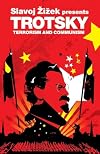
A brilliant work exposing the myth of equality and justice through parliamentary democracy, asserting that the only means to equality and justice is socialism. The path to socialism requires revolution, and a socialist revolution will face the violent resistance of the capitalists, which must be met with greater force in order to suppress it.
Zizek makes an astute observation that modern social-democrats, even those who called themselves Trotskyists like Ernest Mandel, dislike Terrorism and show more Communism because it asserts the need for revolution and the dictatorship of the proletariat over the bourgeoisie and those who seek to restore its power.
Trotsky provides a historical explanation of the rise of the idea of "democracy," and how it is, like religion, a myth that gives the oppressed the illusion of equality with the oppressor:
[b:Terrorism and Communism: A Reply to Karl Kautsky|1769648|Terrorism and Communism A Reply to Karl Kautsky|Leon Trotsky|https://i.gr-assets.com/images/S/compressed.photo.goodreads.com/books/1373997053l/1769648._SY75_.jpg|1767785] show less
Zizek makes an astute observation that modern social-democrats, even those who called themselves Trotskyists like Ernest Mandel, dislike Terrorism and show more Communism because it asserts the need for revolution and the dictatorship of the proletariat over the bourgeoisie and those who seek to restore its power.
Trotsky provides a historical explanation of the rise of the idea of "democracy," and how it is, like religion, a myth that gives the oppressed the illusion of equality with the oppressor:
The doctrine of formal democracy is not scientific Socialism, but the theory of so-called natural law. The essence of the latter consists in the recognition of eternal and unchanging standards of law, which among different peoples and at different periods find a different, more or less limited and distorted expression. The natural law of the latest history – i.e., as it emerged from the Middle Ages – included first of all a protest against class privileges, the abuse of despotic legislation, and the other “artificial” products of feudal positive law. The theoreticians of the, as yet, weak Third Estate expressed its class interests in a few ideal standards, which later on developed into the teaching of democracy, acquiring at the same time an individualist character. The individual is absolute; all persons have the right of expressing their thoughts in speech and print; every man must enjoy equal electoral rights. As a battle cry against feudalism, the demand for democracy had a progressive character. As time went on, however, the metaphysics of natural law (the theory of formal democracy) began to show its reactionary side – the establishment of an ideal standard to control the real demands of the laboring masses and the revolutionary parties.
If we look back to the historical sequence of world concepts, the theory of natural law will prove to be a paraphrase of Christian spiritualism freed from its crude mysticism. The Gospels proclaimed to the slave that he had just the same soul as the slave-owner, and in this way established the equality of all men before the heavenly tribunal. In reality, the slave remained a slave, and obedience became for him a religious duty. In the teaching of Christianity, the slave found an expression for his own ignorant protest against his degraded condition. Side by side with the protest was also the consolation. Christianity told him:– “You have an immortal soul, although you resemble a pack-horse.” Here sounded the note of indignation. But the same Christianity said:– “Although you are like a pack-horse, yet your immortal soul has in store for it an eternal reward.” Here is the voice of consolation. These two notes were found in historical Christianity in different proportions at different periods and amongst different classes. But as a whole, Christianity, like all other religions, became a method of deadening the consciousness of the oppressed masses.
Natural law, which developed into the theory of democracy, said to the worker: “all men are equal before the law, independently of their origin, their property, and their position; every man has an equal right in determining the fate of the people.” This ideal criterion revolutionized the consciousness of the masses in so far as it was a condemnation of absolutism, aristocratic privileges, and the property qualification. But the longer it went on, the more if sent the consciousness to sleep, legalizing poverty, slavery and degradation: for how could one revolt against slavery when every man has an equal right in determining the fate of the nation?
Rothschild, who has coined the blood and tears of the world into the gold napoleons of his income, has one vote at the parliamentary elections. The ignorant tiller of the soil who cannot sign his name, sleeps all his life without taking his clothes off, and wanders through society like an underground mole, plays his part, however, as a trustee of the nation’s sovereignty, and is equal to Rothschild in the courts and at the elections. In the real conditions of life, in the economic process, in social relations, in their way of life, people became more and more unequal; dazzling luxury was accumulated at one pole, poverty and hopelessness at the other. But in the sphere of the legal edifice of the State, these glaring contradictions disappeared, and there penetrated thither only unsubstantial legal shadows. The landlord, the laborer, the capitalist, the proletarian, the minister, the bootblack – all are equal as “citizens” and as “legislators.” The mystic equality of Christianity has taken one step down from the heavens in the shape of the “natural,” “legal” equality of democracy. But it has not yet reached earth, where lie the economic foundations of society. For the ignorant day-laborer, who all his life remains a beast of burden in the service of the bourgeoisie, the ideal right to influence the fate of the nations by means of the parliamentary elections remained little more real than the palace which he was promised in the kingdom of heaven.
[b:Terrorism and Communism: A Reply to Karl Kautsky|1769648|Terrorism and Communism A Reply to Karl Kautsky|Leon Trotsky|https://i.gr-assets.com/images/S/compressed.photo.goodreads.com/books/1373997053l/1769648._SY75_.jpg|1767785] show less
Lists
Awards


You May Also Like


Associated Authors
Statistics
- Works
- 791
- Also by
- 19
- Members
- 7,746
- Popularity
- #3,146
- Rating
- 3.6
- Reviews
- 72
- ISBNs
- 756
- Languages
- 17
- Favorited
- 16


