
Xiaobo Wang (1952–1997)
Author of Golden Age
About the Author
Works by Xiaobo Wang
The Philosophical Foundations of Han Fei's Political Theory (Society of Asian and Comparative Philosophy Monographs, No (1986) 3 copies
白银时代 2 copies
A Unique Pig (Chinese Edition) This Edition is out of print, pls search ISBN 9787530220276 for the new edition (2017) 1 copy
黄金时代 (插图珍藏本) 1 copy
Złote czasy 1 copy
Miłość w czasach rewolucji 1 copy
Wang Xiaobo quan ji 1 copy
沉默的大多数(20周年纪念版) 1 copy
L'età dell'oro 1 copy
Wang Xiaobo quan ji 1 copy
Associated Works
Tagged
Common Knowledge
- Canonical name
- Wang, Xiaobo
- Birthdate
- 1952
- Date of death
- 1997
- Gender
- male
- Nationality
- China
- Associated Place (for map)
- China
Members
Reviews
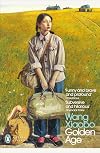
What is a man at 20, 30, or 40? In three novella-length stories, Wang Xiaobo answers this question with the example of his hero, Wang Er, who is rather self-reflective for a tearaway youth. At 20, Wang Er is irrepressibly focused on his sexual satisfaction. Enough so as to risk a considerable amount of punishment during China’s Cultural Revolution to attain his goals. At 30, he is a teacher at a college but, yes, still rather focused on his nether regions. And at 40? At 40, death, his own show more and that of others, comes to fore, almost wining out against his need for sexual fulfillment.
The writing style is very direct, even when it is written obliquely. Confession, which was a mandated ritual during the Cultural Revolution, dominates the style of the first book. The latter two are less directly confessional though perhaps more searching after the real import of events in Wang Er’s life. The author is intimately familiar with both Chinese literature and the western canon, so the allusions are often writ large. But that should probably be read with caution. For example, Wang Er’s disquisition on Descartes’ cogito inference is slyly self-serving and by no means a proof of his erudition (despite his claims). This suggests that the novellas are all perhaps considerably more layered than might be guessed on first reading. At least I think so.
Definitely worth reading but it probably doesn’t bear the comparisons you might find in the blurbs on the cover. show less
The writing style is very direct, even when it is written obliquely. Confession, which was a mandated ritual during the Cultural Revolution, dominates the style of the first book. The latter two are less directly confessional though perhaps more searching after the real import of events in Wang Er’s life. The author is intimately familiar with both Chinese literature and the western canon, so the allusions are often writ large. But that should probably be read with caution. For example, Wang Er’s disquisition on Descartes’ cogito inference is slyly self-serving and by no means a proof of his erudition (despite his claims). This suggests that the novellas are all perhaps considerably more layered than might be guessed on first reading. At least I think so.
Definitely worth reading but it probably doesn’t bear the comparisons you might find in the blurbs on the cover. show less

Wang Xiaobo seems to be one of the most popular 20th century writers in China, but we had to wait for the 25th anniversary of his death to get an English translation of this breakthrough novel. It’s a black comedy in which the technical college lecturer Wang Er tells us about his struggle with petty authority and looks back on his alternately horrific and comic experiences during the Cultural Revolution.
The satire, with its condom jokes, frenetic sexual activity and the narrator’s work show more situation set against a background of real human suffering, is very reminiscent of a Tom Sharpe novel. This being China, we also get a lot of very strong, three-dimensional female characters, so there isn’t quite that feel of schoolboy sniggering that you might expect. Hiding behind all the sexual high-jinks is a perfectly serious novel about ordinary people coping with political catastrophe. Fascinating, and very entertaining, if a little gruesome at times. show less
The satire, with its condom jokes, frenetic sexual activity and the narrator’s work show more situation set against a background of real human suffering, is very reminiscent of a Tom Sharpe novel. This being China, we also get a lot of very strong, three-dimensional female characters, so there isn’t quite that feel of schoolboy sniggering that you might expect. Hiding behind all the sexual high-jinks is a perfectly serious novel about ordinary people coping with political catastrophe. Fascinating, and very entertaining, if a little gruesome at times. show less
Pity Wang Er. Sent to the countryside in Yunnan as an “educated youth”, his thoughts are not on planting rice sprouts or feeding pigs, but rather like so many other twenty-one year old males, he is fixated on sex. Wang Er has not had an opportunity with an actual partner as yet, so there is a certain desperation to his imaginings.
Enter Cheng Qinyang, a real doctor at the work unit, as opposed to the barefoot doctors who had been treating Wang Er for his sore back. Cheng’s worry was show more that people thought of her as an “old shoe”, an easy lay, since her husband was in prison. This was certainly not the case, but people do talk. The two decided to embark on a sexual relationship they would call an “epic friendship”.
Male /female friendships, platonic or not, are always questioned, especially if you are living under the eyes of army cadres in a reeducation camp. Wang Er must make a confession to the people. The cadre told him
Wang and Cheng separately wrote a series of nonsensical “confessions”. The more they wrote, the more that were demanded of them. Why punish them further when the readers of the confessions would then no longer be able to have access to such titillating reading?
Nine years later, “At thirty, a man”, it was 1983 and Wang Er was teaching microbiology at an agricultural university. “The fact of the matter was, society really was a grand melting pot, capable of transforming any kind of person, even a Wang Er.” Caught between stifling administrative duties, and the need to align everything with the current thought which has the college needing some entrepreneurial spirit, Wang Er is caught in a sort of purgatory, but one with no discernible means of escape. Wang Xiaobo’s humour in describing the situation has not disappeared however, and Wang Er becomes a more rounded person for the reader.
“Years as Water Flow”, the third section of this novel, sees Wang Er as a forty year old, one having reached his “doubtless” years, a time when people are accustomed to the world around them. Even though he said “I feel bottled up inside because nothing ever went my way. In fact, it feels more and more like everyone is just putting on a show.” he isn’t quite ready to give up yet. His mother had told him the forties was the most difficult decade to get through.
Despite the absurd humour of the earlier parts of the book, at the end, Wang Xiaobo and Wang Er seem to be seeking a reason for being. The tone suddenly changes in the last few pages; all humour is gone. For Wang Er, you can be a martyr or a silly c***, and he has known too many of both. For Wang Xiaobo, there was no future. He died of a heart attack in 1997, aged forty-four. show less
Enter Cheng Qinyang, a real doctor at the work unit, as opposed to the barefoot doctors who had been treating Wang Er for his sore back. Cheng’s worry was show more that people thought of her as an “old shoe”, an easy lay, since her husband was in prison. This was certainly not the case, but people do talk. The two decided to embark on a sexual relationship they would call an “epic friendship”.
Male /female friendships, platonic or not, are always questioned, especially if you are living under the eyes of army cadres in a reeducation camp. Wang Er must make a confession to the people. The cadre told him
having an affair was the kind of thing that would make the people angry. If I didn’t confess, it would be the people who would come after me. He added that I was a bad element and would require rehabilitation. I could have tried to prove that I was innocent; who could have proven that I had done the old shoe thing? But I just stared at him.
Wang and Cheng separately wrote a series of nonsensical “confessions”. The more they wrote, the more that were demanded of them. Why punish them further when the readers of the confessions would then no longer be able to have access to such titillating reading?
Nine years later, “At thirty, a man”, it was 1983 and Wang Er was teaching microbiology at an agricultural university. “The fact of the matter was, society really was a grand melting pot, capable of transforming any kind of person, even a Wang Er.” Caught between stifling administrative duties, and the need to align everything with the current thought which has the college needing some entrepreneurial spirit, Wang Er is caught in a sort of purgatory, but one with no discernible means of escape. Wang Xiaobo’s humour in describing the situation has not disappeared however, and Wang Er becomes a more rounded person for the reader.
“Years as Water Flow”, the third section of this novel, sees Wang Er as a forty year old, one having reached his “doubtless” years, a time when people are accustomed to the world around them. Even though he said “I feel bottled up inside because nothing ever went my way. In fact, it feels more and more like everyone is just putting on a show.” he isn’t quite ready to give up yet. His mother had told him the forties was the most difficult decade to get through.
Despite the absurd humour of the earlier parts of the book, at the end, Wang Xiaobo and Wang Er seem to be seeking a reason for being. The tone suddenly changes in the last few pages; all humour is gone. For Wang Er, you can be a martyr or a silly c***, and he has known too many of both. For Wang Xiaobo, there was no future. He died of a heart attack in 1997, aged forty-four. show less
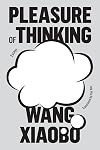
A man for whom the term intellectual wasn't an insult, in a country where it was.
Wang Xiaobo was an intellectual, unashamedly and proudly. He knew from an early age he was different, and destined to write, and so he did. In The Pleasure of Thinking, a collection of his nonfiction essays, he shows off the simple, innate differences in the way he looked at everything. It is as refreshing as it is revealing. Thinking pays for itself.
Wang died in 1997 of a heart attack, at the age of 56. His show more focus in writing had always been novels. He could spin a story. It kept him and his academic wife solvent. But lurking in the background was a mind that noticed everything for what it really was, and looked at it in its cultural context. That makes this collection an insight into him far more than just into his writing, which is clear, concise, relaxed, and fun.
China was not kind to intellectuals. Under Mao, it sought equality not by raising everyone to a higher level with education and training, but by hammering down intellectuals to peasant level. So the teenaged Wang was sent to a rural commune to learn the ways his government wanted him to be: poor, famished and hemmed in. He gives us views of the idiotic backyard steel furnaces the government mandated because its steel industry was totally incapable of supplying the country. There was unendurable famine, no jobs, and little in the way of currency circulating. But Wang was able to look at it from a distance, as if from above, more so that it would not be forgotten than damning it as most did.
Growing up, he stole his father’s books to read, a lot of great western classics, totally unavailable to him otherwise, and was beaten severely for it. By the time he came to the USA, he was quoting Bertrand Russell and George Bernard Shaw, as well as the intellectuals from other western cultures. His father was a professor of philosophy, an impossible position in China in the 50s. He later admitted to his son that his whole career was “one long horror film.” Everything he wanted to discuss had to be couched in the Mao-speak of the era. The son seemed to have learned from this, and was able to see through to the reality of his circumstances and environment, no matter where or when.
Through these essays readers can watch Wang grow. Where his father was at his wits’ end, the son put it all into quite remarkable perspective: “Chinese scholars have a very strong sense of their obligation to society, but this is only speech taxation, it is being a good taxpayer.” This is a noteworthy position to take, and it is typical of Wang’s approach to life.
He grew up in the Great Famine, an artificial disaster, or feature, of the Cultural Revolution. People grabbed anything and ate it. He himself would eat pencils, starting with the soft eraser, the metallic band holding it in place, and then the wooden shaft, leaving only the carbon “lead” to write with. He gnawed on desks, like many others. “There is a truth here too, though one that has not been expressed in words: starvation can turn a child into a termite.”
He despaired of a life sentence of silence and repression, but like Russell, learned to explore his own thinking, about anything and everything. The result is restrained insight. Wang doesn’t criticize harshly. He notes. He understands where institutions are weak, but keeps himself from slamming them too harshly. For example, here is his take on why the Chinese don’t make good (or any) sci-fi films: “The lack of scientific knowledge, the lack of imagination, these are the reasons why China can’t make sci-fi films.” Chinese films were all government-mandated costume dramas, scoring points for the proletarian revolution and way of life. There were only a tiny clutch of stories to tell, and all films were variations of them.
He might or might not be shocked at the 2020s, as China has its own gigantic film industry (even if the biggest films are all American). When he was at his own young creative heights, the attitude he found was: “This movie of mine, where is the social value? Where is the moral value? Why do I want to make a weird movie like this? The most important question is: how is this movie contributing to the current national effort?”
He managed to get schooling in the USA, and unlike most others, returned to China afterward. He also managed side trips, notably to Europe. His observations on the differences with China everywhere he went are still valid. They set him up for comparisons of the two cultures, both of which have their massive faults, one little worse than the other. His assessment of the differences? On the macro level, “managing every aspect of life is something of a specialty among humans.” Terrific observation, quite diplomatic, and totally unexpected.
He summed up the foundational differences like this: “Puritans believe that human nature is evil and needs to be controlled. Our traditional philosophy believes that humans are by nature good, but that this intrinsic goodness disappears once we grow past the ‘age of innocence.’” So by the time they’re teenagers, people in both societies are treated with the same disrespect.
In his travels, he was surprised to meet essentially no Chinese workers in agriculture: “The vast majority of mainland Chinese work as farmers, but in America, Chinese people rarely work on farms. This is because by local standards, the Chinese don’t know how to farm,” he realized, having worked on a Chinese farm during his internal exile for re-education.
Housing in China has tended to be crummy, with little or no thought to comfort or individuality. Concrete boxes, storing people vertically, was the order of the day. In the USA, everything was about owning an entire house. And a yard. And that house was carefully tended and kept up. “It’s not like here, where we make a mess and make everything look like a mass grave.”
He was fascinated by American food, but like most Chinese, could only down fast food with any kind of satisfaction. Slabs of meat and plates filled with things that need cutting (with dull knives) was never a gastronomic delight for him. Chinese food culture lives on an astounding variety of sauces that make the same old ingredients into whole new dishes. From his perspective the USA, had only ever managed to create one sauce of its own – ketchup. It was available free, everywhere, in small packets, and was meant to dress up numerous dishes. Unsuccessfully.
After years building himself up with a high protein American diet, his return to China saw him sticking out like a sore thumb. But “After avoiding the sun and exercise for three years, I finally look like an intellectual again.”
None of this is to say he didn’t get it, because he really did, but it was depressing. At one pooint he declares that “to teach ignorance is the worse crime committed by otherwise good people […] Had I been duped by an evil scheming villain, I could come to terms with it; but to have been duped by kind, dimwitted people is intolerable.” And yet, probably like his philosopher father before him, Wang could still say: “If only I were illiterate, perhaps I wouldn’t feel quite as awful.”
David Wineberg show less
Wang Xiaobo was an intellectual, unashamedly and proudly. He knew from an early age he was different, and destined to write, and so he did. In The Pleasure of Thinking, a collection of his nonfiction essays, he shows off the simple, innate differences in the way he looked at everything. It is as refreshing as it is revealing. Thinking pays for itself.
Wang died in 1997 of a heart attack, at the age of 56. His show more focus in writing had always been novels. He could spin a story. It kept him and his academic wife solvent. But lurking in the background was a mind that noticed everything for what it really was, and looked at it in its cultural context. That makes this collection an insight into him far more than just into his writing, which is clear, concise, relaxed, and fun.
China was not kind to intellectuals. Under Mao, it sought equality not by raising everyone to a higher level with education and training, but by hammering down intellectuals to peasant level. So the teenaged Wang was sent to a rural commune to learn the ways his government wanted him to be: poor, famished and hemmed in. He gives us views of the idiotic backyard steel furnaces the government mandated because its steel industry was totally incapable of supplying the country. There was unendurable famine, no jobs, and little in the way of currency circulating. But Wang was able to look at it from a distance, as if from above, more so that it would not be forgotten than damning it as most did.
Growing up, he stole his father’s books to read, a lot of great western classics, totally unavailable to him otherwise, and was beaten severely for it. By the time he came to the USA, he was quoting Bertrand Russell and George Bernard Shaw, as well as the intellectuals from other western cultures. His father was a professor of philosophy, an impossible position in China in the 50s. He later admitted to his son that his whole career was “one long horror film.” Everything he wanted to discuss had to be couched in the Mao-speak of the era. The son seemed to have learned from this, and was able to see through to the reality of his circumstances and environment, no matter where or when.
Through these essays readers can watch Wang grow. Where his father was at his wits’ end, the son put it all into quite remarkable perspective: “Chinese scholars have a very strong sense of their obligation to society, but this is only speech taxation, it is being a good taxpayer.” This is a noteworthy position to take, and it is typical of Wang’s approach to life.
He grew up in the Great Famine, an artificial disaster, or feature, of the Cultural Revolution. People grabbed anything and ate it. He himself would eat pencils, starting with the soft eraser, the metallic band holding it in place, and then the wooden shaft, leaving only the carbon “lead” to write with. He gnawed on desks, like many others. “There is a truth here too, though one that has not been expressed in words: starvation can turn a child into a termite.”
He despaired of a life sentence of silence and repression, but like Russell, learned to explore his own thinking, about anything and everything. The result is restrained insight. Wang doesn’t criticize harshly. He notes. He understands where institutions are weak, but keeps himself from slamming them too harshly. For example, here is his take on why the Chinese don’t make good (or any) sci-fi films: “The lack of scientific knowledge, the lack of imagination, these are the reasons why China can’t make sci-fi films.” Chinese films were all government-mandated costume dramas, scoring points for the proletarian revolution and way of life. There were only a tiny clutch of stories to tell, and all films were variations of them.
He might or might not be shocked at the 2020s, as China has its own gigantic film industry (even if the biggest films are all American). When he was at his own young creative heights, the attitude he found was: “This movie of mine, where is the social value? Where is the moral value? Why do I want to make a weird movie like this? The most important question is: how is this movie contributing to the current national effort?”
He managed to get schooling in the USA, and unlike most others, returned to China afterward. He also managed side trips, notably to Europe. His observations on the differences with China everywhere he went are still valid. They set him up for comparisons of the two cultures, both of which have their massive faults, one little worse than the other. His assessment of the differences? On the macro level, “managing every aspect of life is something of a specialty among humans.” Terrific observation, quite diplomatic, and totally unexpected.
He summed up the foundational differences like this: “Puritans believe that human nature is evil and needs to be controlled. Our traditional philosophy believes that humans are by nature good, but that this intrinsic goodness disappears once we grow past the ‘age of innocence.’” So by the time they’re teenagers, people in both societies are treated with the same disrespect.
In his travels, he was surprised to meet essentially no Chinese workers in agriculture: “The vast majority of mainland Chinese work as farmers, but in America, Chinese people rarely work on farms. This is because by local standards, the Chinese don’t know how to farm,” he realized, having worked on a Chinese farm during his internal exile for re-education.
Housing in China has tended to be crummy, with little or no thought to comfort or individuality. Concrete boxes, storing people vertically, was the order of the day. In the USA, everything was about owning an entire house. And a yard. And that house was carefully tended and kept up. “It’s not like here, where we make a mess and make everything look like a mass grave.”
He was fascinated by American food, but like most Chinese, could only down fast food with any kind of satisfaction. Slabs of meat and plates filled with things that need cutting (with dull knives) was never a gastronomic delight for him. Chinese food culture lives on an astounding variety of sauces that make the same old ingredients into whole new dishes. From his perspective the USA, had only ever managed to create one sauce of its own – ketchup. It was available free, everywhere, in small packets, and was meant to dress up numerous dishes. Unsuccessfully.
After years building himself up with a high protein American diet, his return to China saw him sticking out like a sore thumb. But “After avoiding the sun and exercise for three years, I finally look like an intellectual again.”
None of this is to say he didn’t get it, because he really did, but it was depressing. At one pooint he declares that “to teach ignorance is the worse crime committed by otherwise good people […] Had I been duped by an evil scheming villain, I could come to terms with it; but to have been duped by kind, dimwitted people is intolerable.” And yet, probably like his philosopher father before him, Wang could still say: “If only I were illiterate, perhaps I wouldn’t feel quite as awful.”
David Wineberg show less
You May Also Like


Associated Authors
Statistics
- Works
- 84
- Also by
- 1
- Members
- 324
- Popularity
- #73,084
- Rating
- 3.1
- Reviews
- 8
- ISBNs
- 115
- Languages
- 4