
Andy Warhol (1928–1987)
Author of The Philosophy of Andy Warhol (From A to B and Back Again)
About the Author
Born near Pittsburgh, Pennsylvania, of immigrant Czech parents, American artist Andy Warhol studied art at the Carnegie Institute in Pittsburgh. He then worked as a commercial artist in New York City. In the early 1960s, Warhol became the most famous pioneer of "pop art," which used comic books, show more advertisements, and consumer goods as subject matter. Warhol's colorful paintings of Campbell's soup can labels, boxes of Brillo pads, and celebrity icons such as Marilyn Monroe, became among the most recognizable examples of pop art. Warhol was also a filmmaker as well as a painter and graphic artist; his more memorable films include Trash (1969) and Frankenstein (1973). His studio, called "The Factory," became infamous as a locale for eccentrics and eccentric behavior, much of it associated with the New York drug scene. It was Warhol who predicted that, "in the future, everyone will be famous for 15 minutes." (Bowker Author Biography) show less
Series
Works by Andy Warhol
Andy Warhol 1928-1987: Works from the Collection of Jose Mugrabi and an Isle of Man Company (Art & Design) (1993) — Artist and Interviewee — 27 copies, 2 reviews
Andy Warhol: Published on the Occasion of The Andy Warhol Exhibition At Moderna Museet in Stockholm February To March 1968 (1970) 18 copies
Warhol: [catalogue of an exhibition at] the Tate Gallery, 17 February - 28 March 1971 (1971) 10 copies, 1 review
The Andy Warhol catalogue raisonne 10 copies
The films of Andy Warhol: An introduction, Whitney Museum of American Art, April 26-June 5, 1988 (1990) 8 copies
Andy Warhol: Ein Buch zur Ausstellung im Kunsthaus Zurich (German Edition) (1978) 5 copies, 1 review
Andy Warhol's Exposure 5 copies
Warhol, Beuys, Polke 5 copies
As I Was Moving Ahead Occasionally I Saw Brief Glimpses of Beauty [2000 film] (2012) — Contributor — 3 copies
Andy Warhol: Still Life Drawings, 1954-1985 [exhibition Nov. 20, 2002 - Jan. 11, 2003] (2002) 3 copies
Andy Warhol: Toy drawings 3 copies
Andy Warhol: the american dream: [Porto Cervo, MdM Museum, 22 giugno-15 settembre 2013] (2013) 3 copies
Andy Warhol : Rorschach paintings 3 copies
Warhol-Maos : zehn Bildnisse von Mao Tse-Tung : Kunstmuseum Basel, 21. Oktober-19. November 1972 2 copies
Photographs 2 copies
Andy Warhol : black & white silver 2 copies
"Success is a job in New York…" 2 copies
Andy Warhol's video & television: Whitney Museum of American Art, February 22-March 22, 1991 (1991) 2 copies
Un libro para colorear. Dibujos de Andy Warhol (Los cuentos de la cometa) (Spanish Edition) (2012) 2 copies
Untitled (Blue Cat) 2 copies
Social disease: Photographs, '76-'79 2 copies
Andy Warhol : entrevistas, 1962-1987 : treinta y siete entrevistas con el maestro del pop (2010) 2 copies, 1 review
Andy Warhol/Heaven & Hell Are Just One Breath Awau/ Late Paintings & Related Works, 1984-1986 2 copies
Mario Banana (No. 1) 2 copies
Lonesome Cowboys 2 copies
"The Kiss" (Lmt. Ed. Poster) 1 copy
Hormigueo 1 copy
Vies et morts d'Andy Warhol 1 copy
Social Disease 1 copy
Andy Warhol, 4 Silent Films 1 copy
Andy Warhol: Retrospektive 1 copy
Frankenstein 1 copy
Warhol by Klaus Honnef 1 copy
Andy Warhol: Grapes 1 copy
Cat Calendar Warhol 1 copy
Campbell's Soup Can (Tomato) 1 copy
Cat 1 copy
Taming of the Shoe Calendar 1 copy
Cats 2001 (Calendar) 1 copy
Empire 1 copy
Kiss 1 copy
Mario Banana 2 1 copy
100 Cans 1 copy
Ice Cream Dessert 1 copy
Andy Warhol: 20 Years Later 1 copy
Nude Drawings 1 copy
Posters. Andy Warhol 1 copy
Andy Warhol...in the city 1 copy
Andy Warhol Address Book 1 copy
Miroirs du sphinx 1 copy
Still life drawings 1954 - 1985; catalogue for the exhibition at Paul Kasmine Gallery, November 20, 2002 - January 11, 2003. (2002) 1 copy
ANDY WARHOL: TIME CAPSULES 1 copy
Warhol Polaroid Portraits 1 copy
Space Fruit: Still Lifes 1 copy
Andy Warhol`s Superstars 1 copy
Marilyn Monroe 1 copy
Batman Dracula 1 copy
"Amiga Andy" 1 copy
Andy Warhol: Pretty Women 1 copy
Warhol antePOP 1 copy
Andy Warhol: Three Houston Women (The Menil Collection - March 16-July 8, 2007 - Houston) Brochure 1 copy
Made in China 1 copy
Andy Warhol : Wystawa z Kolekcji José Mugrabiego = works from a private collection of Jose Mugrabi 1 copy
Screen Test: Helmut 1 copy
Mario Banana I 1 copy
Moon explorer (green) 1 copy
Andy Warhol : $ 1 copy
Guns, Knives, Crosses. 1 copy
Dia�s Andy 1 copy
Andy Warhol Bilder 1961 bis 1981 ; 23. Oktober bis 13. Dezember 1981, Kestner-Gesellschaft Hannover 1 copy
Andy Warhol, heads (after Picasso) : 19. Juli-31. August 1997, Salzburg, Galerie Thaddaeus Ropac 1 copy
The Nude Restaurant 1 copy
Andy Warhol: 4 Silent Movies 1 copy
Associated Works
The Assassin's Cloak: An Anthology of the World's Greatest Diarists (2000) — Contributor, some editions — 622 copies, 9 reviews
A Patriot's Handbook: Songs, Poems, Stories, and Speeches Celebrating the Land We Love (2003) — some editions — 567 copies, 5 reviews
Theories and Documents of Contemporary Art: A Sourcebook of Artists' Writings (1995) — Contributor — 419 copies, 1 review
Children's Book of Art: An Introduction to the World's Most Amazing Paintings and Sculptures (DK Children's Book of) (2009) — Artist — 189 copies, 1 review
The Art of Mickey Mouse: Artists Interpret The World's Favorite Mouse (Disney Miniature Series) (1991) — Illustrator, some editions — 97 copies, 3 reviews
Amy Vanderbilt's Everyday Etiquette: Answers to Today's Etiquette Questions (1952) — Illustrator, some editions — 93 copies
Jackie Under My Skin: Interpreting an Icon (1995) — Cover artist, some editions — 85 copies, 2 reviews
Saturday Night Live: The Complete First Season 1975-1976 (2006) — Director, some editions; Director — 70 copies
The Painting of Modern Life, [cat. exp., London, Hayward Gallery 4 Oct - 30 Dec 2007; Castello di Rivoli, Turin, 6 Feb - 4 May 2008] (2007) 26 copies
The Museum of Modern Art Artists' Cookbook: 155 Recipes: Conversations with Thirty Contemporary Painters and Sculptors (1977) — Contributor — 22 copies
Revolution of the Eye: Modern Art and the Birth of American Television (2015) — Cover artist, some editions — 16 copies
Tha Paul Morrissey Collection: Flesh / Trash / Heat — Producer — 3 copies
Factory Man. Die Lebensgeschichte des Andy Warhol: Mit farbigen Bildern und Fotos (2015) — Associated Name — 3 copies
Tagged
Common Knowledge
- Canonical name
- Warhol, Andy
- Legal name
- Warhola, Andrew, Jr.
- Other names
- Warhola, Andrew
- Birthdate
- 1928-08-06
- Date of death
- 1987-02-22
- Gender
- male
- Education
- Carnegie Institute of Technology (BFA|1949)
- Occupations
- artist
commercial illustrator
author
avant-garde film maker - Organizations
- Silver Factory
The Factory
Factory Additions - Awards and honors
- Art Director's Club Medal (1957)
Order of the White Double Cross of the Second Class (2024) - Relationships
- Warhola, James (nephew)
Name, Billy (aide de camp)
Giorno, John (collaborator) - Cause of death
- cardiac arrhythmia
- Nationality
- USA
- Birthplace
- Pittsburgh, Pennsylvania, USA
- Places of residence
- New York, New York, USA
- Place of death
- New York, New York, USA
- Burial location
- Saint John the Baptist Byzantine Catholic Cemetery, Bethel Park, Pennsylvania, USA
- Associated Place (for map)
- USA
Members
Discussions
Recent viewings in Experimental Film and Video (April 2013)
Reviews
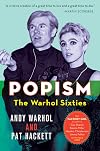
POPism is a surprisingly slow, though still very enjoyable, read. Why does it drag so? Isn't pop, by its very nature, supposed to be easily consumed and digested? After all, we're talking about a style that isn't supposed to take itself seriously, present nothing meaningful beyond surface appearances (and those superficial appearances aren't supposed to be meaningful either, are they?), find the easiest route along the flashiest path, coalesce and decay quickly, look modish and hip, never show more sleep (with the help of copious amphetamines), talk brilliantly if nonsensically, be entirely accessible and "real," and embrace the spirit of everything goes *and* everything is good.
Is "everything goes," good?
My suspicion is that this account of the 60s, which in tone sounds more like Hackett to me even if the content is Warhol, betrays the bleak possibility that pop fun is merely the glossy front for parasitic and self-destructive a-heads, vapid (though sometimes attractive) style over non-existent substance, tedious self-involvement, rank consumerism, and the dread nihilism of Nietzschean transvaluation of values. Not for nothing did critics accuse Warhol of base exploitation and amorality. Warhol writes about Tiger Morse in a way that others could have written about him:
Oh. Not sure if that is supposed to explain or excuse or both. Either way, I can admit to a persistent desire at this point and throughout the entire book: tell me more.
Warhol notes that what started as a chaotic open house atmosphere at The Factory in the early and mid 60s ended with a sense of doom and downright violence. MLK, Jr. and RFK were both assassinated, and even Warhol himself took a bullet from which he never psychologically recovered. Was it inevitable that Warhol would be shot by Valerie Solanas? Perhaps it was.
Throughout this book, which is a worthy read, I heard Allan Bloom shouting over the din created by the Velvet Underground and the "happenings" of the Exploding Plastic Inevitable. In The Closing of the American Mind, Bloom writes,
A lament from Allan Bloom; a victory for Andy Warhol. Truly, what a fascinating time to read about and POPism a wonderful book from which to dive in. show less
Is "everything goes," good?
My suspicion is that this account of the 60s, which in tone sounds more like Hackett to me even if the content is Warhol, betrays the bleak possibility that pop fun is merely the glossy front for parasitic and self-destructive a-heads, vapid (though sometimes attractive) style over non-existent substance, tedious self-involvement, rank consumerism, and the dread nihilism of Nietzschean transvaluation of values. Not for nothing did critics accuse Warhol of base exploitation and amorality. Warhol writes about Tiger Morse in a way that others could have written about him:
I've heard people say, "Tiger Morse was a fraud." Well, of course she was, but she was a real fraud.
Oh. Not sure if that is supposed to explain or excuse or both. Either way, I can admit to a persistent desire at this point and throughout the entire book: tell me more.
Warhol notes that what started as a chaotic open house atmosphere at The Factory in the early and mid 60s ended with a sense of doom and downright violence. MLK, Jr. and RFK were both assassinated, and even Warhol himself took a bullet from which he never psychologically recovered. Was it inevitable that Warhol would be shot by Valerie Solanas? Perhaps it was.
Throughout this book, which is a worthy read, I heard Allan Bloom shouting over the din created by the Velvet Underground and the "happenings" of the Exploding Plastic Inevitable. In The Closing of the American Mind, Bloom writes,
Around the campus disruptions and the student movement there has grown up a mythology...that the fifties were a period of intellectual conformism and superficiality, whereas there was real excitement and questioning in the sixties. McCarthyism--invoked when Stalinism is mentioned in order to even the balance of injustice between the two superpowers--symbolizes those gray, grim years, while the blazing sixties were the days of "the movement" and, to hear its survivors tell it, their single-handed liberation of the blacks, the women and the South Vietnamese. Without entering into the strictly political issues, the intellectual picture projected is precisely the opposite of the truth. The sixties were the period of dogmatic answers and trivial tracts. Not a single book of lasting importance was produced in or around the movement. It was all Norman O. Brown and Charles Reich. This was when conformism hit the universities, when opinions about everything from God to the movies became absolutely predictable. The evidence brought from pop culture to bolster the case for the sixties--that in the fifties Lana Turner played torchy, insincere adulteresses while in the sixties we got Jane Fonda as an authentic whore; that before the sixties we had Paul Anka and after we had the Rolling Stones--is of no importance. Even if this characterization were true, it would only go to prove that there is no relation between popular culture and high culture, and that the former is all that is now influential on the scene.
A lament from Allan Bloom; a victory for Andy Warhol. Truly, what a fascinating time to read about and POPism a wonderful book from which to dive in. show less

Warhol didn't actually write the book, just as he didn't actually paint most of his works himself. He had a tape recorder into which he poured his thoughts, and an assistant with whom he worked to transcribe and edit what he chose to publish. The book is made up of sections rather than chapters, as it has no real narrative thread. Each section is given a title such as money or art, and Warhol simply reels forth his ideology, thoughts and musings on the subject. Luckily he was an extremely show more odd man with an unusual way of looking at the world, which is what makes the book so entertaining. He had a fascinating relationship with his art and the people around him and enough wit and humour to take the edge of what might otherwise come across as highly pretentious musings. If you want to know about Warhol and what his art means, this is as good a place as any to start. show less
Well, it's Andy Warhol, so it's pretty much what you'd expect. Generally speaking, his secretary Pat Hackett did a fine job of turning Warhol's recollections into a readable book, but she made him sound nicer than he was. Even in the sympathetic biographies (like Victor Bockris's), Warhol doesn't come off as the harmless, almost goody-two-shoes voyeur he tries to be in POPism, so take this portrayal with a grain of salt.
It's never directly stated, of course, but this book isn't about the show more 1960s: that's just the incidental garnish. It's actually about an ambitious eccentric who, via his art and considerable luck, made contact with stratospherically rich people who collected paintings and enabled him to become a celebrity (and to indulge his crueler instincts). Did some part of Warhol--who came from a desperately poor background--hate these people? Probably. But another part of him yearned to join their ranks, and he made it. By the end, he had nothing like a human personality ("I don't think that there is any person there," William S. Burroughs once remarked to David Bowie)...but that, too, aligned with Warhol's desires. Or so he said. Certainly, he was famous for being a nonpersonality--a real-life cartoon character--rather than for his art. (If you've ever wondered what Pop looked like when painted by people with actual artistic talent, check out the work of Tom Wesselmann or Alex Katz.)
POPism underscores the fact that what went on at the Factory was far more interesting than Warhol's artistic output. (Does anyone really care about 100 Brillo Boxes or 40 Gold Marilyns at this stage of the game?) He and the wealthy, manipulative art crowd survived, but many of the people who gave this narrative its drama--Fred Herko, Danny Williams, Andrea Feldman, Eric Emerson--did not. The story about a drunken Judy Garland singing "Over the Rainbow" with a mouthful of spaghetti is funny, sort of, but it's also mean-spirited. Much of the book is just spiteful without being even slightly funny, and the smarmily casual tone fails to disguise the intent. show less
It's never directly stated, of course, but this book isn't about the show more 1960s: that's just the incidental garnish. It's actually about an ambitious eccentric who, via his art and considerable luck, made contact with stratospherically rich people who collected paintings and enabled him to become a celebrity (and to indulge his crueler instincts). Did some part of Warhol--who came from a desperately poor background--hate these people? Probably. But another part of him yearned to join their ranks, and he made it. By the end, he had nothing like a human personality ("I don't think that there is any person there," William S. Burroughs once remarked to David Bowie)...but that, too, aligned with Warhol's desires. Or so he said. Certainly, he was famous for being a nonpersonality--a real-life cartoon character--rather than for his art. (If you've ever wondered what Pop looked like when painted by people with actual artistic talent, check out the work of Tom Wesselmann or Alex Katz.)
POPism underscores the fact that what went on at the Factory was far more interesting than Warhol's artistic output. (Does anyone really care about 100 Brillo Boxes or 40 Gold Marilyns at this stage of the game?) He and the wealthy, manipulative art crowd survived, but many of the people who gave this narrative its drama--Fred Herko, Danny Williams, Andrea Feldman, Eric Emerson--did not. The story about a drunken Judy Garland singing "Over the Rainbow" with a mouthful of spaghetti is funny, sort of, but it's also mean-spirited. Much of the book is just spiteful without being even slightly funny, and the smarmily casual tone fails to disguise the intent. show less
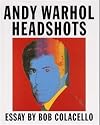
A beautiful volume that sheds light on a less well-known part of Warhol's oeuvre, Andy Warhol: Headshots shows the artist turning his artistry and intelligence towards portrait-making. Like much of Warhol's best work, these snapshots play against a world of images and signatures where the authentic version of an individual is seemingly nonexistent.
Lists
Awards


You May Also Like


Associated Authors
Statistics
- Works
- 370
- Also by
- 50
- Members
- 5,445
- Popularity
- #4,571
- Rating
- 3.9
- Reviews
- 77
- ISBNs
- 344
- Languages
- 19
- Favorited
- 9


