
Walter Jon Williams
Author of Destiny's Way
About the Author
Image credit: Walter Jon Williams from http://www.walterjonwilliams.net/
Series
Works by Walter Jon Williams
Lethe [short fiction] 14 copies
Argonautica 6 copies
Witness 5 copies
The Millennium Party 4 copies
Consequences 4 copies
Flatline 4 copies
Red Elvis {novelette} 4 copies
Foreign Devils {novelette} 4 copies
Solidarity 4 copies
Logs 3 copies
Margaux 3 copies
Pinocchio 2 copies
Elegy for Angels and Dogs 1 copy
Citt© di fuoco 1 copy
Woundhealer 1 copy
Emergence 1 copy
Mr. Koyama's Comet 1 copy
Mortality 1 copy
Broadway Johnny 1 copy
℗La ℗citt© e l'abisso 1 copy
Emersione 1 copy
Il giorno dell'incarnazione 1 copy
Bag Lady 1 copy
The Stickpin 1 copy
Voice of the Worldwind 1 copy
Feeding Frenzy 1 1 copy
Millenium Party 1 copy
Feeding Frenzy 2 1 copy
Side Effects {short story} 1 copy
Associated Works
The Year's Best Science Fiction: Twenty-Second Annual Collection (2005) — Contributor — 579 copies, 11 reviews
The Year's Best Science Fiction: Twenty-First Annual Collection (2004) — Contributor — 573 copies, 6 reviews
The Year's Best Science Fiction: Seventeenth Annual Collection (2000) — Contributor — 557 copies, 2 reviews
The Year's Best Science Fiction: Twentieth Annual Collection (2003) — Contributor — 525 copies, 1 review
The Year's Best Science Fiction: Fifteenth Annual Collection (1998) — Contributor — 469 copies, 2 reviews
The Year's Best Science Fiction: Eleventh Annual Collection (1994) — Contributor — 468 copies, 2 reviews
The Year's Best Science Fiction: Twenty-Fourth Annual Collection (2007) — Contributor — 458 copies, 6 reviews
The Year's Best Science Fiction: Ninth Annual Collection (1992) — Contributor — 457 copies, 4 reviews
The Year's Best Science Fiction: Fourteenth Annual Collection (1997) — Contributor — 447 copies, 2 reviews
The Best of the Best: 20 Years of the Year's Best Science Fiction (2005) — Contributor — 437 copies, 20 reviews
The Year's Best Science Fiction: Third Annual Collection (1986) — Contributor — 251 copies, 1 review
The Best of the Best, Volume 2: 20 Years of the Best Short Science Fiction Novels (2007) — Contributor — 235 copies, 10 reviews
The Year's Best Science Fiction: Fourth Annual Collection (1987) — Contributor — 222 copies, 1 review
The Best Science Fiction and Fantasy of the Year, Volume 1 (2007) — Contributor — 217 copies, 6 reviews
What Might Have Been, Volumes 1 & 2: Alternate Empires, Alternate Heroes (1990) — Contributor — 184 copies, 2 reviews
Lord of the Fantastic: Stories in Honor of Roger Zelazny (1998) — Contributor — 174 copies, 1 review
The Mammoth Book of Men O'War: Stories from the Glory Days of Sail (1999) — Contributor — 107 copies, 1 review
Nebula Awards Showcase 2002: The Year's Best SF and Fantasy (2002) — Contributor — 95 copies, 1 review
A Very Large Array: New Mexico Science Fiction and Fantasy (1987) — Contributor — 36 copies, 3 reviews
Asimov's Science Fiction: Vol. 21, No. 9 [September 1997] (1996) — Contributor — 20 copies, 1 review
The Magazine of Fantasy and Science Fiction October/November 1993, Vol. 85, No. 4 & 5 (1993) — Author — 16 copies
The Magazine of Fantasy and Science Fiction June 1985, Vol. 68, No. 6 (1985) — Contributor — 14 copies
Asimov's Science Fiction: Vol. 23, No. 10 & 11 [October/November 1999] (1999) — Contributor — 14 copies
Asimov's Science Fiction: Vol. 24, No. 10 & 11 [October/November 2000] (2000) — Contributor — 10 copies, 1 review
ZomerSFeer : nieuwe verhalen van John Barnes, David Brin, Walter Jon Williams (1996) — Contributor — 8 copies
Shapers of Worlds Volume III: Science fiction and fantasy by authors featured on The Worldshapers podcast (2022) — Contributor — 5 copies
Subterranean Magazine Winter 2013 — Contributor — 4 copies
Tagged
Common Knowledge
- Other names
- Williams, Walter J.
Williams, Jon - Birthdate
- 1953-10-15
- Gender
- male
- Education
- University of New Mexico (B.A., 1975)
- Occupations
- author
- Organizations
- Science Fiction and Fantasy Writers of America
- Awards and honors
- Jack Williamson Lectureship (2005, 2022)
- Agent
- Joshua Blimes (JABerwocky Literary)
- Nationality
- USA
- Birthplace
- Duluth, Minnesota, USA
- Places of residence
- Duluth, Minnesota, USA (birthplace)
Albuquerque, New Mexico, USA - Associated Place (for map)
- USA
Members
Discussions
Found: mystery/science fiction/religion in Name that Book (September 2023)
Found: detective forgets to upload memories before dying and must resolve case in Name that Book (July 2023)
Reviews
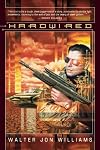
I don't know why I never got around to reading this back when I used to see it all the time in the bookstores, even knowing that I was such a cyberpunk fan and the whole field was blowing up left and right. Maybe it was all the hardware and the focus on guns and metal that turned me off. I didn't really care about this kind of "punk" so much as I cared for the "cyber".
Granted, back in those days, I might have picked it up, read the blurb, maybe a few random dozen pages, and concluded that it show more was too cowboy-ee for me to care and I never would have begun anyway.
But today, I have a slightly more refined sensibility. I still don't care for westerns that much, but at least I've picked up the classics and seen that they were, in fact, good. I'm a fan of Clint Eastwood.
So while I'm still not a huge fan of the genre, I can at least appreciate what it does very well, and in some cases, much better than any other type of fiction. The main characters are Cowboy (yeah, that's what he goes by,) and Sarah, and both of them are very well rounded and interesting characters, full of subtle and not so subtle flaws and merits, detailed and fleshy histories, and an eventual love story that is neither gushy, idiotic, or verbose. It was built on quiet respect and blooming friendship. It was almost completely unlike what I was beginning to suspect the novel would wind up being.
Oh no, though, you say, what happened to the cyberpunk aspects? Was there lots of computer-y stuff and explosions?
Why, hell yes, I say! Dogfights in the sky! A battle against the orbitals, lots of scary smuggling runs, but more importantly, a heroic message about getting out from under the short-sighted concerns of the crazy, sick, and bodyless brains in crystal. The worldbuilding is more than solid, filled with past and lost wars, body-sculpting professions, and cocaine-rockets. (This did come out in 1987, after all, and it both shows and shows itself off well.)
Was I expecting it to be a bit of a knock-off of Neuromancer, riding the wave of such a fantastic book? Well, yeah, I guess I was. How did it stand up? Great, if you like more hardware and aerial battles that would make rather more pedestrian space-operas hang their heads in shame. I actually got into the battles, and I've never been one to particularly like military fiction.
I was very impressed not only by the execution of this novel, which never felt much like a knock-off, but because I really got into both the main characters. They weren't flashy or snarky. They weren't bigger than life like Holden in the Expanse or unreliable but still awesome like Kvothe in Name of the Wind.
Cowboy and Sarah felt like real people with real problems in a real world doing their real goddamned best in a really shitty situation.
I honestly liked this book a lot, even if it isn't my normal cup of tea. Why isn't this author sitting on more laurels? show less
Granted, back in those days, I might have picked it up, read the blurb, maybe a few random dozen pages, and concluded that it show more was too cowboy-ee for me to care and I never would have begun anyway.
But today, I have a slightly more refined sensibility. I still don't care for westerns that much, but at least I've picked up the classics and seen that they were, in fact, good. I'm a fan of Clint Eastwood.
So while I'm still not a huge fan of the genre, I can at least appreciate what it does very well, and in some cases, much better than any other type of fiction. The main characters are Cowboy (yeah, that's what he goes by,) and Sarah, and both of them are very well rounded and interesting characters, full of subtle and not so subtle flaws and merits, detailed and fleshy histories, and an eventual love story that is neither gushy, idiotic, or verbose. It was built on quiet respect and blooming friendship. It was almost completely unlike what I was beginning to suspect the novel would wind up being.
Oh no, though, you say, what happened to the cyberpunk aspects? Was there lots of computer-y stuff and explosions?
Why, hell yes, I say! Dogfights in the sky! A battle against the orbitals, lots of scary smuggling runs, but more importantly, a heroic message about getting out from under the short-sighted concerns of the crazy, sick, and bodyless brains in crystal. The worldbuilding is more than solid, filled with past and lost wars, body-sculpting professions, and cocaine-rockets. (This did come out in 1987, after all, and it both shows and shows itself off well.)
Was I expecting it to be a bit of a knock-off of Neuromancer, riding the wave of such a fantastic book? Well, yeah, I guess I was. How did it stand up? Great, if you like more hardware and aerial battles that would make rather more pedestrian space-operas hang their heads in shame. I actually got into the battles, and I've never been one to particularly like military fiction.
I was very impressed not only by the execution of this novel, which never felt much like a knock-off, but because I really got into both the main characters. They weren't flashy or snarky. They weren't bigger than life like Holden in the Expanse or unreliable but still awesome like Kvothe in Name of the Wind.
Cowboy and Sarah felt like real people with real problems in a real world doing their real goddamned best in a really shitty situation.
I honestly liked this book a lot, even if it isn't my normal cup of tea. Why isn't this author sitting on more laurels? show less
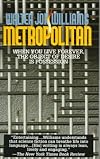
“Plasm is the most perfect transformational agent of the universe, the thing that can alter matter, alter the fundamental nature of all reality, and they used it with no more consciousness of its significance than if they had been children.”
In “Metropolitan” by Walter Jon Williams
The first time I read “Metropolitan” I rediscovered the sheer joy of getting completely lost in a SF book. It is brilliant. Re-reading it after all these years is... I can't even explain it. What I show more vividly remember was that on my lunch break from work one Summer day in Lisbon instead of sitting with colleagues at lunch I took myself and my book off to Fundação Calouste Gulbenkian’s garden and became so engrossed, and so desperate to read to the end, that I was half an hour late back to my desk. But my boss at the time didn't mind. In fact I lent her the book and she was already on chapter 3 the next time I asked whether she had liked it… “Metropolitan” is not exactly slow reading, but unhurried reading for pure pleasure - it’s so joyous I want to shout from the rooftops about it! Down with crappy SF, up with SF novels like this one! SF and so on may even have seen a boost on the back of the TV boom as literacy has been aided by the net and admiration spread the nod and the word.
I think style in SF has decayed over the last thirty years in the written word and that's because people are simply no longer aware of style: so they don't demand it. In these soulless times, soulful reading must go against the grain. So it may be looked down upon. Whoever, however, would skim-read the Bible now? And would young people today skim-read “Metropolitan”? I hope not but I‘m not so sure. Kids nowadays are all for Balls-for-the-Walls SF and they just don’t care about the gems lost in a sea of crap… Or maybe it’s just that I put my craving for well-thought-out SF down to too many “plasm” pints over the years…
SF = Speculative Fiction. show less
In “Metropolitan” by Walter Jon Williams
The first time I read “Metropolitan” I rediscovered the sheer joy of getting completely lost in a SF book. It is brilliant. Re-reading it after all these years is... I can't even explain it. What I show more vividly remember was that on my lunch break from work one Summer day in Lisbon instead of sitting with colleagues at lunch I took myself and my book off to Fundação Calouste Gulbenkian’s garden and became so engrossed, and so desperate to read to the end, that I was half an hour late back to my desk. But my boss at the time didn't mind. In fact I lent her the book and she was already on chapter 3 the next time I asked whether she had liked it… “Metropolitan” is not exactly slow reading, but unhurried reading for pure pleasure - it’s so joyous I want to shout from the rooftops about it! Down with crappy SF, up with SF novels like this one! SF and so on may even have seen a boost on the back of the TV boom as literacy has been aided by the net and admiration spread the nod and the word.
I think style in SF has decayed over the last thirty years in the written word and that's because people are simply no longer aware of style: so they don't demand it. In these soulless times, soulful reading must go against the grain. So it may be looked down upon. Whoever, however, would skim-read the Bible now? And would young people today skim-read “Metropolitan”? I hope not but I‘m not so sure. Kids nowadays are all for Balls-for-the-Walls SF and they just don’t care about the gems lost in a sea of crap… Or maybe it’s just that I put my craving for well-thought-out SF down to too many “plasm” pints over the years…
SF = Speculative Fiction. show less
Hardwired is like a datablast straight from the cyberpunk id. Guns-and-drugs-and-sex-and-tech-and-power all tangled up and flashing with neon lights.
Cowboy is a panzerboy, the pilot of an armored hovercraft smuggling lifesaving medicine across what used to be the midwest, before the orbital corporations shattered Earth's government in a hostile take-over proceeded by meteor bombardment. Sarah is a bodyguard and assassin, hustling in Tampa to buy herself and her brother two tickets off-world. show more When a job and a betrayal brings the two of them together, they decide to fight back: for money, for revenge, for respect, for the sheer thrill of armored combat in the glow of the interface.
What transpires is some high-octane action in a neon hellscape, as Cowboy and Sarah slash across a damaged world writhing under the exploitation of the orbitals. There's all the cyberpunk tropes you'd expect: Addicts, deviants, megacorps, mercenaries, operators, and that awesome mid-80s computer tech. Hardwired doesn't aspire to high art or grand statements, but it gets what it means to be an outlaw and to fight for what you believe in against something huge and slick and inhuman in all aspects.
This is one of my new favorite books, a cyberpunk essential, and has catapulted Williams way up my 'to read' list. show less
Cowboy is a panzerboy, the pilot of an armored hovercraft smuggling lifesaving medicine across what used to be the midwest, before the orbital corporations shattered Earth's government in a hostile take-over proceeded by meteor bombardment. Sarah is a bodyguard and assassin, hustling in Tampa to buy herself and her brother two tickets off-world. show more When a job and a betrayal brings the two of them together, they decide to fight back: for money, for revenge, for respect, for the sheer thrill of armored combat in the glow of the interface.
What transpires is some high-octane action in a neon hellscape, as Cowboy and Sarah slash across a damaged world writhing under the exploitation of the orbitals. There's all the cyberpunk tropes you'd expect: Addicts, deviants, megacorps, mercenaries, operators, and that awesome mid-80s computer tech. Hardwired doesn't aspire to high art or grand statements, but it gets what it means to be an outlaw and to fight for what you believe in against something huge and slick and inhuman in all aspects.
This is one of my new favorite books, a cyberpunk essential, and has catapulted Williams way up my 'to read' list. show less
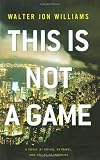
A woman sits in a hotel room, alone and scared; outside, the city burns, white hot. Black roiling clouds pollute the horizon, flames flicker in the distance, the smell of burning flesh—of death—penetrates the room. She looks out her window, perched high on the fourteenth floor, and watches the world explode. Into chaos. Watches the riots, the murders, the hatred. Families lined up, destroyed. And she waits. Stranded. A prisoner of circumstance.
The news is grim. The local economy has show more collapsed, the country’s currency now worthless. The airport and train stations are closed. No one can leave the city. Without help.
So, she waits in her hotel room, a damsel-in-distress. Waits for someone to rescue her, for someone to figure out how she can escape, for someone to solve the puzzle. Of her life.
A life now transformed into a very real game. The goal: helping her leave the city, the country, to make it back home, safely. Woman Stranded in a Hotel Room, seemingly a starting point for the latest alternate reality game (ARG), an online adventure where reality intrudes on make-believe. Where the answers to fictional puzzles can be found in the real world. Where millions of players worldwide use whatever resources, ideas, and skills—whether legal or illegal—to solve puzzles, furthering their quest. It’s the proverbial rabbit hole, players constantly tumbling deeper into a wonderland where conspiracies reign, waiting to be uncovered. It’s Lewis Carroll meets the Grassy Knoll Theory. It’s life, re-imagined. As a story, as a game.
But this is not a game.
This interconnection between reality and fiction is masterfully explored in Walter Jon Williams’ latest novel This Is Not A Game, a beautiful multi-layered novel, both vastly entertaining and astute. It’s a fascinating sociological experiment, an exploration of large-scale problem-solving by a community of minds. An ode to the Hive Mind and the power of Group Think, to its immense processing power. Each individual providing a unique perspective of the problem, a single paintbrush stroke; only the group providing the complete picture, the solution, the Monet. Like a group of rats, arguing, sharing information, before finally deciding the best course through the maze. There’s power in numbers. Reasoning power.
Even better. This Is Not a Game is a compelling mystery, one that threateningly demands—like a militant nun, ruler in hand, your knuckles spread before her—for you to continue, to finish. Stopping, it’s not an option. It’s not even a thought. You turn the pages of the book not just to get answers, but to get the questions, also. And neither disappoint. There is no letdown, no clumsy resolution, no descent into lameness. Everything works, the story coming together beautifully like a well-played game of chess, Williams maneuvering the reader, skillfully. Like a pawn. A very happy pawn.
The novel feels fresh, new, totally unique. Something completely different from the tired, recycled space opera found in most sci-fi novels today. You’ll remember This Is Not A Game afterwards, for its distinct storyline, for being unlike anything else you’ve read. For being special. A rabbit hole, both deep and dark, leading to a dazzling wonderland, where a game imitates life. And life imitates a game.
Last Word:
Games vary. Some you play on a board, everyone fighting to be the little metal car. Some you play on the latest whiz-bang video game system, featuring the most realistic graphics yet. And some you play with people, manipulating their emotions and ideas. But the best games arise from stories; storytelling being nothing more than an author playing a game with their reader. An imagination game, one in which the writer sets the rules. A game with drama and mystery, winners and losers. So Walter Jon Williams’ This Is Not A Game lies. It is a game. A hell of a game, a fascinating mystery, and intriguing social commentary. Where every reader is a winner, no matter what alternate reality you choose to call home. show less
The news is grim. The local economy has show more collapsed, the country’s currency now worthless. The airport and train stations are closed. No one can leave the city. Without help.
So, she waits in her hotel room, a damsel-in-distress. Waits for someone to rescue her, for someone to figure out how she can escape, for someone to solve the puzzle. Of her life.
A life now transformed into a very real game. The goal: helping her leave the city, the country, to make it back home, safely. Woman Stranded in a Hotel Room, seemingly a starting point for the latest alternate reality game (ARG), an online adventure where reality intrudes on make-believe. Where the answers to fictional puzzles can be found in the real world. Where millions of players worldwide use whatever resources, ideas, and skills—whether legal or illegal—to solve puzzles, furthering their quest. It’s the proverbial rabbit hole, players constantly tumbling deeper into a wonderland where conspiracies reign, waiting to be uncovered. It’s Lewis Carroll meets the Grassy Knoll Theory. It’s life, re-imagined. As a story, as a game.
But this is not a game.
This interconnection between reality and fiction is masterfully explored in Walter Jon Williams’ latest novel This Is Not A Game, a beautiful multi-layered novel, both vastly entertaining and astute. It’s a fascinating sociological experiment, an exploration of large-scale problem-solving by a community of minds. An ode to the Hive Mind and the power of Group Think, to its immense processing power. Each individual providing a unique perspective of the problem, a single paintbrush stroke; only the group providing the complete picture, the solution, the Monet. Like a group of rats, arguing, sharing information, before finally deciding the best course through the maze. There’s power in numbers. Reasoning power.
Even better. This Is Not a Game is a compelling mystery, one that threateningly demands—like a militant nun, ruler in hand, your knuckles spread before her—for you to continue, to finish. Stopping, it’s not an option. It’s not even a thought. You turn the pages of the book not just to get answers, but to get the questions, also. And neither disappoint. There is no letdown, no clumsy resolution, no descent into lameness. Everything works, the story coming together beautifully like a well-played game of chess, Williams maneuvering the reader, skillfully. Like a pawn. A very happy pawn.
The novel feels fresh, new, totally unique. Something completely different from the tired, recycled space opera found in most sci-fi novels today. You’ll remember This Is Not A Game afterwards, for its distinct storyline, for being unlike anything else you’ve read. For being special. A rabbit hole, both deep and dark, leading to a dazzling wonderland, where a game imitates life. And life imitates a game.
Last Word:
Games vary. Some you play on a board, everyone fighting to be the little metal car. Some you play on the latest whiz-bang video game system, featuring the most realistic graphics yet. And some you play with people, manipulating their emotions and ideas. But the best games arise from stories; storytelling being nothing more than an author playing a game with their reader. An imagination game, one in which the writer sets the rules. A game with drama and mystery, winners and losers. So Walter Jon Williams’ This Is Not A Game lies. It is a game. A hell of a game, a fascinating mystery, and intriguing social commentary. Where every reader is a winner, no matter what alternate reality you choose to call home. show less
Lists
Missing Books (1)
Awards


You May Also Like


Associated Authors
Statistics
- Works
- 110
- Also by
- 92
- Members
- 13,138
- Popularity
- #1,774
- Rating
- 3.7
- Reviews
- 277
- ISBNs
- 327
- Languages
- 11
- Favorited
- 27
