

Norbert Wolf
Author of Masterpieces of Illumination: The World's Most Famous Manuscripts 400 to 1600
About the Author
Norbert Wolf is an art historian and guest professor at the University of Innsbruck, Austria.
Works by Norbert Wolf
Masterpieces of Illumination: The World's Most Famous Manuscripts 400 to 1600 (1980) 608 copies, 6 reviews
Caspar David Friedrich : 1774-1840 : The painter of stillness (2003) — Author — 257 copies, 1 review
Albrecht Dürer, 1471-1528 : the genius of the German Renaissance (2007) — Author — 174 copies, 4 reviews
Auguste Rodin: Erotic Sketches Erotische Skizzen (Prestel's Erotic Sketchboo Series) (2006) 16 copies
Vom Telegraf zum Telefon 1 copy
Australien und Ozeanien 1 copy
Expressionismo 1 copy
Tagged
Common Knowledge
- Canonical name
- Wolf, Norbert
- Birthdate
- 1949
- Gender
- male
- Education
- University of Munich (Ph.D|1983)
University of Regensburg - Occupations
- art historian
professor - Organizations
- Ludwig Maximilian University of Munich
- Nationality
- Germany
- Birthplace
- Regensburg, Germany
- Places of residence
- Munich, Bavaria, Germany
- Associated Place (for map)
- Germany
Members
Reviews
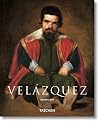
“There you have him, the true painter of reality.” – Pablo Picasso
Before there was Picasso, there was Diego Velazquez whose biggest fan is none other than Pablo Picasso.
A chance conversation about the 2017 Oscars dress of Janelle Monae in Elie Saab prompted me to look up the famous 1656 ‘Infanta Margarita’ by Velazquez. Inevitably, I turned to my trusted Taschen art books for a refresher of the most famous painter for the Spanish court.
In ‘From Kitchen to Palace’: His work is show more not recognized by grand gestures but by ‘a sense of great calm’. His career began in Seville, Spain, where he painted the signature 9 bodegóns, depicting everyday life in the most realistic feel, in shades of dark tones. In 1623 at age 24, he was summoned to paint for the King. In 1629-1631, his first trip to Italy exposed him to the classics, where he painted the pieces that the Impressionists identified as the beginning of Impressionism – ‘Villa Medici in Rome’, 1630.
In ‘The Psychology of Power’: This section dove deep into his court paintings, notably the portraits of the royal family – Philip III, Philip IV, Infanta Dona Maria, etc., and especially ones with hunting scenes. The faces are the most expressive of any known painters and even the animals came to life – ‘conscious of the dignity shared by all living creatures’.
In ‘A Humane Equilibrium’: ‘The Surrender of Breda (Las Lanzas)’ is one of his most praised work, where he “makes a fundamental statement about human conduct amidst the horrors of war’. Also in this section are his expressive pieces of the court jesters and dwarfs, including the cover of this book, who reminds me of a dark-haired Tyrion Lannister. Two more signature pieces – the ethereal ‘The Coronation of the Virgin’ and the complex ‘St. Anthony Abbot and St. Paul the Hermit’ – are explained.
In ‘Enigmas and Reflections – Riddles in Paint’: His skills in his later works have elevated to heights were multifaceted images are the norm. In ‘The Fable of Arachne’, the seamstresses on the foreground vs. the richly dresses ladies on stage vs. the wall hanging is a sublime composition. The ‘Venus at her Mirror’ is absolutely one of the most stunningly beautiful woman nude backside ever painted; with a mirror held by Cupid, this piece ‘explores the relationship between reality, reflection and image’. Finally, his most famous piece, one so admired by Picasso that he recreated in whole and in portions 58 times – ‘Las Meninas’ or ‘The Royal Family’. Though centered upon Infanta Margaret Theresa, using light and reflections, all family members are featured including King Philip IV and Queen Mariana in the mirror! This is Velazquez’s last masterpiece, and he is prominently featured on the left facing a large canvas that is forever a mystery to us. He dies in court 3 years later.
Lastly, if artists who painted their own self-portraits are the equivalent of doing selfies, then Velazquez’s penchant for painting himself into his painting must be the equivalent of photobombing himself. I laughed at my own dumb joke. Big thumbs up to the book for the education and in the quality of the photos – from shades of dark to reflections of light, all are as I remember them in the museums. show less
Before there was Picasso, there was Diego Velazquez whose biggest fan is none other than Pablo Picasso.
A chance conversation about the 2017 Oscars dress of Janelle Monae in Elie Saab prompted me to look up the famous 1656 ‘Infanta Margarita’ by Velazquez. Inevitably, I turned to my trusted Taschen art books for a refresher of the most famous painter for the Spanish court.
In ‘From Kitchen to Palace’: His work is show more not recognized by grand gestures but by ‘a sense of great calm’. His career began in Seville, Spain, where he painted the signature 9 bodegóns, depicting everyday life in the most realistic feel, in shades of dark tones. In 1623 at age 24, he was summoned to paint for the King. In 1629-1631, his first trip to Italy exposed him to the classics, where he painted the pieces that the Impressionists identified as the beginning of Impressionism – ‘Villa Medici in Rome’, 1630.
In ‘The Psychology of Power’: This section dove deep into his court paintings, notably the portraits of the royal family – Philip III, Philip IV, Infanta Dona Maria, etc., and especially ones with hunting scenes. The faces are the most expressive of any known painters and even the animals came to life – ‘conscious of the dignity shared by all living creatures’.
In ‘A Humane Equilibrium’: ‘The Surrender of Breda (Las Lanzas)’ is one of his most praised work, where he “makes a fundamental statement about human conduct amidst the horrors of war’. Also in this section are his expressive pieces of the court jesters and dwarfs, including the cover of this book, who reminds me of a dark-haired Tyrion Lannister. Two more signature pieces – the ethereal ‘The Coronation of the Virgin’ and the complex ‘St. Anthony Abbot and St. Paul the Hermit’ – are explained.
In ‘Enigmas and Reflections – Riddles in Paint’: His skills in his later works have elevated to heights were multifaceted images are the norm. In ‘The Fable of Arachne’, the seamstresses on the foreground vs. the richly dresses ladies on stage vs. the wall hanging is a sublime composition. The ‘Venus at her Mirror’ is absolutely one of the most stunningly beautiful woman nude backside ever painted; with a mirror held by Cupid, this piece ‘explores the relationship between reality, reflection and image’. Finally, his most famous piece, one so admired by Picasso that he recreated in whole and in portions 58 times – ‘Las Meninas’ or ‘The Royal Family’. Though centered upon Infanta Margaret Theresa, using light and reflections, all family members are featured including King Philip IV and Queen Mariana in the mirror! This is Velazquez’s last masterpiece, and he is prominently featured on the left facing a large canvas that is forever a mystery to us. He dies in court 3 years later.
Lastly, if artists who painted their own self-portraits are the equivalent of doing selfies, then Velazquez’s penchant for painting himself into his painting must be the equivalent of photobombing himself. I laughed at my own dumb joke. Big thumbs up to the book for the education and in the quality of the photos – from shades of dark to reflections of light, all are as I remember them in the museums. show less
As much as I appreciated the grand overview of the Art Nouveau style that this book gives, once I hit the halfway point I found myself flagging in relation to the writing. Don't get me wrong; the reproductions are quite wonderfully done and the writing style isn't too academic, but I found myself feeling like the author was just listing names, dates, and places after a certain point. I'm very well versed in both Gustav Klimt, Alphonse Mucha, and the general outlines of art history, but show more trying to tackle multiple movements in multiple countries began to feel extremely overweighty. Next time I'll search out the individual artists. show less
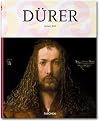
Vienna is one of the Dürer capitals of the world where it is quite easy to hop into a museum and see multiple Dürers hanging on the wall (or copies thereof, the Albertina is notorious for showing copies, after having nearly ruined the hare by mercilessly pimping it out). Especially in comparison to the huge canvasses of later times, the paintings of Dürer look and are tiny. So this Taschen A4 introduction shows many works close to their actual size (the tiny picture of the hare being a show more notable exception).
Dürer's paintings are very well represented, his prints less so - as is the case with the Dürers on exhibit in the museums. I'll have to track down editions of his prints too. The Taschen book offers a fine introduction to his life, his work and the era at an unbeatable price (while KHM offers it at a reduced price of 10 EUR, I bought mine at the annual Taschen sales for 5 EUR). show less
Dürer's paintings are very well represented, his prints less so - as is the case with the Dürers on exhibit in the museums. I'll have to track down editions of his prints too. The Taschen book offers a fine introduction to his life, his work and the era at an unbeatable price (while KHM offers it at a reduced price of 10 EUR, I bought mine at the annual Taschen sales for 5 EUR). show less
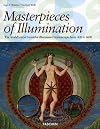
If you have a fascination with illuminated manuscripts, you will revel in this gorgeous book. Care has been taken with the presentation as well as content. The book begins with an overview of the art and history of manuscript illumination, before examining a great many key manuscripts, each accompanied by fine reproductions. They span the end of the classical world (c. AD 400) to the twilight of illumination (late 1500s), and include examples from the Islamic world, central Asia and show more India.
The descriptions tend to concentrate on the technical and art historical side of the illuminations. If, like me, you are also interested in the historical and social context, you might wish for more. But the amazingly gorgeous repoductions more than compensate. Taschen is to be congratulated: the production values of this volume are a tribute to the art of the book, as well as to the book's predecessor, the manuscript. show less
The descriptions tend to concentrate on the technical and art historical side of the illuminations. If, like me, you are also interested in the historical and social context, you might wish for more. But the amazingly gorgeous repoductions more than compensate. Taschen is to be congratulated: the production values of this volume are a tribute to the art of the book, as well as to the book's predecessor, the manuscript. show less
You May Also Like


Associated Authors
Statistics
- Works
- 73
- Members
- 2,681
- Popularity
- #9,580
- Rating
- 4.1
- Reviews
- 21
- ISBNs
- 250
- Languages
- 9
- Favorited
- 1