
Frank Lloyd Wright (1867–1959)
Author of Frank Lloyd Wright, 1867-1959: Building for Democracy
About the Author
Wright is widely considered the greatest American architect and certainly one of the most influential. Throughout a career of nearly 70 years, he produced masterpiece after masterpiece, each different and boldly new and yet each with the unmistakable touch of Wright's genius in the treatment of show more material, the detailing, and the overall concept. Born in Wisconsin of Welsh ancestry, Wright studied civil engineering at the University of Wisconsin and began his career in Chicago as chief assistant to Louis Henry Sullivan, who influenced his early thinking on the American architect as harbinger of democracy and on the organic nature of the true architecture. Out of these ideas, Wright developed the so-called prairie house, of which the Robie House in Chicago and the Avery Coonley House in Riverdale, Illinois, are outstanding examples. In the "prairie-style," Wright used terraces and porches to allow the inside to flow easily outside. Movement within such houses is also open and free-floating from room to room and from layer to layer. Public buildings followed: the Larkin Administration Building in Buffalo (destroyed) and the Unity Temple in Oak Park, Illinois, the former probably the most original and seminal office building up to that time (1905). The Midway Gardens in Chicago and the Imperial Hotel in Tokyo (both gone) came next, winning Wright still greater acclaim. Personal tragedy, misunderstanding, and neglect dogged Wright's middle years, but he prevailed, and in his later life gathered enormous success and fame. The masterworks of his mature years are the Johnson Wax Building in Racine, Wisconsin, and Fallingwater, Bear Run, Pennsylvania---with its bold cantilevered balconies over a running stream, probably the most admired and pictured private house in American architecture; then, toward the end of his life, the spiral design of the Guggenheim Museum in New York City. Wright's own houses, to which he joined architectural studios, are also noteworthy: Taliesin West was a true Shangri-la in the Arizona desert, to which he turned in order to escape the severe winters in Wisconsin, where he had built his extraordinary Taliesin East. Wright was a prolific and highly outspoken writer, ever polemical, ever ready to propagate his ideas and himself. All of his books reflect a passionate dedication to his beliefs---in organic architecture, democracy, and creativity. (Bowker Author Biography) show less
Image credit: Frank Lloyd Wright (1867-1959)
(Library of Congress Prints and Photographs Division)
(Library of Congress Prints and Photographs Division)
Series
Works by Frank Lloyd Wright
On and by Frank Lloyd Wright: A Primer of Architectural Principles (1996) — Contributor — 78 copies, 1 review
In the Cause of Architecture: Essays by Frank Lloyd Wright for Architectural Record, 1908-1952 (1975) 48 copies, 1 review
At Taliesin: Newspaper Columns by Frank Lloyd Wright and the Taliesin Friendship, 1934 - 1937 (1992) 21 copies, 1 review
Frank Lloyd Wright and Madison : eight decades of artistic and social interaction (1992) 9 copies, 1 review
Taliesin Drawings: Recent Architecture of Frank Lloyd Wright, Selected from His Drawings (Problems of Contemporary Art, No. 6) (1952) 8 copies
Frank Lloyd Wright 8 copies
Houses by Frank Lloyd Wright: A Book of Postcards (Frank Lloyd Wright Collection (Postcards)) (2006) 6 copies
Taliesin 6 copies
Frank Lloyd Wright and Viollet-Le-Duc: Organic Architecture and Design from 1850 to 1950 (1986) 4 copies
The Robie House 4 copies
In the Nature of Materials 1ST Edition: The Buildings of Frank Lloyd Wright 1887-1941 (1942) 4 copies
Testamento 2 copies
Cassina: Frank Lloyd Wright 2 copies
Frank Lloyd Wright papers 2 copies
Fallingwater 2 copies
Frank Lloyd Wright : essential texts 2 copies
The Usonian automatic house 2 copies
designs for houses 2 copies
Taliesin East, Spring Green, Wisconsin, 1925- ; Taliesin West, Paradise Valley, Arizona, 1938- 2 copies
Japanese prints exhibition 2 copies
Frank Lloyd Wright drawings 1 copy
The Letters Trilogy: Letters to Apprentices, Letters to Architects, Letters to Clients (1986) 1 copy
Selected drawings portfolio 1 copy
Global Interior Number 9 1 copy
THE LIVING CITY 1 copy
Taliesin: East and West 1 copy
Grundrisse und Perspecktive (Wasserseite) Städtisches Wohnhaus bei Chicago für Frau Aline Devin 1 copy
Fallingwater (1999 calendar) 1 copy
Oasis: Plan for Arizona state capitol, submitted by Frank Lloyd Wright, architect Febuary 17, 1957 1 copy
The Industrial Revolution Runs Away: The Disappearing City (Edition Limited to 1,250 Numbered Copies) (1962) 1 copy
Stained Glass 1 copy
Away With the Realtor 1 copy
The Taliesin Fellowship 1 copy
Taliesin West 1 copy
Solomon R. Guggenheim Museum, New York City, N.Y., 1943-59 : Marin County Civic Center, California, 1957-1970 (1975) 1 copy
Schriften und Bauten 1 copy
La Ciudad Viviente 1 copy
Associated Works
Architectural Theory: From the Renaissance to the Present (2003) — Contributor — 330 copies, 3 reviews
Tagged
Common Knowledge
- Legal name
- Wright, Frank Lincoln (born)
- Birthdate
- 1867-06-08
- Date of death
- 1959-04-09
- Gender
- male
- Education
- University of Wisconsin, Madison
- Occupations
- architect
- Organizations
- Cliff Dwellers
- Awards and honors
- Honorary Doctor of Fine Arts, University of Wisconsin-Madison (1955)
- Relationships
- Wright, John Lloyd (son)
Wright, Lloyd (son)
Wright, Eric Lloyd (grandson)
Enright, Maginel Wright (sister)
Enright, Elizabeth (niece) - Nationality
- USA
- Birthplace
- Richland Center, Wisconsin, USA
- Places of residence
- Richland Center, Wisconsin, USA
Spring Green, Wisconsin, USA
Weymouth, Massachusetts, USA
Madison, Wisconsin, USA
Oak Park, Illinois, USA
Florence, Italy (show all 8)
Fiesole, Italy
Scottsdale, Arizona, USA - Place of death
- Phoenix, Arizona, USA
- Burial location
- Unity Chapel, Spring Green, Wisconsin, USA (first)
Taliesin West, Scottsdale, Arizona (second) - Associated Place (for map)
- USA
Members
Discussions
Frank Lloyd Wright in Memoirs and autobiographies (December 2023)
Reviews
Sibyl Moholy-Nagy, the venerable architectectural historian and critic, once remarked that an architect's talent to write well was inversely proportional to his talent to design. And she was talking about Frank Lloyd Wright (1867-1959) at the time. Wright, she thought, was one of the worst writers on matters architectural, which may account, in part, for the greatness of his architecture.
I've often spoken of this book, Wright's "An Autobiography" as being one of the perhaps three most show more important architectural books of the 20th century, along with Le Corbusier's "Towards a New Architecture" and Robert Venturi's "Complexity and Contradiction in Architecture". I would further propose that of these three, Wright's book was the most important and influential because it was intended for, and in fact has reached, the general reading public as well as its professional audience.
While on one level this is an autobiographical overview of Wright's life and career, he talks at length about his design philosophy of buildings and cities, and goes on to discuss just about everything else imaginable, from the wonders of rural American life to pacificsm in wartime. Because of who he was, and more importantly because what he did, those views are worth hearing.
This book was published three times -- first, in 1932; then a second time, with a large additional section in 1943; and finally as a postumous third edition, with a further large additional section in 1977.
This 1943 edition, as a piece of book production, is by far the most aesthetically pleasing. Bound in in red cloth in a square format, the volume is divided into several "books", each of which has a specially designed graphic plate or divider page, printed in silver on a chocolate brown stock. A very handsome piece of graphic design. Though this edition lacks the plentiful illustrations of the other editions, there are numerous other books on and by Wright that have all the illustrations one could want or need.
Remebering that Wright was essentially a Victorian, we can perhaps overlook the overly verbose and purple prose style, and just enjoy this fascinating look into the personal and professional worlds in which Frank Lloyd Wright revolutionized architecture as we know it. show less
I've often spoken of this book, Wright's "An Autobiography" as being one of the perhaps three most show more important architectural books of the 20th century, along with Le Corbusier's "Towards a New Architecture" and Robert Venturi's "Complexity and Contradiction in Architecture". I would further propose that of these three, Wright's book was the most important and influential because it was intended for, and in fact has reached, the general reading public as well as its professional audience.
While on one level this is an autobiographical overview of Wright's life and career, he talks at length about his design philosophy of buildings and cities, and goes on to discuss just about everything else imaginable, from the wonders of rural American life to pacificsm in wartime. Because of who he was, and more importantly because what he did, those views are worth hearing.
This book was published three times -- first, in 1932; then a second time, with a large additional section in 1943; and finally as a postumous third edition, with a further large additional section in 1977.
This 1943 edition, as a piece of book production, is by far the most aesthetically pleasing. Bound in in red cloth in a square format, the volume is divided into several "books", each of which has a specially designed graphic plate or divider page, printed in silver on a chocolate brown stock. A very handsome piece of graphic design. Though this edition lacks the plentiful illustrations of the other editions, there are numerous other books on and by Wright that have all the illustrations one could want or need.
Remebering that Wright was essentially a Victorian, we can perhaps overlook the overly verbose and purple prose style, and just enjoy this fascinating look into the personal and professional worlds in which Frank Lloyd Wright revolutionized architecture as we know it. show less
Twentieth Century Houses (Architecture 3s): Frank Lloyd Wright, Alvar Aalto, Charles and Ray Eames by Robert McCarter

Typically I think of the books in the Architecture 3s series like a 12-pack sampler of beer, in which one of the four flavors – or in these cases, one of the three buildings – is not so desirable. That sort of analogy cannot be used in the case of this collection of 20th century residential masterpieces: Fallingwater, Villa Mairea, and the Eames House. The first two are strongly linked, since they were completed at roughly the same time (late 1930s), and in Aalto's design of the Villa show more Mairea his initial sketches show him trying to create a Finnish version of Fallingwater, sans waterfall. If any houses are worthy of case studies, these are them, meaning that other books have been written on them and these aren't necessarily the main sources for people interested in them. Fallingwater, for example, was documented by Edgar Kaufmann, Jr., the owner's son, an architect, and the person who probably knew the house best. Nevertheless, this collection is a great one to have for any fan of modern residential architecture. show less

Frank Lloyd Wright was definitely a man of strong opinions, as indicated in this 1954 publication that came out a few years before his death.
One such opinion is indicated by this apparently sarcastic comment about some of his clients:
"...he then thinks, because of his 'success', then he can tell you, or anybody else, all about things of which he really knows nothing at all -- a house in particular. His success as a maker of money makes him an universal expert".
Additionally, some of his show more opinions would not fly very well today, such as this: "a garage is no longer necessary as cars are made. A carport will do, with liberal over-head shelter and walls on two sides. Detroit still has the livery-stable mind. It believes that the car is a horse and must be stabled".
But, it is a time capsule of FLW's thoughts on architecture. He also felt that we should build and live as far away from the city as possible, because cars make urban life unnecessary.
This is an out-of-print edition with small black-and-white photos included -- it may be worthwhile for those who are serious fans of either FLW and/or architecture. show less
One such opinion is indicated by this apparently sarcastic comment about some of his clients:
"...he then thinks, because of his 'success', then he can tell you, or anybody else, all about things of which he really knows nothing at all -- a house in particular. His success as a maker of money makes him an universal expert".
Additionally, some of his show more opinions would not fly very well today, such as this: "a garage is no longer necessary as cars are made. A carport will do, with liberal over-head shelter and walls on two sides. Detroit still has the livery-stable mind. It believes that the car is a horse and must be stabled".
But, it is a time capsule of FLW's thoughts on architecture. He also felt that we should build and live as far away from the city as possible, because cars make urban life unnecessary.
This is an out-of-print edition with small black-and-white photos included -- it may be worthwhile for those who are serious fans of either FLW and/or architecture. show less
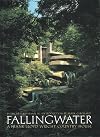
If anybody were most qualified to write about Fallingwater, it would be Edgar Kaufmann Jr., son of the client, apprentice to Wright, part-time occupant of the house for 27 years, and heir who donated it to the Western Pennsylvania Conservancy. Logically then, this large-format book has Kaufmann's recollections, as well as photos by Christopher Little (the photographer of choice for the building), some beautiful drawings in color, and much more. It is a fitting balance of Kaufmann the show more client's son and Kaufmann the architectural historian. show less
Lists
Awards

You May Also Like


Associated Authors
Statistics
- Works
- 219
- Also by
- 11
- Members
- 4,352
- Popularity
- #5,763
- Rating
- 3.8
- Reviews
- 33
- ISBNs
- 223
- Languages
- 9
- Favorited
- 4
