
Tim Wu
Author of The Master Switch: The Rise and Fall of Information Empires
About the Author
Works by Tim Wu
Tagged
Common Knowledge
- Other names
- Wu, Timothy
- Birthdate
- 1971
- Gender
- male
- Education
- McGill University (BSc)
Harvard University (JD) - Occupations
- professor (law)
- Organizations
- Columbia Law School
- Nationality
- USA
- Birthplace
- Washington, D.C., USA
- Places of residence
- Washington, D.C., USA
Basel, Switzerland
Toronto, Canada
Members
Reviews
The Age of Extraction: How Tech Platforms Conquered the Economy and Threaten Our Future Prosperity by Tim Wu

A variant on Doctorow’s Enshittification—another book about how platforms use their position between buyers and sellers to extract the surplus from both, immiserating us in the absence of strong antitrust laws. People really did make millions from small businesses on Amazon (etc.) and now that’s basically impossible. Influencers can succeed, but, Wu notes, “the influencer was plainly a laboring class, as opposed to one with ownership over any productive asset. … This has made show more burnout and mental health problems the black lung of the influencer industry.” This process is most advanced online, but Wu points to the private equity rollup of medical practices to show that doctors, too, “are transitioning from being a professional guild with control of their own human capital back to being a laboring class, members of the proletariat.” So too with investors buying single-family homes to turn them into rentals. He concludes: “we are conducting a reckless economic experiment that history suggests has rarely gone well. Most dangerous of all, it has a track record of creating conditions conducive to the rise of an authoritarian strongman.”
Small sources of real economic power are the key to improvement. Neoliberal aims is insufficient, given that “[e]conomic power consists of the ability to resist redistribution. That’s why a policy focused on only growing the pie was also likely, on a systemic basis, to have prevented it from being cut in the first place.” Just as city squares can be revitalized, so can other common infrastructure that helps create wider prosperity. show less
Small sources of real economic power are the key to improvement. Neoliberal aims is insufficient, given that “[e]conomic power consists of the ability to resist redistribution. That’s why a policy focused on only growing the pie was also likely, on a systemic basis, to have prevented it from being cut in the first place.” Just as city squares can be revitalized, so can other common infrastructure that helps create wider prosperity. show less
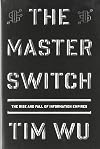
This book is divided into two parts: the first 300 pages, which is a high-level history of how a common cycle of innovation and monopolization has manifested itself in various communication/information industries like radio, movies, television, telephone, cable TV, and the internet. Then there's the last chapter, which is Wu's What Is To Be Done? moment where he suggests a possible regulatory regime that will protect the public interest in these network technologies while still allowing for show more sufficient innovation and invention.
The history section is about as good as you could expect with such a broad range of industries to cover, with plenty of interesting details about the inventors, entrepreneurs, and CEOs who have battled over control of what we now regard as public infrastructure nearly as essential as roads or sewage. He identifies what he calls the Cycle, common to all network technologies since the telegraph, whereby a small-time inventor comes up with a new gadget that allows people to consume or distribute information (it could be multiple inventors - simultaneous inventions are surprisingly frequent, and the difference in success and fame between an Alexander Bell and an Elisha Grey is often as much a matter of luck or corporate backing as technological merits), threatens an established interest with a stake in an old communications paradigm, and makes the steady climb from plucky underdog to overbearing behemoth until the next game-changing inventor comes from nowhere to challenge the incumbent and start the whole process over again.
Since a large part of my professional career has involved AT&T in one way or another I was anxious to read the story of one of the largest and most entrenched monopolies of all time. Wu delivered an abbreviated but still fascinating account of how what used to be just another company came to be The Phone Company, its quest for "One Policy, One System, Universal Service" on the one hand underwriting the tremendous research of Bell Labs and on the other consolidating more power over people's ability to communicate with each other than any company in history. He also gave great overviews of the stories of companies in the other industries; I particularly enjoyed the sections on the vicious struggles in the movie industry, and though he didn't make the parallels to the modern video game industry that I've discussed with friends in the business it's a great exposition of the nature of cartels and how they can impose censorship as bad or worse as that of a government. All told, the historical part of the book is great, and very convincing in its suggestions that all these related technologies are in some sense destined to undergo Schumpeterian cycles of innovation, disruption, consolidation, and stagnation as new business models supplant old ones.
The controversial part, though, is the final chapter with Wu's attempts to outline how we can protect ourselves from monopolies while still enjoying the fruits of companies which would very much like to be monopolies someday. Designing a good regulatory regime is a classic attempt to square the circle, and Wu himself comes up with many examples in the first part of the book how various agencies like the FCC have been co-opted to serve the interests of the businesses they were supposed to be restraining. Since this problem is of course hardly unique to the telecom industry, it's not really surprising that he ends up proposing a tripartite Separations Principle that's more akin to inflexible rule-based proposals (e.g. a discarded plan in drafts of the Dodd-Frank Act to simply place hard caps on the size of large banks) than discretionary agency-based proposals (e.g. an actual provision in the Dodd-Frank Act to create a Consumer Financial Protection Bureau to police bank actions).
The first part is temporal separation, which means to restrain established players in an industry from devouring infant entrants, as in the Justice Department's battle to prevent Microsoft from crushing Netscape by using the incumbent advantages of Internet Explorer. The second is functional separation, and he gives the example of preventing movie studios from directly owning the theaters that show their films. The third is regulatory separation, which he defines as removing the potential for regulatory capture by giving the government the power only to check private actors, never to aid them. It should go without saying that in the brief form in the book, this Principle seems at a glance to be hopelessly vague and unworkable; let's use Google as an example. What kind of neutral standard would allow for Google to integrate its Android operating system and Chrome browser with its Google TV platform yet forbid AT&T to give affiliated content higher bandwidth priority on its uVerse internet service (i.e. the opposite of net neutrality)? Similarly, a rule to restrict the ability of Disney to morph into the vast entertainment conglomerate it is today would surely also hamper Google's ability to purchase products like Maps or YouTube. And what kind of "check, not aid" actions, if any, should the government take in situations like Google's copyright struggles with publishers over its attempts to broaden its Google Books database?
I'm skeptical that Wu's admirably clear principles could be simply turned into a working and beneficial regulatory scheme. This isn't really his fault given the size of the book compared to the daunting complexity of modern corporations and the fluid nature of boundaries in network technologies, but it's disappointing that such a perceptive critic of monopoly power proposed such underwhelming solutions. He should write a longer book on that subject; I would eagerly read it. show less
The history section is about as good as you could expect with such a broad range of industries to cover, with plenty of interesting details about the inventors, entrepreneurs, and CEOs who have battled over control of what we now regard as public infrastructure nearly as essential as roads or sewage. He identifies what he calls the Cycle, common to all network technologies since the telegraph, whereby a small-time inventor comes up with a new gadget that allows people to consume or distribute information (it could be multiple inventors - simultaneous inventions are surprisingly frequent, and the difference in success and fame between an Alexander Bell and an Elisha Grey is often as much a matter of luck or corporate backing as technological merits), threatens an established interest with a stake in an old communications paradigm, and makes the steady climb from plucky underdog to overbearing behemoth until the next game-changing inventor comes from nowhere to challenge the incumbent and start the whole process over again.
Since a large part of my professional career has involved AT&T in one way or another I was anxious to read the story of one of the largest and most entrenched monopolies of all time. Wu delivered an abbreviated but still fascinating account of how what used to be just another company came to be The Phone Company, its quest for "One Policy, One System, Universal Service" on the one hand underwriting the tremendous research of Bell Labs and on the other consolidating more power over people's ability to communicate with each other than any company in history. He also gave great overviews of the stories of companies in the other industries; I particularly enjoyed the sections on the vicious struggles in the movie industry, and though he didn't make the parallels to the modern video game industry that I've discussed with friends in the business it's a great exposition of the nature of cartels and how they can impose censorship as bad or worse as that of a government. All told, the historical part of the book is great, and very convincing in its suggestions that all these related technologies are in some sense destined to undergo Schumpeterian cycles of innovation, disruption, consolidation, and stagnation as new business models supplant old ones.
The controversial part, though, is the final chapter with Wu's attempts to outline how we can protect ourselves from monopolies while still enjoying the fruits of companies which would very much like to be monopolies someday. Designing a good regulatory regime is a classic attempt to square the circle, and Wu himself comes up with many examples in the first part of the book how various agencies like the FCC have been co-opted to serve the interests of the businesses they were supposed to be restraining. Since this problem is of course hardly unique to the telecom industry, it's not really surprising that he ends up proposing a tripartite Separations Principle that's more akin to inflexible rule-based proposals (e.g. a discarded plan in drafts of the Dodd-Frank Act to simply place hard caps on the size of large banks) than discretionary agency-based proposals (e.g. an actual provision in the Dodd-Frank Act to create a Consumer Financial Protection Bureau to police bank actions).
The first part is temporal separation, which means to restrain established players in an industry from devouring infant entrants, as in the Justice Department's battle to prevent Microsoft from crushing Netscape by using the incumbent advantages of Internet Explorer. The second is functional separation, and he gives the example of preventing movie studios from directly owning the theaters that show their films. The third is regulatory separation, which he defines as removing the potential for regulatory capture by giving the government the power only to check private actors, never to aid them. It should go without saying that in the brief form in the book, this Principle seems at a glance to be hopelessly vague and unworkable; let's use Google as an example. What kind of neutral standard would allow for Google to integrate its Android operating system and Chrome browser with its Google TV platform yet forbid AT&T to give affiliated content higher bandwidth priority on its uVerse internet service (i.e. the opposite of net neutrality)? Similarly, a rule to restrict the ability of Disney to morph into the vast entertainment conglomerate it is today would surely also hamper Google's ability to purchase products like Maps or YouTube. And what kind of "check, not aid" actions, if any, should the government take in situations like Google's copyright struggles with publishers over its attempts to broaden its Google Books database?
I'm skeptical that Wu's admirably clear principles could be simply turned into a working and beneficial regulatory scheme. This isn't really his fault given the size of the book compared to the daunting complexity of modern corporations and the fluid nature of boundaries in network technologies, but it's disappointing that such a perceptive critic of monopoly power proposed such underwhelming solutions. He should write a longer book on that subject; I would eagerly read it. show less

I don't think this book aged well. The premise is that the Internet had (has?) the ability to break the Cycle of all technologies going from open (lots of competition) to closed (monopoly or very consolidated industry). Maybe people were just more naive in 2010 (when this book was published). I guess Facebook didn't buy Instagram until 2012, but Google had already purchased YouTube. So it's not like the big fish weren't already eating up their possible competition. I suppose we didn't know show more the extent to which Google was buying their default search engine status, but if that isn't a monopoly move, I don't know what is.
Also the author seems to think that Net Neutrality is like, some kind of universal law of nature and not something that lawmakers will happily get rid of, and that the large players like Google and Facebook are happy to sacrifice, because they're the only ones big enough to buy favored status. It's now 2024, and literally Peter Thiel chose who will be the next VP of this country, and Net Neutrality will likely be on the chopping block once the dust settles after the inauguration. I don't get to pick my ISP because they're allowed to be a monopoly, so why the heck wouldn't they want to charge me more for doing the things I'm already doing if lawmakers allow them to? Net Neutrality isn't gravity.
At one point, the author seems to imply that only telecommunications companies are "important" enough to be able to influence governments, even making a joke about how orange juice companies wouldn't over throw governments. Bro, have you heard of United Fruit? Central America would like some words.
I didn't like that the book totally overlooks cellular service at all. Like it brings up all this technology but not cell. It also brushes over ISPs. Honestly, I was more interested in the tech than the economics focus of the book (which aged like milk), so I was kind of disappointed that it wasn't really exhaustive.
The author really hyperbolizes (if not outright makes up) an explosion at the broadcast of the "Fight of the Century" to which I can find no source. The closest I could find is that a tube blew in the fourth round, but it was replaced. If an author is going to lie or hyperbolize about something like that, I find it hard to believe anything else they write. I also thought it would have been a much more interesting discussion about how AT&T refused to connect the phone line to the transmitter, which they needed to make the broadcast (source: https://earlyradiohistory.us/WJY.htm). This seems to be actually true and ALSO supports the author's thesis of how the established giants don't like new technology which could possibly be disruptive. But it was not included in the book.
Finally, I guess 2011 was a long time ago, because the exclusive use of he/him pronouns made this book unbearable. It was so jarring and made me think the book was even older than it is. Yuck. show less
Also the author seems to think that Net Neutrality is like, some kind of universal law of nature and not something that lawmakers will happily get rid of, and that the large players like Google and Facebook are happy to sacrifice, because they're the only ones big enough to buy favored status. It's now 2024, and literally Peter Thiel chose who will be the next VP of this country, and Net Neutrality will likely be on the chopping block once the dust settles after the inauguration. I don't get to pick my ISP because they're allowed to be a monopoly, so why the heck wouldn't they want to charge me more for doing the things I'm already doing if lawmakers allow them to? Net Neutrality isn't gravity.
At one point, the author seems to imply that only telecommunications companies are "important" enough to be able to influence governments, even making a joke about how orange juice companies wouldn't over throw governments. Bro, have you heard of United Fruit? Central America would like some words.
I didn't like that the book totally overlooks cellular service at all. Like it brings up all this technology but not cell. It also brushes over ISPs. Honestly, I was more interested in the tech than the economics focus of the book (which aged like milk), so I was kind of disappointed that it wasn't really exhaustive.
The author really hyperbolizes (if not outright makes up) an explosion at the broadcast of the "Fight of the Century" to which I can find no source. The closest I could find is that a tube blew in the fourth round, but it was replaced. If an author is going to lie or hyperbolize about something like that, I find it hard to believe anything else they write. I also thought it would have been a much more interesting discussion about how AT&T refused to connect the phone line to the transmitter, which they needed to make the broadcast (source: https://earlyradiohistory.us/WJY.htm). This seems to be actually true and ALSO supports the author's thesis of how the established giants don't like new technology which could possibly be disruptive. But it was not included in the book.
Finally, I guess 2011 was a long time ago, because the exclusive use of he/him pronouns made this book unbearable. It was so jarring and made me think the book was even older than it is. Yuck. show less
It is the summer of 2018. We have the now approved merger of AT&T and Time-Warner in the US. As well, Apple’s Chinese iCloud service will move to a state-controlled data centre which will in all likelihood be monitored by the Chinese government.
I thought it a good time to revisit Tim Wu’s 2010 classic “The Master Switch: The Rise and Fall of Information Empires” as a backdrop to new information monopolies such as Google and facebook, and to look at the AT&T merger under the lens of show more an earlier botched merger, that of Time-Warner and America Online back in the 1990’s.
Wu concerns himself with the rise and fall of telephone, radio, television and feature film monopolies and vertical integration. From the origins of the Bell telephone company, RCA in the AM radio bands, and the origins of the film studio system.
His biggest beefs of the monopolists are when they stymie innovation by eating their offspring to protect profits, when they cut into freedom of speech by controlling carriage, and when they consort with government to develop military projects to the detriment of a free marketplace.
He developed the position that while government regulation of monopolies in information and entertainment have provided stopgaps to the unfettered rise of these companies, the tools government used then are in noways adequate to guarantee a level marketplace, freedom of speech, and innovation in the future.
To which I have to say: Bravo! He’s spot on. Even eight years later.
Current US federal regulators have shown insufficient regard for “net neutrality,” a term popularized by Tim Wu in this very book. In this case regulators sided with AT&T that they are under pressure to retain their customers from Google, amazon, and facebook.
Opponents argued that because AT&T controls carriage of the Internet signal through their vast network of cables and towers and satellite transmission, the new merger will give them the power to discern which content provider gets the best broadband access to customers, and now they have a conflict of interest and will favour their own content, the Time-Warner assets.
Many fear their access to the giant Internet services will be beholden to AT&T.
Based on our reading of history, the opponents are right, in my opinion. AT&T was once broken up because it failed to give upstarts the right to compete on a level playing field. Vertical integration in the movie business was likewise reversed by government because it limited choice and indirectly freedom of speech of independent voices in the film business.
But since those times, AT&T reassembled itself during the Nixon, Reagan, Bush, Clinton, and Bush 2 years.
One can’t stop the analysis with Wu’s book only. This should be read in tandem with “The Idea Factory: Bell Labs and the Great Age of American Innovation” by Jon Gertner. In an effort to deal with the enormous technical problems of creating a universal telephone service in the US, the Bell company beginning in the 1900’s ran a kind of skunk-works which developed, and in some cases invented, technologies critical to innovation today: the transistor, the micro-processor, microwave transmission, cellular networks, fibre-optic transmission, satellite transmission, GPS, advanced data switching, and perhaps the one of the greatest inventions of the 20th century: Claude Shannon’s Information Theory.
All this done under the umbrella of protected profits, and mandated by government regulators to license these technologies, in many cases, for next to nothing. Silicon Valley got its start with many of these patents and the professionals who created them. You cannot say that monopolies and vertical integration in the US have not come without some huge benefits.
Are these times so different? Is an AT&T-Time-Warner merger likely to spin off more benefits or a diminished Internet?
One thing that is different about these times is the global reach of the monopolists. A lot of people globally depend on Google and facebook, a fact recently addressed by the European Union in sweeping privacy laws. One could argue that the US owes not only a debt of thanks to EU regulators, but some kind of royalty as a free-rider of EU regulation. Those spanking new EU regulations have undoubtedly affected how the monopolists treat information collected in the US.
If the US continues on its path of America First policies, of dividing its allies, it certainly risks becoming an impotent America, with the President becoming Eunich-in-Chief.
Moreover, there is certainly a false note in AT&T’s assertions that they only want a level playing field to compete with the information monopolists. My recent reading of “Greater Gotham: A History of New York City from 1898 to 1919,” by Mike Wallace reminds us that competition was never a priority of the trusts which arose at the end of the Gilded Age in America and continued into the Progressive era during the Teddy Roosevelt presidency.
Dammit! Competition drove profits DOWN complained J.P. Morgan, Andrew Carnegie, and John Rockefeller. Consolidation helped everybody, or so went the thinking.
Commercial expansion in the US was predicated on the expansion of slavery in the early days, the theft by use of force of the frontier lands, and subversion of the democracy for private interests.
And Peter Nowak’s highly entertaining “Sex, Bombs and Burgers: How War, Porn and Fast Food Created Technology As We Know It” reminds us that so much of technological innovation in the US was driven by the needs of war.
This is their patrimony.
How important is net neutrality going forward? Very important in the short-run, of questionable importance in the long run as the cost of storage, processing, and transmission continue to go down.
New US laws to reign in facebook, amazon, Google/Alphabet, twitter, and Apple will unlikely have the kind of effect regulators seek without international coordination. And this pitiful Congress will never agree on anything, awash as it is in campaign contributions and a corrupt administration.
In some small way, one can not fault the Chinese government with wanting data aggregation companies operating in their country to locate encryption codes inside the Chinese data wall. The Chinese are undoubtedly aggressors in the international data piracy, and yet Edward Snowden’s revelations must have shaken confidence in their sovereignty of their own information assets as well.
Tim Wu did not believe that a 1930’s era regulation framework would work in this era. he advocated a “Separation Principle” which kept ownership of the components of information creation, information transmission, data aggregation separate. “By that I mean,” Wu says, “a regime whose goal is to constrain and divide all power that derives from the control of information.”
He terms it a “constitutional approach” to regulation, not a regulatory approach. He feels that any government intervention is doomed to be subverted the workings of democracy in America today.
I kinda feel that even this progressive take on the regulatory problem is out-dated in an era where the traditional customers of the system are now the inputs of the system, pace facebook.
And I question whether this new merger will be any good for AT&T or Time-Warner any more than the earlier combination of Time-Warner and AOL. It is no longer the producers of content who have control over profits. It is the grand algorithms. That is why hip-hop artists succeed on YouTube and traditional television languishes in a backwater.
Today AT&T is not all that much different from the company that was broken up late in the 20th century. AT&T can roll out TV services for smartphones. They can even give it away for free to their subscribers and favour their transmission over AT&T lines, but I personally think the big money will go elsewhere.
Moreover, “national” or “nationalist” strategies in this environment which ignore regional and local and topical “neighbourhoods” are also doomed to fail. The market is so easily fragmented that large swaths of the public will never accept the legitimacy of national mandates if for no other reason than that neighbourhoods today cross national boundaries like so many blades of grass. show less
I thought it a good time to revisit Tim Wu’s 2010 classic “The Master Switch: The Rise and Fall of Information Empires” as a backdrop to new information monopolies such as Google and facebook, and to look at the AT&T merger under the lens of show more an earlier botched merger, that of Time-Warner and America Online back in the 1990’s.
Wu concerns himself with the rise and fall of telephone, radio, television and feature film monopolies and vertical integration. From the origins of the Bell telephone company, RCA in the AM radio bands, and the origins of the film studio system.
His biggest beefs of the monopolists are when they stymie innovation by eating their offspring to protect profits, when they cut into freedom of speech by controlling carriage, and when they consort with government to develop military projects to the detriment of a free marketplace.
He developed the position that while government regulation of monopolies in information and entertainment have provided stopgaps to the unfettered rise of these companies, the tools government used then are in noways adequate to guarantee a level marketplace, freedom of speech, and innovation in the future.
To which I have to say: Bravo! He’s spot on. Even eight years later.
Current US federal regulators have shown insufficient regard for “net neutrality,” a term popularized by Tim Wu in this very book. In this case regulators sided with AT&T that they are under pressure to retain their customers from Google, amazon, and facebook.
Opponents argued that because AT&T controls carriage of the Internet signal through their vast network of cables and towers and satellite transmission, the new merger will give them the power to discern which content provider gets the best broadband access to customers, and now they have a conflict of interest and will favour their own content, the Time-Warner assets.
Many fear their access to the giant Internet services will be beholden to AT&T.
Based on our reading of history, the opponents are right, in my opinion. AT&T was once broken up because it failed to give upstarts the right to compete on a level playing field. Vertical integration in the movie business was likewise reversed by government because it limited choice and indirectly freedom of speech of independent voices in the film business.
But since those times, AT&T reassembled itself during the Nixon, Reagan, Bush, Clinton, and Bush 2 years.
One can’t stop the analysis with Wu’s book only. This should be read in tandem with “The Idea Factory: Bell Labs and the Great Age of American Innovation” by Jon Gertner. In an effort to deal with the enormous technical problems of creating a universal telephone service in the US, the Bell company beginning in the 1900’s ran a kind of skunk-works which developed, and in some cases invented, technologies critical to innovation today: the transistor, the micro-processor, microwave transmission, cellular networks, fibre-optic transmission, satellite transmission, GPS, advanced data switching, and perhaps the one of the greatest inventions of the 20th century: Claude Shannon’s Information Theory.
All this done under the umbrella of protected profits, and mandated by government regulators to license these technologies, in many cases, for next to nothing. Silicon Valley got its start with many of these patents and the professionals who created them. You cannot say that monopolies and vertical integration in the US have not come without some huge benefits.
Are these times so different? Is an AT&T-Time-Warner merger likely to spin off more benefits or a diminished Internet?
One thing that is different about these times is the global reach of the monopolists. A lot of people globally depend on Google and facebook, a fact recently addressed by the European Union in sweeping privacy laws. One could argue that the US owes not only a debt of thanks to EU regulators, but some kind of royalty as a free-rider of EU regulation. Those spanking new EU regulations have undoubtedly affected how the monopolists treat information collected in the US.
If the US continues on its path of America First policies, of dividing its allies, it certainly risks becoming an impotent America, with the President becoming Eunich-in-Chief.
Moreover, there is certainly a false note in AT&T’s assertions that they only want a level playing field to compete with the information monopolists. My recent reading of “Greater Gotham: A History of New York City from 1898 to 1919,” by Mike Wallace reminds us that competition was never a priority of the trusts which arose at the end of the Gilded Age in America and continued into the Progressive era during the Teddy Roosevelt presidency.
Dammit! Competition drove profits DOWN complained J.P. Morgan, Andrew Carnegie, and John Rockefeller. Consolidation helped everybody, or so went the thinking.
Commercial expansion in the US was predicated on the expansion of slavery in the early days, the theft by use of force of the frontier lands, and subversion of the democracy for private interests.
And Peter Nowak’s highly entertaining “Sex, Bombs and Burgers: How War, Porn and Fast Food Created Technology As We Know It” reminds us that so much of technological innovation in the US was driven by the needs of war.
This is their patrimony.
How important is net neutrality going forward? Very important in the short-run, of questionable importance in the long run as the cost of storage, processing, and transmission continue to go down.
New US laws to reign in facebook, amazon, Google/Alphabet, twitter, and Apple will unlikely have the kind of effect regulators seek without international coordination. And this pitiful Congress will never agree on anything, awash as it is in campaign contributions and a corrupt administration.
In some small way, one can not fault the Chinese government with wanting data aggregation companies operating in their country to locate encryption codes inside the Chinese data wall. The Chinese are undoubtedly aggressors in the international data piracy, and yet Edward Snowden’s revelations must have shaken confidence in their sovereignty of their own information assets as well.
Tim Wu did not believe that a 1930’s era regulation framework would work in this era. he advocated a “Separation Principle” which kept ownership of the components of information creation, information transmission, data aggregation separate. “By that I mean,” Wu says, “a regime whose goal is to constrain and divide all power that derives from the control of information.”
He terms it a “constitutional approach” to regulation, not a regulatory approach. He feels that any government intervention is doomed to be subverted the workings of democracy in America today.
I kinda feel that even this progressive take on the regulatory problem is out-dated in an era where the traditional customers of the system are now the inputs of the system, pace facebook.
And I question whether this new merger will be any good for AT&T or Time-Warner any more than the earlier combination of Time-Warner and AOL. It is no longer the producers of content who have control over profits. It is the grand algorithms. That is why hip-hop artists succeed on YouTube and traditional television languishes in a backwater.
Today AT&T is not all that much different from the company that was broken up late in the 20th century. AT&T can roll out TV services for smartphones. They can even give it away for free to their subscribers and favour their transmission over AT&T lines, but I personally think the big money will go elsewhere.
Moreover, “national” or “nationalist” strategies in this environment which ignore regional and local and topical “neighbourhoods” are also doomed to fail. The market is so easily fragmented that large swaths of the public will never accept the legitimacy of national mandates if for no other reason than that neighbourhoods today cross national boundaries like so many blades of grass. show less
Lists
Awards


You May Also Like


Associated Authors
Statistics
- Works
- 13
- Members
- 2,327
- Popularity
- #11,021
- Rating
- 4.0
- Reviews
- 42
- ISBNs
- 55
- Languages
- 5
