This topic is currently marked as "dormant"—the last message is more than 90 days old. You can revive it by posting a reply.
1ChocolateMuse
Part I is here.
In the last thread, I read and we discussed:
The Mill on the Floss, Eliot
Literary Taste and how to form it by Arnold Bennett
The Edwardians, Vita Sackville-West
also, I began and am still going with Robertson Davies' A Voice from the Attic.
I also participated in two group reads - A World Undone and Digging Deeper.
Doesn't look like much, does it. I also read a quantity of fluff in between; the things I discuss here are the cream of the crop (what a dumb cliche, have I got it right? cream of the crop?).
2ChocolateMuse
3QuentinTom
let me guess. More Elliot? Dickens?
4ChocolateMuse
(it's easy now)
5QuentinTom
6ChocolateMuse
Picture from the tomcat's own lectern:

For anyone still confused, it is The Life and Opinions of the Tomcat Murr by the illustrious ETA Hoffmann.
7QuentinTom
8RickHarsch
9ncgraham
10ChocolateMuse
I think I already mentioned Major Pettigrew's Last Stand, which I loved.
I also picked up Pride and Prejudice for a comfort read the other day.
Ummm, there's probably other stuff which I've forgotten, but they were the stand-outs.
What kind of crop produces cream? It's silly. Do they maybe mean the crop in a chook's neck? You chop off its head, pull all the grain out of the crop, and then maybe there's some cream in there... eww. Sorry, were you eating?
11ChocolateMuse
I'm of two minds about them - I would never listen to Dostoevsky, Eco or Proust, of course. Nobody so dense you have to read every sentence several times. But on the other hand I find it's a great way to discover good stuff while doing other things.
I've been on an Arnold Bennett journey through audio over the last few months, all from LibriVox. Tales of the Five Towns, Anna of the Five Towns, The Price of Love. All seemed to suit the audio format quite well. Now I'm re-listening to my very first Arnold Bennett, from a few years back, The Old Wives Tale. I own the physical book too, and tried it, but I actually found that it's better in audio - stops me from reading too fast and missing some of that glorious Bennett-ish detail. He's deceptively so easy to read, that it's all too easy to miss things. At least, so I've found.
12ChocolateMuse
13Porius
14QuentinTom
I don't like audio books. I don't receive aural information very well (Partially deaf). Friends have been trying to get me on to audio books for years, but I resist. I enjoy listening to the poets read their works: Dylan Thomas, Wystan, but that's coz I know the poems so well....
I'm glad you're enjoying Murr! Can we expect another Renareview? woohooo!
15ncgraham
But yes, I do think some novels work better than others in this medium, due not only to depth but also aesthetics. I mean, Wuthering Heights? No. Just no. The various levels of narration are impossible to recreate. Believe me when I say this.
16absurdeist
17ChocolateMuse
Murr, you might have read any of the titles I mention in >10 ChocolateMuse:, or a whole host of others. For a selection of her different styles at their best, I'd recommend One Pair of Hands (her first novel, humorous and autobiographical), The Fancy (I think she's at her best in this one, observing people wryly and in detail), and then later in her life she got on a soap box a bit and wrote about societal problems, as in Heart of London - these generally aren't so good as the others.
And there will probably be another Renareview! I like that word!
Nathan, yes, that explains it. And Meddy's thing, what a good idea. I miss her too, I guess we aren't complete here after all.
Rique, thank you. I sought that thread out already, and have read most of it. Golden days. What happened to Pekoe The Cat?
18geneg
Others may find audiobooks quite useful as a means of receiving the work. I'm afraid that's one trick this reader simply refuses to learn, but then I'm just now warming up to the telephone.
19Porius
Example: V. S-W reading from her poetry. She sounds very much like Phillip Quarles in POINT COUNTERPOINT, to my ear anyway. T.S. Eliot tried to emulate this but sounded just a bit silly. Lucy's mother in THE EDWARDIANS might have spoken with the voice of V S-W. TCM's ear would be better equipped to make these distinctions. As I have had precious little opportunity to take tea with a Dutchess or anyone of that elevated rank. We say comin and goin here in dear dirty Dee-troit. Though we ARE next to Windsor, Ontario, ie.
http://www.youtube.com/watch?v=AjXvkRhoXXs
The voices in LOOK HOMEWARD ANGEL; GOOD AS GOLD; RABBIT RUN; ALL THE LIVE LITTLE THINGS, etc. etc. etc.
20LolaWalser
I also have recordings of Hamlet and Romeo and Juliet--productions that were actually staged, both featuring Kenneth Branagh--and I love them. I once volunteered for a very tedious neurological study, involving hours of lying in the scanner, and I brought it to listen to. I'm afraid the staff would've preferred some rockin' music, but I was the self-sacrificing hamster!
Finally, recordings of poetry. I don't seek them out, but if I like the performers (usually actors), they occasionally get on the shopping list. Like the CD of Shakespeare's sonnets read by various graduates of the RADA--it was a Valentine's day tie-in, but lovely.
21ChocolateMuse
Here is more Robertson Davies on humour:
The line between tragedy and comedy is thin... as many a bad performance of a stage tragedy proves... What comedy of great stature lacks a root in tragedy? Othello and The Merry Wives of Windsor have a common theme; Don Quixote, the comedy, draws hotter tears than Faust, the tragedy. The difference between comedy and tragedy is less often one of theme than of the prevailing color of the writer's mind.
23henkmet
For novels wouldn't like it, as I want to set my own reading speed; speech is too slow,my mind would start to wander.
24citygirl
I like the idea of listening to Shakespeare on audio. Reading it is only half of the experience available. I always read the Shakespeare before watching so that I can be sure I understand the language.
With audiobooks I mostly "read" non-fiction. It's like listening to NPR, which is National Public Radio here in the US. It is excellent radio programming: in-depth news coverage and various feature articles, interviews and opinion pieces, plus some humor. If you can get it on the webs down there, you might like it.
(Sorry if that sounded like an NPR ad. It's their begging week here in DC and it must have infiltrated my brain.)
Completely unrelated: is chocolate your muse or are you a muse to chocolate makers?
26ChocolateMuse
27QuentinTom
28ChocolateMuse
Also, I see you can get NPR online. I'll have to try it out some time.
29ChocolateMuse
...not to be acquainted with what is happening in literary France is to feel disgraced, and in the pecking order of literary criticism a Frenchman can humiliate an Englishman just as readily as an Englishman can humiliate an American, and an American a Canadian.
30absurdeist
31LolaWalser
32ChocolateMuse
I should add that Davies was disapproving of the whole chain, not subscribing to it.
33Poquette
Also, regarding audio books, from childhood I have always enjoyed being read to. My aural concentration is good, and so I have found listening to books to be a pleasurable experience. Back in the day when I was commuting back and forth to work, I devoured them. Recently I listened to All Passion Spent by Vita Sackville-West, read by Wendy Hiller. It was quite evocative and thoroughly enjoyable. I also bit off a huge chunk and listened to Ron Chernow's Alexander Hamilton – all 37 hours of it. In the past I listened to lots of whodunits, science fiction and even Don Quixote. That was a pure delight.
Some people learn better through reading than listening, and vice-versa. Luckily, both are effective for me. So when the eyes get tired, it's nice to be able to listen.
34ChocolateMuse
I think straightforward narratives work okay for audio - Trollope, Bennett, even Dickens. I'm inclined to think Don Quixote might be too difficult for me in audio, I'd need to go slow with the old language.

Joseph Cornell
Robert Schumann (+German romanticism, verso)
35Poquette
The first two times I "read" Eco's Foucault's Pendulum, I listened to it. That was quite a romp as well. That's one of my favorite books, by the way.
The nice thing about listening is that you can pause, rewind and even slow it down if you have the right equipment.
36ChocolateMuse
37ChocolateMuse
But I'll leave you with a few closing quotes.
I once knew a group of undergraduates whose pleasure it was to assume, each for a day, the character and outlook of some favourite character in Proust, maintaining the pose until some other enthusiast identified them. I could never see that it did them anything but good, sharpening their wits and very often improving their manners.
...
On self-conscious elitism:
If the author cannot find it in his heart to welcome his reader, he should at least refrain from rebuffing, snubbing, and bamboozling the wretch. He must not retreat into complexities of feeling so personal and incommunicable that the reader feels like somebody in the presence of a man having a fit, and who stands powerless to help or comprehend, yet forbidden by decency to go. This is artistic bullying of a kind that literature has never needed before, and which it stands to gain nothing from now.
...
On the Romantic attitude:
Romanticism asserts the supremacy of individual feeling over discipline, learning or thought. Anybody can feel. and if his feelings are powerful, his discipline bad, his learning small, and his thought trivial, who is to blame for him making his feeling the measure of all things?
38ChocolateMuse
39Porius
42ChocolateMuse
I think it's a travesty, simply because nowhere, nowhere at all, have I seen the author or anyone else acknowledging Tomcat Murr. Not even in an interview with the author about origins of the book, which I read in the paper. And it's being presented as 'literature' by the media, with words like 'philosophical' being thrown around.
43anna_in_pdx
44slickdpdx
45absurdeist
46ChocolateMuse
Anna, your suggestion interests me. Do you think that would achieve something? I've never done anything like that before.
And Rique, well, hypothetically, maybe. But no one would know why the ratings were down, which would mean Hoffmann still goes unacknowledged.
47absurdeist
Big Mac Daddy, your thoughts are needed here, especially in light of the tomcat Murr's absence.
48Macumbeira
Lets not give it more attention than it deserves. Remember the Satanic verses effect. Ignoring is the thing to do. The title is clearly a persiflage on Hoffmann. But not only our friend TCM should be worried, what about Mafikat ? the book clearly states that Mafisdog !
ah worrying worrying. ( Mac is wringing his hands )
49citygirl
50ChocolateMuse
Still on Tomcat Murr, it's a great book but requires a lot of mental effort. Lots of days these days I'm not up to it. I need a long holiday somewhere green with birdsong, but I don't think I'm going to get it.
For my designated lunch time reading, since A Voice from the Attic finished I realised I hadn't had enough Robertson Davies, so I am now reading The Rebel Angels and delighting in it. (Urania, if you're still searching for an amusing yet intelligent read and haven't read this one yet, do try it.) I nearly didn't tell you all that I'm reading it - a) I wanted to be sure I'd like it, and b) don't want to commit to writing a review about it. I might, and I might not.
Also, too much of my precious and finite reading time is about to be taken up with marking. Also I have been distracted with seed catalogues and the like, since it's the time of year for planning all the things I want to do in spring.
And, I don't want to winge all over my musing thread, but I'm tired. Work is endless, the days are short, it's always dark, the clock is relentless and I have the winter blues.
But enough doldrums. I'm reading some excellent books, and can almost play Chopin's waltz in C sharp minor. Always a bright side :)
51dmsteyn
What edition of The Rebel Angels are you reading? I really like the cover of the Penguin edition! Not the collected Cornish Trilogy, but the original edition. I'm planning on reading me some Davies later this year - strangely, I have the Salterton and Deptford trilogies, but not the Cornish - wonder how that happened?
I'm sharing those winter blues at the moment, but at least I don't have to work too much at the moment. Hope you don't lose too much reading time with marking!
52Macumbeira
53ChocolateMuse
Thanks Dm! I'm reading this edition:

which is indeed the Penguin edition. I feel a bit weird reading it with that cover actually, looks a bit heretical.
At least there's another salonista having winter, as Piero said in the Nature thread. A bit less lonely.
Here is Ashkenazy playing said waltz, with style and beauty I can only dream of: http://youtu.be/5mf1EsUqVYw
54Poquette
56ChocolateMuse
Not a new thought, but well-put.
57absurdeist
End of rant. I'd like to prop up Geneg for helping inspire this rant with his political scuds he often fires off elsewhere. Home sick today, and very moody.
58slickdpdx
59absurdeist
Muse, The Rebel Angels is the only Davies I've read, and its been awhile. We're reading Powys in '11; seems only natural we should read Davies in '12. Though I'm on the wrong thread for saying so now aren't I? If that dratted Gene doesn't select one of Davies' trilogies in '12, it'll be Rebel Read time, won't it?
62Porius
http://www.religion-online.org/showarticle.asp?title=1039
Alchemy
http://www.alchemywebsite.com/shane_walters.html
63ChocolateMuse
I hope you're feeling better now, Riquie.
Por, I will read those articles later, when I can devote more headspace to it. Looking forward to it.
And a Davies read in '12?! Count me in!
64absurdeist
Glad you could relate to my rant. I suspected our educational dilemma here in the States was universal (or at least Western) but wasn't sure.
65ncgraham
Now, it is the view of the Ministry that a theoretical knowledge will be more than sufficient to get you through your examination, which, after all, is what school is all about.
D'oh!
66ChocolateMuse
And Umbridge is spot-on. When I read the books again last year, it was dear old dolores that stood out - she's almost a satire of the government type, except that it's actually in many ways simply a faithful portrait.
Sad old messed up world. If I dwell on it too long I'll get depressed. The Australian government is now sending distressed refugee boat people to Malaysia, cos 'we don't want 'em'. And the red tape to "process" them already takes years per person.
BTW Nathan, if you haven't tried Phillip Pullman, I think you'd like him. His Sally Lockhart novels are fantastic.
67anna_in_pdx
68ChocolateMuse
I'm afraid I didn't have many insights, but I did love the book.
69absurdeist
70Porius
71Poquette
72ChocolateMuse
Poquette, I'm waiting eagerly for your reaction to A Voice From the Attic - you haven't read it yet and I've missed it, have I?
Porius, I googled "Forster's plucky unit" and it gave me the quote below, which I share here partly because it fits in so well with the Robertson Davies 'type'. Por, your compliments really can be breathtaking.
Here is the quote:
"I believe in aristocracy, though -- if that is the right word, and if a democrat may use it. Not an aristocracy of power, based upon rank and influence, but an aristocracy of the sensitive, the considerate and the plucky. Its members are to be found in all nations and classes, and all through the ages, and there is a secret understanding between them when they meet. They represent the true human tradition, the one permanent victory of our queer race over cruelty and chaos. Thousands of them perish in obscurity, a few are great names. They are sensitive for others as well as themselves, they are considerate without being fussy, their pluck is not swankiness but power to endure, and they can take a joke."
— E.M. Forster Two Cheers for Democracy
Dear Por, of course I don't deserve it, but thanks. ♥

74ChocolateMuse
75Macumbeira
76QuentinTom
And I love the Forster quote! as Mac says, doesn't that sum up the Salon? We should put the quote on the Salon homepage, methinks.
77anna_in_pdx
78Poquette
Mac and Tom, you have stated exactly what I was thinking as I read the Forster quote. There's a reason it resonates here.
79Tuirgin
Tuirgin
81absurdeist
82ChocolateMuse
Indeed, the Forster quote is us! It looks very nice indeed on the front page. We have a class quote, now don't we need a class yell?
Many thanks for the kind words about the review. It had been a long time since I wrote one, and had a bit of a block, like Mac says he has. Hopefully I've broken through now :)
83absurdeist
84ChocolateMuse
Help? Someone?
85QuentinTom
as for the Enlightenemnt stuff, don't worry too much about those, just enjoy Murr's wit and egoism, I think. I'm assuming you've read my review already, which goes into the Enlightenment sections in quite some detail.
86ChocolateMuse
I'm not even going to attempt Porius yet, even though I'm jealous of all the good things everyone else is getting out of it.
87Poquette
Bottom line, don't sell yourself short because you think you're not ready. Reading beyond one's perception of one's readiness is how one grows as a reader.
One of the things I love about Porius is that the period covered by the book — a mere week — seems to be pivotal in one way or another for all the important characters. You can almost feel the growth they are experiencing. On balance, it is quite an amazing book. And in that context, all your talk about Tomcat Murr is nudging me ever closer to adding it to my wishlist.
88Macumbeira
89ChocolateMuse
Whereas I'm really excited about the day I feel ready to really try Proust, because I haven't been bitten yet.
90absurdeist
And maybe before you attempt Moby-Dick again, why not wade into the water first with Billy Budd, Melville's most famous novella?
With your sense of humour, I guarantee you you'd enjoy DFWs essays, collected in either A Supposedly Fun Thing I'll Never do Again or Consider the Lobster. Or, This is Water would be a good, inspirational, less intimidating starting point too.
If you can read and understand and enjoy George Eliot, David Mitchell, and Robertson Davies, you're absolutely ready for the suggestions above, imo.
91Poquette
92Tuirgin
I entirely agree with "reading beyond one's perception of one's readiness," though I do think that if reading becomes such a slog that it's a battle of will to get through it, and is becoming downright demoralizing, that it is a wise thing to shelve it and come back to it some other time if it beckons. There are so many great works of literature that don't piss me off, that I don't feel compelled to ride Melville's back a third time around.
All of which is to say that I don't think anyone should be daunted by a literary work. Attack it fearlessly, and should the great work of art turn out to be a few dirty sheep, then take your balsam, vomit on your squire, and be on your way.
Or something like that.
Tuirgin
93copyedit52
94slickdpdx
Also, your statement of opinion can't possibly be a faux pas in a literary salon founded by a Ulysses-hater.
95QuentinTom
96slickdpdx
97Tuirgin
Moby Dick seems to me a mish-mash of adventure, gnostic allegory, and dated-when-published encyclopedia. Actually, that sounds interesting. The actuality of it, however, didn't work for me. Come to think of it... I can get those three little thrills from any number of the stories of Borges, whom I prefer immeasurably.
98Macumbeira
99Poquette
Regarding the sex of one's preferred authors, I believe I am an exception to the conventional wisdom. Very few books that I read are by women. Not sure why, but perhaps men tend more to subject matter that pleases me. A quick check of books I've read this year confirms this. Out of thirty books read, seven are by women. That's actually more than I expected. Last year I didn't read so many books, but six of twenty-four were by women — and five of those were by the same author.
100ChocolateMuse
Still, I want to give Melville another chance one day. To read him once when one is 26 and give up on him forever is hardly fair. But he was demoralising for me when I did read him.
We had a discussion a while back about male and female authors, remember, when I wrote that review for The Same River Twice? Here's the review, in particular see Paragraph 4: http://www.librarything.com/work/9339325/reviews/63841000 There was a discussion about it on my thread, in which we all generally agreed that gender can make a difference, though certainly not always, or even usually; and probably almost never for the greatest of great books.
On the whole, I don't think about the gender of the author when I select a book. It's not a big issue for me.
I think you are all very wise in your advice, which basically is telling me to keep doing what I'm doing. Excellent.
101QuentinTom
Gosh, you sound just like Nabokov.
102ChocolateMuse
103QuentinTom
do we need a list of books we think it's essential to have read by the time you're 30? (hehehe)
104ChocolateMuse
105Poquette
106Macumbeira
It must be fantastic to have your first bite of these writers when still young, they become part of your life.
107ChocolateMuse
Here is the What To Read Before I'm 30 thread, for anyone interested: http://www.librarything.com/topic/119719
108copyedit52
The question has been asked, on some thread or another, whether to give four or five stars to a book one read back in the day, when that book, encountered now, would get a lesser rating. I say no, don't change the rating. You were what you were back then. Be kind to that younger self.
109geneg
Had I not read women I would not have read George Eliot (one supposes Nabokov knew she was a she), I would not have read Willa Cather, or Flannery O'Connor. But then I would not have read Looking for Mr. Goodbar, either. I think the problem with women writers is they write specifically for women. I think Danielle Steele and that kind are the women's versions of military adventures or something all testosterony, say from Hemingway. Men and women DO approach the world through different eyes and part of an authors genius, to my way of thinking, is to capture both those worlds in their characters and play them against one another. Henry James is about as good at this sort of thing as it gets. Maybe we should have a thread devoted strictly to women authors of a literary bent. I think one problem I have is for every five or six or ten male authors I can name, I might find one female author.
In terms of what we liked in our youth and how well they fair over the years, someone in the SF group once said, "The Golden Age of Science Fiction is thirteen". I expect that's pretty true for most writing. If one reads something when they are too young or too inexperienced with life, it goes over their head and is boring. If they understand it just fine and enjoy it, then it might be at least partially due to the simplicity of the writing, which, in later life may be nearly impossible to read. An example of this in my life is The Wake of the Red Witch. When I was sixteen I read it and loved it, every bit of it. I tried to re-read it about ten years ago and discovered that this fabulous adventure of my youth, had, somehow, mysteriously, over the years, turned to unreadable dreck. What we read and liked before we were thirty may not stand the test of time. Consider The Catcher in the Rye, same story as The Red Witch. Great as a youth, not so captivating as an adult. I think timeless literature requires a mature reader.
110ncgraham
http://webscript.princeton.edu/~mnoble/eliot-texts/eliot-sillynovels.html
111anna_in_pdx
112ChocolateMuse
Nathan, that was fantastic. Gives a little more insight into Eliot herself, too.
113anna_in_pdx
114ChocolateMuse
Your result for What Your Taste in Art Says About You Test...
Simple, Progressive, and Sensual23 Ukiyo-e, 16 Islamic, 15 Impressionist, -26 Cubist, -29 Abstract and 13 Renaissance!
"pictures of the floating world", is a genre of Japaneseand paintings produced between the 17th and the 20th centuries. it mostly featured landscapes, historic tales, theatre, and pleasure. Ukiyo is a rather impetuous urban culture that has bloomed in popularity. Although the Japanese were more strict and had many prohibitions it did not affect the rising merchant class and therefore became a floating art form that did not bind itself to the normal ideals of society.
People that chose Ukiyo-e art tend to be more simplistic yet elegant. They don't care much about new style but are comfortable in creating their own. They like the idea of living for the moment and enjoy giving and receiving pleasure. They may be more agreeable than other people and do not like to argue. They do not mind following traditions but are not afraid to move forward to experience other ideas in life. They tend to enjoy nature and the outdoors. They do not mind being more adventurous in their sexual experiences. They enjoy being popular and like being noticed. They have their own unique style of dress and of presenting themselves. They may also tend to be more business oriented or at the very least interested in money making adventures. They might make good entrepreneurs. They are progressive and adaptable.
Take What Your Taste in Art Says About You Test at HelloQuizzy
Not all true. As usual with these things, some bits fit, other things don't. The first few things I think are pretty accurate. But it's an interesting quiz, I thought.
115Tuirgin
Balanced, Secure, and Realistic.
15 Impressionist, 10 Islamic, 3 Ukiyo-e, -12 Cubist, -19 Abstract and 3 Renaissance!
People that like Impressionist paintings may not alway be what is deemed socially acceptable. They tend to move on their own path without always worrying that it may be offensive to others. They value friendships but because they also value honesty tend to have a few really good friends. They do not, however, like people that are rude and do not appreciate the ideas of others. They are secure enough in themselves that they can listen to the ideas of other people without it affecting their own final decisions. The world for them is not black and white but more in shades of grey and muted colors. They like things to be aestically pleasing, not stark and sharp. There are many ways to view things, and the impresssionist personality views the world from many different aspects. They enjoy life and try to keep a realistic viewpoint of things, but are not very open to new experiences. If they are content in their live they will be more than likely pleased to keep things just the way they are.
116ncgraham
118absurdeist
Like Tuirgin, I came out Balanced, Secure & Realistic:
16 Impressionist; 4 Islamic; -3 Ukiyo-e, -2 Cubist; -22 Abstract, -7 Renaissance
I'd say the paragraph description is accurate except for the line, they "do not appreciate the ideas of others." Everything else rings true to one degree or another.
119Tuirgin
But it doesn't matter, because I don't give a damn what anyone else thinks.
;)
120ChocolateMuse
There were some pages when I loved all three paintings, and some when I didn't like any very much - made it a bit difficult.
Nathan, did you find the Rennaissance link? If not, someone in the other thread got it, I remember. I can find it for you. In fact, I found it - it was our Mr Durick who got it:
People that like Renaissance paintings like things that are more challenging. They tend to have a high emotional stability. They also tend to be more concientious then average. They have a basic understanding of human nature and therefore are not easily surprised by anything that people may do. They enjoy life and enjoy living. They are very aware of their own mortality but do not dwell on the end but what they are doing in the present. They enjoy learning, but may tend to be a bit more closed minded to new ideas as they feel that the viewpoint they have has been well researched and considered. These people are more old fashioned and not quite as progressive. They enjoy the finer things in life like comfort, a good meal, and homelife. They tend to be more spiritual or religious by nature. They are open to new aesthetic experiences.
121QuentinTom
122Macumbeira
123Porius
http://3.bp.blogspot.com/_Bb00oXBKYLY/S4fglWjQTfI/AAAAAAAAEfs/KWzA2bdf9Gg/s400/c...
http://www.rijksmuseum.nl/images/aria/sk/org/sk-a-4691.org?aria/maxwidth_288
124absurdeist
125Poquette
But maybe I don't know what I'm talking about. ;-(
126ncgraham
People that like Renaissance paintings like things that are more challenging. They tend to have a high emotional stability. They also tend to be more concientious then average. They have a basic understanding of human nature and therefore are not easily surprised by anything that people may do. They enjoy life and enjoy living. They are very aware of their own mortality but do not dwell on the end but what they are doing in the present. They enjoy learning, but may tend to be a bit more closed minded to new ideas as they feel that the viewpoint they have has been well researched and considered. These people are more old fashioned and not quite as progressive. They enjoy the finer things in life like comfort, a good meal, and homelife. They tend to be more spiritual or religious by nature. They are open to new aesthetic experiences.
This is definitely me, with the exception of "high emotional stability." Oh dear!
127ChocolateMuse

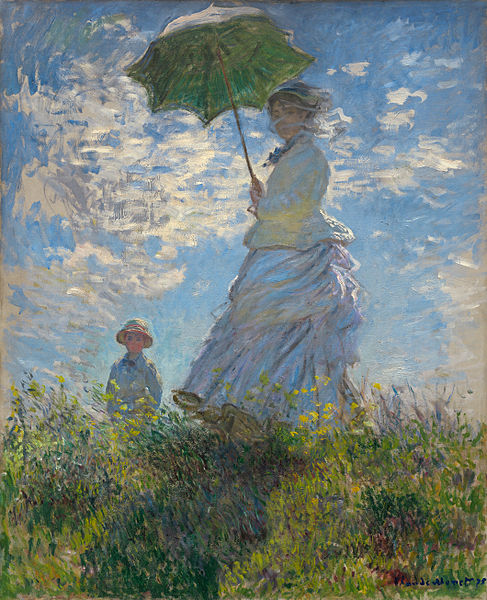
I mean, how on earth could one choose? When you really think about it, it's a silly idea. :)
128absurdeist
What do you think, Muse, Poquette, Tuirgin, anybody else in to impressionism, of starting an "Impressionism Thread," or "Museum Thread" devoted to impressionist paintings, featuring our favorites, talking art, artists, aesthetics (or esthetics), maybe hit the neo-impressionists and their pointillism too? I used to have a ton of books on the subject; lost 'em; but recently found one, and I think I have one of those superb Taschen (sp?) art books focused on impressionism around here somewhere. Anybody interested?
130ChocolateMuse
Por, SO FANTASTIC. Thanks.
131Tuirgin
132absurdeist
133Poquette
>126 ncgraham: Nathan, that Renaissance description is mindblowing. I almost completely relate.
>128 absurdeist: EF, I'd go for an Impressionism thread. Might inspire me to get my art books catalogued. Let's go for it – when everybody is ready.
134anna_in_pdx
I loved the modern/abstract stuff. I had no idea until today, always thought of myself as a traditionalist who likes stuff that looks like stuff, but I guess I appreciate abstract art a lot more than I thought I did. Or maybe I just didn't like the non-abstract choices very much...
People that chose abstract art as their preferred artform tend to be visionsaries. They see things in the world around them and in people that others may miss because they look beyond what is visual only with the eye. They rely on their inner thoughts and feelings in dealing with the world around them instead of on what they are told they should think and feel. They feel freed from the tendancy to be bound by traditional thought and experiences. They look more toward their own ideas and experiences than what they are told by their religious upbringing or from scientific evidence. They tend to like to prove theories themselves instead of relying on the insight or ideas of others. They are not bound by common and mundane, but like to travel and have new experiences. They value intelligence, but they also enjoy a challenge. They can be rather argumentative when they are being forced or feel as if they are being forced to conform.
Hm, I don't know how much this is true, but I think I would like it very much if it were. Except for the last sentence, but that part is already true. :)
135zenomax
Although a surrealist at heart, I am fond of both Impressionsim and (am I allowed to say this?) post impressionsism...
136urania1
137geneg
now, off to take the test!
139anna_in_pdx
140copyedit52
141geneg
Okay, so apparently the key is to unselect the save anyway option. I may have selected it. It said it was worth it, but it isn't. Anyway,
"People that like Islamic art tend to be more traditional people that appreciate keeping patterns that they learned and experienced from their past. It is not to say that they are not innovative personalities, they just do not like to let go of their roots. They like to put new ideas into details and make certain that they will work before sharing them with others. Failure is not something they like to think about because they are more interested in being successful and appreciated for their intelligence. These people can also be or like elaborate things in their life as long as they are tasteful. They tend to prefer geometric patterns and vibrant colors."
Sounds like I'm an arrogant, pompous ass, what with wanting to be appreciated for my intelligence. Maybe I am. Somehow, deep down inside I know being appreciated for my intelligence is a loser for me. One can't be appreciated for something one never had.
142Tuirgin
I also tend to steer clear of sentimentalism in all forms. I like suggestions of meaning rather than explicit messages. I like art. I'm an art-liker.
That quiz didn't play fair, but then again we've had people get all of the possible outcomes.
143anna_in_pdx
http://www.metmuseum.org/Imageshare/ma/regular/DT1326.jpg
http://www.historylink101.com/art/Sandro_Botticelli/images/09_Primavera_jpg.jpg
http://www.dailypictures.info/free-pictures/499/free-wallpapers-pictures/inside-...
http://rgh.cc/albums/userpics/10184/Nude_Descending_a_Staircase.jpg
145Porius
http://farm5.static.flickr.com/4043/4711212874_92bb6d072c_o.jpg
Augustus John
http://greathouselaugharne.files.wordpress.com/2011/05/tumblr_kvqv3jrpv41qzn0deo...
Gwen John
http://www.csupomona.edu/~plin/women2/images/john2_big.jpg
John Butler Yeats
http://www.jssgallery.org/Paintings/Mugs/William_Butler_Yeats.jpg
Walter Sickert
http://www.artunframed.com/images/sickert/ennui.jpg
Vanessa Bell
http://www.jimandellen.org/ellen/Bell.jpg
http://3.bp.blogspot.com/-Fp6TH4Bm6Lw/TaAfsQiVJoI/AAAAAAAABPM/eLRCcs22n6c/s1600/...
http://www.electricgallery.co.uk/uploads/images/bell.jpg
146QuentinTom
147anna_in_pdx
http://celestialkitsune.wordpress.com/2011/07/02/salvator-mundi-a-long-lost-pain...
149ChocolateMuse
Thanks for all the links, Por and Anna.
Those survey results have been fun, whatever their worth. :)
150dchaikin
Have thoughts on the differences between male/female authors (based, I think, on ideas in a parenting book I just read), but not brave enough to post on that yet.
151geneg
152ChocolateMuse
c'mon, be brave. We won't call you sexist... though of course you might get called all sorts of other names...
Maybe Porius and I could co-lead a Davies read, though I'd shine at the administrative side more, I think, while Por could do the headwork.
153ChocolateMuse
It's taken me a long time to get here. Phew.
ETA: And then I just read Martini's review again, and see that the real reason Hoffmann didn't finish the novel was because his own Murr died... which throws a whole different light on my thoughts on the ending.
155QuentinTom
156Porius
157ChocolateMuse
Murrushka, did you notice I used your suggestion of 'spurious'? I'm glad you approve about the aesthetic thing. It needs that paragraph though about aesthetics not being all there is to it.
Por, such remarks are merely self-defence against all your praise. ♥
158Poquette
159ChocolateMuse
From literature imitating music, now an interlude in which music imitates literature: Poulenc's three novelettes. http://youtu.be/JuGpuhGuRlc
160QuentinTom
161ChocolateMuse
And here is Bach's Fuga Canonica. Not contrasting types of themes, but definitely circular and fugueular: http://youtu.be/7-to2Y06r-U
162ChocolateMuse
Here is Rembrandt's Music Party.

I find it very enigmatic. Why is the guy in a turban? And all those books on the floor, have they been pushed down in a heap out of musical enthusiasm? Is the woman beating time with that hand? It probably has some other symbolic meaning I don't recognise. Is the old woman audience or judge?
163QuentinTom
The old woman is listening and enjoying the music, and thinking how she can get her hands on the man's turban, as she is a textile freak.
164Porius
165copyedit52
166PeterKein
167Porius
http://thiswritelife.files.wordpress.com/2010/06/the-musicians-15951.jpg
by Watteau
http://www.wga.hu/art/w/watteau/antoine/1/11charme.jpg
David Hume (1711-1776)
http://www.davemckay.co.uk/philosophy/hume/hume.jpg
R. was 20 when he painted TMP.
168ChocolateMuse
I'm nearing the end of What's Bred in the Bone, and it is the most marvellous thing I have read since Middlemarch (though totally different).
What's more, I'm also reading Rembrandt's Eyes. But don't ask me where I'm at or how I'm going with it - I expect to take forever to read it and not have anyone looking over my shoulder while I do. But it's every bit as amazing as Por says.
There, I've confessed what I'm reading. Maybe I shouldn't have. I've noticed, and this annoys me, that as soon as I've told you people what I'm in the middle of reading, I stop wanting to read it. There's some perverse thing in me that doesn't want other people to know what I'm reading, and then when they do it translates to pressure. It's odd. I don't like it. I can't help it.
I'm also rereading The King Must Die, by Mary Renault. I read it for Year 10 English, and remember impressing my teacher with my homework discussion on the book (I can brag to you, right?). I thought I remembered seeing Mary Renault in some salonista's library, but now can't see who it was, if anyone. Any thoughts on Renault?
169QuentinTom
170Porius
171anna_in_pdx
172ChocolateMuse

Self portrait in a gorget
173QuentinTom
Rembrandt is not my favourite artist, to put it mildly. (I find brown a bit boring...)
174Porius
175ChocolateMuse
Here's what I was reading last night:
Rubens's Descent from the cross
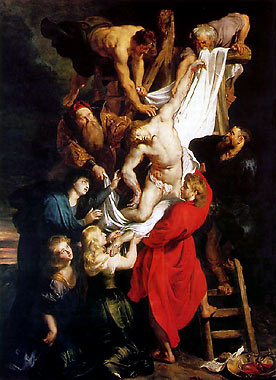
Dramatic, colourful, active, close-up, almost claustrophobic.
And Rembrandt's painting of the same name:

Interestingly, Schama says Rembrandt would have been responding to Rubens's work from an engraving, so he wouldn't have seen Rubens's colours at all. So he was responding to the arrangement of people, who they were and what they were doing. The image of Christ is less heroic, the people are standing around watching, rather than participating.
I agree btw that all the brown is boring. More in the next post.
176slickdpdx
177ChocolateMuse
Rembrandt used earthy models, off the street as it were, even in his religious paintings. After centuries of heroism in historical paintings, and glamorous editing in potraiture, Rembrandt was making a real statement about art's role in depicting people how they were, and also in accessibility to things that happened a long time ago.
Also, for a long time, Rembrandt's art was all about Rubens. He was trying to be Rubens, but at the same time wanted to make his statement about real people and earthiness.
178ChocolateMuse


183ChocolateMuse
184Porius
I wish that I could have read the book like RE in my middle 20's. So. so important.
We have a great Netherlander collection at the DIA. I'm going there tomorrow.
185QuentinTom
but don't let my taste stop you posting more, Choco, it's fascinating reading.
186ChocolateMuse
A big part of this is the realisation that the greatness of art lies in its historical and cultural context. Even that fundamental fact I hadn't quite grasped before now.
Also, from reading this book, the 17th century suddenly feels so recent, as if I can just step into it. That in itself is awesome enough.
187QuentinTom
about the only thing I miss from the UK (apart from me sainted mum) is the national gallery in London. I used to pop in at least three or four times a week (it was free in those days, hope it still is) as I worked just round the corner, and spend 10 mins there looking at one or two paintings only, but really looking. NExt door was the NAtional Portrait Gallery and I spent a lot of time in there as well.
One of my favourites from the NG:
Quentin Matsys

188ChocolateMuse
ETA: it's quite conceivable that Cornish will become a forger later, I guess. If so, I'm not up to that part yet. He is working with a forger already.
189ChocolateMuse
A Grotesque Old Woman (or The Ugly Duchess) is perhaps the best-known of his works. It served as a basis for John Tenniel's depiction of the Duchess in Alice's Adventures in Wonderland. It is likely a depiction of a real person with Paget's disease, though it is sometimes said to be a metaphorical portrait of the Margaret, Countess of Tyrol, who was known as Maultasch, which, though literally translated "satchel mouth", was used to mean "ugly woman" or "whore" (because of her marital scandals).
190QuentinTom
I hope I didn't give away an important plot spoiler of What's bred in the bone (it's been like 20 years since I read it, so my memory of it is a bit vague.....)
191ChocolateMuse
192baswood
It was an eye opener to see the two Descents from the cross #175. What struck me was how classical in design the Rembrandt was compared to the Rubens. Rembrandt's form is almost a perfect triangle while Rubens's painting is a flowing diagonal. So similar yet so different.
193baswood
194Porius
http://www.yesnet.yk.ca/schools/projects/renaissance/durer.html
R
http://www.rembrandtpainting.net/rmbrndt_1620-35/self_portrait_at_29.htm
QM
http://upload.wikimedia.org/wikipedia/commons/d/d9/Quentin_Massys_-_Ill-Matched_...
PPR
http://www.artcyclopedia.com/artists/detail/Detail_rubens_peter_paul.html?nofram...
195anna_in_pdx
196Porius
http://www.youtube.com/watch?v=K5AamGSuh3k
http://www.youtube.com/watch?v=pQO7_9jV1_4&feature=related
http://www.youtube.com/watch?v=tpO_oVtXCa4&feature=related
And finally this ditty catches R's spirit as much as anything
http://www.youtube.com/watch?v=BdalBvgNAxI&feature=related
197ChocolateMuse
As to my little problem with discussing what I'm reading... so far so good! In fact, it's helping!
198QuentinTom
200QuentinTom
201ChocolateMuse
But I was more excited in the first place with visiting the 17th century European works, since my recent discoveries in Rembrandt's Eyes. This being Australia, very few of the great masterworks are available - no Rembrandt, alas - but I did see this one by Rubens:
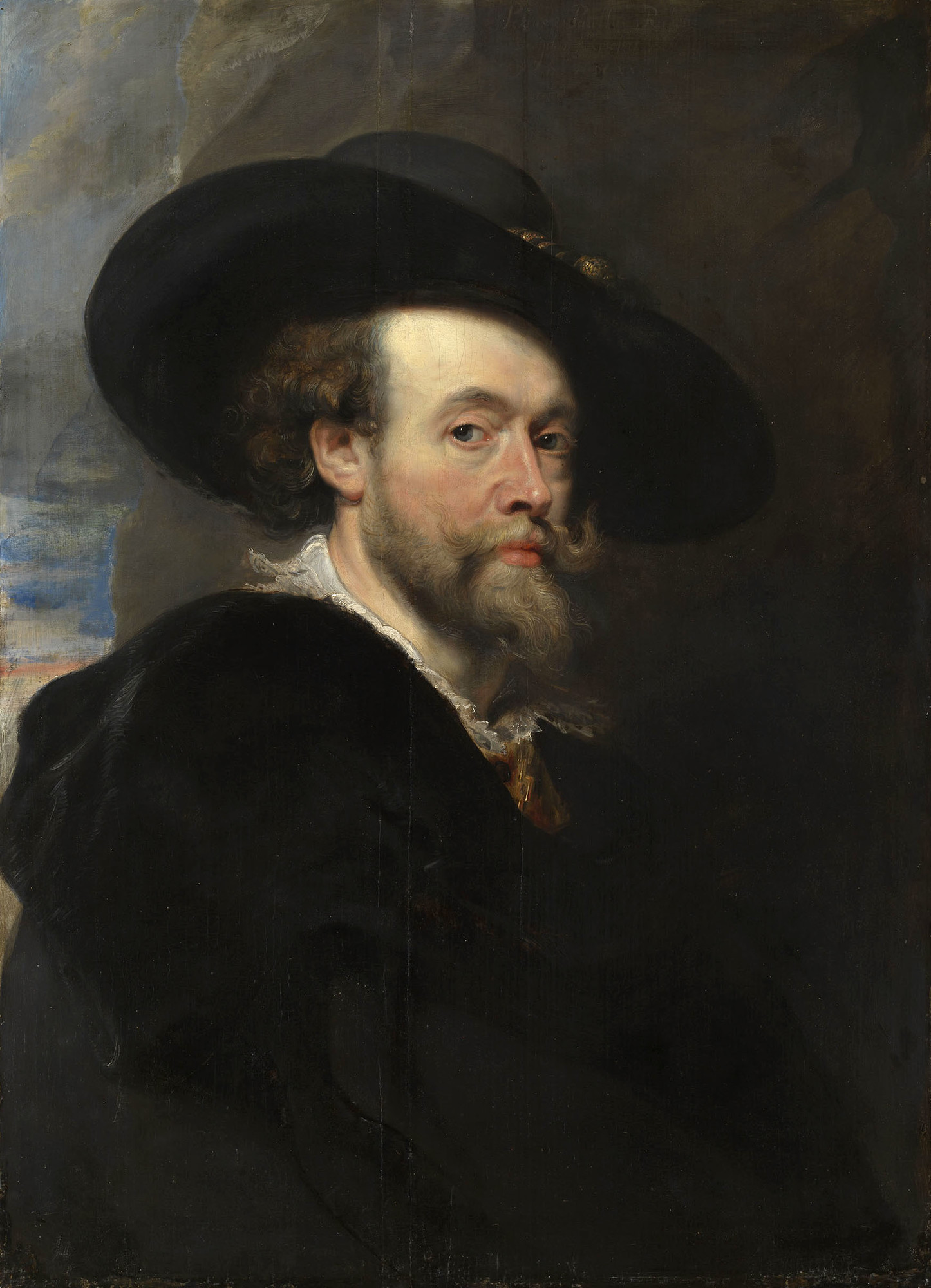
Rubens Self Portrait - On loan to Art Gallery of NSW from National Gallery of Australia, Canberra
It was most exciting. I walked into a little room full of paintings, and this one just glowed. Even the snap-happy tourists who walk around reading the labels and glancing at the paintings took a second look.
Which got me wondering, was it just the kind of paint Rubens used? Surely not. But its special quality was more than anything else the way Rubens' face glows like a jewel in a dark setting. None of the other paintings around it had that radiance - is it just the kind of paint? Is that a really dumb question?
202absurdeist
203Tuirgin
204Macumbeira
205QuentinTom
Roland Barthes on the brightness of Dutch art
Empire of Signs
206ChocolateMuse
207Macumbeira
208QuentinTom
Barthes says lots of good things about Dutch art, scattered throughout his oevre, usually, as here, in parenthesis for another point he making.
:)
209ChocolateMuse
Maybe what I'm looking for is about two hundred books. All excellently written, scholarly without being difficult, detailed but not dense, consistently interesting but not sensational...
Alas. Such things are but a pipe-dream, I suppose.
210Poquette
A different approach might be to select a biography of someone who really interests you, and if it is well done there will be a lot about all those subjects in the context of that individual. Concerning a different time and place, I recently read a biography of Alexander Hamilton by Ron Chernow which was so rich in detail concerning the period of the American founding, that it read like a history as well as a biography. Sorry I couldn't come up with a magic bullet. ;-(
211copyedit52
212QuentinTom
check this out:
http://www.thamesandhudson.com/quicksearch.obyx?searchterm=Baroque&x=0&y...
213Poquette
214ChocolateMuse
215Porius
216QuentinTom
217Macumbeira
Back to business I say: Read - review - learn and enjoy!
Wohoooooooooo
218baswood
219Poquette
220ChocolateMuse
Mac, it's rather nice to be the Salonista at no. 1 Hot Review again :) A couple of non-Salonistas have contacted me on my profile because of it, which is always an excellent thing.
Barry, that's so funny. I read the review again with that in mind, and it was most amusing.
Suzanne, thanks. I'm still waiting for you to read A voice from the attic... :)
Murr you were kind of right with your plot-spoiler above, but not quite, not really, only sort-of. Which means it didn't give anything away at all.
Por, thank you, thank you.
I'm quite attached to this thread, but I probably should start a new one soon, do you think?

