Zoë's 2013 Challenge, Part 1
This topic was continued by Zoë's 2013 Challenge, Part 2.
Talk 75 Books Challenge for 2013
Join LibraryThing to post.
This topic is currently marked as "dormant"—the last message is more than 90 days old. You can revive it by posting a reply.
1_Zoe_
Time for a new start! My 2012 challenge was not the most successful, for reasons described there, but it was a great year anyway. I'm hoping for more good books, fun meetups, and moderate TBR control in 2013 :)
My original introduction has been moved to message 5; this one will now be a list of the books I've read this year.
January
1. The Well of Ascension
2. The Happiness Equation
3. Ender's Game
4. The Normal Bar
February
5. Etiquette and Espionage
6. Zeitoun
March
7. For Better
8. The Heavenly Writing
9. A Billion Wicked Thoughts: What the Internet Tells Us about Sexual Relationships
10. Asklepios, Medicine, and the Politics of Healing in Fifth-Century Greece
April
11. Reading and Writing in Babylon
12. The Rithmatist
13. John Lydus and the Roman Past: Antiquarianism and Politics in the Age of Justinian
14. Lean In: Women, Work, and the Will to Lead
15. Good Omens
May
16. Tiger Babies Strike Back
17. Things Fall Apart
18. The Spark
June
19. Blood of Tyrants
20. Paying For It
21. Going Solo
22. March
23. Happy Money: The Science of Smarter Spending
July
24. Little Women
25. Dollars and Sex
26. Nothing to Envy
27. End of the Good Life
August
28. The Life List
29. How Children Learn Language
30. The Rosie Project
31. Historiography: An Introduction
32. Yes You Can! Your Guide to Becoming an Activist
My original introduction has been moved to message 5; this one will now be a list of the books I've read this year.
January
1. The Well of Ascension
2. The Happiness Equation
3. Ender's Game
4. The Normal Bar
February
5. Etiquette and Espionage
6. Zeitoun
March
7. For Better
8. The Heavenly Writing
9. A Billion Wicked Thoughts: What the Internet Tells Us about Sexual Relationships
10. Asklepios, Medicine, and the Politics of Healing in Fifth-Century Greece
April
11. Reading and Writing in Babylon
12. The Rithmatist
13. John Lydus and the Roman Past: Antiquarianism and Politics in the Age of Justinian
14. Lean In: Women, Work, and the Will to Lead
15. Good Omens
May
16. Tiger Babies Strike Back
17. Things Fall Apart
18. The Spark
June
19. Blood of Tyrants
20. Paying For It
21. Going Solo
22. March
23. Happy Money: The Science of Smarter Spending
July
24. Little Women
25. Dollars and Sex
26. Nothing to Envy
27. End of the Good Life
August
28. The Life List
29. How Children Learn Language
30. The Rosie Project
31. Historiography: An Introduction
32. Yes You Can! Your Guide to Becoming an Activist
2_Zoe_
Goals
The ER and Vine lists will consist of books that I need to read; the others will consist of books that I have read.
Get through all outstanding ER and Vine books
ER TBR
The Voluntourist
The Human Genome
Yes You Can! Your Guide to Becoming an Activist
Across the Endless River
Vine TBR
Will Sparrow's Road
Transhumanist Dreams and Dystopian Nightmares
The Knockoff Economy
Read more ancient history books
1. The Heavenly Writing
2. Asklepios, Medicine, and the Politics of Healing in Fifth-Century Greece
3. Reading and Writing in Babylon
4. John Lydus and the Roman Past: Antiquarianism and Politics in the Age of Justinian
Read more literary classics
Things Fall Apart
*Little Women
Read books acquired in previous years
1. The Well of Ascension (2008)
2. The Happiness Equation (2011)
3. The Heavenly Writing (2009)
4. Reading and Writing in Babylon (2010)
5. Nothing to Envy (2011)
Read books I keep meaning to read
1. The Well of Ascension
2. Ender's Game
3. The Heavenly Writing
4. Good Omens
5. Nothing to Envy
Read books from list of best fantasy and science fiction of the 20th and 21st centuries
Science Fiction
1. Ender's Game
Fantasy
1. Good Omens
The ER and Vine lists will consist of books that I need to read; the others will consist of books that I have read.
Get through all outstanding ER and Vine books
ER TBR
The Voluntourist
The Human Genome
Yes You Can! Your Guide to Becoming an Activist
Across the Endless River
Vine TBR
Will Sparrow's Road
Transhumanist Dreams and Dystopian Nightmares
The Knockoff Economy
Read more ancient history books
1. The Heavenly Writing
2. Asklepios, Medicine, and the Politics of Healing in Fifth-Century Greece
3. Reading and Writing in Babylon
4. John Lydus and the Roman Past: Antiquarianism and Politics in the Age of Justinian
Read more literary classics
Things Fall Apart
*Little Women
Read books acquired in previous years
1. The Well of Ascension (2008)
2. The Happiness Equation (2011)
3. The Heavenly Writing (2009)
4. Reading and Writing in Babylon (2010)
5. Nothing to Envy (2011)
Read books I keep meaning to read
1. The Well of Ascension
2. Ender's Game
3. The Heavenly Writing
4. Good Omens
5. Nothing to Envy
Read books from list of best fantasy and science fiction of the 20th and 21st centuries
Science Fiction
1. Ender's Game
Fantasy
1. Good Omens
3_Zoe_
Acquired
Personal Reading
January
1.Ender's Game
2.The Normal Bar (Vine)
3.Etiquette and Espionage
4.Zeitoun
5. Brainiac
6. Linguistics for Non-Linguists
7. Last Stand: George Bird Grinnell, the Battle to Save the Buffalo, and the Birth of the New West
8. The Crossword Obsession
9. A History of Knowledge
10. The Arabian Nights Encyclopedia, volume 2
February
11.For Better: How the Surprising Science of Happy Couples Can Help Your Marriage Succeed
12. What They Didn't Teach You in Graduate School
March
13.A Billion Wicked Thoughts: What the Internet Tells Us about Sexual Relationships
14. Lewis Carroll in Numberland
15. Beautiful Crescent
16.The Rithmatist (Vine)
April
17.Things Fall Apart
18.Tiger Babies Strike Back (ER)
19. The Neatest Little Guide to Stock Market Investing
20.Lean In
21. Mismatch
22. Dangerous Knowledge (already read)
23. Born to Kvetch
May
24. The Border Guide
25.The Spark (Vine)
26.Blood of Tyrants (Vine)
27.The End of the Good Life
June
28. Midnight in the Garden of Good and Evil
29. Not Out of Africa
30. Rubaiyat of Omar Khayyam, and the Salaman and Absal of Jami
31. Babel No More: The Search for the World's Most Extraordinary Language Users
32. Going Solo: The Extraordinary Rise and Surprising Appeal of Living Alone
33. Mirage: Napoleon's Scientists and the Unveiling of Egypt
34.Paying For It: A Comic-Strip Memoir About Being a John
35. Blood and Thunder: The Epic Story of Kit Carson and the Conquest of the American West
36. H.M.S. Surprise
37.March
38. Jonathan Strange and Mr. Norrell
39. Best Bondage Erotica 2013
40. Les Misérables
41.Happy Money
July
42.How Children Learn Language
43.Historiography: An Introduction
44. Beginning Theory
August
45. The XX Factor (Vine)
46.The Life List (Vine)
47.The Rosie Project (Vine)
Personal Reference
1. 365 Questions for Couples
2. Discover New York City
3. 103 Great Poems
School-related
January
1. Roman Medicine
2. Myth and Thought Among the Greeks
3. Thunder in Gemini
February
4. The Egyptian Hermes
5. Science as Social Knowledge
6. Magic in the Roman World
7. Figural Realism
March
8. Divining the Etruscan World
9. Gods, Demons, and Symbols of Ancient Mesopotamia
10. Dictionary of the Philosophy/Religion
11. History, Prophecy, and the Stars
April
12. The Greek Magical Papyri in Translation
13. On Celestial Signs
May
14. Egypt gods
15. Star of Bethelehem
16. Egypt after the Pharaohs
June
17. Inanna, Queen of Heaven and Earth
18. The Poems of Catullus: A Bilingual Edition
19. Life in the Ancient Near East
(all the free books)
Atlas
July
The Weather Omens of Enuma Anu Enlil
Prophecy in the Ancient Near East
The Way and the Word
Art of the First Cities
Personal Reading
January
1.
2.
3.
4.
5. Brainiac
6. Linguistics for Non-Linguists
7. Last Stand: George Bird Grinnell, the Battle to Save the Buffalo, and the Birth of the New West
8. The Crossword Obsession
9. A History of Knowledge
10. The Arabian Nights Encyclopedia, volume 2
February
11.
12. What They Didn't Teach You in Graduate School
March
13.
14. Lewis Carroll in Numberland
15. Beautiful Crescent
16.
April
17.
18.
19. The Neatest Little Guide to Stock Market Investing
20.
21. Mismatch
22. Dangerous Knowledge (already read)
23. Born to Kvetch
May
24. The Border Guide
25.
26.
27.
June
28. Midnight in the Garden of Good and Evil
29. Not Out of Africa
30. Rubaiyat of Omar Khayyam, and the Salaman and Absal of Jami
31. Babel No More: The Search for the World's Most Extraordinary Language Users
32.
33. Mirage: Napoleon's Scientists and the Unveiling of Egypt
34.
35. Blood and Thunder: The Epic Story of Kit Carson and the Conquest of the American West
36. H.M.S. Surprise
37.
38. Jonathan Strange and Mr. Norrell
39. Best Bondage Erotica 2013
40. Les Misérables
41.
July
42.
43.
44. Beginning Theory
August
45. The XX Factor (Vine)
46.
47.
Personal Reference
1. 365 Questions for Couples
2. Discover New York City
3. 103 Great Poems
School-related
January
1. Roman Medicine
2. Myth and Thought Among the Greeks
3. Thunder in Gemini
February
4. The Egyptian Hermes
5. Science as Social Knowledge
6. Magic in the Roman World
7. Figural Realism
March
8. Divining the Etruscan World
9. Gods, Demons, and Symbols of Ancient Mesopotamia
10. Dictionary of the Philosophy/Religion
11. History, Prophecy, and the Stars
April
12. The Greek Magical Papyri in Translation
13. On Celestial Signs
May
14. Egypt gods
15. Star of Bethelehem
16. Egypt after the Pharaohs
June
17. Inanna, Queen of Heaven and Earth
18. The Poems of Catullus: A Bilingual Edition
19. Life in the Ancient Near East
(all the free books)
Atlas
July
The Weather Omens of Enuma Anu Enlil
Prophecy in the Ancient Near East
The Way and the Word
Art of the First Cities
5_Zoe_
For those of you who don't know me, I'm a PhD student in ancient history, though that's only partially reflected in my reading (about 12% of my 2012 list was school-related). I only list completed books here, not articles or book parts, though I periodically consider changing that policy.
The books here will be split about 50/50 between fiction and non-fiction. Pretty much anything goes on the non-fiction side, while I'm more picky about fiction. I read a lot of fantasy (adult or YA), but also various other stuff. I'm hoping to read both more classics and more regency romances in 2013 ;).
Here are some of my standout books of 2012:
The Snow Child
The Defining Decade: Why Your Twenties Matter and How to Make the Most of Them Now
Fire
You Are an Ironman
Some Girls: My Life in a Harem
Marcelo in the Real World
Temeraire rereads
The Future of Us
Cotillion
Cannery Row
Interestingly, these aren't always the books that I rated most highly, but the ones that stuck with me most for whatever reason.
I have a few reading goals for 2013:
1. Get through all outstanding ER and Vine books
2. Read more ancient history books
3. Read more literary classics
4. Read books acquired in previous years
5. Read books I keep meaning to read
I've signed up for the 13 in 13 category challenge as well, but that won't be a huge focus this year.
Once the year starts, I'll move this message somewhere else and use this thread to keep track of the books I've actually read.
The second message will list progress toward my 5 goals, and the third message will list books I've acquired in 2013. I may also make lists of monthly goals, but maybe not.
Sorry for the huge introduction!
The books here will be split about 50/50 between fiction and non-fiction. Pretty much anything goes on the non-fiction side, while I'm more picky about fiction. I read a lot of fantasy (adult or YA), but also various other stuff. I'm hoping to read both more classics and more regency romances in 2013 ;).
Here are some of my standout books of 2012:
The Snow Child
The Defining Decade: Why Your Twenties Matter and How to Make the Most of Them Now
Fire
You Are an Ironman
Some Girls: My Life in a Harem
Marcelo in the Real World
Temeraire rereads
The Future of Us
Cotillion
Cannery Row
Interestingly, these aren't always the books that I rated most highly, but the ones that stuck with me most for whatever reason.
I have a few reading goals for 2013:
1. Get through all outstanding ER and Vine books
2. Read more ancient history books
3. Read more literary classics
4. Read books acquired in previous years
5. Read books I keep meaning to read
I've signed up for the 13 in 13 category challenge as well, but that won't be a huge focus this year.
Once the year starts, I'll move this message somewhere else and use this thread to keep track of the books I've actually read.
The second message will list progress toward my 5 goals, and the third message will list books I've acquired in 2013. I may also make lists of monthly goals, but maybe not.
Sorry for the huge introduction!
8cyderry
Good luck on achieving your goals!
I could stand to steal a few of them for myself - ER/ARCs, classics, previous years acquisitions. I'm hoping that the ROOT challenge will help with the last one. I have 5 classics lined up - hope to get through them but classics aren't normally my cup of tea. ERs just keep coming.
I could stand to steal a few of them for myself - ER/ARCs, classics, previous years acquisitions. I'm hoping that the ROOT challenge will help with the last one. I have 5 classics lined up - hope to get through them but classics aren't normally my cup of tea. ERs just keep coming.
9_Zoe_
Thanks!
I've fortunately(?) fallen far enough behind that ER books don't tend to come anymore, but I'm afraid that my progress will turn out to be self-defeating: as I get through the backlog, I may start winning more.
Five would also be a good number of classics for me, or maybe six: one every other month. They're not something I normally read either, but when I tried to make a list of what I really meant to read, I found that a lot of them turned up there. I did enjoy the one Steinbeck book I read this year, so there's some hope.
I may have to look at ROOT as well. I'm generally not good at keeping up with multiple challenge threads, but we'll see.
I've fortunately(?) fallen far enough behind that ER books don't tend to come anymore, but I'm afraid that my progress will turn out to be self-defeating: as I get through the backlog, I may start winning more.
Five would also be a good number of classics for me, or maybe six: one every other month. They're not something I normally read either, but when I tried to make a list of what I really meant to read, I found that a lot of them turned up there. I did enjoy the one Steinbeck book I read this year, so there's some hope.
I may have to look at ROOT as well. I'm generally not good at keeping up with multiple challenge threads, but we'll see.
10avatiakh
Read books I keep meaning to read
Hi Zoe, I can understand your reading goals especially this one. I have a whole shelf dedicated to these books that I barely glance at. Maybe this year I'll use TIOLI to only choose from them.
Hi Zoe, I can understand your reading goals especially this one. I have a whole shelf dedicated to these books that I barely glance at. Maybe this year I'll use TIOLI to only choose from them.
11SqueakyChu
> 9
Hi Zoe!
For sure, I'll be following your progress.
I'm going to vouch for the ROOTS challenge. It's the one challenge that's made me feel guilty enough about my older unread books in order to go back and tackle them. I even read Cold Mountain in 2012! I'm so proud of that.
I've stopped picking ER books as I'm already too embarrassed about those I've already not completed reviews on. I know I can win more, but I think it would be better for me to either buckle down with those I have or give them each a review as to why I haven't finished them.
Hi Zoe!
For sure, I'll be following your progress.
I'm going to vouch for the ROOTS challenge. It's the one challenge that's made me feel guilty enough about my older unread books in order to go back and tackle them. I even read Cold Mountain in 2012! I'm so proud of that.
I've stopped picking ER books as I'm already too embarrassed about those I've already not completed reviews on. I know I can win more, but I think it would be better for me to either buckle down with those I have or give them each a review as to why I haven't finished them.
12Kassilem
Wanted to drop by and say I'll be here this year too. We still share reading interests :) I'll try and do less lurking and more talking too! Good luck with your reading this year.
13UnrulySun
Starred! Hopefully I can keep up with your thread better this year. :) Great goals, btw, all of them.
15cameling
Hi Zoe, starring you and will try to do more than lurk on your thread in 2013 as I've been doing this year.
16Tanglewood
I love Kristin Cashore! I've picked up her latest Bitterblue, but I haven't had a chance to read it yet. I'll definitely be following your thread.
17ErisofDiscord
Found you and starred! I hope I'm able to keep good track of your reading adventures this year, Zoe. :)

19Kassilem
Oh, I just saw your link for the best sci-fi and fantasy books in the 20th and 21st century. I may have to pull some books off that list myself. :) Thanks! Looking forward to seeing what you get to.
20alcottacre
Checking in on the new thread, Zoe!
21Ape
Hi Zoe! I look forward to following you for another year, and gazing at the pictures of the gazillions of LTers you meet all the time. :)
22dk_phoenix
I'm here, I'm here!!! Your thread tends to be a danger zone for me... so, naturally, I eagerly await the book bullets as they are indeed inevitable...
23The_Hibernator
HAPPY NEW YEAR ZOE!
24norabelle414
Happy New Year, Zoe!
26_Zoe_
Happy New Year, everyone! And thank you all for stopping by. It makes me very happy to have visitors even as I tend to neglect the thread myself. Hopefully I'll do better this year at keeping up with both comments and books.
>16 Tanglewood: I'll look forward to hearing your thoughts on Bitterblue. I have to admit that it was not my favourite book of the year, despite loving Fire.
>19 Kassilem: I was glad when that fantasy/sf list suddenly appeared, because reading from there should help me with my goal of reading books I really "should" have read while also sticking to genres that I enjoy more. And I'm glad you like it too :)
>21 Ape: gazing at the pictures of the gazillions of LTers you meet all the time.
This made me laugh. I guess I do meet a good number of LTers. I'm already looking forward to this year's Philadelphia meetup, which should be huge and amazing.
>16 Tanglewood: I'll look forward to hearing your thoughts on Bitterblue. I have to admit that it was not my favourite book of the year, despite loving Fire.
>19 Kassilem: I was glad when that fantasy/sf list suddenly appeared, because reading from there should help me with my goal of reading books I really "should" have read while also sticking to genres that I enjoy more. And I'm glad you like it too :)
>21 Ape: gazing at the pictures of the gazillions of LTers you meet all the time.
This made me laugh. I guess I do meet a good number of LTers. I'm already looking forward to this year's Philadelphia meetup, which should be huge and amazing.
27_Zoe_
>25 qebo: Well, I figure it's fewer goals than a category challenge, so it should be more manageable? I did sign up for 13 in 13 as well, but I'm not going to focus on that as much as I have in some years.
28rosalita
Happy New Year, Zoë! I'm looking forward to following your reading and other adventures this year.
33_Zoe_

1. The Well of Ascension by Brandon Sanderson.
Blah. This was not a good way to start the year. I've enjoyed lots of Sanderson's other books, and have been meaning to read this one for years, but... well, there's a reason I waited almost four years to read this second Mistborn book. I just didn't love the first one that much, and these books are long. I must have been reading this for at least a week (the last book I finished was Dec. 26), and a week is long when I'm on vacation.
I wouldn't have minded so much if it had built to a satisfying resolution. There were lots of intriguing mysteries concerning what exactly was going on in the world, and worldbuilding and magic systems are Sanderson's strengths. I'm sure the answers are very interesting. But this is very clearly a second book, and there are no answers here. Now I just feel frustrated after investing so much time in it, and I really don't feel like starting the third one immediately.
I've spent a lot of time lately trying to read books that I "should" read: ones where I owe reviews, or just ones that I acquired a while ago, and particularly ones that I happen to have on hand, to minimize transport problems. I'm looking forward to reading a bit more freely next week. And then, when I get back to New York in February, I may go crazy and buy a huge pile of books that I really want to read immediately. The limitations are frustrating.
34ronincats
Sorry that book wasn't that captivating. I have about 5 books by Sanderson, and the only one I've ever read is Alcatraz versus the Evil Librarians. Which ones would you recommend for reading? I have Mistborn, Warbreaker, Elantris, The Way of Kings, and The Well of Ascension. Of the middle three, where should I start?
35jadebird
I almost picked that one up the other day. I've not read any Sanderson. Sounds like The Well of Ascension is not the one to start with.
36LordKinbote
I hate when my first read of a year less than thrills me.
I actually just wanted to echo the thanks for the link to the sci fi/fantasy list. I do read a fair bit of that genre but somehow have managed to miss many of the classics and I love having a list to attack!
Hope your next read is better than the last.
I actually just wanted to echo the thanks for the link to the sci fi/fantasy list. I do read a fair bit of that genre but somehow have managed to miss many of the classics and I love having a list to attack!
Hope your next read is better than the last.
37foggidawn
#34 -- I'd recommend Elantris. Warbreaker is on my TBR shelf, so I don't know about it, but I found The Way of Kings to be slow going.
38swynn
I have a few Sanderson books on my shelf, but I keep putting them off because of their size. Too bad to hear that that one didn't pay off, considering the time invested.
39Kassilem
>33 _Zoe_:. Zoe, I'm sorry the book wasn't to your liking. I had a hard time getting through the book too. I found that listening to the book helped me a little (I'm almost done listening to the last book). I can't even pin point why I didn't like the first abd second books that much. Looking back on it I can see it's a great story. Maybe I just never got into the characters. Or maybe it's too political for me? I still can't pinpoint it. I loved Warbreaker so I don't really understand why this series did't click.
> 34. Roni, as I mentioned above, my favorite of Sanderson book right now is Warbreaker, so that's my recommendation for what it's worth. :)
> 34. Roni, as I mentioned above, my favorite of Sanderson book right now is Warbreaker, so that's my recommendation for what it's worth. :)
40_Zoe_
>34 ronincats: I'd probably recommend Elantris to start with; I loved that one, and I think it's his first published book, so it makes sense as a starting point. But I also loved Warbreaker (maybe not quite as much), so that would work too.
>35 jadebird: Yeah, definitely do not start with Well of Ascension. Even if I had enjoyed it, it's the second in a series.
>36 LordKinbote: I'm really glad that that sf/fantasy list was just created. I've also missed far too many of the classics, so I'm hoping to remedy that year. I was thinking I might try to read one from that list every other month, and a more literary classic on the alternate moths.
>39 Kassilem: I think the characters were too black and white (Zane was the most interesting, and we didn't get enough time with him) and the writing was mediocre. Sanderson's habit of starting sentences with "and" or "but" followed by a comma drove me crazy. But I might have forgiven all that if there had just been some exciting revelation at the end of the book, or some sort of resolution to more of the mysteries. And there wasn't really--the one big thing wasn't particularly surprising or satisfying, and just created more uncertainties rather than providing answers. (Imagine if those last two sentences of mine had had a comma following the first word--ick.)
>35 jadebird: Yeah, definitely do not start with Well of Ascension. Even if I had enjoyed it, it's the second in a series.
>36 LordKinbote: I'm really glad that that sf/fantasy list was just created. I've also missed far too many of the classics, so I'm hoping to remedy that year. I was thinking I might try to read one from that list every other month, and a more literary classic on the alternate moths.
>39 Kassilem: I think the characters were too black and white (Zane was the most interesting, and we didn't get enough time with him) and the writing was mediocre. Sanderson's habit of starting sentences with "and" or "but" followed by a comma drove me crazy. But I might have forgiven all that if there had just been some exciting revelation at the end of the book, or some sort of resolution to more of the mysteries. And there wasn't really--the one big thing wasn't particularly surprising or satisfying, and just created more uncertainties rather than providing answers. (Imagine if those last two sentences of mine had had a comma following the first word--ick.)
41dk_phoenix
Oh, wow! I'm surprised to hear you didn't like Well of Ascension. I remember finishing it and immediately running off to grab Hero of Ages. Loved the resolution of the trilogy, overall... but I'm a huge fan of the magic system, so maybe that colored my appreciation. :)
42_Zoe_
>41 dk_phoenix: Yeah, I was surprised too, given how high the rating is. I wonder whether it was influenced by how slowly I read? If I'd read faster, it almost certainly wouldn't have seemed as draggy.
43Tanglewood
I didn't like Well of Ascension as much as the others in the series (I gave it 3 stars, the other two 4 stars). I did feel the third book made up for it though.
44_Zoe_
>43 Tanglewood: That's very reassuring to hear. I'm still planning to finish the trilogy eventually, but I think it will take me a little while to work up the motivation.
45bluesalamanders
Zoe - I hated the end of Well of Ascension so much! I don't like the end of the third book, either, to be honest. I choose to think of Mistborn as a standalone.
46_Zoe_
>45 bluesalamanders: I'm glad it's not just me. I think I'm still going to read the third one eventually, though. I might have left the trilogy alone after Mistborn if he hadn't kept writing books in that world--I feel like I should finish with the first trilogy before going on to The Alloy of Law.
47_Zoe_
2. The Happiness Equation by Nick Powdthavee.
I just didn't enjoy this book. Even though it's the sort of topic that I usually like, I found myself struggling to get through it so that I could write my review. At first I thought that the problem might be the writing: Powdthavee sometimes writes like a mathematician (or economist?), with an extreme precision that can actually get in the way of the reading. On further reflection, though, I think the problem is deeper than that: I sometimes just didn't find the concepts convincing. For example, a couple of chapters are devoted to the idea of assigning a monetary value to the happiness effect of certain events: getting married, or the death of a child. Powdthavee lays out an initial approach that comes up with certain values, and then says that there's another factor that needs to be taken into account, leading to a revision of the numbers. The difference is several orders of magnitude: something like $100,000 vs. $5000. And the way he presented it didn't make it clear to me that the "final" answer was any more complete than the initial attempt. If different methods can lead to such different outcomes, I found myself wondering whether the entire idea was meaningful at all.
On a similar note, Powdthavee makes a big deal about how having children doesn't really make us happy, despite all the common opinion to the contrary. This is a theme that persists throughout the whole book. And then there are a couple of pages toward the end where he introduces the concept of life satisfaction. He says that even things that don't make us happy per se can lead to greater life satisfaction, while things that do make us happy, like watching television, may do nothing for our overall satisfaction with life. This seems like a huge issue to me, and again made me question the point of the whole book. Maybe "happiness" isn't what we should be focusing on after all, and then the results won't seem as surprising. I'm personally a lot more concerned about my overall life satisfaction than I am about my happiness at any given moment. I'd rather go through the difficult experience of raising children than spend my life watching television. I don't think Powdthavee's treatment of this issue was nearly sufficient; as with the whole book, I was left with the impression that he had somehow missed the mark.
On the bright side, that's one old ER book out of the way, and I'm currently reading two non-ER books that I'm enjoying much more.
49sjmccreary
Well, your review was interesting, at least, even if the book wasn't so much.
50SqueakyChu
To me, happiness is getting a mediocre ER book read and having the ability to move on to better reads! :D
51qebo
47: Happiness gets entangled with pleasure and mood, which are more momentary and emotional. Would sure seem to be a short term / instant gratification vs long term / delayed gratification issue, with a cognitive component for general satisfaction about where you're going or where you've been even if this particular moment is difficult. Also it's completely possible to hold two ideas simultaneously, e.g. this problem is really frustrating but I'll be so pleased if I solve it.
53thornton37814
Saw your post about the happiness book on the same day that those of us in the Knoxville television viewing area discovered that Knoxville is one of the "happiest" cities in which to work.
54_Zoe_
>48 MickyFine: Here's to that!
>49 sjmccreary: Thanks, Sandy!
>50 SqueakyChu: Hehe, I like that.
>51 qebo: Yup. Interesting and complicated issues.
>52 jadebird: Thanks, I hope so too.
>53 thornton37814: How did they measure that?
Good book news:
1) I unexpectedly received an ARC of Gail Carriger's Etiquette and Espionage yesterday, thanks to a link that Nora had posted recently
2) I learned that the next Temeraire book is coming out in August, which is sooner than I had expected.
Happiness :)
>49 sjmccreary: Thanks, Sandy!
>50 SqueakyChu: Hehe, I like that.
>51 qebo: Yup. Interesting and complicated issues.
>52 jadebird: Thanks, I hope so too.
>53 thornton37814: How did they measure that?
Good book news:
1) I unexpectedly received an ARC of Gail Carriger's Etiquette and Espionage yesterday, thanks to a link that Nora had posted recently
2) I learned that the next Temeraire book is coming out in August, which is sooner than I had expected.
Happiness :)
55norabelle414
Yaaaaaay!
56thornton37814
Zoe - re: happiest cities. Here's the Forbes article: http://www.forbes.com/sites/jacquelynsmith/2013/01/09/the-happiest-and-unhappies...
59dk_phoenix
Oh my gosh!!! An ARC of Espionage and Etiquette?! I am immensely jealous. But also VERY eager to hear your thoughts...!
62tapestry100
I got an ARC of Etiquette and Espionage from a friend of mine and am reading it right now. I won't spoil anything, but I will say I'm enjoying just as much as I did her Parasol Protectorate series!
63_Zoe_
Behind as usual! When I have a chance, I'll post pictures from a mini LT meetup with Jonathan that happened on Saturday. Books were purchased. I haven't yet started E&E, but I did manage to get one book finished during a long bus ride from LA to Oakland.

3. Ender's Game by Orson Scott Card.
My brother was shocked to learn that I hadn't read this, and with a movie coming out this year, it seemed like it was past time. This is the story of a child genius who's being trained as a military commander to fight off an alien species that poses an existential threat to the human race. The people in power have been trying for a long time to produce *the* leader they need, someone with a tricky balance of abilities, and they're willing to do whatever it takes to make sure Ender becomes who he has to be. This often means that he's isolated and not allowed to form friendships with the other students, or just generally made miserable, which made the middle of the book rather bleak reading. I loved the beginning, though, with its theme that I generally enjoy: a child with exceptional abilities goes to what's essentially a boarding school, struggles against adversity, and ultimately succeeds by virtue of being awesome. Toward the end I started to have doubts about whether the various unexplained aspects of the book would come together into a satisfactory whole, but it actually did work in the end, and I came away from the book very satisfied. I don't even know if I'll read the sequel, just because the ending already works so well. This wasn't always a pleasant read, but I'm ultimately very glad that I did read it, and would recommend it to others.
Rating: 4/5

3. Ender's Game by Orson Scott Card.
My brother was shocked to learn that I hadn't read this, and with a movie coming out this year, it seemed like it was past time. This is the story of a child genius who's being trained as a military commander to fight off an alien species that poses an existential threat to the human race. The people in power have been trying for a long time to produce *the* leader they need, someone with a tricky balance of abilities, and they're willing to do whatever it takes to make sure Ender becomes who he has to be. This often means that he's isolated and not allowed to form friendships with the other students, or just generally made miserable, which made the middle of the book rather bleak reading. I loved the beginning, though, with its theme that I generally enjoy: a child with exceptional abilities goes to what's essentially a boarding school, struggles against adversity, and ultimately succeeds by virtue of being awesome. Toward the end I started to have doubts about whether the various unexplained aspects of the book would come together into a satisfactory whole, but it actually did work in the end, and I came away from the book very satisfied. I don't even know if I'll read the sequel, just because the ending already works so well. This wasn't always a pleasant read, but I'm ultimately very glad that I did read it, and would recommend it to others.
Rating: 4/5
64norabelle414
Hooray! Ender's Game!
65Tanglewood
It's been years since I read this. I might do a re-read before the movie comes out.
66_Zoe_
Has anyone else read the sequels, and are they recommended?
Belatedly, here's the damage from my meetup with Jonathan last Saturday:
Zeitoun ($1.50)
Brainiac ($1)
Linguistics for Non-Linguists ($1)
Last Stand: George Bird Grinnell, the Battle to Save the Buffalo, and the Birth of the New West ($2)
The Crossword Obsession ($2)
Roman Medicine ($4.50)
Myth and Thought Among the Greeks ($6)
Then on my trip to LA, I bought a few other books:
A History of Knowledge
Thunder in Gemini
The Arabian Nights Encyclopedia, volume 2
So basically all my plans for moderation in the new year are ruined already, and I somehow have to transport all these books back to New York. I think it was a bit of a backlash against my restrained book-buying last year. And the booksale books were just so cheap.
Belatedly, here's the damage from my meetup with Jonathan last Saturday:
Zeitoun ($1.50)
Brainiac ($1)
Linguistics for Non-Linguists ($1)
Last Stand: George Bird Grinnell, the Battle to Save the Buffalo, and the Birth of the New West ($2)
The Crossword Obsession ($2)
Roman Medicine ($4.50)
Myth and Thought Among the Greeks ($6)
Then on my trip to LA, I bought a few other books:
A History of Knowledge
Thunder in Gemini
The Arabian Nights Encyclopedia, volume 2
So basically all my plans for moderation in the new year are ruined already, and I somehow have to transport all these books back to New York. I think it was a bit of a backlash against my restrained book-buying last year. And the booksale books were just so cheap.
68JDHomrighausen
I STILL feel proud that I found that book on Greek myth for you. And don't worry, the damage you sustained was nothing like mine. *sigh*
I will post photos on the meetup thread. I'm glad I got to see you again and expose you to the cultural experience of In 'N Out fast food.
I will post photos on the meetup thread. I'm glad I got to see you again and expose you to the cultural experience of In 'N Out fast food.
69_Zoe_
>67 kidzdoc: Ha! This may be a return to my more natural state. There's a reason I have more than 800 books tagged "unread".... I've been making an effort recently to acquire fewer books, but I can't always sustain it in the face of ridiculous bargains. I can handle new or even regular used bookstores, but at sales where prices get into the $1-2 range it's sort of futile to resist. Clearly this is all Jonathan's fault for taking me there.
In other news, one of the reasons I bought Zeitoun is because I've just booked a trip to New Orleans for spring break! I'll be asking you for book and bookstore and general activity recommendations in the near future :)
>68 JDHomrighausen: That was definitely the best find of the day!
In other news, one of the reasons I bought Zeitoun is because I've just booked a trip to New Orleans for spring break! I'll be asking you for book and bookstore and general activity recommendations in the near future :)
>68 JDHomrighausen: That was definitely the best find of the day!
70kidzdoc
>69 _Zoe_: You demonstrated an amazing amount of restraint during our combined SF/Berkeley bookstore trips in November. However, like a true New Yorker you took advantage of a good sale, so you are to be commended for that.
I'm glad to hear that you've decided to visit New Orleans! I'll be happy to recommend restaurants, places to visit and things to do (and avoid). I didn't go to any bookstores when I went there in October, but I do know of a couple of shops in the French Quarter and Garden District that sounded appealing.
Right now I'm reading The Accidental City: Improvising New Orleans by Lawrence Powell, which is a history of the city's early history from its first settlement by Europeans to 1812. I'll finish it no later than this weekend, and review it on my thread.
You may also want to touch base with Jane (janepriceestrada) from Club Read; she's from nearby Houma, Louisiana and lives in NYC. She gave me several good recommendations for restaurants and music venues last year.
I'm glad to hear that you've decided to visit New Orleans! I'll be happy to recommend restaurants, places to visit and things to do (and avoid). I didn't go to any bookstores when I went there in October, but I do know of a couple of shops in the French Quarter and Garden District that sounded appealing.
Right now I'm reading The Accidental City: Improvising New Orleans by Lawrence Powell, which is a history of the city's early history from its first settlement by Europeans to 1812. I'll finish it no later than this weekend, and review it on my thread.
You may also want to touch base with Jane (janepriceestrada) from Club Read; she's from nearby Houma, Louisiana and lives in NYC. She gave me several good recommendations for restaurants and music venues last year.
71norabelle414
Re: Ender's Game sequels
The sequels are best enjoyed if you don't view them as sequels at all. Ender's Game is a stand-alone book and should be enjoyed as such (over and over and over). However, if you are interested in exploring Ender's world further:
- Ender's Shadow: almost the same story as Ender's Game, but from Bean's point of view. You get a bit of his backstory and then details on his time at battle school, including the major points of Ender's story, but viewed from the outside.
- Shadow of the Hegemon / Shadow Puppets / Shadow of the Giant / etc. - What happens to Bean and the rest of the battle school kids, and Peter and Valentine, after they are returned to Earth at the end of the formic wars. World politics / future politics / political thrillers. If you liked the parts in Ender's Game about Peter and Valentine and their online identities you'll like these. (This series is not finished, a new book was just published last year)
- Speaker for the Dead / Xenocide / Children of the Mind - After the end of the Formic Wars, Ender hops around the galaxy/universe as new planets are colonized by humans. Due to the intricacies of faster-than-light travel, it has actually been 100s of years since the events of Ender's Game, but Ender is just an adult (mid-30s, maybe?). He is still struggling with his personal acceptance of the things that he had to do during the Formic Wars, and is searching for atonement. At the same time, an alien race has been discovered on a newly colonized planet, and the scientists studying them call Ender to their planet to utilize his expertise as the only human to ever really communicate with an alien species. Science fiction / science / religion. As usual, OSC's philosophy/religion are a bit heavy-handed, but there is some great stuff here if you can take it with a grain of salt. And it's worth it to get at the AMAZING biological science fiction. (This series is likely finished as the last book was published in 1996)
- Various short stories - None of these has ever disappointed me, but there are lots of different stories from various sources that take place at various points within the series, so check before you read or you might not understand them.
The sequels are best enjoyed if you don't view them as sequels at all. Ender's Game is a stand-alone book and should be enjoyed as such (over and over and over). However, if you are interested in exploring Ender's world further:
- Ender's Shadow: almost the same story as Ender's Game, but from Bean's point of view. You get a bit of his backstory and then details on his time at battle school, including the major points of Ender's story, but viewed from the outside.
- Shadow of the Hegemon / Shadow Puppets / Shadow of the Giant / etc. - What happens to Bean and the rest of the battle school kids, and Peter and Valentine, after they are returned to Earth at the end of the formic wars. World politics / future politics / political thrillers. If you liked the parts in Ender's Game about Peter and Valentine and their online identities you'll like these. (This series is not finished, a new book was just published last year)
- Speaker for the Dead / Xenocide / Children of the Mind - After the end of the Formic Wars, Ender hops around the galaxy/universe as new planets are colonized by humans. Due to the intricacies of faster-than-light travel, it has actually been 100s of years since the events of Ender's Game, but Ender is just an adult (mid-30s, maybe?). He is still struggling with his personal acceptance of the things that he had to do during the Formic Wars, and is searching for atonement. At the same time, an alien race has been discovered on a newly colonized planet, and the scientists studying them call Ender to their planet to utilize his expertise as the only human to ever really communicate with an alien species. Science fiction / science / religion. As usual, OSC's philosophy/religion are a bit heavy-handed, but there is some great stuff here if you can take it with a grain of salt. And it's worth it to get at the AMAZING biological science fiction. (This series is likely finished as the last book was published in 1996)
- Various short stories - None of these has ever disappointed me, but there are lots of different stories from various sources that take place at various points within the series, so check before you read or you might not understand them.
72UnrulySun
*waving to Zoe*
Darryl, I'd love to know the names of the bookshops! I will be there late February for my annual trip and in the times I've been have yet to find a great bookshop to browse through.
Darryl, I'd love to know the names of the bookshops! I will be there late February for my annual trip and in the times I've been have yet to find a great bookshop to browse through.
73_Zoe_
Thanks in advance for the recommendations, Darryl! I haven't had much more time to think about the New Orleans trip because I first have to deal with moving back to New York in a couple of days, but I'm looking forward to getting deeper into the planning in a couple of weeks. I'll also be sure to read your review of that recent book, especially since I do enjoy early histories.
Nora, thanks for that information about the sequels! I think I'll hold off on reading any of them for now, but keep them in mind for another day. Basically I'm glad to hear that they're not horrible in a way that might ruin the original for me.
>72 UnrulySun: *waves*
As always, I'm behind, but normal life may resume shortly. I did finish one book in the last week:
4. The Normal Bar: The surprising secrets of happy couples and what they reveal about creating a new normal in your relationship by Chrisanna Northrup et al.
I was intrigued by the premise of this book: an enormous survey provides information about all aspects of relationships, giving us a sense of what “normal” is. And the book lived up to the concept, more or less. There are all sorts of interesting nuggets here, and it was a relatively quick and enjoyable read. There’s nothing really groundbreaking, but the material is certainly interesting enough on its own. Topics range from romance to communication to money to sex, with enough detail about that last one that I wouldn’t recommend the book to the prudish: you’ll learn, for example, that 52% of women swallow semen when performing oral sex.
I did have some concerns about the reliability of the data and the degree of analysis, though. There isn’t really much analysis to speak of; this is more a collection of “x percent of people said this, and y percent of people said that”. There were times when it might have been just as enlightening to see a straight-up table of results. The book is filled out by personal anecdotes from the survey subjects and various pieces of advice for improving our own relationships, sometimes offered up in an overly chipper tone. Some of the advice is good, but again, it wasn’t groundbreaking.
I was also a bit worried about the methodology, which is described in an appendix at the end of the book. All the data is based on a voluntary survey, where participants have a choice about which two topics they answer questions about. There are some core questions that everyone answers, but in general, the responses about family are from people who specifically chose to do questions about family, while the responses about sex are from people who specifically chose to do questions about sex. As the authors acknowledge, this means that the results are neither representative nor unbiased. They dismiss this an unimportant, with the arguments that a) it’s becoming harder and harder to get a truly random sampling; and b) it’s okay that the respondents are particularly interested in the quality of their relationships, because the book’s readers are like that too. I wasn’t entirely convinced.
Despite these flaws, I did enjoy the book as I was reading it. It didn’t take me long to finish, and I wasn’t bored. I’m just not sure how much important information I really took away from it in the end. If you’re interested in the topic, I’d cautiously recommend it, if only because I don’t know of any similar book to suggest as a substitute.
Rating: 4/5 (which seems high given my review, but it was an interesting read)
Nora, thanks for that information about the sequels! I think I'll hold off on reading any of them for now, but keep them in mind for another day. Basically I'm glad to hear that they're not horrible in a way that might ruin the original for me.
>72 UnrulySun: *waves*
As always, I'm behind, but normal life may resume shortly. I did finish one book in the last week:
4. The Normal Bar: The surprising secrets of happy couples and what they reveal about creating a new normal in your relationship by Chrisanna Northrup et al.
I was intrigued by the premise of this book: an enormous survey provides information about all aspects of relationships, giving us a sense of what “normal” is. And the book lived up to the concept, more or less. There are all sorts of interesting nuggets here, and it was a relatively quick and enjoyable read. There’s nothing really groundbreaking, but the material is certainly interesting enough on its own. Topics range from romance to communication to money to sex, with enough detail about that last one that I wouldn’t recommend the book to the prudish: you’ll learn, for example, that 52% of women swallow semen when performing oral sex.
I did have some concerns about the reliability of the data and the degree of analysis, though. There isn’t really much analysis to speak of; this is more a collection of “x percent of people said this, and y percent of people said that”. There were times when it might have been just as enlightening to see a straight-up table of results. The book is filled out by personal anecdotes from the survey subjects and various pieces of advice for improving our own relationships, sometimes offered up in an overly chipper tone. Some of the advice is good, but again, it wasn’t groundbreaking.
I was also a bit worried about the methodology, which is described in an appendix at the end of the book. All the data is based on a voluntary survey, where participants have a choice about which two topics they answer questions about. There are some core questions that everyone answers, but in general, the responses about family are from people who specifically chose to do questions about family, while the responses about sex are from people who specifically chose to do questions about sex. As the authors acknowledge, this means that the results are neither representative nor unbiased. They dismiss this an unimportant, with the arguments that a) it’s becoming harder and harder to get a truly random sampling; and b) it’s okay that the respondents are particularly interested in the quality of their relationships, because the book’s readers are like that too. I wasn’t entirely convinced.
Despite these flaws, I did enjoy the book as I was reading it. It didn’t take me long to finish, and I wasn’t bored. I’m just not sure how much important information I really took away from it in the end. If you’re interested in the topic, I’d cautiously recommend it, if only because I don’t know of any similar book to suggest as a substitute.
Rating: 4/5 (which seems high given my review, but it was an interesting read)
74MickyFine
Hmm, that methodology does make me raise my eyebrows. Just a smidge unreliable. ;) But glad you enjoyed it, Zoe.
75Whisper1
Zoe, Newbery awards listed today
The One and Only Ivan won the medal.
Have you read that one?
What a great book haul!
The One and Only Ivan won the medal.
Have you read that one?
What a great book haul!
76_Zoe_
Ooh, thanks for that information, Linda! I had missed the announcement. I haven't read that book, but it seems to be the same author who wrote the Animorphs series that I read partially and enjoyed ages ago.
77norabelle414
Woo Animorphs!
78kidzdoc
>72 UnrulySun: Kathy, here's an online article from GoNOLA.com about bookstores in New Orleans:
Local Literati: Cool Bookstores in New Orleans
The two bookstores I'm most interested in visiting are Faulkner House Books on Pirate's Alley in the French Quarter just behind Jackson Square, and Octavia Books in Uptown NO.
>73 _Zoe_: Don't let me forget to give you those recommendations, Zoë. I hope to meet up with Paul Cranswick and his family there later this year, and I'll definitely go to the Pediatric Hospital Medicine annual meeting there in early August.
Nice review of The Normal Bar.
Local Literati: Cool Bookstores in New Orleans
The two bookstores I'm most interested in visiting are Faulkner House Books on Pirate's Alley in the French Quarter just behind Jackson Square, and Octavia Books in Uptown NO.
>73 _Zoe_: Don't let me forget to give you those recommendations, Zoë. I hope to meet up with Paul Cranswick and his family there later this year, and I'll definitely go to the Pediatric Hospital Medicine annual meeting there in early August.
Nice review of The Normal Bar.
79UnrulySun
Darryl, Thank you!! I want to hit those same stores; I hope I can cajole my friends into coming along. Looks like I'll miss Cory Doctorow's signing event by just a day or two.
80_Zoe_
>78 kidzdoc: Yup, I'll be sure to ask again when things have settled down a bit. I'm finally back in New York but am still exhausted from all the travelling. I completely missed the new TIOLI thread, even!
But once I did see the TIOLI thread, it reminded me that I should plan out my reads for the month. Overly-optimistically, of course:
Planned Reads for February
Etiquette and Espionage (already started)
The Ghost Map (Science, History, and Religion group read)
Zeitoun (New Orleans-themed!)
Voodoo Queen (New Orleans-themed!)
Good Omens
The Heavenly Writing (always on the list to finish one day)
Origen and the Life of the Stars
Yes You Can! Your Guide to Becoming an Activist (ER)
But once I did see the TIOLI thread, it reminded me that I should plan out my reads for the month. Overly-optimistically, of course:
Planned Reads for February
The Ghost Map (Science, History, and Religion group read)
Voodoo Queen (New Orleans-themed!)
Good Omens
The Heavenly Writing (always on the list to finish one day)
Origen and the Life of the Stars
Yes You Can! Your Guide to Becoming an Activist (ER)
81SqueakyChu
Zoe, do you watch American football? If so, today I'm putting my money on my Baltimore Ravens (I grew up in Baltimore) against your San Francisco 49-ers (although I, too, love teh city of San Franciso). :D
82JDHomrighausen
*waves* Hi Zoe! What is Origen and the Life of the Stars about?
83ronincats
Oh, enjoy Good Omens, although I'm upset you already have Etiquette and Espionage and I can't read it yet!
84_Zoe_
Sorry for neglecting this thread, yet again! I've been distracted in a good way this time, by a new relationship, and have only managed to finish two books so far this month.
Jonathan, Origen and the Life of the Stars is basically about how the stars were understood in late antiquity. The question of what they were made of (whether aether, fire, breath, or some other substance) is connected with the questions of whether they were alive, and whether they were divine, and similar issues. There's a lot of background about various views leading up to Origen's, beginning with classical Greek philosophers. My interest in this book was obviously in how it might shed light on ancient understandings of astrology and celestial divination; it's only moderately helpful in a direct sense, but it's useful as general background. There are a lot of conflicting ideas, though, so it's not always the most satisfying read: everyone understood the celestial bodies in a slightly different way, and there are no easy answers.
Roni, it took me so long to finish Etiquette and Espionage that I barely even benefitted from having an ARC! I think that was partially due to my general distraction and partially because I found the book a bit unsatisfying in some way. I can't really pinpoint what bothered me about it--maybe I just wasn't in the mood for something quite so fluffy?--but I came away not entirely satisfied, even though I'll gladly read the next one.
I wrote a hasty review for Amazon, because I felt like that was deserved in return for an ARC, but I'm not at all satisfied with it. I can't quite figure out my feelings concerning this book. All Carriger fans will want to read it, though.
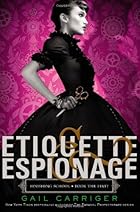
5. Etiquette and Espionage by Gail Carriger. If you're a fan of Carriger's Parasol Protectorate, you'll want to read her new young adult series, which begins with Etiquette and Espionage. It's set in the same paranormal steampunk world, so there are plenty of fun mechanical devices and vampires/werewolves and Victorian sensibilities. And the action now takes place primarily at a boarding school, which is generally my favourite setting ever. I was reminded a bit of Ally Carter's Gallagher Girls series, because Mademoiselle Geraldine's isn't just any finishing school: in addition to creating polished young ladies, the goal is to train them in certain other skills like espionage and deceit. This creates plenty of opportunities for ridiculous hijinks of various sorts, and I really loved the heroine, Sophronia, who was specially selected to attend this school because of her natural talent for crazy schemes.
Basically, this is a fun and fluffy read that should appeal even to readers who aren't familiar with Carriger's other work. My only hesitation in recommending it wholeheartedly is that I sometimes found it a bit too fluffy. The world-building didn't strike me as particularly impressive (especially when it came to continuity with the already-established world of the Parasol Protectorate: why does this earlier version of that world seem to have a lot more mechanical servants than the later one, for example?), the plot wasn't very deep or compelling (it centres around an attempt to retrieve a valuable prototype that various villains are also seeking, but the villains never seemed particularly dangeous and I just didn't care that much about the prototype), and the finishing school curriculum didn't seem as fully thought-out or elaborated as I would have liked. As always, I think Carriger's strength is in her characters and their individual exploits. I found myself enjoying the reading experience, smiling and sometimes even laughing out loud, without necessarily feeling an urge to rush on and find out what was going to happen.
So, this is not a perfect book, but it's a very fun read and I can say without hesitation that I'll be reading the sequel as soon as it comes out. I think anyone who's looking for a bit of entertaining silliness can find something to appeal here. If you've read Carriger's other books, you'll particularly enjoy meeting younger versions of some familiar characters (notably Mme Lefoux and Sidheag), but Etiquette and Espionage can be read just as well on its own. Don't come here looking for something deep, but if you want light entertainment, you're likely to find it.
Jonathan, Origen and the Life of the Stars is basically about how the stars were understood in late antiquity. The question of what they were made of (whether aether, fire, breath, or some other substance) is connected with the questions of whether they were alive, and whether they were divine, and similar issues. There's a lot of background about various views leading up to Origen's, beginning with classical Greek philosophers. My interest in this book was obviously in how it might shed light on ancient understandings of astrology and celestial divination; it's only moderately helpful in a direct sense, but it's useful as general background. There are a lot of conflicting ideas, though, so it's not always the most satisfying read: everyone understood the celestial bodies in a slightly different way, and there are no easy answers.
Roni, it took me so long to finish Etiquette and Espionage that I barely even benefitted from having an ARC! I think that was partially due to my general distraction and partially because I found the book a bit unsatisfying in some way. I can't really pinpoint what bothered me about it--maybe I just wasn't in the mood for something quite so fluffy?--but I came away not entirely satisfied, even though I'll gladly read the next one.
I wrote a hasty review for Amazon, because I felt like that was deserved in return for an ARC, but I'm not at all satisfied with it. I can't quite figure out my feelings concerning this book. All Carriger fans will want to read it, though.
5. Etiquette and Espionage by Gail Carriger. If you're a fan of Carriger's Parasol Protectorate, you'll want to read her new young adult series, which begins with Etiquette and Espionage. It's set in the same paranormal steampunk world, so there are plenty of fun mechanical devices and vampires/werewolves and Victorian sensibilities. And the action now takes place primarily at a boarding school, which is generally my favourite setting ever. I was reminded a bit of Ally Carter's Gallagher Girls series, because Mademoiselle Geraldine's isn't just any finishing school: in addition to creating polished young ladies, the goal is to train them in certain other skills like espionage and deceit. This creates plenty of opportunities for ridiculous hijinks of various sorts, and I really loved the heroine, Sophronia, who was specially selected to attend this school because of her natural talent for crazy schemes.
Basically, this is a fun and fluffy read that should appeal even to readers who aren't familiar with Carriger's other work. My only hesitation in recommending it wholeheartedly is that I sometimes found it a bit too fluffy. The world-building didn't strike me as particularly impressive (especially when it came to continuity with the already-established world of the Parasol Protectorate: why does this earlier version of that world seem to have a lot more mechanical servants than the later one, for example?), the plot wasn't very deep or compelling (it centres around an attempt to retrieve a valuable prototype that various villains are also seeking, but the villains never seemed particularly dangeous and I just didn't care that much about the prototype), and the finishing school curriculum didn't seem as fully thought-out or elaborated as I would have liked. As always, I think Carriger's strength is in her characters and their individual exploits. I found myself enjoying the reading experience, smiling and sometimes even laughing out loud, without necessarily feeling an urge to rush on and find out what was going to happen.
So, this is not a perfect book, but it's a very fun read and I can say without hesitation that I'll be reading the sequel as soon as it comes out. I think anyone who's looking for a bit of entertaining silliness can find something to appeal here. If you've read Carriger's other books, you'll particularly enjoy meeting younger versions of some familiar characters (notably Mme Lefoux and Sidheag), but Etiquette and Espionage can be read just as well on its own. Don't come here looking for something deep, but if you want light entertainment, you're likely to find it.
85_Zoe_
And then I read Zeitoun, since I'll be going to New Orleans next month....

6. Zeitoun by Dave Eggers. I'm not really sure what I can say about this book without spoilers. It's about a family in the aftermath of Hurricane Katrina, and it can be pretty bleak and discouraging at times, but is still worth a read. The most troubling thing for me is that it builds on an impression that I've increasingly been feeling (since the G20 protests in Toronto, probably), that law enforcement et al. aren't always to be trusted, and sometimes go after regular people for very little cause. It's a troublesome thought.
This book is well-written, and I'll be reading more by Eggers. I think I'm going to try to focus on non-Katrina New Orleans books from now on, though.

6. Zeitoun by Dave Eggers. I'm not really sure what I can say about this book without spoilers. It's about a family in the aftermath of Hurricane Katrina, and it can be pretty bleak and discouraging at times, but is still worth a read. The most troubling thing for me is that it builds on an impression that I've increasingly been feeling (since the G20 protests in Toronto, probably), that law enforcement et al. aren't always to be trusted, and sometimes go after regular people for very little cause. It's a troublesome thought.
This book is well-written, and I'll be reading more by Eggers. I think I'm going to try to focus on non-Katrina New Orleans books from now on, though.
86The_Hibernator
I really liked Good Omens. It was pretty funny. :)
87Ape
I've been meaning to read Zeitoun since I saw Richard read it however many years ago it was, and just haven't gotten around ot it yet. Maybe soon...but probably not.
88ronincats
Zoe, I had forgotten that I had pre-ordered the book so I got it about 2 days later, and quickly read it. From Carriger's talk when she was here promoting her 5th Parasol Protectorate book, she talked about this series, and evidently the core events of this series as a whole will explain why there are so few mechanicals in the PP books. So you put your finger specifically on what will be a key component of the series--how astute!
Have you read Good Omens yet?
Have you read Good Omens yet?
89_Zoe_
>88 ronincats: Hehe, I'm glad there's a reason behind it!
I haven't yet read Good Omens; I think it's going to be a very slow reading month for me. I have managed to make some decent progress on school-related reading, but that often doesn't actually result in the completion of whole books.
I haven't yet read Good Omens; I think it's going to be a very slow reading month for me. I have managed to make some decent progress on school-related reading, but that often doesn't actually result in the completion of whole books.
90_Zoe_
Super-belatedly, here are some photos from my January meetup with Jonathan (lilbrattyteen):

Caltrain on the way down, because I thought the seating arrangement and bicycle space underneath were really interesting.

Some sort of model train museum place; I came across it while waiting for Jonathan at the train station, and then we explored it a bit together.

Also at the train museum. It had a library too, where we talked to people for a while and took a picture, but it must be on Jonathan's camera.

Where any book-buying resolve crumbled.

Same book sale, different sign.

I'll have to check the name of this bookstore--the one where we initially planned to meet, in San Jose/Santa Clara (I also can't tell the difference between these two cities). Jonathan observing the cats. One was being nice and friendly to him, and ran away as soon as I came over, so I only have distance photos.

Self-explanatory, I think.

Jonathan with cat and books.
I somehow failed to record both the extent of our book purchases, and our meal at In-n-Out Burger, which I had never visited before. Suffice it to say that many books were purchased by all (well, both).
Also, I'm going to be back in Berkeley for the first half of spring break (March 15-20). I already have an overfull schedule as I try to fit in all the things that I failed to do last time (dinner at Chez Panisse café, visiting Muir Woods, running across the Golden Gate Bridge, visiting Alcatraz), but I should still have some free time during the day on weekdays (Friday, Monday, Tuesday), if anyone wants to do something in Berkeley/SF. I still haven't visited Green Apple Books....

Caltrain on the way down, because I thought the seating arrangement and bicycle space underneath were really interesting.

Some sort of model train museum place; I came across it while waiting for Jonathan at the train station, and then we explored it a bit together.

Also at the train museum. It had a library too, where we talked to people for a while and took a picture, but it must be on Jonathan's camera.

Where any book-buying resolve crumbled.

Same book sale, different sign.

I'll have to check the name of this bookstore--the one where we initially planned to meet, in San Jose/Santa Clara (I also can't tell the difference between these two cities). Jonathan observing the cats. One was being nice and friendly to him, and ran away as soon as I came over, so I only have distance photos.

Self-explanatory, I think.

Jonathan with cat and books.
I somehow failed to record both the extent of our book purchases, and our meal at In-n-Out Burger, which I had never visited before. Suffice it to say that many books were purchased by all (well, both).
Also, I'm going to be back in Berkeley for the first half of spring break (March 15-20). I already have an overfull schedule as I try to fit in all the things that I failed to do last time (dinner at Chez Panisse café, visiting Muir Woods, running across the Golden Gate Bridge, visiting Alcatraz), but I should still have some free time during the day on weekdays (Friday, Monday, Tuesday), if anyone wants to do something in Berkeley/SF. I still haven't visited Green Apple Books....
91_Zoe_
Also, I just started a (probably futile) RSI about making it easier to upload photos to LT, if anyone cares. In my dream world, there would be improvements before Philly, because just uploading these 8 photos took forever, and I expect I'll take many, many more there.
92Morphidae
Love the pictures. Looks like there isn't even enough room to walk next to those seats. How do you get out?
93_Zoe_
The aisles are just so narrow that they're almost invisible, but they do exist. I wondered why they didn't make a proper second level, even if it required making the trains a bit higher.
94JDHomrighausen
Zoe - it was called Recycle Bookstore. The photos are great! I will try to get mine up soon. I enjoyed our little meetup (emphasis on little) and getting you to try In N Out at least once in your life.
I get what you mean about school reading and completing whole books. This quarter I have a prof who likes assigning journal articles and book chapters; at the end of the quarter it's hard to point to what I have actually read. For next quarter I am going to read the books in their entirety over spring break (because why not). That will give me a more concentrated focus on each book as well.
I think Caltrain makes those weird aisles so the conductors can look at the second level and check to see if you have a ticket. But often they never check. Those upstairs seats are definitely for skinny people though!
I get what you mean about school reading and completing whole books. This quarter I have a prof who likes assigning journal articles and book chapters; at the end of the quarter it's hard to point to what I have actually read. For next quarter I am going to read the books in their entirety over spring break (because why not). That will give me a more concentrated focus on each book as well.
I think Caltrain makes those weird aisles so the conductors can look at the second level and check to see if you have a ticket. But often they never check. Those upstairs seats are definitely for skinny people though!
95UnrulySun
Love to see the meetup pics! The train looks so uncomfortable, but I suppose it's efficient...
Do we get to see which books you picked up??
Do we get to see which books you picked up??
97The_Hibernator
Funny. I always imaged Jonathan looking more like Harry Potter.
99JDHomrighausen
I am flattered. I have been told that I have a Potter look for many years.
100_Zoe_
And I've fallen farther behind than usual. Hi everyone!
I was travelling over spring break, so I didn't manage to do a huge amount of reading catch-up, but I did finish some books that had been in progress for a long time. Reviews will be uneven.
7. For Better: How the Surprising Science of Happy Couples Can Help Your Marriage Succeed. This one was listed in the bibliography of The Normal Bar, which I read earlier in the year and found a bit disappointing because of its methodology. For Better is based on the results of multiple scientific studies, which seemed much more promising. And it was an interesting read on the whole; the pages went by quickly at a time when I was otherwise not getting a lot of reading done.
I still wasn't totally satisfied, though. A lot of it seemed like a fairly superficial discussion of how men and women are different, and it wasn't all based on the scientific studies that the book was based on, either. For example, the female author says at one point, "During a question-and-answer session, I couldn’t help but express my skepticism. I simply haven’t met many men who would leave work early to make dinner, who were willing to forgo career ambitions for a thirty-two-hour-a-week average-paying job in exchange for ‘life balance'." I wasn't entirely sure how her pre-existing beliefs were relevant here.
My other issue is that the book was a bit too agenda-driven. Maybe this should have been obvious from the subtitte: “How the Surprising Science of Happy Couples Can Help Your Marriage Succeed.” This isn’t a book that presents information as interesting for its own sake; Parker-Pope is making a specific claim that marriages can be saved, and interprets everything in that light. Sometimes it works, but sometimes it feels like she’s trying too hard and coming up with milquetoast platitudes. When faced with a new piece of evidence, her interpretation is far too likely to be “this is encouraging; you can save your marriage!”
For example, we learn that marriage researchers can fairly accurately predict which marriages will end in divorce just by observing couples in the first three minutes of an argument. My first thought was that this was a useful diagnostic tool, one that could reflect problems occurring at a deeper level. Parker-Pope’s interpretation was that couples should focus on improving these first few minutes specifically: “If you get the first three minutes of a fight right, you’re a long way toward improving the entire relationship.”
Similarly, one study shows that having shared likes and dislikes doesn’t actually predict marital happiness. So Parker-Pope blithely proclaims that compatibility is overrated and not actually an important factor in a marriage. I couldn’t help contrasting this with the position taken by Meg Jay in The Defining Decade: faced with similar information, Jay says that compatibility isn’t so much about shared interests, but about personalities.
Basically, there's lots of interesting information here, presented in a very readable way, but the author's own analysis doesn't always add a lot. I'm still happy I read the book, though.
I was travelling over spring break, so I didn't manage to do a huge amount of reading catch-up, but I did finish some books that had been in progress for a long time. Reviews will be uneven.
7. For Better: How the Surprising Science of Happy Couples Can Help Your Marriage Succeed. This one was listed in the bibliography of The Normal Bar, which I read earlier in the year and found a bit disappointing because of its methodology. For Better is based on the results of multiple scientific studies, which seemed much more promising. And it was an interesting read on the whole; the pages went by quickly at a time when I was otherwise not getting a lot of reading done.
I still wasn't totally satisfied, though. A lot of it seemed like a fairly superficial discussion of how men and women are different, and it wasn't all based on the scientific studies that the book was based on, either. For example, the female author says at one point, "During a question-and-answer session, I couldn’t help but express my skepticism. I simply haven’t met many men who would leave work early to make dinner, who were willing to forgo career ambitions for a thirty-two-hour-a-week average-paying job in exchange for ‘life balance'." I wasn't entirely sure how her pre-existing beliefs were relevant here.
My other issue is that the book was a bit too agenda-driven. Maybe this should have been obvious from the subtitte: “How the Surprising Science of Happy Couples Can Help Your Marriage Succeed.” This isn’t a book that presents information as interesting for its own sake; Parker-Pope is making a specific claim that marriages can be saved, and interprets everything in that light. Sometimes it works, but sometimes it feels like she’s trying too hard and coming up with milquetoast platitudes. When faced with a new piece of evidence, her interpretation is far too likely to be “this is encouraging; you can save your marriage!”
For example, we learn that marriage researchers can fairly accurately predict which marriages will end in divorce just by observing couples in the first three minutes of an argument. My first thought was that this was a useful diagnostic tool, one that could reflect problems occurring at a deeper level. Parker-Pope’s interpretation was that couples should focus on improving these first few minutes specifically: “If you get the first three minutes of a fight right, you’re a long way toward improving the entire relationship.”
Similarly, one study shows that having shared likes and dislikes doesn’t actually predict marital happiness. So Parker-Pope blithely proclaims that compatibility is overrated and not actually an important factor in a marriage. I couldn’t help contrasting this with the position taken by Meg Jay in The Defining Decade: faced with similar information, Jay says that compatibility isn’t so much about shared interests, but about personalities.
Basically, there's lots of interesting information here, presented in a very readable way, but the author's own analysis doesn't always add a lot. I'm still happy I read the book, though.
101_Zoe_
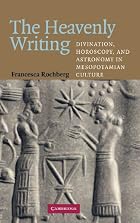
8. The Heavenly Writing by Francesca Rochberg. I had been reading this book for years, and even started over from scratch at one point. It's an essential read if you're interested in Mesopotamian divination, but not always the easiest to get through. For my purposes, it was certainly worth the time spent, and it's something that I refer to often.
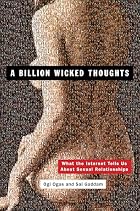
9. A Billion Wicked Thoughts: What the Internet Tells Us About Sexual Relationships by Ogi Ogas and Sai Gaddam. There seems to have been a bit of a theme in my reading lately. This book was more interesting and satisfying than either The Normal Bar or For Better. The topic is obviously much more limited, and I was something that I wasn't particularly familiar with. The authors manage to write in a very accessible way while also being competent and knowledgeable, which is surprisingly rare. Lots of interesting stuff and male and female desire. Explicit, so be warned. I should probably have written a review of this book while the material was fresher in my mind, but at this point I just want to get through the backlog, and I may come back and write more with the book in hand at a later point.
102_Zoe_
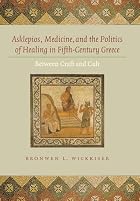
10. Asklepios, Medicine, and the Politics of Healing in Fifth-Century Greece by Bronwen Wickkiser. I really enjoyed this book; it's rare that a work deriving from a dissertation manages to be so readable and accessible. Wickkiser argues that increased popularity of Asklepios' cult in the fifth century was due to a variety of factors, including both medical ones (doctors refused to treat patients who were uncurable, since it would make them look bad, so these patients turned to the god instead as the other respectable option--doctors didn't oppose divine healing, while they did oppose various magical techniques that humans might attempt) and political ones (Epidauros was an important strategic point in the Peloponnesian War, so important a god from Epidauros to Athens could have political benefits).
103_Zoe_
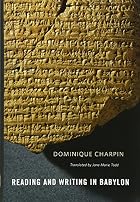
11. Reading and Writing in Babylon. This is another one that I'd been reading for years. Lots of good information, but a bit lacking in a compelling overall narrative arc, so that I set it down on numerous occasions and was never particularly eager to pick it up again. I preferred another book by Charpin, Writing, Law, and Kingship in Old Babylonian Mesopotamia. Still, this is worth reading and does include some good stuff.
104JDHomrighausen
The history books look so interesting! I'd love to hear more thoughts from them.
105_Zoe_
I'll try to add more detail about the history books if I ever catch up on everything else (although it may be hopeless for that last one, which I read largely in 2009/10). Is there anything in particular that you want to know?
Meanwhile, one proper review since it was an ARC, and then hopefully a couple of quick ones:
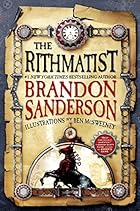
12. The Rithmatist by Brandon Sanderson.
This is apparently the tenth of Sanderson's books that I've read, and I think it's one of the best. It's YA, so not as deep as some of the others, but still very satisfying. I knew just from the premise that I wanted to read it: Joel attends a fancy boarding school for magic-users and the offspring of the elite, but not because he's anyone special himself; his mother is the cleaning lady, and he gets free tuition. He's surrounded by Rithmatists, who have the ability to make certain geometric chalk drawings come to life, but has no Rithmatic ability himself despite his fascination with the field and talent at regular geometry. I've always enjoyed boarding school stories, and this was no exception.
One of Sanderson's strengths is his development of interesting new magic systems, and Rithmatics lived up to my expectations there. The system is both refreshingly unique and carefully thought-out. It's also explained very thoroughly to the reader, via diagrams at the beginning of every chapter, which made the details in the story easy to follow.
What I've often found to be Sanderson's biggest weakness is his writing, particularly when it comes to dialogue that sounds jarringly modern in his fantasy settings. I was very happy to find that that wasn't an issue here at all. I think it helped that this world was more modern to begin with: it's an alternate early-twentieth-century steampunk-y setting, and the language feels pretty thoroughly modern throughout, so none of it seemed incongruous. It was easy to get absorbed in this new world.
I was also pleasantly surprised that certain plot points weren't resolved as I'd expected; I had worried that the book would be too predictable, but that wasn't actually the case. And the actual resolution was even better than I had predicted. I was satisfied with the way everything wrapped up, and I think that this book works well as a standalone, but there are also some loose threads that leave room for a sequel. I'd certainly be happy to read more about these characters and this world, and I'm looking forward to reading more of Sanderson's YA work in general.
Meanwhile, one proper review since it was an ARC, and then hopefully a couple of quick ones:
12. The Rithmatist by Brandon Sanderson.
This is apparently the tenth of Sanderson's books that I've read, and I think it's one of the best. It's YA, so not as deep as some of the others, but still very satisfying. I knew just from the premise that I wanted to read it: Joel attends a fancy boarding school for magic-users and the offspring of the elite, but not because he's anyone special himself; his mother is the cleaning lady, and he gets free tuition. He's surrounded by Rithmatists, who have the ability to make certain geometric chalk drawings come to life, but has no Rithmatic ability himself despite his fascination with the field and talent at regular geometry. I've always enjoyed boarding school stories, and this was no exception.
One of Sanderson's strengths is his development of interesting new magic systems, and Rithmatics lived up to my expectations there. The system is both refreshingly unique and carefully thought-out. It's also explained very thoroughly to the reader, via diagrams at the beginning of every chapter, which made the details in the story easy to follow.
What I've often found to be Sanderson's biggest weakness is his writing, particularly when it comes to dialogue that sounds jarringly modern in his fantasy settings. I was very happy to find that that wasn't an issue here at all. I think it helped that this world was more modern to begin with: it's an alternate early-twentieth-century steampunk-y setting, and the language feels pretty thoroughly modern throughout, so none of it seemed incongruous. It was easy to get absorbed in this new world.
I was also pleasantly surprised that certain plot points weren't resolved as I'd expected; I had worried that the book would be too predictable, but that wasn't actually the case. And the actual resolution was even better than I had predicted. I was satisfied with the way everything wrapped up, and I think that this book works well as a standalone, but there are also some loose threads that leave room for a sequel. I'd certainly be happy to read more about these characters and this world, and I'm looking forward to reading more of Sanderson's YA work in general.
106_Zoe_

13. John Lydus and the Roman Past: Antiquarianism and Politics in the Age of Justinian by Michael Maas.
I developed a sudden interest in John Lydus when I learned that he had compiled a collection of portents, including some with obvious Mesopotamian influence. But I knew absolutely nothing about him, or about Byzantine history in general, so I found this book very useful. I've said many, many times that Routledge is one of my favourite publishers; they always produce books that are both readable and accessible. I learned general background about what happened in the reign of Justinian in the sixth century CE (e.g., an outbreak of (possibly) bubonic plague, followed by economic decline, and attempts at reforms to overcome this decline, including some harsh and unpopular taxation). I learned about Lydus, a sort of mid-level bureaucrat who was proud of the traditions of his office, and worried about its decline. And some of the most interesting discussion was about the place of pagan ideas in Justinian's uncompromising Christian worldview. A lot of the "antiquarian" ideas that Lydus compiled could be seen as non-Christian, and the relation of divination to religion is always complicated. And Lydus, while nominally a Christian, never seemed to mention Christianity in his writing. Yet somehow he did manage to retain a respected job despite all this. Maas portrays Lydus as facing inner conflicts, struggling to reconcile his idealistic view of the emperor with a disappointing reality, and somehow walking a fine line between maintaining acceptable orthodox beliefs and promoting ancient and potentially suspicious ideas and customs. Definitely an interesting and informative read.
107UnrulySun
I have The Rithmatist coming to me soon. Glad to know it's a good one!
108_Zoe_
I'm constantly behind. I'll try to do some quick reviews in order to catch up:

14. Lean In by Sheryl Sandberg. I hadn't realized that this was a #1 bestseller; I picked it up because of a quote that someone had posted on Twitter. It mentioned a woman who was quiet, in contrast to a man who was constantly asking questions in company meetings--sometimes questions bordering on the stupid, but at least he was making people aware of his existence. (I can't seem to find the actual passage anymore, which is why I delayed posting about this for so long). This is something that I've always struggled with: I'd rather sit back than ask a possibly foolish question when I feel like I'm not sufficiently informed. This is especially a problem at lectures, because I don't absorb information very well by listening, which makes it difficult to formulate an intelligent question on the spot. So the passage resonated with me, and helped me in my resolve to respond more to speakers.
Sandberg is the chief operating officer at Facebook, and this book is a discussion of how women need to "lean in" more in all aspects of business life. She's aware about the various sorts of discrimination that women face and the need for the system to change, but she doesn't think that that should prevent women from making personal changes either.
You may recall me saying sometime last year that I didn't feel like women really suffered from much discrimination. Lately, though, I've become more aware of the different life choices that men and women face: a surprising number of male colleagues in my PhD program have children and stay-at-home wives, while the thought of beginning a family in the course of a PhD program is much more problematic for women, and would probably come with a significant career cost. I also suspect that faculty members would not be nearly as supportive of a woman having a child, since it would necessarily disrupt her studies at least in part.
So, with these sorts of thoughts going through my head, I found this book particularly interesting. Even though it's focused on the business world, much of it can be applied to any woman who wants a career anywhere. It's also a quick and easy read, and I'm glad I read it.

14. Lean In by Sheryl Sandberg. I hadn't realized that this was a #1 bestseller; I picked it up because of a quote that someone had posted on Twitter. It mentioned a woman who was quiet, in contrast to a man who was constantly asking questions in company meetings--sometimes questions bordering on the stupid, but at least he was making people aware of his existence. (I can't seem to find the actual passage anymore, which is why I delayed posting about this for so long). This is something that I've always struggled with: I'd rather sit back than ask a possibly foolish question when I feel like I'm not sufficiently informed. This is especially a problem at lectures, because I don't absorb information very well by listening, which makes it difficult to formulate an intelligent question on the spot. So the passage resonated with me, and helped me in my resolve to respond more to speakers.
Sandberg is the chief operating officer at Facebook, and this book is a discussion of how women need to "lean in" more in all aspects of business life. She's aware about the various sorts of discrimination that women face and the need for the system to change, but she doesn't think that that should prevent women from making personal changes either.
You may recall me saying sometime last year that I didn't feel like women really suffered from much discrimination. Lately, though, I've become more aware of the different life choices that men and women face: a surprising number of male colleagues in my PhD program have children and stay-at-home wives, while the thought of beginning a family in the course of a PhD program is much more problematic for women, and would probably come with a significant career cost. I also suspect that faculty members would not be nearly as supportive of a woman having a child, since it would necessarily disrupt her studies at least in part.
So, with these sorts of thoughts going through my head, I found this book particularly interesting. Even though it's focused on the business world, much of it can be applied to any woman who wants a career anywhere. It's also a quick and easy read, and I'm glad I read it.
109_Zoe_

15. Good Omens by Terry Pratchett and Neil Gaiman. I had never read anything by Terry Pratchett before, though I plan to read more in the future. I have mixed thoughts about Gaiman. I had heard that this book was extremely funny, and it didn't disappoint in that respect--there were lots of laugh-out-loud moments, and I really appreciated the humour. There was a point, though, when I realized that I didn't actually care that much about the characters or the plot, perhaps because there were so many characters and the outcome felt so inevitable. So it took me longer than expected to finish this book, but I'm still glad that I read it.
110_Zoe_
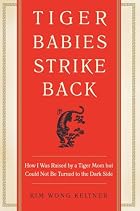
16. Tiger Babies Strike Back by Kim Wong Keltner.
I received this book for free in exchange for a review, which meant that I felt obligated to finish it. I might otherwise have set it aside after a few pages, because I could tell immediately that the writing style was not for me. It’s painfully colloquial at times (“So keep moving cuz ya don’t wanna get sucked into a dark, dead zone”), only loosely structured, and has poor argumentation (the fact that an aunt committed suicide is “proof right there that something sucks in Chinese thinking”, because non-Chinese people never kill themselves, right?). There were times when I felt like I was reading an angry blog post rather than a published book.
I do feel sorry for the author’s unhappy childhood, which she presents as an example of the costs of the “tiger parenting” promoted by Amy Chua in her controversial Battle Hymn of the Tiger Mother. Keltner’s mother had high expectations and wasn’t very affectionate. Keltner also participated in various extracurricular activities, like piano lessons and Chinese school.
I couldn’t help feeling that this was a much lesser version of tiger parenting, though. One of the most striking things about Chua’s parenting style was the results that it accomplished: she pushed her children to the point of performing at Carnegie Hall as teenagers, and she did this in part by attending all of their music lessons along with them, taking notes and then guiding their intensive home practice sessions as well. I suspect that this method of developing prodigies is a large part of the reason why people were so interested in her book: both the methods and the results are extremely dramatic.
I didn’t really get that impression about Keltner’s childhood, though she doesn’t describe it in a thorough or systematic way. She mentions that her mother was busy with work, and it doesn’t seem that she devoted an unusual amount of time to her children’s development. The tiger parenting consists basically of sending the kids off to extracurriculars, maintaining high expectations, and withholding affection. I don’t think this is dramatically different from many other parents, whether Chinese or not Chinese, which made it that much less interesting for me.
Parenting techniques were actually not a major focus of the book, which might come as a surprise for some. I think there were only a few chapters (out of almost 40) where Keltner focuses directly on the decisions that she made in raising her own daughter. Most of the book is a broader reflection on being Chinese-American and just generally finding your own way in the world. A lot of attention is devoted to the love that Keltner feels for San Francisco, and how difficult it was to move away and establish herself in a new city when she needed a change. I couldn’t help feeling at times that Keltner was just taking advantage of Chua’s popular title to sell a book that was only partially connected. You might enjoy this if you’re looking for a general memoir, but it’s not a focused rebuttal of a particular parenting technique.
111norabelle414
>108 _Zoe_: I've seen so many reviews of this around lately that I've just been ignoring all of them. I'm glad you wrote one because I can actually relate to you.
>109 _Zoe_: the outcome felt so inevitable.
I've noticed that feeling about most of Gaiman's long fiction. Sometimes it works for me (Stardust) and sometimes it doesn't (American Gods). I like his short fiction better.
I think most of the humo(u)r in Good Omens was Pratchett's work.
>110 _Zoe_: Hmm yes definitely sounds like an angry blog post.
>109 _Zoe_: the outcome felt so inevitable.
I've noticed that feeling about most of Gaiman's long fiction. Sometimes it works for me (Stardust) and sometimes it doesn't (American Gods). I like his short fiction better.
I think most of the humo(u)r in Good Omens was Pratchett's work.
>110 _Zoe_: Hmm yes definitely sounds like an angry blog post.
112_Zoe_
I've apparently been too oblivious to everything lately to notice what the big books are that everyone is talking about. I'll hopefully get back to paying attention soon, including reading everyone's challenge threads.
Have you read much Pratchett? I feel like I should know this but I can't remember. Because basically I agree with you about Gaiman (I liked Stardust, but not American Gods; I've had fewer problems with his shorter works), so clearly I need advice about where to begin with Pratchett.
Have you read much Pratchett? I feel like I should know this but I can't remember. Because basically I agree with you about Gaiman (I liked Stardust, but not American Gods; I've had fewer problems with his shorter works), so clearly I need advice about where to begin with Pratchett.
113norabelle414
>112 _Zoe_: There is actually a weird disparity between the popularity of Lean In on LibraryThing and elsewhere. I read about it in the newspaper or on various websites almost every day, but it's not very popular around here. (ETA: and the default touchstone is Oliver Twist, apparently....)
I've read a decent amount of Pratchett. (18 books; which for anyone but Pratchett would be considered a lot.) He has one main "series" (in the loosest sense of the word) which is basically just a bunch of books that take place in the same world. That series is further divided in to sub-series which follow a certain character or group of characters.
My personal recommendation is to start with The Colour of Magic and The Light Fantastic, as those are kind of the "world building" books. (But they're also the least-good in the series, in my opinion, so don't be discouraged if you think they're just okay.) After that you can mostly read them in whatever order you want. Personally I like reading them in straight publication order, but I seem to be in the minority on that. (Publication order is also chronological order, but you don't have to know any of the past to understand/appreciate later books)
I've read a decent amount of Pratchett. (18 books; which for anyone but Pratchett would be considered a lot.) He has one main "series" (in the loosest sense of the word) which is basically just a bunch of books that take place in the same world. That series is further divided in to sub-series which follow a certain character or group of characters.
My personal recommendation is to start with The Colour of Magic and The Light Fantastic, as those are kind of the "world building" books. (But they're also the least-good in the series, in my opinion, so don't be discouraged if you think they're just okay.) After that you can mostly read them in whatever order you want. Personally I like reading them in straight publication order, but I seem to be in the minority on that. (Publication order is also chronological order, but you don't have to know any of the past to understand/appreciate later books)
114_Zoe_
>113 norabelle414: Yeah, I noticed that weird disparity after seeing that it was #1 on Amazon at some point. I'm a bit surprised that more people haven't catalogued it here. And it makes me wonder more about how LT reading tastes differ from average reading tastes; if only LT presented its data in a more accessible way....
Thanks for the advice about Pratchett. I had once seen a chart of all his books and where to start, but I was still unsure. (And, actually, I still can't decide even with your advice--do I want to start with the worse books because they provide a good foundation, or would that just lead me to give up? Hmm.)
Thanks for the advice about Pratchett. I had once seen a chart of all his books and where to start, but I was still unsure. (And, actually, I still can't decide even with your advice--do I want to start with the worse books because they provide a good foundation, or would that just lead me to give up? Hmm.)
115foggidawn
#114 -- You could also start with The Wee Free Men, which is brilliant and funny and the start of a series within the larger Discworld series, so it doesn't require any extra knowledge of that world.
117norabelle414
The first two aren't *bad*, they're just not typical of the series as a whole. Another reason to read them is that there is a HILARIOUS British made-for-TV movie based on them, starring Sean Astin and Tim Curry and Jeremy Irons.
118alcottacre
*waving* at Zoe
119_Zoe_
>117 norabelle414: Right, but comparatively bad? I suspect that I would never get around to watching the movie, but it's good to know that it exists.
>118 alcottacre: Hi Stasia! It's always nice when you stop by :)
>118 alcottacre: Hi Stasia! It's always nice when you stop by :)
120norabelle414
>119 _Zoe_: Only because it's the best freaking series in the world.
121rainpebble
Hi Zoe. I am so happy that I got an opportunity to meet you in Philly. You helped to make the Meet-Up so much fun; always laughing and smiling. You are infectious! :-)
It was a great weekend and I hope I get a chance to meet you again one day. I enjoyed you a great deal.
hugs,
belva
It was a great weekend and I hope I get a chance to meet you again one day. I enjoyed you a great deal.
hugs,
belva
122MickyFine
Have you tried Gaiman's Neverwhere? I had mixed feelings about him after reading Stardust, one of the rare cases where I preferred the film to the book, but I really loved Neverwhere.
123Kassilem
My family book club just choose Lean In for this next six weeks. Wanted to say thanks for the review! And delurk to say hi. :)
124_Zoe_
>121 rainpebble: Belva, I'm so glad I had a chance to meet you as well! I know we'll manage to meet again.
>122 MickyFine: Micky, I haven't yet tried Neverwhere, but I'm sure I'll give it a chance eventually. I seem to keep reading Gaiman, for some reason.
>123 Kassilem: Hi! Thanks for delurking, and I'm glad you liked the review. I'll have to hop over and see what you thought of the book too!
Meanwhile, I've been travelling again this past week, so as usual, I'm hopelessly behind on all threads, including my own (though on the bright side, I've hardly managed to read any books in ages, so there's less catch-up needed there?). The trip was great. First my boyfriend Mark and I went to Richmond to see his parents (my first time meeting them! and it went well), then we went to DC for LibraryThing meetups and a wedding. Many bookstores were visited and books purchased. (I'll give details shortly.) Other sights seen in Richmond included the Lewis Ginter Botanical Gardens (which were beautiful), Hollywood Cemetery (which contained the graves of two US presidents and also Jefferson Davis), and the Poe Museum. Food consumed included lots of barbecue and also Italian ice, which I had never had before (the ice, not the barbecue!).
In DC we met up with Nora on Friday evening and went to the amazing bookstore Politics and Prose. I had never been there before, but it's definitely on my favourites list now. Besides the generally broad and interesting selection, the highlight was the extensive remainder section, which had all sorts of recent hardcovers for half the price of a paperback. Then we had dinner at a pizza place called Comet Ping Pong, where I ate soft shell crab pizza. I'm not quite convinced that it should be called pizza because there was no melted cheese (only parmesan) and no tomato sauce, just awkward crabs on crust, but it was lots of fun. We shared a strawberry sundae for dessert.
The wedding on Saturday was nice, and surprisingly enjoyable given that I only knew a couple of people there (the bride and groom were not among them). Then on Sunday we met up with Madeline and Nora for lunch at the Olney Ale House, where the most noteworthy food was the extremely dense and tasty Oatmeal Molasses Bread Pudding. Despite the best efforts of three of us working together, I think we only managed to eat half of it. Then we went to two bookstores: a Friends of the Library bookstore where everything was super-cheap, and then a Second Story Books that was in the middle of rearranging everything and so rather chaotic, and where we also ended up being pretty rushed--we'll have to go back again sometime :D.
I was really impressed by how many good bookstores there are in somewhat more out-of-the-way places. I'd definitely like to visit Politics and Prose and the Friends of the Library bookstore again, even though they aren't the most convenient. We'll see what we can manage to fit in at the September National Book Festival meetup :D. We also talked about a potential Baltimore meetup the weekend before Thanksgiving, since I'll be there for a conference already.
Details of book purchases to come in the next message, since this one is getting long....
>122 MickyFine: Micky, I haven't yet tried Neverwhere, but I'm sure I'll give it a chance eventually. I seem to keep reading Gaiman, for some reason.
>123 Kassilem: Hi! Thanks for delurking, and I'm glad you liked the review. I'll have to hop over and see what you thought of the book too!
Meanwhile, I've been travelling again this past week, so as usual, I'm hopelessly behind on all threads, including my own (though on the bright side, I've hardly managed to read any books in ages, so there's less catch-up needed there?). The trip was great. First my boyfriend Mark and I went to Richmond to see his parents (my first time meeting them! and it went well), then we went to DC for LibraryThing meetups and a wedding. Many bookstores were visited and books purchased. (I'll give details shortly.) Other sights seen in Richmond included the Lewis Ginter Botanical Gardens (which were beautiful), Hollywood Cemetery (which contained the graves of two US presidents and also Jefferson Davis), and the Poe Museum. Food consumed included lots of barbecue and also Italian ice, which I had never had before (the ice, not the barbecue!).
In DC we met up with Nora on Friday evening and went to the amazing bookstore Politics and Prose. I had never been there before, but it's definitely on my favourites list now. Besides the generally broad and interesting selection, the highlight was the extensive remainder section, which had all sorts of recent hardcovers for half the price of a paperback. Then we had dinner at a pizza place called Comet Ping Pong, where I ate soft shell crab pizza. I'm not quite convinced that it should be called pizza because there was no melted cheese (only parmesan) and no tomato sauce, just awkward crabs on crust, but it was lots of fun. We shared a strawberry sundae for dessert.
The wedding on Saturday was nice, and surprisingly enjoyable given that I only knew a couple of people there (the bride and groom were not among them). Then on Sunday we met up with Madeline and Nora for lunch at the Olney Ale House, where the most noteworthy food was the extremely dense and tasty Oatmeal Molasses Bread Pudding. Despite the best efforts of three of us working together, I think we only managed to eat half of it. Then we went to two bookstores: a Friends of the Library bookstore where everything was super-cheap, and then a Second Story Books that was in the middle of rearranging everything and so rather chaotic, and where we also ended up being pretty rushed--we'll have to go back again sometime :D.
I was really impressed by how many good bookstores there are in somewhat more out-of-the-way places. I'd definitely like to visit Politics and Prose and the Friends of the Library bookstore again, even though they aren't the most convenient. We'll see what we can manage to fit in at the September National Book Festival meetup :D. We also talked about a potential Baltimore meetup the weekend before Thanksgiving, since I'll be there for a conference already.
Details of book purchases to come in the next message, since this one is getting long....
125_Zoe_
So, here are the books purchased on this trip:
Libbie Books, Richmond
Midnight in the Garden of Good and Evil (hardcover, autographed) - $9.50
Not Out of Africa (hardcover) - $9.95
Rubaiyat of Omar Khayyam, and the Salaman and Absal of Jami (cute old harcover) - $10
Inanna, Queen of Heaven and Earth (paperback) - $5
Black Swan Books, Richmond
The Poems of Catullus: A Bilingual Edition (paperback) - $12
Politics and Prose, DC
Babel No More: The Search for the World's Most Extraordinary Language Users (hardcover, 2012) - $7.98
Going Solo: The Extraordinary Rise and Surprising Appeal of Living Alone (hardcover, 2012) - $6.98
Mirage: Napoleon's Scientists and the Unveiling of Egypt (hardcover, 2007) - $6.98
Paying For It: A Comic-Strip Memoir About Being a John (new paperback) - $19.95
Friends of the Library Bookstore, Rockville
Blood and Thunder: The Epic Story of Kit Carson and the Conquest of the American West (paperback) - $2
H.M.S. Surprise (paperback) - $2
March (paperback) - $2
Jonathan Strange and Mr. Norrell (paperback) - $2.50
Life in the Ancient Near East (paperback) - $2.50
I actually own Jonathan Strange and Mr. Norrell already, but I think the hardcover is too big and heavy for me ever to read. I chose the trade paperback here even though there was an even smaller MMPB for only $1.50; I thought the trade version was prettier and also didn't have overly-narrow inner margins. So we'll see whether I ever manage to read this one.
Also, all of these books are in great condition. I had wondered whether $2 books at a Friends of the Library bookstore would be beat-up library discards, but that wasn't the case at all; none of these are library copies.
I also got a laminated map of Amsterdam for 27 cents, which may come in handy next week.
Second Story Books, Rockville
The Ancient Orient: An Introduction to the Study of the Ancient Near East
Libbie Books, Richmond
Midnight in the Garden of Good and Evil (hardcover, autographed) - $9.50
Not Out of Africa (hardcover) - $9.95
Rubaiyat of Omar Khayyam, and the Salaman and Absal of Jami (cute old harcover) - $10
Inanna, Queen of Heaven and Earth (paperback) - $5
Black Swan Books, Richmond
The Poems of Catullus: A Bilingual Edition (paperback) - $12
Politics and Prose, DC
Babel No More: The Search for the World's Most Extraordinary Language Users (hardcover, 2012) - $7.98
Going Solo: The Extraordinary Rise and Surprising Appeal of Living Alone (hardcover, 2012) - $6.98
Mirage: Napoleon's Scientists and the Unveiling of Egypt (hardcover, 2007) - $6.98
Paying For It: A Comic-Strip Memoir About Being a John (new paperback) - $19.95
Friends of the Library Bookstore, Rockville
Blood and Thunder: The Epic Story of Kit Carson and the Conquest of the American West (paperback) - $2
H.M.S. Surprise (paperback) - $2
March (paperback) - $2
Jonathan Strange and Mr. Norrell (paperback) - $2.50
Life in the Ancient Near East (paperback) - $2.50
I actually own Jonathan Strange and Mr. Norrell already, but I think the hardcover is too big and heavy for me ever to read. I chose the trade paperback here even though there was an even smaller MMPB for only $1.50; I thought the trade version was prettier and also didn't have overly-narrow inner margins. So we'll see whether I ever manage to read this one.
Also, all of these books are in great condition. I had wondered whether $2 books at a Friends of the Library bookstore would be beat-up library discards, but that wasn't the case at all; none of these are library copies.
I also got a laminated map of Amsterdam for 27 cents, which may come in handy next week.
Second Story Books, Rockville
The Ancient Orient: An Introduction to the Study of the Ancient Near East
126_Zoe_
So, it seems that there were 15 books acquired on this trip. I'm apparently making up for all my restraint last year. Also, some of these books were just so cheap.
127SqueakyChu
Well, I'm glad I got you into my favorite FOTL book store. That one happens to be very convenient for *me*! :D
We need more time to explore the other Maryland area book stores because not all of them are Metro accessible. The most fun thing about the used book stores near me is that their inventories are always changing so not a week goes by in which I can't find something new.
This time it was *I* who exercised the most restraint and only bought two books (one of which was not even for me). The funny thing was that the book I did buy, The Night Gardener by George Pelecanos, was a book I already had in my possession but gave away via BookCrossing because I was not then into reading books by George Pelecanos.
I'm looking forward to seeing you, Mark, and Nora again soon!
We need more time to explore the other Maryland area book stores because not all of them are Metro accessible. The most fun thing about the used book stores near me is that their inventories are always changing so not a week goes by in which I can't find something new.
This time it was *I* who exercised the most restraint and only bought two books (one of which was not even for me). The funny thing was that the book I did buy, The Night Gardener by George Pelecanos, was a book I already had in my possession but gave away via BookCrossing because I was not then into reading books by George Pelecanos.
I'm looking forward to seeing you, Mark, and Nora again soon!
128_Zoe_
And photos!

Me, Mark, and Nora at Comet Ping Pong, displaying our book purchases from Politics and Prose

Close up of the book purchases

The crab pizza (for some reason the strawberry sundae doesn't seem to have survived long enough for a photograph)

Nora and Madeline at the Olney Ale House
It occurs to me that I never posted photos from the Philadelphia meetup in this thread, but you can see a few of them here.

Me, Mark, and Nora at Comet Ping Pong, displaying our book purchases from Politics and Prose

Close up of the book purchases

The crab pizza (for some reason the strawberry sundae doesn't seem to have survived long enough for a photograph)

Nora and Madeline at the Olney Ale House
It occurs to me that I never posted photos from the Philadelphia meetup in this thread, but you can see a few of them here.
129_Zoe_
>127 SqueakyChu: Yeah, it actually worked out well this time that we had a smaller group and could all fit into your car! We'll have to see if anyone else has a car for future meetups, because it was definitely nice to be able to visit some of less Metro-accessible bookstores. I'm already looking forward to the next Maryland meetup, not just the ones in DC :D
132_Zoe_
In among my travelling, I occasionally manage to read a book too. But very rarely.

17. Things Fall Apart by Chinua Achebe. I meant to read this for the April TIOLI, but I was a month late (and another month late writing about it here). I'm afraid I can't really say I enjoyed it. It took surprisingly long to read for such a short book, perhaps because none of the characters was particularly likable. Bad things were done on all sides. I can see the value in a book about how colonialism affected Africa, but that doesn't mean I liked it.

18. The Spark: A Mother's Story of Nurturing Genius by Kristine Barnett. This is a non-fiction account by a woman whose son has autism, and it's an extremely encouraging read. When school officials seemed ready to give up on Jake, telling Kristine that he would never even be able to read, and making Jake himself miserable by forcing him to spend all his time focusing on his weaknesses, Kristine decided to do something dramatic. She pulled Jake out of special ed and devoted herself to developing his actual interests, rather than the things that he liked least. The results were extremely positive; Jake made enormous progress, to the point of attending university physics lectures at age 9. It was so nice to read a positive autism story for a change, and I really enjoyed reading about Jake's academic successes against all the odds.
The book was interesting for other reasons too: Kristine runs a daycare, and uses the same strategy when dealing with all the children there. She focuses on their strengths, and finds that they do better at everything when they're happy and excelling in their chosen area. This isn't really at all surprising, but it does make you wonder why the education system in general is so rigid, forcing everyone into the same box.
Another fascinating aspect for me was the discussion of how hard the recession hit Indiana. I hadn't really had any idea of how bad it was. But it got to the point where there were no children left in Kristine's daycare, because all of them had had at least one parent laid off. Food and heating were a big struggle. It was also interesting to encounter the sort of person who would drain all her savings in an attempt to start a community centre for autistic children, so that she had absolutely nothing left in the case of misfortune. I can't quite decide how much to admire her for that, but it was definitely thought-provoking. That's probably the best thing about this book: it makes you look at the world in different ways and question common assumptions, and it does this by presenting an extremely positive story of an underdog achieving more success than anyone could have imagined.

17. Things Fall Apart by Chinua Achebe. I meant to read this for the April TIOLI, but I was a month late (and another month late writing about it here). I'm afraid I can't really say I enjoyed it. It took surprisingly long to read for such a short book, perhaps because none of the characters was particularly likable. Bad things were done on all sides. I can see the value in a book about how colonialism affected Africa, but that doesn't mean I liked it.

18. The Spark: A Mother's Story of Nurturing Genius by Kristine Barnett. This is a non-fiction account by a woman whose son has autism, and it's an extremely encouraging read. When school officials seemed ready to give up on Jake, telling Kristine that he would never even be able to read, and making Jake himself miserable by forcing him to spend all his time focusing on his weaknesses, Kristine decided to do something dramatic. She pulled Jake out of special ed and devoted herself to developing his actual interests, rather than the things that he liked least. The results were extremely positive; Jake made enormous progress, to the point of attending university physics lectures at age 9. It was so nice to read a positive autism story for a change, and I really enjoyed reading about Jake's academic successes against all the odds.
The book was interesting for other reasons too: Kristine runs a daycare, and uses the same strategy when dealing with all the children there. She focuses on their strengths, and finds that they do better at everything when they're happy and excelling in their chosen area. This isn't really at all surprising, but it does make you wonder why the education system in general is so rigid, forcing everyone into the same box.
Another fascinating aspect for me was the discussion of how hard the recession hit Indiana. I hadn't really had any idea of how bad it was. But it got to the point where there were no children left in Kristine's daycare, because all of them had had at least one parent laid off. Food and heating were a big struggle. It was also interesting to encounter the sort of person who would drain all her savings in an attempt to start a community centre for autistic children, so that she had absolutely nothing left in the case of misfortune. I can't quite decide how much to admire her for that, but it was definitely thought-provoking. That's probably the best thing about this book: it makes you look at the world in different ways and question common assumptions, and it does this by presenting an extremely positive story of an underdog achieving more success than anyone could have imagined.
134JDHomrighausen
Hi Zoe! What does Mark like to read?
I am curious for your thoughts on The Ancient Orient: An Introduction to the Study of the Ancient Near East.
I am curious for your thoughts on The Ancient Orient: An Introduction to the Study of the Ancient Near East.
135Whisper1
Zoe, thanks for posting the review of The Spark. I remember your comments regarding how good this book was.
Another meet up? How wonderful!
Another meet up? How wonderful!
136kidzdoc
Great meet up photos, Zoë! And nice book haul as well. I'm normally not fond of unusual pizza toppings but the crab looks good.
138_Zoe_
>133 UnrulySun: It was definitely a fun meetup!
>134 JDHomrighausen: Jonathan, Mark reads all sorts of non-fiction (but more popular than scholarly), and his fiction reading tends to be science fiction. I'm hoping this will give me some extra encouragement to catch up on the science fiction classics I should have read.
>135 Whisper1: Thanks, Linda! I think you would really enjoy this book too.
>136 kidzdoc: I think I like unusual pizza toppings more for the novelty than for the actual taste. This didn't really seem like a pizza in the end, but it was fun to eat.
>137 Morphidae: All the important things at the meetup! :D
>134 JDHomrighausen: Jonathan, Mark reads all sorts of non-fiction (but more popular than scholarly), and his fiction reading tends to be science fiction. I'm hoping this will give me some extra encouragement to catch up on the science fiction classics I should have read.
>135 Whisper1: Thanks, Linda! I think you would really enjoy this book too.
>136 kidzdoc: I think I like unusual pizza toppings more for the novelty than for the actual taste. This didn't really seem like a pizza in the end, but it was fun to eat.
>137 Morphidae: All the important things at the meetup! :D
139_Zoe_
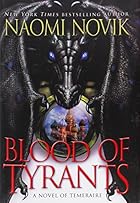
19. Blood of Tyrants by Naomi Novik. I was really excited to receive this new Temeraire book from Amazon Vine; the only problem is that it meant I didn't have time to do a full reread of the series, which I'd been intending to do even though I just reread them them all last summer. If you've been following my thread for a while, you may recall that I love these books, which combine dragons with the Napoleonic Wars. The characters are fantastic, especially Laurence and Temeraire, and this book was no exception. It's pretty much a classic Temeraire book, so if you're enjoying the series, you'll know what to expect here (and if you're new to the series, I'd strongly recommend starting at the beginning): there's travel to new countries, encounters with new kinds of dragons, unfamiliar customs concerning dragon-human interaction, and battle against Napoleon. My favourite element, and the most unusual one, was that Laurence had lost his memory, which presented a fun opportunity to revisit pieces of earlier stories and laugh a bit about how ridiculous their adventures had been. I think I enjoyed the first half, with its focus on Laurence's memory, more than the second half, with its more standard focus on the war. Overall, I wouldn't say that this was my favourite Temeraire book, but it certainly wasn't a disappointment either; I was happy to spend more time with these familiar characters, and I'm sorry that the series is almost at an end.
140_Zoe_
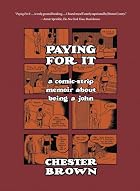
20. Paying For It: A Comic-Strip Memoir about Being a John by Chester Brown. I was at the bookstore telling Nora how I never seem to like graphic novels*, and then I randomly picked this one up off the table and got sucked in. It's a non-fiction account of how the author decided to start paying for sex. The writing is matter-of-fact and rational, and Brown makes a reasoned case for his decision. He's very, very strongly opposed to marriage and to making long-term commitments. I disagree with him completely, but it was interesting to read his views. There are numerous appendices at the end of the book where he discusses various issues in more detail.
Maybe the thing that surprised me most, and that most made me realize how completely different our world-views were, was when he explained how a certain burden was lifted after he first had sex with a prostitute. In the past, he says, "Every time I saw an attractive woman, I wanted to walk up to her and initiate some sort of interaction. I usually lacked the confidence to do so. Those frequent inner battles led to a lot of tension. I rarely acted, which added to the burden because I'd condemn myself for failing to do anything and for missing potential opportunities." And so on. This is what really helped me understand why he feels the way he does about sex and relationships, and why it can seem rational while still being completely different from my own attitudes: I can't imagine attractiveness being the main factor in deciding whether to initiate contact with a stranger. I don't have much interest in interacting with random strangers in general; I'm more likely to talk to people because we're participating in some shared activity--a meetup, or a dinner with mutual friends. I'm not interested in developing a relationship based solely on how someone looks. But if looks are the primary thing that he cares about, and that's what makes him want to get involved with someone, and he doesn't really care about whether they have anything meaningful in common (because it seems pretty unlikely that an attractive stranger on the street would be a match personality-wise), then it makes sense just to hire a prostitute and be done with it.
So, I found it interesting and worthwhile to see a different perspective on the world (although I did sometimes find it a bit awkward to get this perspective in graphic-novel form, because some parts were, well, graphic). In many ways I found it sad to read about Brown's extreme cynicism, but it also made me think, which is always good. I think I'll read Brown's comic-strip biography of Louis Riel at some future point.
*using this term to encompass non-fiction as well
141saraslibrary
#90: I'm really behind, but I loved the bookstore rules photo you posted! I wish we could use it at our work. Thanks for sharing! :)
142norabelle414
>139 _Zoe_: I'm reading a Temeraire book next, I promise.
>140 _Zoe_: You should try Persepolis next. You'll love it.
>140 _Zoe_: You should try Persepolis next. You'll love it.
143_Zoe_
>141 saraslibrary: Don't worry, I'm permanently behind on everything. I loved those rules too.
>142 norabelle414: I don't know if I can say *next*, but I'll try to read Persepolis within the year at least ;)
>142 norabelle414: I don't know if I can say *next*, but I'll try to read Persepolis within the year at least ;)
144norabelle414
>143 _Zoe_: You have until September, when I will have you captive and can MAKE you read it :-)
146rosalita
Oh, I can't wait until I can once again visit with Temeraire and Laurence! Thanks for whetting my appetite, Zoë.
149_Zoe_
Heh, I noticed your comments about that book in your own thread before seeing your post here in mine! The last week+ has been pretty crazy as I was packing up in New York, making arrangements with subletters, preparing for a conference in Leiden, and then attending said conference. But I enjoyed the trip, and now have a bit of time to rest at last—relatively speaking, anyway. Mark will be visiting for 9 days, so we'll be trying to jam in as much stuff as possible, and then I have to prepare for the next conference and the next trip to Europe. Maybe in August I'll manage to read some books again!
21. Going Solo: The Extraordinary Rise and Surprising Appeal of Living Alone by Eric Klinenberg. I had been eyeing this book at the bookstores for quite a while, so I was happy to find it on the remainder shelves at Politics & Prose (I'm already wondering whether it will be possible to squeeze in another visit to that bookstore in September, even though it's sort of out of the way). I'm not really sure why this book appealed to me so much, because I've never personally been very interested in living alone, and have never actually done it; I like having someone else around, even if I don't necessarily want to be best friends with my roommates. Maybe the appeal was precisely because it offered a window into a different outlook on life.
The book definitely offers food for thought about a variety of different issues, including things like aging alone that I hadn't really considered in detail before. I found that I wasn't really impressed with the level of analysis, though, and I didn't find that the work amounted to more than the sum of its parts. Maybe Klinenberg's sociological research methods just don't particularly resonate with me: the book is based on 273 interviews, which the author analyzed using a computer program to help extract the more widespread viewpoints, but I couldn't help being reminded of that saying about anecdotes vs. data. Maybe this isn't really fair, and I just don't know enough about the research methods involved, but I still felt like I would have appreciated more widespread surveys.
I did read through this book quickly, which says something about its appeal, but I didn't come away from it feeling that I had learned a lot. Instead, I was left thinking that I should be more careful about what I read, and maybe devote slightly less time to random popular non-fiction.
I'm still interested in the ideas of why people choose to live alone, and what the consequences of that decision are. I'm particularly interested in the question of whether people want to find romantic partners, or whether they really want to be by themselves—again, this is a topic that comes up in the book, but that I felt the limited data sample couldn't really address satisfactorily. I wonder how much I've been brainwashed by modern culture or something, so that finding a partner was something I cared about, and I wonder what the common views really are. I guess the most interesting thing to me is seeing that my own views, which obviously appeared natural to me, may not be the same as other people's; I had sort of assumed that everyone (or at least a strong majority of people) wanted to find love, but maybe that's less the case than I'd thought. In my own case, even when I had just reached the end of a very long-term relationship and was decidedly not looking for anyone else, I had no doubt that I did want to find someone eventually. So, on the one hand, this book offered a tantalizing glimpse of other perspectives on life; but on the other hand, I didn't find that it offered any satisfying or convincing evidence about what people as a whole really think.
21. Going Solo: The Extraordinary Rise and Surprising Appeal of Living Alone by Eric Klinenberg. I had been eyeing this book at the bookstores for quite a while, so I was happy to find it on the remainder shelves at Politics & Prose (I'm already wondering whether it will be possible to squeeze in another visit to that bookstore in September, even though it's sort of out of the way). I'm not really sure why this book appealed to me so much, because I've never personally been very interested in living alone, and have never actually done it; I like having someone else around, even if I don't necessarily want to be best friends with my roommates. Maybe the appeal was precisely because it offered a window into a different outlook on life.
The book definitely offers food for thought about a variety of different issues, including things like aging alone that I hadn't really considered in detail before. I found that I wasn't really impressed with the level of analysis, though, and I didn't find that the work amounted to more than the sum of its parts. Maybe Klinenberg's sociological research methods just don't particularly resonate with me: the book is based on 273 interviews, which the author analyzed using a computer program to help extract the more widespread viewpoints, but I couldn't help being reminded of that saying about anecdotes vs. data. Maybe this isn't really fair, and I just don't know enough about the research methods involved, but I still felt like I would have appreciated more widespread surveys.
I did read through this book quickly, which says something about its appeal, but I didn't come away from it feeling that I had learned a lot. Instead, I was left thinking that I should be more careful about what I read, and maybe devote slightly less time to random popular non-fiction.
I'm still interested in the ideas of why people choose to live alone, and what the consequences of that decision are. I'm particularly interested in the question of whether people want to find romantic partners, or whether they really want to be by themselves—again, this is a topic that comes up in the book, but that I felt the limited data sample couldn't really address satisfactorily. I wonder how much I've been brainwashed by modern culture or something, so that finding a partner was something I cared about, and I wonder what the common views really are. I guess the most interesting thing to me is seeing that my own views, which obviously appeared natural to me, may not be the same as other people's; I had sort of assumed that everyone (or at least a strong majority of people) wanted to find love, but maybe that's less the case than I'd thought. In my own case, even when I had just reached the end of a very long-term relationship and was decidedly not looking for anyone else, I had no doubt that I did want to find someone eventually. So, on the one hand, this book offered a tantalizing glimpse of other perspectives on life; but on the other hand, I didn't find that it offered any satisfying or convincing evidence about what people as a whole really think.
150_Zoe_

22. March by Geraldine Brooks. It's really interesting to watch how my life experiences, particularly travel, shape my reading preferences. I had quite enjoyed Brooks' novel Year of Wonders (about the plague in the 17th century) when I read it five years ago, but I had no particular interest in her other works, including this one about the Civil War. In March, Brooks takes the character of the absent father from Louisa May Alcott's Little Woman, and creates a story of his experiences as a Union chaplain during the war. American history had never been a particular interest of mine, and war in general was not my favourite topic, so I never picked this one up. But after visiting some plantation houses during my trip to New Orleans over spring break this year, and then visiting Richmond earlier this month, I suddenly found that I wanted to know more about nineteenth-century American history. So I eagerly picked up this book when I saw it for $2 at the Friends of the Library bookstore in Rockville, and I'm glad I did.
This is a very readable and powerful book that deals with some important topics. There's a major focus on slavery and attitudes toward blacks in general, and Brooks explores the ambiguity of people's attitudes and the difficulties of overcoming deep-seated discrimination. The Union soldiers as a whole do not come off as heroes here; there's plenty of racism on both sides.
One of the things I liked most about this book was that it doesn't focus exclusively on war per se; there are plenty of flashbacks to earlier times, when March travelled to the South and got to see what it was like before. Similarly, a lot of attention is devoted to efforts at rebuilding, particularly the project of having northerners lease plantations and continue with the growing of cotton, with the former slaves now working for wages. March ends up involved as a teacher, which added a nice element to the story (I seem to love stories that involve eager students making good progress).
I should be clear that this is not a happy novel. Lots of horrible things happen to good people. But I think it's a very worthwhile read; it raises a lot of thought-provoking and important issues, and I found it a useful window into a period that I still know very little about. I now want to read more by Geraldine Brooks and more about the Civil War, and go back and re-read Little Women and the rest. (Unfortunately I can't find my copies; I think they're in storage. It's always so frustrating to know that I own a book but not to have it on hand when I want it.)
My only quibble about the book is that a lot of unnecessary problems were created by March's lack of communication with his wife about various things. On the whole, though, I found it a very satisfying read and I'm glad I finally picked it up.
151Morphidae
I'm 48 years old and have been with someone since I was 17. I've never been alone and the thought terrifies me. I know the odds are simply against me. I'm likely to be a widow eventually, especially as my husband is a smoker. It's not that I'm not entirely capable of living alone rather it's that I have absolutely no desire to be. No one to talk over my day with? No one to cuddle with at night? No one to share jokes with? No, no, no. It's my one real regret about not having children. Once my husband is gone, I'm alone.
ETA: I really enjoy Geraldine Brooks' works and have read everything she's written.
ETA: I really enjoy Geraldine Brooks' works and have read everything she's written.
152_Zoe_
Yeah, I've been thinking that it will be in the last 20 years of life that having children is most important, and then wondering whether that thought makes me a bad person. Surely I shouldn't be thinking of children as insurance for future happiness? Or maybe it's reasonable to look at major life decisions in a fairly dispassionate way; I don't know. I do know that I wouldn't want to spend the end of my life completely alone.
153Morphidae
I'm trying to set up a social structure *now*. I've joined a church, do volunteer work, and made friends at the local senior center. The ironic thing is, my lady friends at the senior center are so much older than I am that I will probably lose them all in the next decade or so.
154_Zoe_
It's a good idea to be setting up a social structure now; I hope that I'll eventually be settled in one place so that I can start doing that too. Even though you probably will lose your current friends, at least you'll have a place in those organizations, and you'll meet new and younger people as they get involved as well?
155SqueakyChu
>151 Morphidae:, 152
I like living with another person, but it would always have to be someone with whom I'm extremely compatible. I've had very disagreeable roommates in the "long ago" past. I'll stick to my husband in the meantime! Like your husband, Morphy, mine is also a smoker, and it seems he has no interest in quitting despite use of an inhaler plus being on statin drugs. Yet, no one knows when one's life will end.
Your thoughts about children are interesting. I have three grown children who no longer live at home. I'm fortunate that they are within my local area so I do get to see them frequently. Yet I still am not completely satisfied that I don't get to see my new grandson enough. I've been invited to send a "text" if I want to stop by to see him. I don't want to have to make an appointment to see a family member, yet that is what I do with every one of my children. :(
What I've just come to realize is, with the arrival of my grandson, I'm really longing for the days when my own immediate family was really five in number, our children were small. and everyone lived here at home with me.
*sigh*
I'll get over it.
I like living with another person, but it would always have to be someone with whom I'm extremely compatible. I've had very disagreeable roommates in the "long ago" past. I'll stick to my husband in the meantime! Like your husband, Morphy, mine is also a smoker, and it seems he has no interest in quitting despite use of an inhaler plus being on statin drugs. Yet, no one knows when one's life will end.
Your thoughts about children are interesting. I have three grown children who no longer live at home. I'm fortunate that they are within my local area so I do get to see them frequently. Yet I still am not completely satisfied that I don't get to see my new grandson enough. I've been invited to send a "text" if I want to stop by to see him. I don't want to have to make an appointment to see a family member, yet that is what I do with every one of my children. :(
What I've just come to realize is, with the arrival of my grandson, I'm really longing for the days when my own immediate family was really five in number, our children were small. and everyone lived here at home with me.
*sigh*
I'll get over it.
156SqueakyChu
> 153
The ironic thing is, my lady friends at the senior center are so much older than I am that I will probably lose them all in the next decade or so
Do what I do Morph. Make many of your friends half your age! My BookCrossing buddies all do that for me. I actually forget that age is a factor when we get together. Our common thread is books. Same for our local LT meet-up group (of which Zoe is one!). I don't mind being the oldest person in the group. That keeps me young. :D
The ironic thing is, my lady friends at the senior center are so much older than I am that I will probably lose them all in the next decade or so
Do what I do Morph. Make many of your friends half your age! My BookCrossing buddies all do that for me. I actually forget that age is a factor when we get together. Our common thread is books. Same for our local LT meet-up group (of which Zoe is one!). I don't mind being the oldest person in the group. That keeps me young. :D
157SqueakyChu
I remember what my dad (no longer alive) said after his heart attack at age 67 when I suggested he go to the senior activities at the Jewish Community Center in Baltimore. He essentially said that he didn't want to be hanging around with all of those "old people". This was after my mom died. He really was lonely and eventually advertised for a woman companion (object matrimony) in a German Jewish paper. He was partially successful. He met a woman from Buffalo, New York, but they only visited each other and never moved in together because he didn't want to leave his doctor in Baltimore and she didn't want to leave her brother in Buffalo . Oh, well.
158norabelle414
>149 _Zoe_: Very interesting subject for a book. However I think it should be noted that living alone and not having/wanting a romantic partner are not necessarily related. I know many people who have a romantic partner but still prefer to live alone, and TONS of people who don't have/want a romantic partner but still do not want to live alone.
Did the book talk much about the differences between men and women and living alone? I think there is a huge stigma against women living alone, and I think it holds a lot of them back (and builds upon itself). Most women I went to college (in a small southern town) with expected to move directly from their parents' (i.e. father's) house to their husband's house, possibly with a few years of living with female roommates in between the two. (These were engineering and chemistry and pre-med students; they weren't there for their MRS. degree.) Several of them turned down job offers because they would have to move somewhere and might have to live alone for awhile. The men, on the other hand, fully expected to live alone until they were married.
I spent two years looking for a roommate before living by myself, and I had no success in finding any. While it would be nice to have a roommate for financial reasons, I love the freedom and privacy that I have, especially since I'm a devout introvert. Also I like to eat peanut butter straight from the jar, and I hate wearing pants.
Did the book talk much about the differences between men and women and living alone? I think there is a huge stigma against women living alone, and I think it holds a lot of them back (and builds upon itself). Most women I went to college (in a small southern town) with expected to move directly from their parents' (i.e. father's) house to their husband's house, possibly with a few years of living with female roommates in between the two. (These were engineering and chemistry and pre-med students; they weren't there for their MRS. degree.) Several of them turned down job offers because they would have to move somewhere and might have to live alone for awhile. The men, on the other hand, fully expected to live alone until they were married.
I spent two years looking for a roommate before living by myself, and I had no success in finding any. While it would be nice to have a roommate for financial reasons, I love the freedom and privacy that I have, especially since I'm a devout introvert. Also I like to eat peanut butter straight from the jar, and I hate wearing pants.
159UnrulySun
How interesting! I often think about how nice it would be to live alone. I mean, I love my family and in reality I'd miss them terribly, but I'm also a homebody that values privacy and quiet and freedom intensely. It's hard enough to find those things with just one husband and one child, I can't imagine having more people in my life on a constant basis. Of course I come from a large family and most of them think something is wrong with me that I don't want a household full of children.
Madeline, I feel for you, I really do-- I understand wanting to see your grandson just all the time! But honestly, I'm one of those people who NEED an appointment, a phone call, a heads-up before visitors, even my own Mom. I bristle when the doorbell rings, and I hate the feeling of "what if". So, my Mom makes appointments with us to see her granddaughter. At one point, my FIL was thinking about moving to our town-- which would have been lovely, as long as he moved to a house on the other side of town. I told my husband, "if he can walk here, he's too close!" :D
Madeline, I feel for you, I really do-- I understand wanting to see your grandson just all the time! But honestly, I'm one of those people who NEED an appointment, a phone call, a heads-up before visitors, even my own Mom. I bristle when the doorbell rings, and I hate the feeling of "what if". So, my Mom makes appointments with us to see her granddaughter. At one point, my FIL was thinking about moving to our town-- which would have been lovely, as long as he moved to a house on the other side of town. I told my husband, "if he can walk here, he's too close!" :D
160SqueakyChu
> 159
I guess my son voiced my complaint to his wife because she stopped by to visit with the baby today. She did "make an appointment " with me. We're all happy now. :D
I'm one of those people who just love "drop-ins". I guess I get that from having lived in Israel. There they have a word ("likfotz") that means just that. It's very common in kibbutz (communal) living in Israel. I guess the word means to just "pop over" to someone's home.
I'll be less intrusive as the baby gets older, but, really, at four weeks of age, he changes so much every day. I don't want to miss a thing. :)
I guess my son voiced my complaint to his wife because she stopped by to visit with the baby today. She did "make an appointment " with me. We're all happy now. :D
I'm one of those people who just love "drop-ins". I guess I get that from having lived in Israel. There they have a word ("likfotz") that means just that. It's very common in kibbutz (communal) living in Israel. I guess the word means to just "pop over" to someone's home.
I'll be less intrusive as the baby gets older, but, really, at four weeks of age, he changes so much every day. I don't want to miss a thing. :)
161UnrulySun
Awww, that is true. And even as homebody-ish as I am, I had my Mom stay with us for the first few weeks after my daughter was born. She enjoyed it immensely and I appreciated the help.
162SqueakyChu
The other issue is that the mother of the baby is my daughter-in-law and not my daughter. The relationship is very warm, but not exactly the same.
163lyzard
My boss is the most devoted mother and grandmother in the world, but even she is beginning to tear her hair over the fact that one of her daughters, a struggling first-time mother, has developed a habit of showing up unannounced with not just the baby but her husband, and staying for anything up to a week... :)
I live alone and love it. I certainly wanted a "romantic partner" but was never lucky enough to find what I was looking for. But I didn't want it to avoid being on my own. I'm comfortable with my introversion. I'm alone but not lonely, and actually find the thought of having other people around all the time rather horrifying. For me it's about privacy and quiet and freedom, as Kathy says...and about eating out of the jar and a lack of pants, as Nora says!
I live alone and love it. I certainly wanted a "romantic partner" but was never lucky enough to find what I was looking for. But I didn't want it to avoid being on my own. I'm comfortable with my introversion. I'm alone but not lonely, and actually find the thought of having other people around all the time rather horrifying. For me it's about privacy and quiet and freedom, as Kathy says...and about eating out of the jar and a lack of pants, as Nora says!
164qebo
I bounced around the country through my 20s, and had housemates most of that time, not because I wanted other people around, but because I couldn’t afford otherwise. These were sometime random (e.g. renting a room with shared space), and sometimes prior acquaintances. Occasionally housemates became friends, but more often there were irritations of someone who didn’t clean the kitchen or pay the phone bill. And I seem to be an outlier in the alone-but-not-lonely department, so the social expectations could be a strain. This isn’t lack of interest in a romantic partner, but it is maybe too much ambivalence for long term viability.
152: Surely I shouldn't be thinking of children as insurance for future happiness? ... I do know that I wouldn't want to spend the end of my life completely alone.
It isn’t either / or. Children aren’t necessarily insurance; for one thing they may not live nearby. I know a bunch of people who are concerned about parents hundreds or thousands of miles away, but moving isn’t a casual enterprise for adults with careers, or for parents who have lived in the same house for 50 years. So your future happiness may be enhanced by deep relationships and the satisfaction that you’ve nurtured decent people who contribute to the good of society, which don’t strike me as bad reasons to have kids, but as a practical matter it’s probably wise to take steps over time to ensure caretaking in your old age regardless.
160: I'm one of those people who just love "drop-ins".
I HATE drop-ins. :-) Even when I’ve lived very near friends or family, the assumption, in both directions, has been that there’d be a warning phone call / email. The answer is generally yes, but I don’t want to be obligated to a clean house or presentable attire at all moments.
152: Surely I shouldn't be thinking of children as insurance for future happiness? ... I do know that I wouldn't want to spend the end of my life completely alone.
It isn’t either / or. Children aren’t necessarily insurance; for one thing they may not live nearby. I know a bunch of people who are concerned about parents hundreds or thousands of miles away, but moving isn’t a casual enterprise for adults with careers, or for parents who have lived in the same house for 50 years. So your future happiness may be enhanced by deep relationships and the satisfaction that you’ve nurtured decent people who contribute to the good of society, which don’t strike me as bad reasons to have kids, but as a practical matter it’s probably wise to take steps over time to ensure caretaking in your old age regardless.
160: I'm one of those people who just love "drop-ins".
I HATE drop-ins. :-) Even when I’ve lived very near friends or family, the assumption, in both directions, has been that there’d be a warning phone call / email. The answer is generally yes, but I don’t want to be obligated to a clean house or presentable attire at all moments.
165ronincats
Such an interesting conversation here! I live here with my husband, childless, 1500 miles from the closest relatives. I'm observing my mom, in small town Kansas, with her close network of fellow widows and church and town activities (arts council, hospital board, bridge groups) and contrasting it with those of her generation I know here in the big city. I have a few close friends here--mostly from work, and now also retired, but expect that when my husband is no longer here (an assumption, I know--he's only 4 months older than I) and I become frail, I will move back there to be near my siblings and my nephew's family. In the meantime, I keep telling myself I am not a bad person when I visualize living alone without the inevitable frictions of living in a small house with another person.
166avatiakh
This is interesting, we still have a house full of 'children', 2 adult and 2 on the cusp of adulthood, so I'm never alone but love having solitary days when I can.
When I was young my grandmother who was a widow shared a house with her 3 sisters and a brother in law. They decided to move in together in their retirement years to share costs and still be independent. The arrangement seemed to work rather well and I don't understand why it isn't done more often.
When I was young my grandmother who was a widow shared a house with her 3 sisters and a brother in law. They decided to move in together in their retirement years to share costs and still be independent. The arrangement seemed to work rather well and I don't understand why it isn't done more often.
167bluesalamanders
I agree with nora and lyzard - I love living alone. I've often said that even if I do have a serious relationship and move in with someone, I would need a room that's just mine. Not being able to 'get away' from people - even people I love - is extremely stressful for me.
Plus, yeah, it would be awkward to share food with someone else (I'm a pretty picky eater, plus dairy intolerant, plus...) and I understand about wandering around half-dressed, too.
I miss living near my family, though not with them, and also I'm sometimes a little concerned about the fact that neither my sister nor I nor any of our close friends have had children, because of the insurance aspect that has been mentioned.
Plus, yeah, it would be awkward to share food with someone else (I'm a pretty picky eater, plus dairy intolerant, plus...) and I understand about wandering around half-dressed, too.
I miss living near my family, though not with them, and also I'm sometimes a little concerned about the fact that neither my sister nor I nor any of our close friends have had children, because of the insurance aspect that has been mentioned.
168Morphidae
Funny how I talked about my regret about not having children, yet I'm in Minnesota and my mom is in Florida. I worry about her as my brother, who IS in Florida, isn't supportive.
I also hate drop ins. Frankly, I'm not dressed for company 95% of the time and as much as I say that I don't like being alone, most of the time I am as MrMorphy works. Even when he is around, he's in his "man-cave." We are both introverts and spend most of our time quietly being together in the same house rather than in shared activities.
I also hate drop ins. Frankly, I'm not dressed for company 95% of the time and as much as I say that I don't like being alone, most of the time I am as MrMorphy works. Even when he is around, he's in his "man-cave." We are both introverts and spend most of our time quietly being together in the same house rather than in shared activities.
169majkia
I think the most difficult thing to adjust to when I married, was Mr Majkia's love for drop-ins. His family was raised that friends could always just stop by without any sort of warning. I was raised in New England where you always called first, even if you had sort of planned to stop by, you called before you executed the visit, so to speak. ;)
I didn't marry until I was 30, and I'm a very marked introvert, so alone time is something I NEED. I had to train Mr Majkia to give me that time, as he is very much an extrovert.
When we were working, we both went out of town frequently. Now that we're retired, I really began afraid we'd kill one another. He does still go on hunting trips with the boys. I love it when we're apart for a few days. It's like a vacation for me! And we get along better afterwards.
I didn't marry until I was 30, and I'm a very marked introvert, so alone time is something I NEED. I had to train Mr Majkia to give me that time, as he is very much an extrovert.
When we were working, we both went out of town frequently. Now that we're retired, I really began afraid we'd kill one another. He does still go on hunting trips with the boys. I love it when we're apart for a few days. It's like a vacation for me! And we get along better afterwards.
170SqueakyChu
My favorite "drop-in" is an Israeli friend of mine. He's the husband of one of my best friends who, on occasion, is in the U.S. to manage property he has here. The last "drop-in" was on Father's Day when he arrived at our house about 5 minutes before *all* (including my new grandson) of my family gathered at our house for lunch. Had he planned it ahead of time, his "drop-in" could not have been more perfect. He was able to meet my daughter-in-law (whom he didn't get to meet when she was in Israel at HIS son's house because he was traveling). Once he came in a hurricane and another time in the middle of a snowstorm. We always laugh about that. He never stays long...just enough time to say hello to all of us and keep in contact. I love it!
I must be an introvert-extrovert then. I love being with people, but I also love "alone time" as well. I never get bored. There's always something to do - especially with a working computer and a houseload of books.
A quote from my late, favorite aunt...
I must be an introvert-extrovert then. I love being with people, but I also love "alone time" as well. I never get bored. There's always something to do - especially with a working computer and a houseload of books.
A quote from my late, favorite aunt...
“I’m never lonely as long as I have a book.” (Emma Stein, Kibbutz Shaar Haamakim, Israel, 2001).
171norabelle414
Despite being an introvert, I actually *love* drop-ins. But that could be due to the fact that I've almost never had any .....
172lyzard
I not only hate drop-ins, I get mad if people show up a bit earlier than they've told me they'll be there...as my brother and sister-in-law know to their cost! :)
173saraslibrary
I agree--very interesting topic. :) I'm one of those people who wishes she lived alone. I like quiet and privacy. (relurks)
174MickyFine
I've only done it for about a month now, but I'm really digging living alone. It's nice to have my own space and the freedom that entails. That being said, I also loved living at home. I think I'd have a harder time living alone if I didn't have a pet though.
As for the methods of the book that spurred this conversation, Zoe, I will say that in terms of qualitative interviews, 273 is very in-depth.
As for the methods of the book that spurred this conversation, Zoe, I will say that in terms of qualitative interviews, 273 is very in-depth.
175saraslibrary
#174: Agreed--pets are fun to live with. :)
176Whisper1
Drop ins...ugh! I have so little time to relax and I resent drop in visits.
The worst drop in experience occurred a few years ago when Will's cousin (He gets an A+ in lack of social skills) decided to drive from Baltimore Maryland and arrive at our house uninvited at 7:00 a.m. on a Saturday morning.
Our dog was barking and I looked out the bedroom window to find Brian, his girlfriend of the month, and Brian's mother all happily walking up my drive way. Upon further examination, ie when I put my glasses on and shook my head in disbelief, I noticed that the girlfriend brought her dog!!!!
That is typical Brian! The girlfriend then removed our dog's dish and put a bowl of water for her dog in that space.
Normally flexible, I was so angry that I dressed and left the house telling Will to have a nice time with his drop in guests.
They stayed all day and left at 7:00 p.m. I had a lovely day and took my grand daughter to the Crayola factory and then went to the library and book stores.
Luckily this isn't a frequent thing or I'd be one of the people discussed in the book you read Zoe, ie I'd be living alone...and liking it.
The worst drop in experience occurred a few years ago when Will's cousin (He gets an A+ in lack of social skills) decided to drive from Baltimore Maryland and arrive at our house uninvited at 7:00 a.m. on a Saturday morning.
Our dog was barking and I looked out the bedroom window to find Brian, his girlfriend of the month, and Brian's mother all happily walking up my drive way. Upon further examination, ie when I put my glasses on and shook my head in disbelief, I noticed that the girlfriend brought her dog!!!!
That is typical Brian! The girlfriend then removed our dog's dish and put a bowl of water for her dog in that space.
Normally flexible, I was so angry that I dressed and left the house telling Will to have a nice time with his drop in guests.
They stayed all day and left at 7:00 p.m. I had a lovely day and took my grand daughter to the Crayola factory and then went to the library and book stores.
Luckily this isn't a frequent thing or I'd be one of the people discussed in the book you read Zoe, ie I'd be living alone...and liking it.
177_Zoe_
Thank you all for the great discussion! I was almost afraid to interrupt with mention of another book, but I don't want to fall too far behind again:
23. Happy Money: The Science of Smarter Spending by Elizabeth Dunn and Michael Norton. I love this sort of book: an accessible presentation of interesting and sometimes surprising research findings that can have practical applications in our own lives. Money in particular is something that I've been worrying about a lot lately, for various reasons, so I especially enjoyed this book even though I had thought initially that some of the findings might be too familiar.
Dunn and Norton focus on five basic principles for spending money in ways that make us happier:
1. Buy experiences
2. Make it a treat
3. Buy time
4. Pay now, consume later
5. Invest in others
There are some of these, particularly "buy experiences", that I've already heard about multiple times and think I do pretty well at. There are others that really made me think, even though the principles weren't exactly surprising. I really need to work at "buying time", which particularly stood out after the 20-hour ordeal of my trip home from the Netherlands to Canada. In an effort to save money (maybe $300), I took an indirect flight, transferring in Philadelphia. This meant that after waking up early to go to the airport for an 8-hour transatlantic flight, I didn't arrive home at the end of it, but instead had a four-hour layover that involved a bonus trip through customs, a re-do of security, a transfer to a different terminal, and much general unpleasantness. I might still have thought it was all worthwhile, because I do like saving money, except that it took me days to recover my energy after this. It's hard to put a price on days of exhaustion. Similarly, I maybe should have flown from New York to Toronto the day before leaving for Europe, instead of taking a bus trip that lasted more than 11 hours. I've read way too many articles about how PhD students end up broke and miserable, so that I've become sort of obsessive about saving money now in case I never earn anything again, and I think it's gone too far.
I also need to make a much greater effort to invest in others. I used to do a lot of volunteer work when I lived in Toronto, at one point more than 10 hours a week, including Girl Guides, a soup kitchen, Latin teaching at a high school, and tutoring in a poor neighbourhood. So I got it into my head that I could contribute time rather than money. But then all that stopped when I moved to New York, and I still haven't re-established any sort of consistent volunteering, so I've just not been helping other people at all. That needs to change, and money is an easy place to start.
Basically, this was a quick and entertaining read that made me think about changes I should make in my life, so I think it was well worth the read.
23. Happy Money: The Science of Smarter Spending by Elizabeth Dunn and Michael Norton. I love this sort of book: an accessible presentation of interesting and sometimes surprising research findings that can have practical applications in our own lives. Money in particular is something that I've been worrying about a lot lately, for various reasons, so I especially enjoyed this book even though I had thought initially that some of the findings might be too familiar.
Dunn and Norton focus on five basic principles for spending money in ways that make us happier:
1. Buy experiences
2. Make it a treat
3. Buy time
4. Pay now, consume later
5. Invest in others
There are some of these, particularly "buy experiences", that I've already heard about multiple times and think I do pretty well at. There are others that really made me think, even though the principles weren't exactly surprising. I really need to work at "buying time", which particularly stood out after the 20-hour ordeal of my trip home from the Netherlands to Canada. In an effort to save money (maybe $300), I took an indirect flight, transferring in Philadelphia. This meant that after waking up early to go to the airport for an 8-hour transatlantic flight, I didn't arrive home at the end of it, but instead had a four-hour layover that involved a bonus trip through customs, a re-do of security, a transfer to a different terminal, and much general unpleasantness. I might still have thought it was all worthwhile, because I do like saving money, except that it took me days to recover my energy after this. It's hard to put a price on days of exhaustion. Similarly, I maybe should have flown from New York to Toronto the day before leaving for Europe, instead of taking a bus trip that lasted more than 11 hours. I've read way too many articles about how PhD students end up broke and miserable, so that I've become sort of obsessive about saving money now in case I never earn anything again, and I think it's gone too far.
I also need to make a much greater effort to invest in others. I used to do a lot of volunteer work when I lived in Toronto, at one point more than 10 hours a week, including Girl Guides, a soup kitchen, Latin teaching at a high school, and tutoring in a poor neighbourhood. So I got it into my head that I could contribute time rather than money. But then all that stopped when I moved to New York, and I still haven't re-established any sort of consistent volunteering, so I've just not been helping other people at all. That needs to change, and money is an easy place to start.
Basically, this was a quick and entertaining read that made me think about changes I should make in my life, so I think it was well worth the read.
178Ape
I live alone and prefer it 90 percent of the time. I like that I can schedule my day however I like, and not have to worry about whether it interferes with anyone else in the house. I like the freedom involved in having a house to myself, and similarly, more importantly, I like not feeling like I am in somebody else's way. I can eat what I want, when I want, and I don't have to worry that some of my food aversions aren't preventing someone else to avoid something they like. The bathroom is always empty, and likewise I can take as long a shower as I like without having to worry that someone is hopping up and down outside the door waiting for me to finish. Most importantly, I can turn on my TV long enough to watch what I want and the turn if off again, and not have to deal with a loud TV when I'm reading, which is VERY IMPORTANT!
However, I deal with occasional severe bouts with depression and loneliness. Whether that is a result of living alone I do not know, and whether it would be remedied by a living partner remains to be seen. I'm getting to a point where I'm feeling resigned (not happy, but resigned) to a solitary existence, but I do still desire a romantic partner to spend my life with, despite being a nearly-mute introvert. Because of what is listed in the above paragraph, it's absolutely crucial that they are as similar to me as possible. I definitely couldn't just live with anyone just to not live alone. If they aren't the most absolutely perfect match imaginable for me, then there really isn't much point.
That's not to say that I don't believe romantic partners shouldn't live with eachother while developing their relationship, though. There is no truer test for a relationship than living together!
However, I deal with occasional severe bouts with depression and loneliness. Whether that is a result of living alone I do not know, and whether it would be remedied by a living partner remains to be seen. I'm getting to a point where I'm feeling resigned (not happy, but resigned) to a solitary existence, but I do still desire a romantic partner to spend my life with, despite being a nearly-mute introvert. Because of what is listed in the above paragraph, it's absolutely crucial that they are as similar to me as possible. I definitely couldn't just live with anyone just to not live alone. If they aren't the most absolutely perfect match imaginable for me, then there really isn't much point.
That's not to say that I don't believe romantic partners shouldn't live with eachother while developing their relationship, though. There is no truer test for a relationship than living together!
179ffortsa
Two interesting discussions about how to live!
I've lived alone and found it fine, and I've lived with Jim (mostly) for a long time now and find it fine, if a little cramped. We often talk of how we would be very happy to have more room, so that we could have more private space. If we each had a study, or we had a study and a craft room, and if we had a real guest room, that would be ideal.
Of course, that would involve moving out of Manhattan, if not out of the city altogether, and that is not likely to happen.
There is a great feeling of freedom in the privacy of living alone. But I'm not good at keeping a circle of friends active - my own fault, not putting in enough time and energy, because that kind of social life requires that kind of investment. So living alone can get very lonely at times. I'm not a church-goer, and don't have other activities where I would naturally build contacts; without work, I probably wouldn't see people much. That's a real danger in a big city.
Jim does keep his own place in Queens, and goes back once or twice a week to have his own alone time. It would be ideal if our apartments were in the same building or the same part of town.
Turning to money, I'm not very good at giving myself fun experiences, and I do need to spend some money doing exactly that. The best I can probably do for myself is get more outdoor and out-of-city time. Peace and quiet and birds in the trees and books. Now that sounds great.
Lastly, on the subject of drop-in guests, we certainly have gotten away from that in our society. When I was a kid, no one thought anything of ringing someone's doorbell, either to invite someone out to play, or ask a favor, or just come over to talk. (That said, I didn't do it much off my own block - socially inhibited even then.) I have no idea how that works now in the burbs; maybe it was a function of a young population with a lot of kids and little fear of abduction and abuse that we feel nowadays. We wandered in and out of the house, the yard, other people's territories, took our bikes blocks or miles away without parents trailing behind. My mother wasn't the most social person, but she would go over to a neighbor's house for coffee and a chat, just off the cuff.
Now I feel we are much too busy to be able to accommodate drop-in visits. And I don't welcome them myself, partly because I do not keep house well, and hate to expose my sloppiness and general household decrepitude to the casual eye. A few friends know they can come by with minimal notice. I keep planning to fix things up and then invite people in. Maybe even some of you!
I've lived alone and found it fine, and I've lived with Jim (mostly) for a long time now and find it fine, if a little cramped. We often talk of how we would be very happy to have more room, so that we could have more private space. If we each had a study, or we had a study and a craft room, and if we had a real guest room, that would be ideal.
Of course, that would involve moving out of Manhattan, if not out of the city altogether, and that is not likely to happen.
There is a great feeling of freedom in the privacy of living alone. But I'm not good at keeping a circle of friends active - my own fault, not putting in enough time and energy, because that kind of social life requires that kind of investment. So living alone can get very lonely at times. I'm not a church-goer, and don't have other activities where I would naturally build contacts; without work, I probably wouldn't see people much. That's a real danger in a big city.
Jim does keep his own place in Queens, and goes back once or twice a week to have his own alone time. It would be ideal if our apartments were in the same building or the same part of town.
Turning to money, I'm not very good at giving myself fun experiences, and I do need to spend some money doing exactly that. The best I can probably do for myself is get more outdoor and out-of-city time. Peace and quiet and birds in the trees and books. Now that sounds great.
Lastly, on the subject of drop-in guests, we certainly have gotten away from that in our society. When I was a kid, no one thought anything of ringing someone's doorbell, either to invite someone out to play, or ask a favor, or just come over to talk. (That said, I didn't do it much off my own block - socially inhibited even then.) I have no idea how that works now in the burbs; maybe it was a function of a young population with a lot of kids and little fear of abduction and abuse that we feel nowadays. We wandered in and out of the house, the yard, other people's territories, took our bikes blocks or miles away without parents trailing behind. My mother wasn't the most social person, but she would go over to a neighbor's house for coffee and a chat, just off the cuff.
Now I feel we are much too busy to be able to accommodate drop-in visits. And I don't welcome them myself, partly because I do not keep house well, and hate to expose my sloppiness and general household decrepitude to the casual eye. A few friends know they can come by with minimal notice. I keep planning to fix things up and then invite people in. Maybe even some of you!
180norabelle414
I'm still really enjoying reading everyone's points of view. It's very interesting to notice the differences between urban-solo-living and rural/suburban-solo-living. I live alone in my apartment, but I see/say hi to 5-10 people just going to get my mail, and another 5-10 if I'm doing my laundry.
181ffortsa
Living in an apartment definitely takes the edge off living alone, especially in a full service building where there is staff to help out. Ever then, however, people tend to make arrangements for 'aging in place', and that has become a recognized social phenomenon in NYC.
182norabelle414
>181 ffortsa: We have a LOT of that here in DC too. Now that you can get pretty much anything via delivery, aging in an apartment building sounds much more appealing to single and/or childless city people than moving to a special facility.
183Ape
It's a good point, I live alone in a rural environment and I haven't spoken to another person since Wednesday.
184_Zoe_
I'm going to be travelling in Europe at the time of my Thingaversary in a couple of weeks and don't really need to buy any books anyway, so I thought I'd have fun now imagining what books I would pick:
Whom Not to Marry
Philosophy of Science: A Very Short Introduction
I Will Teach You to Be Rich
Introducing Second Language Acquisition
The Mental Floss History of the United States
Among the Creationists
The World Through Arab Eyes
Naked Statistics
I started going through my Amazon wishlist, and tried to focus on things that I'd want to begin reading immediately. Interestingly, there's no fiction on this list.
Whom Not to Marry
Philosophy of Science: A Very Short Introduction
I Will Teach You to Be Rich
Introducing Second Language Acquisition
The Mental Floss History of the United States
Among the Creationists
The World Through Arab Eyes
Naked Statistics
I started going through my Amazon wishlist, and tried to focus on things that I'd want to begin reading immediately. Interestingly, there's no fiction on this list.
185Morphidae
Is The Mental Floss History of the United States from the people who do the Mental Floss magazine? I love that mag and have a subscription. It's perfect bathroom reading.
186JDHomrighausen
> 184
I have a hard time getting myself to read fiction. As a fellow aspiring academic perhaps you read so much non-fiction that we need a break from it. I haven't gotten there yet (undergraduate reading loads still lighter). One of my professors said it wasn't until he got to his sixties (and had written eight books) that he could go on a trip and not take a book to read.
I have a hard time getting myself to read fiction. As a fellow aspiring academic perhaps you read so much non-fiction that we need a break from it. I haven't gotten there yet (undergraduate reading loads still lighter). One of my professors said it wasn't until he got to his sixties (and had written eight books) that he could go on a trip and not take a book to read.
187_Zoe_
>185 Morphidae: It must be, though I've never actually heard of the magazine.
>184 _Zoe_: I actually love reading fiction. The problem is, it has to be really enjoyable fiction or else I feel like I'm just wasting my time. With non-fiction, I usually figure I'm getting *something* out of it even if it's nothing exceptional. I'm thinking I should probably read more classic fiction, because then it's more likely to be worthwhile even if I don't love it.
I can't imagine going on a trip and not taking a book, ever in my life. I wonder if that will happen one day. For now, when I need a break from heavier reading, I just read popular non-fiction instead.
That reminds me, I made sure not to include any really expensive academic books on my list, because I wanted to at least imagine that I might buy them in two weeks.
>184 _Zoe_: I actually love reading fiction. The problem is, it has to be really enjoyable fiction or else I feel like I'm just wasting my time. With non-fiction, I usually figure I'm getting *something* out of it even if it's nothing exceptional. I'm thinking I should probably read more classic fiction, because then it's more likely to be worthwhile even if I don't love it.
I can't imagine going on a trip and not taking a book, ever in my life. I wonder if that will happen one day. For now, when I need a break from heavier reading, I just read popular non-fiction instead.
That reminds me, I made sure not to include any really expensive academic books on my list, because I wanted to at least imagine that I might buy them in two weeks.
188Ape
I used to be the same way with fiction, I mean, I read quite a bit of it, but every time I visited the local library I headed straight for the nonfiction books and only headed for the fiction section if I wasn't already overloaded with nonfiction. Nonfiction is just so much more fun to browse!
This year, though, I'm hitting the fiction pretty hard. Nothing seems to be capturing my attention in nonfiction for some reason, and that actually might be because I'm trying to read more of my own books, and the fiction in my personal collection is a bit more appealing than the nonfiction...which is mostly made up for cheap books from Dollar Tree that usually cause me to question why I bought them within a week or 2 of purchase.
This year, though, I'm hitting the fiction pretty hard. Nothing seems to be capturing my attention in nonfiction for some reason, and that actually might be because I'm trying to read more of my own books, and the fiction in my personal collection is a bit more appealing than the nonfiction...which is mostly made up for cheap books from Dollar Tree that usually cause me to question why I bought them within a week or 2 of purchase.
189_Zoe_
I actually do have a few boring non-fiction books that I'm trying to finish up because I started them (including one old ER book), so that's been a deterrent to reading lately. I should probably abandon books much more aggressively. Trying to read books that I feel obligated to read for whatever reason is always so problematic.
This reminds me, though, that I did read a novel about a week ago, that I forgot to post about:

24. Little Women by Louisa May Alcott. This was a reread, but I'd read it so long ago that I barely remembered anything. I wanted to reread it after reading March, which I'd really enjoyed. I was surprised by how much I liked Little Women; it's very strongly moralistic and preachy, which should have been a turn-off, but somehow wasn't really. Everyone tries so hard to be good, but I couldn't help loving them anyway. It's weird.
I plan to continue reading the series (I've previously read Little Men, but not Jo's Boys), but I found that I wasn't really eager to do it immediately. Except I couldn't think of any other novel I wanted to read more, so I carried Little Men with me on a trip and ended up reading from a Greek textbook instead.
This reminds me, though, that I did read a novel about a week ago, that I forgot to post about:

24. Little Women by Louisa May Alcott. This was a reread, but I'd read it so long ago that I barely remembered anything. I wanted to reread it after reading March, which I'd really enjoyed. I was surprised by how much I liked Little Women; it's very strongly moralistic and preachy, which should have been a turn-off, but somehow wasn't really. Everyone tries so hard to be good, but I couldn't help loving them anyway. It's weird.
I plan to continue reading the series (I've previously read Little Men, but not Jo's Boys), but I found that I wasn't really eager to do it immediately. Except I couldn't think of any other novel I wanted to read more, so I carried Little Men with me on a trip and ended up reading from a Greek textbook instead.
190Morphidae
I had the same thing happen. I went to reread Little Women expecting the Suck Fairy to have arrived but was pleasantly surprised at how much I enjoyed it.
193_Zoe_
25. Dollars and Sex by Marina Adshade.
This is an entertaining read that applies economic analysis to issues of sex and love. It recounts relevant economic studies in a surprisingly readable way, grouping them into thematic chapters that roughly follow the course of a human life: we encounter a chapter about college promiscuity near the beginning, a chapter about marriage in the middle, and a chapter about relationships among seniors at the end. Each of these chapters offers up interesting and often surprising analysis, including the idea that colleges with higher ratios of women to men have higher rates of casual sex. (On the whole, college women are more interested in longer-term relationships, while college men are more interested in casual hook-ups; in a situation where women outnumber men and are essentially competing for a scarce resource, the women are more likely to enter into relationships that don't meet their ideal criteria--basically, the men have more power here.)
Besides being entertaining, some of the studies here are pretty sobering. For example, there's a higher birth rate among teens in states with higher levels of social inequality. As the cost of college goes up, so does the average number of teen sexual partners. Basically, all decisions involve some sort of analysis of risk vs. reward, and if people don't feel like they have a lot to lose, then they're more likely to engage in risky behaviour. Unfortunately, there are a lot of young people in the United States who don't see any realistic path to success in their future, so they aren't particularly careful to avoid behaviour that might hold them back. On the other hand, teenagers who do imagine a college degree in their future, and who can see the rewards that that degree will bring, are less likely to engage in behaviour that will put their futures at risk, like having children at a very young age. This was an illuminating, if depressing, analysis that highlights some important problems for society in general.
I have to admit that there were times when I found the economic analysis a bit too cold for the topic at hand, especially when it comes to the question of choosing a mate. Adshade focuses on online dating, which puts a more quantitative spin on this major life decision, while acknowledging that the intangibles can actually contribute much more to a successful relationship. Given the quantitative online-dating perspective, Adshade argues that one of the main obstacles to making a successful romantic match is valuing ourselves too highly. We need to have a better sense of our own worth so that we can make the necessary trade-offs and find a partner who is willing to accept us as well, instead of reaching out only to the most attractive, educated, successful potential mates.
On the one hand, this sounds logical; on the other hand, I don't feel like it matches my own experience at all. I'm really not convinced that there exists someone out there who's as good a match for me, personality-wise, as my current partner, but is just a few inches taller than him, and that I could be with that person instead if I were only 15 pounds lighter. The entire concept feels wrong. Possibly my situation is different because I haven't actually tried online dating, so I haven't approached it as a check-the-boxes type exercise (must be at least this tall, must have at least this much education, must earn at least this much money), but I still couldn't help feeling that something was missing from this analysis.
Still, I really enjoyed the book on the whole. There were many more moments of "oh, that makes sense in an unexpected way!" than moments where I felt like the analysis was unsatisfactory. I'd imagine that fans of Dan Ariely (Predictably Irrational) would like it as well. Adshade provides some interesting insights into how the world works, while also revealing some problems with the current system. If you want to be entertained, informed, and perhaps even challenged, I'd recommend reading this book.
194ffortsa
Ah, interesting, Zoe. I do like Ariely's book, which I am reading through slowly. I'll keep this book in mind.
195SqueakyChu
Good review and good remarks about the book, Zoe!
I remember taking a class at the University of Maryland about marriage back in my single days. For that class, I had to do a journal about my (then current) relationship. I was remarking how the relationship was not a good match (wrong height, wrong religion, wrong educational status, wrong language, wrong culture, wrong economic status). Funny, though. That's the guy I ended up marrying 35 years ago. None of that seems to matter now! :D
I remember taking a class at the University of Maryland about marriage back in my single days. For that class, I had to do a journal about my (then current) relationship. I was remarking how the relationship was not a good match (wrong height, wrong religion, wrong educational status, wrong language, wrong culture, wrong economic status). Funny, though. That's the guy I ended up marrying 35 years ago. None of that seems to matter now! :D
198_Zoe_
I'm currently in Belgium. Here's a photo I took in Ghent, where there seems to be another beautiful building around every corner:


199JDHomrighausen
The entire concept feels wrong. Possibly my situation is different because I haven't actually tried online dating, so I haven't approached it as a check-the-boxes type exercise (must be at least this tall, must have at least this much education, must earn at least this much money), but I still couldn't help feeling that something was missing from this analysis.
Not to mention that amount of lying that happens in online dating. Every woman on a dating website is 15-20 lbs thinner and every man's salary is $10k higher. It's a prisoner's dilemma: you don't want to be honest unless everyone else of your gender is, but that will never happen.
Sounds like an interesting book.
Not to mention that amount of lying that happens in online dating. Every woman on a dating website is 15-20 lbs thinner and every man's salary is $10k higher. It's a prisoner's dilemma: you don't want to be honest unless everyone else of your gender is, but that will never happen.
Sounds like an interesting book.
200bluesalamanders
199 - Maybe that's why I've never had any luck with online dating. I'm too honest.
201norabelle414
>193 _Zoe_: I definitely see those problems with online dating mentioned. It's a strange situation when there are so many people at your fingertips that you must decide which ones you are going to message and which ones you are not. So you have to come up with some way of deciding which is, in the end, going to be pretty arbitrary. It's very different from meeting people in a more serendipitous way.
202_Zoe_
>201 norabelle414: I'm surprised that they haven't figured out a better system. I thought sites did some sort of algorithmic matching based on questionnaires and such. It's interesting that a system that should really end up providing better results, because there are so many more options to choose from, actually ends up being worse because the only way to decide between all the options is by fairly arbitrary criteria.
I sort of want to read Love in the Time of Algorithms now, and I'm a bit sad that the LT singles group seems to have died out because the discussion of online dating there was interesting too.
I sort of want to read Love in the Time of Algorithms now, and I'm a bit sad that the LT singles group seems to have died out because the discussion of online dating there was interesting too.
203qebo
195: He climbs a ladder to take photos of baby birds, and builds a Little Free Library for you. Seems you made a pretty good decision. Not checkbox sorts of things.
201: In my internet dating site days, my first filter was “can write a paragraph”. That eliminated a large chunk.
201: In my internet dating site days, my first filter was “can write a paragraph”. That eliminated a large chunk.
204_Zoe_
>203 qebo: That's my filter for potential subletters too.
205norabelle414
>202 _Zoe_: Well the systems out there ARE really good. I think that the problems are completely unavoidable. Almost all dating sites have questionnaires and algorithms, but those things can only go so far. It's easy to decide to message or not when the site says they have 46% compatibility with you, but what about 75%? Is that good enough? There are two methods for dating sites, as I see it: transparent or opaque. (Online dating really fascinates me and I spend a lot more time thinking about it than actually participating.....) How difficult do they make it to see people besides the ones the site has matched you up with? On one hand, seeing hundreds of profiles laid out before you is overwhelming. On the other hand, are you really going to trust an algorithm? What if there's a person on the site who you will really click with but the algorithm only gives them 84% compatibility and the cut-off is 85%? Personally I'd rather be overwhelmed with transparency and make arbitrary choices than trust an algorithm to tell me who to date.
I'd definitely be willing to continue the conversation elsewhere. Does anyone mind if I copy & paste the last few (relevant) comments (including your review, Zoe) to a thread in the singles group?
I'd definitely be willing to continue the conversation elsewhere. Does anyone mind if I copy & paste the last few (relevant) comments (including your review, Zoe) to a thread in the singles group?
207SqueakyChu
> 203
He climbs a ladder to take photos of baby birds, and builds a Little Free Library for you. Seems you made a pretty good decision. Not checkbox sorts of things.
Heh!
He climbs a ladder to take photos of baby birds, and builds a Little Free Library for you. Seems you made a pretty good decision. Not checkbox sorts of things.
Heh!
208norabelle414
>202 _Zoe_:/5/6 Continued here: http://www.librarything.com/topic/156842
209Morphidae
I hope you are still having a fabulous time and am looking forward to hearing more about it!
210_Zoe_
Thanks! I'm a bit exhausted, but I gave my talk yesterday so now I'm free to enjoy the rest of the conference :).
213norabelle414
Happy Thingaversary!
214_Zoe_
Thanks, everyone!
I ended up at a nice academic bookstore on the University of Manchester campus, and used the excuse of my Thingaversary to buy a few books despite earlier saying that I wouldn't indulge:
How Children Learn Language
Historiography: An Introduction
Beginning Theory
The latter two are books that I want to read to get rid of huge areas of ignorance, and not because the subject matter is intrinsically appealing. So much to learn!
I think I'll also choose an extra book from Amazon Vine today. Yay, Thingaversaries!
Also, Mark is planning to start an LT account today, so that we'll have the same Thingaversary :)
I ended up at a nice academic bookstore on the University of Manchester campus, and used the excuse of my Thingaversary to buy a few books despite earlier saying that I wouldn't indulge:
How Children Learn Language
Historiography: An Introduction
Beginning Theory
The latter two are books that I want to read to get rid of huge areas of ignorance, and not because the subject matter is intrinsically appealing. So much to learn!
I think I'll also choose an extra book from Amazon Vine today. Yay, Thingaversaries!
Also, Mark is planning to start an LT account today, so that we'll have the same Thingaversary :)
216MickyFine
Happy Thingaversary! And make that Amazon book fun, Zoe. The titles of the 3 academic books you purchased have me yawning already. ;)
217_Zoe_
>215 Ape: :D
>216 MickyFine: Aww, but the one about children's language learning is super interesting!
The one I chose from Vine is more fluffy fun, though. It's about a woman whose mother's will inexplicably requires her to accomplish all the life goals she stated at age 14. I don't normally read this sort of book, but I'm somewhat obsessed with lists, as you all may know ;)
>216 MickyFine: Aww, but the one about children's language learning is super interesting!
The one I chose from Vine is more fluffy fun, though. It's about a woman whose mother's will inexplicably requires her to accomplish all the life goals she stated at age 14. I don't normally read this sort of book, but I'm somewhat obsessed with lists, as you all may know ;)
221MickyFine
I think a database might be better. Then we could highlight the particular lists they most enjoy making.
222norabelle414
We should make a list of the best formats for making a list of LTers who love lists.
226_Zoe_
Speaking of lists, my sister just posted this on Facebook: http://www.listchallenges.com/50-best-dystopian-novels
I guess I'll need to explore this "list challenges" site. (And I've only read 14 of the 50 dystopias—much work to be done there.)
I guess I'll need to explore this "list challenges" site. (And I've only read 14 of the 50 dystopias—much work to be done there.)
230UnrulySun
I've either read or watched 25 of them... Like Roni, there are a few that don't even interest me, but the rest-- Yay! I love finding new titles to explore. Loving the listchallenges site, too, thanks. :)
232_Zoe_
Yeah, I probably wouldn't really want to read all of them, but I like to imagine the possibility anyway. At least 50 dystopias seems much more manageable than a lot of these sorts of lists.
>231 Whisper1: Thanks, Linda! I just got back to North America yesterday, and I think I'll be staying here for the next 6-8 months at least. I have two more days in Toronto before heading back to California via Buffalo. It will be nice to stay in one place for a long-ish stretch of time! These last two conferences were pretty exhausting.
But I did manage to fit in a small LT meetup in Manchester on Sunday, with TimSharrock and reading_fox. We visited the beautiful John Rylands Library:


>231 Whisper1: Thanks, Linda! I just got back to North America yesterday, and I think I'll be staying here for the next 6-8 months at least. I have two more days in Toronto before heading back to California via Buffalo. It will be nice to stay in one place for a long-ish stretch of time! These last two conferences were pretty exhausting.
But I did manage to fit in a small LT meetup in Manchester on Sunday, with TimSharrock and reading_fox. We visited the beautiful John Rylands Library:


233JDHomrighausen
What amazing photos, Zoe!
234MickyFine
>232 _Zoe_: Envy. Oh UK, why do you do libraries so awesome? ;)
235_Zoe_
>233 JDHomrighausen: Thanks!
>234 MickyFine: I said something to reading_fox about how jealous I was that the UK was full of such libraries, and he said that that's not really the case and this one was something special. I do believe it's special... but I'm still at least half-convinced that the UK is just brimming with amazing libraries.
>234 MickyFine: I said something to reading_fox about how jealous I was that the UK was full of such libraries, and he said that that's not really the case and this one was something special. I do believe it's special... but I'm still at least half-convinced that the UK is just brimming with amazing libraries.
236MickyFine
>235 _Zoe_: They definitely have a higher density of them, I think. Comes for the country being several centuries older. Everything's just that much more impressive.
237Morphidae
I think our County has an amazing library system as far as books are concerned but the buildings are not nearly as beautiful.
238norabelle414
My current library was built in the early 1970s and you can *tell*. But I love it.
The library I went to when I was little was gorgeous but it had few books and there were homeless people living in it.
The library I went to when I was little was gorgeous but it had few books and there were homeless people living in it.
239_Zoe_

26. Nothing to Envy: Ordinary Lives in North Korea by Barbara Demick. I've been meaning to read this for ages, and I'm glad I finally did. I always like to get a glimpse of a completely different world, and North Korea is definitely different. It was interesting, if disturbing, to see the dystopian aspects of a real place. I want to go on to read Escape from Camp 14 and perhaps even that Pyongyang, though I'm not generally a fan of graphic novels.
27. End of the Good Life: How the Financial Crisis Threatens a Lost Generation—and What We Can Do About It by Riva Froymovich.
This is a short book that took me forever to read because it just wasn’t very compelling. I spent a long time trying to figure out what was wrong with it, because the topic was one that interested me and this wasn’t even an impulse buy; I had looked at it multiple times in the bookstore before deciding to purchase it.
Ultimately, I felt like the author just didn’t offer enough new analysis; if you’ve been reading North American newspapers over the past few years, you’ll be familiar with most of the content of this book. There were some surprises, particularly in the chapter on Europe with its anecdotes about individual young people, because I somehow still hadn’t realized quite how hard certain countries had been hit by the financial crisis. When it came to North America, though, I felt like this book didn’t really have many new ideas. It’s written by a journalist, which I often find makes for pleasantly readable non-fiction, but in this case I just felt that the analysis was lacking. There were lots and lots of references to various studies and reports and experts, but not many new insights. I like books to be well-referenced, but sometimes the lists of credentials just made the book almost unreadable, especially given the depth (or lack thereof) of the quotations that were used: “As Alec Ian Gershberg of the Milano Graduate School of Management and Urban Policy at the New School and Joseph F. Benning of the Robert F. Wagner Graduate School of Public Service at New York University wrote following the Clinton commission report: ‘If history is any guide, this can easily lead to much wasteful, pork-barrel spending under the guise of “investment”.’” And repeat.
When Froymovich did offer her own thoughts, I sometimes found that they were pretty shallow: for example, she mentions casually at a couple of points that investing in financial markets is too risky these days, and so isn’t a reasonable option for young people starting to plan for retirement. I’m not sure what evidence she has for this—presumably the recent crash, but markets have since recovered, and I don’t know how short-term ups and downs have any relevance for someone looking at a 30-year timeframe anyway. She proposes instead the creation of a government-backed savings account that pays higher interest rates and avoids market risk. I’m not sure how this is supposed to be a viable alternative to the social security programs that she says Generation Y will be unable to rely on because of poor government finances, since it seems to amount to the same thing: count on government to fund a retirement program that combines high returns with zero risk. If the government can’t afford to fund existing programs, I don’t know where she expects the funding for this program to come from either.
On similar issues, Froymovich does argue plausibly that government investment now is more important than a balanced budget, especially given current low interest rates. This doesn’t seem like the sort of argument that can be extended to a long-term retirement planning program, though; at some point the money actually has to be there. I’d have liked to see some deeper analysis of the pros and cons of various options.
…and I became tired of writing this review. Maybe I’ll finish it one day.
240_Zoe_
28. The Life List by Lori Nelson Spielman.
I don’t generally read chick lit, or women’s fiction. I barely even read novels with contemporary settings. But the premise of this one sucked me in: Brett’s mother has died, leaving her a huge inheritance, but only on the condition that she complete a list of life goals that she’d written out at age 14, twenty years before. The list includes items like “be an awesome teacher” and “fall in love” and “have a baby”, none of which seems to fit very well with Brett’s current situation in life.
I love lists, and goals, and life lists in particular, so I had to read this book, and I’m glad I did. I found it difficult to put down and not as predictable or cheesy as I might have expected, even though various expected elements were present. I still can’t quite believe how satisfying I found it, and I was even left wondering whether I should explore this genre further.
I think I haven’t been reading enough light fiction lately; I was sort of turned off from YA by too many bad dystopian romances (Delirium and Divergent, I’m looking at you), and I need to find some other easy-reading material to fill the gap. It can be hard to devote time to light reading when there’s so much else that I want to read, but I think ultimately the fluffier reading doesn’t really detract that much, because I can do it when I’m too tired to concentrate on weightier things. Now, if only I could find some more good fluff….
241MickyFine
Might I point you towards A Spy in the House? Historical YA fiction. Just reviewed it over on my thread last week. :)
242norabelle414
I enjoy reading chick-lit stuff because I read it so very infrequently that it feels like a treat, and I don't get tired of the common tropes. I think if I read more than one or two a year I wouldn't like it anymore. I can give you a list of some that I've liked, if you want.
243_Zoe_
>241 MickyFine: Oh, I think I read that one a few years ago, but it's a good reminder to consider the sequels at some point. Thanks!
>242 norabelle414: Sure, that would be great. As if there'd be any world where I wouldn't want a list of books.
And reading them only in moderation makes sense.
>242 norabelle414: Sure, that would be great. As if there'd be any world where I wouldn't want a list of books.
And reading them only in moderation makes sense.
244norabelle414
I really liked reading Bridget Jones' Diary and sequel when I was in high school, you might like those. (plus there's a third coming out soon). Also don't tell anyone but I enjoyed The Devil Wears Prada. Also One Day by David Nicholls, and The Particular Sadness of Lemon Cake. The Jane Austen Book Club by Karen Joy Fowler and The Crowning Glory of Calla Lily Ponder by Rebecca Wells were so good that I'm not even embarrassed of those.
Micky has good recommendations for authors of YA chick lit (of the non-dystopic variety) like Stephanie Perkins and Maureen Johnson (and it looks like you already own a book of hers. Read that one!). And if you're reading YA chick lit you have to read Sarah Dessen. It's a requirement.
Micky has good recommendations for authors of YA chick lit (of the non-dystopic variety) like Stephanie Perkins and Maureen Johnson (and it looks like you already own a book of hers. Read that one!). And if you're reading YA chick lit you have to read Sarah Dessen. It's a requirement.
245_Zoe_
Thanks! I'll look into those. I still can't help feeling that the genre as a whole is unappealing, and yet I clearly just enjoyed a chick-lit book, so I obviously need to get rid of my preconceptions somehow. I think the Maureen Johnson book is at my parents' house, but maybe I can have them bring it to me when they come to visit next month. And Stephanie Perkins was definitely on my list of books to read already because of the super-high ratings of all her books.
I just wish there were a way to know before starting a YA book whether the relationship (because of course, there's going to be a relationship) had some real basis or was of the OMG-he's-so-hot! kind. Because I don't know if I can deal with any more of the latter.
Also, a random statistic: a quick count shows that 61% of my books read this year were non-fiction. I think this is higher than usual.
I just wish there were a way to know before starting a YA book whether the relationship (because of course, there's going to be a relationship) had some real basis or was of the OMG-he's-so-hot! kind. Because I don't know if I can deal with any more of the latter.
Also, a random statistic: a quick count shows that 61% of my books read this year were non-fiction. I think this is higher than usual.
246norabelle414
>245 _Zoe_: Don't we all wish that certain books came with disclaimers! I guess that's why we have each other ;-)
248_Zoe_
>246 norabelle414: Yup, I should pre-screen every book here before reading it. Or maybe I'll make a List.
>247 Ape: Hehe. But there are some YA books where she ends up with the best friend or other good guy rather than the hot jerk she's interested in originally!
>247 Ape: Hehe. But there are some YA books where she ends up with the best friend or other good guy rather than the hot jerk she's interested in originally!
249Ape
Oh yes, sometimes displaying something that is so demonstratably false and unnatural as to feel totaly alien is the most effective way of illuminating a facet of human behavior. That is what makes fiction so wonderful. :)
250norabelle414
Zoe, did you sign up for the Politics & Prose newsletter when we visited there? They emailed out a really interesting editorial about Jeff Bezos' buyout of the Washington Post last week. If you want it PM me your email address and I'll forward it to you.
252MickyFine
>244 norabelle414:/245 Yes! I am so your girl for good, light YA. Along with Stephanie Perkins and Maureen Johnson, I would recommend E. Lockhart's (author of the awesome Disreputable History of Frankie Landau-Banks) Ruby Oliver quartet, which starts with The Boyfriend List.
253norabelle414
>252 MickyFine: Ahh, I knew I had missed an author you recommended!
254_Zoe_
I think I may have become a ratings snob: I find that I'm really reluctant to try novels by new authors if they have an average rating of less than 4 stars. So I think this confirms Stephanie Perkins as the one to start with for light YA.
Meanwhile, I finished another of my Thingaversary books:
29. How Children Learn Language by William O'Grady. I really enjoyed this one; it manages to present serious studies in an extremely readable and accessible way. You could read and appreciate it without any knowledge of linguistics at all—which was good for me, because despite my best efforts, I still haven't found any time to learn linguistics. One day.
Meanwhile, I finished another of my Thingaversary books:
29. How Children Learn Language by William O'Grady. I really enjoyed this one; it manages to present serious studies in an extremely readable and accessible way. You could read and appreciate it without any knowledge of linguistics at all—which was good for me, because despite my best efforts, I still haven't found any time to learn linguistics. One day.
256Morphidae
Gah! Got me with a book bullet with The Life List. *falls over*
257norabelle414
I have ratings-snob tendencies (it goes along with my perfectionism, I'm sure) but I counteract that by avoiding ratings before I read books, and then definitely checking ratings after I read books. Quite often the contrast between other people's ratings and my ratings surprises me.
258_Zoe_
>225 foggidawn: Hehe, thank you, Micky.
>256 Morphidae: Yay! I hope you enjoy it.
>257 norabelle414: I'm not entirely convinced that I want to overcome my ratings-snob tendencies, especially if my super slow reading progress continues. There are just so many books and so little time! I need some way to make myself less sad about all the ones that I can't manage to read.
In other news, I finally started a new thread!
>256 Morphidae: Yay! I hope you enjoy it.
>257 norabelle414: I'm not entirely convinced that I want to overcome my ratings-snob tendencies, especially if my super slow reading progress continues. There are just so many books and so little time! I need some way to make myself less sad about all the ones that I can't manage to read.
In other news, I finally started a new thread!
This topic was continued by Zoë's 2013 Challenge, Part 2.

