Nickelini in 2013, Part Two
This is a continuation of the topic Nickelini in 2013, Part One.
This topic was continued by Nickelini in 2013, Part Three.
Talk Club Read 2013
Join LibraryThing to post.
This topic is currently marked as "dormant"—the last message is more than 90 days old. You can revive it by posting a reply.
1Nickelini


June
38. This Common Secret, Susan Wicklund
37. the Last Kingdom, Bernard Cornwell
36. Souvenir of Canada, Douglas Coupland
35. The Witch of Exmoor, Margaret Drabble
May
34. Macbeth, William Shakespeare
33. Tender is the Night, F. Scott Fitzgerald
32. The Ethical Assassin, David Liss
31. the House I Loved, Tatiana de Rosnay
30. First Fruits, Penelope Evans
29. The Immortal Life of Henrietta Lacks, Rebecca Skloot
28. Forest for the Trees, Betsy Lerner
27. The Student of Weather, Elizabeth Hay
26. Overdressed, Elizabeth L. Cline
April
25. The Flight of Gemma Hardy, Margot Livesey
24. A Good House, Bonnie Burnard
23. The Elegance of the Hedgehog, Muriel Burbery
22. Five Bells, Gail Jones
21. Wuthering Heights, Norton Critical Edition, Emily Bronte
20. The House of Mirth, Edith Wharton
March
19. Who Betrays Elizabeth Bennet?, John Sutherland
18. Is Heathcliff a Murderer?, John Sutherland
17. The Beautiful Room is Empty, Edmund White
16. the Shooting Party, Isabel Colgate
15. Can Jane Eyre Be Happy?, John Sutherland
14. The Book of Small, Emily Carr
13. The Forest Lover, Susan Vreeland
February
12. The Beginning of Spring, Penelope Fitzgerald
11. How Literature Works: 50 Key Concepts, John Sutherland
10. The Best Laid Plans, Terry Fallis
9. The Bronte Myth, Lucasta Miller
8. The Wood, John Stewart Collis
7. Girlfriend in a Coma, Douglas Coupland
6. Eating Dirt: Deep Forests, Big Timber, and Life with the Tree-Planting Tribe, Charlotte Gill
January 2013
5. In the Forest, Edna O'Brien
4. The Amazing Adventures of Kavalier & Clay, Michael Chabon
3. Deep Hollow Creek, Sheila Watson
2. The Colour, Rose Tremain
1. Wild Swans: Three Daughters of China, Jung Chang
2Nickelini
21. Wuthering Heights (Norton Critical Editions) Part 1: the novel itself
Norton Critical Edition + audiobook
I originally read Wuthering Heights about 12 years ago. I’ve always wanted to reread it, but never made time for it. Listening to it on audio book gave me the opportunity to revisit the novel. It also gave me an excuse to pull out my Norton Critical edition and read all the extra material.
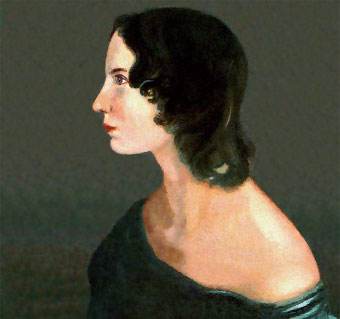
Portrait of the author:
Comments: What do you get when you take a misanthropic psychopath and pair him with a histrionic narcissist, and then isolate them in a storm-tossed environment? You get this wonderful and bizarre novel, that’s what.
Wuthering Heights has been called the most complex novel in English literature (although it’s not a difficult book), and I think that’s what makes it so endlessly interesting to me. Since I originally read it, I have participated in many discussions on it. Rereading books is a luxury I rarely indulge in, but I should do it more often, as I always see things differently than I did at first reading. This time I noticed how this is really Heathcliff’s story, rather than the bit of a mish mash I saw before. This time I understood the purpose of the second half better. I also became quite fascinated by the character of Isabella, and found that under the surface I had a lot of sympathy for her. The first time I read Wuthering Heights I was struck by how completely unromantic the supposed romantic parts were—I’ve heard a convincing suggestion that Heathcliff and Cathy were more twins than lovers—but this time it did strike me as romantic. Twisted, sick, and unhealthy, but passionately romantic.
Anyway, people have devoted their careers to exploring Wuthering Heights, so I’m not going to attempt to capture everything here. I would like to focus on making a few observations and questions about the characters.
Heathcliff—truly a nasty human being, but utterly fascinating. Who is he? Where did he come from? Was he really a gypsy, or is that just what Nelly Dean called him? Was he a street waif? Mr. Earnshaw’s illegitimate son? The child of an African slave? No one knows. And when Heathcliff disappears for three years, and comes back a “gentleman,” where has he been and what has he done? I would love to know what Bronte was thinking. BTW, anyone who pines for Heathcliff needs to get to counseling right away—he is not a healthy love interest!
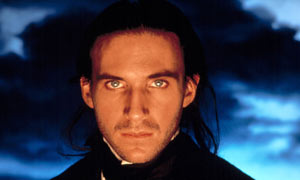
I have seen the 1992 Wuthering Heights movie too many times to count, and I have to say that I really like Ralph Fiennes in the role. However, I note that Heathcliff is shown more sympathetically in all the film versions than he is in the book. Maybe no one would watch if it wasn’t so.
Catherine Earnshaw Linton—I don’t like her, although I still find myself cheering for her. She’s an immature spoiled brat who makes Scarlett O’Hara appear reasonable. And I think it’s funny that she marries Edgar so she can be “the finest lady in the neighbourhood.” Hey, Cath, sweetheart, you’re pretty much the ONLY lady in the neighbourhood. I like her ghost though. That’s a cool trick.
Hindley & Frances Earnshaw—Hindley is a cardboard cutout of a jerk, so I actually cheer when Heathcliff ruins him. I’d like to know more about Frances though—from the very little we know about her, she sounds like someone who had history. Another mystery.
Edgar Linton—boring Edgar. I can’t understand what he sees in Catherine, other than she is the ONLY woman in the neighbourhood. He really needed to go away to find a wife. Some fresh DNA was really needed in this village.
Nelly Dean—our narrator. She so very much wants to be part of the action, but as the hired help, "sorry, just step back and watch us self-destruct."
Lockwood—our other narrator. A bumbler, whose brain is locked in wood.
Joseph—the “odious Joseph.” No one in the novel can stand him, nor can any readers. Ever. What purpose does he fill?
Isabella Linton—I genuinely feel sorry for Isabella. Stuck out on those moors with her wimp of a brother, I bet Heathcliff seemed pretty exciting at first. And then it was too late, and she realized she was in over her head. Really, another lesson that shows that if there are only one or two eligible men in your area, you should probably move somewhere else if you want to date. Anyway, I’d like to know exactly why she dies, and how she managed to raise such a sniveling creep of a son.
Hareton Earnshaw—often called the only likeable character in the novel.
Catherine Linton Heathcliff—Nelly often calls the young Cathy “her angel,” but Nelly is deluded, because Catherine shows too many of her mother’s bad character traits. But she has a kind side too, so I’ll just call her watered down Cathy-lite. I do find it interesting that Heathcliff hates her so much.
Linton Heathcliff—whoa, how is it possible that this whinging weakling is Heathcliff’s offspring? I laughed out loud when Heathcliff calls him “a cobweb.” Perfect. Everyone is pretty happy when he finally dies, but I’d still like to know what is wrong with him.
Which leads me to one last thought:
There is a lot of unexplained death in Wuthering Heights, and it intrigues me too. Of course the author herself was surrounded by death in real life, and I’m sure much of it was unexplained, so it all fits. And adds another layer of mystery to the novel.
. . . Part Two: the Critical part of Wuthering Heights (Norton Critical Editions), coming soon.
Norton Critical Edition + audiobook
I originally read Wuthering Heights about 12 years ago. I’ve always wanted to reread it, but never made time for it. Listening to it on audio book gave me the opportunity to revisit the novel. It also gave me an excuse to pull out my Norton Critical edition and read all the extra material.
Portrait of the author:
Comments: What do you get when you take a misanthropic psychopath and pair him with a histrionic narcissist, and then isolate them in a storm-tossed environment? You get this wonderful and bizarre novel, that’s what.
Wuthering Heights has been called the most complex novel in English literature (although it’s not a difficult book), and I think that’s what makes it so endlessly interesting to me. Since I originally read it, I have participated in many discussions on it. Rereading books is a luxury I rarely indulge in, but I should do it more often, as I always see things differently than I did at first reading. This time I noticed how this is really Heathcliff’s story, rather than the bit of a mish mash I saw before. This time I understood the purpose of the second half better. I also became quite fascinated by the character of Isabella, and found that under the surface I had a lot of sympathy for her. The first time I read Wuthering Heights I was struck by how completely unromantic the supposed romantic parts were—I’ve heard a convincing suggestion that Heathcliff and Cathy were more twins than lovers—but this time it did strike me as romantic. Twisted, sick, and unhealthy, but passionately romantic.
Anyway, people have devoted their careers to exploring Wuthering Heights, so I’m not going to attempt to capture everything here. I would like to focus on making a few observations and questions about the characters.
Heathcliff—truly a nasty human being, but utterly fascinating. Who is he? Where did he come from? Was he really a gypsy, or is that just what Nelly Dean called him? Was he a street waif? Mr. Earnshaw’s illegitimate son? The child of an African slave? No one knows. And when Heathcliff disappears for three years, and comes back a “gentleman,” where has he been and what has he done? I would love to know what Bronte was thinking. BTW, anyone who pines for Heathcliff needs to get to counseling right away—he is not a healthy love interest!
I have seen the 1992 Wuthering Heights movie too many times to count, and I have to say that I really like Ralph Fiennes in the role. However, I note that Heathcliff is shown more sympathetically in all the film versions than he is in the book. Maybe no one would watch if it wasn’t so.
Catherine Earnshaw Linton—I don’t like her, although I still find myself cheering for her. She’s an immature spoiled brat who makes Scarlett O’Hara appear reasonable. And I think it’s funny that she marries Edgar so she can be “the finest lady in the neighbourhood.” Hey, Cath, sweetheart, you’re pretty much the ONLY lady in the neighbourhood. I like her ghost though. That’s a cool trick.
Hindley & Frances Earnshaw—Hindley is a cardboard cutout of a jerk, so I actually cheer when Heathcliff ruins him. I’d like to know more about Frances though—from the very little we know about her, she sounds like someone who had history. Another mystery.
Edgar Linton—boring Edgar. I can’t understand what he sees in Catherine, other than she is the ONLY woman in the neighbourhood. He really needed to go away to find a wife. Some fresh DNA was really needed in this village.
Nelly Dean—our narrator. She so very much wants to be part of the action, but as the hired help, "sorry, just step back and watch us self-destruct."
Lockwood—our other narrator. A bumbler, whose brain is locked in wood.
Joseph—the “odious Joseph.” No one in the novel can stand him, nor can any readers. Ever. What purpose does he fill?
Isabella Linton—I genuinely feel sorry for Isabella. Stuck out on those moors with her wimp of a brother, I bet Heathcliff seemed pretty exciting at first. And then it was too late, and she realized she was in over her head. Really, another lesson that shows that if there are only one or two eligible men in your area, you should probably move somewhere else if you want to date. Anyway, I’d like to know exactly why she dies, and how she managed to raise such a sniveling creep of a son.
Hareton Earnshaw—often called the only likeable character in the novel.
Catherine Linton Heathcliff—Nelly often calls the young Cathy “her angel,” but Nelly is deluded, because Catherine shows too many of her mother’s bad character traits. But she has a kind side too, so I’ll just call her watered down Cathy-lite. I do find it interesting that Heathcliff hates her so much.
Linton Heathcliff—whoa, how is it possible that this whinging weakling is Heathcliff’s offspring? I laughed out loud when Heathcliff calls him “a cobweb.” Perfect. Everyone is pretty happy when he finally dies, but I’d still like to know what is wrong with him.
Which leads me to one last thought:
There is a lot of unexplained death in Wuthering Heights, and it intrigues me too. Of course the author herself was surrounded by death in real life, and I’m sure much of it was unexplained, so it all fits. And adds another layer of mystery to the novel.
. . . Part Two: the Critical part of Wuthering Heights (Norton Critical Editions), coming soon.
4Murphy-Jacobs
Dangumit! I no more than open your thread when 3 books from your list leap off and say "ME! ME! YOU WANT ME!"
Now cut that out!
Now cut that out!
5RidgewayGirl
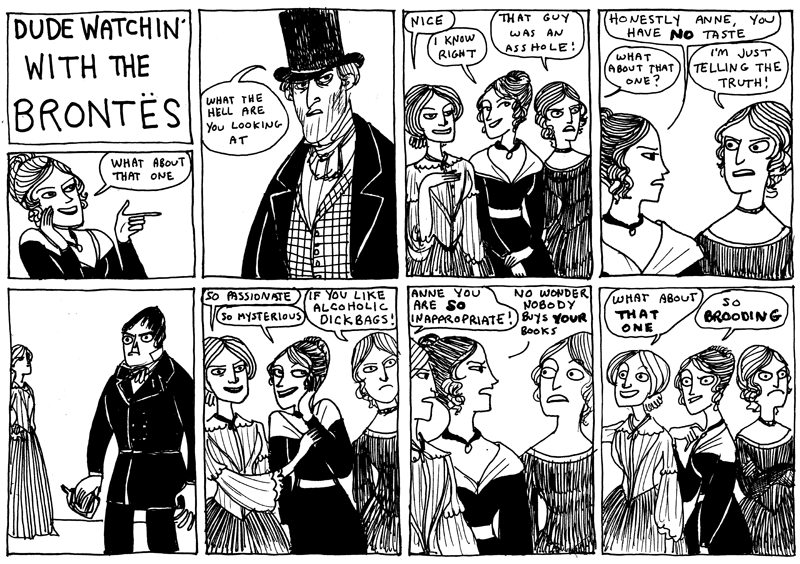
I tried to read Wuthering Heights long ago and gave up on it. This is the first time I've thought that maybe I should try again. Looking forward to more on it from you. You've seen the Hark! a Vagrant cartoon haven't you? I do love Anne's novels best.
6Nickelini
Alison - I'm guessing you mean:
I can understand not getting into Wuthering Heights--the stacked narrators and the weird timeline, and "odious" Joseph's dialect all make my head swim. But it's so worth it if you can get it to click. Have you ever seen the 1992 film version of the book with Juliette Binoche and Ralph Fiennes? I like it very much and it does pretty well with sticking the the book (although it does have to squish it all down to a couple of hours; also, some key scenes from when Heathcliff and Cathy are about 12 are played by Fiennes and Binoche, which is sort of odd.) But otherwise it's one of my comfort movies. It also has a haunting soundtrack by Ryuchi Sakamoto which, yes, has a Japanese sound to it, but it somehow fits very well.
The other thing I'd recommend if you're having problems getting into it is to check a reader's guide. My current favourite is Shmoop because it's accurate and also rather funny: http://www.shmoop.com/wuthering-heights/summary.html
There is just no other book remotely like Wuthering Heights, and so it has a very special place in my personal library.
I can understand not getting into Wuthering Heights--the stacked narrators and the weird timeline, and "odious" Joseph's dialect all make my head swim. But it's so worth it if you can get it to click. Have you ever seen the 1992 film version of the book with Juliette Binoche and Ralph Fiennes? I like it very much and it does pretty well with sticking the the book (although it does have to squish it all down to a couple of hours; also, some key scenes from when Heathcliff and Cathy are about 12 are played by Fiennes and Binoche, which is sort of odd.) But otherwise it's one of my comfort movies. It also has a haunting soundtrack by Ryuchi Sakamoto which, yes, has a Japanese sound to it, but it somehow fits very well.
The other thing I'd recommend if you're having problems getting into it is to check a reader's guide. My current favourite is Shmoop because it's accurate and also rather funny: http://www.shmoop.com/wuthering-heights/summary.html
There is just no other book remotely like Wuthering Heights, and so it has a very special place in my personal library.
7RidgewayGirl
Thanks. I'll watch the movie and take it from there.
8baswood
http://www.imdb.com/title/tt1181614/?ref_=sr_1
The 2011 film version does a tremendous job with the novel. No romance here just mud and violent emotions.
Excellent review of the characters Joyce
The 2011 film version does a tremendous job with the novel. No romance here just mud and violent emotions.
Excellent review of the characters Joyce
9Nickelini
Barry - I haven't seen it yet, but my daughter and I are watching Netflix and will watch it if it ever shows up (I'm still waiting for We Need to Talk about Kevin with Tilda Swinton as well). Good to hear the Wuthering Heights film is good--I've heard mixed things, but I usually find something to admire. It certainly looks interesting. I also liked the version they showed on Masterpiece Theatre a few years ago (with Tom Hardy, I believe).
10Nickelini
21. Wuthering Heights (Norton Critical Editions), Emily Bronte
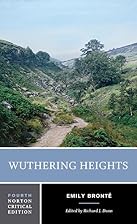
Not an exciting cover, but the picture is of the path that Emily took from her house to the moors, so that's nice.
In addition to the novel (comments see post #2, above) Wuthering Heights (Norton Critical Editions) contains extensive background pieces on the book (including reviews from when it was published), commentary from Charlotte Bronte, Emily Bronte's poems, a chronological timeline of the novel, and four scholarly essays. In particular, I enjoyed the essays, although they were rather academic, and so not really what I'd call a "fun" read. Still, they gave me some further insights into the singular novel.
There is no other book ever written that is anything like Wuthering Heights, so we are left to read only about it instead. I wonder what Emily would make of what has become of her novel 160 years after its publication? Wouldn't she be astounded at its mark on culture, and probably even more astounded at the reams and reams written about it.
Recommended for: readers who want to understand more about the novel and students. Not for the casual fan.
Rating: I'm not sure how to rate a book like this.
Why I Read This Now: I was "rereading" Wuthering Heights by audiobook, and so thought I'd read the Norton additional materials at the same time.
Note: Wuthering Heights has been one of my favourite novels ever since I read it about 12 years ago, not because it's such a perfect book, but because it's always interesting to talk about it or think about it. I love its dark, messy complexity. This rereading just confirmed how much I enjoy this book.
Not an exciting cover, but the picture is of the path that Emily took from her house to the moors, so that's nice.
In addition to the novel (comments see post #2, above) Wuthering Heights (Norton Critical Editions) contains extensive background pieces on the book (including reviews from when it was published), commentary from Charlotte Bronte, Emily Bronte's poems, a chronological timeline of the novel, and four scholarly essays. In particular, I enjoyed the essays, although they were rather academic, and so not really what I'd call a "fun" read. Still, they gave me some further insights into the singular novel.
There is no other book ever written that is anything like Wuthering Heights, so we are left to read only about it instead. I wonder what Emily would make of what has become of her novel 160 years after its publication? Wouldn't she be astounded at its mark on culture, and probably even more astounded at the reams and reams written about it.
Recommended for: readers who want to understand more about the novel and students. Not for the casual fan.
Rating: I'm not sure how to rate a book like this.
Why I Read This Now: I was "rereading" Wuthering Heights by audiobook, and so thought I'd read the Norton additional materials at the same time.
Note: Wuthering Heights has been one of my favourite novels ever since I read it about 12 years ago, not because it's such a perfect book, but because it's always interesting to talk about it or think about it. I love its dark, messy complexity. This rereading just confirmed how much I enjoy this book.
11SassyLassy
Keep up the rereading. There are so many books that are worth it. Wuthering Heights is my most reread book. Great comments on it. The Norton definitely looks worth it.
12Nickelini
Yea! Another Wuthering Heights fan!
13vancouverdeb
Lovely picture of the blossoming cherry tree, Joyce! The tulip magnolias are in full force right now and some are even losing their petals around here. Such a short blooming season for the tulip magnolias.
14Murphy-Jacobs
You know, I've avoided Wuthering Heights for years, since an attempt long ago ended in....lack of interest. Maybe an annotated version might be easier reading. I tend to really enjoy annotated versions.
15Nickelini
Deb - I know! The magnolias are one of my favourites and they barely begin and then they're done. I've been seeing quite a few rhododendrons in bloom too. But my very favourite is the smell of the air! Heaven. Spring is my favourite season.
Murphy - I know, Wuthering Heights can be a slog if you're not in the right frame of mind. An annotated edition would be a good idea--this time I listened to it on audiobook and it was good. There are several different versions available on iTunes.
Murphy - I know, Wuthering Heights can be a slog if you're not in the right frame of mind. An annotated edition would be a good idea--this time I listened to it on audiobook and it was good. There are several different versions available on iTunes.
16Murphy-Jacobs
The rhodies haven't started here quite yet (at least mine hasn't) but the Wisteria is coming out, and the dogwoods and mock cherries are raining pollen all over the place :)
I'll keep my eye open for a good annotation. I really should give it another try.
I'll keep my eye open for a good annotation. I really should give it another try.
17Nickelini
I was looking online last night to see if there actually is an annotated Wuthering Heights and the only one I could find was on kindle, which I find suspicious. Lots of editions have footnotes (the Norton edition I have translated all the dialogue, for example). In the absence of an annotated edition, I recommend Shmoop, which appears to be a more reliable and funnier version of SparkNotes. ( http://www.shmoop.com/literature/)
18Murphy-Jacobs
Excellent! I've never used Shmoop, but I love the name already!
19Helenliz
Wuthering Heights is another classic I've never read & feel I ought to - but I admit to being intimidated by it. It's always described in superlatives that I'm worried it'll fall short of expectation (or I will not "get" it).
20Nickelini
#19 - I totally understand being intimidated by Wuthering Heights--I was too when I first read it. So I was quite delighted when I loved it. There is a minor character named Joseph who is almost impossible to understand, but you can pretty much skip everything he says and not miss anything (he's one-note speaker who preaches fire and brimstone and damns everyone to an eternity in the fiery lake. That's all you have to know about him). Here's how Shmoop rates it on their "Tough-o-meter":
"We've got your back. With the Tough-O-Meter, you'll know whether to bring extra layers or Swiss army knives as you summit the literary mountain. (10 = Toughest)
(4) Base Camp
With her violently romantic plot line and passionate characters, Emily Brontë has no problem drawing the reader into the book. And once you get through the first two chapters, you are definitely hooked. Heathcliff seems like such a jerk, yet he is one of the most famous romantic protagonists ever.
Brontë doesn't always make it easy to follow the timeline, as there are all sorts of flashbacks, so you have to pay attention to where you are in the story. Though Nelly Dean and Lockwood are our main narrators, there are numerous sub-narrators. Of course, everyone has his or her own opinion on Earnshaw-Linton drama, so keep in mind that you are getting anything but an objective narration."
source: http://www.shmoop.com/wuthering-heights/tough-o-meter.html
----------------
So, 4 out of 10? Piece of cake--you can do it.
"We've got your back. With the Tough-O-Meter, you'll know whether to bring extra layers or Swiss army knives as you summit the literary mountain. (10 = Toughest)
(4) Base Camp
With her violently romantic plot line and passionate characters, Emily Brontë has no problem drawing the reader into the book. And once you get through the first two chapters, you are definitely hooked. Heathcliff seems like such a jerk, yet he is one of the most famous romantic protagonists ever.
Brontë doesn't always make it easy to follow the timeline, as there are all sorts of flashbacks, so you have to pay attention to where you are in the story. Though Nelly Dean and Lockwood are our main narrators, there are numerous sub-narrators. Of course, everyone has his or her own opinion on Earnshaw-Linton drama, so keep in mind that you are getting anything but an objective narration."
source: http://www.shmoop.com/wuthering-heights/tough-o-meter.html
----------------
So, 4 out of 10? Piece of cake--you can do it.
21Murphy-Jacobs
Hehheh. My worries are always that Cathy and Heathcliff will just irritate the daylights out of me. Once I start wanting to slap main characters, the book is pretty much over for me ;)
23Nickelini
Hmmm, I don't mind wanting to slap characters if everything else is in the book is good. I think my most slappable literary character is Sue from Jude the Obscure, and Thomas Hardy writes other slap-worthy characters too. I think it's easy to want to slap 19th century characters because they freak out over things that we shrug off.
Back to Wuthering Heights, Cathy is pretty slap-worthy herself. As I described her above, I think she's a histrionic narcissist. The first time I read the book she had me rolling my eyes often. But she's only in part of the first half of the book, and I like her as a ghost. Heathcliff is completely different, and it's his novel. I find him very interesting, and a reader could have great sympathy for him, at least at first. He doesn't bring out my slap instinct at all--maybe my run and hide in a closet instinct, but not my slap. Besides, he'd rise out of his grave and out of the novel and come after me if I tried to slap him. Even when he firmly establishes himself as a psychopath, there is something about him I like. As long as he stays between the pages of a novel, that is.
Back to Wuthering Heights, Cathy is pretty slap-worthy herself. As I described her above, I think she's a histrionic narcissist. The first time I read the book she had me rolling my eyes often. But she's only in part of the first half of the book, and I like her as a ghost. Heathcliff is completely different, and it's his novel. I find him very interesting, and a reader could have great sympathy for him, at least at first. He doesn't bring out my slap instinct at all--maybe my run and hide in a closet instinct, but not my slap. Besides, he'd rise out of his grave and out of the novel and come after me if I tried to slap him. Even when he firmly establishes himself as a psychopath, there is something about him I like. As long as he stays between the pages of a novel, that is.
25Murphy-Jacobs
I haven't read anything by Hardy that I wanted to finish. I think I take Jasper FForde's take on Hardy -- that he was a great comic writer, but other authors kept borrowing bits and pieces of his funny stuff until all that was left was the doom, gloom and boredom. ;)
26Nickelini
24 - ha ha! Good idea.
25 - yes, there is a lot of doom, gloom, and boredom between the interesting bits in Hardy. I hadn't looked at it that way, but your're right.
25 - yes, there is a lot of doom, gloom, and boredom between the interesting bits in Hardy. I hadn't looked at it that way, but your're right.
27RidgewayGirl
I like Thomas Hardy an awful lot.
28Murphy-Jacobs
RidgewayGirl, I haven't attempted Hardy since high school, which was such a negative experience I haven't felt any drive to read him again. Then again, I don't read much Dickens, mostly because, although I enjoy his writing, he takes so long to get to anything I'm worn out before it happens. The only story I've completed is 'A Christmas Carol" which I've read more than once - but it has the virtue of being short. :)
I don't like Faulkner much, either. I've tried a few times. No click. On the other hand, I can happily read Fanny Burney.
I don't like Faulkner much, either. I've tried a few times. No click. On the other hand, I can happily read Fanny Burney.
29Nickelini
Ridgeway - I like Hard an awful lot too, but I have to be in the mood for him! Tess of the d'Urbervilles has been called the most depressing novel ever, but I think Jude the Obscure was even more depressing, and those are the only two I've read.
(and besides, I think A Fine Balance is the most depressing novel ever).
Murphy-Jacobs - I don't think Hardy is a great choice for high school age readers. Sure, you'll find a few who enjoy him, but I don't think most would.
(and besides, I think A Fine Balance is the most depressing novel ever).
Murphy-Jacobs - I don't think Hardy is a great choice for high school age readers. Sure, you'll find a few who enjoy him, but I don't think most would.
30Helenliz
I'm like Murphy - I was put through Hardy's Under Greenwood Tree (or some such - I may have blanked the experience) at school by a teacher that almost managed to make Shakespeare dull and uninspired. Never revisited Hardy since, even though I know I ought to seeing that's quite some time ago.
31SassyLassy
Doom and gloom are the best parts of Hardy. He does them so well!
33Murphy-Jacobs
It was Tess and Jude in highschool, which no doubt contributes to the impression. I've never been much for depressing literature (I'm very impressionable) and I have a limited tolerance for gloom and doom.
Shakespeare, on the other hand, was huge fun. I had the best teacher for British Literature -- Mr. Boyle. I had his class during the Falklands War, and he made daily jokes about it, as well as (very daringly, for early 1980s Florida) teasing the art history teacher next door (Miss Henson, I think?) about The Virgin Mary and the Roman Soldier...
Shakespeare, on the other hand, was huge fun. I had the best teacher for British Literature -- Mr. Boyle. I had his class during the Falklands War, and he made daily jokes about it, as well as (very daringly, for early 1980s Florida) teasing the art history teacher next door (Miss Henson, I think?) about The Virgin Mary and the Roman Soldier...
34wandering_star
I listened to an audiobook of The Return Of The Native, largely because it was the only audiobook available read by Alan Rickman. Unfortunately, even his gravelly tones couldn't really keep me interested. I did read some criticism afterwards to try and understand the book better and was struck by the suggestion that the heathland is a character in its own right. Knowing that might have helped me get through the long descriptions of countryside!
35rebeccanyc
#31 Doom and gloom are the best parts of Hardy. He does them so well!
That's it! Have to get to him soon!
That's it! Have to get to him soon!
36StevenTX
The Return of the Native is my favorite Hardy novel of the four I've read and one of my favorite books of all time. I don't know if she's "slap-worthy" or not, but I fell in love that novel's femme fatale, Eustacia Vye.
37rebeccanyc
Well, I have Jude the Obscure, so that would be the one I'd read.
38SassyLassy
>37 rebeccanyc: That about encompasses all of Hardy for me. I first read it when I was about twelve and was reduced to outrage and tears. It still has that effect on me, but I can control it better with the years and knowing what's coming. It is on my rereread list for this year along with Tess, so will be interested to know what you think.
>34 wandering_star: Alan Rickman and Hardy...great combination. I will have to look for that!
>36 StevenTX: I suspect Hardy did too.
>34 wandering_star: Alan Rickman and Hardy...great combination. I will have to look for that!
>36 StevenTX: I suspect Hardy did too.
39Nickelini
Rebecca, do you mean to say that you haven't read Wharton OR Hardy? I truly thought you'd read everything. ;-)
40lauralkeet
>39 Nickelini:: *snort*
Rebecca, I didn't realize you hadn't read Wharton. Really, if you want to live up to the "nyc" in your name, you simply must. May I recommend The House of Mirth to start? That has a fair share of doom & gloom in it.
Rebecca, I didn't realize you hadn't read Wharton. Really, if you want to live up to the "nyc" in your name, you simply must. May I recommend The House of Mirth to start? That has a fair share of doom & gloom in it.
41rebeccanyc
Very funny, Joyce and Laura! I thought ITess of the D'Urbervilles back in school, but I have zero remembrance of it, so maybe I never read it and it was just on the suggested summer reading list. I can sort of picture the book, though.
I'm actually pretty weak on famous US and British authors because I read so much from other countries, and so that's my excuse for Wharton and Hardy and I'm sticking to it!
I'm actually pretty weak on famous US and British authors because I read so much from other countries, and so that's my excuse for Wharton and Hardy and I'm sticking to it!
42Nickelini
Ah, Rebecca, you don't need an excuse. No one can read everything. Not even Harold Bloom.
43Murphy-Jacobs
Cliff Fadiman tried, though.
I have Wharton in my Shelf of Constant Reproach. One day, one day...
I have Wharton in my Shelf of Constant Reproach. One day, one day...
44AnnieMod
Some days I find myself wishing to be in the 18th century... (or 19th) - then one might have had a chance to read all that was published and is not too religious (if they had nothing else to do and the money and so on...)...
45Nickelini
#44 - I know what you mean, but then I remember the whole indoor plumbing/toilet paper thing and think "no."
46AnnieMod
>45 Nickelini:
And the expectations of women. And the education. And the health system. I know, I know :)
And the expectations of women. And the education. And the health system. I know, I know :)
47Murphy-Jacobs
I suppose the best one can do is cultivate a cadre of smart people who will help you filter the tasty literary krill out of the sea of words.
Yes, you are all just baleen. :)
Yes, you are all just baleen. :)
48detailmuse
Just coming over from Nickelini's previous thread and haven't caught up here yet -- but wanted to reply right away to Merrikay (mkboylan) about her post on Dirt Work -- it's in my 5 or so to read "next" and you make me want to really make it next!
50SassyLassy
>43 Murphy-Jacobs: Shelf of Constant Reproach That's fabulous!
51Murphy-Jacobs
It came from an article I read (I've have to hunt up a link) about how most readers end up with a shelf of books they feel like they should read but somehow never get around to reading. I certainly have those -- books that I usually enjoy when I actually read them, but which stare dauntingly at me.
52Nickelini
yep, I know that shelf. They seem like a good idea when I acquire them, but then . . . . and just seconds ago I got a free copy of the 9/11 Commission Report, which has been on my wishlist for a while (in part because an internet friend was one of the editors), but I'm already seeing the cobwebs form across it.
53Nickelini
22. Five Bells, Gail Jones, 2011
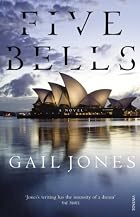
I think this cover is absolutely gorgeous. It's also appropriate, as the Sydney Opera House figures prominently in the story.
Comments: Five Bells takes place all on one brilliant summer day in Sydney, as four people pass through the transportation hub of Circular Quay. Ellie is excited to meet up with James, her high school sweetheart, Pei Xing ruminates about her pleasant life in Australia after her brutal imprisonment in Mao's China, and Catherine grieves the loss of her dear brother back home in Ireland. The city of Sydney makes the fifth character.
This is a beautiful novel, in a way reminiscent of Virginia Woolf. I love how Jones overlaps and mirrors actions and motifs, and weaves in references to James Joyce and Doctor Zhivago. I also really enjoyed revisiting Sydney, a city I spent a lot of time in back in the early 1980s.
With it's meandering storyline and frequent flashbacks, this was not always particularly compelling, but in the end, Five Bells was a most worthwhile read.
Recommended for: readers who enjoy layered, literary novels.
Rating: 4 stars
Why I Read This Now: Time to read one of the newer, prettier books on my shelf. You could say I (pre-)judged this book by its cover.
I think this cover is absolutely gorgeous. It's also appropriate, as the Sydney Opera House figures prominently in the story.
Comments: Five Bells takes place all on one brilliant summer day in Sydney, as four people pass through the transportation hub of Circular Quay. Ellie is excited to meet up with James, her high school sweetheart, Pei Xing ruminates about her pleasant life in Australia after her brutal imprisonment in Mao's China, and Catherine grieves the loss of her dear brother back home in Ireland. The city of Sydney makes the fifth character.
This is a beautiful novel, in a way reminiscent of Virginia Woolf. I love how Jones overlaps and mirrors actions and motifs, and weaves in references to James Joyce and Doctor Zhivago. I also really enjoyed revisiting Sydney, a city I spent a lot of time in back in the early 1980s.
With it's meandering storyline and frequent flashbacks, this was not always particularly compelling, but in the end, Five Bells was a most worthwhile read.
Recommended for: readers who enjoy layered, literary novels.
Rating: 4 stars
Why I Read This Now: Time to read one of the newer, prettier books on my shelf. You could say I (pre-)judged this book by its cover.
54Murphy-Jacobs
How does Sydney figure as a character? What in particular makes it more than just a setting?
55Nickelini
#54 - Because it has an importance to the story that is more complex than mere setting. The characters move in and out of the their surroundings and although they don't know each other (except Ellie & James), they are experiencing the same things (the same didgeridoo music, the same ferries bobbing past)--much in the same way as the characters in Mrs Dalloway experience the same London day. These things that are happening affect the characters. Further, this story could only be set in Sydney, as all the details of the setting could only add up to become Sydney. The reader gets just as strong an impression of the city as she does of the human characters.
Setting as character, when done well as it is here, is one of my favourite literary techniques.
Setting as character, when done well as it is here, is one of my favourite literary techniques.
56mkboylan
I love the Shelf of Constant Reproach! I bet y'all are surely using understatement tho, right? when you say shelf singular?
57mkboylan
Ah the didgeridoo! What's not to love?
When I read The Forest People, one of my first anthro reads and all time favs Colin Turnbull about Pygmies in Africa, I became obsessed with finding some particular music that ended up sounding somewhat similar to a didgeridoo. In response to some of Turnbull's questions, the Pygmies told him they did not believe in good and evil. He then asked them why they thought evil things happened, what was going on? They answered that God had fallen asleep and needed to be awakened so they carried this huge long pipe instrument into the forest and played its music to wake God up. I absolutely had to hear it and Turnbull had stated that he had recorded it. This was in the days before the internet, but we did have 800 numbers (in the U.S.) so I called Tower records in NYC and they had a copy of the album! (and I do mean vinyl album). I was so excited waiting for it that I was just beside myself. When it finally arrived, it was awful sounding! Like just two notes over and over. Nevertheless, it is still a great story and isn't it healing when you're upset to go into the forest and sing, go into a room and listen to music?
When I read The Forest People, one of my first anthro reads and all time favs Colin Turnbull about Pygmies in Africa, I became obsessed with finding some particular music that ended up sounding somewhat similar to a didgeridoo. In response to some of Turnbull's questions, the Pygmies told him they did not believe in good and evil. He then asked them why they thought evil things happened, what was going on? They answered that God had fallen asleep and needed to be awakened so they carried this huge long pipe instrument into the forest and played its music to wake God up. I absolutely had to hear it and Turnbull had stated that he had recorded it. This was in the days before the internet, but we did have 800 numbers (in the U.S.) so I called Tower records in NYC and they had a copy of the album! (and I do mean vinyl album). I was so excited waiting for it that I was just beside myself. When it finally arrived, it was awful sounding! Like just two notes over and over. Nevertheless, it is still a great story and isn't it healing when you're upset to go into the forest and sing, go into a room and listen to music?
58lauralkeet
I listened to an interview with Gail Jones not too long ago, and they talked a lot about this book. It sounded intriguing. I like the comparison to Mrs Dalloway, too. I'll keep this one on my radar.
61Murphy-Jacobs
mk -- well, it would fit on a single shelf for me, since I do (occasionally) manage to read a book from it. One of these days I *AM* going to read Don Quixote. I WILL read some more Fanny Burney. If I can read Persuasion and Pride & Prejudice an easy half dozen times, I can read those. Heck, I managed The Mysteries of Udolpho twice!
62vancouverdeb
Nice review, Joyce. I read Sorry by Gail Jones earlier this year and really loved it. I hope to eventually get to Five Bells.
63NanaCC
Five Bells does sound interesting. I am adding to my wish list.
64Nickelini
I read Sorry by Gail Jones earlier this year and really loved it.
From most accounts, Sorry is the better novel; however, I was attracted to Five Bells because it is set in places I've been, and I always find that an attraction.
From most accounts, Sorry is the better novel; however, I was attracted to Five Bells because it is set in places I've been, and I always find that an attraction.
65detailmuse
>Shmoop, which appears to be a more reliable and funnier version of SparkNotes
Thanks for this.
And Five Bells goes onto the wishlist. Or maybe into the shopping cart -- Amazon has bargain pbks for $6.
Thanks for this.
And Five Bells goes onto the wishlist. Or maybe into the shopping cart -- Amazon has bargain pbks for $6.
66Nickelini
New trope I've noticed, for those who follow my musings and rants about book covers:
Young woman running or walking away from the camera/gaze: a variation of the faceless woman:

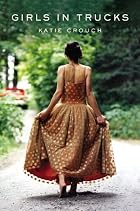
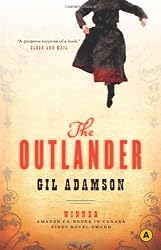 (and the poor woman is headless--double whammy! At least the novel is actually about a woman running away from something!)
~~~
Tatiana de Rosnay top three books have a variation of this:
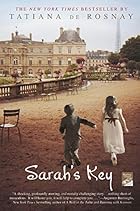
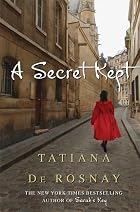

Young woman running or walking away from the camera/gaze: a variation of the faceless woman:

 (and the poor woman is headless--double whammy! At least the novel is actually about a woman running away from something!)
~~~
Tatiana de Rosnay top three books have a variation of this:

67NanaCC
Interesting to note that in the first three books of your post the women are demurely lifting their skirts a bit as they walk/run. :-)
68StevenTX
It makes sense in a way, though. They aren't running away from the camera; they are running into the book and enticing you to follow them.
71lyzard
>>#66
I was just over at the "Books with green covers" thread and I see that Wild Strawberries by Angela Thirkell also suffers from this. (The walking away, not so much the poofy dress.)
I was just over at the "Books with green covers" thread and I see that Wild Strawberries by Angela Thirkell also suffers from this. (The walking away, not so much the poofy dress.)

73torontoc
very funny- I have book cases all over the house- my favourite looks like your lair-cookbooks where plants used to be.
76rebeccanyc
Well, they may be running into the book BUT we aren't seeing their faces, and thus we aren't seeing them. We're only identifying that they're women, and the time period, and possibly their class status.

78SassyLassy
That's so sad that they're over. Do you have almonds, pears, apples? What's left to come? I'll miss this at the top of the page. It always cheered me up, even with the drizzle.
I do like and appreciate your replacement though.
I do like and appreciate your replacement though.
79Nickelini
I don't think we have almonds, but definitely pear and apple, which are currently in bloom. It's really pretty right now, even though at the moment it's drizzling. In May comes rhododendrons, although some of those are in bloom now (they're not all the same).
80Helenliz
Our blossom is still yet to come. the plum tree I can see from my study has been on the verge of popping for what seems like weeks, but it's still too cold.
82Helenliz
I know it's going to be good, it's just sooooo late! According to some rather keen growing friends, we're ~ 5 weeks behind normal. I should have my tomatoes in the greenhouse and the potatoes in the ground - they're both still on the kitchen window sill. We're expecting spring to sort of happen all in a rush sometime soon (hopefully sometime soon!)
83Nickelini
23. The Elegance of the Hedgehog, Muriel Barbery, 2006, translator- Alison Anderson

Cover comments: I don't mind the art on this cover, and it certainly is distinctive. The girl pictured here is different looking than the one in the story. I don't think we're supposed to notice.
Comments: This wildly popular book is one that readers either love or hate. Not much actually happens over its 325 pages and for the most part it is the philosophical ramblings of Renee, a middle aged concierge at a luxury Paris apartment, and the profound thoughts of a precocious 12 year old tenant.
The crux of the story depends on the reader buying the premise that Renee is highly intelligent, but chooses to silence herself because she has an impoverished background. I myself didn't buy it, which made Renee come off as a rather silly woman. I didn't mind the 12 year old--some readers have commented that the two are the same character, and only the different typefaces distinguishes them. I see what they mean, but I found her more interesting as she at least described actual events and actions. However, I've met this character before in other books and she's not original.
Why I Read This Now: A friend--who usually gives me good recommendations--encouraged me to borrow her copy back in 2011. I figured I should get it back to her.
Rating: I'm not sorry I read this, but I can only give it 2 stars. Sometimes it's interesting to read books one doesn't particularly like.
Recommended for: People who like philosophical books.

Cover comments: I don't mind the art on this cover, and it certainly is distinctive. The girl pictured here is different looking than the one in the story. I don't think we're supposed to notice.
Comments: This wildly popular book is one that readers either love or hate. Not much actually happens over its 325 pages and for the most part it is the philosophical ramblings of Renee, a middle aged concierge at a luxury Paris apartment, and the profound thoughts of a precocious 12 year old tenant.
The crux of the story depends on the reader buying the premise that Renee is highly intelligent, but chooses to silence herself because she has an impoverished background. I myself didn't buy it, which made Renee come off as a rather silly woman. I didn't mind the 12 year old--some readers have commented that the two are the same character, and only the different typefaces distinguishes them. I see what they mean, but I found her more interesting as she at least described actual events and actions. However, I've met this character before in other books and she's not original.
Why I Read This Now: A friend--who usually gives me good recommendations--encouraged me to borrow her copy back in 2011. I figured I should get it back to her.
Rating: I'm not sorry I read this, but I can only give it 2 stars. Sometimes it's interesting to read books one doesn't particularly like.
Recommended for: People who like philosophical books.
86lauralkeet
>83 Nickelini:: I really liked Hedgehog when I read it, but that was in the midst of all the buzz when it was new. Il wonder sometimes how I would feel about this, and others like it, if I read it after the excitement died down.
87Nickelini
#86 - Laura - About 8 years ago, I read some critic or professor advise to never buy a book until it's been out a year and all the hype has died down. I pretty much follow that, and it hasn't done me wrong. However, I'm not doing much to support new authors who rely on that early buzz, so I guess that's the down side.
88mkboylan
83, 86, 87 I'm reading The End of Your Life Bookclub by Will Schwalbe about his mother's last year of life and am on the chapter where they read Hedgehog. hmmmm. I haven't read it.
ETA: His mom loved it - don't know yet if he did.
ETA: His mom loved it - don't know yet if he did.
89Nickelini
24. A Good House, Bonnie Burnard, 1999
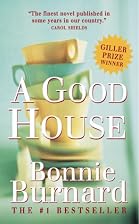
This very boring cover and the very boring title resulted in this book sitting in my TBR pile for over 10 years.
Comments: A Good House tells the story of the Chambers family from 1949 through 1997, and follows the waves of their births, deaths, marriages, and divorces. It is set in a fictional small town northwest of London, Ontario toward Lake Huron, but could really be set in any small town in North America. Just substitute "going off to university," with "going off to college," and "Muskoka chair" with "Adirondack chair," and the book could be set in the US.
What I enjoyed most about this novel was Burnard's unique writing style where she packs a wealth of information in each sentence, and then packs her paragraphs with these full sentences. In doing this, she creates nuanced, rounded characters and tells a story without a lot of action. What she achieves on the page reminds me of the folk art landscape painting where every element is given equal weight and importance:


And like folk art painting, Burnard's book is interesting and worthwhile, but it's not fabulously sophisticated high art either. However, it was good enough to win the 1999 Giller Prize, and that says something.
Why I Read This Now This was a gift in 2002, and so time to read it or pass it on.
Rating: 4 stars
Recommended for: I think this would appeal to the reader who enjoys books by Carol Shields and that sort. I loved Burnard's packed sentences, but others might find them tedious. It is an impressive first novel.
This very boring cover and the very boring title resulted in this book sitting in my TBR pile for over 10 years.
Comments: A Good House tells the story of the Chambers family from 1949 through 1997, and follows the waves of their births, deaths, marriages, and divorces. It is set in a fictional small town northwest of London, Ontario toward Lake Huron, but could really be set in any small town in North America. Just substitute "going off to university," with "going off to college," and "Muskoka chair" with "Adirondack chair," and the book could be set in the US.
What I enjoyed most about this novel was Burnard's unique writing style where she packs a wealth of information in each sentence, and then packs her paragraphs with these full sentences. In doing this, she creates nuanced, rounded characters and tells a story without a lot of action. What she achieves on the page reminds me of the folk art landscape painting where every element is given equal weight and importance:


And like folk art painting, Burnard's book is interesting and worthwhile, but it's not fabulously sophisticated high art either. However, it was good enough to win the 1999 Giller Prize, and that says something.
Why I Read This Now This was a gift in 2002, and so time to read it or pass it on.
Rating: 4 stars
Recommended for: I think this would appeal to the reader who enjoys books by Carol Shields and that sort. I loved Burnard's packed sentences, but others might find them tedious. It is an impressive first novel.
90lauralkeet
>87 Nickelini:: About 8 years ago, I read some critic or professor advice to never buy a book until it's been out a year and all the hype has died down. I pretty much follow that, and it hasn't done me wrong.
Interesting! I read very few newly-published books because a) I read a lot of classics and b) I feel like there are so many "older new releases" I haven't gotten to yet. Now I can say it's all part of a carefully crafted strategy!
Interesting! I read very few newly-published books because a) I read a lot of classics and b) I feel like there are so many "older new releases" I haven't gotten to yet. Now I can say it's all part of a carefully crafted strategy!
91baswood
I like to wait for 50 years for the hype to die down. Enjoyed your review of A Good House
92Nickelini
#91 - I like to wait for 50 years for the hype to die down
I was going to say "indeed," but then I realized I really haven't read that much from 50 years ago . . . . more like 150, or even 90. (When I look at the 1001 books list, I've only read a few before 1800, then I've read a bunch going into the 1930s, and then it dwindles through mid-century until I pick it up again in the 1980s. Must try to work on those years.) However! I'm with you in spirit! Let the dust settle, and all.
And what do you recommend from 50-ish years ago?
I was going to say "indeed," but then I realized I really haven't read that much from 50 years ago . . . . more like 150, or even 90. (When I look at the 1001 books list, I've only read a few before 1800, then I've read a bunch going into the 1930s, and then it dwindles through mid-century until I pick it up again in the 1980s. Must try to work on those years.) However! I'm with you in spirit! Let the dust settle, and all.
And what do you recommend from 50-ish years ago?
94SassyLassy
And what do you recommend from 50-ish years ago?
Interesting idea, because like you, I read a lot from the nineteenth century.
There seems to be a lot of Canlit, but looking from 1958-1968, I came up with the novels
Breakfast at Tiffany's 1958, Things Fall Apart 1958
The Group 1963, The Favourite Game 1963, The Collector 1963,
The Painted Bird 1965
A Jest of God, The Magus and Wide Sargasso Sea all from 1966 and Cancer Ward from 1968
Three big non fiction books: Eichmann in Jerusalem, The Feminine Mystique, The Making of the English Working Class
Quite a range.
Interesting idea, because like you, I read a lot from the nineteenth century.
There seems to be a lot of Canlit, but looking from 1958-1968, I came up with the novels
Breakfast at Tiffany's 1958, Things Fall Apart 1958
The Group 1963, The Favourite Game 1963, The Collector 1963,
The Painted Bird 1965
A Jest of God, The Magus and Wide Sargasso Sea all from 1966 and Cancer Ward from 1968
Three big non fiction books: Eichmann in Jerusalem, The Feminine Mystique, The Making of the English Working Class
Quite a range.
95Nickelini
“Never read a book that is not a year old” is attributed to Ralph Waldo Emerson.
Ah, thank you!
Ah, thank you!
96Nickelini
Oh, no . . . not The Making of the English Working Class! I read that at university and the weight of it just about crushed me!
Yes, I think I'm going to remind myself to read from that era (in honour of my upcoming 50th b-day?). From your suggestions, The Collector is on my tbr, and it keeps coming up in conversations, so that would be a good one to start with. Thanks.
Yes, I think I'm going to remind myself to read from that era (in honour of my upcoming 50th b-day?). From your suggestions, The Collector is on my tbr, and it keeps coming up in conversations, so that would be a good one to start with. Thanks.
97Helenliz
Could I maybe suggest one of my absolute favourites from a little more than 50 years ago? I, Claudius was published in the 30s, and is accounted a high brow classic. I think it has more in common with a soap opera than anything else, sex drugs & rock'n'roll Roman style!.
98Nickelini
#97 - I've only ever heard good things about I, Claudius, although I have to say that Ancient Rome is not on my list of interests.
99Nickelini
Another trend in covers I've noticed:

and even an African version:
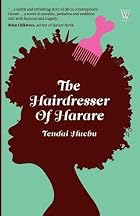
I have no idea what this latest book cover fashion says.

and even an African version:
I have no idea what this latest book cover fashion says.
100rebeccanyc
I love seeing your cover trends!
102detailmuse
>94 SassyLassy: The Group
Glad to get your recommendation on this. The not-very-good A Fortunate Age was a 2009 retelling/homage to it and I've been interested to read the original ever since.
"Never read a book that is not a year old" ... good advice for prescription drugs too. More years is even better.
Glad to get your recommendation on this. The not-very-good A Fortunate Age was a 2009 retelling/homage to it and I've been interested to read the original ever since.
"Never read a book that is not a year old" ... good advice for prescription drugs too. More years is even better.
103RidgewayGirl
What? Never take unexpired prescription drugs?
104rebeccanyc
I think MJ means never take a prescription drug that hasn't been in widespread use for at least a year. And I'm totally on board with "more years is even better" -- I'd go for 10 or so, and avoid taking anything unless absolutely necessary.
105Helenliz
No, never take a "new to market" drug. They're approved on fairly limited clinical trial, the trial continues in the market from launch. After the first 5 years in the market there is a compulsory review by the regulators. At which point any reported contraindications are reviewed before a decision is made to continue the product or to remove from the market. (EU, US may differ)
At launch it might only have been given to a few hundred people, so some uncommon side effects may not have been determined or fully assessed for likelihood at that stage.
please don't go around taking out of date medicine. *rolls eyes*
At launch it might only have been given to a few hundred people, so some uncommon side effects may not have been determined or fully assessed for likelihood at that stage.
please don't go around taking out of date medicine. *rolls eyes*
107RidgewayGirl
Ok. I feel much better now.
108detailmuse
Yes, new-to-market books and drugs. Although there is very occasionally a specific aspect to a new drug that makes it desirable in a certain population and worth the risk and premium price.
109Mr.Durick
A fellow I know is in stage four cancer and has been for six or eight years. That's supposedly roughly impossible. He thinks that if his insurance program were Kaiser he'd be dead by now, but his doctor participates in studies, so he's had drugs that just aren't generally available. There are such things that are better than what's been around for awhile. Like so much, the right path is through discretion.
Meanwhile the only painkiller I'll have much to do with is aspirin.
Robert
Meanwhile the only painkiller I'll have much to do with is aspirin.
Robert
110Helenliz
>109 Mr.Durick: that's quite amazing, and good on him. Not only is he surviving, he's advancing knowledge by doing so.
Every time you take a medicine you're doing (or should be doing) a risk/benefit analysis. What's the risk? (I might not feel better, I may have additional symptoms, in extremis I may die) What's the benefit? (my headache may go away, I might have a better quality of life, I might not die).
The issue, as I see it, is that too few people are sufficiently well informed, or care enough, to make the decision for themselves, especially when the condition is not life threatening. They take the pills because the doctor prescribed them, and don't ever question that decision. This tends to be discussed more formally with more extreme conditions and especially with experimental treatments. Who actually reads the patient information leaflet before taking a prescription drug? All the information is there, it's a regulatory requirement to detail side effects. I do read them and I know I am the exception to the rule.
sorry, one of my own special soapboxes, I will step off now.
Every time you take a medicine you're doing (or should be doing) a risk/benefit analysis. What's the risk? (I might not feel better, I may have additional symptoms, in extremis I may die) What's the benefit? (my headache may go away, I might have a better quality of life, I might not die).
The issue, as I see it, is that too few people are sufficiently well informed, or care enough, to make the decision for themselves, especially when the condition is not life threatening. They take the pills because the doctor prescribed them, and don't ever question that decision. This tends to be discussed more formally with more extreme conditions and especially with experimental treatments. Who actually reads the patient information leaflet before taking a prescription drug? All the information is there, it's a regulatory requirement to detail side effects. I do read them and I know I am the exception to the rule.
sorry, one of my own special soapboxes, I will step off now.

113Nickelini
25. The Flight of Gemma Hardy, Margot Livesey, 2012
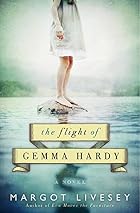
I'm inexplicably drawn to book covers that depict water, and I also like the watery colours. The girl is interesting (although this scene never appears in the book), but, Ack! she has no head! Also, this cover sort of screams "chick lit" (if it is indeed possible to sort of scream). In years to come, we'll look back on this and be able to identify within seconds that this book was printed around 2012.
Comments: Although the author claims that the Flight of Gemma Hardy is a "homage" to Jane Eyre, in my eyes it's more of a retelling. Set in Scotland and Iceland, the book is supposed to be updated to the 1960s, but there is a distinct lack of time markers (until the last 1/4), and the book feels very 19th century.
I'm ever intrigued by re-imaginings of earlier works. Occasionally they are spectacular, although often they're a mess. I think the key to a successful reworking is to bring something new to the original, and I can't say Gemma Hardy works in this regard. However, I wouldn't call it a mess, either.
I know this book was a flop for many readers, and I can see their points. I didn't mind it though, and there were certain elements I liked a lot, such as the Scottish and Icelandic setting.
Livesey used some nice imagery, especially with birds, ruins and the sea. I also found it interesting how she used horses in a distinctly negative way. Right at the beginning we learn that Gemma's evil aunt didn't mourn her uncle, but "rode to hounds whenever she could." Any snooty girl in the novel was a member of what she called the "equine cult." Her dear friend Marion was crippled by a horse. And then Hugh Sinclair's sister's downfall was all because "all she really cared about was riding." I thought it was all a little heavy-handed and overkill, unless, I suppose, you want to look at Gemma Hardy as a fairytale (which would be a credible reading).
Recommended for: I think this would make a good vacation read. It flows well, doesn't require intense concentration, and can be fun.
Fans of Jane Eyre either really love this one or hate it. From the comments I've read, the people who prefer the romance reading of Jane Eyre tend to dislike this more than the people who don't read Jane Eyre as a romance. If you've never read Jane Eyre, this book is not a replacement!
Why I Read This Now: a friend lent me her copy with rave reviews and I really needed to return it.
Rating: sort of a balance between like and dislike, leaning toward the like, so I'll give it 3.5 stars.
I'm inexplicably drawn to book covers that depict water, and I also like the watery colours. The girl is interesting (although this scene never appears in the book), but, Ack! she has no head! Also, this cover sort of screams "chick lit" (if it is indeed possible to sort of scream). In years to come, we'll look back on this and be able to identify within seconds that this book was printed around 2012.
Comments: Although the author claims that the Flight of Gemma Hardy is a "homage" to Jane Eyre, in my eyes it's more of a retelling. Set in Scotland and Iceland, the book is supposed to be updated to the 1960s, but there is a distinct lack of time markers (until the last 1/4), and the book feels very 19th century.
I'm ever intrigued by re-imaginings of earlier works. Occasionally they are spectacular, although often they're a mess. I think the key to a successful reworking is to bring something new to the original, and I can't say Gemma Hardy works in this regard. However, I wouldn't call it a mess, either.
I know this book was a flop for many readers, and I can see their points. I didn't mind it though, and there were certain elements I liked a lot, such as the Scottish and Icelandic setting.
Livesey used some nice imagery, especially with birds, ruins and the sea. I also found it interesting how she used horses in a distinctly negative way. Right at the beginning we learn that Gemma's evil aunt didn't mourn her uncle, but "rode to hounds whenever she could." Any snooty girl in the novel was a member of what she called the "equine cult." Her dear friend Marion was crippled by a horse. And then Hugh Sinclair's sister's downfall was all because "all she really cared about was riding." I thought it was all a little heavy-handed and overkill, unless, I suppose, you want to look at Gemma Hardy as a fairytale (which would be a credible reading).
Recommended for: I think this would make a good vacation read. It flows well, doesn't require intense concentration, and can be fun.
Fans of Jane Eyre either really love this one or hate it. From the comments I've read, the people who prefer the romance reading of Jane Eyre tend to dislike this more than the people who don't read Jane Eyre as a romance. If you've never read Jane Eyre, this book is not a replacement!
Why I Read This Now: a friend lent me her copy with rave reviews and I really needed to return it.
Rating: sort of a balance between like and dislike, leaning toward the like, so I'll give it 3.5 stars.
114The_Hibernator
Going WAY up there to your Wuthering Heights talk - That is another book that I've always thought I should read, but I've been avoiding it because I just don't find the bad brooding boy to be particularly attractive. But I should still read it some day... :)
I loved the cartoon in message 6! :)
I loved the cartoon in message 6! :)
115Nickelini
I know what you mean about the "bad brooding boy"-- not my type at all. But for some reason I do find Heathcliff fascinating. As a love interest? No! That's not healthy in any way. Perhaps I'm interested in him the same way I might be interested in Ted Bundy.
116The_Hibernator
Haha. Which is why I should probably read the book. ;)
117StevenTX
Even when the book isn't something I'm likely to read, I enjoy reading your comments on the cover art.
My library consists mostly of older works, but in scanning the "Your books" cover view I did see a couple of backs of women's heads, one silhouette, and one headless woman (does it count if she's also clothesless?). Maybe the next time I have to pull everything down to dust the shelves I'll do a census of book covers just for fun.
One thing I noticed a long time ago is a number of what I call "one-eyed spines." These are paperbacks or dust jackets that look back at you from the bookshelf because the image of a face on the cover wraps around so that one eye appears on the spine. We don't have images of book spines, but here are two examples where you can tell by the cover that the person's right eye is on the spine.
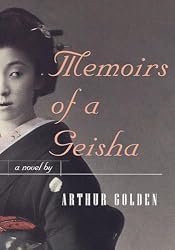
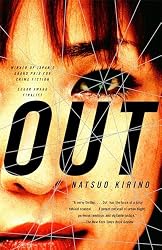
My library consists mostly of older works, but in scanning the "Your books" cover view I did see a couple of backs of women's heads, one silhouette, and one headless woman (does it count if she's also clothesless?). Maybe the next time I have to pull everything down to dust the shelves I'll do a census of book covers just for fun.
One thing I noticed a long time ago is a number of what I call "one-eyed spines." These are paperbacks or dust jackets that look back at you from the bookshelf because the image of a face on the cover wraps around so that one eye appears on the spine. We don't have images of book spines, but here are two examples where you can tell by the cover that the person's right eye is on the spine.
118Nickelini
Steven - Oh! I've never noticed that before! Another one for me to look out for and add to my list. Thanks for pointing that out.
119mkboylan
That's fun! Can't seem to read this week, but i think I'll go stare at spines for comfort!
120Nickelini
but i think I'll go stare at spines for comfort!
Oooh, nice idea. When I need book comfort, I mostly just pull books out of my tbr and fondle them, but next time I'll try the staring at spines. Nice!
Oooh, nice idea. When I need book comfort, I mostly just pull books out of my tbr and fondle them, but next time I'll try the staring at spines. Nice!
121Cariola
I don't think I'd find a row of eyes looking at me comforting! They'd all have this accusatory glare: "Read me, read me, READ ME!"
122Nickelini
Well, I wouldn't line up all those eyes in a row! How many books have those eyes, anyway? (Okay, now those eyes are a creepy thought, along with that leg comment on the other thread . . . creeped out!)
123baswood
Talking about being creeped out Joyce, your first picture on this thread is so dark and foreboding it nearly creeps me out. Can I campaign to bring back the cherry blossoms.
124Nickelini
It's weird how that image wasn't dark when I first posted it, but then got unreadable. Hmmm.
Anyway, I'm off to northern Saskatchewan this week, so I've posted a picture of that. Does it work for you?
Anyway, I'm off to northern Saskatchewan this week, so I've posted a picture of that. Does it work for you?
127SassyLassy
>113 Nickelini: Sounds like just the thing I need for my brief trips away next week. Scotland, Iceland, that horsey crowd and hints of the nineteenth century...alright. Like you, I suspect I have been put off by the cover and also by the ratings on the best seller lists, whose books I try to avoid in a perverse way.
As for Jane Eyre, I wonder if the readers' reactions relate to their age when they read it. When I read it as a child, I thought it was very romantic, when I read it in my teens I still thought that only less so, when I read it later, I definitely didn't think that way, but all three times I really liked it.
I miss the cherry blossoms too as our leaves haven't even reached bud break yet, but northern SK looks peaceful. Watch out for the black flies!
As for Jane Eyre, I wonder if the readers' reactions relate to their age when they read it. When I read it as a child, I thought it was very romantic, when I read it in my teens I still thought that only less so, when I read it later, I definitely didn't think that way, but all three times I really liked it.
I miss the cherry blossoms too as our leaves haven't even reached bud break yet, but northern SK looks peaceful. Watch out for the black flies!
128Nickelini
As for Jane Eyre, I wonder if the readers' reactions relate to their age when they read it. When I read it as a child, I thought it was very romantic, when I read it in my teens I still thought that only less so, when I read it later, I definitely didn't think that way, but all three times I really liked it.
I think you might be on to something there! I'm going to watch JE conversations and see how your theory holds up. Sounds like a good one. I read it for the first time in my 30s--not romantic! Then I studied it at uni in my 40s--really not romantic! (there was so much else going on--who had time to think about romance?), and after recently reading John Sutherland's Can Jane Eyre be Happy?--super not romantic!!
Black flies?! In early May? Horrors. If that's the case, I'll be in my room with a book. (I've also been told to expect to go ice fishing)
I think you might be on to something there! I'm going to watch JE conversations and see how your theory holds up. Sounds like a good one. I read it for the first time in my 30s--not romantic! Then I studied it at uni in my 40s--really not romantic! (there was so much else going on--who had time to think about romance?), and after recently reading John Sutherland's Can Jane Eyre be Happy?--super not romantic!!
Black flies?! In early May? Horrors. If that's the case, I'll be in my room with a book. (I've also been told to expect to go ice fishing)
129Nickelini
26. Overdressed: the Shockingly High Cost of Cheap Fashion, Elizabeth L. Cline, 2012
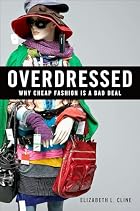
Fairly typical cover for a non-fiction book of this kind.
Comments: I think it's important that we know where our consumer goods come from and how they are made. I've read a lot about our food production, but not much about the other stuff we buy, so when I learned about this book, I thought it sounded worthwhile. I wasn't interested in everything she covers, but some parts were very interesting indeed. In particular, the chapter "the Afterlife of Cheap Clothes" where she visits the Salvation Army sorting centre for Brooklyn, New York. Serving just the Brooklyn and Queens areas of NYC, they process five tons of donated clothing every day. And that's only the Salvation Army--there are many other companies that do this too. But when I walk through the malls, and all the stores crammed with absolute junk, it really shouldn't be that surprising, I guess. Another thing that shouldn't have been surprising, but I hadn't really thought about, is the staggering amount of materials needed to make all these clothes. Since most of it is polyester (plastic) and brightly dyed, the production process is highly detrimental to our environment. The other chapter I found especially interesting was "China and the End of Cheap Fashion," which went into the latest changes in the global manufacturing market.
Here's a quotation that I like from the introduction: "Many books about fashion begin with an argument for why we should take fashion seriously. I'm going to take a different approach and say that fashion largely deserves its bad reputation. It's now a powerful, trillion-dollar global industry that has too much influence over our pocketbooks, self-image, and storage spaces. It behaves with embarrassingly little regard for the environment or human rights. It changes the rules of wheat we're supposed to wear constantly, and we seem to have lost our sense of self along with changing trends . . . "
Recommended for: Anyone who is interested in this topic, or who likes clothes but doesn't think about where they've been before your closet. I'm not much of a consumer of cheap clothes (or any clothes, really). Back in the 80s I used to make almost everything in my wardrobe, so I recognize shoddy quality without stepping into the store. Plus, my mother had a serious shopping addiction (the cashiers at Sears used to ask her what department she worked in because she was there every day). I think the combination of these two has kept me out of the stores, and therefore I am not the target audience for this book. But as an ex-fashionesta, and the mother of two teenage daughters, it wasn't completely irrelevant either.
Rating: 3.5 stars
Why I Read This Now: sounded interesting, and my reserve at the library came in.
Fairly typical cover for a non-fiction book of this kind.
Comments: I think it's important that we know where our consumer goods come from and how they are made. I've read a lot about our food production, but not much about the other stuff we buy, so when I learned about this book, I thought it sounded worthwhile. I wasn't interested in everything she covers, but some parts were very interesting indeed. In particular, the chapter "the Afterlife of Cheap Clothes" where she visits the Salvation Army sorting centre for Brooklyn, New York. Serving just the Brooklyn and Queens areas of NYC, they process five tons of donated clothing every day. And that's only the Salvation Army--there are many other companies that do this too. But when I walk through the malls, and all the stores crammed with absolute junk, it really shouldn't be that surprising, I guess. Another thing that shouldn't have been surprising, but I hadn't really thought about, is the staggering amount of materials needed to make all these clothes. Since most of it is polyester (plastic) and brightly dyed, the production process is highly detrimental to our environment. The other chapter I found especially interesting was "China and the End of Cheap Fashion," which went into the latest changes in the global manufacturing market.
Here's a quotation that I like from the introduction: "Many books about fashion begin with an argument for why we should take fashion seriously. I'm going to take a different approach and say that fashion largely deserves its bad reputation. It's now a powerful, trillion-dollar global industry that has too much influence over our pocketbooks, self-image, and storage spaces. It behaves with embarrassingly little regard for the environment or human rights. It changes the rules of wheat we're supposed to wear constantly, and we seem to have lost our sense of self along with changing trends . . . "
Recommended for: Anyone who is interested in this topic, or who likes clothes but doesn't think about where they've been before your closet. I'm not much of a consumer of cheap clothes (or any clothes, really). Back in the 80s I used to make almost everything in my wardrobe, so I recognize shoddy quality without stepping into the store. Plus, my mother had a serious shopping addiction (the cashiers at Sears used to ask her what department she worked in because she was there every day). I think the combination of these two has kept me out of the stores, and therefore I am not the target audience for this book. But as an ex-fashionesta, and the mother of two teenage daughters, it wasn't completely irrelevant either.
Rating: 3.5 stars
Why I Read This Now: sounded interesting, and my reserve at the library came in.
130mdoris
Hi Joyce,
Wonderful review on Overdressed: the Shockingly High Cost of Cheap Fashion. I had seen the book reviewed several months ago in the newspaper and it caught my eye because like you I did a LOT of food production reading years ago and it sort of put me into a tail spin. Maybe I'm ready for a tail spin in another direction! RALL! (reserve at local library)
Wonderful review on Overdressed: the Shockingly High Cost of Cheap Fashion. I had seen the book reviewed several months ago in the newspaper and it caught my eye because like you I did a LOT of food production reading years ago and it sort of put me into a tail spin. Maybe I'm ready for a tail spin in another direction! RALL! (reserve at local library)
131baswood
I agree with the quotation and your thoughts on the fashion industry. Nice review of Overdressed: The shockingly High Cost of Cheap fashion
I would be surprised if fashion-consciousness and reading go well together, but you never know.
I would be surprised if fashion-consciousness and reading go well together, but you never know.
132AnnieMod
Great review of Overdressed. Not a topic that really interests me (I hate shopping and when I do, I am more likely to go for cotton and similar materials than for the shiny stuff) and I know that I won't read it but it was fun reading your review.
133The_Hibernator
>127 SassyLassy: and 128 I read Jane Eyre as a teenager and I didn't think it was particularly romantic. I liked it well enough, but Mr. Rochester seemed like a bit of a jerk. I was hoping he'd be more like Mr. Darcy. ;)
I recently mentioned on my thread that Jane was the best heroine I could think of to list as my favorite. I didn't feel entirely justified in my choice for several reasons...But I DO think that, irregardless of whether Mr. Rochester is the type of guy I would fall for, Jane was in love with him. And I think it's admirable that she stuck to her values even when it broke her heart, and that she stayed true to her idea of passionate love when she had a chance to marry someone she wasn't in love with and who didn't love her.
I recently mentioned on my thread that Jane was the best heroine I could think of to list as my favorite. I didn't feel entirely justified in my choice for several reasons...But I DO think that, irregardless of whether Mr. Rochester is the type of guy I would fall for, Jane was in love with him. And I think it's admirable that she stuck to her values even when it broke her heart, and that she stayed true to her idea of passionate love when she had a chance to marry someone she wasn't in love with and who didn't love her.
134detailmuse
>129 Nickelini: A timely read and excellent review in light of the collapse of the Bangladesh garment factory. I read the very good In Cheap We Trust a few years back, which dealt more with consuming less (frugality) but touched on the issues with consuming inexpensively.
135mdoris
This book is along the same theme The Paradox of Choice by Barry Schwartz. I read it years ago and maybe it's time for a re-read!
136Nickelini
#135 - I read The Paradox of Choice when it came out too. Like Overdressed, I didn't really think I was the target audience for it.
137Nickelini
27. A Student of Weather, Elizabeth Hay, 2000
I think this cover is lush, evocative, and unique. Unfortunately, there is no scene remotely like this in the book--no skinny dipping in a forest pond--not even the mention of a fern. Reading the description on the back cover of the dusty prairies of the great depression, I really did wonder how this cover would fit into the story. It doesn't. Yet another case of the cover designer not having read the book? What else?
Comments: 9 year old Norma Joyce lives on a Saskatchewan farm during the great depression with her father and 18 year old sister. A young man appears in a blizzard, and both girls fall in love with him. The book ends several decades later.
The first half of this novel captivated me with its interesting story and gorgeous writing. However, later half of the book covers Norma Joyce's adult years in Ottawa and New York City, and I didn't really get the point.
Rating: 3.5 stars
Why I Read This Now: I went to Saskatchewan for the weekend, so I wanted to read something set there (although I was in quite a different place!). Also, this is one of the oldest books in my closet.
Recommended for: readers who like literary novels or Canlit.
I think this cover is lush, evocative, and unique. Unfortunately, there is no scene remotely like this in the book--no skinny dipping in a forest pond--not even the mention of a fern. Reading the description on the back cover of the dusty prairies of the great depression, I really did wonder how this cover would fit into the story. It doesn't. Yet another case of the cover designer not having read the book? What else?
Comments: 9 year old Norma Joyce lives on a Saskatchewan farm during the great depression with her father and 18 year old sister. A young man appears in a blizzard, and both girls fall in love with him. The book ends several decades later.
The first half of this novel captivated me with its interesting story and gorgeous writing. However, later half of the book covers Norma Joyce's adult years in Ottawa and New York City, and I didn't really get the point.
Rating: 3.5 stars
Why I Read This Now: I went to Saskatchewan for the weekend, so I wanted to read something set there (although I was in quite a different place!). Also, this is one of the oldest books in my closet.
Recommended for: readers who like literary novels or Canlit.
138NanaCC
"Reading the description on the back cover of the dusty prairies of the great depression, I really did wonder how this cover would fit into the story. It doesn't. Yet another case of the cover designer not having read the book? What else?"
Funny that you mention that. I started reading Queen Lucia by E. F. Benson yesterday, and in the 1998 Introduction by Patrick O'Connor, he talks about just that. He tried very hard to ensure once Moyer Bell took over rights to the series that the covers should fit the books. So, I guess irrelevant covers are not a new problem.
Funny that you mention that. I started reading Queen Lucia by E. F. Benson yesterday, and in the 1998 Introduction by Patrick O'Connor, he talks about just that. He tried very hard to ensure once Moyer Bell took over rights to the series that the covers should fit the books. So, I guess irrelevant covers are not a new problem.
139Nickelini
I guess irrelevant covers are not a new problem
No, I think you're right there. I've seen some (unintentionally) funny ones.
No, I think you're right there. I've seen some (unintentionally) funny ones.
140lauralkeet
>138 NanaCC:: Funny coincidence, I'll be reading Queen Lucia this month!
141mkboylan
129 - and then the fire in Bangladesh - interesting timing isn't with your reading? I hate shopping and buying clothes. I resent the whole deal and don't buy many clothes. Then suddenly I look down and realize I look like a slob compared to everyone else around me. I wish I could make peace with it all. I said to a teacher once who was in the classroom before my class "You like black don't you? You wear so much of it. I do too." She said "Yes I never buy anything but black and white. It's just easier." I loved that and moved in that direction. I go to Goodwill and buy every white linen blouse I see hoping I won't look too bad in linen. If I ever move again, my top priority will be choosing a place to live that is populated more by people whose values I share.
142Nickelini
133 - I read Jane Eyre as a teenager and I didn't think it was particularly romantic. I liked it well enough, but Mr. Rochester seemed like a bit of a jerk. I was hoping he'd be more like Mr. Darcy. ;)
I recently mentioned on my thread that Jane was the best heroine I could think of to list as my favorite. I didn't feel entirely justified in my choice for several reasons...But I DO think that, irregardless of whether Mr. Rochester is the type of guy I would fall for, Jane was in love with him. And I think it's admirable that she stuck to her values even when it broke her heart, and that she stayed true to her idea of passionate love when she had a chance to marry someone she wasn't in love with and who didn't love her.
Sorry for the delay in responding--I was away.
I really enjoyed our conversation about Jane and Rochester, and heroines and Ophelia over on your thread. Funny how that Jane pops up all over the place! She is a great character and I'd like to hear how people in the mid-1800s reacted to her (I've read some critics, but I'd like to hear from average readers too).
I recently mentioned on my thread that Jane was the best heroine I could think of to list as my favorite. I didn't feel entirely justified in my choice for several reasons...But I DO think that, irregardless of whether Mr. Rochester is the type of guy I would fall for, Jane was in love with him. And I think it's admirable that she stuck to her values even when it broke her heart, and that she stayed true to her idea of passionate love when she had a chance to marry someone she wasn't in love with and who didn't love her.
Sorry for the delay in responding--I was away.
I really enjoyed our conversation about Jane and Rochester, and heroines and Ophelia over on your thread. Funny how that Jane pops up all over the place! She is a great character and I'd like to hear how people in the mid-1800s reacted to her (I've read some critics, but I'd like to hear from average readers too).
143rebeccanyc
#141 Merrikay -- if you move to New York City, you can wear black all year round!
144Nickelini
28. Forest for the Trees: an Editor's Advice to Writers, Betsy Lerner, updated 2010
Pencils turning into trees . . . nice. Don't know what it means, and she doesn't have a "forest for the trees" theme going on in the book (I wonder why this title was chosen--did I miss something?), but really, what do you put on the cover of a book about writing?
Comments: Lerner has worked in publishing as an editor for years. The first half of her book is aimed at the writing, and the second at publishing.
The writing section is, for the most part, her musings about writers from sort of a psychological perspective, with an entire chapter devoted to writers with drug addictions, alcoholism, and mental illness. All of it is pretty interesting, but not a lot of the promised advice. The second section on publishing is more practical, but not information I need, so I have to admit I skimmed through this part.
There was a few pages on book cover design, which of course I found interesting. As I suspected, most book designers have not read the book--and in many cases have not even seen the manuscript. They have to rely on what the editors tell them about the book. Also, they work under very tight time and budget restraints, which means that sometimes books are published with terrible covers just because there isn't time or money to fix it. She did not comment on headless women.
Recommended for: anyone interesting in the writing and publishing world.
Rating: 3 stars
Why I Read This Now: it sort of fell in my lap.
Pencils turning into trees . . . nice. Don't know what it means, and she doesn't have a "forest for the trees" theme going on in the book (I wonder why this title was chosen--did I miss something?), but really, what do you put on the cover of a book about writing?
Comments: Lerner has worked in publishing as an editor for years. The first half of her book is aimed at the writing, and the second at publishing.
The writing section is, for the most part, her musings about writers from sort of a psychological perspective, with an entire chapter devoted to writers with drug addictions, alcoholism, and mental illness. All of it is pretty interesting, but not a lot of the promised advice. The second section on publishing is more practical, but not information I need, so I have to admit I skimmed through this part.
There was a few pages on book cover design, which of course I found interesting. As I suspected, most book designers have not read the book--and in many cases have not even seen the manuscript. They have to rely on what the editors tell them about the book. Also, they work under very tight time and budget restraints, which means that sometimes books are published with terrible covers just because there isn't time or money to fix it. She did not comment on headless women.
Recommended for: anyone interesting in the writing and publishing world.
Rating: 3 stars
Why I Read This Now: it sort of fell in my lap.
145VivienneR
The cover of Forest for the Trees looks inviting. If I saw this book I'd probably pick it up based on the cover alone. Too bad book designers haven't seen it.
Your reason for reading this now is intriguing.
Your reason for reading this now is intriguing.
146Nickelini
- and then the fire in Bangladesh - interesting timing isn't with your reading?
It was interesting timing! I just heard that the count for the factory collapse is now over 1,000--and here I thought it was all over. How horrific. The first time I heard of Bangladesh was the "George Harrison concert for Bangladesh" and ever since I've thought it must be the most difficult country to survive in because their fairly frequent disasters seem to always kill so many people. What an easy life I have.
It was interesting timing! I just heard that the count for the factory collapse is now over 1,000--and here I thought it was all over. How horrific. The first time I heard of Bangladesh was the "George Harrison concert for Bangladesh" and ever since I've thought it must be the most difficult country to survive in because their fairly frequent disasters seem to always kill so many people. What an easy life I have.
147mkboylan
146- I have the same thought - this month and last have been one crisis after another in my life and still - what an easy life I have.
148Nickelini
29. The Immortal Life of Henrietta Lacks, Rebecca Skloot, 2010

I have no opinion on this cover.
Comments: The Immortal Life of Henrietta Lacks is Rebecca Skloot’s memoir of writing this book from when, as a teenager in biology class, she learned about amazing HeLa cells and how they came from the cancerous tumor in a woman named Henrietta Lacks. Skloot set off to learn everything she could about the cells (which have been instrumental to modern medical advances, including the developing of the polio vaccination), the cells’ donor, and the donor’s family. To tell this story, she weaves together the science of the cells, what she could learn about the person Henrietta Lacks, the bioethics surrounding the story, and her own struggle to get information from the family.
What I Liked: First, the book was a quick read that I was always happy to pick up. I didn’t know anything about HeLa cells, so that was interesting. And though I think she bungled the bioethics angle of this story, it’s good that she raised the questions “Is it illegal for doctors to take our cells without our knowledge?,” “don’t they have to tell you?,” and, “if they make a ton of money, don’t they have to share it with you?”No easy answers, but a conversation that needs to take place. Anyway . . .
The best part about the book was the short story of Henrietta Lacks’s shockingly sad life. The descendent of slaves, Her life from birth to dying at age 31 from an aggressive cervical cancer is as sad as any story I’ve ever read. Truly heartbreaking. Her story is a snapshot of the cultural and social life for African-Americans living in dire poverty and dysfunction in mid-twentieth century Virginia. If these two topics—the cells, and Henrietta Lack’s life—had been the book, I would agree with all the 5 star ratings. It would have made a fabulous feature-length magazine article, and that’s what it should have been.
What I Didn’t Like: The most interesting thing I learned at university was how books can be “slippery,” especially when the author isn’t aware of the undercurrents that he or she has submerged in the text. From the first paragraph, I detected a troubling overtone. The story she tries to tell here is worthwhile; my problem is in how she tells the story. First, there is way too much about Rebecca Skloot in this book, which is why I described it as her memoir, rather than the story of the woman named in the title. Henrietta Lacks dies in the first third of the book, and I was left wondering what the rest of the book would be about. It then bogs down with all the incidents of Skloot trying to get Lacks’s descendents to cooperate with her. In her portrayal of them she highlights the family’s dysfunction, lack of education, and luridness, and thus denies them dignity and respect. This may sound like a strange comment for those who know that Lacks’s sons were criminals—drug dealers and a murderer—but she should have mentioned it briefly as a matter of fact and not have sensationalized it--it's not the story. Worse is her focus on Deboarh, Lacks’s daughter who was too young to remember her mother. Skloot plays off Deborah’s manic irrationality to show herself as the level-headed voice of reason in this world she’s created of crazy black people. Whether it’s one of the many “hilarious instances of poor people talking nonsense,”* or Henrietta Lacks as the “Magical Negro,”** she presents all the African-Americans as colourful caricatures for the entertainment of the reader.
Skloot also tries to create tension in her book by attempting to make the family victims of the medical establishment. Yes, it’s sad and ironic that the HeLa cells have done so much to advance medical science while the family suffers without medical insurance. But one did not cause the other, and this does not turn the Lacks descendents into victims.
Finally, throughout the book, the Lacks family makes it clear that they do not want to be exploited. Yet, it appears to me that’s exactly what Skloot has done. I could say a lot more, but I will stop here.
I encourage you to read more at:
An Open Letter to Those Colleges and Universities that have Assigned Rebecca Skloot’s The Immortal Life of Henrietta Lacks as the Common Freshmen Reading for the Class of 2016 (if this link doesn't work, try: http://itsbrowntown.blogspot.ca/ and scroll down to article).
Also, read some of the one- and two-star reviews at the US Amazon site, particularly “Got Me Thinking . . . “ and “Cynical Exploitation.”
* The Troubling Trend of the ‘Hilarious’ Black Neighbor> The Troubling Trend of the ‘Hilarious’ Black Neighbor>
** TV Tropes: the Magical Negro
Rating: There are 640 five star reviews at LT, and this book made countless “best of the year” lists, so who am I to criticize it? I’ve read many glowing reviews, and I can see why people really like this book. Obviously, most readers do not have the problems with it that I do. But from the beginning, Skloot rubbed me the wrong way, and a few days after finishing it, my overall impressions are strongly negative. There was enough good stuff In it though that I will balance out the bad and give it three stars.
Why I Read This Now: It was my book club’s May book (which I was okay with since I had a copy in my TBR pile anyway).
Recommended for: well, most people liked it a lot.

I have no opinion on this cover.
Comments: The Immortal Life of Henrietta Lacks is Rebecca Skloot’s memoir of writing this book from when, as a teenager in biology class, she learned about amazing HeLa cells and how they came from the cancerous tumor in a woman named Henrietta Lacks. Skloot set off to learn everything she could about the cells (which have been instrumental to modern medical advances, including the developing of the polio vaccination), the cells’ donor, and the donor’s family. To tell this story, she weaves together the science of the cells, what she could learn about the person Henrietta Lacks, the bioethics surrounding the story, and her own struggle to get information from the family.
What I Liked: First, the book was a quick read that I was always happy to pick up. I didn’t know anything about HeLa cells, so that was interesting. And though I think she bungled the bioethics angle of this story, it’s good that she raised the questions “Is it illegal for doctors to take our cells without our knowledge?,” “don’t they have to tell you?,” and, “if they make a ton of money, don’t they have to share it with you?”No easy answers, but a conversation that needs to take place. Anyway . . .
The best part about the book was the short story of Henrietta Lacks’s shockingly sad life. The descendent of slaves, Her life from birth to dying at age 31 from an aggressive cervical cancer is as sad as any story I’ve ever read. Truly heartbreaking. Her story is a snapshot of the cultural and social life for African-Americans living in dire poverty and dysfunction in mid-twentieth century Virginia. If these two topics—the cells, and Henrietta Lack’s life—had been the book, I would agree with all the 5 star ratings. It would have made a fabulous feature-length magazine article, and that’s what it should have been.
What I Didn’t Like: The most interesting thing I learned at university was how books can be “slippery,” especially when the author isn’t aware of the undercurrents that he or she has submerged in the text. From the first paragraph, I detected a troubling overtone. The story she tries to tell here is worthwhile; my problem is in how she tells the story. First, there is way too much about Rebecca Skloot in this book, which is why I described it as her memoir, rather than the story of the woman named in the title. Henrietta Lacks dies in the first third of the book, and I was left wondering what the rest of the book would be about. It then bogs down with all the incidents of Skloot trying to get Lacks’s descendents to cooperate with her. In her portrayal of them she highlights the family’s dysfunction, lack of education, and luridness, and thus denies them dignity and respect. This may sound like a strange comment for those who know that Lacks’s sons were criminals—drug dealers and a murderer—but she should have mentioned it briefly as a matter of fact and not have sensationalized it--it's not the story. Worse is her focus on Deboarh, Lacks’s daughter who was too young to remember her mother. Skloot plays off Deborah’s manic irrationality to show herself as the level-headed voice of reason in this world she’s created of crazy black people. Whether it’s one of the many “hilarious instances of poor people talking nonsense,”* or Henrietta Lacks as the “Magical Negro,”** she presents all the African-Americans as colourful caricatures for the entertainment of the reader.
Skloot also tries to create tension in her book by attempting to make the family victims of the medical establishment. Yes, it’s sad and ironic that the HeLa cells have done so much to advance medical science while the family suffers without medical insurance. But one did not cause the other, and this does not turn the Lacks descendents into victims.
Finally, throughout the book, the Lacks family makes it clear that they do not want to be exploited. Yet, it appears to me that’s exactly what Skloot has done. I could say a lot more, but I will stop here.
I encourage you to read more at:
An Open Letter to Those Colleges and Universities that have Assigned Rebecca Skloot’s The Immortal Life of Henrietta Lacks as the Common Freshmen Reading for the Class of 2016 (if this link doesn't work, try: http://itsbrowntown.blogspot.ca/ and scroll down to article).
Also, read some of the one- and two-star reviews at the US Amazon site, particularly “Got Me Thinking . . . “ and “Cynical Exploitation.”
* The Troubling Trend of the ‘Hilarious’ Black Neighbor> The Troubling Trend of the ‘Hilarious’ Black Neighbor>
** TV Tropes: the Magical Negro
Rating: There are 640 five star reviews at LT, and this book made countless “best of the year” lists, so who am I to criticize it? I’ve read many glowing reviews, and I can see why people really like this book. Obviously, most readers do not have the problems with it that I do. But from the beginning, Skloot rubbed me the wrong way, and a few days after finishing it, my overall impressions are strongly negative. There was enough good stuff In it though that I will balance out the bad and give it three stars.
Why I Read This Now: It was my book club’s May book (which I was okay with since I had a copy in my TBR pile anyway).
Recommended for: well, most people liked it a lot.
149Cariola
Wow, really interesting comments on a book that everyone seems to be pushing. I'm not sure just why it hasn't interested me enough to pick it up; maybe because I'm not a science buff, and because the rest of it sounded like so many stories I've heard before. Your points about exploiting the family seem well-grounded--especially if they did not choose to cooperate. I'll definitely be following up on your links.
150Nickelini
The family cooperated off and on, and in the end it appears she won them over. She did set up a foundation, designed to help the family with educational expenses, but there are many questions surrounding it. I know that author's rarely get rich from their books, but this one has been a best seller. Also, apparently Skloot is now commanding quite a nice fee for speeches and appearances. In the book, the family felt robbed, and once again, someone has profited from them. Still, none of that bothers me as much as the underlying racism I found in the book.
151japaul22
Thanks for your review of the Lacks book. I read it back in 2010. I liked it a lot, but like you, mainly enjoyed the story of Henrietta and the science part that I wish she'd gone even more in depth about. I still vividly remember being annoyed by Skloot's presence in the book and skimming through all the family drama in the second half of the book. It got a bit tabloid-y for me. Thanks for the links you've included - very thought-provoking and I think valid. I regret my 4 star rating!
152rebeccanyc
Your comments resonated with me even though I haven't read this book (yet?). I've had many conversations with one of my friends about "cultural" racism, and the unconscious racism of people who don't think they're racist, as well as about the significance of class issues, and the points you raise fit right in with those discussions. I also appreciated the links you provided.
153Linda92007
Great review of The Immortal Life of Henrietta Lacks. Last year Lacks's son spoke at an area college. Although I have not read the book and am even less inclined to do so having read your review, I do wish I had been able to attend the talk.
154Nickelini
30. First Fruits, Penelope Evans, 2000
This cover drew me to this novel in the first place, but now that I analyze it, I'm not sure what it means.
Comments: Well, this was a find in the bottom of my TBR pile! Set largely in a private girls' school in Scotland, at first it appears that the story is about Kate Carr and her manipulation and the power games she plays with the misfit girls at her school. Told in Kate's very strong first-person narrative voice, it is soon clear that she is an unreliable narrator (my favourite) and is leaving out important information. Some of this is purposeful, but most of it is because she either doesn't know stuff, or doesn't understand what she knows. When Kate goes home, we immediately recognize that she is being manipulated and psychologically abused in a similar way by her father. He is a mesmerizing preacher, and one of the creepiest characters I've met in any book this year. Tension grows as Kate brings home Lydia, the new girl, who is captured under creepy-dad's spell. The publisher has labelled this novel "mystery," but although I would describe it as "mysterious," I would label it "psychological thriller" instead.
The book's weakness is that there were a few too many mean girl scenes, and the scenes were overly detailed, which made them plodding and repetitious. I also would have liked to learn more about her father, and what I think was his break-away Calvinist cult. But other than that, this was a great read. This novel earns solid reviews from critics and readers, but there are only 29 copies in LT, which means a lot of people are missing out on a book they'd probably like. I will definitely look for more books by Penelope Evans in the future.
Recommended for: First Fruits seems like the sort of book that would be nominated for the Orange Prize, so if you like those sorts of books, find yourself a copy.
Rating: 4.5 stars
Why I Read This Now: it was one of the oldest books in my TBR, so time to move it out . . .
This cover drew me to this novel in the first place, but now that I analyze it, I'm not sure what it means.
Comments: Well, this was a find in the bottom of my TBR pile! Set largely in a private girls' school in Scotland, at first it appears that the story is about Kate Carr and her manipulation and the power games she plays with the misfit girls at her school. Told in Kate's very strong first-person narrative voice, it is soon clear that she is an unreliable narrator (my favourite) and is leaving out important information. Some of this is purposeful, but most of it is because she either doesn't know stuff, or doesn't understand what she knows. When Kate goes home, we immediately recognize that she is being manipulated and psychologically abused in a similar way by her father. He is a mesmerizing preacher, and one of the creepiest characters I've met in any book this year. Tension grows as Kate brings home Lydia, the new girl, who is captured under creepy-dad's spell. The publisher has labelled this novel "mystery," but although I would describe it as "mysterious," I would label it "psychological thriller" instead.
The book's weakness is that there were a few too many mean girl scenes, and the scenes were overly detailed, which made them plodding and repetitious. I also would have liked to learn more about her father, and what I think was his break-away Calvinist cult. But other than that, this was a great read. This novel earns solid reviews from critics and readers, but there are only 29 copies in LT, which means a lot of people are missing out on a book they'd probably like. I will definitely look for more books by Penelope Evans in the future.
Recommended for: First Fruits seems like the sort of book that would be nominated for the Orange Prize, so if you like those sorts of books, find yourself a copy.
Rating: 4.5 stars
Why I Read This Now: it was one of the oldest books in my TBR, so time to move it out . . .
155wandering_star
Ooh, very interesting. The cover looks like Soho Crime who often publish some unusual stuff; I haven't seen this one before. Will look out for.
157baswood
Absolutely spot on with your review of The Immortal Life of Henrietta Lacks, thumbed of course.
158lauralkeet
Joyce, thanks for a thoughtful review that has me rethinking my initial positive reaction to The Immortal Life of Henrietta Lacks. Thumbed!!
159janeajones
Catching up on your great reviews, Joyce -- very thought-provoking review of Henrietta Lacks.
160Nickelini
31. The House I Loved, Tatiana de Rosnay, 2012
I love this cover photo--strolling down an allee, the gravel path, the mansard roof in the distance--this could only be France. And the flowing red dress is perfection. However, there was no scene in the book anything like this, the house in question (although it was a nice house), was on a crowded side street, and that gorgeous dress is obviously 20th century, while the book was set in the mid-19th century. So, yeah, they got the France part right but the rest of it is just silly. And although I like this cover, it does fairly scream "chick lit!"
Rating: one star.
Comments: In high school history I learned about Napoleon III & Baron Haussman's grand project in the 1850s that levelled whole neighbourhoods in order to build the boulevards that helped make Paris a world capital, and I found the story fascinating. When I read the review of The House I Loved, which is set against that historical event, in the Globe & Mail last year, I put it on my wishlist. The story follows Madame Rose Bazelet who is a widow living in her husband's family home, which is slated for demolition. The rest of her neighbourhood has moved out, but she holds on, hiding in the basement and writing letters to her deceased "beloved" husband.
What a disappointment! The main problem is the author's choice to use the epistolary structure. It is entirely artificial and contrived. The entire time I read this, I constantly thought "no one writes letters like this." Halfway through I realized the book reminded me of one of those internet memes that make a statement and follow it with "said no one ever." Here's a meme for you: a picture of me holding up this book and saying "said no one ever." I'll open to any page and give you an example:
". . . she seized my hand, fairly stuttering with emotion as she cried out, 'Oh, but you cannot stay here any longer, Madame Rose!' The house will be pulled down in the next twenty-four hours! It would be madness to stay, you will . . . ' Her eyes met mine, those toffee-colored eyes shining with intelligence, and I looked back at her, calmly, my back straight." Who writes like that in a letter? It's beyond silly.
The House I Loved would have actually made sense if it had been written in third person point of view instead. However, even then, it still would have been a boring story. There was a "secret" to be revealed at the end, but due to the heavy foreshadowing, it wasn't even a little surprise.
You may ask why I read such a poorly written, boring book. I really shouldn't have, but it was very short, and I really was fascinated by the preposterous writing. At least it was set in Paris.
Recommended for: creative writing instructors to use as an example of how not to use the epistolary structure.
Why I Read This Now: trying to get through a stack of books that friends have loaned me.
I love this cover photo--strolling down an allee, the gravel path, the mansard roof in the distance--this could only be France. And the flowing red dress is perfection. However, there was no scene in the book anything like this, the house in question (although it was a nice house), was on a crowded side street, and that gorgeous dress is obviously 20th century, while the book was set in the mid-19th century. So, yeah, they got the France part right but the rest of it is just silly. And although I like this cover, it does fairly scream "chick lit!"
Rating: one star.
Comments: In high school history I learned about Napoleon III & Baron Haussman's grand project in the 1850s that levelled whole neighbourhoods in order to build the boulevards that helped make Paris a world capital, and I found the story fascinating. When I read the review of The House I Loved, which is set against that historical event, in the Globe & Mail last year, I put it on my wishlist. The story follows Madame Rose Bazelet who is a widow living in her husband's family home, which is slated for demolition. The rest of her neighbourhood has moved out, but she holds on, hiding in the basement and writing letters to her deceased "beloved" husband.
What a disappointment! The main problem is the author's choice to use the epistolary structure. It is entirely artificial and contrived. The entire time I read this, I constantly thought "no one writes letters like this." Halfway through I realized the book reminded me of one of those internet memes that make a statement and follow it with "said no one ever." Here's a meme for you: a picture of me holding up this book and saying "said no one ever." I'll open to any page and give you an example:
". . . she seized my hand, fairly stuttering with emotion as she cried out, 'Oh, but you cannot stay here any longer, Madame Rose!' The house will be pulled down in the next twenty-four hours! It would be madness to stay, you will . . . ' Her eyes met mine, those toffee-colored eyes shining with intelligence, and I looked back at her, calmly, my back straight." Who writes like that in a letter? It's beyond silly.
The House I Loved would have actually made sense if it had been written in third person point of view instead. However, even then, it still would have been a boring story. There was a "secret" to be revealed at the end, but due to the heavy foreshadowing, it wasn't even a little surprise.
You may ask why I read such a poorly written, boring book. I really shouldn't have, but it was very short, and I really was fascinated by the preposterous writing. At least it was set in Paris.
Recommended for: creative writing instructors to use as an example of how not to use the epistolary structure.
Why I Read This Now: trying to get through a stack of books that friends have loaned me.
161avidmom
Recommended for: creative writing instructors to use as an example of how not to use the epistolary structure.
LOL!
LOL!
162NanaCC
Joyce, did you read Sarah's Key? I enjoyed most of that book, but it fell apart in several places. It did make me cry.
163Nickelini
No, although I got it along with The House I Loved and the sequel to Sarah's Key. I really want to get these books back to their owners, but Sarah's Key just doesn't interest me at all, and after my first experience with de Rosnay, I'm not in any hurry to get back to her.
164rebeccanyc
They're completely different from this book (a good thing, apparently), but several of Zola's novels deal with the changes wrought by Haussmann's redevelopment project too.
165kidzdoc
Outstanding review of Henrietta Lacks, Joyce. I gave it a high rating (4-1/2 stars) after I read it, as I was shocked and fascinated by the story of the Lacks family and the development of the HeLa cell line, which was completely different from what I learned as an undergraduate student (we were taught that the cells came from a woman named Helen Lane). I also enjoyed her discussion of the biomedical ethics of that time (or should I say lack of ethics) and the medical experimentation of the 20th century that led many African-Americans to become deeply distrustful of the medical community. I felt quite uncomfortable when the author diverted from the story and injected herself into it, as most people did, which is why I couldn't give it 5 stars, although I downplayed this aspect of the book when I reviewed it. Thanks for writing such a thought provoking and spot on review!
166Nickelini
Posts 151, 152, 153, 157, 158, 159 & 165
Japaul, Rebecca, Linda, Barry, Laura, Jane & Darryl -
Thank you all for your kind comments on my review of The Immortal Life of Henrietta Lacks. I had to think a lot before writing it--and I cut a lot of stuff out that I wanted to say just so I didn't write an essay. But my main goal was to get out my thoughts while respecting all the readers who read the book, loved it, and gave it rave reviews. I can completely see why people praise this book, but I saw some troubling angles in her writing, and was surprised that so few other people were commenting on it. My book club meets on Tuesday night, so it will be interesting to see what they all thought.
Darryl - it was your review in the first place that made me purchase the book (I'd been on the fence about it for a while). I especially appreciate that you left me a note--knowing that you're both a physician and African-American, I reread your review carefully and thought a lot about your comments before I wrote what I did. The world portrayed in this book is very different from the one I live in, so I didn't want to make any assumptions.
Japaul, Rebecca, Linda, Barry, Laura, Jane & Darryl -
Thank you all for your kind comments on my review of The Immortal Life of Henrietta Lacks. I had to think a lot before writing it--and I cut a lot of stuff out that I wanted to say just so I didn't write an essay. But my main goal was to get out my thoughts while respecting all the readers who read the book, loved it, and gave it rave reviews. I can completely see why people praise this book, but I saw some troubling angles in her writing, and was surprised that so few other people were commenting on it. My book club meets on Tuesday night, so it will be interesting to see what they all thought.
Darryl - it was your review in the first place that made me purchase the book (I'd been on the fence about it for a while). I especially appreciate that you left me a note--knowing that you're both a physician and African-American, I reread your review carefully and thought a lot about your comments before I wrote what I did. The world portrayed in this book is very different from the one I live in, so I didn't want to make any assumptions.
167Nickelini
They're completely different from this book (a good thing, apparently), but several of Zola's novels deal with the changes wrought by Haussmann's redevelopment project too.
Well, if they're completely different, I'm all over them! I've been wanting to read Zola anyway, so thanks for the information, Rebecca. Let me know if there is a particular book you liked.
Well, if they're completely different, I'm all over them! I've been wanting to read Zola anyway, so thanks for the information, Rebecca. Let me know if there is a particular book you liked.
168rebeccanyc
Oh, Zola, a subject dear to my heart! Without a doubt, of all the ones I've read, Germinal is the best. It does not, however, take place in Paris. Of the ones that take place in Paris, so far, my favorites, are L'Assommoir and Nana, although I also enjoyed The Kill a lot. The Kill and The Ladies Paradise l deal directly with the Haussmanization of Paris, and the land speculation it inspired, but others like Pot Luck and Nana and L'assommoir deal with it indirectly.
170rebeccanyc
When you read Zola, Joyce, make sure you get recent translations (generally available in Penguin Classics or Oxford World Classics) because earlier English translations of Zola were heavily bowdlerized as England had much stricter standards for what you could publish than France did.
171Nickelini
32. The Ethical Assassin, David Liss, 2007, audiobook (read by William Dufris, who I learn is the voice of Bob the Builder)

This cover is fine, artistically speaking. I can't figure out how it has anything to do with the story though.
Comments: Lem Altick needs to make $30,000 so he can go to Columbia University and escape from 1980s small town Florida forever. He gets a job selling encyclopedias door-to-door, and turns out to be pretty good at it. And then just as he's closing a sale to a strange couple living in a trailer, the ethical assassin bursts in and, yes, assassinates them. Lem is now on a tortuous quest to not get arrested, not get killed and get out of town. But first he has to make his way through more murders, rednecks, crooked cops, drug dealers, hog farms, a love interest, and animal rights activists.
Some reviewers didn't like this book because they found it had a preachy animal rights agenda, and I agree that that was heavy-handed. However, it's really only in two sections, and they are quite close to the end of the story. This book isn't perfect or without faults. Overall, however, I thought it was a lot of fun, and for the most part, well written. I will definitely look for more books by David Liss in the future.
Recommended for: readers who want to be entertained. One word of caution--there is a slew of extremely slimy and disreputable characters in this story, and as slimy and disreputable people are known to do--they swear and say some shockingly horrible things. This is completely realistic, but I realize that some people just don't want to have those words and images in their heads--no matter how true to life they are. Definitely rated R for bad language.
Rating: 4 stars
Why I Read This Now saw the CDs at the library and this book was on my wishlist.

This cover is fine, artistically speaking. I can't figure out how it has anything to do with the story though.
Comments: Lem Altick needs to make $30,000 so he can go to Columbia University and escape from 1980s small town Florida forever. He gets a job selling encyclopedias door-to-door, and turns out to be pretty good at it. And then just as he's closing a sale to a strange couple living in a trailer, the ethical assassin bursts in and, yes, assassinates them. Lem is now on a tortuous quest to not get arrested, not get killed and get out of town. But first he has to make his way through more murders, rednecks, crooked cops, drug dealers, hog farms, a love interest, and animal rights activists.
Some reviewers didn't like this book because they found it had a preachy animal rights agenda, and I agree that that was heavy-handed. However, it's really only in two sections, and they are quite close to the end of the story. This book isn't perfect or without faults. Overall, however, I thought it was a lot of fun, and for the most part, well written. I will definitely look for more books by David Liss in the future.
Recommended for: readers who want to be entertained. One word of caution--there is a slew of extremely slimy and disreputable characters in this story, and as slimy and disreputable people are known to do--they swear and say some shockingly horrible things. This is completely realistic, but I realize that some people just don't want to have those words and images in their heads--no matter how true to life they are. Definitely rated R for bad language.
Rating: 4 stars
Why I Read This Now saw the CDs at the library and this book was on my wishlist.
173RidgewayGirl
I have a copy of The Ethical Assassin -- good to know it's worth reading. I've added First Fruits to my wishlist.
Regarding de Rosnay; I read Sarah's Key and thought that while it showed promise, it just wasn't that good a novel, but the author is delightful. I had a brief email exchange with her regarding her book after I'd reviewed it for the Early Reviewers program. I'm glad she's been so successful, while not having any interest in reading anything else by her.
Regarding de Rosnay; I read Sarah's Key and thought that while it showed promise, it just wasn't that good a novel, but the author is delightful. I had a brief email exchange with her regarding her book after I'd reviewed it for the Early Reviewers program. I'm glad she's been so successful, while not having any interest in reading anything else by her.
174DieFledermaus
Catching up.
Enjoyed the discussion of Wuthering Heights!
What do you get when you take a misanthropic psychopath and pair him with a histrionic narcissist, and then isolate them in a storm-tossed environment? You get this wonderful and bizarre novel, that’s what. Heh heh.
I also hated Joseph but one of the main reasons for that was that I couldn't understand him. Wuthering Heights is one of the few books I've reread - hard to do rereads when the giant pile is staring at me - and I don't think it was as bad the second time, but I remember finding a lot of Joseph's dialogue near-incomprehensible the first time.
I'll have to remember to look for one-eyed covers next time I'm browsing through my library (also head-silhouette covers). I wonder if there's also a gendered component in that - more one-eyed women or men? Right now I'm reading The Man Without a Face and there's a one-eyed Vladimir Putin staring out at me. Random note - apparently the French call him Vladimir Poutine? I'm having a bit of a poutine obsession right now and apparently there's a poutine-flavored Jones Soda but it's only available in Canada. Have you heard about this?
Also, was interested in your response to The Immortal LIfe of Henrietta Lacks. I have that on the pile and did read all the praise - it's nice to hear a different view. I'll have to read it and see what I think but it does seem like there's a lot of nonfiction where the author talks about their stuff instead of subject X.
Enjoyed the discussion of Wuthering Heights!
What do you get when you take a misanthropic psychopath and pair him with a histrionic narcissist, and then isolate them in a storm-tossed environment? You get this wonderful and bizarre novel, that’s what. Heh heh.
I also hated Joseph but one of the main reasons for that was that I couldn't understand him. Wuthering Heights is one of the few books I've reread - hard to do rereads when the giant pile is staring at me - and I don't think it was as bad the second time, but I remember finding a lot of Joseph's dialogue near-incomprehensible the first time.
I'll have to remember to look for one-eyed covers next time I'm browsing through my library (also head-silhouette covers). I wonder if there's also a gendered component in that - more one-eyed women or men? Right now I'm reading The Man Without a Face and there's a one-eyed Vladimir Putin staring out at me. Random note - apparently the French call him Vladimir Poutine? I'm having a bit of a poutine obsession right now and apparently there's a poutine-flavored Jones Soda but it's only available in Canada. Have you heard about this?
Also, was interested in your response to The Immortal LIfe of Henrietta Lacks. I have that on the pile and did read all the praise - it's nice to hear a different view. I'll have to read it and see what I think but it does seem like there's a lot of nonfiction where the author talks about their stuff instead of subject X.
175rebeccanyc
I think the French call him "Poutine" so they don't call him "poutain" which means prostitute.
176SassyLassy
nickelini, >174 DieFledermaus: and >175 rebeccanyc:
I'm always amazed at what I learn on this thread! I think in Quebec it sounds more like poutain, but with less emphasis on the a, as you wouldn't want to confuse him with your dinner. It's very nasal. As for poutine soda, that's a new one to me.
Also, going way back to Skloot, I agree it would have been better to have less of the author. One of the things I found interesting in the discussions of the science involved, was the work done to take contaminated HeLa samples used in labs and work them back to the original genetic material. It made me wonder how many other older baseline testing materials have suffered from contamination too.
I'm always amazed at what I learn on this thread! I think in Quebec it sounds more like poutain, but with less emphasis on the a, as you wouldn't want to confuse him with your dinner. It's very nasal. As for poutine soda, that's a new one to me.
Also, going way back to Skloot, I agree it would have been better to have less of the author. One of the things I found interesting in the discussions of the science involved, was the work done to take contaminated HeLa samples used in labs and work them back to the original genetic material. It made me wonder how many other older baseline testing materials have suffered from contamination too.
177Nickelini
Yes, I did hear about the Jones Poutine Soda . . . they've brought it up on CBC a couple of times. As one person said, "when I eat poutine, I never think: this would taste better carbonized." I think it sounds disgusting, but I'm not a poutine fan anyway.
eta, a picture:
eta, a picture:
178detailmuse
>171 Nickelini: Definitely rated R for bad language.
I wonder if that's partly due to it being audio? I know my eye glides over language more easily than my ear.
I wonder if that's partly due to it being audio? I know my eye glides over language more easily than my ear.
179Nickelini
Yes, I think you have an excellent point. I hadn't thought of that. Like you, I would just skim over those words and register them as some vague profanity if I were reading. But listening to audio, it's like standing in a lineup and the guys behind you are swearing loudly--both are sort of right there in your face. Also, occasionally my 13 year old was around, and she's not in high school yet and not used to hearing so much bad language, so I really noticed it. Like I said, it fits the story and the characters. I mentioned it because I know some readers just don't want to go there.
180janeajones
The Ethical Assassin sounds like Florida-weird to me. Must put it on the TBR list.
181RidgewayGirl
Nothing like listening to an audiobook with your children around to make you notice word choice!
183Nickelini
The Kill and The Ladies Paradise l deal directly with the Haussmanization of Paris, and the land speculation it inspired, but others like Pot Luck and Nana and L'assommoir deal with it indirectly.
Rebecca -- I was killing time today (waiting for my kids) and wandered into a book store, and what did they have on the sale table but Ladie's Paradise. So that will be the first Zola I'll read. It looks great, but sadly I have a bunch of other stuff I have to read first.
Rebecca -- I was killing time today (waiting for my kids) and wandered into a book store, and what did they have on the sale table but Ladie's Paradise. So that will be the first Zola I'll read. It looks great, but sadly I have a bunch of other stuff I have to read first.
184rebeccanyc
Good for you for getting it on sale, Joyce! It's not my favorite Zola, though, and I think you'd enjoy it more if you'd read some other books by him firstt.
185Nickelini
I have been eying his books that are on the 1001 Books list, so I might end up reading one or more of those first. I bought Ladies' Paradise though because the description on the back cover sounded really good. But I will take your comments under advisement!
186Nickelini
I'm quite the fool for a nice edition of a book--I have several copies of all of Virginia Woolf's books, and several copies of Brontes and Austens. At this point, I'm not a huge fan of F. Scott Fitzgerald, so I've tried to restrain myself from buying multiple copies of his works, but I sure am tempted! Here are some that I particularly like:


. . . and that's just Tender is the Night. The Great Gatsby has even more great covers.
The set I really want is


. . . and that's just Tender is the Night. The Great Gatsby has even more great covers.
The set I really want is


188avidmom
>186 Nickelini: Very nice! I like the girl looking at her reflection cover for Tender is the Night. Not a big fan of Fitzgerald (I've only read Gatsby) or The Great Gatsby. Someone told me that the movie is very good, though.
189Nickelini
Not a big fan of Fitzgerald
Me neither. Perhaps that's why I posted these--I like them, but won't buy them. But I can collect them here.
Me neither. Perhaps that's why I posted these--I like them, but won't buy them. But I can collect them here.
190rebeccanyc
So much fun to see those cover collections. I'm not a fan of Fitzgerald either, but to be fair I haven't read anything by him in close to 40 years.
191mkboylan
I read Milford's Zelda: a Biography a in the very early 70s and found her much more interesting that her husband.
192Nickelini
Tender is the Night, F. Scott Fitzgerald, 1934

This is one of a four-book set I bought from the Book of the Month Club in 1986. Not very exciting, but a rather nice set of hardcover editions. Here is the original cover, which is lovely:

Comments, summary: In Book 1 of Tender is the Night, 17 year old Hollywood film star Rosemary Hoyt meets Dick and Nicole Driver, and joins their social world. It’s 1925, and this group of wealthy mostly ex-pat Americans are enjoying life on the French Riviera (and then later, Paris). Although this section is narrated from Rosemary’s point of view, it’s really Dick and Nicole’s story.
Book 2 jumps back to 1917 where we learn that Dick Driver is an up and coming bright young doctor, working at an exclusive psychiatric clinic in Switzerland. Here he meets the much younger Nicole, and although he is treating her, they fall in love and eventually marry. Through a combination of Dick’s charming social skill and Nicole’s great wealth, the Drivers are able to live the lifestyles of the rich and famous. This section ends with beach scene that started the novel.
In Book 3 we see the disintegration of ‘Dicole,’ as they called themselves (and here I thought that Branelina, Tomcat construction was as recent development). As Nicole gets stronger, Dick self-destructs through alcoholism and apathy.
Comments, my thoughts: When I read The Great Gatsby back in the 1980s, I was expecting something quite specific, and was monumentally disappointed. I then tried Tender is the Night, hoping it would deliver, but gave up after a chapter. This time when I started reading it, almost 30 years later, I was surprised by how much I remembered from that chapter, and how my feelings about it were almost exactly the same. But it’s supposed to be a great modernist classic, so I thought I should give it a chance. I’m glad I did, because I had a great time reading Tender is the Night. I can see that it is going to be one of those books that sticks with me for a while.
Critics of the book complain about the non-linear structure, but I think it’s clever. Many readers also complain about the unlikeable characters, and I can see their point—especially in Book 1. I really couldn’t relate to any of them through that part of the story, and I strongly dislike Rosemary. By the time I read through Book 2 I did indeed like Nicole, and Dick to some extent. But what I really enjoyed about this novel was its complexity, symbolism, ambiguity, and layers. I know a lot of readers won’t have the patience or interest (or may lack the reading skills) to explore its literary aspects, but for the reader who enjoys that sort of thing, Tender is the Night is a rewarding experience.
Why I Read This Now: I’ve been meaning to give this another chance ever since I put it down back in the 80s, and with all the hoopla over the new Great Gatsby film, I thought now might be the time.
Recommended for: People who like classics or books about the Roaring 20s. Also, if a reader has been curious about modernist literature and isn’t sure where to start, I think Fitzgerald is a reasonable place to explore first (not as challenging as Virginia Woolf or James Joyce).
Rating: 4 stars
eta: Lois Moran was apparently the muse for Rosemary


This is one of a four-book set I bought from the Book of the Month Club in 1986. Not very exciting, but a rather nice set of hardcover editions. Here is the original cover, which is lovely:

Comments, summary: In Book 1 of Tender is the Night, 17 year old Hollywood film star Rosemary Hoyt meets Dick and Nicole Driver, and joins their social world. It’s 1925, and this group of wealthy mostly ex-pat Americans are enjoying life on the French Riviera (and then later, Paris). Although this section is narrated from Rosemary’s point of view, it’s really Dick and Nicole’s story.
Book 2 jumps back to 1917 where we learn that Dick Driver is an up and coming bright young doctor, working at an exclusive psychiatric clinic in Switzerland. Here he meets the much younger Nicole, and although he is treating her, they fall in love and eventually marry. Through a combination of Dick’s charming social skill and Nicole’s great wealth, the Drivers are able to live the lifestyles of the rich and famous. This section ends with beach scene that started the novel.
In Book 3 we see the disintegration of ‘Dicole,’ as they called themselves (and here I thought that Branelina, Tomcat construction was as recent development). As Nicole gets stronger, Dick self-destructs through alcoholism and apathy.
Comments, my thoughts: When I read The Great Gatsby back in the 1980s, I was expecting something quite specific, and was monumentally disappointed. I then tried Tender is the Night, hoping it would deliver, but gave up after a chapter. This time when I started reading it, almost 30 years later, I was surprised by how much I remembered from that chapter, and how my feelings about it were almost exactly the same. But it’s supposed to be a great modernist classic, so I thought I should give it a chance. I’m glad I did, because I had a great time reading Tender is the Night. I can see that it is going to be one of those books that sticks with me for a while.
Critics of the book complain about the non-linear structure, but I think it’s clever. Many readers also complain about the unlikeable characters, and I can see their point—especially in Book 1. I really couldn’t relate to any of them through that part of the story, and I strongly dislike Rosemary. By the time I read through Book 2 I did indeed like Nicole, and Dick to some extent. But what I really enjoyed about this novel was its complexity, symbolism, ambiguity, and layers. I know a lot of readers won’t have the patience or interest (or may lack the reading skills) to explore its literary aspects, but for the reader who enjoys that sort of thing, Tender is the Night is a rewarding experience.
Why I Read This Now: I’ve been meaning to give this another chance ever since I put it down back in the 80s, and with all the hoopla over the new Great Gatsby film, I thought now might be the time.
Recommended for: People who like classics or books about the Roaring 20s. Also, if a reader has been curious about modernist literature and isn’t sure where to start, I think Fitzgerald is a reasonable place to explore first (not as challenging as Virginia Woolf or James Joyce).
Rating: 4 stars
eta: Lois Moran was apparently the muse for Rosemary

193Nickelini
I read Milford's Zelda: a Biography a in the very early 70s and found her much more interesting that her husband.
Thanks for the recommendation. I'm not much of a biography reader these days, but I am somewhat interested in them. I don't know a lot about the Fitzgeralds, so I was surprised in the Woody Allen movie "Midnight in Paris" she had a loud southern accent. Some how "flappers" and "southern" never went together in my mind, which of course is just silly.
Thanks for the recommendation. I'm not much of a biography reader these days, but I am somewhat interested in them. I don't know a lot about the Fitzgeralds, so I was surprised in the Woody Allen movie "Midnight in Paris" she had a loud southern accent. Some how "flappers" and "southern" never went together in my mind, which of course is just silly.
194baswood
The covers for The Great Gatsby are some of the best I have seen.
I enjoyed Gatsby last year and went out and bought Tender is the night, which is backed up with The last Tycoon and so I really enjoyed reading your excellent review.
I enjoyed Gatsby last year and went out and bought Tender is the night, which is backed up with The last Tycoon and so I really enjoyed reading your excellent review.
196Nickelini
Barry - I'm looking forward to hearing your thoughts on Tender is the Night so don't forget about it.
197jfetting
Found you! Now I get to spend the whole day at work slacking off and reading through half a year's worth of reading.
198Nickelini
34. Macbeth, William Shakespeare, 1606
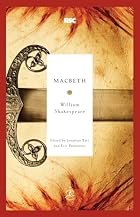
Looks odd in this picture, but in real life I rather like it—the sword of course is entirely appropriate. This Modern Library Royal Shakespeare Company edition is very nice—good background info and extras, and it opens well and feels nice. A recommended edition.
Comments: If you already know the story of Macbeth and you have time, I encourage you to watch the sock puppet version. I only saw the first 9 minutes, but it was fairly hilarious. http://www.youtube.com/watch?v=WI0OpUfi26U
Otherwise, you can read my short summary:
On his way home from winning a battle for King Duncan, Macbeth, a Scottish feudal lord, meets the Weird Sisters (aka witches), who tell him that he is destined to be king of Scotland, and thus much violence and bloodshed transpires. As with all of Shakespeare that I’ve read, there is ambiguity; in this case, the big question is whether Macbeth acted out of free will or if it was fate that determined the course of events.
I have to confess that I’m an English major who isn’t entirely comfortable—or in love with—reading Shakespeare. For one, I really don’t like reading plays. I always forget to read the stage directions that are off to the side in italics, and are often crucial to the meaning. And I constantly have to remind my brain to read the name of the speaker. There was a year at uni that I had to read 13 plays, and by the end, I got into the swing of it, but, really . . . no, I don’t enjoy it. And my second problem with Shakespeare is the language, which of course is also the marvelous thing. But again, until I get into the swing of it, I find it difficult to shuffle it into something my mind understands—“”I would the friends we miss were safe arrived” . . . huh?, oh, yeah, okay . . .
But one of the many wonderful things about Shakespeare is you don’t have to do it alone. There are fabulous resources—the Modern Library edition that I read had some, and I also used www.shmoop.com. They point out things I miss, and get me looking for the good stuff. And there’s lots of good stuff in Macbeth: is he a hero or anti-hero? Are people driven to evil acts, or are they just bad? Free will or fate? What’s up with those witches? (they’re my favourite). And Lady Macbeth—finally, I understand all the references to her that I’ve heard over the years. Also, I like figuring out where Shakespeare is catering to his audience, by which I mean King James I. In summary, not an easy read, but it’s short, and there are lots of resources, and in the end, a very rewarding reading experience.
Why I Read This Now: Macbeth was the one Shakespeare play I wanted to study at university but didn’t get a chance to (I only did Julius Caesar in high school, and 95% of it went right over my head). My 16 year old daughter was doing it in English this spring, so I thought I’d come along and we could study it together. If you have a teenager, I recommend doing this with any literature they’re assigned.
Rating: 4.5 stars
Recommended for: other than the obvious, anyone who wants to understand cultural references and be culturally well-rounded. Macbeth, along with Hamlet, King Lear, and the Tempest are must-reads for everyone who lives in western society.
Looks odd in this picture, but in real life I rather like it—the sword of course is entirely appropriate. This Modern Library Royal Shakespeare Company edition is very nice—good background info and extras, and it opens well and feels nice. A recommended edition.
Comments: If you already know the story of Macbeth and you have time, I encourage you to watch the sock puppet version. I only saw the first 9 minutes, but it was fairly hilarious. http://www.youtube.com/watch?v=WI0OpUfi26U
Otherwise, you can read my short summary:
On his way home from winning a battle for King Duncan, Macbeth, a Scottish feudal lord, meets the Weird Sisters (aka witches), who tell him that he is destined to be king of Scotland, and thus much violence and bloodshed transpires. As with all of Shakespeare that I’ve read, there is ambiguity; in this case, the big question is whether Macbeth acted out of free will or if it was fate that determined the course of events.
I have to confess that I’m an English major who isn’t entirely comfortable—or in love with—reading Shakespeare. For one, I really don’t like reading plays. I always forget to read the stage directions that are off to the side in italics, and are often crucial to the meaning. And I constantly have to remind my brain to read the name of the speaker. There was a year at uni that I had to read 13 plays, and by the end, I got into the swing of it, but, really . . . no, I don’t enjoy it. And my second problem with Shakespeare is the language, which of course is also the marvelous thing. But again, until I get into the swing of it, I find it difficult to shuffle it into something my mind understands—“”I would the friends we miss were safe arrived” . . . huh?, oh, yeah, okay . . .
But one of the many wonderful things about Shakespeare is you don’t have to do it alone. There are fabulous resources—the Modern Library edition that I read had some, and I also used www.shmoop.com. They point out things I miss, and get me looking for the good stuff. And there’s lots of good stuff in Macbeth: is he a hero or anti-hero? Are people driven to evil acts, or are they just bad? Free will or fate? What’s up with those witches? (they’re my favourite). And Lady Macbeth—finally, I understand all the references to her that I’ve heard over the years. Also, I like figuring out where Shakespeare is catering to his audience, by which I mean King James I. In summary, not an easy read, but it’s short, and there are lots of resources, and in the end, a very rewarding reading experience.
Why I Read This Now: Macbeth was the one Shakespeare play I wanted to study at university but didn’t get a chance to (I only did Julius Caesar in high school, and 95% of it went right over my head). My 16 year old daughter was doing it in English this spring, so I thought I’d come along and we could study it together. If you have a teenager, I recommend doing this with any literature they’re assigned.
Rating: 4.5 stars
Recommended for: other than the obvious, anyone who wants to understand cultural references and be culturally well-rounded. Macbeth, along with Hamlet, King Lear, and the Tempest are must-reads for everyone who lives in western society.
199baswood
Great idea Joyce to read the literature assignments of your children. Good thoughts on reading Shakespeare.
200SassyLassy
Love your summary! There's also the Metropolitan Opera version which was quite impressive on the big screen.
Are you on a Shakespeare kick? I see in Connection News that you have been adding lots of him.
Are you on a Shakespeare kick? I see in Connection News that you have been adding lots of him.
201Nickelini
Are you on a Shakespeare kick? I see in Connection News that you have been adding lots of him
No, I think we're seeing those because I went in to my old Shakespeare books on LT and changed my ratings. I read those when I studied him at uni in 2009 (I think).
No, I think we're seeing those because I went in to my old Shakespeare books on LT and changed my ratings. I read those when I studied him at uni in 2009 (I think).
202Nickelini
The Witch of Exmoor, Margaret Drabble, 1996
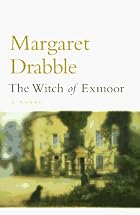
Cover comments: BORING! I really wish I'd read this edition, which I think is not only beautiful, but also fits the story and mood of the book:
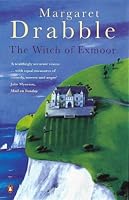
Comments: On a beautiful summer evening in Hampshire, esteemed author Frieda Haxby’s three middle-aged children and their spouses meet to decide what to do about her. Although she has always independent and eclectic, her recent move from London to a rotting abandoned hotel on a cliff in Exmoor has convinced them that she has gone mad. When she mysteriously disappears, they are beside themselves, though most of their concern surrounds their inheritance rather than her well-being. Haxby’s children are all a little self-centred, and the narrator makes sure we dislike them. This is a novel of family dynamics, but it’s also a state of the nation novel, complete with scathing satirical commentary on corporate greed and consumerism, human rights issues, the struggling health care system, and toxins in our food and environment.
Drabble is an absolute pleasure for me to read. The Witch of Exmoor is a post-modern fairy tale, told by a strong narrator who makes it clear that she is telling you a story. She does this by playing with layers of storytelling techniques—family stories, historical tales, classical mythology, Nordic mythology, the stories we tell ourselves, nation-building stories, Bible stories, advertising, poetry, Shakespeare, 19th century literature, lies, and so on. She also weaves through this themes of death (by drowning and suicide), dreams, decay, and nature (especially birds and sealife). Some readers will find this narrator overly intrusive and aggressive, and I can see their point. But I thought it cleverly complimented the fairytale structure of the story.
Recommended for: definitely recommended. Margaret Drabble draws extensively on literary allusion, so her books would appeal to the well-read person who enjoys detail. The novels Drabble wrote after about 1980 earned some harsh reviews, but I very much like her writing. The famous critic James Woods wrote a scathing review on the Witch of Exmoor, but I think he missed the point of the novel, or at least completely missed its charm.
Rating: 4.5 out of 5 stars. I almost made this 5 stars, but the ending wasn’t quite satisfying enough.
Why I Read This Now: I read my first Margaret Drabble last year(the Red Queen) and wanted to read more from her. If these two are considered her lesser novels, I have some great reading ahead of me. On to my favourite authors list she goes.
Cover comments: BORING! I really wish I'd read this edition, which I think is not only beautiful, but also fits the story and mood of the book:
Comments: On a beautiful summer evening in Hampshire, esteemed author Frieda Haxby’s three middle-aged children and their spouses meet to decide what to do about her. Although she has always independent and eclectic, her recent move from London to a rotting abandoned hotel on a cliff in Exmoor has convinced them that she has gone mad. When she mysteriously disappears, they are beside themselves, though most of their concern surrounds their inheritance rather than her well-being. Haxby’s children are all a little self-centred, and the narrator makes sure we dislike them. This is a novel of family dynamics, but it’s also a state of the nation novel, complete with scathing satirical commentary on corporate greed and consumerism, human rights issues, the struggling health care system, and toxins in our food and environment.
Drabble is an absolute pleasure for me to read. The Witch of Exmoor is a post-modern fairy tale, told by a strong narrator who makes it clear that she is telling you a story. She does this by playing with layers of storytelling techniques—family stories, historical tales, classical mythology, Nordic mythology, the stories we tell ourselves, nation-building stories, Bible stories, advertising, poetry, Shakespeare, 19th century literature, lies, and so on. She also weaves through this themes of death (by drowning and suicide), dreams, decay, and nature (especially birds and sealife). Some readers will find this narrator overly intrusive and aggressive, and I can see their point. But I thought it cleverly complimented the fairytale structure of the story.
Recommended for: definitely recommended. Margaret Drabble draws extensively on literary allusion, so her books would appeal to the well-read person who enjoys detail. The novels Drabble wrote after about 1980 earned some harsh reviews, but I very much like her writing. The famous critic James Woods wrote a scathing review on the Witch of Exmoor, but I think he missed the point of the novel, or at least completely missed its charm.
Rating: 4.5 out of 5 stars. I almost made this 5 stars, but the ending wasn’t quite satisfying enough.
Why I Read This Now: I read my first Margaret Drabble last year(the Red Queen) and wanted to read more from her. If these two are considered her lesser novels, I have some great reading ahead of me. On to my favourite authors list she goes.
203Nickelini
36. Souvenir of Canada, Douglas Coupland, 2002

The Stubby. There's some Canadian culture.
Comments: This is a collection of mini-essays on such Canadian topics as Trans-Canada Highway, Vinegar, 222s, Doug, Ookpik, Reserves, and of course, Hockey. Among many others.
Recommended for:Highly recommended for anyone who wants to read insightful, intelligent and funny essays about Canada.
Why I Read This Now: I've actually had it kicking around my house for months, and I just pick it up and read an essay here and there.
Rating: sort of tricky to rate a book like this, but for enjoyment factor and relevance, I'll give it 4 stars.

The Stubby. There's some Canadian culture.
Comments: This is a collection of mini-essays on such Canadian topics as Trans-Canada Highway, Vinegar, 222s, Doug, Ookpik, Reserves, and of course, Hockey. Among many others.
Recommended for:Highly recommended for anyone who wants to read insightful, intelligent and funny essays about Canada.
Why I Read This Now: I've actually had it kicking around my house for months, and I just pick it up and read an essay here and there.
Rating: sort of tricky to rate a book like this, but for enjoyment factor and relevance, I'll give it 4 stars.
204rebeccanyc
I was a big fan of Drabble decades ago, and haven't read anything by her since probably the early 90s. Maybe it's time for me to see if I still like her.
206StevenTX
#202 - I agree that the second cover is much nicer, but looking at it all I can think is that whoever owns that house better stay focused while he's cutting the grass.
207baswood
I think The Witch of Exmoor is right up my street, thanks for an excellent review.
208Nickelini
37. The Last Kingdom, Bernard Cornwell, 2004, audiobook
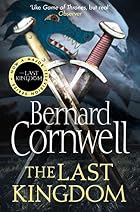
An aesthetically pleasing cover. This is book one of a series, and taken together, they make an attractive set.
Comments: Uhtred is the son of a 9th century Northumbrian lord, and is orphaned and taken hostage in a Viking attack. He becomes a pawn, and then double-agent, in the wars between the Danes and Alfred, King of Wessex.
I've read a lot of historical fiction, and I've developed strong likes and dislikes in the genre. One of the things I strongly dislike is the endless battle scene, another is tiresome political maneuvering. This book is almost all one long battle. Also, The Last Kingdom is an entirely androcentric world, with a few females mentioned only as chattels or potential rape vessels. What did I expect, considering this novel is about Vikings? I expected more . . . I've read non-fiction about Vikings, and have seen numerous documentaries, and actually, they weren't at war all day, every day. And last I checked, the populations of both medieval England and Scandinavia were 50% female. I really wanted to hear more about their day to day lives, and not endless battles full of war strategy and bloodshed. Overall, I found this book to be a disappointing bore.
Rating: Sorry, can't give it more than one star. I have no problem with the technical aspects of the writing, although there really wasn't much story arc--it starts with a battle, then there are some battles, and then it ends and the reader is supposed to go on to the next book in the series.
Recommended for: Cornwell has an excellent reputation for well-researched novels, and I'm sure this one is no exception. It was just so very boring. I'm sure someone who doesn't notice when half the population is missing from a novel, and who likes reading action scenes will find this a good read. Obviously, I'm not the target audience for this one.
Why I Read This Now: it was an audiobook I had, and was short. I also own a paper copy, which I occasionally read (good thing, as the audio book was missing the last page and a half along with the author's historical notes at the end.)
An aesthetically pleasing cover. This is book one of a series, and taken together, they make an attractive set.
Comments: Uhtred is the son of a 9th century Northumbrian lord, and is orphaned and taken hostage in a Viking attack. He becomes a pawn, and then double-agent, in the wars between the Danes and Alfred, King of Wessex.
I've read a lot of historical fiction, and I've developed strong likes and dislikes in the genre. One of the things I strongly dislike is the endless battle scene, another is tiresome political maneuvering. This book is almost all one long battle. Also, The Last Kingdom is an entirely androcentric world, with a few females mentioned only as chattels or potential rape vessels. What did I expect, considering this novel is about Vikings? I expected more . . . I've read non-fiction about Vikings, and have seen numerous documentaries, and actually, they weren't at war all day, every day. And last I checked, the populations of both medieval England and Scandinavia were 50% female. I really wanted to hear more about their day to day lives, and not endless battles full of war strategy and bloodshed. Overall, I found this book to be a disappointing bore.
Rating: Sorry, can't give it more than one star. I have no problem with the technical aspects of the writing, although there really wasn't much story arc--it starts with a battle, then there are some battles, and then it ends and the reader is supposed to go on to the next book in the series.
Recommended for: Cornwell has an excellent reputation for well-researched novels, and I'm sure this one is no exception. It was just so very boring. I'm sure someone who doesn't notice when half the population is missing from a novel, and who likes reading action scenes will find this a good read. Obviously, I'm not the target audience for this one.
Why I Read This Now: it was an audiobook I had, and was short. I also own a paper copy, which I occasionally read (good thing, as the audio book was missing the last page and a half along with the author's historical notes at the end.)
209NanaCC
Joyce, I finished a Bernard Cornwell a week or so ago. The book, Agincourt, was about the battle of Agincourt of Henry V fame. I was more lenient than you, and gave it 3 1/2 stars mainly because the historical research was fascinating. But the story was full of war and all the bloody mess that goes along with it. I had never read one of his books before, and while I might be tempted to try another, it won't be for a very long time.
211Helenliz
I think Cornwell is sometimes excellent and sometimes as dull as ditch water. I've not read any of the Sharpe series (I'll stick with the memory of Sean Bean looking raffish, thanks very much) Azincourt (which is Azincourt in the UK, btw) I thought excellent and I quite enjoyed the Birth of England series (of which the last kingdom is the first. But I couldn't get on with the American Civil war series at all. So he blows hot & cold for me.
212Cariola
Hmm, you might have just hit on why I've never had a desire to read Cornwell; I rather suspected this.
213NanaCC
Agincourt did have a story, and I enjoyed it. I think that sometimes when a writer is as prolific as Cornwell, it can sometimes be a problem. As Helen said, hot & cold.
214Nickelini
212- Deborah, well, since you and I often think along the same lines, you're probably safe to skip him without missing anything.
209, 211, 213 - I'm sure he's a fine writer for the right reader! I suspect I'm not that reader.
209, 211, 213 - I'm sure he's a fine writer for the right reader! I suspect I'm not that reader.
215janeajones
Just catching up here with a couple of comments. I agree that Tender Is the Night is a really good book -- probably Fitzgerald's best. Zelda was a Southern belle -- and why can't they be flappers too?
Margaret Drabble is our era's Jane Austen -- the best novelist of manners -- and she didn't die in her early 40's. I started reading Drabble in the 70s -- and identified with her books then. She continues to chronicle our lives as we age, grow old, and perhaps, face death. Fabulous oeuvre.
Margaret Drabble is our era's Jane Austen -- the best novelist of manners -- and she didn't die in her early 40's. I started reading Drabble in the 70s -- and identified with her books then. She continues to chronicle our lives as we age, grow old, and perhaps, face death. Fabulous oeuvre.
216Nickelini
and why can't they be flappers too?
I know, what a thing to think! I guess when I thought "flapper," it was either New York, London, or Paris. Or maybe Hollywood. I'll get past it ;-)
Yea! Another Drabble fan! I have a whole stack of hers waiting for me. I'm currently reading Moon Tiger by Penelope Lively, which, strangely, has some similarities. I'm loving all these British women writers who were born between 1930 and 1960.
I know, what a thing to think! I guess when I thought "flapper," it was either New York, London, or Paris. Or maybe Hollywood. I'll get past it ;-)
Yea! Another Drabble fan! I have a whole stack of hers waiting for me. I'm currently reading Moon Tiger by Penelope Lively, which, strangely, has some similarities. I'm loving all these British women writers who were born between 1930 and 1960.
218jfetting
I haven't read any Drabble yet, although I have one on my shelf (The Radiant Way maybe). Isn't she the one who is A.S. Byatt's sister?
219Nickelini
Jennifer - yes, AS Byatt and Margaret Drabble are sisters. Apparently they don't get along with each other.
220Nickelini
I'm being nugged to start a new thread here, so please come join me over at: http://www.librarything.com/topic/155123
This topic was continued by Nickelini in 2013, Part Three.

