Rebeccanyc Reads in 2013, Part 3
This is a continuation of the topic Rebeccanyc Reads in 2013, Part 2.
This topic was continued by Rebeccanyc Reads in 2013, Part 4.
Talk Club Read 2013
Join LibraryThing to post.
This topic is currently marked as "dormant"—the last message is more than 90 days old. You can revive it by posting a reply.
1rebeccanyc
Read on This Thread
* means a favorite read
Read in July
51. The Belly of Paris by Émile Zola
50. The Seven Solitudes of Lorsa Lopez by Sony Lab'ou Tansi
Read in June
49. A Child of All Nations by Pramoedya Ananta Toer
48. Stalin: The Court of the Red Tsar by Simon Sebag Montefiore
47. The Riddle of the Labyrinth: The Quest to Crack an Ancient Code by Margalit Fox*
46. Reticence by Jean-Philippe Toussaint
45. Jude the Obscure by Thomas Hardy
44. This Earth of Mankind by Pramoedya Ananta Toer
43. Sister Bernadette's Barking Dog: The Quirky History and Lost Art of Diagramming Sentences by Kitty Burns Florey*
Read in May
42. Lucifer Unemployed by Aleksander Wat
41. A Priest in the House (The Conquest of Plassans) by Émile Zola
40. Surrender on Demand by Varian Fry*
39. The Sorrow of War by Bảo Ninh*
38. Transit by Anna Seghers*
37. Slammerkin by Emma Donoghue
36. The Dance of the Seagull by Andrea Camilleri
35. Alien Hearts by Guy de Maupassant
34. To Say Nothing of the Dog: or How We Found the Bishop's Bird Stump at Last by Connie Willis*
33. Astragal by Albertine Sarrazin*
Read in April
32. The Sin of Father Mouret by Émile Zola
* means a favorite read
Read in July
51. The Belly of Paris by Émile Zola
50. The Seven Solitudes of Lorsa Lopez by Sony Lab'ou Tansi
Read in June
49. A Child of All Nations by Pramoedya Ananta Toer
48. Stalin: The Court of the Red Tsar by Simon Sebag Montefiore
47. The Riddle of the Labyrinth: The Quest to Crack an Ancient Code by Margalit Fox*
46. Reticence by Jean-Philippe Toussaint
45. Jude the Obscure by Thomas Hardy
44. This Earth of Mankind by Pramoedya Ananta Toer
43. Sister Bernadette's Barking Dog: The Quirky History and Lost Art of Diagramming Sentences by Kitty Burns Florey*
Read in May
42. Lucifer Unemployed by Aleksander Wat
41. A Priest in the House (The Conquest of Plassans) by Émile Zola
40. Surrender on Demand by Varian Fry*
39. The Sorrow of War by Bảo Ninh*
38. Transit by Anna Seghers*
37. Slammerkin by Emma Donoghue
36. The Dance of the Seagull by Andrea Camilleri
35. Alien Hearts by Guy de Maupassant
34. To Say Nothing of the Dog: or How We Found the Bishop's Bird Stump at Last by Connie Willis*
33. Astragal by Albertine Sarrazin*
Read in April
32. The Sin of Father Mouret by Émile Zola
2rebeccanyc
Read on Previous Threads
* means a favorite read
Read in April
31. An Armenian Sketchbook by Vassily Grossman*
30. Dead Souls by Nikolai Gogol*
29. Pieces of Light: How the New Science of Memory Illuminates the Stories we Tell about Our Pasts by Charles Fernyhough
28. Three Men in a Boat by Jerome K. Jerome
27. The Necklace and Other Tales by Guy de Maupassant*
26. Smile As They Bow by Nu Nu Yi
25. The Issa Valley by Czeslaw Milosz*
24. It Was a Long Time Ago, and It Never Happened Anyway: Russia and the Communist Past by David Satter
Read in March
23. The Day of the Owl by Leonardo Sciascia
22. To Each His Own by Leonardo Sciascia*
21. Equal Danger by Leonardo Sciascia
20. War and War by László Krasznahorkai*
19. The Opportune Moment, 1855 by Patrik Ouřednik*
18. The Orientalist: Solving the Mystery of a Strange and Dangerous Life by Tom Reiss*
17. Laughable Loves by Milan Kundera
16. A Harlot High and Low by Honoré de Balzac
15. News from Heaven by Jennifer Haigh
14. Lost Illusions by Honoré de Balzac*
Read in February
13. Jonathan Wild by Henry Fielding
Read on Previous Thread
12. The City Builder by George Konrád
11. Young Stalin by Simon Sebag Montefiore*
10. Old Man Goriot by Honoré de Balzac
9. The Ladies' Paradise by Émile Zola
8. Explosion in a Cathedral by Alejo Carpentier*
Read in January
7. Doomsday Book by Connie Willis
6. Bring Up the Bodies by Hilary Mantel*
5. My Century by Alexander Wat*
4. Kornél Esti by Dezsõ Kosztolányi
3. The Toilers of the Sea by Victor Hugo*
2. The Black Count: Glory, Revolution, Betrayal and the Real Count of Monte Cristo by Tom Reiss*
1. Pot Luck by Emile Zola
* means a favorite read
Read in April
31. An Armenian Sketchbook by Vassily Grossman*
30. Dead Souls by Nikolai Gogol*
29. Pieces of Light: How the New Science of Memory Illuminates the Stories we Tell about Our Pasts by Charles Fernyhough
28. Three Men in a Boat by Jerome K. Jerome
27. The Necklace and Other Tales by Guy de Maupassant*
26. Smile As They Bow by Nu Nu Yi
25. The Issa Valley by Czeslaw Milosz*
24. It Was a Long Time Ago, and It Never Happened Anyway: Russia and the Communist Past by David Satter
Read in March
23. The Day of the Owl by Leonardo Sciascia
22. To Each His Own by Leonardo Sciascia*
21. Equal Danger by Leonardo Sciascia
20. War and War by László Krasznahorkai*
19. The Opportune Moment, 1855 by Patrik Ouřednik*
18. The Orientalist: Solving the Mystery of a Strange and Dangerous Life by Tom Reiss*
17. Laughable Loves by Milan Kundera
16. A Harlot High and Low by Honoré de Balzac
15. News from Heaven by Jennifer Haigh
14. Lost Illusions by Honoré de Balzac*
Read in February
13. Jonathan Wild by Henry Fielding
Read on Previous Thread
12. The City Builder by George Konrád
11. Young Stalin by Simon Sebag Montefiore*
10. Old Man Goriot by Honoré de Balzac
9. The Ladies' Paradise by Émile Zola
8. Explosion in a Cathedral by Alejo Carpentier*
Read in January
7. Doomsday Book by Connie Willis
6. Bring Up the Bodies by Hilary Mantel*
5. My Century by Alexander Wat*
4. Kornél Esti by Dezsõ Kosztolányi
3. The Toilers of the Sea by Victor Hugo*
2. The Black Count: Glory, Revolution, Betrayal and the Real Count of Monte Cristo by Tom Reiss*
1. Pot Luck by Emile Zola
3rebeccanyc
Books Recommended by Others
(Idea for this stolen from Deebee's thread)
The Pursuit of the Millennium by Norman Cohn Recommended by SassyLassy Bought 1/9
Religion and the Decline of Magic by Keith Thomas Recommended by dmsteyn Bought 1/9
Forged: Why Fakes are the Great Art of Our Age by Jonathon Keats Recommended by RidgewayGirl
The Recognitions by William Gaddis Recommended by EnriqueFreeque
The Embarrassment of Riches by Simon Schama Recommended by deebee Bought 4/2
The Song of Everlasting Sorrow by Wang Anyi Recommended by steven03tx
Sister Bernadette's Barking Dog by Kitty Burns Florey Recommended by detailmuse Bought 5/29/13
Country of My Skull by Antjie Krog Recommended bymkboylan
Arabian Sands and The Marsh Arabs by Wilfred Thesiger Recommended by Linda92007
The Issa Valley by Czeslaw Milosz Recommended by Lisa/labfs39 Bought 2/15
Slouching Towards Bethlehem by Joan Didion Recommended by MJ/detailmuse and SassyLassy
The Tuner of Silences by Mia Couto Recommended by Lois/avaland Gift from Lois
The Fall of the Roman Empire: A New History by Peter Heather Recommended by deebee
The Universe Within: Discovering the Common History of Rocks, Planets, and People by Neil Shubin Recommended by detailmuse
Seven Days in the Art World by Sarah Thornton Recommended by RidgewayGirl
Bailout: An Inside Account of How Washington Abandoned Main Street While Rescuing Wall Street by Neil Barofsky Recommended by Chris/cabegley
Color Me English by Caryl Phillips Recommended by Linda92007
Brodeck, Monsieur Linh and His Child, and Grey Souls by Phillipe Claudel Recommended by Lisa/labfs39
Odessa: Genius and Death in a City of Dreams by Charles King Recommended by Cyrel/torontoc Bought 5/10
Freud (The Routledge Philosophers) by Jonathan Lear Recommended by Dewald/dmsteyn Bought 6/6/13
The Wandering Jews by Joseph Roth Recommended by SassyLassy Bought 5/10
The Czar's Madman by Jaan Kross Recommended by SassyLassy
Imperium (recommended by SassyLassy) and Shah of Shahs (recommended by Cyrel/torontoc) by Ryszard Kapuściński
The Country of the Blind and other stories by H.G. Wells Recommended by Barry/baswood Bought 6/6
Rough-Hewn Land: A Geologic Journey from California to the Rocky Mountains by Keith Heyer Mehldahl Recommended by stretch/Kevin
Resistance a Woman's Journal of Struggle and Defiance in Occupied France by Agnes Humbert Recommended by Merrikay/mkboylan
Outwitting the Gestapo by Lucie Aubrac Recommended by Merrikay/mkboylan
The Exile Book of Yiddish Women Writers and Found Treasures edited by Frieda Johles Forman Recommended by Cyrel/torontoc
Writers on Writing by The New York Times Recommended my MJ/detailmuse
The Bloody Chamber by Angela Carter Recommended by Edwin Bought 7/16
Mao's Last Revolution by Roderick MacFarquhar and Michael Schoenhals Recommended by Edwin
(Idea for this stolen from Deebee's thread)
Forged: Why Fakes are the Great Art of Our Age by Jonathon Keats Recommended by RidgewayGirl
The Recognitions by William Gaddis Recommended by EnriqueFreeque
The Song of Everlasting Sorrow by Wang Anyi Recommended by steven03tx
Country of My Skull by Antjie Krog Recommended bymkboylan
Arabian Sands and The Marsh Arabs by Wilfred Thesiger Recommended by Linda92007
Slouching Towards Bethlehem by Joan Didion Recommended by MJ/detailmuse and SassyLassy
The Fall of the Roman Empire: A New History by Peter Heather Recommended by deebee
The Universe Within: Discovering the Common History of Rocks, Planets, and People by Neil Shubin Recommended by detailmuse
Seven Days in the Art World by Sarah Thornton Recommended by RidgewayGirl
Bailout: An Inside Account of How Washington Abandoned Main Street While Rescuing Wall Street by Neil Barofsky Recommended by Chris/cabegley
Color Me English by Caryl Phillips Recommended by Linda92007
Brodeck, Monsieur Linh and His Child, and Grey Souls by Phillipe Claudel Recommended by Lisa/labfs39
The Czar's Madman by Jaan Kross Recommended by SassyLassy
Imperium (recommended by SassyLassy) and Shah of Shahs (recommended by Cyrel/torontoc) by Ryszard Kapuściński
Rough-Hewn Land: A Geologic Journey from California to the Rocky Mountains by Keith Heyer Mehldahl Recommended by stretch/Kevin
Resistance a Woman's Journal of Struggle and Defiance in Occupied France by Agnes Humbert Recommended by Merrikay/mkboylan
Outwitting the Gestapo by Lucie Aubrac Recommended by Merrikay/mkboylan
The Exile Book of Yiddish Women Writers and Found Treasures edited by Frieda Johles Forman Recommended by Cyrel/torontoc
Writers on Writing by The New York Times Recommended my MJ/detailmuse
Mao's Last Revolution by Roderick MacFarquhar and Michael Schoenhals Recommended by Edwin
4rebeccanyc
List by country of books read in 2013 (i.e., country of author)
Africa
Congo
The Seven Solitudes of Lorsa Lopez by Sony Lab'ou Tansi
Asia
Burma/Myanmar
Smile As They Bow by Nu Nu Yi
Indonesia
A Child of All Nations by Pramoedya Ananta Toer
This Earth of Mankind by Pramoedya Ananta Toer
Vietnam
The Sorrow of War by Bảo Ninh
Central America (and Mexico) and the Caribbean
Explosion in a Cathedral by Alejo Carpentier (Cuba)
Europe
Belgium
Reticence by Jean-Philippe Toussaint
Czechoslovakia and the Czech Republic
The Opportune Moment, 1855 by Patrik Ouřednik
Laughable Loves by Milan Kundera
England and the UK
Fiction
Jude the Obscure by Thomas Hardy
Slammerkin by Emma Donoghue
To Say Nothing of the Dog: or How We Found the Bishop's Bird Stump at Last by Connie Willis
Three Men in a Boat by Jerome K. Jerome
Jonathan Wild by Henry Fielding
Doomsday Book by Connie Willis
Bring Up the Bodies by Hilary Mantel
Nonfiction
Pieces of Light: How the New Science of Memory Illuminates the Stories we Tell about Our Pasts by Charles Fernyhough
Young Stalin by Simon Sebag Montefiore
Stalin: The Court of the Red Tsar by Simon Sebag Montefiore
France
The Belly of Paris by Émile Zola
A Priest in the House (The Conquest of Plassans) by Émile Zola
Alien Hearts by Guy de Maupassant
Astragal by Albertine Sarrazin
The Sin of Father Mouret by Émile Zola
The Necklace and Other Tales by Guy de Maupassant
A Harlot High and Low by Honoré de Balzac
Lost Illusions by Honoré de Balzac
Old Man Goriot by Honoré de Balzac
The Ladies' Paradise by Émile Zola
The Toilers of the Sea by Victor Hugo
Pot Luck by Emile Zola
Germany
Transit by Anna Seghers*
Hungary
War and War by László Krasznahorkai
The City Builder by George Konrád
Kornél Esti by Dezsõ Kosztolányi
Italy
The Dance of the Seagull by Andrea Camilleri
The Day of the Owl by Leonardo Sciascia
To Each His Own by Leonardo Sciascia
Equal Danger by Leonardo Sciascia
Poland
Lucifer Unemployed by Aleksander Wat
The Issa Valley by Czeslaw Milosz
My Century by Aleksander Wat
Russia/Soviet Union
An Armenian Sketchbook by Vassily Grossman
Dead Souls by Nikolai Gogol
US and Canada
USA
Fiction
News from Heaven by Jennifer Haigh
Nonfiction
The Riddle of the Labyrinth: The Quest to Crack an Ancient Code by Margalit Fox
Sister Bernadette's Barking Dog: The Quirky History and Lost Art of Diagramming Sentences by Kitty Burns Florey
Surrender on Demand by Varian Fry
It Was a Long Time Ago, and It Never Happened Anyway: Russia and the Communist Past by David Satter
The Orientalist: Solving the Mystery of a Strange and Dangerous Life by Tom Reiss
The Black Count: Glory, Revolution, Betrayal, and the Real Count of Monte Cristo by Tom Reiss
Africa
Congo
The Seven Solitudes of Lorsa Lopez by Sony Lab'ou Tansi
Asia
Burma/Myanmar
Smile As They Bow by Nu Nu Yi
Indonesia
A Child of All Nations by Pramoedya Ananta Toer
This Earth of Mankind by Pramoedya Ananta Toer
Vietnam
The Sorrow of War by Bảo Ninh
Central America (and Mexico) and the Caribbean
Explosion in a Cathedral by Alejo Carpentier (Cuba)
Europe
Belgium
Reticence by Jean-Philippe Toussaint
Czechoslovakia and the Czech Republic
The Opportune Moment, 1855 by Patrik Ouřednik
Laughable Loves by Milan Kundera
England and the UK
Fiction
Jude the Obscure by Thomas Hardy
Slammerkin by Emma Donoghue
To Say Nothing of the Dog: or How We Found the Bishop's Bird Stump at Last by Connie Willis
Three Men in a Boat by Jerome K. Jerome
Jonathan Wild by Henry Fielding
Doomsday Book by Connie Willis
Bring Up the Bodies by Hilary Mantel
Nonfiction
Pieces of Light: How the New Science of Memory Illuminates the Stories we Tell about Our Pasts by Charles Fernyhough
Young Stalin by Simon Sebag Montefiore
Stalin: The Court of the Red Tsar by Simon Sebag Montefiore
France
The Belly of Paris by Émile Zola
A Priest in the House (The Conquest of Plassans) by Émile Zola
Alien Hearts by Guy de Maupassant
Astragal by Albertine Sarrazin
The Sin of Father Mouret by Émile Zola
The Necklace and Other Tales by Guy de Maupassant
A Harlot High and Low by Honoré de Balzac
Lost Illusions by Honoré de Balzac
Old Man Goriot by Honoré de Balzac
The Ladies' Paradise by Émile Zola
The Toilers of the Sea by Victor Hugo
Pot Luck by Emile Zola
Germany
Transit by Anna Seghers*
Hungary
War and War by László Krasznahorkai
The City Builder by George Konrád
Kornél Esti by Dezsõ Kosztolányi
Italy
The Dance of the Seagull by Andrea Camilleri
The Day of the Owl by Leonardo Sciascia
To Each His Own by Leonardo Sciascia
Equal Danger by Leonardo Sciascia
Poland
Lucifer Unemployed by Aleksander Wat
The Issa Valley by Czeslaw Milosz
My Century by Aleksander Wat
Russia/Soviet Union
An Armenian Sketchbook by Vassily Grossman
Dead Souls by Nikolai Gogol
US and Canada
USA
Fiction
News from Heaven by Jennifer Haigh
Nonfiction
The Riddle of the Labyrinth: The Quest to Crack an Ancient Code by Margalit Fox
Sister Bernadette's Barking Dog: The Quirky History and Lost Art of Diagramming Sentences by Kitty Burns Florey
Surrender on Demand by Varian Fry
It Was a Long Time Ago, and It Never Happened Anyway: Russia and the Communist Past by David Satter
The Orientalist: Solving the Mystery of a Strange and Dangerous Life by Tom Reiss
The Black Count: Glory, Revolution, Betrayal, and the Real Count of Monte Cristo by Tom Reiss
5rebeccanyc
32. The Sin of Father Mouret by Émile Zola

If Zola hadn't written this novel, I would not have finished it. And yet, in a way, I'm glad I did. Straying far from the realism for which he is justly famous, Zola enters the worlds of myth, fantasy, and hallucination. I can't say which I found more tedious: Father Mouret's adoration of first the Virgin Mary and then the crucified Jesus, and his endless religious meditations, or the lush, absurdly detailed descriptions of every flower and plant imaginable when he is recuperating from some sort of breakdown in what can only be identified as the Garden of Eden.
Briefly, Serge Mouret (who is the brother of Octave Mouret of Pot Luck and The Ladies Paradise, and who, like him, is related to both the Rougons and the Macquarts), after being ordained as a priest, has been assigned to a tiny, remote Provençal village inhabited by a small group of peasants all of whom are related to each other. He lives next to the falling down church with his simple-minded sister Desirée, who is enchanted by her barnyard and its ever-growing population of farm animals, and an aging housekeeper who is always nagging him. The reader sees him performing various rites of the church, trying to convince a comparatively rich peasant to let his pregnant daughter marry the poorer father of her child, and, endlessly, fantasizing in what is almost a sexual way about Mary. His duties are interrupted when his uncle, a local doctor, takes him to the bedside of an atheistic man, whom he erroneously believes is dying. The man is the caretaker of the abandoned Paradou, the former home of a rich lord with huge walled grounds, and has taken in a young girl, a relative, Albine, who roams the grounds and has lost her former educated ways. Both the old caretaker and the girl are hated by the vicious local friar, Archangias. Later, when Father Mouret falls ill, apparently both physically, and mentally, his uncle takes him secretly to Paradou so Albine can care for him until he recovers. And it is there, in Paradou, riotously overgrown with every plant and animal, that Serge and Albine live an idyllic, natural life, watched over and led on by the trees and the flowers -- until they finally make love, and then know shame. Serge, once again Father Mouret, returns to the village and struggles with the knowledge of his sin -- and needless to say, things do not end well.
So, what on earth is Zola doing with this book? Influenced by the afterword written by the translator of the edition I read, I don't think it is just a criticism of the church, and it is not just a version of the biblical fall of man, although it certainly can be read that way. There is a lot of death in this book (and a lot of life), but it is clear that Zola is making the point that we all die, that it is natural to die, that nature is lush in the spring and summer but dies back in autumn and winter -- and that although we all die, life goes on. Certainly his love of religion perverted Father Mouret's humanity and love of Albine, and certainly Desirée's enjoyment of her animals and her barnyard are always a breath of fresh, if redolent, air, but the character of Albine, who in some ways is the heart of the story, remained mythical and unreal for me, and perhaps was meant to be. The most interesting thing I can say about this novel, which I almost put down many times, is that it made me think.

If Zola hadn't written this novel, I would not have finished it. And yet, in a way, I'm glad I did. Straying far from the realism for which he is justly famous, Zola enters the worlds of myth, fantasy, and hallucination. I can't say which I found more tedious: Father Mouret's adoration of first the Virgin Mary and then the crucified Jesus, and his endless religious meditations, or the lush, absurdly detailed descriptions of every flower and plant imaginable when he is recuperating from some sort of breakdown in what can only be identified as the Garden of Eden.
Briefly, Serge Mouret (who is the brother of Octave Mouret of Pot Luck and The Ladies Paradise, and who, like him, is related to both the Rougons and the Macquarts), after being ordained as a priest, has been assigned to a tiny, remote Provençal village inhabited by a small group of peasants all of whom are related to each other. He lives next to the falling down church with his simple-minded sister Desirée, who is enchanted by her barnyard and its ever-growing population of farm animals, and an aging housekeeper who is always nagging him. The reader sees him performing various rites of the church, trying to convince a comparatively rich peasant to let his pregnant daughter marry the poorer father of her child, and, endlessly, fantasizing in what is almost a sexual way about Mary. His duties are interrupted when his uncle, a local doctor, takes him to the bedside of an atheistic man, whom he erroneously believes is dying. The man is the caretaker of the abandoned Paradou, the former home of a rich lord with huge walled grounds, and has taken in a young girl, a relative, Albine, who roams the grounds and has lost her former educated ways. Both the old caretaker and the girl are hated by the vicious local friar, Archangias. Later, when Father Mouret falls ill, apparently both physically, and mentally, his uncle takes him secretly to Paradou so Albine can care for him until he recovers. And it is there, in Paradou, riotously overgrown with every plant and animal, that Serge and Albine live an idyllic, natural life, watched over and led on by the trees and the flowers -- until they finally make love, and then know shame. Serge, once again Father Mouret, returns to the village and struggles with the knowledge of his sin -- and needless to say, things do not end well.
So, what on earth is Zola doing with this book? Influenced by the afterword written by the translator of the edition I read, I don't think it is just a criticism of the church, and it is not just a version of the biblical fall of man, although it certainly can be read that way. There is a lot of death in this book (and a lot of life), but it is clear that Zola is making the point that we all die, that it is natural to die, that nature is lush in the spring and summer but dies back in autumn and winter -- and that although we all die, life goes on. Certainly his love of religion perverted Father Mouret's humanity and love of Albine, and certainly Desirée's enjoyment of her animals and her barnyard are always a breath of fresh, if redolent, air, but the character of Albine, who in some ways is the heart of the story, remained mythical and unreal for me, and perhaps was meant to be. The most interesting thing I can say about this novel, which I almost put down many times, is that it made me think.
6StevenTX
What a contrast with the previous (albeit written 8 years later) novels in the Rougon-Macquart series! It seems to be more closely related to The Dream. Like you I will read it because it's Zola, but I'll be looking forward to getting past it and back to the Parisian setting.
7baswood
Excellent review of The Sin of Father Mouret. Once again I am enjoying your reviews of the Zola canon.
8Linda92007
An excellent review of The Sin of Father Mouret, Rebecca. I will happily pass on this one.
10SassyLassy
Loved your review. I may be a minority of one, but lush, absurdly detailed descriptions of every flower and plant imaginable and a long dark night of the soul sort of appeal to me. It does sound somewhat out of his usual realm though.
11rebeccanyc
Well, there was something hypnotic about it, Sassy, but it went on and on and on and on . . . and by absurdly I also mean that there was no way in reality that all those plants would have been blooming in such profusion and at the same time -- this was a mythical realm.
12rebeccanyc
33. Astragal by Albertine Sarrazin
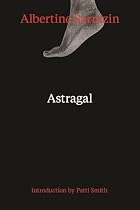
I snapped up this novel, which I had never heard of, because of Patti Smith's enthusiastic introduction. Partly autobiographical, it begins when 19-year-old Anne escapes from prison by jumping over a wall, breaking her ankle in the process. (Astragalus is another name for the talus, or ankle bone.) After crawling to the road, she is rescued by Julien, who she soon realizes is a petty criminal himself, who takes her over a period of months to various homes where she can hide from the police while her ankle heals. Needless to say, she falls in love with him, and he with her, although they spend much time apart. (In real life, Albertine was married to Julien Sarrazin.)
So much for the plot. The novel is really the story of Anne, and how she finds her way in a world that has treated her badly and forced her into a life of crime, starting, we learn, with having been in some kind of girls' "reform" school. As she shuttles between other people's homes, people who take her in at Julien's request because they too can make some kind of use of her, she is wary and resourceful, and largely keeps to herself; eventually she goes off somewhat on her own, supporting herself through prostitution.
The novel is poetic in its way, and allusive, so the reader has to do a lot of reading between the lines. Nevertheless, it has a lot of power, largely because Anne is very proud and never thinks of herself as a victim. She is very descriptive of the physical pain and disability caused by her injury and the emotional pain caused by her love of Julien. She is perceptive about herself and about the people around her -- what they want, how they present themselves, how they make use of her -- a skill no doubt developed from having to look after herself from a a young age, as well as from having been in prison and around criminals, large and small. As she notes early on in the novel:
"Prison still surrounded me: I found it in my reflexes, the jumpiness, the stealth and the submissiveness of my reactions. You can't wash away overnight several years of clockwork routine and constant dissembling of self. When the body is turned loose, the mind, which up until then had been the only escape, becomes on the contrary the slave of mechanisms; the humility you used to fake turns into genuine embarrassment; me, one with all those loud mouths in there, I no longer dared, now, take the initiative in even the most natural of actions . . pp. 50-51
Or, as she says later, thinking of her relationship with Julien,
The road is as bare and harsh as a desert; later, perhaps calmly, we'll start down magic pathways . . . I used to be pampered, petted, fussed over, too, in the old days: I was intact and able to bite, my cupboard was full and my claws were ingenious.
My equipment was destroyed, I am wounded and begging, and it's I now who offers herself and clings; people don't hold onto me at all, for I have nothing to give them but myself, myself naked, and it will a lot of time and tenderness before some resource, some source springs up in me." p. 111
This book haunted me as I read it, and I don't feel able to really do it justice. I found the ending ambiguous and would be interested in discussing it with anyone else who has read the book.
Finally, I must add that the edition I read was seriously marred by sloppy editing. Some examples: "eyed' for "I'd" in the phrase "eyed balance myself on my new pin"; on the same page saying something happened on Saturdays and then on Sundays; "has acquire" instead of "has acquired"; and more. Very annoying and I would have expected better of New Directions.
I snapped up this novel, which I had never heard of, because of Patti Smith's enthusiastic introduction. Partly autobiographical, it begins when 19-year-old Anne escapes from prison by jumping over a wall, breaking her ankle in the process. (Astragalus is another name for the talus, or ankle bone.) After crawling to the road, she is rescued by Julien, who she soon realizes is a petty criminal himself, who takes her over a period of months to various homes where she can hide from the police while her ankle heals. Needless to say, she falls in love with him, and he with her, although they spend much time apart. (In real life, Albertine was married to Julien Sarrazin.)
So much for the plot. The novel is really the story of Anne, and how she finds her way in a world that has treated her badly and forced her into a life of crime, starting, we learn, with having been in some kind of girls' "reform" school. As she shuttles between other people's homes, people who take her in at Julien's request because they too can make some kind of use of her, she is wary and resourceful, and largely keeps to herself; eventually she goes off somewhat on her own, supporting herself through prostitution.
The novel is poetic in its way, and allusive, so the reader has to do a lot of reading between the lines. Nevertheless, it has a lot of power, largely because Anne is very proud and never thinks of herself as a victim. She is very descriptive of the physical pain and disability caused by her injury and the emotional pain caused by her love of Julien. She is perceptive about herself and about the people around her -- what they want, how they present themselves, how they make use of her -- a skill no doubt developed from having to look after herself from a a young age, as well as from having been in prison and around criminals, large and small. As she notes early on in the novel:
"Prison still surrounded me: I found it in my reflexes, the jumpiness, the stealth and the submissiveness of my reactions. You can't wash away overnight several years of clockwork routine and constant dissembling of self. When the body is turned loose, the mind, which up until then had been the only escape, becomes on the contrary the slave of mechanisms; the humility you used to fake turns into genuine embarrassment; me, one with all those loud mouths in there, I no longer dared, now, take the initiative in even the most natural of actions . . pp. 50-51
Or, as she says later, thinking of her relationship with Julien,
The road is as bare and harsh as a desert; later, perhaps calmly, we'll start down magic pathways . . . I used to be pampered, petted, fussed over, too, in the old days: I was intact and able to bite, my cupboard was full and my claws were ingenious.
My equipment was destroyed, I am wounded and begging, and it's I now who offers herself and clings; people don't hold onto me at all, for I have nothing to give them but myself, myself naked, and it will a lot of time and tenderness before some resource, some source springs up in me." p. 111
This book haunted me as I read it, and I don't feel able to really do it justice. I found the ending ambiguous and would be interested in discussing it with anyone else who has read the book.
Finally, I must add that the edition I read was seriously marred by sloppy editing. Some examples: "eyed' for "I'd" in the phrase "eyed balance myself on my new pin"; on the same page saying something happened on Saturdays and then on Sundays; "has acquire" instead of "has acquired"; and more. Very annoying and I would have expected better of New Directions.
13rebeccanyc
34. To Say Nothing of the Dog; or How We Found the Bishop's Bird Stump At Last by Connie Willis

This was my second time travel novel by Connie Willis, and I found it much more entertaining than the previous one I read, Doomsday Book, even though I found its Victorian setting much less compelling than the medieval, plague-filled one of the earlier book. However, this one was put together much better, with less that seemed extraneous, and I was impressed both by Willis's characterization and with the way she wove together various time periods.
The book works on various levels as Ned Henry is sent back to Victorian era Oxford to attempt to fix an "incongruity," essentially the transport of something from the past to the present (2057, in this case) (ror vice versa) that doesn't belong there and that can alter the course of history, and a whole mess of complications ensue. The plot gives Willis the opportunity to satirize various aspects of Victorian (and contemporary) society, including class relationships, sexual hypocrisy, spiritualism, and jumble sales; set characters to arguing about what drives history, individual actions or impersonal events; discuss the Battle of Waterloo; illustrate the relationship of the bombing of Coventry Cathedral by the Nazis with British determination to keep their ability to decipher coded German military orders a secret; analyze several decades worth of British mystery novels; and observe various romances in progress. What pulls all of this together, and makes the book a page turner, are her wonderful characters (both two-footed and four-footed), her lively and often funny writing style, the meditations on the little things that change the course of history, and her pacing. I thoroughly enjoyed this novel.

This was my second time travel novel by Connie Willis, and I found it much more entertaining than the previous one I read, Doomsday Book, even though I found its Victorian setting much less compelling than the medieval, plague-filled one of the earlier book. However, this one was put together much better, with less that seemed extraneous, and I was impressed both by Willis's characterization and with the way she wove together various time periods.
The book works on various levels as Ned Henry is sent back to Victorian era Oxford to attempt to fix an "incongruity," essentially the transport of something from the past to the present (2057, in this case) (ror vice versa) that doesn't belong there and that can alter the course of history, and a whole mess of complications ensue. The plot gives Willis the opportunity to satirize various aspects of Victorian (and contemporary) society, including class relationships, sexual hypocrisy, spiritualism, and jumble sales; set characters to arguing about what drives history, individual actions or impersonal events; discuss the Battle of Waterloo; illustrate the relationship of the bombing of Coventry Cathedral by the Nazis with British determination to keep their ability to decipher coded German military orders a secret; analyze several decades worth of British mystery novels; and observe various romances in progress. What pulls all of this together, and makes the book a page turner, are her wonderful characters (both two-footed and four-footed), her lively and often funny writing style, the meditations on the little things that change the course of history, and her pacing. I thoroughly enjoyed this novel.
14StevenTX
A very enticing review of Astragal, notwithstanding the poor editing. I have a copy of this book (an old Grove Press edition, but the same translator) that I picked up at a used book sale (along with another book of hers, The Runaway) just because it looked interesting, but your review is the first time I've seen anyone else mention this author.
15rebeccanyc
The Grove Press edition is the one Patti Smith picked up in her young struggling days and carried around for years. I had never heard of Sarrazin until I saw this book on the display table in my favorite bookstore. Sarrazin had a short, difficult, and tragic life, but seems to have been able to write quite a bit nevertheless. I'm going to look for La Cavale (couldn't get The Runaway to touchstone). I imagine the errors were in the Grove Press edition too.
16StevenTX
You've reminded me that I need to read To Say Nothing of the Dog fairly soon. I read Three Men in a Boat (subtitled "to say nothing of the dog") by Jerome K. Jerome assuming there would be a connection somewhere. Or is it just a source of inspiration?
17NanaCC
I enjoyed Doomsday Book. I must try To Say Nothing of the Dog. I am glad to see that you enjoyed it.
18rebeccanyc
16 I partly read Three Men in a Boat first because I wanted to read it before To Say Nothing of the Dog. It is a source of inspiration in that the time traveler Ned Henry spends part of the novel boating on the Thames with two other men and a dog. The dog has a larger role in Willis's book that Montmorency did in Three Men in a Boat and there's a cat too. Willis has many sources of inspiration in this book, including Lord Peter Wimsey mysteries.
19baswood
Oh well, I might give To say nothing of the dog a try as I did enjoy the time travel bit in Doomsday Book. Excellent review of Astragal, which is one of those books I would never have picked up on if I had not read your thread Rebecca. It also reminds me I have not got to Just Kids yet either.
20rebeccanyc
Just Kids is wonderful, Barry, fascinating in many ways but especially about what it means to be driven by a desire to be an artist.
21ljbwell
Hiya! I'm actually responding to your 'May Reads' question here: I liked them both, but I really enjoy those kinds of books. I think there was more investment in the characters in Doomsday Book - you feel for Kivrin, you root for certain characters and against others. To Say Nothing of the Dog is more like the books and characters it pays homage to - light and entertaining, lots of comedy of manners. In that sense, I think Willis's style suited To Say Nothing of the Dog better, as the humorous elements fit in better with the overall tone.
>16 StevenTX:, 18: I read them backwards, but enjoyed both nonetheless. Three Men in a Boat is available through Project Gutenberg and is perfect for when you're in a mood for light, period travelogue-ish (fiction) reading.
And as a final plug: >19 baswood:, baswood: I have to agree that Just Kids is wonderful. It surprised me how much I liked it, as it isn't something I would normally be interested in. I still find I think about it, and it left a lasting (positive) impression - which is a) unusual these days, and b) usually a benchmark for whether it earns 'favorite' status.
>16 StevenTX:, 18: I read them backwards, but enjoyed both nonetheless. Three Men in a Boat is available through Project Gutenberg and is perfect for when you're in a mood for light, period travelogue-ish (fiction) reading.
And as a final plug: >19 baswood:, baswood: I have to agree that Just Kids is wonderful. It surprised me how much I liked it, as it isn't something I would normally be interested in. I still find I think about it, and it left a lasting (positive) impression - which is a) unusual these days, and b) usually a benchmark for whether it earns 'favorite' status.
22rebeccanyc
ljbwell, I think you put your finger on exactly what I felt about Domesday Book versus To Say Nothing of the Dog, and I agree with you about Willis's style. I haven't had my coffee yet, so maybe I'm missing something, but I'm not sure what you mean by my "May Reads" question!
I had mixed feelings about Three Men in a Boat (which I commented on in my previous thread); I found it only moderately amusing and felt it dragged a little.
I had mixed feelings about Three Men in a Boat (which I commented on in my previous thread); I found it only moderately amusing and felt it dragged a little.
23ljbwell
Ach, sorry - I was referencing back to #18 in the May - What are you reading? thread.
Re: Three Men in a Boat - I did find it funny in some places, oddly downbeat in others, and overall not nearly as snappy as I thought it would be. That said, in the end, I did like it.
Re: Three Men in a Boat - I did find it funny in some places, oddly downbeat in others, and overall not nearly as snappy as I thought it would be. That said, in the end, I did like it.
24Polaris-
Wow, I've finally caught up with your club read this far! (It's taken me a while...). So many interesting books and fascinating reviews.
Much appreciated your review of An Armenian Sketchbook. I'll continue to lurk with considerable interest.
Much appreciated your review of An Armenian Sketchbook. I'll continue to lurk with considerable interest.
25rebeccanyc
Thanks, PB, for stopping by and reading so much, and for the compliment!
26rebeccanyc
35. Alien Hearts by Guy de Maupassant

Never has such a short novel seemed so long, unless I've blocked others out of my memory. I've spent days trying to figure out what to say about it, because de Maupassant is an excellent writer, but I just could not bring myself to care about the romantic torments of his protagonist, a rich young man with time on his hands named Mariolle, or the woman he becomes obsessed with, Madame de Burne, who seems to play with the emotions of men for fun. Furthermore, many of the characters in the novel say insulting and degrading things about women, although I suppose this only reflects the time and the place. This was a bleak novel in which the members of the upper classes, even when artists of various kinds, seem removed from the reality of life and spend their time playing at parties and affairs and gossip; the only people who seem to have a grasp on something substantive are a sculptor who enters the story only briefly and a young girl Mariolle meets when he flees to the country to try to forget Madame de Burne. I felt that I was experiencing some of the torment Mariolle felt by reading endlessly about his thoughts and feelings; all I can say is that Proust did this a lot better even though he did it at much greater length. I wanted to like this book a lot more than I did.

Never has such a short novel seemed so long, unless I've blocked others out of my memory. I've spent days trying to figure out what to say about it, because de Maupassant is an excellent writer, but I just could not bring myself to care about the romantic torments of his protagonist, a rich young man with time on his hands named Mariolle, or the woman he becomes obsessed with, Madame de Burne, who seems to play with the emotions of men for fun. Furthermore, many of the characters in the novel say insulting and degrading things about women, although I suppose this only reflects the time and the place. This was a bleak novel in which the members of the upper classes, even when artists of various kinds, seem removed from the reality of life and spend their time playing at parties and affairs and gossip; the only people who seem to have a grasp on something substantive are a sculptor who enters the story only briefly and a young girl Mariolle meets when he flees to the country to try to forget Madame de Burne. I felt that I was experiencing some of the torment Mariolle felt by reading endlessly about his thoughts and feelings; all I can say is that Proust did this a lot better even though he did it at much greater length. I wanted to like this book a lot more than I did.
27rebeccanyc
36. The Dance of the Seagull by Andrea Camilleri
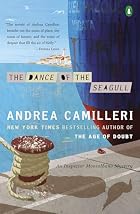
Having become addicted to Inspector Montalbano last year, I snapped up this latest of the series to be translated into English as soon as I saw it in a bookstore. But I wanted to save it for when I really needed a quick, fun, and diverting read, and that day came this week. It did not disappoint, as it is always a pleasure to be in the company of Montalbano and Camilleri's other continuing characters.
Having become addicted to Inspector Montalbano last year, I snapped up this latest of the series to be translated into English as soon as I saw it in a bookstore. But I wanted to save it for when I really needed a quick, fun, and diverting read, and that day came this week. It did not disappoint, as it is always a pleasure to be in the company of Montalbano and Camilleri's other continuing characters.
28rebeccanyc
37. Slammerkin by Emma Donoghue
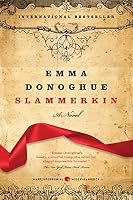
(Neither LT nor Amazon has an image that matches my cover; this is the one I like the best of those available because all the others make the book look like a bodice-ripper romance.)
Emma Donoghue is a marvelous writer and a great story-teller. She creates complex characters, provides fascinating historical details, explores interesting issues. And yet . . . and yet . . . even as I read this novel compulsively, I found myself resisting, and for some of the same reasons that Donoghue's Room also annoyed me. I find her writing a tad melodramatic and a tad manipulative. Yes, the protagonist, Mary, is a prostitute, so obviously she repeatedly engages in sex, and yes the sex is grim, mechanical, and joyless . . . but does the book need quite so many descriptions of it? Yes, Mary's life is hard, even when she temporarily escapes prostitution, but does the book need quite such explicit mentions of the place of women in the 18th century or couldn't we figure this out from the story? Do the men have to be so almost uniformly despicable (although complex)? Does it have to be so clear we're learning about the 19th century? I guess I'm just conflicted about easily I was sucked into this story!
Briefly, Mary is a poor girl of thirteen, living a hard life in London with her mother and stepfather, who, becoming entranced by a red ribbon, is raped by its vendor, becomes pregnant, is thrown out by her mother, and after being raped some more finds her way to a prostitute, Doll, who takes care of her until she is well enough to make her own living as a prostitute. Even as we see the hardships of this life, Mary delights in her freedom. Becoming ill, she takes herself to a sort of religious reform institution but soon leaves and for various reasons flees to a town on the Welsh border, the town her parents came from, and through a deception comes to live with dressmaker Jane Jones, her mother's best friend, and her family, as a maid and sewing apprentice. Through her life there, the reader sees the many ways in which women's lives are hard, and unfree, as well as the harsh class system. Despite resisting, Mary comes to like her life there in some ways, as Jane mothers her in a way she has never been mothered before, but part of her always wants to return to the excitement of London, and she returns to prostitution to fund that trip. Needless to say, nothing can be kept a secret forever in such a small town and the novel builds to a melodramatic conclusion.
There are a lot of ideas in this book, and the meaning of freedom, especially for women, is one of the most important. Different female characters have different degrees of freedom, or the lack thereof, including slavery by another name for a black woman who has escaped from harsher slavery and lives as an unpaid maid in the Jones household, the need of a poor woman abandoned by her husband to be a wet nurse for the babies of others, and the way Jane Jones has to demean herself in front of her "better" customers. Secrets kept and told are another theme, as are barrenness and procreation, the harshness of life in the 18th century, the struggle to survive, how clothes do or don't make the woman, how clothes and books both reveal and deceive, life in small towns versus life in cities, and more. In some ways I wish this novel had been a more "serious" exploration of some of these topics; I think the ambivalence I feel about it is that it tries to both a fun read and a novel of ideas.
(Neither LT nor Amazon has an image that matches my cover; this is the one I like the best of those available because all the others make the book look like a bodice-ripper romance.)
Emma Donoghue is a marvelous writer and a great story-teller. She creates complex characters, provides fascinating historical details, explores interesting issues. And yet . . . and yet . . . even as I read this novel compulsively, I found myself resisting, and for some of the same reasons that Donoghue's Room also annoyed me. I find her writing a tad melodramatic and a tad manipulative. Yes, the protagonist, Mary, is a prostitute, so obviously she repeatedly engages in sex, and yes the sex is grim, mechanical, and joyless . . . but does the book need quite so many descriptions of it? Yes, Mary's life is hard, even when she temporarily escapes prostitution, but does the book need quite such explicit mentions of the place of women in the 18th century or couldn't we figure this out from the story? Do the men have to be so almost uniformly despicable (although complex)? Does it have to be so clear we're learning about the 19th century? I guess I'm just conflicted about easily I was sucked into this story!
Briefly, Mary is a poor girl of thirteen, living a hard life in London with her mother and stepfather, who, becoming entranced by a red ribbon, is raped by its vendor, becomes pregnant, is thrown out by her mother, and after being raped some more finds her way to a prostitute, Doll, who takes care of her until she is well enough to make her own living as a prostitute. Even as we see the hardships of this life, Mary delights in her freedom. Becoming ill, she takes herself to a sort of religious reform institution but soon leaves and for various reasons flees to a town on the Welsh border, the town her parents came from, and through a deception comes to live with dressmaker Jane Jones, her mother's best friend, and her family, as a maid and sewing apprentice. Through her life there, the reader sees the many ways in which women's lives are hard, and unfree, as well as the harsh class system. Despite resisting, Mary comes to like her life there in some ways, as Jane mothers her in a way she has never been mothered before, but part of her always wants to return to the excitement of London, and she returns to prostitution to fund that trip. Needless to say, nothing can be kept a secret forever in such a small town and the novel builds to a melodramatic conclusion.
There are a lot of ideas in this book, and the meaning of freedom, especially for women, is one of the most important. Different female characters have different degrees of freedom, or the lack thereof, including slavery by another name for a black woman who has escaped from harsher slavery and lives as an unpaid maid in the Jones household, the need of a poor woman abandoned by her husband to be a wet nurse for the babies of others, and the way Jane Jones has to demean herself in front of her "better" customers. Secrets kept and told are another theme, as are barrenness and procreation, the harshness of life in the 18th century, the struggle to survive, how clothes do or don't make the woman, how clothes and books both reveal and deceive, life in small towns versus life in cities, and more. In some ways I wish this novel had been a more "serious" exploration of some of these topics; I think the ambivalence I feel about it is that it tries to both a fun read and a novel of ideas.
29Linda92007
Excellent review of Slammerkin, Rebecca. It makes me feel better about having donated my unread copy, at least in part because I could not get past the bodice-ripper cover.
31rebeccanyc
Thanks, Linda and Merrikay. Merrikay, I did read Room, although I had misgivings going in, and had mixed feelings about it, as I did about Slammerkin. I wish I liked Donoghue better because she is a wonderful writer and creates fascinating characters . . .
32NanaCC
Hmmmm. I actually liked Slammerkin when I read it last year. I guess it is normal that we all have different tastes.
33detailmuse
Rebecca you intrigue me with Astragal but mostly because of Patti Smith's intro. Maybe I'll at least read that part. For the Just Kids fans -- she's working on a follow-up memoir and in the meantime her Woolgathering, a book of vignettes, has been re-released.
And I've finally acquired The Ladies Paradise so now I can think, "Oh! I have to get to it soon!" every time you review a Zola :))
And I've finally acquired The Ladies Paradise so now I can think, "Oh! I have to get to it soon!" every time you review a Zola :))
34rebeccanyc
Colleen, don't get me wrong. I enjoyed Slammerkin too; in fact, I could barely put it down. There were just aspects of it that irritated me.
MJ, it was the Patti Smith intro that led me to Astragal, but I found the book itself fascinating too. I do have Woolgathering somewhere on the TBR and will look forward to her follow-up memoir. The Ladies Paradise wasn't my favorite Zola, but it wasn't my least favorite either!
MJ, it was the Patti Smith intro that led me to Astragal, but I found the book itself fascinating too. I do have Woolgathering somewhere on the TBR and will look forward to her follow-up memoir. The Ladies Paradise wasn't my favorite Zola, but it wasn't my least favorite either!
36StevenTX
Very useful reviews as always. I hadn't heard of Alien Hearts before, but I won't be putting it on the wishlist. I'm currently reading his Bel-Ami, which seems somewhat similar, though it is about journalism rather than the arts. It's pretty bleak too, but the image of women is just the opposite: they are the behind-the-scenes movers and shakers and everybody knows it and pays court to them.
Slammerkin sounds like a book I might enjoy, but not a top priority. I, too, had mixed feelings about Room, but I'm glad to have read it now that we're learning about the somewhat similar situation in real life in Cleveland.
Slammerkin sounds like a book I might enjoy, but not a top priority. I, too, had mixed feelings about Room, but I'm glad to have read it now that we're learning about the somewhat similar situation in real life in Cleveland.
37rebeccanyc
Steven, that's an interesting point about Bel-Ami, which I have heard good things about. Everyone pays court to Madame de Bourne and a few other women in Alien Hearts, but behind their backs they disparage them and their abilities to do anything other than look beautiful. For example, Mariolle thinks "a woman writes only to speak of herself and put a little of herself into each word. Most women are strangers to the ruses of style and utterly betray themselves in the innocence of their expressions." And his friend Lamarthe says "Of course, we mustn't expect too much of them. But that lack of taste and comprehension that darkens their intellectual understanding of higher things frequently blinds them even more where we're concerned." There were more, but I couldn't find them easily just now. I should have added to my review that I really enjoyed the collection of short stories by de Maupassant that I read, The Necklace and Other Tales, and thought they had good pacing and sharp psychological insight. Maybe the longer form was a challenge for him.
38baswood
As Room really annoyed me the more I thought back on it, I will avoid Slammerkin
39avidmom
Enjoyed your recent reviews but it does sound like some grim reading. Anything by de Maupassant would get my attention but I feel I have been sufficiently warned. "Never has such a short novel felt so long." Think I'll pass on that one!
40dchaikin
Catching up on a favorite thread. I'm so far behind on LT, I feel a bit overwhelmed and all these titles read about at once blend together a bit, well with Vasily Grossman standing out, we'll maybe Gogol too...both going back your part 2 thread.
41DieFledermaus
Ditto to #40 - catching up but will have to go back to thread 2.
Sounds like The Sin of Father Mouret is a Zola to avoid.
Connie Willis is an author I've been meaning to check out, do you think it would be better to start with To Say Nothing of the Dog?
Too bad about Alien Hearts - I really liked that one. I suppose some of the characters could be unsympathetic and shallow but I didn't mind the narrow focus since the book was short. I agree it doesn't compare to Proust, but - it's hard to find anything that compares to Proust!
Good review of Slammerkin - I think you covered both the good and bad points pretty well.
Sounds like The Sin of Father Mouret is a Zola to avoid.
Connie Willis is an author I've been meaning to check out, do you think it would be better to start with To Say Nothing of the Dog?
Too bad about Alien Hearts - I really liked that one. I suppose some of the characters could be unsympathetic and shallow but I didn't mind the narrow focus since the book was short. I agree it doesn't compare to Proust, but - it's hard to find anything that compares to Proust!
Good review of Slammerkin - I think you covered both the good and bad points pretty well.
42rebeccanyc
Thanks, Dan & Die F.
DieF, To Say Nothing of the Dog is a better and more fun book than Doomsday Book, which was a little bloated, but the medieval/plague-filled setting of DB was more interesting. So it's hard to tell you where to start. I'm glad I read both of them, but I don't have any great urge to read any more Connie Willis.
Maybe I was in the wrong mood for Alien Hearts. I agree that it's unfair to compare it with Proust but AH made me think of Proust because Mariolle spends so long agonizing over Mme de Burne that it made me think of Swann agonizing over Odette and Marcel over Albertine.
DieF, To Say Nothing of the Dog is a better and more fun book than Doomsday Book, which was a little bloated, but the medieval/plague-filled setting of DB was more interesting. So it's hard to tell you where to start. I'm glad I read both of them, but I don't have any great urge to read any more Connie Willis.
Maybe I was in the wrong mood for Alien Hearts. I agree that it's unfair to compare it with Proust but AH made me think of Proust because Mariolle spends so long agonizing over Mme de Burne that it made me think of Swann agonizing over Odette and Marcel over Albertine.
43SassyLassy
Great review of Slammerkin and I like your choice of the cover. I had much the reaction you summed up so well in your last paragraph.
This was the first Donoghue book I read. Since then I have read Life Mask and The Sealed Letter, both of which deal with real characters and incidents which made them more believable. I think part of the difficulty I had with Slammerkin was the author's attempt to have nineteenth century characters deal with twentieth century sensibilities. Life Mask and The Sealed Letter are more successful at blending past deeds and current ideas. Donoghue's research goes a long way here.
Life Mask takes place in the eighteenth century. Partially the story of the sculptor Anne Damer and her attempts to succeed in a most unfeminine field, it also has Horace Walpole as a delightful character. The theatre gossip around Sheridan mixed with political and social scandals like Georgiana Duchess of Devonshire make it very readable.
The Sealed Letter follows another scandal, the Victorian divorce of the Codringtons, and how it played out in public and private arenas.
Both these books read in that can't put it down fashion. You might like one of them for escape.
I haven't attempted Room yet.
This was the first Donoghue book I read. Since then I have read Life Mask and The Sealed Letter, both of which deal with real characters and incidents which made them more believable. I think part of the difficulty I had with Slammerkin was the author's attempt to have nineteenth century characters deal with twentieth century sensibilities. Life Mask and The Sealed Letter are more successful at blending past deeds and current ideas. Donoghue's research goes a long way here.
Life Mask takes place in the eighteenth century. Partially the story of the sculptor Anne Damer and her attempts to succeed in a most unfeminine field, it also has Horace Walpole as a delightful character. The theatre gossip around Sheridan mixed with political and social scandals like Georgiana Duchess of Devonshire make it very readable.
The Sealed Letter follows another scandal, the Victorian divorce of the Codringtons, and how it played out in public and private arenas.
Both these books read in that can't put it down fashion. You might like one of them for escape.
I haven't attempted Room yet.
44rebeccanyc
38. Transit by Anna Seghers
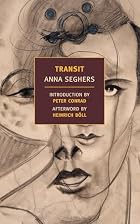
Anyone who has seen the movie Casablanca, even if not as many times as I have, will remember the opening frames in which a route is traced across Europe from Paris to Marseille and from there to Oran and then Casablanca, where they "wait . . . and wait" for their exit visas. But before the refugees from Nazi Europe waited in Casablanca, or elsewhere, they waited in Marseille, the only port in France remaining in French hands. And it is Marseille in 1940/41 which is at the center of this stunning novel, written soon after Seghers herself fled from Marseille to Martinique (on the same ship as Claude Levi-Strauss, Victor Serge, and Andre Breton, all traveling on visas arranged by Varian Fry) and then to Mexico. It was published in 1944 in English and Spanish before being published in German, but I read the new English translation published by NYRB.
This is a book that is fascinating on multiple levels. At the most basic, it is a portrait of a wintry Marseille and of the refugees who flooded there after the fall of Paris and much of France, their desperation to get on the "last ship," and the insanely Catch 22 nature of the visa process, in which you couldn't get an exit visa if you didn't have a transit visa (allowing you to travel through countries on the way to your final destination), and you also had to have all sorts of other papers including ones that allowed you to stay in Marseille, which you couldn't get unless you had other papers proving that you planned to leave. Consulates open and close, many consular officials don't care about scheduling visa appointments before the ship someone has booked passage on is to leave, some people exert influence through money and other means, some sailors figure out ways to make money by including refugees on cargo ships, and more. Refugees live in hotels or rooming houses, exploited by landlords and landladies, hang out in cafes (despite the alcohol-free days), and gossip, gossip, gossip -- about visas and ships and money.
At the same time, this is something of a thriller. The narrator, known as Seidler because of the papers he obtained, a German who escaped from a concentration camp and fled to Paris, and then fled from Paris to Marseille, has wound up with the manuscript of and letters to a German writer named Weidel and thus finds himself mistaken for Weidel by various consular officials when he is trying to arrange to get the materials to Weidel's wife. He is not sure he wants to leave, although he isn't supposed to stay in Marseilles unless he is going to, as he has friends in Marseille and, then, becomes obsessed with a woman who comes into many of the cafes and restaurants he frequents, looking frantically at all the tables as if she is searching for someone she never finds. The woman turns out to be the lover of a doctor who is treating the son of Seidler's friends. Then the reader, a moment before Seidler, realizes who the woman is. Plot complications develop. Will they escape together or separately? Will they understand the connection between Seidler and Weidel? What is Seidler really up to?
And the novel is also a meditation on the nature of identity, the difficulties of exile, the ancient history of Marseille as a port and point of departure for many cultures, and human motivations for good or for evil. Along the way, Seghers, who is a terrific writer, introduces a variety of fascinating secondary characters. While I enjoyed the plot, I think I was more intrigued by Seghers' portrait of the city, the refugees, and their frantic activities, as well as by the narrator's thoughts about Marseille and his life there. There is an elegiac, sorrowful feel to the book about this particular time and place, but it also speaks to the life and plight of refugees in all times and places.
Some examples of Seghers' prose.
"Then my mood changed. Why? Who knows what causes these mood changes. Suddenly I no longer thought all the chitchat was disgusting; it seemed fascinating now. It was the age-old harbor gossip, as ancient as the Old Port itself and even older. Wonderful, ancient harbor twaddle that's existed as long as there's been a Mediterranean Sea, Phoenician chitchat, Cretan and Greek gossip, and that of the Romans. There was never a shortage of gossips who were anxious about their berths aboard a ship and about their money, or who were fleeing from all the real and imagined horrors of the world. Mothers who had lost their children, children who had lost their mothers. The remnants of crushed armies, escaped slaves, human hordes who had been chased from all the countries of the earth, and having at last reached the sea, boarded ships to discover new lands from which they would again be driven; forever running from one death toward another." p. 78
"Aren't you thoroughly fed up with such thrilling stories? Aren't you sick of all these suspenseful tales about people surviving mortal danger by a hair, about breathtaking escapes? Me, I'm sick and tired of them. If something still thrills me today, then maybe it's an old worker's yarn about how many feet of wire he's drawn in the course of his long life and what tools he used, or the glow of the lamplight by which a few children are doing their homework." p. 4
Anyone who has seen the movie Casablanca, even if not as many times as I have, will remember the opening frames in which a route is traced across Europe from Paris to Marseille and from there to Oran and then Casablanca, where they "wait . . . and wait" for their exit visas. But before the refugees from Nazi Europe waited in Casablanca, or elsewhere, they waited in Marseille, the only port in France remaining in French hands. And it is Marseille in 1940/41 which is at the center of this stunning novel, written soon after Seghers herself fled from Marseille to Martinique (on the same ship as Claude Levi-Strauss, Victor Serge, and Andre Breton, all traveling on visas arranged by Varian Fry) and then to Mexico. It was published in 1944 in English and Spanish before being published in German, but I read the new English translation published by NYRB.
This is a book that is fascinating on multiple levels. At the most basic, it is a portrait of a wintry Marseille and of the refugees who flooded there after the fall of Paris and much of France, their desperation to get on the "last ship," and the insanely Catch 22 nature of the visa process, in which you couldn't get an exit visa if you didn't have a transit visa (allowing you to travel through countries on the way to your final destination), and you also had to have all sorts of other papers including ones that allowed you to stay in Marseille, which you couldn't get unless you had other papers proving that you planned to leave. Consulates open and close, many consular officials don't care about scheduling visa appointments before the ship someone has booked passage on is to leave, some people exert influence through money and other means, some sailors figure out ways to make money by including refugees on cargo ships, and more. Refugees live in hotels or rooming houses, exploited by landlords and landladies, hang out in cafes (despite the alcohol-free days), and gossip, gossip, gossip -- about visas and ships and money.
At the same time, this is something of a thriller. The narrator, known as Seidler because of the papers he obtained, a German who escaped from a concentration camp and fled to Paris, and then fled from Paris to Marseille, has wound up with the manuscript of and letters to a German writer named Weidel and thus finds himself mistaken for Weidel by various consular officials when he is trying to arrange to get the materials to Weidel's wife. He is not sure he wants to leave, although he isn't supposed to stay in Marseilles unless he is going to, as he has friends in Marseille and, then, becomes obsessed with a woman who comes into many of the cafes and restaurants he frequents, looking frantically at all the tables as if she is searching for someone she never finds. The woman turns out to be the lover of a doctor who is treating the son of Seidler's friends. Then the reader, a moment before Seidler, realizes who the woman is. Plot complications develop. Will they escape together or separately? Will they understand the connection between Seidler and Weidel? What is Seidler really up to?
And the novel is also a meditation on the nature of identity, the difficulties of exile, the ancient history of Marseille as a port and point of departure for many cultures, and human motivations for good or for evil. Along the way, Seghers, who is a terrific writer, introduces a variety of fascinating secondary characters. While I enjoyed the plot, I think I was more intrigued by Seghers' portrait of the city, the refugees, and their frantic activities, as well as by the narrator's thoughts about Marseille and his life there. There is an elegiac, sorrowful feel to the book about this particular time and place, but it also speaks to the life and plight of refugees in all times and places.
Some examples of Seghers' prose.
"Then my mood changed. Why? Who knows what causes these mood changes. Suddenly I no longer thought all the chitchat was disgusting; it seemed fascinating now. It was the age-old harbor gossip, as ancient as the Old Port itself and even older. Wonderful, ancient harbor twaddle that's existed as long as there's been a Mediterranean Sea, Phoenician chitchat, Cretan and Greek gossip, and that of the Romans. There was never a shortage of gossips who were anxious about their berths aboard a ship and about their money, or who were fleeing from all the real and imagined horrors of the world. Mothers who had lost their children, children who had lost their mothers. The remnants of crushed armies, escaped slaves, human hordes who had been chased from all the countries of the earth, and having at last reached the sea, boarded ships to discover new lands from which they would again be driven; forever running from one death toward another." p. 78
"Aren't you thoroughly fed up with such thrilling stories? Aren't you sick of all these suspenseful tales about people surviving mortal danger by a hair, about breathtaking escapes? Me, I'm sick and tired of them. If something still thrills me today, then maybe it's an old worker's yarn about how many feet of wire he's drawn in the course of his long life and what tools he used, or the glow of the lamplight by which a few children are doing their homework." p. 4
45rebeccanyc
#43 Thanks, Sassy for the Donoghue recommendations. On another thread, someone mentioned that she uses the term "weapons of mass destruction" in Life Mask, even though it is set in the 18th century, which I think is enough to make me stay away from it! Did this bother you at all?
46StevenTX
Great review of Transit! I had this one pre-ordered and got it the day it was released, but I don't know when I'll be reading it.
49janeajones
Slowly catching up on LT -- love your reviews as usual, Rebecca -- I've had Slammerkin on my bookshelf for years, but have never gotten around to it -- maybe I will this summer. Transit sounds wonderful.
50baswood
Great review of Transit, Anna Seghers Another one to add to the wish list.
51Linda92007
Excellent review of Transit, Rebecca. I had an email from NYRB last week saying it was being released. So kind of them to anticipate that your review would make me want to buy it!
52rebeccanyc
Thanks, Steven, Colleen, Paul, Jane, Barry, and Linda. I too get the NYRB e-mails (but I think I got it earlier than last week), and this sounded like just my kind of book, so I looked for it the last time I was in my favorite bookstore.
Jane, I got Slammerkin after it got a couple of enthusiastic reviews here in Club Read.
Jane, I got Slammerkin after it got a couple of enthusiastic reviews here in Club Read.
53wandering_star
Yes, Transit sounds great.
54rebeccanyc
Thanks, Wandering!
56detailmuse
Fascinating review, you make me very interested in Transit.
57rebeccanyc
And thanks, Darryl and MJ.
58rebeccanyc
39. The Sorrow of War by Bảo Ninh

It is 1975 and the American War has been won as this tragic and stunning novel begins, yet Kien, a veteran of ten years of fighting, is still in the Vietnamese army, in the Missing In Action Remains-Gathering Team, and the team is on the edge of the Jungle of Screaming Souls, an area he knows well, because it was the site of vicious fighting in 1969 from which only ten members of his battalion survived. Here soldiers see ghosts, of Vietnamese and Americans, of animals and humans, souls that have not yet found the peace of death. And the Jungle of Screaming Souls is in a way a metaphor for the rest of this book, whose Vietnamese title means "My Destiny of Love," as Kien relentlessly searches his memories, of war and love, to try to understand the past, the present, and maybe the future.
The book moves somewhat haphazardly between Kien's life in the present as a writer trying to write a novel about the war and his life, his life during the war in the midst of horrifying fighting, and his life before the war, especially his love for his neighbor and schoolmate, the beautiful Phuong. And yet, there is a method to the haphazardness, because as the book (both Ninh's and Kien's) progresses Kien delves deeper into his memories and reveals more of the trauma he and Phuong experienced at the beginning of the war. It is as if he is spiraling deeper and deeper into his own soul and memories. What Ninh is doing grows on the reader as the book goes on.
Clearly, this book exists on several levels. Without a doubt, as all the blurbs on my copy say, it is an indictment of the horror (and sorrow) of war, and war scenes are rendered in great and disturbing detail. According to Wikipedia, Ninh was a member of something called the Glorious 27th Youth Brigade: of the 500 young men and women originally in it, only ten survived, and of these I read elsewhere (sorry, forget where) six committed suicide. At points, Ninh's writing about Kien's postwar experiences sound exactly like what we now know as post-traumatic stress syndrome. What does it mean to kill? What does it mean to survive when others die, even sacrifice themselves? In the way it describes the nitty gritty of war and how soldiers cope, it is a counterpart to the also brilliant Matterhorn by Karl Marlantes.
At the same time, it is a portrait of life in Hanoi, both pre- and postwar, and an illustration of the differences, found around the world, between city dwellers and country dwellers who find themselves thrown together. It is a story about the role of art in various forms: music and painting, as well as writing. It is in a way a coming-of-age story, as Kien reflects on his and Phuong's parents, although a coming-of-age by fire. And it is a tale of young love and of innocence shattered.
But maybe most of all, it is a novel about memory - what we remember, how we remember it, how with effort (in Kien's case through writing and, perhaps, alcohol; with others, perhaps, through therapy) we can access the very things that disturb us the most and that we keep hidden even from ourselves. And the novel explores the meaning of the past. At one point, early in the book, Kien muses:
"My life seems little different from that of a sampan pushed upstream towards the past. The future lied to us, there long ago in the past. There is no new life, no new era, nor is it hope for a beautiful future that now drives me on, but rather the opposite. The hope is contained in the beautiful prewar past." p. 47
Ninh's book was controversial, and was published in English long before being widely available in Vietnam. Ninh worked with a translator and an Australian author/translator/war correspondent (who is listed as "editor") to produce the English version (per Wikipedia). Here's an example of what might have annoyed the censors, although much is more subtle than this:
After 1975, all that had quieted. The wind of war had stopped. The branches of conflict had stopped rustling. As we had won, Kien thought, then that meant justice had won; that had been some consolation. Or had it? Think carefully; look at your own existence. Look carefully now at the peace we have, painful, bitter, and sad. And look at who won the war.
To win, martyrs had sacrificed their lives in order that others might survive. Not a new phenomenon, true. But for those still living to know that the kindest, most worthy people have all fallen away, or even been tortured, humiliated before being killed, or buried and wiped away by the machinery of war, then this beautiful landscape of calm and peace is an appalling paradox. Justice may have won, but cruelty, death, and inhuman violence have also won." p. 193
I haven't really touched on Phuong's story, but it's an important component of the novel, as is her own wartime trauma and response. It is seen through Kien's eyes, but he gradually comes to understand her better, although he is still heartbroken about her leaving him.
This is a disturbing and eye-opening, yet beautiful book.

It is 1975 and the American War has been won as this tragic and stunning novel begins, yet Kien, a veteran of ten years of fighting, is still in the Vietnamese army, in the Missing In Action Remains-Gathering Team, and the team is on the edge of the Jungle of Screaming Souls, an area he knows well, because it was the site of vicious fighting in 1969 from which only ten members of his battalion survived. Here soldiers see ghosts, of Vietnamese and Americans, of animals and humans, souls that have not yet found the peace of death. And the Jungle of Screaming Souls is in a way a metaphor for the rest of this book, whose Vietnamese title means "My Destiny of Love," as Kien relentlessly searches his memories, of war and love, to try to understand the past, the present, and maybe the future.
The book moves somewhat haphazardly between Kien's life in the present as a writer trying to write a novel about the war and his life, his life during the war in the midst of horrifying fighting, and his life before the war, especially his love for his neighbor and schoolmate, the beautiful Phuong. And yet, there is a method to the haphazardness, because as the book (both Ninh's and Kien's) progresses Kien delves deeper into his memories and reveals more of the trauma he and Phuong experienced at the beginning of the war. It is as if he is spiraling deeper and deeper into his own soul and memories. What Ninh is doing grows on the reader as the book goes on.
Clearly, this book exists on several levels. Without a doubt, as all the blurbs on my copy say, it is an indictment of the horror (and sorrow) of war, and war scenes are rendered in great and disturbing detail. According to Wikipedia, Ninh was a member of something called the Glorious 27th Youth Brigade: of the 500 young men and women originally in it, only ten survived, and of these I read elsewhere (sorry, forget where) six committed suicide. At points, Ninh's writing about Kien's postwar experiences sound exactly like what we now know as post-traumatic stress syndrome. What does it mean to kill? What does it mean to survive when others die, even sacrifice themselves? In the way it describes the nitty gritty of war and how soldiers cope, it is a counterpart to the also brilliant Matterhorn by Karl Marlantes.
At the same time, it is a portrait of life in Hanoi, both pre- and postwar, and an illustration of the differences, found around the world, between city dwellers and country dwellers who find themselves thrown together. It is a story about the role of art in various forms: music and painting, as well as writing. It is in a way a coming-of-age story, as Kien reflects on his and Phuong's parents, although a coming-of-age by fire. And it is a tale of young love and of innocence shattered.
But maybe most of all, it is a novel about memory - what we remember, how we remember it, how with effort (in Kien's case through writing and, perhaps, alcohol; with others, perhaps, through therapy) we can access the very things that disturb us the most and that we keep hidden even from ourselves. And the novel explores the meaning of the past. At one point, early in the book, Kien muses:
"My life seems little different from that of a sampan pushed upstream towards the past. The future lied to us, there long ago in the past. There is no new life, no new era, nor is it hope for a beautiful future that now drives me on, but rather the opposite. The hope is contained in the beautiful prewar past." p. 47
Ninh's book was controversial, and was published in English long before being widely available in Vietnam. Ninh worked with a translator and an Australian author/translator/war correspondent (who is listed as "editor") to produce the English version (per Wikipedia). Here's an example of what might have annoyed the censors, although much is more subtle than this:
After 1975, all that had quieted. The wind of war had stopped. The branches of conflict had stopped rustling. As we had won, Kien thought, then that meant justice had won; that had been some consolation. Or had it? Think carefully; look at your own existence. Look carefully now at the peace we have, painful, bitter, and sad. And look at who won the war.
To win, martyrs had sacrificed their lives in order that others might survive. Not a new phenomenon, true. But for those still living to know that the kindest, most worthy people have all fallen away, or even been tortured, humiliated before being killed, or buried and wiped away by the machinery of war, then this beautiful landscape of calm and peace is an appalling paradox. Justice may have won, but cruelty, death, and inhuman violence have also won." p. 193
I haven't really touched on Phuong's story, but it's an important component of the novel, as is her own wartime trauma and response. It is seen through Kien's eyes, but he gradually comes to understand her better, although he is still heartbroken about her leaving him.
This is a disturbing and eye-opening, yet beautiful book.
59Linda92007
Fabulous review of The Sorrow of War, Rebecca. This sounds like a "must read" for those of us from a generation still grappling with the Vietnam War.
60janeajones
I think I must get The Sorrow of War though I rather dread reading it. I'm trying to move inside my Vietnamese daughter-in-law's life, slowly.
61rachbxl
Catching up. There's something that makes me not want to read Emma Donoghue, and you haven't changed my mind! Transit sounds great though - thanks for that one.
62wandering_star
Just popping by to say that I spotted today's Kindle Daily Deal (UK) was all three volumes of Miklos Banffy's Transylvanian trilogy, which I have had on my wishlist since your review a year or two ago!
Needless to say, I now have them in my (digital) possession...
Needless to say, I now have them in my (digital) possession...
63rebeccanyc
Oh good, glad you could get those, wandering_star. They're a fun read, although thought-provoking too.
And thank, Linda, Jane, and Rachel. I read a lot about Vietnam while the war was going on; since I was in high school and college then, it had a major impact on me. Since then I've read some great fiction from the US perspective, so it was fascinating to see how the Vietnamese experience was similar in some respects. although of course in the most important respect it differed since the war was fought in their country.
And thank, Linda, Jane, and Rachel. I read a lot about Vietnam while the war was going on; since I was in high school and college then, it had a major impact on me. Since then I've read some great fiction from the US perspective, so it was fascinating to see how the Vietnamese experience was similar in some respects. although of course in the most important respect it differed since the war was fought in their country.
64Polaris-
Thanks for the review of The Sorrow of War. I have it on my shelf to read and you've served a timely reminder. Really enjoying your thread.
65DieFledermaus
Terrific reviews of both Transit and The Sorrow of War. I'm adding Transit to the list but The Sorrow of War has been on the list for a long time already.
66rebeccanyc
Thanks, Polaris and DieF!
67SassyLassy
The Sorrow of War has haunted me since I read it when it was first translated into English back in the '90s. I have reread it since and I think it would have to receive serious consideration in any discussion of best Vietnam war novel.
Great review and I hope everyone who commented on it does read it.
Going back to Transit, this sounds intriguing and one I will have to look for.
>45 rebeccanyc: I don't remember the use of "weapons of mass destruction" in Life Mask, and I am sure it would be something that would leap out at me, so I would guess Donoghue either used it ironically or else I was irritated by it but gave her the benefit of the doubt on the strength of the rest of the book. I am currently reading a book about Pope Clement and the divorce of Henry VIII. The author keeps having ambassadors who are "tasked with" various challenges and that is driving me crazy in an otherwise excellent book.
Great review and I hope everyone who commented on it does read it.
Going back to Transit, this sounds intriguing and one I will have to look for.
>45 rebeccanyc: I don't remember the use of "weapons of mass destruction" in Life Mask, and I am sure it would be something that would leap out at me, so I would guess Donoghue either used it ironically or else I was irritated by it but gave her the benefit of the doubt on the strength of the rest of the book. I am currently reading a book about Pope Clement and the divorce of Henry VIII. The author keeps having ambassadors who are "tasked with" various challenges and that is driving me crazy in an otherwise excellent book.
68NanaCC
I added The Sorrow of War to my wish list.
69SassyLassy
Ordered Transit today based on your review and am looking forward to its arrival. The Camilleri will have to wait until the weather gets more Italian.
70rebeccanyc
I think you will like Transit, Sassy. Based on learning that Seghers escaped thanks to Varian Fry, I'm now reading his Surrender on Demand which I've had on the TBR for about 15 years.
And that "tasked with" would drive me crazy (it drives me crazy when people say it now!).
And that "tasked with" would drive me crazy (it drives me crazy when people say it now!).
71baswood
Great review of The sorrow of War
72detailmuse
>weapons of mass destruction
oh I’ve so often wished I’d marked the passage in Uncle Tom's Cabin where Stowe uses a term like abso-freakin’-lutely. It wasn’t that exactly, but it was a word broken up by an exclamation. It completely bumped me and I had to keep reminding myself that Stowe wrote it c1852!!
oh I’ve so often wished I’d marked the passage in Uncle Tom's Cabin where Stowe uses a term like abso-freakin’-lutely. It wasn’t that exactly, but it was a word broken up by an exclamation. It completely bumped me and I had to keep reminding myself that Stowe wrote it c1852!!
73rebeccanyc
40. Surrender on Demand by Varian Fry
"The French Government is obliged to surrender upon demand all Germans* named by the German Government in France, as well as in French possessions, Colonies, Protectorate Territories and Mandates" From Article XIX of the Franco-German Armistice
*"Germans" came to include anyone in territories the Nazis had conquered, and indeed anyone they wanted.
After reading Anna Seghers's Transit, and learning that she escaped from Marseille to Martinique with the help of Varian Fry, I realized that I'd had his book on my shelves for probably 15 years, and that it seemed like a good time to finally read it.
When the Nazis invaded Paris in June 1940, Varian Fry was a 32-year-old journalist and former classics major who had visited Germany in 1935 and been horrified by the Nazis even in those early years. Three days after the French surrender, the Emergency Rescue Committee was formed; its mission was to rescue many of the European artists, writers, musicians, and intellectuals who had initially fled from all corners of Europe to France and who now needed to flee France as well. Varian Fry agreed to go to Marseille to help get them out, believing that it would take him three weeks to contact the people on the ERC's list and not much longer to get them out with the help he believed he would receive from the US consulate in Marseille.
This is the story of the 13 months Fry spent in Marseille and its environs, before finally being expelled with the aid of the US State Department. During that time, he and his colleagues helped some 4000 people and were able to send some 2000 safely out of France. These people included some of the foremost artists, intellectuals, and labor and political leaders of the time, people such as André Breton, Max Ernst, Franz Werfel, Heinrich Mann, Victor Serge, among many others. To do this, he found himself working 18-hour days and doing whatever was necessary, including buying passports and visas, working with gangsters and forgers and money changers, as well as with representatives of the British military, searching for boats that could take people away, and generally staying one step ahead of the French police and the Gestapo (which not "officially" active in unoccupied Marsellle). Fry introduces us to the diverse group of people who helped in both his above-ground and clandestine activities, and to a who's who of European artists, intellectuals, and anti-Nazis.
More exciting than spy fiction because it is real, this book is also the story of a man who found himself unalterably changed by the situation he found himself in and who then found the courage to face incredible danger and undertake activities that he probably never dreamed he would ever engage in, all because they were necessary to get people out. In fact, the afterword to the edition I read (written by curators of the exhibit on Fry that was the opening exhibit at US Holocaust Museum), quotes a letter Fry wrote to his wife on his way home from Europe in which he says "I do not think I will ever be quite the same person I was when I kissed you goodbye . . . For the experiences of ten, fifteen, and even twenty years have been pressed into one. Sometimes I feel I have lived a whole life (and one to which I have no right) since I first walked down the monumental staircase of the Gare St. Charles in Marseille and timidly took a small back room at the Hotel Splendide . . ."
Fry started writing this book after he returned, but didn't end up publishing it until 1945. He kept no notes while he was in France, and in fact he frequently mentions burning papers just ahead of police visits, but his experiences must have been indelibly recorded in his brain, because the people and his activities come alive in his writing. One of the parts I enjoyed was the way some French and other officials unofficially helped Fry and the refugees, or at least looked the other way. In one amusing episode, a sentry at the Spanish border saw the paperwork Golo Mann, who had just climbed over a mountain to enter Spain with his uncle Heinrich Mann, and realized he was the son of Thomas Mann. Of course, when the sentry asked them about this, they feared being on a Gestapo list, but the sentry said he was honored to meet the son of "so great a man" and then sent for a car to come and get them.
Shamefully, the US government did not fully support Fry in his activities, which he found shocking; this got worse as time went on, and finally the State Department collaborated in Fry's being expelled from France. The US became more concerned about letting political "undesirables" into the country than with protecting the intellectual and artistic elite of Europe. Fry came to believe that people in the US didn't fully understand what was going on in Europe, and that he had to write this book to make them see. In his original introduction, which was not published in 1945 but which is included as an appendix to my edition, he wrote:
"I have tried -- God knows I have tried -- to get back into the mood of American life since I left France for the last time. But it doesn't work. There is only one way to try and that is the way I am going to try now. If I can get it all out, put it all down just as it happened, if I can make others see it and feel it as I did, then maybe I can sleep soundly again at night. . . . Those ghosts won't stop haunting me until I have done their bidding. They are the ghosts of the living who do not want to die. Go back, they said, go back and make America understand, make Americans understand before it is too late."
Varian Fry was the first American to be recognized by Yad Vashem, Israel's memorial to the Holocaust, as
"Righteous Among the Nations," a non-Jew who saved Jews during the Holocaust.
"The French Government is obliged to surrender upon demand all Germans* named by the German Government in France, as well as in French possessions, Colonies, Protectorate Territories and Mandates" From Article XIX of the Franco-German Armistice
*"Germans" came to include anyone in territories the Nazis had conquered, and indeed anyone they wanted.
After reading Anna Seghers's Transit, and learning that she escaped from Marseille to Martinique with the help of Varian Fry, I realized that I'd had his book on my shelves for probably 15 years, and that it seemed like a good time to finally read it.
When the Nazis invaded Paris in June 1940, Varian Fry was a 32-year-old journalist and former classics major who had visited Germany in 1935 and been horrified by the Nazis even in those early years. Three days after the French surrender, the Emergency Rescue Committee was formed; its mission was to rescue many of the European artists, writers, musicians, and intellectuals who had initially fled from all corners of Europe to France and who now needed to flee France as well. Varian Fry agreed to go to Marseille to help get them out, believing that it would take him three weeks to contact the people on the ERC's list and not much longer to get them out with the help he believed he would receive from the US consulate in Marseille.
This is the story of the 13 months Fry spent in Marseille and its environs, before finally being expelled with the aid of the US State Department. During that time, he and his colleagues helped some 4000 people and were able to send some 2000 safely out of France. These people included some of the foremost artists, intellectuals, and labor and political leaders of the time, people such as André Breton, Max Ernst, Franz Werfel, Heinrich Mann, Victor Serge, among many others. To do this, he found himself working 18-hour days and doing whatever was necessary, including buying passports and visas, working with gangsters and forgers and money changers, as well as with representatives of the British military, searching for boats that could take people away, and generally staying one step ahead of the French police and the Gestapo (which not "officially" active in unoccupied Marsellle). Fry introduces us to the diverse group of people who helped in both his above-ground and clandestine activities, and to a who's who of European artists, intellectuals, and anti-Nazis.
More exciting than spy fiction because it is real, this book is also the story of a man who found himself unalterably changed by the situation he found himself in and who then found the courage to face incredible danger and undertake activities that he probably never dreamed he would ever engage in, all because they were necessary to get people out. In fact, the afterword to the edition I read (written by curators of the exhibit on Fry that was the opening exhibit at US Holocaust Museum), quotes a letter Fry wrote to his wife on his way home from Europe in which he says "I do not think I will ever be quite the same person I was when I kissed you goodbye . . . For the experiences of ten, fifteen, and even twenty years have been pressed into one. Sometimes I feel I have lived a whole life (and one to which I have no right) since I first walked down the monumental staircase of the Gare St. Charles in Marseille and timidly took a small back room at the Hotel Splendide . . ."
Fry started writing this book after he returned, but didn't end up publishing it until 1945. He kept no notes while he was in France, and in fact he frequently mentions burning papers just ahead of police visits, but his experiences must have been indelibly recorded in his brain, because the people and his activities come alive in his writing. One of the parts I enjoyed was the way some French and other officials unofficially helped Fry and the refugees, or at least looked the other way. In one amusing episode, a sentry at the Spanish border saw the paperwork Golo Mann, who had just climbed over a mountain to enter Spain with his uncle Heinrich Mann, and realized he was the son of Thomas Mann. Of course, when the sentry asked them about this, they feared being on a Gestapo list, but the sentry said he was honored to meet the son of "so great a man" and then sent for a car to come and get them.
Shamefully, the US government did not fully support Fry in his activities, which he found shocking; this got worse as time went on, and finally the State Department collaborated in Fry's being expelled from France. The US became more concerned about letting political "undesirables" into the country than with protecting the intellectual and artistic elite of Europe. Fry came to believe that people in the US didn't fully understand what was going on in Europe, and that he had to write this book to make them see. In his original introduction, which was not published in 1945 but which is included as an appendix to my edition, he wrote:
"I have tried -- God knows I have tried -- to get back into the mood of American life since I left France for the last time. But it doesn't work. There is only one way to try and that is the way I am going to try now. If I can get it all out, put it all down just as it happened, if I can make others see it and feel it as I did, then maybe I can sleep soundly again at night. . . . Those ghosts won't stop haunting me until I have done their bidding. They are the ghosts of the living who do not want to die. Go back, they said, go back and make America understand, make Americans understand before it is too late."
Varian Fry was the first American to be recognized by Yad Vashem, Israel's memorial to the Holocaust, as
"Righteous Among the Nations," a non-Jew who saved Jews during the Holocaust.
74SassyLassy
What a wonderful find from your shelves. I love it when you can link books like that.
I just checked Fry on amazon and find he is in demand, but this particular book seems to be out of print although there are copies of it available. It sounds fascinating and I will look for it in musty bookstores. Nice review.
I just checked Fry on amazon and find he is in demand, but this particular book seems to be out of print although there are copies of it available. It sounds fascinating and I will look for it in musty bookstores. Nice review.
75rebeccanyc
Sassy, it was published in connection with the exhibit at the US Holocaust Museum. Maybe they might have copies?
I knew I had this book and, interestingly, I found an old airline ticket stub in it (from the pre-internet-ticketing days) -- no year on it though -- so I must have started it when I bought it but not finished it.
I knew I had this book and, interestingly, I found an old airline ticket stub in it (from the pre-internet-ticketing days) -- no year on it though -- so I must have started it when I bought it but not finished it.
76avidmom
Surrender on Demand definitely goes on the wishlist! Thanks for the review.
78baswood
Very interesting review, and Fry's book sounds like an important historical source all on its own.
79rebeccanyc
Thanks, Avid, Polaris, and Barry. And yes, I did feel it was a valuable historical source for a surprisingly little known part of a very well known war. Fry is a fascinating person who clearly found reserves of courage and ingenuity that I doubt he knew he had when he left for France. Not that he says any of that, of course, as he has a lot of personal reserve, but I read it between the lines.
80NanaCC
Surrender on Demand added to my list!
81akeela
Always enjoy your thread, Rebecca. I've added a few titles including Transit to my TBR list. Thanks!
82rebeccanyc
41. A Priest in the House (The Conquest of Plassans) by Émile Zola

I read this Rougon-Macquart book out of sequence because I only recently discovered it was available in a 1957 English translation, but whatever possessed the translator to call it "A Priest in the House" instead of "The Conquest of Plassans" and the publisher to give it that horrifying cover boggles my mind. It really is a story about the conquest of Plassans, Zola's fictional southern French town, by that priest, not the story of the priest in the house. I guess they thought it would sell more books.
At the beginning of the novel, a seemingly awkward new priest, Abbé Faujas, comes to town and, at the request of the current priest, lodges with his mother in the happy and comfortable house of the Mourets, François and Marthe (née Rougon) (François is her cousin, descended from the Macquart side of the family). The Mourets have three children: Octave, who will reappear in Pot Luck and The Ladies Paradise, and Serge who, along with the mentally challenged sister Desirée, will reappear in The Sin of Father Mouret. Marthe's parents are the Rougons who appeared in the first Rougon-Macquart novel, The Fortune of the Rougons.
At first everyone wonders about the new priest, because he keeps to himself and seems inept socially. Gradually we learn that Marthe's mother, who keeps a salon that attracts all three factions of the town (the old nobility, the followers of Napoleon's empire, and the royalists who want to bring the traditional royal family back), has schemed with someone in Paris (presumably her son, His Excellency, Eugene Rougon), to have Faujas come to Plassans, but it isn't clear why. As time goes on, Marthe becomes attracted spiritually and emotionally to the priest, and becomes involved in more religious and social welfare activities, neglecting her husband, her home, and her children, which heretofore had been the center of her life. A sister and brother-in-law of the priest arrive in town and seem to be up to no good. Life in the Mouret home deteriorates, until the novel builds to a melodramatic and not completely believable conclusion.
The strength of this novel is more in its depiction of the pettiness and cattiness and scheming of provincial life than in the machinations of the priest, whose transformation from awkward newcomer to cold and haughty schemer I found hard to take. It also effectively illustrates the role of the church in society. The minor characters of the townspeople are all well drawn, as is the picture of the Mouret home and its bucolic setting. François, at first, has good instincts about who to be suspicious of, and Faujas's mother is a wonderful creation as well. But the changes in François, Marthe, and Faujas himself just didn't seem real to me: dramatic, yes, plausible, a stretch.
In this book also, Zola lays on his genetic theories pretty thick, as both François and Marthe are grandchildren of the founding mother of the Rougon-Macquart families who is now in an insane asylum in town that is actually featured in this novel; the physical similarity of both François and Marthe to her is remarked on, and Marthe fears she is going insane.
There was a lot to like in this novel, and it was hard to put down as it built to its conclusion. I'm glad I read it, as it helped me fill in some of the blanks in the Rougon-Macquart cycle

I read this Rougon-Macquart book out of sequence because I only recently discovered it was available in a 1957 English translation, but whatever possessed the translator to call it "A Priest in the House" instead of "The Conquest of Plassans" and the publisher to give it that horrifying cover boggles my mind. It really is a story about the conquest of Plassans, Zola's fictional southern French town, by that priest, not the story of the priest in the house. I guess they thought it would sell more books.
At the beginning of the novel, a seemingly awkward new priest, Abbé Faujas, comes to town and, at the request of the current priest, lodges with his mother in the happy and comfortable house of the Mourets, François and Marthe (née Rougon) (François is her cousin, descended from the Macquart side of the family). The Mourets have three children: Octave, who will reappear in Pot Luck and The Ladies Paradise, and Serge who, along with the mentally challenged sister Desirée, will reappear in The Sin of Father Mouret. Marthe's parents are the Rougons who appeared in the first Rougon-Macquart novel, The Fortune of the Rougons.
At first everyone wonders about the new priest, because he keeps to himself and seems inept socially. Gradually we learn that Marthe's mother, who keeps a salon that attracts all three factions of the town (the old nobility, the followers of Napoleon's empire, and the royalists who want to bring the traditional royal family back), has schemed with someone in Paris (presumably her son, His Excellency, Eugene Rougon), to have Faujas come to Plassans, but it isn't clear why. As time goes on, Marthe becomes attracted spiritually and emotionally to the priest, and becomes involved in more religious and social welfare activities, neglecting her husband, her home, and her children, which heretofore had been the center of her life. A sister and brother-in-law of the priest arrive in town and seem to be up to no good. Life in the Mouret home deteriorates, until the novel builds to a melodramatic and not completely believable conclusion.
The strength of this novel is more in its depiction of the pettiness and cattiness and scheming of provincial life than in the machinations of the priest, whose transformation from awkward newcomer to cold and haughty schemer I found hard to take. It also effectively illustrates the role of the church in society. The minor characters of the townspeople are all well drawn, as is the picture of the Mouret home and its bucolic setting. François, at first, has good instincts about who to be suspicious of, and Faujas's mother is a wonderful creation as well. But the changes in François, Marthe, and Faujas himself just didn't seem real to me: dramatic, yes, plausible, a stretch.
In this book also, Zola lays on his genetic theories pretty thick, as both François and Marthe are grandchildren of the founding mother of the Rougon-Macquart families who is now in an insane asylum in town that is actually featured in this novel; the physical similarity of both François and Marthe to her is remarked on, and Marthe fears she is going insane.
There was a lot to like in this novel, and it was hard to put down as it built to its conclusion. I'm glad I read it, as it helped me fill in some of the blanks in the Rougon-Macquart cycle
83Linda92007
Great review of Surrender on Demand, Rebecca.
>74 SassyLassy: I am seeing a 1997 paperback edition available on Amazon, Sassy. Luckily, I can get it through our library system.
>74 SassyLassy: I am seeing a 1997 paperback edition available on Amazon, Sassy. Luckily, I can get it through our library system.
84rebeccanyc
Linda, that's the edition I read. And thanks. And thanks, Collen and akeela, too.
85Linda92007
And another great Zola review! I really need to get started on Germinal.
86StevenTX
Congratulation on your Zola find. I was not aware of that translation. I'll be on the lookout for an affordable copy. Even though it may not be one of the best, it's nice, as you say, to be able to fill in the gaps in the family saga.
That cover looks like it belongs on M. G. Lewis's The Monk.
That cover looks like it belongs on M. G. Lewis's The Monk.
87rebeccanyc
Maybe, but I really loved the cover on the edition of The Monk I read:

I got A Priest in the House from ABEBooks. It is the Brian Rhys translation, published in the UK by Elek and in the US by Citadel and they still have some copies.

I got A Priest in the House from ABEBooks. It is the Brian Rhys translation, published in the UK by Elek and in the US by Citadel and they still have some copies.
90rebeccanyc
For those of you who remember my reading Sacred Trash two years ago, there was an interesting article in today's New York times about using computers to piece together fragments of documents found in the Cairo geniza.
91kidzdoc
Great reviews, Rebecca! Sorry that I fell behind. I've added The Sorrow of War to my wish list.
92rebeccanyc
I think that's a good one for you, Darryl.
93rebeccanyc
42. Lucifer Unemployed by Aleksander Wat

Wat published this book of short stories in 1927. The Great War (not yet World War I) was over. Nazism had not yet started, and Stalin hadn't reached his murderous heights. Wat, according to his fascinating memoir, My Century, was a futurist and a dadaist, movements which, as far as I can tell, rejected traditional forms in an attempt to reflect the changes in the post-war world and distaste for bourgeois conceptions of art. In these stories, ideas play the central role, along with playfulness and satire, not character or plot.
For example, the title story, which is the last story in the volume, takes the idea that the devil has been put out of business by the modern world, and poor unemployed Lucifer goes around talking to people in various lines of work who illustrate for him why the devil is no longer needed. In the first story, "The Eternally Wandering Jew," Jews take over the Catholic church and start these new Catholics go on to oppress the now ex-Catholics in the same way the church and society formerly oppressed Jews. In "Kings in Exile," the former crowned heads of Europe are exiled to a remote island, where they attempt to recreate the world as they had known, and end up regressing through the stages of civilization. In one of my favorite stories, "The History of the Last Revolution in England," a soccer ball intrudes on a fight between the revolutionaries and the military, and they end up setting themselves up as soccer teams instead. In several of the stories, such as "Has Anyone Seen Pigeon Street?," Wat turns the idea of reality on its head -- with a trick at the end.
In some ways the stories are prescient. Although the worst horrors of the 20th century, horrors that ended up enveloping Wat, were yet to happen, a reader (or maybe only a reader now, who knows what happened next), can feel something ominous hanging over some of the stories. They can be playful, but they are serious, and they don't embrace the modernity they represent.
Wat musing on history and the future:
"Does it always have to be true in human history that the simple, safe, small, insignificant, worthless things excite more passion, kindle more courage, animosity, and heroism; arouse more interest and encourage greater effort than than the dangerous, harmful, great, dignified, deadly things? So be it -- we will say with great solemnity. If that is how things really are, we should be happy, for there are so many harmful and explosive and annihilating things that one should wish that humanity should devote as little attention to them as possible." From "The History of the Last Revolution in England," p. 37.
A quote I appreciated as an editor:
" 'Here I am to offer you my collaboration,' he said to the editor. 'I know all the secrets of creation, and I will reveal things to you no one else knows.'
'Why, that's impossible,' the editor replied. 'We know everything already. To know everything is our raison d'ȇtre. As it is, we have more contributors than subscribers. Maybe some other time.'" From "Lucifer Unemployed," p. 95.
Wat the poet making fun of poets and language:
"Poets and snobs congregated here: poets and snobbery go together as nicely as a thrown rock and ripples in water. This is the place where the wisemen who sucked wisdom out of the pacifier of words got together. What a shame! What a shame that for so long we have lacked a nurse of revelation! Words are tubercular, syphilitic, and preserve in their countless tissues swarming colonies of ambiguous microbes. By means of the same words some pave the way for European Buddhism, others propagate Orthodoxy and Catholicism. The latter are blood brothers to the inventors of deadly dynamite, all of course in the name of pacifism. And even if one finds healthy words in some out-of-the-way place, words securely fastened to the earth, even then poets would unchain them and punch them into the empty, vacant sky. What a shame! What a shame! And it's not as if they were mad dogs. They were only the colored bubbles of words." From "Lucifer Unemployed," pp. 105-106
I had mixed feelings about this book. I admired Wat's language, his wit, and his ideas, but I found it hard to get into the stories themselves.

Wat published this book of short stories in 1927. The Great War (not yet World War I) was over. Nazism had not yet started, and Stalin hadn't reached his murderous heights. Wat, according to his fascinating memoir, My Century, was a futurist and a dadaist, movements which, as far as I can tell, rejected traditional forms in an attempt to reflect the changes in the post-war world and distaste for bourgeois conceptions of art. In these stories, ideas play the central role, along with playfulness and satire, not character or plot.
For example, the title story, which is the last story in the volume, takes the idea that the devil has been put out of business by the modern world, and poor unemployed Lucifer goes around talking to people in various lines of work who illustrate for him why the devil is no longer needed. In the first story, "The Eternally Wandering Jew," Jews take over the Catholic church and start these new Catholics go on to oppress the now ex-Catholics in the same way the church and society formerly oppressed Jews. In "Kings in Exile," the former crowned heads of Europe are exiled to a remote island, where they attempt to recreate the world as they had known, and end up regressing through the stages of civilization. In one of my favorite stories, "The History of the Last Revolution in England," a soccer ball intrudes on a fight between the revolutionaries and the military, and they end up setting themselves up as soccer teams instead. In several of the stories, such as "Has Anyone Seen Pigeon Street?," Wat turns the idea of reality on its head -- with a trick at the end.
In some ways the stories are prescient. Although the worst horrors of the 20th century, horrors that ended up enveloping Wat, were yet to happen, a reader (or maybe only a reader now, who knows what happened next), can feel something ominous hanging over some of the stories. They can be playful, but they are serious, and they don't embrace the modernity they represent.
Wat musing on history and the future:
"Does it always have to be true in human history that the simple, safe, small, insignificant, worthless things excite more passion, kindle more courage, animosity, and heroism; arouse more interest and encourage greater effort than than the dangerous, harmful, great, dignified, deadly things? So be it -- we will say with great solemnity. If that is how things really are, we should be happy, for there are so many harmful and explosive and annihilating things that one should wish that humanity should devote as little attention to them as possible." From "The History of the Last Revolution in England," p. 37.
A quote I appreciated as an editor:
" 'Here I am to offer you my collaboration,' he said to the editor. 'I know all the secrets of creation, and I will reveal things to you no one else knows.'
'Why, that's impossible,' the editor replied. 'We know everything already. To know everything is our raison d'ȇtre. As it is, we have more contributors than subscribers. Maybe some other time.'" From "Lucifer Unemployed," p. 95.
Wat the poet making fun of poets and language:
"Poets and snobs congregated here: poets and snobbery go together as nicely as a thrown rock and ripples in water. This is the place where the wisemen who sucked wisdom out of the pacifier of words got together. What a shame! What a shame that for so long we have lacked a nurse of revelation! Words are tubercular, syphilitic, and preserve in their countless tissues swarming colonies of ambiguous microbes. By means of the same words some pave the way for European Buddhism, others propagate Orthodoxy and Catholicism. The latter are blood brothers to the inventors of deadly dynamite, all of course in the name of pacifism. And even if one finds healthy words in some out-of-the-way place, words securely fastened to the earth, even then poets would unchain them and punch them into the empty, vacant sky. What a shame! What a shame! And it's not as if they were mad dogs. They were only the colored bubbles of words." From "Lucifer Unemployed," pp. 105-106
I had mixed feelings about this book. I admired Wat's language, his wit, and his ideas, but I found it hard to get into the stories themselves.
94Linda92007
Excellent review of Lucifer Unemployed, Rebecca. I am anxious to read My Century and am also curious about his poetry.
95rebeccanyc
I believe there are some of his poems in an anthology collected by Czeslaw Milosz, A Book of Luminous Things, which I bought after reading The Issa Valley. Otherwise, the collections of Wat's poetry that have been translated into English seem to be out of print.
96baswood
Lucifer Unemployed certainly seems out of the mainstream. How did you come to read it Rebecca
97rebeccanyc
Barry, I was very impressed by Wat's My Century, which I read earlier this year, and wanted to read some of his other work. This short story collection was the only one currently in print in English, although he is known primarily as a poet.
98StevenTX
Wonderful review of Lucifer Unemployed. I just ordered a copy. I'm intrigued by those early 20th century movements... futurism, surrealism, dada, etc.
Words are tubercular, syphilitic, and preserve in their countless tissues swarming colonies of ambiguous microbes. This sounds like something William S. Burroughs would say. He frequently used the term "word virus."
Words are tubercular, syphilitic, and preserve in their countless tissues swarming colonies of ambiguous microbes. This sounds like something William S. Burroughs would say. He frequently used the term "word virus."
99cushlareads
Rebecca, I should make a note to move my Kindle away from my right hand when I'm catching up on your thread! Transit sounds excellent and was on sale for $8. It's a part of The end of WW2 that I've never read about.
Surrender on Demand isn't there but made me laugh at Amazon's predictive book search.. So many books about surrendering to a) your love, b) the stars, c) temptation, d) me. Wellington library doesn't have it either.
Surrender on Demand isn't there but made me laugh at Amazon's predictive book search.. So many books about surrendering to a) your love, b) the stars, c) temptation, d) me. Wellington library doesn't have it either.
100rebeccanyc
Thanks, Steven. Haven't read anything by Burroughs -- what would you recommend?
So sorry (not!), Cushla. Transit is actually towards the beginning of WWII, right after the fall of France. And very funny about the surrendering recommendations! Do you have a reading thread somewhere?
So sorry (not!), Cushla. Transit is actually towards the beginning of WWII, right after the fall of France. And very funny about the surrendering recommendations! Do you have a reading thread somewhere?
101cushlareads
Rebecca, I'm over in the 75 book group again (not that I will get anywhere near that number this year.)
http://www.librarything.com/topic/152009
http://www.librarything.com/topic/152009
102rebeccanyc
Thanks, Cushla. I've been mostly focusing on Club Read this year, even though I have a somewhat neglected thread over in 75 Books. It's just too daunting to keep up over there, but I star a few threads of people with interesting reading who I don't find elsewhere and try to look at them regularly.
103StevenTX
#100 - William S. Burroughs may not the kind of author you would enjoy, but Naked Lunch is both his most highly regarded work and one that is representative of his ideas and writing techniques in general. From what I recall, his book that has the most to say about the idea of the "word virus" is Nova Express.
104rebeccanyc
i've actually never thought of William Burroughs as n author I would enjoy, but your comment in #98 made me think that maybe I should try him.
105rebeccanyc
43. Sister Bernadette's Barking Dog: The Quirky History and Lost Art of Diagramming Sentences by Kitty Burns Florey

I owe this thoroughly delightful read to a review by MJ (detailmuse), and it was the perfect accompaniment to waiting for my car at the shop: a quick, easy read that nonetheless had some meat to it. Not only did I enjoy revisiting the process of diagramming sentences, but I also appreciated Florey's entertaining examples (largely from literature) and her comments about other, more or less related, topics. She is an engaging writer and seems like a person I would like to know. This book was a lot of fun.

I owe this thoroughly delightful read to a review by MJ (detailmuse), and it was the perfect accompaniment to waiting for my car at the shop: a quick, easy read that nonetheless had some meat to it. Not only did I enjoy revisiting the process of diagramming sentences, but I also appreciated Florey's entertaining examples (largely from literature) and her comments about other, more or less related, topics. She is an engaging writer and seems like a person I would like to know. This book was a lot of fun.
107DieFledermaus
Surrender on Demand sounds fantastic! Onto the wishlist. Would you recommend reading that one before reading Transit?
That is definitely a horrible cover for the Zola.
Lucifer Unemployed sounds interesting though probably will be harder to find than My Century, which I've been looking for but haven't found in any bookstores yet.
That is definitely a horrible cover for the Zola.
Lucifer Unemployed sounds interesting though probably will be harder to find than My Century, which I've been looking for but haven't found in any bookstores yet.
108rebeccanyc
DieF, I'd recommend reading Transit first, maybe just because I did, but I think the history is more interesting when you've had a flavor of the fiction. I had to order the Wat stories from Amazon (they're published by Northwestern University Press) but My Century is available in an NYRB edition and should be more widely available.
Merrikay, I should have mentioned that I enjoyed your review of Sister Bernadette too.
And I should have added to the Sister Bernadette review that you might have to be a bit of a grammar/editing geek to like it; for example, I enjoyed a several-page discussion of the use of commas by different authors, but I'm sure there are people who would roll their eyes at that.
Merrikay, I should have mentioned that I enjoyed your review of Sister Bernadette too.
And I should have added to the Sister Bernadette review that you might have to be a bit of a grammar/editing geek to like it; for example, I enjoyed a several-page discussion of the use of commas by different authors, but I'm sure there are people who would roll their eyes at that.
109rebeccanyc
44. This Earth of Mankind by Pramoedya Ananta Toer

This novel paints a vivid and often, indeed, melodramatic portrait of the evils of Dutch colonialism and institutionalized racism in Indonesia at the very end of the 19th century. It gave me insight into a time and a place that were largely unfamiliar. It is also a coming-of-age story, a political tale, and, less successfully, a love story. Originally created and recited orally while the author was imprisoned by the postcolonial government and denied access to writing materials, this novel is the first part of a quartet.
The story is told by Minke, who is about 16 when it begins and an aspiring writer. The descendent of Javanese nobles (although the reader doesn't know this as first), Minke is a Native, in the terminology of the time, below the Indos (Indo-Europeans, who are half Indonesian and half European), who in turn are below the Pures (or white Europeans, largely Dutch). Nonetheless, he has been allowed to attend an elite Dutch school where he is the only Native, and has been influenced by his teachers' emphasis on the ideals of European culture. The school is in Surabaya, which Wikipedia tells me is now Indonesia's second largest city, although it seems to be a pretty sleepy town in this novel; Minke boards with a couple there.
As the novel begins, Minke is taken by a friend to visit a house that lies out of town (and just down the road from a Chinese brothel). There lives a Nyai, or concubine, a Native woman who lives with a European man without being married, her beautiful daughter Annalies, and her son Robert. As Minke's friend hangs out with the son, Minke comes to know both Annalies and the mother, and they warmly encourage him to return, as Annalies has no other friends. The mother, who goes by Nyai, but asks Minke to call her Mama, is a remarkable woman. As the reader finds out later, she was sold by her parents to the Dutch man, and then taught herself reading, languages (including flawless Dutch), and business practices, and now runs the Dutch man's entire business enterprise.
As the tale progresses, the reader learns more about Nyai's and Minke's backgrounds, Minke meets some interesting but not fully developed characters who help in various ways, falls in love with Annalies, visits his parents, and becomes involved in a catastrophic series of events. These events, and the variety of other characters, serve to illustrate both the complexity and the horror of the colonial system.
I had mixed feelings about this book, and there were times when I almost gave up on it, largely because I just couldn't understand the relationship between Minke and Annalies. Minke is a smart, thoughtful, young man and Annalies, although ravishingly beautiful, seems painfully lacking in almost everything else; she is clearly psychologically disturbed and clings onto her vision of escape through being constantly with Minke (some of the weaker portions of the book are where the devoted European doctor tries to explain early psychology to Minke). The strongest parts of the novel are the development of Minke and the portrait of colonial Indonesia: the people, the landscape, the racism, the oppression, and the various kinds of resistance to the Dutch. By the end of the book, I enjoyed it enough to order the next volume in the quartet, which will follow Minke as he develops as a journalist.

This novel paints a vivid and often, indeed, melodramatic portrait of the evils of Dutch colonialism and institutionalized racism in Indonesia at the very end of the 19th century. It gave me insight into a time and a place that were largely unfamiliar. It is also a coming-of-age story, a political tale, and, less successfully, a love story. Originally created and recited orally while the author was imprisoned by the postcolonial government and denied access to writing materials, this novel is the first part of a quartet.
The story is told by Minke, who is about 16 when it begins and an aspiring writer. The descendent of Javanese nobles (although the reader doesn't know this as first), Minke is a Native, in the terminology of the time, below the Indos (Indo-Europeans, who are half Indonesian and half European), who in turn are below the Pures (or white Europeans, largely Dutch). Nonetheless, he has been allowed to attend an elite Dutch school where he is the only Native, and has been influenced by his teachers' emphasis on the ideals of European culture. The school is in Surabaya, which Wikipedia tells me is now Indonesia's second largest city, although it seems to be a pretty sleepy town in this novel; Minke boards with a couple there.
As the novel begins, Minke is taken by a friend to visit a house that lies out of town (and just down the road from a Chinese brothel). There lives a Nyai, or concubine, a Native woman who lives with a European man without being married, her beautiful daughter Annalies, and her son Robert. As Minke's friend hangs out with the son, Minke comes to know both Annalies and the mother, and they warmly encourage him to return, as Annalies has no other friends. The mother, who goes by Nyai, but asks Minke to call her Mama, is a remarkable woman. As the reader finds out later, she was sold by her parents to the Dutch man, and then taught herself reading, languages (including flawless Dutch), and business practices, and now runs the Dutch man's entire business enterprise.
As the tale progresses, the reader learns more about Nyai's and Minke's backgrounds, Minke meets some interesting but not fully developed characters who help in various ways, falls in love with Annalies, visits his parents, and becomes involved in a catastrophic series of events. These events, and the variety of other characters, serve to illustrate both the complexity and the horror of the colonial system.
I had mixed feelings about this book, and there were times when I almost gave up on it, largely because I just couldn't understand the relationship between Minke and Annalies. Minke is a smart, thoughtful, young man and Annalies, although ravishingly beautiful, seems painfully lacking in almost everything else; she is clearly psychologically disturbed and clings onto her vision of escape through being constantly with Minke (some of the weaker portions of the book are where the devoted European doctor tries to explain early psychology to Minke). The strongest parts of the novel are the development of Minke and the portrait of colonial Indonesia: the people, the landscape, the racism, the oppression, and the various kinds of resistance to the Dutch. By the end of the book, I enjoyed it enough to order the next volume in the quartet, which will follow Minke as he develops as a journalist.
110NanaCC
> a very interesting review Rebecca. I will be looking forward to your review of the second book.
111janeajones
Intriguing review, Rebecca -- I hope the second book in the quartet is more satisfying.
112Linda92007
Excellent review of This Earth of Mankind, Rebecca. It interests me, as I am totally ignorant on the topic of Dutch colonialism. Strangely, LT tells me that I have this book in my library, but I have no recollection of it, so I will need to do some searching.
113detailmuse
>105 rebeccanyc:-6 lol you make me want to reread! Glad I didn't donate it as I'd planned.
114baswood
This Earth of Mankind sounds an interesting read. So what will make you read the next volume? Is it to find out how the plot and characters develop, or is it because of the portrayal of Indonesia in the 19th century.
115rebeccanyc
Barry, by the end, I was both interested in what Minke would be doing next (not to give away any spoiler information), and in how the colonial and anticolonial efforts develop.as what was still the Dutch East Indies, and not yet Indonesia, entered the 20th century.
116kidzdoc
Great review of This Earth of Mankind, Rebecca. I look forward to your review of the next novel in the series.
117edwinbcn
As a young man, Pramoedya Ananta Toer resisted the Dutch oppressors, and was imprisoned by the Dutch in the final years of the anti-colonial struggle. In this struggle, which lasted for four years, between 1945 when Indonesia declared independence, and 1949, when the Dutch gave up 300+ years of colonial rule by recognizing the Republic of Indonesia. Indonesia's struggle for independence has been rather invisible because it happened in the aftermath of the Second World War. The weakened Dutch Army, with the help of British and Commonwealth troops was barely able to contain the uprising. The Dutch committed various atrocities and war crimes, for which the Dutch government has only recently started to make apologies (e.g. for the Rawagede Massacre). Besides the war of independence, Indonesia simultaneously fought a national revolution, in which the nationalists struggled with the communists, a battle which was decided in favour of the nationalists by intervention in the form of diplomatic pressure on the Dutch by the United States.
As Indonesia leaned towards communism by the mid-1960, President Sukarno was ousted and right-wing Colonel Suharto took over, establishing his rule firmly in the form of his "new order" between 1966 - 1998. Sukarno's rule was characterized by strong anti-communist ruling.
Pramoedya, who had been sympathetic with the Communists and joined the left-wing writers' guild Lekra, found himself once more in opposition with the authorities, resulting is a ban on his books, destruction of manuscripts and many decades of imprisonment.
In his recent documentary The Act of Killing the director, Joshua Oppenheimer, characterizes the rulers of the new order as the continuation of the cruelties of Dutch colonial rule. Readers interested in the works of Pramoedya Ananta Toer might be interested to see that rather bizar documentary.

As Indonesia leaned towards communism by the mid-1960, President Sukarno was ousted and right-wing Colonel Suharto took over, establishing his rule firmly in the form of his "new order" between 1966 - 1998. Sukarno's rule was characterized by strong anti-communist ruling.
Pramoedya, who had been sympathetic with the Communists and joined the left-wing writers' guild Lekra, found himself once more in opposition with the authorities, resulting is a ban on his books, destruction of manuscripts and many decades of imprisonment.
In his recent documentary The Act of Killing the director, Joshua Oppenheimer, characterizes the rulers of the new order as the continuation of the cruelties of Dutch colonial rule. Readers interested in the works of Pramoedya Ananta Toer might be interested to see that rather bizar documentary.

118rebeccanyc
Wow, Edwin. Thanks for all that great background information. I was vaguely familiar with the Sukarno era but haven't really paid much attention to Indonesia in general. Are you aware of any books that deal with the diversity of islands and cultures that make up Indonesia, and how well (or poorly) it works to group them together into one country?
119dchaikin
Would love a book explaining Indonesia, what a curious a complex country.
Catching up here from way way back...I was really moved by your reivew of surrender on demand...especially that quote you posted. Transit sounds fascinating too. Many interesting reivews here, as usual. It seems to me like you are a bit more off the beaten track than normal, maybe just impression, but very interesting reading you've been doing.
Catching up here from way way back...I was really moved by your reivew of surrender on demand...especially that quote you posted. Transit sounds fascinating too. Many interesting reivews here, as usual. It seems to me like you are a bit more off the beaten track than normal, maybe just impression, but very interesting reading you've been doing.
120rebeccanyc
Thanks for stopping by, Dan, and thanks for your kind comments. That's an interesting comment about my being off the beaten track, because I feel that, with the exception of some of the books I've read for Reading Globally, I've been reading mostly European books, and mostly 19th and 20th century books, and that I haven't ventured as far afield as I often do. I feel vaguely guilty about that, but I also believe in reading what I feel like reading at any given time.
I do have two more books to review -- Jude the Obscure and Reticence -- but I probably won't get to them until this afternoon or tomorrow morning.
I do have two more books to review -- Jude the Obscure and Reticence -- but I probably won't get to them until this afternoon or tomorrow morning.
121rebeccanyc
45. Jude the Obscure by Thomas Hardy
This is a difficult book for me to write about, not because the story was as bleak as the landscape, but because it was a challenge for me not to view the characters and their actions through the lens of the early 21st century instead of through that of the late 19th. Oh, there were so many times I wanted to slap Jude, and especially his cousin and love Sue, and tell them to shape up! But they were limited by the economic and social constraints of the time, by their own personalities, and of course by the author's vision. For as much as Jude and Sue and the other more peripheral characters come alive, as much as Hardy vividly pictures the grimness of their lives and surroundings, this is in many ways a novel of ideas.
As is well known, Jude as a youth is a dreamer, seeing beyond the harsh life he has lived with his great-aunt in a farming village and imagining a life as a scholar in nearby (but oh so far away) Christminster (aka Oxford). In that, he is like every young person who has longed to escape from a small town to the lights (literally) of the city. And like many young men before him, he is "trapped" by a woman, the scheming, but at least lively, Arabella. Eventually Arabella disappears to Australia, and Jude comes to Christchurch as a stone mason while continuing to study the classics on his own by night; there he meets his cousin Sue Bridehead, a "modern" woman who works as an artisan in a religious bookstore and against whom he has been warned by his great-aunt. Jude falls in love with Sue, who marries someone else who it turns out she can't bear to let near her sexually, and then agrees to live with Jude; many complications ensue, including a truly horrifying, if not somewhat melodramatic, one near the end of the book.
Partly the book is about the constraints of class and finances, and how this leads people with money and family connections to the university, even if they end up slumming in the bars of the town, while people without those advantages, even if they study on their own and have deep interests in academics, are barred from the doors of the colleges. Partly the novel is about the constraints of social custom and how society shuns those who don't follow its rules. These aspects of the book were well done, although certainly not unique.
What I found more interesting, and find myself still thinking about, is the characters of Jude and Sue and what Hardy may have been trying to do. It is surely no accident that neither of them has a real family (Jude is raised by a great-aunt, Sue seems to be estranged from her own family) and that Jude has been warned by his great-aunt that the family isn't cut out for marriage. Does Hardy believe that there is some genetic component to this aversion to staying with someone under the laws of the land, or does he view his characters as people ahead of their time? When we see Jude unable to take a firm stand, is this just his temperament or is Hardy commenting on his "weaknesses" for drink and women, "weaknesses" he needs a woman to protect him from? When Hardy portrays Sue as a nervous, jealous, demanding, sometimes almost child-like young woman who shuns not only marriage but also sexual relationships, is he portraying her as an independent woman of the future? (Some have said Sue is the first "feminist" in literature, something I have a hard time agreeing with.) Needless to say, Sue drove me batty; I much preferred the earthy Arabella who, though scheming, at least knew what she wanted and went after it -- until her heartless actions towards the end of the book.
Hardy is a wonderful writer, and the landscape of "Wessex," the lives and homes of its residents, the architecture of Christminster's colleges, and the nature of stone working are vividly depicted. However, it was clear to me that there was more going on in this novel than I got. It is filled with references to other English writers and to religious sources whose significance largely eluded me, even though they were helpfully cited in endnotes in the Modern Library edition I read. Although the references to sex are obscure for the modern reader, this book shocked its contemporaries when it was published because of its implicit criticism of religious, social, and educational institutions. While still a compelling story today, it does seem to be very much a novel of its time.
This is a difficult book for me to write about, not because the story was as bleak as the landscape, but because it was a challenge for me not to view the characters and their actions through the lens of the early 21st century instead of through that of the late 19th. Oh, there were so many times I wanted to slap Jude, and especially his cousin and love Sue, and tell them to shape up! But they were limited by the economic and social constraints of the time, by their own personalities, and of course by the author's vision. For as much as Jude and Sue and the other more peripheral characters come alive, as much as Hardy vividly pictures the grimness of their lives and surroundings, this is in many ways a novel of ideas.
As is well known, Jude as a youth is a dreamer, seeing beyond the harsh life he has lived with his great-aunt in a farming village and imagining a life as a scholar in nearby (but oh so far away) Christminster (aka Oxford). In that, he is like every young person who has longed to escape from a small town to the lights (literally) of the city. And like many young men before him, he is "trapped" by a woman, the scheming, but at least lively, Arabella. Eventually Arabella disappears to Australia, and Jude comes to Christchurch as a stone mason while continuing to study the classics on his own by night; there he meets his cousin Sue Bridehead, a "modern" woman who works as an artisan in a religious bookstore and against whom he has been warned by his great-aunt. Jude falls in love with Sue, who marries someone else who it turns out she can't bear to let near her sexually, and then agrees to live with Jude; many complications ensue, including a truly horrifying, if not somewhat melodramatic, one near the end of the book.
Partly the book is about the constraints of class and finances, and how this leads people with money and family connections to the university, even if they end up slumming in the bars of the town, while people without those advantages, even if they study on their own and have deep interests in academics, are barred from the doors of the colleges. Partly the novel is about the constraints of social custom and how society shuns those who don't follow its rules. These aspects of the book were well done, although certainly not unique.
What I found more interesting, and find myself still thinking about, is the characters of Jude and Sue and what Hardy may have been trying to do. It is surely no accident that neither of them has a real family (Jude is raised by a great-aunt, Sue seems to be estranged from her own family) and that Jude has been warned by his great-aunt that the family isn't cut out for marriage. Does Hardy believe that there is some genetic component to this aversion to staying with someone under the laws of the land, or does he view his characters as people ahead of their time? When we see Jude unable to take a firm stand, is this just his temperament or is Hardy commenting on his "weaknesses" for drink and women, "weaknesses" he needs a woman to protect him from? When Hardy portrays Sue as a nervous, jealous, demanding, sometimes almost child-like young woman who shuns not only marriage but also sexual relationships, is he portraying her as an independent woman of the future? (Some have said Sue is the first "feminist" in literature, something I have a hard time agreeing with.) Needless to say, Sue drove me batty; I much preferred the earthy Arabella who, though scheming, at least knew what she wanted and went after it -- until her heartless actions towards the end of the book.
Hardy is a wonderful writer, and the landscape of "Wessex," the lives and homes of its residents, the architecture of Christminster's colleges, and the nature of stone working are vividly depicted. However, it was clear to me that there was more going on in this novel than I got. It is filled with references to other English writers and to religious sources whose significance largely eluded me, even though they were helpfully cited in endnotes in the Modern Library edition I read. Although the references to sex are obscure for the modern reader, this book shocked its contemporaries when it was published because of its implicit criticism of religious, social, and educational institutions. While still a compelling story today, it does seem to be very much a novel of its time.
122rebeccanyc
46. Reticence by Jean-Philippe Toussaint

At the beginning of this somewhat mysterious novella, the narrator observes a dead cat in the water of the harbor in the small town he and his infant son are visiting, and believes the cat has been "murdered." At the end of the novella, the mystery of the cat's death is solved. In between, the narrator goes about his business, seemingly viewing none of his very strange actions as anything other than ordinary. He becomes obsessed with the idea that a man named Biaggi, a man who is apparently his friend and who apparently he has come to see, is following him and observing him, and goes to great (and illegal) lengths to try to catch Biaggi in the act. He tends to his son, and then at other times leaves him by himself in the hotel room. He reveals something which may be true or may be entirely in his imagination. His behavior throughout is extremely peculiar and, though he is obviously an extremely unreliable narrator, it may in fact be what he really did because he seems to have no awareness that his behavior is so peculiar.
Is he reticent about visiting Biaggi properly? Is he reticent about telling the readers the "truth"? Although I was mystified by this book, it was a quick read and I enjoyed it.

At the beginning of this somewhat mysterious novella, the narrator observes a dead cat in the water of the harbor in the small town he and his infant son are visiting, and believes the cat has been "murdered." At the end of the novella, the mystery of the cat's death is solved. In between, the narrator goes about his business, seemingly viewing none of his very strange actions as anything other than ordinary. He becomes obsessed with the idea that a man named Biaggi, a man who is apparently his friend and who apparently he has come to see, is following him and observing him, and goes to great (and illegal) lengths to try to catch Biaggi in the act. He tends to his son, and then at other times leaves him by himself in the hotel room. He reveals something which may be true or may be entirely in his imagination. His behavior throughout is extremely peculiar and, though he is obviously an extremely unreliable narrator, it may in fact be what he really did because he seems to have no awareness that his behavior is so peculiar.
Is he reticent about visiting Biaggi properly? Is he reticent about telling the readers the "truth"? Although I was mystified by this book, it was a quick read and I enjoyed it.
123Linda92007
Two enticing reviews, Rebecca. I particularly enjoyed your thoughts on what Hardy was attempting to portray.
124dchaikin
I'm so curious about Hardy, have no idea why I haven't simply tried reading him yet. I really enjoyed your review.
125rebeccanyc
Thanks, Linda and Dan. I hadn't read Hardy before (although I have a recollection of being supposed to read The Mayor of Casterbridge one summer when I was in school), but SassyLassy encouraged me to. I also have Far from the Madding Crowd on the TBR, and I may read it, but probably not very soon.
126SassyLassy
I've been looking forward to your review and it didn't fail to make me think. One of the things I realized is that I somehow seem to immerse myself completely into a Victorian state of mind when reading these novels and the current era leaves my thinking completely, which is a wonderful way to read them. Reading your review made me consider it more from a 21st century reader's perspective and you're right, it would be a challenge.
It would be fascinating to know why Hardy never wrote another novel after this one. Although chronologically it is a Victorian novel, he is really more what I would consider a cusp writer, straddling the ideas of the nineteenth and early twentieth centuries, like Conrad, whose first novel was published in the same year as Jude.
My edition has Hardy's preface to the 1895 edition and the 1912 one too, in which Hardy comments on the depiction of Sue as the first feminist hero, saying that a German reviewer
Hardy goes on to say that the reviewer regretted that the portrayal was not done by a woman, as a woman would never have allowed Sue to break down at the end!
He also says he just doesn't know if the dates bear out the critic's depiction.
After reading your review, I'm looking forward to reading the book again this summer, after I finish my current tome on Victorians.
If you want more bleak Victorians, there's always George Gissing.
Reticence sounds intriguing.
It would be fascinating to know why Hardy never wrote another novel after this one. Although chronologically it is a Victorian novel, he is really more what I would consider a cusp writer, straddling the ideas of the nineteenth and early twentieth centuries, like Conrad, whose first novel was published in the same year as Jude.
My edition has Hardy's preface to the 1895 edition and the 1912 one too, in which Hardy comments on the depiction of Sue as the first feminist hero, saying that a German reviewer
informed the writer that Sue Bridehead, the heroine, was the first delineation in fiction of the woman who was coming into notice in her thousands every year--- the woman of the feminist movement-- the slight pale 'bachelor' girl -- the intellectualized, emancipated bundle of nerves that modern conditions were producing, mainly in cities as yet; who does not recognize the necessity for most of her sex to follow marriage as a profession, and boast themselves as superior people because they are licensed to be loved on the premises.
Hardy goes on to say that the reviewer regretted that the portrayal was not done by a woman, as a woman would never have allowed Sue to break down at the end!
He also says he just doesn't know if the dates bear out the critic's depiction.
After reading your review, I'm looking forward to reading the book again this summer, after I finish my current tome on Victorians.
If you want more bleak Victorians, there's always George Gissing.
Reticence sounds intriguing.
127rebeccanyc
That's a very interesting point, Sassy. I have no trouble entering the era with a lot of 19th century novels (or other novels written in other times and places), but for some reason this one gave me problems, maybe because, as you say, Hardy is on the cusp between the 19th and 20th centuries. As for the reviewer who thought that a woman wouldn't have allowed Sue to break down, that's idiotic! Anyone would break down under those circumstances; I had more trouble imagining Sue giving birth to children of her own than I did in her having a breakdown! I'll be interested in your comments on Jude the Obscure when you reread it.
As for Gissing, I have New Grub Street on the TBR because one of the workers in my favorite book store recommended it to me.
As for Gissing, I have New Grub Street on the TBR because one of the workers in my favorite book store recommended it to me.
128baswood
I enjoyed your review of Jude the Obscure which I have not read, but I will get to it one day. Hardy does take the reader into another world in his novels and that world is very different from the 21st century and it can be fairly bleak, but it is at the same time enthralling. I also would not be inclined to read two of his novels back to back, because it is good to "come up for air"
129rachbxl
I've enjoyed catching up with your thread over breakfast this morning. I was interested to read your comments on This Earth of Mankind, as I've had it on my TBR shelves for several years but have never felt the urge to read it; had you raved about it that might have changed! I think I'll just wait for your review of the second volume instead.
Enjoyed your review of Jude the Obscure too. I was a huge Hardy fan as a teenager (completely of my own free will; we never read any at school) and read several of his books, although never Jude (I seem to remember my mum advising me to wait till I was a bit older, given the bleakness of it, but by then my Hardy phase was over). I should go back to him.
Enjoyed your review of Jude the Obscure too. I was a huge Hardy fan as a teenager (completely of my own free will; we never read any at school) and read several of his books, although never Jude (I seem to remember my mum advising me to wait till I was a bit older, given the bleakness of it, but by then my Hardy phase was over). I should go back to him.
130StevenTX
Catching up on your fine reviews... When I read Jude the Obscure several years ago what struck me about it was the way Sue and Jude start with contrasting beliefs and, by the novel's end, exchange places. In the beginning she is a free-thinker while Jude is bound by conventional religious beliefs and morality. She gradually becomes more conservative while he becomes more liberal until they once again stand on opposite sides. I've seen this happen to couples in real life.
131rebeccanyc
Barry, as I mentioned above, for some reason, although I definitely entered into Hardy's world, I had trouble seeing Jude and Sue fitting into it. Rachel, I can understand why your mother might think you should wait to read it, and Steven, yes, that was an interesting point about Jude's and Sue's transformations.
132rebeccanyc
47. The Riddle of the Labyrinth: The Quest to Crack an Ancient Code by Margalit Fox
How do you decipher writing if you don't know anything about the script it's written in and you don't know what language it's in and no Rosetta Stone is available? That was the challenge facing Arthur Evans, a British archaeologist who in 1900 discovered tablets written in what came to be known as Linear B in the Bronze age ruins of the Palace of Minos in Knossos, Crete. The tablets were preserved because the fire that destroyed the palace and its contents in around 1400 BC essentially baked them: Fox quotes Evans as writing "In this way fires -- so fatal elsewhere to historic libraries! -- has acted as a preservative of these earlier records." At the time, these tablets represented the earliest European writing known.
Fox, an obituary writer for the New York Times, tells the tale of how Linear B was deciphered through the stories of three people, two of who are well known: Evans, who found the tablets, and Michael Ventris, a troubled and somewhat dilettantish architect, who eventually deciphered them. For the first time, she also tells the story of Alice Kober, a Brooklyn College classicist who, through patient and careful labor and systematic analysis, made the discoveries that enabled Ventris to solve the mystery; Fox had access to Kober's recently archived papers and believes that had she not died in her 40s she would have solved the mystery of the tablets herself. Ventris himself acknowledged that he used Kober's methods to arrive at his conclusions.
All three people were interesting and obsessed, and though much has already been written about Evans and Ventris, I enjoyed learning about them, as well as about Kober. But what was truly fascinating about this book is how Fox leads the reader through the process of deciphering ancient languages, introducing linguistic comments like inflected languages and bridging syllables as needed. From first showing how to determine if a language is logographic or ideographic (in which each written symbol stands for a whole word or concept), syllabic (in which each symbol stands for a syllable), or alphabetic (in which each symbol stands for an individual sound), to demonstrating the kind of painstaking work Kober undertook to document each instance of each symbol, it's position in a word, and its relationship to symbols on either side, to the role of an intuitive leap in Ventris's eventual success, she presents the kind of thought that goes into what at first seems like an impossible task. I found especially charming how Fox entices the reader into understanding through using the dancing man code from the Sherlock Holmes story as well as something called Blissymbolics. The illustrations of Linear B and Kober's charts are also intriguing
In the end, deciphering Linear B provided new insights into Aegean history, as well as into palace life in ancient Knossos (as the tablets were, unsurprisingly, lists and accountings of food, people, storage vessels, instruments of war, etc.). There is a romance in understanding the people who lived thousands of years before us: as Fox writes, "On the backs of the tablets, those scribes left traces of themselves in the form of fingerprints and even doodles. To look at the tablets even now is to be in the presence of other people -- living, thinking, literate people."
How do you decipher writing if you don't know anything about the script it's written in and you don't know what language it's in and no Rosetta Stone is available? That was the challenge facing Arthur Evans, a British archaeologist who in 1900 discovered tablets written in what came to be known as Linear B in the Bronze age ruins of the Palace of Minos in Knossos, Crete. The tablets were preserved because the fire that destroyed the palace and its contents in around 1400 BC essentially baked them: Fox quotes Evans as writing "In this way fires -- so fatal elsewhere to historic libraries! -- has acted as a preservative of these earlier records." At the time, these tablets represented the earliest European writing known.
Fox, an obituary writer for the New York Times, tells the tale of how Linear B was deciphered through the stories of three people, two of who are well known: Evans, who found the tablets, and Michael Ventris, a troubled and somewhat dilettantish architect, who eventually deciphered them. For the first time, she also tells the story of Alice Kober, a Brooklyn College classicist who, through patient and careful labor and systematic analysis, made the discoveries that enabled Ventris to solve the mystery; Fox had access to Kober's recently archived papers and believes that had she not died in her 40s she would have solved the mystery of the tablets herself. Ventris himself acknowledged that he used Kober's methods to arrive at his conclusions.
All three people were interesting and obsessed, and though much has already been written about Evans and Ventris, I enjoyed learning about them, as well as about Kober. But what was truly fascinating about this book is how Fox leads the reader through the process of deciphering ancient languages, introducing linguistic comments like inflected languages and bridging syllables as needed. From first showing how to determine if a language is logographic or ideographic (in which each written symbol stands for a whole word or concept), syllabic (in which each symbol stands for a syllable), or alphabetic (in which each symbol stands for an individual sound), to demonstrating the kind of painstaking work Kober undertook to document each instance of each symbol, it's position in a word, and its relationship to symbols on either side, to the role of an intuitive leap in Ventris's eventual success, she presents the kind of thought that goes into what at first seems like an impossible task. I found especially charming how Fox entices the reader into understanding through using the dancing man code from the Sherlock Holmes story as well as something called Blissymbolics. The illustrations of Linear B and Kober's charts are also intriguing
In the end, deciphering Linear B provided new insights into Aegean history, as well as into palace life in ancient Knossos (as the tablets were, unsurprisingly, lists and accountings of food, people, storage vessels, instruments of war, etc.). There is a romance in understanding the people who lived thousands of years before us: as Fox writes, "On the backs of the tablets, those scribes left traces of themselves in the form of fingerprints and even doodles. To look at the tablets even now is to be in the presence of other people -- living, thinking, literate people."
133StevenTX
A fascinating story, and what a challenge to have to decipher a language and a writing system at the same time! You said the tablets were found in 1900--how many years of work did it take before Ventris succeeded in reading them?
134rebeccanyc
Kober declared that deciphering the Minoan scripts was her "lifework" after she graduated from Hunter College (a NYC public college then for women only) in 1928 and worked on them diligently (along with teaching college and various other activities) until her premature death in 1950. Ventris became interested in the scripts as a teenager in the 1930s and worked on them off and on until his premature death in 1956; he made his most dramatic discoveries in 1952.
I've had a book called Breaking the Maya Code on my shelves since it came out in the early 90s because I used to be fascinated by the Maya, and reading this book makes me think about taking the Maya one down and finally reading it. It's more scholarly, whereas Riddle of the Labyrinth is journalistic and an easy read.
I've had a book called Breaking the Maya Code on my shelves since it came out in the early 90s because I used to be fascinated by the Maya, and reading this book makes me think about taking the Maya one down and finally reading it. It's more scholarly, whereas Riddle of the Labyrinth is journalistic and an easy read.
135laytonwoman3rd
You've hit me with another BB, Rebecca. Sounds fascinating.
136detailmuse
Thank you for a fascinating review of The Riddle of the Labyrinth, onto the wishlist.
138rebeccanyc
Thanks, Linda, MJ, and Barry!
140rebeccanyc
48. Stalin: The Court of the Red Tsar by Simon Sebag Montefiore

I started reading Montefiore's two-volume history of Stalin with Young Stalin, which comes first chronologically but which he wrote second and which I found absolutely compelling and chilling, because of DieFledermaus's fascinating and comprehensive review last year. There is little I can add to that review, so I'll just note a few comments about my reaction to this book.
Montefiore had access to recently released Soviet archives, and also was able to interview some people who still remembered Stalin, whether because they had been fortunate enough to live to an advanced age or because they had been children of his associates. So even though I knew the broad outlines of Stalin's life from having read the excellent Hitler and Stalin, these added texture to the story. And it is really a story of the magnates (as he calls them) who clustered around Stalin, schemed against their colleagues, tried desperately to stay in Stalin's favor, and endured endless alcohol- and food-filled nights with him -- his court, in other words. It is not a biography of Stalin (and, after a break, because he's a hard man to spend a lot of time with, both in real life and on the pages of a book, I would still like to read a biography that takes advantage of the Soviet archives) and it isn't a history of the tumultuous middle of the 20th century, although history intrudes now and then.
And there, in a nutshell, lies my problem with the book, its strength and its weakness. It is a remarkable accomplishment, and I appreciated the broad outline of what the magnates were like and what happened to them, but I guess I just wasn't that interested in the details of who said what to whom or did what to whom day in and day out (I exaggerate). Things picked up for me a little when the war started, because at least there was a little (!) action. Young Stalin was a real biography of Stalin's early life, and Montefiore integrated the quotations from archives and interview into the story in a very readable way, and I enjoyed (?) that book a lot more than this one. I'm glad I read it, and I certainly learned things I didn't know, but I was glad when it was over.

I started reading Montefiore's two-volume history of Stalin with Young Stalin, which comes first chronologically but which he wrote second and which I found absolutely compelling and chilling, because of DieFledermaus's fascinating and comprehensive review last year. There is little I can add to that review, so I'll just note a few comments about my reaction to this book.
Montefiore had access to recently released Soviet archives, and also was able to interview some people who still remembered Stalin, whether because they had been fortunate enough to live to an advanced age or because they had been children of his associates. So even though I knew the broad outlines of Stalin's life from having read the excellent Hitler and Stalin, these added texture to the story. And it is really a story of the magnates (as he calls them) who clustered around Stalin, schemed against their colleagues, tried desperately to stay in Stalin's favor, and endured endless alcohol- and food-filled nights with him -- his court, in other words. It is not a biography of Stalin (and, after a break, because he's a hard man to spend a lot of time with, both in real life and on the pages of a book, I would still like to read a biography that takes advantage of the Soviet archives) and it isn't a history of the tumultuous middle of the 20th century, although history intrudes now and then.
And there, in a nutshell, lies my problem with the book, its strength and its weakness. It is a remarkable accomplishment, and I appreciated the broad outline of what the magnates were like and what happened to them, but I guess I just wasn't that interested in the details of who said what to whom or did what to whom day in and day out (I exaggerate). Things picked up for me a little when the war started, because at least there was a little (!) action. Young Stalin was a real biography of Stalin's early life, and Montefiore integrated the quotations from archives and interview into the story in a very readable way, and I enjoyed (?) that book a lot more than this one. I'm glad I read it, and I certainly learned things I didn't know, but I was glad when it was over.
141rebeccanyc
As the quarter ends, I decided to take a look at my reading for the first half of the year. These figures include the book I'll finish today.
Fiction 40/nonfiction 9
Books by women 10/books by men 39 (clearly room for improvement!)
Books in translation 32/books originally written in English 17
Current 14 (including 7 nonfiction)/20th century 21/19th century or earlier 14
Authors new to me 25
LT recommendations 6/read because of an LT theme read 6
Origins of authors: Asia 3/Central America & the Caribbean 1/South America 0/ Africa 0/Europe 38*/North America 7
*I've been reading so much from Europe partly because of the Reading Globally theme read on 20th and 21st century Eastern Europe and the year-long author theme reads focus on French authors. But I really need to spread out for the rest of the year!
Fiction 40/nonfiction 9
Books by women 10/books by men 39 (clearly room for improvement!)
Books in translation 32/books originally written in English 17
Current 14 (including 7 nonfiction)/20th century 21/19th century or earlier 14
Authors new to me 25
LT recommendations 6/read because of an LT theme read 6
Origins of authors: Asia 3/Central America & the Caribbean 1/South America 0/ Africa 0/Europe 38*/North America 7
*I've been reading so much from Europe partly because of the Reading Globally theme read on 20th and 21st century Eastern Europe and the year-long author theme reads focus on French authors. But I really need to spread out for the rest of the year!
142Linda92007
Interesting review of Stalin: The Court of the Red Tsar, Rebecca. I recently bought both of Montefiore's books, based on the strong LT reviews.
143StevenTX
I started reading Stalin: The Court of the Red Tsar a few years ago, but quickly gave up on it. Not having read anything on Stalin before, I was looking for a basic biography. Like you, I found it too narrowly focused and too detailed for my needs at that time.
144rebeccanyc
49. Child of All Nations by Pramoedya Ananta Toer

This is the second volume in the so-called Buru Quartet and it finds young Minke living at the home of his mother-in-law, the remarkable Nyai Ontosoroh, and attempting to pursue a career as a writer/journalist. Like the first volume, it presents a vivid and at times melodramatic portrait of the evils of colonialism and racism, and goes further in this one to also explore the nature of capitalism. Minke is aware that he has much to learn, and in fact is often bemused by what he didn't learn in school, as he still leans towards thinking the "Natives" have a lot to learn from the Europeans (or "Pures"). In many respects, he seems quite naive.
Minke has many "teachers," and the novel often becomes quite didactic as the various journalists, peasants, and revolutionaries (although he doesn't recognize them as such) essentially preach to him. He often comments that these seem like "speeches" or "pamphlets," and indeed they seem that way to the reader too. It is difficult to know whether the author meant them to seem this way, or if he thought that including these more didactic sections was central to the novel.
Many of the characters from the first volume appear in this one too, and much of the plot is a continuation of the stories and conflicts that began there. Aside from that, Minke and Nyai go on a vacation in which Minke is exposed to the exploitation of the peasants by the sugar factories, and Minke encounters a Chinese revolutionary who meets a sorry end and learns about the revolt against Spanish rule in the Philippines that led to the US taking over the colonial role.
When I read the more preachy parts of these two novels, I roll my eyes, get a little bored, and think I won't read the rest of the quartet. But when I get to the parts of the novels where people interact with each other and the plot develops (yet, it still makes the same points about colonialism and racism), I get more caught up in it. Although I clearly have mixed feelings, I probably will eventually read the other two volumes of this quartet.
ETA The best part of this series is what I'm learning about a particular place and time.

This is the second volume in the so-called Buru Quartet and it finds young Minke living at the home of his mother-in-law, the remarkable Nyai Ontosoroh, and attempting to pursue a career as a writer/journalist. Like the first volume, it presents a vivid and at times melodramatic portrait of the evils of colonialism and racism, and goes further in this one to also explore the nature of capitalism. Minke is aware that he has much to learn, and in fact is often bemused by what he didn't learn in school, as he still leans towards thinking the "Natives" have a lot to learn from the Europeans (or "Pures"). In many respects, he seems quite naive.
Minke has many "teachers," and the novel often becomes quite didactic as the various journalists, peasants, and revolutionaries (although he doesn't recognize them as such) essentially preach to him. He often comments that these seem like "speeches" or "pamphlets," and indeed they seem that way to the reader too. It is difficult to know whether the author meant them to seem this way, or if he thought that including these more didactic sections was central to the novel.
Many of the characters from the first volume appear in this one too, and much of the plot is a continuation of the stories and conflicts that began there. Aside from that, Minke and Nyai go on a vacation in which Minke is exposed to the exploitation of the peasants by the sugar factories, and Minke encounters a Chinese revolutionary who meets a sorry end and learns about the revolt against Spanish rule in the Philippines that led to the US taking over the colonial role.
When I read the more preachy parts of these two novels, I roll my eyes, get a little bored, and think I won't read the rest of the quartet. But when I get to the parts of the novels where people interact with each other and the plot develops (yet, it still makes the same points about colonialism and racism), I get more caught up in it. Although I clearly have mixed feelings, I probably will eventually read the other two volumes of this quartet.
ETA The best part of this series is what I'm learning about a particular place and time.
145DieFledermaus
Congrats on finishing The Court of the Red Tsar - it certainly was long. Even though I wasn't too familiar with Soviet history when I read the book, I still found it fascinating. I definitely felt like I got to know all the characters (repulsive as many of them were). It did make me interested in reading a straight history on many of the topics that were only touched on, like the Ukrainian peasant famines.
I know what you mean about too much Stalin. I wanted to read Hitler and Stalin and Bloodlands after reading your reviews but they do seem like heavy reading.
I know what you mean about too much Stalin. I wanted to read Hitler and Stalin and Bloodlands after reading your reviews but they do seem like heavy reading.
146rebeccanyc
Your review really inspired me to read these books, DieF, and I'm very glad I did, although I liked Young Stalin better, possibly because more of it was new to me. I do admire what Montefiore did with The Court of the Red Tsar but, for me, a little went a long way. I have to say one of the most revelatory aspects of the book was what a blood-thirsty, anti-Semitic man Khrushchev was, as we tend to think of him as the liberalizer (and I guess he was, compared to Stalin, but he was one nasty person).
As for the terror famines in the Ukraine, without reading some of the more serious histories of it, you can find out plenty in Vasily Grossman's Everything Flows, which is where I first learned about it.
As for the terror famines in the Ukraine, without reading some of the more serious histories of it, you can find out plenty in Vasily Grossman's Everything Flows, which is where I first learned about it.
147baswood
Enjoyed reading your thoughts on Stalin: The court of the Red Tsar.
148NanaCC
Rebecca, your reviews are always so interesting. Even if I don't think I will get to a book, I learn a lot from your comments.
149rebeccanyc
Thanks so much, Colleen, and you too, Barry.
150SassyLassy
Congratulations on finishing the Montefiore epic! I agree that he did a better job with the earlier life and I suspect you've nailed the problem with your discussion of the magnates. That sent me to the Stalin shelf wondering about a more focussed biography and it seemed all the books in this house at least focus on particular aspects of Stalin, not the man himself (I'm excluding Isaac Deutscher's biography here as it was written before archives opened significantly). There is Edvard Radzinsky's biography of him, but I find Radzinsky frustrating to read. It would be interesting to see what others would recommend. One quick book from a non historian which integrates primary sources is Koba the Dread: Laughter and the Twenty Million, but then it is still limited in scope. I haven't read the Robert Service biography, which I should probably do.
Will you be taking a break from Russia for a while?
Will you be taking a break from Russia for a while?
151edwinbcn
Well, think twice before you pick up Koba the Dread: Laughter and the Twenty Million; the "late" Amis has all the characteristics of a self-kicking jerk.
152Nickelini
the "late" Amis has all the characteristics of a self-kicking jerk.
I don't know what that means.
I don't know what that means.
153SassyLassy
Should have added that Amis is quite pleased with himself as usual, in fact I did, but then censored myself, as I felt he rose above it. I do think he can escape his persona completely at times, most notably in House of Meetings, a novel about Russian prison camps. I would say though that other books of his are completely cringeworthy.
154edwinbcn
As far as I could see, in Koba the Dread: Laughter and the Twenty Million Martin Amis is very busy with himself, to the effect we get to know more about Amis than about Koba.
Is the Stalin biographer named Robert Service? Kingsley Amis friend, much admired by the young Amis (Martin) was called Robert Conquest (I believe)...
Is the Stalin biographer named Robert Service? Kingsley Amis friend, much admired by the young Amis (Martin) was called Robert Conquest (I believe)...
155rebeccanyc
Thanks for trying to find a good Stalin biography recommendation for me, Sassy! I think I'll avoid the Amis. I'm going to stay away from Stalin for a while, but eventually I would like to read a biography that makes use of the archives -- maybe it hasn't been written yet. When I get back to the horrors of Stalinism, I have two books on the TBR to read: Robert Conquest's The Great Terror: A Reassessment and Stalingrad by Anthony Beevor. I've also been meaning to get to In Russian and French Prisons by Kropotkin, which of course deals with an earlier era.
156Nickelini
#154 - oh, I see. Thanks! I had the book highly recommended from a uni prof, so I bought a copy, but since then I haven't heard anything good about it. Oh well.
157mkboylan
140 - "enjoyed(?) that book" what a great way to say that! I find myself struggling for a description of a book that is about horrible stuff but is a good book.
That is so great that you have read 25 new authors this year.
Enjoyed the review of Child of all Nations. Sounds like something I might like.
That is so great that you have read 25 new authors this year.
Enjoyed the review of Child of all Nations. Sounds like something I might like.
158DieFledermaus
>146 rebeccanyc: - I'll be sure to check that one out. Also, reading another Grossman will relieve some of the guilt I get from staring at the unread Life and Fate on the shelf. I think there was one I was considering by Robert Conquest but someone said it was too in-depth and scholarly for a general history (was that you?)
>154 edwinbcn: - Koba the Dread was another one I considered after reading The Court of the Red Tsar, but some of the reviews must have mentioned the too-much-Amis because I knew to avoid that one.
>154 edwinbcn: - Koba the Dread was another one I considered after reading The Court of the Red Tsar, but some of the reviews must have mentioned the too-much-Amis because I knew to avoid that one.
159rebeccanyc
Merrikay, I think you might like Child of All Nations but it is part of a quartet and it would be better to start with the first novel or you won't understand who the characters are and what has led them to this point. The first novel is This Earth of Mankind. I do think the two volumes I've read so far are flawed, but there's enough that's interesting to keep me reading, and I I've ordered the final two volumes.
DieF, Life and Fate is one of my all-time favorite books, so I hope you do get to it someday. It is a tome, so it is a commitment. The Conquest I thought was too in-depth about Soviet and Ukrainian politics (for me) was the one about the terror famine called The Harvest of Sorrow: Soviet Collectivization and the Terror-Famine.
DieF, Life and Fate is one of my all-time favorite books, so I hope you do get to it someday. It is a tome, so it is a commitment. The Conquest I thought was too in-depth about Soviet and Ukrainian politics (for me) was the one about the terror famine called The Harvest of Sorrow: Soviet Collectivization and the Terror-Famine.
160NanaCC
I've added Life and Fate to my wishlist.
161SassyLassy
>154 edwinbcn: edwin, both Robert Service and Robert Conquest have written biographies of Stalin. Here is a review of the one by Service: http://www.guardian.co.uk/books/2004/nov/13/featuresreviews.guardianreview6
You're right about Conquest and the young Martin
>155 rebeccanyc: I've read Conquest's original The Great Terror and have been meaning to get the update. I found In Russian and French Prisons last summer and bought it then and there, but it is still on my TBR pile too.
Going back to the Amis book, I would still say that for a brief introduction to the horrors of the Great Terror, it serves the purpose, Amis or no Amis.
You're right about Conquest and the young Martin
>155 rebeccanyc: I've read Conquest's original The Great Terror and have been meaning to get the update. I found In Russian and French Prisons last summer and bought it then and there, but it is still on my TBR pile too.
Going back to the Amis book, I would still say that for a brief introduction to the horrors of the Great Terror, it serves the purpose, Amis or no Amis.
162rebeccanyc
50. The Seven Solitudes of Lorsa Lopez by Sony Lab'ou Tansi
As in the other book I've read by this Congolese author, Life and a Half, time shifts, impossible things happen, and people are pulled by the needs of their bodies. I found this one almost as confusing, just as satiric, and not quite as powerful.
The story begins in Valancia, the former capital (of the country, region?) when the murder of a woman is predicted and then happens. The police, who have to come from the inland capital town, Nsanga-Norda, never arrive -- for 47 years. After the woman, Estina Benta, is killed by her husband, the Lorsa Lopez of the title, lots of other bizarre things happen, including other murders and deaths, but the reader also sees the life of the community and how it struggles for its identity and power. There is a hint of global politics, because the economic life of the nation has been affected by an affront to the US, which has resulted in there being no market for its pineapple crop, and because various European scientists are examining fossils (?) in various rocks and cliffs to try to identify the ancestors of humans. To complicate matters Sony Lab'ou Tansi (a pen name) writes in a dense allusive prose, although he can often be funny.
If I step back and try to look at the themes the author is exploring, I would have to say the big ones are identity, pride, and power, or the lack of it (the coast versus inland, Valencia versus Nsanga-Norda, "Christians" versus Muslims, the responsibilities of members the Founding Line), women versus men (very strong female characters for a male writer -- the women are the heart of the book), and, love, humanity, and respect for our fellow humans. Nonetheless, I was mystified for most of the book.
As in the other book I've read by this Congolese author, Life and a Half, time shifts, impossible things happen, and people are pulled by the needs of their bodies. I found this one almost as confusing, just as satiric, and not quite as powerful.
The story begins in Valancia, the former capital (of the country, region?) when the murder of a woman is predicted and then happens. The police, who have to come from the inland capital town, Nsanga-Norda, never arrive -- for 47 years. After the woman, Estina Benta, is killed by her husband, the Lorsa Lopez of the title, lots of other bizarre things happen, including other murders and deaths, but the reader also sees the life of the community and how it struggles for its identity and power. There is a hint of global politics, because the economic life of the nation has been affected by an affront to the US, which has resulted in there being no market for its pineapple crop, and because various European scientists are examining fossils (?) in various rocks and cliffs to try to identify the ancestors of humans. To complicate matters Sony Lab'ou Tansi (a pen name) writes in a dense allusive prose, although he can often be funny.
If I step back and try to look at the themes the author is exploring, I would have to say the big ones are identity, pride, and power, or the lack of it (the coast versus inland, Valencia versus Nsanga-Norda, "Christians" versus Muslims, the responsibilities of members the Founding Line), women versus men (very strong female characters for a male writer -- the women are the heart of the book), and, love, humanity, and respect for our fellow humans. Nonetheless, I was mystified for most of the book.
163Linda92007
I reread your review of Life and a Half. I'm not sure that this author is for me.
164rebeccanyc
He's a very interesting author, Linda, but definitely hard to figure out what he's trying to say!
165janeajones
Rebecca -- I admire your stamina in confronting the horrors of the 20th century in the reading you're doing -- particularly the non-fiction. It's all I can do to experience some of them through a fictional filter.
167dchaikin
Intrigued by Tansi, but he sounds too difficult to read/understand for me. I'm also just catching your latest Montefiore & Toer reviews. Seems like you have hit a streak of promising books by serious authors that just don't quite fully work. Enjoyed your reviews. And, unless I find something better on Indonesia, I still might check out Toer.
168rebeccanyc
#165 Thanks, Jane. I've been working on my "horrors of the 20th century" reading for several years now, and although I can't take a lot at one time, I do find that reading additional books on related subjects adds to my depth of understanding. As much as one can understand such barbarity. I do mean to eventually expand my reading geographically and timewise, but right now I seem to be stuck in Russia and Eastern Europe.
#167
a streak of promising books by serious authors that just don't quite fully work.
That's very astute of you, Dan. When I was thinking about my best reads of the quarter, I realized I had a lot of best reads from April and May, but almost none from June. And yet, they weren't bad books. They just didn't entirely work for me. But then again, maybe it's me??? A phase??? time will tell.
#167
a streak of promising books by serious authors that just don't quite fully work.
That's very astute of you, Dan. When I was thinking about my best reads of the quarter, I realized I had a lot of best reads from April and May, but almost none from June. And yet, they weren't bad books. They just didn't entirely work for me. But then again, maybe it's me??? A phase??? time will tell.
169DieFledermaus
Life and a Half sounds like it might be worth reading. Good review of The Seven Solitudes of Lorsa Lopez - thumbed.
170LovingLit
>3 rebeccanyc: I love your recommendations list (as stolen from Deebee's thread), and that so many of them have been crossed off already. What a great thing to have displayed.
(I was just lurking and decided to add that)
>122 rebeccanyc: You me intrigued by Reticence by Jean-Philippe Toussaint, I will add it to my library WL.
(I was just lurking and decided to add that)
>122 rebeccanyc: You me intrigued by Reticence by Jean-Philippe Toussaint, I will add it to my library WL.
171rebeccanyc
DieF, If you want to try Sony Lab'ou Tansi, I would definitely start with Life and a Half. Although I'm sure I didn't understand a lot of it, it was compelling, and that's why I bought Lorsa Lopez, which didn't grab me in the same way. Thanks for the thumb.
Glad you delurked, Megan. I have to confess that although I've crossed off some of the books on my intriguing books list in post 3, that only means I've bought them! I've only read two of the books I've bought, so the rest are adding to my ever-growing TBR.
Glad you delurked, Megan. I have to confess that although I've crossed off some of the books on my intriguing books list in post 3, that only means I've bought them! I've only read two of the books I've bought, so the rest are adding to my ever-growing TBR.
172rebeccanyc
51. The Belly of Paris by Émile Zola

Food -- piles and piles and displays and displays of meats, chickens, cheeses, vegetables, fruits, salted items, and more -- are the stars of this novel by Zola, which only peripherally involves members of the Rougon-Macquart family: Lisa Quenu, the sister of the unforgettable Gervaise of L'assommoir, and Claude Lantier, an artist who is one of Gervaise's children and who will be the protagonist of The Masterpiece. The protagonist of this novel is Florent Quenu, half-brother of Lisa's husband, has managed to find his way home to Paris after being deported to Devil's Island based on a trumped-up arrest following the coup that initiated the Second Empire in 1851; he is brought to Les Halles on the last leg of his journey by a farming woman taking her vegetables to market who picked him up when he was lying half-dead from exhaustion and hunger by the edge of the road. However, his story (including the back story of his childhood, arrest, and imprisonment) is almost secondary to the descriptions of the foods and operations of the recently opened Les Halles, which stands as a symbol of both bourgeois plenty and decay.
To give the flavor (sorry!) of this:
"All around them the cheeses were stinking. On the two shelves of the back of the stall were huge blocks of butter: Brittany butter overflowing its baskets; Normandy butter wrapped in cloth, looking like models of bellies on to which a sculptor had thrown some wet rags; other blocks, already cut into and looking like high rocks full of valleys and crevices. . . . But for the most part the cheeses stood in piles on the table. There, next to the one pound packs of butter, a gigantic cantal was spread on leaves of white beet, as though split by blows from an axe; then came a golden Cheshire cheese, a gruyere like a wheel falling from some barbarian chariot, some Dutch cheeses suggesting decapitated heads smeared in dried blood and as hard as skulls -- which has earned them the name of 'death's heads'. A parmesan added its aromatic tang to the thick, dull smell of the others. Three bries, on round boards, looked like melancholy moons. p. 210
And so on, for another page!
Florent is appalled by the richness and selfishness of his brother and sister-in-law, and of the charcuterie which they run; he refuses his share of an inheritance, but nevertheless stays with them. Soon, he is persuaded, despite reservations, to take over the job of fish inspector in Les Halles, falls in with some would-be revolutionaries, is the subject of intensive gossip and spying by a slew of local women, spends some time with the painter Claude Lantier and with the farmer who brought him to Paris, and needless to say gets into additional trouble.
But the real subject of the novel is the bourgeois consumer excesses and self-satisfaction of the Second Empire, as symbolized by all the food, in contrast to the the poor, the thin, the revolutionaries, the artists, the farmers, and two teenagers who grew up roaming around Les Halles and making it their home. As Lisa, who prides herself on her respectability, above all, thinks at one point, after hearing Florent talk about going without food for three or more days in the course of his escape:
"But the scornful pout of her lips and her straight unflinching gaze clearly implied that in opinion only a scoundrel could ever go without food in this ill-regulated fashion. A man capable of living without food for three days struck her as a highly dangerous character. Respectable people never put themselves in that position. p. 85
Furthermore, this novel is full of blood and fat: the blood when animals are slaughtered and when the Quenu charcuterie makes blood sausage; the fat of all the foods in the charcuterie and on the financially successful shop owners. Lisa and her peers take pride in their fatness as a sign of their success, and are suspicious of Florent's thinness; Claude Lantier explicitly discusses the conflict between the Fat and the Thin.
The other main aspect of this novel is the level of gossip and spying that goes on. Zola introduces the reader to several different families and individuals who are involved in some way in the business of Les Halles, and many of them seem to be diligently spying on each other and then spreading malicious gossip to cause people to fall out with each other. One woman in particular, Mademoiselle Saget, is a master of this, and also lives high up in a building so that she can see from her window everyone who goes by and what they're doing. Of course, there are "real" spies too, informers for the police.
This was Zola's third Rougon-Macquart novel, and the first in which he made use of the kind of research into the details of an environment or an activity that make some of his other novels so stunning. (I read it now because I'm more or less following the reading order suggested by Zola according to this Wikipedia page.) It paints an unforgettable portrait of the workings of Les Halles, while at the same time criticizing the bourgeois contentment of the Second Empire that made people close their eyes to injustice and economic struggle.

Food -- piles and piles and displays and displays of meats, chickens, cheeses, vegetables, fruits, salted items, and more -- are the stars of this novel by Zola, which only peripherally involves members of the Rougon-Macquart family: Lisa Quenu, the sister of the unforgettable Gervaise of L'assommoir, and Claude Lantier, an artist who is one of Gervaise's children and who will be the protagonist of The Masterpiece. The protagonist of this novel is Florent Quenu, half-brother of Lisa's husband, has managed to find his way home to Paris after being deported to Devil's Island based on a trumped-up arrest following the coup that initiated the Second Empire in 1851; he is brought to Les Halles on the last leg of his journey by a farming woman taking her vegetables to market who picked him up when he was lying half-dead from exhaustion and hunger by the edge of the road. However, his story (including the back story of his childhood, arrest, and imprisonment) is almost secondary to the descriptions of the foods and operations of the recently opened Les Halles, which stands as a symbol of both bourgeois plenty and decay.
To give the flavor (sorry!) of this:
"All around them the cheeses were stinking. On the two shelves of the back of the stall were huge blocks of butter: Brittany butter overflowing its baskets; Normandy butter wrapped in cloth, looking like models of bellies on to which a sculptor had thrown some wet rags; other blocks, already cut into and looking like high rocks full of valleys and crevices. . . . But for the most part the cheeses stood in piles on the table. There, next to the one pound packs of butter, a gigantic cantal was spread on leaves of white beet, as though split by blows from an axe; then came a golden Cheshire cheese, a gruyere like a wheel falling from some barbarian chariot, some Dutch cheeses suggesting decapitated heads smeared in dried blood and as hard as skulls -- which has earned them the name of 'death's heads'. A parmesan added its aromatic tang to the thick, dull smell of the others. Three bries, on round boards, looked like melancholy moons. p. 210
And so on, for another page!
Florent is appalled by the richness and selfishness of his brother and sister-in-law, and of the charcuterie which they run; he refuses his share of an inheritance, but nevertheless stays with them. Soon, he is persuaded, despite reservations, to take over the job of fish inspector in Les Halles, falls in with some would-be revolutionaries, is the subject of intensive gossip and spying by a slew of local women, spends some time with the painter Claude Lantier and with the farmer who brought him to Paris, and needless to say gets into additional trouble.
But the real subject of the novel is the bourgeois consumer excesses and self-satisfaction of the Second Empire, as symbolized by all the food, in contrast to the the poor, the thin, the revolutionaries, the artists, the farmers, and two teenagers who grew up roaming around Les Halles and making it their home. As Lisa, who prides herself on her respectability, above all, thinks at one point, after hearing Florent talk about going without food for three or more days in the course of his escape:
"But the scornful pout of her lips and her straight unflinching gaze clearly implied that in opinion only a scoundrel could ever go without food in this ill-regulated fashion. A man capable of living without food for three days struck her as a highly dangerous character. Respectable people never put themselves in that position. p. 85
Furthermore, this novel is full of blood and fat: the blood when animals are slaughtered and when the Quenu charcuterie makes blood sausage; the fat of all the foods in the charcuterie and on the financially successful shop owners. Lisa and her peers take pride in their fatness as a sign of their success, and are suspicious of Florent's thinness; Claude Lantier explicitly discusses the conflict between the Fat and the Thin.
The other main aspect of this novel is the level of gossip and spying that goes on. Zola introduces the reader to several different families and individuals who are involved in some way in the business of Les Halles, and many of them seem to be diligently spying on each other and then spreading malicious gossip to cause people to fall out with each other. One woman in particular, Mademoiselle Saget, is a master of this, and also lives high up in a building so that she can see from her window everyone who goes by and what they're doing. Of course, there are "real" spies too, informers for the police.
This was Zola's third Rougon-Macquart novel, and the first in which he made use of the kind of research into the details of an environment or an activity that make some of his other novels so stunning. (I read it now because I'm more or less following the reading order suggested by Zola according to this Wikipedia page.) It paints an unforgettable portrait of the workings of Les Halles, while at the same time criticizing the bourgeois contentment of the Second Empire that made people close their eyes to injustice and economic struggle.
174janeajones
Tasty review, Rebecca ;-)
175rebeccanyc
Thanks Colleen and Jane, and very funny, Jane!
176wandering_star
That sounds great.
177baswood
Excellent review of The Belly of Paris which finds Zola back to his best,
I had to laugh when reading your review, because of course nothing much has changed since Zola's day, as a nation the French are still obsessed about food, as am I and so that it one of the reasons I like living here so much.
I had to laugh when reading your review, because of course nothing much has changed since Zola's day, as a nation the French are still obsessed about food, as am I and so that it one of the reasons I like living here so much.
178rebeccanyc
One of the reasons I like reading Zola, Barry, is because nothing much has changed. The scene and the technology may change, but human nature remains the same. The real estate exploitation in The Kill, large stores putting small stores out of business in The Ladies Paradise, the exploitation and hardships of miners in Germinal, the tendency of rich and powerful men to seek out attractive and showy women and to use their money to show off in Nana, scheming, hypocrisy, jealousy --- all have their parallels today, and probably always.
180DieFledermaus
Another terrific Zola review. It sort of reminded me of your review of The Ladies Paradise where it sounded like the book was more about things and the increasing/y consumerist bourgeois-capitalist society.
181rebeccanyc
Thanks, DieF. This was a much better book than The Ladies Paradise because LP had a pretty idiotic plot and a principal character who was so good she was unbelievable. But the vivid description of the store and the goods in it for sale was comparable to the vivid description of Les Halles in TBoP.
182detailmuse
Very enjoyable review of The Belly of Paris and I thought the same as DieF. Makes me happy to have a Zola (The Ladies Paradise) now in my TBRs.
184rebeccanyc
Linda, I've never heard of them. I looked them up online and saw that they were putting out a complete Rougon-Macquart cycle "newly translated for the American audience" but listed only the series editor (Pastore) and not the translators. The covers they show on their web site (and on the website of their publisher, Grand Oak Books) are horrifyingly modern and suggestive (and in fact borderline pornographic). (My suspicion had been that they would be using the original English translations which, as I've noted before, were notoriously bowdlerized). I just sent the Grand Oak Books an e-mail asking who the translators are and whether their editions have explanatory notes as the look-inside-the-book feature on Amazon is showing other editions, not the Zola Society/Grand Oak Books ones. Maybe I'm just the suspicious type, but there seems to be something fishy about these books!
Also, I googled some of the people who wrote their introductions, and there's nothing on them!
I've been reading mostly Oxford Classics and Penguin Classics editions.
Also, I googled some of the people who wrote their introductions, and there's nothing on them!
I've been reading mostly Oxford Classics and Penguin Classics editions.
185laytonwoman3rd
Well, Rebecca, the reason I asked is that there seems to something fishy about Pastore, altogether. I think he "self-proclaims" a lot, and is not exactly what he hopes to seem. He apparently self-published most of his work under the "Cohort Press" name, and there really is no such press. He seems to have written most everything about him that appears on the web. One of his books purportedly won the Aldous Huxley Award for Speculative Fiction, which doesn't seem to exist. Amazon has a suspicious number of complimentary reviews of his work, all by "A Customer". I'd love to hear if you get any kind of response from Grand Oak Books, which may be another of Pastore's inventions. The Emile Zola Society (USA) website is garish and amateurish, and I think Pastore is behind that too. He has written a biography of Helene Hanff, and supposedly compiled a bibliography of her personal library, which is how he came to my attention. He was vilified in the Legacy Libraries Group by an LT user with no profile and no books cataloged, and I originally thought there was some sour grapes involved, because Pastore has also published a book about literary hoaxes and forgeries. The more I dig around, though, the more I wonder...
186rebeccanyc
Yes, the more I look, the fishier he seems. He seems to list books published by "Yale Books" and "Harvard Press" when the university publishers are Yale University Press and Harvard University Press, among other egregious self-promoting items. Then I found the Legacy Library thing on LT and thought the same thing you thought.
If I hear anything back from Grand Oak Books I'll post it here.
This is from his web site:
"He has had on loan to the University of Scranton Library his extensive collection of literary forgeries and hoaxes and is a leading authority on the subject having written From Harmless to Homicidal: a Collection and Explication of Literary Hoaxes."
Is this true as far as you -- a Scranton person -- know? Is this all some kind of hoax he himself is perpetrating?
If I hear anything back from Grand Oak Books I'll post it here.
This is from his web site:
"He has had on loan to the University of Scranton Library his extensive collection of literary forgeries and hoaxes and is a leading authority on the subject having written From Harmless to Homicidal: a Collection and Explication of Literary Hoaxes."
Is this true as far as you -- a Scranton person -- know? Is this all some kind of hoax he himself is perpetrating?
187laytonwoman3rd
I just saw that yesterday, Rebecca, and haven't had time to investigate it. You can be sure I'll be hoofing it up the hill to the Weinberg Library (which is its proper name, not "the University of Scranton Library") as soon as I have a free lunch hour to talk to someone who might be able to answer it. This is from the University's website, though, in 2008. He might be very very good at what he does.
188laytonwoman3rd
My copy of Pastore's The Library of Helene Hanff says "Copyright YaleBooks Press, Ltd." on the title page. It also purports to be part of the "American Bibliography Series". There is no address given for the publisher.
"having written From Harmless to Homicidal: a Collection and Explication of Literary Hoaxes." As near as I can tell from deeper internet digging, there is no book with this title; there may be a catalog of the exhibit from 2007 referred to on the U of S website. I'm writing this guy off.
"having written From Harmless to Homicidal: a Collection and Explication of Literary Hoaxes." As near as I can tell from deeper internet digging, there is no book with this title; there may be a catalog of the exhibit from 2007 referred to on the U of S website. I'm writing this guy off.
189rebeccanyc
I couldn't find YaleBooks Press either, Linda. Will check out your link in 187 tomorrow. Just got in and, believe it or not, haven't had dinner yet!
190laytonwoman3rd
believe it or not, haven't had dinner yet! You New Yorkers!
191rebeccanyc
Oh, it isn't a normal thing for us, Linda. Just circumstances. Fortunately, I had leftovers in the fridge.
Re your link, I guess he wrote one book that a real publisher published! Here is a link to the literary hoaxes exhibit..
I agree with writing him off; the thing that most bothered me in addition to the deception about his publishers is the absence of any online info about the "people" who wrote the introductions to the volumes of the Zola series (well, that and the irrelevant covers which seem very suggestive on the Zola Society web site and less so on the Grand Oak Books web site).
Re your link, I guess he wrote one book that a real publisher published! Here is a link to the literary hoaxes exhibit..
I agree with writing him off; the thing that most bothered me in addition to the deception about his publishers is the absence of any online info about the "people" who wrote the introductions to the volumes of the Zola series (well, that and the irrelevant covers which seem very suggestive on the Zola Society web site and less so on the Grand Oak Books web site).
192laytonwoman3rd
This has been a fascinating little research project to occupy myself with while manning the phones with little else to do in our "other" office the last couple days. But I'm disappointed that I now feel I cannot trust Pastore's Library of Helene Hanff, and although I had volunteered to help enter those books into her Legacy Library, I won't be doing that because I don't know that the data is accurate. Of course, that's probably moot, because there seems to be no way to contact Pastore to get his permission to use his work anyway.
194rebeccanyc
So, Sunday is my 7th LT anniversary, but I have several weekend obligations, so I went on the traditional book-buying trip today and bought the appropriate 7 books! Here they are.
Hangsaman by Shirley Jackson -- I'm a Jackson fan and it looked intriguing.
Ambiguous Adventure by Cheikh Hamidou Kane -- This also looked intriguing, and has an afterword by Wole Soyinka; since it's translated from the French, I'll be able to use it for this quarter's Reading Globally theme read on Francophone literature from outside Europe.
Epitaph of a Small Winner by Machado de Assis -- Unfortunately, on looking at this more carefully, I see that this is an alternative title for The Posthumous Memoirs of Bras Cubas which I already own, so I'm going to have to take it back. I thought I remembered seeing this reviewed on LT, but now can't see which review on the book page I remembered.
The New York Stories of Edith Wharton -- because I keep seeing people discuss Wharton, and I always like books about New York.
The Lover by Marguerite Duras -- for this quarter's Author Theme Reads author
Landscapes of Fear by Yi-Fu Tuan -- because it looked intriguing and had a great cover:
Good Prose by Tracy Kidder -- I've been meaning to buy this since reading MJ/DetailMuse's review
Hangsaman by Shirley Jackson -- I'm a Jackson fan and it looked intriguing.
Ambiguous Adventure by Cheikh Hamidou Kane -- This also looked intriguing, and has an afterword by Wole Soyinka; since it's translated from the French, I'll be able to use it for this quarter's Reading Globally theme read on Francophone literature from outside Europe.
Epitaph of a Small Winner by Machado de Assis -- Unfortunately, on looking at this more carefully, I see that this is an alternative title for The Posthumous Memoirs of Bras Cubas which I already own, so I'm going to have to take it back. I thought I remembered seeing this reviewed on LT, but now can't see which review on the book page I remembered.
The New York Stories of Edith Wharton -- because I keep seeing people discuss Wharton, and I always like books about New York.
The Lover by Marguerite Duras -- for this quarter's Author Theme Reads author
Landscapes of Fear by Yi-Fu Tuan -- because it looked intriguing and had a great cover:
Good Prose by Tracy Kidder -- I've been meaning to buy this since reading MJ/DetailMuse's review
195mkboylan
Yay and Happy Anniversary! Great books and that is a wonderful cover indeed. More fun coming up!
P.S. Learning my new phone keyboard and wow yes lots about Hoover in Rising Tide, as you said. Fascinating.
P.S. Learning my new phone keyboard and wow yes lots about Hoover in Rising Tide, as you said. Fascinating.
197NanaCC
I am a sucker for a good cover, and hate it when the story has been misrepresented. That is a good cover.
198Nickelini
So, Sunday is my 7th LT anniversary, but I have several weekend obligations, so I went on the traditional book-buying trip today and bought the appropriate 7 books!
I did not know that an LT anniversary was a book buying event. What a fool I've been. (I'm a member since 2007, so off to calculate my book buying allotment. I trust there is no annual closure or anything.)
I did not know that an LT anniversary was a book buying event. What a fool I've been. (I'm a member since 2007, so off to calculate my book buying allotment. I trust there is no annual closure or anything.)
199rebeccanyc
Thanks, everyone, and glad to introduce you to the tradition, Joyce! I hope to have a chance to bring the last book back to the store over the weekend, and exchange it for something I don't already have (very misleading to have two titles for the same book).
Merrikay, Avid, and Colleen, despite the saying that you shouldn't choose a book by its cover, I've often found (or avoided) books because of them. But probably not in the ways the marketers intended.
Merrikay, Avid, and Colleen, despite the saying that you shouldn't choose a book by its cover, I've often found (or avoided) books because of them. But probably not in the ways the marketers intended.
200avidmom
Did you see the little new feature on the Home page about Thingaversaries? It actually counts the days down for you.
201rebeccanyc
I hadn't seen that yet, Avid. Thanks for letting me know about it.
ETA Now I see that I am allowed not just one book per year, but also one to grow on! So now I can get two new books, one to replace the one I'm returning and one to grow on. Hooray!
ETA Now I see that I am allowed not just one book per year, but also one to grow on! So now I can get two new books, one to replace the one I'm returning and one to grow on. Hooray!
202SassyLassy
I think that in the crush of weekend obligations, you should "forget" that you already got them and get eight (7+1) more on Sunday!
204Polaris-
Happy Thingaversary! I too was unaware of the 'tradition' and thanks Avid for pointing out the new 'Folly' section on the Home page.
205StevenTX
Happy Thingaversary! I'm just learning about this tradition as well. Now if we can only convince our relatives that it's a gift-giving occasion...
206rebeccanyc
Yes, Sassy, you are bad bad bad. Can't go book shopping today or tomorrow . . . maybe Tuesday. Or maybe I'll order some of the books on my wishlist that I can't find in stores . . .
And, thanks all. It's been seven wonderful years, and mostly thanks to all the wonderful people I've "met" through LT, the great discussions we've had, and the never-ending additions to my wishlist and TBR. I looked over my list of books I've read so far this year, and I can trace 27 of the 51 to LT: through introducing me to an author, or through a book recommendation, or through a group theme read. My reading life is infinitely richer and more diverse because of all of you. Thank you!
And, thanks all. It's been seven wonderful years, and mostly thanks to all the wonderful people I've "met" through LT, the great discussions we've had, and the never-ending additions to my wishlist and TBR. I looked over my list of books I've read so far this year, and I can trace 27 of the 51 to LT: through introducing me to an author, or through a book recommendation, or through a group theme read. My reading life is infinitely richer and more diverse because of all of you. Thank you!
207wandering_star
Ooh, I hadn't seen the 'folly' section either - fun!
I have several Yi-Fu Tuan books on my wishlist, but not that one - sounds interesting.
I have several Yi-Fu Tuan books on my wishlist, but not that one - sounds interesting.
208rebeccanyc
I had never heard of Yi-Fu Tuan before seeing this book in a bookstore, wandering_star; what books interest you?
209edwinbcn
I had never heard of this Chinese thinker, Yi-Fu Tuan, the description on wikipedia makes it very promising to explore a bit further and read his work.
210wandering_star
The first one I heard about was Space And Place, which seemed to combine several things I am quite interested in: the construction of all sorts of things we take for granted (in this case, the daily environment around us); the way different people have different mental maps of the same places; and the creation of identity. I think Topophilia is another one which touches on similar issues.
211Polaris-
I have Space and Place on the wishlist too. Landscapes of Fear does look very interesting, and I agree that your selected cover is very appealing, but I think I'll try and get hold of a copy of Space and Place first and see what I think of what he has to say.
212mkboylan
205 and Steven, I support you 100% in that goal of teaching relatives about gift-giving on .Thingaversary.
213rebeccanyc
So, I had a chance to complete my Thingaversary buying today: one book to make up for the one I returned, one because I learned I can buy one to grow on, and one to treat myself for having to wait to buy it because I had to go to a funeral for a long-time colleague. Here's what I got.
The Unknown Masterpiece by Honore de Balzac -- because I was introduced to Balzac this year and because it's an NYRB edition
The Examined Life: How We Lose and Find Ourselves by Stephen Grosz -- because I read about it somewhere and it sounded intriguing.
The Bloody Chamber by Angela Carter -- because Edwin just wrote about this on his thread and it sounded like fun.
The Unknown Masterpiece by Honore de Balzac -- because I was introduced to Balzac this year and because it's an NYRB edition
The Examined Life: How We Lose and Find Ourselves by Stephen Grosz -- because I read about it somewhere and it sounded intriguing.
The Bloody Chamber by Angela Carter -- because Edwin just wrote about this on his thread and it sounded like fun.
214cushlareads
Hi Rebecca - congratulations on your 7 year Thingaversary! Looks like you chose some great books.
I've just added The Riddle of the Labyrinth to my wishlist - thanks for the excellent review. It sounds fascinating.
I've just added The Riddle of the Labyrinth to my wishlist - thanks for the excellent review. It sounds fascinating.
This topic was continued by Rebeccanyc Reads in 2013, Part 4.

