RidgewayGirl Reads in 2014 -- Part Two
This is a continuation of the topic RidgewayGirl Reads in 2014 -- Part One.
This topic was continued by RidgewayGirl Reads in 2014 -- Part Three.
Talk Club Read 2014
Join LibraryThing to post.
This topic is currently marked as "dormant"—the last message is more than 90 days old. You can revive it by posting a reply.






2RidgewayGirl
Read in 2014
January
Night Film by Marisha Pessl
Toronto Noir edited by Janine Armin
The Saturday Big Tent Wedding Party by Alexander McCall Smith
Sorry by Gail Jones
Five Days at Memorial by Sheri Fink
The Imposter Bride by Nancy Richler
Love in Infant Monkeys by Lydia Millet
Dare Me by Megan Abbott
Schneewittchen Muss Sterben (English title: Snow White Must Die) by Nele Neuhaus
February
The Minor Adjustment Beauty Salon by Alexander McCall Smith
The Goldfinch by Donna Tartt
CivilWarLand in Bad Decline by George Saunders
Scarlet by Marissa Meyer
Much Obliged, Jeeves by P.G. Wodehouse
The Limpopo Academy of Detection by Alexander McCall Smith
March
A Blade of Grass by Lewis DeSoto
Unbroken by Laura Hillenbrand
The Passage by Justin Cronin
In the Forest by Edna O'Brien
Gillespie & I by Jane Harris
Hyperbole and a Half by Allie Brosh
The Dead Women of Juarez by Sam Hawkin
The Girl Who Chased the Moon by Sarah Addison Allen
Never Go Back by Lee Child
The Maid's Version by Daniel Woodrell
April
Kind of Cruel by Sophie Hannah
The Year of the Flood by Margaret Atwood
A Month in the Country by J.L. Carr
Bridget Jones: Mad About the Boy by Helen Fielding
Bloodlands: Europe Between Hitler and Stalin by Timothy Snyder
Oryx and Crake by Margaret Atwood
Revolutionary Road by Richard Yates
Diary of a Young Girl by Anne Frank
May
Nine Horses: Poems by Billy Collins
The Woman Upstairs by Claire Messud
The Magicians by Lev Grossman
Das Muschelessen by Birgit Vanderbeke (English title: The Mussel Feast)
Troubled Daughters, Twisted Wives edited by Sarah Weinman
Life After Life by Kate Atkinson
Die schönsten Jahre: Vom Glück und Unglück der Liebe by Elke Heidenreich
Mr Penumbra's 24-Hour Bookstore by Robin Sloan
Unaccustomed Earth by Jhumpa Lahiri
Frederica by Georgette Heyer
January
Night Film by Marisha Pessl
Toronto Noir edited by Janine Armin
The Saturday Big Tent Wedding Party by Alexander McCall Smith
Sorry by Gail Jones
Five Days at Memorial by Sheri Fink
The Imposter Bride by Nancy Richler
Love in Infant Monkeys by Lydia Millet
Dare Me by Megan Abbott
Schneewittchen Muss Sterben (English title: Snow White Must Die) by Nele Neuhaus
February
The Minor Adjustment Beauty Salon by Alexander McCall Smith
The Goldfinch by Donna Tartt
CivilWarLand in Bad Decline by George Saunders
Scarlet by Marissa Meyer
Much Obliged, Jeeves by P.G. Wodehouse
The Limpopo Academy of Detection by Alexander McCall Smith
March
A Blade of Grass by Lewis DeSoto
Unbroken by Laura Hillenbrand
The Passage by Justin Cronin
In the Forest by Edna O'Brien
Gillespie & I by Jane Harris
Hyperbole and a Half by Allie Brosh
The Dead Women of Juarez by Sam Hawkin
The Girl Who Chased the Moon by Sarah Addison Allen
Never Go Back by Lee Child
The Maid's Version by Daniel Woodrell
April
Kind of Cruel by Sophie Hannah
The Year of the Flood by Margaret Atwood
A Month in the Country by J.L. Carr
Bridget Jones: Mad About the Boy by Helen Fielding
Bloodlands: Europe Between Hitler and Stalin by Timothy Snyder
Oryx and Crake by Margaret Atwood
Revolutionary Road by Richard Yates
Diary of a Young Girl by Anne Frank
May
Nine Horses: Poems by Billy Collins
The Woman Upstairs by Claire Messud
The Magicians by Lev Grossman
Das Muschelessen by Birgit Vanderbeke (English title: The Mussel Feast)
Troubled Daughters, Twisted Wives edited by Sarah Weinman
Life After Life by Kate Atkinson
Die schönsten Jahre: Vom Glück und Unglück der Liebe by Elke Heidenreich
Mr Penumbra's 24-Hour Bookstore by Robin Sloan
Unaccustomed Earth by Jhumpa Lahiri
Frederica by Georgette Heyer
3RidgewayGirl
Read in 2014
5RidgewayGirl
Well, there wasn't very much of it left, Lisa. And a gray Saturday morning is good reading time.
6RidgewayGirl

The kids had a week off of school, so we went to Austria, going first to stay with friends in a small town outside Innsbruck, the Innsbruck itself and then over to Vienna. Durning the drive, I read Much Obliged, Jeeves by P.G. Wodehouse aloud to my SO.
The Wooster and Jeeves books all follow a predictable, but none the less delightful path. Some item offends Jeeves and there is a coolness between Man and Valet. One of Bertie's aunts is involved, either Agatha, a fearsome creature who Does Not Approve of Bertie, or his more easy going aunt Dahlia, whose years riding to the hounds have left her red of face, loud of voice and possessing a vocabulary that would startle a sailor. There are romantical entanglements, often involving Wooster's near escape from an unfortunate engagement, scrapes aplenty, wild misunderstandings and in the end Jeeves and his prodigious brain puts all to right.
In this installment, the offending article is neither an article of clothing, nor a banjolele, but a book held by Jeeves's club, the Junior Ganymedes. Bertie is menaced by the threat of engagement to not only Florence Craye, the beautiful but bossy juggernaut, but also Madeline Basset, who believes that every time a fairy blows its nose a baby is born. There is an election in Market Snodsbury to help an old pal win, a misunderstanding involving a silver porringer and hijinks galore. So much the usual.
These books are always fun, insubstantial and silly, but also clever and funny.
7NanaCC
I think that Much Obliged, Jeeves may be that I've missed. They really are fun.
8rebeccanyc
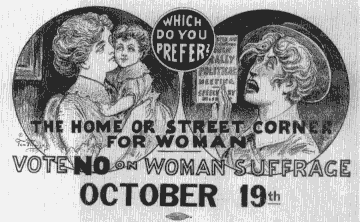
Love the image at the top of your new thread!
9dchaikin
I'm catching up and just read through the boy/girl discussions in your part one thread. I won't add anything, but just wanted to say it was an terrific discussion.
And your review if Goldfinch was excellent (I had already read it a while back, but was too far behind your thread to comment)
And your review if Goldfinch was excellent (I had already read it a while back, but was too far behind your thread to comment)
10LolaWalser
The world is such a safe place in Wodehouse. No sharp corners. Lots of excellent tea and cucumber sandwiches. Who cares about the plots, I just love Bertie's voice. Every time Jeeves "shimmers" into a room I revive a little.
Kay, thought you might appreciate those... no suffragettes, it's the modern era, 1950s/60s:
http://www.boredpanda.com/vintage-ads/
Kay, thought you might appreciate those... no suffragettes, it's the modern era, 1950s/60s:
http://www.boredpanda.com/vintage-ads/
11NanaCC
>10 LolaWalser: I must have been under a rock in the 50's and 60's, because I don't remember any of those. They are so bad, is it ok to laugh? :)
12LolaWalser
Oh, I think it's positively required! Weeping would only ruin our mascara and unglue our false eyelashes. And that's not PRETTY. :)
13RidgewayGirl
The Love's Baby Soft ad was genuinely shocking! I'd comment further but I've gotta get dinner on, freshness test the coffee and gift wrap the Marlboros.
14rebeccanyc
Some of those look a lot earlier than the 40s or 50s . . . horrifyingly awful!
15RidgewayGirl
My Thingaversary was last month and I finally had a quiet moment to open the box and add them to my LT library. I did not adhere to the "one book per year of membership" tradition, although I did mean to. And I hadn't realized it at the time, but I must have been in the mood for some Noir.
I Was Dora Suarez by Derek Raymond
The Guilty Plea by Robert Rotenberg
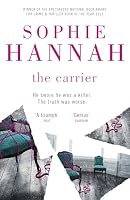
The Carrier by Sophie Hannah
1977 by David Peace
The Girl on the Stairs by Louise Welsh
Troubled Daughters, Twisted Wives edited by Sarah Weinman
The Man Who Went Up in Smoke by Per Wahloo and Maj Sjowall
Borderland: A Journey through the History of Ukraine by Anna Reid
Hyperbole and a Half by Allie Brosh
I Was Dora Suarez by Derek Raymond
The Guilty Plea by Robert Rotenberg
The Carrier by Sophie Hannah
1977 by David Peace
The Girl on the Stairs by Louise Welsh
Troubled Daughters, Twisted Wives edited by Sarah Weinman
The Man Who Went Up in Smoke by Per Wahloo and Maj Sjowall
Borderland: A Journey through the History of Ukraine by Anna Reid
Hyperbole and a Half by Allie Brosh
17wandering_star
I just heard about Troubled Daughters, Twisted Wives on a books podcast - sounds interesting. Look forward to hearing about it!
18rebeccanyc
Well, you were certainly prescient with Borderland: A Journey through the History of the Ukraine!
19mkboylan
I HAD to order Twisted Wives!
And you sent me on a mission to find a history of Ukraine. I thought it interesting that there weren't any low priced ones on Amazon. I read reviews till I think I found different perspectives. At least my university library has some. Can't wait to hear about Borderland. START WITH THAT! What a great selection for your Thingaversary.
I couldn't resist this one I found during that tangent you sent me on:
The Winding Path to Freedom: a Memoir of Life in the Ukrainian Underground by Roman D. Mac.
And you sent me on a mission to find a history of Ukraine. I thought it interesting that there weren't any low priced ones on Amazon. I read reviews till I think I found different perspectives. At least my university library has some. Can't wait to hear about Borderland. START WITH THAT! What a great selection for your Thingaversary.
I couldn't resist this one I found during that tangent you sent me on:
The Winding Path to Freedom: a Memoir of Life in the Ukrainian Underground by Roman D. Mac.
20labfs39
Looking forward to the reviews of both Borderland and The Winding Path to Freedom.
21arubabookwoman
I loved 1977, the first of The Red Riding Hood Quartet, but I must warn you that you may finish the book puzzled and unsatisfied. I think you have to read the entire series as a group, treating them as one book. The style of writing takes some time to get used to, but overall I think this is an exceptional work.
22rebeccanyc
>22 rebeccanyc: Deborah, I agree with you about The Red Riding Quartet, but then it was your reviews that got me to read it! Isn't Nineteen Seventy-Four the first one? I do think they should be read in order.
23RidgewayGirl
Nineteen Seventy-Four is the first one and it was unrelentingly grim. So I had to continue!
I'll start Borderland: A Journey Through the History of Ukraine as soon as I finish Bloodlands.
I'll start Borderland: A Journey Through the History of Ukraine as soon as I finish Bloodlands.
24rebeccanyc
You're going to have to join the Depressing Books Club that Lisa and I already belong to!
25RidgewayGirl
Rebecca, I can't explain why, but grim and relentless crime novels are quite relaxing for me. Non-fiction, on the other hand, can give me nightmares. Bloodlands is excellent and I'm learning a lot, but it is emotionally exhausting. I'm having to cheer myself up with The Passage, which is about a virus that has wiped out civilization. Also, vampires.
26rebeccanyc
I know what you mean about Bloodlands being emotionally exhausting; I feel that way about some fiction as well as nonfiction. But not crime or viruses wiping out civilization (although I do generally avoid disease-related books as I'm much too suggestible).
27labfs39
I was thinking the same thing: reading Bloodlands and Borderland back to back qualifies you for the Depressing Book Club. Reading about interstellar war was my way of bouncing back from my latest grim tome. Then I watched The Road. It's been a long time since I read the book, but I don't remember than happy ending AT ALL. Does the movie deviate wildly from the book?
28RidgewayGirl
Lisa, the movie version of The Road has a happy ending? I'll have to watch it, then. The Road was a heart-breaking book that had me in despair until someone told me that they had read it as being about the love between a parent and child. In that sense, it was almost lovely.
Bloodlands is going slowly. Everytime Snyder mentions another bunch of people murdered I have to set it down and just think about that for a while. Snyder has quite a talent at blinding the reader with huge numbers and then digging in and showing what that meant to a single person or a family. Every newspaper article about what's going on there
Rebecca, long ago I read that book everyone was reading about the Ebola virus. That was fun! Every sniffle or stomachache was instantly linked to Ebola for some time afterward.
Bloodlands is going slowly. Everytime Snyder mentions another bunch of people murdered I have to set it down and just think about that for a while. Snyder has quite a talent at blinding the reader with huge numbers and then digging in and showing what that meant to a single person or a family. Every newspaper article about what's going on there
Rebecca, long ago I read that book everyone was reading about the Ebola virus. That was fun! Every sniffle or stomachache was instantly linked to Ebola for some time afterward.
29RidgewayGirl

Jeff Wall in Munich
There's an exhibit at the Pinakothek der Moderne featuring the Canadian artist Jeff Wall and I've now seen it twice, the first time on my own and the second with a group. Wall uses photography and his work looks like enormous snapshots, but they are carefully staged, take months or even years to complete and can involve up to 500 separate photographs. He has stated that he is outside of art history, but the guide showed us the direct influences for many of the works we saw and the commentary Wall creates with his works is striking.


For example, this work, entitled A Sapling Held by a Post was compared to Egon Schiele's Autumn Trees (I had coincidentally seen Schiele's Four Trees last week and thought the comparison to be apt.)
There's a strong element of social commentary, often the photographs are off-kilter in some way and they are compelling -- they often tell a story, but what the story is remains obscure.

30RidgewayGirl

This book. In A Blade of Grass, Lewis DeSoto took a place and a time, a complicated, beautiful place at a complicated, horrible time and threw it repeatedly in the reader's face. And for all of that (and there is a lot of that), it is primarily a story of a tenuous friendship between two women who should have never become friends, except that they were both lonely and alone.
Tembi grew up in the place her people had always lived, until the man came and told them they would all have to go somewhere else. And when they had been moved, they found the land they had been moved to, a land they had no connection to, could not support them. And so they left; first the men, to work in the mines and then the women, to work as domestic servants. Tembi goes with her mother to live on a farm, where her mother takes care of the house. Tembi, now a young woman, works in the dairy and while she doesn't feel a part of the life of the Kral, she is happy to be with her mother. And then her mother is killed. Tembi is asked to work in the house, but she's not sure she can work for the woman there.
Marit has married an Englishman who wants to be a farmer. They find a farm on good land that they can afford because it is near the border and there has been some unrest, but Ben is both optimistic and determined and he is willing to work hard. Marit's a bit unmoored in this strange place inhabited by stolid Boers and the silent Blacks working for them, but she is willing to support her husband with his dream; it's what she's been raised to do. And then her husband is killed and she is adrift, with only the housekeeper to speak to.
There is an immediacy and a force to DeSoto's writing. The reader is never given a specific time or place to hang the story on, but his descriptions are vivid and kept close by the use of the present tense throughout. This has the effect of making the events in the story carry far more weight as there is no sense of an "afterwards". Both Tembi and Marit were complex characters, which was important in this book of great wrongs and disasters.
Thanks, SassyLassy, for drawing my attention to this book.
31Nickelini
Kay - what a surreal feeling to open your thread and see that big picture of East Vancouver. I recognized it immediately. I grew up a block away from that line of trees at the top of the photo. I'm going to look into this Jeff Wall person--I'm wondering if it was his stuff I saw at the Vancouver Art Gallery a couple of years ago. Very interesting!
32RidgewayGirl
It was a fantastic collection, Joyce. Usually, I get excited about artists who are already dead (Grayson Perry excepted), so it was fun to learn about someone still alive.
I'm ambivalent about the tours. The guides are wonderfully knowledgeable and it's good to learn about something while standing in front of it, rather than looking for information on the internet when I get home, but there are always people who like to hear themselves talk, even if they have nothing to add and always a few who are having a loud, but personal conversation during the tour. Usually, I like being around people, but not in museums. There I'm all cranky and unfriendly.
I'm ambivalent about the tours. The guides are wonderfully knowledgeable and it's good to learn about something while standing in front of it, rather than looking for information on the internet when I get home, but there are always people who like to hear themselves talk, even if they have nothing to add and always a few who are having a loud, but personal conversation during the tour. Usually, I like being around people, but not in museums. There I'm all cranky and unfriendly.
33VivienneR
>31 Nickelini: I was pondering over that photo, and trying to figure out where it was. I knew it had to be Vancouver or a Pacific Northwest city (the street name confirmed that). Then I scrolled down and was glad to see your post. How strange to find a connection like this.
>29 RidgewayGirl: Any idea why he has a sword sticking out of his back? It must be making a statement, but I find it puzzling.
>29 RidgewayGirl: Any idea why he has a sword sticking out of his back? It must be making a statement, but I find it puzzling.
34Nickelini
Vivienne - the top picture is a bit odd looking because it's old (probably late 80s). That area now has a lot of highrise condos, and there are very few streets left in Vancouver without curbs. It's obviously along the Skytrain line, and it's looking east, between 29th Ave station and Joyce Collingwood station.
The second pic (which I believe is called "the Thinker") is taken from Vancouver Heights looking west. You can see the Pacific Coliseum on the far left and the big building behind him is the grain terminal (is that still there? I have to shut off the computer and go drive by it actually, so I'll go see). I have no idea why there is a sword in his back.
Kay - I'm surprised you found a guided tour--I thought they'd all gone to self-guided audio tours now.
The second pic (which I believe is called "the Thinker") is taken from Vancouver Heights looking west. You can see the Pacific Coliseum on the far left and the big building behind him is the grain terminal (is that still there? I have to shut off the computer and go drive by it actually, so I'll go see). I have no idea why there is a sword in his back.
Kay - I'm surprised you found a guided tour--I thought they'd all gone to self-guided audio tours now.
35Nickelini
Also, in the top picture, look at the people on the lawn, about in the middle of the street. What are they doing?
36RidgewayGirl
Vivienne, it is called The Thinker, but it's based on an Albrecht Durer woodcut showing a man with a sword just like in the picture above. The sword is mysterious there, too. I tried to find it online, but no luck. I suspect it's a detail in a much larger woodcut.
Very good, Joyce. It's dated 1988. And the top picture is called The Eviction.
Very good, Joyce. It's dated 1988. And the top picture is called The Eviction.
38Linda92007
Great review of A Blade of Grass, Kay. I have it on my shelves and hope to get to it soon.
39baswood
Enjoyed that selection of photographs by Jeff Wall, they are the sort of pictures that are continuously revealing the more that you look at them and beautifully staged. Excellent review of A Blade of Grass
40Nickelini
Still talking about your post @29 -- I took the Skytrain today and went past that spot. It's actually a very specific place--and very different now. As I thought, the street is now curbed and properly paved, and there is a line of rather large coniferous trees between the houses and the track (never mind the building changes). I'm entranced by this . . . now I'm going to have to drive down this street (it's about 10 minutes from my mother-in-law's). Thank you again for posting this. I'll stop talking about it now.
41RidgewayGirl
Thanks, Linda. I look forward to finding out what you think about A Blade of Grass.
Bas, I went to the exhibit twice and found the second viewing even more interesting than the first.
Joyce, I love the interest! I was fascinated by the exhibit. I'm glad to find that the place in Eviction is a specific and recognizable one. I'm going to email the guide -- he'll enjoy having the information, too.
Bas, I went to the exhibit twice and found the second viewing even more interesting than the first.
Joyce, I love the interest! I was fascinated by the exhibit. I'm glad to find that the place in Eviction is a specific and recognizable one. I'm going to email the guide -- he'll enjoy having the information, too.
42VivienneR
What a great conversation! And it's not even about books! I've been reading up on Jeff Wall, what interesting work.
Joyce, it's fascinating to see a painting (or photograph) of an identifiable place, then go along to visit it. My son loves to take photos of places that have appeared in art, a sort of "then and now" collection. Many are Vancouver locations because there was one Vancouver artist he really liked (the name escapes me just now).
Joyce, it's fascinating to see a painting (or photograph) of an identifiable place, then go along to visit it. My son loves to take photos of places that have appeared in art, a sort of "then and now" collection. Many are Vancouver locations because there was one Vancouver artist he really liked (the name escapes me just now).
43RidgewayGirl

Unbroken tells the remarkable story of Louie Zamperini, a man who ran in the 1936 Olympics, who was a bombardier on a warplane fighting over the small islands and atolls of the Pacific, who survived shipwreck and being lost at sea, who survived in Japanese POW camps and who had to find a way to be an ordinary civilian again after the war.
Author Laura Hillenbrand does a workmanlike job of telling the story. She certainly did her research and her writing does not get in the way of Zamperini's story. But nor does she make this remarkable story sing. The reader is told about amazing feats of survival, without ever feeling as though they were there. It's as though the very eventfulness of Zamperini's life reduces the force of any one of them. This is a page-turner of a book, but only because of the facts; the story-telling, while thorough, never brings any of the facts to life. Maybe it doesn't need to, maybe in the hands of a story-teller this book would be too intense to make for comfortable reading and maybe the sheer amount of things that happened to Zamperini meant that there was simply no room for amplification, but I the lack did leave a hole in the heart of what is an amazing story about the human spirit.
44baswood
Unbroken; A world war ii story of Survival resilience and redemption has 294 reviews and a rating of 4.33 and so you are bucking the trend with your review.
45RidgewayGirl
I am, bas. I do think that many of the stars are given because, geez louise, what Louie Zamperini survived! The guy deserves five stars for endurance and resiliency.
46avaland
Glad to see A Blade of Grass finally getting some attention. Nice review of it.
47RidgewayGirl

The Passage is a very different vampire tale. Set in the near future, Justin Cronin begins the story with the discovery of a virus in the South American rainforest and the subsequent research done by the American military. The virus kills most people, but those who survive become altered. Inhumanly strong, fast and agile, they exist only to feed on the warm-blooded. Light causes them discomfort and the only thing that will kill them is a direct blow (gunshot or blade) to the chest. Of course, the men infected with the virus escape and the world is altered forever.
Almost a hundred years later, in an isolated colony in the California desert, a technician manning the light system, which protects them from night attack, realizes that the aging power system will not last much longer and a mysterious girl arrives at the colony's gates; she isn't a viral, but neither is she entirely normal.
The Passage is the first book in a planned trilogy and so it uses a fair amount of its pages in setting up this altered world, as well as in setting up the parameters for what will come in the future installments of the series. Cronin is good at making the world-building interesting; using a compelling character for a few chapters to show how the world is changing. And there are the usual elements with a protagonist discovering his own strengths and the camaraderie of a small group setting out to fix things. This was an intelligent escapist novel, and while the female characters were somewhat idealized, that's an improvement on objectification any day.
There's a lot of novel here, but only a little bloat. I suspect some of the seemingly unimportant or extraneous passages were setting things up for events later in the series, as that happened often enough in this first volume. Since things are left partially unresolved at the end, this isn't really a novel that can be read on its own, but as the first was such a fun diversion, most readers will want to continue.
In some respects, The Passage reminded me of the classic post-apocalyptic novel, Earth Abides, with its depiction of people surviving on what technology and supplies are left, rather than producing their own.
48SassyLassy
>30 RidgewayGirl: Glad you got caught up in the book and DeSoto's writing. I always worry when someone reads a book based on something I said! It's a book I still think of when I read other books from South Africa. I haven't read enough of them as yet, but each book I do read seems to bring more of the country's story together.
Thanks once more to avaland too.
Thanks once more to avaland too.
49labfs39
Sorry you didn't enjoy Hillenbrand's wiring more. On a side note, have you read about her health problems? I read this essay some time ago and was impressed with her own perseverance.
50RidgewayGirl
Lisa, while I never read Seabiscuit, I did read a long interview with her about how she wrote. Her perseverance is laudable, and it's clear she doesn't take any shortcuts with her research.
51baswood
If The Passage trilogy is as good as Earth Abides it will be very good indeed.
52RidgewayGirl

Edna O'Brien's novel, In the Forest, is based on a triple murder in the west of Ireland in 1994 that received extensive media attention and horrified the entire country. Upon publication, she was accused of using the events for her own profit. She defended her book, saying, "Is someone going to say Picasso should not have painted Guernica? I have written a book to commemorate and perpetuate the story of this almost Greek tragedy which took place in a forest I happened to know."
O'Brien's writing has the feel of poetry about it. She's not interested in the blood and gore, so much as the inner lives of the people involved, beginning with the Kinderschreck himself, Michen O'Kane, who grew up lost and rebellious after the death of his mother. His acting out sends him, as a young child, into reformatory schools, where priests punish and other children either bully Michen or train him in the ways of crime. Then there's the free-spirited Eily, who moves to a remote house with her young son and tries to make a life for herself, teaching at a kindergarten, painting and joining in the artistic community of the area. As their paths converge, Michen imagines a life with her, while Eily is unaware of her stalker.
Is In the Forest exploitive? It lacks the lurid details and unseemly avidness found in "true crime" paperbacks. It also lacks the structure of a crime novel; she is not solving a crime or even explaining motivation, rather she is presenting a picture of rural Ireland, through the story of the lives affected by the events.
In the Forest is an odd book. It has a lyrical, almost stream-of-consciousness tone which is at conflict with the subject matter, leaving the reader to peer through dusty glass and shifting dust motes at the story behind the words. I don't think the results were entirely successful, but I am interested in reading more by this author. Her voice is distinct and interesting.
Thanks to Joyce (Nickelini) for bringing this book to my attention.
53Nickelini
I had a similar reaction to In the Forest. From what I read about some people in Ireland's reaction sounded like sour grapes to me. Apparently some don't like her because she doesn't live in the country. Anyway, I now have a stack of her other books to read.
54dchaikin
Interesting about In The Forest. I think it's on the 1001 books you should read before you die list (based on tags). Do you think it belongs on that list?
55Nickelini
#54 - Yes, it has a unique writing style, and something to say. I think it belongs on the list at least as much as the other books written around the same time period. It was taken off after 2006.
56rebeccanyc
I'm not sure if I read your review of In the Forest, Joyce, but when the biography of Edna O'Brien came out I thought I should read something by her and I bought The Country Girls, which I have yet to read. Have any of you read it?
58RidgewayGirl
Rebecca, someone just recommended The Country Girls me as the best of O'Brien's writing and the book that made her reputation. She has an interesting writing style that I'm eager to see more of.
59rebeccanyc
I should get to it . . .
61Nickelini
The Country Girls, which I have yet to read. Have any of you read it?
It's in my TBR! Not sure which O'Brien I want to read next, but it might be that one. I have 5 of hers waiting.
Funny, when I type "O'Brien" now I think of Downton Abbey and hear hear Thomas's snide voice.
It's in my TBR! Not sure which O'Brien I want to read next, but it might be that one. I have 5 of hers waiting.
Funny, when I type "O'Brien" now I think of Downton Abbey and hear hear Thomas's snide voice.
62fannyprice
Just catching up on your thread.
64RidgewayGirl

I missed my stop on the U-Bahn because of Gillespie and I and almost missed it a second time a few hours later. It's that kind of book; a meaty Victorian novel - Victorian in both setting and style - with an involving plot that runs the gamut from gently bred English spinsters and comfortable domestic life to kidnapping and sensational court cases. Set against the background of Glasgow in 1888, Jane Harris's second novel is about Harriet Baxter and how she became involved with the family of an up-and-coming Glaswegian artist Ned Gillespie. Decades later, she sits down to write about her friendship with the Gillespies and the scandal that shocked all of Scotland.
Harris is good with the historical detail, and really good at creating characters who breathe. But where she really excels is in telling a story from the point of view of a seemingly secondary character, someone who might not see the same things that the other characters do, or it might be that she is altering the tale to suit herself. If you dislike ambiguity in a novel, this one is not for you, but if you like the twist that looks like it's from out of nowhere, but that also fits the story in an organic way if you set the story upside down, then you'll enjoy this one.
65kidzdoc
I loved Gillespie and I!
66RidgewayGirl
I know! I remember when you reviewed it. It got this grouping of cryptic reviews here on Club Read that had me rushing to get a copy.
67fannyprice
>64 RidgewayGirl:, Jane Harris' The Observations came very highly recommended to me by wandering_star and now your thoughts on Gillespie and I are making me think that I really must get on this author.
68japaul22
You've reminded me how much I enjoyed Gillespie and I and that I intended to read The Observations right away . . . two years ago! Maybe this year.
69NanaCC
>64 RidgewayGirl: Kay, that one sounds good. I am adding to my wishlist.
70RidgewayGirl
I read The Observations back when it first came out and without the slightest idea that it was anything other than an interesting looking historical novel. I was in the final section when it suddenly occurred to me that things were not exactly what the protagonist/narrator had told me were so. I need to reread that one.
72rebeccanyc
Missing your stop is always a good recommendation for a book!
73RidgewayGirl
Rebecca, I know! I have a long flight tomorrow and would very much like to go back and retroactively have not read it yet.
74rebeccanyc
Ha! i have a long flight at the end of next week (and then back again after a few days) so I'm already thinking about which books to bring with me.
75SassyLassy
I was one of the outliers on Gillespie and I. The character upset me so much and I disliked her so much that I had a truly visceral reaction to her, but then that's a mark of just how well written it was.
Enjoyed your review of In the Forest, an interesting pairing with the Harris book. I'm one of those who has to read Edna O'Brien too.
Enjoyed your review of In the Forest, an interesting pairing with the Harris book. I'm one of those who has to read Edna O'Brien too.
77RidgewayGirl

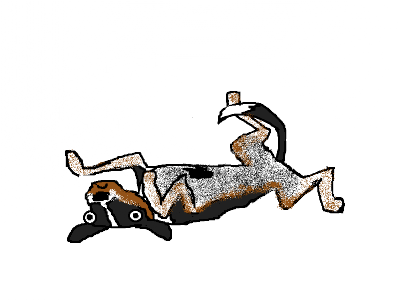
So if you're familiar with Allie Brosh's blog there's really no reason to read any reviews for Hyperbole and a Half, her book with the same title as her blog. If you haven't read her blog, go take a look here./a>

78labfs39
I hadn't heard of Allie Brosh before. I enjoyed her piece on the power of wearing the dinosaur costume.
79LolaWalser
#78
That one's brilliant.
I was first introduced to her some years ago via someone whose little avatar was one of Brosh's "newty" faces. So simple, and yet so expressive--a minimalist graphic genius in a different class to most contemporary comic bloggers, even on a purely technical level. As for her themes, I only hope she keeps finding a way to channel the blood of her heart into funny pictures.
I could hardly believe that someone like that could be debilitated by depression.
That one's brilliant.
I was first introduced to her some years ago via someone whose little avatar was one of Brosh's "newty" faces. So simple, and yet so expressive--a minimalist graphic genius in a different class to most contemporary comic bloggers, even on a purely technical level. As for her themes, I only hope she keeps finding a way to channel the blood of her heart into funny pictures.
I could hardly believe that someone like that could be debilitated by depression.
80labfs39
I could hardly believe that someone like that could be debilitated by depression.
Unfortunately depression is a disease as nondiscriminatory as cancer. As Allie says ""Trying to use willpower to overcome the apathetic sort of sadness that accompanies depression is like a person with no arms trying to punch themselves until their hands grow back."
Unfortunately depression is a disease as nondiscriminatory as cancer. As Allie says ""Trying to use willpower to overcome the apathetic sort of sadness that accompanies depression is like a person with no arms trying to punch themselves until their hands grow back."
81LolaWalser
Yes, I know. I'm marvelling at how much she achieves despite depression, not at its occurrence.
82RidgewayGirl

There's noir, crime novels with a gritty edge, with characters on the edge of society, and a sense that things may well not work out in the end, and then there is noir. The Dead Women of Juarez by Sam Hawken is of this second, harsher kind. In Ciudad Juarez, women have been disappearing for years, hundreds gone without knowing what happened to them. Kelly is a washed-up boxer, an ex-heroin addict and sometime drug dealer. He's trying to get back in shape and he loves his boss and best friend's sister, who works for a group of mothers of disappeared women. He is sometimes visited by Sevilla, an old school narco detective, back from the days before police drove armored cars and wore body armor. He's trying to cultivate Kelly as an informer, but so far he hasn't had any luck.
In tone, The Dead Women of Juarez is similar to David Peace's Red Riding Quartet. But this suits the world in which Hawken has set his novel, the city of Juarez, Mexico. A sprawling border city where women living in dirt-floored shanties travel hours each day to earn a dollar or two an hour in factories run by multi-national corporations, a city where American tourists venture only for a bit of illicit fun and cheap prescription medicines. A place where money buys you whatever you want and if you have any you travel with bodyguards in cars with darkened windows. It's a place where a person can disappear if they want, or someone wants them to, and often without a trace.
Kelly is an interesting character to follow. He loves Paloma and he wants to be better, but he's not someone you'd ever want to cross paths with. Paloma is tough and street-wise and more than a match for Kelly, but a woman in Juarez is always vulnerable and the activities of her brother and her boyfriend don't make her any safer. The detective, Sevilla, is a has-been, still coming in to work despite being superfluous. He may not be corrupt, but that may not matter since he has no real authority.
The Dead Women of Juarez is a harsh read, but that suits its setting in a harsh, unforgiving place, where women disappear and those who remain may never have answers.
I read this book on one of those flights that don't go well -- we got to sit on the runway for three hours before taking off, meaning that there were 13 hours spent sitting and the woman next to me was so annoyed she emanated rage for the entire flight. That is a long time to sit next to anger, but this book certainly reminded me how relatively comfortable I had it. Also, despite the cast, August, Osage County is a terrible movie, but The Way Way Back is quirky and entertaining.
83rebeccanyc
That sounds intriguing, especially because I was entranced by Murder City: Ciudad Juarez and the Global Economy's New Killing Fields.
84RidgewayGirl

Louise Welsh had me with The Cutting Room, in which I discovered that a female author could write a crime novel as dark and relentless as any man out there. While none of her other novels have attained that level of gritty hopelessness, I have enjoyed them. The Girl on the Stairs is more psychological suspense than noir, telling the story of Jane, who has moved to Berlin in the final months of her pregnancy to be with her partner, Petra. Their apartment is in an old, but modernized building, with a derelict building behind it. Jane is alone most of the day and isolated by her lack of German and of friends in the city. In the apartment next door live a thirteen year old girl and her father, and Jane becomes convinced that he is abusing his daughter.
85NanaCC
>82 RidgewayGirl: & >84 RidgewayGirl: Both books sound intriguing, Kay. I'm going to put them on my "watch for it" list.
86mkboylan
>43 RidgewayGirl: "This is a page-turner of a book, but only because of the facts; the story-telling, while thorough, never brings any of the facts to life" Beautifully said fact about too many books! I have wanted to say that so often but didn't know quite how. Thanks!
OOOH had to grab a copy of In The Forest. Sounds fun to me.
>69 NanaCC: hmm Well Gillespie and I doesn't really sound like it would appeal to me but if you almost missed your stop TWICE......
>80 labfs39: well said about depression! My fav is "Just exercise" really? Yes it may get my endorphins up but I really don't care when I'm depressed!
So fun getting caught up with your wonderful reviews!
OOOH had to grab a copy of In The Forest. Sounds fun to me.
>69 NanaCC: hmm Well Gillespie and I doesn't really sound like it would appeal to me but if you almost missed your stop TWICE......
>80 labfs39: well said about depression! My fav is "Just exercise" really? Yes it may get my endorphins up but I really don't care when I'm depressed!
So fun getting caught up with your wonderful reviews!
87RidgewayGirl
Colleen, we do like similar books when it comes to crime novels. If you haven't already read it, I highly recommend Louise Welsh's The Cutting Room. It's not for the squeamish, but you aren't.
Thanks, Merrikay.
It's been a stressful few weeks. My mother had open heart surgery and while she had to go back into surgery due to unexplained and copious bleeding, she is now doing very well. In fact, the demetia or Alzheimer's we had thought she had turned out to be too little oxygen getting to her brain. It's wonderful to have gotten her back! I spent ten days in the US helping out and am now back home, happy that she's doing so well and exceedingly jet-lagged.
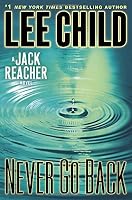
Reacher is back! In the last installment, Reacher was replaced with a chatty, judgmental jerk, but in Never Go Back Lee Child returns to the taciturn and pedantic character we all love. In this installment, Reacher goes back to his old unit to meet the commanding officer he has only spoken to on the phone only to find that she has been arrested for taking a bribe. What's more, he is also being prosecuted for killing a guy sixteen years ago and is told to run away or else. If you've ever read a book about Jack Reacher, you can probably guess how he reacted.
What follows is the usual fun romp in which Reacher is always a half step ahead of the bad guys. Really, the series is fantastic, especially when you want something purely escapist to take your mind off of things. They do follow a formula, but it's a fun one. This time it has Reacher endlessly calculating his odds of success and, in a fun twist, encountering a teenage girl who is eerily similar to himself. Thank you, Mr Child, for getting rid of that cranky, pontificating clone and returning the real deal to the series.
Thanks, Merrikay.
It's been a stressful few weeks. My mother had open heart surgery and while she had to go back into surgery due to unexplained and copious bleeding, she is now doing very well. In fact, the demetia or Alzheimer's we had thought she had turned out to be too little oxygen getting to her brain. It's wonderful to have gotten her back! I spent ten days in the US helping out and am now back home, happy that she's doing so well and exceedingly jet-lagged.
Reacher is back! In the last installment, Reacher was replaced with a chatty, judgmental jerk, but in Never Go Back Lee Child returns to the taciturn and pedantic character we all love. In this installment, Reacher goes back to his old unit to meet the commanding officer he has only spoken to on the phone only to find that she has been arrested for taking a bribe. What's more, he is also being prosecuted for killing a guy sixteen years ago and is told to run away or else. If you've ever read a book about Jack Reacher, you can probably guess how he reacted.
What follows is the usual fun romp in which Reacher is always a half step ahead of the bad guys. Really, the series is fantastic, especially when you want something purely escapist to take your mind off of things. They do follow a formula, but it's a fun one. This time it has Reacher endlessly calculating his odds of success and, in a fun twist, encountering a teenage girl who is eerily similar to himself. Thank you, Mr Child, for getting rid of that cranky, pontificating clone and returning the real deal to the series.
88labfs39
I'm glad your mom is doing better, and that it was a false alarm about the dementia. It must be exceedingly stressful to live so far away with all that is going on. Hopeful it will be uphill from here on in.
Lovely review of the latest Reacher.
Lovely review of the latest Reacher.
89NanaCC
Thank you for the suggestion, Kay.
What a relief about your mother. You must feel much better about her well being.
What a relief about your mother. You must feel much better about her well being.
91LolaWalser
Glad it's good news about your mum!
93RidgewayGirl
Yes, the surprising return of her mental acuity was the very best thing of all. From her side, she has no remembrance of any vagueness and so is more concerned with her future golf game, but my Dad is visibly relieved. I like talking to my Mom again. My best friend's grandmother is still alive and healthy, but she isn't able to hold an entire sentence in her brain. That is my greatest fear.
94baswood
Good review of The Dead Women of Juarez. Ciudad Juarez sounds a nightmare place, I read about it in Roberto Bolano's 2666
95VivienneR
So happy about your mom. It must have been a really tough time for you. Your remark that she is more concerned with her future golf game is good news indeed.
96janeajones
What a wonderful outcome for your mother and your family.
97RidgewayGirl
Bas, Juarez sounds terrifying. I'm going to have to read more about it.
Thank you, Vivienne and Jane. We are all pleased.
Thank you, Vivienne and Jane. We are all pleased.
98fannyprice
I keep forgetting to look at the top of your thread to see the new anti-suffragette pictures. When I remember to look at them, I am consistently amused! I wonder if someone has done a book of these posters.
100RidgewayGirl
Kris, I enjoy finding them.
Thanks, Darryl. It's fun to see how happy my Dad is. I hadn't realized how weighed down he was because he just never complains.
Thanks, Darryl. It's fun to see how happy my Dad is. I hadn't realized how weighed down he was because he just never complains.
101RidgewayGirl

In The Maid's Version, Daniel Woodrell stays with his usual Ozark setting, this time in the small town of West Table, Missouri, but goes back ninety years to a fire in a dance hall that killed 42 people. Revolving around a teenage boy named Alek who goes to visit his grandmother in 1965, the book shifts in time and between points of view, but constantly returns to Alma, and what she knew. Alma, a near illiterate maid working in the house of the bank president at the time of the fire, is willing to share her memories and suspicions with her grandson.
Woodrell doesn't believe in padding. Each of his novels is pared to the bone, with much left unsaid. The Maid's Version is no different in this regard, although there is a wider focus, giving less the story of a person or event than a picture of a small town in the Ozarks between the Great War and the Great Depression. West Table may be a fine place for many, but for those struggling to get by, it's as harsh an environment as any. Alma and her sister Ruby, raised by a hardworking mother who is unable to cope when her useless and abusive husband dies, are left to fend for themselves before they were teenagers. Alma finds work as a maid, but Ruby discovers that there are easier ways to earn a living.
The Maid's Version is a terrific book, with a host of wonderfully complex characters realized in as few words as possible.
102dchaikin
Intrigued by your review of The Maid's Version and the pared down writing.
The Dead Women of Jaurez sounds quite good. Great review.
The Dead Women of Jaurez sounds quite good. Great review.
103FlorenceArt
Pared down writing sounds great to me. I hate being spoon fed everything by an author. I'll add The Maid's Version to my wishlist.
104RidgewayGirl
Thanks, Daniel. I like books about people who have consistently made poor life decisions and both books had those in spades. As well as plenty of people doing everything the best that they can and still having terrible things happen to them or just not being able to get by.
Me, too, Florence. I have many books in my time in which every single plot point was neatly resolved in the end and I wonder what people have against imagination or having to think through hints and implications.
Me, too, Florence. I have many books in my time in which every single plot point was neatly resolved in the end and I wonder what people have against imagination or having to think through hints and implications.
105RidgewayGirl

It was time for some Margaret Atwood in my life, so I picked up The Year of the Flood, the second in her MaddAddam trilogy. Set in a dystopian future, where we have destroyed the environment and everything is owned by giant corporations, The Year of the Flood centers around a small group of religious environmentalists. Which should make for a boring, worthy book because who wants to read about smelly people wearing hemp and raising their own mushrooms while singing hymns to the insects, am I right? But, of course, this is Atwood we're dealing with and she is up for the task. The story is centered on two women; Ren, who grew up in the Gardener sect and Toby, who was rescued by them and who remained although she always planned to leave. The world the Gardeners live in is a lawless urban landscape, where the security forces are as much to be feared as the violent gangs. But they are able to carve out a small, functional utopia of a sort, at least until the waterless flood comes.
Seriously, Atwood can make any book riveting. I dislike preachiness is novels, even when I agree with it and The Year of the Flood prefaces each chapter with a prayer/sermon followed by a hymn. And I couldn't put it down despite the sometimes overly clear message. Both Toby and Ren are fascinating characters and it's especially interesting in the differences between how they see themselves and how they see each other. I look forward to continuing the story in MaddAddam, but first I'd like to go back and reread Oryx and Crake while this book is still fresh in my mind.
106RidgewayGirl
Continuing along the WWI theme, I read A Month in the Country by J.L. Carr, which was a marvelous, perfect book. I'll review it as soon as I've gathered my thoughts about it - presently they are surrounded by a fog of affection, which makes for a vague and unreadable review.
I also watched the 1987 film adaptation. While I enjoyed watching Colin Firth and Kenneth Brannaugh, the book was so internal to the main character and so much was left unspoken, that I was uncertain that it could be made into a film. It was worth seeing, having read the book, but it wasn't a success. In the book, the main character, Tom Birkin, doesn't report on his own words much, but more his thoughts, so in the film he was relentlessly silent. He came across as somewhat simple-minded and inarticulate, which was not at all the case. And, while largely faithful to the book, there is one minor character who was made to behave differently in the film, to my disappointment. In the book, they deliver some information in a gentle and compassionate way. In the movie it's pure malicious gossip, which didn't suit the story.
Finally, the kids wanted to watch War Horse, which was a terrible, terrible movie. I bawled through most of it. The kids were fine. I was a wreck. Quite effective at communicating what a relentless waste WWI was, without being graphic, but it was a tragedy onto which a small happy end was tacked for suicide prevention reasons.
I also watched the 1987 film adaptation. While I enjoyed watching Colin Firth and Kenneth Brannaugh, the book was so internal to the main character and so much was left unspoken, that I was uncertain that it could be made into a film. It was worth seeing, having read the book, but it wasn't a success. In the book, the main character, Tom Birkin, doesn't report on his own words much, but more his thoughts, so in the film he was relentlessly silent. He came across as somewhat simple-minded and inarticulate, which was not at all the case. And, while largely faithful to the book, there is one minor character who was made to behave differently in the film, to my disappointment. In the book, they deliver some information in a gentle and compassionate way. In the movie it's pure malicious gossip, which didn't suit the story.
Finally, the kids wanted to watch War Horse, which was a terrible, terrible movie. I bawled through most of it. The kids were fine. I was a wreck. Quite effective at communicating what a relentless waste WWI was, without being graphic, but it was a tragedy onto which a small happy end was tacked for suicide prevention reasons.
107rebeccanyc
I love A Month in the Country too.
108Nickelini
prefaces each chapter with a prayer/sermon followed by a hymn.
The audiobook of Year of the Flood that I listened to has the songs performed. They're quite good--as in authentic sounding. A few of them reminded me of what we used to sing at church youth group--except these Atwood versions have very different lyrics. They are available on iTunes.
Interesting thoughts on the film of A Month in the Country--I liked it much better than you did (I do think it's a success), but there was at least a year between reading the book and seeing the film, so I didn't have it fresh in my mind like you.
. . . the main character and so much was left unspoken I thought Colin Firth did a fine job of acting with his face and body language--which is something I think he generally does rather well (A Single Man comes first to mind).
The audiobook of Year of the Flood that I listened to has the songs performed. They're quite good--as in authentic sounding. A few of them reminded me of what we used to sing at church youth group--except these Atwood versions have very different lyrics. They are available on iTunes.
Interesting thoughts on the film of A Month in the Country--I liked it much better than you did (I do think it's a success), but there was at least a year between reading the book and seeing the film, so I didn't have it fresh in my mind like you.
. . . the main character and so much was left unspoken I thought Colin Firth did a fine job of acting with his face and body language--which is something I think he generally does rather well (A Single Man comes first to mind).
109japaul22
I have A Month in the Country on my TBR shelves after purchasing it on a whim - I'd never heard of it. Good to know you've all liked it so much!
110Linda92007
A Month in the Country sounds wonderful. I'll look forward to your review.
I did not see the movie, but did see the play of War Horse. I did not find it terribly moving, but the puppetry was absolutely fascinating.
I did not see the movie, but did see the play of War Horse. I did not find it terribly moving, but the puppetry was absolutely fascinating.
111mkboylan
>105 RidgewayGirl: I am laughing my way through your reviews! Me! Me! I want to read about smelly people wearing hemp! and what do you mean by set in the future when the environment is wrecked and corporations own everything! Pay attention! You really make me want to read Flood. Should I red Oryx and Crake first? It's on my shelf.
and I'm laughing at 106 suicide prevention ending. I do have a sick sense of humor and that is funny.
>108 Nickelini: Boy that is interesting - having the songs on the audio version!
Love your thread Kay. You're so fun!
and I'm laughing at 106 suicide prevention ending. I do have a sick sense of humor and that is funny.
>108 Nickelini: Boy that is interesting - having the songs on the audio version!
Love your thread Kay. You're so fun!
112SassyLassy
Echoing dan at 102. I'm a Daniel Woodrell fan, someone you don't see much of on LT, and the Sam Hawken book sounds great. Good thing you had it with you on a flight like that.
113Nickelini
Should I red Oryx and Crake first? It's on my shelf.
Yes, just because you have it already. In my opinion it doesn't matter what order you read them in. Not everyone agrees with me though.
Yes, just because you have it already. In my opinion it doesn't matter what order you read them in. Not everyone agrees with me though.
114RidgewayGirl
Thanks, Merrikay. Excellent use of hyperbole! I think that Joyce is right and it doesn't matter which you read first. I read Oryx and Crake years ago and so didn't remember much beyond the broad outline and I had no trouble enjoying The Year of the Flood. There were references to characters in the first book, which leaves me wanting to go back and reread the first. Joyce, I had heard that someone had taken the hymns and set them to music. I'll check that out when I'm in the mood.
SL, Woodrell is the awesomest. And if you like him, you won't have a problem with Hawken.
And regarding A Month in the Country -- I'm pretty sure I heard about it here (probably from you, Rebecca) and I'm glad I chose to read it now.
SL, Woodrell is the awesomest. And if you like him, you won't have a problem with Hawken.
And regarding A Month in the Country -- I'm pretty sure I heard about it here (probably from you, Rebecca) and I'm glad I chose to read it now.
115RidgewayGirl

Set just after the end of WWI, A Month in the Country by J.L. Carr is Tom Birkin's memories of a summer he spent in the northern village of Oxgodby and how it helped him to recover from the war. Birkin came to restore a painting on the wall of the local church, sleeping in the belfry and trying to make his small payment last as long as he can make it. The painting he uncovers enthralls him; it's more than just another quick decoration for the medieval artist who painted it and Birkin is drawn in to its complexity. Working in the churchyard below is another veteran, Moon, who has been hired to find the grave of his benefactor's ancestor. Through his friendship with Moon, the reticent but sincere relationships he forms with people in the village and especially the visits of the rector's wife, Birkin is brought back into living fully.
Which makes this book sound kind of slow and boring, doesn't it? There's a real charm to A Month in the Country, not in a chocolate box illustration sweetness, but in the way the harsh northerners and a shell-shocked Londoner find contentment in knowing each other. And in the understated friendship he forms with Moon, who has his own war-related demons to fight. Carr writes beautifully in an understated way that perfectly suits the story he's written. This is a book that, for an hour or two (it's a very slender book), immerses the reader in slowly clearing whitewash off of an old wall painting, revealing inch by inch the saints and sinners hidden for centuries, eating Sunday dinner with the station master's family, smoking Woodbines while leaning on tombstones while Moon talks about what lays underneath the meadow and hoping that the vicar's wife will stop by for a visit soon. This is a book that reads like a summer afternoon.
116NanaCC
>115 RidgewayGirl: A Month in the Country sounds quite lovely.
117baswood
Enjoyed your review of A Month in the Country. It sounds like my kind of book.
118VivienneR
>115 RidgewayGirl: Lovely review of A Month in the Country. I added it to my wishlist and then ordered a copy right away. It's just the kind of book I enjoy.
120fannyprice
>106 RidgewayGirl:, "but it was a tragedy onto which a small happy end was tacked for suicide prevention reasons." Best comment ever.
A Month in the Country has been on my wishlist forever, I'm so glad you had such a great reaction. Isn't it wonderful when a book is "perfect."
>108 Nickelini:, Joyce, that is really cool about the songs in The Year of the Flood. I tried to read the third book in the series recently, but realized I had forgotten everything from the first two, so I need to decide if I'm going to bother re-reading them and doing the third. If I do, maybe the audio is the way to go.
I was actually kind of mad that Atwood wrote sequels to Oryx and Crake. The ending is so wonderfully ambiguous and then it's ruined completely by the events of the second book, which I didn't think was that well-done.
A Month in the Country has been on my wishlist forever, I'm so glad you had such a great reaction. Isn't it wonderful when a book is "perfect."
>108 Nickelini:, Joyce, that is really cool about the songs in The Year of the Flood. I tried to read the third book in the series recently, but realized I had forgotten everything from the first two, so I need to decide if I'm going to bother re-reading them and doing the third. If I do, maybe the audio is the way to go.
I was actually kind of mad that Atwood wrote sequels to Oryx and Crake. The ending is so wonderfully ambiguous and then it's ruined completely by the events of the second book, which I didn't think was that well-done.
121labfs39
I think my local bookstore has the NYRB version of A Month in the Country. I'll look for it next time I'm there.
122rebeccanyc
That's the edition I read, Lisa.
123RidgewayGirl
A Month in the Country is an excellent book. I have the NYRB edition and plan to keep it for rereading.
Kris, I'm rereading Oryx and Crake now and not loving it like I did the first time I read it. It may be the lack of surprise or how the world-building is less interesting to me, since I'm now familiar with that world.
Just got back from a week on the North Sea in the Netherlands. Though pure accident, we arrived at the height of tulip season, and the fields of tulips amazed all of us.
Kris, I'm rereading Oryx and Crake now and not loving it like I did the first time I read it. It may be the lack of surprise or how the world-building is less interesting to me, since I'm now familiar with that world.
Just got back from a week on the North Sea in the Netherlands. Though pure accident, we arrived at the height of tulip season, and the fields of tulips amazed all of us.
124rebeccanyc
Those tulips must have been wonderful!
125RidgewayGirl
Rebecca, some of the reds, yellows and pinks were psychedelic in mass quantities. Also, I may have gotten carried away -- I have 200 tulip bulbs being shipped to me in October.
126RidgewayGirl

Number of books about Bridget Jones read 3, rank of this one from highest to lowest 3, characters who are deeply missed 1, cringe-worthy moments in book 15, relatable moments 6, times I expect to reread this book 0.
Bridget Jones: Mad About the Boy is the third installment in Helen Fielding's series of chick-lit novels about Bridget Jones, the hapless, over-eager, but well meaning woman who is perpetually concerned with finding a good man, or at least a good shag. Back in the mid-nineties, before the entire chick-lit genre was a thing, Fielding wrote the first book about Bridget, lampooning women's magazines and loosely basing the plot on Pride and Prejudice. It's hard to see now, when we've been inundated with dozens of variations of Austen's novels and thousands and thousands of chick-lit novels, but Bridget Jones' Diary was fresh and surprising when it was first published.
This third installment begins long after Bridget rode off into the sunset with her man, Mark Darcy, the sexy but repressed human rights lawyer. They were happily married and have two small children, but the book begins four years after Mark's death, an event that Bridget is still dealing with along with the challenges of raising children on her own.
Fielding has kept the same format of the other books, and while Bridget is slightly more mature than she was, her friends are in exactly the same place Fielding left them over a decade ago, making the book more static and less solid than it could have been. This is a slight and inconsequential book, which was disappointing. While the first two books were fluffy, they were also doing something new, while this one is merely a retreading of old ground, and ground that thousands have now trod. A large part of Bridget Jones' appeal was that she was a new and different protagonist in a new and different genre. While I enjoyed revisiting her, I think it might have been better to have left the story at the end of the second book.
128almigwin
I'm another fan of A Month in the Country. A truly beautiful book.
129NanaCC
>126 RidgewayGirl: I am pretty sure that I read Bridget Jones' Diary, and know that I saw the movie. I didn't read the second book or see the movie. Are they worth it? I will avoid the third.
I love tulips. That view must have been amazing.
I love tulips. That view must have been amazing.
130RidgewayGirl

In Bloodlands: Europe Between Hitler and Stalin Timothy Snyder looks at those lands that were occupied by both the Nazis and the Soviets, and how it impacted those places. He also, more importantly, seeks to both show how mass murder occurred and to make those horrifyingly large numbers represent real people. From the Baltic states, through eastern Poland, Belarus, the western edge of Russia and especially Ukraine, Snyder shows how these lands contained the vast majority of civilian deaths in the twelve years between 1933 to 1945.
Beginning with Stalin's Great Famine in the Ukraine, in which 3.3 people died, and continuing through final acts of ethnic cleansing that turned diverse and vibrant populations homogeneous, Snyder seeks to humanize the statistics, to explain the motivations of the perpetrators and to return to the dead the stories of their lives. He is too successful for this book to be easy reading.
People were perhaps alike in dying and in death, but each of them was different until that final moment, each had different preoccupations and presentiments until all was clear and all was black.
Snyder looks at why both Stalin and Hitler found it necessary to slaughter so many civilians, most who posed no political threat, many of whom were children. He's interested in the motivations of the guards, the policemen holding the guns, the soldiers obeying orders. He's also interested in the lives of those who died and the reasons for those deaths.
Only there in the ditch were these people reduced to nothing, or to their number, which was 33,761.
I took copious notes while reading this book, to absorb more of what I was learning, but also as a buffer against that relentless stream of information. Snyder writes well, has clearly done extensive research and has a passion for his subject. He wants the reader to be informed of the events of the past, the motivations and reasons, but most of all, he wants the reader to see each death as an individual story cut short.
131labfs39
I took copious notes while reading this book
As did I, Kay. There is something about the way Snyder uses statistics as a way to get at how unfathomable the statistics are that is quite unusual and important. I remember reading about why he says it is always important to give the exact number and not round off, such as in the number you cite: 33,761. Because that 1 is a number we can understand. We can imagine that one person. We can imagine their life, their fear, their death. Whereas 33,000 people is impossible to make into individual people.
I'm glad you liked the book, and I hope you have something happier to read next. I know I needed it.
As did I, Kay. There is something about the way Snyder uses statistics as a way to get at how unfathomable the statistics are that is quite unusual and important. I remember reading about why he says it is always important to give the exact number and not round off, such as in the number you cite: 33,761. Because that 1 is a number we can understand. We can imagine that one person. We can imagine their life, their fear, their death. Whereas 33,000 people is impossible to make into individual people.
I'm glad you liked the book, and I hope you have something happier to read next. I know I needed it.
132RidgewayGirl
Lisa, it's left me ready to tackle something else substantial. Just slowly. While reading, I kept thinking that I needed to remember to put this or that into my review, and in the end, I left it all out. I was struck by many of the things he brings up, like how west of the Molotov-Ribbentop line, people died by being gassed, while east of that line, people were largely shot, and often near where they had lived. And where Hitler looked to the conquest of the American west as a suitable blueprint for his planned treatment of the Slavic peoples.
133NanaCC
>130 RidgewayGirl: I have been interested in this book ever since I read the first review. You are pushing it further up the TBR.
134rebeccanyc
>130 RidgewayGirl: but most of all, he wants the reader to see each death as an individual story cut short.
That's a message I took away from the book too. I'm glad you liked the book too -- I think it's important.
By the way, I discovered an earlier book by Timothy Snyder that seemed appropriate for the current stage of world events and have just started it: The Reconstruction of Nations: Poland, Ukraine, Lithuania, Belarus, 1569-1999.
That's a message I took away from the book too. I'm glad you liked the book too -- I think it's important.
By the way, I discovered an earlier book by Timothy Snyder that seemed appropriate for the current stage of world events and have just started it: The Reconstruction of Nations: Poland, Ukraine, Lithuania, Belarus, 1569-1999.
135RidgewayGirl
Colleen, it's worth reading.
Rebecca, I look forward to seeing what you have to say about Snyder's other book. I'd be interested in reading it.
Rebecca, I look forward to seeing what you have to say about Snyder's other book. I'd be interested in reading it.
136rebeccanyc
I am also reading three other books, Kay, so I haven't gotten past the introduction yet . . .
137labfs39
>132 RidgewayGirl: I was the same way while reading it. I didn't want to forget all the interesting little things Snyder brought up.
>134 rebeccanyc: I'll be looking forward to your comments as well, Rebecca. If it is even half as good as Bloodlands I should get a copy.
>134 rebeccanyc: I'll be looking forward to your comments as well, Rebecca. If it is even half as good as Bloodlands I should get a copy.
138RidgewayGirl

I read Oryx and Crake, the first in Margaret Atwood's MaddAddam trilogy, back in 2010, which is just long enough ago to make me want to reread it after reading The Year of the Flood. It was a different experience the second time, the world building was less fascinating once I was already familiar with the world, but it was fun to see the references to the future books woven into Oryx and Crake.
139RidgewayGirl

Revolutionary Road is the story of a marriage. Starting with all the optimism and eagerness that should begin every marriage, April and Frank see their relationship slowly eroded by the disappointments and responsibilities that accompany a family in the 1950s and when April finds a solution to fix their deteriorating marriage, it seems as though they might be able to rebuild.
Richard Yates has created a world that feels much like a Cheever short story (or much like Mad Men, for that matter). There's a sense that far from being a master of the universe, Frank, with his college education and quick wit, is every bit as trapped as his wife by the social expectations of the community they live in, and their own expectations about what their life is supposed to look like. Everyone in this book is trapped, finding small pleasures in convincing themselves that they are better than the neighbors, but always returning to a deep sense of dissatisfaction.
140rebeccanyc
Nice review of a book I read many years ago (pre-Mad Men and pre the horribly casted movie) and liked a lot.
141RidgewayGirl
Dix/Beckmann Mythos Welt (World of Myth)

The Hypo Kunsthalle is a space that holds three shows a year. Currently, the show is about Max Beckmann and Otto Dix, two contemporaneous German artists who shared many experiences and painted similar themes, although it isn't known whether or not they every met. Both were art students when the first world war began and it deeply affected both of them, and they were both targeted as producing "degenerate art" when the Nazis came to power.
I was already familiar with some of Max Beckmann's work and it was worthwhile to see such a complete retrospective, with many works normally in private hands. Otto Dix was unfamiliar to me and he was a fantastic discovery. During WWI, Beckmann was a medic in the east for eight months, when he suffered a nervous breakdown and was discharged. Dix volunteered for the front and spent four years in the trenches. The works of both artists after the war were disturbing and angry.


The show follows both artists throughout their careers. I only had two hours and was unprepared for how interesting it all was. I'll have to go back, having managed only half of the exhibit, with some of that rushed. One important difference lay in how they painted portraits. Beckmann painted people he knew well, painting from memory in his studio, while Dix stated that he preferred to know nothing about the subject he was painting.


The Hypo Kunsthalle is a space that holds three shows a year. Currently, the show is about Max Beckmann and Otto Dix, two contemporaneous German artists who shared many experiences and painted similar themes, although it isn't known whether or not they every met. Both were art students when the first world war began and it deeply affected both of them, and they were both targeted as producing "degenerate art" when the Nazis came to power.
I was already familiar with some of Max Beckmann's work and it was worthwhile to see such a complete retrospective, with many works normally in private hands. Otto Dix was unfamiliar to me and he was a fantastic discovery. During WWI, Beckmann was a medic in the east for eight months, when he suffered a nervous breakdown and was discharged. Dix volunteered for the front and spent four years in the trenches. The works of both artists after the war were disturbing and angry.


The show follows both artists throughout their careers. I only had two hours and was unprepared for how interesting it all was. I'll have to go back, having managed only half of the exhibit, with some of that rushed. One important difference lay in how they painted portraits. Beckmann painted people he knew well, painting from memory in his studio, while Dix stated that he preferred to know nothing about the subject he was painting.


142RidgewayGirl

Last month we went to Amsterdam and visited the Anne Frank House. It's well worth visiting and, for my children, an accessible introduction to the holocaust. While the usual memorials and museums are overwhelming and the sheer numbers involved work to distance the events from the visitor, the Anne Frank House, being about a small number of people, and especially one thirteen year old girl who chafes at being stuck inside, makes it very real.
I first read The Diary of a Young Girl when I was myself a teenager. What is clear in the rereading is that the author is very much a young teenager and that had she lived, she would have been an author of some significance. Despite being written sixty years ago, the diary remains fresh and undated, being concerned with conflict with her mother, the difficulty of being the youngest person in the annex, of sharing a very small bedroom with a frightened and selfish middle-aged man and with falling in love. She's as refreshingly self-involved and convinced of the unique depth of her feelings as any teenager.
If any single book can stand as a symbol for all that was lost, we could not do much better than this.
143labfs39
My daughter wanted to read The Diary of a Young Girl for her school literature unit on prejudice. We decided to do it as a read together (not aloud, but simultaneously). The school provided two copies of the edition you read, which is the same one I first read as a teen too. In the meantime, I have purchased a new edition which has previously unpublished material. Evidently Anne kept a diary for two years, then heard on the radio that Gerrit Bolkestein, a member of the Dutch government in exile, was looking for eyewitness diaries and letters to publish after the war. Anne decided she wanted her diary to be published and began editing and rewriting her diary. When Otto Frank, Anne's father, published The Diary of a Young Girl, he selected material from both versions of her diary. He had to keep the finished product short to fit into a series the publisher was doing, so he couldn't include everything. Not that he wanted to, evidently he cut several passages dealing with sexuality and unflattering passages about Anne's mother and others in the annex. I have yet to read the definitive edition, but look forward to comparing the two at some point.
144RidgewayGirl
Lisa, that was brought up in the museum portion of the Secret Annex. Otto Frank was an impressive man, in his concern for the people who supported them while they were in hiding and in his determination to make a positive contribution with the Anne Frank Fond. I remembered the book as being slightly shocking -- and then in the reread finding that it really wasn't. I guess a single mention of the word "clitoris" was enough to astonish me.
145labfs39
You must have read the definitive edition then, because "clitoris" wasn't mentioned in the edition with the cover above that my daughter and I just read. I don't know that much about Otto Frank, but I can imagine how difficult it would have been to read unkind things said about his deceased wife and others, after all the tragedy, and about his daughter's sexuality, not only as a father but because her life was cut off so cruelly before she had a chance to experience life in full.
I didn't go to the Anne Frank house. When I was in Amsterdam in 1998, I was turned off by the hordes of tourists, and chose to visit the ten Boom house in Haarlem instead. If I ever return, I would like to go.
I didn't go to the Anne Frank house. When I was in Amsterdam in 1998, I was turned off by the hordes of tourists, and chose to visit the ten Boom house in Haarlem instead. If I ever return, I would like to go.
146RidgewayGirl

After three days of steady, inconsolable rain,
I walk through the rooms of the house
wondering which would be best to die in.
I read very little poetry. Laughably little, embarrassingly little. But Billy Collins reminds me here, as he always does, that poetry is not sentimental or schlocky or dull. Nine Horses: Poems was just like the other books of his that I've read, slowly, a poem or two a day. There are poems about yearning and love and also poems about the weather or what he sees from the window of a train to Albany and sometimes they are all present in the same poem. I'm sorry to be finished with this slender volume.
Before it was over
I took out a pencil and a notepad
and figured out roughly what was left --
a small box of Octobers, a handful of Aprils,
little time to waste reading a large novel
on the couch every evening,
a few candles flaming in the corners of the room.
a fishbowl of Mondays, a row of Fridays --
yet I cannot come up with anything
better than to strike a match,
settle in under a light blanket,
and open to the first sentence of Clarissa.
147wandering_star
Wonderful. Thanks for posting that.
148RidgewayGirl

The reviews for Claire Messud's novel about a lonely woman who befriends a family, The Woman Upstairs, has received mixed reviews. I went into reading it with low expectations and ended up liking it quite a bit. It turned the usual expectations on their head in a way I enjoyed and I liked the prickly, cynical, yet hopeful Nora quite a bit.
Set in Cambridge, Massachusetts, where Nora teaches elementary school, the story begins when a new boy enters her classroom. Reza's english isn't very good, but his charm wins over his classmates and Nora herself. Then she meets Reza's mother, Sirena, who is an artist poised at the edge of fame, successful in her art as Nora is not. They rent a studio together and form a friendship, which soon includes Skandar, Reza's father, with whom she enjoys long conversations that make her feel both intelligent and taken seriously.
While this is a much quieter and understated book than The Dinner or Gone Girl, it has the same sense that something isn't right, and while the final revealed betrayal isn't murder or violence, it's as meaningful in its own way.
149NanaCC
>148 RidgewayGirl: you have definitely piqued my interest in The Woman Upstairs.
150RidgewayGirl

I roared through The Magicians, Lev Grossman's novel, in just a few days. It's that kind of book. Quentin was always in those gifted and talented programs at school. Raised by older parents who seemed to forget about him for long stretches, he had a lonely childhood, where he spent much of his time fantasizing about the world depicted in a series of children's fantasy novels, one which looks a lot like Narnia. Coming home one November afternoon, he stumbles into what he thinks is another world, but which turns out to be a college of sorts for magicians.
The Magicians has been compared to the Harry Potter series, but despite the school setting in the first parts of the book, there is less reference to Hogwarts than there is to Narnia. Here, the central characters graduate and move into New York City as adults and then enter into the meat of the novel relatively late.
This is a quick, action-packed read. While Grossman examines what being able to work magic means for young adults sent out into a mundane world, and emphasizes that the world does not generally throw together interesting and safe challenges for those who are floundering, he doesn't let this affect the speed of events. A lot happens, quickly. This is a fun, imaginative novel.
Now for the nit-picking. Grossman doesn't write women well. He does try, but he's not good at it. The two female characters who spend significant time together never interact and dislike each other in a catty way. Girls are either saintlike or looking to make trouble. The guys are complex and capable of having both good and bad traits. And the breasts. There are a lot of them mentioned with reference to shape and size. One character has "heavy breasts". Her breasts are mentioned a lot, and always with the descriptor "heavy", which eventually made me wonder how she could get around so quickly, being weighed down as she was. That said, I enjoyed the book and will eventually read the sequel, hoping that Grossman will, in the meantime, have met some three-dimensional women, gotten to know them beyond their breasts, and been able to add that nuance to his female characters.
151labfs39
Nice review, too bad he sounds like the type of guy who never lifts his eyes to a woman's!
152RidgewayGirl
Lisa, he tried, but I'm not convinced he has ever spent much time in the company of women. I'm forming a theory about how to spot the difference between male and female writing -- almost entirely based on how and how often breasts are referred to.
154dchaikin
Catching up. Interesting you just read Anne Frank and that questions about who Otto Frank was came up. I'm listening to Anne Frank Remembered by Miep Gies - the same Miep from the diary, the main person who took care of the Franks. Anne changed her last name in the diary (she changed most names). There is a lot on Otto Frank. He seems quite remarkable. Maintaining himself under immense stress and always building relationships.
Trying to decide if I want to read that definitive edition... Maybe not just yet.
Interesting about Grossman and I'm entertained by your author gender test.
Glad you enjoyed Billy Collins.
Trying to decide if I want to read that definitive edition... Maybe not just yet.
Interesting about Grossman and I'm entertained by your author gender test.
Glad you enjoyed Billy Collins.
155RidgewayGirl
bas, the problem wasn't that Grossman was being a dick, but that he was clearly trying not to be (there were some exceedingly saint-like female characters) and yet couldn't manage it.
Daniel, I'll look for the Gies book. She and her husband were impressive. And in both the new edition and at the house, the fictional names were clearly equated with the real names. In the diary, while he isn't portrayed as perfect, he was clearly loved and respected. His words and actions after the war were impressive.
Daniel, I'll look for the Gies book. She and her husband were impressive. And in both the new edition and at the house, the fictional names were clearly equated with the real names. In the diary, while he isn't portrayed as perfect, he was clearly loved and respected. His words and actions after the war were impressive.
156RidgewayGirl

Troubled Daughters, Twisted Wives: Stories from the Trailblazers of Domestic Suspense is a collection of stories edited by Sarah Weinman and written by the first female mystery authors writing for the pulp magazines from the early 1940s to the mid-1970s. Usually anthologies are a mixed bag, where a successful collection holds a few memorable gems and not to many lackluster entries. Here, every story has been carefully chosen and is the best of a very good author's output. Some of the authors included are Shirley Jackson, Patricia Highsmith, Vera Caspary and Dorothy B. Hughes. But Weinman also included authors who have been forgotten and the quality of these stories is also excellent. There's no question that even back in the heyday of Dashiell Hammett and Ross MacDonald these women authors could more than hold their own. I enjoyed finding new authors to hunt down and being reminded of old favorites. If you like noir, I highly recommend this collection.
157wandering_star
I have The Magicians so I'm glad it's an enjoyable read... with some caveats. My bugbear is every single woman who appears in a story being described as attractive (and none of the men described in terms of their looks, of course).
158labfs39
>154 dchaikin: I've added Miep's book to my wishlist.
159rebeccanyc
>156 RidgewayGirl: Sounds interesting. I'm a fan of Shirley Jackson and Dorothy B. Hughes. And I have to love the cover!
160RidgewayGirl
Wandering Star, (I hope the book reaches you soon) The Magicians was a fun read and I raced through it. It would be a good one to read while traveling or when you need a distraction. I'd like to find out if anyone else notices his difficulty with writing women. I'm planning to read the sequel at some point.
Rebecca, I was surprised by how good the stories were and the cover is, indeed, wonderful.
Rebecca, I was surprised by how good the stories were and the cover is, indeed, wonderful.
161NanaCC
I just checked, and I have The Magicians on Kindle. It sounds like fun. I also added Troubled Daughters, Twisted Wives to my wishlist. I agree, the cover is great.
162janeajones
Slowly catching up here -- enjoyed your thoughts on the Beckmann, Dix exhibit and your visit to the Anne Frank house. Troubled Daughters, Twisted Wives sounds like great fun.
163RidgewayGirl
Thanks, Jane. I was just wondering when I could manage to get back to the Beckmann/Dix exhibit. My goal for my time in Munich is to get bored with art museums and museums in general. I have a ways to go.
164RidgewayGirl


In this slender novel by German author Birgit Vanderbeke, a son, daughter and their mother wait for the man of the house to return from a business trip. For this reunion dinner, the mother has prepared mussels. As they prepare The Mussel Feast and then wait for his arrival, they begin to talk to each other. Narrated by the daughter, the book begins by giving a picture of a household that relaxes a bit when the father is out of town, with informal mealtimes and an easier routine, but there are soon ominous hints that life with this man is maybe harsher than is usual. As they wait at the table around the bowl of mussels, the three unhappy family members finally begin to speak honestly with one another and as the hour grows later and later, and it becomes evident that something has happened, the mood grows more convivial as what life is like for them with their father and husband is slowly revealed to be worse and worse.
The Mussel Feast reminds me of Herman Koch's The Dinner in its slowly rising level of unpleasantness. It's not over-blown, however, and the narrator is all too reliable. The story is told in one, breathless segment, with few paragraph breaks and enormous run-on sentences. This is a masterful work, with the sense of growing dread perfectly controlled right through the book's final sentences.
The Mussel Feast was shortlisted for the Independent Foreign Fiction Prize, the winner of which will be announced later this month.
165labfs39
Mussel Feast sounds riveting. Unfortunately my library doesn't have it so I won't be reading it soon, although I did add it to the wishlist.
166kidzdoc
Nice review of The Mussel Feast, Kay. I saw that the US Kindle version is selling for $7.28, so I just ordered it, and I'll probably read it within the next week.
167RidgewayGirl
Lisa, it's suitably obscure. I read it because Darryl (kidzdoc) posted the shortlist for the Independent Foreign Fiction Prize and I'm on the lookout for books besides crime novels to read in German. It was my first foray into reading something other than a crime novel in German, and I loved it.
Darryl, I'm really looking forward to finding out what you think about The Mussel Feast.
Darryl, I'm really looking forward to finding out what you think about The Mussel Feast.
168VivienneR
>156 RidgewayGirl: I've just added Troubled Daughters, Twisted Wives to my wishlist. Many of the authors are familiar, some I don't know at all. It looks like a treat for a rainy day.
169labfs39
I saw that the US Kindle version is selling for $7.28
One more straw added to the back of my resistance to e-readers...
One more straw added to the back of my resistance to e-readers...
170FlorenceArt
>163 RidgewayGirl: Thanks for an interesting review. I can get the original version of Das Muschelessen for 9 euros. Don't you love the Internet and e-books? I've been wondering if I should try reading in German again, but the last time I did was more than 25 years ago...
171Poquette
Hi Kay — just caught up on your threads. Several of your books sound intriguing. Am thinking about adding Bloodlands to my wish list. Would love to visit the Anne Frank house. Read the diary when I was twelve (many moons ago) and that was my introduction to the holocaust. Unforgettable . . .
ETA: touchstone fix
ETA: touchstone fix
172dchaikin
Troubled Daughters, Twisted Wives is not a book I would have ever considered picking up before reading your encouraging review. Also enjoyed your review of The Mussel Feast.
173Rebeki
I'm going to make sure I follow your thread properly so that I can pick up some good German recommendations! Das Muschelessen sounds interesting.
I enjoyed the Beckmann and Dix pictures and am envious of your having all those great museums and galleries nearby (this is a bit silly, since I'm in London, but I find German art galleries particularly enjoyable for some reason).
I read Borderland a couple of years ago and found it really interesting and well written.
I enjoyed the Beckmann and Dix pictures and am envious of your having all those great museums and galleries nearby (this is a bit silly, since I'm in London, but I find German art galleries particularly enjoyable for some reason).
I read Borderland a couple of years ago and found it really interesting and well written.
174RidgewayGirl
Vivienne, it's a fun collection. I really enjoyed it.
Lisa, you'll end up with one some day. My deciding point was instant access to library books at 2 am. I am hoping the Greenville library system doesn't realize that I'm checking out books from another continent.
Florence, this was my first German book that wasn't a crime novel. I found it much more accessible than I had thought it would be, although the sentences are truly German in length.
Suzanne, Bloodlands is very much worth reading and Snyder writes in a very readable way, however, I did have to take breaks between the chapters to breath. The contents are hard to read, but what he is saying is important.
Daniel, it would certainly make a change from your usual reading!
Rebecca, if you mentioned Borderland on Club Read then I probably picked up the book based on your recommendation. And London has such wonderful museums! I'd live there in a minute. But the Munich museums are proving to be an embarrassment of riches. There are so many special shows that I haven't gotten very far into any of the permanent collections. Currently, I plan to return to the Dix/Beckmann show, see a show by photographer Stefan Hunstein called Im Eis of pictures taken in Greenland, and one called Playtime, with the theme of work.
Lisa, you'll end up with one some day. My deciding point was instant access to library books at 2 am. I am hoping the Greenville library system doesn't realize that I'm checking out books from another continent.
Florence, this was my first German book that wasn't a crime novel. I found it much more accessible than I had thought it would be, although the sentences are truly German in length.
Suzanne, Bloodlands is very much worth reading and Snyder writes in a very readable way, however, I did have to take breaks between the chapters to breath. The contents are hard to read, but what he is saying is important.
Daniel, it would certainly make a change from your usual reading!
Rebecca, if you mentioned Borderland on Club Read then I probably picked up the book based on your recommendation. And London has such wonderful museums! I'd live there in a minute. But the Munich museums are proving to be an embarrassment of riches. There are so many special shows that I haven't gotten very far into any of the permanent collections. Currently, I plan to return to the Dix/Beckmann show, see a show by photographer Stefan Hunstein called Im Eis of pictures taken in Greenland, and one called Playtime, with the theme of work.
175RidgewayGirl

I picked up Die schönsten Jahre: Vom Glück und Unglück der Liebe by Elke Heidenreich at random from a table at the Hugendubel (the German equivalent of Barnes and Noble) based on the cover illustration and slender size. Usually, when I pick a book without knowing anything about it beforehand, it invariably ends up being terrible, but this book was the pleasant exception to that rule.
Nina and her mother have never gotten along. Now that her own children are grown and her mother elderly, Nina dutifully visits in order to help out, but always stays in the local hotel and the visits are always difficult for both of them. And then, when she visits to celebrate her mother's eightieth birthday on her way to meet her lover in Milan, her mother decides to go with her for a few days, having never been to Italy.
This is an oddly heartwarming story of two prickly people who have never shown affection for each other and how they move beyond their fraught past to come to an understanding of each other for a few days.
Die schönsten Jahre: Vom Glück und Unglück der Liebe has not been translated into English.
And look at me, reading two German books in a single month! We will not dwell on how both were very short, but instead on this monumental accomplishment. Cake will be served.
176janeajones
Good for you! Enjoy the cake!
178labfs39
Wow! Good for you!
I am hoping the Greenville library system doesn't realize that I'm checking out books from another continent.
Ha! Another benefit of e-books
I am hoping the Greenville library system doesn't realize that I'm checking out books from another continent.
Ha! Another benefit of e-books
179RidgewayGirl
Thank you, Jane and Colleen. It's a gorgeous day today, so I plan to leave the planned (and overdue) housework in favor of a museum this morning, followed by a cup of coffee outside -- the restaurants and cafes are brilliant at putting as many tables outside as possible whenever it seems the weather might cooperate.
It looks as though my SO's contract will be extended for a third year. I'm missing my friends and life in SC a bit, so I'm counteracting this with an aggressive program of fun stuff for me that I can only do in Munich.
It looks as though my SO's contract will be extended for a third year. I'm missing my friends and life in SC a bit, so I'm counteracting this with an aggressive program of fun stuff for me that I can only do in Munich.
180janeajones
Sounds like a good plan. Enjoy the spring and art -- housework can always wait!
182RidgewayGirl

After the San Francisco company Clay had been working for folds, he finds a job as the night clerk at Mr Penumbra's 24-Hour Bookstore, an odd shop with shelves reaching up three stories, crammed with books unlisted in the Library of Congress records. There are few customers and the proprietor has odd rules. Clay is curious, and his curiosity sends him on an odd adventure, assisted by his friends, and involving books, typography, Google, role-playing games and fantasy novels.
Robin Sloan has created a sort of Umberto Eco-lite world of conspiracies and arcane knowledge, but lacking the complexity and sense of danger. It's a fun, friendly fantasy of an ordinary guy who is able to accomplish extraordinary things because of his nerdy past and quirky friends.
There's no character development in this book, which is besides the point, this being an adventure tale, but Sloan's characters were all pretty much the same, just with different skills and quirks; each was self-contained, willing to help out Clay at a moment's notice, then equally ready to fade away when they weren't needed for the plot. Even the villain of the story isn't dangerous and is amenable to not spoiling the forward motion of the story. This would be an excellent book to read for a pleasant diversion, a sort of adult Rick Riordan book, without the supernatural. After The Magicians though, which made the point that adventures are deadly, rather than fun, and actual Umberto Eco tales, this one fell flat for me.
183edwinbcn
re: Reading German books...
I guess you are getting ready for the fourth quarter at "Reading globally: Oct - Dec: Postwar Germany (1945-now).
I guess you are getting ready for the fourth quarter at "Reading globally: Oct - Dec: Postwar Germany (1945-now).
184RidgewayGirl
I'm working on it, Edwin.
185LibraryPerilous
>156 RidgewayGirl: I haven't skimmed your library, but you might be interested in the Feminist Press' Femmes Fatales line of books. They've lost the rights to Dorothy Hughes' novels, so The Blackbirder is OOP again. Of the still in print titles, The Girls in 3-B and Skyscraper would be my recommendations. (Also, the original covers were better: pulpier.)
http://www.feministpress.org/books/fp-series/femmes-fatales
http://www.feministpress.org/books/fp-series/femmes-fatales
186RidgewayGirl
Ooh, thanks. I'll look for that imprint. I love those old pulpy covers. Have you seen the covers for Megan Abbott's earlier books?
187rebeccanyc
>185 LibraryPerilous: Wow, I'm glad I got The Blackbirder while it was in print. I also read a Feminist Press edition of In a Lonely Place after reading the NYRB edition of The Expendable Man. Will have to look for the other books you recommend.
188Poquette
>182 RidgewayGirl: I seem to have enjoyed Mr. Penumbra's 24-Hour Bookstore a bit more than you did, and I must confess I read without a critical eye. It was pure escape fiction for me. I cannot argue with your assessment, however, now that you point out the warts. Sloan is no Umberto Eco!
189LibraryPerilous
>186 RidgewayGirl: Those are great! Fun fact: Megan was my college writing class instructor. She wore all black shirts and skirts with lime green tights most days, and she had the 1940s style super short bangs.
>187 rebeccanyc: Rebecca, a pen exploded on mine (which had the original pulpy cover), so I had to recycle it. I think you can purchase Kindle editions now, but they aren't through the Feminist Press. If you like noir fiction, the imprint does still has some of Vera Caspary's titles, including Laura.
I've been meaning to read The Expendable Man, although I know the twist. Do you think that will lessen the impact?
>187 rebeccanyc: Rebecca, a pen exploded on mine (which had the original pulpy cover), so I had to recycle it. I think you can purchase Kindle editions now, but they aren't through the Feminist Press. If you like noir fiction, the imprint does still has some of Vera Caspary's titles, including Laura.
I've been meaning to read The Expendable Man, although I know the twist. Do you think that will lessen the impact?
190RidgewayGirl
Rebecca, the NYRB editions are something I can't resist picking up when I come across them. It's a good thing not to live anywhere where they exist in abundance.
Suzanne, a lot of it was reading just after reading Lev Grossman's The Magicians, which took a much darker look at the whole fantasy adventure thing. I did like the glow in the dark cover a lot!
Diana, I love Megan Abbott so much; not in a creepy or stalkerish way, but close. Of the two writing classes I took in college, one was taught by a woman with a love of purple caftans and dream journals and the other was taught by a guy who was just over teaching. I would have much preferred Megan Abbott. Queenpin is perfect noir. Perfect.
And I see that David Mitchell has a new book coming out in the fall. Did you get an advance copy? I'm off to pre-order now.
Suzanne, a lot of it was reading just after reading Lev Grossman's The Magicians, which took a much darker look at the whole fantasy adventure thing. I did like the glow in the dark cover a lot!
Diana, I love Megan Abbott so much; not in a creepy or stalkerish way, but close. Of the two writing classes I took in college, one was taught by a woman with a love of purple caftans and dream journals and the other was taught by a guy who was just over teaching. I would have much preferred Megan Abbott. Queenpin is perfect noir. Perfect.
And I see that David Mitchell has a new book coming out in the fall. Did you get an advance copy? I'm off to pre-order now.
191rebeccanyc
>189 LibraryPerilous: Yes and no. It's a great book (my favorite of the three by Hughes I've read), and extremely suspenseful, so I think you will find it hard to put down even knowing the twist. On the other hand, the "surprise' does add to the impact. I've never read any Vera Caspary, but I"m off to check out the Feminist Press link now that I've finished doing everything I can do on the project I'm working on (read: why doesn't everybody else get me the material I need to finish it?).
192LibraryPerilous
@RidgewayGirl, you would have loved Megan's classes, then: definitely no caftans or journals. She was still in grad school, and she hadn't published anything yet. The second semester of writing was themed. She taught Gender Writing, which mostly was an excuse for us to read Raymond Carver and lots of film noir theory. Also, lots of deconstructing of Hemingway and horror films: "Why do the girls who have sex and wear pants always die?" Fun stuff!
I'll have to read Queenpin. Her upcoming lit fic, The Fever, looks juicy, too (see above comment about girls and sex.) Alas, I have to wait until September for the Mitchell novel: It sounds fantastic.
@rebeccanyc, thanks. I'll give it a bump on the TBR list. Down with coworkers who don't pull their share but huzzah for extra time to spend on LT!
Edited: punctuation
I'll have to read Queenpin. Her upcoming lit fic, The Fever, looks juicy, too (see above comment about girls and sex.) Alas, I have to wait until September for the Mitchell novel: It sounds fantastic.
@rebeccanyc, thanks. I'll give it a bump on the TBR list. Down with coworkers who don't pull their share but huzzah for extra time to spend on LT!
Edited: punctuation
193RidgewayGirl
Diana, that sounds fantastic. I follow her on Facebook because she's always linking to bizarre articles about old Hollywood and author interviews in offbeat journals.
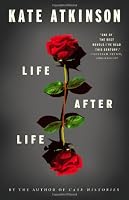
It took me several months to get around to reading Life After Life, depite buying my copy right after it was published and despite always liking Kate Atkinson's writing. She writes with a subtle sense of humor and has the ability to spin complex plots that seem to be a mess until she pulls it all together in a way that brings everything together brilliantly. But this one looked a bit like work and maybe even boring. How can a life told and then retold over and over not be repetitive and a little boring?
I'm not sure even now how she managed to pull it all off, but Life After Life is the opposite of boring, including as it does Hitler, the Spanish Influenza and the most vivid descriptions of life in London during the Blitz that I have ever read. The next time she writes a book with an odd and unlikely plot, I promise to just trust Atkinson to know what she's doing.
It took me several months to get around to reading Life After Life, depite buying my copy right after it was published and despite always liking Kate Atkinson's writing. She writes with a subtle sense of humor and has the ability to spin complex plots that seem to be a mess until she pulls it all together in a way that brings everything together brilliantly. But this one looked a bit like work and maybe even boring. How can a life told and then retold over and over not be repetitive and a little boring?
I'm not sure even now how she managed to pull it all off, but Life After Life is the opposite of boring, including as it does Hitler, the Spanish Influenza and the most vivid descriptions of life in London during the Blitz that I have ever read. The next time she writes a book with an odd and unlikely plot, I promise to just trust Atkinson to know what she's doing.
194baswood
Well I might consider reading Life after Life for those vivid descriptions of London during the blitz.
195RidgewayGirl

I kept running into Jhumpa Lahiri's books here on LibraryThing. With the release of The Lowland, there have been discussions about whether she's a better short story writer than a novelist and I would like to have an opinion! So the only reasonable thing to do was to read something by her and Unaccustomed Earth was close at hand.
Set primarily in Cambridge, Massachusetts, Unaccustomed Earth is a collection of short stories dealing primarily with the experience of being a second generation Indian immigrant, with parents who still prefer traditional foods, are still deeply rooted in Indian culture and who spend their vacations back in India. The children float between the world of their parents and American culture, which adds a layer of complexity to the ordinary struggle to become an adult and to find a purpose and a place in the world.
Lahiri writes with subtlety and understanding. I especially liked the series of stories alternating between two characters who are tangentially connected by the friendship between their parents.
As to whether Lahiri is a better short story writer or novelist; I'm still unqualified to have an opinion. Her short stories are awfully good, however.
196NanaCC
>193 RidgewayGirl: I knew that you would love Life After Life, Kay. The scenes during the Blitz were my favorite, I think, but the book grabbed me from the first page to the last.
197RidgewayGirl
Colleen, how many times does Atkinson take us through Ursula's birth? And it's just as interesting the last time as it was the first time.
198NanaCC
Kay, I have tried to explain the book to a few people who have been reluctant to try it. I rarely read books a second time, unless many years have gone by, but this is one that I will reread sooner rather than later.
199Rebeki
Just catching up - make the most of your time in Munich! The aggressive programme of fun stuff sounds like an excellent idea, and a cup of coffee outside after a museum visit idyllic... I can't really complain about living in London and I do try to make the most of what's on my doorstep. My son, at nearly three, is at an age where it's fun to take him out exploring, although I can only ever manage about 20 minutes looking at "grown-up stuff" if we do go to a museum.
Congratulations on all your German reading! You've encouraged me to take down from my shelf Die Habenichtse by Katharina Hacker, the only contemporary German fiction I own, so hopefully I'll get round to that some time soon.
I must also get round to trying some Jhumpa Lahiri and Kate Atkinson one day...
Congratulations on all your German reading! You've encouraged me to take down from my shelf Die Habenichtse by Katharina Hacker, the only contemporary German fiction I own, so hopefully I'll get round to that some time soon.
I must also get round to trying some Jhumpa Lahiri and Kate Atkinson one day...
200VivienneR
>197 RidgewayGirl: I knew you'd love Life After Life. The scenes from the Blitz were my favourites too.
>198 NanaCC: I tried to explain it to my husband to convince him to read it, but my explanation began to sound just plain silly. It's just impossible to describe in any meaningful way.
>198 NanaCC: I tried to explain it to my husband to convince him to read it, but my explanation began to sound just plain silly. It's just impossible to describe in any meaningful way.
201avidmom
>193 RidgewayGirl: You've convinced me to read this one. It sounds like what I'm in the mood for now.
>200 VivienneR: It's just impossible to describe in any meaningful way.
Some of the best books and movies are like that. I had to show my kids the movie "Little Shop of Horrors" because they thought I was making stuff up: "See, this plant lands from outer space that eats people and sings! It's hysterically funny!"
For some reason, they didn't think a man-eating plant could be funny. Go figure.
>200 VivienneR: It's just impossible to describe in any meaningful way.
Some of the best books and movies are like that. I had to show my kids the movie "Little Shop of Horrors" because they thought I was making stuff up: "See, this plant lands from outer space that eats people and sings! It's hysterically funny!"
For some reason, they didn't think a man-eating plant could be funny. Go figure.
202FlorenceArt
>201 avidmom: Pfff, kids! :-D
203LibraryPerilous
Life After Life does sound very intriguing.
I did lots of city walking when I lived in London. There are many buildings that bear strafing marks from the Blitz's bombs, including the Tate.
It's interesting, though, that the Blitz and WWII still don't loom as large in England's collective memory as does WWI. Most of the focus during poppy-selling season, especially on Armistice Day itself, is on remembering the Great War.
I did lots of city walking when I lived in London. There are many buildings that bear strafing marks from the Blitz's bombs, including the Tate.
It's interesting, though, that the Blitz and WWII still don't loom as large in England's collective memory as does WWI. Most of the focus during poppy-selling season, especially on Armistice Day itself, is on remembering the Great War.
204VivienneR
>201 avidmom: FlorenceArt said it perfectly!
205avidmom
>202 FlorenceArt: I know, right? ;)
>203 LibraryPerilous: That's really intriguing that Britain remembers WWI "more" than WWII. Hmmm ......
>201 avidmom: LOL! She sure did!
>203 LibraryPerilous: That's really intriguing that Britain remembers WWI "more" than WWII. Hmmm ......
>201 avidmom: LOL! She sure did!
206rebeccanyc
>174 RidgewayGirl: By the way, I never heard of Borderland: A Journey through the History of Ukraine until you got it, but I'm going to look for it.
207LibraryPerilous
>205 avidmom: I think that it's because the sheer loss of life, and the other social changes--such as a renewed suffrage movement, strengthened middle class, and loss of gentry--that occurred because of WWI, changed England's sociocultural and economic structures so much that it feels more important in their cultural memory. At least, I've read some articles that posit this.
208RidgewayGirl
Colleen, my copy has been safely shelved for a future reread. I hope she publishes another book soon.
Rebecca, it's like pulling teeth getting my two into museums, although they usually enjoy themselves. Of course, taking them to a museum means I don't get to enjoy it myself. My son, at three, loved London. All those transportation options! And the dinosaurs in the Natural History Museum were a big hit. I didn't even try to take them across the street to the V&A.
Vivienne and Avidmom, there's no point describing it beyond, "it's got a weird premise, just stick with it, because it's brilliant." I have a friend visiting in the fall who asked for a few books to read so that we could discuss them. My mind went to Bloodlands: Europe Between Hitler and Stalin and Five Days at Memorial, because there's so much to discuss, but then she mentioned that she no longer reads very much, but likes cozy mysteries (which I do not) so I'm thinking Life After Life might work, because it's good and involving.
Diana, Munich bears scars, too. It's a little burst of history every time I find one. Munich is, however, one of the few cities not to have the stolperstein, the paving stones set outside of residences that listed the Jewish residents who died in the Holocaust. A local Jewish group disliked the idea, but many other Jewish groups and residents of Munich are still trying to get permission to install them. The local city museum had an interesting exhibit of work from a local silversmith company that was "Aryanized", along with the history of the family and a database of silver objects that survived the war after having been confiscated from Jewish households that they are still trying to find relatives of the original owners. I'll post a bit about that when I get time. In Germany, WWII has eclipsed WWI in the memory.
Rebecca, I hope to read it soon, much like many of the other books on my shelves.
Rebecca, it's like pulling teeth getting my two into museums, although they usually enjoy themselves. Of course, taking them to a museum means I don't get to enjoy it myself. My son, at three, loved London. All those transportation options! And the dinosaurs in the Natural History Museum were a big hit. I didn't even try to take them across the street to the V&A.
Vivienne and Avidmom, there's no point describing it beyond, "it's got a weird premise, just stick with it, because it's brilliant." I have a friend visiting in the fall who asked for a few books to read so that we could discuss them. My mind went to Bloodlands: Europe Between Hitler and Stalin and Five Days at Memorial, because there's so much to discuss, but then she mentioned that she no longer reads very much, but likes cozy mysteries (which I do not) so I'm thinking Life After Life might work, because it's good and involving.
Diana, Munich bears scars, too. It's a little burst of history every time I find one. Munich is, however, one of the few cities not to have the stolperstein, the paving stones set outside of residences that listed the Jewish residents who died in the Holocaust. A local Jewish group disliked the idea, but many other Jewish groups and residents of Munich are still trying to get permission to install them. The local city museum had an interesting exhibit of work from a local silversmith company that was "Aryanized", along with the history of the family and a database of silver objects that survived the war after having been confiscated from Jewish households that they are still trying to find relatives of the original owners. I'll post a bit about that when I get time. In Germany, WWII has eclipsed WWI in the memory.
Rebecca, I hope to read it soon, much like many of the other books on my shelves.
This topic was continued by RidgewayGirl Reads in 2014 -- Part Three.

