kidzdoc achieves TBR domination in 2014, part 7
This is a continuation of the topic kidzdoc achieves TBR domination in 2014, part 6.
This topic was continued by kidzdoc achieves TBR domination in 2014, part 8.
Talk 75 Books Challenge for 2014
This group has been archived. Find out more.
Join LibraryThing to post.
1kidzdoc

Elfreth's Alley in Old City Philadelphia, which is considered to be the oldest residential street in the US. It was built in 1702, and the houses on it date from 1728 to 1836.

Currently reading:


Shanghai Nights by Juan Marsé
Looking for Transwonderland: Travels in Nigeria by Noo Saro-Wiwa
Gaudí: A Biography by Gijs van Hensbergen
Completed books:
January:
1. Homage to Barcelona by Colm Tóibín (review)
2. 1914: A Novel by Jean Echenoz (review)
3. How I Became Hettie Jones by Hettie Jones (review) (TBR)
4. How to Slowly Kill Yourself and Others in America by Kiese Laymon
5. The Apprenticeship of Duddy Kravitz by Mordechai Richler
February:
6. Ghosts of Spain: Travels Through Spain and Its Secret Past by Giles Tremlett (TBR)
7. Christmas in Purgatory: A Photographic Essay on Mental Retardation
by Burton Blatt & Fred Kaplan
8. Down's Syndrome: The History of a Disability by David Wright
9. Lizard Tails by Juan Marsé (TBR) (review)
10. The Comedians by Graham Greene (TBR) (review)
11. No Name in the Street by James Baldwin (TBR)
12. The Amazing Bud Powell: Black Genius, Jazz History, and the Challenge of Bebop by Guthrie Ramsey
13. An Unexpected Twist by Andy Borowitz (TBR)
March:
14. The Enormity of the Tragedy by Quim Monzó
15. Between Friends by Amos Oz
16. Chewing Gum Dreams by Michaela Coel
17. The Weir by Conor McPherson
18. Wounded: A New History of the Western Front in World War I by Emily Mayhew
19. The Husbands by Sharmila Chauhan
20. We Are Proud To Present a Presentation About the Herero of Namibia, Formerly Known as Southwest Africa, From the German Sudwestafrika, Between the Years 1884-1915 by Jackie Sibblies Drury
21. Hallucinations by Oliver Sacks
22. 1984 (play script) by George Orwell
April:
23. Inconvenient People: Lunacy, Liberty and the Mad-Doctors in Victorian England by Sarah Wise
24. Ruin Lust: Artists' Fascination with Ruins, from Turner to the Present Day by Brian Dillon
25. Secret Barcelona by Veronica Ramirez Muro and Rocio Sierra Carbonell
26. Barcelona by Robert Hughes
27. Everyman Mapguide Barcelona
28. Family Matters by Rohinton Mistry (TBR)
29. The Shock of the Fall by Nathan Filer
30. Notes for a Spanish Odyssey by Calvin Baker
31. Kicking the Sky by Anthony De Sa
32. I Am a Japanese Writer by Dany Laferrière (TBR)
33. Gone by Colum McCann
May:
34. The Colonel by Mahmoud Dowlatabadi (TBR)
35. Gasoline by Quim Monzó (TBR)
36. Anil's Ghost by Michael Ondaatje (TBR)
37. Arctic Summer by Damon Galgut
38. Ghosts by Henrik Ibsen
39. Morphine by Mikhail Bulgakov
2kidzdoc
Purchased and acquired books (purchased books in bold):
January:
1. 1914: A Novel by Jean Echenoz (1 Jan, Strand Book Store)
2. The Travels and Surprising Adventures of Baron Munchausen by Rudolf Erich Raspe (1 Jan, Book Culture)
3. King Leopold's Ghost: A Story of Greed, Terror, and Heroism in Colonial Africa by Adam Hochschild (1 Jan, Book Culture)
4. U.S.A. by John Dos Passos (1 Jan, Book Culture)
5. Looking for Leroy: Illegible Black Masculinities by Mark Anthony Neal (1 Jan, Book Culture)
6. Levels of Life by Julian Barnes (1 Jan, Book Culture)
7. Claire of the Sea Light by Edwidge Danticat (1 Jan, Book Culture)
8. How to Slowly Kill Yourself and Others in America by Kiese Laymon (1 Jan, Book Culture)
9. My Promised Land: The Triumph and Tragedy of Israel by Ari Shavit (1 Jan, Book Culture)
10. Brave Genius: A Scientist, a Philosopher, and Their Daring Adventures from the French Resistance to the Nobel Prize by Sean B. Carroll (1 Jan, Book Culture)
11. The Daughters of Mars by Thomas Keneally (8 Jan, Amazon Kindle e-book)
12. The Sleepwalkers: How Europe Went to War in 1914 by Christopher Clark (18 Jan, History Book Club)
13. The Marsh Arabs by Wilfred Thesiger (18 Jan, Michael C. Carlos Museum Bookshop)
14. The Odyssey: A Dramatic Retelling of Homer's Epic by Simon Armitage (18 Jan, Michael C. Carlos Museum Bookshop)
15. Romare Bearden: A Black Odyssey by Robert O'Meally (18 Jan, Michael C. Carlos Museum Bookshop)
16. The Rebellious Life of Mrs. Rosa Parks by Jeanne Theoharis (19 Jan, Kindle e-book)
17. The Tuner of Silences by Mia Couto (25 Jan, Kindle e-book (reimbursement))
18. The New Spaniards by John Hooper (25 Jan, Kindle e-book (reimbursement))
19. Barcelona by John Hughes (25 Jan, Kindle e-book (reimbursement))
20. Pimps, Hos, Playa Hatas, and All the Rest of My Hollywood Friends by John Leguizamo (26 Jan, Kindle e-book)
21. Just Kids by Patti Smith (26 Jan, Kindle e-book)
22. The Sheltering Sky by Paul Bowles (26 Jan, Kindle e-book)
23. The Crusades: The Authoritative History of the War for the Holy Land by Thomas Asbridge (26 Jan, Kindle e-book)
February:
25. Twelve Years a Slave by Solomon Northup (6 Feb, Kindle e-book)
26. Christmas in Purgatory: A Photographic Essay on Mental Retardation by Burton Blatt, Fred Kaplan (9 Feb, PDF download)
27. Spain in Mind by Alice Leccese Powers (16 Feb, gift book)
28. The Prisoner of Heaven by Carlos Ruiz Zafon (21 Feb, Kindle e-book)
29. Missing Microbes: How the Overuse of Antibiotics Is Fueling Our Modern Plagues by Martin J. Blaser, MD (LT Early Reviewers book)
30. The Signature of All Things by Elizabeth Gilbert (25 Feb, Kindle e-book)
31. Wounded: From Battlefield to Blighty by Emily Mayhew (25 Feb, Kindle e-book)
32. Creation: The Origin of Life by Adam Rutherford (25 Feb, Kindle e-book)
33. Hallucinations by Oliver Sacks (25 Feb, Kindle e-book)
34. Far From the Tree: A Dozen Kinds of Love by Andrew Solomon (25 Feb, Kindle e-book)
35. Inconvenient People by Sarah Wise (25 Feb, Kindle e-book)
36. An Unexpected Twist (Kindle Single) by Andy Borowitz (27 Feb, Kindle e-book)
March:
37. Fresh from the Vegetarian Slow Cooker: 200 Recipes for Healthy and Hearty One-Pot Meals That Are Ready When You Are by Robin Robertson (3 Mar, gift from Karen W.)
38. Thrombosis & Bleeding: An Era of Discovery by Cecil Hougie (5 Mar, Kindle e-book)
January:
1. 1914: A Novel by Jean Echenoz (1 Jan, Strand Book Store)

2. The Travels and Surprising Adventures of Baron Munchausen by Rudolf Erich Raspe (1 Jan, Book Culture)
3. King Leopold's Ghost: A Story of Greed, Terror, and Heroism in Colonial Africa by Adam Hochschild (1 Jan, Book Culture)
4. U.S.A. by John Dos Passos (1 Jan, Book Culture)
5. Looking for Leroy: Illegible Black Masculinities by Mark Anthony Neal (1 Jan, Book Culture)
6. Levels of Life by Julian Barnes (1 Jan, Book Culture)
7. Claire of the Sea Light by Edwidge Danticat (1 Jan, Book Culture)
8. How to Slowly Kill Yourself and Others in America by Kiese Laymon (1 Jan, Book Culture)
9. My Promised Land: The Triumph and Tragedy of Israel by Ari Shavit (1 Jan, Book Culture)
10. Brave Genius: A Scientist, a Philosopher, and Their Daring Adventures from the French Resistance to the Nobel Prize by Sean B. Carroll (1 Jan, Book Culture)
11. The Daughters of Mars by Thomas Keneally (8 Jan, Amazon Kindle e-book)
12. The Sleepwalkers: How Europe Went to War in 1914 by Christopher Clark (18 Jan, History Book Club)
13. The Marsh Arabs by Wilfred Thesiger (18 Jan, Michael C. Carlos Museum Bookshop)
14. The Odyssey: A Dramatic Retelling of Homer's Epic by Simon Armitage (18 Jan, Michael C. Carlos Museum Bookshop)
15. Romare Bearden: A Black Odyssey by Robert O'Meally (18 Jan, Michael C. Carlos Museum Bookshop)
16. The Rebellious Life of Mrs. Rosa Parks by Jeanne Theoharis (19 Jan, Kindle e-book)
17. The Tuner of Silences by Mia Couto (25 Jan, Kindle e-book (reimbursement))
18. The New Spaniards by John Hooper (25 Jan, Kindle e-book (reimbursement))
19. Barcelona by John Hughes (25 Jan, Kindle e-book (reimbursement))
20. Pimps, Hos, Playa Hatas, and All the Rest of My Hollywood Friends by John Leguizamo (26 Jan, Kindle e-book)
21. Just Kids by Patti Smith (26 Jan, Kindle e-book)
22. The Sheltering Sky by Paul Bowles (26 Jan, Kindle e-book)
23. The Crusades: The Authoritative History of the War for the Holy Land by Thomas Asbridge (26 Jan, Kindle e-book)
February:
25. Twelve Years a Slave by Solomon Northup (6 Feb, Kindle e-book)
26. Christmas in Purgatory: A Photographic Essay on Mental Retardation by Burton Blatt, Fred Kaplan (9 Feb, PDF download)
27. Spain in Mind by Alice Leccese Powers (16 Feb, gift book)
28. The Prisoner of Heaven by Carlos Ruiz Zafon (21 Feb, Kindle e-book)
29. Missing Microbes: How the Overuse of Antibiotics Is Fueling Our Modern Plagues by Martin J. Blaser, MD (LT Early Reviewers book)
30. The Signature of All Things by Elizabeth Gilbert (25 Feb, Kindle e-book)
31. Wounded: From Battlefield to Blighty by Emily Mayhew (25 Feb, Kindle e-book)
32. Creation: The Origin of Life by Adam Rutherford (25 Feb, Kindle e-book)
33. Hallucinations by Oliver Sacks (25 Feb, Kindle e-book)
34. Far From the Tree: A Dozen Kinds of Love by Andrew Solomon (25 Feb, Kindle e-book)
35. Inconvenient People by Sarah Wise (25 Feb, Kindle e-book)
36. An Unexpected Twist (Kindle Single) by Andy Borowitz (27 Feb, Kindle e-book)
March:
37. Fresh from the Vegetarian Slow Cooker: 200 Recipes for Healthy and Hearty One-Pot Meals That Are Ready When You Are by Robin Robertson (3 Mar, gift from Karen W.)
38. Thrombosis & Bleeding: An Era of Discovery by Cecil Hougie (5 Mar, Kindle e-book)
4kidzdoc
This is a list of the TBR books I'd like to read the most. I hope to complete 10-15 or more tomes (500 pages or longer), and 30-35 shorter works. This is a first draft, so the books that are listed here will almost certainly change as the year progresses.
TBR Books to Read in 2014
Tomes (500 pages or more):
Nicole Barker, Darkmans
Simone de Beauvoir, The Mandarins
Douglas Brinkley, The Great Deluge: Hurricane Katrina, New Orleans, and the Mississippi Gulf Coast
Saul Bellow, The Adventures of Augie March
Ralph Ellison, Three Days Before the Shooting...
Ian Gibson, The Shameful Life of Salvador Dalí
David Grossman, To the End of the Land
Lawrence Hill, Someone Knows My Name
George E. Lewis, A Power Stronger than Itself: The AACM and American Experimental Music
A.J. Liebling, Just Enough Liebling
David Macey, Frantz Fanon: A Biography
Hilary Mantel, A Place of Greater Safety
Paul Murray, Skippy Dies
Patrick O'Brian, Picasso: A Biography
Roy Porter, Flesh in the Age of Reason: The Modern Foundations of Body and Soul
Salman Rushdie, The Satanic Verses
William Trevor, Selected Stories
Patrick White, The Vivisector
Non-tomes (less than 500 pages):
Stuart Altman and David Shactman, Power, Politics and Universal Health Care: The Inside Story of a Century-Long Battle
Kwame Anthony Appiah, Cosmopolitanism: Ethics in a World of Strangers
Bernardo Atxaga, Obabakoak
Amiri Baraka, Tales of the Out & the Gone
Eleanor Catton, The Rehearsal
Patrick Chamoiseau, Texaco
Randy Christensen MD, Ask Me Why I Hurt: The Kids Nobody Wants and the Doctor Who Heals Them
Mahmoud Dowlatabadi, The Colonel
Jean Echenoz, I'm Off and One Year
Percival Everett, Percival Everett by Virgil Russell
Ralph Ellison, Invisible Man
Louise Erdrich, The Plague of Doves
Paul Farmer, Haiti After the Earthquake
Juan Eslava Galan, The Mule
Jerry Gentry, Grady Baby: A Year in the Life of Atlanta's Grady Hospital
Amitav Ghosh, The Calcutta Chromosome
Juan Goytisolo, Forbidden Territory and Realms of Strife
Juan Goytisolo, Juan the Landless
Graham Greene, The Comedians
Alistair Horne, Seven Ages of Paris
Jonathan B. Imber, Trusting Doctors: The Decline of Moral Authority in American Medicine
Hettie Jones, How I Became Hettie Jones
James Kelman, Kieron Smith, boy
Robert Klitzman, When Doctors Become Patients
Karl Ove Knausgaard, My Struggle: Book One
Eric Lax, The Mold in Dr. Florey's Coat: The Story of the Penicillin Miracle
Charles Lemert, Why Niebuhr Matters
Juan Marsé, Lizard Tails
Juan Marsé, Shanghai Nights
David A. Mendel, Proper Doctoring: A Book for Patients and their Doctors
Simon Mawer, Mendel's Dwarf
Claire McCarthy, Everyone's Children: A Pediatrician's Story of an Inner City Practice
Ian McEwan, Atonement
Andrew Miller, Pure
Quim Monzó, The Enormity of the Tragedy
Quim Monzó, Gasoline
Haruki Murakami, Kafka on the Shore
Vladimir Nabokov, Lolita
Ngũgĩ wa Thiong'o, Petals of Blood
Reinhold Niebuhr, The Irony of American History
Michael Ondaatje, Anil's Ghost
Laura Katz Olson, The Politics of Medicaid: Stakeholders and Welfare Medicine
Brian Orr, MD, A Pediatrician's Journal: Caring for Children in a Broken Medical System
Orhan Pamuk, Snow
Roy Porter, Madmen: A Social History of Madhouses, Mad Doctors and Lunatics
Graham Robb, Parisians: An Adventure History of Paris
Edward W. Said, Out of Place: A Memoir
Giles Tremlett, Ghosts of Spain: Travels Through Spain and Its Secret Past
Mario Vargas Llosa, The Green House
Richard Wright, Black Boy
TBR Books to Read in 2014
Tomes (500 pages or more):
Nicole Barker, Darkmans
Simone de Beauvoir, The Mandarins
Douglas Brinkley, The Great Deluge: Hurricane Katrina, New Orleans, and the Mississippi Gulf Coast
Saul Bellow, The Adventures of Augie March
Ralph Ellison, Three Days Before the Shooting...
Ian Gibson, The Shameful Life of Salvador Dalí
David Grossman, To the End of the Land
Lawrence Hill, Someone Knows My Name
George E. Lewis, A Power Stronger than Itself: The AACM and American Experimental Music
A.J. Liebling, Just Enough Liebling
David Macey, Frantz Fanon: A Biography
Hilary Mantel, A Place of Greater Safety
Paul Murray, Skippy Dies
Patrick O'Brian, Picasso: A Biography
Roy Porter, Flesh in the Age of Reason: The Modern Foundations of Body and Soul
Salman Rushdie, The Satanic Verses
William Trevor, Selected Stories
Patrick White, The Vivisector
Non-tomes (less than 500 pages):
Stuart Altman and David Shactman, Power, Politics and Universal Health Care: The Inside Story of a Century-Long Battle
Kwame Anthony Appiah, Cosmopolitanism: Ethics in a World of Strangers
Bernardo Atxaga, Obabakoak
Amiri Baraka, Tales of the Out & the Gone
Eleanor Catton, The Rehearsal
Patrick Chamoiseau, Texaco
Randy Christensen MD, Ask Me Why I Hurt: The Kids Nobody Wants and the Doctor Who Heals Them
Mahmoud Dowlatabadi, The Colonel
Jean Echenoz, I'm Off and One Year
Percival Everett, Percival Everett by Virgil Russell
Ralph Ellison, Invisible Man
Louise Erdrich, The Plague of Doves
Paul Farmer, Haiti After the Earthquake
Juan Eslava Galan, The Mule
Jerry Gentry, Grady Baby: A Year in the Life of Atlanta's Grady Hospital
Amitav Ghosh, The Calcutta Chromosome
Juan Goytisolo, Forbidden Territory and Realms of Strife
Juan Goytisolo, Juan the Landless
Graham Greene, The Comedians
Alistair Horne, Seven Ages of Paris
Jonathan B. Imber, Trusting Doctors: The Decline of Moral Authority in American Medicine
Hettie Jones, How I Became Hettie Jones
James Kelman, Kieron Smith, boy
Robert Klitzman, When Doctors Become Patients
Karl Ove Knausgaard, My Struggle: Book One
Eric Lax, The Mold in Dr. Florey's Coat: The Story of the Penicillin Miracle
Charles Lemert, Why Niebuhr Matters
Juan Marsé, Lizard Tails
Juan Marsé, Shanghai Nights
David A. Mendel, Proper Doctoring: A Book for Patients and their Doctors
Simon Mawer, Mendel's Dwarf
Claire McCarthy, Everyone's Children: A Pediatrician's Story of an Inner City Practice
Ian McEwan, Atonement
Andrew Miller, Pure
Quim Monzó, The Enormity of the Tragedy
Quim Monzó, Gasoline
Haruki Murakami, Kafka on the Shore
Vladimir Nabokov, Lolita
Ngũgĩ wa Thiong'o, Petals of Blood
Reinhold Niebuhr, The Irony of American History
Michael Ondaatje, Anil's Ghost
Laura Katz Olson, The Politics of Medicaid: Stakeholders and Welfare Medicine
Brian Orr, MD, A Pediatrician's Journal: Caring for Children in a Broken Medical System
Orhan Pamuk, Snow
Roy Porter, Madmen: A Social History of Madhouses, Mad Doctors and Lunatics
Graham Robb, Parisians: An Adventure History of Paris
Edward W. Said, Out of Place: A Memoir
Giles Tremlett, Ghosts of Spain: Travels Through Spain and Its Secret Past
Mario Vargas Llosa, The Green House
Richard Wright, Black Boy
5kidzdoc

Recommended reads for the CanLit 2014 Challenge (by Canadian LTers) (books in bold are ones that I'm most interested in reading):
Margaret Atwood, Alias Grace (Joyce, Nancy, Cait and Cyrel)
Margaret Atwood, The Blind Assassin (Cait and Joyce)
Margaret Atwood, The Handmaid's Tale (Tui)
Margaret Atwood, The Robber Bride (Joyce and Nancy)
Anita Rau Badami, Tamarind Mem (Tui)
Anita Rau Badami, Tell it to the Trees (Cait)
John Bemrose, The Island Walkers (Lori)
Marie-Claire Blais, The Day Is Dark and Three Travelers (Suz)
Joseph Boyden, Three Day Road (Suz and Cyrel)
Joseph Boyden, Black Spruce (Suz and Cyrel)
Wayson Choy, The Jade Peony (Nancy)
Michael Crummey, Galore (Sassy)
Robertson Davies, The Deptford Trilogy (Suz, Cait, Tui and Zoë)
Suzanne Desrochers, Bride of New France (Zoë)
Patrick deWitt, The Sisters Brothers (Nancy)
Kim Echlin, The Disappeared (Cait)
Timothy Findley, The Last of the Crazy People (Lori)
Timothy Findley, The Piano Man's Daughter (Tui)
Timothy Findley, The Wars (Suz and Joyce)
Kenneth J. Harvey, Blackstrap Hawco (Sassy)
Tomson Highway, Kiss of the Fur Queen (Joyce and Tui)
Helen Humphreys, Coventry (Tui)
Helen Humphreys, The Frozen Thames (Tui)
Helen Humphreys, The Lost Garden (Tui)
Wayne Johnston, Baltimore's Mansion (Tui)
Wayne Johnston, The Colony of Unrequited Dreams (Cyrel)
Thomas King, Green Grass, Running Water (Joyce)
W.P. Kinsella, Shoeless Joe (Tui)
Margaret Laurence, The Stone Angel (Tui)
Mary Lawson, Crow Lake (Lori)
Linden MacIntyre, The Bishop's Man (Suz)
Alistair MacLeod, No Great Mischief (Cait and Nancy)
Beatrice MacNeil, Where White Horses Gallop (Nancy)
Rabindranath Maharaj, The Amazing Absorbing Boy (Cyrel)
Rohinton Mistry, Family Matters
(Tui)Rohinton Mistry, A Fine Balance (Tui)
W.O. Mitchell, Who Has Seen the Wind (Tui)
Lisa Moore, February (Cait)
Alice Munro, Hateship, Friendship, Courtship, Loveship, Marriage (Suz)
Alice Munro, Too Much Happiness (Cyrel)
Alice Munro, The View from Castle Rock (Cyrel)
Michael Ondaatje, Anil's Ghost (Joyce)
Michael Ondaatje, The English Patient (Cait)
Michael Ondaatje, In the Skin of a Lion
Michael Ondaatje, The Cat's Table (Suz)
Jacques Poulin, Mister Blue (Suz)
Mordechai Richler, The Apprenticeship of Duddy Kravitz (Cyrel)
Timothy Taylor, Stanley Park (Joyce)
Kim Thúy, Ru (Suz)
Michel Tremblay, The Fat Woman Next Door Is Pregnant (Lori)
Jane Urquhart, Away (Tui)
Jane Urquhart, The Stone Carvers (Tui)
Ronald Wright, What Is America?: A Short History of the New World Order (nonfiction) (Tui)

11kidzdoc
>7 avidmom: Yep. Comedy duos like Burns & Allen, Laurel & Hardy, the Smothers Brothers and Rowan & Martin are classic relics of a bygone era in radio and television.
>8 connie53: I'm glad that you like that photo, Connie. I'll post other images of Philadelphia here this week.
>9 cameling: Thanks, Caroline. I've spent most of today sleeping, as I've already logged 12 hours of zzz's since 2 am, and I probably won't be up for much longer. My cold has gotten much worse, as it has now taken up residence in my chest, and I'm seriously thinking of delaying my trip to Philadelphia until Tuesday, as I don't want to pass this on to my parents. My mother has asthma and she also tends to get chest colds, although hers are much worse than mine.
>10 BBGirl55: Thanks, Bryony! Hopefully we can meet up again when I return to London next month.
>8 connie53: I'm glad that you like that photo, Connie. I'll post other images of Philadelphia here this week.
>9 cameling: Thanks, Caroline. I've spent most of today sleeping, as I've already logged 12 hours of zzz's since 2 am, and I probably won't be up for much longer. My cold has gotten much worse, as it has now taken up residence in my chest, and I'm seriously thinking of delaying my trip to Philadelphia until Tuesday, as I don't want to pass this on to my parents. My mother has asthma and she also tends to get chest colds, although hers are much worse than mine.
>10 BBGirl55: Thanks, Bryony! Hopefully we can meet up again when I return to London next month.
12scaifea
Happy New Thread, Darryl, although I'm not too happy to see that you're feeling so poorly! I hope that cold clears up soon so that you can visit your family. I appreciate the idea of not wanting to go until you're better; my parents are in their late 70s/ early 80s and my mom has type 1 diabetes, so I'm always careful to make sure that both Charlie and I are healthy before we go for a visit!
13lauralkeet
Hi Darryl, sorry to hear you're under the weather. Hope you have a safe & uneventful trip to Philly.
14kidzdoc
>12 scaifea: Thanks, Amber. I just got off the phone with my mother, who is encouraging me to stay here, rather than visit them this coming week. I noticed that I was coughing a lot and was a bit short of breath while I was talking to her. I'm also off from work from May 17-22; if I don't go this week then I'll visit them then.
>13 lauralkeet: Thanks, Laura. I'll wait until later tonight or tomorrow morning to make a final decision, but I definitely won't fly to PHL tomorrow.
>13 lauralkeet: Thanks, Laura. I'll wait until later tonight or tomorrow morning to make a final decision, but I definitely won't fly to PHL tomorrow.
15lauralkeet
>14 kidzdoc: Mom knows best, Darryl. Sounds like you need to rest up, whether you're in ATL or PHL.
16kidzdoc
>15 lauralkeet: Right on both counts. I could get rest at my parents' house, but I'd run a high risk of passing on this infection to my mother, just in time for Mother's Day. I think that would be one present she'd rather not have.
17lauralkeet
>16 kidzdoc: oh right. That's a very good point!!
18kidzdoc
>17 lauralkeet: Unfortunately there have been at least a couple of times when I've come there with a bad cold, or one developed while I was there. My mother developed bronchitis on those occasions, and was sick for at least a couple of weeks.
Whatever it is that I have almost certainly came from one of my patients this week, who was sick enough to be hospitalized for it. Let's see...I saw kids with infectious mononucleosis, bacterial pneumonia, pertussis (whooping cough), rhinovirus and parainfluenza virus the past couple of days (the kid with mono had severe edema of his adenoids and tonsils, to the point where he couldn't maintain his airway when he fell asleep, so he had to be transferred to the PICU). That's a rather toxic brew of respiratory pathogens, I'd say. Pertussis is the most worrisome one. Fortunately I have a Z-pack (Zithromax, or azithromycin) on hand, so I think I'll take it as prophylaxis against that bacterium. I don't like taking antibiotics, but I had whooping cough during my last year of residency, and was coughing and wheezing for 3-4 months as a result.
Whatever it is that I have almost certainly came from one of my patients this week, who was sick enough to be hospitalized for it. Let's see...I saw kids with infectious mononucleosis, bacterial pneumonia, pertussis (whooping cough), rhinovirus and parainfluenza virus the past couple of days (the kid with mono had severe edema of his adenoids and tonsils, to the point where he couldn't maintain his airway when he fell asleep, so he had to be transferred to the PICU). That's a rather toxic brew of respiratory pathogens, I'd say. Pertussis is the most worrisome one. Fortunately I have a Z-pack (Zithromax, or azithromycin) on hand, so I think I'll take it as prophylaxis against that bacterium. I don't like taking antibiotics, but I had whooping cough during my last year of residency, and was coughing and wheezing for 3-4 months as a result.
19Cariola
Take care, Darryl. You're a good son and a good doctor for thinking of your mom's health first. Take your Nyquil early tonight and get a good, long sleep. Hope you feel better soon!
20kidzdoc
>19 Cariola: Thanks, Deborah; I'll do just that. I've now made reservations to fly to PHL on May 17 and return to ATL on May 22. I'll get up early tomorrow, and unless I'm magically cured I'll cancel my tickets for this week.
21EBT1002
Hi Darryl! I love that photo of the oldest street in Philly. On a visit to Newport, RI, a couple of years ago, I loved walking by houses dating from before the Declaration of Independence. Imagine if those walls could talk.
Sorry you are under the weather but glad you seem to be listening to your mum's advice.
By the way, I also recommend No Great Mischief for your CanLit undertaking.
Hang in there!
Sorry you are under the weather but glad you seem to be listening to your mum's advice.
By the way, I also recommend No Great Mischief for your CanLit undertaking.
Hang in there!
23roundballnz
>14 kidzdoc: Mom's do know best .... take care of yourself
24rosalita
Sending some good-health wishes your way, Darryl. Reading the list of kids you've treated recently, no wonder you're sick! I hope it doesn't turn out to be worse than just a cold, and that you are back on top very soon.
26connie53
It sounds like you should stay where you are, get some rest and (maybe) some medication. I hope you feel better soon, Darryl.
27kidzdoc
Thanks for your kind wishes, everyone! I feel better today, but I'm sure that I'm still contagious, as I still have rhinorrhea and a frequent cough. I've cancelled my trip, and rebooked seats for two weeks from now. If I'm feeling 100% I might fly to Philadelphia on Thursday, so that I can spend Mother's Day with my mother.
>21 EBT1002: I want to visit Newport someday, Ellen. I suspect that the Newport Jazz Festival isn't what it was in the 1950s and 1960s, but I'm sure that I would enjoy it.
I may read No Great Mischief as early as this week.
>22 avidmom: Right. We had a milder than usual respiratory season this winter, but the pathogens that we would usually see from November through February started to appear in greater numbers in April.
>23 roundballnz: Absolutely, Alex. My mother was thinking of my health in her advice to stay here, but I'm much more concerned about her. I wouldn't have cancelled a holiday trip because of this respiratory infection, but I would feel horrible if she became ill as a result of me.
>24 rosalita: Thanks, Julia. I hope that you're right!
>25 BBGirl55: Sounds good, Bryony. I'll be in touch with you and several other UK friends next week.
>26 connie53: Thanks, Connie. I will stay in Atlanta, and I probably won't visit my parents for the next two weeks.
>21 EBT1002: I want to visit Newport someday, Ellen. I suspect that the Newport Jazz Festival isn't what it was in the 1950s and 1960s, but I'm sure that I would enjoy it.
I may read No Great Mischief as early as this week.
>22 avidmom: Right. We had a milder than usual respiratory season this winter, but the pathogens that we would usually see from November through February started to appear in greater numbers in April.
>23 roundballnz: Absolutely, Alex. My mother was thinking of my health in her advice to stay here, but I'm much more concerned about her. I wouldn't have cancelled a holiday trip because of this respiratory infection, but I would feel horrible if she became ill as a result of me.
>24 rosalita: Thanks, Julia. I hope that you're right!
>25 BBGirl55: Sounds good, Bryony. I'll be in touch with you and several other UK friends next week.
>26 connie53: Thanks, Connie. I will stay in Atlanta, and I probably won't visit my parents for the next two weeks.
28Ameise1
Oh, Darryl, I'm so sorry to hear that you don't feel well. 
Congrats on your new thread. I like this >1 kidzdoc: photo.

Congrats on your new thread. I like this >1 kidzdoc: photo.
29kidzdoc
>28 Ameise1: Thanks, Barbara! I feel better today than I have the past two days, so hopefully I'll be rid of this pesky pathogen soon.
31lit_chick
Love the photo of Elfreth's Alley, Darryl. Glad you are feeling somewhat better, and hope you're better yet by day's end.
32kidzdoc
>30 Ameise1: Thanks, Barbara. I'm on day two of a 10 day stretch off from work, so even if this cold lasts longer than another day or two I'll still be able to rest at home.
>31 lit_chick: Thanks, Nancy. My immune system is used to having to deal with respiratory pathogens on a regular basis, and I'm usually able to fight off most viruses. When I do get sick it's usually because I'm run down after a stretch of busy and long work days, which seems to be the case this time as well. I'm sure that I'll be fine by mid week, though.
>31 lit_chick: Thanks, Nancy. My immune system is used to having to deal with respiratory pathogens on a regular basis, and I'm usually able to fight off most viruses. When I do get sick it's usually because I'm run down after a stretch of busy and long work days, which seems to be the case this time as well. I'm sure that I'll be fine by mid week, though.
33tymfos
Darryl, so sorry you're ill and having to postpone travel -- but you're right to be concerned about passing on illness to your mother.
Pardon my curiosity. I was surprised to see the concern re: pertussis. Isn't that one that's part of the standard immunization requirement? I realize some parents don't immunize their children, but don't doctors have to be up-to-date on all those shots? Or is that one where the vaccine only offers partial protection? I had a Tdap booster last year, and figured I was safe, regardless of whether I was exposed, but maybe not.
Love the Elfreth's Alley pic!
Pardon my curiosity. I was surprised to see the concern re: pertussis. Isn't that one that's part of the standard immunization requirement? I realize some parents don't immunize their children, but don't doctors have to be up-to-date on all those shots? Or is that one where the vaccine only offers partial protection? I had a Tdap booster last year, and figured I was safe, regardless of whether I was exposed, but maybe not.
Love the Elfreth's Alley pic!
34kidzdoc
>33 tymfos: Thanks, Terri. I've been coughing and sneezing frequently all day, so there is a good chance that I would have passed on this bug to my parents if I did fly to Philadelphia today.
You're right; the pertussis vaccine is part of the routine immunization schedule for children. They receive the DTaP (diphtheria, tetanus and acellular pertussis) vaccine at 2 mo, 4 mo, 6 mo, 15-18 mo, and 4-6 yr, and a TdaP booster at 11-12 yr. Women are supposed to get a TdaP shot with each pregnancy in the third trimester, and health care professionals should receive TdaP once. (BTW, the mother of the baby I saw with pertussis was not vaccinated; she contracted it and passed it on to her newborn, who had to be admitted to the PICU as he stopped breathing several times and required respiratory support when he first came to our ED.)
I had a case of pertussis in 2000, during my last year of residency, which presumably came from a child or adult I saw in January of that year, when I was on an ED rotation. I was sick until April or May, with a horrible cough, frequent post-tussive emesis (vomiting after coughing episodes), and near complete laryngitis (I was coughing so hard that I developed inflammatory nodules of my vocal cords, and I still often lose my voice once or twice a year after a bad cold). I did receive the TdaP vaccine in 2010, 10 years later. However, a good friend of mine, who is a pediatric infectious disease specialist at Emory, presented data in a conference earlier this year that suggested that the TdaP vaccine (used for persons 7 years of age and older) may only be effective for 2-3 years. And, even though I've had pertussis, I am still susceptible to get it again, although it probably wouldn't be as bad the second time around. The first time was bad enough, so I have no desire to repeat that experience, and I could conceivably pass the bacterium on to others even if I didn't come down with a full blown case of it. Since it's been 3-1/2 years since my last TdaP booster, and since I know that this baby had pertussis (his Bordetella pertussis PCR (polymerase chain reaction) test was positive), I thought it would be wise to put myself on azithromycin prophylaxis, especially when I was still thinking of traveling to Philadelphia to visit my parents.
The acellular pertussis vaccine is much safer than the (cellular) pertussis vaccine, which was made using the whole bacterium. However, the protection the new vaccine provides is far shorter acting than the old one. As a result, older children and adults are getting pertussis, and passing it onto the most susceptible populations, namely babies less than two months of age (who haven't been vaccinated yet) and unvaccinated children and adults. One of the sickest babies I've taken care of in the past two years was a little one who was co-infected with RSV and pertussis; either infection is bad enough, but the combination of these pathogens nearly killed this baby. She was in our PICU on mechanical ventilation for two or three months, and she was so debilitated by the time she was finally able to be extubated that she had to spend another month or two in our inpatient rehabilitation unit, as she lost the able to feed by mouth and had poor motor skills.
You're right; the pertussis vaccine is part of the routine immunization schedule for children. They receive the DTaP (diphtheria, tetanus and acellular pertussis) vaccine at 2 mo, 4 mo, 6 mo, 15-18 mo, and 4-6 yr, and a TdaP booster at 11-12 yr. Women are supposed to get a TdaP shot with each pregnancy in the third trimester, and health care professionals should receive TdaP once. (BTW, the mother of the baby I saw with pertussis was not vaccinated; she contracted it and passed it on to her newborn, who had to be admitted to the PICU as he stopped breathing several times and required respiratory support when he first came to our ED.)
I had a case of pertussis in 2000, during my last year of residency, which presumably came from a child or adult I saw in January of that year, when I was on an ED rotation. I was sick until April or May, with a horrible cough, frequent post-tussive emesis (vomiting after coughing episodes), and near complete laryngitis (I was coughing so hard that I developed inflammatory nodules of my vocal cords, and I still often lose my voice once or twice a year after a bad cold). I did receive the TdaP vaccine in 2010, 10 years later. However, a good friend of mine, who is a pediatric infectious disease specialist at Emory, presented data in a conference earlier this year that suggested that the TdaP vaccine (used for persons 7 years of age and older) may only be effective for 2-3 years. And, even though I've had pertussis, I am still susceptible to get it again, although it probably wouldn't be as bad the second time around. The first time was bad enough, so I have no desire to repeat that experience, and I could conceivably pass the bacterium on to others even if I didn't come down with a full blown case of it. Since it's been 3-1/2 years since my last TdaP booster, and since I know that this baby had pertussis (his Bordetella pertussis PCR (polymerase chain reaction) test was positive), I thought it would be wise to put myself on azithromycin prophylaxis, especially when I was still thinking of traveling to Philadelphia to visit my parents.
The acellular pertussis vaccine is much safer than the (cellular) pertussis vaccine, which was made using the whole bacterium. However, the protection the new vaccine provides is far shorter acting than the old one. As a result, older children and adults are getting pertussis, and passing it onto the most susceptible populations, namely babies less than two months of age (who haven't been vaccinated yet) and unvaccinated children and adults. One of the sickest babies I've taken care of in the past two years was a little one who was co-infected with RSV and pertussis; either infection is bad enough, but the combination of these pathogens nearly killed this baby. She was in our PICU on mechanical ventilation for two or three months, and she was so debilitated by the time she was finally able to be extubated that she had to spend another month or two in our inpatient rehabilitation unit, as she lost the able to feed by mouth and had poor motor skills.
36kidzdoc
>35 tymfos: Right on both counts, Terri. We see it fairly often, and know how to treat it, but the worst cases are still frightening, as it can be a fatal illness.
Here's a short video from Mayo Health that shows a baby hospitalized in intensive care with whooping cough. The caption mentions that the baby is "coughing severely"; I'd say that this is a moderate cough, even though the baby does turn blue and stops breathing for a few seconds, as the baby recovered spontaneously and did not require CPR, or positive pressure or blow by oxygen. I've seen far worse episodes than that one.
http://youtu.be/S3oZrMGDMMw
BTW, the "whoop" is the high pitched inspiratory noise that the baby makes when she can finally take in air after a coughing paroxysm.
Here's a short video from Mayo Health that shows a baby hospitalized in intensive care with whooping cough. The caption mentions that the baby is "coughing severely"; I'd say that this is a moderate cough, even though the baby does turn blue and stops breathing for a few seconds, as the baby recovered spontaneously and did not require CPR, or positive pressure or blow by oxygen. I've seen far worse episodes than that one.
http://youtu.be/S3oZrMGDMMw
BTW, the "whoop" is the high pitched inspiratory noise that the baby makes when she can finally take in air after a coughing paroxysm.
37brenpike
Geez! Go away for a couple of days and . . .
Sorry to hear about your illness and subsequent change in travel plans. Sending get-well vibes your way!
Always so informative and interesting here - it's like a mini-med school class.
And, the Philly pic up top brings back fond memories of a wonderful meet-up. . . :)
Sorry to hear about your illness and subsequent change in travel plans. Sending get-well vibes your way!
Always so informative and interesting here - it's like a mini-med school class.
And, the Philly pic up top brings back fond memories of a wonderful meet-up. . . :)
38Ameise1
Darryl, thanks a lot for those very informative explanations.
For me as a mother, it was very logical that my kids are up-to-date with all the vaccinations but I have a lot of collegues which are refusing them for their own children. Especially the measles, mumps and rubella vaccines. We have here over and over very heavy measles outbreaks and not only within kids but also within young adults.
For me as a mother, it was very logical that my kids are up-to-date with all the vaccinations but I have a lot of collegues which are refusing them for their own children. Especially the measles, mumps and rubella vaccines. We have here over and over very heavy measles outbreaks and not only within kids but also within young adults.
39SandDune
Darryl - sorry to hear that you're not well and that it's affected your plans to visit your family. Sending get well vibes.
41kidzdoc
I'm still very congested (nasal passages, middle ear spaces, sinuses are full of goo) and coughing a lot, and I'm woozy and drowsy. More importantly, though, I'm grateful that I can rest at home and not have to work today. I couldn't concentrate on reading this weekend, but I hope to finish at least one book today, starting with the novel The Colonel by Mahmoud Dowlatabadi.
>37 brenpike: Thanks, Brenda. If this thread is a mini-med school class then I'll have to announce the date of the final exam soon.
Did you see Elfreth's Alley when you, Terri and others visited Old City last spring?
>38 Ameise1: Measles outbreaks are becoming more common in the US as well. So far this year there have been at least two clusters of cases, one in California (58 cases) and another in NYC (20 cases). The vast majority of outbreaks have been linked to unvaccinated people traveling abroad, either to Europe (where vaccination rates are lower) or to endemic areas such as India or the Philippines. People who get measles include infants, who are too young to receive the vaccine (the first dose is given at 12-15 months of age, and the second jab at 4-6 years of age), and the unvaccinated; however, cases can also occur in older adults, whose immunity has waned, and very rarely in immunocompetent younger adults.
The incidence of measles is almost certainly underreported in the US, as most health care providers, including myself, have never seen or, more properly stated, diagnosed a case of measles. Given that Atlanta's airport is the busiest one in the world, with thousands of international travelers passing through it on a daily basis, I'd be willing to bet that at least one person this year carrying the measles virus will arrive at ATL on a domestic or international flight.
Despite the increased incidence of measles here I doubt it's on the radar screen for most of us. I'll bet that most of us remember the typical signs and symptoms of it (fever, red eyes, cough, inflammation of the nasal mucosa, and a generalized rash), but the presentation isn't so unique that it in itself would be diagnostic of measles. It isn't one of the viruses that we routinely test for, and I doubt that I've ever ordered a test for it in nearly 14 years of practice. However, I suspect that we'll start seeing cases of it in the years to come.
>39 SandDune: Thanks, Rhian. Fortunately I'll be able to visit my parents starting the weekend after next, although it will be a shorter stay, and I probably won't be able to spend Mother's Day with her.
>40 scaifea: We didn't know that either, Amber. Most of us knew that the acellular pertussis vaccine provides much less protection against whooping cough than the older whole cell preparations (one recent study in the British Medical Journal found that the vaccine was 53-64% effective in people aged 11 years or older), and I and others suspected that the vaccine lost its effectiveness with time, but I was under the impression that it was good for roughly five years, not two.
The CDC recommends providing post-exposure prophylaxis (treatment to prevent infection) of all family members and close contacts of a known case of pertussis, regardless of their vaccination status, so my partners and I ask for the names, ages and weights of these individuals and write prescriptions for azithromycin or erythromycin for them.
This is the first time I've taken azithromycin prophylactically, even though I usually see 6-8 babies who test positive for pertussis every year. If someone infected with this bacterium is treated in the catarrhal phase, the first of the three phases of pertussis, which consists of runny nose, nasal congestion and watery eyes (i.e., the same symptoms you get with nearly any respiratory viral infection), the chance of them coming down with full blown pertussis is low, and the risk of passing on the infection to others is greatly diminished. If you wait to take an antibiotic until the second (paroxysmal) phase, which is characterized by coughing paroxysms (spells) and post-tussive emesis, the antibiotic is essentially useless in treatment or prevention of transmission, which also applies in the final (convalescent) phase. So, I'm taking azithromycin mainly because I want to decrease, and hopefully eliminate, the chance that I'll pass pertussis on to my parents when I see them in two weeks.
>37 brenpike: Thanks, Brenda. If this thread is a mini-med school class then I'll have to announce the date of the final exam soon.
Did you see Elfreth's Alley when you, Terri and others visited Old City last spring?
>38 Ameise1: Measles outbreaks are becoming more common in the US as well. So far this year there have been at least two clusters of cases, one in California (58 cases) and another in NYC (20 cases). The vast majority of outbreaks have been linked to unvaccinated people traveling abroad, either to Europe (where vaccination rates are lower) or to endemic areas such as India or the Philippines. People who get measles include infants, who are too young to receive the vaccine (the first dose is given at 12-15 months of age, and the second jab at 4-6 years of age), and the unvaccinated; however, cases can also occur in older adults, whose immunity has waned, and very rarely in immunocompetent younger adults.
The incidence of measles is almost certainly underreported in the US, as most health care providers, including myself, have never seen or, more properly stated, diagnosed a case of measles. Given that Atlanta's airport is the busiest one in the world, with thousands of international travelers passing through it on a daily basis, I'd be willing to bet that at least one person this year carrying the measles virus will arrive at ATL on a domestic or international flight.
Despite the increased incidence of measles here I doubt it's on the radar screen for most of us. I'll bet that most of us remember the typical signs and symptoms of it (fever, red eyes, cough, inflammation of the nasal mucosa, and a generalized rash), but the presentation isn't so unique that it in itself would be diagnostic of measles. It isn't one of the viruses that we routinely test for, and I doubt that I've ever ordered a test for it in nearly 14 years of practice. However, I suspect that we'll start seeing cases of it in the years to come.
>39 SandDune: Thanks, Rhian. Fortunately I'll be able to visit my parents starting the weekend after next, although it will be a shorter stay, and I probably won't be able to spend Mother's Day with her.
>40 scaifea: We didn't know that either, Amber. Most of us knew that the acellular pertussis vaccine provides much less protection against whooping cough than the older whole cell preparations (one recent study in the British Medical Journal found that the vaccine was 53-64% effective in people aged 11 years or older), and I and others suspected that the vaccine lost its effectiveness with time, but I was under the impression that it was good for roughly five years, not two.
The CDC recommends providing post-exposure prophylaxis (treatment to prevent infection) of all family members and close contacts of a known case of pertussis, regardless of their vaccination status, so my partners and I ask for the names, ages and weights of these individuals and write prescriptions for azithromycin or erythromycin for them.
This is the first time I've taken azithromycin prophylactically, even though I usually see 6-8 babies who test positive for pertussis every year. If someone infected with this bacterium is treated in the catarrhal phase, the first of the three phases of pertussis, which consists of runny nose, nasal congestion and watery eyes (i.e., the same symptoms you get with nearly any respiratory viral infection), the chance of them coming down with full blown pertussis is low, and the risk of passing on the infection to others is greatly diminished. If you wait to take an antibiotic until the second (paroxysmal) phase, which is characterized by coughing paroxysms (spells) and post-tussive emesis, the antibiotic is essentially useless in treatment or prevention of transmission, which also applies in the final (convalescent) phase. So, I'm taking azithromycin mainly because I want to decrease, and hopefully eliminate, the chance that I'll pass pertussis on to my parents when I see them in two weeks.
42jnwelch
Sorry to hear you're in a stretch of feeling lousy, Darryl. You're smart to rest at home and get your strength back, not to mention getting squared away so you don't pass it on to your parents in a couple of weeks.
I hadn't heard of Elfreth's Alley before. The photo up top really grabs me. We'll have to go there next time we visit Philadelphia.
I hadn't heard of Elfreth's Alley before. The photo up top really grabs me. We'll have to go there next time we visit Philadelphia.
43connie53
Measels is a problem here as well. Some parents refuse to let their children be vaccinated because of their religion (God will take care of everything and if not; It's meant to be) I respect that, but God also gave people the knowledge how to develop these vaccinations, so....
Hope you are feeling better with each day!
Hope you are feeling better with each day!
44EBT1002
"I couldn't concentrate on reading this weekend..."
That is the worst!!!!! It's a sign that you're really sick. I hope you're able to complete something today. I think it will help you feel better. ha.
Keep taking good care, Darryl.
That is the worst!!!!! It's a sign that you're really sick. I hope you're able to complete something today. I think it will help you feel better. ha.
Keep taking good care, Darryl.
45PaulCranswick
Hope you feel better soon Darryl.
The Old Philly photo looks very much like a Northern England suburb.
The Old Philly photo looks very much like a Northern England suburb.
46brenpike
Uh Darrell, I'm only auditing your mini-med school, so no exams for me!
And yes, we saw Elfreth's Alley the day we did a whirlwind tour of sights. Wish we'd had more time for exploration there. . .
And yes, we saw Elfreth's Alley the day we did a whirlwind tour of sights. Wish we'd had more time for exploration there. . .
47LovingLit
>41 kidzdoc: ack and boo on the illness. We ahve had a bad run about our place too. Kids down with mild whatevers, waking heaps in the night for not much....I have been exisitng on a wing and a prayer (and coffee) the last 2 weeks. Thank goodness School is back on now, I can catch a rest. I hope you pick up soon!
48Ameise1
Good morning Darryl, how are you today? I hope much better.
>41 kidzdoc: We do have a problem with measles outbreaks here in Switzerland, once or twice a year it's epidemic. The doctors are calling for area-wide inoculation but there are, unfortunately, too many parents they won't follow this advice, even though these measles cases are very serious and mostly need a stay at the hospital.
>41 kidzdoc: We do have a problem with measles outbreaks here in Switzerland, once or twice a year it's epidemic. The doctors are calling for area-wide inoculation but there are, unfortunately, too many parents they won't follow this advice, even though these measles cases are very serious and mostly need a stay at the hospital.
49kidzdoc
Thanks again, everyone. I'm feeling much better today, and it's the first day since Thursday that I haven't felt woozy and run down, although I'm still coughing a lot and continue to have a lot of nasal, sinus and middle ear congestion. I was only able to concentrate enough to read about 50 pages of The Colonel by Mahmoud Dowlatabadi, but I am enjoying it, and I'm certain that I'll finish it today.
>42 jnwelch: Thanks, Joe. My mother gets credit for suggesting that I would be better off staying here than visiting them, though. As always, mothers know best.
Elfreth's Alley is close to Independence Hall, between 2nd and Front Streets (west to east) and between Arch and Race Streets (south to north). I'm not 100% certain but I believe that there are signs that point to Elfreth's Alley on Market Street, which is one block south of Arch Street.

>43 connie53: Although I'm a Christian I don't understand and strongly disagree with families who refuse to vaccinate their children or give them potentially life saving antibiotics or blood transfusions because of their fundamentalist beliefs, such as those held by Jehovah's Witnesses or Christian Scientists. Would they also be willing to drop their babies out of high rise buildings or leave them in the middle of a busy highway to test their faith in God as well? I don't see much difference there.
>44 EBT1002: It was more of the same yesterday, Ellen. I think today will be a much more productive one, though.
>42 jnwelch: Thanks, Joe. My mother gets credit for suggesting that I would be better off staying here than visiting them, though. As always, mothers know best.
Elfreth's Alley is close to Independence Hall, between 2nd and Front Streets (west to east) and between Arch and Race Streets (south to north). I'm not 100% certain but I believe that there are signs that point to Elfreth's Alley on Market Street, which is one block south of Arch Street.

>43 connie53: Although I'm a Christian I don't understand and strongly disagree with families who refuse to vaccinate their children or give them potentially life saving antibiotics or blood transfusions because of their fundamentalist beliefs, such as those held by Jehovah's Witnesses or Christian Scientists. Would they also be willing to drop their babies out of high rise buildings or leave them in the middle of a busy highway to test their faith in God as well? I don't see much difference there.
>44 EBT1002: It was more of the same yesterday, Ellen. I think today will be a much more productive one, though.
50kidzdoc
>45 PaulCranswick: That would make sense, Paul, considering that many of these houses where built in the colonial era.
>46 brenpike: Where else did you and the others go on that Sunday, Brenda? I remember that you, me, Terri, Linda, Judy and Jim met for breakfast in the Italian Market, but I don't think I saw any other LTers for the rest of that day. I think I was a bit under the weather, as I didn't join you guys for dinner that night.
>47 LovingLit: I'm sorry to hear that the Apse clan was felled by the plague, Megan. I glad to hear that all of the troops are back on duty, though.
>48 Ameise1: Thanks, Barbara; I'm definitely feeling better today, about 80% of normal I'd say.
Admittedly most cases of measles (and influenza) are relatively benign illnesses. However, some patients can become seriously ill with either pathogen. And, even if the child doesn't become seriously ill, the cost of the days lost from work caring for sick children greatly outweighs the cost (if any) and minimal discomfort from receiving the MMR (measles, mumps and rubella) vaccine.
>46 brenpike: Where else did you and the others go on that Sunday, Brenda? I remember that you, me, Terri, Linda, Judy and Jim met for breakfast in the Italian Market, but I don't think I saw any other LTers for the rest of that day. I think I was a bit under the weather, as I didn't join you guys for dinner that night.
>47 LovingLit: I'm sorry to hear that the Apse clan was felled by the plague, Megan. I glad to hear that all of the troops are back on duty, though.
>48 Ameise1: Thanks, Barbara; I'm definitely feeling better today, about 80% of normal I'd say.
Admittedly most cases of measles (and influenza) are relatively benign illnesses. However, some patients can become seriously ill with either pathogen. And, even if the child doesn't become seriously ill, the cost of the days lost from work caring for sick children greatly outweighs the cost (if any) and minimal discomfort from receiving the MMR (measles, mumps and rubella) vaccine.
51laytonwoman3rd
I'm glad you're beating the bug, Darryl. I simply don't understand this "anti-science" mentality, especially when it puts little children, who cannot make decisions for themselves, at risk.
54avidmom
I never could understand certain sects of Christians anti-doctor/med. science notions when Paul calls Luke that "beloved physician." Colossians 4:14
Certainly don't mean to disrespect anybody's faith, but it does leave me scratching my head at times. ....
Certainly don't mean to disrespect anybody's faith, but it does leave me scratching my head at times. ....
55LovingLit
>50 kidzdoc: hehe, strictly speaking I am the only Apse in this house. On account of us being heathen un-marrieds. But I get the gist. And the soldiers are all back soldiering again :)
Would they also be willing to drop their babies out of high rise buildings or leave them in the middle of a busy highway to test their faith in God as well?
Good point! Freedom of choice is great for those who have a rational mind ;)
Would they also be willing to drop their babies out of high rise buildings or leave them in the middle of a busy highway to test their faith in God as well?
Good point! Freedom of choice is great for those who have a rational mind ;)
56msf59
Hi Darryl! Happy New thread! Sorry, to hear you've been ill. It must have been a cruddy few days. It sounds like you are feeling better. I hope that continues.
57scaifea
>41 kidzdoc: re: not being able to concentrate on reading while ill: One of my saddest childhood memories is from the first day of 3rd grade. I loved school and was always so, so excited for the first day of a new school year, which makes it even more sad - we had had our first visit of the year to the school library that morning, and we were all sitting at our desks for some quiet reading time of the books that we had checked out. I had checked out The Secret of the Andes and was trying to read the first chapter, but I couldn't understand what was happening in the story. I knew all of the words, but the sentences just didn't make sense to me. That was the first time that since I had learned to read that I couldn't understand what I was reading. I was confused and frustrated and scared, and I just started silently sobbing right there in the classroom. The poor teacher probably had no idea what was going on, and when he asked me what was wrong, I tried to explain that I couldn't understand the book. He felt my forehead and sent me straight to the nurse's station, where the nurse took my temperature and promptly called my mom to come and get me - I had a pretty high fever and what turned out to be tonsillitis. Years later (as in only about 10 years ago or so) I found a copy of that book at a garage sale, bought it, took it home and read it. It felt so satisfying finally to read and understand that book! Ha!
58connie53
>57 scaifea: Ahh, that's a quite a story, Amber! Good you did find the book and could set your mind to rest.
59kidzdoc
It took until late last night, but I did finish The Colonel by Mahmoud Dowlatabadi. It was a challenging novel, due to its rich symbolism and frequent references to events and key figures in 20th century Iranian and ancient Persian history, but it was also a powerful and well written one. I'll give it 4 stars (4¼ is more exact), but anyone with a strong background or interest in Iranian history will probably like it more than I did.
I also own Dowlatabadi's earlier novel Missing Soluch, a longer work set in a rural isolated village, and I'll move it a bit higher on my TBR pile.
As you probably know I've been reading books about Barcelona in preparation for my trip there next month. So far I've read several nonfiction books, particularly Homage to Barcelona by Colm Tóibín, and Barcelona by Robert Hughes. I had hoped that those two books would have provided me with more information about contemporary Catalan literature, but what little was there dealt mainly with poetry and pre-20th century literature. I spent part of yesterday looking for resources on Catalan literature, especially books available in English translation by current authors, and I stumbled upon one fabulous web site, lletrA (http://www.lletra.net/), which has content in English, Spanish and Catalan. It includes brief biographies and an excellent timeline of Catalan authors, from the philosopher and theologian Ramon Llull (b. 1232) to the journalist and short story writer Empar Moliner (b. 1966).
Thanks to lletrA I purchased Kindle versions of two recently translated novels, Lost Luggage by Jordi Puntí (b. 1967), and The Doll’s Room by Llorenç Villalonga (b. 1897). I also took advantage of a 20% off Barnes & Noble coupon to order The Gray Notebook by famed journalist Josep Pla, which was recently published by New York Review Books. I'll plan to read those books while I'm there, along with Death in Spring by Mercè Rodoreda, which is considered to be a classic Catalan novel.
I was interested to learn that two notable authors from Barcelona, Juan Marsé and Luis Goytisolo, are not considered to be Catalan authors, as neither of them spoke or wrote books in that language.
I also own Dowlatabadi's earlier novel Missing Soluch, a longer work set in a rural isolated village, and I'll move it a bit higher on my TBR pile.
As you probably know I've been reading books about Barcelona in preparation for my trip there next month. So far I've read several nonfiction books, particularly Homage to Barcelona by Colm Tóibín, and Barcelona by Robert Hughes. I had hoped that those two books would have provided me with more information about contemporary Catalan literature, but what little was there dealt mainly with poetry and pre-20th century literature. I spent part of yesterday looking for resources on Catalan literature, especially books available in English translation by current authors, and I stumbled upon one fabulous web site, lletrA (http://www.lletra.net/), which has content in English, Spanish and Catalan. It includes brief biographies and an excellent timeline of Catalan authors, from the philosopher and theologian Ramon Llull (b. 1232) to the journalist and short story writer Empar Moliner (b. 1966).
Thanks to lletrA I purchased Kindle versions of two recently translated novels, Lost Luggage by Jordi Puntí (b. 1967), and The Doll’s Room by Llorenç Villalonga (b. 1897). I also took advantage of a 20% off Barnes & Noble coupon to order The Gray Notebook by famed journalist Josep Pla, which was recently published by New York Review Books. I'll plan to read those books while I'm there, along with Death in Spring by Mercè Rodoreda, which is considered to be a classic Catalan novel.
I was interested to learn that two notable authors from Barcelona, Juan Marsé and Luis Goytisolo, are not considered to be Catalan authors, as neither of them spoke or wrote books in that language.
60kidzdoc
>51 laytonwoman3rd: Thanks, Linda. I think that my cold is now gone, and I suspect that my URI symptoms the past day or two (runny nose, sneezing and cough) are mainly due to the high pollen count, especially now that the grass pollens have started to increase.
Society trusts that parents will make intelligent decisions for their children, as they more than anyone else have the greatest interest in their health and well being. Except for those kids who have a medical contraindication to certain vaccines (e.g., children with egg allergies, immunocompromiised children, and those with significant reactions to a vaccine), I and most of my colleagues view parents who don't vaccinate their children as irresponsible and reckless, similar to ones who would let their kids swim or play in the streets without supervision. These parents put their kids at risk for life threatening infections, but they also put vaccinated children and adults at risk as well, as a small number of people won't develop protective immunity from vaccines, and the youngest infants either haven't received vaccines (e.g., those under two months of age) or have not completed the immunization series and are only partially protected from these infections.
I think Western society is, in part, a victim of its own success in this case. All parents and grandparents have never had a sibling or friend die or become permanently disabled due to infectious diseases such diphtheria, measles, influenza or polio, and thanks to the Haemophilus influenza B (HiB), Neisseria meningitidis (meningococcus) and Streptococcus pneumoniae (pneumococcus) vaccines, bacterial meningitis has thankfully become rare for physicians of my generation (those in practice for 15-20 years or less). When I was a young child growing up in the early 1960s there were plenty of older children and adults who were paralyzed by polio, many of whom were "shut-ins" or wore braces or crutches to support their withered legs. The Salk polio vaccine had only been widely available for a few years when I was born in 1961, and even though it was highly effective there was still a widespread fear of catching that dreaded disease, and my parents refused to allow me to swim in the municipal pool that was close to where we live. (People infected with polio shed the virus to others in their stools, and young kids who pooped in the pool could pass it on to others who swallowed even a small amount of pool water. That may sound unlikely, if not gross, but in 1998, my second year of residency, there was an outbreak of E. coli O157:H7 at a local Six Flags amusement park just west of Atlanta that was linked to a kiddie pool within it, which was not properly chlorinated. Twenty six kids became sick, one of whom died at the hospital I currently work at. Fortunately only a tiny percentage of people infected with the poliovirus developed paralysis; for most it was a simple case of viral gastroenteritis.)
I suspect that any parents in the mid-20th century who refused to vaccinate their kids would have been viewed as nut cases by friends, families and physicians, even though the complications from bad vaccines were much higher then than they are now. For example, the infamous Cutter Laboratories polio vaccine from 1955, which contained a live polio vaccine that was insufficiently inactivated, caused approximately 40,000 cases of polio, which led to over 200 cases of paralytic polio and 10 deaths. Even though this was a horrible tragedy, for the vast majority of people the fear of their child contracting paralytic polio from the native infection was far greater than the fear of being stricken from the vaccine, after Salk's and Sabin's vaccine preparations were found to be both safe and effective.
Society trusts that parents will make intelligent decisions for their children, as they more than anyone else have the greatest interest in their health and well being. Except for those kids who have a medical contraindication to certain vaccines (e.g., children with egg allergies, immunocompromiised children, and those with significant reactions to a vaccine), I and most of my colleagues view parents who don't vaccinate their children as irresponsible and reckless, similar to ones who would let their kids swim or play in the streets without supervision. These parents put their kids at risk for life threatening infections, but they also put vaccinated children and adults at risk as well, as a small number of people won't develop protective immunity from vaccines, and the youngest infants either haven't received vaccines (e.g., those under two months of age) or have not completed the immunization series and are only partially protected from these infections.
I think Western society is, in part, a victim of its own success in this case. All parents and grandparents have never had a sibling or friend die or become permanently disabled due to infectious diseases such diphtheria, measles, influenza or polio, and thanks to the Haemophilus influenza B (HiB), Neisseria meningitidis (meningococcus) and Streptococcus pneumoniae (pneumococcus) vaccines, bacterial meningitis has thankfully become rare for physicians of my generation (those in practice for 15-20 years or less). When I was a young child growing up in the early 1960s there were plenty of older children and adults who were paralyzed by polio, many of whom were "shut-ins" or wore braces or crutches to support their withered legs. The Salk polio vaccine had only been widely available for a few years when I was born in 1961, and even though it was highly effective there was still a widespread fear of catching that dreaded disease, and my parents refused to allow me to swim in the municipal pool that was close to where we live. (People infected with polio shed the virus to others in their stools, and young kids who pooped in the pool could pass it on to others who swallowed even a small amount of pool water. That may sound unlikely, if not gross, but in 1998, my second year of residency, there was an outbreak of E. coli O157:H7 at a local Six Flags amusement park just west of Atlanta that was linked to a kiddie pool within it, which was not properly chlorinated. Twenty six kids became sick, one of whom died at the hospital I currently work at. Fortunately only a tiny percentage of people infected with the poliovirus developed paralysis; for most it was a simple case of viral gastroenteritis.)
I suspect that any parents in the mid-20th century who refused to vaccinate their kids would have been viewed as nut cases by friends, families and physicians, even though the complications from bad vaccines were much higher then than they are now. For example, the infamous Cutter Laboratories polio vaccine from 1955, which contained a live polio vaccine that was insufficiently inactivated, caused approximately 40,000 cases of polio, which led to over 200 cases of paralytic polio and 10 deaths. Even though this was a horrible tragedy, for the vast majority of people the fear of their child contracting paralytic polio from the native infection was far greater than the fear of being stricken from the vaccine, after Salk's and Sabin's vaccine preparations were found to be both safe and effective.
61kidzdoc
>52 connie53:, >53 Ameise1:: Thanks, Connie and Barbara!
>54 avidmom: I agree completely, especially since those beliefs were contrary to those held by the church denominations I was part of (Lutheran (then and now) and African Methodist Episcopalian (high school)).
>55 LovingLit: Although your mate may think otherwise, IMO you're the top dog in the household, so I'll continue to think of your crew as Apses. :)
>56 msf59: Thanks, Mark. Except for some mild allergy symptoms I'm back to normal now.
>57 scaifea: Aww! That is a sad story, Amber, although I'm glad that you were able to enjoy that book at a later time. It's funny how we can remember episodes like that one from childhood so vividly, but can't remember what we did on a particular day a week ago.
>58 connie53: Right, Connie.
>54 avidmom: I agree completely, especially since those beliefs were contrary to those held by the church denominations I was part of (Lutheran (then and now) and African Methodist Episcopalian (high school)).
>55 LovingLit: Although your mate may think otherwise, IMO you're the top dog in the household, so I'll continue to think of your crew as Apses. :)
>56 msf59: Thanks, Mark. Except for some mild allergy symptoms I'm back to normal now.
>57 scaifea: Aww! That is a sad story, Amber, although I'm glad that you were able to enjoy that book at a later time. It's funny how we can remember episodes like that one from childhood so vividly, but can't remember what we did on a particular day a week ago.
>58 connie53: Right, Connie.
62torontoc
Hi Darryl
I recommend for all ills- chicken soup! really- it is very comforting.
I will send you some food suggestions and later site recommendations for Barcelona later this week via PM.- loved that city!
I recommend for all ills- chicken soup! really- it is very comforting.
I will send you some food suggestions and later site recommendations for Barcelona later this week via PM.- loved that city!
63kidzdoc
>62 torontoc: Thanks, Cyrel! I look forward to receiving your recommendations.
Guess what day it is? (courtesy of some of the crazy folks I work with)

Most disturbingly, the gentleman on the right was my advisor during residency (Dr. Gold).
Guess what day it is? (courtesy of some of the crazy folks I work with)

Most disturbingly, the gentleman on the right was my advisor during residency (Dr. Gold).
64Ameise1
>60 kidzdoc: Darryl, thanks, I agree.
I love this photo. It's good to know that you feel much better.
I love this photo. It's good to know that you feel much better.
65RebaRelishesReading
Love the photo. If I worked in medicine I would find it necessary to use a lot of humor to off-set the stress and distress. It would be hard (as well as very rewarding, I'm sure) to deal with sick children but if their disease had been preventable by a simple injection and the parents had decided to not have them vaccinated, I would be very hard pressed not to throttle the parents!!!
Glad you're feeling better.
Glad you're feeling better.
66jnwelch
Glad to hear you're feeling better, Darryl.
>63 kidzdoc: Love it! We could use your crazy folks where I work.
>63 kidzdoc: Love it! We could use your crazy folks where I work.
67kidzdoc
Let's see if I can remember how to write a book review...
Book #34: The Colonel by Mahmoud Dowlatabadi, translated from the Persian by Tom Patterdale
Winner, Jan Michalski Prize for Literature (2013)
Shortlist, Best Translated Book Award (2013)
Longlist, Man Asian Literary Prize (2011)

My rating:
The tragedy of our whole country is the same: we are all alienated, strangers in our own land.
Fear eats away at the soul worse than leprosy; it hollows a man out and takes him over.
This powerful novel is set in a town in Iran in the late 1980s, toward the end of the Iran-Iraq war, and roughly a decade after the overthrow of the last Shah of Iran, Mohammad Reza Pahlavi, and the accession to power of Islamic fundamentalists, led by Ayatollah Ruhollah Khomeini. The main character is 'the colonel', an unnamed disgraced former member of the Shah's army, who is so named because of his former title, but also because he reveres Mohammad-Taqi Khan Pesyan, or 'The Colonel', who is considered to be a hero by Iranian secular nationalists (but not Islamic fundamentalists) because of his sacrifice in attempting to free the country from foreign influences in the early 20th century. the colonel frequently speaks to and confides in the portrait of The Colonel in his home, as he lives in fear of what will happen to him, to his children who are missing under separate circumstances, and to his eldest son Amir, who refuses to emerge from the basement and seems to be descending into madness.
On a rainy night two young police officers come to the colonel's door, to inform him that he is wanted by the local prosecutor. He follows them, and receives tragic news: his youngest daughter, who is not yet 14, has been murdered. He and the two policemen proceed to the local mortuary to claim the body, as it must be washed and buried before the dawn call to prayers.
The night, like the rainfall, is seemingly unending. the colonel is plagued by fear and uncertainty, as he recalls and regrets his past actions and decisions, while reality merges into often nightmarish scenarios that make him question his own sanity. The lives of his children, his wife, a roguish son-in-law, and an 'immortal' former intelligence officer of the deposed Shah's feared secret police are weaved throughout the novel, along with frequent references to important figures throughout Iranian history. The individual stories merge in the manner of a tornado that forms and strengthens, as chaos and a foreboding sense of doom becomes ever present.
The Colonel was published in 2008, after Dowlatabadi had worked on it for 25 years, and it has been published worldwide to critical acclaim. However, it remains in the hands of censors in Iran, as the author, who still lives in Teheran, continues to refuse to allow it to be edited to meet the demands of the current regime. It is a beautifully written but challenging read, due to its references to Persian history, although the translator, Tom Patterdale, does a superb job in providing brief footnotes throughout the book, along with an excellent afterword and glossary that is invaluable to the average reader. My comments don't do justice to the complexity and richness of this superb and highly instructive novel about a country that is important to the Western world, but one that continues to be a worrisome enigma to most of us.
Book #34: The Colonel by Mahmoud Dowlatabadi, translated from the Persian by Tom Patterdale
Winner, Jan Michalski Prize for Literature (2013)
Shortlist, Best Translated Book Award (2013)
Longlist, Man Asian Literary Prize (2011)

My rating:

The tragedy of our whole country is the same: we are all alienated, strangers in our own land.
Fear eats away at the soul worse than leprosy; it hollows a man out and takes him over.
This powerful novel is set in a town in Iran in the late 1980s, toward the end of the Iran-Iraq war, and roughly a decade after the overthrow of the last Shah of Iran, Mohammad Reza Pahlavi, and the accession to power of Islamic fundamentalists, led by Ayatollah Ruhollah Khomeini. The main character is 'the colonel', an unnamed disgraced former member of the Shah's army, who is so named because of his former title, but also because he reveres Mohammad-Taqi Khan Pesyan, or 'The Colonel', who is considered to be a hero by Iranian secular nationalists (but not Islamic fundamentalists) because of his sacrifice in attempting to free the country from foreign influences in the early 20th century. the colonel frequently speaks to and confides in the portrait of The Colonel in his home, as he lives in fear of what will happen to him, to his children who are missing under separate circumstances, and to his eldest son Amir, who refuses to emerge from the basement and seems to be descending into madness.
On a rainy night two young police officers come to the colonel's door, to inform him that he is wanted by the local prosecutor. He follows them, and receives tragic news: his youngest daughter, who is not yet 14, has been murdered. He and the two policemen proceed to the local mortuary to claim the body, as it must be washed and buried before the dawn call to prayers.
The night, like the rainfall, is seemingly unending. the colonel is plagued by fear and uncertainty, as he recalls and regrets his past actions and decisions, while reality merges into often nightmarish scenarios that make him question his own sanity. The lives of his children, his wife, a roguish son-in-law, and an 'immortal' former intelligence officer of the deposed Shah's feared secret police are weaved throughout the novel, along with frequent references to important figures throughout Iranian history. The individual stories merge in the manner of a tornado that forms and strengthens, as chaos and a foreboding sense of doom becomes ever present.
The Colonel was published in 2008, after Dowlatabadi had worked on it for 25 years, and it has been published worldwide to critical acclaim. However, it remains in the hands of censors in Iran, as the author, who still lives in Teheran, continues to refuse to allow it to be edited to meet the demands of the current regime. It is a beautifully written but challenging read, due to its references to Persian history, although the translator, Tom Patterdale, does a superb job in providing brief footnotes throughout the book, along with an excellent afterword and glossary that is invaluable to the average reader. My comments don't do justice to the complexity and richness of this superb and highly instructive novel about a country that is important to the Western world, but one that continues to be a worrisome enigma to most of us.
68kidzdoc
>64 Ameise1: Thanks, Barbara; I'm glad that you like that photo.
>65 RebaRelishesReading: Right, Reba. Our jobs can be very stressful at times, and we do like to laugh whenever it's possible and appropriate, to ease the tension.
Except for young babies who have group B streptococcal meningitis, which usually isn't preventable, most of the kids I see with bacterial meningitis contracted the bacterium because they weren't vaccinated. When I or another physician tells them that a particular vaccine (such as the ones I mentioned in message #60) would almost certainly have prevented this infection, they almost always have a 'come to Jesus' moment, as they say in the South, and they vow to get that child and any other ones they have vaccinated ASAP.
I found myself in one very uncomfortable situation on Christmas Day several years ago. One of the patients I was taking care of was hospitalized with influenza and a secondary bacterial pneumonia, and she was quite ill, with high fevers, a large pleural fluid collection, and a significant supplemental oxygen requirement. The mother refused to vaccinate her children, and she was quite nasty and pissed off at me because her child couldn't go home that day. Later in the day the patient's nurse told me that the father had come to the hospital, and demanded to see me right away. I thought I was going to get another earful from him, and prepared myself to have to explain, again, why their child couldn't go home. He was about as mad as I've ever seen a parent; however, I wasn't the focus of his fury. After I explained his daughter's illness (I think she was diagnosed with influenza that day or the previous one, on the basis of serological testing) he said something along the lines of "So, doctor, what you're basically telling me that my child has to spend Christmas in the hospital and we've had to cancel our holiday plans because my wife refused to get her vaccinated?" As he looked at his wife with extreme anger and hatred I said "Yes." I tried to tell him that the vaccine was about 60-80% effective and that there was a chance that the girl would have become ill anyway, but he wasn't about to listen to any lengthy explanation. As I left the room his wife started sobbing, and I left the door of the room partially open, as I was honestly afraid that he was going to strike her (which he didn't, at least not then). I did let the nurse know my concern and asked her to call Security, in case things got ugly in there. I strongly disliked that mother, but I certainly didn't want her to get physically assaulted. She was much nicer to me for the remainder of her daughter's hospitalization!
>66 jnwelch: Thanks, Joe. Two of the physician assistants on the GI service occasionally take photos on Wednesdays when they are both working, and post them on Facebook (I think I posted one or two of them last year on one of my threads). They are absolutely crazy, but they are very smart and are invaluable colleagues.
>65 RebaRelishesReading: Right, Reba. Our jobs can be very stressful at times, and we do like to laugh whenever it's possible and appropriate, to ease the tension.
Except for young babies who have group B streptococcal meningitis, which usually isn't preventable, most of the kids I see with bacterial meningitis contracted the bacterium because they weren't vaccinated. When I or another physician tells them that a particular vaccine (such as the ones I mentioned in message #60) would almost certainly have prevented this infection, they almost always have a 'come to Jesus' moment, as they say in the South, and they vow to get that child and any other ones they have vaccinated ASAP.
I found myself in one very uncomfortable situation on Christmas Day several years ago. One of the patients I was taking care of was hospitalized with influenza and a secondary bacterial pneumonia, and she was quite ill, with high fevers, a large pleural fluid collection, and a significant supplemental oxygen requirement. The mother refused to vaccinate her children, and she was quite nasty and pissed off at me because her child couldn't go home that day. Later in the day the patient's nurse told me that the father had come to the hospital, and demanded to see me right away. I thought I was going to get another earful from him, and prepared myself to have to explain, again, why their child couldn't go home. He was about as mad as I've ever seen a parent; however, I wasn't the focus of his fury. After I explained his daughter's illness (I think she was diagnosed with influenza that day or the previous one, on the basis of serological testing) he said something along the lines of "So, doctor, what you're basically telling me that my child has to spend Christmas in the hospital and we've had to cancel our holiday plans because my wife refused to get her vaccinated?" As he looked at his wife with extreme anger and hatred I said "Yes." I tried to tell him that the vaccine was about 60-80% effective and that there was a chance that the girl would have become ill anyway, but he wasn't about to listen to any lengthy explanation. As I left the room his wife started sobbing, and I left the door of the room partially open, as I was honestly afraid that he was going to strike her (which he didn't, at least not then). I did let the nurse know my concern and asked her to call Security, in case things got ugly in there. I strongly disliked that mother, but I certainly didn't want her to get physically assaulted. She was much nicer to me for the remainder of her daughter's hospitalization!
>66 jnwelch: Thanks, Joe. Two of the physician assistants on the GI service occasionally take photos on Wednesdays when they are both working, and post them on Facebook (I think I posted one or two of them last year on one of my threads). They are absolutely crazy, but they are very smart and are invaluable colleagues.
69lit_chick
Superb review of The Colonel, Darryl. Love what you say about Iran in your closing sentence: a country that is important to the Western world, but one that continues to be a worrisome enigma to most of us. So true.
70kidzdoc
>69 lit_chick: Thanks, Nancy!
71kidzdoc
Book #35: Gasoline by Quim Monzó

My rating:
Heribert is a renowned painter whose work is scheduled to be shown in a double exhibition in less than a month. However, he cannot find the motivation to create anything that pleases him. Instead of working on his paintings as the deadline draws near, he spends his mornings lying in bed for hours idly watching the second hand of his clock, and his afternoons and evenings in sex shops, restaurants, and in the company of lovers who bore him (and the reader), as he obsesses about his never present wife, Helena, who is seemingly having an affair of her own.
Our man is felled by an absurd accident which prevents him from completing his assignment, similar to a lazy child who claims that his dog ate his homework. Humbert, a young and unknown artist who happens to be his wife's lover, submits his paintings in his place, to rave reviews, as Heribert wallows in the muck of existential angst.
Gasoline was a thoroughly maddening read, as I found Heribert to be a useless, pathetic and intensely dislikable tortured artiste. This book was supposedly about the creative process in art, but none of its characters captured my attention or earned an ounce of sympathy from me.

My rating:

Heribert is a renowned painter whose work is scheduled to be shown in a double exhibition in less than a month. However, he cannot find the motivation to create anything that pleases him. Instead of working on his paintings as the deadline draws near, he spends his mornings lying in bed for hours idly watching the second hand of his clock, and his afternoons and evenings in sex shops, restaurants, and in the company of lovers who bore him (and the reader), as he obsesses about his never present wife, Helena, who is seemingly having an affair of her own.
Our man is felled by an absurd accident which prevents him from completing his assignment, similar to a lazy child who claims that his dog ate his homework. Humbert, a young and unknown artist who happens to be his wife's lover, submits his paintings in his place, to rave reviews, as Heribert wallows in the muck of existential angst.
Gasoline was a thoroughly maddening read, as I found Heribert to be a useless, pathetic and intensely dislikable tortured artiste. This book was supposedly about the creative process in art, but none of its characters captured my attention or earned an ounce of sympathy from me.
72connie53
You are doing just fine with the reviews, Darryl.
And I love your stories! I know they are really sad, but you have a way of telling them that's very entertaining.
>68 kidzdoc: Those parents were not very communicative with each other. At least not about vaccinations. Very strange!
And I love your stories! I know they are really sad, but you have a way of telling them that's very entertaining.
>68 kidzdoc: Those parents were not very communicative with each other. At least not about vaccinations. Very strange!
73kidzdoc
>72 connie53: Thanks, Connie. I'm still way behind on writing reviews, but hopefully I can make a dent in some of them this month.
I'm glad you like my stories. Some of them are sad, but I keep the most tragic ones to myself.
You're right; most parents do communicate with each other about vaccinations. That situation was definitely an exceptional one.
I'm glad you like my stories. Some of them are sad, but I keep the most tragic ones to myself.
You're right; most parents do communicate with each other about vaccinations. That situation was definitely an exceptional one.
74scaifea
>71 kidzdoc: Oof, that one sounds just awful!
75kidzdoc
>74 scaifea: Yep. Here's a typical excerpt from Gasoline, featuring our tortured artiste:
This was one of the points where I internally screamed at the artiste to get his head out of his arse and get a real job.
He has taken off his wristwatch and placed it on the table in front of him. For fifteen minutes (when he's already been waiting a half hour) he has silently been following the progress of the second hand. He has interrupted this contemplation three times, each time to order more rum. Now the waiter is filling his glass again. He takes a swallow and quickly goes back to studying the second hand. He is surprised to have lived so many years with watch hands before him and never to have been aware of the obsessive life they led. Now he perceives them all, the agile second hand, the slow minute hand, and the lumbering hour hand, as unsung comrades. He kisses the face of the watch.
This was one of the points where I internally screamed at the artiste to get his head out of his arse and get a real job.
76scaifea
>75 kidzdoc: Ugh! And that use of the perfect tense - gross.
77jnwelch
>75 kidzdoc:, >76 scaifea: LOL! Great example. I'll make sure to avoid this one.
78kidzdoc
Inspired by Amber's Throwback Thursday photo and in honor of Mother's Day on Sunday, here's a picture of my mother from the 1950s, when she was quite a looker:


80kidzdoc
>76 scaifea: Right, Amber. And, there are far more disturbing or maddening portions of the book than that one.
>77 jnwelch: Good move, Joe. I read it because I want to read Catalan literature in the next two months, and this book was a short novel (140 pages) and it received two glowing reviews on LT. Others may like it better than I did, but I thought it was horrible.
>77 jnwelch: Good move, Joe. I read it because I want to read Catalan literature in the next two months, and this book was a short novel (140 pages) and it received two glowing reviews on LT. Others may like it better than I did, but I thought it was horrible.
84kidzdoc
>83 Ameise1: Thanks, Barbara! She will turn 79 in October, but she looks considerably younger than that.
85Ameise1
That's fantastic, not every woman can say this and I can here your love for her and that's marvellous.
86kidzdoc
>85 Ameise1: Thanks, Barbara!
88lauralkeet
Lovely photo of your mom, Darryl.
89jnwelch
>78 kidzdoc: Great photo, Darryl! What a family treasure. It boggles the mind sometimes to think of our parents that young. I don't have the photos around to post them, but we've got some sweet ones of my mom and dad during their courtship, when they were so young and just starting out in life.
90RebaRelishesReading
As has been said many times already...your mother is beautiful and most elegant. Lovely tribute on your part.
92brenpike
Darrell, Two great photos above! Love that you are surrounded by fun co-workers and enjoyed seeing the early picture of your mom. I see a definite resemblance between your mother and you :)
As to your (much) earlier question >50 kidzdoc: about our Philly activities from last spring: After parting ways with you, Jim and Judy in the Italian Market area Sunday morning, we took a bus tour allowing us to see the sites and to get off/on at those we wished to further explore. We saw the Betsy Ross house, Elfreth's Alley and the
Eastern Pennsylvania Penitentiary. We also saw the Rosenbach Museum before meeting Belva for supper at a quiet little Italian restaurant close to Rittenhouse Square. On Monday we went back to the Market where we met you all Saturday morning, then went to the Mutter Museum. Feel free to chime in, Linda and/or Terri, if I'm misremembering . . .
Glad to hear you are feeling better.
As to your (much) earlier question >50 kidzdoc: about our Philly activities from last spring: After parting ways with you, Jim and Judy in the Italian Market area Sunday morning, we took a bus tour allowing us to see the sites and to get off/on at those we wished to further explore. We saw the Betsy Ross house, Elfreth's Alley and the
Eastern Pennsylvania Penitentiary. We also saw the Rosenbach Museum before meeting Belva for supper at a quiet little Italian restaurant close to Rittenhouse Square. On Monday we went back to the Market where we met you all Saturday morning, then went to the Mutter Museum. Feel free to chime in, Linda and/or Terri, if I'm misremembering . . .
Glad to hear you are feeling better.
93wilkiec
>78 kidzdoc: Your mother is beautiful, Darryl!
94laytonwoman3rd
Your mother was, and I assume remains, beautiful. And I think I see a resemblance.
95kidzdoc
I just finished Anil's Ghost by Michael Ondaatje, a novel set during the Sri Lankan civil war which featured a female forensic pathologist working for an international human rights agency who was originally born there and was "invited" by the government to conduct studies on missing people there. She is paired with a local archeologist, whose brother is a physician working in the capital of Colombo. It was very good, and it's my second favorite book by Ondaatje after his most recent novel, The Cat's Table. I'll review it later today or tomorrow.
My next novel will be Arctic Summer by South African author Damon Galgut, which is a fictionalized account of the life of E.M. Forster starting from his initial voyage to India in 1912. It's gotten good reviews in the UK (it won't be available in the US until September), and because his novel The Good Doctor was shortlisted for the Booker Prize in 2003 it will be read and considered by the Booker judges for this year's longlist. BTW, Arctic Summer was the name given to Forster's seventh novel, which he began in 1912 but never finished; it was released posthumously in 2003.
Now that Booker Prize season is approaching I'd like to start reading books that have a good chance of being chosen for the Booker Dozen. For the first time novels by authors from the US will be eligible for the prize, so I'll read The Goldfinch by Donna Tartt and The Good Lord Bird by James McBride, the most recent winners of the Pulitzer Prize and the National Book Award for Fiction.
>92 brenpike: I'm glad that you liked those photos, Brenda!
Now I wish I had gone with you, Terri and the others on Sunday. I didn't realize that you guys visited the Mütter Museum as well; how did you like it?
>93 wilkiec: Thanks, Diana!
>94 laytonwoman3rd: Thanks, Linda! I think I resemble my mother more than my father.
My next novel will be Arctic Summer by South African author Damon Galgut, which is a fictionalized account of the life of E.M. Forster starting from his initial voyage to India in 1912. It's gotten good reviews in the UK (it won't be available in the US until September), and because his novel The Good Doctor was shortlisted for the Booker Prize in 2003 it will be read and considered by the Booker judges for this year's longlist. BTW, Arctic Summer was the name given to Forster's seventh novel, which he began in 1912 but never finished; it was released posthumously in 2003.
Now that Booker Prize season is approaching I'd like to start reading books that have a good chance of being chosen for the Booker Dozen. For the first time novels by authors from the US will be eligible for the prize, so I'll read The Goldfinch by Donna Tartt and The Good Lord Bird by James McBride, the most recent winners of the Pulitzer Prize and the National Book Award for Fiction.
>92 brenpike: I'm glad that you liked those photos, Brenda!
Now I wish I had gone with you, Terri and the others on Sunday. I didn't realize that you guys visited the Mütter Museum as well; how did you like it?
>93 wilkiec: Thanks, Diana!
>94 laytonwoman3rd: Thanks, Linda! I think I resemble my mother more than my father.
96lit_chick
Good to hear about Anil's Ghost, Darryl. This is one of a couple of novel choices in my grade 12 English course, which I've yet to read. It's on my summer reading list, so I'll look forward to it.
I thoroughly enjoyed The Goldfinch; think you will too!
I thoroughly enjoyed The Goldfinch; think you will too!
97kidzdoc
>96 lit_chick: I hope that you enjoy Anil's Ghost as much as I did, Nancy. I have The Goldfinch on my Kindle, so I'll probably read it next month.
98Donna828
Darryl, I own a copy of Anil's Ghost which I may even read soon on your recommendation! I have so many unread books that I need to get to. I was also a fan of Cat's Table. I love the picture of your mother. She looks so pensive...and pretty!
99Nickelini
Wonderful picture of your mom!
And I'm looking forward to your review of Anil's Ghost, which is one of my favourites from a few years ago.
And I'm looking forward to your review of Anil's Ghost, which is one of my favourites from a few years ago.
100brenpike
>95 kidzdoc: I wish you'd gone with us too! We saw some impressive sites that day. The Penitentiary and the Rosenbach Museum were both really interesting and less visited than many other Philly attractions. The Mutter was also interesting. Some aspects of it definitely made me think about Ripley's Believe It or Not! As a medical student and practitioner you have probably seen some similarly odd things :)
I'm looking forward to your trip to Spain. Maybe I should be reading some of the books on your list in preparation :)
I'm looking forward to your trip to Spain. Maybe I should be reading some of the books on your list in preparation :)

102kidzdoc
>98 Donna828: Thanks, Donna! I posted this photograph of my mother last year on Facebook, and it received a similar response, which pleased her to no end.
I'll write a review of Anil's Ghost shortly. As you said, I have hundreds of books that I want to read right now...so why do I keep buying more of them???
>99 Nickelini: Thanks, Joyce! I'm glad that you liked Anil's Ghost as well.
>100 brenpike: I'm glad that you all enjoyed Philadelphia and saw as much as you did. I have been to the Mütter Museum at least twice, and it's definitely my favorite medical history museum. I haven't been to most of the major historical sites (Betsy Ross House, Independence Hall, Benjamin Franklin Museum, etc.) since I was in high school, so I really should go back there soon.
>101 Ameise1: Thanks, Barbara; and the same to you! It's been a productive day so far, as I got up early and had breakfast, went to the supermarket and bought nearly $250 worth of groceries, prepared a batch of Caroline's Irish lamb stew for my slow cooker (which has been going for about four hours now), and did some spring cleaning. I'm off through Monday, so I hope to get at least two more books read by then.
I love the flower; what type is it?
I'll write a review of Anil's Ghost shortly. As you said, I have hundreds of books that I want to read right now...so why do I keep buying more of them???
>99 Nickelini: Thanks, Joyce! I'm glad that you liked Anil's Ghost as well.
>100 brenpike: I'm glad that you all enjoyed Philadelphia and saw as much as you did. I have been to the Mütter Museum at least twice, and it's definitely my favorite medical history museum. I haven't been to most of the major historical sites (Betsy Ross House, Independence Hall, Benjamin Franklin Museum, etc.) since I was in high school, so I really should go back there soon.
>101 Ameise1: Thanks, Barbara; and the same to you! It's been a productive day so far, as I got up early and had breakfast, went to the supermarket and bought nearly $250 worth of groceries, prepared a batch of Caroline's Irish lamb stew for my slow cooker (which has been going for about four hours now), and did some spring cleaning. I'm off through Monday, so I hope to get at least two more books read by then.
I love the flower; what type is it?
105Ameise1
>102 kidzdoc: Darryl, it looks like you've bought a lot of groceries. Enjoy your free time.
106kidzdoc
Book #36: Anil's Ghost by Michael Ondaatje
My rating:
"There are so many bodies in the ground now, that's what you said...murdered, anonymous. I mean, people don't even know if they are two hundred years old or two weeks old, they've all been through fire. Some people let their ghosts die, some don't. Sarath, we can do something..."
Anil Tissera was born in Colombo, the capital of Sri Lanka, to a prosperous family, where she achieved a small degree of fame by winning a notable swimming race as a school girl. She left at 18 to attend medical school in England, and she later trained to become a forensic pathologist there and in the United States. After a brief failed marriage and the early deaths of her parents she is rootless and restless, despite her successful career. She applies and, to her surprise, is accepted as a forensic specialist for an international human rights organization that plans to send a team to Sri Lanka in the late 1980s, during the height of the country's civil war. The government is engaged in fierce and bloody battles with the Tamil Tigers to the north and with separatist insurgent forces to the south simultaneously, and the bodies of thousands of soldiers on all sides and innocent civilians caught in the middle have been turning up with alarming frequency throughout the country. Intense international pressure is put upon the Sri Lankan president to investigate the claims of atrocities by the government and the rebels, and he reluctantly agrees to an investigation, while he and other officials vehemently deny that the Sri Lankan Army is involved in the torture and slaughter of insurgents and civilians.
It has been 15 years since Anil left her homeland, and Sri Lanka is both familiar and distant to her. She is paired with Sarath, a local archeologist who acts as both an older guide and as a temporizing influence on her inpatient tendencies. Later she meets Sarath's younger brother Gamini, an emergency medicine physician who is haunted by his experiences caring for hundreds of patients with traumatic injuries and seeing nearly as many corpses in the hospital's morgue.
Anil and Sarath come upon an ancient burial ground, and they discover a body that doesn't seem to fit with the others. Anil suspects that it has been placed there recently, and since soldiers guard the site she and Sarath conclude that the man, a local resident who has been brutally tortured before his death, was killed by government forces. Sarath senses the extreme danger of this discovery, and urges Anil to act cautiously, but she is outraged and insists that the government, the Sri Lankan people, and the international community must know what is happening there.
Anil's Ghost begins slowly, as Ondaatje carefully creates a rich tapestry of the lives of the main characters and teaches the reader about the essential techniques of archeology and forensic pathology, which was occasionally of little interest to me. However, the tension and drama progressively build throughout the second half of the book up to its momentous ending. I thoroughly enjoyed this novel, but I was left with several unanswered questions, particularly about the motivations and fates of the three main characters that cannot be discussed in this review.
My rating:

"There are so many bodies in the ground now, that's what you said...murdered, anonymous. I mean, people don't even know if they are two hundred years old or two weeks old, they've all been through fire. Some people let their ghosts die, some don't. Sarath, we can do something..."
Anil Tissera was born in Colombo, the capital of Sri Lanka, to a prosperous family, where she achieved a small degree of fame by winning a notable swimming race as a school girl. She left at 18 to attend medical school in England, and she later trained to become a forensic pathologist there and in the United States. After a brief failed marriage and the early deaths of her parents she is rootless and restless, despite her successful career. She applies and, to her surprise, is accepted as a forensic specialist for an international human rights organization that plans to send a team to Sri Lanka in the late 1980s, during the height of the country's civil war. The government is engaged in fierce and bloody battles with the Tamil Tigers to the north and with separatist insurgent forces to the south simultaneously, and the bodies of thousands of soldiers on all sides and innocent civilians caught in the middle have been turning up with alarming frequency throughout the country. Intense international pressure is put upon the Sri Lankan president to investigate the claims of atrocities by the government and the rebels, and he reluctantly agrees to an investigation, while he and other officials vehemently deny that the Sri Lankan Army is involved in the torture and slaughter of insurgents and civilians.
It has been 15 years since Anil left her homeland, and Sri Lanka is both familiar and distant to her. She is paired with Sarath, a local archeologist who acts as both an older guide and as a temporizing influence on her inpatient tendencies. Later she meets Sarath's younger brother Gamini, an emergency medicine physician who is haunted by his experiences caring for hundreds of patients with traumatic injuries and seeing nearly as many corpses in the hospital's morgue.
Anil and Sarath come upon an ancient burial ground, and they discover a body that doesn't seem to fit with the others. Anil suspects that it has been placed there recently, and since soldiers guard the site she and Sarath conclude that the man, a local resident who has been brutally tortured before his death, was killed by government forces. Sarath senses the extreme danger of this discovery, and urges Anil to act cautiously, but she is outraged and insists that the government, the Sri Lankan people, and the international community must know what is happening there.
Anil's Ghost begins slowly, as Ondaatje carefully creates a rich tapestry of the lives of the main characters and teaches the reader about the essential techniques of archeology and forensic pathology, which was occasionally of little interest to me. However, the tension and drama progressively build throughout the second half of the book up to its momentous ending. I thoroughly enjoyed this novel, but I was left with several unanswered questions, particularly about the motivations and fates of the three main characters that cannot be discussed in this review.
107lit_chick
Wow! Thumb for a superb review of Anil's Ghost, Darryl.
108kidzdoc
>103 connie53:, >104 Nickelini: You're both right, it's definitely a fuchsia:

What a lovely flower! I'm not sure I've ever seen one before (although, knowing me, they are probably all around Atlanta).
>106 kidzdoc: Thanks, Nancy. After I wrote my review I realized that there was so much more that I could have said about Anil's Ghost. I may add to it later this weekend.
What a lovely flower! I'm not sure I've ever seen one before (although, knowing me, they are probably all around Atlanta).
>106 kidzdoc: Thanks, Nancy. After I wrote my review I realized that there was so much more that I could have said about Anil's Ghost. I may add to it later this weekend.
109kidzdoc
>105 Ameise1: Thanks, Barbara! The lamb stew is ready, and it tastes great (Caroline's recipe is a great one). I'm not hungry for dinner yet (it's just past 5:30 pm here), so I'll set my slow cooker to warm and have some in a couple of hours.
110lauralkeet
>102 kidzdoc: it's definitely my favorite medical history museum
There's more than one?
There's more than one?
111kidzdoc
>110 lauralkeet: Yep. Most state medical associations have history collections, if not museum spaces, including the Atlanta Medical Heritage collection, which was formerly housed in the Academy of Medicine in Midtown, not far from where I live. And most medical schools, including those of Pitt and Emory have historical collections as well. The major medical museum in the US is the National Museum of Health and Medicine in Silver Spring, MD; I haven't been there yet. My other favorite medical museum is the Wellcome Collection in London, located on Euston Road not far from Euston Station.
112richardderus
Fuchsias are native to the Andes. I doubt they'd so much as gurgle before they died in Atlanta!
113kidzdoc
>112 richardderus: Ah. So I didn't miss seeing any fuchsias in Atlanta.
Happy Mother's Day to all the LT mums!

Happy Mother's Day to all the LT mums!

114msf59
Morning Darryl! Great review of Anil's Ghost. I've had that one on my To-Read list for eons.
I love the photo of your Mom up there! She is quite the beauty!
I love the photo of your Mom up there! She is quite the beauty!
115kidzdoc
Book #31: Kicking the Sky by Anthony De Sa

My rating:
This coming of age novel is based on the tragic story of Emanuel Jacques, a 12 year old shoeshine boy of Portuguese descent. He was unwittingly lured into an apartment above a sex shop in downtown Toronto by three men, who promised to pay him to help them move furniture. Instead, they repeatedly raped the boy before they brutally murdered him. The story takes place in a close knit, working class neighborhood in Toronto, populated mainly by recent immigrants from Portugal and the Azores, and it opens in July 1977 with the announcement of Emanuel's disappearance.
Antonio, like Emanuel, is 12 years old and Azorean, and although he doesn't know the boy personally he and everyone around him follows the disappearance and later discovery of the body with a mixture of fascination and fear. Antonio is an only child, largely abandoned by his working parents who leave him to fend for himself. Although he is a kind hearted boy and a good student he bonds most closely with two delinquent boys, Manny and Ricky. The boys run freely throughout the neighborhood and the sordid strip on Yonge Street where Emanuel was abducted, as the adults maintain their old world traditions and remain unaware of the other dangers that their children face, from within and outside of the community.
A stranger moves into the neighborhood that summer: James, a young drifter who rents an empty garage space while he looks for work. Although he isn't Portuguese he is accepted without gaining much attention of the adults, while the three boys are drawn to him like moths to a flame. James is akin to a cool older brother to them, and although Antonio senses that James is a menace to the community and his two friends, he cannot stay away from him for long, due to his need for a role model, even an imperfect one, and his deep seated feelings for the young man.
Manny and Ricky start to "work" for James, and they both get into deep trouble as a result. Antonio faces his own difficult situation, due to a providential discovery that his father takes advantage of. A neighborhood girl who Antonio admires is also drawn into James' treacherous web, as the parents of the four youths look on with benign indifference.
Kicking the Sky was based on a short story that De Sa wrote for his acclaimed collection Barnacle Love, and it is a superb and captivating debut novel about friendship, loyalty and bravery, in which a young boy must grow up quickly and make difficult decisions that affect him and his loved ones. Anthony De Sa grew up in a Portuguese neighborhood in Toronto, and his personal knowledge allows him to touchingly and convincingly portray the richness of the vibrant but troubled community, and the three boys who must navigate their way through it.

My rating:
This coming of age novel is based on the tragic story of Emanuel Jacques, a 12 year old shoeshine boy of Portuguese descent. He was unwittingly lured into an apartment above a sex shop in downtown Toronto by three men, who promised to pay him to help them move furniture. Instead, they repeatedly raped the boy before they brutally murdered him. The story takes place in a close knit, working class neighborhood in Toronto, populated mainly by recent immigrants from Portugal and the Azores, and it opens in July 1977 with the announcement of Emanuel's disappearance.
Antonio, like Emanuel, is 12 years old and Azorean, and although he doesn't know the boy personally he and everyone around him follows the disappearance and later discovery of the body with a mixture of fascination and fear. Antonio is an only child, largely abandoned by his working parents who leave him to fend for himself. Although he is a kind hearted boy and a good student he bonds most closely with two delinquent boys, Manny and Ricky. The boys run freely throughout the neighborhood and the sordid strip on Yonge Street where Emanuel was abducted, as the adults maintain their old world traditions and remain unaware of the other dangers that their children face, from within and outside of the community.
A stranger moves into the neighborhood that summer: James, a young drifter who rents an empty garage space while he looks for work. Although he isn't Portuguese he is accepted without gaining much attention of the adults, while the three boys are drawn to him like moths to a flame. James is akin to a cool older brother to them, and although Antonio senses that James is a menace to the community and his two friends, he cannot stay away from him for long, due to his need for a role model, even an imperfect one, and his deep seated feelings for the young man.
Manny and Ricky start to "work" for James, and they both get into deep trouble as a result. Antonio faces his own difficult situation, due to a providential discovery that his father takes advantage of. A neighborhood girl who Antonio admires is also drawn into James' treacherous web, as the parents of the four youths look on with benign indifference.
Kicking the Sky was based on a short story that De Sa wrote for his acclaimed collection Barnacle Love, and it is a superb and captivating debut novel about friendship, loyalty and bravery, in which a young boy must grow up quickly and make difficult decisions that affect him and his loved ones. Anthony De Sa grew up in a Portuguese neighborhood in Toronto, and his personal knowledge allows him to touchingly and convincingly portray the richness of the vibrant but troubled community, and the three boys who must navigate their way through it.
116Nickelini
(although, knowing me, they are probably all around Atlanta).
I'd be surprised if you're not right about that-- fuchsias are one of the most common annuals, usually used in hanging baskets and spilling over the edges of pots (as opposed to planted in flower beds). They start blooming a little later than other annuals, but then they go strong. I'm sure you'll see them everywhere this summer.
Actually, in warmer climates they're probably not annuals--mine bloom until we have a strong frost and then they dry up and turn brown,, but I get new growth again the next year. So not a true annual, but that's how they're sold.
I'd be surprised if you're not right about that-- fuchsias are one of the most common annuals, usually used in hanging baskets and spilling over the edges of pots (as opposed to planted in flower beds). They start blooming a little later than other annuals, but then they go strong. I'm sure you'll see them everywhere this summer.
Actually, in warmer climates they're probably not annuals--mine bloom until we have a strong frost and then they dry up and turn brown,, but I get new growth again the next year. So not a true annual, but that's how they're sold.
117lit_chick
Whoa! Excellent review of Kicking the Sky, which sounds like a riveting read and a fabulous debut novel for De Sa, Darryl.
118kidzdoc
>114 msf59: Thanks, Mark! My mother is far more beautiful on the inside, IMO. We had a lovely and humor filled phone conversation just now, as we always do. I'm sorry that I can't be with her today, but I'll see her and my father on Saturday, when I fly to Philadelphia.
Anil's Ghost was definitely a winner. I also enjoyed Ondaatje's most recent novel The Cat's Table, a coming of age novel about a boy who emigrates from Sri Lanka to Canada.
>116 Nickelini: Thanks, Joyce. I'll have to look for fuchsias the next time I visit the Atlanta Botanical Garden.
>117 lit_chick: Thanks, Nancy! It was a surprisingly good book, and I look forward to reading more by Anthony De Sa.
Although I haven't followed my CanLit reading plan to the letter I have read five novels written by Canadian authors so far this year: The Apprenticeship of Duddy Kravitz by Mordechai Richler, Family Matters by Rohinton Mistry, I Am a Japanese Writer by Dany Laferrière, Kicking the Sky by Anthony De Sa, and Anil's Ghost by Michael Ondaatje. So, I'm on pace to meet my goal of 12 CanLit books in 2014.
Anil's Ghost was definitely a winner. I also enjoyed Ondaatje's most recent novel The Cat's Table, a coming of age novel about a boy who emigrates from Sri Lanka to Canada.
>116 Nickelini: Thanks, Joyce. I'll have to look for fuchsias the next time I visit the Atlanta Botanical Garden.
>117 lit_chick: Thanks, Nancy! It was a surprisingly good book, and I look forward to reading more by Anthony De Sa.
Although I haven't followed my CanLit reading plan to the letter I have read five novels written by Canadian authors so far this year: The Apprenticeship of Duddy Kravitz by Mordechai Richler, Family Matters by Rohinton Mistry, I Am a Japanese Writer by Dany Laferrière, Kicking the Sky by Anthony De Sa, and Anil's Ghost by Michael Ondaatje. So, I'm on pace to meet my goal of 12 CanLit books in 2014.
119SandDune
>116 Nickelini: In Western Ireland fuschia have naturalised and can be seen frequently in hedges which are lovely when in flower:
http://www.stacey.peak-media.co.uk/Ireland2005/Innishowen-Moville/800-P1020777.J...
http://www.stacey.peak-media.co.uk/Ireland2005/Innishowen-Moville/800-P1020777.J...
120Nickelini
#119 - WOW. I had no idea they did that. I thought my patch that came back every year was pretty good,. wow wow wow.
121kidzdoc
>119 SandDune: Lovely photo, Rhian!
>120 Nickelini: I'll definitely pay attention and look for fuchsias in and around Atlanta. If I find any, in the Botanical Garden or elsewhere, I'll be sure to take a photo of them. I'll also ask my partners about fuchsias when I return to work, which hopefully won't be until Thursday. (I'm on backup duty Tuesday and Wednesday, so I'll only be needed in if the inpatient census is sufficiently high, or if someone calls out sick.)
>120 Nickelini: I'll definitely pay attention and look for fuchsias in and around Atlanta. If I find any, in the Botanical Garden or elsewhere, I'll be sure to take a photo of them. I'll also ask my partners about fuchsias when I return to work, which hopefully won't be until Thursday. (I'm on backup duty Tuesday and Wednesday, so I'll only be needed in if the inpatient census is sufficiently high, or if someone calls out sick.)
122PaulCranswick
Darryl, very much enjoying your progress with Canadian authors. Some of my favourite writers hail from there including Vassanji and Mistry.
Have a great remainder of your Sunday and I saw your tribute to your mom on FB; great mothers produce great sons.
Have a great remainder of your Sunday and I saw your tribute to your mom on FB; great mothers produce great sons.
123jjmcgaffey
BTW, fuchsias are edible - both the flowers and the fruit that comes afterward. I've eaten the fruit; it's rather boring, mostly just sweet without much other flavor. Some people make jam out of it - I've never had enough at one time to try it.
124michigantrumpet
Lovely set of reviews there, Darryl. You've been busy!
Shaking my head over the parents who don't vaccinate their children. These are likely the same ones demanding antibiotics, which won't help what ails them, AND they won't finish the prescribed dosage anyways.... Leading to anitbiotic resistant strains of bad things everywhere.
My town had a contentious debate over water floridation 20 years ago. Amazingly, we were on town well water, and one of the last places in the country NOT to have floridation. Every dentist I know in town was in shock that this was even up for debate.
We ultimately were able to take advantage of some State money for the floridation systems, but the Water Dept. has to include a 'warning' in the water bills alerting people to the presence of floride.
Shaking my head over the parents who don't vaccinate their children. These are likely the same ones demanding antibiotics, which won't help what ails them, AND they won't finish the prescribed dosage anyways.... Leading to anitbiotic resistant strains of bad things everywhere.
My town had a contentious debate over water floridation 20 years ago. Amazingly, we were on town well water, and one of the last places in the country NOT to have floridation. Every dentist I know in town was in shock that this was even up for debate.
We ultimately were able to take advantage of some State money for the floridation systems, but the Water Dept. has to include a 'warning' in the water bills alerting people to the presence of floride.
125jnwelch
Excellent reviews of Anil's Ghost and Kicking the Sky, Darryl. Thumbs from me for both.
126kidzdoc
>122 PaulCranswick: I've enjoyed nearly all the books I've read by Canadian authors so far, Paul. I do want to read more books by Canadian authors who are new to me, though; so far I can only count Mordecai Richler and Anthony De Sa. I'll probably get into high gear starting next month.
Thanks for your compliment! I don't think I'm anywhere near great, and I'll gladly settle for being average, or slightly above it. I will give all the credit to my parents, my family and God for what I've achieved and the hopefully good (but quite flawed) person I've become.
>123 jjmcgaffey: That's interesting to know, Jennifer! I love learning more about plants, especially flowers, so I appreciate this information.
>124 michigantrumpet: Thanks, Marianne. I'm still way behind on reviews, but hopefully I can catch up by the end of June.
I still don't understand why parents won't vaccinate their children, even after all the information has come out refuting Andrew Wakefield and other quasi-scientists who have made outlandish claims about the effects of vaccines. The anti-vaccinationists seem hell bent on latching on to anyone who supports their beliefs, which is the exact opposite of what the scientific process is meant to be (selectively find data that fits your theory, rather than use all available data to develop a theory).
Fortunately most parents have become wise about the adverse effects of antibiotics and their ineffectiveness against viral infections for the past few years, so it's now rare that I run across a parent that demands an antibiotic for their child. A good number will ask if their child would benefit from one, but 99+% of the time we can come to an agreeable decision, once we put our heads together. A more recent trend, and one that I welcome, is that parents are more likely to refuse or wait to administer an antibiotic in situations where it isn't clear whether an infection is viral or bacterial, particularly for lower respiratory tract infections with fever and respiratory distress where the labs and X-rays aren't necessarily suggestive of a bacterial process (e.g., equivocal chest X-ray (CXR) findings, a normal or slightly elevated white blood cell (WBC) count, and a minimally elevated C-reactive protein (CRP), a marker that we use to help us determine the likelihood that the infection is bacterial or viral in nature).
One of the things I stress to parents, from the time I meet them, is that they, the nurses and I are meant to work together as members of a team to get their child well, and that we are equal partners in this process. I also tell them that I may propose a plan of action, but I need their input and approval before I put it into place. That approach works well and is appreciated by contemporary families, but I've found that traditional families, especially ones from Latino and some Asian cultures, more often prefer that I take charge and "do what needs to be done". I'll still tell them what I plan to do and get their approval, though.
That's amazing that your former town's residents were against fluoridation of the city's water supply. Did they use fluoride-free toothpaste as well?
>125 jnwelch: Thanks, Joe!
Thanks for your compliment! I don't think I'm anywhere near great, and I'll gladly settle for being average, or slightly above it. I will give all the credit to my parents, my family and God for what I've achieved and the hopefully good (but quite flawed) person I've become.
>123 jjmcgaffey: That's interesting to know, Jennifer! I love learning more about plants, especially flowers, so I appreciate this information.
>124 michigantrumpet: Thanks, Marianne. I'm still way behind on reviews, but hopefully I can catch up by the end of June.
I still don't understand why parents won't vaccinate their children, even after all the information has come out refuting Andrew Wakefield and other quasi-scientists who have made outlandish claims about the effects of vaccines. The anti-vaccinationists seem hell bent on latching on to anyone who supports their beliefs, which is the exact opposite of what the scientific process is meant to be (selectively find data that fits your theory, rather than use all available data to develop a theory).
Fortunately most parents have become wise about the adverse effects of antibiotics and their ineffectiveness against viral infections for the past few years, so it's now rare that I run across a parent that demands an antibiotic for their child. A good number will ask if their child would benefit from one, but 99+% of the time we can come to an agreeable decision, once we put our heads together. A more recent trend, and one that I welcome, is that parents are more likely to refuse or wait to administer an antibiotic in situations where it isn't clear whether an infection is viral or bacterial, particularly for lower respiratory tract infections with fever and respiratory distress where the labs and X-rays aren't necessarily suggestive of a bacterial process (e.g., equivocal chest X-ray (CXR) findings, a normal or slightly elevated white blood cell (WBC) count, and a minimally elevated C-reactive protein (CRP), a marker that we use to help us determine the likelihood that the infection is bacterial or viral in nature).
One of the things I stress to parents, from the time I meet them, is that they, the nurses and I are meant to work together as members of a team to get their child well, and that we are equal partners in this process. I also tell them that I may propose a plan of action, but I need their input and approval before I put it into place. That approach works well and is appreciated by contemporary families, but I've found that traditional families, especially ones from Latino and some Asian cultures, more often prefer that I take charge and "do what needs to be done". I'll still tell them what I plan to do and get their approval, though.
That's amazing that your former town's residents were against fluoridation of the city's water supply. Did they use fluoride-free toothpaste as well?
>125 jnwelch: Thanks, Joe!
127connie53
>119 SandDune: Lovely picture!
Hi Darryl,
We used to give our children fluorine tablets, but some 25 years ago the water got fluoridated and it was not necessary any more.
Hi Darryl,
We used to give our children fluorine tablets, but some 25 years ago the water got fluoridated and it was not necessary any more.
128laytonwoman3rd
When I was in school over 50 years ago, we received free cleanings and flouride treatment from the staff dental hygienist once a year. (I believe parents had to sign a permission form.) We also got an annual physical check-up by the school nurse and a local GP. I don't know where the money came from for any of that...but just imagine--free medical/dental care (if limited) and no uproar about it. Of course, many of the students there lived in rural areas, with their own wells or springs. I don't know if the town's water supply was flouridated (I didn't live in the town where the school was; I bussed it 10 miles).
129avidmom
I still don't understand why parents won't vaccinate their children,
The head of the Vaccine Education Center (I think that's where he was from) was interviewed on "The Daily Show" recently (week before last?) and said he thought people have simply forgotten how crippling and deadly these virtually eradicated diseases are.
My grade school music teacher walked with leg braces because she had had polio as a child. Years later, at a different school, I remember standing in line with all the other kids getting our little vile of polio vaccine. And really, I didn't realize polio could be fatal until I read about it in a novel!
The head of the Vaccine Education Center (I think that's where he was from) was interviewed on "The Daily Show" recently (week before last?) and said he thought people have simply forgotten how crippling and deadly these virtually eradicated diseases are.
My grade school music teacher walked with leg braces because she had had polio as a child. Years later, at a different school, I remember standing in line with all the other kids getting our little vile of polio vaccine. And really, I didn't realize polio could be fatal until I read about it in a novel!
130laytonwoman3rd
>129 avidmom: I had a sixth grade teacher who had leg braces and used a forearm crutch to walk. I never knew for certain, but I think we all assumed that she had had polio as a child. My mother's older half-sister had it, and her lower legs were lacking in muscle development. She walked OK, but later in life suffered from what I think might now be recognized as post-polio syndrome. I know my mother's generation all thought the polio vaccine was a miracle. It's sad to see such a turn-around in attitudes.
131michigantrumpet
>129 avidmom: and >130 laytonwoman3rd: Too right you two! My grandfather was orphaned at the age of two when his parents were carried away in an Influenza outbreak. We have become very complacent.
132banjo123
Vaccination is so amazing. I am old enough to have had measles, mumps, chicken pox and rubella, and I can testify that a shot would have been much easier. I think that one of the issues with vaccination for these diseases now is that it's a public health good, but doesn't necessarily make a huge difference for the individual child; especially if the disease is already made pretty rare. But if levels of vaccination drop, it can be a huge risk for those with compromised immune systems.
Banjo Jr. is all vaccinated--and it was kind of rugged when she had to get all of those shots, (she had seven at once) but much better than actually getting the diseases.
Banjo Jr. is all vaccinated--and it was kind of rugged when she had to get all of those shots, (she had seven at once) but much better than actually getting the diseases.
134catarina1
I, too, am old enough to have had measles, rubella, chicken pox and mumps. Those vaccines were not available then. But I got the Salk and the Sabin when they were first available - they were given by the schools. And then about 20 yrs ago I got shingles - that was horrible pain - that, in itself, is reason enough to have the vaccines.
135avidmom
My oldest son came down with chickenpox a week before the FDA approved the chickenpox vaccine! So glad my youngest will never have to go through that.
136brenzi
I am now officially caught up with you Darryl. I'm having a terrible time keeping up lately but I see you're making great headway on your Can/Lit challenge, posting interesting medical stuff and a picture of your beautiful mother and gearing up for the Booker LongList as well as posting several enticing reviews. All good.
I don't understand people who won't vaccinate their children especially since they fail to see the danger those children pose for everyone else. Every time I see Jenny McCarthy on TV my blood boils as she used her celebrity to spread false information about the connection between autism and the DPT vaccine, which of course is baseless.
I don't understand people who won't vaccinate their children especially since they fail to see the danger those children pose for everyone else. Every time I see Jenny McCarthy on TV my blood boils as she used her celebrity to spread false information about the connection between autism and the DPT vaccine, which of course is baseless.
137PaulCranswick
>126 kidzdoc: Without a few flaws we wouldn't be of much interest to anyone, mate.
Congratulations in order for your adopted soccer club coming from 2-0 behind to triumph 3-2 over Hull City in the FA Cup final. Arsenal's first silverware in almost 10 years.
Congratulations in order for your adopted soccer club coming from 2-0 behind to triumph 3-2 over Hull City in the FA Cup final. Arsenal's first silverware in almost 10 years.
139kidzdoc
>138 scaifea: Sorry, Amber; there was nobody home at my place when you waved! I flew to Philadelphia this morning, and I'm visiting my parents from now through Thursday. I assume that you're in Florida now; have a great vacation with Charlie and your husband!
BTW, did you guys drive through Atlanta (I-75/I-85, a.k.a. the Downtown Connector), or did you take the Perimeter (I-285) around the city?
We were ridiculously busy last week, and my poor partner that worked last Thursday night set my group's all time record for number of admissions in a night shift (8 pm to 8 am), as she added 25 (or 26) new patients to our census. We had to ask two extra people to help see patients yesterday, but fortunately my call day (10 am to 8 pm) was nowhere near as bad, as I only had five admissions in that time. I was exhausted when I arrived here, though; I laid down after we had lunch for a brief afternoon nap at 4 pm, and woke up nearly five hours later.
I'll may go to NYC tomorrow, and possibly Philadelphia one day during the week, but I'll mainly spend this week with my parents, brother and my mother's sisters, since it's such a short visit (only four full days).
BTW, did you guys drive through Atlanta (I-75/I-85, a.k.a. the Downtown Connector), or did you take the Perimeter (I-285) around the city?
We were ridiculously busy last week, and my poor partner that worked last Thursday night set my group's all time record for number of admissions in a night shift (8 pm to 8 am), as she added 25 (or 26) new patients to our census. We had to ask two extra people to help see patients yesterday, but fortunately my call day (10 am to 8 pm) was nowhere near as bad, as I only had five admissions in that time. I was exhausted when I arrived here, though; I laid down after we had lunch for a brief afternoon nap at 4 pm, and woke up nearly five hours later.
I'll may go to NYC tomorrow, and possibly Philadelphia one day during the week, but I'll mainly spend this week with my parents, brother and my mother's sisters, since it's such a short visit (only four full days).
140kidzdoc
>127 connie53: I don't ever remember taking fluoride tablets or drops; I'll have to ask my mother about it.
>128 laytonwoman3rd: I've read that school physical exams and vaccinations were common in most small towns and rural areas. I had a primary care pediatrician as a young child, and I assume that I received my annual physical exams there when I was a young child. I'll ask my mother about that as well.
>129 avidmom: I just checked; Dr. Paul Offit, the head of the Vaccine Education Center at CHOP (Children's Hospital of Philadelphia) and author of books such as Autism's False Prophets, Deadly Choices: How the Anti-Vaccine Movement Threatens Us All, and The Cutter Incident: How America's First Polio Vaccine Led to the Growing Vaccine Crisis, was on The Daily Show last month (http://thecolbertreport.cc.com/videos/svsc0q/preventable-diseases-on-the-rise---paul-offit). I completely agree with him; new cases of polio are now incredibly rare in this country (less than 10/year), and deaths due to previously common childhood illnesses like diphtheria, bacterial meningitis, epiglottis, measles, bacterial pneumonia and pertussis (whooping cough), along with polio, are a tiny fraction of what they were 20 or more years ago (measles still kills over 100,000 children per year worldwide, but this is down from over 500,000 deaths in 2000). I had a conversation with the parents of a baby I admitted yesterday about the benefits of vaccines; fortunately they were strongly in favor of vaccinating their little one, but they appreciated the information I gave them.
Offit, BTW, is Public Enemy #1 in the US anti-vaccinationist community; they would burn him at the stake if they could.
My mother and I used to frequently visit one or more "shut-ins" who were, I think, paralyzed by polio. And I certainly remember seeing children and adults in Jersey City and NYC who wore leg braces, presumably due to paralytic polio. Nowadays, the kids I see most commonly who wear leg braces are paralyzed due to spina bifida, including Brianah, my favorite patient who appears in my profile photograph.
>130 laytonwoman3rd: I know my mother's generation all thought the polio vaccine was a miracle. It's sad to see such a turn-around in attitudes.
Exactly. The generations of my parents and grandparents and everyone were scared to death of polio, especially those who lived in or near NYC, as most of them knew of someone who was felled by paralytic polio. As George Santayana said, "Those who cannot remember the past are condemned to repeat it." If attitudes of these anti-vaccinationists don't change soon, I fear that we will see a resurgence of these childhood killers in the near future.
>128 laytonwoman3rd: I've read that school physical exams and vaccinations were common in most small towns and rural areas. I had a primary care pediatrician as a young child, and I assume that I received my annual physical exams there when I was a young child. I'll ask my mother about that as well.
>129 avidmom: I just checked; Dr. Paul Offit, the head of the Vaccine Education Center at CHOP (Children's Hospital of Philadelphia) and author of books such as Autism's False Prophets, Deadly Choices: How the Anti-Vaccine Movement Threatens Us All, and The Cutter Incident: How America's First Polio Vaccine Led to the Growing Vaccine Crisis, was on The Daily Show last month (http://thecolbertreport.cc.com/videos/svsc0q/preventable-diseases-on-the-rise---paul-offit). I completely agree with him; new cases of polio are now incredibly rare in this country (less than 10/year), and deaths due to previously common childhood illnesses like diphtheria, bacterial meningitis, epiglottis, measles, bacterial pneumonia and pertussis (whooping cough), along with polio, are a tiny fraction of what they were 20 or more years ago (measles still kills over 100,000 children per year worldwide, but this is down from over 500,000 deaths in 2000). I had a conversation with the parents of a baby I admitted yesterday about the benefits of vaccines; fortunately they were strongly in favor of vaccinating their little one, but they appreciated the information I gave them.
Offit, BTW, is Public Enemy #1 in the US anti-vaccinationist community; they would burn him at the stake if they could.
My mother and I used to frequently visit one or more "shut-ins" who were, I think, paralyzed by polio. And I certainly remember seeing children and adults in Jersey City and NYC who wore leg braces, presumably due to paralytic polio. Nowadays, the kids I see most commonly who wear leg braces are paralyzed due to spina bifida, including Brianah, my favorite patient who appears in my profile photograph.
>130 laytonwoman3rd: I know my mother's generation all thought the polio vaccine was a miracle. It's sad to see such a turn-around in attitudes.
Exactly. The generations of my parents and grandparents and everyone were scared to death of polio, especially those who lived in or near NYC, as most of them knew of someone who was felled by paralytic polio. As George Santayana said, "Those who cannot remember the past are condemned to repeat it." If attitudes of these anti-vaccinationists don't change soon, I fear that we will see a resurgence of these childhood killers in the near future.

142kidzdoc
>131 michigantrumpet: That's right, Marianne; Westerners have become too complacent about vaccine preventable illnesses, and many physicians and epidemiologists fear that an extremely deadly influenza pandemic could happen at any time.

Although I didn't see it, there are currently signs from the CDC in Hartsfield-Jackson Atlanta International Airport (ATL) about Middle Eastern Respiratory Syndrome (MERS), which has sickened at least two people in the US recently. The second victim flew into Atlanta from a Middle Eastern country, before transferring to a flight to Orlando, and apparently 90 people from Georgia were exposed to that person. Children's put out an advisory for the medical staff this week about the signs and symptoms of MERS and measles, based on information from the CDC, in case we start seeing any cases of either pathogen here. ATL is the world's busiest airport, and although it doesn't have as many international travelers as JFK does it still receives well over one million passengers from abroad every year.
>132 banjo123: Were you infected with all four of those viruses (measles, mumps, rubella and chicken pox), Rhonda? That's awful. I contracted chicken pox in the spring of my sophomore year in high school, and I was out of school for nearly two weeks. My younger brother came down with it first, and although they didn't remember me having it as a young child, my parents were hoping that I had a subclinical case back then that would have protected me from infection. I stayed well for at least a week, and I thought I was out of the woods, but one day I felt feverish, and my mother saw the telltale rash on my face, I think. I wanted to pound my brother into chalk dust, but within a day I couldn't have subdued a mouse.
>133 Ameise1: Thanks, Barbara. The flight from Atlanta from Philadelphia was a bit bumpy, but I don't mind a little bit of turbulence, and I slept during most of the trip. It only takes a little over 75 minutes to go from ATL to PHL, wheels up to wheels down, so there isn't enough time to catch more than a brief catnap.
>134 catarina1: The first patient I saw with shingles was in medical school, during my family medicine rotation. He was a middle aged man who developed severe chest pain, so much so that he was admitted to the hospital to get worked up for a possible heart attack. His studies were all fine, and within a day or two after admission he developed the tell tale shingles dermatomal rash, which I saw when he presented to the clinic after he was discharged home.


Although I didn't see it, there are currently signs from the CDC in Hartsfield-Jackson Atlanta International Airport (ATL) about Middle Eastern Respiratory Syndrome (MERS), which has sickened at least two people in the US recently. The second victim flew into Atlanta from a Middle Eastern country, before transferring to a flight to Orlando, and apparently 90 people from Georgia were exposed to that person. Children's put out an advisory for the medical staff this week about the signs and symptoms of MERS and measles, based on information from the CDC, in case we start seeing any cases of either pathogen here. ATL is the world's busiest airport, and although it doesn't have as many international travelers as JFK does it still receives well over one million passengers from abroad every year.
>132 banjo123: Were you infected with all four of those viruses (measles, mumps, rubella and chicken pox), Rhonda? That's awful. I contracted chicken pox in the spring of my sophomore year in high school, and I was out of school for nearly two weeks. My younger brother came down with it first, and although they didn't remember me having it as a young child, my parents were hoping that I had a subclinical case back then that would have protected me from infection. I stayed well for at least a week, and I thought I was out of the woods, but one day I felt feverish, and my mother saw the telltale rash on my face, I think. I wanted to pound my brother into chalk dust, but within a day I couldn't have subdued a mouse.
>133 Ameise1: Thanks, Barbara. The flight from Atlanta from Philadelphia was a bit bumpy, but I don't mind a little bit of turbulence, and I slept during most of the trip. It only takes a little over 75 minutes to go from ATL to PHL, wheels up to wheels down, so there isn't enough time to catch more than a brief catnap.
>134 catarina1: The first patient I saw with shingles was in medical school, during my family medicine rotation. He was a middle aged man who developed severe chest pain, so much so that he was admitted to the hospital to get worked up for a possible heart attack. His studies were all fine, and within a day or two after admission he developed the tell tale shingles dermatomal rash, which I saw when he presented to the clinic after he was discharged home.

143kidzdoc
>135 avidmom: Your youngest child could still get chickenpox, as the vaccine is only about 80-90% effective, but if (s)he does it would likely be a mild case. From the CDC:
>136 brenzi: Good to see you here, Bonnie! I'm behind on my own thread this week. Your comment about the upcoming Booker Prize longlist reminds me that I need to post a review of Arctic Summer; I'll do that tomorrow or Monday.
I think it was incredibly irresponsible of The View to make Jenny McCarthy its host. I only hope that she doesn't use that forum to spread misinformation about vaccines to the general public.
>137 PaulCranswick: Good point, Paul. We are all flawed, which does make each of us more interesting, and more human.
I saw the Arsenal vs Hull City result on my smartphone just after I woke up from my nap. Well done, Gunners!
BTW, which is the more important trophy in the UK, the FA Cup or the English Premier League title? I would guess the latter.
>141 avidmom: Ha! That is spot on.
While no vaccine is 100% effective in preventing disease, the chickenpox vaccine is very effective: about 8 to 9 out of every 10 people who are vaccinated are completely protected from chickenpox. In addition, the vaccine almost always prevents severe disease. If a vaccinated person does get chickenpox, it is usually a very mild case lasting only a few days and involving fewer skin blisters (usually less than 50), mild or no fever, and few other symptoms.
>136 brenzi: Good to see you here, Bonnie! I'm behind on my own thread this week. Your comment about the upcoming Booker Prize longlist reminds me that I need to post a review of Arctic Summer; I'll do that tomorrow or Monday.
I think it was incredibly irresponsible of The View to make Jenny McCarthy its host. I only hope that she doesn't use that forum to spread misinformation about vaccines to the general public.
>137 PaulCranswick: Good point, Paul. We are all flawed, which does make each of us more interesting, and more human.
I saw the Arsenal vs Hull City result on my smartphone just after I woke up from my nap. Well done, Gunners!
BTW, which is the more important trophy in the UK, the FA Cup or the English Premier League title? I would guess the latter.
>141 avidmom: Ha! That is spot on.
144scaifea
Oh right, sorry, I knew you were going to your parents', didn't I? Vacation Brain! We took the 285 belt, which didn't seem bad at all, but maybe that was because we were there on a Saturday afternoon? We're not in Florida yet - we stayed the night at a resort on Lake Oconee, which is beautiful. We'll be heading down the rest of the way this morning.
145kidzdoc
>144 scaifea: You might have known that I was planning to visit my parents this weekend, Amber, but I don't think I mentioned it more than once.
Good move to take I-285 around Atlanta, rather than going through it. The hospital I work at is very close to I-285's intersection with Georgia 400; if you envision I-285 as a clock, it's located right at 12 o'clock, less than a mile inside the Perimeter. I live just south and east of where I-75 and I-85 merge, just above the word 'Central' in the map below.

I just saw the photos of the Ritz Carlton Resort on your page; it looks lovely! I haven't been there, as I hardly venture outside of Atlanta by car; I'm a diehard ITPer. ITP stands for 'Inside the Perimeter', which refers to people who live, work and stay within I-285; OTPers live Outside the Perimeter, and hardly if ever venture within the belt. It's technically a geographic distinction, but it's much more of a cultural one, as ITPers are predominantly non-Georgians, non-Southerners, and much more liberal than OTPers, who are more likely to be staunch conservatives and to have lived their entire lives in Georgia. Although it's a bit simplistic, Atlanta is basically a spot of blue surrounded by a sea of red, politically.
As I say often, the only time I travel OTP is on Delta (Air Lines), which isn't far from the truth (I haven't been outside the Perimeter by car in 2014, I think).
Good move to take I-285 around Atlanta, rather than going through it. The hospital I work at is very close to I-285's intersection with Georgia 400; if you envision I-285 as a clock, it's located right at 12 o'clock, less than a mile inside the Perimeter. I live just south and east of where I-75 and I-85 merge, just above the word 'Central' in the map below.

I just saw the photos of the Ritz Carlton Resort on your page; it looks lovely! I haven't been there, as I hardly venture outside of Atlanta by car; I'm a diehard ITPer. ITP stands for 'Inside the Perimeter', which refers to people who live, work and stay within I-285; OTPers live Outside the Perimeter, and hardly if ever venture within the belt. It's technically a geographic distinction, but it's much more of a cultural one, as ITPers are predominantly non-Georgians, non-Southerners, and much more liberal than OTPers, who are more likely to be staunch conservatives and to have lived their entire lives in Georgia. Although it's a bit simplistic, Atlanta is basically a spot of blue surrounded by a sea of red, politically.
As I say often, the only time I travel OTP is on Delta (Air Lines), which isn't far from the truth (I haven't been outside the Perimeter by car in 2014, I think).
146Cariola
Hi, Darryl. I'm not even going to try to catch up with your thread at this point. I've spent most of the past two weeks grading papers, projects, and exams and calculating final grades, but the semester is finally over. I crashed for several days but am getting back into the swing of life as a free person. Hope you enjoy your trip home.
147catarina1
For me, the shingles began as a sharp pain that just got worse. The MD thought it was a kidney stone, but the CT scan was fine. It was not until 2 days later when the blisters appeared, that I knew what it was. There were only 5 of them but the pain was extreme.
My son got chicken pox at age 16, before the vaccine was available and he was extremely ill for many days. It is just insanity, and probably qualifies as child abuse, for parents not to vaccinate their children - and this doesn't even address the "herd affect".
Glad you are getting to visit your parents. And I am looking forward to your future travelogue - especially Barcelona, where I dream to go. Gaudi and Miro.
My son got chicken pox at age 16, before the vaccine was available and he was extremely ill for many days. It is just insanity, and probably qualifies as child abuse, for parents not to vaccinate their children - and this doesn't even address the "herd affect".
Glad you are getting to visit your parents. And I am looking forward to your future travelogue - especially Barcelona, where I dream to go. Gaudi and Miro.
148banjo123
Shingles sound horrible! I want to get the vaccine, but I think I need to wait until 60.
Darryl, I did have all of those diseases, but not at the same time. When I was a kid, it just seemed like a part of childhood. I got the measles right after the vaccine came out--my mom delayed our vaccinations thinking that they might work some kinks out of the vaccine if she waited.
Darryl, I did have all of those diseases, but not at the same time. When I was a kid, it just seemed like a part of childhood. I got the measles right after the vaccine came out--my mom delayed our vaccinations thinking that they might work some kinks out of the vaccine if she waited.
149Nickelini
In BC they recommend the shingles vaccine at age 50. My ex-sister-in-law got it* the year she turned 50 and was off work for several months. It's on my to-do list.
edited to add: * it = shingles
edited to add: * it = shingles
150Cariola
Joyce, you don't mean that the vaccine put her off work for several months, do you? I've been thiking about getting it.
151Nickelini
Ooops! Sloppy writing there, Joyce! Sorry for the confusion. No, I meant to say that my ex-sister-in-law got shingles and was off work for several months. Because of that, I mean to get the vaccination sooner rather than later!
152michigantrumpet
Interesting discussion here. Learning a lot in these here parts -- especially ITP v. OTP!
153rebeccanyc
>148 banjo123: I got the shingles vaccine after I turned 60 and I can't tell you how happy I was to get it! I know two people who are REALLY suffering from it.
154brenzi
I got the shingles vaccine a few years ago but that was well after I had had facial shingles. It started as a swelling of my upper lip and I thought I had an abscessed tooth. By the time the rash erupted I had had two root canals (unnecessarily) didn't know if I was coming or going. Oh and yes, you can get shingles more than once.
155Nickelini
my upper lip and I thought I had an abscessed tooth. By the time the rash erupted I had had two root canals (unnecessarily)
Yes! That can happen. I used to work for a periodontist and we saw that overlap--though usually the other way. As in, someone was in horrible pain, went to emerg, and was diagnosed with shingles. Never mind, it turned out to be an abscessed tooth. Emerg doctors don't know much about oral health, dentists don't know much about shingles. Generally speaking, of course. Sorry you had to go through all that unnecessary trauma and expense!
Yes! That can happen. I used to work for a periodontist and we saw that overlap--though usually the other way. As in, someone was in horrible pain, went to emerg, and was diagnosed with shingles. Never mind, it turned out to be an abscessed tooth. Emerg doctors don't know much about oral health, dentists don't know much about shingles. Generally speaking, of course. Sorry you had to go through all that unnecessary trauma and expense!
156kidzdoc
I spent a pleasant Sunday afternoon in NYC, on a perfect spring day (sunny with a high temperature of about 70 degrees). Book shopping, as usual, was the main purpose of this trip.
My first stop was Idlewild Books, a travel bookshop on W 19th St between 5th & 6th Aves that I had not been to before. Although the main branch Daunt Books in London was far more spacious, better stocked and visually appealing I was pleased at Idlewild's selection of books. I came away with four books, along with a popout map of Madrid:
Pocket Rough Guide Madrid by Simon Baskett
Baedeker Barcelona
Madrid: A Cultural History by Elizabeth Nash (written by the Madrid correspondent for The Independent)
Futebol: The Brazilian Way of Life by Alex Bellos: Polaris from Club Read reviewed this book earlier this year, which was originally written in 2002, and this is the updated and revised version for this year's World Cup, which starts next month. I'll take this with me when I leave for London next week.
My next stop was Book Culture (on W 112th St between Broadway and Amsterdam Ave), which had a 20% off everything sale this weekend. I limited myself to one armful of books, most of which came from my wish list:
Morphine by Mikhail Bulgakov: A short story recently published by New Directions about a physician's "uncontrollable descent into the merciless hell of morphine addiction."
Spilt Milk by Chico Buarque: A 100 year old man lies on his death bed, in a morphine induced haze, and recounts his life and the changes that have taken place in Brazil during that time. This novel won both of the leading Brazilian literary awards in 2010.
Family Life by Akhil Sharma: A dark novel about an Indian family who emigrates to the US in 1978, where a tragic accident disrupts their lives but also strengthens the bonds they share.
Book of Hours by Kevin Young: The latest poetry collection by the award winning writer and professor at Emory, which deals with his grief after the sudden death of his father.
Rebel Music: Race, Empire, and the New Muslim Youth Culture by Hisham D. Aidi: "This fascinating, timely, and important book on the connection between music and political activism among Muslim youth around the world looks at how hip-hop, jazz, and reggae, along with Andalusian and Gnawa music, have become a means of building community and expressing protest in the face of the West's policies in the War on Terror." I hadn't heard of this book before , but I was sold after I read that description of it. The author is a local writer, as he teaches at Columbia.
Stokely: A Life by Peniel E. Joseph: The biography of Stokely Carmichael, the student activist who coined the phrase "Black Power" during a Mississippi rally in 1966, who was instrumental in the Civil Rights Movement after the assassinations of Malcolm X and Martin Luther King, Jr., and the development of the Black Panther Party.
Coolie Woman: The Odyssey of Indenture by Gaiutra Bahadur: Shortlisted for this year's Orwell Prize, this book is an account of the migration of the author's great-grandmother from India to Guiana in 1903 to work as an indentured servant, after she became pregnant out of wedlock. Bahadur also describes the repressed lives of the quarter of a million women like her who were forced out of their communities and made to replace the newly emancipated slaves in Caribbean colonies.
My first stop was Idlewild Books, a travel bookshop on W 19th St between 5th & 6th Aves that I had not been to before. Although the main branch Daunt Books in London was far more spacious, better stocked and visually appealing I was pleased at Idlewild's selection of books. I came away with four books, along with a popout map of Madrid:
Pocket Rough Guide Madrid by Simon Baskett
Baedeker Barcelona
Madrid: A Cultural History by Elizabeth Nash (written by the Madrid correspondent for The Independent)
Futebol: The Brazilian Way of Life by Alex Bellos: Polaris from Club Read reviewed this book earlier this year, which was originally written in 2002, and this is the updated and revised version for this year's World Cup, which starts next month. I'll take this with me when I leave for London next week.
My next stop was Book Culture (on W 112th St between Broadway and Amsterdam Ave), which had a 20% off everything sale this weekend. I limited myself to one armful of books, most of which came from my wish list:
Morphine by Mikhail Bulgakov: A short story recently published by New Directions about a physician's "uncontrollable descent into the merciless hell of morphine addiction."
Spilt Milk by Chico Buarque: A 100 year old man lies on his death bed, in a morphine induced haze, and recounts his life and the changes that have taken place in Brazil during that time. This novel won both of the leading Brazilian literary awards in 2010.
Family Life by Akhil Sharma: A dark novel about an Indian family who emigrates to the US in 1978, where a tragic accident disrupts their lives but also strengthens the bonds they share.
Book of Hours by Kevin Young: The latest poetry collection by the award winning writer and professor at Emory, which deals with his grief after the sudden death of his father.
Rebel Music: Race, Empire, and the New Muslim Youth Culture by Hisham D. Aidi: "This fascinating, timely, and important book on the connection between music and political activism among Muslim youth around the world looks at how hip-hop, jazz, and reggae, along with Andalusian and Gnawa music, have become a means of building community and expressing protest in the face of the West's policies in the War on Terror." I hadn't heard of this book before , but I was sold after I read that description of it. The author is a local writer, as he teaches at Columbia.
Stokely: A Life by Peniel E. Joseph: The biography of Stokely Carmichael, the student activist who coined the phrase "Black Power" during a Mississippi rally in 1966, who was instrumental in the Civil Rights Movement after the assassinations of Malcolm X and Martin Luther King, Jr., and the development of the Black Panther Party.
Coolie Woman: The Odyssey of Indenture by Gaiutra Bahadur: Shortlisted for this year's Orwell Prize, this book is an account of the migration of the author's great-grandmother from India to Guiana in 1903 to work as an indentured servant, after she became pregnant out of wedlock. Bahadur also describes the repressed lives of the quarter of a million women like her who were forced out of their communities and made to replace the newly emancipated slaves in Caribbean colonies.
157catarina1
A huge and interesting pile of books, as to be expected. Looking forward to your reviews.
Let me know about Coolie Woman. I had ordered it from Amazon when the Orwell list came out but there it sits in the huge TBR pile.
Let me know about Coolie Woman. I had ordered it from Amazon when the Orwell list came out but there it sits in the huge TBR pile.
158Cariola
I just downloaded the audio version of Family Life and am looking forward to it.
Looks like you are getting ready for Barcelona!
Looks like you are getting ready for Barcelona!
159Chatterbox
Morphine addiction as a theme there???
I'm still grappling with prior Orwell prize lists, though I think there is a Somalia book on my TBR mountain that is on this year's longlist or shortlist.
Meanwhile, I'm going to read Colson Whitehead's book about competing in the World Series of Poker. Suitably lowbrow...
Have you read The English Patient? I liked it considerably more than Anil's Ghost. The ending of the latter made me throw up my arms in annoyance, I'm afraid.
I had chicken pox as a young child (about six?) and remember it as being very unpleasant. I nearly died as a result of the whooping cough vaccine -- my arm was bigger than my torso (the docs took pictures for their records....) and I was hospitalized for a week. I don't remember much about that at all as I was so young, but even so, I would have had no hesitation in vaccinating any children I had. That was a fluke reaction, and doesn't outweigh the specific interests of keeping a child immune from diseases (does anyone really want smallpox back???? or an epidemic of mumps??? which I remember my brother suffering from) OR society's interest in preventing epidemics. My parents vividly remember the polio scares, and I certainly know people slightly older than I am who walk with a limp thanks to polio.
I'm still grappling with prior Orwell prize lists, though I think there is a Somalia book on my TBR mountain that is on this year's longlist or shortlist.
Meanwhile, I'm going to read Colson Whitehead's book about competing in the World Series of Poker. Suitably lowbrow...
Have you read The English Patient? I liked it considerably more than Anil's Ghost. The ending of the latter made me throw up my arms in annoyance, I'm afraid.
I had chicken pox as a young child (about six?) and remember it as being very unpleasant. I nearly died as a result of the whooping cough vaccine -- my arm was bigger than my torso (the docs took pictures for their records....) and I was hospitalized for a week. I don't remember much about that at all as I was so young, but even so, I would have had no hesitation in vaccinating any children I had. That was a fluke reaction, and doesn't outweigh the specific interests of keeping a child immune from diseases (does anyone really want smallpox back???? or an epidemic of mumps??? which I remember my brother suffering from) OR society's interest in preventing epidemics. My parents vividly remember the polio scares, and I certainly know people slightly older than I am who walk with a limp thanks to polio.
161kidzdoc
>157 catarina1: Thanks! I wasn't expecting to find Coolie Woman in the US, so I was surprised to see it on one of the tables in Book Culture on Sunday. I won't read it until I come back to the US in late June, I'm sure.
>158 Cariola: I suspect that you'll get to Family Life before I do, Deborah; I look forward to your comments about it.
You're right, I am starting to think more about Barcelona, and a possible side trip to Madrid, as it's only 2-1/2 hours away on the express train. I'll have eight full days in Barcelona, so I should have time for day trips to Madrid and Figueres, where the Dalí Theatre and Museum are located. I also need to get in touch with several other UK LTers this week about meeting up in early June, since my departure date (May 30) is coming up quickly.
>159 Chatterbox: Ha! I'll have to look at those other books to see if there are any mentions of morphine addiction. Hopefully not, though.
Yes, there is a book on the Orwell Prize shortlist about Somalia. Checking...it's The World's Most Dangerous Place: Inside the Outlaw State of Somalia by James Fergusson. I'm only mildly interested in it, but I plan to look at several of the Orwell longlisted books next month, and I'll definitely buy The British Dream: Successes and Failures of Post-war Immigration by David Goodhart, This Boy: A Memoir of Childhood by Alan Johnson, and Kith: The Riddle of the Childscape by Jay Griffiths.
BTW, the Orwell Prize will be awarded tomorrow.
I'm a modest fan of Colson Whitehead, but that book isn't calling out to me yet.
I did read The English Patient, but I wasn't fond of it. I suspect that I didn't give it proper attention, so I may give it another go in the future. I thought that the ending of Anil's Ghost was a bit unsatisfying and weak compared to the rest of the book.
Sorry to hear about that horrible reaction to the (whole cell) pertussis vaccine. Fortunately the current (acellular) vaccine has far less side effects than the version most of us received in childhood, although the protection it provides isn't as good.
I could certainly understand why parents whose child had a severe or life-threatening reaction to a vaccine would be reluctant or resistant to vaccines. However, the
vast majority of parents who refuse or delay vaccines do so for reasons that, to me and most of my colleagues, make little if any sense.
>160 Ameise1: I'm sorry that you had a stressful time, Barbara. I haven't been keeping up with threads since the weekend, as I'm visiting my parents and my mother's younger sister, who recently retired and just moved to a nearby complex. I'll look at your thread now. Hopefully the remainder of the week will be more relaxing for you.
>158 Cariola: I suspect that you'll get to Family Life before I do, Deborah; I look forward to your comments about it.
You're right, I am starting to think more about Barcelona, and a possible side trip to Madrid, as it's only 2-1/2 hours away on the express train. I'll have eight full days in Barcelona, so I should have time for day trips to Madrid and Figueres, where the Dalí Theatre and Museum are located. I also need to get in touch with several other UK LTers this week about meeting up in early June, since my departure date (May 30) is coming up quickly.
>159 Chatterbox: Ha! I'll have to look at those other books to see if there are any mentions of morphine addiction. Hopefully not, though.
Yes, there is a book on the Orwell Prize shortlist about Somalia. Checking...it's The World's Most Dangerous Place: Inside the Outlaw State of Somalia by James Fergusson. I'm only mildly interested in it, but I plan to look at several of the Orwell longlisted books next month, and I'll definitely buy The British Dream: Successes and Failures of Post-war Immigration by David Goodhart, This Boy: A Memoir of Childhood by Alan Johnson, and Kith: The Riddle of the Childscape by Jay Griffiths.
BTW, the Orwell Prize will be awarded tomorrow.
I'm a modest fan of Colson Whitehead, but that book isn't calling out to me yet.
I did read The English Patient, but I wasn't fond of it. I suspect that I didn't give it proper attention, so I may give it another go in the future. I thought that the ending of Anil's Ghost was a bit unsatisfying and weak compared to the rest of the book.
Sorry to hear about that horrible reaction to the (whole cell) pertussis vaccine. Fortunately the current (acellular) vaccine has far less side effects than the version most of us received in childhood, although the protection it provides isn't as good.
I could certainly understand why parents whose child had a severe or life-threatening reaction to a vaccine would be reluctant or resistant to vaccines. However, the
vast majority of parents who refuse or delay vaccines do so for reasons that, to me and most of my colleagues, make little if any sense.
>160 Ameise1: I'm sorry that you had a stressful time, Barbara. I haven't been keeping up with threads since the weekend, as I'm visiting my parents and my mother's younger sister, who recently retired and just moved to a nearby complex. I'll look at your thread now. Hopefully the remainder of the week will be more relaxing for you.
162msf59
Morning Darryl! Just checking in. Taking a look at the medical reports and the books being read. I need to read more Ondaatje, including his last one. Hope work is treating you well.
163Oberon
>161 kidzdoc: I know I sound like a broken record but I highly encourage the trip to Madrid. I could fill a month of your time there but the Prado and Plaza Mayor are not to be dismissed. Personally, I believe the Prado is the best art museum in the world. Depending on your capacity for art the Museo Nacional Centro de Arte Reina Sofia is near by the Prado and holds Guernica, Pablo Picasso's masterpiece. The Thyssen-Bornemisza Museum is also near by and completes the "golden triangle of art." It has one of favorite paintings by Rubens.
If art isn't your thing, at least see the Prado then go for a walk. The Plaza Mayor is a neat space for a snack (though pricey) and the Buen Retiro Park is close to the Prado and a great place for a leisurely stroll and some reading.
If art isn't your thing, at least see the Prado then go for a walk. The Plaza Mayor is a neat space for a snack (though pricey) and the Buen Retiro Park is close to the Prado and a great place for a leisurely stroll and some reading.
164kidzdoc
>162 msf59: Hi, Mark! I need to do some more reading, although I'll get a lot done next month on holiday. Michael Ondaatje hasn't broken into the group of my favorite living authors, but he's a writer I'll start following closely.
>163 Oberon: Thank you very much for your Madrid recommendations, Erik! I love going to art museums, which is one of the main reasons I want to visit Barcelona, so your comment that "I believe the Prado is the best art museum in the world" now ensures that I'll go there, probably for a couple of day trips from Barcelona. I love Picasso, along with Dalí and Miró, so I definitely want to see as much of their work as I can on this trip. Leisurely strolls and readings are also quite appealing, and I hope to do a lot of that in Barcelona as well.
>163 Oberon: Thank you very much for your Madrid recommendations, Erik! I love going to art museums, which is one of the main reasons I want to visit Barcelona, so your comment that "I believe the Prado is the best art museum in the world" now ensures that I'll go there, probably for a couple of day trips from Barcelona. I love Picasso, along with Dalí and Miró, so I definitely want to see as much of their work as I can on this trip. Leisurely strolls and readings are also quite appealing, and I hope to do a lot of that in Barcelona as well.
165michigantrumpet
Don't know why this came to mind ...

166RebaRelishesReading
I got the shingles vaccination just after I turned 60. I knew someone who had shingles a couple of years prior to I was very glad to be covered (I too had all of the "childhood diseases" before vaccines came along). The photo in 142 makes me hurt just to look at it.
167kidzdoc
>165 michigantrumpet: Ha! Good one, Marianne!
>166 RebaRelishesReading: From what I've heard, the pain of shingles is miserable, but the worst part of the illness is not knowing what the cause of the pain is until the rash appears. People who have had abdominal pain due to shingles have undergone appendectomies or other abdominal surgeries, which were completely unnecessary, of course.
>166 RebaRelishesReading: From what I've heard, the pain of shingles is miserable, but the worst part of the illness is not knowing what the cause of the pain is until the rash appears. People who have had abdominal pain due to shingles have undergone appendectomies or other abdominal surgeries, which were completely unnecessary, of course.
168kidzdoc
I'm now back in Atlanta, after I took an afternoon flight from Philadelphia yesterday. I have a very busy work schedule the next eight days (night calls tonight and tomorrow night, and day shifts Monday through Friday), but I'll leave for my four week trip to Europe next Friday night. Hopefully the Memorial Day holiday weekend will keep many kids away from the hospital!
I had a most enjoyable day in NYC on Wednesday. Zoë and I met for breakfast at The Noho Star, located on Bleeker Street between Broadway and Lafayette Street, next to the Bleeker Street station on the 6 subway. She had the breakfast bruschette (soft scrambled eggs, goat cheese, roasted tomatoes and basil pesto), and I had mini frittatas (Brussels sprouts, red onions and goat chees) and a side of Carolina grits. Everything was very good, and after this meal and an excellent brunch there with Judy and Jim on New Year's Day The Noho Star is added to my list of favorite NYC restaurants.
After breakfast we walked to St. Mark's Bookshop, which has a small but rich selection of books. It lost its lease at its current location near Cooper Union in the East Village, but it will reopen next month at 136 E 3rd St, between 1st Ave and Avenue A, a bit further south and east but still within the East Village. Zoë bought two books (once again countering Madeline's claim that she never buys books), and I bought five of my own:
The Missing Year of Juan Salvatierra by Pedro Mairal: After the death of Juan Salvatierra in an Argentinian village on the country's border with Uruguay, his sons discover long rolls of painted canvas stretching over two miles in length which chronicles their father's life over six decades. As museum curators pour over the work and make bids to acquire it, the sons notice that one of the rolls is missing. Their efforts to discover the missing canvas leads to an uncovering of family secrets that had been buried long ago.
Glyph by Percival Everett: A typical Everett madcap satirical novel, in which a precocious infant gains fame for writing poetry, debating philosophy and reading literature before he is abducted, then abducted again, leading to wacky chase scenes reminiscent of a Peter Sellers movie. Glyph was originally published in 1999, and it was reissued by Graywolf Press earlier this year.
Sleet by Stig Dagerman: This short story collection about the death of innocence in childhood was originally published in 1947 in Sweden, and was released in English translation by David R. Godine last year. It was chosen for the Best Translated Book Award longlist this year.
Paul Robeson: A Watched Man by Jordan Goodman: This book describes the massive efforts undertaken by the House Un-American Activities Committee, the FBI and other elements of the US government to restrict Robeson's ability to travel, perform and earn a living after he refused to declare, for a second time, that he was not a Communist, and due to widespread fear that his outspoken beliefs would embarrass the US in the midst of the Cold War.
Capital in the Twenty-First Century by Thomas Piketty: No introduction needed, this book about wealth and inequality is one of the most talked about books of the year, written by a professor at the Paris School of Economics.
After we parted I met an old friend for a leisurely lunch at Meskerem Ethiopian Restaurant on MacDougal Street in the West Village. We both had Yebeg Alecha (tender pieces of lamb marinated with butter then sauteed with ginger, garlic and curry) with injera, a sourdough bread, which was good but not as tasty as breakfast at Noho Star.
I had a most enjoyable day in NYC on Wednesday. Zoë and I met for breakfast at The Noho Star, located on Bleeker Street between Broadway and Lafayette Street, next to the Bleeker Street station on the 6 subway. She had the breakfast bruschette (soft scrambled eggs, goat cheese, roasted tomatoes and basil pesto), and I had mini frittatas (Brussels sprouts, red onions and goat chees) and a side of Carolina grits. Everything was very good, and after this meal and an excellent brunch there with Judy and Jim on New Year's Day The Noho Star is added to my list of favorite NYC restaurants.
After breakfast we walked to St. Mark's Bookshop, which has a small but rich selection of books. It lost its lease at its current location near Cooper Union in the East Village, but it will reopen next month at 136 E 3rd St, between 1st Ave and Avenue A, a bit further south and east but still within the East Village. Zoë bought two books (once again countering Madeline's claim that she never buys books), and I bought five of my own:
The Missing Year of Juan Salvatierra by Pedro Mairal: After the death of Juan Salvatierra in an Argentinian village on the country's border with Uruguay, his sons discover long rolls of painted canvas stretching over two miles in length which chronicles their father's life over six decades. As museum curators pour over the work and make bids to acquire it, the sons notice that one of the rolls is missing. Their efforts to discover the missing canvas leads to an uncovering of family secrets that had been buried long ago.
Glyph by Percival Everett: A typical Everett madcap satirical novel, in which a precocious infant gains fame for writing poetry, debating philosophy and reading literature before he is abducted, then abducted again, leading to wacky chase scenes reminiscent of a Peter Sellers movie. Glyph was originally published in 1999, and it was reissued by Graywolf Press earlier this year.
Sleet by Stig Dagerman: This short story collection about the death of innocence in childhood was originally published in 1947 in Sweden, and was released in English translation by David R. Godine last year. It was chosen for the Best Translated Book Award longlist this year.
Paul Robeson: A Watched Man by Jordan Goodman: This book describes the massive efforts undertaken by the House Un-American Activities Committee, the FBI and other elements of the US government to restrict Robeson's ability to travel, perform and earn a living after he refused to declare, for a second time, that he was not a Communist, and due to widespread fear that his outspoken beliefs would embarrass the US in the midst of the Cold War.
Capital in the Twenty-First Century by Thomas Piketty: No introduction needed, this book about wealth and inequality is one of the most talked about books of the year, written by a professor at the Paris School of Economics.
After we parted I met an old friend for a leisurely lunch at Meskerem Ethiopian Restaurant on MacDougal Street in the West Village. We both had Yebeg Alecha (tender pieces of lamb marinated with butter then sauteed with ginger, garlic and curry) with injera, a sourdough bread, which was good but not as tasty as breakfast at Noho Star.
169rebeccanyc
I enjoyed The Missing Year of Juan Salvatierra but had some reservations.
170kidzdoc
>169 rebeccanyc: I just re-read your review of The Missing Year of Juan Salvatierra, Rebecca. I had forgotten that you had read it.
I forgot to mention that This Boy: A Memoir of Childhood by Alan Johnson was chosen as the winner of this year's Orwell Book Prize, and the Royal Society of Literature Ondaatje Prize. It received a glowing review in The Guardian last year, and I thought I had purchased it last year, but ended up buying another book instead, namely You Can't Say That by Ken Livingstone, the former mayor of London. I'll definitely get This Boy next month though.
I forgot to mention that This Boy: A Memoir of Childhood by Alan Johnson was chosen as the winner of this year's Orwell Book Prize, and the Royal Society of Literature Ondaatje Prize. It received a glowing review in The Guardian last year, and I thought I had purchased it last year, but ended up buying another book instead, namely You Can't Say That by Ken Livingstone, the former mayor of London. I'll definitely get This Boy next month though.
171banjo123
I have had This Boy on my wish list for quite a while- someone here wrote a really compelling review, I think.
172kidzdoc
>171 banjo123: Yep. Rhian did.
173SandDune
>171 banjo123: yes well worth reading even for people who have never heard of Alan Johnson.
175Chatterbox
I don't know why This Boy doesn't call to me. Partly because I don't like books by politicians about their childhoods, I suspect. But then, I didn't like Angela's Ashes, either. Heresy, I know. It's probably an excellent social picture of Britain in that era, but I feel like I've read a lot about that -- if not this particular first person account.
Echoing Oberon, for Spanish art, you NEED to see Madrid. For architecture (especially of the modern variant), it's Barcelona, but the prize for most art in a single place, it's Madrid. And the Reina Sofia and the Prado are right next door (or almost), and close to Atocha. A day trip might be exhausting -- if I remember correctly, the AVE train is 2h 45 mins or 3 hrs each way? -- so an overnight trip would work better for you. Depending on train times (though there didn't used to be v. many AVE trains and probably are fewer these days due to cutbacks) you MIGHT be able to manage in a single day, but you'd be zonked. It would be a real shame to go that far and not get a taste of Madrid, however. There's also the Thyssen collection, housed in its own museum -- the world's second largest private collection after the British royal family. I'd say it's a tossup between Paris and Madrid for Art, but both probably beat out London and it's a tossup btwn them and New York (with NY winning on contemporary, and the European cities on pre-1900 works). The ghosts of Velazquez and El Greco will haunt you if you fail to do this. Other than the art, and a wander through the Plaza Mayor, and the Retiro park, you won't be awash with major monuments to see -- it's not like Paris in that sense.
Shall be curious to see if you make headway with Piketty. My personal theory is that he's the Stephen Hawking of finance: trendy to buy and dip into, but I wonder how many people actually will read cover to cover?
Echoing Oberon, for Spanish art, you NEED to see Madrid. For architecture (especially of the modern variant), it's Barcelona, but the prize for most art in a single place, it's Madrid. And the Reina Sofia and the Prado are right next door (or almost), and close to Atocha. A day trip might be exhausting -- if I remember correctly, the AVE train is 2h 45 mins or 3 hrs each way? -- so an overnight trip would work better for you. Depending on train times (though there didn't used to be v. many AVE trains and probably are fewer these days due to cutbacks) you MIGHT be able to manage in a single day, but you'd be zonked. It would be a real shame to go that far and not get a taste of Madrid, however. There's also the Thyssen collection, housed in its own museum -- the world's second largest private collection after the British royal family. I'd say it's a tossup between Paris and Madrid for Art, but both probably beat out London and it's a tossup btwn them and New York (with NY winning on contemporary, and the European cities on pre-1900 works). The ghosts of Velazquez and El Greco will haunt you if you fail to do this. Other than the art, and a wander through the Plaza Mayor, and the Retiro park, you won't be awash with major monuments to see -- it's not like Paris in that sense.
Shall be curious to see if you make headway with Piketty. My personal theory is that he's the Stephen Hawking of finance: trendy to buy and dip into, but I wonder how many people actually will read cover to cover?
176elkiedee
I borrowed This Boy from the library and thought it was a good read - I'd probably buy it as a Kindle bargain or charity shop paperback. I liked his memoir more than I like him as a politician. I'm amused that you could mix him up with Ken Livingstone, though, Darryl. I have KL's memoir as it was one of the first Kindle daily deals (and at 700 pages, it's a great book to have Kindled - I always put off starting really huge books).

178lit_chick
Not decided yet on reading This Boy, but I am another who did not like Angela's Ashes. Hmm, heresy, huh?
179richardderus
Madrid = Kilometro Zero! Have a tourist photo made at the Empire's heart if you go.
180Oberon
>179 richardderus: Agreed! Alas, I was there before smart phones made selfies ubiquitous or I would post one.
181avatiakh
Darryl - we went to the Dali Museum at Figueres a few years ago and it was really something. You do have to plan an extra hour or so to allow for the queue though as it is very busy. We did a day trip years ago from Madrid to Cordoba on the fast train and it worked out well so I imagine a day in Madrid would also work. I recommend the Reina Sofia for Picasso's Guernica, so worth seeing.
Not sure if it is on the train route but an easier day trip would be to Zaragoza in the next state, the art museum there houses some wonderful Goya etchings.
Not sure if it is on the train route but an easier day trip would be to Zaragoza in the next state, the art museum there houses some wonderful Goya etchings.
182avatiakh
Oh and forgot to comment on your book haul. I have Elizabeth Nash's book on Seville, Cordoba and Granada and found it very helpful. Will have to look out for the Madrid one.
The Rebel Music book caught my eye as well, I'm interested in how popular culture fits with the more traditional cultures in the Middle East/North Africa. I was watching a programme on the Tuareg people, probably Al Jazeera, the other day and they were with a group of refugees led by a woman who played in a traditional music band. She said that they could see their traditional music getting lost to the new generations so started the group but how Islamists who had been fighting in Libya came back to the camps and started hassling them that music wasn't allowed anymore. Her brother said that in some places they move to (they're nomadic), carrying a guitar can have life and death implications.
The Rebel Music book caught my eye as well, I'm interested in how popular culture fits with the more traditional cultures in the Middle East/North Africa. I was watching a programme on the Tuareg people, probably Al Jazeera, the other day and they were with a group of refugees led by a woman who played in a traditional music band. She said that they could see their traditional music getting lost to the new generations so started the group but how Islamists who had been fighting in Libya came back to the camps and started hassling them that music wasn't allowed anymore. Her brother said that in some places they move to (they're nomadic), carrying a guitar can have life and death implications.
183kidzdoc
Woo! The hardest part of my eight day work week is over, as I finished my two night calls (Friday and Saturday nights) this morning. It wasn't bad, with only six admissions Friday night and four more last night. Unfortunately three of the four admissions last night came after 2:30 am, just as I was getting to sleep, so I only slept for 1-1/2 hours last night, and I didn't sleep at all the night before. I have an unusually quick turnaround to day shifts, as I have to go back to work at 8 am tomorrow (usually we get at least two days off between nights and days, so I normally wouldn't have to return to work until Wednesday or Thursday). So, needless to say I'll sleep as much as I can between now and 6:30 am tomorrow. I'll catch up as much as I can here before I nod off; apologies for any typos or incoherent thoughts.
>173 SandDune: The Guardian review of This Boy was enticing, and your comments about the book and its selection for the Orwell Prize ensured that I would buy it on this upcoming trip, Rhian.
>174 Ameise1: Thanks, Barbara. I hate working nights, so my week should be easier from here now that I've gotten these two shifts out of the way. I'll need to make sure that I have everything packed by Thursday night, as I'll have to head to the airport after work (fortunately the flight to London doesn't leave until nearly 11 pm). I suspect that I'll have no problems falling asleep after we take off!
>175 Chatterbox: I wouldn't normally be interested in the memoirs of politicians either, but the Guardian review and Rhian's review made This Boy seem irresistible. I haven't read (m)any first hand accounts of the lives of struugling families in London in the mid 20th century, so this is a topic that interests me (and I'd much rather read about people who have overcome adversity and found success through hard work than those who were born with silver spoons in their mouths, e.g. David Cameron).
I've read one of Frank McCourt's books, but I can't remember which one. I don't think it was Angela's Ashes, though.
I've all but completely decided to visit Madrid next month. I'll probably pack an overnight bag, take an early morning AVE train to Atocha station in Madrid, reserve a hotel room for a night, and return to Barcelona the following evening. I bought a guide book to Madrid along with a pop out map, and I'll likely make hotel and train reservations in the next week or so.
I hope to get to Capital in the Twenty-First Century laer this summer, or early in the fall.
I'm glad to hear that you also liked This Boy, Luci. I couldn't remember the title of the book or its author's name, since I'm unfamiliar with Alan Johnson, but I knew that it was set in London and that it was a childhood memoir written by a leading English politician. Last autumn Fliss and I went to Watermark Books in King's Cross station, after we saw a play in London and were on our way to meet Rachael for dinner in Cambridge. I asked the very nice young woman who worked in the bookshop if she knew which book I was after, and she enthusiastically pointed out You Can't Say That to me. I didn't look at the book closely until I returned to Atlanta, so it wasn't until then that I realized that it wasn't the right book (although it is a memoir written by a famous English politician, so I can't blame the young woman for that). I'll at least take a look at it, but I can't say that I'm chomping at the bit to read it.
>173 SandDune: The Guardian review of This Boy was enticing, and your comments about the book and its selection for the Orwell Prize ensured that I would buy it on this upcoming trip, Rhian.
>174 Ameise1: Thanks, Barbara. I hate working nights, so my week should be easier from here now that I've gotten these two shifts out of the way. I'll need to make sure that I have everything packed by Thursday night, as I'll have to head to the airport after work (fortunately the flight to London doesn't leave until nearly 11 pm). I suspect that I'll have no problems falling asleep after we take off!
>175 Chatterbox: I wouldn't normally be interested in the memoirs of politicians either, but the Guardian review and Rhian's review made This Boy seem irresistible. I haven't read (m)any first hand accounts of the lives of struugling families in London in the mid 20th century, so this is a topic that interests me (and I'd much rather read about people who have overcome adversity and found success through hard work than those who were born with silver spoons in their mouths, e.g. David Cameron).
I've read one of Frank McCourt's books, but I can't remember which one. I don't think it was Angela's Ashes, though.
I've all but completely decided to visit Madrid next month. I'll probably pack an overnight bag, take an early morning AVE train to Atocha station in Madrid, reserve a hotel room for a night, and return to Barcelona the following evening. I bought a guide book to Madrid along with a pop out map, and I'll likely make hotel and train reservations in the next week or so.
I hope to get to Capital in the Twenty-First Century laer this summer, or early in the fall.
I'm glad to hear that you also liked This Boy, Luci. I couldn't remember the title of the book or its author's name, since I'm unfamiliar with Alan Johnson, but I knew that it was set in London and that it was a childhood memoir written by a leading English politician. Last autumn Fliss and I went to Watermark Books in King's Cross station, after we saw a play in London and were on our way to meet Rachael for dinner in Cambridge. I asked the very nice young woman who worked in the bookshop if she knew which book I was after, and she enthusiastically pointed out You Can't Say That to me. I didn't look at the book closely until I returned to Atlanta, so it wasn't until then that I realized that it wasn't the right book (although it is a memoir written by a famous English politician, so I can't blame the young woman for that). I'll at least take a look at it, but I can't say that I'm chomping at the bit to read it.
184kidzdoc
BTW, The Iraqi Christ by Hassan Blasim won the Independent Foreign Fiction Prize on Thursday, which makes the first time that the prize has gone to an Arab author. I'll definitely pick it up next month.
Exiled Iraqi is first Arab winner of UK's top prize for foreign fiction
>177 Ameise1: Thanks again, Barbara! It was a low stress weekend, as we didn't have many admissions and I had the good fortune to have a strong third year pediatric resident working with me, who has just over a month left to go before she finishes. She is going to become an ICU fellow at Emory in July, so she enjoys working in the hospital and is detail oriented and very smart.
>178 lit_chick: I'm now somewhat tempted to read Angela's Ashes, as I think I have a copy of it in my physical library in my collection of older uncatalogued books.
>179 richardderus:, >180 Oberon: I looked at the Wikipedia page for Kilómetro Cero in La Puerta del Sol, and it does look like someplace I'd like to visit. Thanks for that recommendation, Richard and Erik.
Exiled Iraqi is first Arab winner of UK's top prize for foreign fiction
>177 Ameise1: Thanks again, Barbara! It was a low stress weekend, as we didn't have many admissions and I had the good fortune to have a strong third year pediatric resident working with me, who has just over a month left to go before she finishes. She is going to become an ICU fellow at Emory in July, so she enjoys working in the hospital and is detail oriented and very smart.
>178 lit_chick: I'm now somewhat tempted to read Angela's Ashes, as I think I have a copy of it in my physical library in my collection of older uncatalogued books.
>179 richardderus:, >180 Oberon: I looked at the Wikipedia page for Kilómetro Cero in La Puerta del Sol, and it does look like someplace I'd like to visit. Thanks for that recommendation, Richard and Erik.
185kidzdoc
>181 avatiakh: The Dalí Museum in Figueres is also high on my list of things to do, Kerry. I'll have eight full days in Spain so I should be able to make a trip there. That's good to know about the queue; I'll try to get there early in the day.
I would love to see Guernica in person, so I'll almost certainly go to El Museo Reina Sofía, along with El Museo del Prado (to see the works of Goya and Velázquez, in particular) and probably El Museo Thyssen-Bornemisza.
I'll have to look at a possible trip to Zaragoza, although I may reserve a trip there until I return to Spain (and visit Portugal), which will hopefully be within two or three years from now (assuming that I like it as much as I expect that I will).
BTW, I read the sad news about the shootings at the Jewish Museum in Brussels yesterday. I had thought about going there on a day trip, as it takes less than two hours to reach there from London, but my enthusiasm has been dampened a bit.
I'll probably bring Madrid: A Cultural History with me, and pick up Elizabeth Nash's book on Seville while I'm there.
Interesting story about the Tuareg people. I'd love to read it now, but I probably won't get to Rebel Music until later this summer.
Very sleepy now...off to bed.
I would love to see Guernica in person, so I'll almost certainly go to El Museo Reina Sofía, along with El Museo del Prado (to see the works of Goya and Velázquez, in particular) and probably El Museo Thyssen-Bornemisza.
I'll have to look at a possible trip to Zaragoza, although I may reserve a trip there until I return to Spain (and visit Portugal), which will hopefully be within two or three years from now (assuming that I like it as much as I expect that I will).
BTW, I read the sad news about the shootings at the Jewish Museum in Brussels yesterday. I had thought about going there on a day trip, as it takes less than two hours to reach there from London, but my enthusiasm has been dampened a bit.
I'll probably bring Madrid: A Cultural History with me, and pick up Elizabeth Nash's book on Seville while I'm there.
Interesting story about the Tuareg people. I'd love to read it now, but I probably won't get to Rebel Music until later this summer.
Very sleepy now...off to bed.
186Chatterbox
Don't let the shootings in Brussels deter you from visiting the city, Darryl. If, as seems possible, it is anti-Semitic feelings that lie beneath this, the sad truth is that you can still find that fringe element in much of continental Europe today. (That's why it's such a fertile plot element in Scandicrime; they're not pulling this stuff from thin air.) I find it a bit more disturbing/obvious in France, where it's coupled with the anti-immigrant/anti-Maghrebi sentiment, in a rather "odd couple" kind of way. But you also see it in a fringe manner in most of the European countries that have had significant waves of immigration in the last 30 or 40 years.
Brussels is a lovely small city and the perfect place to go for a day trip -- a fabulous museum of African art (although we have to "thank" the rather evil Leopold II for that...) out in Tervuren, the Musee de Beaux Arts downtown, the late Medieval Grand' Place downtown; the neo-classical Galleries de la reine, etc. And fabulous, amazing food.
In terms of civic violence, Brussels is less prone to it than either London or Paris, based on recent experience. Both cities have seen large-scale riots (which I find more disturbing still, indicating a level of public unrest that could flare up) within the last five years or so. And if I was worried about random terrorist attacks, the city I'd worry about as a target of all of these is London, given the British government's alliance with the US.
On a side note -- I remember Zaragoza, particularly the cathedral, as being stunning. It stuck in my mind as an 11-year-old in a way that even Madrid (which was then, in the early 1970s, rather dreary) failed to. On that trip, we failed to make it to Andalucia, which I am sure I WOULD have loved, and which I DID love once I eventually got there. Even in spite of being mugged and robbed in Seville's rail station! (And then having to muddle along with no passport for a week, and almost no money for the rest of my trip; this was before the days of easy international banking and Citi was NOT going to send replacement cards to me in Spain...)
Brussels is a lovely small city and the perfect place to go for a day trip -- a fabulous museum of African art (although we have to "thank" the rather evil Leopold II for that...) out in Tervuren, the Musee de Beaux Arts downtown, the late Medieval Grand' Place downtown; the neo-classical Galleries de la reine, etc. And fabulous, amazing food.
In terms of civic violence, Brussels is less prone to it than either London or Paris, based on recent experience. Both cities have seen large-scale riots (which I find more disturbing still, indicating a level of public unrest that could flare up) within the last five years or so. And if I was worried about random terrorist attacks, the city I'd worry about as a target of all of these is London, given the British government's alliance with the US.
On a side note -- I remember Zaragoza, particularly the cathedral, as being stunning. It stuck in my mind as an 11-year-old in a way that even Madrid (which was then, in the early 1970s, rather dreary) failed to. On that trip, we failed to make it to Andalucia, which I am sure I WOULD have loved, and which I DID love once I eventually got there. Even in spite of being mugged and robbed in Seville's rail station! (And then having to muddle along with no passport for a week, and almost no money for the rest of my trip; this was before the days of easy international banking and Citi was NOT going to send replacement cards to me in Spain...)
187connie53
Hi Darryl! Just popping in on my attempt to get all threads read (impossible).
Have a happy week!
Have a happy week!
188michigantrumpet
Looking forward with great anticipation to your upcoming trip. Like to live vicariously through you! To that point, I'm hoping you change your mind about Brussels. Have heard it is wonderful and always wanted to go there.
Huge Paul Robeson fan. Wasn't aware of this book. Thanks for posting. Let us know what you think!
Huge Paul Robeson fan. Wasn't aware of this book. Thanks for posting. Let us know what you think!
190kidzdoc
Well, my trip is, all of a sudden, in jeopardy of being delayed, or not happening at all. I woke up on Saturday afternoon with the sudden onset of pelvic pain, which I had never had before. It wasn't terrible at that point, but it gradually worsened during my Saturday overnight call. This morning the pain was worse, and it has now localized to my left hip joint. It was obvious to my partners and everyone else that I was laboring to walk, due to pain, and I'm having a hard time lifting my left leg up in the air. I pray that this pain goes away as suddenly as it appeared, but if it doesn't by Thursday I don't think it makes any sense to travel without knowing WTH is going on. I'll keep my LT friends that I made plans with aware of what's going on.
191richardderus
hurting-hip hiatus WHAMMY
192Chatterbox
Wow, crappy timing, but take it seriously... My RL close friend, who is on LT in the 75 group under the moniker chexmix, went for a hike on Saturday and had chest pain midway through. The group went slowly on, and by the time he got home he was feeling better; just tired. Luckily, his common sense ruled, and he went to the ER on Sunday morning -- and sure enough, he had had a heart attack. He was admitted, and has been stuck there ever since. You know this all too well -- that a pain that appears suddenly but then diminishes, can still mask something serious. You can't mess with it. Is there someone you can talk to about it tomorrow (if you haven't already done so?) This clearly isn't anything connected to asthma or respiratory infections that you're familiar with. Hopefully just a muscle strain, and while I know doctors don't get out of med school without imagining themselves coming down with every horrific disease known to mankind, there are all kinds of vascular problems that this could be, too. Don't mess with it. Barcelona will always be there. And you don't want your memories of Barcelona to be of its medical facilities.
194Ameise1
Get well soon. My thoughts are with you. And please make a scrutiny before your long flight.
195avidmom
Dittoing all the common sense and concern here. Better to be safe than sorry and all that good stuff.
196avatiakh
Oh no. I'm also hoping that your trip can go ahead, but as Suz says you don't want to travel when you're not 100%.
197PaulCranswick
>190 kidzdoc: Wishing you a speedy and complete recovery Darryl. To answer your soccer question from way above the FA Cup has declined in importance over recent years but is still prestigious as the season closer and the oldest cup knock-out competition in the world of soccer. Arsenal have won the trophy a goodly number of times. Leeds, my team, won for the only time in 1972 (the centernary final) beating Arsenal in the process in the final. In 1965, 1970, 1972 and 1973 we were finalists losing three of them. The first to Liverpool in extra-time, the second extremely unluckily to Chelsea after the first ever replay and the last in possibly the competition's greatest upset when we were defeated by then lower division Sunderland and their inspired goalkeeper.
199scaifea
Thought of you again on Sunday as we drove round Atlanta on the outer belt, but admittedly most of my attention was focused on the traffic. Boy, those Atlanta drivers (you excluded, I'm sure) are mental! Ha!
200Cariola
Wondering how you are doing today. Much better, I hope, You are wise to rethink the timing of the trip. Barcelona will always be there waiting for you, should you need to postpone it.
201lauralkeet
Thinking of you, Darryl. I can only echo all the words of encouragement and support posted above. I hope you are able to get a quick diagnosis and treatment plan. Take care ...
202scaifea
Well, that's what I get for a quick fly-by - not noticing that you're in pain! I'm so sorry that you're not feeling well, and I hope you find out quickly what's the cause and nip it in the hip!
204lit_chick
Oh, Darryl, hope you are feeling better and have determined what is wrong. Thinking of you.
205souloftherose
Oh Darryl, so sorry to hear about the sudden hip pain. Will be hoping it resolves quickly and that there's nothing seriously wrong.
My husband asked for and was given Piketty's Capital for his birthday. So far he's really enjoying it - I'm also hoping to attempt to read it.
My husband asked for and was given Piketty's Capital for his birthday. So far he's really enjoying it - I'm also hoping to attempt to read it.
206kidzdoc
A quick update, as I'm still rounding on my inpatients. My hip is about the same as yesterday, although I am able to walk with minimal difficulty but with mild to moderate pain. I have an appointment tomorrow afternoon to see one of the hip specialists in the orthopaedics group I use, which is just down the street from where I work. If it's only a matter of pain and walking won't cause any damage then I'll proceed with my trip as planned. I'll check back in tomorrow after my appointment.
207RebaRelishesReading
Glad you're getting it looked into soon and hope the news is good. Sending good mojo your way.
208LovingLit
>71 kidzdoc: oooh I thought, what a cool cover! Then I saw your star rating :(
The mysterious pain sounds irritating. I hope it can be sorted out asap and that its biggest impact was being irritating. Take care, Darryl.
The mysterious pain sounds irritating. I hope it can be sorted out asap and that its biggest impact was being irritating. Take care, Darryl.
210michigantrumpet
>206 kidzdoc: Checking in with high hopes for a thumb's up for your trip...
211kidzdoc
Great news: I only have a hip flexor strain, and X-rays of my hips were completely normal. I'll take a strong NSAID for a couple of weeks and perform hip strain exercises, but I'll proceed with my trip. I'll probably postpone my departure date until Monday or Tuesday of next week, but that won't affect any of the plans I've made with LTers.
Back to work...
Back to work...
212richardderus
>211 kidzdoc: YAYbooYAAAY!
215Chatterbox
Hurrah, glad you'll be able to proceed more or less as scheduled!
216Whisper1
>78 kidzdoc: Yes, indeed your mother was/is quite a looker! What a great photo!
I'm sorry to be out of touch Darryl. I'm thinking of you and sending all good wishes. And, by the way, I love your opening photo!
I'm sorry to be out of touch Darryl. I'm thinking of you and sending all good wishes. And, by the way, I love your opening photo!
218lauralkeet
So glad your trip is still on, Darryl. Woo hoo!
220RebaRelishesReading
So glad to hear it isn't going to affect your plans. Hope it goes completely really quickly.

223brenpike
Love the Maya Angelou quote from above. . . She was a gem and I'm sorry we've lost her.
Hooray for the positive report from your doctor and the resumption of travel plans :)
Hooray for the positive report from your doctor and the resumption of travel plans :)
226LovingLit
Darryl, I always hear about the death of an author from you first! Now I guess I have to fast-track I Know why the Caged Bird Sings. Good to hear the hip is not a big problem, just an irritation!
228roundballnz
Passing thru, great to hear its a hip-flex strain rather than anything more serious, safe travels ......
have to admit am a bit tempted by This boy not sure why .....
have to admit am a bit tempted by This boy not sure why .....
229souloftherose
>211 kidzdoc: Woo hoo!
230kidzdoc
My updated plans are set. I was able to get a medical exemption from Delta, so I reserved a seat on the last of the three direct flights from ATL to LHR on Monday night, which will arrive there just after noon on Tuesday. I had to pay a $150 rebooking fee, but I recouped that amount (and at least $500 more) by changing my hotel reservation from 16 nights to 13 nights. I won't be able to play tour guide for my friend from work, who will be there from June 1-4, but I probably wouldn't want to do that anyway, since my hip is still pretty stiff and sore. We'll still meet up for dinner on the 3rd before our plays, though. I'll travel to Paris (and meet up with Pat on the 17th) and Barcelona as planned, and I won't need to make any changes to meet up plans with LTers in London next month.
Back to sleep...
Back to sleep...
232scaifea
>225 avidmom: Oh, very well said! She was 89, so I'm not certain that her moving on to the next phase of life (whatever that may be) is really an outright tragedy (seems in fact fairly natural, no?), and although we're sad that she's gone, I love the idea of focusing on being grateful that we had her for all those years among us. Celebrating her instead of full-on mourning sounds about right to me.
(I hope that doesn't sound harsh - I really don't mean it to be at all, so please forgive me if it comes off that way. I am indeed one of those who are sad but trying to be happy about her life.)
>230 kidzdoc: I'm so glad that you were able to change your plans without too much hassle, Darryl!
(I hope that doesn't sound harsh - I really don't mean it to be at all, so please forgive me if it comes off that way. I am indeed one of those who are sad but trying to be happy about her life.)
>230 kidzdoc: I'm so glad that you were able to change your plans without too much hassle, Darryl!
233qebo
>211 kidzdoc: Great news: I only have a hip flexor strain
Phew! I’ve been off the threads for several days and began catching up with yours shortly before the hip pain post.
Phew! I’ve been off the threads for several days and began catching up with yours shortly before the hip pain post.
234torontoc
Have a great trip!If you are in any pain-take a taxi .I took taxis when I needed them In Barcelona- Paris- a little harder to find on the street but your hotel can book one for you

236michigantrumpet
Great news about the hip. Thrilled it all worked out for you,
>222 kidzdoc: I was reminded of that quote again yesterday and it resonated with me particularly. Thanks for sharing.
I had the great honor of meeting her many years ago. A moment which stayed with me ever since. A remarkable lady.
>222 kidzdoc: I was reminded of that quote again yesterday and it resonated with me particularly. Thanks for sharing.
I had the great honor of meeting her many years ago. A moment which stayed with me ever since. A remarkable lady.
237laytonwoman3rd
I am joining the chorus of trumpeters who are very glad you don't have anything serious wrong with your hip, and that your trip will go on as scheduled. I hope the pain relents, and doesn't interfere too much with your plans.
I'm celebrating Maya Angelou too. I've had quotes and pictures of her posted on my office peg boards almost constantly for years and years. She has always had something to say to me. My favorite is "What you're supposed to do if you don't like a thing is change it. If you can't change it, change the way you think about it." She expressed that idea in various ways over the years, and it has helped me cope with a lot of aggravations to remind myself of it. My daughter heard her speak in Knoxville when she was in grad school there, and the word she used was "transcendent". That seems to sum it up for me. Of course, I did sort of think she would be around forever, but she will, won't she?
I'm celebrating Maya Angelou too. I've had quotes and pictures of her posted on my office peg boards almost constantly for years and years. She has always had something to say to me. My favorite is "What you're supposed to do if you don't like a thing is change it. If you can't change it, change the way you think about it." She expressed that idea in various ways over the years, and it has helped me cope with a lot of aggravations to remind myself of it. My daughter heard her speak in Knoxville when she was in grad school there, and the word she used was "transcendent". That seems to sum it up for me. Of course, I did sort of think she would be around forever, but she will, won't she?
238Cariola
Hurray--so glad you will be able to make your trip with very few changes. Take it slow and easy; I hear that's the norm in Spain, in any case.

240richardderus
Happy weekend of rest, Darryl!
242kidzdoc
Woo hoo! My eight day work week is over, and my nearly five week vacation begins. I won't return to work until July 3rd, which is almost certainly the longest stretch I've ever been away from one job since I started working full time in 1982. I'm ready to hit the sack after a glass of Malbec, so I'll catch up on my thread this weekend.
My hip is feeling significantly better for the first time today, so hopefully the worst of this discomfort is over.
My hip is feeling significantly better for the first time today, so hopefully the worst of this discomfort is over.
243LovingLit
congratulations Darryl! You will have a great time, I am sure, even with you gammy hip. Here's to a cracker trip and a well-behaved leg. It does just seem like last week you were in London....*sigh*...time flies!
244kidzdoc
Good morning, all! I can't believe how much better my hip feels this morning, as I now have full range of motion with only mild pain (2 out of 10 severity), despite not taking any pain medicines for over 24 hours. It was a struggle to get out of bed and get dressed yesterday morning, but it's a piece of cake today.
I'm glad that I postponed my trip; even if I didn't have this hip flexor strain I wouldn't have been able to finish everything I needed to do in order to make last night's flight. And, without the medical exemption that I was granted by Delta, I would have lost the 130,000 miles I used to make this reservation (my round trip tickets cost just over $50), and I would have had to spend over $2000 to buy new tickets.
Catching up...
>186 Chatterbox: I'll still consider going to Brussels, although I would feel a bit more comfortable if the murderer is caught. I'm not Jewish, of course, but in the US people who are rabid anti-Semites generally hold similar hatred toward people of color, so who's to say that this guy wouldn't choose to shoot blacks, Asians or other minorities in central Brussels? At the moment I don't have many days in London in which I don't have at least one fixed plan (only June 7, 9 and 15), so I may not be able to make it there anyway.
>187 connie53: Thanks, Connie. Work wise it was a long week (Friday-Friday), but we were only modestly busy, so it wasn't bad at all. The worst part was having to make a quick adjustment from working nights to working days in less than 24 hours, but I slept for 15 out of 19 hours between Sunday morning (the end of my last night shift) to Monday morning (the beginning of my first day shift), which made a huge difference, I think.
>188 michigantrumpet: Thanks, Marianne. I'll take plenty of photos, especially when I visit Paris, Barcelona and Madrid (and Brussels?), and post them here and on Facebook.
Although I'm familiar with the basic details of Paul Robeson's life and career I'm ashamed to say that I haven't read any books about him, even though he is a fellow Rutgers alumnus. I'll try to read Paul Robeson: A Watched Man soon after I return from my trip.
>189 Ameise1: I'll definitely visit Brussels, Barbara, if not on this trip then hopefully later this year or in 2015.
I'm glad that I postponed my trip; even if I didn't have this hip flexor strain I wouldn't have been able to finish everything I needed to do in order to make last night's flight. And, without the medical exemption that I was granted by Delta, I would have lost the 130,000 miles I used to make this reservation (my round trip tickets cost just over $50), and I would have had to spend over $2000 to buy new tickets.
Catching up...
>186 Chatterbox: I'll still consider going to Brussels, although I would feel a bit more comfortable if the murderer is caught. I'm not Jewish, of course, but in the US people who are rabid anti-Semites generally hold similar hatred toward people of color, so who's to say that this guy wouldn't choose to shoot blacks, Asians or other minorities in central Brussels? At the moment I don't have many days in London in which I don't have at least one fixed plan (only June 7, 9 and 15), so I may not be able to make it there anyway.
>187 connie53: Thanks, Connie. Work wise it was a long week (Friday-Friday), but we were only modestly busy, so it wasn't bad at all. The worst part was having to make a quick adjustment from working nights to working days in less than 24 hours, but I slept for 15 out of 19 hours between Sunday morning (the end of my last night shift) to Monday morning (the beginning of my first day shift), which made a huge difference, I think.
>188 michigantrumpet: Thanks, Marianne. I'll take plenty of photos, especially when I visit Paris, Barcelona and Madrid (and Brussels?), and post them here and on Facebook.
Although I'm familiar with the basic details of Paul Robeson's life and career I'm ashamed to say that I haven't read any books about him, even though he is a fellow Rutgers alumnus. I'll try to read Paul Robeson: A Watched Man soon after I return from my trip.
>189 Ameise1: I'll definitely visit Brussels, Barbara, if not on this trip then hopefully later this year or in 2015.
245kidzdoc
Thank you Richard, Suzanne, Brenda, Barbara, Susie, Kerry, Paul, Jim, Amber, Deborah, Laura, Joe, Nancy, Heather, Reba, Megan, Bonnie, Marianne, Linda, Rhian, Katherine, Cyrel, Linda (3rd) and Rhonda for your kind support and lovely wishes!
>192 Chatterbox: Although I feel great now I will check to see which facilities in Paris, Barcelona and Madrid take Blue Cross/Blue Shield insurance, just in case. I know that there are several GPs, A&Es and hospitals in central London that I can go to if necessary, so I would assume that the same would hold true in other major European cities.
Yep. I can even be seen at La Clínica Sagrada Familia in Barcelona. Hopefully Dr. Gaudí will be present if I need to go there.
>197 PaulCranswick: Thanks for the information about the FA cup, Paul. Leeds United seem to be a snake bitten team, if I understand your posts correctly. I saw that they didn't qualify for promotion to the Premier League after this season concluded, unfortunately; hopefully they'll do much better in the upcoming campaign.
It should be interesting to be in Europe, especially Spain, during next month's World Cup. England will play against Italy on June 14, and Spain gets Chile on June 18, and Australia on June 23. I'm sure I'll watch a lot of football during the second half of my trip.
>199 scaifea: Boy, those Atlanta drivers (you excluded, I'm sure) are mental!
Absolutely, Amber. I hate driving in Atlanta, as the people here drive like complete idiots. Fortunately I can take the city's subway (MARTA) to work most weekdays, although I drove to work every day this week due to my hip flexor strain. The best thing about MARTA is that it provides direct service to the airport, as the station is within the main terminal itself. I can park at a MARTA multi-level garage and only pay $5 per day (versus nearly twice that at an airport park and ride, or three times as much at the International Terminal parking garage).
>205 souloftherose: Remind me to ask you what your husband thought about Capital in the Twenty-First Century when we meet next month, Heather.
>232 scaifea: I completely agree with you, Amber, and I definitely get where you're coming from. Maya Angelou did have a full, long and very productive life, and after a moment of surprise and sadness when I learned about her death I haven't felt very sad at her passing. I did see her speak when I was a med student at Pitt in the mid 1990s, in front of a packed audience at the massive (but gorgeous) Carnegie Music Hall just off campus, so there was no way that I could have spoken to her in person.

>234 torontoc: Thanks for that recommendation, Cyrel. I suspect that I will be nearly 100% by the time I arrive in London, so hopefully I won't need to use any taxis during this trip.
>237 laytonwoman3rd: I did sort of think she would be around forever, but she will, won't she?
Exactly, Linda. Her death was a surprise to me (and, I suspect, millions of other people), as I didn't know that she was in poor health and I also expected that she would be around for many more years. She impacted thousands if not millions of lives around the world, and I expect that she will continue to be an influential figure in the future.
I read I Know Why the Caged Bird Sings many years ago, possibly when I was a school boy in the 1970s, so I think a re-reading of the book in her honor is in order.
>238 Cariola: I was surprised (and pleased) to see how relatively cool the weather is Barcelona, Deborah. It should be in the upper 70s to low 80s in the latter half of June, which should be quite comfortable. I'll probably go sightseeing in the early and mid morning hours and in the late afternoon and evenings, and spend the middle parts of the day in cafés or taking a midday siesta in my hotel room. I don't like Japanese style tours, in which a person or group tries to go and see everything possible in as short a time as possible; I'd much rather get a flavor of the city and its neighborhoods, and stay away from the most crowded and tourist infested areas whenever possible.
>239 Ameise1: Thanks for the kind wish and very lovely bird, Barbara! What type of bird is it?
>243 LovingLit: Right, Megan; it does seem as though I was just in London a couple of weeks ago!
>192 Chatterbox: Although I feel great now I will check to see which facilities in Paris, Barcelona and Madrid take Blue Cross/Blue Shield insurance, just in case. I know that there are several GPs, A&Es and hospitals in central London that I can go to if necessary, so I would assume that the same would hold true in other major European cities.
Yep. I can even be seen at La Clínica Sagrada Familia in Barcelona. Hopefully Dr. Gaudí will be present if I need to go there.
>197 PaulCranswick: Thanks for the information about the FA cup, Paul. Leeds United seem to be a snake bitten team, if I understand your posts correctly. I saw that they didn't qualify for promotion to the Premier League after this season concluded, unfortunately; hopefully they'll do much better in the upcoming campaign.
It should be interesting to be in Europe, especially Spain, during next month's World Cup. England will play against Italy on June 14, and Spain gets Chile on June 18, and Australia on June 23. I'm sure I'll watch a lot of football during the second half of my trip.
>199 scaifea: Boy, those Atlanta drivers (you excluded, I'm sure) are mental!
Absolutely, Amber. I hate driving in Atlanta, as the people here drive like complete idiots. Fortunately I can take the city's subway (MARTA) to work most weekdays, although I drove to work every day this week due to my hip flexor strain. The best thing about MARTA is that it provides direct service to the airport, as the station is within the main terminal itself. I can park at a MARTA multi-level garage and only pay $5 per day (versus nearly twice that at an airport park and ride, or three times as much at the International Terminal parking garage).
>205 souloftherose: Remind me to ask you what your husband thought about Capital in the Twenty-First Century when we meet next month, Heather.
>232 scaifea: I completely agree with you, Amber, and I definitely get where you're coming from. Maya Angelou did have a full, long and very productive life, and after a moment of surprise and sadness when I learned about her death I haven't felt very sad at her passing. I did see her speak when I was a med student at Pitt in the mid 1990s, in front of a packed audience at the massive (but gorgeous) Carnegie Music Hall just off campus, so there was no way that I could have spoken to her in person.

>234 torontoc: Thanks for that recommendation, Cyrel. I suspect that I will be nearly 100% by the time I arrive in London, so hopefully I won't need to use any taxis during this trip.
>237 laytonwoman3rd: I did sort of think she would be around forever, but she will, won't she?
Exactly, Linda. Her death was a surprise to me (and, I suspect, millions of other people), as I didn't know that she was in poor health and I also expected that she would be around for many more years. She impacted thousands if not millions of lives around the world, and I expect that she will continue to be an influential figure in the future.
I read I Know Why the Caged Bird Sings many years ago, possibly when I was a school boy in the 1970s, so I think a re-reading of the book in her honor is in order.
>238 Cariola: I was surprised (and pleased) to see how relatively cool the weather is Barcelona, Deborah. It should be in the upper 70s to low 80s in the latter half of June, which should be quite comfortable. I'll probably go sightseeing in the early and mid morning hours and in the late afternoon and evenings, and spend the middle parts of the day in cafés or taking a midday siesta in my hotel room. I don't like Japanese style tours, in which a person or group tries to go and see everything possible in as short a time as possible; I'd much rather get a flavor of the city and its neighborhoods, and stay away from the most crowded and tourist infested areas whenever possible.
>239 Ameise1: Thanks for the kind wish and very lovely bird, Barbara! What type of bird is it?
>243 LovingLit: Right, Megan; it does seem as though I was just in London a couple of weeks ago!
247RebaRelishesReading
Darryl -- so glad you're feeling better and hope you have a wonderful trip.
248torontoc
One last thing- you can probably buy the Barcelona Hop On Hop Off bus ticket at your hotel-
249kidzdoc
>246 Ameise1: Thanks, Barbara. It's a lovely bird. I'll have to look for it, as I just read that this species is prominent in the southeastern US, especially in winter time.
>247 RebaRelishesReading: Thanks, Reba!
>248 torontoc: Great idea, Cyrel. I'll probably take that tour bus on my first full day there, June 18th. I haven't made any plans for Barcelona or Madrid yet, but I'll do that after I arrive in London.
>247 RebaRelishesReading: Thanks, Reba!
>248 torontoc: Great idea, Cyrel. I'll probably take that tour bus on my first full day there, June 18th. I haven't made any plans for Barcelona or Madrid yet, but I'll do that after I arrive in London.
250richardderus

Park Guëll...who could resist this overblown tacky amazing beautiful mess?
251kidzdoc
>250 richardderus: Right. Parc Guëll is wonderfully trippy, like so much of Gaudí's work. I can't wait to see it in person!
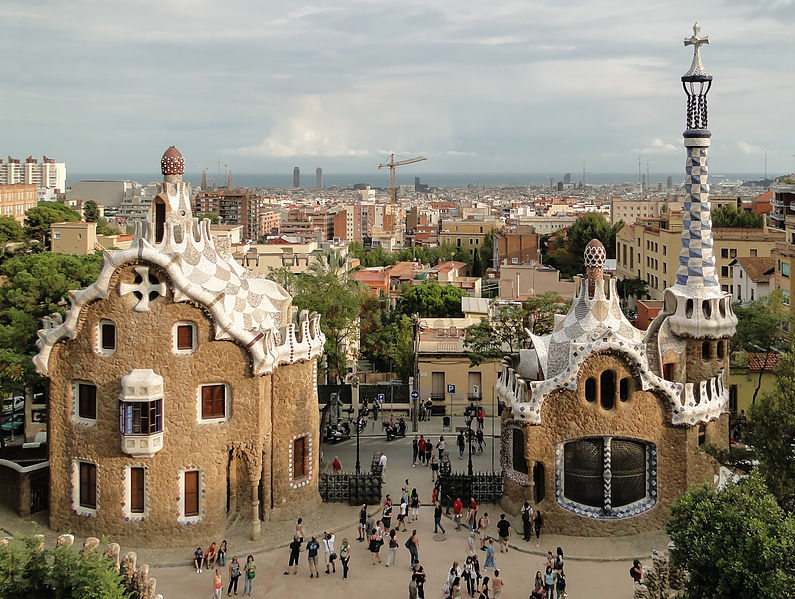
This topic was continued by kidzdoc achieves TBR domination in 2014, part 8.

