RidgewayGirl Reads in 2014 -- Part Four
This is a continuation of the topic RidgewayGirl Reads in 2014 -- Part Three.
Talk Club Read 2014
Join LibraryThing to post.
This topic is currently marked as "dormant"—the last message is more than 90 days old. You can revive it by posting a reply.


2RidgewayGirl
Read in 2014
January
Night Film by Marisha Pessl
Toronto Noir edited by Janine Armin
The Saturday Big Tent Wedding Party by Alexander McCall Smith
Sorry by Gail Jones
Five Days at Memorial by Sheri Fink
The Imposter Bride by Nancy Richler
Love in Infant Monkeys by Lydia Millet
Dare Me by Megan Abbott
Schneewittchen Muss Sterben (English title: Snow White Must Die) by Nele Neuhaus
February
The Minor Adjustment Beauty Salon by Alexander McCall Smith
The Goldfinch by Donna Tartt
CivilWarLand in Bad Decline by George Saunders
Scarlet by Marissa Meyer
Much Obliged, Jeeves by P.G. Wodehouse
The Limpopo Academy of Detection by Alexander McCall Smith
March
A Blade of Grass by Lewis DeSoto
Unbroken by Laura Hillenbrand
The Passage by Justin Cronin
In the Forest by Edna O'Brien
Gillespie & I by Jane Harris
Hyperbole and a Half by Allie Brosh
The Dead Women of Juarez by Sam Hawkin
The Girl Who Chased the Moon by Sarah Addison Allen
Never Go Back by Lee Child
The Maid's Version by Daniel Woodrell
April
Kind of Cruel by Sophie Hannah
The Year of the Flood by Margaret Atwood
A Month in the Country by J.L. Carr
Bridget Jones: Mad About the Boy by Helen Fielding
Bloodlands: Europe Between Hitler and Stalin by Timothy Snyder
Oryx and Crake by Margaret Atwood
Revolutionary Road by Richard Yates
Diary of a Young Girl by Anne Frank
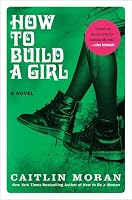
May
Nine Horses: Poems by Billy Collins
The Woman Upstairs by Claire Messud
The Magicians by Lev Grossman
Das Muschelessen by Birgit Vanderbeke (English title: The Mussel Feast)
Troubled Daughters, Twisted Wives edited by Sarah Weinman
Life After Life by Kate Atkinson
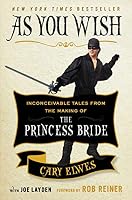
Die schönsten Jahre: Vom Glück und Unglück der Liebe by Elke Heidenreich
Mr Penumbra's 24-Hour Bookstore by Robin Sloan
Unaccustomed Earth by Jhumpa Lahiri
Frederica by Georgette Heyer
June
The Grand Sophy by Georgette Heyer
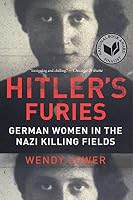
Vintage Ford by Richard Ford
Falling Off the Map: Some Lonely Places of the World by Pico Iyer
1914: A Novel by Jean Echenoz
The Carrier by Sophie Hannah
The Rose Garden by Susanna Kearsley
Between, Georgia by Joshilyn Jackson
Moranthology by Caitlin Moran
Walking the Perfect Square by Reed Farrel Coleman
The Witness Wore Red by Rebecca Musser
The Prague Cemetery by Umberto Eco
Trawler: A Journey Through the North Atlantic by Redmond O'Hanlon
January
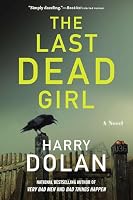
Night Film by Marisha Pessl
Toronto Noir edited by Janine Armin
The Saturday Big Tent Wedding Party by Alexander McCall Smith
Sorry by Gail Jones
Five Days at Memorial by Sheri Fink
The Imposter Bride by Nancy Richler
Love in Infant Monkeys by Lydia Millet
Dare Me by Megan Abbott
Schneewittchen Muss Sterben (English title: Snow White Must Die) by Nele Neuhaus
February
The Minor Adjustment Beauty Salon by Alexander McCall Smith
The Goldfinch by Donna Tartt
CivilWarLand in Bad Decline by George Saunders
Scarlet by Marissa Meyer
Much Obliged, Jeeves by P.G. Wodehouse
The Limpopo Academy of Detection by Alexander McCall Smith
March
A Blade of Grass by Lewis DeSoto
Unbroken by Laura Hillenbrand
The Passage by Justin Cronin
In the Forest by Edna O'Brien
Gillespie & I by Jane Harris
Hyperbole and a Half by Allie Brosh
The Dead Women of Juarez by Sam Hawkin
The Girl Who Chased the Moon by Sarah Addison Allen
Never Go Back by Lee Child
The Maid's Version by Daniel Woodrell
April
Kind of Cruel by Sophie Hannah
The Year of the Flood by Margaret Atwood
A Month in the Country by J.L. Carr
Bridget Jones: Mad About the Boy by Helen Fielding
Bloodlands: Europe Between Hitler and Stalin by Timothy Snyder
Oryx and Crake by Margaret Atwood
Revolutionary Road by Richard Yates
Diary of a Young Girl by Anne Frank
May
Nine Horses: Poems by Billy Collins
The Woman Upstairs by Claire Messud
The Magicians by Lev Grossman
Das Muschelessen by Birgit Vanderbeke (English title: The Mussel Feast)
Troubled Daughters, Twisted Wives edited by Sarah Weinman
Life After Life by Kate Atkinson
Die schönsten Jahre: Vom Glück und Unglück der Liebe by Elke Heidenreich
Mr Penumbra's 24-Hour Bookstore by Robin Sloan
Unaccustomed Earth by Jhumpa Lahiri
Frederica by Georgette Heyer
June
The Grand Sophy by Georgette Heyer
Vintage Ford by Richard Ford
Falling Off the Map: Some Lonely Places of the World by Pico Iyer
1914: A Novel by Jean Echenoz
The Carrier by Sophie Hannah
The Rose Garden by Susanna Kearsley
Between, Georgia by Joshilyn Jackson
Moranthology by Caitlin Moran
Walking the Perfect Square by Reed Farrel Coleman
The Witness Wore Red by Rebecca Musser
The Prague Cemetery by Umberto Eco
Trawler: A Journey Through the North Atlantic by Redmond O'Hanlon
3RidgewayGirl
Read in 2014
July
To Rise Again at a Decent Hour by Joshua Ferris
The Shining Girls by Lauren Beukes
Eleanor & Park by Rainbow Rowell
Blind Eye by Stuart MacBride
The One and Only by Emily Griffin
Faith by Jennifer Haigh
Bitter River by Julia Keller
How to be a Woman by Caitlin Moran
Summer House with Swimming Pool by Herman Koch
Save the Date by Jen Doll
We Are All Beside Ourselves by Karen Joy Fowler
August
Vampires in the Lemon Grove by Karen Russell
Orfeo by Richard Powers
Nineteen Seventy-Seven by David Peace
History of the Rain by Niall Williams
The Unwitting by Ellen Feldman
The Secret Place by Tana French
September
Springtime for Germany by Ben Donald
The God Delusion by Richard Dawkins
The Post Office Girl by Stefan Zweig
Inspector Imanishi Investigates by Seicho Matsumoto
Buffalo Jump by Howard Shrier
Endless Love by Scott Spencer
Mr. Tall: A Novella and Stories by Tony Earley
October
At Play in the Fields of the Lord by Peter Matthiessen
The Rattle-Rat by Janwillem van de Wetering
What You See in the Dark by Manuel Munoz
The Seamstress by Frances de Pontes Peebles
The Mystery of Mercy Close by Marian Keyes
Stay Awake: Stories by Dan Chaon
Personal by Lee Child
November
NOS4A2 by Joe Hill
The Dark End of the Street edited by Jonathan Santlofer and S.J. Rozan
The New Jim Crow by Michelle Alexander
Landline by Rainbow Rowell
Lake Country by Sean Doolittle
Back to the Coast by Saskia Noort
How to Build a Girl by Caitlin Moran
The Narrow Road to the Deep North by Richard Flanagan
As You Wish by Cary Elwes
December
Hitler's Furies by Wendy Lower
The Magician King by Lev Grossman
Not My Father's Son by Alan Cumming
The Last Dead Girl by Harry Dolan
I Cannot Tell a Lie, Exactly by Mary Ladd Gavell
The Absolutely True Diary of a Part-Time Indian by Sherman Alexie
In the Garden of Beasts by Erik Larsen
The Bone Clocks by David Mitchell
Yes Please by Amy Poehler
Rain Dogs by Sean Doolittle
July
To Rise Again at a Decent Hour by Joshua Ferris
The Shining Girls by Lauren Beukes
Eleanor & Park by Rainbow Rowell
Blind Eye by Stuart MacBride
The One and Only by Emily Griffin
Faith by Jennifer Haigh
Bitter River by Julia Keller
How to be a Woman by Caitlin Moran
Summer House with Swimming Pool by Herman Koch
Save the Date by Jen Doll
We Are All Beside Ourselves by Karen Joy Fowler
August
Vampires in the Lemon Grove by Karen Russell
Orfeo by Richard Powers
Nineteen Seventy-Seven by David Peace
History of the Rain by Niall Williams
The Unwitting by Ellen Feldman
The Secret Place by Tana French
September
Springtime for Germany by Ben Donald
The God Delusion by Richard Dawkins
The Post Office Girl by Stefan Zweig
Inspector Imanishi Investigates by Seicho Matsumoto
Buffalo Jump by Howard Shrier
Endless Love by Scott Spencer
Mr. Tall: A Novella and Stories by Tony Earley
October
At Play in the Fields of the Lord by Peter Matthiessen
The Rattle-Rat by Janwillem van de Wetering
What You See in the Dark by Manuel Munoz
The Seamstress by Frances de Pontes Peebles
The Mystery of Mercy Close by Marian Keyes
Stay Awake: Stories by Dan Chaon
Personal by Lee Child
November
NOS4A2 by Joe Hill
The Dark End of the Street edited by Jonathan Santlofer and S.J. Rozan
The New Jim Crow by Michelle Alexander
Landline by Rainbow Rowell
Lake Country by Sean Doolittle
Back to the Coast by Saskia Noort
How to Build a Girl by Caitlin Moran
The Narrow Road to the Deep North by Richard Flanagan
As You Wish by Cary Elwes
December
Hitler's Furies by Wendy Lower
The Magician King by Lev Grossman
Not My Father's Son by Alan Cumming
The Last Dead Girl by Harry Dolan
I Cannot Tell a Lie, Exactly by Mary Ladd Gavell
The Absolutely True Diary of a Part-Time Indian by Sherman Alexie
In the Garden of Beasts by Erik Larsen
The Bone Clocks by David Mitchell
Yes Please by Amy Poehler
Rain Dogs by Sean Doolittle
4RidgewayGirl

Helen Walsh had had a great life. She'd lucked into a solid career as a private investigator, which it turns out she's good at and which keeps her busy, she has a fantastic flat, which may be two narrow rooms in a high rise, but she's decorated it in an Addams Family Victorian style and she loves it. She has a best friend as up for anything as she is and a boyfriend she adores, her twin, like Hansel and Gretel, only evil. And then the Irish economy crashes, she loses her best friend, her boyfriend does something unforgivable and while she meets a great new guy, a Viking god working as a detective, her own career dries up, no one can afford a private investigator anymore, she loses her home and ends up moving back in with her parents, who are not pleased.
Marian Keyes has a talent for writing chick-lit with more substance than is customary and The Mystery of Mercy Close is no exception. Helen isn't klutzy or obsessed with clothes. She's good at what she does. She's also irritable, easily bored and while she does know how social interaction goes, it's an effort for her. She has a large, supportive family. She's also struggled with depression in the past and she feels it sweeping over her again.
This was a fun book, with enough substance given to plot and writing to mean that I didn't feel insulted reading it. Helen never did the stupid thing or needed to be rescued. She has a job to do, to find a missing member of a boy band popular twenty years earlier, and the twists and turns of that plot made sense. I have only two complaints; that she chose the wrong guy and that the loose ends were tied up a little too neatly for my taste, but it was a book that was easy to pick up and hard to put down.
5rebeccanyc
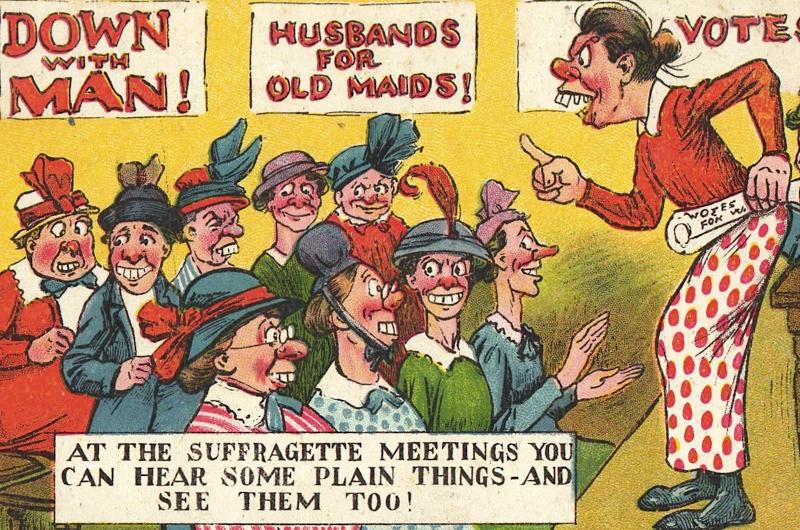
Love (!?) that cartoon at the top of the thread!
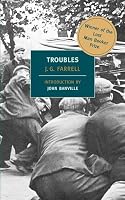
And I see you've recently acquired Troubles -- I loved that book. And I also have Nights at the Circus on the TBR.
And I see you've recently acquired Troubles -- I loved that book. And I also have Nights at the Circus on the TBR.
6NanaCC
Agreeing with Rebecca on the cartoon. You always have a great thread topper.
Rebecca, you've reminded me that I want to read Troubles. It is on the shelf waiting. Maybe sooner rather than later.
Rebecca, you've reminded me that I want to read Troubles. It is on the shelf waiting. Maybe sooner rather than later.
7rebeccanyc
For me, it was the best of the trilogy, although many prefer The Siege of Krishnapur.
8RidgewayGirl
Troubles has been on my radar for some time, due to reviews in Club Read. I was very pleased when I found it at a charity book sale put on by a British group. I did not mean to come home with nine books, however. Restraint, thy name is not RidgewayGirl!
And I'm having fun finding the suffragette cartoons. I'll have to think of something else next year.
And I'm having fun finding the suffragette cartoons. I'll have to think of something else next year.
9labfs39
I'm jumping ahead to your new thread in order to try and catch up by cheating. :-) Thought you might get a kick out of my daughter's Halloween costume. She's Rosie the Riveter. She later added a union button to complete the ensemble.


10RidgewayGirl
Lisa, I love it! My daughter went as a vampire bride and my son as a serial killer, involving much fake blood for both costumes. I dream of the day one of them chooses something socially aware.
And now my daughter is hosting a Hallowe'en horror movie sleepover. No sleep tonight!
And now my daughter is hosting a Hallowe'en horror movie sleepover. No sleep tonight!
11NanaCC
Rosie the Riveter seems to be big right now. I've seen several costumes posted on Facebook.
12labfs39
She's afraid her friends at school won't know who she is. I'll look forward to the report tonight when she gets home.
13avidmom
>4 RidgewayGirl: That one's going on the wishlist. Thanks for your review.
>9 labfs39: What a great idea!
>9 labfs39: What a great idea!
15wandering_star
Brilliant Rosie the Riveter costume!
I also really like Marian Keyes for enjoyable but grounded reads - it's quite unfair in a way that she gets shelved with the sex-and-shopping stuff. I remember having a friend staying with me after a very difficult break-up, and reading Watermelon was one of the things that gave her the impetus to start picking her life up again.
I also really like Marian Keyes for enjoyable but grounded reads - it's quite unfair in a way that she gets shelved with the sex-and-shopping stuff. I remember having a friend staying with me after a very difficult break-up, and reading Watermelon was one of the things that gave her the impetus to start picking her life up again.
16RidgewayGirl
There used to be a program on BBC Radio 4 where four authors all read each other's books and discussed them. Marian Keyes was on with three male non-fiction authors who were all a bit full of their own importance, until they discussed her book, which they all loved and wished the cover had allowed them to carry it in public.
17RidgewayGirl
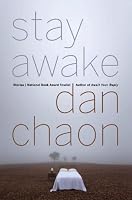
In Dan Chaon's book of short stories, Stay Awake, all of the stories deal in some way or another with a young man who hasn't been able to handle the challenges life has thrown at him, usually the loss of a parent. His protagonists drift, avoiding decisions, even as the women in their lives grow frustrated. There's a dreamy quality to Chaon's writing, which suits the inner lives of his characters.
I enjoyed this collection, despite the similarity between the stories. One did feature a woman, stuck in the same drift pattern as the men, but that story was the least convincing in the collection. There was one bizarre freak accident that happened to the characters in two separate stories, which was an odd misstep by a usually sure-footed author, because he is a very good writer and I always enjoy reading whatever he writes.
18rebeccanyc
I read Dan Chaon's Await Your Reply a few years ago and, rereading my review, I'm not sure why I haven't read anything else by him since. Thanks for reminding me about him.
19RidgewayGirl
Rebecca, I really liked Await Your Reply. I have a copy of You Remind Me of Me, but probably won't read it until next year. He is good, though.
20RidgewayGirl
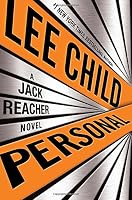
I don't have much to say about Jack Reacher's 19th outing in Personal by Lee Child. It's average for the series; there having been much better installations and a few worse. If you like Reacher, you'll enjoy watching him outsmart and out punch the various bad guys.
I do think that Child is either starting to get tired of his famous hero and is coasting. There was some lazy writing and several scenes that felt like warmed-over adaptations from earlier books, but Reacher's still an interesting guy, a Sherlock Homeless as one character calls him, and surely good for a few more episodes.
21NanaCC
I've never read anything by Dan Chaon, or by Lee Child for that matter. Enjoyed your reviews though.
22RidgewayGirl
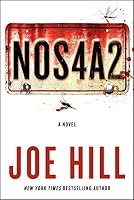
I don't usually read horror. Usually I just don't find it frightening; either it just falls flat or it's so over the top it makes me roll my eyes. But Joe Hill's earlier novel, Heart-Shaped Box, was well written and eerie enough for me to enjoy it. So I was ready to pick up his new novel, NOS4A2, and see if he was still someone worth reading.
NOS4A2 reads like early Stephen King, which is no bad thing at all. There's an evil car, children who see more than their parents and pop cultural references aplenty. Manx is an old man in a vintage Rolls Royce, who kidnaps children in order to bring them to Christmasland, his own perfect amusement park and very creepy place. Vic is the only child of an unhappily married couple, with a talent for finding lost objects. How her path intersects with the murderous Manx and what happens is very interesting and well plotted. Vic is a wonderfully real character, as are those who love her, from a junkie former librarian to an obese, Comic Con attending high school drop-out. Hill's characters are not the great and the beautiful, but people living on the fringes of society. He has a wonderful touch with his outcasts, not downplaying their faults and recognizing their value.
As for the creep factor, while I wasn't frightened, I was terribly interested in what happened next. That's not a bad quality in a book, whatever the genre. And I'm left with absolutely no desire to hear any Christmas carols anytime soon.
23labfs39
Not a book I'm likely to read, but wonderfully entertaining review. Good luck with not hearing carols. I heard my first today...
24RidgewayGirl
Germany hasn't started the Christmas music yet, thank goodness. I don't think I'll hear any until the Christmas markets open on December 6th.
25kidzdoc
Nice review of NOS4A2, Kay. It's not the type of book that I normally would read, but I might give it a go.
26RidgewayGirl
Thanks, Darryl. I've noticed that my reading lately has been relentlessly light. I hope that corrects itself soon.
27RidgewayGirl
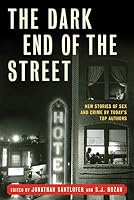
The Dark End of the Street is a collection of noir short stories by well-known authors edited by Jonathan Santlofer and S.J. Rozan. Like any collection where the stories have been solicited rather than pulled from already published works, the quality is uneven, with a few feeling uninspired and written at the last minute and others being memorable. Oddly, the best stories in the book were grouped at the back, and included Joyce Carol Oates, who writes about how a girl witnesses how the retelling of an incident in the life of her mother changes over time and who is doing the telling, and Edmund White, whose story involves the politics and struggles for tenure in the English department of a small college.
Val McDermid surprised me with an unexpectedly gripping story about an old lover returning for a bit of blackmail. I'd read one of her crime novels years ago, and hadn't been impressed, but I see that I'll have to read something else by her after all. The stories by Laura Lippman, Lawrence Block and Lee Child were all serviceable, but not up to what some of the authors came up with.
I read this as a palate cleanser between other books, and for that it served its purpose well. There were no unreadable stories and they were all recognizably noir, although if you were looking for a book of short crime stories, Troubled Daughters, Twisted Wives would be a better choice.
28dchaikin
Catching up. The Dark End of the Street is probably not my thing. I'll keep Choan in mind. I haven't read him and he sounds pretty good.
29rebeccanyc
>26 RidgewayGirl: My reading has also been lighter than usual lately, and I too hope that corrects itself!
30RidgewayGirl
Rebecca, I'm reading some more substantial stuff now, in among the light reading. The New Jim Crow has been an eye-opener thus far and The Bone Clocks is likewise excellent.
31rebeccanyc
>30 RidgewayGirl: The New Jim Crow is plenty serious!
32RidgewayGirl
No kidding, Rebecca. I've been thinking a lot about my own unexamined assumptions as I read it.
33RidgewayGirl

The New Jim Crow is not an easy book to read, but it's important for Americans to read it. In it, Michelle Alexander sets out a convincing claim that our War on Drugs has resulted in shocking injustice. While the percentage of people who have used illicit drugs to some extent or another is the same across all groups of Americans, law enforcement has concentrated on African Americans to the point where they account for up to 90% of those charged. In low-income neighborhoods, being stopped and searched by police is a routine occurrence for young men and there are regular drug sweeps that pull the innocent as well as the guilty into the justice system.
The justice system itself is skewed against low-income African American defendants. Until recently, possession of crack cocaine was sentenced at 100 time the length of sentences for powder cocaine, which is seen as the drug of choice for white people. It's now sentenced at an 18-to-1 ratio. Harsh drug laws require judges to give first time offenders who were caught with a small amount of drugs, including marijuana, to custodial sentences of five years, longer than that received by those convicted of violent assault or drunk driving. Police department funding depends on drug arrests for both financing and equipment, and has led to a 2000% increase in the number of people imprisoned as compared to the 1970s.
And the problem isn't solved when people leave prison. Felons are ineligible for public housing. They can't vote or serve on juries. It's almost impossible for them to find a job. We've created an underclass barred from participating in society, from supporting their families, from being a useful member of society. And that underclass is overwhelmingly composed of African American men.
This is a largely invisible problem, hidden from all but the family members of the incarcerated. The focus is on the War on Drugs, which isn't racist in and of itself, it's just that it's more efficient to scoop up people from high density urban ghettos. And if middle-class white Americans were subject to the same tactics, there would be an outcry. Alexander makes a solid case, but also presents the beginnings of a solution. While The New Jim Crow is a difficult book to read, it does start a conversation that we need to have.
Many thanks to both Daniel and Rebecca for pointing me in the direction of this book.
34japaul22
This definitely ranks as one of the most important books I've read. I was shocked at how little I knew about the issues presented in the book and also at the unknowing racism I was harboring myself. I will admit that I had the attitude that I knew there were unfair percentages of minorities in jail, but I assumed it was for real reasons that were prosecuted fairly across the racial and socio-economic spectrum. I was really stopped in my tracks by her statistics that you mentioned about drug usage rates vs. drug prosecutions when comparing these in terms of race and targeted neighborhoods. I should have known or deduced this, but I never had.
I've been slightly encourage by the changes in drug laws that are happening in certain areas. I know Washington DC recently legalized small amounts of marijuana possession. It still has to make it through some court approvals, but it's a step in the right direction. If it stems the tide of black men getting felonies for having a little pot and then having to carry that felony title for so the rest of their lives, it sounds like a good policy to me.
I've been slightly encourage by the changes in drug laws that are happening in certain areas. I know Washington DC recently legalized small amounts of marijuana possession. It still has to make it through some court approvals, but it's a step in the right direction. If it stems the tide of black men getting felonies for having a little pot and then having to carry that felony title for so the rest of their lives, it sounds like a good policy to me.
35RidgewayGirl
Alexander was kind about it, but she did make the point that the system works because of the ignorance of well-meaning people. Which would include me. It is an easy sell, though. Who objects to being tough on crime?
36japaul22
>35 RidgewayGirl: Yep, and I was definitely one of those well-meaning people. But now I know so much more and am able and do talk about it with friends and family. I've also recommended to book to lots of people.
37RidgewayGirl
I don't usually read thrillers. The focus on action often means that characterization is short-changed, with cartoon-depth villains and women who exist only for the hero's enjoyment. That is changing. In his last adventure, not only does Jack Reacher not sleep with his much younger female partner, but he also indicates interest in a woman his own age, wishing that he had time to get to know her in between fight scenes. But the patterns and expectations remain.
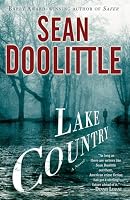
Luckily, there are exceptions and the best of those exceptions is Sean Doolittle. He writes well, but most importantly the characters in his books feel like real people. Sure, Lake Country follows the pattern of a guy rescuing a woman in peril, but he's tweaked the expected into something both surprising and a lot of fun to read. The woman in peril is a lot more capable than anyone expected. There are two bad guys, neither of whom are stock villains, although one comes close, Doolittle provides just that little insight into his motivations to make him human. And as for heroes, there are two. A female television news reporter who is both a little burned out and a veteran of the war in Iraq, with a rebuilt knee who is unemployed and spending a lot of time in the local bar. Doolittle doesn't short-change readers on the action. There's plenty of that. But the action makes sense, the hero is not indestructible. His plans don't always work and when they do the consequences aren't what he anticipated. The pretty face reporting at the scene is able to notice things the cops don't and she's worried about what being that person who is first to arrive at the homes of victims means about her own morality.
Lake Country, like the other books by Sean Doolittle that I've read, is intelligent and entertaining. I'm looking forward to reading more by him. Still not a fan of the genre, however.
38NanaCC
>37 RidgewayGirl: Lake Country sounds interesting, Kay. Is it part of a series, or stand alone?
39RidgewayGirl
Colleen, Doolittle's novels are all stand-alone as far as I know. My favorite is The Clean-Up.
40RidgewayGirl
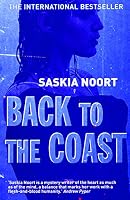
Back to the Coast is the debut novel by Dutch author Saskia Noort. Maria, back-up singer and parent to two small children in Amsterdam, broke up with her partner, Geert, whose mental issues finally proved too much for her. She also had an abortion, feeling unequal to the task of raising three children and working without support. Immediately afterwards, she begins to receive threatening messages and it's clear she's being stalked. The police can't do anything. The stalker is clever enough to disguise their identity, and the harassment intensifies until Maria is frightened enough to leave Amsterdam. She's also worried that people don't believe her. The letters are destroyed. The things that happen are designed to look as though she was inventing the threats and she has no idea who she can trust.
There is a lot that is promising in this book. Maria is an interesting character; prickly and slow to make friends, but loving to her children. She has a hard time asking for help or trusting those who offer her help. The idea of being stalked, and how doubts are raised about the target's perceptions makes for compulsive reading. However, Back to the Coast is too flawed a story to do justice to the ideas behind the plot. The stalker's identity is revealed too obviously, too often and too early to maintain suspense and what begins as a tale based in reality becomes more and more outrageous in the book's final pages. I loved the setting, a part of the Netherlands I have visited and I hope to give Noort another try with a later novel.
41dchaikin
just now seeing your New Jim Crow review. Glad you read it. i think it's an important book in many ways. It certainly changed how i view political comments on bring tough on crime.
42RidgewayGirl
Daniel, Ta-Nehisi Coates has a longer discussion of the book on The Atlantic website. Given recent events, it seems urgent to start addressing these issues.
http://www.theatlantic.com/politics/archive/2014/09/books-for-the-horde-the-new-...
http://www.theatlantic.com/politics/archive/2014/09/books-for-the-horde-the-new-...
43dchaikin
Thanks for the link. I got a lot out of Coates introduction, although I did not read the discussion.
I find it interesting to see what each reviewer chooses to mention and therefore highlight, and what they chose not to mention (which doesn't mean they did not find it important, only that it wasn't important enough to fit in the length and range of their review). There is a lot in the book and reviewers are generally forced to be selective.
I find it interesting to see what each reviewer chooses to mention and therefore highlight, and what they chose not to mention (which doesn't mean they did not find it important, only that it wasn't important enough to fit in the length and range of their review). There is a lot in the book and reviewers are generally forced to be selective.
44RidgewayGirl
To Build a Girl tells the story of Johanna Morrigan, who grows up on benefits, in a large family in Wolverhampton and who manages to get herself a job writing reviews for a music magazine while still a teenager. Which is also the story of author Caitlin Moran. If you've followed Moran's columns for The Times or read either her collection of essays in Moranthology or her very funny book about feminism, How to Be a Woman, lots of her first novel will feel familiar, although less in an "oh, I've read that before way" and more in the way reading about a place you've lived or about a person you know feels familiar. The same topics and events arise.
Johanna desperately wants out of Wolverhampton and dreams of a fabulous life in London, although it's clear to her that Johanna Morrigan, badly dressed, fat and prone to saying the wrong thing, would not be a success in London. So she reinvents herself as Dolly Wilde and finds that when she's pretending to be Dolly, all the outrageous, witty things that Johanna would never remember to say leap immediately to her tongue. Dolly knows how to be scandalous, how to be confident in a room full of purposeful strangers and how to make herself memorable. Dolly's not always particularly nice, but she isn't hiding under her bed talking to her dog. Johanna talks in a Scooby-Doo voice when nervous; Dolly plonks down a bottle of booze on the conference room table and polishes her reputation as a lady sex adventurer. Pulling the two parts of herself together and finding out what she really wants while saving her family might be a little harder.
How to Build a Girl is very funny. If you've liked Moran's essays, you'll like her first novel.
45LolaWalser
Someone gave me How to be a woman but I take forever to brave long, concentrated books on "the female condition" (so much so I have yet to read a single one!), no matter how "funny" they are supposed to be.
Wasn't Dolly Wilde a real person, Oscar's grand-niece or something? By reputation also larger-than-life. (And a lesbian.) Just wondering whether it's sheer coincidence or some tribute was meant.
Wasn't Dolly Wilde a real person, Oscar's grand-niece or something? By reputation also larger-than-life. (And a lesbian.) Just wondering whether it's sheer coincidence or some tribute was meant.
46RidgewayGirl
Yes, she picked that name because the original Dolly Wilde was a wild child and a lesbian to boot. The other names Johanna considered were, as she put it, proof that teenage girls should not have babies, not because they can't be responsible, loving mothers, but because of the names they choose. And How to be a Woman is less screed or history than one woman's experience and very, very funny.
47LolaWalser
>46 RidgewayGirl:
Oh, I'm sure it's funny, it's just that the older I get the sadder any woman's experience looks to me. Nothing to do with personalities, or even life's incidents--just that the circumstances are so damned unfair.
Oh, I'm sure it's funny, it's just that the older I get the sadder any woman's experience looks to me. Nothing to do with personalities, or even life's incidents--just that the circumstances are so damned unfair.
48rebeccanyc
How to Build a Girl sounds interesting. I wasn't familiar with Caitlin Moran.
49RidgewayGirl
Here's an article by Moran if anyone wants to see if she's someone you might read without going to the trouble of finding a book:
http://www.theguardian.com/lifeandstyle/2014/jul/05/caitlin-moran-my-sex-quest-y...
http://www.theguardian.com/lifeandstyle/2014/jul/05/caitlin-moran-my-sex-quest-y...
50RidgewayGirl

I'm not a big fan of war stories. Fortunately, Richard Flanagan's The Narrow Road to the Deep North is much more than a war story. It's hard to explain exactly what it is. It follows the life of Dorrigo Evans, a poor boy from a large family growing up in Tasmania, who does well enough in school to be sent for further education, eventually becoming a doctor, just in time for the start of WWII. He falls in love with a girl from a good family, although it's more that he's taken with the family's social standing, and he then really falls in love with an unsuitable woman. He is a POW in a Japanese camp sent to build a railroad through Thailand, where he ends up as the ranking officer, fighting to keep up the morale of his men and to keep as many alive as possible. And then there's the rest of his life, which is haunted by the war's aftermath, with the memories growing more vivid as he ages, and his own personal failing well hidden behind his successful career as a doctor and reputation as a war hero. But The Narrow Road to the Deep North also follows the lives of a few of his fellow prisoners and guards, giving greater depth to the story. Evans isn't even the main focus of the portion set in the camp, but rather the people surrounding Darky Gardiner, an endlessly inventive prisoner who is able to obtain/steal almost anything and whose own courage and grit inspire and enrage his fellow soldiers. There's a love story here, as well, as Evans survives by remembering a brief affair and planning to return to her.
This is a complex and nuanced story, very well-told. It's a worthy Booker winner, examining memory and guilt, with a look at how both the perpetrators and victims of atrocity learn to live with their pasts.
51RidgewayGirl
How much fun is this? Cary Elwes writes a book about the making of The Princess Bride in which he reveals that it was all as much fun as it looks on screen and everybody joked around and liked each other and are all still friendly? There's not a lot of substance to As You Wish: Inconceivable Tales from the Making of The Princess Bride, but if you liked the movie, and especially if you can quote lines of dialogue in your head, then you'll enjoy this fun book.
52dchaikin
Added Flanagan's book to my wishlist after reading your review. Interesting that there are other books with the same curious title.
53RidgewayGirl
Daniel, in the book the narrow road to the deep north is a line in a Japanese haiku.
54NanaCC
I've added The Narrow Road to the Deep North to my wishlist.
55Nickelini
I doubt I'll read The Narrow Road to the Deep North (not anytime soon, anyway), but the story reminds me a lot of the movie "The Railway Man", which starred Colin Firth and Nicole Kidman (and an extremely handsome Jeremy Irvine playing the young Firth character). It's worth seeing if you're interested in more of that setting and its aftermath.
56RidgewayGirl
Joyce, I'm not sure I want to read any more on the subject. I think I followed along in The Narrow Road to the Deep North because Flanagan did such a good job with it, but it hasn't become a topic I'm eager to learn more about.
Colleen, I'll be interested to find out what you think of it.
Colleen, I'll be interested to find out what you think of it.
57RidgewayGirl
After reading Bloodlands: Europe Between Hitler and Stalin by Timothy Snyder earlier this year, my expectations may have been too high for Hitler's Furies: German Women in the Nazi Killing Fields by Wendy Lower. In it, Lower sets out to look at women who were involved in the atrocities that took place in Eastern Europe. She examines women who served as bystanders, women who assisted the ones who did the actual killing, usually as secretaries and in other desk jobs, and women who crossed the line and took part in the killing, sometimes to the discomfort of the men around them. Lower did a great deal of research, taking advantage of archives that were opened to westerners only in the wake of the fall of the Soviet Union. She combed through records, read diaries and published accounts, and interviewed those still living. The book follows the format of introducing the reader to several women with brief descriptions of their formative years and how they ended up in the east. Later chapters reintroduce the women and describe their experiences during the war, with a final chapter wrapping up with what they did after the war ended. Lower also looked briefly at why women might have participated in ways at loggerheads with how women are supposed to behave.
Lower looks at the career paths that suddenly opened up to women in the Third Reich. Despite the government's emphasis on women as mothers and housewives, the war opened up not only jobs in factories, but as nurses, teachers and secretaries. And as Germany sought to turn the countries it had invaded to the east into agricultural colonies, German women were needed as teachers to show ethnic Germans how to be properly German and to indoctrinate the children, nurses were needed to care for soldiers but also to continue the German program of euthanizing the handicapped and all the paperwork generated needed able secretaries. Ranking officers were also able to bring their families out to where they were stationed and where they were able to live a more luxurious lifestyle than had been available in Germany. With the exception of nurses, who were taught that euthanizing both injured soldiers and the handicapped relieved suffering, the women were not sent east to kill anyone, but teachers abandoned their charges to certain death when retreat was called, secretaries typed and passed on killing orders as well as determined who would be added in the lists of people to be killed or sent to camps, and the wives and girlfriends of officers not only witnessed the activities of the men around them, but they sometimes took part, either at the urging of their partners or on their own initiative.
The format of breaking up each woman's story and placing each fragment far from the others in the book, as well as the number of women she followed had the effect of lessening the impact of each biography, and in forcing the author, given the size of the book, into keeping each story brief. It didn't help that her views on the women shone through in the writing. Here are monsters, she says, come look at the monstrous women. Adjectives are inserted where the actions and attitudes of the women needed no modifiers, and descriptions seem to be cherry-picked so as to make a point. In the wake of recent work to understand how ordinary people could take part in wholesale murder, this book feels like a return to the idea of Nazis being special, extra-evil villains. Given that she is at pains to explain that the women she chose were ordinary women who went east mostly as a way to earn a little more money or because they had no choice, this emphasis feels misguided. Still, the enormous amount of research she did makes this an interesting book, even if it raised more questions than it answered.
58dchaikin
>57 RidgewayGirl: sounds like a tough read. Too bad it wasn't better able to handle moral complexities.
>56 RidgewayGirl: my favorite book of the is related to this topic, on a Chinese-Malaysian survivor of WWII Japanese railroad construction. The book is The Garden of Evening Mists...I don't know your stating lack of interest in reading more on the topic caused me to recommend a book on the topic....
>56 RidgewayGirl: my favorite book of the is related to this topic, on a Chinese-Malaysian survivor of WWII Japanese railroad construction. The book is The Garden of Evening Mists...I don't know your stating lack of interest in reading more on the topic caused me to recommend a book on the topic....
59RidgewayGirl
Daniel, I have another of his books, A Scent of Rain. I'll have to read it soon. Maybe over the holidays.
60baswood
Good grief Hitler's Furies sounds like a book that I would never want to read. I like my horror to be fictionalised.
61dchaikin
>59 RidgewayGirl: I hate posting from my phone, and I don't know how you comprehended that. It should have said:
My favorite book of the year is related to this topic...
and
...I don't know why your stating a lack of interest in reading more on the topic caused me to recommend a book on the topic...
Anyway - I really want to read A Scent of Rain too...but the title seems to have gotten lost in with all the other books I want to read.
My favorite book of the year is related to this topic...
and
...I don't know why your stating a lack of interest in reading more on the topic caused me to recommend a book on the topic...
Anyway - I really want to read A Scent of Rain too...but the title seems to have gotten lost in with all the other books I want to read.
62RidgewayGirl

Alan Cumming was scheduled to tape an episode of Who Do You Think You Are?, a British television show in which celebrities delve into their family trees for interesting stories. In Cumming's case, the show was to focus on his maternal grandfather, who his mother had last seen when she was six and who had died under mysterious circumstances while serving as a policeman in Malaysia. Just before the filming began, however, his brother gave him some startling news; his father was claiming that Cumming was not his son.
Not My Father's Son is the story of the emotionally difficult time, when Cumming had to talk to the abusive father he had very little contact with, take a DNA test and deal with all the ramifications of this sudden news, all while filming the story of his grandfather. Cumming also goes back to his childhood to describe his difficult childhood, where the entire family was held hostage to his father's temper and how he finally came to terms with it all. This should be another "misery memoir," but Cumming is too optimistic and upbeat for that, so that the book never bogs down into anything approaching self-pity. Instead, it's an honest look at both his own upbringing and the life of his grandfather.
63Nickelini
#62 - I'm seeing the name Alan Cumming everywhere lately and I finally looked up who he is . . . and I still don't recognize him. So at least that's settled. Despite that, it still sounds like an interesting book.
Who Do You Think You Are is on YouTube, and I've been binge watching it lately (well, not watching, but listening to as I cook dinner or do housework).
Who Do You Think You Are is on YouTube, and I've been binge watching it lately (well, not watching, but listening to as I cook dinner or do housework).
64RidgewayGirl
Joyce, he's the guy who introduces Masterpiece Mystery if you ever watch that. He's also in my favorite show, The Good Wife. I watched his episode of Who Do You Think You Are? while cooking dinner (!) and liked it. Right now, I'm listening to Serial while cooking and that works well.
65Nickelini
I'll have to watch his episode and see if he rings any bells. I'm just addicted to that show lately.
66lesmel
>63 Nickelini: & >64 RidgewayGirl: He does a lot of stage work. He was in Cabaret in 1993 and reprised his role this year. There was a great interview of him by Terry Gross on NPR.
67NanaCC
>64 RidgewayGirl: "He's also in my favorite show, The Good Wife."
I love that show too. His character, like all of the characters on that show, are so good.
I love that show too. His character, like all of the characters on that show, are so good.
68RidgewayGirl
Colleen, the show is so intelligent and well acted, although I'm still recovering from that big thing that happened. And I'll watch anything Alan Cumming does - he just seems like he's having a ball, even when yelling at someone as Eli Gold. In the book, he mentions that he doesn't feel entirely at home in a gray suit.
69RidgewayGirl
The Last Dead Girl is a prequel to the series by Harry Dolan that began with Very Bad Things. It is, at heart, a classic crime thriller. David Malone meets a beautiful woman one night and ends up spending ten days with her. She's living in a run-down duplex with the landlady on the other side of the thin walls, but they're happy together. They've both kept some information back from the other person, him that he's actually engaged and Jana's is her obsession with the case of a man who may have been wrongly imprisoned for the murder of his wife and the reasons for her interest. Before their relationship can develop further, however, he finds her murdered. She had complained about feeling watched and now David is determined to find out who killed her. Complicating things is the detective assigned to the case, who coincidentally also led the case Jana was looking into and who may or may not be a little crooked, or who is at least hiding something.
Dolan is respectful of the genre, not really breaking new ground, but he handles the twists and turns of the plot with ease. Parts are a little far-fetched, but that's standard for the genre and the dramatic conclusion was really well done; I thought he'd gotten lazy in the last few chapters, but he pulled the whole thing off. I'm not sure I entirely buy the motivations of the dead girl of the title, but the author did go to some effort to make her a strong, resourceful character and not just a trigger for the main character's adventures. In the end, that may be why I enjoy Dolan's novels; he clearly sees each of his characters, no matter how small their role, as fully rounded people, which makes for enjoyable reading.
70RidgewayGirl
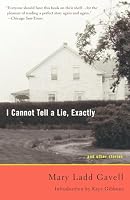
As even the most earnest student longs for graduation, the most faithful employee yearns for retirement, so Martha Hedges looked forward to widowhood. She would not by word or deed have attempted to hasten such an outcome; this is not a murder story. On the contrary, she was a devoted wife who lived in loving concord with a genuinely good husband. Being, in her shy and quiet way, a devout woman, she expected eventually to join Harold in Heaven for all eternity; but she counted on a nice long vacation first.
Were John Cheever to have had a twin sister who also wrote short stories, and had that imaginary sister spent time as a child in the loving care of her aunts, Dorothy Parker and Dawn Powell, she might write like Mary Ladd Gavell, the author of a single slim book of short stories. I Cannot Tell a Lie, Exactly: And Other Stories is a collection of wonderfully written stories that combine both depth and heart, while avoiding sentimentality and regard life with an eye for the subtle humor. Gavell died unpublished; it was only when a single short story (The Rotifer) was published in a trade magazine as a tribute to her, that she was discovered. The few stories she did write are sublime. My favorite is Baucis, which begins with the above paragraph. Gavell's stories concern the domestic; a child taking the school bus, an older couple caring for her mother as she dies, another couple on the search for antiques in New England, and they are pitch perfect. I'll be holding on to my copy because I know that I'll want to reread this more than a few times.
71baswood
>70 RidgewayGirl: Love the synopsis for the short story by Mary Ladd Gavell
72RidgewayGirl
Thanks, bas.
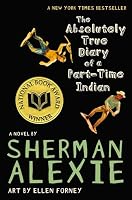
The Absolutely True Diary of a Part-Time Indian is a semi-autobiographical YA novel by Sherman Alexie, telling the story of Arnold, who lives on a reservation in the Pacific Northwest. When he's issued a textbook and sees that his mother had also used it, thirty years earlier, he decides that he has to attend a better school, a predominantly white school in a rural town thirty miles from home. The Absolutely True Diary of a Part-Time Indian tells the story of his freshman year, with the conflict he feels on leaving and the struggle to find a place in a school that, at best, considers him an oddity and, at worst, is openly racist. But this is anything but a grim story. It's about a fourteen year old boy, after all, so there's lots about girls, and masturbation and basketball, and it's illustrated with Arnold's drawings, cartoons and sketches. I'll be setting this book out where my son can find it, as I think he'll like Arnold, whose life is so much more difficult than his. Alexie's not afraid to portray life on a reservation as it is and he's not afraid to explain why it's so bleak, but he's also quick to show the love that exists and the vibrant community that has everyone looking out for everyone else.
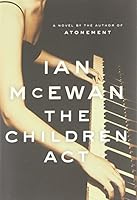
Ian McEwan's latest novel, The Children Act, returns to the themes of Enduring Love, while adding a layer of "ripped from the headlines" type of story. Fiona's a family court judge, and often has to deal with difficult and morally cloudy situations. She was the justice who wrote the decision on a case of Siamese Twins and that case has preoccupied her since. She's handed an emergency case, of a seventeen year old Jehovah's Witness who is refusing the blood transfusion that would save his life, just as her marriage crumbles.
This is a slender book, and it delves into many aspects of family law, all the various and tawdry ways that families fall apart, while also dealing with how Fiona reacts to her husband's actions and the impact on her of the actions of a young man. While McEwan is an able writer, and The Children Act is a book that is hard to put down, it's scope and brevity reduce the impact of the various themes and plot lines. Much that deserved more attention was sketched in. There were several novels' worth of material here, or at least one very meaty one, and even McEwan's adept handling couldn't make more than an outline of many of the issues he touches on.
The Absolutely True Diary of a Part-Time Indian is a semi-autobiographical YA novel by Sherman Alexie, telling the story of Arnold, who lives on a reservation in the Pacific Northwest. When he's issued a textbook and sees that his mother had also used it, thirty years earlier, he decides that he has to attend a better school, a predominantly white school in a rural town thirty miles from home. The Absolutely True Diary of a Part-Time Indian tells the story of his freshman year, with the conflict he feels on leaving and the struggle to find a place in a school that, at best, considers him an oddity and, at worst, is openly racist. But this is anything but a grim story. It's about a fourteen year old boy, after all, so there's lots about girls, and masturbation and basketball, and it's illustrated with Arnold's drawings, cartoons and sketches. I'll be setting this book out where my son can find it, as I think he'll like Arnold, whose life is so much more difficult than his. Alexie's not afraid to portray life on a reservation as it is and he's not afraid to explain why it's so bleak, but he's also quick to show the love that exists and the vibrant community that has everyone looking out for everyone else.
Ian McEwan's latest novel, The Children Act, returns to the themes of Enduring Love, while adding a layer of "ripped from the headlines" type of story. Fiona's a family court judge, and often has to deal with difficult and morally cloudy situations. She was the justice who wrote the decision on a case of Siamese Twins and that case has preoccupied her since. She's handed an emergency case, of a seventeen year old Jehovah's Witness who is refusing the blood transfusion that would save his life, just as her marriage crumbles.
This is a slender book, and it delves into many aspects of family law, all the various and tawdry ways that families fall apart, while also dealing with how Fiona reacts to her husband's actions and the impact on her of the actions of a young man. While McEwan is an able writer, and The Children Act is a book that is hard to put down, it's scope and brevity reduce the impact of the various themes and plot lines. Much that deserved more attention was sketched in. There were several novels' worth of material here, or at least one very meaty one, and even McEwan's adept handling couldn't make more than an outline of many of the issues he touches on.
73Nickelini
so there's lots about girls, and masturbation and basketball,
Way, way, way too much basketball for my liking. (I can see that The Absolutely True Diary of a Part-Time Indian is an important and worthwhile book; it just wasn't for me)
What stood out when I read it was the high number of funerals the 14 year old had attended. True, and tragic.
There were several novels' worth of material here, or at least one very meaty one, and even McEwan's adept handling couldn't make more than an outline of many of the issues he touches on.
That's too bad. I'm still really looking forward to The Children Act, but I consider myself warned.
Way, way, way too much basketball for my liking. (I can see that The Absolutely True Diary of a Part-Time Indian is an important and worthwhile book; it just wasn't for me)
What stood out when I read it was the high number of funerals the 14 year old had attended. True, and tragic.
There were several novels' worth of material here, or at least one very meaty one, and even McEwan's adept handling couldn't make more than an outline of many of the issues he touches on.
That's too bad. I'm still really looking forward to The Children Act, but I consider myself warned.
74RidgewayGirl
I thought it late enough in the year to put together my stats.
Best books of the year - Fiction:
At Play in the Fields of the Lord by Peter Matthiessen
The Narrow Road to the Deep North by Richard Flanagan
The Bone Clocks by David Mitchell
I Cannot Tell a Lie, Exactly by Mary Ladd Gavell
The Goldfinch by Donna Tartt
Revolutionary Road by Richard Yates
The Post Office Girl by Stefan Zweig
And the best of the best:
History of the Rain by Niall Williams
Gillespie and I by Jane Harris
A Month in the Country by J.L. Carr
Best books of the year - Non-Fiction:
Five Days at Memorial by Sheri Fink
Bloodlands: Europe Between Hitler and Stalin by Timothy Snyder
The New Jim Crow by Michelle Alexander
The best crime novels of the year:
Dare Me by Megan Abbott
The Secret Place by Tana French
Troubled Daughters, Twisted Wives edited by Sarah Weinman
Inspector Imanishi Investigates by Seicho Matsumoto
Nineteen Seventy-Seven by David Peace
Worst books of the year:
To Rise Again at a Decent Hour by Joshua Ferris
Snow White Must Die by Nele Neuhaus
Bridget Jones: Mad About the Boy by Helen Fielding
The Rose Garden by Susanne Kearsley
And the worst of the worst:
The One & Only by Emily Griffin
104 books read, 51% female authors, 16% non-fiction.
By nationality:
USA: 47
Australian: 2
Austria: 1
Brazil: 1
Britain: 23
Canada: 6
France: 1
Germany: 3
Irish: 3
Italy: 1
Japan: 1
Mexico: 1
The Netherlands: 4
South African: 2
Best books of the year - Fiction:
At Play in the Fields of the Lord by Peter Matthiessen
The Narrow Road to the Deep North by Richard Flanagan
The Bone Clocks by David Mitchell
I Cannot Tell a Lie, Exactly by Mary Ladd Gavell
The Goldfinch by Donna Tartt
Revolutionary Road by Richard Yates
The Post Office Girl by Stefan Zweig
And the best of the best:
History of the Rain by Niall Williams
Gillespie and I by Jane Harris
A Month in the Country by J.L. Carr
Best books of the year - Non-Fiction:
Five Days at Memorial by Sheri Fink
Bloodlands: Europe Between Hitler and Stalin by Timothy Snyder
The New Jim Crow by Michelle Alexander
The best crime novels of the year:
Dare Me by Megan Abbott
The Secret Place by Tana French
Troubled Daughters, Twisted Wives edited by Sarah Weinman
Inspector Imanishi Investigates by Seicho Matsumoto
Nineteen Seventy-Seven by David Peace
Worst books of the year:
To Rise Again at a Decent Hour by Joshua Ferris
Snow White Must Die by Nele Neuhaus
Bridget Jones: Mad About the Boy by Helen Fielding
The Rose Garden by Susanne Kearsley
And the worst of the worst:
The One & Only by Emily Griffin
104 books read, 51% female authors, 16% non-fiction.
By nationality:
USA: 47
Australian: 2
Austria: 1
Brazil: 1
Britain: 23
Canada: 6
France: 1
Germany: 3
Irish: 3
Italy: 1
Japan: 1
Mexico: 1
The Netherlands: 4
South African: 2
76janeajones
I've ordered the Mary Ladd Gavell for my mother, but I'd like to read it myself. Have been enjoying your reviews.
77RidgewayGirl
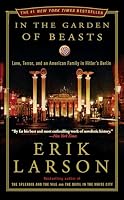
In the Garden of Beasts by Erik Larson tells the story of William Dodd's first year as ambassador to Germany, when Hitler first took power. Dodd was a university professor looking for a quiet post where he could work on his book and enjoy a year with his family together. His daughter, Martha, was escaping from an impulsive marriage and looking for a bit of fun. Before Dodd took the post, he was warned about the exaggerated stories coming out of Germany and he was eager to work with the new Nazi government, feeling that they would temper their actions as they got used to governing. So things went somewhat differently than anticipated.
The single thing that struck me about this book was how unwilling people were to see what was happening, how quick they were to dismiss the stories and how invested everyone was in maintaining the status quo. What Jewish people claimed was happening was easily brushed aside by comfortable American tourists who didn't see anything unpleasant in their visits to tourist attractions. Martha Dodd was able to dismiss the occasional unpleasant sight because the nice SS officers were so polite and blond.
78NanaCC
>77 RidgewayGirl: I read In the Garden of Beasts last year, and was also amazed at the anti-Semitism that existed in the U.S. government. Everyone was willing to turn a blind eye. Dodd's daughter was a pip. Fun, fun, fun seemed to be her agenda.
79RidgewayGirl
Colleen, that clearly helped everyone discount the stories, especially when they were told by Jewish groups. As for Martha, in my early twenties I was pretty focused on fun, fun, fun and might have been happy to be surrounded by blond guys in Hugo Boss uniforms. I do hope that I would have been quicker to see the rot underneath, if given the information Martha was given. And sleeping with the head of the Gestapo is creepy, no matter how frivolous you are.
80RidgewayGirl

Each of David Mitchell's novels are different, from straight-forward coming of age, to historical tales to speculative fiction. In The Bone Clocks, he melds several genres together into a book that begins as a coming of age novel and ends as dystopian fiction. The middle's hard to characterize. The entirety is a lot of fun; a complex story that constantly shape-shifts.
The Bone Clocks begins and ends with Holly Sykes, whom we meet as a teenager running away from home after a fight with her mother. She intends to move in with the older boyfriend her mother disapproves of, but when that doesn't work out, she's determined not to return, although she does miss her little brother. Holly is perhaps the only truly "ordinary" character in this unusual book and it's her presence that anchors the happenings which follow, as people and event cycle around her. This is an impossible book to characterize, but I can say that it is a fantastic, thought-provoking experience that I'm still thinking about.
81baswood
The Bone Clocks sounds good.
82rebeccanyc
>77 RidgewayGirl: Interesting comment about people's unwillingness to see what was happening in Nazi Germany. I was also struck by reading in The Nazis Next Door about how antisemitism continued to affect US policy even after the war ended and they knew what the Nazis had done.
83kidzdoc
Nice review of The Bone Clocks, Kay. I won't get to it this year, but I plan to read it for the British Author Challenge next October.
84RidgewayGirl
Bas, The Bone Clocks is good. I'm going to need to reread it eventually.
Rebecca, I was also struck by the amount of anti-semitism there was and how socially acceptable it was.
Darryl, I look forward to finding out what you think of it.

Faced with a day of travel, I ended up reading Amy Poehler's memoir. It was a good choice. Yes Please is episodic and funny, with bursts of honesty and lists and pictures to break things up. Poehler sounds like a great person to hang out with; genuinely warm, very funny and with an edge to her. She's not a natural with the book form and stretches of her memoir drag or end up being too busy saying nice things about everyone to be interesting, but other parts, especially those about her childhood, were a lot of fun to read. Similar in tone to Tina Fey's Bossypants, this isn't as good, but it might be worth picking up if you're a fan.
Rebecca, I was also struck by the amount of anti-semitism there was and how socially acceptable it was.
Darryl, I look forward to finding out what you think of it.

Faced with a day of travel, I ended up reading Amy Poehler's memoir. It was a good choice. Yes Please is episodic and funny, with bursts of honesty and lists and pictures to break things up. Poehler sounds like a great person to hang out with; genuinely warm, very funny and with an edge to her. She's not a natural with the book form and stretches of her memoir drag or end up being too busy saying nice things about everyone to be interesting, but other parts, especially those about her childhood, were a lot of fun to read. Similar in tone to Tina Fey's Bossypants, this isn't as good, but it might be worth picking up if you're a fan.
85RidgewayGirl

Sean Doolittle writes intelligent thrillers with complex and very human protagonists. In Rain Dogs, Tom Coleman, an ex-journalist mourning the death of both his daughter and his marriage, has inherited a small outdoor outfitters that includes a campground, rafts and kayaks, and an employee he doesn't really need. He's working hard to drink himself to death, but moving back within driving distance of his parents and an old girlfriend isn't making this easier. Nor is the explosion of an old cabin a few miles away that Tom suspects was meth-related, although the sheriff isn't handling it as such.
This was a fun, fast-paced book for a busy time of the year. It's not The Cleanup or Lake Country, but even at less than his best, Doolittle is worth reading.
86RidgewayGirl
And that's it for this year's reading. A little light toward the end, but while traveling with children and living in the chaos of houses bursting with family members of various kinds, that was about right. See you tomorrow over here:
https://www.librarything.com/topic/185228
https://www.librarything.com/topic/185228

