Swynn reads and runs in 2015
This topic was continued by Swynn reads and runs in 2015: Second lap.
Talk 75 Books Challenge for 2015
Join LibraryThing to post.
This topic is currently marked as "dormant"—the last message is more than 90 days old. You can revive it by posting a reply.
1swynn
Expect fewer thrillers this year and more books off the shelf: science fiction, fantasy, and stuff that looked interesting in the bargain bin.
I also hope to read more nonfiction which will be an eclectic mix mostly of history, popular science, and mathematics.
Oh, and I'll talk about running stupid distances and whine about pains that would probably go away if I just stopped. Running posts are even more self-indulgent than the others and so will be clearly marked as such for your easy avoidance.


1) The Hero of Downways / Michael G. Coney
2) Dust Devils / Jonathan Janz
3) A Hero of Our Time / Mikhail Lermontov
4) The Dead of Winter / Lee Collins
5) The Psychopath Test / Jon Ronson
6) Hunters of the Red Moon / Marion Zimmer Bradley
7) When Gadgets Betray Us / Robert Vamosi
8) The Maze Runner / James Dashner
9) Beside the Bonnie Brier Bush / Ian Maclaren
10) Listening for Coyote / William L. Sullivan
11) White Trash Zombie Apocalypse / Diana Rowland
12) Feed / Mira Grant
13) The Age of Edison / Ernest Freeberg
14) From This Day Forward / John Brunner
15) Wolf's Trap / W.D. Gagliani
16) Child of a Rainless Year / Jane Linskold
17) Cycle of Fire / Hal Clement
18) The Great Hurricane 1938 / Cherie Burns
19) The Theoretical Minimum / Leonard Susskind and George Hrabovsky
20) Breaking Point / James Gunn
21) Tom Grogan / F. Hopkinson Smith
22) Virtual Unreality / Charles Seife
23) Threshold / Caitlin R. Kiernan
24) The Ice Balloon / Alec Wilkinson
25) Those Who Wish Me Dead / Michael Koryta
I also hope to read more nonfiction which will be an eclectic mix mostly of history, popular science, and mathematics.
Oh, and I'll talk about running stupid distances and whine about pains that would probably go away if I just stopped. Running posts are even more self-indulgent than the others and so will be clearly marked as such for your easy avoidance.


1) The Hero of Downways / Michael G. Coney
2) Dust Devils / Jonathan Janz
3) A Hero of Our Time / Mikhail Lermontov
4) The Dead of Winter / Lee Collins
5) The Psychopath Test / Jon Ronson
6) Hunters of the Red Moon / Marion Zimmer Bradley
7) When Gadgets Betray Us / Robert Vamosi
8) The Maze Runner / James Dashner
9) Beside the Bonnie Brier Bush / Ian Maclaren
10) Listening for Coyote / William L. Sullivan
11) White Trash Zombie Apocalypse / Diana Rowland
12) Feed / Mira Grant
13) The Age of Edison / Ernest Freeberg
14) From This Day Forward / John Brunner
15) Wolf's Trap / W.D. Gagliani
16) Child of a Rainless Year / Jane Linskold
17) Cycle of Fire / Hal Clement
18) The Great Hurricane 1938 / Cherie Burns
19) The Theoretical Minimum / Leonard Susskind and George Hrabovsky
20) Breaking Point / James Gunn
21) Tom Grogan / F. Hopkinson Smith
22) Virtual Unreality / Charles Seife
23) Threshold / Caitlin R. Kiernan
24) The Ice Balloon / Alec Wilkinson
25) Those Who Wish Me Dead / Michael Koryta
2jolerie
Hey Steve! I saw your post on the introductions thread and it perked my interest because of the running...ha! I am by no means attempting anything close to competitive running but I did start casually running just to get more fit so I'll be seeing what kind of tips I can get from your thread!
It also helps that I like sf and fantasy as well so SCORE. :)
It also helps that I like sf and fantasy as well so SCORE. :)
3swynn
Welcome, Valerie! I've starred your thread so we can share recommendations and running tales.
4rosylibrarian
Hi Steve, your introduction post also made me stop by to say hello because a) you're a librarian and b) I want to try and do a few races this year, but am starting from complete scratch.
5DorsVenabili
Steve - I'm starring you, and I'll keep up this year!
And I enjoy running posts, although I'm sad that I can't run anymore. I do ride my bike for stupid distances though, so there's that. :-)
And I enjoy running posts, although I'm sad that I can't run anymore. I do ride my bike for stupid distances though, so there's that. :-)
6porch_reader
Hi Steve! I'm here for the book posts and the running posts. I did my first 5K in October, and I might be hooked! Here's to a great 2015!
10karspeak
starred--I'm particularly interested in your popular science NF reading, plus fantasy/sci-fi, etc:)
11swynn
Welcome everyone! I've starred your threads as well, and hope to do a better job keeping up with threads this year. Resolutions ...
>4 rosylibrarian: Welcome Marie! Excellent to have another librarian/runner. Scratch is a good place to start: are you following a particular training schedule?
>5 DorsVenabili: Welcome back, Kerri! Bikers are of course also welcome. In fact I may be doing a triathlon later in 2015, so maybe I'll climb into the saddle myself.
>6 porch_reader: Hi Amy, and congrats on the first 5K! "Hooked" is an appropriate word because those races are addictive.
>7 lyzard: Hi, Liz! Wait, what are you trying to imply? That the Tower of Due will prevent me from reading my own books? Well, I ... actually, the fact that I name my piles of library books suggests that you may have a point.
>8 Kassilem: Welcome, Melissa! I've starred your thread so I'll follow your fantasy reads too!
>9 drneutron: Hi, Jim! You're in luck: I have a couple already in the Tower of Due: a math-heavy introduction to physics, (at least it *looks* math-heavy from the number of formulas on display) and another on visually appealing mathematics. And Liz is right: neither of them is off the shelf. But I have been meaning to get around to a mathematical treatment of Sudoku that is. Stick around!
>4 rosylibrarian: Welcome Marie! Excellent to have another librarian/runner. Scratch is a good place to start: are you following a particular training schedule?
>5 DorsVenabili: Welcome back, Kerri! Bikers are of course also welcome. In fact I may be doing a triathlon later in 2015, so maybe I'll climb into the saddle myself.
>6 porch_reader: Hi Amy, and congrats on the first 5K! "Hooked" is an appropriate word because those races are addictive.
>7 lyzard: Hi, Liz! Wait, what are you trying to imply? That the Tower of Due will prevent me from reading my own books? Well, I ... actually, the fact that I name my piles of library books suggests that you may have a point.
>8 Kassilem: Welcome, Melissa! I've starred your thread so I'll follow your fantasy reads too!
>9 drneutron: Hi, Jim! You're in luck: I have a couple already in the Tower of Due: a math-heavy introduction to physics, (at least it *looks* math-heavy from the number of formulas on display) and another on visually appealing mathematics. And Liz is right: neither of them is off the shelf. But I have been meaning to get around to a mathematical treatment of Sudoku that is. Stick around!
12swynn
>10 karspeak: Welcome, Karen! Hope you find something interesting!
13mahsdad
Dropping a star. Looking forward to hearing about your reading endeavors and your running exploits. I got into running late in life and I wish I had done it earlier when I was lighter and my joints were quite so creaky.
Good Luck in 2015
Good Luck in 2015
14drneutron
>11 swynn: Excellent! The Theoretical Minimum is on my list too. And I really need to find that Sudoku book.
16qebo
>11 swynn: Hmm, I keep meaning to get to Taking Sudoku Seriously myself.
17swynn
>15 HanGerg: Good to see you too Hannah! Wishing you happy reading in 2015!
>16 qebo: Hi, Katherine! If you beat me to it, don't spoil the ending :)
>16 qebo: Hi, Katherine! If you beat me to it, don't spoil the ending :)
18rosylibrarian
>11 swynn: Beyond trying to get out and run or walk everyday, no, I haven't followed a schedule. Every time I try to I get bored and stop doing it altogether. Maybe I haven't found the right schedule though? Do you have any suggestions?
19swynn
>18 rosylibrarian: None in particular. For my first 5K, I stumbled across a "Couch-to-5K" plan online and followed that. I registered for the race at about the same time I started the schedule, and fear of race-day embarrassment was a strong motivator for sticking to it. The one-size-fits-all schedules don't work for everybody, though, and if what you're doing is working for you then don't let anybody else talk you into something you find boring.
20qebo
>18 rosylibrarian: Establishing a habit is the big thing, just getting out the door every day. Then what you do on those days becomes easier and you can start increasing pace or distance sometimes if you're aiming for a goal. I've used 5K and half marathon training plans in the past, but only as a rough guide; much depends on whether you want to optimize your pace or simply finish without injury.

22swynn
>19 swynn: Good advice, Katherine. Habit is important.
>21 ronincats: Happy 2015, Roni! And everybody else!
I finished one last 2014 read this evening which also served as the last stop in 2014's fifty state challenge. I find this challenge fun, so I'll probably do it again this year. Watch my progress here.
>21 ronincats: Happy 2015, Roni! And everybody else!
I finished one last 2014 read this evening which also served as the last stop in 2014's fifty state challenge. I find this challenge fun, so I'll probably do it again this year. Watch my progress here.
23rosylibrarian
>19 swynn: >20 qebo: Excellent advise, thank you. I've heard of couch to 5k, but I will look into it more closely. Happy New Years!

27MickyFine
Happy new year and new thread, Steve! Looking forward to following your reading again this year.
28rosalita
Good morning, Steve! I've created a thread for our potential Iowa City meet-up later this month. Stop over if you've any interest and throw your two cents into the kitty.
Iowa City Meet-up Thread
Iowa City Meet-up Thread
29swynn
>24 scvlad: Happy New Year to you too, Marie, and good luck with the training!
>25 scaifea: You too Steve. I've starred your thread, and hope to keep up with threads more consistently this year.
>26 DorsVenabili: Thanks Kerri and Happy New Year to you too! At this point my participation is strictly hypothetical: a popular triathlon is run locally, and I've been spending a lot of time on the stationary cycle, spinning machine, and in the pool due to running injury. Training for the triathlon seems like a logical step, but there's also a very tempting marathon held about the same time. We'll see how training goes this spring.
>27 MickyFine: Happy New Year to you too, Micky, and I'll be following your thread as well.
>28 rosalita: Thanks, Julia! A meetup thread was on my list of things to do, so thanks for taking care of that. Heading over there now!
... and I'm back from the meetup thread. For those who haven't checked it out: plans aren't set in stone but it looks like we're leaning strongly toward January 17, two weeks from tomorrow on MLK weekend. If you think you can make it to Iowa City that weekend we'd love to have you. More details on the thread.
>25 scaifea: You too Steve. I've starred your thread, and hope to keep up with threads more consistently this year.
>26 DorsVenabili: Thanks Kerri and Happy New Year to you too! At this point my participation is strictly hypothetical: a popular triathlon is run locally, and I've been spending a lot of time on the stationary cycle, spinning machine, and in the pool due to running injury. Training for the triathlon seems like a logical step, but there's also a very tempting marathon held about the same time. We'll see how training goes this spring.
>27 MickyFine: Happy New Year to you too, Micky, and I'll be following your thread as well.
>28 rosalita: Thanks, Julia! A meetup thread was on my list of things to do, so thanks for taking care of that. Heading over there now!
... and I'm back from the meetup thread. For those who haven't checked it out: plans aren't set in stone but it looks like we're leaning strongly toward January 17, two weeks from tomorrow on MLK weekend. If you think you can make it to Iowa City that weekend we'd love to have you. More details on the thread.
30swynn

1) DAW #70: The Hero of Downways / Michael G. Coney
Date: 1973
SPOILERS PROBABLY FOLLOW!
Years after some unspecified apocalypse (strongly hinted to be nuclear holocaust), a remnant of humanity survives in a network of underground tunnels called Downways. The community is strongly stratified: farmers raise cattle that resemble giant mice; hunters seek giant worms that roam inhabit the caves on Downways' periphery; teachers pass on knowledge from the microfilm library left by the ancients.
Downways is mostly peaceful but some dangers threaten, chief among them the Dragontooth. The Dragontooth is a fearsome oversized rat against which Downways has little defense. Fortunately no Dragontooth has been seen for nearly a generation. When last a Dragontooth attacked it was defeated single-handedly by a hero remembered only as Hero, an unusually large, aggressive, and courageous human who was mortally wounded in the battle. Since then Hero has become an object of worship in Downways while the Dragontooth recedes into legend and children debate whether either ever really existed.
Reproduction in Downways proceeds mostly in the usual way. But the ancestors recognized that a limited gene pool and exposure to radiation could eventually cause a population crisis; for that reason they left the vats: machinery for cloning. In the wake of Hero's battle with Daggertooth, the elders recognized the value of Hero's build and temperament and ordered him cloned. John-A is the result.
The character traits that make John-A valuable for fighting Daggertooth make him a poor fit for Downways. Bluntly, he is an ass. Strong and capable but also quick to anger, John-A is both admired and barely tolerated. He senses his position in Downways, and longs for an opportunity to put his aggressive nature to use. He finds it in the Oddlies, a group of mutant humans expelled from Downways and living on its periphery. Downways and the Oddlies have survived in an uneasy truce. With nothing else to do, John-A provokes outright warfare.
The story is told mostly from the viewpoint of Shirl, John-A's tutor and sometime lover. Shirl's feelings reflect her community's: admiration for John-A, recognition of his useful skills, and a dread of the consequences of his actions. Through Shirl's eyes the story is a meditation on the role of violence and of a warrior class.
Like Coney's other works (I've read Mirror Image and Friends Come in Boxes), The Hero of Downways is intriguing and flawed. I wasn't convinced on a couple of plot points: Shirl & John-A's romance wasn't convincing (perhaps by design: "romance" is arguably not the right word for their relationship), and the denouement involves an extremely unlikely coincidence. But I think it's my favorite so far, making a nice start to the 2015 reading season.
The okay-not-great cover is by Josh Kirby.
31swynn
TREADMILL READING:
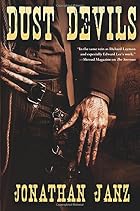
2) Dust Devils / Jonathan Janz
Date: 2014
Splattery weird western involving revenge, vampires, and oodles and oodles of viscera.
Obviously not for every taste, but recommended for those who think From Dusk Til Dawn 3 is an overlooked gem. (Confession: that includes me.)
The cover is by Angela Waters, in an effective and atmospheric departure from her usual kissy beefcake stuff.
2) Dust Devils / Jonathan Janz
Date: 2014
Splattery weird western involving revenge, vampires, and oodles and oodles of viscera.
Obviously not for every taste, but recommended for those who think From Dusk Til Dawn 3 is an overlooked gem. (Confession: that includes me.)
The cover is by Angela Waters, in an effective and atmospheric departure from her usual kissy beefcake stuff.
32MickyFine
>30 swynn: Not at all my kind of read but I find the idea of the only educational resource being microfilm really, really funny.
33DorsVenabili
>29 swynn: Well, either way, I wish you well. And I'm sorry to hear about the injury. I have an annoying heel spur, and I think it's this sort of thing where I'll simply have this particular pain forever. Yay, middle age! Ha!
>30 swynn: Nice. I've missed your Daw reviews, and particularly the covers! :-) Surely someone has done a coffee table book, right? I should look it up. I would totally buy it.
>30 swynn: Nice. I've missed your Daw reviews, and particularly the covers! :-) Surely someone has done a coffee table book, right? I should look it up. I would totally buy it.
34swynn
>32 MickyFine: Agreed about the microfilm. But wait, there's more:
Through most of the books, hints are dropped that the story takes place on earth after a nuclear holocaust. But in the last chapter Shirl ventures "Up Top" and finds a night sky with two moons ... and a spacecraft in walking distance. It turns out that Downways was created on some distant planet by the survivors of a crashed colony ship, fleeing an environmentally degraded earth and apparently carrying a large library on microfilm.
>33 DorsVenabili: Glad somebody else enjoys them! I intend to read more DAWs this year than last, but not to the exclusion of other off-the-shelf reads. So more ... um ... eye-catching covers are on the way.
>33 DorsVenabili: Glad somebody else enjoys them! I intend to read more DAWs this year than last, but not to the exclusion of other off-the-shelf reads. So more ... um ... eye-catching covers are on the way.
35jolerie
I am slowly working my way through the C25K program. I really like how they pace it out especially for newbies like me. Makes it achievable and realistic!
36swynn
>35 jolerie: Excellent! And good to hear that it's woriing for you! Do you have a race already picked?
37swynn
**RUNNING POST**
I've added tickers at the top of my thread. I've admired them in other threads but have always doubted my inclination to maintain one.
Well, only one way to find out, right? I've added two tickers, one for either habit mentioned in the title. 75 books is a goal and I'll meet it easily; 2000 miles is a likely upper bound and *not* a goal; I'm just logging miles and will not hurt myself for imprudent volume.
Speaking of volume, for the last few weeks I've been logging around 20 miles per week. I have been especially conscientious about stretching, massage, icing, and wearing a night splint, and the foot seems to be improving.
Current plans are to do my January run next weekend: Runner's Choice in Columbia, Missouri, an extremely low-key 10K/20K sponsored by the local running club. I plan to run the 10K.
I've added tickers at the top of my thread. I've admired them in other threads but have always doubted my inclination to maintain one.
Well, only one way to find out, right? I've added two tickers, one for either habit mentioned in the title. 75 books is a goal and I'll meet it easily; 2000 miles is a likely upper bound and *not* a goal; I'm just logging miles and will not hurt myself for imprudent volume.
Speaking of volume, for the last few weeks I've been logging around 20 miles per week. I have been especially conscientious about stretching, massage, icing, and wearing a night splint, and the foot seems to be improving.
Current plans are to do my January run next weekend: Runner's Choice in Columbia, Missouri, an extremely low-key 10K/20K sponsored by the local running club. I plan to run the 10K.
38rosalita
Yay for tickers! They are not too hard to keep up, although the site sometimes go down which is unnerving. I like having them, though, as I'm a visual learner type of person. It's fun to see the little markers move along.
39qebo
>37 swynn: Hmm, an exercise ticker... I have a spreadsheet, but nobody else is watching it.
40rosylibrarian
>37 swynn: That is a great idea to keep track of your miles. I may steal that and try to come up with some kind of goal. There is no way I could hit 2000 though, so kuddos to you!
41swynn
>38 rosalita: I hope maintaining it is as easy as it looks. If there's a problem, it will probably be with my own consistency. But like you I like the visual, and it's a New Year, so I'll try it out.
>39 qebo: "nobody else is watching it" is certainly tempting and I wondered who else would even be interested in watching. But I was surprised at the number of visitors who were interested running posts so ... why not?
>40 rosylibrarian: The idea isn't original with me, Marie, so steal away!
>39 qebo: "nobody else is watching it" is certainly tempting and I wondered who else would even be interested in watching. But I was surprised at the number of visitors who were interested running posts so ... why not?
>40 rosylibrarian: The idea isn't original with me, Marie, so steal away!
42MickyFine
>34 swynn: *laughs hysterically* Totally a must-bring. I know I never go anywhere without at least a couple rolls. :P
43swynn
>43 swynn: My favorite microfilm story:
Prior to my current position, I worked in the central branch of a large public library system. The library frequently received patron requests for a subscription to Playboy. "For the articles," of course. Express skepticism if you like, but in fact the interlibrary loan department regularly received requests for articles and interviews from Playboy, enough that we certainly would have subscribed if not for the naked people. Eventually the selectors hit upon a solution: balance the need for access to articles with avoidance of prurient interest by subscribing ... on microfilm.
This decision happened well before my time and the arrangement worked surprisingly well for years. The only hiccup happened while I was employed there in the late 1990s, when an ILL assistant went to the microfilm drawers and discovered several years of Playboy missing. For staff, this caused bewilderment as much as frustration: just what did the thief plan to do with microscopic porn?
That mystery was solved a couple weeks later, when a microfilm reader disappeared from the microfilm viewing room.
We never figured out how the thief made off with the reader -- it isn't something you can slip in a backpack, and it disappeared during business hours. Of course, we also did not know whether the thief was the same person who took the Playboys. But honestly: who else?
Prior to my current position, I worked in the central branch of a large public library system. The library frequently received patron requests for a subscription to Playboy. "For the articles," of course. Express skepticism if you like, but in fact the interlibrary loan department regularly received requests for articles and interviews from Playboy, enough that we certainly would have subscribed if not for the naked people. Eventually the selectors hit upon a solution: balance the need for access to articles with avoidance of prurient interest by subscribing ... on microfilm.
This decision happened well before my time and the arrangement worked surprisingly well for years. The only hiccup happened while I was employed there in the late 1990s, when an ILL assistant went to the microfilm drawers and discovered several years of Playboy missing. For staff, this caused bewilderment as much as frustration: just what did the thief plan to do with microscopic porn?
That mystery was solved a couple weeks later, when a microfilm reader disappeared from the microfilm viewing room.
We never figured out how the thief made off with the reader -- it isn't something you can slip in a backpack, and it disappeared during business hours. Of course, we also did not know whether the thief was the same person who took the Playboys. But honestly: who else?
45MickyFine
>43 swynn: That is very funny. I can't imagine trying to haul off a microfilm reader. Those things are heavy!
46rosylibrarian
>43 swynn: That is an excellent story, I really did LOL. How do you steal a microfilm reader?!
47swynn
How indeed? All possibilities seemed equally absurd. Most likely, somebody distracted desk staff while someone else sneaked it out the door. That means that the acquisition of microscopic grayscale softcore porn was probably a team effort. The mind boggles.
It'd make a decent heist movie if the stakes weren't so low.
It'd make a decent heist movie if the stakes weren't so low.
48The_Hibernator
Hi Steve! Good luck on your running and on your reading. Happy New Year! I used to train for triathlons, though this year I might not be able to. But I'll try my best. :)
49Helenliz
I'm slightly in awe at the running mileage expected in the year. 75 books I could accept, 2000 miles is way beyond me! I've gone with 1000 km (622 miles for the old fashioned amongst us) and was considering myself quite smug. I'm getting back into running after a few years vegetating on the sofa, so maybe I can take refuge behind that as an excuse for being (comparatively) pathetic! >:-)
50swynn
>48 The_Hibernator: Hi Rachel, and thanks for the wishes! Good luck with your plans also!
>49 Helenliz: Welcome Helen! Absolutely not pathetic. If it's consolation, my chances of hitting 2000 are slim: expectations are closer to 1500, though even that will depend on how my health proceeds.
One of the things I love about the running community is its acceptance of participants at every level. I log a lot of miles, but not nearly as many as others, and more slowly than some who run less. I've also been running only a few years so I remember the euphoria of running a whole mile without stopping. So whatever volume and intensity is right for you, you get nothing but respect from me!
>49 Helenliz: Welcome Helen! Absolutely not pathetic. If it's consolation, my chances of hitting 2000 are slim: expectations are closer to 1500, though even that will depend on how my health proceeds.
One of the things I love about the running community is its acceptance of participants at every level. I log a lot of miles, but not nearly as many as others, and more slowly than some who run less. I've also been running only a few years so I remember the euphoria of running a whole mile without stopping. So whatever volume and intensity is right for you, you get nothing but respect from me!
51jolerie
Bahaha....the person must have been 2 things. Extremely desperate and extremely clever. :)
No, I haven't picked out a race yet. Still way too nervous. My goal actually is to start running outside eventually. Right now because of the snow and where I'm from, it sticks around for a loooonnnngg time, I'm confined to training on my treadmill. It's on my bucket list to run a 5k at some point....
No, I haven't picked out a race yet. Still way too nervous. My goal actually is to start running outside eventually. Right now because of the snow and where I'm from, it sticks around for a loooonnnngg time, I'm confined to training on my treadmill. It's on my bucket list to run a 5k at some point....
52swynn
>51 jolerie: Treadmills ... ugh. Last year I discovered something that makes a treadmill workout go better: a tablet fits perfectly on that little ledge, and you can adjust the font size on an ebook. I think it's the very reason Kindles were invented.
53jolerie
Haha...I discovered audiobooks and that SAVED me. Concentrating on the story made the time go by so fast otherwise there is NO way I can just keep running...staring at the wall and feeling like every minute lasted an eternity.....
54swynn
Audiobooks are great too but I find they don't work for me during a workout. My brain turns off for minutes at a time as I'm working through an interval or just floating off in treadmillville, and the audiobook doesn't know to pause and wait for me to return. The ebook waits patiently in the same spot.
(Mrs. Swynn tells me that my attention problems might not be limited to treadmill time. Or something.)
(Mrs. Swynn tells me that my attention problems might not be limited to treadmill time. Or something.)
55jolerie
No doubt. Funny. I tell Mr. Valerie the same thing.... ;)
For some reason I can't read text while I'm running. It actually makes me kind of nauseous. Whatever gets us running is a good thing in my book!
For some reason I can't read text while I'm running. It actually makes me kind of nauseous. Whatever gets us running is a good thing in my book!
56swynn
>55 jolerie: Whatever gets us running is a good thing in my book!
Agreed!

3) A Hero of Our Time / Mikhail Lermontov
Another off the shelf, and this one has been there many many years, since my undergraduate infatuation with Dostoevsky and Tolstoi. This one is about Pechorin, a young Russian soldier in the Caucasus. Critics call him a "Byronic hero," but I'm more inclined to say "man child" for his poor impulse control and avoidance of responsibility.
It's not bad: the writing is clear and engaging (or else it's a cracking good translation) and the setting is vivid. It's picaresque, so my interest was less or more according to each story's appeal. My favorite was a spooky story involving shifty managers of a remote inn. Another story contains a taut Russian-roulette scene, and another a gripping duel. On the negative side there are philosophical interludes whose point I don't quite get. What I've called the Russian-roulette scene involves a character who shoots himself in order to test predestination: when the gun misfires and he survives, this somehow proves free will (except for later when it doesn't). But how either outcome proves a thing escapes me.
There's also a strong misogynistic thread. Pechorin hires a local to steal a bride whom he later discards. The longest tale involves the seduction of a girl whom he doesn't especially care for-- he is only interested because his friend is infatuated with the girl. He is on the other hand always ready to explain how women work and what they really want (they want Pechorin of course.)
To be fair Pechorin is not intended to be a role model, and as a rascal he succeeds well enough. But he's not an especially interesting rascal, except for a tendency to navel-gaze at the drop of a hat, nor is he an appealing one.
So my reaction to this classic is decidedly lukewarm. I'd probably have liked it better if I'd read it back in college: parenting a young adult may have affected my tolerance for overgrown adolescents. But better readers than I have loved it, so I'll just say that I don't get it. No recommendation.
Agreed!

3) A Hero of Our Time / Mikhail Lermontov
Another off the shelf, and this one has been there many many years, since my undergraduate infatuation with Dostoevsky and Tolstoi. This one is about Pechorin, a young Russian soldier in the Caucasus. Critics call him a "Byronic hero," but I'm more inclined to say "man child" for his poor impulse control and avoidance of responsibility.
It's not bad: the writing is clear and engaging (or else it's a cracking good translation) and the setting is vivid. It's picaresque, so my interest was less or more according to each story's appeal. My favorite was a spooky story involving shifty managers of a remote inn. Another story contains a taut Russian-roulette scene, and another a gripping duel. On the negative side there are philosophical interludes whose point I don't quite get. What I've called the Russian-roulette scene involves a character who shoots himself in order to test predestination: when the gun misfires and he survives, this somehow proves free will (except for later when it doesn't). But how either outcome proves a thing escapes me.
There's also a strong misogynistic thread. Pechorin hires a local to steal a bride whom he later discards. The longest tale involves the seduction of a girl whom he doesn't especially care for-- he is only interested because his friend is infatuated with the girl. He is on the other hand always ready to explain how women work and what they really want (they want Pechorin of course.)
To be fair Pechorin is not intended to be a role model, and as a rascal he succeeds well enough. But he's not an especially interesting rascal, except for a tendency to navel-gaze at the drop of a hat, nor is he an appealing one.
So my reaction to this classic is decidedly lukewarm. I'd probably have liked it better if I'd read it back in college: parenting a young adult may have affected my tolerance for overgrown adolescents. But better readers than I have loved it, so I'll just say that I don't get it. No recommendation.
57scaifea
>55 jolerie: I can't read while I'm on the treadmill, either, for the same reason, so I either listen to audiobooks or just music.
Morning, Steve!
Morning, Steve!
58swynn
>57 scaifea: Morning, Amber! I do get nauseous reading in the car, so I understand why a person would want to avoid that.
59scaifea
>58 swynn: Oh, I do, too. In fact, I would make myself nauseous just thinking about reading while in a car. Ugh.
60swynn
RUNNING POST
Bad news about the first run of the year: Runner's Choice has been canceled this weekend due to the cold forecast.
Good news, I guess, is that I get to spend the morning with a book inside in the warm without having wimped out.
Bad news about the first run of the year: Runner's Choice has been canceled this weekend due to the cold forecast.
Good news, I guess, is that I get to spend the morning with a book inside in the warm without having wimped out.
61jolerie
Bummer about the race cancelling but there will be others. Your back-up plan sounds fantastic! :)
62jeaniehh
I've been a member of LT for a few years now, but this is my first time joining a group. I'm also a a runner and triathlete, so I'm glad to have found others who enjoy running and reading! I'm also going to have a little more time to read since I'm suffering from hamstring tendonitis and a possible meniscus tear and I'm kinda sidelined for now :(
63swynn
>61 jolerie: Thanks for the commisseration, Valerie!
>62 jeaniehh: Welcome to the 75ers, Jeanie! There are quite a few runners among us, and we're glad to have another. Sorry to hear about your injury, I know how frustrating that can be. I've checked the thread list and didn't see yours. Will you be starting one? If you do I'll star it so that I can stay up to date with you reading and recovery.
>62 jeaniehh: Welcome to the 75ers, Jeanie! There are quite a few runners among us, and we're glad to have another. Sorry to hear about your injury, I know how frustrating that can be. I've checked the thread list and didn't see yours. Will you be starting one? If you do I'll star it so that I can stay up to date with you reading and recovery.
64Dejah_Thoris
>43 swynn: I loved the microfilm story! How hysterical! Sorry your race was canceled, but I hope you enjoyed the reading time.
65alcottacre
>43 swynn: OK, I laughed out loud at that! Someone really needed the articles in Playboy evidently!
66DorsVenabili
>43 swynn: Ha! Wow. Yeah, how on earth do you make off with the reader? I suppose where there's a will, there's a way.
>56 swynn: Interesting...although I think I will skip. :-)
I HATE indoor exercise, but I've been using our elliptical and recently bought an indoor trainer thing for my old bike. Music usually works best for me, but I've been trying to use it as audiobook time now. We'll see. The tablet idea is good. I'll have to try that.
>56 swynn: Interesting...although I think I will skip. :-)
I HATE indoor exercise, but I've been using our elliptical and recently bought an indoor trainer thing for my old bike. Music usually works best for me, but I've been trying to use it as audiobook time now. We'll see. The tablet idea is good. I'll have to try that.
67swynn
>64 Dejah_Thoris: Thanks for the commisseration, Dejah! The reading time was productive: I finished one book (comments below), and will probably finish another before the night's out.
>65 alcottacre: Excellent to see you, Stasia! I can almost convince myself that the theft was indeed for the articles: the nausea-inducing properties of microfilm readers would have ruined any other purpose.
>66 DorsVenabili: Music is good for me too, and especially useful when I'm trying to do a hard workout (which recently is almost never) when there's no point in trying to pay attention to anything.
>65 alcottacre: Excellent to see you, Stasia! I can almost convince myself that the theft was indeed for the articles: the nausea-inducing properties of microfilm readers would have ruined any other purpose.
>66 DorsVenabili: Music is good for me too, and especially useful when I'm trying to do a hard workout (which recently is almost never) when there's no point in trying to pay attention to anything.
68swynn

4) The Dead of Winter / Lee Collins
Date: 2012
Another off-the-shelf book, selected to meet TIOLI challenge #18, "Read a book that includes a word or phrase in title or name that puts you in mind of the season."
It's another weird western involving vampires, this one launching a series focused on Old West vampire hunter Cora Oglesby. In this one Cora and her husband Ben travel to Leadville, Colorado where they hunt down monsters. It's not bad and has some effectively creepy bits. On the other hand, the pacing could be tightened, Leadville felt more Hollywood-western than historical, and Cora's redneck patois seemed both forced and occasionally anachronistic. I'm pretty sure that referring to an archvillain as "the big bad" comes either from gamer slang or from Buffy. Can anyone set me straight on that? I guess I should be glad she didn't call "the big bad" a "level boss."
There were a couple of things that bothered me through the early part of the book that were explained with a late plot twist-- turns out they weren't problems they were clues and I was too critical to see it coming. Mea culpa, and the author gets credit for planning.
It didn't blow me away but was good enough that I'll pick up the second. Someday.
The excellently atmospheric cover is by Chris McGrath, who also rocks all those covers for The Dresden Files.
69rosylibrarian
>68 swynn: I'm glad you mentioned the cover artist because I was just going to say - hey, that looks like the Dresden books!
70swynn
>69 rosylibrarian: Isn't he good? I think he also does covers for Seanan McGuire's Toby Day books. (Another series I need to get back to ... )
This cover gets a +1 for his willingness to give a female protagonist practical clothing.
This cover gets a +1 for his willingness to give a female protagonist practical clothing.
71swynn
Retrieved from the Swamp for TIOLI #1: "Read a book that has the word 'psychological' followed by a noun somewhere in or on the book." I thought the following book would be easily eligible, and it did qualify but only barely. It was chock full of every form of "psychiatry" and "psychopathy," but I found only one instance of "psychological," on p. 185. Fortunately, one was all that was required:
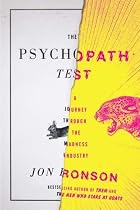
5) The Psychopath Test / Jon Ronson
Last year for my Nevada read, I read Hunter S. Thompson's Fear and Loathing in Las Vegas. I appreciate Thompson's place in the history of journalism, and I think I see how it fit into its time. I also found it entertaining. But it will never be for me the classic that it is for so many others, largely because I just can't wrap my head around the virtues of chronicling one's zany experiences with hallucinogens.
What Jon Ronson does reminds me of what Thompson did: seek out firsthand experiences and report back, not just (or even chiefly) about his subject but also (and even primarily) about his own experience. What Ronson does isn't "gonzo journalism" -- it's more studied and crafty than that -- but a kind of cultural tourism. This does not always seem especially prudent: In Them Ronson hung out with paranoid extremists, and in The Psychopath Test he seeks out psychopaths to prod them about their mental instability. And much of what he reports back isn't about psychopaths or what he calls "the madness industry" -- it's about timid nebbishy journalist Jon Ronson. Being timid and nebbishy myself, I find Ronson much more accessible than outrageous acidbaked Hunter Thompson. And Ronson's ironic tone appeals to me more than Thompson's angry one. I won't argue that Ronson is a better writer, but he resonates with me while Thompson doesn't.
The drawback to Ronson's (and Thompson's) style is that you sometimes finish a chapter wondering whether you learned anything. You've chuckled, and you've picked up an anecdote or two, but mostly you've watched Jon Ronson meet up with some deeply crazy people, or some sane people trapped in a deeply crazy system, or some people and some systems where you can't make up your mind which is crazy. But have you really gained insight into contemporary thinking about the psychopathic personality? Not always. If his interviewee says fifteen ponderous things and one arguably psychopathic thing, Ronson might report any of the first fifteen, but he'll definitely report the last. He's actually pretty up-front about this: madness sells.
Still, when Ronson isn't talking about himself (or his persona, which may of course be somebody else entirely) he does score some points: against the ambiguity of psychiatric vocabulary, against the false certainty of diagnostic checklists, against glib assumptions that we even know what it *means* to be insane, and against an entertainment industry that thrives on a certain level of madness -- enough to titillate, not enough to disturb. Viewed through Ronson's droll perspective the story is engaging, throught-provoking, frequently unsettling, and yes, titillating. I enjoyed this one even more than Them, and will seek out more of Ronson's work.
5) The Psychopath Test / Jon Ronson
Last year for my Nevada read, I read Hunter S. Thompson's Fear and Loathing in Las Vegas. I appreciate Thompson's place in the history of journalism, and I think I see how it fit into its time. I also found it entertaining. But it will never be for me the classic that it is for so many others, largely because I just can't wrap my head around the virtues of chronicling one's zany experiences with hallucinogens.
What Jon Ronson does reminds me of what Thompson did: seek out firsthand experiences and report back, not just (or even chiefly) about his subject but also (and even primarily) about his own experience. What Ronson does isn't "gonzo journalism" -- it's more studied and crafty than that -- but a kind of cultural tourism. This does not always seem especially prudent: In Them Ronson hung out with paranoid extremists, and in The Psychopath Test he seeks out psychopaths to prod them about their mental instability. And much of what he reports back isn't about psychopaths or what he calls "the madness industry" -- it's about timid nebbishy journalist Jon Ronson. Being timid and nebbishy myself, I find Ronson much more accessible than outrageous acidbaked Hunter Thompson. And Ronson's ironic tone appeals to me more than Thompson's angry one. I won't argue that Ronson is a better writer, but he resonates with me while Thompson doesn't.
The drawback to Ronson's (and Thompson's) style is that you sometimes finish a chapter wondering whether you learned anything. You've chuckled, and you've picked up an anecdote or two, but mostly you've watched Jon Ronson meet up with some deeply crazy people, or some sane people trapped in a deeply crazy system, or some people and some systems where you can't make up your mind which is crazy. But have you really gained insight into contemporary thinking about the psychopathic personality? Not always. If his interviewee says fifteen ponderous things and one arguably psychopathic thing, Ronson might report any of the first fifteen, but he'll definitely report the last. He's actually pretty up-front about this: madness sells.
Still, when Ronson isn't talking about himself (or his persona, which may of course be somebody else entirely) he does score some points: against the ambiguity of psychiatric vocabulary, against the false certainty of diagnostic checklists, against glib assumptions that we even know what it *means* to be insane, and against an entertainment industry that thrives on a certain level of madness -- enough to titillate, not enough to disturb. Viewed through Ronson's droll perspective the story is engaging, throught-provoking, frequently unsettling, and yes, titillating. I enjoyed this one even more than Them, and will seek out more of Ronson's work.
72lyzard
Hi, Steve! I've finally got a chance to do some thread catching-up. Very glad to hear there will be more DAWs this year, I always enjoy learning about those. (And about the role of microfilm in Our Glorious Future.)
recommended for those who think From Dusk Til Dawn 3 is an overlooked gem. (Confession: that includes me.)
Not this film specifically, but oh boy! - do I know what it's like to be THAT person! :D
recommended for those who think From Dusk Til Dawn 3 is an overlooked gem. (Confession: that includes me.)
Not this film specifically, but oh boy! - do I know what it's like to be THAT person! :D
73qebo
>71 swynn: I wasn't wild about Them, thought he emphasized the bumbling-fool aspect more than the few-qualms-about-killing aspect of extremists. The Psychopath Test seems mildly interesting if I happen to bump into it some day, but I probably won’t actively seek it.
74swynn
>72 lyzard: Oh yes, there will be DAWs ...
I know what it's like to be THAT person! Eccentrics of the world unite! (By which of course I mean, go to our separate corners and pursue our individual interests. That is after all what we're going to do anyway.)
>73 qebo: That's a valid criticism, and The Psychopath Test isn't free of that either. When Ronson is poking holes in psychiatric practice it's all good fun ... but it's worth keeping in mind that many of the people kept locked up really need to stay that way.
I know what it's like to be THAT person! Eccentrics of the world unite! (By which of course I mean, go to our separate corners and pursue our individual interests. That is after all what we're going to do anyway.)
>73 qebo: That's a valid criticism, and The Psychopath Test isn't free of that either. When Ronson is poking holes in psychiatric practice it's all good fun ... but it's worth keeping in mind that many of the people kept locked up really need to stay that way.
75swynn

6) DAW #71: Hunters of the Red Moon / Marion Zimmer Bradley
SPOILERS FOLLOW!
Dane Marsh is yachting around the world, wishing there were some adventure left on the planet, when he is abducted by alien slavers. Aboard the slave-ship he meets a variety of beings: humanoid, saurian, arachnoid, ursine, and otherwise, all captured by the leonine Mekhar. When Marsh sees an opportunity for escape, he forms a small team: the anthropologist Rianna and the empath Dallith, both of them humanoid women; and the lizard-man Aratak.
Their bid for freedom is unsuccessful, but their spirit earns them a special status. Rather than dump them in the slave markets, the Mekhar sell the four prisoners to buyers on Hunter's World. Together with the prisoners they also sell Cliff-Climber, a Mekhar crewman who dishonored himself being disarmed during the uprising.
On Hunter's World the team is treated well, served by robots who refer to them as "sacred prey." They are given time to rest and nourish themselves, and to train. The robots explain that they will be the quarry in a ritual hunt, taking place on the moon of Hunter's World over the course of eleven days. Any prey who survive the hunt will be rewarded and released.
During their days of preparation, the group trains for combat, but they also form social bonds; by trading philosophy and cliches, they learn that their cultures each have different perspectives but also much in common. While they learn about each other, the hunters remain a mystery: nobody knows who they are, or even so much as what they look like.
When the hunt begins, the team remains together. They are only a few prey among many in the hunt, which gives them some security early in the process: the hunters seek out easier prey first. When they finally do encounter hunters, the forms are familiar.
The first hunter the team encounters bears such a strong resemblance to Mekhar that Cliff-Climber mistakes it for a friend. By the time he realizes his mistake it is too late to avoid close combat. The hunter kills Cliff-Climber but is itself severely injured in the fight. Despite injuries that ought to be mortal, however, the hunter escapes and quickly.
This pattern repeats: hunters appear in a variety of familiar forms and seem impossible to kill: despite deadly wounds they walk away. The mystery is solved when Dallith kills a hunter who resembles Dane. Since Dallith is an empath, she knows that the hunter is not Dane and is able to surprise him with a slingshot bullet between the eyes. As the hunter dies its body reforms into a shmoo-like blob. Studying the blob, the team concludes that the hunters are shapeshifters, and the their single vulnerability is the head.
This news is timely, as the end of the hunt approaches and all hunters converge on the last remaining prey. When the team is finally forced to make a stand they are able to fight off dozens of hunters by aiming for their heads.
At the hunt's end only Dane, Rianna, and Aratak survive. The hunters salute the team for the greatest hunt in memory and let them go as promised. They are somewhat concerned about the future of the hunt since now their secret -- that they are shape-shifting beings easily killed by headshots -- is out. Dane tells them not to worry; that the publicity will actually be good for the hunt, and they will be inundated with adventure-seeking volunteers for sacred prey.
This is my favorite of the MZB novels I've read so far, though that's not saying much. There's cheesy swords-and-planets action which is a kick by itself, but there are also questions about what it means to be a "sapient being": the question arises among the team during training, where answers are suggested from the sense of individuality, to the ability to pass experience from one generation to the next, to the ability to ponder what it means to be sapient. The question takes a practical turn at the end, when Dane must decide how to think of the beings who bought and hunted him but who also have a certain code of honor. He decides that they are also sapient, and that the things they value -- individuality and adventure -- are not foreign to him.
I'm obviously not comfortable with Dane's rapid willingness to give the benefit of the doubt to thinking beings who hunt and kill other thinking beings for fun. And there are other gripes too: 100% of the female characters fall creepily in love with Dane on sight; and there's the unlikelihood of a band of amateurs beating waves of attackers from a fighting culture to a standstill. But considering the genre's conventions it's not bad and even more thoughtful than average.
The awful, frenetic, hideously orange and green cover is by George Barr. There is also a single interior illustration.
77Dejah_Thoris
>75 swynn: I'm not the greatest MZB fan (I have a few favorites) and I'm delighted to say I've missed this one completely! Excellent review, though. I admit I kinda love the cover, lol.
78swynn
>76 swynn: I've been told that I just haven't read the right Darkover novels yet, and I expect that's true. This one was not at all bad but I would agree that it's skippable except for MZB or DAW completists, or for fans of swords-and-planets adventure.
The cover ... yeah, I won't deny that it has a kind of unstudied charm. It certainly refuses to be ignored.
The book has seen worse covers:

I'm trying to imagine the design process for this one. "Well, there are lion people in the book and that's cool, but you know what really sells a cover? Fire. And ass. And a snake on a leash. No, I don't mean metaphorically."
But I think Carl Lundgren's is the most attractive:

The cover ... yeah, I won't deny that it has a kind of unstudied charm. It certainly refuses to be ignored.
The book has seen worse covers:

I'm trying to imagine the design process for this one. "Well, there are lion people in the book and that's cool, but you know what really sells a cover? Fire. And ass. And a snake on a leash. No, I don't mean metaphorically."
But I think Carl Lundgren's is the most attractive:

80Dejah_Thoris
The purple/red/yellow combo is classic.
81jolerie
Oh I had no idea that she wrote other books besides the Avalon series. Now I know..... Those covers though...ummm...yeah...... :)
82swynn
Enjoying wifi in the Prairie Lights Bookstore cafe, waiting for other 75ers to gather.
>79 MickyFine: Aren't they though? More 70's sf to come!
>80 Dejah_Thoris: The composition on that one reminds me strongly of the Hildebrant Star Wars poster. Not bad, and easily the best cover this story has had.
>81 jolerie: Her magnum opus is arguably the Darkover series, which others love but I've not been able to get into despite a couple of tries. I'm told Hawkmistress us one of the better entries.
>79 MickyFine: Aren't they though? More 70's sf to come!
>80 Dejah_Thoris: The composition on that one reminds me strongly of the Hildebrant Star Wars poster. Not bad, and easily the best cover this story has had.
>81 jolerie: Her magnum opus is arguably the Darkover series, which others love but I've not been able to get into despite a couple of tries. I'm told Hawkmistress us one of the better entries.
83qebo
Your post on my thread prompted me to check for meetup photos. A zombie book, a math book, a running book; whose stack could this be?
86porch_reader
Steve - I'm glad you were able to take advantage of Prairie Lights! Sounds like a great haul. It was so good to see you!
87rosylibrarian
I'm sure you've seen them, but have you seen the retro covers featuring librarian hilarity?


88swynn
No I hadn't seen that, though I can certainly think of a few series that fit the description.
89swynn
>87 rosylibrarian: I haven't seen that one, though I can think of a couple of series the cover's designer may have had in mind!
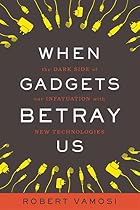
7) When Gadgets Betray Us / Robert Vamosi
Date: 2011
The author is a journalist specializing in tech security. Here he talks about vulnerabilities of new IT devices, from mobile phones to networked medical devices, automotive sensors, and biometric locks.
The short version is that any network-aware device can be hacked, and most have. Vamosi offers examples and scenarios, some hacks surprisingly easy especially in applications where security was never considered in the first place. For instance, subcutaneous RFID devices were first developed for the veterinary market; the technology was expanded to some human applications but without adding any encryption.
Even when security was considered, it is often added as an afterthought, or not updated in response to increasingly sophisticated threats. Worse, tech vendors faced with vulnerabilities in their products have often tried to silence the messenger rather than improve their products. All of this is nervous-making enough, but add to that the fact that our faith in machines' output machines is often unjustifiably strong: drivers have been known to follow GPS directions off the edge of a cliff, and people have been jailed based on fingerprint analysis despite unimpeachable alibis.
Vamosi isn't a luddite: he points out the many advantages and potential advantages of ubiquitous computing. He argues that devices and applications should be designed from the beginning with security in mind; that security is improved with layers; and that the information we get from gadgets should be interpreted in context.
It's not bad: the examples are thought-provoking and sometimes disturbing. My only complaints are that a few points are made over & over again, and timeliness -- although the book was published in 2011 the field is changing so rapidly that I frequently wondered whether some of his specific criticisms were still valid.
7) When Gadgets Betray Us / Robert Vamosi
Date: 2011
The author is a journalist specializing in tech security. Here he talks about vulnerabilities of new IT devices, from mobile phones to networked medical devices, automotive sensors, and biometric locks.
The short version is that any network-aware device can be hacked, and most have. Vamosi offers examples and scenarios, some hacks surprisingly easy especially in applications where security was never considered in the first place. For instance, subcutaneous RFID devices were first developed for the veterinary market; the technology was expanded to some human applications but without adding any encryption.
Even when security was considered, it is often added as an afterthought, or not updated in response to increasingly sophisticated threats. Worse, tech vendors faced with vulnerabilities in their products have often tried to silence the messenger rather than improve their products. All of this is nervous-making enough, but add to that the fact that our faith in machines' output machines is often unjustifiably strong: drivers have been known to follow GPS directions off the edge of a cliff, and people have been jailed based on fingerprint analysis despite unimpeachable alibis.
Vamosi isn't a luddite: he points out the many advantages and potential advantages of ubiquitous computing. He argues that devices and applications should be designed from the beginning with security in mind; that security is improved with layers; and that the information we get from gadgets should be interpreted in context.
It's not bad: the examples are thought-provoking and sometimes disturbing. My only complaints are that a few points are made over & over again, and timeliness -- although the book was published in 2011 the field is changing so rapidly that I frequently wondered whether some of his specific criticisms were still valid.
91jolerie
That book sounds like something my geeky other half would like, if he actually liked to read....ha! He works in IT. He likes gadgets. I call them toys..... :)
92swynn
>90 ronincats: Yikes! Hawkmistress is not a unanimous choice then. Going back to your comments after I read Darkover Landfall a couple of years ago, I see you recommend Thendara House instead.
Neither will be read by me soon. My next Darkover read will almost certainly be The Spell Sword (DAW #119)
>91 jolerie: He may also already know a lot of it too. I recognized a few stories; someone closer to the industry may find even more familiar.
Neither will be read by me soon. My next Darkover read will almost certainly be The Spell Sword (DAW #119)
>91 jolerie: He may also already know a lot of it too. I recognized a few stories; someone closer to the industry may find even more familiar.
93Dejah_Thoris
My mother was a huge MZB / Darkover fan when I was a teenager. I read a bunch of them, but was bothered by the fact that no one ever seemed to end up happy for long.... There were a few I liked, though, but I have no idea which ones they were!
94swynn
>93 Dejah_Thoris: Hm. "Nobody ends up happy for long" could be tragic or it could just be depressing. My guess is that results will be mixed.
Maybe I ought to rethink this. After having stated in post 92 that my next Darkover read will be The Spell Sword, I'm thinking that I ought to go back and read the previous books in the series before I get there.
After all, I read the pre-DAW Dumarest books before getting to the ones published by DAW. And I'm planning to read the pre-DAW Gor books too. (A project I keep putting off because ugh.) If I can do it for John Norman, surely I can do it for MZB. But if they're mostly downers I don't want to do them all at once!
Maybe I ought to rethink this. After having stated in post 92 that my next Darkover read will be The Spell Sword, I'm thinking that I ought to go back and read the previous books in the series before I get there.
After all, I read the pre-DAW Dumarest books before getting to the ones published by DAW. And I'm planning to read the pre-DAW Gor books too. (A project I keep putting off because ugh.) If I can do it for John Norman, surely I can do it for MZB. But if they're mostly downers I don't want to do them all at once!
95Dejah_Thoris
Oh dear - GOR???? Snicker. I've never been a big John Norman fan.....
96swynn
>95 Dejah_Thoris: No, I don't expect you are. I don't expect to become one. If anything can break my resolve to read through the DAWs, it just might be John Norman.
97swynn

8) The Maze Runner / James Dashner
This one has been widely read, and there's been a successful movie too so I'll skip the summary. It's not terribly deep, and there is less of a puzzle-solving aspect than I'd expected, but the tension starts early and holds up to the end. I read this one with my son, and it held both our interest so we're running right on into the sequel.
98karspeak
I enjoyed Maze Runner, but thought the sequels got progressively worse, unfortunately. I also didn't' care for his more recent book The Eye of Minds, which starts a new series.
99lunacat
I really enjoyed Maze Runner. The sequels? Definitely not. It's such a shame when the follow-ups don't come close to the first one, but it happens so often.
100swynn
>98 karspeak: >99 lunacat:: Well rats. I ran into that last year with Dan Krokos's False Memory series: first was fun, second ran off the rails, and the third I can't honestly comment on because I gave up before it even really started.
We started on The Scorch Trials last night, so I hope our experience is better but we'll see.
We started on The Scorch Trials last night, so I hope our experience is better but we'll see.
101jolerie
I agree with the previous posts. LOVED The Maze Runner and had such high hopes for the series but the rest of the books veered off in a direction I didn't expect and didn't particularly enjoy.... Will be curious to see your reaction.
102porch_reader
Have you seen The Maze Runner movie, Steve? I thought it was pretty true to the book. I'm another one that thought The Scorch Trials wasn't as good as The Maze Runner, but I'll probably keep going with the series.
103lyzard
>96 swynn: Nooo!! Think of it this way: if you can get through Norman, you can get through anything! :)
104swynn
>101 jolerie: After Karen's, Jenny's Amy's, and your takes, I'm curious about my reaction too!
>102 porch_reader: We haven't seen the movie yet but it's out on DVD, so pretty soon the library will buy a copy or it will be available on Netflix and we'll see it then.
>103 lyzard: Good point, Liz. No matter the badness The Scorch Trials may bring, it will be as nothing compared to John Norman. Bring it on!
>102 porch_reader: We haven't seen the movie yet but it's out on DVD, so pretty soon the library will buy a copy or it will be available on Netflix and we'll see it then.
>103 lyzard: Good point, Liz. No matter the badness The Scorch Trials may bring, it will be as nothing compared to John Norman. Bring it on!
105swynn
Well, after all that chest-thumping, I will not be reading The Scorch Trials with my son. It starts early with some jaw-dropping violence. Violence (as you know if you've been hanging around my threads very long) is no deterrent to me, and the more cartoonish the better. My son, OTOH, doesn't deal with it as well, especially when the violence is human being-on-human being.
I have to respect this taste of his. It's nothing but respectable.
Going through reviews of The Scorch Files it looks like Dashner dramatically raises the level of this sort of violence in the second volume, so we're quitting before it turns unbearable. Instead we'll read a book about an early twentieth century hurricane since violent storms are an old fascination and not at all disturbing. Don't ask me to explain it; I can't.
I will read The Scorch Trials on my own, probably as a treadmill read, but it'll have to get in line.
I have to respect this taste of his. It's nothing but respectable.
Going through reviews of The Scorch Files it looks like Dashner dramatically raises the level of this sort of violence in the second volume, so we're quitting before it turns unbearable. Instead we'll read a book about an early twentieth century hurricane since violent storms are an old fascination and not at all disturbing. Don't ask me to explain it; I can't.
I will read The Scorch Trials on my own, probably as a treadmill read, but it'll have to get in line.
106qebo
>105 swynn: It's nothing but respectable.
It is a quality to be encouraged.
It is a quality to be encouraged.
107jolerie
Yes...the violence is shocking indeed. I kept wondering if I was reading a different series because it was so different from TMR. Makes me wonder how they can categorize it as YA.....
108rosalita
>105 swynn: Instead we'll read a book about an early twentieth century hurricane since violent storms are an old fascination and not at all disturbing.
Ooh, is this Isaac's Storm? I loved that book! I think it was the first Erik Larson I ever read and I've read all the rest since. He's excellent at narrative nonfiction.
Ooh, is this Isaac's Storm? I loved that book! I think it was the first Erik Larson I ever read and I've read all the rest since. He's excellent at narrative nonfiction.
109swynn
>106 qebo: Exactly. Instead of saying he doesn't deal with violence as well as I do, I should more accurately have said: he responds to fictional violence more viscerally than I do. As to who is "dealing" with it "better" there is room for debate.
>107 jolerie: Thanks, Valerie. That helps confirm our decision.
>108 rosalita: It's not -- we've already Isaac's Storm and both enjoyed it, he even more than I. This one is Cherie Burns' The Great Hurricane: 1938.
>107 jolerie: Thanks, Valerie. That helps confirm our decision.
>108 rosalita: It's not -- we've already Isaac's Storm and both enjoyed it, he even more than I. This one is Cherie Burns' The Great Hurricane: 1938.
110swynn
I haven't read Wild yet, but I'm vaguely familiar with the premise, so I got a frisson of recognition in a passage from my current read, William Sullivan's Listening for Coyote. It's a memoir recounting Sullivan's 1985 hike through Oregon, partly along the Pacific Crest Trail.
While on the Pacific Crest Trail, Sullivan meets a hiker who is doing the Mexico-to-Canada trek. Apparently this is the most common direction to follow the PCT, though a few go from Canada to Mexico. The hiker recounts a story about one of these wrong-wayers:
One of the two wrong-way P.C.T.ers I met was a girl who'd never been on a hike before. She'd just sold her business, bought a bunch of gear, and decided to do something wild and crazy. By the time I passed her she told me, 'You know, I don't care if I never see a tree again.'
A spiritual predecessor of Cheryl Strayed?
While on the Pacific Crest Trail, Sullivan meets a hiker who is doing the Mexico-to-Canada trek. Apparently this is the most common direction to follow the PCT, though a few go from Canada to Mexico. The hiker recounts a story about one of these wrong-wayers:
One of the two wrong-way P.C.T.ers I met was a girl who'd never been on a hike before. She'd just sold her business, bought a bunch of gear, and decided to do something wild and crazy. By the time I passed her she told me, 'You know, I don't care if I never see a tree again.'
A spiritual predecessor of Cheryl Strayed?
111swynn
9) Beside the Bonnie Brier Bush / Ian Maclaren
This is a shared read, the first in Liz's remarkably restrained project to read the number one bestseller for every year since 1895. She has posted some introductory information about the author on her thread.
This is collection of interconnected stories about people living in and around the Scottish village of Drumtochty. On the positive side, there is some vivid local color, and a light humor to ease some very heavy-handed plots. On the negative, it's thickly sentimental -- imagine a more nostalgic, less cynical Lake Wobegon, with gestures of Biblical kindness and death scenes that go on forever. Dialog is rendered phonetically in Gaelic dialect, but at least it's done consistently and one does get used to it.
Tastes have changed in the last 120 years, and it's difficult to imagine a 21st century reader swallowing this whole; but it does have charm when it stops trying so hard. In sum, I enjoyed it but won't seek out more of Maclaren's work.
This is a shared read, the first in Liz's remarkably restrained project to read the number one bestseller for every year since 1895. She has posted some introductory information about the author on her thread.
This is collection of interconnected stories about people living in and around the Scottish village of Drumtochty. On the positive side, there is some vivid local color, and a light humor to ease some very heavy-handed plots. On the negative, it's thickly sentimental -- imagine a more nostalgic, less cynical Lake Wobegon, with gestures of Biblical kindness and death scenes that go on forever. Dialog is rendered phonetically in Gaelic dialect, but at least it's done consistently and one does get used to it.
Tastes have changed in the last 120 years, and it's difficult to imagine a 21st century reader swallowing this whole; but it does have charm when it stops trying so hard. In sum, I enjoyed it but won't seek out more of Maclaren's work.
112swynn
I requested this for an Oregon read for last year's 50-state challenge, so I'm counting this for TIOLI #4. (It didn't arrive in time so I read a silly potboiler instead.)
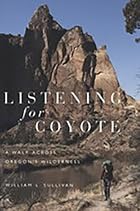
10) Listening for Coyote / William L. Sullivan
In 1985, the author noticed that newly-designated wilderness areas in Oregon made it possible to cross the entire state -- from its westernmost point at Cape Blance to its easternmost in Hell's Canyon -- on public trails. The route was not direct; it was a 1,300-mile meander across the state. But once discovered it demanded hiking so, from August to October, he did.
This is the journal of Sullivan's trek, and it's quite good. Besides descriptions of flora and fauna, Sullivan includes encounters with backwoods personalities such as the Earth First! activist legally enjoined from reentering the area where Sullivan encounters him. There are also pertinent bits of Oregon history and the sort of random musings that occur to one on a long walk.
Occasionally there's an overblown image or an inept turn of phrase, but for the most part it's engaging and informative. Recommended.
This morning I hike toward the looming peaks of the High Siskiyous. On the way I startle no fewer than eleven coveys of mountain quail out of the bush beside the road. In one of the coveys I count eighteen chicks running along like feathery chicken drumsticks, led by an indignant turkey drumstick. This would be a good place to be a bobcat.
10) Listening for Coyote / William L. Sullivan
In 1985, the author noticed that newly-designated wilderness areas in Oregon made it possible to cross the entire state -- from its westernmost point at Cape Blance to its easternmost in Hell's Canyon -- on public trails. The route was not direct; it was a 1,300-mile meander across the state. But once discovered it demanded hiking so, from August to October, he did.
This is the journal of Sullivan's trek, and it's quite good. Besides descriptions of flora and fauna, Sullivan includes encounters with backwoods personalities such as the Earth First! activist legally enjoined from reentering the area where Sullivan encounters him. There are also pertinent bits of Oregon history and the sort of random musings that occur to one on a long walk.
Occasionally there's an overblown image or an inept turn of phrase, but for the most part it's engaging and informative. Recommended.
This morning I hike toward the looming peaks of the High Siskiyous. On the way I startle no fewer than eleven coveys of mountain quail out of the bush beside the road. In one of the coveys I count eighteen chicks running along like feathery chicken drumsticks, led by an indignant turkey drumstick. This would be a good place to be a bobcat.
113qebo
>110 swynn: A spiritual predecessor of Cheryl Strayed?
Lotsa people who want to ditch their lives and start fresh (been there...).
Lotsa people who want to ditch their lives and start fresh (been there...).
114swynn
>114 swynn: Probably why Strayed's story appeals so broadly. When I read that bit it stopped me short (nah, too long ago, going the other direction). I suppose Strayed wasnt the first to hike the PCT with minimal experience, and was far from the first to be tempted.
(been there...)
Did you do a start-fresh trek, Katherine?
(been there...)
Did you do a start-fresh trek, Katherine?
115qebo
>114 swynn: Nope, never crossed my mind to go hiking. I moved across the country several times in my 20s. :-)
116swynn
>115 qebo: For starting fresh I expect a cross-country move is very effective. Myself, I find the idea of a long hike very appealing but the details and logistics a bit terrifying.
117swynn

11) White Trash Zombie Apocalypse / Diana Rowland
Date: 2013
Angel Crawford is getting used to her post-life of gainful employment, studying for her GED, figuring out her relationship with her cop boyfriend, and eating brains.
Then a film crew comes to town for a low-budget horror flick, High School Zombie Apocalypse!! (note the two exclamation points). At first Angel is amused by the zombie makeup and the shambling act. But then she notices that not all of the actors are pretending. Soon she's involved in a conspiracy involving zombies real and fake, the zombie mafia, and zombie R&D.
I'm still enjoying this series thanks to its light touch and the appealing voice of its narrator/heroine. From the standpoint of plot I found this one the weakest in the series so far, but it does a lot toward setting up an ensemble for future installments. For a transitional story it's not bad.
The cover is by Daniel Dos Santos, whose hot-mess portraits of Angel Crawford capture the sreies's spirit perfectly.
118DorsVenabili
As usual, getting my fill of DAW covers on your thread! :-)
>117 swynn: Hrm. I keep trying to figure out if I'm a zombie person. I enjoy the Walking Dead, but have not been drawn to zombie novels or films, in general. However, for some reason, every time I see this series a little part of my brain says to put it on my wishlist, but then I don't. Basically, there's a war going on in my brain right now.
>117 swynn: Hrm. I keep trying to figure out if I'm a zombie person. I enjoy the Walking Dead, but have not been drawn to zombie novels or films, in general. However, for some reason, every time I see this series a little part of my brain says to put it on my wishlist, but then I don't. Basically, there's a war going on in my brain right now.
119Dejah_Thoris
>118 DorsVenabili: I had to jump in - I generally don't care for zombie books, movies, etc., but I love this series. Give Angel a try!
>117 swynn: You might want to wait until closer to summer and the publication date for White Trash Zombie #5 to pick up How the White Trash Zombie Got Her Groove Back. Rowland ended it on a really annoying note.....
>117 swynn: You might want to wait until closer to summer and the publication date for White Trash Zombie #5 to pick up How the White Trash Zombie Got Her Groove Back. Rowland ended it on a really annoying note.....
120swynn
>118 DorsVenabili: WTZ is more urban fantasy than horror ... although "urban" may not be the word for a series that take place in Tucker Point, Louisiana, where the swamp is as close as the nearest department store and the only department store is a Wal-Mart. And its main preoccupation is not gore or the collapse of civilization or humans' inhumanity to one another, but the character development of a tough girl raised in poverty and neglect who never caught a break until she died. It could easily be a zombie series for readers who don't like zombies.
That said, it does have brain-eating. And a "zombie mafia," which I just like saying.
Zombie mafia.
More DAWs coming soon!
>119 Dejah_Thoris: Thanks for the warning Dejah! I picked up #4 on the Iowa City trip so it's sitting on my DAW shelves, but with that warning I think I'll let it sit there a few more months.
That said, it does have brain-eating. And a "zombie mafia," which I just like saying.
Zombie mafia.
More DAWs coming soon!
>119 Dejah_Thoris: Thanks for the warning Dejah! I picked up #4 on the Iowa City trip so it's sitting on my DAW shelves, but with that warning I think I'll let it sit there a few more months.
121swynn
Treadmill read:
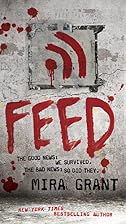
12) Feed / Mira Grant
Date: 2010
This is a bit more traditional zombie novel, with its shambling hordes and crisis of civilization as a vehicle for social commentary. The last ingredient is strong enough that I really should have taken it off the treadmill, but things moved along easily enough that I never felt the need.
The target this time is the entanglement of journalism and politics. In a post-zombie-apocalypse world, the burden of newsgathering shifts toward independent bloggers. Georgia and Shaun Mason are two such, fighting for eyeshare by venturing into hazard zones and reporting what they see. They think they've hit the big time when they are selected to accompany a rising politician in his bid for the presidency. Of course, politics turns out to be more dangerous than zombies.
I read most of this with an elevated heart rate so I may have missed some things, but I found the world building impressively solid. From epidemiology to economics it felt convincing, and though details may have occasionally slowed the pace, the payoff was worth it. Looking forward to the next.
12) Feed / Mira Grant
Date: 2010
This is a bit more traditional zombie novel, with its shambling hordes and crisis of civilization as a vehicle for social commentary. The last ingredient is strong enough that I really should have taken it off the treadmill, but things moved along easily enough that I never felt the need.
The target this time is the entanglement of journalism and politics. In a post-zombie-apocalypse world, the burden of newsgathering shifts toward independent bloggers. Georgia and Shaun Mason are two such, fighting for eyeshare by venturing into hazard zones and reporting what they see. They think they've hit the big time when they are selected to accompany a rising politician in his bid for the presidency. Of course, politics turns out to be more dangerous than zombies.
I read most of this with an elevated heart rate so I may have missed some things, but I found the world building impressively solid. From epidemiology to economics it felt convincing, and though details may have occasionally slowed the pace, the payoff was worth it. Looking forward to the next.
122rosalita
>121 swynn: Ooh, I've got that one on my e-reader! Glad to hear you liked it so well, Steve.
123jolerie
I've had Feed on my to borrow from the library list for awhile. Time to bump it up a bit. Sounds like it would be an excellent treadmill read.
124swynn
122, >123 jolerie: Hope you like it!
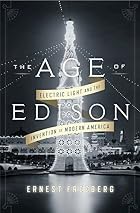
13) The Age of Edison / Ernest Freeberg
This was Tuesday night's read for my RL book discussion group. It's a "social history" of the invention of electric light. As a social history, it's not as interested in biographical or technical details as it is in social context and consequences.
Though we often think of Thomas Edison as the brilliant inventor to whom we owe electric light, the truth turns out to be a bit more ambiguous. Many inventors were working on electric light at the time; any of several could easily have developed a feasible product ahead of Edison, and if Edison hadn't been around someone else would have brought something to market at about the same time -- and did do so, in fact: the earliest commercial products for urban lighting were arc lights, a technology in which Edison wasn't invested.
Still, Freeberg does give Edison credit for a couple of innovations: his team approach to invention, which allowed him to leverage time and talent; and a genius for public relations, which not only awarded him credit (perhaps more than he deserved) but also brought him much-needed capital.
So what was the world like before and after electric light? It's remarkable how quickly electric light was adopted in the United States. Within a few years, any city that wanted to be more progressive than the next city down the road (which was practically every city) installed street lights of some sort, maybe a painfully brilliant arc light on a towering pole in the center of town or maybe a series of lamps down main street.
In those early days there were no safety standards: uninsulated power wires were commonly strung in the street on poles already crowded with telephone and telegraph lines. Electrical fires were common, but typically dismissed by the industry: true, electrics accidents sometimes killed people, but not nearly as many as gas accidents and did you want to go back to those bad old days? On the other hand, technicians were plentiful. After all there was no licensure: all you needed to lay wire was enthusiasm and a subscription to Scientific American. Just kidding; those criteria were also optional.
I was surprised at how quickly electric light transformed the world: I had a notion that insanely rapid pace only arrived later in the 20th century, but we see it here already at the turn of the century. Within a few years electric light had so transformed work, leisure, and even popular philosophy that it was hardly possible to imagine going back. True, some communities tried. In the face of rising electrical costs and hazards, some towns removed the electric lights and reinstalled gas only to be surprised and disappointed at the weak and unsteady lights that sufficed just a few years before.
The discussion was led by a history professor who called attention to all of these points. I live in a relatively rural area, and several members of the group remembered childhoods in farmhouses without electricity. Their perspectives on electrification were, erm, illuminating.
Readers looking for technical details will be disappointed, but the book is packed with interesting, and is recommended anyway.
13) The Age of Edison / Ernest Freeberg
This was Tuesday night's read for my RL book discussion group. It's a "social history" of the invention of electric light. As a social history, it's not as interested in biographical or technical details as it is in social context and consequences.
Though we often think of Thomas Edison as the brilliant inventor to whom we owe electric light, the truth turns out to be a bit more ambiguous. Many inventors were working on electric light at the time; any of several could easily have developed a feasible product ahead of Edison, and if Edison hadn't been around someone else would have brought something to market at about the same time -- and did do so, in fact: the earliest commercial products for urban lighting were arc lights, a technology in which Edison wasn't invested.
Still, Freeberg does give Edison credit for a couple of innovations: his team approach to invention, which allowed him to leverage time and talent; and a genius for public relations, which not only awarded him credit (perhaps more than he deserved) but also brought him much-needed capital.
So what was the world like before and after electric light? It's remarkable how quickly electric light was adopted in the United States. Within a few years, any city that wanted to be more progressive than the next city down the road (which was practically every city) installed street lights of some sort, maybe a painfully brilliant arc light on a towering pole in the center of town or maybe a series of lamps down main street.
In those early days there were no safety standards: uninsulated power wires were commonly strung in the street on poles already crowded with telephone and telegraph lines. Electrical fires were common, but typically dismissed by the industry: true, electrics accidents sometimes killed people, but not nearly as many as gas accidents and did you want to go back to those bad old days? On the other hand, technicians were plentiful. After all there was no licensure: all you needed to lay wire was enthusiasm and a subscription to Scientific American. Just kidding; those criteria were also optional.
I was surprised at how quickly electric light transformed the world: I had a notion that insanely rapid pace only arrived later in the 20th century, but we see it here already at the turn of the century. Within a few years electric light had so transformed work, leisure, and even popular philosophy that it was hardly possible to imagine going back. True, some communities tried. In the face of rising electrical costs and hazards, some towns removed the electric lights and reinstalled gas only to be surprised and disappointed at the weak and unsteady lights that sufficed just a few years before.
The discussion was led by a history professor who called attention to all of these points. I live in a relatively rural area, and several members of the group remembered childhoods in farmhouses without electricity. Their perspectives on electrification were, erm, illuminating.
Readers looking for technical details will be disappointed, but the book is packed with interesting, and is recommended anyway.
125ronincats
The Midnight Mayor is one of today's daily Kindle deals!
126swynn
>125 ronincats: I saw! I downloaded it & then returned the library's copy. One more volume knocked off the Tower of Due.
Of course, now it'll probably even longer before I get to it ...
Of course, now it'll probably even longer before I get to it ...
128Dejah_Thoris
>124 swynn: Really nice review! You should post it to the work page. I'll add it to the list....
129qebo
>124 swynn: BB.
>121 swynn: I think it was norabelle414 who said I should read this.
>125 ronincats: Should I try this? Recognizing it's #2 of a series. It's a Nook deal too.
I have acquired 0 books so far this year. It's getting painful.
>121 swynn: I think it was norabelle414 who said I should read this.
>125 ronincats: Should I try this? Recognizing it's #2 of a series. It's a Nook deal too.
I have acquired 0 books so far this year. It's getting painful.
130swynn
>128 Dejah_Thoris: Thanks Dejah!
>129 qebo: It's an urban fantasy series about a sorceror in London. Not sure it's your kind of thing, Katherine, but the first in the series was better than most in terms of a vivid setting, well-motivated characters, and a well-paced plot. If you'd like to give it a try, you'd be sampling one of the better series. I'm not sure whether the second stands on its own.
Congratulations, btw, on the bookbuying resolve. I have bought... several... unless you count Kindle books in which case it's imprudently many.
But quite a few of those were free, so I can't imagine them counting, really.
>129 qebo: It's an urban fantasy series about a sorceror in London. Not sure it's your kind of thing, Katherine, but the first in the series was better than most in terms of a vivid setting, well-motivated characters, and a well-paced plot. If you'd like to give it a try, you'd be sampling one of the better series. I'm not sure whether the second stands on its own.
Congratulations, btw, on the bookbuying resolve. I have bought... several... unless you count Kindle books in which case it's imprudently many.
But quite a few of those were free, so I can't imagine them counting, really.
131ronincats
>129 qebo: You definitely need to read A Madness of Angels first, Katherine.
132evilmoose
Heya Steve, I just found you, another runner! Although I'll admit I spend a lot more time on my bike than I do running, I tend to get in at least a few longer runs, so I managed about 600 miles last year. I've never done treadmills though, so I have to make sure I find audiobooks that strike the perfect balance between being engaging enough that I don't zone out, and not so engaging that I run into a tree. I enjoyed the Mira Grant Newsflesh trilogy a couple of years ago. I started on her Parasites one last year, but so far am feeling less convinced!
133Helenliz
>124 swynn: ohhh, that sounds like an interesting read. While I studied some physics at university, I admit to completely failing to understand electrickery. It's all magic to me. >:-)
134swynn
>131 ronincats: I thought that might be the case. Thanks, Roni!
>132 evilmoose: Welcome Megan! Yay for more runners! I'm not crazy about treadmills, even in winter, but I'm still recovering from some foot problems and don't want to be ten miles from home when it the foot gives out. Too bad about Parasites-- at least I have a couple good volumes of Newsflesh to look forward to!
>133 Helenliz: It is interesting, and don't worry about trickery-- there's very little explanation of the science and no math at all. It's all about how electric light changed American society, which is plenty interesting on its own.
>132 evilmoose: Welcome Megan! Yay for more runners! I'm not crazy about treadmills, even in winter, but I'm still recovering from some foot problems and don't want to be ten miles from home when it the foot gives out. Too bad about Parasites-- at least I have a couple good volumes of Newsflesh to look forward to!
>133 Helenliz: It is interesting, and don't worry about trickery-- there's very little explanation of the science and no math at all. It's all about how electric light changed American society, which is plenty interesting on its own.
135swynn

14) DAW #72: From This Day Forward / John Brunner
Date: 1973
This is a pretty good collection of twelve short stories and one poem. The stories are mostly the punchy moralizing type with twist endings that were a staple for The Twilight Zone.
The generic space-art cover is by Kelly Freas.
Spoilers may follow.
The biggest game.
A pickup artist gets his comeuppance.
The trouble I see.
A poor kid from the sticks has a gift for foreseeing and avoiding danger. He takes his gift to the big city and does well until a danger arises that he cannot avoid.
An elixer for the emperor.
Roman general Metullus returns victorious from war and with a menagerie for the Colosseum. But Caesar, aging and goodhearted, pardons the African slave who is to be the first victim of Metullus' menagerie. Insulted, Metullus falls in with a plan for treason. Meanwhile, the African journeys to his homeland to return with a gift of thanks for Caesar, only to find that the kind emperor has been replaced with Metullus.
Wasted on the young.
In an idyllic future where human civilization has solved all problems of scarcity, citizens are allowed any luxury, but eventually must pay for excess with years of service to the state. Hal Page has racked up over three hundred years of service to the state and has just received notice that his debt must be paid. He decides to throw one last party and then cheat the government out of the years owed. But the state has other plans and is watching him closely.
Even chance.
Back during World War II, a Kalang tribe in Southeast Asia rescued an American pilot who had abandoned his fighter plane and parachuted into the jungle. When the Army found him, the Kalang were well rewarded. Thirty years later, a team of workers from the WHO go looking for the Kalang as part of a worldwide vaccination project. Their visit happens to coincide with nearby meteor strike ... only it's not a meteor: it's another downed pilot. And this time the army who comes looking may be less friendly ....
Planetfall.
Lucy is a planetbound human feeling aimless and wishing that she could live aboard a starship, where she would know her place. Valeryk is a starship's botanist on very brief leave, feeling trapped by the constraints of living on a ship.
Judas.
When the world's top roboticists designed a new type of human-analog machine, they did not expect that it would become the focus of a new religion. Twenty years later one of the scientists who created the god-bot plots to stop it.
The Vitanuls.
Life-extending therapies make huge advances, causing a blossoming in the world population. But an aging physician at a clinic in India notices a disturbing trend: newborns who seem to have no soul.
Factsheet six.
An unscrupulous businessman stumbles across an industry newsletter with disturbing information about safety failures of products in which he is invested.
Fifth commandment.
Philip Grumman lives at a retirement home for childless survivors of a devastating war. One day he goes for an unplanned walk and sees things he shouldn't: it seems the younger generation has made remarkable -- one might say more than humanly possible -- technological progress in his retirement years.
Fairy tale.
Barnaby Gregg went missing years ago and was presumed dead. But now he's back with a message for the world. It seems he was captured by the little folk and held captive in their land. But the little piskies can see the planet's fate and they're getting out while they can.
The inception of the epoch of Mrs. Bedonebyasyoudid.
A shadowy organization delivers comeuppance to warmongers and bomb-droppers.
The oldest glass
Poem.
136swynn
Treadmill reading:
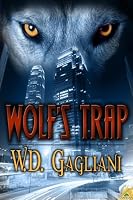
15) Wolf's Trap / W.D. Gagliani
Date: 2003
After Feed I wanted something properly light and mindless for a treadmill read. This wasn't light exactly but mindless pretty much. It's your standard thriller with your standard serial killer motivated by childhood trauma and The Crazy. The gimmick is that the detective is a werewolf.
Nick Lupo was a teenager when he turned, and since then he's been slowly trying to gain control over his other self. Most of the month Lupo's a Milwaukee cop but a few days a month he spends at a cabin in northern Wisconsin where he can let the beast run wild through the remote woods. His condition makes him a loner: as a young adult he allowed himself to get close to another person, even revealing his secret. It did not end well.
Now there's a serial killer loose in Milwaukee who seems to be taunting Lupo directly, who seems even to know his secret.
This was nominated for a Stoker for Best First Novel back in 2003, and has been followed by several sequels. It didn't really feel award-worthy to me: the villain felt cartoonish, the hero rather flat, and some badguys tacked on at the end are easy redneck stereotypes.
Still, it's fast and uncomplicated and it could be the start of something interesting. The writing feels unpolished but promising, and the series could turn out well if the supernatural elements are explored further. I'll probably read the next.
Warnings: explicit violence and explicit sex and sometimes both together.
Cover design is by Scott Carpenter. I like it.
15) Wolf's Trap / W.D. Gagliani
Date: 2003
After Feed I wanted something properly light and mindless for a treadmill read. This wasn't light exactly but mindless pretty much. It's your standard thriller with your standard serial killer motivated by childhood trauma and The Crazy. The gimmick is that the detective is a werewolf.
Nick Lupo was a teenager when he turned, and since then he's been slowly trying to gain control over his other self. Most of the month Lupo's a Milwaukee cop but a few days a month he spends at a cabin in northern Wisconsin where he can let the beast run wild through the remote woods. His condition makes him a loner: as a young adult he allowed himself to get close to another person, even revealing his secret. It did not end well.
Now there's a serial killer loose in Milwaukee who seems to be taunting Lupo directly, who seems even to know his secret.
This was nominated for a Stoker for Best First Novel back in 2003, and has been followed by several sequels. It didn't really feel award-worthy to me: the villain felt cartoonish, the hero rather flat, and some badguys tacked on at the end are easy redneck stereotypes.
Still, it's fast and uncomplicated and it could be the start of something interesting. The writing feels unpolished but promising, and the series could turn out well if the supernatural elements are explored further. I'll probably read the next.
Warnings: explicit violence and explicit sex and sometimes both together.
Cover design is by Scott Carpenter. I like it.
137Dejah_Thoris
>136 swynn: Not light, but mindless, with explicit sex and violence. I think I may be able to pass on that one, lol.
138swynn
>137 Dejah_Thoris: Yeah ... it's certainly not for all tastes. The good sort for instance, it's not for that.
It's a guilty pleasure, like the low-budget horror movies I both loathe and can't watch enough of.
It's a guilty pleasure, like the low-budget horror movies I both loathe and can't watch enough of.
139swynn

16) Child of a Rainless Year / Jane Lindskold
Last year I read and raved about Robert Jackson Bennett's American Elsewhere, about a woman who loses her mother as a child and learns only as an adult that her mother has left her a house in rural New Mexico, with weird consequences following. Roni suggested (thanks, Roni!) that I might also like this book, about a woman who loses her mother as a child and learns only as an adult that her mother has left her a house in rural New Mexico, with weird consequences following.
Despite the similar setup, Bennett's and Lindskold's are very different books. Bennett's is a fast-paced weird thriller owing much to Lovecraft. Lindskold's is a leisurely and lightly plotted exploration of ideas and owes more to magic realist than weird fiction.
Lindskold's heroine Mira Fenn was nine years old when her mother disappeared. Mira remembers living with her mother in a mansion in Las Vegas, New Mexico. Her mother was cold and distant but strangely entrancing figure, a master of fashion and commander of her home. When her mother rides off and fails to return, Mira is adopted by strangers in Ohio where she finishes her childhood with reasonable contentment and more love than her mother ever offered. They also encourage her artistic talent, of which her mother never approved, which leads to a career as an art teacher.
Mira is in her fifties when her foster parents are killed in an automobile accidents, after which she learns that her mother's Las Vegas mansion was never sold; that it was left to Mira though her foster father chose never to share the fact with her. Mira goes to New Mexico, where she expects to find a rundown structure in bad need of repair. Instead, the house is empty and dusty but otherwise well-kept thanks largely to the attentions of handyman Domingo, who has an almost-mystical connection to the house and its wants. Mira understands the connection, partly because she recognizes Domingo as a fellow artist communing with his materials; but also because she begins to feel a connection herself. The house does indeed want things. And with her arrival the house begins to come to life.
At this point you'd expect the story to pick up. The opposite happens. We spend a lot of time with Mira exploring the house, contemplating her life, wondering whether she is falling in love with Domingo, wondering about the supernatural, thinking about "liminal spaces" and fortune-telling and fate. There's a great deal of exposition, though a lot of it is in the form of dialogues. At best Lindskold is laying groundwork for an interesting system of magic. At the worst we have those annoying dialogues where two characters tell each other things they both already know, presumably for the reader's benefit.
And despite the supernatural elements, the mood is never unsettling. This is largely because the heroine is never unsettled. Spirits in the house? Well, it's sort of convenient. Meet the ghost of an old frontier murderess. How informative. Nearly suffering a potentially fatal fall? The house must have been looking after me. There is only one point at which Mira seems to feel even slightly apprehensive -- or does she? Her "fear" provides her an excuse to spend the night at the home of her romantic interest. Interestingly, come morning her fear is gone.
Others have loved it, and I think I can see why: there's a strong sense of place, and a lot of interesting ideas are tossed around. But like the pilot episode of a television series, once we have everyone introduced and the premises explained we don't have any time left for story. If this were the first in a series, I'd find it intriguing enough to continue to the next, but as a standalone I just found its pace too slow and its stakes too low.
Of course, this might just be a guy's reaction. If only something had exploded ...
140swynn

17) Cycle of Fire / Hal Clement
Date: 1957
On the planet Abyormen, Dar Lang Ahn is near the end of his life. His duty at this time is to gather his books, a lifetime of thoughts and observations, and carry them to the Teachers and their library at the pole. Unfortunately, his glider crashes on a lava plain, leaving Dar Lang Ahn no choice but to carry his books the rest of the way.
Abyormen is a hot planet, and Dar Lang Ahn's species is adapted for it -- just how much we don't learn til much later -- but even so, the lava plain is vast and sere and Dar Lang Ahn has no hope of crossing it, never mind of reaching the poles. So he travels as far as he can, places his books in a safe location, then lies down to die where he hopes his body might be seen from a passing glider.
Fortunately for Dar Lang Ahn he is not the only castaway on Abyormen. He is rescued by Nils Kruger, a human teenager left behind when his crew mistakenly presumed him dead. Kruger too wants off the lava plain, but he has figured out how to draw moisture from succulents, enough to maintain his own survival and Dar Lang Ahn's.
There are numerous misunderstandings between Kruger and Dar Lang Ahn, most obviously because of a language barrier. But when Dar Lang Ahn communicates that his goal is a frozen area to the north, Kruger quickly decides to join him. The two trek northward encountering curiosities and incidents, and their partnership grows into friendship -- a friendship surprisingly affecting for something out of Clement.
About two-thirds of the way through, the tone and pace change markedly.
This is only the third of Clement's books I've read: I read and loved Needle when I was much younger, then recently re-read and still liked it; and a couple of years ago I read Ocean on Top which I didn't like so much. Of the three, I like Cycle of Fire the best.
For those who've been turned off by Clement's occasionally sterile prose and notoriously flat characters, or for his apparent ignorance of women's existence, you probably won't find enough different here to change your mind. But if like me you enjoy his playful and meticulous worldbuilding, Cycle of Fire has all of that plus an unusually genuine heart.
Not to mention: science fictional library, and a character willing to risk his life for books. Hoo-rah.
This one was taken off the shelf for Dejah's "Golden Age of Science Fiction" TIOLI challenge.
There is no credit for the expressionistic cover.
141qebo
I read Needle and Through the Eye of a Needle two years ago, recommended by sibyx. I got a bunch of Hal Clement books (inexpensive used) at the time, turns out Cycle of Fire is among them and I am in need of something short.
142swynn
>141 qebo: I remember your reviews of the two Needle books. At the time I didn't have easy access to Through the Eye of a Needle and your mixed feelings about it partly convinced me not to work too hard seeking it out. I do have Iceworld, Mission of Gravity, and Space Lash on my shelves and will probably get to them first.
Hope you like Cycle of Fire as well as I did!
Hope you like Cycle of Fire as well as I did!
143swynn

18) The Great Hurricane 1938 / Cherie Burns
In September 1938 a hurricane struck New England. With hundreds killed, entire communities wiped out, and billions of dollars in property damage, it was at the time the worst disaster in U.S. history -- more death and destruction than the Great Chicago Fire or San Francisco's 1906 earthquake.
Burns's account is mostly made up of survivor's tales. Historical context is slight, limited to mentions of the growing tension in Europe and the primitive state of weather forecastng. This makes the book -- for me -- less satisfying than other historical disaster books like Isaac's Storm. But I read this with my son who enjoys stories of peril, survival, and meteorological drama. Those things, Burns delivers.
There are interesting celebrity cameos by Katharine Hepburn, whose family lost a house in the storm; and Van Wyck Mason, who was caught in the storm while delivering a manuscript to his publisher.
144lyzard
Van Wyck Mason, who was caught in the storm while delivering a manuscript to his publisher
Which may or may not explain why his books are so damn expensive. :D
Which may or may not explain why his books are so damn expensive. :D
145ronincats
Sorry there weren't any explosions in Child of a Rainless Year--I have to agree that it is quite an atmospheric book. Now, my favorite book by far by Lindskold, Changer, has a lot more action!
I remember when Mission of Gravity was THE marvel of world-building, and since I was only a child in the 50s when it came out, I suspect it was reissued just before Star Light was published in 1970.
I remember when Mission of Gravity was THE marvel of world-building, and since I was only a child in the 50s when it came out, I suspect it was reissued just before Star Light was published in 1970.
146swynn
>144 lyzard: Well, for one title at least. Strangely, Burns notes the size of the manuscript (over 700 pages) and the author's investment in it (18 months of work -- surely unusual for such a prolific author) but not its title. Wikipedia claims that it was Three Harbours -- a copy of which can be found on Abebooks, in fair condition, for $3.48 including shipping.
>145 ronincats: Lindskold did keep my attention even as she tried it, so I'm interested in trying more of her work, especially something with more action. It's probably a flaw in my taste, but I'm a sucker for stuff happening. Into the Swamp with Changer!
>145 ronincats: Lindskold did keep my attention even as she tried it, so I'm interested in trying more of her work, especially something with more action. It's probably a flaw in my taste, but I'm a sucker for stuff happening. Into the Swamp with Changer!
147lyzard
>146 swynn: My acquaintance with Mason is through his "Captain North" novels; the first book in the series, Seeds Of Murder, goes for anywhere up to $1000. :(

ETA: Steve, I have added Tom Grogan to TIOLI #13, if you would care to join me there? :)
(I'm finding it a very surprising book in one way, rather disturbing in another...)

ETA: Steve, I have added Tom Grogan to TIOLI #13, if you would care to join me there? :)
(I'm finding it a very surprising book in one way, rather disturbing in another...)
148Dejah_Thoris
>140 swynn: I haven't actually read any Hal Clement. When I'm finished with my Heinlein project, I'll have to rectify that. I'm glad glad you had something on the shelf for the Challenge - not that I doubted it!
149swynn
>147 lyzard: Re: Seeds of Murder: Ouch.
Re: Tom Grogan: Done. I've finished the first few chapters. If you're finding the strong independent woman protagonist surprising and the labor-union antagonists disturbing then I'm with you.
>148 Dejah_Thoris: Oh yes, there is more "golden age" science fiction on the shelf, though I don't expect to get to more this month. Hope you like Clement when you get around to him!
Re: Tom Grogan: Done. I've finished the first few chapters. If you're finding the strong independent woman protagonist surprising and the labor-union antagonists disturbing then I'm with you.
>148 Dejah_Thoris: Oh yes, there is more "golden age" science fiction on the shelf, though I don't expect to get to more this month. Hope you like Clement when you get around to him!
150lyzard
>149 swynn: Bingo!
151swynn
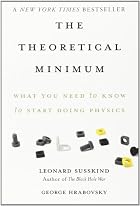
19) The Theoretical Minimum / Leonard Susskind and George Hrabovsky
This is a whirlwind introduction to the theoretical basics of classical mechanics. The contents are based on the content of a continuing education class at Stanford, developed by George Hrabovsky for nonscientists interested in physics. Not just any nonscientists though:
A lot of them had a bit of background, a bit of physics, a rusty but not dead knowledge of calculus, and some experience at solving technical problems. They were ready to try their hand at learning the real thing--with equations.
(I expect that Stanford has a greater than average concentration of people who fit this profile.)
In principle, everything you need is here. In practice, some background will be all but necessary, because the presentation is very terse. Three semesters of calculus are covered in about 35 pages, and I have no idea how many semesters of physics in the remaining 180, but I'd guess at least two. The authors cover a lot of territory with well-chosen words.
I can't help admiring an elegant compression of complex material but reader, I struggled. My background in calculus is strong enough, but my background in physics consists of what I remember from high school some thirty years ago, the bits I learned for word problems and exercises in the calculus sequence, and countless hours of Star Trek. I hit a wall when the Lagrangian was presented in Chapter 6 without motivation. I had to read the chapter several times and go exploring for other explanations. I'm still not sure I grasp it, but I have a better idea now of how it fits into the big picture than when working problems in Calculus 3. The extra work was worth it; without a grasp of the Lagrangian it would have been hopeless trying to tackle the Hamiltonian in Chapter 8, never mind gauge transformations in Chapter 11.
Do I recommend it? Well, you don't need my recommendation: The Theoretical Minimum made it onto several best-of-2013 lists, so plenty of others have found it informative and appealing and I won't argue. I will say that the more background you have the more you're likely to get out of it. I expect it will appeal most to those who learned the material once but whose memories have faded; or those whose memories are fairly fresh and can appreciate a "good bits version." Jim could probably polish it off in an hour or two.
As for myself, I have bought my own copy and plan to spend a some more time with it before cracking the sequel. I may investigate something a little more hand-holdey first, though ....
152Dejah_Thoris
I am extremely impressed with your determination to get through The Theoretical Minimum - I don't share that determination, mind you, but I am impressed. My Calculus and Physics days many years ago and I'm not at all certain I'd want to revisit them. I'm probably just too lazy!
153DorsVenabili
>119 Dejah_Thoris: and >120 swynn: You had me at zombie mafia. It does sound very cool though. I will seek it out.
>121 swynn: This has been on my wishlist for a while. I'll probably try the audiobook.
>135 swynn: I like this:
"The oldest glass
Poem."
That says a lot. Ha!
>121 swynn: This has been on my wishlist for a while. I'll probably try the audiobook.
>135 swynn: I like this:
"The oldest glass
Poem."
That says a lot. Ha!
154drneutron
>151 swynn: Jim could probably polish it off in an hour or two. It's been on my list, plus the follow on for quantum mechanics since it came out. But I'm sure it'll take more than a few hours. :)
If anyone's interested in tackling it, I suppose we could try a tutored read or group read.
If anyone's interested in tackling it, I suppose we could try a tutored read or group read.
155swynn
>152 Dejah_Thoris: Thanks, Dejah. I expected the going to be a lot easier, and once I realized how much I'd overestimated my understanding I couldn't resist the challenge. I'm not sure that my understanding is dramatically improved, but at least now I have a better idea of what I don't know.
>153 DorsVenabili: Hope you like the zombie lit, Kerri! Yeah, the poem didn't offer much to comment about. It was something about Aristotle and mirrors.
>154 drneutron: If anyone's interested in tackling it, I suppose we could try a tutored read or group read.
I would sign up for this if there were interest.
>153 DorsVenabili: Hope you like the zombie lit, Kerri! Yeah, the poem didn't offer much to comment about. It was something about Aristotle and mirrors.
>154 drneutron: If anyone's interested in tackling it, I suppose we could try a tutored read or group read.
I would sign up for this if there were interest.
156scaifea
>154 drneutron: A tutored read? Cool! Although before you let me join, you should probably go over to Morphy's thread and check out the conversation I had with Tomm yesterday. You may want to ban me from anything science related...
Hi, Steve!
Hi, Steve!
157scvlad
>151 swynn: Hmm. I could do calculus and physics once ...
158swynn
>156 scaifea: I have to agree that unboiling an egg smells more like magic than science. But how very cool that it's at least sorta true.
Now if they can un*scramble* one ...
>157 scvlad: If you ever get the hankering again, The Theoretical Minimum could be a good place to start. I strongly suspect that Hrabovsky's class was mostly populated by students who could say the same.
Now if they can un*scramble* one ...
>157 scvlad: If you ever get the hankering again, The Theoretical Minimum could be a good place to start. I strongly suspect that Hrabovsky's class was mostly populated by students who could say the same.
159qebo
>151 swynn: I have enough books of this ilk that another would fit right in, but I’ve become more realistic with age, and suspect that actually reading it is not gonna happen.
>154 drneutron: But I’d probably play along if someone else volunteered to be the primary student.
>154 drneutron: But I’d probably play along if someone else volunteered to be the primary student.
160swynn
>159 qebo: Since my own encounter with the book turned out to be a greater-than-expected commitment, I won't blame anyone else for giving it a pass.
The Theoretical Minimum wraps up my reading of Scientific American's best books of 2013. For my pop-science reading this year, I'm taking a different track. I've been following the various science-related "best of the year" lists posted by John Dupuis on his blog, and have been keeping track of which books get the most mentions.
Altogether, 128 titles were mentioned in the 18 lists posted by Dupuis. According to my numbers, here are the most frequent favorites:
The Sixth Extinction / Elizabeth Kolbert (mentioned in 8 "best of 2014" lists)
The Innovators / Walter Isaaacson (7 mentions)
Being Mortal / Atul Gawande (7 mentions)
What if? / Randall Munroe (6 mentions)
On Immunity / Eula Bliss (6 mentions)
Dataclysm / Christian Rudde (5 mentions)
Stuff Matters / Mark Miodownik (4 mentions)
No Place to Hide / Glenn Greenwald (4 mentions)
The Lagoon / Armand Marie Leroi (4 mentions)
This seems like a list I can reasonably complete in 2015, and they all look interesting-- in fact most of them are already in the Someday Swamp. (And I've already read What If? so ... jump start!) I'll plug away at these over the next few months.
Going down to 3 mentions brings in another 10 books whose inclusion would make the list so long I'd be unlikely to finish. Still, many of them are also in the Someday Swamp:
Countdown to Zero Day / Kim Zetter (already read!)
Dr. Mütter's Marvels / Cristin Aptowicz
Geek Sublime / Vikram Chandra
How Not to Be Wrong / Jordan Ellenberg (math and critical thinking: yum)
The Human Age / Diane Ackerman
In the Kingdom of Ice / Hampton Sides (want want want)
The Invisible History of the Human Race / Christine Kenneally
Lives in Ruins / Marilyn Johnson
This Changes Everything / Naomi Klein
War of the Whales / Joshua Horwitz
The Theoretical Minimum wraps up my reading of Scientific American's best books of 2013. For my pop-science reading this year, I'm taking a different track. I've been following the various science-related "best of the year" lists posted by John Dupuis on his blog, and have been keeping track of which books get the most mentions.
Altogether, 128 titles were mentioned in the 18 lists posted by Dupuis. According to my numbers, here are the most frequent favorites:
The Sixth Extinction / Elizabeth Kolbert (mentioned in 8 "best of 2014" lists)
The Innovators / Walter Isaaacson (7 mentions)
Being Mortal / Atul Gawande (7 mentions)
What if? / Randall Munroe (6 mentions)
On Immunity / Eula Bliss (6 mentions)
Dataclysm / Christian Rudde (5 mentions)
Stuff Matters / Mark Miodownik (4 mentions)
No Place to Hide / Glenn Greenwald (4 mentions)
The Lagoon / Armand Marie Leroi (4 mentions)
This seems like a list I can reasonably complete in 2015, and they all look interesting-- in fact most of them are already in the Someday Swamp. (And I've already read What If? so ... jump start!) I'll plug away at these over the next few months.
Going down to 3 mentions brings in another 10 books whose inclusion would make the list so long I'd be unlikely to finish. Still, many of them are also in the Someday Swamp:
Countdown to Zero Day / Kim Zetter (already read!)
Dr. Mütter's Marvels / Cristin Aptowicz
Geek Sublime / Vikram Chandra
How Not to Be Wrong / Jordan Ellenberg (math and critical thinking: yum)
The Human Age / Diane Ackerman
In the Kingdom of Ice / Hampton Sides (want want want)
The Invisible History of the Human Race / Christine Kenneally
Lives in Ruins / Marilyn Johnson
This Changes Everything / Naomi Klein
War of the Whales / Joshua Horwitz
161qebo
>160 swynn: John Dupuis on his blog
Added the RSS feed.
A bunch of those bests are already on my radar. The only one I've read is Dr. Mütter's Marvels as an ER. The only others I have on hand are Geek Sublime and The Sixth Extinction.
Added the RSS feed.
A bunch of those bests are already on my radar. The only one I've read is Dr. Mütter's Marvels as an ER. The only others I have on hand are Geek Sublime and The Sixth Extinction.
162swynn
>162 swynn: I think you'll find him interesting. He's been posting a lot about the Canadian government and science ... it doesn't make the relationship between our own and science look any better, but it's trying to keep us company.
163swynn

20) DAW #73: Breaking Point / James Gunn
Date: 1973
Collection of 8 stories by James Gunn. They're mostly high-concept, often on psychological themes, and tend to be talky. In an introduction Gunn explains that they are stories about characters in unusual circumstances, "pushed to the point where they must bend or break." Some haven't aged well, and none are especially memorable, but most are entertaining enough.
The unremarkable montage cover is by Michael Gilbert.
Breaking Point
The scout ship Andromeda lands on a planet to evaluate its suitability for colonization. But they find themselves trapped on the ship: controls have gone dead. Then the crew's worst fears begin manifesting.
A Monster Named Smith
A scientific team returns to Earth with a sample of extraterrestrial fauna, a sort of alien sheep. While the team conducts an autopsy, a parasite oozes from the sheeps's body then escapes from quarantine. To contain the parasite, the surrounding city is evacuated and the army brought in to sanitize the area. But the parasite escapes the military sweep as well, by taking as host a looter in the abandoned city.
Cinderella Story
The exploration team in this story is composed of three men and a woman because "\c\arefully selected, a woman could easily be all things to three men, and three men, if they tried hard, could be all things to a woman." The team seeks to establish trade agreements with the local population, and in this case establishing contact involves going to a ball and dancing with local royalty.
Teddy Bear
Mr. Gunn may be going crazy: he has lapses of memory, and stands accused of murder. In fact in actions beyond his control he attacks several people with a knife ... and in every case they do not bleed: instead they leak sawdust like a damaged teddy bear. Gunn wonders whether he is truly guilty, whether he is going mad, or whether he is the only "real" person alive.
The Man Who Owned Tomorrow
A man is given the gift of seeing the future. He uses it to become a physician specializing in diagnostics, but the gift makes him miserable.
Green Thumb
Quantum physicists are disappearing all over the world, apparently because the fundamental chaos of the universe drives them to despair.
The Power and the Glory
The universe is an experiment and has run its course. The researchers who have been running it decide to clean it up and start over. But first they hope to salvage a few of its most creative inhabitants. But not everyone they wish to save are interested in salvation.
The Listeners
The director of a SETI-style project has spent his career listening for signals that never seem to come. He wonders whether his attention to hypothetical life has caused him to neglect actual life closer to home.
164swynn
21) Tom Grogan / F. Hopkinson Smith
When stevedore Tom Grogan is injured in a workplace accident, his wife goes to the docks to carry on his work, using his name. As "Tom Grogan" she builds a reputation for reliable work completed on time and for a fair price. This reputation angers the local union men, who prefer to be overpaid for indifferent work (when they aren't just laying about)
Rival contractor Dan McGaw has gotten himself into financial difficulties through chicanery, meanness, and vice. He desperately needs the contracts he keeps losing to Grogan's lower bids. At first he asks the union to pressure Grogan to play according to union rules, but when Grogan refuses, the gloves come off.
Tom Grogan is an appealing character, and it's a credit to Smith that he refrains from constant references to her sex. It's acknowledged, of course, that stevedore is an uncommon occupation for a woman and the villains occasionally call it an improper one. But there aren't any intrusive authorial asides or editorializing-- Grogan is a strong and capable worker and a woman, and she expects and receives respect for the whole package, except of course from those wicked union men.
And that's the part that isn't so appealing. As interesting as Grogan is, these stereotypical villains aren't. Either lazy or thuggish, they spoil what might have been an interesting character study and make it little more than a melodrama. That said, it's pretty entertaining for melodrama and easy to see how it became a bestseller.
When stevedore Tom Grogan is injured in a workplace accident, his wife goes to the docks to carry on his work, using his name. As "Tom Grogan" she builds a reputation for reliable work completed on time and for a fair price. This reputation angers the local union men, who prefer to be overpaid for indifferent work (when they aren't just laying about)
Rival contractor Dan McGaw has gotten himself into financial difficulties through chicanery, meanness, and vice. He desperately needs the contracts he keeps losing to Grogan's lower bids. At first he asks the union to pressure Grogan to play according to union rules, but when Grogan refuses, the gloves come off.
Tom Grogan is an appealing character, and it's a credit to Smith that he refrains from constant references to her sex. It's acknowledged, of course, that stevedore is an uncommon occupation for a woman and the villains occasionally call it an improper one. But there aren't any intrusive authorial asides or editorializing-- Grogan is a strong and capable worker and a woman, and she expects and receives respect for the whole package, except of course from those wicked union men.
And that's the part that isn't so appealing. As interesting as Grogan is, these stereotypical villains aren't. Either lazy or thuggish, they spoil what might have been an interesting character study and make it little more than a melodrama. That said, it's pretty entertaining for melodrama and easy to see how it became a bestseller.
165ronincats
James Gunn was professor of anthropology at the University of Kansas--he was one of the interviewers for the group of us there to test for scholarships during our senior year and his son Chris was in my year at KU.
166jolerie
All the stories in Breaking point sound so interesting! They each seem like they could be a story all on their own.
167swynn
>165 ronincats: What a cool brush with celebrity! I recognize the name, but little of his work; I'm sure I've read others of his stories in anthologies, but I'm pretty sure this is the first volume I've read that was exclusively his.
>166 jolerie: Some delivered and others didn't so much. Cinderella tried to hard to mimic the fairy tale, and together with the sexual politics it just came off as awkward. The power and the Glory deserved a little more development. I think my favorite was the last which starts out slow and feeling a bit pretentious, but builds to an effective ending.
>166 jolerie: Some delivered and others didn't so much. Cinderella tried to hard to mimic the fairy tale, and together with the sexual politics it just came off as awkward. The power and the Glory deserved a little more development. I think my favorite was the last which starts out slow and feeling a bit pretentious, but builds to an effective ending.
168Dejah_Thoris
>21 ronincats: I just downloaded Tom Grogan for my Kindle. Thanks! I hope your weekend is marvelous!
Edit - you're, your, whatever....
Edit - you're, your, whatever....
169swynn
>168 Dejah_Thoris:: I'm looking forward to your thought on it, Dejah!
170swynn

22) Virtual Unreality / Charles Seife
A sort of follow-up to the author's Proofiness, this is a critical thinker's guide to the new information environment. Most of it is familiar: digital information is ubiquitous, inexpensive, easily transmissible, easily copied, and arbitrarily persistent, with traditional gatekeeping roles diminished. The result is an overwhelming number of messages, most of dubious quality.
The subtitle reads: "Just because the Internet told you, how do you know it's true?" But Seife spends more time explaining ways the Internet lies than ways of finding the truth. Most examples are familiar: Wikipedia pranksters, sockpuppetry, chatbots, scam artists, intellectual piracy, Photoshop, cowclickers and more. But when it comes to sniffing out the phonies, he's rather light on strategy.
He does drop a few tips, like tracing IP addresses, or consulting IRS paperwork for nonprofits, but some of his suggestions seem oddly circular, like searching Google or visiting corporate websites. It's rather difficult to grouse too much about the Internet as a tool for deception when it's also your preferred tool for rooting it out. Seife concludes with a top-ten "dicta of the Internet skeptic," but they're mostly variations on "Be careful whom you trust."
It is most interesting -- and Seife is clearly most passionate -- in the chapters discussing the challenges facing journalism. In an environment that prefers speed and aggregation over accuracy and quality, professional authors and editors are an increasingly prohibitive expense. He details how demands placed on content creators practically guarantee fabrication and theft, and tells how news-writing AI has replaced human journalists in some cases.
So it's familiar territory and light on remedies. That said, it's nicely organized and well written, and even the familiar territory contains fresh scenery. I don't remember hearing the story of how Philip Roth was told by Wikipedia that he was an unsatisfactory source for information about his own work. That's probably just me, though, as it was the subject of an open letter in the New Yorker.
Recommended as an introduction to information evaluation in the Internet age; or as a basic antidote to digital utopianism. If it all sounds old hat, it's skippable.
171swynn

23) Threshold / Caitlin R. Kiernan
Date: 2007
A couple of years ago I read Kiernan's Stoker-winning novel The Drowning Girl and didn't quite know what to make of it with its nonlinear plot, unreliable narrator, and patchwork of genres. I thought I'd pick up one of her earlier works-- and finally got around to it. I'm glad I did because this is quite good.
Chance Matthews is a graduate student in paleology at UA-Birmingham; Deacon Spivey is her ex-boyfriend. Back when they were together, Chance and Deacon went exploring in an old waterworks tunnel and saw something they're still trying to forget. Now there's a new girl in town, albino monster hunter Dancy Flammarion, who somehow knows what they saw and wants to help kill it.
From the cover you'd guess this is urban fantasy, and it is, sort of: you've got the urban setting, the ensemble of protagonists, some with supernatural powers, facing down a menace too powerful for any one of them alone. But it doesnt really feel like urban fantasy. Its emphasis on atmosphere over incident and style over plot make it more a work of literary weird fiction. And it works. I found the language captivating and the story creepy tense in all the right spots, right up to the ending which was unsatisfyingly ambiguous.
Recommended? Mostly to fans of horror (of the creep-out rather than the gross-out type) who are open to a slightly experimental style.
172swynn

24) The Ice Balloon / Alec Wilkinson
In 1897 Swedish explorer S.A. Andrée and two others set out to reach the North Pole in a hydrogen balloon. At first hearing it sounds insane, but this was a great age of polar exploration and a great age of ballooning. Global wind currents were not well understood, and possibilities of balloon navigation seemed open. And people who attempted to reach the pole by sledge or by boat tended to die, often terribly. Andrée made a powerful case and secured reputable backers, including Alfred Nobel and the king of Sweden.
Of course he was wrong. Andrée reckoned the journey would take thirty days at most and planned accordingly, but within three days -- and three hundred miles from his goal -- the balloon grounded, stranding Andrée's crew on arctic ice with a few months to walk back to civilization before winter set in. The trek was not easy, with the men pulling sledges weighing as much as 450 pounds, sometimes pulling all day only to discover at the day's end that however far they had traveled, the ice had carried them even farther in the opposite direction. It's a historical tale so there is no spoiler in saying they didn't make it.
Despite their failure, we know quite a bit about their journey, since all three explorers kept journals, and one of them took photographs (one of the photographs is used for the cover). These documents were found decades later along with the explorers' remains on the arctic island Kvitøya, then called White Island. All things considered, they came amazingly close to returning safe and sound, if slightly embarrassed.
I first read of Andrée's expedition last year, in Falling Upwards, Richard Holmes's terrific account of early ballooning. I expected this to expand on Holmes's story and perhaps to give more technical details. In particular, Holmes omits details of Andrée's mechanism for steering the balloon, stating only that it did not work, could not work, and that Andrée only believed it did by self-deception.
Wilkinson does tell a broader story than Holmes. He gives more biographical detail, both for Andrée and for his companions; and he gives more context for contemporary polar exploration, including accounts of earlier expeditions, some of whose details are hard to stomach. But Wilkinson offers no insight on technical details. Like Holmes, Wilkinson describes the steering mechanism as something to do with guide ropes and sails; unlike Holmes, Wilkinson does not seem to realize that the mechanism was theoretically flawed; he takes Andrée's claims at face value. He acknowledges that Andrée could not steer during the expedition, but blames this on the accidental severing of a guide rope's extension. He doesn't explain why this loss made a bit of difference, especially since the extension was designed to be disposable.
Also at face value he takes Andrée's claim that the sails improved the ballon's speed. Again, it's difficult to see how. Earlier in the book, Wilkinson himself acknowledges that a balloon typically travels at the same speed as the wind, making balloon travel an oddly calm experience. Would sails somehow make the balloon travel *faster* than the wind? I don't see why. I suppose that the sails could help overcome any drag produced by the guide ropes; but would that drag really have been so significant? If so, how did they really expect to make meaningful speed? Wilkinson doesn't say, and Andrée's claim sounds to (admittedly non-expert) me as another example of his vulnerability to seld-deception.
Despite the disappointment over technical coverage, it's a good book. Wilkinson writes well, as you'd expect from a regular contributor to the New Yorker, and I'll recommend it to those who are interested in the story's context relative to polar exploration. For those interested in the context relative to ballooning/aviation, read Holmes instead.
173ursula
>172 swynn: Interesting that there was another book about this Arctic ballooning expedition. I read The Ice Balloon in the last year or so and found it enjoyable (if that's what you want to call reading about crazy people dying by trying to do crazy things). I don't know that I really need more info/care about the ballooning aspect of it as much as the polar part, so I'm probably good with just having read Wilkinson's book, you think?
175qebo
>172 swynn: Oh botheration, I probably should read both. Not that I'm likely to find time for either.
176evilmoose
>172 swynn: Well there's an interesting sounding book. Because reading about crazy people doing crazy things is something that is right up my alley, although I'd prefer it if the crazy people survived of course, but they don't always. I really enjoyed Endurance after reading it last year. I really need to get to reading a little more of the polar exploration history - thanks!
177swynn
>173 ursula: Hi, Ursula! Andrée takes up a chapter of Holmes's book, and if that's the only story you're interested in then Falling Upwards probably won't add much. But the 19th century had no shortage of crazy people doing crazy things with balloons -- which, to be fair, probably seemed like good ideas at the time. Like Sophie Blanchard, whose act included launching fireworks from her balloon. Guess how she died? For all of that and more... Falling Upwards.
>174 drneutron: Hope you like it, Jim!
>175 qebo: Good luck getting to one or the other, Katherine!
>176 evilmoose: Hope you like it, Megan!
>174 drneutron: Hope you like it, Jim!
>175 qebo: Good luck getting to one or the other, Katherine!
>176 evilmoose: Hope you like it, Megan!
178ursula
>177 swynn: Oh, I see. Yeah, I'm not interested in aviation, just the polar/frozen north or south kinds of crazy things. Although I have read a bit about the early days of ballooning in particular and yeah, all the variations on fire under a giant ball of flammable gas are kind of terrifying.
179swynn
>178 ursula: Yes, it's difficult to see how those projects seemed like a good idea at any time. If memory serves, the Andrée story is the only bit about polar exploration in that book so you're probably good with having read Wilkinson.
180swynn
File under "Oh no you didn't just do that in the library":
Our library participates in a consortium with dozens of other libraries across the state. We share a union catalog, through which patrons can request materials from any library in the consortium.
Last week a frantic patron came to the desk wanting to re-borrow a book he'd borrowed from another library. No problem, right? Just go into the union catalog and request the book again.
-- But how would he know it was the same book?
We weren't clear why that was a problem. Had he forgotten the title?
-- No, he knew the title, the author, the edition, the publisher, all the information he needed to request the book. He just couldn't remember which library he'd borrowed it from. Could we look in our records and tell?
No, we can't. Contrary to what you've seen on Se7en there is no national database tracking all the library books you've ever borrowed. Once you've return a book, chances are we can't tell that you've ever checked it out. We certainly can't tell you what books you might have borrowed from another library. It's called patron privacy and it's kind of a big deal for us.
Besides, a quick search of the union catalog showed that the book was held by eight or ten libraries in the consortium and several copies were available. Just request it again. How could it matter which library filled the request?
-- It mattered. You see ... well ... the truth is ... he knew he shouldn't have but ... he had written extensive notes in the copy he'd borrowed. He didn't need the book itself so much as he needed his own marginal notes. And only that copy would have his personal notes. That's why he needed it.
Ah. That may be a problem. Just so you know sir, our own policy for books that have been marked is: if the marks are in ink we regard the book as damaged and charge the patron replacement costs. If the marks are in pencil we erase them. Now, we don't know the lending library's policy but apparently you weren't charged and ...
-- "YOU ERASED MY NOTES !?!?!?"
(One hopes that occasionally a lesson is learned.)
Our library participates in a consortium with dozens of other libraries across the state. We share a union catalog, through which patrons can request materials from any library in the consortium.
Last week a frantic patron came to the desk wanting to re-borrow a book he'd borrowed from another library. No problem, right? Just go into the union catalog and request the book again.
-- But how would he know it was the same book?
We weren't clear why that was a problem. Had he forgotten the title?
-- No, he knew the title, the author, the edition, the publisher, all the information he needed to request the book. He just couldn't remember which library he'd borrowed it from. Could we look in our records and tell?
No, we can't. Contrary to what you've seen on Se7en there is no national database tracking all the library books you've ever borrowed. Once you've return a book, chances are we can't tell that you've ever checked it out. We certainly can't tell you what books you might have borrowed from another library. It's called patron privacy and it's kind of a big deal for us.
Besides, a quick search of the union catalog showed that the book was held by eight or ten libraries in the consortium and several copies were available. Just request it again. How could it matter which library filled the request?
-- It mattered. You see ... well ... the truth is ... he knew he shouldn't have but ... he had written extensive notes in the copy he'd borrowed. He didn't need the book itself so much as he needed his own marginal notes. And only that copy would have his personal notes. That's why he needed it.
Ah. That may be a problem. Just so you know sir, our own policy for books that have been marked is: if the marks are in ink we regard the book as damaged and charge the patron replacement costs. If the marks are in pencil we erase them. Now, we don't know the lending library's policy but apparently you weren't charged and ...
-- "YOU ERASED MY NOTES !?!?!?"
(One hopes that occasionally a lesson is learned.)
181jolerie
His heart must have sank when he found out. I don't understand how he would think that something wouldn't be done about it? Library stories are the best, as long as they aren't about me. :)
182qebo
>180 swynn: One wonders quite what he was thinking. And what was so crucial. I don't suppose you can reveal the book title.
183MickyFine
>180 swynn: Ah, #librarianproblems.
184ronincats
>180 swynn: rotflol At what point do you think he realized this might be a problem? Evidently not at the time he returned the book...
185scaifea
>180 swynn: *thunk* goes my head hitting my desk. I mean, really?!
186swynn
Valerie, Katherine, Micky, Roni, Amber: some days it's hard not to be crotchety old "Kids these days" guy.
The story is secondhand, told to me by our head of circulation who did not share the student's name or the title he was looking for. Privacy, etc. So I don't know those details. Just as well, really.
The story is secondhand, told to me by our head of circulation who did not share the student's name or the title he was looking for. Privacy, etc. So I don't know those details. Just as well, really.
187Dejah_Thoris
>180 swynn: Snicker. I have to confess I don't have much sympathy for the young idiot. Sheesh.
189rosylibrarian
>180 swynn: Ha ha ha, I needed that laugh this week. Oh, patrons.
190swynn
Hi Dejah, Jim, and Marie,
For clarity: our students are almost always precocious and bright and an absolute charm to assist.
But oh, that "almost."
For clarity: our students are almost always precocious and bright and an absolute charm to assist.
But oh, that "almost."
191MickyFine
>190 swynn: Believe me, I know the feeling. Although in my case it's the questionable sanity of public library customers I get to deal with. :P
192swynn
>191 MickyFine: I sympathize with that too, Micky, having worked the circulation desk of a public library ...
193swynn
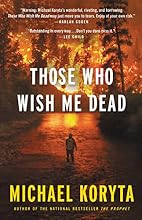
25) Those Who Wish Me Dead / Michael Koryta
Fourteen-year-old Jace Wilson accidentally witnesses a double murder, thereby putting his own life in danger. The victims were clients of the Witness Protection Program, so Wilson's parents are understandably wary of the standard program. They are offered as an alternative: enroll Jace -- under an assumed name -- in a wilderness survival program for troubled teens. Hide him away in the wilds of Montana where the hit men will never find him. Well, you know how that's gonna work out.
There's an appealing cast of characters, a pair of effectively creepy villains -- they remind me of the hitmen from Diamonds are Forever without the homophobia -- and, given the premise, a mostly plausible plot. Unfortunately, there's a twist near the end that didn't work for me since it seems inconsistent with a couple of earlier plot points.
Still, I'll read more Koryta. This is the third of his I've read, and while it's not my favorite it was still pretty good.
194swynn

26) DAW #74: Jondelle / E.C. Tubb
Date: 1973
Tenth in Tubb's series featuring Earl Dumarest, a traveler trying to find his way back to Earth.
In this one Dumarest stops on the planet Ourelle, not intending to stay. But he happens to witness the attempted kidnapping of a six-year-old boy and is wounded when he intervenes. Dumarest is taken to the farm where the boy lives with his mother and stepfather. His mother Mekgar, a physician, attends to Dumarest's wounds.
The boy Jondelle is precocious and interested in Dumarest's experiences among the stars. Dumarest finds himself developing an affection for Jondelle, so he takes it personally when the kidnappers try again. This time the kidnappers arrive with a small army of armored soldiers. They take Jondelle, kill his stepfather, and mortally wound his mother. Dumarest promises Mekgar before she dies that he will hunt down the people who took Jondelle and return the boy safely.
But to do that, Dumarest will first have put together a team of his own from Ourelle's dregs, and travel to Melevgan, a mining town where exposure to radiation has driven all the inhabitants mad.
I'm enjoying this series for what it is -- action-heavy formula fiction -- and this is more of the same. The cover is by Kelly Freas.
195swynn

27) Stone Cold / C.J. Box
Fourteenth in Box's series about Wyoming game warden Joe Pickett. In this one Governor Rulon sends Pickett to backwoods Medicine Wheel County, where a rich landowner with possible mob connections may be running a murder-for-hire business. More troubling, Pickett's old friend Nate Romanowski has joined the staff.
It's okay but one of the more ridiculous entries in the series. It depends on a mountain of unlikely coincidences and on series regulars behaving contrary to character. Don't start with this one.
196swynn

28) Hotel on the Corner of Bitter and Sweet / Jamie Ford
This was this month's selection for my RL book club. I wasn't looking forward to it, so was pleasantly surprised to find it engaging and balanced, sentimental without being maudlin.
It's about the relationship between Henry a thirteen-year old Chinese-American boy and Keiko, a Japanese-American girl in 1942 Seattle. The two bond over a shared sense of displacement: neither is white enough for other students in the school they attend, but neither is Chinese/Japanese enough for other kids in their ethnic neighborhoods.
Complicating matters is Henry's nationalist father, whose awareness of Japanese atrocities in China is too raw for him to bear seeing his son with a Japanese friend. When the Japanese population is evacuated to internment camps, it is traumatic for Henry even as his father celebrates.
The book was universally liked in the group, though not necessarily adored. The characters were praised, and I agree that several are vivid, even minor characters. Complaints were mostly about plot points that were wrapped up too tidily. The leader had found a wealth of supporting material online, and shared how historical fiction for her is a springboard to exploring the events described.
I know that several other LTers have liked it, and I liked it too. It's a solid historical with themes of generational conflict and first love, set in an uncomfortable time in our history which it manages to criticize without demonizing anyone. Nice. And recommended.

198qebo
>196 swynn: Hmm, that sounds better than I would've expected.
199rosalita
>196 swynn: I tried reading that one a couple of years ago and had to Abandon Without Prejudice™ after a couple of chapters. I think it was more my mood at the time than the book, though, so after reading your fairly positive review maybe I'll give it another go someday.
200jolerie
Hotel on the Corner of Bitter and Sweet is one of those books that have been sitting on my shelves for so long it's embarrassing. I need to remedy that soon. Thanks for the review Steve!
201Dejah_Thoris
>196 swynn: It's a book I've been avoiding. You make it sound rather interesting!
202swynn
>198 qebo: It was certainly better than I expected. The group's picks for historical fiction have been... hm... let's say uneven for my taste in the past. This one wasn't a life changer, but it was a nice surprise.
>199 rosalita: If it's still lying around it's worth a second chance, I think.
>200 jolerie: I hope you like it when you get to it!
>201 Dejah_Thoris: Good! Interesting is what I found it.
I have higher expectations for next month's read: Laura Hillenbrand's Unbroken
>199 rosalita: If it's still lying around it's worth a second chance, I think.
>200 jolerie: I hope you like it when you get to it!
>201 Dejah_Thoris: Good! Interesting is what I found it.
I have higher expectations for next month's read: Laura Hillenbrand's Unbroken
203qebo
>202 swynn: Unbroken
That's a good one. Have you seen the movie?
That's a good one. Have you seen the movie?
205swynn
>203 qebo: I haven't seen the movie -- I've been waiting to get around to reading the book. I now know when that will happen. The movie was talked about a bit at the meeting Tuesday night, mostly by people who had read the book before seeing the movie. They weren't thrilled about the film.
>204 rosalita: Thanks for the encouragement, Julia. I hope I do!
>204 rosalita: Thanks for the encouragement, Julia. I hope I do!
206jolerie
Unbroken is definitely going to be a 5 star read for me and I'm only at the half way mark.
207swynn
>206 jolerie: More praise! I'm really looking forward to Unbroken.
208swynn
29) Naked in the Woods : Joseph Knowles and the Legacy of Frontier Fakery / Jim Motavalli
In 1913, newspaper artist Joseph Knowles stripped down to his jockstrap and walked into the Maine Dead River wilderness. The plan was to live entirely by his own devices for two months, after which he would emerge from the woods a stronger healthier man. The project was sponsored by the Boston Post which would cover his ordeal, based on dispatches Knowles would leave written with charcoal on birchbark.
It was a sensation. The Post's "nature man" stories boosted circulation dramatically. No doubt it helped that Knowles's reports were dramatic: he dressed himself in a bearskin after trapping the animal in a deadfall trap and finishing it off with a club; he'd run afoul of Maine's hunting laws and had to take off for the Canadian border. When Knowles finally emerged (in Canada, comfortably ahead of the game wardens) he had attained celebrity. He wrote a successful book about his experience, Alone in the Wilderness. He had a brief career in vaudeville, demonstrating survival skills like firemaking onstage. Later, he had an even briefer career in Hollywood, starring in a silent film titled after his book but dealing with an unlikely plot involving an unjustly-accused fugitive who rescues an imperilled white maiden in the snowy woods of Canada. (It seems the film is lost, to the detriment mostly of curiosity.)
Naysayers emerged quickly. The Post's rival, the Boston American published an exposé, charging that Knowles may have lived in the woods but did so in relative comfort, composing his birchbark reports from a cabin he shared with a manager from the Post. The deadfall trap in which he'd trapped the bear was too shallow to detain a housecat, and the bearskin seemed to have been purchased from a local hunting guide. And sure enough, on a remote lake which Knowles had described as lonely and free of human habitation there stood a newly-built cabin he could hardly have missed.
But if Knowles was a fraud, he was a puzzling sort of fraud: he did in fact possess the skills to survive in the wilderness. He had once made his living as a hunting guide. He knew how to make fire, how to construct shelter, how to catch fish with his bare hands. He could demonstrate any of these skills on demand. If he could, why would he go to the trouble of faking it? Indignantly, he offered to repeat the experiment-- this time in the wilderness around the Siskiyou Mountains in northern California with sponsorship of the San Francisco Examiner. When this project too succeeded, charges of fraud were convincingly dismissed. Unfortunately for Knowles's continued celebrity, though, the American public's attention had moved on. Things were happening in Europe that moved Knowles to the back pages.
Knowles spent the rest of his life trying to rekindle that public interest with little success. From our perspective it's difficult to see why he attracted it in the first place. This was the very early twentieth century; we weren't that far removed from frontier settlement; Ishi "the last wild Indian" had been encountered only two years before; even the European-American population was mostly rural and largely living off the land in a real sense. Why the fascination with feats that people performed for actual survival in living memory and only a few miles away? Motavalli puts the Knowles case in a social context of urbanization and anxiety. Despite a largely rural population, cities were growing rapidly; and people in cities were worried that some essential survival skills had been lost in exchange for creature comforts. The Knowles case reassured them that even a civilized, slightly overweight, city dweller could indeed shed his suit and live off the land if the situation demanded.
That sort of thing was in the air: Tarzan had just appeared in 1911 reassuring Caucasian suit-wearers that they had the stuff to lord it over primitive savages given the opportunity; various scouting groups were being founded about the same time to train the city's sons; and environmentalist organizations were campaigning to save enough wilderness to practice primitive skills. Teddy Roosevelt modeled outdoorsy manliness with some authenticity, but feeding the same hungers were less authentic fakers like Wild West poseurs and nature writers who knew nothing about nature. Where Knowles fits into the spectrum of anxiety, performance and authenticity is not entirely clear but is interesting to ponder.
The book unfortunately is uneven. It is most interesting when discussing Knowles's stunts and their historical context. But the author never notices a detour without taking it, and tangents are many. Sometimes he seems to be free associating: Knowles nearly did an Adam-and-Eve stunt with Elaine Hammerstein, who starred in a film directed by Ralph Ince, whose brother Thomas Ince was maybe killed by William Randolph Hearst who was portrayed by Edward Herrman in a movie about the incident. And wasn't Herrman good in that? Really.
The longest chapter is a tangent about Knowles's post-"Nature Man" career as a moderately successful artist. His secondary career is mildly interesting but is especially prone to Motavalli's characteristic digressions. (He mentions that Knowles is like Diego Rivera in that the two artists are completely unlike one another. Really.) It's sixty pages that could have been compressed to two. On the other hand, he spends about two pages on contemporary figures like Man vs. Wild's Bear Grylls, whose careers strongly parallel Knowles's original stunt, performing survivalist feats for the camera then retiring to a luxury hotel before the next day's shoot. You'd think a book whose subtitle contains the phrase "the legacy of frontier fakery" would spend more time on the legacy of frontier fakery than on critiques of Knowles's painterly influences and non-influences.
I'd also have liked some more thoughtful comparisons of the social differences between between Knowles's projects and the growing nudist and naturist movements of the time. Motavalli acknowledges their existence in a few pages at the end, and quotes Knowles making a sneering reference to the back-to-nature crowd. But what really was the difference?
Altogether, it's an odd book about an odd character in an odd chapter of our history. Parts are interesting and enlightening. Recommended for skimming.
209drneutron
Hmmm. It's a shame it's not a better book. Sounds like there's lots of potential in the story!
210swynn
>209 drneutron: Agreed. And sometimes Motavalli delivers on the potential. Maybe there just isn't 300 pages' worth of potential, or maybe he just needed a better editor. In any case, the final product is disappointing.
211qebo
>208 swynn: Yeah, sorry it's not better. Or glad I can skip this one.
213swynn

30) Sister Mine / Nalo Hopkinson
Date: 2013
Makeda and her twin sister Abby are children of a demigod and a human woman. Their half-human heritage makes them unpopular among their paternal relatives, who shortly after their birth exiled the girls' father to a mortal body and transformed their mother into a lake monster. And actually, it's even more complicated than that.
Now a young woman, Makeda is chafing under the watch of her more talented, more magical, more special sister. So Makeda moves out on her own into a low-rent warehouse where the handsome super also fronts a kick-ass rock band and she finally feels a taste of freedom. So of course the very next day her father goes missing body and soul and she's pulled right back into Abby's space and all messed up in demideity infighting.
I liked it. I wasn't always sure where the book was going or why, and even now it seems like the book was full of unnecessary small talk. But the world is appealing and the story refreshingly focused on something other than the hunting and defeat of a big bad monster. Recommended for those who enjoy urban fantasy.
The swirly voodooish cover is by Christine Feltzer.
214swynn

31) DAW #75: The Crystal Gryphon / Andre Norton
Kerovan is the rightful heir to the Lordship of Ulmsdale in High Hallack, but nobody is very happy about it. Born cursed and deformed, Kerovan is rejected by his mother and kept hidden by his father. Still, he is Lord Ulric's only male heir, and when Ulric catches wind of grumbling about alternatives to primogeniture he secures Kerovan's position by marrying him to Joisan of Ithkrypt, gaining a powerful ally. The marriage is a political maneuver only: bride and groom are eight years old, and both children stay in their own dales.
Over the next few years, Kerovan and Joisan exchange gifts. Most notably, one year Kerovan sends Joisan an item found in the wastes around Ulmsdale: a gryphon encased in a crystal globe. Most likely, the globe is a relic of the Old Ones, a race of sorcerers who inhabited High Hallack long before humans. The gryphon may even be magical -- Kerovan suspects that it is -- but he does not know the secret to using it, so he sends it to Joisan as a token of his regard.
When the time finally comes for Kerovan and Joisan to meet and consummate the marriage, things have turned complicated. Invaders with armored weapons have started to swarm High Hallack: both Ulmsdale and Ithkrypt are threatened, and travel is not safe. But disasters in both dales throw Kerovan and Joisan outside the safety of their home keeps and on the run from invaders and political enemies. Some of those enemies are willing to use black magic in the fight against the invaders, and seek relics from the Old Ones for that purpose ...
This is an entry in Norton's Witch World series, though which one depends on how you count. According to LT, it's the 8th in publication order, 14th in reading order, and 6th in the High Hallack subseries. But it's also the first in the "Gryphon trilogy," and stands pretty well on its own. I ought, I suppose, have caught up on the series one way or another before reading this one but DAW didn't publish Witch World novels very consistently: only this one and Horn Crown in 1981. I liked this one pretty well, and will probably continue at least with the Gryphon trilogy. Heck, maybe the whole series. It's not like one more series is going to make much difference.
The cowboys-on-Easter-Island cover is by by Jack Gaughan. I like it.
215swynn

32) Not My Father's Son / Alan Cumming
Memoir about the actor's troubled relationship with his abusive father; also, revelations about his family history that surfaced during filming of an episode of the BBC genealogy program, "Who Do You Think You Are?" It's quite open and heartfelt, and so forthright that reading is occasionally uncomfortable.
While I appreciate the story Cumming has chosen to share and found it moving, I think he could also have used a more aggressive editor. There is some redundancy, a good bit of telling-not-showing, and he's given to armchair psychology. Others have listened to this on audiobook -- Cumming himself does the narration, I understand -- and I expect that's a better way to "read" this as the personal connection would probably tend to smooth over the rough bits.
216MickyFine
>215 swynn: I love him on The Good Wife and was watching the 90s version of Emma on the weekend and forgot how young he is in it.
217swynn
>216 MickyFine: Among the things I learned from the book is that there are Alan Cumming performances that I really ought to see: The Good Wife is one I want to check out, and it's available on Amazon Prime so maybe I'll binge-watch this weekend.
Most of the films I've seen him in haven't appealed to me, though he's often a cut above the rest of the cast. (Though Kerri has convinced me that I need to give Josie and the Pussycats another go.) But I adore Julie Taymor's Titus and think he's just delicious in that, so I know he's capable of fantastic. Another I'd like to see that he talks about in the book is a South African miniseries called "The Runaway." No Netflix or Amazon Prime for that one, though.
Most of the films I've seen him in haven't appealed to me, though he's often a cut above the rest of the cast. (Though Kerri has convinced me that I need to give Josie and the Pussycats another go.) But I adore Julie Taymor's Titus and think he's just delicious in that, so I know he's capable of fantastic. Another I'd like to see that he talks about in the book is a South African miniseries called "The Runaway." No Netflix or Amazon Prime for that one, though.
218MickyFine
>217 swynn: Weird that you have to go to Amazon Prime for The Good Wife. We get it on Canadian Netflix. :)
219swynn

33) Parallel U. : Freshman Year / Dakota Rusk
Parallel U is a university where students are drawn from different parallel dimensions. Merri Terryl's home dimension has been devastated by a nuclear war, so the invitation to attend Parallel U is an especially welcome opportunity. She quickly gathers a group of friends -- an android, a Roman lion tamer, a steampunk damsel, and a vampire. But life is not all good: a clairvoyant also tells Merri that if she doesn't leave Parallel U she will die. The prophecy seems bizarre at first, but then Merri realizes that her every move is watched; that not everyone on campus is friendly; an anonymous merry prankster disrupts university systems; and then one by one some students' home dimensions are abruptly inaccessible ...
I read this one with my son. He had a little difficulty with the idea of parallel dimensions, and its treatment here is a little hokey for me too. But the writing's not bad, the characters are appealing, and we mostly enjoyed it all the way to the end though he's not interested in reading the sequel. (Which hasn't come out yet -- Hey! I'm caught up on a series!) I'll probably pick it up when it's available but will read it alone.
220swynn
>218 MickyFine:: I double-checked:
"The Good Wife is unavailable to stream," and I don't have the DVD service.
Lucky Canucks.
"The Good Wife is unavailable to stream," and I don't have the DVD service.
Lucky Canucks.
221drneutron
>219 swynn: Looks interesting, but my library doesn't have it yet... :(
222MickyFine
>219 swynn: Hmm, that one does sound intriguing
>220 swynn: Believe me, you guys get the better end of the Netflix deal far more often than we do.
>220 swynn: Believe me, you guys get the better end of the Netflix deal far more often than we do.
223jolerie
Getting caught up in a series is a wonderful feeling until you realize you have a bajillion other series you are in the middle of...haha!
224alcottacre
*waving* at Steve
225swynn
>221 drneutron: It probably won't make it to the library soon: it's independently published, and distribution is primarily electronic. It's available for a buck at Amazon.
I found out about it through SciFi365.net, which highlights independently-published science fiction and fantasy.
I found out about it through SciFi365.net, which highlights independently-published science fiction and fantasy.
226swynn
>222 MickyFine: Good to know. I will stop crying.
>223 jolerie: Tell me about it. Seems like every time I catch up on a series the second book comes out. Grr.
>224 alcottacre: Stasia! *waving back*
>223 jolerie: Tell me about it. Seems like every time I catch up on a series the second book comes out. Grr.
>224 alcottacre: Stasia! *waving back*
227swynn
Others I'm sure have seen this already, but I only read it today: a story in the New York Times about a new method to recover texts from a library in Herculaneum that was destroyed in the eruption of Mt. Vesuvius in 79 AD.:
http://www.nytimes.com/2015/01/21/science/more-progress-made-toward-learning-con...
http://www.nytimes.com/2015/01/21/science/more-progress-made-toward-learning-con...
228rosylibrarian
>227 swynn: That is SO cool. Thanks for sharing. I hadn't know about this at all.
229swynn
>228 rosylibrarian: Agreed about the cool! Too cool not to share.
230swynn

34) Last Stand at Saber River / Elmore Leonard
Paul Cable, discharged from the Confederate Army for wounds sustained in battle, returns with his family to their Arizona spread. But his land has been taken over by a Yankee horse rancher, raising mounts for the Union Army. Cable's done with fighting, but he's not going to give up his land...
Westerns, meh. This one moves along nicely as you'd expect from Leonard, but there really aren't any surprises. I've been slowly working my way through Leonard's early work, and a Reading Bingo program at my public library suggested I read a western, so this was it.
As for the cover, ir's by Tim Cox and depicts a cattle drive. The book, however, contains neither cattle nor drive. It's pretty sad when even your publisher thinks reading one westerm implies having read them all...
231swynn

35) The Evening Crowd at Kirmser's / Ricardo J. Brown
Memoir about an underground gay bar in St. Paul, Minnesota.
In 1945, the author was discharged from the Navy for homosexuality. He returned to his home near St. Paul, where he found Kirmser's Bar. Kirmser's was a run-down working-class bar by day, but when the sun went down it became a run-down working-class gay bar. Brown's stories introduce us to the bar's varied and colorful clientele, and to the ways they had to navigate their personal and public lives in the mid-twentieth century midwest.
It's quite good. The cast is appealing, the writing sharp, the stories funny and sad and enlightening, the social and ethical issues frustrating. Alas the book is short: I'd have stuck around for another hundred pages at least.
I read this for Madeleine's TIOLI challenge, "Read a book whose title contains the first three-letter combination in your city’s name." Turns out the sequence "KIR" doesn't show up very often except in German ecclesiology which ... no. No matter, all I needed was one book and this was a nice surprise.
233rosylibrarian
>231 swynn: That sounds rather intriguing. I love a good bar book.
234swynn
>232 Kassilem: Hope you like it if you can find it!
>233 rosylibrarian: I'm not familiar with the bar book genre so I don't know how it compares. It's certainly an interesting perspective.
>233 rosylibrarian: I'm not familiar with the bar book genre so I don't know how it compares. It's certainly an interesting perspective.
236swynn

ER book (and a timely review, yay me!):
36) Marketplace of the Marvelous / Erika Janik
Nineteenth-century medicine was weird: bloodletting, leaches, heavy metal therapies more deadly than disease ... and these were from the recognized "regular" physicians. From "irregular" therapists came herbal drugs, patent remedies, and all manner of idées fixes touted as panacea.
In Marketplace of the Marvelous Erika Janik describes several alternative medical practices from the 19th century: herbal remedies, phrenology, hydropathy, homeopathy, mesmerism, patent medicine, osteopathy, and chiropractic. She ponders what made these "irregular" therapies so attractive to nineteenth-century Americans and argues that they are more than historical curiosities: that in fact water cures and snake oil have made significant contributions to modern medicine. Results are mixed.
As historical description the book is intriguing and enlightening. For me the historical context was valuable. Take hydropathy, for instance, whose practitioners treated disease by repeated cold baths and showers or by wrapping patients in cold wet sheets. It's hard to see how such treatment could have been effective -- or even how anybody thought it might be. In historical context, however, considering other treatments and even standards in daily life hydropathy was more hygienic than other options and if it wasn't very effective at least it usually didn't make the patient's condition worse. Janik's account helps me imagine a time when these quacky medical ideas might have seemed reasonable, or the least among evils.
As for why these cures appealed to nineteenth-century Americans, Janik notes the scarcity and expense of "regular" medicine; the relative brutality of standard medical treatments; and the sense of self-determination conferred by choosing alternative treatments. She links these arguments to the American frontier and good old American self-reliance -- all of which sounds plausible but does not explain why the treatments were equally popular in Europe.
Even less convincing are her arguments that modern medicine is largely the product of these alternative therapies. For example, she claims that hydropathy's obsession with bathing and clean cold water is the true source of modern standards for hand-washing and hygiene. I rather expect that Ignaz Semmelweis and germ theory had more to do with this than did the water cure, but they barely get a mention. Or even more oddly: she claims that modern neurology's ideas about localization of brain function have their origins in phrenology. She notes that when Pierre Broca discovered a language-related area of the frontal lobe he specifically disavowed, and distanced his findings from, phrenology. Janik thinks his protests reveal his debt but I am not convinced: I suspect Broca's discovery was *despite* phrenology rather than because of it.
On other accounts her claims are more plausible, such as with osteopathy's early use of experimentation and documentation, but largely Janik's arguments follow a pattern: "Irregular ism X proposes theory Y and years later regular medicine adopts similar theory Y'. Therefore, Y' exists because of X's Y." For example: "Phrenology localized brain function before regular medicine accepted the idea, therefore regular medicine appropriated the idea from phrenology." But this is post hoc reasoning, flawed and unconvincing. It's especially weak when she acknowledges that the idea had been around since ancient times -- maybe even used occasionally in regular medicine, but not to the same extent as in some alternative therapy.
Stylistically it's not bad, mostly readable and engaging though Janik is prone to puzzling phrases: referring to Charles Dickens's enthusiasm for animal magnetism she notes that the regular medical community was "less unimpressed with mesmerism than Dickens," by which she seems to mean that Dickens was more impressed than they. And isn't "highly potent placebo" a contradiction in terms?
Entertaining but flawed, I'd recommend it to readers interested in the descriptive bits. Readers hoping to make a case for alternative therapies will have to look elsewhere.
237qebo
>236 swynn: Well, maybe I should've skipped your review because I got that ER too and it's on the agenda for next month. As it is, I'll take your review as a caution.
238swynn
>237 qebo: Perhaps you'll find my complaints exaggerated. In either case, I look forward to your take on it.
239swynn
37) Quo Vadis / Henryk Sienkiewicz
Roman officer Vinicius falls in love with the Christian barbarian Lygia. Meanwhile Vinicius's cynical, erudite uncle Petronius navigates the minefield that is Emperor Nero's inner circle.
I'm not a huge fan of historical fiction, and religious melodrama bores me to tears so I expected to abandon this one early. Pleasant surprise: it's not bad. Sure, there are skimmable bits examining Vinicius' religious crisis and conversion. Vinicius is fairly dull:his one character trait is a convincing but not very interesting obsession with Lygia, who is beautiful but otherwise monochromatic. So enough about them. Petronius, on the other hand, is captivating: charming, eloquent, and cynical; doting on his nephew, but also given to Machiavellian impulses -- like convincing Nero to seize Lygia in order to make her accessible to the smitten Vinicius.
Calling Nero's attention to anything not named Nero is always a risk, and Petronius miscalculates this one. His ploy sets off a sequence of events that begins with a banquet and ends in revolution. I'd worried about long religious pontifications, but there's plenty of incident and intrigue. Sometimes even too much: descriptions of the Christians' tortures are uncomfortably graphic.
Splatter aside, the book was more appealing than I expected. It has aged better than many of it contemporaries, would probably still appeal most to fans of historical and religious fiction.
Extra points to Sienkiewicz for letting Petronius die unconverted, integrity intact.
Roman officer Vinicius falls in love with the Christian barbarian Lygia. Meanwhile Vinicius's cynical, erudite uncle Petronius navigates the minefield that is Emperor Nero's inner circle.
I'm not a huge fan of historical fiction, and religious melodrama bores me to tears so I expected to abandon this one early. Pleasant surprise: it's not bad. Sure, there are skimmable bits examining Vinicius' religious crisis and conversion. Vinicius is fairly dull:his one character trait is a convincing but not very interesting obsession with Lygia, who is beautiful but otherwise monochromatic. So enough about them. Petronius, on the other hand, is captivating: charming, eloquent, and cynical; doting on his nephew, but also given to Machiavellian impulses -- like convincing Nero to seize Lygia in order to make her accessible to the smitten Vinicius.
Calling Nero's attention to anything not named Nero is always a risk, and Petronius miscalculates this one. His ploy sets off a sequence of events that begins with a banquet and ends in revolution. I'd worried about long religious pontifications, but there's plenty of incident and intrigue. Sometimes even too much: descriptions of the Christians' tortures are uncomfortably graphic.
Splatter aside, the book was more appealing than I expected. It has aged better than many of it contemporaries, would probably still appeal most to fans of historical and religious fiction.
Extra points to Sienkiewicz for letting Petronius die unconverted, integrity intact.
240lyzard
Agreed again! The alleged heart of the book is its least interesting aspect; the peripheral subject matter and characters far more compelling. Did Sienkiewicz intend Petronius to steal the show, or is that a modern reaction to the text? Perhaps I'll try to hunt out some contemporary reviews and see what the critics of 1897 had to say.
After I've written my own review, of course... :)
After I've written my own review, of course... :)
241swynn
>240 lyzard: Looking forward to your review, Liz!
I'd mentioned that I didn't care for the movie, but the story was unfamiliar to me, and I wonder whether I've confused Quo Vadis with The Robe. I'll try to track down the movie and give it another chance.
I'd mentioned that I didn't care for the movie, but the story was unfamiliar to me, and I wonder whether I've confused Quo Vadis with The Robe. I'll try to track down the movie and give it another chance.
242lyzard
It's possible, they were both among the first wave of "Epics In Widescreen And Technicolor" that hit in the early 50s, when the fight between cinema and TV was heating up.
The Robe is Richard Burton and Quo Vadis is Robert Taylor, if that helps? :)
The Robe is Richard Burton and Quo Vadis is Robert Taylor, if that helps? :)
243swynn
>242 lyzard: Yeah, the cast was one thing that made me think I was confusing the two. I (mis)remember Richard Burton being involved in Quo Vadis. And I don't remember Peter Ustinov, whose performances are rarely forgettable.
Also, my library has The Robe but not Quo Vadis, so if I've seen the latter I must caught it on television, which is possible but not likely based on my television-watching habits.
I've convinced our media librarian to order a copy of Quo Vadis for our DVD collection, and I'll watch it when it arrives.
Also, my library has The Robe but not Quo Vadis, so if I've seen the latter I must caught it on television, which is possible but not likely based on my television-watching habits.
I've convinced our media librarian to order a copy of Quo Vadis for our DVD collection, and I'll watch it when it arrives.
244lyzard
I'll be interested to hear what you make of it - it significantly alters one aspect of the book, which took me very much by surprise when I was reading. (Don't worry, it's not Petronius!)
245swynn
***RUNNING POST***
Good news and bad on the running front. I finally started the 2015 running season with a local St. Patrick's 5K. Prior to the race I'd guessed I was in shape for about a 24-minute finish, which was a pretty good estimate since my official time was 23:57. So I was content. Also, thanks to a small field I took first in my age group. (No illusions though about my swiftness: the same time would have taken 3rd place in the 60+ age group. Those guys are fast.)
Bad news is that heel pain has flared up again, aggravated by the temperamental temperatures. I'm backing off running for a little while in hopes of alleviating that. So it'll be bonus workouts in the pool and on the spinning machine for a few days. And then ...
I've picked my next target race. My brother-in-law in Colorado Springs will be ordained this summer and we'll be driving out to C.S. to celebrate that, which just happens to fall on the same weekend as the Barr Trail Mountain Race. It's a 12.6-mile trail race, half a mile shy of a half-marathon so it won't be too bad from a horizontal perspective; the real challenge is a 3,600-foot climb over the first half of the race.
Oh, and Colorado Springs' oxygen deficit.
Good news and bad on the running front. I finally started the 2015 running season with a local St. Patrick's 5K. Prior to the race I'd guessed I was in shape for about a 24-minute finish, which was a pretty good estimate since my official time was 23:57. So I was content. Also, thanks to a small field I took first in my age group. (No illusions though about my swiftness: the same time would have taken 3rd place in the 60+ age group. Those guys are fast.)
Bad news is that heel pain has flared up again, aggravated by the temperamental temperatures. I'm backing off running for a little while in hopes of alleviating that. So it'll be bonus workouts in the pool and on the spinning machine for a few days. And then ...
I've picked my next target race. My brother-in-law in Colorado Springs will be ordained this summer and we'll be driving out to C.S. to celebrate that, which just happens to fall on the same weekend as the Barr Trail Mountain Race. It's a 12.6-mile trail race, half a mile shy of a half-marathon so it won't be too bad from a horizontal perspective; the real challenge is a 3,600-foot climb over the first half of the race.
Oh, and Colorado Springs' oxygen deficit.
246swynn
>244 lyzard: Now I *must* watch it.
247jolerie
Way to go with the running but sorry to hear about the flare-up. I've been off the running for several weeks now and I'm all worried about how it will feel when I get back to it. Hopefully all the progress I made earlier hasn't all been for nothing! The good thing is Spring is slowly appearing so maybe it will give me a chance to try running outside for the first time soon.
248Helenliz
Nice racing and well done on the first in class. Botheration about the heel problem. Heels are a little bit integral to running, so hope the rest and alternative exercise does the trick. Nope, don't fancy the elevation change in that race. Even if the second half was all donnhill, I still don't fancy that.
>247 jolerie: me, too. In my case, trapped nerves in my neck. Haven't wanted to move, let alone run, in best part of 2 months. *sulk*
>247 jolerie: me, too. In my case, trapped nerves in my neck. Haven't wanted to move, let alone run, in best part of 2 months. *sulk*
249lyzard
Heads-up: we are now both free to inspect the Publishers Weekly list of best-sellers for 1898! :D
250qebo
>245 swynn: the real challenge
Ah, yes, the elevation map is nice.
Ah, yes, the elevation map is nice.
251rosylibrarian
>245 swynn: Sorry to hear about your heel issue. Colorado Springs is lovely though, even if it is way up in the clouds. It's been sort of our plan to move there once my husband retires from the military.
252ursula
>245 swynn: Hopefully you will be arriving early so that you have plenty of opportunity to adjust to the elevation.
253swynn
>247 jolerie: Yay for spring! Hope things go well when you get back out there, Valerie!
>248 Helenliz: Sorry to hear about the trapped nerves. From experience I know how that is the opposite of fun and how much that affects your whole life. Hope things improve soon.
>249 lyzard: Caleb West, by the author of Tom Grogan. I'm actually looking forward to it -- if nothing else, it will move more quickly than Quo Vadis I'm sure.
>250 qebo: Daunting. It gives me those "Wonder if I can do this, one way to find out" chills.
>251 rosylibrarian: No arguments about the views. I remember visiting my sister in Colorado Springs with my son when he was about 8 or 10 -- the first time he'd visited when he was old enough to know what was going on. We'd arrived very late at night, well after dark. In the morning he was the first out of the hotel room, but he rushed right back inside shouting, "DAD! DAD! COME HERE! YOU GOTTA COME SEE THIS!" then ran right back out again.
He had noticed the mountains and couldn't not share.
>248 Helenliz: Sorry to hear about the trapped nerves. From experience I know how that is the opposite of fun and how much that affects your whole life. Hope things improve soon.
>249 lyzard: Caleb West, by the author of Tom Grogan. I'm actually looking forward to it -- if nothing else, it will move more quickly than Quo Vadis I'm sure.
>250 qebo: Daunting. It gives me those "Wonder if I can do this, one way to find out" chills.
>251 rosylibrarian: No arguments about the views. I remember visiting my sister in Colorado Springs with my son when he was about 8 or 10 -- the first time he'd visited when he was old enough to know what was going on. We'd arrived very late at night, well after dark. In the morning he was the first out of the hotel room, but he rushed right back inside shouting, "DAD! DAD! COME HERE! YOU GOTTA COME SEE THIS!" then ran right back out again.
He had noticed the mountains and couldn't not share.
254swynn
>252 ursula: It'll be a few days at least. My brother-in-law's ordination is on Friday, so we'll arrive Thursday at the latest. Of course, acclimatization just may be an excuse to arrive a couple days even earlier ...
This topic was continued by Swynn reads and runs in 2015: Second lap.

