Swynn reads and runs in 2015: Second lap
This is a continuation of the topic Swynn reads and runs in 2015.
This topic was continued by Swynn reads and runs in 2015: Second lap.
Talk 75 Books Challenge for 2015
Join LibraryThing to post.
This topic is currently marked as "dormant"—the last message is more than 90 days old. You can revive it by posting a reply.
1swynn
Expect fewer thrillers this year and more books off the shelf: science fiction, fantasy, and stuff that looked interesting in the bargain bin.
I also hope to read more nonfiction which will be an eclectic mix mostly of history, popular science, and mathematics.
Oh, and I'll talk about running stupid distances and whine about pains that would probably go away if I just stopped. Running posts are even more self-indulgent than the others and so will be clearly marked as such for your easy avoidance.


1) The Hero of Downways / Michael G. Coney
2) Dust Devils / Jonathan Janz
3) A Hero of Our Time / Mikhail Lermontov
4) The Dead of Winter / Lee Collins
5) The Psychopath Test / Jon Ronson
6) Hunters of the Red Moon / Marion Zimmer Bradley
7) When Gadgets Betray Us / Robert Vamosi
8) The Maze Runner / James Dashner
9) Beside the Bonnie Brier Bush / Ian Maclaren
10) Listening for Coyote / William L. Sullivan
11) White Trash Zombie Apocalypse / Diana Rowland
12) Feed / Mira Grant
13) The Age of Edison / Ernest Freeberg
14) From This Day Forward / John Brunner
15) Wolf's Trap / W.D. Gagliani
16) Child of a Rainless Year / Jane Linskold
17) Cycle of Fire / Hal Clement
18) The Great Hurricane 1938 / Cherie Burns
19) The Theoretical Minimum / Leonard Susskind and George Hrabovsky
20) Breaking Point / James Gunn
21) Tom Grogan / F. Hopkinson Smith
22) Virtual Unreality / Charles Seife
23) Threshold / Caitlin R. Kiernan
24) The Ice Balloon / Alec Wilkinson
25) Those Who Wish Me Dead / Michael Koryta
26) Jondelle / E.C. Tubb
27) Stone Cold / C.J. Box
28) Hotel on the Corner of Bitter and Sweet / Jamie Ford
29) Naked in the Woods / Jim Motavalli
30) Sister Mine / Nalo Hopkinson
31) The Crystal Gryphon / Andre Norton
32) Not My Father's Son / Alan Cumming
33) Parallel U / Dakota Rusk
34) Last Stand at Sabre River / Elmore Leonard
35) The Evening Crowd at Kirmser's / Ricardo J. Brown
36) The Marketplace of the Marvelous / Erika Janik
37) Quo Vadis / Henryk Sienkiewicz
38) City of Stairs / Robert Jackson Bennett
39) The Scorch Trials / James Dashner
40) Horrorween / Al Sarrantonio
41) A Fistful of Rain / Greg Rucka
42) How to Slay a Dragon / Bill Allen
43) One Eye / Stuart Gordon
44) There Will Be Time / Poul Anderson
45) Proxima / Stephen Baxter
46) On Immunity / Eula Bliss
47) The Midnight Mayor / Kate Griffin
48) The End of the Dream / Philip Wylie
49) Caleb West, Master Diver / Francis Hopkinson Smith
50) Tarnsman of Gor / John Norman
51) Unbroken / Laura Hillenbrand
52) Terms of Enlistment / Marko Kloos
53) Money Shot / Christa Faust
54) Beanstalk / John Rackham
55) K. / Mary Roberts Rinehart
56) Boundary Crossed / Melissa F. Olson
57) Ancillary Sword / Ann Leckie
58) War Dogs / Greg Bear
59) The Orchid Cage / Herbert W. Franke
60) Girl from Above : Betrayal / Pippa Dacosta
61) How To Be a (Bad) Birdwatcher / Simon Barnes
62) David Harum / Edward Noyes Westcott
63) The Goblin Emperor / Katherine Addison
64) Outlaw of Gor / John Norman
65) The Tin Angel / Ron Goulart
66) The Neon Court / Kate Griffin
67) A Cold Day for Murder / Dana Stabenow
68) Thorn of Dentonhill / Marshall Ryan Maresca
69) The Three-Body Problem / Cixin Liu
70) (R)evolution / P.J. Manney
71) Swordships of Scorpio / Alan Burt Akers
72) Who Fears Death? / Nnedi Okorafor
73) Too Much to Know / Ann M. Blair
74) Transhuman and Subhuman / John C. Wright
75) To Have and To Hold / Mary Johnston
76) Priest-Kings of Gor / John Norman
77) The Telzey Toy / James H. Schmitz
78) Pacific Fire / Greg van Eekhout
79) Mort(e) / Robert Repino
80) Darkness Brutal / Rachel A. Marks
81) Bowl of Heaven / Gregory Benford and Larry Niven
82) Games Psyborgs Play / Pierre Barbet
I also hope to read more nonfiction which will be an eclectic mix mostly of history, popular science, and mathematics.
Oh, and I'll talk about running stupid distances and whine about pains that would probably go away if I just stopped. Running posts are even more self-indulgent than the others and so will be clearly marked as such for your easy avoidance.


1) The Hero of Downways / Michael G. Coney
2) Dust Devils / Jonathan Janz
3) A Hero of Our Time / Mikhail Lermontov
4) The Dead of Winter / Lee Collins
5) The Psychopath Test / Jon Ronson
6) Hunters of the Red Moon / Marion Zimmer Bradley
7) When Gadgets Betray Us / Robert Vamosi
8) The Maze Runner / James Dashner
9) Beside the Bonnie Brier Bush / Ian Maclaren
10) Listening for Coyote / William L. Sullivan
11) White Trash Zombie Apocalypse / Diana Rowland
12) Feed / Mira Grant
13) The Age of Edison / Ernest Freeberg
14) From This Day Forward / John Brunner
15) Wolf's Trap / W.D. Gagliani
16) Child of a Rainless Year / Jane Linskold
17) Cycle of Fire / Hal Clement
18) The Great Hurricane 1938 / Cherie Burns
19) The Theoretical Minimum / Leonard Susskind and George Hrabovsky
20) Breaking Point / James Gunn
21) Tom Grogan / F. Hopkinson Smith
22) Virtual Unreality / Charles Seife
23) Threshold / Caitlin R. Kiernan
24) The Ice Balloon / Alec Wilkinson
25) Those Who Wish Me Dead / Michael Koryta
26) Jondelle / E.C. Tubb
27) Stone Cold / C.J. Box
28) Hotel on the Corner of Bitter and Sweet / Jamie Ford
29) Naked in the Woods / Jim Motavalli
30) Sister Mine / Nalo Hopkinson
31) The Crystal Gryphon / Andre Norton
32) Not My Father's Son / Alan Cumming
33) Parallel U / Dakota Rusk
34) Last Stand at Sabre River / Elmore Leonard
35) The Evening Crowd at Kirmser's / Ricardo J. Brown
36) The Marketplace of the Marvelous / Erika Janik
37) Quo Vadis / Henryk Sienkiewicz
38) City of Stairs / Robert Jackson Bennett
39) The Scorch Trials / James Dashner
40) Horrorween / Al Sarrantonio
41) A Fistful of Rain / Greg Rucka
42) How to Slay a Dragon / Bill Allen
43) One Eye / Stuart Gordon
44) There Will Be Time / Poul Anderson
45) Proxima / Stephen Baxter
46) On Immunity / Eula Bliss
47) The Midnight Mayor / Kate Griffin
48) The End of the Dream / Philip Wylie
49) Caleb West, Master Diver / Francis Hopkinson Smith
50) Tarnsman of Gor / John Norman
51) Unbroken / Laura Hillenbrand
52) Terms of Enlistment / Marko Kloos
53) Money Shot / Christa Faust
54) Beanstalk / John Rackham
55) K. / Mary Roberts Rinehart
56) Boundary Crossed / Melissa F. Olson
57) Ancillary Sword / Ann Leckie
58) War Dogs / Greg Bear
59) The Orchid Cage / Herbert W. Franke
60) Girl from Above : Betrayal / Pippa Dacosta
61) How To Be a (Bad) Birdwatcher / Simon Barnes
62) David Harum / Edward Noyes Westcott
63) The Goblin Emperor / Katherine Addison
64) Outlaw of Gor / John Norman
65) The Tin Angel / Ron Goulart
66) The Neon Court / Kate Griffin
67) A Cold Day for Murder / Dana Stabenow
68) Thorn of Dentonhill / Marshall Ryan Maresca
69) The Three-Body Problem / Cixin Liu
70) (R)evolution / P.J. Manney
71) Swordships of Scorpio / Alan Burt Akers
72) Who Fears Death? / Nnedi Okorafor
73) Too Much to Know / Ann M. Blair
74) Transhuman and Subhuman / John C. Wright
75) To Have and To Hold / Mary Johnston
76) Priest-Kings of Gor / John Norman
77) The Telzey Toy / James H. Schmitz
78) Pacific Fire / Greg van Eekhout
79) Mort(e) / Robert Repino
80) Darkness Brutal / Rachel A. Marks
81) Bowl of Heaven / Gregory Benford and Larry Niven
82) Games Psyborgs Play / Pierre Barbet
2swynn
I predicted fewer thrillers, more science fiction & fantasy off the shelf, and more nonfiction and those predictions have mostly held true.
As of this thread's launch, 3/26/2015:
Total books read: 40
Total off the shelf: 10 (25%)
Science fiction/fantasy/horror: 20 (50%)
Nonfiction: 12 (30%)
States visited: 12
Of course even at this pace I'm adding to the shelves faster than I'm clearing them so I expect to die before finishing everything in the house. I find this thought oddly comforting.
As of this thread's launch, 3/26/2015:
Total books read: 40
Total off the shelf: 10 (25%)
Science fiction/fantasy/horror: 20 (50%)
Nonfiction: 12 (30%)
States visited: 12
Of course even at this pace I'm adding to the shelves faster than I'm clearing them so I expect to die before finishing everything in the house. I find this thought oddly comforting.
3swynn

38) City of Stairs / Robert Jackson Bennett
Robert Jackson is among my favorite fantasists, and this does not disappoint. This one is a departure from his earlier oeuvre of weird Americana, but the worldbuilding is just terrific.
It's set in a world turned upside down: the world's dominant political force was once the Continent, thanks to the assistance of gods who granted their followers various powers and miracles to subjugate the rest of the world. But years ago a Saypuri hero discovered a way to kill the gods, and with divinities eliminated the Continent fell before Saypuri armies who never depended on the gods. Now Saypur is the empire and the Continent a colony.
Shara Komayd, a descendant of the god-killing hero, is a Saypuri secret agent investigating the death of a Saypuri scholar and bureaucrat. As she investigates the killing she uncovers evidence of history that isn't in the official books. And of course attracts unwanted dangerous attention.
This is a thick book and demands slow reading. At times the exposition and backstory interferes with pacing, and there are a couple of chapters I'd have trimmed, but it still moves along well and it's all fascinating. And like Brent Weeks says in a cover blurb: "... and oh my God, Sigrud. You guys are going to love Sigrud." Highly recommended to fans of fantasy, and looking forward to the next in the series, which is due next January (just in time, perhaps, for a Prairie Lights purchase?)
4jolerie
Happy new thread, Steve!
City of Stairs is on my radar to read at some point, but since it's part of a series, I'm not itching to start it yet. Too many on the go at the moment!
City of Stairs is on my radar to read at some point, but since it's part of a series, I'm not itching to start it yet. Too many on the go at the moment!
5swynn
>4 jolerie: Hope you like it when you get to it, Valerie! I'm guessing you will, based on your positive review of Perdido Street Station, another slow burn of steampunkish worldbuilding.
6ronincats
City of Stairs is sitting here on my tbr shelf after Peggy's review last year. I need to get to it!
7lyzard
Hi, Steve - Happy New Thread!
The only local copies of Caleb West are via expensive academic loan, so it looks like it'll be Project Gutenberg for me this time. I think you might be right about it being an easier read than Quo Vadis! :)
The only local copies of Caleb West are via expensive academic loan, so it looks like it'll be Project Gutenberg for me this time. I think you might be right about it being an easier read than Quo Vadis! :)
9swynn
>6 ronincats: Hope you like it, Roni! (BTW, I've finally started The Midnight Mayor. It rocks.)
>7 lyzard: "So rare it's only available for free" -- Oh, the strange problems of our new information environment!
I know that's not your preferred mode of reading, so it's a good thing it's a short(er) one.
>8 scaifea: Thanks, Amber!
>7 lyzard: "So rare it's only available for free" -- Oh, the strange problems of our new information environment!
I know that's not your preferred mode of reading, so it's a good thing it's a short(er) one.
>8 scaifea: Thanks, Amber!
10swynn
CARDIO READING (treadmill, elliptical, stationary cycle ... ):
I've been bouncing back and forth between two okay-not-great treadmill reads, with the result that I finished both about the same time:
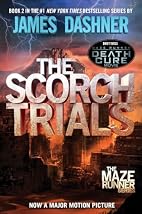
39) The Scorch Trials / James Dashner
Follow-up to The Maze Runner, it's another breathless and violent YA postapocalyptic thriller but it lacks the first book's cohesiveness. Okay for the treadmill, and I'll probably finish the series but mostly it's a disappointing dungeon crawl.
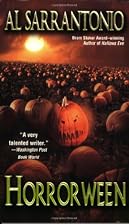
40) Horrorween / Al Sarrantonio
Mash-up of three stories set in Orangefield, New York, home of a celebrated annual pumpkin festival and home to the malevolent Halloween spirit Samhain -- "Sam" for short. The first story is strongest, about a children's author who camps out in Orangefield to finish a manuscript and accidentally strikes a deal with Sam. The second, about a mechanical pumpkin monster, is also okay. The last and longest is the weakest, a muddle about Sam's plans to bring about the end of the world or something.
I've been bouncing back and forth between two okay-not-great treadmill reads, with the result that I finished both about the same time:
39) The Scorch Trials / James Dashner
Follow-up to The Maze Runner, it's another breathless and violent YA postapocalyptic thriller but it lacks the first book's cohesiveness. Okay for the treadmill, and I'll probably finish the series but mostly it's a disappointing dungeon crawl.
40) Horrorween / Al Sarrantonio
Mash-up of three stories set in Orangefield, New York, home of a celebrated annual pumpkin festival and home to the malevolent Halloween spirit Samhain -- "Sam" for short. The first story is strongest, about a children's author who camps out in Orangefield to finish a manuscript and accidentally strikes a deal with Sam. The second, about a mechanical pumpkin monster, is also okay. The last and longest is the weakest, a muddle about Sam's plans to bring about the end of the world or something.
11drneutron
City of Stairs is already on my list - glad you liked it!
12swynn
>11 drneutron: Hope you like it too Jim!
13swynn
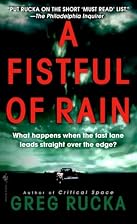
41) A Fistful of Rain / Greg Rucka
This was supposed to be my Oregon read for last year but didn't arrive in time. It's an okay thriller about rock guitarist Mim Bracca, home in Portland with an alcohol problem and an unrequested leave of absence from her band. She is barely home before some thug holds her at gunpoint, makes her strip, tosses her in the back of a van, and drives around town awhile before dropping her right back on her front step. The police listen politely but clearly don't believe her, and her family -- the dope-dealing brother and the ex-con father -- aren't much help either. Of course the stalker is only getting started ...
The pace is right and Mim is mostly appealing, but she does behave like a slasher-film victim. Despite a stalker who is obviously determined and knows how to circumvent her home security, Mim keeps going home alone and keeps being surprised when her stalker finds her there. Also there's a chemistry-free romance that never really makes sense. Not especially recommended, but no warnings either.
14lyzard
Hi, Steve. Just a heads-up that I have added Caleb West to TIOLI #4 under its full title, Caleb West, Master Diver. Loving the shared reads! :)
15swynn
>14 lyzard: Me-too'd the TIOLI challenge. Will start Caleb West as soon as I finish my current Kindle read, which is rolling along nicely.
16swynn
Shared read with my son:
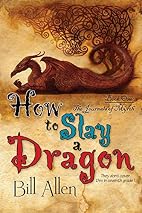
42) How to Slay a Dragon / Bill Allen
Okay middle-school novel about Greg Hart, victim of a school bully, who finds himself whisked away to a fantasy world where he becomes a reluctant dragon hunter.
It's supposed to be awfully clever with snappy one-liners and frequent puns (in fact, the plot's resolution hinges on a bad pun). Most of the jokes fell flat for me; my son liked it a little better, but wants something other than fantasy next time please. We probably won't continue the series. Probably most appealing to its intended audience of middle-school boys.
42) How to Slay a Dragon / Bill Allen
Okay middle-school novel about Greg Hart, victim of a school bully, who finds himself whisked away to a fantasy world where he becomes a reluctant dragon hunter.
It's supposed to be awfully clever with snappy one-liners and frequent puns (in fact, the plot's resolution hinges on a bad pun). Most of the jokes fell flat for me; my son liked it a little better, but wants something other than fantasy next time please. We probably won't continue the series. Probably most appealing to its intended audience of middle-school boys.
19swynn
I must assume this is an April Fools' joke riffing on Amazon's new "Dash Button", which I assume is not an April Fools' joke.
http://www.librarything.com/dashbutton.php
I sincerely hope the LT button is a joke because if it's not ... I would almost certainly buy it eventually and spend all my reading time pressing the damn button just to see what arrives. Alas, that prediction is not an April Fools' joke.
http://www.librarything.com/dashbutton.php
I sincerely hope the LT button is a joke because if it's not ... I would almost certainly buy it eventually and spend all my reading time pressing the damn button just to see what arrives. Alas, that prediction is not an April Fools' joke.
21swynn
Thanks for the link, Katherine: I knew it had to be a joke, but am still relieved for the confirmation.
22swynn

43) DAW #76: One-Eye / Stuart Gordon
Date: 1973
Tagline: "In the name of the Mutant Godling, it is flight--or fight!"
First book in Gordon's postapocalyptic "Eyes Trilogy."
It's okay. There are large lapses in believability, it's hard to tell who we're supposed to root for since the major characters are all either pitiful or despicable, and the prose is nothing special. On the other hand the landscape is sufficiently vivid and the plot has sufficient momentum to keep things going. It might be of interest to fans of dystopian or postapocalyptic fiction, but otherwise it's not strongly recommended, especially since it's only the first in a trilogy.
SPOILERS probably follow.
Set centuries after some catastrophic event -- maybe environmental, maybe nuclear, probably both -- human population is dramatically reduced and most children are born with physical deformities.
Phadraig is a city on a hill, protected on three sides by a poisonously polluted river and on the fourth by a wall and high terrain. (Drinking water apparently comes from stop asking questions.) Phadraig is ruled by a priesthood of the eugenical faith Norm Purity: each newborn is evaluated for mutations. Those who are born with the proper number of limbs and organs are allowed to become citizens of Phadraig; others are allowed to become servants or, if the deformities are too severe, are killed quickly.
Somewhere outside Phadraig is a barbarian army made up mostly of mutants. The same army attacked Phadraig years ago but was repulsed and its commander killed by a company of Phadraig warriors led by Patrick McCormac. After the battle the priests feared Patrick's power so they disbanded his company and made him a bureaucrat. But the barbarian army has regrouped under the leadership of the former commander's son Khassam and represents an even greater threat: Khassam has learned from his father's mistakes while Phadraig has learned nothing.
Realizing that his father relied too much on the army alone, Khassam has researched and unearthed some weapons of an earlier time: some sort of flying drones and a small army of mutant warriors who had been kept buried in hibernation. With the acquisition of these warriors, Khassam announced himself to be the prophesied Divine Mutant who will overthrow Phadraig and spread chaos through the world.
There is a prophecy, and there is a Divine Mutant but Khassam isn't it. The Divine Mutant is in fact a one-eyed infant born to an unwed mother in Phadraig. Under the rules of Norm Purity the boy's deformity earns him death but the boy's grandmother foresaw his birth and arranged his escape from Phadraig, with help from the disgruntled and bored Patrick McCormack.
The escape is an audacious romp, involving a golem and a brazen march through Phadraig, across the poison river, and into the wastelands north of the city. The child escapes with his mother and grandmother; Patrick and a remnant of his company follow close behind. For all but the child the escape is a squeeze between a rock and a hard place, balancing the threat of capture by Phadraig's soldiers hot on their trail with the menace of Khassam's army hiding somewhere in the wild.
But the baby is not avoiding Khassam. An infant in physical form only, One-Eye embodies the mind of the centuries-old Divine Mutant like a postapocalyptic Stewie Griffin. The infant is in fact directing the party's trek. And he seeks his rival out.
The terrific dark and gaudy cover, which seems to be equally inspired by Shiva, Japanese demons, and Edvard Munch, is by DAW regular Tim Kirk.
23rosylibrarian
>19 swynn: Bahaha. I was really puzzled at what it actually did, but figured I'd buy anything that LT put out.
24swynn
>24 swynn:: Apparently it sends you new reading material when you're in danger of running out.
I am nowhere near such danger but that fact has never stopped me from adding to the stockpile just in case.
I am nowhere near such danger but that fact has never stopped me from adding to the stockpile just in case.
26swynn
>25 jolerie: Thanks, Valerie, and same to you! My son and I are batching it this year, as Mrs. Swynn attends a family get-together in Oklahoma. (We didn't join her because it's complicated.) It'll be low-key, we'll stuff ourselves with ham, and I'll watch bad movies and read.
27swynn

44) There Will Be Time / Poul Anderson
Date: 1973
I picked this off the shelf for Helen's (Helenliz's) TIOLI challenge to read a book written when the author was the same age as I am now. Anderson is an old favorite -- I read quite a lot of his work in college and just after, but he was so prolific I doubt I've read even half of his oeuvre. This one is new to me.
Jack Havig is born with the ability to travel through time. As he learns to control his talent he also learns about historical trends and the fates of societies. He becomes disillusioned with modern liberalism and also lonely.
He goes looking for other time travelers, and meets a team who is working to build a more stable society down the time stream. He joins them briefly because he longs to do something useful with his ability, but quickly learns that this team is brutal and racist, certainly no better than the society they hope to replace. He escapes their orbit and plans to counter their influence.
It's not among my favorites. Anderson was prone to libertarian message fiction, and that's somewhat in evidence here. His historical theories are frontloaded, making the first half ponderous in spots. The story does pick up with the appearance of the time traveling Birch Society, and for my taste the novel ends strong, but it's not one of his more engaging works.
28swynn
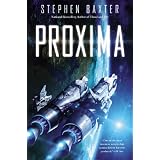
45) Proxima / Stephen Baxter
In the 22nd century, Mars and the Moon have been colonized, and on Mercury are found "kernels," a power source that can be used to power interstellar transportation.
Politically, the solar system is deep in a new cold war, between the Western nations, under the loose control of the UN,, and China. The Chinese seem to have a slight edge inside the solar system, so when the UN discovers the kernels their main goals are (1) to exploit the technology as quickly and extensively as possible, and (2) to keep it out of Chinese hands.
Exploiting the technology means building kernel-driven ships and using them to launch a broader colonization program. Their first target is a habitable planet orbiting Proxima Centauri. Volunteers are few, so colonists are chosen from among the UN's outcasts and criminals. The colonists' instructions are clear: grow crops, make babies. For a population that does not wish to be there in the first place, the instructions are harsh and conditions turn brutal.
More stuff happens. The book is dense with flurries of ideas: alien ecology, mysterious alien technology, several sorts of AI, and deteriorating politics back home leaning into a war waged with 22d century tactics. Not everything is explained, and in fact the book doesn't so much end as introduce a twist that blows its universe open even wider.
I liked it. It's old fashioned gee-whiz science fiction, where the world is the strongest character and the author seems to be emgaged in a game of topping his last cool idea. Baxter plays the game well, and his other characters and plot are sufficiently strong to sustain it.
It does end in a set of cliffhangers, though, and the next book isn't due until August (unless you live in the UK where it came out last November) so fair warning about that.
29swynn

46) On Immunity / Eula Bliss
I'm not sure how to describe this except as a set of meditations on how we think about vaccination. Chapters are 4 to 6 pages long, and really, you can drop it open and start just about anywhere.
With respect to ongoing controversies, Bliss's position seems to be that vaccination is a private duty to secure a public good. But she rejects the charge that objectors are ignorant or hysterical. Instead she points out that many people who oppose vaccination are well-educated and have done some reading on the issue-- though perhaps not in the most reliable sources.
Frequently referencing her own experiences as a new mother, Bliss expresses how a parent's concerns and anxieties can be influenced by rhetorical strategies, particularly the metaphors we deploy to talk about vaccination. She finds military imagery pervasive, and the language of power and coercion troubling. She suggests that other more cooperative images could be helpful, pointing out that we are deeply dependent on one another for our health.
There are numerous points to make from this position: about economic and class privelege, about a medical establishment which has historically been dismissive of mothers' opinions and concerns, about risk and benefit. Her reading is broad, and she draws from numerous sources, from Dracula to government reports.
It does get repetetive; I'd have liked better organization and a more clearly delineated argument, and I'd really have liked better footnotes and a bibliography. But that's not the kind of book it is, and for what it is it's pretty good.
30swynn
Well, I'll be voting for the Hugos this year. I've thought about doing it in the past-- for your $40 you get a package of a bunch of genre literature that fans think was the best of the year-- but still, it's $40 and it's not like I'm desperate for more stuff to read.
But over this long weekend I caught up on the controversy around this year's awards, and this seemed like the impetus to jump in. Not looking forward to everything, especially the "best novella by John C Wright" category since the little I've read of his writing (all nonfiction) has been pompous in style and sanctimonious in tone, but I'll give it all a shot. *Mostly* I am looking forward to the experience and hope to finish Unbreakable before the packet arrives.
But over this long weekend I caught up on the controversy around this year's awards, and this seemed like the impetus to jump in. Not looking forward to everything, especially the "best novella by John C Wright" category since the little I've read of his writing (all nonfiction) has been pompous in style and sanctimonious in tone, but I'll give it all a shot. *Mostly* I am looking forward to the experience and hope to finish Unbreakable before the packet arrives.
31evilmoose
>30 swynn: Hmm, you motivated me to go and have a look at the list of finalists, and.... Skin Game - really?! I hope that wasn't the best Sci Fi/Fantasy book written in the last year. I've not read any of the others, although I did finally read Ancillary Justice a few months ago, and I know that won last year. I didn't know that was how the voting worked though - interesting!
32swynn
>31 evilmoose: Yeah, I'm not sure what I'll do about Skin Game since my desire to read all the nominees conflicts with my desire to read series books in order, and the chances of my reaching volume #15 of the Dresden Files within the next two years are slim, never mind the next few months.
I haven't read any of the other nominees yet. Like you I've read Ancillary Justice, which didn't really engage me but was intriguing enough to give the second book a try. and I'm looking forward to Goblin Emperor, especially after Jim's enthusuastic review. I've read some of Kevin J. Anderson's work, which I've enjoyed but never thought of as Hugo material. Marko Kloos is a new name, published by Amazon's imprint 47north; I'm hoping he'll be an interesting discovery.
I haven't read any of the other nominees yet. Like you I've read Ancillary Justice, which didn't really engage me but was intriguing enough to give the second book a try. and I'm looking forward to Goblin Emperor, especially after Jim's enthusuastic review. I've read some of Kevin J. Anderson's work, which I've enjoyed but never thought of as Hugo material. Marko Kloos is a new name, published by Amazon's imprint 47north; I'm hoping he'll be an interesting discovery.
33qebo
>30 swynn: Hugos
Not something I generally pay attention to, but entered my consciousness via the blog of Chad Orzel so I noticed the thread on LT... and now I will crawl back into my cave.
Not something I generally pay attention to, but entered my consciousness via the blog of Chad Orzel so I noticed the thread on LT... and now I will crawl back into my cave.
34swynn
>33 qebo: Yeah, it's been a wild weekend, Hugo-wise. I've never been too involved with fandom (went to one convention back in the '90s, wasn't my scene) so I've never been more than an interested observer. But I am interested and do care, and this whole situation seems awfully sordid and if I wanted to gripe about it I figured I should at least vote.
The campaign to rank all slate nominees below "No Award" seems short-sighted to me. Competing slates seems like not only the least bad response but also the inevitable one.
The campaign to rank all slate nominees below "No Award" seems short-sighted to me. Competing slates seems like not only the least bad response but also the inevitable one.
35swynn

47) The Midnight Mayor / Kate Griffin
The Midnight Mayor has been killed by the undefeatable magical being who burned Rome, bombed Hiroshima, flooded New Orleans, and has something dreadful in mind for London. The only thing standing between the city and The Death of Cities is poor clueless sorcerer and half-electric-angel Matthew Swift.
It's terrific. Thanks, Roni!
36ronincats
You are so welcome, Steve!
I've been reading a bit about the "slates" promoted by various groups for the Hugos--sounds like a big mess to me and yes, the nominees don't for the most part strike me as the best and most brilliant.
I've been reading a bit about the "slates" promoted by various groups for the Hugos--sounds like a big mess to me and yes, the nominees don't for the most part strike me as the best and most brilliant.
37scaifea
What an interesting conversation you've got going on here, Steve, about the Hugo awards! I'm in the middle (well, early-beginnings, really) of a project to read through all of the Hugo winners, but I had no idea that this was happening. And how cool that you're going to vote on the winners!
38swynn
>36 ronincats: In the novel category I don't see anything too terrible. I'd expected to see The Three Body Problem and Mirror Empire but those are books I'm going to read eventually anyway (and hoped hoped hoped to see City of Stairs but that was always a long shot). Some of the actual nominees are unexpected but it's not obvious to me that they're unreasonable candidates. In some of the shorter categories ... well.
>37 scaifea: If anything good comes out of this fiasco, it's spreading the word that absolutely anybody who thinks it's worth $40 can vote. More participation is better, I think.
Next year I'll also get to nominate works, so I hope to read some more recent science fiction in order to be less clueless about options. Another good result.
>37 scaifea: If anything good comes out of this fiasco, it's spreading the word that absolutely anybody who thinks it's worth $40 can vote. More participation is better, I think.
Next year I'll also get to nominate works, so I hope to read some more recent science fiction in order to be less clueless about options. Another good result.
39evilmoose
Wow - you got me hunting, and I found the LT discussion you mentioned (https://www.librarything.com/topic/189739 if anyone else is interested). I had no idea - that is fascinating, and horrifying.
40swynn
>39 evilmoose: Thanks for the link, Megan! I hadn't seen that thread, but it echoes the sentiments being expressed elsewhere online.
Very brief summary for those who don't want to follow the link: there's a group of fans calling themselves "Sad Puppies," who feel that their reading interests have been underrepresented in recent Hugo ballots. They feel that too many recent nominations have been politically-correct message fiction instead of good old-fashioned science fiction fun. So they put together a model slate of nominations that they felt *did* represent their interests and voted for them en masse, sufficiently to take most of the slots in the ballot.
The Sad Puppies' strategy has been widely criticized as "block voting," which is bad form. The Sad Puppies dispute this charge (unsuccessfully, to my mind). They have also been widely criticized for nominating only white male politically conservative authors. This criticism is simply false.
Further details and reactions at the thread Megan posted, with traffic mostly from Sad Puppies' detractors.
For clarity: I am a detractor, though I do not plan to automatically rank all of their slate's nominees below "No Award."
Very brief summary for those who don't want to follow the link: there's a group of fans calling themselves "Sad Puppies," who feel that their reading interests have been underrepresented in recent Hugo ballots. They feel that too many recent nominations have been politically-correct message fiction instead of good old-fashioned science fiction fun. So they put together a model slate of nominations that they felt *did* represent their interests and voted for them en masse, sufficiently to take most of the slots in the ballot.
The Sad Puppies' strategy has been widely criticized as "block voting," which is bad form. The Sad Puppies dispute this charge (unsuccessfully, to my mind). They have also been widely criticized for nominating only white male politically conservative authors. This criticism is simply false.
Further details and reactions at the thread Megan posted, with traffic mostly from Sad Puppies' detractors.
For clarity: I am a detractor, though I do not plan to automatically rank all of their slate's nominees below "No Award."
41rosylibrarian
>40 swynn: Thank you for clarifying what was going on with the Hugo Awards. I had meant to look into it because I saw something in passing. Interesting...
42swynn
You're welcome, Marie! I tried to keep the summary brief and neutral as possible-- the amount of detail, nuances of argument and the degree of rancor generated by this are really amazing. It ought to make some communications scholar a Ph.D. Thesis.
43jolerie
Oh that is so interesting. I totally wasn't aware that you can vote for the Hugo awards. I just assumed it followed the same pattern of other awards where there is a designated panel that does all that......
44swynn
>43 jolerie: Yes, isn't it great? The Hugo is designed to be an award chosen by genre fans, and it's traditionally defined "fans" broadly. I rather hope that principle doesn't change.
45swynn
So I've been mostly absent from LT for a few days as I've been attending a library software users' group conference in Minneapolis ... and my tablet, which I relied on for Internet access, was stolen (grrr). So access has been kind of limited. OTOH, I have been reading. Most don't really need much comment. Briefly:

48: DAW #77: The End of the Dream / Philip Wylie
Surprisingly engaging future history of humankind's suicide by environmental sabotage. It was written in 1972, so the specifics of the environmental catastrophes can be seen as less than prophetic, but they are plausibly described and entertainingly spectacular. For example: a group of business executives and engineers seriously discuss the feasibility of converting the nation's river drainage system for waste disposal. (Think of the savings in transportation costs!) And the Cuyahoga River explodes.

49: Caleb West, Master Diver / Francis Hopkinson Smith
Drama set around the construction of the foundation for a lighthouse in coastal New York (or maybe New Jersey?) The head engineer has a remarkably chummy relationship with labor-- the villain is a damned government bureaucrat who delays the project for ... well, his motivation seems to be that he's the villain. Human drama centers on the project's lead diver, whose very young wife leaves him temporarily for somebody her age. There are some interesting engineering bits, some tedious soap-opera-y bits with borderline pedophilia, and no proper ending.
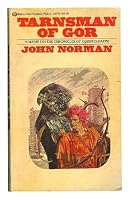
50: Tarnsman of Gor / John Norman
Ugh. You've perhaps heard that the first few books in this series aren't that bad. If that is true, the bar for "not that bad" is pretty low: almost all women characters are slaves, excepting only the main romantic interest who is a spoiled princess who becomes the hero's slave. I understand the series goes downhill from here.

51: Unbroken / Laura Hillenbrand
Hooray!

48: DAW #77: The End of the Dream / Philip Wylie
Surprisingly engaging future history of humankind's suicide by environmental sabotage. It was written in 1972, so the specifics of the environmental catastrophes can be seen as less than prophetic, but they are plausibly described and entertainingly spectacular. For example: a group of business executives and engineers seriously discuss the feasibility of converting the nation's river drainage system for waste disposal. (Think of the savings in transportation costs!) And the Cuyahoga River explodes.

49: Caleb West, Master Diver / Francis Hopkinson Smith
Drama set around the construction of the foundation for a lighthouse in coastal New York (or maybe New Jersey?) The head engineer has a remarkably chummy relationship with labor-- the villain is a damned government bureaucrat who delays the project for ... well, his motivation seems to be that he's the villain. Human drama centers on the project's lead diver, whose very young wife leaves him temporarily for somebody her age. There are some interesting engineering bits, some tedious soap-opera-y bits with borderline pedophilia, and no proper ending.
50: Tarnsman of Gor / John Norman
Ugh. You've perhaps heard that the first few books in this series aren't that bad. If that is true, the bar for "not that bad" is pretty low: almost all women characters are slaves, excepting only the main romantic interest who is a spoiled princess who becomes the hero's slave. I understand the series goes downhill from here.

51: Unbroken / Laura Hillenbrand
Hooray!
47rosylibrarian
>45 swynn: Ha ha ha, hooray for Unbroken?
51swynn
Amber, Roni, Jim, Valerie:Thanks for the commiseration on the lost tablet. It was a classic tourist fail: I was at dinner in an (almost) empty Panera Bread and left the table briefly to pick up my order. I came back and the tablet was gone. Apparently it wasn't so empty after all.
Fortunately it was a few years old and starting to show its age, so I had been thinking of replacing it anyway. I wouldn't have done for awhile because I am cheap, so this got me into a Best Buy. Really the tablet was more power than I needed, since I mostly used it for Web browsing and media. So I have replaced it with a Galaxy tab 3 lite: I'm not sure how I will like the smaller screen on the treadmill, but I really couldn't justify the extra cost for the larger screen.
Fortunately it was a few years old and starting to show its age, so I had been thinking of replacing it anyway. I wouldn't have done for awhile because I am cheap, so this got me into a Best Buy. Really the tablet was more power than I needed, since I mostly used it for Web browsing and media. So I have replaced it with a Galaxy tab 3 lite: I'm not sure how I will like the smaller screen on the treadmill, but I really couldn't justify the extra cost for the larger screen.
52swynn
> 47 Hi, Marie! Yes, hooray for Unbroken: not the most perceptive one-word review, but I was running out of time on the public computer and I thought it was terrific. Hooray for endurance and resilience, and hooray for a difficult story well told.
> 50 Loved it!
> 50 Loved it!
53swynn
RUNNING UPDATE
In addition to the other excitement in Minneapolis, last Monday I ran a 5.1K on the campus of the University of Minnesota, associated with the Design of Medical Devices conference.
The field was mostly college and graduate students, so the old slow guys like me were few, and despite a not very impressive time of 25:31, I placed first in my age group and got a very nice gift bag from Starbucks with two pounds of coffee (yay!) and a half-dozen cup-shaped Christmas ornaments ( ?... yay for coffee!)
The course consisted of two laps around campus, which included a crossing of the Mississippi River-- which is a much briefer undertaking than it is down thisaway. Other than a few steps the course was also pretty flat and a good time was had by all.
For fans of unusual architecture I must mention the univerity's Frank Weisman Art Museum , which is just as striking as the Wikipedia image suggests.
In addition to the other excitement in Minneapolis, last Monday I ran a 5.1K on the campus of the University of Minnesota, associated with the Design of Medical Devices conference.
The field was mostly college and graduate students, so the old slow guys like me were few, and despite a not very impressive time of 25:31, I placed first in my age group and got a very nice gift bag from Starbucks with two pounds of coffee (yay!) and a half-dozen cup-shaped Christmas ornaments ( ?... yay for coffee!)
The course consisted of two laps around campus, which included a crossing of the Mississippi River-- which is a much briefer undertaking than it is down thisaway. Other than a few steps the course was also pretty flat and a good time was had by all.
For fans of unusual architecture I must mention the univerity's Frank Weisman Art Museum , which is just as striking as the Wikipedia image suggests.
55rosylibrarian
>52 swynn: I agree with your hooraying! I was scared to think you might be hooraying because it was over. Yes, well told and more endurance than I thought humanly possible.
>53 swynn: Congrats!
>53 swynn: Congrats!
57swynn

52) Terms of Enlistment / Marko Kloos
I picked this one up because the sequel Lines of Departure was nominated for a Hugo in the "Best Novel" category. Since I started, the author has withdrawn LoD from the Hugo ballot but I finished book #1 anyway because it is kind of fun. Flawed, but fun.
Andrew Greyson joins the military in order to get out of his government-provided dead-end life. He meets friends, does battle, and goes into space.
This isn't especially literary: characters are interchangeable, the central theme is "HOO-RAH!," and the plot has significant problems.
For example, midway through the book Greyson manages to get himself transferred from the Earth-based infantry to the space navy. This kind of transfer almost never happens, with only one exception as an officer explains:
"The only way we ever do those is through occupational-needs transfers. Shit jobs. Slots they can't find volunteers to fill."
Now, I'm not a military guy so maybe I'm wildly wrong but the Navy never struck me as the kind of organization that allowed essential slots to go unfilled for a lack of volunteers. But anyway, the officer manages to find Greyson and occupation-needs transfer to the Navy -- in Neural Networks, maintaining computer networks on spaceships. That's right: in the future, Network Tech is a "shit job." Apparently cleaning space latrines is only for the cool kids.
Problems aside, Kloos has a talent for engaging action scenes, and he may get better with the next book. Even though it's no longer on the Hugo ballot I will probably continue the series eventually because it is pretty good treadmill reading.
58jolerie
Look at you go! The coffee is nice gift, but the Christmas ornaments?? Haha..that just seems odd to me. :)
59swynn
>58 jolerie: Thanks Valerie! Yeah, the Christmas ornaments were odd, but I expect they were packing the gift basket with overstock, which is understandable. It's still at least as good as a plastic medal! (Which are also fun, of course)
60swynn
TREADMILL READING
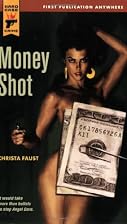
53) Money Shot / Christa Faust
Noir thriller featuring a former porn starlet who gets mixed up in a plot involving human trafficking and stolen cash. It's light and raunchy fun, reversing gender on some familiar noir tropes, and a sharp, snarky tone.
53) Money Shot / Christa Faust
Noir thriller featuring a former porn starlet who gets mixed up in a plot involving human trafficking and stolen cash. It's light and raunchy fun, reversing gender on some familiar noir tropes, and a sharp, snarky tone.
61lyzard
Hi, Steve! That's...quite a cover; though I suppose, given the subject matter...
I've finally gotten Caleb West written up and have just been over to peek at the list for 1899---wow, that is the most obscure collection of best-sellers we've had yet! :D
David Harum is only available here via (expensive) academic loan, alas, so it looks like I'll be joining you over at Gutenberg again.
I've finally gotten Caleb West written up and have just been over to peek at the list for 1899---wow, that is the most obscure collection of best-sellers we've had yet! :D
David Harum is only available here via (expensive) academic loan, alas, so it looks like I'll be joining you over at Gutenberg again.
62swynn
>61 lyzard: Hi Liz! I'm heading right over to your thread to read your thoughts on Caleb West. As for the Money Shot cover, I think your reaction is the one the publisher was looking for. It's a volume in the Hard Case Crime series, which reprints pulpy crime novels of the mid-twentieth century (they've reprinted works by Cornell Woolrich, David Goodis, and James M. Cain) as well as later works and original works inspired by them, or at least written in reference to them. Stephen King has done a couple.
The cover art--as you can see at the link -- is deliberate pastiche of those old lurid paperback covers. I think the Money Shot cover works in that context even though ... yeah.
But if you think that's something, wait till you see the next DAW.
The cover art--as you can see at the link -- is deliberate pastiche of those old lurid paperback covers. I think the Money Shot cover works in that context even though ... yeah.
But if you think that's something, wait till you see the next DAW.
64swynn
>63 lyzard: Well I daren't leave you quivering:

54) DAW #78: Beanstalk / John Rackham
Tagline: Magic seeds--No! Galactic history--Yes!
Date: 1973
Jack Fairfax and his widowed mother are near the end of their resources, with a poor harvest and looming tithes to their earl. Jack is on his way to market with their last milk cow when he witnesses a strange metal object plummet from the sky and a strange small man tumble out.
The stranger is Jasar, an agent of the Salvian Federation, which is in a long standing war with the Hilax Combine. Of course all of that fighting is far from Earth, but it happens that Earth is an ideal location for launching a stealth attack on a Hilax space station. Jasar plans to erect a sort of space ladder, from whose apex he can do some sort of dimensional wizardry and sneak onto the station for a sabotage operation. Jack insists on joining Jasar.
Adventure follows including fierce battles with rats, cats, and spiders of unusual size; rescue of a ravishing blond "songbird"; sabotage of the station's systems and of course a narrow escape. It's fun enough, though awfully cheesy.
Speaking of cheese: that cover is by Kelly Freas (of course), and is taken with only minor liberties from the songbird-rescue scene.

54) DAW #78: Beanstalk / John Rackham
Tagline: Magic seeds--No! Galactic history--Yes!
Date: 1973
Jack Fairfax and his widowed mother are near the end of their resources, with a poor harvest and looming tithes to their earl. Jack is on his way to market with their last milk cow when he witnesses a strange metal object plummet from the sky and a strange small man tumble out.
The stranger is Jasar, an agent of the Salvian Federation, which is in a long standing war with the Hilax Combine. Of course all of that fighting is far from Earth, but it happens that Earth is an ideal location for launching a stealth attack on a Hilax space station. Jasar plans to erect a sort of space ladder, from whose apex he can do some sort of dimensional wizardry and sneak onto the station for a sabotage operation. Jack insists on joining Jasar.
Adventure follows including fierce battles with rats, cats, and spiders of unusual size; rescue of a ravishing blond "songbird"; sabotage of the station's systems and of course a narrow escape. It's fun enough, though awfully cheesy.
Speaking of cheese: that cover is by Kelly Freas (of course), and is taken with only minor liberties from the songbird-rescue scene.
65qebo
>64 swynn: Well that is quite something.
67swynn
>65 qebo: Isn't it though?
>66 lyzard: Oh, I think there's plenty of blame to go around. It's true that Rackham gave Freas the excuse -- once Rackham introduces the character he reminds us every few pages that she has Girl Parts -- but Freas rarely needed much encouragement. After all, for DAW #38 he turned Telzey Amberdon into a sexpot, for which he deserves full blame.
The next DAW cover is an early Vincent DiFate and is a whole 'nuther kind of "What was he thinking?"
>66 lyzard: Oh, I think there's plenty of blame to go around. It's true that Rackham gave Freas the excuse -- once Rackham introduces the character he reminds us every few pages that she has Girl Parts -- but Freas rarely needed much encouragement. After all, for DAW #38 he turned Telzey Amberdon into a sexpot, for which he deserves full blame.
The next DAW cover is an early Vincent DiFate and is a whole 'nuther kind of "What was he thinking?"
68rosylibrarian
>64 swynn: What is happening to that woman?
69swynn
>68 rosylibrarian: She has been taken prisoner by the station's manage, a sixty-foot humanoid alien named Garmel. Garmel kills most of his captives, or removes their brains for the station's wetware computer network; but he noticed that Silvana had a lovely voice, so he keeps her in a cage and compels her to sing.
But the cage isn't enough: Garmel also has attached a series of wires "to her head, to her breasts, to her waist, wrists, ..." The wires patch Silvana into the station's sound system so that Garmel can hear her sing from any room; they also carry information about her physiological state, so that Garmel can feel what she feels as she sings; they also prevent her escape, since the wires are painful to remove -- which is I think what she is trying to do in the cover illustration.
Coming so close on the heels of Tarnsman of Gor, you may detect a theme emerging on my thread.
God, I hope not.
But the cage isn't enough: Garmel also has attached a series of wires "to her head, to her breasts, to her waist, wrists, ..." The wires patch Silvana into the station's sound system so that Garmel can hear her sing from any room; they also carry information about her physiological state, so that Garmel can feel what she feels as she sings; they also prevent her escape, since the wires are painful to remove -- which is I think what she is trying to do in the cover illustration.
Coming so close on the heels of Tarnsman of Gor, you may detect a theme emerging on my thread.
God, I hope not.
70swynn

55) K. / Mary Roberts Rinehart
I picked this up for the "Bestseller from 1915" TIOLI. Having read that Rinehart is known as "the American Agatha Christie," I thought it would be one my son might enjoy, so we read it together.
Oops. If Reinhart was the "American Agatha Christie," it certainly wasn't for this novel. There's little mystery here. Instead, it's a soap opera featuring a nurse in love and a strange but kind lodger who comes to live wth her mother. For neither my son nor me was it our cup of tea, but by the time we figured out that no mystery was forthcoming we were interested in some of the subplots enough to finish. Or at least I was: when I asked how he liked it he said, "Okay I guess. I slept through most of it."
Anyway, the facts that (a) I finished and (b) he never asked to read something else indicate that it's probably pretty good for its genre. But for our next shared read we will look for explosions, earthquakes, or tornados. :)
71lyzard
Rinehart did write many mysteries but that particular book (as you have obviously gathered!) is not one of them. She was a very prolific author who wrote many different sorts of books including young adult series, romances, comic stories and thrillers as well as mysteries.
She also pre-dates Christie by a generation (besides being American) so the description is annoyingly misleading on several fronts.
I'm a fan of MRR but she tends to the melodramatic at the best of times and can be a bit of an acquired taste. :)
She also pre-dates Christie by a generation (besides being American) so the description is annoyingly misleading on several fronts.
I'm a fan of MRR but she tends to the melodramatic at the best of times and can be a bit of an acquired taste. :)
72swynn
>72 swynn: Thanks for the background, Liz! Can you recommend one of her mysteries or thrillers?
73lyzard
Ooh, tricky! - she wrote for over fifty years and in so many styles and genres it's hard to pick one out. The Man In Lower Ten is a fun early one (1909), a take on a "North By Northwest" situation with a man on the run having to prove his innocence. Conversely, The Episode Of The Wandering Knife collects four stories written around WWII, including the last of the Hilda Adams stories (MRR invented the "nurse-detective", among her other accomplishments). There's also The Bat, about a masked super-criminal, which was turned into a famous silent film and was also one of the inspirations for Batman.
Any of those will give you a better taste for her, anyway, whether or not she appeals to you. Maybe as treadmill reading?? :)
Any of those will give you a better taste for her, anyway, whether or not she appeals to you. Maybe as treadmill reading?? :)
74swynn
>73 lyzard: The Man In the Lower Ten and The Bat both sound appealing, and both are available through Project Gutenberg. I will give one or the other a try. Thanks!
75swynn

56) Boundary Crossed / Melissa F. Olson
Light, engaing opener to an urban fantasy series featuring Allison "Lex" Luther, a Gulf War vet living in Colorado. When two strangers try to kidnap her niece, Lex intervenes and gets herself shot.
Lex should have died, but she didn't. Recovering in the hospital she meets a vampire and a witch who explain that the world is a more complicated place than Lex had ever dreamed; that the would-be kidnappers were vampires; and that Lex herself is a witch.
Kidnapping attempts continue on Lex's niece. In order to protect her, Lex goes to work for the vampire boss of Boulder and takes lessons in magic from her new witch friends.
There are the usual twists and turns, nothing very surprising, but it's done well enough and if you like this sort of thing you'll probably like this too.
76swynn

57) Ancillary Sword / Ann Leckie
Leckie's Ancillary Justice was a darling of every award on the planet last year, but for whatever reason, I didn't get it. I wasn't sure why not; the plot sounded like something right up my alley, but somehow never clicked with me so I couldn't share everyone else's enthusiasm. Still, it was interesting enough to make me want to check out the sequel, which has now been nominated for a Hugo.
The battle for control of the Radch Empire, begun in the first book, continues in this one. Breq and Seivarden are sent to a distant colony on a mission to secure the gates used for interstellar transportation. Breq being who she is gets involved with sticky political situations on the colony and its space station.
Once again, it sounds like a story I should enjoy and yet for reasons I can't name I found it difficult to engage with. I'm afraid Leckie and I just don't click, or at least we haven't yet. That said, I enjoyed this one better than the first, probably thanks to a more linear narrative and because I picked it up with more realistic expectations. Those who found the first terrific will probably be enthusiastic about this one as well.
77rosylibrarian
>76 swynn: That one has been highly praised around LT, and I picked it up once and read about 10 pages. It didn't grab me and I threw it back on the TBR pile. Your review makes me feel better about returning to it later.
78swynn
>77 rosylibrarian: Me too, Marie. Fortunately I was reading Ancillary Justice about the same time that Richard was reading it too -- and he responded to it even more negatively than I did. His response was a relief: misery loves company, and there's little company better than Richard.
79qebo
>78 swynn: Empire, politics, space station... I'd accompany you in misery but I'm convinced by the description that it's a book I shouldn't even try to read.
80swynn
>79 qebo: I won't push it on you, Katherine. If it doesn't even sound like your preferred drink, don' take a sip!
Weirdly, despite my lukewarm reaction to the first two, I am kind of looking forward to the third. Ancillary Sword doesn't end in a cliffhanger thank goodness, but some ends are explicitly left untied. I wonder how it all works out ...
There is something wrong with me.
Weirdly, despite my lukewarm reaction to the first two, I am kind of looking forward to the third. Ancillary Sword doesn't end in a cliffhanger thank goodness, but some ends are explicitly left untied. I wonder how it all works out ...
There is something wrong with me.
81qebo
>80 swynn: I wonder how it all works out ...
Why I'm hesitant to start series.
Why I'm hesitant to start series.
82ronincats
>79 qebo: Empire, politics, space station... which is exactly why I liked it so much. Ancillary Justice was like a return to the Foundation Empire, everything I loved about science fiction back then, but updated and new. For me, it worked, and I'm just sorry it didn't for you, Steve. And I have Ancillary Sword in the tbr pile and will get to it this month because I rereading the first book for book club on the 19th and will go straight into the sequel after that.
83swynn
>81 qebo: I'm not as hesitant as I probably should be ...
>82 ronincats: Yeah, I really don't know what it is. Everything seems in place for this story except for that elusive thing that either grabs you or doesn't. Me it hasn't yet, but I hope you like the sequel as well as you liked the first!
>82 ronincats: Yeah, I really don't know what it is. Everything seems in place for this story except for that elusive thing that either grabs you or doesn't. Me it hasn't yet, but I hope you like the sequel as well as you liked the first!
84swynn
The Hugo packet hasn't been delivered yet, but I've been reading what short fiction is freely available online.
Mostly I'm disappointed, but Lou Antonelli's "On a Spiritual Plain" has an especially awful bit that has been nagging me like a loose and sickly tooth.
The premise is a pilgrimage on a planet whose magnetic field preserves some sort of spiritual essence of the dead: ghosts are real. The protagonist is a Methodist minister who accompanies the ghost of a human colonist on a journey to the north polar region, where the magnetic field is weaker and the ghost can find release. As they near the journey's end they see a structure rising from the plain:
As we approached I saw it was an obviously artificial structure, and as we neared even closer, I saw it consisted of an enormous circle of upright blocks with the dimensional ratio of 1: 4: 9--the Golden Mean. The lintels were of the same dimensions, and it was with a shock I realized that, except for the size and preciseness, the structure was essentially of the same design of Stonehenge back on Earth.
The actual size was the biggest distinction. Although it was hard to judge at first, as we approached I saw the structure was more than 1,000 Terran feet high."
I've been wracking my brain trying to figure out in what sense "the dimensional ratio of 1: 4: 9" is "the Golden Mean." The best I've got is a connection to the Fibonacci sequence, since the ratio of the nth Fibonacci number to its predecessor approaches the Golden Mean as n grows large -- and 1, 4, and 9 are squares of the first 3 distinct Fibonacci numbers. But that's quite a stretch, and of course the ratio of the *square* of the nth Fibonacci number to the *square* of its predecessor approaches the *square* of φ, not φ. Anybody else have ideas?
Let's suppose that there is a connection between "the dimensional ratio of 1: 4: 9" and the Golden Mean. What in the world are we supposed to make of his comment about the structure's "preciseness" immediately followed by his comment that the size was "hard to judge" -- the structure is "yay big", but it's amazingly exactly "yay"? And if it's hard to judge the structure's height but he's so sure about the dimensions, why doesn't he just estimate the width and multiply by 9?
And of course: so what? The author never tells us why the number magic -- whatever it is -- even matters.
Years and years ago I dreamed of being a science fiction writer and slowly gave it up as I realized that I lacked the talent and discipline. Among the good things that may come out of this project, I may just realize there's hope for me yet.
Mostly I'm disappointed, but Lou Antonelli's "On a Spiritual Plain" has an especially awful bit that has been nagging me like a loose and sickly tooth.
The premise is a pilgrimage on a planet whose magnetic field preserves some sort of spiritual essence of the dead: ghosts are real. The protagonist is a Methodist minister who accompanies the ghost of a human colonist on a journey to the north polar region, where the magnetic field is weaker and the ghost can find release. As they near the journey's end they see a structure rising from the plain:
As we approached I saw it was an obviously artificial structure, and as we neared even closer, I saw it consisted of an enormous circle of upright blocks with the dimensional ratio of 1: 4: 9--the Golden Mean. The lintels were of the same dimensions, and it was with a shock I realized that, except for the size and preciseness, the structure was essentially of the same design of Stonehenge back on Earth.
The actual size was the biggest distinction. Although it was hard to judge at first, as we approached I saw the structure was more than 1,000 Terran feet high."
I've been wracking my brain trying to figure out in what sense "the dimensional ratio of 1: 4: 9" is "the Golden Mean." The best I've got is a connection to the Fibonacci sequence, since the ratio of the nth Fibonacci number to its predecessor approaches the Golden Mean as n grows large -- and 1, 4, and 9 are squares of the first 3 distinct Fibonacci numbers. But that's quite a stretch, and of course the ratio of the *square* of the nth Fibonacci number to the *square* of its predecessor approaches the *square* of φ, not φ. Anybody else have ideas?
Let's suppose that there is a connection between "the dimensional ratio of 1: 4: 9" and the Golden Mean. What in the world are we supposed to make of his comment about the structure's "preciseness" immediately followed by his comment that the size was "hard to judge" -- the structure is "yay big", but it's amazingly exactly "yay"? And if it's hard to judge the structure's height but he's so sure about the dimensions, why doesn't he just estimate the width and multiply by 9?
And of course: so what? The author never tells us why the number magic -- whatever it is -- even matters.
Years and years ago I dreamed of being a science fiction writer and slowly gave it up as I realized that I lacked the talent and discipline. Among the good things that may come out of this project, I may just realize there's hope for me yet.
85qebo
>84 swynn: Hmm, well, you can construct a fibonacci spiral of squares with areas 1, 4, 9... but I suspect it's a math salad.


86swynn
>85 qebo: Yeah, I'm leaning toward mathy bafflegab. Given the numbers "1, 4, 9" I don't think "squares of the Fibonacci numbers, hence Golden Mean" is the most natural conclusion to draw.
87jolerie
I've been wracking my brain trying to figure out in what sense "the dimensional ratio of 1: 4: 9" is "the Golden Mean." The best I've got is a connection to the Fibonacci sequence, since the ratio of the nth Fibonacci number to its predecessor approaches the Golden Mean as n grows large -- and 1, 4, and 9 are squares of the first 3 distinct Fibonacci numbers. But that's quite a stretch, and of course the ratio of the *square* of the nth Fibonacci number to the *square* of its predecessor approaches the *square* of φ, not φ. Anybody else have ideas?......
I lost you at dimensional ratio, so no help that I can offer. A cookie maybe??? :D
I lost you at dimensional ratio, so no help that I can offer. A cookie maybe??? :D
88ursula
>84 swynn:, 85 Yeah, mathematician husband agrees with math salad. 1,4,9 gets you to the golden spiral, but it's overall kind of a gobbledygook passage.
89scaifea
My knowledge of The Golden Mean extends to my multiple viewings of Donald in Mathmagicland... So, yeah, I can't help here.
90swynn
>87 jolerie: I'll take a cookie whenever I can get one. Thanks, Valerie!
>88 ursula: Thanks for the confirmation, Ursula. I will now do my best to stop trying to find meaning in it. We'll see how that works for me. (Darn brain! There are better books and more interesting problems! )
>89 scaifea: My knowledge of The Golden Mean extends to my multiple viewings of Donald in Mathmagicland.
So, apparently, does the author's. And I think it may be time for a re-watch.
>88 ursula: Thanks for the confirmation, Ursula. I will now do my best to stop trying to find meaning in it. We'll see how that works for me. (Darn brain! There are better books and more interesting problems! )
>89 scaifea: My knowledge of The Golden Mean extends to my multiple viewings of Donald in Mathmagicland.
So, apparently, does the author's. And I think it may be time for a re-watch.
91swynn
So this weekend my nephew is graduating from high school, and I am taking the bus out to Belgrade, MT to wish him well. I have packed lots of books, including another Hugo nominee, the latest Greg Bear, the next DAW, a math text, and an omnibus of crime novels by David Goodis. And the next Gor novel, just in case I need to break up the tedium of good stuff.
92lyzard
And the next Gor novel, just in case I need to break up the tedium of good stuff.
You could hardly do it more thoroughly... :)
You could hardly do it more thoroughly... :)
94swynn
>94 swynn: Indeed. Fortunately it hasn't come to that. Yet.
>95 jolerie: Thanks Amber!
So I've landed in Montana and am hanging around the hotel room waiting for family and checking email an LT. I've made s dent in the book stash, and I owe comments on:
War Dogs by Greg Bear (Terrific but cliffhangy)
The Orchid Cage by Herbert W. Franke (DAW #79, strange enough that the cover illustration actually makes sense now)
How to be a (Bad) Birdwatcher by Simon Barnes (light but inspiring)
Girl from Above: Betrayal by Pippa Dacosta (raunchy but fun)
>95 jolerie: Thanks Amber!
So I've landed in Montana and am hanging around the hotel room waiting for family and checking email an LT. I've made s dent in the book stash, and I owe comments on:
War Dogs by Greg Bear (Terrific but cliffhangy)
The Orchid Cage by Herbert W. Franke (DAW #79, strange enough that the cover illustration actually makes sense now)
How to be a (Bad) Birdwatcher by Simon Barnes (light but inspiring)
Girl from Above: Betrayal by Pippa Dacosta (raunchy but fun)
96swynn
>95 jolerie: Thanks, Valerie! I did have an excellent trip, and my nephew is happy to be finished with high school:

A highlight of the weekend was a morning jog with my nephew up to "The M," a big Montana State University logo built on the side of the Bridger Mountains and overlooking Bozeman. The view from The M is spectacular and the company was excellent.

A highlight of the weekend was a morning jog with my nephew up to "The M," a big Montana State University logo built on the side of the Bridger Mountains and overlooking Bozeman. The view from The M is spectacular and the company was excellent.
97swynn

58) War Dogs / Greg Bear
The Gurus came bearing gifts: breakthroughs in technology and medicine that established their bonafides as friendly aliens with humanity's best interests at heart. Payment was trivial: mutual respect and stop saying "fuck." Oh and one other thing ...
The Gurus are not the only nonhuman intelligent life in the universe. In fact, the Gurus are harried throughout the galaxy by the Antags, vicious and relentless and setting up a base on Mars. Will we help them please? Well, the alternative is losing the Gurus' largesse so of course we will, and to that end Earth's governments establish a multinational force of space-based armed forces: the Skyrines.
The book begins with a botched Skyrine drop on Mars. Short on supplies and so reduced in force that their intended mission is now impossible, the Skyrines have to regroup and survive.
But what starts as a hoo-rah piece of miitary sf becomes complicated when the remnant of Skyrines are rescued by a Martian colonist who has her own issues with Mars and its inhabitants. She takes them to an outpost where they quickly become involved in Martian politics, face down an Antag assault, and uncover some very old secrets.
I enjoyed this a lot, and am a bit surprised that its average ratings on Amazon and LT are so middling. Maybe it's the testosterone, which is heavy and perhaps unexpected for readers who know Bear for Blood Music and Darwin's Radio. No doubt it hurts that Bear leaves so many plot threads unresolved; in fact he ends before some of them even gather momentum. At worst the book sometimes feels like it doesn't know what it wants to be: military sf? Space opera? Secret history? Paranoid thriller? One hopes the sequel will help integrate the pieces, but regrets that one must wait.
98swynn

59) DAW #79: The Orchid Cage / Herbert W. Franke
Tagline: To protect, to serve, to test -- to destroy!
Date: 1973 (translation: original 1961)
SPOILERS FOLLOW!
Herbert W. Franke is an Austrian computer scientist specializing in graphics and computer art. From 1961 to 2007 Fanke wrote twenty science fiction novels and numerous short stories. As far as I can tell only two of the novels have been translated into English, both of them translated by Christine Priest and published by DAW books in the early 1970s: The Orchid Cage and The Mind Net (DAW #123)
This is my first Franke novel, and it's an odd one. Two teams of human explorers investigate a planet that may be home to an extraterrestrial civilization. Cities have been on planet's surface, but whether they are inhabited is an open question. Relics of other alien civilizations have been found before, but never live ones. It seems that civilizations tend to destroy themselves upon racing"the atomic age"; so far only humans are known to have survived the discovery of nuclear power.
We follow a three-person team: Al, a scientist, is genuinely interested in the alien civilization and wants to proceed cautiosly and systematically but Don, the leader, has other plans. Don has made a bet with the other team's leader over which team will be the first to establish the extraterrestrials' appearance: the team who first learns what the aliens look like naming rights the planet. Winning this is Don's chief motivation and leads him to rash and occasionally dangerous decisions. Completing the team roster is Katia, who been selected to be Don's mate but is (mutually) attracted to Al instead.
Don's initial plan is to hop aboard a helicopter and speed right to the city's center. However, a force field prevents the team from city by air. Don nearly crashes their aircraft before conceding that they will have to enter the city on foot. When they finally enter the city they find it abandoned, but full of functioning automatic machinery.
Proceeding from one mechanical marvel to the next, they slowly work their way deeper into the city. But they also encounter and battle the rival team. In the confrontation Don, Katia, and Al are all killed.
So they have to start all over again the next day.
Dying doesn't slow our heroes much, and Franke doesn't immediately explain why. So we wander surreally through an abandoned and exotic city in the company of petty immortals more interested in their own impulses than in making sense of the world around them. When they discover a master control room and start throwing levers and switches for the simple joy of watching things go boom you aren't surprised: this is just the sort of thing they do. When Don detonates a nuclear bomb in order to see what might lie beneath the city you wonder how it could ever have ended otherwise.
Except it isn't quite the end. Together with a former rival from the other team, Al visits the nuked city one more time in hopes of finding some remaining clues to the civilization. Upon arrival they are taken into captivity and put to trial for their crimes against the city, whose inhabitants are mostly still alive. Details are worked out here to explain the humans' apparent immortality and why such impulsive man-children are picked to lead exploratory expeditions. We are also treated to Fanke's speculations about patterns of history and what sorts of societies might emerge from postatomic civilzation. Or something.
I have mixed feelings about the book. I loved the city but loathed the characters, especially the hatefully stereotypical Katia. The historical speculation is gobbledygook, but some of the gadgets and imagery are memorable. This is one that will sit with me for awhile and I will probably revisit my thoughts when I read The Mind Net, probably sometime next year.
The cover, as mentioned above, is by Vincent DiFate. Before reading the book I thought the cover was terribly trippy, but now it actually makes sense.
99scaifea
I kind of love it when a cover seems insane but then completely makes sense after you've read the book. I like the sound of this book, too...
100swynn
>99 scaifea: Agreed. It's much better than the covers that seem to make sense until you read the book, like those "Great Classics" Liz featured on her thread earlier this year.
Despite its flaws and obvious age, I thought The Orchid Cage was interesting enough to be worthwhile. I see that many of Franke's works are available for Kindle in the original German; depending on how The Mind Net strikes me I may look into the rest of his oeuvre.
Despite its flaws and obvious age, I thought The Orchid Cage was interesting enough to be worthwhile. I see that many of Franke's works are available for Kindle in the original German; depending on how The Mind Net strikes me I may look into the rest of his oeuvre.
101ronincats
>98 swynn: There's an author I never encountered. But it sounds like the psychological sf of its era.
102swynn
>102 swynn: With only two novels in translation, and those in paperback editions it's not surprising that Franke has never made it on your radar, Roni. Yeah, it's a bit surreal but it's also his first novel; I don't know whether it's representative.
103swynn
60) Girl From Above : Betrayal / Pippa Dacosa
This was a weekly pick on SciFi365.net, which recommends independently-published genre works. I've found their recommendations pretty good for treadmill reading, and that's what I picked up this one for, but finished it as half-asleep bus reading for which it was also suited. It's plot-heavy science fiction adventure with gratuitous sex scenes, and dear me was it a guilty pleasure.
The plot involves an interstellar arms smuggler and the cyborg who stows away on his ship. The cyborg has orders to kill him -- presumably because he Knows Too Much about the greedy corporation who built the cyborg -- but finds that she can't. Smuggler and cyborg are soon on the run from law enforcement and ruthless corporate bosses, and things explode pretty often.
It's short (about 170 pages) and moves at a cracking pace, except for a couple of pauses for explicit sex -- which for my taste was a little much, but at least it's between consenting adults who seem to be having fun. I will pick up the sequel for the treadmill.
104swynn

61) How to Be a (Bad) Birdwatcher / Simon Barnes
Simon Barnes is a sports journalist who likes to watch birds. The book is an extended essay on why he likes to watch birds and why you might, too.
Barnes states repeatedly that he is a "bad" birdwatcher -- a claim that seems decreasingly probable as the book progresses but he uses the word ironically. He expects that the reader knows of "good" birdwatchers: the birdwatcher who can distinguish 400 types of swallows by song and shadow; who carries a list of the 9 kajillion species he has personally witnessed in the wild; who disdains to carry a field guide because he knows enough to have written the field guide if only field guides weren't so far beneath him. The "good" birdwatcher is intimidating. The learning curve is not just steep, it is an overhanging cliff. To be a "good" birdwatcher you might just have to be born half bird.
To be a bad birdwatcher, however:
Look around you. See a bird. Enjoy it. Congratulations! You are a bad birdwatcher!
Of course, once you've enjoyed watching a few birds you'll want to take the next steps, and Barnes can help there too. Get a pair of binoculars. A cheap pair will do. Get a field guide, the more local the better. Take the field guide into the field for goodness' sake. Don't obsess about spotting rare birds. Common birds are just as interesting. Accept that you may not see what you're looking for but you will see things you aren't looking for and the unexpected sights may be even better.
Barnes's prose is clear and his enthusiasm is infectious. Recommended.
105swynn
62) David Harum / Edward Noyes Westcott
Net entry in Liz's American bestsellers project, this one is the popular book of 1899. The plot is slight, concerning a young man whose family fortune is on the wane and who must find gainful employment in order to live the life he was raised to expect. He studies first for the bar, but finds he has no strong interest for it nor aptitude, so he accepts a position as bookkeeper to a rural banker. Along with his change in fortunes comes a romantic misunderstanding, so he has no objections to leaving his former life behind.
But never mind the kid. The book's real hero is his new employer, banker and horse trader David Harum, a genial old bahelor whose folksy stories and homespun pragmatism are story's focus. Most of Harum's stories involve horses. In one passage he describes Sullivan's song "The Lost Chord" in terms of a horse race. Here he is on horses and organized religion:
I may have told ye," he continued, "that I wa'n't a very reg'lar churchgoer, but I've ben more or less in my time, an' when I did listen to the sermon all through, it gen'ally seemed to me that if the preacher 'd put all the' really was in it together he wouldn't need to have took only 'bout quarter the time; but what with scorin' fer a start, an' laggin' on the back stretch, an' ev'ry now an' then breakin' to a stan'still, I gen'ally wanted to come down out o' the stand before the race was over. The's a good many fast quarter hosses," remarked Mr. Harum, "but them that c'n keep it up fer a full mile is scurce."
You might expect this to wear thin, and it does occasionally, but for the most part it's appealing and it's easy to see why it sold so well despite its dull plot.
Net entry in Liz's American bestsellers project, this one is the popular book of 1899. The plot is slight, concerning a young man whose family fortune is on the wane and who must find gainful employment in order to live the life he was raised to expect. He studies first for the bar, but finds he has no strong interest for it nor aptitude, so he accepts a position as bookkeeper to a rural banker. Along with his change in fortunes comes a romantic misunderstanding, so he has no objections to leaving his former life behind.
But never mind the kid. The book's real hero is his new employer, banker and horse trader David Harum, a genial old bahelor whose folksy stories and homespun pragmatism are story's focus. Most of Harum's stories involve horses. In one passage he describes Sullivan's song "The Lost Chord" in terms of a horse race. Here he is on horses and organized religion:
I may have told ye," he continued, "that I wa'n't a very reg'lar churchgoer, but I've ben more or less in my time, an' when I did listen to the sermon all through, it gen'ally seemed to me that if the preacher 'd put all the' really was in it together he wouldn't need to have took only 'bout quarter the time; but what with scorin' fer a start, an' laggin' on the back stretch, an' ev'ry now an' then breakin' to a stan'still, I gen'ally wanted to come down out o' the stand before the race was over. The's a good many fast quarter hosses," remarked Mr. Harum, "but them that c'n keep it up fer a full mile is scurce."
You might expect this to wear thin, and it does occasionally, but for the most part it's appealing and it's easy to see why it sold so well despite its dull plot.
106swynn

Asimov's Science Fiction: Vol. 39, No. 6 (June 2015)
Among the effects of this year's Hugo controversy, I've decided to read more current short fiction. I have had a subscription to Asimov's Science Fiction for years, usually reading the columns every month together with a story or two that catch my attention. I've frequently thought that I ought to read more of these stories I'm paying for, and now I have an impetus.
So these are the stories from the June issue. None of them bowled me over, but any one of them is more appealing than 90% of the Hugo ballot. My favorites are The Ladies' Aquatic Gardening Society, which made me laugh and whose ending I found perfect; and The Muses of Shuyedan-18, which I found an effective piece about love, loss, and memory.
The cover, illustrating Wexler's novelette (I think) is by Mathias Rosenthal.
I intend to avoid spoilers, but these are short pieces and I'll probably fail. Read accordingly.
Novelettes:
The End of the War / Django Wexler.
In the middle of an interstellar war resources are running low. Miranda and her fellow operators salvage resources from empty battleship using armies of scavenger bots. Problem is, the other side is doing the same thing, on the same shops on the same sites. So the bots are used not only for salvage but also to fight the enemy bots. Not bad, but sometimes it reads like watching a video game.
The Ladies' Aquatic Gardening Society / Henry Lien
Mrs. Howland-Thorpe's rose garden has always been the highlight of the Newport garden tour, guaranteeing her a prime place in polite society and a seat near Mrs. Vanderbilt at dinner. But Mrs. Howland-Thorpe has a new rival in Mrs. Fleming, an upstart foreigner whose exotic gardens force Mrs. H-T to lose her place at table and launch a horticultural arms race.
Ghosts of the Savannah / M. Bennardo
In a prehistoric community of hunger-gatherers, two girls have always participated in the hunt. They have now grown old enough to mate, but long as they can match speed and skill with the other hunters, they will be allowed to continue hunting. When one of them is injured, the two friends must find a way to keep some control over her future.
Our Lady of the Open Road / Sarah Pinsker
Three-dimensional recordings and live-streaming of musical acts, together with a public aversion for large gatherings, have all but killed the market for live music. Cassis Fire still tries to make a of it, living on the road, playing backwoods bars, resisting the temptation of an easy payoff.
Short Stories:
Mutability / Ray Nayler
Immortals fall into familar patterns: visiting the same cafe, playing the same games, watching another day slide by into memory. When Sebastian meets Sophia, she stirs a memory he is not sure isn't a dream.
The Muses of Shuyedan-18
On the planet Teysanzi is a species of megafauna with a mutable skin in which are sculpted images of its experiences. This trait has given them their human name "lifecastles." Human colonists Tani and Mi are in the field at the birth of a lifecastle, whose first experience is to witness Tani and Mi's lovemaking-- which becomes the lifecastle's first carving.
107swynn

63) The Goblin Emperor / Katherine Addison
Maia is the disfavored half-goblin son of the leader of the elf empire. Maia's goblin mother was betrothed to the Emperor in a short-lived political arrangement, but the Emperor did not car g or his dark-skinned orange-eyed bride. As soon as politically possible he sent the girl and her ugly whelp into exile where he'd never have to gaze upon them again.
But when the Emperor is killed in an airship accident with all his full-elven sons, that ugly whelp Maia ascends the throne.
Maia is unprepared in every way. Court manners are a mystery to him; politics is hopelessly complex; and not a few people at would prefer to see him dead. Maia has a very short time frame in to establish his authority, defend his right to assert it, investigate his father's death, and somehow stay alive.
This has gotten a huge amount of love, and it's very deserving: the world is rich the cast is huge, and the subtleties of court are meticulous and convincing. I know it's good because I'm not inclined to like this sort of thing -- too many names, too many squabbles for too small stakes, too many descriptions of what the noble so-and-so was wearing this season -- and still it held my attention.
It helps that Maia is such a sympathetic character. He's a decent guy dropped into a position where decency is neither expected nor rewarded. Still he tries best to do the right thing (whenever he can figure out what's going on) in a charming determination never to treat anybody else the way father treated him. You just can't not like the guy.
Oh and: it ends. No looming battle, no escaped villain vowing vengeance, no last-minute surprise messenger gasping, "Your assistance is needed." Oh, I expect the author is setting up a series, but there are no cheap tricks to extort your commitment to the next three volumes. That is worth a point or two.
108swynn
Hugo nominees: Short Stories
The Hugo packet was delivered a couple of days ago, so I can get around to reading those nominated works that weren't freely available online. Just for fun I'm sharing my thoughts here.
It'll just be my thoughts on the works. I won't hold forth on the Sad Puppies because my goodness you can get your fill of that elsewhere. (And if you haven't gotten your fill yet, Mike Glyer's daily -- yes, *daily* -- update is a great place to start, at File 770.)
So: short stories, in descending order of my personal preference (SPOILERS FOLLOW):
Totaled by Kary English
A brain researcher is killed in a car accident. Her brain is removed to become an experimental subject in her own research protocol. Her consciousness survives death, and she assists in the experiment until her tissues degrade too severely. It feels like a mashup of Flowers for Algernon and Donovan's Brain and for me veers too close to maudlin at the end, but it's still the best of the lot.
A Single Samurai by Steven Diamond
A Samurai climbs up a giant monster in order to stop it before it destroys his hometown. En route he battles cat-creatures and meditates on how freaking awesome his weapons are. Once he reaches the monster's brain he's still not sure how to kill it but at the last moment thinks of something ridiculous that (SPOILER!) works. Not strong, but it's as credible as the average Godzilla movie and better than most of the other stories on the ballot.
Turncoat by Steve Rzasa
A war machine working for a Borg-like collective of augmented humans decides that it prefers the unaugmented sort. I sympathize but the prose reads like a gun catalog, making me wonder which sort the author prefers. Not my cuppa, but still a better story than the next two.
On a/the Spiritual Plain by Lou Antonelli
Mentioned above in post #84, a dull story about a Methodist minister on a planet where ghosts are real thanks to a strong electrical field. When a colonist dies and his ghost lingers, the minister takes the ghost to the north pole, where a weaker field allows the ghost to dissipate. The journey from equator to pole takes twelve days on a Segway. Really.. One assumes the fictional Segway has features not available in current models. The above-mentioned reference to the Golden Mean really threw me out of what little story there is. It's bad but at least it's a story, unlike the last.
The Parliament of Beasts and Birds
Dull talky religious allegory. After the Final Judgment animals are given the gift of speech. And boy do they ever talk. Ugh.
I note that two of these stories are narrated in the first person by dead characters. This is a narrative pet peeve, and neither story is clever enough to make it more interesting than annoying. Unfortunately, the entire ballot of short stories is a disappointing lot.
The Hugo packet was delivered a couple of days ago, so I can get around to reading those nominated works that weren't freely available online. Just for fun I'm sharing my thoughts here.
It'll just be my thoughts on the works. I won't hold forth on the Sad Puppies because my goodness you can get your fill of that elsewhere. (And if you haven't gotten your fill yet, Mike Glyer's daily -- yes, *daily* -- update is a great place to start, at File 770.)
So: short stories, in descending order of my personal preference (SPOILERS FOLLOW):
Totaled by Kary English
A brain researcher is killed in a car accident. Her brain is removed to become an experimental subject in her own research protocol. Her consciousness survives death, and she assists in the experiment until her tissues degrade too severely. It feels like a mashup of Flowers for Algernon and Donovan's Brain and for me veers too close to maudlin at the end, but it's still the best of the lot.
A Single Samurai by Steven Diamond
A Samurai climbs up a giant monster in order to stop it before it destroys his hometown. En route he battles cat-creatures and meditates on how freaking awesome his weapons are. Once he reaches the monster's brain he's still not sure how to kill it but at the last moment thinks of something ridiculous that (SPOILER!) works. Not strong, but it's as credible as the average Godzilla movie and better than most of the other stories on the ballot.
Turncoat by Steve Rzasa
A war machine working for a Borg-like collective of augmented humans decides that it prefers the unaugmented sort. I sympathize but the prose reads like a gun catalog, making me wonder which sort the author prefers. Not my cuppa, but still a better story than the next two.
On a/the Spiritual Plain by Lou Antonelli
Mentioned above in post #84, a dull story about a Methodist minister on a planet where ghosts are real thanks to a strong electrical field. When a colonist dies and his ghost lingers, the minister takes the ghost to the north pole, where a weaker field allows the ghost to dissipate. The journey from equator to pole takes twelve days on a Segway. Really.. One assumes the fictional Segway has features not available in current models. The above-mentioned reference to the Golden Mean really threw me out of what little story there is. It's bad but at least it's a story, unlike the last.
The Parliament of Beasts and Birds
Dull talky religious allegory. After the Final Judgment animals are given the gift of speech. And boy do they ever talk. Ugh.
I note that two of these stories are narrated in the first person by dead characters. This is a narrative pet peeve, and neither story is clever enough to make it more interesting than annoying. Unfortunately, the entire ballot of short stories is a disappointing lot.
109ronincats
What a disappointment! SO glad you took the bullet for me here, Steve. I'm also happy you liked The Goblin Emperor for what it is.
110swynn
You're welcome, Roni! I did like The Goblin Emperor even though the subgenre of fantasy courtly drama doesn't generally appeal to me. I'll probably leave sequels to other readers, but am glad to have read that one.
111swynn
Hugo nominees: Novellettes
This is a much better ballot than the one for short stories. A couple of the stories I quite liked. In order of my personal preference (SPOILERS!)
The Triple Sun by Ragnar Vajra
A trio of Space Ranger cadets get in trouble for a bar brawl and as punishment are put on grunt duty to help evacuate a research colony. Scientists at the colony have been trying unsuccessfully to establish communications with a native species believed to be intelligent. But instead of helping scrap the project, the cadets save it by noticing something the colonists had been missing all these years. Like any story where a snot-nosed kid outwis the grown-ups it is a bit contrived but fun nevertheless.
The Day the World Turned Upside Down by Thomas Olde Heuvelt
Toby's girlfriend broke up with him yesterday, and today Earth's gravity reversed and sent everything not tied down plummeting into space. Now, in this new world turned upside-down Toby plans to find a way across town to return her goldfish--and hopefully get her to rethink her decision. This story is not at all bad, and I appreciate the speculative elements being symbolic of the narrator's interior life. My main problem is probably a petty one, but I found it pretty distracting: if Earth's gravity has reversed and everything not tied down has plummeted into space, what the hell is everybody breathing?
Ashes to Ashes, Dust to Dust, Earth to Alluvium by Gray Rinehart
Shortly after humans estalished a colony on the planet Alluvium, the alien Peshari arrived and took over. Humans now live under Peshari rule, and all attempts to revolt have been futile. Now one of the colonists is about to die, and has an idea for making his death a useful gesture of rebellion. For me story runs too long for a rathef slight idea, and the idea seems pretty implausible anyway.
Championship B'tok by Edward M. Lerner
Space-opera espionage story that begins in an earlier story and ends in a later story, if at all. It involves a group of aliens who, in an earlier story, invaded our solar system in a stolen starship. They were defeated but now are stuck in our neighborhood. Secretly they work on a plan for escape and revenge -- details to come in the next story. Meanwhile, clues are discovered that life itself may be the product of some sort of conspiracy, more on that in future installments. It's a shame really: I think I could enjoy this story but as a novelette it just doesn't work.
The Journeyman : In the Stone House by Michael Flynn
Another middle chapter in a larger story. This one is about character A, on the run from character B. In an earlier story, A killed B's brother. In this story they fight, it's a draw, and B decides there's somebody else he to kill first, presumably in the next story. Also, there are mysterious clues about some even larger story arc. This one actively annoyed me, thanks to a character named Sammi o' th' Eagles who provides comic relief by delivering pithy lines in Hollywood Indian, like "Big magic, pile stones so high." Cringe.
This is a much better ballot than the one for short stories. A couple of the stories I quite liked. In order of my personal preference (SPOILERS!)
The Triple Sun by Ragnar Vajra
A trio of Space Ranger cadets get in trouble for a bar brawl and as punishment are put on grunt duty to help evacuate a research colony. Scientists at the colony have been trying unsuccessfully to establish communications with a native species believed to be intelligent. But instead of helping scrap the project, the cadets save it by noticing something the colonists had been missing all these years. Like any story where a snot-nosed kid outwis the grown-ups it is a bit contrived but fun nevertheless.
The Day the World Turned Upside Down by Thomas Olde Heuvelt
Toby's girlfriend broke up with him yesterday, and today Earth's gravity reversed and sent everything not tied down plummeting into space. Now, in this new world turned upside-down Toby plans to find a way across town to return her goldfish--and hopefully get her to rethink her decision. This story is not at all bad, and I appreciate the speculative elements being symbolic of the narrator's interior life. My main problem is probably a petty one, but I found it pretty distracting: if Earth's gravity has reversed and everything not tied down has plummeted into space, what the hell is everybody breathing?
Ashes to Ashes, Dust to Dust, Earth to Alluvium by Gray Rinehart
Shortly after humans estalished a colony on the planet Alluvium, the alien Peshari arrived and took over. Humans now live under Peshari rule, and all attempts to revolt have been futile. Now one of the colonists is about to die, and has an idea for making his death a useful gesture of rebellion. For me story runs too long for a rathef slight idea, and the idea seems pretty implausible anyway.
Championship B'tok by Edward M. Lerner
Space-opera espionage story that begins in an earlier story and ends in a later story, if at all. It involves a group of aliens who, in an earlier story, invaded our solar system in a stolen starship. They were defeated but now are stuck in our neighborhood. Secretly they work on a plan for escape and revenge -- details to come in the next story. Meanwhile, clues are discovered that life itself may be the product of some sort of conspiracy, more on that in future installments. It's a shame really: I think I could enjoy this story but as a novelette it just doesn't work.
The Journeyman : In the Stone House by Michael Flynn
Another middle chapter in a larger story. This one is about character A, on the run from character B. In an earlier story, A killed B's brother. In this story they fight, it's a draw, and B decides there's somebody else he to kill first, presumably in the next story. Also, there are mysterious clues about some even larger story arc. This one actively annoyed me, thanks to a character named Sammi o' th' Eagles who provides comic relief by delivering pithy lines in Hollywood Indian, like "Big magic, pile stones so high." Cringe.
112evilmoose
I'm with you on Ann Leckie - I've only tried the first of the series, and it seemed like it should have been a more enjoyable read than it was. Good to hear about The Goblin Emperor though.
113swynn
Hi Mdgan! Yeah, I don't know what it is, but I will give her another try with Ancillary Mercy. I guess her fiendish plan to leave plot threads dangling has succeeded in my case. Hope you like TGE when you get around to it!
114swynn

64) Outlaw of Gor / John Norman
Second in Norman's series of adventures set on Gor or "Counter-Earth." Gor is a planet sharing Earth's orbit, but lies always on the far side of the sun. The series is notorious for its misogynistic philosophy, but advocates have sometimes claimed that Norman's apologies for sex slavery are intended to be satirical and should not be taken seriously. I'm reading them as part of my DAW project, since the series was published by DAW from its eighth volume to its twenty-fourth, at which point it was dropped, either for weak sales or at the behest of a feminist conspiracy, depending on whom you ask.
In the first one, Earthman Tarl Cabot was transported to Gor, where he became a warrior, learned how to ride the bird-like tarns, fought over the city Ar, and met the beautiful Talena, whom he made his
In this one, Tarl is called back to Gor by the mysterious priest-kings who live in the Sardar Mountains. But Gor had changed: Tarl's home city has been destroyed and Talena gone with no trace. Tarl decides to go to the Sardar Mountains to confront the priest-kings.
En route he is detained at the city of Tharna, unique on Gor in it is ruled by women. This is a most unnatural state of affairs because any woman who rules men comes to despise men because what kind of man allows himself to be ruled by a woman? Sundry adventures follow, in which Tarl is taken captive, forced to fight in the arena, escapes, is recaptured and leads a slave revolt. (Even on Gor it is wrong to enslave a man.)
Things all work out well in the end: through a series of unlikely coincidences, Tharna's woman-in-chief Lana is briefly deposed and sold into slavery. Fortunately, Tarl purchases her freedom, and her experience with slavery teaches Lana to be a real woman. She returns to the throne of Tharna and demands that all women be married off or enslaved within six months. This policy is universally liked, even and especially by the women affected.
Thus is restored justice in Tharna, and Tarl heads toward the Sardar Mountains to confront the priest-kings. Presumably this finally happens in the third book, Priest-Kings of Gor.
The beefcake cover is from the 1980's Del Rey reprint and is by beefcake superstar Boris Vallejo.
115lyzard
So I see you finally got Gor-ed. :)
I've been off the grid for a bit, just dropping in to confirm a shared read for David Harum. Reading this after Caleb West, I am now convinced that "nice young man from upper classes has romantic difficulties" was a publishing requirement at this time in America, how unnecessary were those bookends??
I've been off the grid for a bit, just dropping in to confirm a shared read for David Harum. Reading this after Caleb West, I am now convinced that "nice young man from upper classes has romantic difficulties" was a publishing requirement at this time in America, how unnecessary were those bookends??
116swynn
>115 lyzard: Gor: two down, twenty-two to go. (I won't even acknowledge the dozen or so volumes published after DAW dropped the series.) I understand they mostly get worse.
Hooray! I was beginning to wonder whether your other challenges might crowd out the Old Bestseller this month. Looking forward to your thoughts. And yes, I've had quite enugh of those upper-class lads unlucky at love.
Unless I'm getting ahead of myself, I've read the next and IIRC there are plenty of romantic difficulties, but they're more germane to the plot.
Hooray! I was beginning to wonder whether your other challenges might crowd out the Old Bestseller this month. Looking forward to your thoughts. And yes, I've had quite enugh of those upper-class lads unlucky at love.
Unless I'm getting ahead of myself, I've read the next and IIRC there are plenty of romantic difficulties, but they're more germane to the plot.
117lyzard
I understand they mostly get worse.
NO!!? :D
It's okay, I already had a peek at next month, and was pleased to note our first female chart-topper. I figured it was only a matter of time before we hit an historical novel set in America, the sub-genre was enormously popular at the time. (BTW, if you don't feel like a re-read, don't feel obliged.)
NO!!? :D
It's okay, I already had a peek at next month, and was pleased to note our first female chart-topper. I figured it was only a matter of time before we hit an historical novel set in America, the sub-genre was enormously popular at the time. (BTW, if you don't feel like a re-read, don't feel obliged.)
118swynn

65) DAW #80: The Tin Angel / Ron Goulart
Date: 1973
Tagline: After things fell apart, America really went to the bow-wows!
In the far future of 1999, America is at war with Mexico; media power and political bureaucracy have run amok, and television's top-rated star is a singing, dancing, piano-playing cybernetic cocker spaniel named Bowser.
Bowser and his handler Bert are under contract to perform for the troops in Mexico, on tour with the President of the Western Division of the United States, a comic who tells jokes in sign language, and a porn star secretly gathering intelligence for the PTA (yes, the Parent-Teacher Association). But while they are in the field Bert also goes looking for his friend Pierre, an investigative reporter who went missing while following a big story.
It's satire, obviously, but a very broad sort that tries to get by on random ridiculousness and one-liners. On the good side, it's short and moves quickly. When a joke falls flat it's a short wait for the next one. On the bad side its jokes have not aged well, particularly Bowser's occasional ethnic and homophobic slurs and his obsession with breasts, all of which I think are supposed to make him an endearing curmudgeon, but now just induce cringes.
It's mostly silly fun but also forgettable, which is really just as well.
The cover is by Jack Gaughan, as are a half-dozen interior illustrations.
In the next DAW we return to Kregen under Antares for swords-and-planets mayhem without Gor's bondage fetish (well, without such an overt one anyway ... )
119swynn
>117 lyzard: Thanks for the free pass, Liz. Actually, I plan to download it from Project Guttenberg and at least refresh my memory. Historical romance is not my usual fare, but I remember it as fun so I'm looking forward to a revisit.
120swynn

66) The Neon Court / Kate Griffin
More Matthew Swift, more electric blue angels, more apocalyptic peril. This one features a war between faeries and street punks, plus a Big Bad so scary the sun won't rise.
Acknowledged: these novels share a strong structural similarity which might uncharitably be called "identity." But what the heck, it works for me. I'm loving this series, especially for this entry's glimpse into the British Library's magical archive. I now have a brand new dream job, high probability of early and painful death be damned. Wonder if they're hiring?
Recommended, but start from the first.
122swynn
>122 swynn: It probably helped that I read it right after Outlaw of Gor and concurrently with the novellas of John C. Wright. But still.
I think I've mentioned: Thank you, Roni!
I think I've mentioned: Thank you, Roni!
123swynn
Hm, another DAW project: one of the upcoming novels is set in the world of Jack Vance's Dying Earth. Guess I should read that series too ...
124rosalita
>118 swynn: a singing, dancing, piano-playing cybernetic cocker spaniel named Bowser.
...
also, ?! and :-0
...
also, ?! and :-0
125swynn
>125 swynn: Yeah, it could have been something quirky and wonderful. And quirky it certainly is.
126swynn
Hugo nominees: novellas
Another pretty bleak category, dominated by John C. Wright, who wrote three of the nominees. I wasn't inclined to like Wright in the first place, having read a few of his hateful online screeds. But I tried. He did not make it easy. In order of my personal preference:
SPOILERS FOLLOW
Big Boys Don't Cry by Tom Kratman
Easily the standout story in this category, this features the experiences of sentient supertank Magnolia. After centuries of faithful service, Magnolia is critically injured in battle. Military brass determine she cannot be repaired, so crews begin to dismantle her for salvage. As she is disassembled she reviews her life and realizes that her superiors have often not had the best of motives. I wasn't favorably inclined to like Kratman thanks to his reputation for simplistic militarism and his habit of confronting Amazon reviewers who don't like his books. But darn him, he won me over: it's a bit messagey but not at all bad.
The plural of Helen of Troy by John C. Wright
At least something happens in this one, and I'll give Wright credit for the device of beginning with end and proceeding to the beginning. But the story is a bit wtf: near as I can tell, John F Kennedy attains sainthood by assassinating his older self for raping Marilyn Monroe who was also a Helen of Troy (but not the only one). It's the least annoying of Wright's novellas but garbled and unengaging.
One Bright Star to Guide Them by John C. Wright
A sequel-in-spirit to the Narnia series, this one features characters who had fantastical adventures in another world as children, but who have grown up and left childish things behind. But now one of the children, Tommy, is approached by a talking cat who invites him back to adventuring in order to battle an evil which is creeping into our world. Sounds promising but it's awfully talky with almost all action happening off-stage. Tommy finally defeats the evil mastermind by killing the cat. You wouldn't think this would work but it turns out the cat is Jesus.
Pale Realms of Shade by John C. Wright
A private detective returns as a ghost to solve his own murder. It's a familiar set-up, but at least it starts out interesting with a couple of prime suspects in the detective's wife and partner who hooked up after his death. But after a promising start it turns into a surreal Catholic fugue, with the ghost attending confession, being tempted by Satan, and coming to the realization that the fault was really all his for being such a sinful bastard in the first place. He forgives his murderer and finds peace. Ugh, amen.
Flow by Arlan Andrews
A boy from the hinterlands rides an iceberg to the big city where he has adventures and discovers boobs. He gets in trouble for stealing sacred technology and flees town toward ... something we'll learn about in some later story. In terms of writing and character, this one should be ahead of all the John C. Wright stuff, but at this point I'm tired of chapters being passed off as stories.
Another pretty bleak category, dominated by John C. Wright, who wrote three of the nominees. I wasn't inclined to like Wright in the first place, having read a few of his hateful online screeds. But I tried. He did not make it easy. In order of my personal preference:
SPOILERS FOLLOW
Big Boys Don't Cry by Tom Kratman
Easily the standout story in this category, this features the experiences of sentient supertank Magnolia. After centuries of faithful service, Magnolia is critically injured in battle. Military brass determine she cannot be repaired, so crews begin to dismantle her for salvage. As she is disassembled she reviews her life and realizes that her superiors have often not had the best of motives. I wasn't favorably inclined to like Kratman thanks to his reputation for simplistic militarism and his habit of confronting Amazon reviewers who don't like his books. But darn him, he won me over: it's a bit messagey but not at all bad.
The plural of Helen of Troy by John C. Wright
At least something happens in this one, and I'll give Wright credit for the device of beginning with end and proceeding to the beginning. But the story is a bit wtf: near as I can tell, John F Kennedy attains sainthood by assassinating his older self for raping Marilyn Monroe who was also a Helen of Troy (but not the only one). It's the least annoying of Wright's novellas but garbled and unengaging.
One Bright Star to Guide Them by John C. Wright
A sequel-in-spirit to the Narnia series, this one features characters who had fantastical adventures in another world as children, but who have grown up and left childish things behind. But now one of the children, Tommy, is approached by a talking cat who invites him back to adventuring in order to battle an evil which is creeping into our world. Sounds promising but it's awfully talky with almost all action happening off-stage. Tommy finally defeats the evil mastermind by killing the cat. You wouldn't think this would work but it turns out the cat is Jesus.
Pale Realms of Shade by John C. Wright
A private detective returns as a ghost to solve his own murder. It's a familiar set-up, but at least it starts out interesting with a couple of prime suspects in the detective's wife and partner who hooked up after his death. But after a promising start it turns into a surreal Catholic fugue, with the ghost attending confession, being tempted by Satan, and coming to the realization that the fault was really all his for being such a sinful bastard in the first place. He forgives his murderer and finds peace. Ugh, amen.
Flow by Arlan Andrews
A boy from the hinterlands rides an iceberg to the big city where he has adventures and discovers boobs. He gets in trouble for stealing sacred technology and flees town toward ... something we'll learn about in some later story. In terms of writing and character, this one should be ahead of all the John C. Wright stuff, but at this point I'm tired of chapters being passed off as stories.
127swynn

67) A Cold Day for Murder / Dana Stabenow
Kate Shugak used to be an agent for the Anchorage D.A.'s office, but after a domestic intervention gone wrong she left the big city to live in the bush. When a park ranger disappears and the investigator sent to find him does the same, the feds knock on Kate's door and ask her to help them solve the mystery.
This was another shared read with my son. After our last shared read (Mary Roberts Rinehart's K) he asked for a *real* mystery, and we picked this one. I liked it well -- the damaged and brooding detective, the colorful secondary characters, the Alaskan landscape, the painful denouement -- but he thought it needed more action. So we'll look for more action in our next. Maybe Sharcano.
128swynn

68) Thorn of Dentonhill / Marshall Ryan Maresca
Tagline: Magic student or crusader against crime ... why not both?
Date: 2015
(DAW # 1681)
Veranix Calbert is a student at the University of Maradaine, where he studies magic. But when he isn't in class he uses his acrobatics and magical skills to fight drug traffic in the streets of Dentonhill, across the river from the University. (If this sounds like a mashup of Harry Potter and Batman then you've got the idea.)
One night, Veranix sets out to disrupt a major drug deal. But the package he lifts from the traffickers isn't dope: it's a magical cloak and rope, items which he adds to his crime-fighting arsenal -- and which make him an intolerable threat to Dentonhill's drug lord. Adventure ensues.
It's light and fun and recommended if that's what you're looking for.
The cover is by Paul Young.
129ronincats
That last sounds like a possible book bullet, Steve.
I'm starting a new project and hope you might be interested.
Let me advertise the latest project. Last year during the year-long read of Bujold's Vorkosigan series, the possibility of a similar year-long read of Lee and Miller's Liaden Universe series was bruited about for this year. What with all the issues with my brother's cancer the first part of the year, I never followed up on it, but I'm now looking for people who might want to participate in a July through June format. This would be for people currently reading in the Universe, people who want to give it a try for the first time, and those who are up for a reread or simply love to talk about the books. There is no "schedule"--you simply post when you are reading a book and invite discussion about it if you wish. It's really just an excuse to add a bit of impetus to reading these books. Suggested reading order on my thread (http://www.librarything.com/topic/191746)--let me know if any of you might be interested.
I'm starting a new project and hope you might be interested.
Let me advertise the latest project. Last year during the year-long read of Bujold's Vorkosigan series, the possibility of a similar year-long read of Lee and Miller's Liaden Universe series was bruited about for this year. What with all the issues with my brother's cancer the first part of the year, I never followed up on it, but I'm now looking for people who might want to participate in a July through June format. This would be for people currently reading in the Universe, people who want to give it a try for the first time, and those who are up for a reread or simply love to talk about the books. There is no "schedule"--you simply post when you are reading a book and invite discussion about it if you wish. It's really just an excuse to add a bit of impetus to reading these books. Suggested reading order on my thread (http://www.librarything.com/topic/191746)--let me know if any of you might be interested.
130swynn
Hi Roni! Hope you like Thorn of Dentonhill if you get around to it.
There's a sequel-of-sorts coming in July; it looks like Maresca plans to develop his world Maradaine through a collection of subseries with different casts, the way Pratchett developed Discworld. July's book seems to launch a mystery subseries and I'm looking forward to it. I may even read it before July 2016.
I've generally been terrible with shared reads, so I hesitate to commit to a shared read of the Liaden Universe series. Still, I am interested in the books, and I've been keeping up with Liz's bestseller project so far, and anyway Agent of Change is available for Kindle at the attractive price of nothing, so ... sure, I am (cautiously) in.
There's a sequel-of-sorts coming in July; it looks like Maresca plans to develop his world Maradaine through a collection of subseries with different casts, the way Pratchett developed Discworld. July's book seems to launch a mystery subseries and I'm looking forward to it. I may even read it before July 2016.
I've generally been terrible with shared reads, so I hesitate to commit to a shared read of the Liaden Universe series. Still, I am interested in the books, and I've been keeping up with Liz's bestseller project so far, and anyway Agent of Change is available for Kindle at the attractive price of nothing, so ... sure, I am (cautiously) in.
131ronincats
The only commitment required is to read one Liaden Universe book in the time period and, IMHO, Agent of Change is the best one to start with. You don't have to read on a schedule with anyone else. I just found out the Category Challenge group is doing a Liaden read in August, so we will tie in with them and encourage people to read at least one of the books in that July-August time frame. I predict you will love AofC!
132swynn
>131 ronincats: I certainly hope to love it, Roni! I'm going to dive in after I finish my current treadmill read, probably sometime this week.
133swynn

69) The Three-Body Problem / Cixin Liu
This is a good one. It's also packed with scientific and cultural speculation, and I'm not sure how to describe it without running on too long and without giving anything away. Nora has written an efficient summary, so I'll just point to that and say that I also liked it very much and that you should read it too.
This is the third I've read of the five nominees for the Hugo award for Best Novel and easily my favorite so far. I haven't decided what to do about the two remaining novels. Both are middle books in series I've barely begun so I'm disinclined to read them without reading the first 14 (in one case) or 7 (in the other) first.
134ronincats
Technically, the Liaden thread isn't going up until July 1, but you certainly can start before that.
I've been seeing The Three-Body Problem around a lot on various sites, without seeing a lot about what it's about. I'll have to put it on the wishlist now.
I've been seeing The Three-Body Problem around a lot on various sites, without seeing a lot about what it's about. I'll have to put it on the wishlist now.
135qebo
>133 swynn: The Three-Body Problem
This one's been sitting on the wishlist since Nora's review.
This one's been sitting on the wishlist since Nora's review.
136swynn
>134 ronincats: Thanks, Roni: I'll watch for the thread.
I think one thing that's getting The Three-Body Problem some buzz is the fact that it's Chinese science fiction in translation -- which has been pretty scarce in the American market. The translator is himself a science fiction author (of The Grace of Kings, which I'll probably read later this year). The Chinese setting is strong, so much that the translator occasionally provides historical or cultural footnotes for clarification. (All of these footnotes I found actually helpful, never obtrusive.)
The story feels like hard science fiction of the sort that Stephen Baxter or Larry Niven write. Some readers have complained that the characters are flat and that the exposition occasionally gets infodumpy. These are common criticism of hard sf and you agree with them or not -- I happen to disagree with the complaints about character; complaints about exposition are valid but did not bother me in context.
There is one review on LT insisting that it is *not* hard science fiction due to some physical untruths-- for example, the characters use the sun to amplify radio signals, and the book's version of the Alpha Centauri system does not match observed facts -- but these didn't bother me at all, probably because of my ignorance of radio science and astrophysics. When mathematics crops up -- as in his description of the Three Body Problem or a passing reference to the Golden Ratio -- Liu's version matches my understanding.
I think one thing that's getting The Three-Body Problem some buzz is the fact that it's Chinese science fiction in translation -- which has been pretty scarce in the American market. The translator is himself a science fiction author (of The Grace of Kings, which I'll probably read later this year). The Chinese setting is strong, so much that the translator occasionally provides historical or cultural footnotes for clarification. (All of these footnotes I found actually helpful, never obtrusive.)
The story feels like hard science fiction of the sort that Stephen Baxter or Larry Niven write. Some readers have complained that the characters are flat and that the exposition occasionally gets infodumpy. These are common criticism of hard sf and you agree with them or not -- I happen to disagree with the complaints about character; complaints about exposition are valid but did not bother me in context.
There is one review on LT insisting that it is *not* hard science fiction due to some physical untruths-- for example, the characters use the sun to amplify radio signals, and the book's version of the Alpha Centauri system does not match observed facts -- but these didn't bother me at all, probably because of my ignorance of radio science and astrophysics. When mathematics crops up -- as in his description of the Three Body Problem or a passing reference to the Golden Ratio -- Liu's version matches my understanding.
137swynn
>137 swynn: I hope you like it when you get around to it, Katherine!
138lyzard
Hi, Steve! I don't look like getting to To Have And To Hold any time soon (for one thing, I'm determined to get David Harum written up first!), but I will be reading it at some point this month. I was planning on adding it to TIOLI #4, since it is technically a 19th century novel (my #15 tag is "19th century"), unless you can see a better slot??
140swynn
If you hear a frantic scratching sound and can't tell where it's coming from -- it's just me and my poison ivy.
Summer has arrived.
Summer has arrived.
141scaifea
Oh no! I'm sorry that you're already dealing with poison ivy! I hope it clears up soon for you.
142swynn
Thanks, Amber: it's a summer thing and will probably grow and wane for the next couple of months. Unless I stay off the trails. Which won't happen. Unless it gets really bad. Which might.
143swynn
Treadmill reading:
70) (R)evolution / P.J. Manney
This was last month's "Kindle First" freebie for Amazon Prime. It's okay. It starts all gangbusters with a terrorist nanotech attack in Las Vegas. Blame must be placed somewhere, and lands on Peter Bernhardt, founder of the nation's largest nanotech company. He's innocent of course but the media is out for blood, and soon he finds himself ousted from his own company and in trouble with the law.
Fortunately Peter's best friend, who is socially connected, media-savvy, and rich as God, knows his way about PR and encourages Peter to start a new line of nanotech research that might clear his name (and not incidentally clear a profit). He also introduces Peter to the Phoenix Club, a secret society whose members include business moguls and presidents. But this path to vindication turns out to have dangers of its own. As Peter develops nanotech devices to augment human cognition, health, and performance he will have to test them on himself just to stay alive.
I liked how Peter's transformation developed as a mixed bag of benefits and side effects. And from the perspective of treadmill reading there are more explosions than ruminations on human nature so yay for that. But none of the characters connected with me and it went on much too long.
And dear science fiction: can we please drop the "slimy duplicitous homosexual" trope? Now please?
70) (R)evolution / P.J. Manney
This was last month's "Kindle First" freebie for Amazon Prime. It's okay. It starts all gangbusters with a terrorist nanotech attack in Las Vegas. Blame must be placed somewhere, and lands on Peter Bernhardt, founder of the nation's largest nanotech company. He's innocent of course but the media is out for blood, and soon he finds himself ousted from his own company and in trouble with the law.
Fortunately Peter's best friend, who is socially connected, media-savvy, and rich as God, knows his way about PR and encourages Peter to start a new line of nanotech research that might clear his name (and not incidentally clear a profit). He also introduces Peter to the Phoenix Club, a secret society whose members include business moguls and presidents. But this path to vindication turns out to have dangers of its own. As Peter develops nanotech devices to augment human cognition, health, and performance he will have to test them on himself just to stay alive.
I liked how Peter's transformation developed as a mixed bag of benefits and side effects. And from the perspective of treadmill reading there are more explosions than ruminations on human nature so yay for that. But none of the characters connected with me and it went on much too long.
And dear science fiction: can we please drop the "slimy duplicitous homosexual" trope? Now please?
144swynn
German science fiction author and editor Wolfgang Jeschke passed away Wednesday. He was 79. I've read his first novel, Der letzte Tag der Schöpfung ("The Last Day of Creation", a time travel yarn in which modern-day artifacts show up in archaeological digs), back in the mid-1980's when I was a foreign exchange student and devouring all things German sf. I liked it well. I know him better as an editor, as his name appeared on numerous collections of short stories.
Jeschke won the Kurd-Laßwitz Prize, Germany's version of the Hugo, 11 times in 4 categories, including 4 times for Best Novel. His most recent win was just last year for Dschiheads, which I have on my tablet but haven't gotten around to yet. We can fix that.
Jeschke won the Kurd-Laßwitz Prize, Germany's version of the Hugo, 11 times in 4 categories, including 4 times for Best Novel. His most recent win was just last year for Dschiheads, which I have on my tablet but haven't gotten around to yet. We can fix that.
145swynn
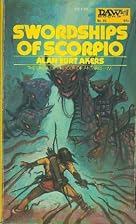
71) DAW #81: Swordships of Scorpio / Alan Burt Akers
This is the fourth in Kenneth Bulmer's swords-and-planets series about Dray Prescot on the planet Kregen under the double sun of Antares.
SPOILERS follow!
At the close of volume 3, Prescot had been briefly reunited with his true love Delia, only to be separated from her again through base treachery and abandoned in the wilderness.
This volume opens on the heels of the last one. Alone in the wilderness, Prescot sets out for Delia's home country Vallia but adventures interrupt.
He rescues the beautiful Sosia na Arkasson just as she is about to be tortured to death in some barabaric religious rite.
He wanders through a land populated by dinosaurs, where he is captured by lizard-men Phokaym and thrown to a pit of ravenous risslacas. We never know how he escapes the risslaca pit: the premise of this series is that the author is transcribing a collection of audiotapes. Just as Prescot falls into the pit, the tape breaks off.
With the next tape, Prescot has presumably escaped the Phokaym since he is in a tavern in the country Pandahem, a traditional rival of Vallia. Also in the tavern is Tilda the Beautiful, a widow who supplies musical diversions for the tavern's patron. Tilda and her ten-year-old child Pando are inexplicably targeted by assassins, against whom Prescot defends them.
News eventually reaches the tavern: it turns out that Pando is a royal heir. Tilda's late husband Marker was a kov -- apparently something like a duke -- but lost his father's favor by marrying Tilda. For marrying out of turn Marker and Tilda were driven into exile. Tilda learns that her father-in-law has recently died, that on his deathbed he forgave Marker and left the family estate to the grandson Pando. Unfortunately, Pando's uncle has taken over the kovnate and restoring Pando will not be easy. Prescot accompanies Tilda and Pando as they return to reclaim their home.
Prescot is successful in restoring Tilda and Pando but in doing so offends the king, who has him thrown into the slave galley of a merchant ship. When the ship is taken over by pirates, Prescot joins the pirate crew under the pirate captain Viridia. (Viridia is a woman pirate, but is only occasionally a "lady pirate." First Prescot says she isn't, but then later that she is. He seems pretty concerned about it, but his criteria for "lady-piratehood" are never clear. It's probably just as well.)
Prescot brings a refreshing humaneness to the pirates' business methods: he convinces Viridia to stop killing hostages and to hold them for ransom instead. This innovation is welcomed, but as his piratical career continues it becomes clear that the pirate crew is devoted more to Prescot than to Viridia. Viridia herself falls in love with him, and in a weird Gorish scene begs him to make her his slave. He refuses, but the two form an uneasy alliance and grow a joint power base.
Prescot sees a way out of the pirate life when he hears news that Pando's wicked uncle has attempted to usurp the throne by joining an army from Menahem. He proposes that he and Viridia attack and loot the invading army. In the aftermath of the army's defeat, the pirate crew will be happy with the booty and Prescot can diplomatically sever ties with the pirates and turn once again towards Vallia.
The fight goes well and Prescot's plans for a cruise to Vallia fall into place. Just as things are tidied up however, the Star Lords send him back to Earth.
I've mentioned before that I'm very fond of this series despite its obvious flaws. This is not one of the better volumes, this time around anyway: it felt episodic and aimless. The next volume does bring some closure, in that Dray and Delia are reunited, more or less for good and the series gets on to other things.
The cover -- which I love -- depicts Prescot's capture by the Phokaym. It is by Tim Kirk, who also provides six interior line drawings.
Next DAW: Telzey Amberdon!
146ronincats
Ooh, I like Telzey! Not as much as Trigger Argee, but Schmitz knew how to write those female protagonists (especially Niles Etland--have you read Demon Breed? Top notch even by today's standards!).
147swynn
>146 ronincats: I haven't. In fact the only Schmitz I've read so far is the Telzey Amberdon (and DAW) book The Lion Game. I will put Demon Breed on the list, though.
148swynn
Ms Marvel vol. 1 / G. Willow Wilson
This is fun for all the same reasons as the Spider Man origin story. The hero is a social outsider unexpectedly granted superpowers. The powers, far from solving all the hero's problems, actually complicate social life and serve up metaphors for the hell of adolescence. This time around instead of a 98-pound science nerd our hero is a Muslim girl who writes Avengers fanfic; and instead of super strength and agility her power is body plasticity à la Mr. Fantastic or Plastic Man. It's clever and quick and worth a look. Also, it's a nominee for the Hugo in Best Graphic Story.
"Graphic Story," baloney. They'll always be comic books to me.
149scaifea
I think I need to check out Ms Marvel - it sounds great. And yeah, I'm with you on "graphic story" and even "graphic novel" - they're comic books and there's nothing wrong with that!
150swynn
>149 scaifea:: I think you'd like it it, Amber!
My beef with "graphic story" is that I collected comic books in the 80's and early 90's, when "comic books" were still in the literary gutter but "graphic novel" was being tossed about as a term to distinguish works that rose above all the the gutter trash.
Thing was, the gutter trash included Gil Kane's Green Lantern, Chris Claremont's X-Men, Howard Chaykin's American Flagg! and oh my gods Alan Moore's Swamp Thing. All of these stories have now been reprinted as "graphic novels," but bollocks to that: they were comic books then and they always will be for me.
My beef with "graphic story" is that I collected comic books in the 80's and early 90's, when "comic books" were still in the literary gutter but "graphic novel" was being tossed about as a term to distinguish works that rose above all the the gutter trash.
Thing was, the gutter trash included Gil Kane's Green Lantern, Chris Claremont's X-Men, Howard Chaykin's American Flagg! and oh my gods Alan Moore's Swamp Thing. All of these stories have now been reprinted as "graphic novels," but bollocks to that: they were comic books then and they always will be for me.
151swynn

72) Who Fears Death? / Nnedi Okorafor
Date: 2010
(DAW #1512)
Onyesonwu is a child of rape, conceived in a raid on her village by an opposing ethnic militia. Fleeing genocide, Onye and her mother find a brief peace in lands far to the west. But Onye's mixed race means that she cannot have a pleasant childhood, and as she grows she discovers powers conferred upon her by her sorceror father. Eventually she realizes that she had not even escaped the War: the ethnic cleansing will reach even their new village unless somebody does something to stop it.
This is an unsettling fantasy, handling some very dark themes and featuring an angry and occasionally ruthless protagonist. The characters aren't always pleasant but they are plausible and interesting, and the postapocalyptic African setting is fresh. Recommended with trigger warnings.
152scaifea
>150 swynn: Sing it, brother! I was reading those comics on the late 80s and the 90s, too, along with Gaiman's Sandman, Ennis' Preacher, Constantine,...
153swynn
Sandman, oh my yes!
Preacher and Hellblazer (IIRC) were getting started just as I was finding other things to do with time & money. I've heard good things about Preacher but never picked it up. Must fix that. Hellblazer I've gone back and read large chunks as reprints and give that also an enthusiastic yes.
Oh, and I'm a Tim Truman fan. The sadly-brief Grimjack is among my favorite comic books ever.
Preacher and Hellblazer (IIRC) were getting started just as I was finding other things to do with time & money. I've heard good things about Preacher but never picked it up. Must fix that. Hellblazer I've gone back and read large chunks as reprints and give that also an enthusiastic yes.
Oh, and I'm a Tim Truman fan. The sadly-brief Grimjack is among my favorite comic books ever.
154rosylibrarian
>148 swynn: Must, MUST, get to this one. Really. I keep telling me myself to, anyways.
155swynn
>154 rosylibrarian: You'll like it when you do get to it, Marie. Stop denying yourself!
156scaifea
>153 swynn: Yes, do try Preacher - I have a feeling you'd love it. I've not heard of Grimjack, but I think I need to look for it...
157swynn
I'm afraid I've gotten caught up a bit in the whole Hugo thing, and it's dominated my reading: not only the nominees, but also new and recent science fiction that I probably would have otherwise left in the Someday Swamp indefinitely. And hooray for that: I'm having fun and reading some great things.
But I have missed the nonfiction reading and need to bring some balance back. So here, from the Tower of Due, is a rich discussion of reference books in Early Modern Europe.
73) Too Much To Know / Ann M. Blair
Yeah, a discussion of reference books -- actually it's much more interesting than it sounds. Unless, I suppose, you're a librarian or archivist, in which case it just might be exactly as interesting as it sounds.
For the non-librarians here's the most interesting thing. We tend to think of "information overload" as a late-twentieth century/twenty-first century challenge. But we are not the first to be overwhelmed with information -- Blair offers examples from classical Rome and Byzantium. They just said, "ars longa, vita brevis" where we say, "so many books, so little time."
But surely there is nothing in history approaching the scope of the recent information explosion, right? Well, maybe. As it happens, Early Modern Europe also saw an unprecedented explosion of information, fueled by the invention of the printing press, the rediscovery of classical texts, and a flood of new texts describing wonders of the Age of Exploration. In sheer volume we may dwarf that now, but the perception of being overwhelmed was both real and justified. How was an Early Modern scholar to cope?
Well, one strategy is to pick just one or a few books -- say, the Bible and Aristotle and maybe a few Church Fathers -- and learn them intimately by reading them exclusively and repeatedly. Not everyone finds such a restrictive diet satisfying (this probably needs no explanation on a group calling itself "75 Books Challenge"). In premodern times, readers who chose to read widely often kept notes on their reading, collected in notebooks of copied quotes and excerpts. This note-keeping practice was so widespread in the medieval period that students (especially seminarians) were taught note-taking practices and read manuals on proper excerpting.
But if a scholar's collection of excerpts is crucial to his own work, it's a short leap to conclude that it might be useful to others. Thus is born the genre of "florilegia": collections of quotes and excerpts; and close behind the genre of "commonplace books": collections of quotes, excerpts, historical notes, and comments arranged by subject. Florilegia and commonplace books were not an Early Modern or even a medieval invention: among the earliest surviving examples is Pliny's Natural History. But with the Early Modern information explosion these reference works were produced, reproduced, expanded, and consulted as never before.
From our position of having to cope with the whole Internet, it may sound trivial to talk about an Early Modern "information explosion." But many of the tools we take for granted were not standard prior to the 16th century. Summaries, bibliographies, indexes, book reviews, even publicly-available library catalogs only became widely available in the Early Modern period. Even obvious tools like alphabetical arrangement could not be assumed: one of the most important medieval Latin dictionaries was arranged not in alphabetical order but in the order in which the words appeared in Martial's poetry. Even when a dictionary or index was arranged alphabetically, the alphabetization might have been limited to the first letter or two, or entries might have been grouped by root. Arguably, the Early Modern period systematized an information-organizing box of tools still in use today, in ways both obvious and innocuous.
That's the overview, and Blair packs a staggering amount of detail into her discussion. Beginning with historical context, she looks at information management strategies not only in the classical West but also in ancient Byzantium, China, and the early Islamic world. She describes the history and development of note-taking; how note-taking informed and even embodied new reference genres; motivations and aims of the books’ authors and publishers, along with details – so far as they can be determined – of the composition and publishing history of several important reference works.
Blair's version is not a popularized account and it won’t keep you up at night reading more. (Well, probably not—actually, I did stay up late one night reading about branching diagrams and studying the illustrations. Then I’m weird that way.) But it’s surprisingly rich and recommended to those who find the subject interesting.
Thanks to Gerard (NielsenGW) for mentioning this.
But I have missed the nonfiction reading and need to bring some balance back. So here, from the Tower of Due, is a rich discussion of reference books in Early Modern Europe.
73) Too Much To Know / Ann M. Blair
Yeah, a discussion of reference books -- actually it's much more interesting than it sounds. Unless, I suppose, you're a librarian or archivist, in which case it just might be exactly as interesting as it sounds.
For the non-librarians here's the most interesting thing. We tend to think of "information overload" as a late-twentieth century/twenty-first century challenge. But we are not the first to be overwhelmed with information -- Blair offers examples from classical Rome and Byzantium. They just said, "ars longa, vita brevis" where we say, "so many books, so little time."
But surely there is nothing in history approaching the scope of the recent information explosion, right? Well, maybe. As it happens, Early Modern Europe also saw an unprecedented explosion of information, fueled by the invention of the printing press, the rediscovery of classical texts, and a flood of new texts describing wonders of the Age of Exploration. In sheer volume we may dwarf that now, but the perception of being overwhelmed was both real and justified. How was an Early Modern scholar to cope?
Well, one strategy is to pick just one or a few books -- say, the Bible and Aristotle and maybe a few Church Fathers -- and learn them intimately by reading them exclusively and repeatedly. Not everyone finds such a restrictive diet satisfying (this probably needs no explanation on a group calling itself "75 Books Challenge"). In premodern times, readers who chose to read widely often kept notes on their reading, collected in notebooks of copied quotes and excerpts. This note-keeping practice was so widespread in the medieval period that students (especially seminarians) were taught note-taking practices and read manuals on proper excerpting.
But if a scholar's collection of excerpts is crucial to his own work, it's a short leap to conclude that it might be useful to others. Thus is born the genre of "florilegia": collections of quotes and excerpts; and close behind the genre of "commonplace books": collections of quotes, excerpts, historical notes, and comments arranged by subject. Florilegia and commonplace books were not an Early Modern or even a medieval invention: among the earliest surviving examples is Pliny's Natural History. But with the Early Modern information explosion these reference works were produced, reproduced, expanded, and consulted as never before.
From our position of having to cope with the whole Internet, it may sound trivial to talk about an Early Modern "information explosion." But many of the tools we take for granted were not standard prior to the 16th century. Summaries, bibliographies, indexes, book reviews, even publicly-available library catalogs only became widely available in the Early Modern period. Even obvious tools like alphabetical arrangement could not be assumed: one of the most important medieval Latin dictionaries was arranged not in alphabetical order but in the order in which the words appeared in Martial's poetry. Even when a dictionary or index was arranged alphabetically, the alphabetization might have been limited to the first letter or two, or entries might have been grouped by root. Arguably, the Early Modern period systematized an information-organizing box of tools still in use today, in ways both obvious and innocuous.
That's the overview, and Blair packs a staggering amount of detail into her discussion. Beginning with historical context, she looks at information management strategies not only in the classical West but also in ancient Byzantium, China, and the early Islamic world. She describes the history and development of note-taking; how note-taking informed and even embodied new reference genres; motivations and aims of the books’ authors and publishers, along with details – so far as they can be determined – of the composition and publishing history of several important reference works.
Blair's version is not a popularized account and it won’t keep you up at night reading more. (Well, probably not—actually, I did stay up late one night reading about branching diagrams and studying the illustrations. Then I’m weird that way.) But it’s surprisingly rich and recommended to those who find the subject interesting.
Thanks to Gerard (NielsenGW) for mentioning this.
158swynn

74) Transhuman and Subhuman / John C. Wright
This collection of essays was nominated for a Hugo in the Best Related Work category. I'm happy to say I finished it: it was an endurance challenge.
It's not all bad; there's an essay on the craft of storytelling, which feels surprisingly sound considering that I disliked Wright's fiction nominees. There's also a scathing review of The Desolation of Smaug which I'm sorry to say feels pretty much on-target. Also an analysis of Pullman's Dark Materials trilogy which raised some valid points. He would have made the points much more effectively if he hadn't made them over and over again. And over again. And one last time not counting the summary. And then in the summary.
One thing you can say about John Wright: he loves words. And he never invited one to a party without telling it to bring all its word friends. Dude needs an editor.
The other thing he needs is a calendar, because the bulk of the book is packed with weird rants against Leftists, feminists, communists, socialists, atheists, mystics and Nazis, all of whom he conflates into a single amorphous enemy of civilization.
But mostly feminists. His longest essay is titled, "Saving Science Fiction from Strong Female Characters," which ... well, it took me a long time to figure out what he's on about. He explains that men and women are different by nature, that men are strong warriors and women are compassionate carers and it's unrealistic to portray them otherwise. But then he's a big fan of Buffy because, yeah she may be a strong warrior but she's all about Angel so it's really a love story and girls can be heroines of love stories. Also he likes Kim Possible and Wonder Woman and hey hey Batgirl but not any of those "strong women characters" that feminists want. If you wonder what he's going on about, welcome to the club. Apparently he means "strong women characters" like Black Widow beating up Hawkeye. This bothers him a lot. Black Widow punching Hawkeye is just wrong. In fact it's everything wrong with our world today, damn feminist socialist Kluxer gnostics.
This goes on for -- I don't know, I read it on Kindle without page numbers, but it was a hundred pages' worth if it was five. He spends a lot of time talking about what women want and his special insight into every woman's fantasy, which is to be abducted by Conan. Really.
Now I don't pretend to have any special expertise on women's fantasies, especially in the general case, but I'm pretty sure that if I tried to throw Mrs. Swynn over my shoulder and carry her back to the cave for forceful ravishing I wouldn't live long enough for hernia surgery. I don't know, maybe it's just Mrs. Swynn: sometime before we met she had been in such a cave and now will be damned before she goes back. Fine by me, in fact I admire it in her. But for Wright that makes me unmasculine and Mrs. Swynn unfeminine and he is really concerned about this. He goes on and on. Honestly it's like Gor without the plotty bits. Eventually it occurred to me that he just has a June Cleaver kink with a hint of Batgirl fetish and is outraged that his preferences are not universal. Once I realized that, the rant became less offensive and more embarrassing but it still had pages and pages to go, which he filled with more of the same, plus Jesus.
So: hooray for finished! And emphatically not recommended.
159qebo
>158 swynn: Probably not my sort of thing.
160lyzard
You beat me to it - I was just about to express surprise that this was by John Wright, not John Norman. :D
161swynn
>159 qebo: Mine either. Avoid.
>160 lyzard: The Johns seem to have very similar tastes. In fact, I'm now reading the next Gor novel, and parallels between their arguments are stong.
>160 lyzard: The Johns seem to have very similar tastes. In fact, I'm now reading the next Gor novel, and parallels between their arguments are stong.
162ronincats
>158 swynn: yech!
163swynn
Hugo nominees: Related Work
in order of my personal preference:
The Hot Equations by Ken Burnside
This one is actually pretty good. It's an essay discussing the thermodynamics of spsce travel, especially with reference to hypothetical space battles. Burnside is convinced that military science fiction gets details wrong. He describes several common errors, discusses how physics suggests those spaceships would really work, and even proposes some dramatic situations that could arise in a more realistic setting.
Letters From Gardner by Lou Antonelli
This is a good idea: a collection of an author's early stories together with comments about breaking into publishing. The "Gardner" of the title is Gardner Dozois, editor at Isaac Asimov's Science Fiction Magazine, whose rejection letters contained helpful suggestions that helped Antonelli home his craft. Good idea, but it would be a better book from a better writer. Antonelli has a knack for clean, direct prose, and occasionally a good gimmick, but his stories are light on plot and his characters dull.
Why Science is Never Settled by Tedd Roberts
All scientific knowledge is provisional; this essay for readers who weren't clear about that. It's not bad but it's not special either, and it has nothing to do with science fiction.
Transhuman and Subhuman by John C. Wright
Comments above.
Wisdom From My Internet by Michael Z. Williamson
Yes, there's something on the ballot worse than the Wright. This is a collection of snarky one-liners collected from Williamson's blog. They're tasteless, mean-spirited, often racist, and uniformly unfunny.
in order of my personal preference:
The Hot Equations by Ken Burnside
This one is actually pretty good. It's an essay discussing the thermodynamics of spsce travel, especially with reference to hypothetical space battles. Burnside is convinced that military science fiction gets details wrong. He describes several common errors, discusses how physics suggests those spaceships would really work, and even proposes some dramatic situations that could arise in a more realistic setting.
Letters From Gardner by Lou Antonelli
This is a good idea: a collection of an author's early stories together with comments about breaking into publishing. The "Gardner" of the title is Gardner Dozois, editor at Isaac Asimov's Science Fiction Magazine, whose rejection letters contained helpful suggestions that helped Antonelli home his craft. Good idea, but it would be a better book from a better writer. Antonelli has a knack for clean, direct prose, and occasionally a good gimmick, but his stories are light on plot and his characters dull.
Why Science is Never Settled by Tedd Roberts
All scientific knowledge is provisional; this essay for readers who weren't clear about that. It's not bad but it's not special either, and it has nothing to do with science fiction.
Transhuman and Subhuman by John C. Wright
Comments above.
Wisdom From My Internet by Michael Z. Williamson
Yes, there's something on the ballot worse than the Wright. This is a collection of snarky one-liners collected from Williamson's blog. They're tasteless, mean-spirited, often racist, and uniformly unfunny.
164swynn
>162 ronincats: Indeed. Having now read all of Wright's nominated work it's a relief to know that I won't have to read any more.
165scaifea
Wow to that last read, Steve. I'm sorry that the book was awful, but I did enjoy reading your review!
166rosalita
>157 swynn: That sounds like one to geek out on! Adding it to the list.
By the way, I just finished Devil in the Grove and the note in my catalog says the recommendation came from you, so thanks for that! It built nicely on a book I read a few years ago, Root and Branch, that detailed the intricate legal dance of Thurgood Marshall and his mentor that led to Brown v Board of Education. Every time I read a history of the pre-Civil Rights Act era it makes me sick to my stomach. Uncomfortable reading but important now more than ever.
By the way, I just finished Devil in the Grove and the note in my catalog says the recommendation came from you, so thanks for that! It built nicely on a book I read a few years ago, Root and Branch, that detailed the intricate legal dance of Thurgood Marshall and his mentor that led to Brown v Board of Education. Every time I read a history of the pre-Civil Rights Act era it makes me sick to my stomach. Uncomfortable reading but important now more than ever.
167swynn
>165 scaifea: Thanks, Amber! Better stuff is coming. Even counting Gor ...
>166 rosalita: I loved Devil in the Grove! Well, as much as a person can "love" a story about outrageous injustice. Glad you liked it too, Julia. Throwing Root and Branch into the Someday Swamp.
>166 rosalita: I loved Devil in the Grove! Well, as much as a person can "love" a story about outrageous injustice. Glad you liked it too, Julia. Throwing Root and Branch into the Someday Swamp.
168swynn
75) To Have and To Hold / Mary Johnston
This month's read from Liz's historical bestseller's project: the (American) bestseller of 1900 is a historical romance set in colonial Virginia. Despite the genre I didn't bounce off it, and in fact it's a reread. It's not quite as fun as I remember it from my first reading, but overall still mostly entertaining.
Captain Ralph Percy is a former soldier, retired to a backwoods tobacco plantation in early 17th-century Virginia. When a friend tells him about a ship of brides arriving in Jamestown, Percy flips a coin and (against his better judgment) decides to go check it out.
At the bride market Percy comes to the aid of a woman who resists the advances of a too-insistent suitor. Grateful for his gentlemanly conduct, the woman accepts Percy's proposal. They are quickly wed and return to the plantation, where Percy's new bride explains that she is not who she seems to be: she is in fact Jocelyn Leigh, runaway ward of King James, having fled England to escape a forced marriage to the odious Lord Carnal. She can't cook, can't sew, and can't keep house, but she'll be eternally grateful for Captain Percy's continued gentlemanly conduct.
I'm not a reader of historical romance, but it doesn't take a connoisseur to see that Lord Carnal is already crossing the pond to retrieve his promised bride, that tussles and treachery will ensue, which Percy and Jocelyn will eventually overcome to live happily ever after. SPOILER: Yeah, that's what happens. What makes the story fun of course is the tussles and treachery, which include desperate escapes, pirate ships, and Indian wars. Johnston also has a knack for description, which helps make the story engaging.
The book is uncomfortable in spots. It's worth keeping in mind that it was written around 1900 by a native Virginian, because it shows. Johnston treats slavery with indifference. Chapter one actually opens with Percy beating his slaves as a preventive measure. She portrays Native Americans as duplicitous and cruel, with only a single noble exception. I had completely forgotten about these attitudes from my first reading, and reencountering them affected my enjoyment this time around.
According to IMDB, there is a new film version of this book, starring a lot of actors I've never heard of and Christopher Judge, who played Teal'c on Stargate SG-1. Judge plays "Sampson," a name that doesn't actually appear in the book -- I'm guessing the film's producers decided to rename the book's "Diccon" character because they're aiming for a family film and they don't want the kids snorting like Beavis & Butthead every time someone addresses a character by name. Less obvious is the reason for changing the main character's name from "Ralph Percy" to "Miles Cambridge." Because "Percy" just isn't manly enough, I suppose. John Wright would probably approve.
This month's read from Liz's historical bestseller's project: the (American) bestseller of 1900 is a historical romance set in colonial Virginia. Despite the genre I didn't bounce off it, and in fact it's a reread. It's not quite as fun as I remember it from my first reading, but overall still mostly entertaining.
Captain Ralph Percy is a former soldier, retired to a backwoods tobacco plantation in early 17th-century Virginia. When a friend tells him about a ship of brides arriving in Jamestown, Percy flips a coin and (against his better judgment) decides to go check it out.
At the bride market Percy comes to the aid of a woman who resists the advances of a too-insistent suitor. Grateful for his gentlemanly conduct, the woman accepts Percy's proposal. They are quickly wed and return to the plantation, where Percy's new bride explains that she is not who she seems to be: she is in fact Jocelyn Leigh, runaway ward of King James, having fled England to escape a forced marriage to the odious Lord Carnal. She can't cook, can't sew, and can't keep house, but she'll be eternally grateful for Captain Percy's continued gentlemanly conduct.
I'm not a reader of historical romance, but it doesn't take a connoisseur to see that Lord Carnal is already crossing the pond to retrieve his promised bride, that tussles and treachery will ensue, which Percy and Jocelyn will eventually overcome to live happily ever after. SPOILER:
The book is uncomfortable in spots. It's worth keeping in mind that it was written around 1900 by a native Virginian, because it shows. Johnston treats slavery with indifference. Chapter one actually opens with Percy beating his slaves as a preventive measure. She portrays Native Americans as duplicitous and cruel, with only a single noble exception. I had completely forgotten about these attitudes from my first reading, and reencountering them affected my enjoyment this time around.
According to IMDB, there is a new film version of this book, starring a lot of actors I've never heard of and Christopher Judge, who played Teal'c on Stargate SG-1. Judge plays "Sampson," a name that doesn't actually appear in the book -- I'm guessing the film's producers decided to rename the book's "Diccon" character because they're aiming for a family film and they don't want the kids snorting like Beavis & Butthead every time someone addresses a character by name. Less obvious is the reason for changing the main character's name from "Ralph Percy" to "Miles Cambridge." Because "Percy" just isn't manly enough, I suppose. John Wright would probably approve.
169lyzard
...so they're making the slave who gets beaten black? Oh, good, that'll help.
The attitudes towards slaves and natives are distasteful but no doubt accurate for the 1620s so I wasn't put off by that; more by Percy being the only one to distrust the natives and then of course proven right. "Percy" being an historically relevant name I guess is irrelevant to the film-makers, though I'll be interested to see what they do (if anything) with the Pocahontas references---when did Captain Smith intrude himself upon the narrative?
Anyway...I hope to be getting written up this weekend too (I haven't peeked yet, though, so don't tell me!).
The attitudes towards slaves and natives are distasteful but no doubt accurate for the 1620s so I wasn't put off by that; more by Percy being the only one to distrust the natives and then of course proven right. "Percy" being an historically relevant name I guess is irrelevant to the film-makers, though I'll be interested to see what they do (if anything) with the Pocahontas references---when did Captain Smith intrude himself upon the narrative?
Anyway...I hope to be getting written up this weekend too (I haven't peeked yet, though, so don't tell me!).
170swynn
I agree that the attitudes are probably historically accurate, but was still put off by a hero who beats his slaves for no other reason than to remind them who is in charge. It seems like the kind of arbitrarily cruel act you'd use to introduce a villain.
In Jonston's defense, she does give Nantaquas a speeh jusifying the natives' hostility, so she's not suggesting that their attack was unmotivated.
On another subject of changing attitudes, I thought her treatment of King James was interesting. It is historically accurate to portray him as having a weakness for young men, but I'm a bit surprised considering her audience that Johnston was both so frank about it and treated it without judgmental innuendo.
In Jonston's defense, she does give Nantaquas a speeh jusifying the natives' hostility, so she's not suggesting that their attack was unmotivated.
On another subject of changing attitudes, I thought her treatment of King James was interesting. It is historically accurate to portray him as having a weakness for young men, but I'm a bit surprised considering her audience that Johnston was both so frank about it and treated it without judgmental innuendo.
171swynn

76) Priest-Kings of Gor / John Norman
Date: 1968
Third in Norman's Gor series and so far the most appealing, not to suggest the bar was high. In this one, Tarl Cabot confronts the priest-kings over book their destruction of his home village in book two.
SPOILERS FOLLOW.
The priest-kings turn out to be a hive of insectoid aliens who use advanced technology to monitor and control events on Go. After a series of dangerous encounters Cabot gains access to the priest-kings in their cave complex beneath the Sardar Mountains. He learns that the priest-kings brought him to Gor to make him an agent in a civil war.
The priest-kings are long-lived, and have developed an anti-aging treatment to become nearly immortal. But their queen is now dying, having received the treatment too late in life. One faction of the priest-kings, led by the firstborn Sarn, refuses to admit that the queen's condition. It is a matter of faith with them that the priest-kings are immortal and that the hive is eternal. To behave otherwise is to betray faith, so they have destroyed all of the queen's eggs. The other faction, led by the queen's fifth-born child Misk, is making preparations for the hive's survival. They have secretly saved a male egg. A female egg was also saved, but it has gone missing somewhere on Gor. To find the female egg, Misk has brought Cabot to Gor: the Battle of Ar in book one was a test to prove Cabot's fitness; the destruction of Ko-Ro-Ba in book two was a ploy by Misk to hide his plans from Sarn.
Out of respect for the queen, San and Misk keep their hostilities subdued but the conflict is in earnest. Each tries to kill the other and each tries to use Cabot in their plans. Cabot plays a dangerous game pretending to aid both sides but he finds himself drawn to underdog Misk and his cause, and there develops an odd sort of affection between them.When the queen dies, the gloves come off: Misk and Sardar and the humans they keep divide into sides for an extended shooting war. The weapons they use escalate in power and until Gor itself is threatened with destruction. Fortunately Misk and his humans save the planet, the citizens of Ko-Ro-Ba are allowed to rebuild their city, and Cabot takes off to find the Wagon People, who are supposed to know something about the lost egg of the priest-kings.
The unpleasant parts of the Gor series are still here: the misogyny and apologetics for slavery. But the bulk of the book's middle concerns the priest-kings' drama, and as long as the humans are offstage it's not bad. Still not recommended, exactly, but if you must read one Gor book ...
Cover art is by Robert Foster. He's no Boris.
172lyzard
>170 swynn:
Well, no - he did disobey orders and put Jocelyn in danger. It wasn't the beating so much for me as that Percy and Diccon were both old soldiers who had served together, and yet Percy has completely internalised the "slave" attitude towards him. Though again, I suppose to present the situation otherwise would be revisionism.
Yes, the James back-story was most unexpected! - very daring for the time, particularly in making it such an important plot-detail. In fact, overall I found that this book tended to fall into a mental category that I call "books you wouldn't know a woman wrote if you didn't know a woman wrote it", though it applies to both sexes. I often argue against the assertion that an author's gender is immediately obvious from their text; this novel was interesting in that respect because it kept putting me in mind of Rafael Sabatini, only Johnston's historical romances pre-dated Sabatini's, which might suggest an influence.
So, certainly not flawless but very interesting, I thought.
Anyway...see you next month! :)
Well, no - he did disobey orders and put Jocelyn in danger. It wasn't the beating so much for me as that Percy and Diccon were both old soldiers who had served together, and yet Percy has completely internalised the "slave" attitude towards him. Though again, I suppose to present the situation otherwise would be revisionism.
Yes, the James back-story was most unexpected! - very daring for the time, particularly in making it such an important plot-detail. In fact, overall I found that this book tended to fall into a mental category that I call "books you wouldn't know a woman wrote if you didn't know a woman wrote it", though it applies to both sexes. I often argue against the assertion that an author's gender is immediately obvious from their text; this novel was interesting in that respect because it kept putting me in mind of Rafael Sabatini, only Johnston's historical romances pre-dated Sabatini's, which might suggest an influence.
So, certainly not flawless but very interesting, I thought.
Anyway...see you next month! :)
173swynn
>172 lyzard: It's a different scene I have in mind when I criticize Percy for beating slaves just to remind them who is in charge. It's a scene from chapter one:
When I had had my supper, I called from their hut the two Paspahegh lads bought by me from their tribe the Michaelmas before, and soundly flogged them both, having in my mind a saying of my ancient captain's, namely, "He who strikes first oft-times strikes last."
This is the first mention of the "Paspahegh lads," and Percy doesn't even claim here or later that they'd done anything to deserve such treatment. Other than being Indians of course, by his definition untrustorthy. And in the first chapter too -- it's an odd way to establish a hero's character.
When I had had my supper, I called from their hut the two Paspahegh lads bought by me from their tribe the Michaelmas before, and soundly flogged them both, having in my mind a saying of my ancient captain's, namely, "He who strikes first oft-times strikes last."
This is the first mention of the "Paspahegh lads," and Percy doesn't even claim here or later that they'd done anything to deserve such treatment. Other than being Indians of course, by his definition untrustorthy. And in the first chapter too -- it's an odd way to establish a hero's character.
174lyzard
Ah, yes indeed, fair comment - though I suppose it's a shortcut way to establish the historical milieu.
175swynn

77) DAW #82: The Telzey Toy / James H. Schmitz
Date: 1973, selections originally published 1970-19 ly published in Analog magazine featuring Telzey Amberdon, Schmitz's teenage genius telepath adventurer law student. They're quite fun, and recommended.
The Telzey Toy. Telzey is kidnapped by Wakoti Ti, a dramatist who specializes in staging plays performed by androids. It turns out Ti is also a mad scientist, and has been developing the androids to perform in a wider variety of situations. He duplicates Telzey in order to see if he can create a telepath android. Trapped on Ti's island estate, the two Telzeys must figure out which of them is the original and find a way of escape.
Resident Witch. Telzey is employed by a private investigation firm to locate and rescue a business executive who has been kidnapped by his evil brother.
Compulsion. Telzey teams up with another Schmitz favorite (Hi Roni!) Trigger Argee. Telzey and Trigger investigate an alien species that threatens human colonization. The species is a sort of possibly-sentient tree, dubbed "sirens" for their irresistably enticing effect on humans--and almost any other life form. Once having mesmerized a population, the sirens guide its evolution to make it totally dependent on the sirens. The Federation intends to exterminate the sirens; Telzey and Trigger look for an argument to save them.
Company Planet. Telzey and her journalist uncle uncover a sinister plot on a planet whose economy is based on elective surgery tourism.
The cover is by Kelly Freas, and is one of his disappointing efforts. His covers usually have an identifiable relation to the plot, but there is no story in which Telzey is shrunk to snack size, nor one in wich she meets a monocled giant. I guess it's supposed to be a metaphorical depiction of the first story, in which Telzey becomes an experimental subject. Freas has also--once again -- turned Telzey into a sexpot, draping her in something pink, lacy, and torn. Telzey would find this amusing, I think.
Next DAW: A French science fiction novel by Pierre Barbet
176rosalita
>175 swynn: I'm not a big SF reader but those Telzey stories sound like fun. Like Nancy Drew in space, kinda.
177swynn
>176 rosalita: That's probably a fair description. I was never much of a Nancy Drew fan, but if she had met aliens and battled baddies with future tech ... I'd have been all over that series thirty years ago.
178rosalita
>177 swynn: I read plenty of Nancy Drew but I was more of a Trixie Belden girl, myself.
179ronincats
Will you also be reading The Lion Game, another 1973 DAW?
Julia, the original books were mostly gathered and published from the mid-60s through the mid-70s although some of the stories in his books date from the 40s and 50s when they were published in the pulps. However, in 2000 and 2001 Baen issued 6 mass-market paperbacks including almost all of his works. The relevant ones here would be Telzey Amberdon, Telzey & Trigger (which contains the works above among others) and Trigger & Friends--Trigger is a somewhat more mature female agent with just as exciting tales as Telzey. The original Telzey books include The Universe against Her (1964, Ace), in addition to The Telzey Toy and The Lion Game.
Steve, my favorite, Demon Breed, features another competent woman in a hard science fiction story but was never published by DAW. Ace first published it in 1968 and 3 times since, and it can be found in the Baen collection The Hub: Dangerous Territory.
Julia, the original books were mostly gathered and published from the mid-60s through the mid-70s although some of the stories in his books date from the 40s and 50s when they were published in the pulps. However, in 2000 and 2001 Baen issued 6 mass-market paperbacks including almost all of his works. The relevant ones here would be Telzey Amberdon, Telzey & Trigger (which contains the works above among others) and Trigger & Friends--Trigger is a somewhat more mature female agent with just as exciting tales as Telzey. The original Telzey books include The Universe against Her (1964, Ace), in addition to The Telzey Toy and The Lion Game.
Steve, my favorite, Demon Breed, features another competent woman in a hard science fiction story but was never published by DAW. Ace first published it in 1968 and 3 times since, and it can be found in the Baen collection The Hub: Dangerous Territory.
180swynn
>179 ronincats: Been there already, Roni!
Hm, reviewing my comments on that I see that there were some "grammatical habits that irked me," but I'm not certain what those habits were, so I must have gotten over it. (A guess: Schmitz occasionally connects two clauses with a comma instead of a conjunction, e.g, "Telzey entered the room, looked around.") Whatever, I actually found the prose clear and direct this time around so chalk it up to mood.
Another correction: apparently the cover on Lion Game was done by Frank Frazetta rather than Kelly Freas, so that makes two artists who think of Telzey as a Babe. Oh, nineteen seventies.
Thanks the tip about the Baen collections. I see they're reasonably priced for Kindle, so I think I'll pick one up. Getting around to them, of course is another story ...
Hm, reviewing my comments on that I see that there were some "grammatical habits that irked me," but I'm not certain what those habits were, so I must have gotten over it. (A guess: Schmitz occasionally connects two clauses with a comma instead of a conjunction, e.g, "Telzey entered the room, looked around.") Whatever, I actually found the prose clear and direct this time around so chalk it up to mood.
Another correction: apparently the cover on Lion Game was done by Frank Frazetta rather than Kelly Freas, so that makes two artists who think of Telzey as a Babe. Oh, nineteen seventies.
Thanks the tip about the Baen collections. I see they're reasonably priced for Kindle, so I think I'll pick one up. Getting around to them, of course is another story ...
181rosalita
>170 swynn: Thanks for the bibliography, Roni! Now I know what to look for at the library.
182ronincats
>180 swynn: I was going to plead my poor memory, but that was THREE YEARS ago--no wonder I didn't remember it!
>181 rosalita: You are quite welcome, Julia. I love Schmitz as a writer and would love everyone to read him.
>181 rosalita: You are quite welcome, Julia. I love Schmitz as a writer and would love everyone to read him.
183swynn
>181 rosalita: Hope your library stocks 'em, Julia!
>182 ronincats: Yes, I figure as long as I read them more slowly than they were published I'll never run out! I have only two more to go from 1973, then I can start in on the 48 titles from 1974.
>182 ronincats: Yes, I figure as long as I read them more slowly than they were published I'll never run out! I have only two more to go from 1973, then I can start in on the 48 titles from 1974.
184MickyFine
>157 swynn: I might have enjoyed that one if it were assigned while I was in library school, but I'm not sure even my nerdiness could handle it now. ;)
185swynn
>185 swynn: Aw, c'mon, Micky, don't underestimate your nerdiness!, Keep it in mind for a sleepless night-- it'll either cure your insomnia or won't mind so much.
186swynn

78) Pacific Fire / Greg Van Eekhout
Date: 2015
Follow-up to Van Eekhout's California Bones, taking place in an alternate California where sorcerors acquire power by consumng the bones of magical animals: fossil dragons, hippogriffs, ... and other sorcerors.
It's hard to say much about this one without revealing spoilers from the first, so I'll just say everyone from the crew is back, this time trying to prevent Daniel's evil uncle from reviving an ancient dragon. Mostly the fun is back too, though I had a problem with a couple of plot points. (The worst: just as our heroes are trying to figure out how to get to the villain's island fortress, a stranger pulls up and invites them to a rave where drugs will be delivered via submarine. "Submarine?" think our heroes, "How convenient." Coincidentally, I'm thinking the same thing.)
Still, recommended if you liked the first. Fair warning: though the ending is not a cliffhanger, it is a thread-dangler, and the third book isn't due till fall.
187MickyFine
>185 swynn: Snorfl.
188swynn

79) Mort(e) / Robert Repino
Date: 2015
Before the antpocalypse Sebastian was a housecat, neutered and declawed but mostly content with his family and his cozy relationship with the neighbor dog Sheba. Then the world was conquered by giant ants.
To aid them in their fight against humanity, the ants released a hormone into the air which caused mammals to gain speech and intelligence, and also to acquire some more human physical characteristics such as the ability to walk upright and hands able to operate guns. Former pets and farm animals realized that they were little more than slaves and cattle respectively and took up arms against their former human masters.
When he joins the uprising, Sebastian drops his slave name and takes the new name Mort(e). He likes the sound of the name, but he also likes that it could mean death as in Le Morte d'Arthur, but it could also be a name for a regular guy. He puts the "e" in parentheses because things could go either way.
Early in the war it appears unlikely that Sheba has survived so Mort(e) throws himself into the rebellion. But he cannot forget her, and when he finds clues that Sheba is still alive he is desperate to find her.
I have mixed feelings about the book, with the balance on liking it a lot. It's bleak: deeply pessimistic about human nature and monotonically skeptical about religion. (Many days I share the latter attitude so that probably helped my enjoyment.) So it's no feel-good read but dang: gun-totin' cats and ant overlords, give me more. And Repino delivers more: besides a good story we also get moody ruminations on life and faith, not to mention occasional nods to Animal Farm, whose respectful child this obviously is.
Recommended for those who find the description intriguing.
I'll also rave about the elegant illustrations and book design by Sam Chung and Janine Agro. Damn, this is an attractive book.
189ronincats
I enjoyed California Bones but think I might wait until fall when the third book comes out to move on, based on your review of the second.
Mort(e) goes onto the wishlist.
Any chance of pulling you into the Liaden Universe group read? Very low-key, unpaced, but loads of fun! http://www.librarything.com/topic/192715
Mort(e) goes onto the wishlist.
Any chance of pulling you into the Liaden Universe group read? Very low-key, unpaced, but loads of fun! http://www.librarything.com/topic/192715
190swynn
>189 ronincats: Good plan, Roni. Hope you like the Van Eekhouts when you get around them.
As for the Liaden GR: yes. I've just started Agent of Change.
As for the Liaden GR: yes. I've just started Agent of Change.
191swynn
TREADMILL READING:
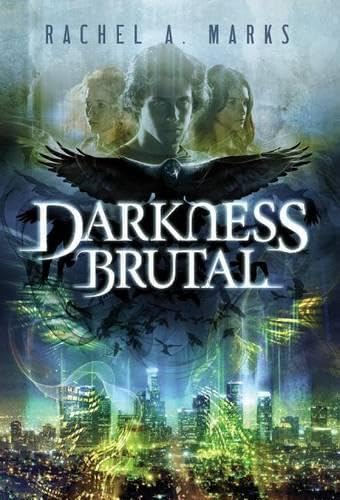
80) Darkness Brutal / Rachel A. Marks
Aidan O'Linn can see demons, can speak ancient Hebrew and Aramaic though he never took a lesson, and can read your soul with a glance. He's also in trouble, because the demons are starting to notice him. He's supposed to defend his little sister against the powers of darkness, but he doesn't know whether he'll be able to do that much longer: the attacks are always hardest right around her birthday, and she's about to turn 14. Then Aidan meets some other young adults with paranormal powers and finds out he doesn't know the half of the apocalyptic danger he's in.
It's okay but a little long and very angsty.
80) Darkness Brutal / Rachel A. Marks
Aidan O'Linn can see demons, can speak ancient Hebrew and Aramaic though he never took a lesson, and can read your soul with a glance. He's also in trouble, because the demons are starting to notice him. He's supposed to defend his little sister against the powers of darkness, but he doesn't know whether he'll be able to do that much longer: the attacks are always hardest right around her birthday, and she's about to turn 14. Then Aidan meets some other young adults with paranormal powers and finds out he doesn't know the half of the apocalyptic danger he's in.
It's okay but a little long and very angsty.
192swynn

81) Bowl of Heaven / Gregory Benford and Larry Niven
A sleeper ship en route to a distant star happens across a giant artifact in space: it's a huge bowl-shaped structure whose concave surface faces a star. Extending from the star is a jet of plasma which passes along the bowl's axis of radial symmetry and through a "knothole" in the bowl's base. It looks for all the world like a spectacularly huge vessel using the star for propulsion. What's more, a vast band around the bowl's inner surface shows green & blue signs of habitability.
What's even more, the "shipstar" seems to be heading in the same direction.
Exploration is not part of the mission, but there are complicating factors: the humans' ship is not performing as efficiently as expected, and new projections indicate that their supplies will run out before they reach their destination. In hopes of securing additional supplies, a landing party goes to the bowl, where things quickly go to hell. The landing party is separated: one half is captured by the intelligent bird-like aliens who run the bowl; the other manages to escape into the bowl's habitable area. They spend the rest of the book exploring the bowl.
It's okay. The bowl is the most interesting character, which is about par for this sort of book. Also, it's just the first half of a story, whose conclusion was published just last year. I'll pick it up soon.
Not recommended unless geeky gosh-wow technical science fiction is your thing. It's one of mine so I enjoyed it, but others will find multiple flaws.
193qebo
>192 swynn: I kinda like Gregory Benford so I'll plop it onto the wishlist.
194rosalita
>188 swynn: Wow, what a great review of Mort(e)! It sounds delightfully weird. And I say that even though the notion of armed cats strikes fear deep in my soul.Their lack of weapons is the only thing that's kept them from ruling the world, I'm pretty sure.
195swynn
>193 qebo: Hope you like it, Katherine! If you do get around to it, keep the sequel Shipstar handy too.
>194 rosalita: Yes, the ants were nominally in charge but I think that was all part of the feline master plan.
>194 rosalita: Yes, the ants were nominally in charge but I think that was all part of the feline master plan.
196swynn

82) DAW #83: Games Psyborgs Play / Pierre Barbet
Date: 1973
Tagline: The whole world was their arena
Insterstellar Confederation agent Setni is called to headquarters for a new assignment: confederation probes of a distant planet have returned conflicting information, indicating the planet is either lush and green or else a barren rock. A manned survey team determined that the planet was a global desert, but psychological testing revealed that the survey's memories had been tampered with. Setni has been selected for a one-man fact-finding mission because of his high resistance to hypnotic suggestion.
To avoid detection Setni lands on the nightside of the planet during a meteor shower, hiding his small shuttlecraft in a convenient cave. He finds that the planet is not only habitable but inhabited. He assumes the identity of a local -- one Alcassin -- and sets out exploring. He has not gone far when he encounters a knight, in shining armor but also in distress, having been waylaid by a couple of toughs. Using his Confederation field gadgets, Setni stuns the two assailants thus rescuing the knight.
The grateful knight introduces himself as Huon of Bordeaux and offers his services as a guide. Through the bulk of the book, Setni and Huon wander the planet seeking its secret rulers. They encounter many characters and beasts from medieval legends, most of whom turn out to be androids or robots. Along the way, Setni uncovers clues of a genocide.
When Setni finally manages to corner the planet's rulers -- the dwarf Oberon, the sorceress Dahut, and god Wotan -- they reveal their planet's secret.
It's not bad. It's derivative by design but it's short and moves with satisfying speed.
Cover and four interior illustrations are by George Barr.
Translation from the French A quoi songent les psyborgs? by Wendayne Ackerman.
Next DAW: space opera from Brian Ball
197swynn

83) Canary / Duane Swierczynski
Date: 2015
I have plenty of others waiting to be read so I really shouldn't have grabbed this one. But I loved Swierczynski's madly improbable, crazy fun Charlie Hardie trilogy so when I saw this sitting on the new books shelf I was tempted beyond my ability to resist. Not, um, that that bar is especially high, mind you, but I put aside Agent of Change and The Crisis to plow through this one.
Serafina 'Sarie' Holland is a college freshman in an honors program who makes the mistake of giving a cute guy a ride and finds herself under arrest for drug trafficking. In hopes of making it all go away she agrees to be a confidential informant for Philadelphia's narcotics squad. Unluckily for her it's not all going away, and somebody is systematically killing CIs. Sarie begins as a complete naif to the Philly drug trade, but she is a quick study. She is after all an honors student: studying is what she does.
This one isn't quite as comic-bookish as Charlie Hardie, at least not for the first three hundred pages or so. Instead it starts out as a family drama and builds steadily to a Swierczynsi-style finish. The story is told from multiple viewpoints, but primarily from the heroine's, and I found her sheltered-young-adult voice convincing. Toward the end it does get a bit silly, and the plot depends heavily on suspension of disbelief. But it does what a crime thriller is supposed to do: moves fast enough that you really don't mind.
It works as a standalone, but could also be setting Sarie up as a series character. If there are more Sarie books, I'll read them. Recommended for those who like this sort of thing. Fair warning: it's about very bad people and it's by Swierczynski. It gets violent.
Now back to Abraham Lincoln and the space turtles ....
198lyzard
Hi, Steve - I have added The Crisis to TIOLI #12 - hope to see you there when you're done with Abe and the space turtles, which obviously take precedence.
199swynn
>199 swynn: I'm there, Liz! The Crisis is the Lincoln half of Lincoln and the turtles.

201rosalita
>196 swynn: Are psyborgs the same as cyborgs? If so, I never knew that word was ever spelled differently. Every review you write is a learning experience for me, Steve!
202swynn
>200 lyzard: That guy is temptingly adorable, but the space turtles are from Agent of Change, for Roni's Liaden Universe shared read:

>201 rosalita: I'm pretty sure "psyborg" is coined by author this novel, for mechanical bodies that carry a psychology & consciousness uploaded from a biological human. It's an odd choice of title, because "psyborg" is an unusual word, not even introduced until the last chapter, and the title doesn't even make any sense until the mystery is revealed.

>201 rosalita: I'm pretty sure "psyborg" is coined by author this novel, for mechanical bodies that carry a psychology & consciousness uploaded from a biological human. It's an odd choice of title, because "psyborg" is an unusual word, not even introduced until the last chapter, and the title doesn't even make any sense until the mystery is revealed.
204rosalita
>202 swynn: Interesting! I agree it's a weird choice for a title to use a word that isn't used in the book until the very end.
205swynn
RACE REPORT & RUNNING UPDATE
I've been pretty bad with updating my running ticker, largely because I haven't been sure how I wanted to count the miles I have "run." My target race has been the Barr Trail Mountain Race, which follows an out-and-back course halfway up Pike's Peak in Manitou Springs, Colorado. The first half climbs 3,630 feet and in preparation for that my training has been heavy on (a) treadmill with the incline set at 10%-15%; (b) stairmaster; and (c) hill repeats (go up the hill, go down the hill, repeat). The "running" I have been doing in training has involved a lot of walking. Do I count all the miles I covered, or just the miles I ran? While I pondered, I didn't count any miles at all.
So the race was Sunday. I finished! Time was 2:50, well ahead of the 3:30 cutoff. It turns out that all that walking in training was pretty good preparation. I'd been worried about running uphill at altitude but it turns out that most of the pack walks. There's a YouTube video of a point early in the race, and you can see the leaders running -- in fact they're flying uphill. But there's a crowd climbing at a brisk hiking pace, and that's where I stayed. You can see me walking at about 4:36. You can see Andy Wacker, the guy who won, at 6:30.
Yeah, won. You can see the story here. Wacker had misset his alarm clock and arrived at the race late. Despite starting the race 7 minutes behind everybody else, he passed everybody except the leader Noah Chepngabit and was gaining on him near the end of the course. At the final turn, volunteers misdirected the runners. Wacker was suddenly in the lead, realized the error first, and turned around to win the race. Due to the confusion, and with the agreement of all concerned, race organizers declared Wacker and Chepngabit co-winners. You can see the excitement in another YouTube highlight video. Wacker's late start is at 1:00, and the finish-line confusion at 1:30.
It was hard and fun and made me think that the Pike's Peak marathon -- which follows the same trail all the way to the top -- is very doable. I understand there's a large contingent that reaches the top at a brisk hiking pace. Next year, maybe.
I've been pretty bad with updating my running ticker, largely because I haven't been sure how I wanted to count the miles I have "run." My target race has been the Barr Trail Mountain Race, which follows an out-and-back course halfway up Pike's Peak in Manitou Springs, Colorado. The first half climbs 3,630 feet and in preparation for that my training has been heavy on (a) treadmill with the incline set at 10%-15%; (b) stairmaster; and (c) hill repeats (go up the hill, go down the hill, repeat). The "running" I have been doing in training has involved a lot of walking. Do I count all the miles I covered, or just the miles I ran? While I pondered, I didn't count any miles at all.
So the race was Sunday. I finished! Time was 2:50, well ahead of the 3:30 cutoff. It turns out that all that walking in training was pretty good preparation. I'd been worried about running uphill at altitude but it turns out that most of the pack walks. There's a YouTube video of a point early in the race, and you can see the leaders running -- in fact they're flying uphill. But there's a crowd climbing at a brisk hiking pace, and that's where I stayed. You can see me walking at about 4:36. You can see Andy Wacker, the guy who won, at 6:30.
Yeah, won. You can see the story here. Wacker had misset his alarm clock and arrived at the race late. Despite starting the race 7 minutes behind everybody else, he passed everybody except the leader Noah Chepngabit and was gaining on him near the end of the course. At the final turn, volunteers misdirected the runners. Wacker was suddenly in the lead, realized the error first, and turned around to win the race. Due to the confusion, and with the agreement of all concerned, race organizers declared Wacker and Chepngabit co-winners. You can see the excitement in another YouTube highlight video. Wacker's late start is at 1:00, and the finish-line confusion at 1:30.
It was hard and fun and made me think that the Pike's Peak marathon -- which follows the same trail all the way to the top -- is very doable. I understand there's a large contingent that reaches the top at a brisk hiking pace. Next year, maybe.
206rosalita
Well done, Steve! Even walking up a mountain (and briskly, no less!) is a darned impressive accomplishment.
207qebo
>205 swynn: The visual does enhance the description. :-)
208swynn
>206 rosalita: Thanks Julia!
>207 qebo: Agreed. The finish-line video especially must be seen rather than told.
>207 qebo: Agreed. The finish-line video especially must be seen rather than told.
209swynn
What with the race & visiting with family I didn't read nearly as much as I'd hoped this weekend. But I did finish book one of the Liaden series:

84) Agent of Change / Sharon Lee and Steve Miller
Secret agent Val Con yos'Phelium comes to the aid of Miri Robertson, an ex-mercenary, ex-bodyguard, very-not-ex-target of assassins. This of course not only makes Miri's enemies even angrier, it draws Val Con into their sights as well. To escape the assassins' clutches they'll have to call in a favor from Val Con's brother, the chelonioid Edger.
I'm not sure "chelonioid" is the appropriate word but sounds more dignified than "space-turtle"; and Edger is nothing if not dignified.
I liked it overall, for the explosions and especially for Edger. There's a strong flavor of romance, which doesn't do much for me but it wasn't too obtrusive either. Worst I can say is that the plot feels like it's missing a third act. I do like the setting, and will probably read more.
I don't even want to know who was responsible for this "cover image", which comes with the free ebook version in a case of getting what you pay for. The Del Rey cover in post 202 is (I think) by Stephen Hickman.

84) Agent of Change / Sharon Lee and Steve Miller
Secret agent Val Con yos'Phelium comes to the aid of Miri Robertson, an ex-mercenary, ex-bodyguard, very-not-ex-target of assassins. This of course not only makes Miri's enemies even angrier, it draws Val Con into their sights as well. To escape the assassins' clutches they'll have to call in a favor from Val Con's brother, the chelonioid Edger.
I'm not sure "chelonioid" is the appropriate word but sounds more dignified than "space-turtle"; and Edger is nothing if not dignified.
I liked it overall, for the explosions and especially for Edger. There's a strong flavor of romance, which doesn't do much for me but it wasn't too obtrusive either. Worst I can say is that the plot feels like it's missing a third act. I do like the setting, and will probably read more.
I don't even want to know who was responsible for this "cover image", which comes with the free ebook version in a case of getting what you pay for. The Del Rey cover in post 202 is (I think) by Stephen Hickman.
210ronincats
Good work on the mountain climbing! And, with Agent of Change, there's a third act, a fourth act and a fifth act coming! You might want to skip Conflict of Honors if the romance part bothered you here. This one has more action--although I like Priscilla and Shan a lot too, the action is less explosive.
211swynn
I think I'll give Conflict of Honors a try anyway because ... well, book number 2. I am eager to get back to Val Con and Miri's story (and Edger's), though.
212swynn
So there are two more Hugo nominees for the best novel category that I've been avoiding because they're middle books in series. I've decided to read anyway.
The first is a huge disappointment.
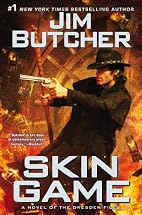
85) Skin Game / Jim Butcher
The Harry Dresden series has been in the Omeday Swamp for ages. I read the first and liked it, but never got any further. This is the fifteenth, and leans heavily on What Has Gone Before. Harry finds himself conscripted into helping an old enemy break into a treasure vault owned by the Greek good Hades.
Sonds like it should be a fun entry in a fun series, and for all I know it is. But I am not familiar with the fourteen volumes of backstory, to which there are frequent and important references. All I saw was a heist novel that goes almost three hundred pages without a heist. Harry spends the first two-thirds runs around spinning plates that were put in motion books ago and will doubtless be revisited in the next. Occasionally the heist plot is advanced by this maintenance of longer story arcs, but the volume in hand is obviously not Butcher's aim. Every once in a while there's a battle or a menacing gaze or a pissing contest, and Hooray for explosions!, but I grew increasingly impatient with the meandering narrative and the rambling style.
The final third, in which they finally break into the vault, is not bad. But it takes too long to get there. And even in the resolution it's not clear what has been gained or lost except that it'll all be Really Important sometime soon in Butcher's longer game.
I still intend to read the entire series someday, and I am hoping Skin Game will improve with context upon a second reading. But best novel of the year it is not.
The first is a huge disappointment.
85) Skin Game / Jim Butcher
The Harry Dresden series has been in the Omeday Swamp for ages. I read the first and liked it, but never got any further. This is the fifteenth, and leans heavily on What Has Gone Before. Harry finds himself conscripted into helping an old enemy break into a treasure vault owned by the Greek good Hades.
Sonds like it should be a fun entry in a fun series, and for all I know it is. But I am not familiar with the fourteen volumes of backstory, to which there are frequent and important references. All I saw was a heist novel that goes almost three hundred pages without a heist. Harry spends the first two-thirds runs around spinning plates that were put in motion books ago and will doubtless be revisited in the next. Occasionally the heist plot is advanced by this maintenance of longer story arcs, but the volume in hand is obviously not Butcher's aim. Every once in a while there's a battle or a menacing gaze or a pissing contest, and Hooray for explosions!, but I grew increasingly impatient with the meandering narrative and the rambling style.
The final third, in which they finally break into the vault, is not bad. But it takes too long to get there. And even in the resolution it's not clear what has been gained or lost except that it'll all be Really Important sometime soon in Butcher's longer game.
I still intend to read the entire series someday, and I am hoping Skin Game will improve with context upon a second reading. But best novel of the year it is not.
213swynn
86) The Crisis / Winston Churchill
This was the bestselling American novel in 1901, a historical romance set mostly in Civil-War-era St. Louis, where Southern and Northern sympathizers met and mixed like the Mississippi and Missouri Rivers. It's the story of Stephen Brice, a young Bostonian seeking his fortune out west. His first day in the city he passes a slave auction and is so revolted by the spectacle that he spends his entire savings so that he may set at least one captive free. This act brings him to the attention of the curmudgeonly abolitionist Judge Whipple, who takes Brice into his office as a law clerk.
It also brings Brice to the attention of Virginia "Jinny" Carvel, the excruciatingly beautiful daughter of southern-sympathizing merchant Comyn Carvel. Virginia's opinion of Brice is less favorable, since she had wanted the slave Brice purchased for her very own and how *dare* that Yankee come and buy her away! Why the very nerve, she'll hate him forever! Hate him! Forever!
Thus are established the historical and romantic threads. Judge Whipple arranges for Brice to meet up-and-coming politician Abraham Lincoln, whose easy manner and captivating rhetoric converts Brice to the "Black Republican" cause. Brice becomes writer and speaker for the new party, meets historical personalities, and eventually joins the Union Army to fight with Sherman at Vicksburg and in his March to the Sea. (This is a very different Sherman from Margaret Mitchell's-- Churchill's Sherman is a kind old teddy bear of a general, known to his men as "Uncle Billy.")
As for Jinny Carvel, she hates Brice with the kind of unquenchable hatred that can only end in marriage. In historical romances, anyway.
It hasn't aged well, and I mean that beyond the racial attitudes and language which are probably as historically accurate as they are currently offensive. They must have been somewhat offensive even in 1901, since Churchill apologizes for strong language in an afterword. It would have been nice if Churchill had balanced theracist historically-accurate language with one or more strong black characters, but all we get are happy slaves who speak thick dialect for comic relief.
The prose tends to the effusive and overwrought, with the author frequently breaking into monologue or addressing characters directly. There is also a heavy-handed Lincoln-as-Christ trope, with frequent references to the "cross he bears" and his "crown of thorns." Brice's describes his first meeting with Lincoln as being "born again." Subtlety is not one of Churchill's strengths.
And the romance, ugh. Jinny's chief characteristic is her physical beauty: we are constantly reminded that she is the most beautiful girl from near and far, but I found her unappealingly dull. There's a brief effort to redeem her shallowness by making her take up sewing and nursing during the war, but Churchill's heart isn't really in it and Jinny's no Scarlet O'Hara.
And yet. The St. Louis setting is vivid, and when Churchill has his characters caught up in historic events rather than their silly personal drama he can write a compelling scene. Churchill was born in raised in St. Louis -- too late to remember the events he describes, but early enough to have been raised by people who lived through the war.
This was the bestselling American novel in 1901, a historical romance set mostly in Civil-War-era St. Louis, where Southern and Northern sympathizers met and mixed like the Mississippi and Missouri Rivers. It's the story of Stephen Brice, a young Bostonian seeking his fortune out west. His first day in the city he passes a slave auction and is so revolted by the spectacle that he spends his entire savings so that he may set at least one captive free. This act brings him to the attention of the curmudgeonly abolitionist Judge Whipple, who takes Brice into his office as a law clerk.
It also brings Brice to the attention of Virginia "Jinny" Carvel, the excruciatingly beautiful daughter of southern-sympathizing merchant Comyn Carvel. Virginia's opinion of Brice is less favorable, since she had wanted the slave Brice purchased for her very own and how *dare* that Yankee come and buy her away! Why the very nerve, she'll hate him forever! Hate him! Forever!
Thus are established the historical and romantic threads. Judge Whipple arranges for Brice to meet up-and-coming politician Abraham Lincoln, whose easy manner and captivating rhetoric converts Brice to the "Black Republican" cause. Brice becomes writer and speaker for the new party, meets historical personalities, and eventually joins the Union Army to fight with Sherman at Vicksburg and in his March to the Sea. (This is a very different Sherman from Margaret Mitchell's-- Churchill's Sherman is a kind old teddy bear of a general, known to his men as "Uncle Billy.")
As for Jinny Carvel, she hates Brice with the kind of unquenchable hatred that can only end in marriage. In historical romances, anyway.
It hasn't aged well, and I mean that beyond the racial attitudes and language which are probably as historically accurate as they are currently offensive. They must have been somewhat offensive even in 1901, since Churchill apologizes for strong language in an afterword. It would have been nice if Churchill had balanced the
The prose tends to the effusive and overwrought, with the author frequently breaking into monologue or addressing characters directly. There is also a heavy-handed Lincoln-as-Christ trope, with frequent references to the "cross he bears" and his "crown of thorns." Brice's describes his first meeting with Lincoln as being "born again." Subtlety is not one of Churchill's strengths.
And the romance, ugh. Jinny's chief characteristic is her physical beauty: we are constantly reminded that she is the most beautiful girl from near and far, but I found her unappealingly dull. There's a brief effort to redeem her shallowness by making her take up sewing and nursing during the war, but Churchill's heart isn't really in it and Jinny's no Scarlet O'Hara.
And yet. The St. Louis setting is vivid, and when Churchill has his characters caught up in historic events rather than their silly personal drama he can write a compelling scene. Churchill was born in raised in St. Louis -- too late to remember the events he describes, but early enough to have been raised by people who lived through the war.
214swynn

87) The Dark Between the Stars / Kevin J. Anderson
Last, longest, and least appealing of the Hugo nominees for best novel. This one is ruined by disorganization, lack of a coherent story, and a complete absence of narrative momentum. It's almost 700 hundred pages divided into 139 chapters, distributed among about 30 different viewpoint characters. Every once in a while something interesting happens, after which you have to wait ten more chapters before finding out what happens next. If you're lucky, someone in the intervening chapters will do something interesting, but they're at least as likely just to eat dinner, or go to a show, or talk about brewing unpalatable beer. This continues into the next book no doubt, but it will do so without me.
215qebo
>214 swynn: I think I'll skip the first installment too.
216rosalita
>214 swynn: That sounds fairly dreadful. I'm happy to give it a pass. I wish I could come up with as catchy a name for these sorts of wave-offs as we have for book bullets. They are just as valuable to me, maybe more!
217swynn
>215 qebo: Strictly appealing this is the first book of a trilogy. But the trilogy follows a seven-book series, and there are frequent references to events of that saga. It may be that familiarity with the preceding series would make some of he plodding chapters more rewarding but the thought of seven books like this one ... yeah, I'm calling them skippable too.
>216 rosalita: "Wave-off" works for me. Glad to be of service!
>216 rosalita: "Wave-off" works for me. Glad to be of service!
219rosalita
>218 lyzard: Bingo! Deflection is perfect. Well done, Liz.

226swynn

88) The Emperor's Blades / Brian Stavely
Date: 2013
Emperor Sanlitun is dead, assassinated by hands unknown but almost certainly on the orders of High Priest Uinian, whom Sanlitun had gone to meet in secret, inexplicably without his imperial bodyguards. With Sanlitun's death the plots and forces aimed at him turn their attention to his children, who are scattered around the empire. Kaden, the eldest son and heir, studies a fantasy sort of Zen Buddhism in remote mounrains to the northeast. Valyn trains with bird-riding fantasy marines on an island base. And Adare, Sanlitun's only daughter, remains at court where she serves as finance minister.
Kaden, as heir, faces the most danger but in his remote location he is likely to fall victim to an assassin before he even realizes the danger. Valyn wants more than anything to warm him, but he must first finish training-- even as someone is trying to kill him. And Adare must navigate dicey politics to bring Uinian to justice.
Now *this* is how you start a series: engaging characters, suspense and peril, vivid language, and good world-building. It builds to a satisfying climax, leaving teasers for the next book but no cliffhangers and none of this "Well there's five hundred pages I guess I can stop now" nonsense.
The second book was published this spring. I'll read it when my name comes up in the library holds queue.
The excellent cover is by Richard Anderson.
227ronincats
So...it looks like you are recommending this fantasy series? Drat!
ETA already on the wishlist, but I didn't make a note as to who put it there.
ETA already on the wishlist, but I didn't make a note as to who put it there.
228swynn
>227 ronincats: Yep, recommended for people who like that sort of thing. I'm pretty sure you qualify, Roni!
229swynn
Treadmill reading:
89) The Family Tree / John Everson
Date: 2014
Short horror novel about a city guy who inherits an inn in rural Virginia. The inn is of unique architecture, having been built around an old tree. The inn's staff have a secondary business tapping and distilling the tree's sap, which has healing properties. The deal is all but closed when women in the inn throw themselves at the lucky heir. 'Course, this is a horror novel so you know sooner or later things will take a nasty turn. Sure enough, they do.
It's okay.The plotting is okay, but the writing is nothing special and the characters are flat. It passed the time well enough in the gym.
Cover is by Scott Carpenter.
89) The Family Tree / John Everson
Date: 2014
Short horror novel about a city guy who inherits an inn in rural Virginia. The inn is of unique architecture, having been built around an old tree. The inn's staff have a secondary business tapping and distilling the tree's sap, which has healing properties. The deal is all but closed when women in the inn throw themselves at the lucky heir. 'Course, this is a horror novel so you know sooner or later things will take a nasty turn. Sure enough, they do.
It's okay.The plotting is okay, but the writing is nothing special and the characters are flat. It passed the time well enough in the gym.
Cover is by Scott Carpenter.
231swynn
>230 drneutron: It *is* good, isn't it? I'm glad to hear it's not just my twisted aesthetics.
Since posting my thoughts, I've looked at reactions by others posting Amazon reviews or writing horror blogs, and I see a lot of enthusiasm for the book. Apparently John Everson is a go-to guy for "erotic horror," and fans of that subgenre find seem to find his work -- including this one -- top-notch.
With that in mind, I'd replace my "okay" evaluation with "not my cuppa." If "erotic horror" is one's thing, or if it sounds like it might be, give it a try despite my lukewarm response.
Since posting my thoughts, I've looked at reactions by others posting Amazon reviews or writing horror blogs, and I see a lot of enthusiasm for the book. Apparently John Everson is a go-to guy for "erotic horror," and fans of that subgenre find seem to find his work -- including this one -- top-notch.
With that in mind, I'd replace my "okay" evaluation with "not my cuppa." If "erotic horror" is one's thing, or if it sounds like it might be, give it a try despite my lukewarm response.
233swynn
>232 ronincats: Yeah. I'm not looking for more, either.
234swynn
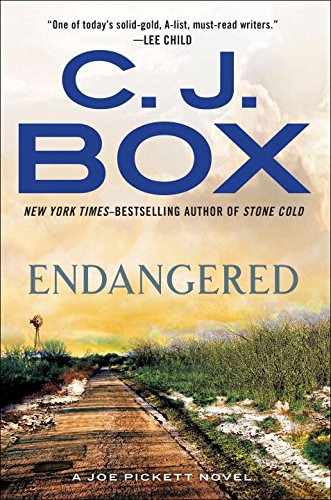
90) Endangered / C. J. Box
Date: 2015
Fifteenth in Box's series about Wyoming game warden Joe Pickett. In the last entry, Joe's middle daughter April ran off with a bad-boy rodeo star. In this one she turns up beaten and unconscious beside a rural road. Joe suspects the boyfriend, but he's been recuperating from a rodeo injury, in no condition to be commiting domestic assault. Meanwile, somebody has killed an entire flock of endangered birds, summoning federal investigators to Joe's district.
This is the sort of Joe Pickett book I like, focusing on the Pickett family, game-warden woes, and realistic conflicts. No super-assassins' clubs or secret agent missions, just plain Joe. It suits the character and the series. There are a couple of points that strain credulity, but nothing like what's filled the last few books. Recommended.
235swynn
So this weekend my brother visited from Minnesota, with his family -- including two sons, ages 11 and 12. With a Saturday morning spent indoors and brotherly tension building, I took my younger nephew on a walk on an errand to the store around the corner -- a walk of maybe half a mile. We had a nice chat en route, but as we neared the store, the wheels started turning ... (could he hint his uncle into a bag of chips or a soda?)
He: Here we are walking all the way to the store for a can of beans ... and what do we get out of it?
I: Hm. Well, there's the fresh air, the exercise, the conversation, catching up with what each other is doing.
He: I know! And what do we get out of it? Nothing!
(I'm a bad uncle, but all he got was the air, the exercise, and the company.)
He: Here we are walking all the way to the store for a can of beans ... and what do we get out of it?
I: Hm. Well, there's the fresh air, the exercise, the conversation, catching up with what each other is doing.
He: I know! And what do we get out of it? Nothing!
(I'm a bad uncle, but all he got was the air, the exercise, and the company.)
236lyzard
I think you're a very good uncle. :)
I have added The Virginian to TIOLI #6, the Bingo challenge ('turned into a movie', since it's been filmed about half a dozen times) - hope to see you there!
I have added The Virginian to TIOLI #6, the Bingo challenge ('turned into a movie', since it's been filmed about half a dozen times) - hope to see you there!
237swynn
>236 lyzard:, Thanks, Liz! I'll join you ... I may even try to watch one of those adaptations. My library has a copy of the 1914 version directed by Cecil B. DeMille.
238swynn
Hooray for doorprizes! At a "Ready or not for fall semester" event I won a couple of books published by the university press associated with my employer:
Unguarded Moments by Larry E. Neal & Anita Neal Harrison
What Lurks Beyond by Jason Offutt
The first is the memoir of a former guard at the Missouri State Penitentiary; the second, a collection of spooky "true" stories collected from within a 100-mile radius of the author's home in northwest Missouri.
Unguarded Moments by Larry E. Neal & Anita Neal Harrison
What Lurks Beyond by Jason Offutt
The first is the memoir of a former guard at the Missouri State Penitentiary; the second, a collection of spooky "true" stories collected from within a 100-mile radius of the author's home in northwest Missouri.
239lyzard
>237 swynn:
Good grief! Although the most famous version is the one from 1929, which made Gary Cooper a star.
BTW, did you ever get around to watching Quo Vadis?
Congrats on your doorprizes!
Good grief! Although the most famous version is the one from 1929, which made Gary Cooper a star.
BTW, did you ever get around to watching Quo Vadis?
Congrats on your doorprizes!
240swynn
>239 lyzard: I did see Quo Vadis, which I mostly enjoyed, though the romance was a bit tedious -- in keeping with the book, I suppose. Also as in the book, Petronius has all the best lines. Peter Ustinov was a hoot of course-- he'd never get away that performance today, would he?
The 1914 version of The Virginian is the only film version we have. I went looking for the 1929 version, and it doesn't even seem to be available on DVD.
The 1914 version of The Virginian is the only film version we have. I went looking for the 1929 version, and it doesn't even seem to be available on DVD.
241lyzard
I did see Quo Vadis
So you now appreciate why the ending of the book was such a surprise to me - it's not often they change the story in that direction. :)
Peter Ustinov certainly is a hoot, but I think Leo Genn is just perfect. And for all the film's emphasis on the romance, it's interesting that they had the sense to leave Nero and Petronius intact.
it doesn't even seem to be available on DVD
That's very surprising to hear.
So you now appreciate why the ending of the book was such a surprise to me - it's not often they change the story in that direction. :)
Peter Ustinov certainly is a hoot, but I think Leo Genn is just perfect. And for all the film's emphasis on the romance, it's interesting that they had the sense to leave Nero and Petronius intact.
it doesn't even seem to be available on DVD
That's very surprising to hear.
242swynn
Coming from the other direction (book to film), I found the ending odd, but I think the different endings worked in their respective contexts. I assume we're talking about Acte's involvement in Nero's death. I can't quite see the book's Acte doing that, and the ending had me going to the text to see whether I'd missed something important. I hadn't. Why make the change? To avoid ambiguity about the motives of some minor character? Just because Love?
243swynn

91) Date Night on Union Station / E.M. Foner
Date: 2014
Kelly Frank is Earth's representative on Union Station, where she deals with diplomats and merchants representing all manner of nonhuman species, including the AIs in charge of the station. Smugglers, slavers, arms dealers ... it's all in a day's work. Plus her mother pesters her about her love life, so when the AIs launch an on-station dating service and she's gifted some free dates, Kelly decides to give it a try.
It's light and short, and mostly fun. Kelly's dates are mostly failures, intended to be humorous though they mostly fell flat for me. The author seems as interested in economics as in romance, and his efforts to work out the economic implications of his scenarios were more interesting than the comedy. Others' mileage may vary -- apparently this was well enough received that the author expanded it into a series of (so far) seven books. I probably won't read more.
I picked this up as a Kindle freebie, and read it this month for countrylife's TIOLI challenge to "Read a book with a title which contains a word that makes you think of marriage" -- I figure "union" counts.
I'm not crazy about the cover but apparently somebody is. Subsequent entries in the series have the same image with different color palettes.
244swynn
... but it turns out the Gary Cooper version is available on YouTube:
https://www.youtube.com/watch?v=1j3omWoswek
DVDs. *So* last decade.
https://www.youtube.com/watch?v=1j3omWoswek
DVDs. *So* last decade.
245lyzard
>242 swynn:
Well, no, I meantthat the film ends with Vicinius and Lygia going to their Christian glory in the arena, while the book ends with them moving to his villa in Naples and living happily ever after. Reading, I kept waiting for one last terrible thing to happen to them and was very bemused when it didn't. "Oh. Oh!" :D
If that's on YouTube, it's there illegally. That's from Paramount, and they're very tight-fisted about that sort of thing.
DVDs. *So* last decade.
I'm sure you won't be surprised, given my reading tastes, that I'm still living in the past in this respect too. (The push for streaming / downloading presupposes that (i) what you want to watch is available that way, and (ii) you have an internet connection that can support it. Alas, in my case, "no" and "no".)
Well, no, I meant
If that's on YouTube, it's there illegally. That's from Paramount, and they're very tight-fisted about that sort of thing.
DVDs. *So* last decade.
I'm sure you won't be surprised, given my reading tastes, that I'm still living in the past in this respect too. (The push for streaming / downloading presupposes that (i) what you want to watch is available that way, and (ii) you have an internet connection that can support it. Alas, in my case, "no" and "no".)
246swynn
>245 lyzard: D'oh! Count on me to miss the obvious and focus on the trivial. I guess when I said our romantic leads aren't all that memorable I meant it more than I knew. But for some reason Nero's death sticks with me.
As for video format: instinctively I prefer physical formats. But I am yielding on the streaming video front, partly because any shelf not full of DVDs may be filled with books.
As for video format: instinctively I prefer physical formats. But I am yielding on the streaming video front, partly because any shelf not full of DVDs may be filled with books.
247swynn

92) Sharcano / Jose Prendes
Date: 2014
Tagline: The jaws of Hell are about to erupt!
Supervolcanoes erupt all over the world, and from the hellish magma come leaping ... lava sharks! That's pretty much it. Would I recommend it? Well: Lava Sharks! (Also: Bigfoot! Area 51! Satanists!) That either recommends itself or it doesn't.
For me it went on a little too long after the author ran out of apocalyptic adjectives for "lava shark," but it delivers on its ridiculous SyFy-movie premise. I think I've mentioned my inexplicable weakness for those cinematic
I read this together with my son, which required frequent ad hoc censorship. Unedited, it would be rated R for language and cartoonish violence. He enjoyed the phrase "lava sharks," but slept through the talky bits.
Liz, I'm counting this for your TIOLI challenge to read a work with a character from folklore, on the strength of Bigfoot's cameo. (I'm hoping he'll star in the sequel, which I imagine titled: Sasquano!)
248lyzard
I'll allow it! And if they get it written and published fast enough - and how long could it possibly take? - I'll allow Sasquano, too!
(My brother informs me that, oddly enough, my usually mainstream sister-in-law has developed a soft spot for what *I'm* not ashamed to call these cinematic masterpieces, though she prefers the apocalyptic weather ones.)
(My brother informs me that, oddly enough, my usually mainstream sister-in-law has developed a soft spot for what *I'm* not ashamed to call these cinematic masterpieces, though she prefers the apocalyptic weather ones.)
249qebo
>247 swynn: That either recommends itself or it doesn't.
I'll go for doesn't. :-) But you knew that.
I'll go for doesn't. :-) But you knew that.
250swynn
>250 swynn: I figured. I expect that my reaction is in the minority.
251swynn
>248 lyzard: I'm surprised at how broad the audience is for those low-budget movies. My son is also a big fan of the apocalyptic weather movies. My wife thinks we're both crazy, and quietly finds another room when "Sharknado" comes on.
252ronincats
Watching the Hugo ceremony online, and am scrolling through your reviews to see how they match up. Thanks again for laying out your reactions to all those stories and novellas.
253swynn
>253 swynn: I watched the ceremony too. Weren't David Gerrold and Tananarive Due a hoot? And Connie.Willis was just terrific. Bob Silverberg too. And the Dalek ...Come to think of it, the awards ceremony was more entertaining than some of the nominees.
Overall I'm happy with the results --hooray for The Three Body Problem! I'm disappointed at "No Award" for long-form editor: I voted for Sheila Gilbert, but either she or Toni Weisskopf would have been more than deserving. I also voted for "The Hot Equations" in Best Related Work, and it did not deserve to lose to nothing at all. But last night was largely about repudiating certain tactics, and one hopes the message was clear.
Overall I'm happy with the results --hooray for The Three Body Problem! I'm disappointed at "No Award" for long-form editor: I voted for Sheila Gilbert, but either she or Toni Weisskopf would have been more than deserving. I also voted for "The Hot Equations" in Best Related Work, and it did not deserve to lose to nothing at all. But last night was largely about repudiating certain tactics, and one hopes the message was clear.
255swynn
Hi, Julia!
It occurs to me that some other visitors might appreciate a summary.
Since the Hugo nominees were announced, the Sad Puppies controversy exploded in fandom's little corner of the Internet. Words were thrown back and forth: "cheater," "bully," "racist," "pervert," "Nazi," and worse. Much worse. Bad behavior was not limited to either side. It's been wild.
To the extent that there's been a silver lining, it's that "supporting memberships" -- which confer voting rights -- exploded. I was one of several thousand who ponied up the $40 to vote. But the mystery was: who were all those people with new memberships? Were they Sad Puppies? Anti-Puppy? Neutral fans drawn by the controversy? Were they Jim Butcher fans trying to buy their fave author a Hugo? Anecdotally, they were a little of everything: but which ones would decide the outcome?
Hugos were awarded Saturday and all was revealed: the new members overwhelmingly voted against the Puppy slate. The only Puppy nominee to win an award was "Guardians of the Galaxy" for Best Dramatic Presentation. In all other categories, voters chose "No Award" over any Puppy nominee.
Here are the results.
BEST NOVEL
The Three-Body Problemby Ciuxin Liu (Yay!)
BEST NOVELLA: No Award
(I had Tom Kratman's "Big Boys Don't Cry" at the top, and originally above No Award. Then a friend pointed out that the text included vicious in-joke digs at other authors. With that knowledge I dropped it below No Award because ... damn.)
BEST NOVELETTE: The Day the World Turned Upside Down by Thomas Olde Heuvelt
(This was the only non-Puppy nominee in this category. I preferred, and voted for, Rajnar Vajra's "The Triple Sun.")
BEST SHORT STORY: No Award
BEST RELATED WORK: No Award
(I thought "The hot equations" deserved an award, but oh well.)
BEST GRAPHIC STORY: Ms. Marvel Vol. 1 (Yay!)
BEST DRAMATIC PRESENTATION/LONG FORM: Guardians of the Galaxy
(I preferred "Interstellar," but GotG was terrific fun.)
BEST DRAMATIC PRESENTATION/SHORT FORM: "Orphan Black: By Means Which Have Never Yet Been Tried"
(I did not vote in this category, not having seen most nominees.)
BEST EDITOR/SHORT FORM: No Award
BEST EDITOR/LONG FORM: No Award
(This was the most disappointing result. Sheila Gilbert and Toni Weisskopf work their asses off, produce good work across the political and aesthetic spectra, kept out of the mudslinging, and deserve the recognition Puppy-nominated or not.)
BEST PROFESSIONAL ARTIST: Julie Dillon
BEST SEMIPROZINE: Lightspeed Magazine
BEST FANZINE: Journey Planet
BEST FANCAST: Galactic Suburbia Podcast
BEST FAN WRITER: Laura J. Mixon
BEST FAN ARTIST: Elizabeth Leggett
CAMPBELL AWARD FOR BEST NEW WRITER: Wesley Chu
(I "No awarded" this category, since I don't understand the appeal of Chu's Tau series; nor did I find much appealing in the other nominees. I'm glad that Chu won, though, because his acceptance speech -- and announcement of his candidacy for the Republican nomination for President of the United States -- was a highlight of the evening.)
It occurs to me that some other visitors might appreciate a summary.
Since the Hugo nominees were announced, the Sad Puppies controversy exploded in fandom's little corner of the Internet. Words were thrown back and forth: "cheater," "bully," "racist," "pervert," "Nazi," and worse. Much worse. Bad behavior was not limited to either side. It's been wild.
To the extent that there's been a silver lining, it's that "supporting memberships" -- which confer voting rights -- exploded. I was one of several thousand who ponied up the $40 to vote. But the mystery was: who were all those people with new memberships? Were they Sad Puppies? Anti-Puppy? Neutral fans drawn by the controversy? Were they Jim Butcher fans trying to buy their fave author a Hugo? Anecdotally, they were a little of everything: but which ones would decide the outcome?
Hugos were awarded Saturday and all was revealed: the new members overwhelmingly voted against the Puppy slate. The only Puppy nominee to win an award was "Guardians of the Galaxy" for Best Dramatic Presentation. In all other categories, voters chose "No Award" over any Puppy nominee.
Here are the results.
BEST NOVEL
The Three-Body Problemby Ciuxin Liu (Yay!)
BEST NOVELLA: No Award
(I had Tom Kratman's "Big Boys Don't Cry" at the top, and originally above No Award. Then a friend pointed out that the text included vicious in-joke digs at other authors. With that knowledge I dropped it below No Award because ... damn.)
BEST NOVELETTE: The Day the World Turned Upside Down by Thomas Olde Heuvelt
(This was the only non-Puppy nominee in this category. I preferred, and voted for, Rajnar Vajra's "The Triple Sun.")
BEST SHORT STORY: No Award
BEST RELATED WORK: No Award
(I thought "The hot equations" deserved an award, but oh well.)
BEST GRAPHIC STORY: Ms. Marvel Vol. 1 (Yay!)
BEST DRAMATIC PRESENTATION/LONG FORM: Guardians of the Galaxy
(I preferred "Interstellar," but GotG was terrific fun.)
BEST DRAMATIC PRESENTATION/SHORT FORM: "Orphan Black: By Means Which Have Never Yet Been Tried"
(I did not vote in this category, not having seen most nominees.)
BEST EDITOR/SHORT FORM: No Award
BEST EDITOR/LONG FORM: No Award
(This was the most disappointing result. Sheila Gilbert and Toni Weisskopf work their asses off, produce good work across the political and aesthetic spectra, kept out of the mudslinging, and deserve the recognition Puppy-nominated or not.)
BEST PROFESSIONAL ARTIST: Julie Dillon
BEST SEMIPROZINE: Lightspeed Magazine
BEST FANZINE: Journey Planet
BEST FANCAST: Galactic Suburbia Podcast
BEST FAN WRITER: Laura J. Mixon
BEST FAN ARTIST: Elizabeth Leggett
CAMPBELL AWARD FOR BEST NEW WRITER: Wesley Chu
(I "No awarded" this category, since I don't understand the appeal of Chu's Tau series; nor did I find much appealing in the other nominees. I'm glad that Chu won, though, because his acceptance speech -- and announcement of his candidacy for the Republican nomination for President of the United States -- was a highlight of the evening.)
256swynn
I'll start a new thread in the morning. Tonight it's just a quick report on this chunkster:
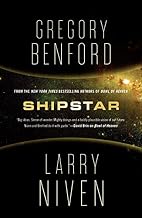
93) Shipstar / Gregory Benford and Larry Niven
Conclusion to the story begun in Bowl of Heaven, about a ship of human colonists en route to a distant star, who stumble across an unbelievable artifact: a bowl-shaped spacecraft using a harnessed star for propulsion. As in the first book, the artifact is the most appealing character, but if you like science fiction for grand scope and breathtaking ideas, these books have 'em.
93) Shipstar / Gregory Benford and Larry Niven
Conclusion to the story begun in Bowl of Heaven, about a ship of human colonists en route to a distant star, who stumble across an unbelievable artifact: a bowl-shaped spacecraft using a harnessed star for propulsion. As in the first book, the artifact is the most appealing character, but if you like science fiction for grand scope and breathtaking ideas, these books have 'em.
This topic was continued by Swynn reads and runs in 2015: Second lap.

