lyzard's list: once more unto the obscurity, dear friends - Part One
This topic was continued by lyzard's list: once more unto the obscurity, dear friends - Part Two.
Talk 75 Books Challenge for 2016
Join LibraryThing to post.
This topic is currently marked as "dormant"—the last message is more than 90 days old. You can revive it by posting a reply.
1lyzard
Owls of Australia
My thread-toppers this year will be owls, which are another of my favourite animals.
The barn owl is the world's most widely distributed owl, with subspecies found in every continent but Antarctica. They are found all over Australia in all climactic conditions and amongst all types of vegetation, but prefer open heathland and lightly wooded forest. They are welcomed around farms where they help keep down the rodent population. Barn owls have no defined breeding season, but lay eggs at any time according to the conditions and food availability. The female incubates the eggs, while both parents care for the chicks, usually 3 - 6 per clutch.


My thread-toppers this year will be owls, which are another of my favourite animals.
The barn owl is the world's most widely distributed owl, with subspecies found in every continent but Antarctica. They are found all over Australia in all climactic conditions and amongst all types of vegetation, but prefer open heathland and lightly wooded forest. They are welcomed around farms where they help keep down the rodent population. Barn owls have no defined breeding season, but lay eggs at any time according to the conditions and food availability. The female incubates the eggs, while both parents care for the chicks, usually 3 - 6 per clutch.


2lyzard
Welcome to 2016!
Hello, all - I'm Liz, and this will be my sixth full year in the 75 Books Challenge, after joining LT midway through 2010.
I have several main components to my reading, which tends to the old and the obscure. Although I rarely participate in general reading challenges around LT (with the exception of the monthly Take It Or Leave It (TIOLI) challenge), I have set myself a number of personal challenges which direct my reading, and which you will find listed in a post below.
I have a blog, A Course Of Steady Reading, whose main thrust is an examination of the development of the English novel from the 1660s onwards. Other topics include the development of Australian fiction, early crime fiction, and general 18th and 19th century literature. I am also examining in depth the works of several authors, with a current focus upon Mary Elizabeth Braddon. Last year I was not able to give as much time to blogging as I would like, and getting back on track in that respect is one of my hopes for 2016.
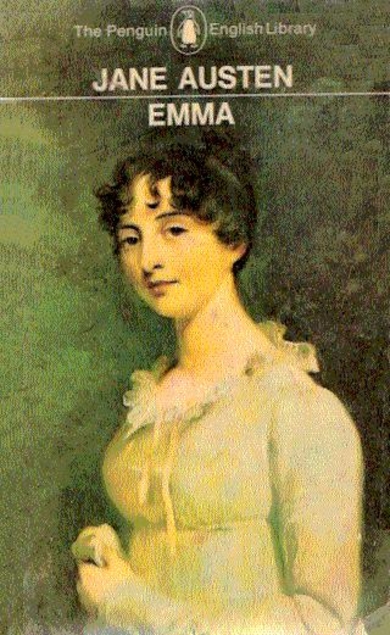
Classic literature is another of my passions and I have been privileged to lead a number of group and tutored reads of various important 18th and 19th century novels. A number of these reads are already in planning for 2016, including a tutored read of Jane Austen's Emma inFebruaryApril!, and of Anthony Trollope's The Prime Minister in March. Everyone is very welcome to join these reads.
Last year I initiated a personal reading challenge looking at America's #1 best-selling novel of the year, from 1895 onwards, when figures began to be kept. This was a fun way of discovering the most popular works of about 100 years ago, and I will be resuming this challenge this year.
My general reading has lately been dominated by Golden Age mysteries. Related to this, I am working my way chronologically through the mysteries of Agatha Christie.
In the same way, I am reading the historical romances of Georgette Heyer.
Otherwise, I am trying to read more works released by Virago and Persephone, while another personal reading project is the literature of 1932.
As indicated by this outline, I don't read much contemporary fiction and am consequently quite often out of the conversational loop. For this reason I get very excited when visitors do drop in for a chat! If anything at all on this thread catches your eye, please do stop by and say "Hi!"
Hello, all - I'm Liz, and this will be my sixth full year in the 75 Books Challenge, after joining LT midway through 2010.
I have several main components to my reading, which tends to the old and the obscure. Although I rarely participate in general reading challenges around LT (with the exception of the monthly Take It Or Leave It (TIOLI) challenge), I have set myself a number of personal challenges which direct my reading, and which you will find listed in a post below.
I have a blog, A Course Of Steady Reading, whose main thrust is an examination of the development of the English novel from the 1660s onwards. Other topics include the development of Australian fiction, early crime fiction, and general 18th and 19th century literature. I am also examining in depth the works of several authors, with a current focus upon Mary Elizabeth Braddon. Last year I was not able to give as much time to blogging as I would like, and getting back on track in that respect is one of my hopes for 2016.
Classic literature is another of my passions and I have been privileged to lead a number of group and tutored reads of various important 18th and 19th century novels. A number of these reads are already in planning for 2016, including a tutored read of Jane Austen's Emma in
Last year I initiated a personal reading challenge looking at America's #1 best-selling novel of the year, from 1895 onwards, when figures began to be kept. This was a fun way of discovering the most popular works of about 100 years ago, and I will be resuming this challenge this year.
My general reading has lately been dominated by Golden Age mysteries. Related to this, I am working my way chronologically through the mysteries of Agatha Christie.
In the same way, I am reading the historical romances of Georgette Heyer.
Otherwise, I am trying to read more works released by Virago and Persephone, while another personal reading project is the literature of 1932.
As indicated by this outline, I don't read much contemporary fiction and am consequently quite often out of the conversational loop. For this reason I get very excited when visitors do drop in for a chat! If anything at all on this thread catches your eye, please do stop by and say "Hi!"
3lyzard

*************************************************
Currently reading:

Mrs Tim Carries On by D. E. Stevenson (1941)

All This, And Heaven Too by Rachel Field (1938)
4lyzard
Reading projects 2016:
Blog reads:
Chronobibliography: Lisarda; or, The Travels Of Love And Jealousy
Authors In Depth: Lady Lisle by Mary Elizabeth Braddon
Reading Roulette: Grasp Your Nettle by Eliza Lynn Linton / The Holy Lover by Marie Conway Oemler
Australian fiction: The Hermit In Van Diemen's Land by Henry Savery
Gothic novel timeline: Miscellaneous Pieces, In Prose by John and Anna Laetitia Aikin
Early crime fiction: Hargrave by Frances Trollope / The Mysteries Of London by Paul Feval
Related reading:
Group / tutored reads:
Upcoming: The Prime Minister by Anthony Trollope
Upcoming: Emma by Jane Austen
Upcoming: Marriage by Susan Ferrier
Upcoming: Camilla by Fanny Burney
The evolution of detective fiction:
Next up: The Mysteries Of London by Paul Feval (R. Stephenson, translator)
Virago chronological reading project:
Next up: Marriage by Susan Ferrier
America's best-selling novels (1895 - ????):
Next up: Mr Crewe's Career by Winston Churchill
Agatha Christie mysteries in chronological order:
Next up: Dumb Witness
Georgette Heyer historical romances in chronological order:
Next up: Sylvester; or, The Wicked Uncle
Random reading 1940 - 1969:
Next up: Jenny Devlin by Sophie Kerr / Amberwell by D. E. Stevenson
Potential decommission:
Next up: Strange Wine by Harlen Ellison
Possible future reading projects:
- Nobel Prize winners who won for fiction
- Daily Telegraph's 100 Best Novels, 1899
- 1898 C.K. Shorter List of Best 100 Novels
- James Tait Black Memorial Prize
- Berkeley "Books Of The Century"
- Mystery League books (and their covers)
- Collins White Circle Crime Club / Green Penguins
- Dell paperbacks
Blog reads:
Chronobibliography: Lisarda; or, The Travels Of Love And Jealousy
Authors In Depth: Lady Lisle by Mary Elizabeth Braddon
Reading Roulette: Grasp Your Nettle by Eliza Lynn Linton / The Holy Lover by Marie Conway Oemler
Australian fiction: The Hermit In Van Diemen's Land by Henry Savery
Gothic novel timeline: Miscellaneous Pieces, In Prose by John and Anna Laetitia Aikin
Early crime fiction: Hargrave by Frances Trollope / The Mysteries Of London by Paul Feval
Related reading:
Group / tutored reads:
Upcoming: The Prime Minister by Anthony Trollope
Upcoming: Emma by Jane Austen
Upcoming: Marriage by Susan Ferrier
Upcoming: Camilla by Fanny Burney
The evolution of detective fiction:
Next up: The Mysteries Of London by Paul Feval (R. Stephenson, translator)
Virago chronological reading project:
Next up: Marriage by Susan Ferrier
America's best-selling novels (1895 - ????):
Next up: Mr Crewe's Career by Winston Churchill
Agatha Christie mysteries in chronological order:
Next up: Dumb Witness
Georgette Heyer historical romances in chronological order:
Next up: Sylvester; or, The Wicked Uncle
Random reading 1940 - 1969:
Next up: Jenny Devlin by Sophie Kerr / Amberwell by D. E. Stevenson
Potential decommission:
Next up: Strange Wine by Harlen Ellison
Possible future reading projects:
- Nobel Prize winners who won for fiction
- Daily Telegraph's 100 Best Novels, 1899
- 1898 C.K. Shorter List of Best 100 Novels
- James Tait Black Memorial Prize
- Berkeley "Books Of The Century"
- Mystery League books (and their covers)
- Collins White Circle Crime Club / Green Penguins
- Dell paperbacks
5lyzard
January:
1. Murder At Wrides Park by J. S. Fletcher (1931)
2. Tom Strong, Washington's Scout: A Story Of Patriotism by Alfred Bishop Mason (1911)
3. Fear Stalks The Village by Ethel Lina White (1932)
4. Murder At The College by Victor L. Whitechurch (1932)
5. The Princess Passes by Ruby M. Ayres (1931)
6. The Billiard-Room Mystery by Brian Flynn (1927)
7. The Porro Palaver by Adam Broome (1928)
8. Amos The Wanderer by William Babington Maxwell (1932)
9. 13 Thirteenth Street by Natalie Sumner Lincoln (1932)
10. The Lady Of The Decoration by Frances Little (1907)
11. Murder In The Maze by J. J. Connington (1927)
12. The Secret Of The Morgue by Frederick G. Eberhard (1932)
13. They Were Defeated by Rose Macaulay (1932)
14. The New Woman And The Victorian Novel by Gail Cunningham (1978)
15. Lonesome Road by Patricia Wentworth (1939)
16. April Lady by Georgette Heyer (1957)
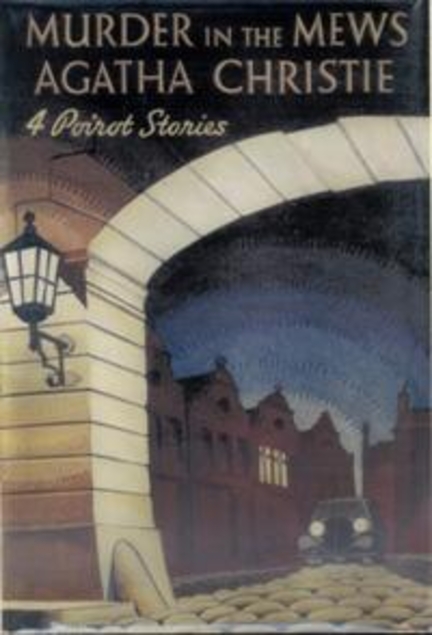
17. Murder In The Mews: And Other Stories by Agatha Christie (1937)
1. Murder At Wrides Park by J. S. Fletcher (1931)
2. Tom Strong, Washington's Scout: A Story Of Patriotism by Alfred Bishop Mason (1911)
3. Fear Stalks The Village by Ethel Lina White (1932)
4. Murder At The College by Victor L. Whitechurch (1932)
5. The Princess Passes by Ruby M. Ayres (1931)
6. The Billiard-Room Mystery by Brian Flynn (1927)
7. The Porro Palaver by Adam Broome (1928)
8. Amos The Wanderer by William Babington Maxwell (1932)
9. 13 Thirteenth Street by Natalie Sumner Lincoln (1932)
10. The Lady Of The Decoration by Frances Little (1907)
11. Murder In The Maze by J. J. Connington (1927)
12. The Secret Of The Morgue by Frederick G. Eberhard (1932)
13. They Were Defeated by Rose Macaulay (1932)
14. The New Woman And The Victorian Novel by Gail Cunningham (1978)
15. Lonesome Road by Patricia Wentworth (1939)
16. April Lady by Georgette Heyer (1957)
17. Murder In The Mews: And Other Stories by Agatha Christie (1937)
6lyzard
Books in transit:
On interlibrary loan / branch transfer / storage request:
Love's Hour by Elinor Glyn
The Murder Of Mrs Davenport by Anthony Gilbert
The Madonna Of Seven Moons by Margery Lawrence
Purchased and shipped:
The Crooked Cross by Charles J. Dutton
The Owl's Warning by Herman Landon
The Mystery Woman by Alice MacGowan and Perry Newberry
On loan:
*Lonesome Road by Patricia Wentworth (11/02/2016)
Lucia's Progress by E. F. Benson (25/02/2016)
Wilhelm Meister's Apprenticeship by Johann Goethe (04/03/2016)
All This, And Heaven Too by Rachel Field (08/03/2016)
**The Lady Of The Decoration by Frances Little (05/04/2016)
Marriage by Susan Ferrier (05/04/2016)
*They Were Defeated by Rose Macaulay (05/04/2016)
The Fortress by Hugh Walpole (05/04/2016)
Hangman's Holiday by Dorothy L. Sayers (05/04/2016)
Inspector French And The Cheyne Mystery by Freeman Wills Crofts (05/04/2016)
*The New Woman And The Victorian Novel by Gail Cunningham (05/04/2016)
Follow up:
The Holy Lover by Marie Conway Oemler {academic loan / State Library NSW, held}
The Sign Of the Glove by Carlton Dawe {academic loan / State Library NSW, held}
Daylight Murder by Paul McGuire {academic loan / State Library NSW, held}
One-Man Girl by Maysie Greig {interlibrary loan}
Forgive Us Our Trespasses by Lloyd C. Douglas {interlibrary loan}
Amberwell by D. E. Stevenson {interlibrary loan}
Seven Times Seven by John Creasey {interlibrary loan}
The Thirty-Nine Steps by John Buchan {Sutherland}
Hatter's Castle by A. J. Cronin {Sutherland stack}
Whitehall by E. V. Timms {Fisher storage}
The Avenging Parrot by Anne Austin {rare, expensive}
Mystery Stories For Girls by Agnes Miller {Michigan?}
On interlibrary loan / branch transfer / storage request:
Love's Hour by Elinor Glyn
The Murder Of Mrs Davenport by Anthony Gilbert
The Madonna Of Seven Moons by Margery Lawrence
Purchased and shipped:
The Crooked Cross by Charles J. Dutton
The Owl's Warning by Herman Landon
The Mystery Woman by Alice MacGowan and Perry Newberry
On loan:
*Lonesome Road by Patricia Wentworth (11/02/2016)
Lucia's Progress by E. F. Benson (25/02/2016)
Wilhelm Meister's Apprenticeship by Johann Goethe (04/03/2016)
All This, And Heaven Too by Rachel Field (08/03/2016)
**The Lady Of The Decoration by Frances Little (05/04/2016)
Marriage by Susan Ferrier (05/04/2016)
*They Were Defeated by Rose Macaulay (05/04/2016)
The Fortress by Hugh Walpole (05/04/2016)
Hangman's Holiday by Dorothy L. Sayers (05/04/2016)
Inspector French And The Cheyne Mystery by Freeman Wills Crofts (05/04/2016)
*The New Woman And The Victorian Novel by Gail Cunningham (05/04/2016)
Follow up:
The Holy Lover by Marie Conway Oemler {academic loan / State Library NSW, held}
The Sign Of the Glove by Carlton Dawe {academic loan / State Library NSW, held}
Daylight Murder by Paul McGuire {academic loan / State Library NSW, held}
One-Man Girl by Maysie Greig {interlibrary loan}
Forgive Us Our Trespasses by Lloyd C. Douglas {interlibrary loan}
Amberwell by D. E. Stevenson {interlibrary loan}
Seven Times Seven by John Creasey {interlibrary loan}
The Thirty-Nine Steps by John Buchan {Sutherland}
Hatter's Castle by A. J. Cronin {Sutherland stack}
Whitehall by E. V. Timms {Fisher storage}
The Avenging Parrot by Anne Austin {rare, expensive}
Mystery Stories For Girls by Agnes Miller {Michigan?}
7lyzard
Series and sequels 1866 - 1920:
(1866 - 1876) **Emile Gaboriau - Monsieur Lecoq - The Widow Lerouge (1/6) {ManyBooks}
(1867 - 1905) **Martha Finley - Elsie Dinsmore - Elsie's Womanhood (4/28) {ManyBooks}
(1867 - 1872) **George MacDonald - The Seaboard Parish - Annals Of A Quiet Neighbourhood (1/3) {ManyBooks}
(1878 - 1917) **Anna Katharine Green - Ebenezer Gryce - The Doctor, His Wife And The Clock (7/12) {Project Gutenberg}
(1896 - 1909) **Melville Davisson Post - Randolph Mason - The Corrector Of Destinies (3/3) {Internet Archive}
(1894 - 1898) **Anthony Hope - Ruritania - Rupert Of Hentzau (3/3) {Project Gutenberg}
(1895 - 1901) **Guy Newell Boothby - Dr Nikola - Dr Nikola (2/5) {ManyBooks}
(1897 - 1900) **Anna Katharine Green - Amelia Butterworth - That Affair Next Door (1/3) {Fisher Library}
(1898 - 1915) **Kate Douglas Wiggins - Penelope - Penelope's Progress (1/4) {Project Gutenberg}
(1899 - 1909) **E. W. Hornung - Raffles - Raffles: The Amateur Cracksman (1/4) {ManyBooks}
(1899 - 1919) **Finley Peter Dunne - Mr Dooley - Mr Dooley In Peace And In War (1/8) {Internet Archive}
(1900 - 1974) *Ernest Bramah - Kai Lung - Kai Lung's Golden Hours (2/6) {ManyBooks}
(1901 - 1919) **Carolyn Wells - Patty Fairfield - Patty In Paris (5/17) {ManyBooks}
(1901 - 1927) **George Barr McCutcheon - Graustark - Graustark (1/6) {Project Gutenberg}
(1903 - 1904) **Louis Tracy - Reginald Brett - The Albert Gate Mystery (2/2) {ManyBooks}
(1905 - 1925) **Baroness Orczy - The Old Man In The Corner - Unravelled Knots (3/3) {Project Gutenberg Australia}}
(1905 - 1928) **Edgar Wallace - The Just Men - The Law Of The Four Just Men (4/6) {Project Gutenberg Australia}
(1906 - 1930) **John Galsworthy - The Forsyte Saga - Indian Summer Of A Forsyte (short story) (2/11) {Project Gutenberg}
(1907 - 1912) **Carolyn Wells - Marjorie - Marjorie's Vacation (1/6) {ManyBooks}
(1907 - 1942) *R. Austin Freeman - Dr John Thorndyke - As A Thief In The Night (16/26) {Roy Glashan's Library}
(1907 - 1941) *Maurice Leblanc - Arsene Lupin - Arsène Lupin contre Herlock Sholmès (2/21) {ManyBooks}
(1908 - 1924) **Margaret Penrose - Dorothy Dale - Dorothy Dale: A Girl Of Today (1/13) {ManyBooks}
(1909 - 1942) *Carolyn Wells - Fleming Stone - The Mystery Girl (13/49) {Kindle}
(1909 - 1929) *J. S. Fletcher - Inspector Skarratt - Marchester Royal (1/3) {Kindle}
(1910 - 1936) *Arthur B. Reeve - Craig Kennedy - The Treasure-Train (6/11) {ManyBooks}
(1910 - 1946) A. E. W. Mason - Inspector Hanaud - The Ginger King (short story) (5/6) {Roy Glashan's Library}
(1910 - ????) *Edgar Wallace - Inspector Smith - Kate Plus Ten (3/?) {Project Gutenberg Australia}
(1910 - 1930) **Edgar Wallace - Inspector Elk - The Joker (3/6?) {ManyBooks}
(1910 - ????) *Thomas Hanshew - Cleek - The Riddle Of The Night (3/?) {Internet Archive}
(1910 - 1918) **John McIntyre - Ashton-Kirk - Ashton-Kirk, Secret Agent (2/4) {Project Gutenberg}
(1910 - 1931) *Grace S. Richmond - Red Pepper Burns - Mrs Red Pepper (2/6) {Project Gutenberg}
(1910 - ????) *Jeffery Farnol - The Vibarts - The Way Beyond (3/?) {Project Gutenberg Canada}
(1911 - 1935) G. K. Chesterton - Father Brown - The Scandal Of Father Brown (5/5) {branch transfer}
(1911 - 1937) Mary Roberts Rinehart - Letitia Carberry - Tish Marches On (5/5) {Kindle}
(1911 - 1919) **Alfred Bishop Mason - Tom Strong - Tom Strong, Washington's Scout (1/5) {Internet Archive}
(1912 - 1928) **Louis Tracy (aka Gordon Holmes) - Winter and Furneaux - No Other Way (1/9) {Amazon domestic}
(1913 - 1934) *Alice B. Emerson - Ruth Fielding - Ruth Fielding In Moving Pictures (9/30) {feedbooks}
(1913 - 1973) Sax Rohmer - Fu-Manchu - The Bride Of Fu-Manchu (6/14) {interlibrary loan}
(1913 - 1952) *Jeffery Farnol - Jasper Shrig - Peregrine's Progress (2/9) {ManyBooks}
(1914 - 1950) Mary Roberts Rinehart - Hilda Adams - Episode Of The Wandering Knife (5/5) Better World Books}
(1914 - 1934) *Ernest Bramah - Max Carrados - The Eyes Of Max Carrados (2/4) {Roy Glashan's Library}
(1916 - 1941) John Buchan - Edward Leithen - Sick Heart River (5/5) {Fisher Library}
(1915 - 1936) *John Buchan - Richard Hannay - The Thirty-Nine Steps (1/5) {Fisher Library / Project Gutenberg / branch transfer}
(1916 - 1917) **Carolyn Wells - Alan Ford - Faulkner's Folly (2/2) {owned}
(1916 - 1927) **Natalie Sumner Lincoln - Inspector Mitchell - I Spy (1/10) {Project Gutenberg}
(1917 - 1929) **Henry Handel Richardson - Dr Richard Mahony - Australia Felix (1/3) {Fisher Library / City of Sydney}
(1918 - 1923) **Carolyn Wells - Pennington Wise - The Room With The Tassels (1/8) {Project Gutenberg}
(1918 - ????) *Valentine Williams - Okewood / Clubfoot - The Return Of Clubfoot (3/?) {ManyBooks}
(1919 - 1966) *Lee Thayer - Peter Clancy - The Key (6/60) {expensive / Rare Books}
(1919 - 1921) **Octavus Roy Cohen - David Carroll - The Crimson Alibi (1/3) {Rare Books}
(1920 - 1939) E. F. Benson - Mapp And Lucia - Lucia's Progress (5/6) {Fisher Library}
(1920 - 1948) *H. C. Bailey - Reggie Fortune - Mr Fortune, Please (4/23) {State Library NSW, interlibrary loan}
(1920 - 1949) William McFee - Spenlove - The Beachcomber - (3/6) {AbeBooks / Better World Books}
(1920 - 1932) *Alice B. Emerson - Betty Gordon - Betty Gordon At Bramble Farm (1/15) {ManyBooks}
(1920 - 1975) Agatha Christie - Hercule Poirot - Murder In The Mews (15/39) {owned}
(1920 - 1921) **Natalie Sumner Lincoln - Ferguson - The Red Seal (1/2) {Project Gutenberg}
(1920 - 1937) *H. C. McNeile - Bulldog Drummond - Bull-Dog Drummond (1/10 - series continued) {Project Gutenberg / Fisher storage}
*** Incompletely available series
** Series complete pre-1931
* Present status pre-1931
(1866 - 1876) **Emile Gaboriau - Monsieur Lecoq - The Widow Lerouge (1/6) {ManyBooks}
(1867 - 1905) **Martha Finley - Elsie Dinsmore - Elsie's Womanhood (4/28) {ManyBooks}
(1867 - 1872) **George MacDonald - The Seaboard Parish - Annals Of A Quiet Neighbourhood (1/3) {ManyBooks}
(1878 - 1917) **Anna Katharine Green - Ebenezer Gryce - The Doctor, His Wife And The Clock (7/12) {Project Gutenberg}
(1894 - 1898) **Anthony Hope - Ruritania - Rupert Of Hentzau (3/3) {Project Gutenberg}
(1895 - 1901) **Guy Newell Boothby - Dr Nikola - Dr Nikola (2/5) {ManyBooks}
(1897 - 1900) **Anna Katharine Green - Amelia Butterworth - That Affair Next Door (1/3) {Fisher Library}
(1898 - 1915) **Kate Douglas Wiggins - Penelope - Penelope's Progress (1/4) {Project Gutenberg}
(1899 - 1909) **E. W. Hornung - Raffles - Raffles: The Amateur Cracksman (1/4) {ManyBooks}
(1899 - 1919) **Finley Peter Dunne - Mr Dooley - Mr Dooley In Peace And In War (1/8) {Internet Archive}
(1900 - 1974) *Ernest Bramah - Kai Lung - Kai Lung's Golden Hours (2/6) {ManyBooks}
(1901 - 1919) **Carolyn Wells - Patty Fairfield - Patty In Paris (5/17) {ManyBooks}
(1901 - 1927) **George Barr McCutcheon - Graustark - Graustark (1/6) {Project Gutenberg}
(1905 - 1928) **Edgar Wallace - The Just Men - The Law Of The Four Just Men (4/6) {Project Gutenberg Australia}
(1906 - 1930) **John Galsworthy - The Forsyte Saga - Indian Summer Of A Forsyte (short story) (2/11) {Project Gutenberg}
(1907 - 1912) **Carolyn Wells - Marjorie - Marjorie's Vacation (1/6) {ManyBooks}
(1907 - 1942) *R. Austin Freeman - Dr John Thorndyke - As A Thief In The Night (16/26) {Roy Glashan's Library}
(1907 - 1941) *Maurice Leblanc - Arsene Lupin - Arsène Lupin contre Herlock Sholmès (2/21) {ManyBooks}
(1908 - 1924) **Margaret Penrose - Dorothy Dale - Dorothy Dale: A Girl Of Today (1/13) {ManyBooks}
(1909 - 1942) *Carolyn Wells - Fleming Stone - The Mystery Girl (13/49) {Kindle}
(1909 - 1929) *J. S. Fletcher - Inspector Skarratt - Marchester Royal (1/3) {Kindle}
(1910 - 1936) *Arthur B. Reeve - Craig Kennedy - The Treasure-Train (6/11) {ManyBooks}
(1910 - 1946) A. E. W. Mason - Inspector Hanaud - The Ginger King (short story) (5/6) {Roy Glashan's Library}
(1910 - ????) *Edgar Wallace - Inspector Smith - Kate Plus Ten (3/?) {Project Gutenberg Australia}
(1910 - 1930) **Edgar Wallace - Inspector Elk - The Joker (3/6?) {ManyBooks}
(1910 - ????) *Thomas Hanshew - Cleek - The Riddle Of The Night (3/?) {Internet Archive}
(1910 - 1918) **John McIntyre - Ashton-Kirk - Ashton-Kirk, Secret Agent (2/4) {Project Gutenberg}
(1910 - 1931) *Grace S. Richmond - Red Pepper Burns - Mrs Red Pepper (2/6) {Project Gutenberg}
(1910 - ????) *Jeffery Farnol - The Vibarts - The Way Beyond (3/?) {Project Gutenberg Canada}
(1911 - 1937) Mary Roberts Rinehart - Letitia Carberry - Tish Marches On (5/5) {Kindle}
(1911 - 1919) **Alfred Bishop Mason - Tom Strong - Tom Strong, Washington's Scout (1/5) {Internet Archive}
(1912 - 1928) **Louis Tracy (aka Gordon Holmes) - Winter and Furneaux - No Other Way (1/9) {Amazon domestic}
(1913 - 1934) *Alice B. Emerson - Ruth Fielding - Ruth Fielding In Moving Pictures (9/30) {feedbooks}
(1913 - 1973) Sax Rohmer - Fu-Manchu - The Bride Of Fu-Manchu (6/14) {interlibrary loan}
(1913 - 1952) *Jeffery Farnol - Jasper Shrig - Peregrine's Progress (2/9) {ManyBooks}
(1914 - 1934) *Ernest Bramah - Max Carrados - The Eyes Of Max Carrados (2/4) {Roy Glashan's Library}
(1915 - 1936) *John Buchan - Richard Hannay - The Thirty-Nine Steps (1/5) {Fisher Library / Project Gutenberg / branch transfer}
(1916 - 1927) **Natalie Sumner Lincoln - Inspector Mitchell - I Spy (1/10) {Project Gutenberg}
(1917 - 1929) **Henry Handel Richardson - Dr Richard Mahony - Australia Felix (1/3) {Fisher Library / City of Sydney}
(1918 - 1923) **Carolyn Wells - Pennington Wise - The Room With The Tassels (1/8) {Project Gutenberg}
(1918 - ????) *Valentine Williams - Okewood / Clubfoot - The Return Of Clubfoot (3/?) {ManyBooks}
(1919 - 1966) *Lee Thayer - Peter Clancy - The Key (6/60) {expensive / Rare Books}
(1919 - 1921) **Octavus Roy Cohen - David Carroll - The Crimson Alibi (1/3) {Rare Books}
(1920 - 1939) E. F. Benson - Mapp And Lucia - Lucia's Progress (5/6) {Fisher Library}
(1920 - 1948) *H. C. Bailey - Reggie Fortune - Mr Fortune, Please (4/23) {State Library NSW, interlibrary loan}
(1920 - 1949) William McFee - Spenlove - The Beachcomber - (3/6) {AbeBooks / Better World Books}
(1920 - 1932) *Alice B. Emerson - Betty Gordon - Betty Gordon At Bramble Farm (1/15) {ManyBooks}
(1920 - 1975) Agatha Christie - Hercule Poirot - Murder In The Mews (15/39) {owned}
(1920 - 1921) **Natalie Sumner Lincoln - Ferguson - The Red Seal (1/2) {Project Gutenberg}
(1920 - 1937) *H. C. McNeile - Bulldog Drummond - Bull-Dog Drummond (1/10 - series continued) {Project Gutenberg / Fisher storage}
*** Incompletely available series
** Series complete pre-1931
* Present status pre-1931
8lyzard
Series and sequels 1921 - 1929:
(1921 - 1929) ** / ***Charles J. Dutton - John Bartley - The Crooked Cross (6/9) {ordered}
(1921 - 1925) **Herman Landon - The Gray Phantom - Gray Terror (3/5) {Amazon}
(1922 - 1973) *Agatha Christie - Tommy and Tuppence - N. Or M.? (3/5) {owned}
(1922 - 1927) *Alice MacGowan and Perry Newberry - Jerry Boyne - The Mystery Woman (2/5) {Amazon, eBay?}
(1922 - 1931) *Valentine Williams - Inspector Manderton - The Yellow Streak (1/4) {Project Gutenberg}
(1923 - 1937) Dorothy L. Sayers - Lord Peter Wimsey - Hangman's Holiday (9/15) {Fisher Library}
(1923 - 1924) **Carolyn Wells - Lorimer Lane - The Fourteenth Key (2/2) {eBay}
(1923 - 1931) *Agnes Miller - The Linger-Nots - The Linger-Nots And The Mystery House (1/5) {AbeBooks / Amazon}
(1923 - 1927) **Annie Haynes - Inspector Furnival - The Abbey Court Murder (1/3) {Kindle}
(1924 - 1959) Philip MacDonald - Colonel Anthony Gethryn - Persons Unknown (aka "The Maze") (5/24) {academic loan / State Library NSW, held}
(1924 - 1957) *Freeman Wills Crofts - Inspector French - The Cheyne Mystery (2/30) {Fisher Library}
(1924 - 1935) * / ***Francis D. Grierson - Inspector Sims and Professor Wells - The Lost Pearl (3/13) {owned}
(1924 - 1940) *Lynn Brock - Colonel Gore - Colonel Gore's Second Case (2/12) {AbeBooks / State Library NSW, held / Kindle?}
(1924 - 1933) *Herbert Adams - Jimmie Haswell - The Crooked Lip (2/9) {Rare Books}
(1924 - 1944) *A. Fielding - Inspector Pointer - The Charteris Mystery (2/23) {AbeBooks / Rare Books}
(1924 - 1928) **Ford Madox Ford - Parade's End - Some Do Not... (1/4) {interlibrary loan}
(1925 - 1961) ***John Rhode - Dr Priestley - Death In The Hopfields (25/72) {HathiTrust / State Library NSW, held}
(1925 - 1953) *G. D. H. Cole / M. Cole - Superintendent Wilson - The Murder At Crome House (4/?) {academic loan / State Library NSW, held}
(1925 - 1937) *Hulbert Footner - Madame Storey - Madame Storey (2/10) {mobilereads / Project Gutenberg Canada}
(1925 - 1932) *Earl Derr Biggers - Charlie Chan - The Chinese Parrot (2/6) {feedbooks}
(1925 - 1944) *Agatha Christie - Superintendent Battle - Murder Is Easy (4/5) {owned}
(1925 - 1934) *Anthony Berkeley - Roger Sheringham - The Poisoned Chocolates Case (5/10) {City Of Sydney, on loan}
(1925 - 1950) *Anthony Wynne (Robert McNair Wilson) - Dr Eustace Hailey - The Double-Thirteen Mystery (2/27) (aka "The Double Thirteen") {AbeBooks / Rare Books}
(1925 - 1939) *Charles Barry (Charles Bryson) - Inspector Lawrence Gilmartin - The Smaller Penny (1/15) {AbeBooks}
(1925 - 1929) **Will Scott - Will Disher - Disher--Detective (aka "The Black Stamp") (1/3) {AbeBooks, expensive}
(1926 - 1968) * / ***Christopher Bush - Ludovic Travers - Dead Man Twice (3/63) {owned}
(1926 - 1939) *S. S. Van Dine - Philo Vance - The Canary Murder Case (2/12) {owned}
(1926 - 1952) *J. Jefferson Farjeon - Ben the Tramp - The House Opposite (2/8) {Kindle, upcoming/ State Library NSW, held}
(1926 - ????) *G. D. H. Cole / M. Cole - Everard Blatchington - Burglars In Bucks (aka "The Berkshire Mystery") (2/6) {Fisher Library}
(1927 - 1933) *Herman Landon - The Picaroon - The Picaroon Does Justice (2/7) {Book Searchers}
(1927 - 1932) *Anthony Armstrong - Jimmie Rezaire - The Secret Trail (2/5) {Kindle}
(1927 - 1937) *Ronald Knox - Miles Bredon - The Three Taps (1/5) {owned, Kindle}
(1927 - 1958) *Brian Flynn - Anthony Bathurst - The Case Of The Black Twenty-Two (2/54) {Amazon}
(1927 - 1947) *J. J. Connington - Sir Clinton Driffield - Tragedy At Ravensthorpe (2/17) {Murder Room ebook}
(1927 - 1935) *Anthony Gilbert (Lucy Malleson) - Scott Egerton - The Murder Of Mrs Davenport (2/10) {State Library NSW, interlibrary loan}
(1928 - 1961) Patricia Wentworth - Miss Silver - In The Balance (aka "Danger Point") (4/33) {State Library NSW, interlibrary loan}
(1928 - 1936) *Gavin Holt - Luther Bastion - The Garden Of Silent Beasts (5/17) {academic loan / State Library NSW, held}
(1928 - ????) Trygve Lund - Weston of the Royal North-West Mounted Police - In The Snow: A Romance Of The Canadian Backwoods (4/?) {AbeBooks}
(1928 - 1936) *Kay Cleaver Strahan - Lynn MacDonald - October House (4/7) {AbeBooks}
(1928 - 1937) *John Alexander Ferguson - Francis McNab - Murder On The Marsh (2/5) {Internet Archive / Rare Books / State Library NSW, held}
(1928 - 1960) *Cecil Freeman Gregg - Inspector Higgins - The Murdered Manservant (aka "The Body In The Safe") (1/35) {rare, expensive}
(1928 - 1959) *John Gordon Brandon - Inspector Patrick Aloysius McCarthy - Red Altars (aka "The Secret Brotherhood") (1/?) {do I own this?}
(1928 - 1935) *Roland Daniel - Wu Fang / Inspector Saville - The Society Of The Spiders (1/?) {unavailable}
(1928 - 1946) *Francis Beeding - Alistair Granby - The Five Flamboys (2/18) {State Library NSW, interlibrary loan}
(1928 - 1930) **Annie Haynes - Inspector Stoddart - The Man With The Dark Beard (1/4) {Project Gutenberg Australia / Kindle?}
(1927 - 1932) *William Blair Morton Ferguson (aka William Morton) - Daniel "Biff" Corrigan - Masquerade (1/4) {expensive}
(1928 - 1930) **Elsa Barker - Dexter Drake and Paul Howard - The Cobra Candlestick (aka "The Cobra Shaped Candlestick") (1/3) {AbeBooks / Rare Books}
(1928 - ????) Adam Broome - Denzil Grigson - Crowner's Quest (2/?) {AbeBooks / eBay}
(1929 - 1947) Margery Allingham - Albert Campion - Sweet Danger (5/35) {Fisher Library}
(1929 - 1984) Gladys Mitchell - Mrs Bradley - Death At The Opera (5/67) {interlibrary loan}
(1929 - 1937) ***Patricia Wentworth - Benbow Smith - Walk With Care (3/4) {expensive}
(1929 - ????) Mignon Eberhart - Nurse Sarah Keate - Murder By An Aristocrat (aka "Murder Of My Patient") (5/8) {Rare Books / Kindle US / academic loan}
(1929 - ????) ***Moray Dalton - Inspector Collier - ???? (3/?) - Death In The Cup {unavailable}, The Wife Of Baal {unavailable}
(1929 - ????) * / ***Charles Reed Jones - Leighton Swift - The King Murder (1/?) {AbeBooks}
(1929 - 1931) Carolyn Wells - Kenneth Carlisle - Sleeping Dogs (1/3) {Amazon / eBay / Rare Books}
(1929 - 1967) *George Goodchild - Inspector McLean - McLean Of Scotland Yard (1/65) {State Library NSW, held}
(1929 - 1979) *Leonard Gribble - Anthony Slade - The Case Of The Marsden Rubies (1/33) {AbeBooks / Rare Books}
(1929 - 1932) *E. R. Punshon - Carter and Bell - The Unexpected Legacy (1/5) {expensive, omnibus / Rare Books}
(1929 - 1971) *Ellery Queen - Ellery Queen - The Roman Hat Mystery (1/40) {interlibrary loan}
(1929 - 1966) *Arthur Upfield - Bony - The Barrakee Mystery (1/29) {Fisher Library}
(1929 - 1931) *Ernest Raymond - Once In England - A Family That Was (1/3) {State Library NSW, interlibrary loan}
(1929 - 1937) *Anthony Berkeley - Ambrose Chitterwick - The Poisoned Chocolates Case (1/3) {City of Sydney / Fisher Library}
(1929 - 1940) *Jean Lilly - DA Bruce Perkins - The Seven Sisters (1/3) {AbeBooks / expensive shipping}
(1929 - 1935) *N. A. Temple-Ellis (Nevile Holdaway) - Montrose Arbuthnot - The Inconsistent Villains (1/4) {AbeBooks / expensive shipping}
(1929 - 1943) *Gret Lane - Kate Clare Marsh and Inspector Barrin - The Cancelled Score Mystery (1/9) {unavailable?}
(1929 - 1961) *Henry Holt - Inspector Silver - The Mayfair Mystery (aka "The Mayfair Murder") (1/16) {AbeBooks}
(1929 - 1930) *J. J. Connington - Superintendent Ross - The Eye In The Museum (1/2) {Kindle}
(1929 - 1941) *H. Maynard Smith - Inspector Frost - Inspector Frost's Jigsaw (1/7) {AbeBooks, omnibus}
(1929 - ????) *Armstrong Livingston - Jimmy Traynor - The Doublecross (1/?) {AbeBooks}
(1929 - 1932) Clemence Dane and Helen Simpson - Sir John Saumarez - Re-Enter Sir John (3/3) {Fisher Library storage}
(1929 - 1940) *Rufus King - Lieutenant Valcour - Murder By The Clock (1/11) {AbeBooks / omnibus}
(1929 - 1933) *Will Levinrew (Will Levine) - Professor Brierly - Murder On The Palisades (2/5) {Rare Books}
(1929 - 1932) *Nancy Barr Mavity - Peter Piper - The Body On The Floor (1/5) {AbeBooks / Rare Books / State Library NSW, held}
(1929 - 1934) *Charles J. Dutton - Professor Harley Manners - Streaked With Crimson (1/6) {AbeBooks / Amazon}
*** Incompletely available series
** Series complete pre-1931
* Present status pre-1931
(1921 - 1929) ** / ***Charles J. Dutton - John Bartley - The Crooked Cross (6/9) {ordered}
(1921 - 1925) **Herman Landon - The Gray Phantom - Gray Terror (3/5) {Amazon}
(1922 - 1973) *Agatha Christie - Tommy and Tuppence - N. Or M.? (3/5) {owned}
(1922 - 1927) *Alice MacGowan and Perry Newberry - Jerry Boyne - The Mystery Woman (2/5) {Amazon, eBay?}
(1922 - 1931) *Valentine Williams - Inspector Manderton - The Yellow Streak (1/4) {Project Gutenberg}
(1923 - 1937) Dorothy L. Sayers - Lord Peter Wimsey - Hangman's Holiday (9/15) {Fisher Library}
(1923 - 1931) *Agnes Miller - The Linger-Nots - The Linger-Nots And The Mystery House (1/5) {AbeBooks / Amazon}
(1923 - 1927) **Annie Haynes - Inspector Furnival - The Abbey Court Murder (1/3) {Kindle}
(1924 - 1959) Philip MacDonald - Colonel Anthony Gethryn - Persons Unknown (aka "The Maze") (5/24) {academic loan / State Library NSW, held}
(1924 - 1957) *Freeman Wills Crofts - Inspector French - The Cheyne Mystery (2/30) {Fisher Library}
(1924 - 1935) * / ***Francis D. Grierson - Inspector Sims and Professor Wells - The Lost Pearl (3/13) {owned}
(1924 - 1940) *Lynn Brock - Colonel Gore - Colonel Gore's Second Case (2/12) {AbeBooks / State Library NSW, held / Kindle?}
(1924 - 1933) *Herbert Adams - Jimmie Haswell - The Crooked Lip (2/9) {Rare Books}
(1924 - 1944) *A. Fielding - Inspector Pointer - The Charteris Mystery (2/23) {AbeBooks / Rare Books}
(1924 - 1928) **Ford Madox Ford - Parade's End - Some Do Not... (1/4) {interlibrary loan}
(1925 - 1961) ***John Rhode - Dr Priestley - Death In The Hopfields (25/72) {HathiTrust / State Library NSW, held}
(1925 - 1953) *G. D. H. Cole / M. Cole - Superintendent Wilson - The Murder At Crome House (4/?) {academic loan / State Library NSW, held}
(1925 - 1937) *Hulbert Footner - Madame Storey - Madame Storey (2/10) {mobilereads / Project Gutenberg Canada}
(1925 - 1932) *Earl Derr Biggers - Charlie Chan - The Chinese Parrot (2/6) {feedbooks}
(1925 - 1944) *Agatha Christie - Superintendent Battle - Murder Is Easy (4/5) {owned}
(1925 - 1934) *Anthony Berkeley - Roger Sheringham - The Poisoned Chocolates Case (5/10) {City Of Sydney, on loan}
(1925 - 1950) *Anthony Wynne (Robert McNair Wilson) - Dr Eustace Hailey - The Double-Thirteen Mystery (2/27) (aka "The Double Thirteen") {AbeBooks / Rare Books}
(1925 - 1939) *Charles Barry (Charles Bryson) - Inspector Lawrence Gilmartin - The Smaller Penny (1/15) {AbeBooks}
(1925 - 1929) **Will Scott - Will Disher - Disher--Detective (aka "The Black Stamp") (1/3) {AbeBooks, expensive}
(1926 - 1968) * / ***Christopher Bush - Ludovic Travers - Dead Man Twice (3/63) {owned}
(1926 - 1939) *S. S. Van Dine - Philo Vance - The Canary Murder Case (2/12) {owned}
(1926 - 1952) *J. Jefferson Farjeon - Ben the Tramp - The House Opposite (2/8) {Kindle, upcoming/ State Library NSW, held}
(1926 - ????) *G. D. H. Cole / M. Cole - Everard Blatchington - Burglars In Bucks (aka "The Berkshire Mystery") (2/6) {Fisher Library}
(1927 - 1933) *Herman Landon - The Picaroon - The Picaroon Does Justice (2/7) {Book Searchers}
(1927 - 1932) *Anthony Armstrong - Jimmie Rezaire - The Secret Trail (2/5) {Kindle}
(1927 - 1937) *Ronald Knox - Miles Bredon - The Three Taps (1/5) {owned, Kindle}
(1927 - 1958) *Brian Flynn - Anthony Bathurst - The Case Of The Black Twenty-Two (2/54) {Amazon}
(1927 - 1947) *J. J. Connington - Sir Clinton Driffield - Tragedy At Ravensthorpe (2/17) {Murder Room ebook}
(1927 - 1935) *Anthony Gilbert (Lucy Malleson) - Scott Egerton - The Murder Of Mrs Davenport (2/10) {State Library NSW, interlibrary loan}
(1928 - 1961) Patricia Wentworth - Miss Silver - In The Balance (aka "Danger Point") (4/33) {State Library NSW, interlibrary loan}
(1928 - 1936) *Gavin Holt - Luther Bastion - The Garden Of Silent Beasts (5/17) {academic loan / State Library NSW, held}
(1928 - ????) Trygve Lund - Weston of the Royal North-West Mounted Police - In The Snow: A Romance Of The Canadian Backwoods (4/?) {AbeBooks}
(1928 - 1936) *Kay Cleaver Strahan - Lynn MacDonald - October House (4/7) {AbeBooks}
(1928 - 1937) *John Alexander Ferguson - Francis McNab - Murder On The Marsh (2/5) {Internet Archive / Rare Books / State Library NSW, held}
(1928 - 1960) *Cecil Freeman Gregg - Inspector Higgins - The Murdered Manservant (aka "The Body In The Safe") (1/35) {rare, expensive}
(1928 - 1959) *John Gordon Brandon - Inspector Patrick Aloysius McCarthy - Red Altars (aka "The Secret Brotherhood") (1/?) {do I own this?}
(1928 - 1935) *Roland Daniel - Wu Fang / Inspector Saville - The Society Of The Spiders (1/?) {unavailable}
(1928 - 1946) *Francis Beeding - Alistair Granby - The Five Flamboys (2/18) {State Library NSW, interlibrary loan}
(1928 - 1930) **Annie Haynes - Inspector Stoddart - The Man With The Dark Beard (1/4) {Project Gutenberg Australia / Kindle?}
(1927 - 1932) *William Blair Morton Ferguson (aka William Morton) - Daniel "Biff" Corrigan - Masquerade (1/4) {expensive}
(1928 - 1930) **Elsa Barker - Dexter Drake and Paul Howard - The Cobra Candlestick (aka "The Cobra Shaped Candlestick") (1/3) {AbeBooks / Rare Books}
(1928 - ????) Adam Broome - Denzil Grigson - Crowner's Quest (2/?) {AbeBooks / eBay}
(1929 - 1947) Margery Allingham - Albert Campion - Sweet Danger (5/35) {Fisher Library}
(1929 - 1984) Gladys Mitchell - Mrs Bradley - Death At The Opera (5/67) {interlibrary loan}
(1929 - 1937) ***Patricia Wentworth - Benbow Smith - Walk With Care (3/4) {expensive}
(1929 - ????) Mignon Eberhart - Nurse Sarah Keate - Murder By An Aristocrat (aka "Murder Of My Patient") (5/8) {Rare Books / Kindle US / academic loan}
(1929 - ????) ***Moray Dalton - Inspector Collier - ???? (3/?) - Death In The Cup {unavailable}, The Wife Of Baal {unavailable}
(1929 - ????) * / ***Charles Reed Jones - Leighton Swift - The King Murder (1/?) {AbeBooks}
(1929 - 1931) Carolyn Wells - Kenneth Carlisle - Sleeping Dogs (1/3) {Amazon / eBay / Rare Books}
(1929 - 1967) *George Goodchild - Inspector McLean - McLean Of Scotland Yard (1/65) {State Library NSW, held}
(1929 - 1979) *Leonard Gribble - Anthony Slade - The Case Of The Marsden Rubies (1/33) {AbeBooks / Rare Books}
(1929 - 1932) *E. R. Punshon - Carter and Bell - The Unexpected Legacy (1/5) {expensive, omnibus / Rare Books}
(1929 - 1971) *Ellery Queen - Ellery Queen - The Roman Hat Mystery (1/40) {interlibrary loan}
(1929 - 1966) *Arthur Upfield - Bony - The Barrakee Mystery (1/29) {Fisher Library}
(1929 - 1931) *Ernest Raymond - Once In England - A Family That Was (1/3) {State Library NSW, interlibrary loan}
(1929 - 1937) *Anthony Berkeley - Ambrose Chitterwick - The Poisoned Chocolates Case (1/3) {City of Sydney / Fisher Library}
(1929 - 1940) *Jean Lilly - DA Bruce Perkins - The Seven Sisters (1/3) {AbeBooks / expensive shipping}
(1929 - 1935) *N. A. Temple-Ellis (Nevile Holdaway) - Montrose Arbuthnot - The Inconsistent Villains (1/4) {AbeBooks / expensive shipping}
(1929 - 1943) *Gret Lane - Kate Clare Marsh and Inspector Barrin - The Cancelled Score Mystery (1/9) {unavailable?}
(1929 - 1961) *Henry Holt - Inspector Silver - The Mayfair Mystery (aka "The Mayfair Murder") (1/16) {AbeBooks}
(1929 - 1930) *J. J. Connington - Superintendent Ross - The Eye In The Museum (1/2) {Kindle}
(1929 - 1941) *H. Maynard Smith - Inspector Frost - Inspector Frost's Jigsaw (1/7) {AbeBooks, omnibus}
(1929 - ????) *Armstrong Livingston - Jimmy Traynor - The Doublecross (1/?) {AbeBooks}
(1929 - 1940) *Rufus King - Lieutenant Valcour - Murder By The Clock (1/11) {AbeBooks / omnibus}
(1929 - 1933) *Will Levinrew (Will Levine) - Professor Brierly - Murder On The Palisades (2/5) {Rare Books}
(1929 - 1932) *Nancy Barr Mavity - Peter Piper - The Body On The Floor (1/5) {AbeBooks / Rare Books / State Library NSW, held}
(1929 - 1934) *Charles J. Dutton - Professor Harley Manners - Streaked With Crimson (1/6) {AbeBooks / Amazon}
*** Incompletely available series
** Series complete pre-1931
* Present status pre-1931
9lyzard
Series and sequels 1930 - 1953:
(1930 - ????) ***Moray Dalton - Hermann Glide - ???? (3/?) {see above}
(1930 - 1932) Hugh Walpole - The Herries Chronicles - The Fortress (3/4) {Fisher Library}
(1930 - 1932) Faith Baldwin - The Girls Of Divine Corners - Myra: A Story Of Divine Corners (4/4) {owned}
(1930 - 1960) ***Miles Burton - Desmond Merrion - Death In The Tunnel (11/57) {Poison Pen Press, May 2016}
(1930 - 1960) ***Miles Burton - Inspector Henry Arnold - Death In The Tunnel (12/60) {Poison Pen Press, May 2016}
(1930 - 1933) ***Roger Scarlett - Inspector Kane - Murder Among The Angells (4/5) {online shopping}
(1930 - 1941) *Harriette Ashbrook - Philip "Spike" Tracy - The Murder Of Sigurd Sharon (3/7) {AbeBooks}
(1930 - 1943) Anthony Abbot - Thatcher Colt - About The Murder Of The Night Club Lady (3/8) {AbeBooks}
(1930 - ????) * / ***David Sharp - Professor Henry Arthur Fielding - My Particular Murder (2/?) {owned}
(1930 - 1950) *H. C. Bailey - Josiah Clunk - Garstons aka The Garston Murder Case (1/11) {AbeBooks}
(1930 - 1968) *Francis Van Wyck Mason - Captain North - Seeds Of Murder (1/41) {rare, expensive}
(1930 - 1976) *Agatha Christie - Miss Jane Marple - The Body In The Library (3/12) {owned}
(1930 - ????) *Anne Austin - James "Bonnie" Dundee - The Avenging Parrot (1/?) - {AbeBooks, expensive shipping}
(1930 - 1950) *Leslie Ford (as David Frome) - Mr Pinkerton and Inspector Bull - The Hammersmith Murders (1/11) {AbeBooks / Rare Books}
(1930 - 1935) *"Diplomat" (John Franklin Carter) - Dennis Tyler - Murder In The State Department (1/7) {expensive}
(1930 - 1962) *Helen Reilly - Inspector Christopher McKee - The Diamond Feather (1/31) {AbeBooks, expensive shipping / Rare Books}
(1930 - 1933) *Mary Plum - John Smith - The Killing Of Judge MacFarlane (1/4) {AbeBooks / Rare Books}
(1930 - 1945) *Hulbert Footner - Amos Lee Mappin - The Mystery Of The Folded Paper (aka The Folded Paper Mystery (1/10) {mobilereads / omnibus}
(1930 - 1940) *E. M. Delafield - The Provincial Lady - The Provincial Lady In Wartime (4/4) {Fisher Library}
(1930 - 1933) *Monte Barrett - Peter Cardigan - The Pelham Murder Case (1/3) {Amazon}
(1930 - ????) Vernon Loder - Inspector Brews and Ned Hope - The Essex Murders (aka "The Death Pool") (1/?) {Kindle}
(1931 - 1940) Bruce Graeme - Superintendent Stevens and Pierre Allain - The Imperfect Crime (2/8) {owned}
(1931 - 1951) Phoebe Atwood Taylor - Asey Mayo - The Mystery Of The Cape Cod Players (3/24) {AbeBooks / State Library NSW, held}
(1931 - 1955) Stuart Palmer - Hildegarde Withers - Murder On Wheels (2/18) {Kindle?}
(1931 - 1951) Olive Higgins Prouty - The Vale Novels - Now, Voyager (3/5) {interlibrary loan}
(1931 - 1933) Sydney Fowler - Inspector Cleveland - Arresting Delia (4/4) {Book Depository / Rare Books}
(1931 - 1934) J. H. Wallis - Inspector Wilton Jacks - The Capital City Mystery (2/6) {AbeBooks, expensive}
(1931 - ????) Paul McGuire - Inspector Cummings - Daylight Murder (aka "Murder At High Noon") (3/5) {academic loan / State Library NSW, held}
(1931 - 1937) Carlton Dawe - Leathermouth - The Sign Of The Glove (2/13) {academic loan / State Library NSW, held}
(1931 - 1947) R. L. Goldman - Asaph Clume and Rufus Reed - The Murder Of Harvey Blake (1/6) {AbeBooks}
(1931 - 1959) E. C. R. Lorac (Edith Caroline Rivett) - Inspector Robert Macdonald - The Murder On The Burrows (1/46) {rare, expensive}
(1931 - ????) Clifton Robbins - Clay Harrison - Dusty Death (1/?) {owned}
(1931 - 1972) Georges Simenon - Inspector Maigret - La Nuit du Carrefour (7/75) {branch transfer}
(1931 - 1934) T. S. Stribling - The Vaiden Trilogy - The Store (2/3) {academic loan / State Library, held}
(1931 - 1935) Pearl S. Buck - The House Of Earth - Sons (2/3) {Fisher Library}
(1931 - 1942) R. A. J. Walling - Garstang - The Stroke Of One (1/3) {Amazon}
(1931 - ????) Francis Bonnamy (Audrey Boyers Walz) - Peter Utley Shane - Death By Appointment (1/8){AbeBooks / Rare Books}
(1931 - 1937) J. S. Fletcher - Ronald Camberwell - Murder In Four Degrees (2/11) {Kindle / State Library NSW, held}
(1932 - 1954) Sydney Fowler - Inspector Cambridge and Mr Jellipot - The Bell Street Murders (1/11) {AbeBooks / Rare Books}
(1932 - 1935) Murray Thomas - Inspector Wilkins - Buzzards Pick The Bones (1/3) {AbeBooks, expensive}
(1932 - ????) R. A. J. Walling - Philip Tolefree - Follow The Blue Car (2/?) {expensive}
(1932 - 1962) T. Arthur Plummer - Detective-Inspector Andrew Frampton - Shadowed By The C. I. D. (1/50) {unavailable?}
(1932 - 1936) John Victor Turner - Amos Petrie - Death Must Have Laughed (1/7) {Rare Books}
(1932 - 1944) Nicholas Brady (John Victor Turner) - Ebenezer Buckle - The House Of Strange Guests (1/4) {unavailable?}
(1932 - 1932) Lizette M. Edholm - The Merriweather Girls - The Merriweather Girls In Quest Of Treasure (3/4) {ManyBooks}
(1932 - 1933) Barnaby Ross (aka Ellery Queen) - Drury Lane - The Tragedy Of Z (3/4) {Rare Books}
(1932 - 1952) D. E. Stevenson - Mrs Tim - Mrs Tim Carries On (3/5) {expensive / State Library NSW, held}
(1932 - ????) Richard Essex (Richard Harry Starr) - Jack Slade - Slade Of The Yard (1/?) {AbeBooks}
(1932 - 1933) Gerard Fairlie - Mr Malcolm - Shot In The Dark (1/3) (State Library NSW, held}
(1933 - 1959) John Gordon Brandon - Arthur Stukeley Pennington - West End! (1/?) {AbeBooks / State Library, held}
(1933 - 1940) Lilian Garis - Carol Duncan - The Ghost Of Melody Lane (1/9) {AbeBooks}
(1933 - 1934) Peter Hunt (George Worthing Yates and Charles Hunt Marshall) - Allan Miller - Murders At Scandal House (1/3) {AbeBooks / Amazon}
(1933 - 1968) John Dickson Carr - Gideon Fell - Hag's Nook (1/23) {Better World Books / State Library NSW, interlibrary loan}
(1933 - 1939) Gregory Dean - Deputy Commissioner Benjamin Simon - The Case Of Marie Corwin (1/3) {AbeBooks / Amazon}
(1933 - 1956) E. R. Punshon - Detective-Sergeant Bobby Owen - Information Received (1/35) {academic loan / State Library NSW, held / Rare Books}
(1933 - 1970) Dennis Wheatley - Duke de Richlieu - The Forbidden Territory (1/11) {Fisher Library}
(1933 - 1934) Jackson Gregory - Paul Savoy - A Case For Mr Paul Savoy (1/3) {AbeBooks / Rare Books}
(1934 - 1936) Storm Jameson - The Mirror In Darkness - Company Parade (1/3) {Fisher Library}
(1934 - 1953) Leslie Ford (Zenith Jones Brown) - Colonel John Primrose and Grace Latham - The Clock Strikes Twelve (aka "The Supreme Court Murder") (NB: novella) {owned}
(1934 - 1949) Richard Goyne - Paul Templeton - Strange Motives (1/13) {unavailable?}
(1934 - 1941) N. A. Temple-Ellis (Nevile Holdaway) - Inspector Wren - Three Went In (1/3) {unavailable?}
(1934 - 1953) Carter Dickson (John Dickson Carr) - Sir Henry Merivale - The Plague Court Murders (1/22) {Fisher Library}
(1934 - 1968) Dennis Wheatley - Gregory Sallust - Black August (1/11) {interlibrary loan / omnibus}
(1935 - 1939) Francis Beeding - Inspector George Martin - The Norwich Victims (1/3) {AbeBooks / Book Depository / State Library NSW, held}
(1935 - 1976) Nigel Morland - Palmyra Pym - The Moon Murders (1/28) {State Library NSW, held}
(1935 - 1941) Clyde Clason - Professor Theocritus Lucius Westborough - The Fifth Tumbler (1/10) {unavailable?}
(1935 - ????) G. D. H. Cole / M. Cole - Dr Tancred - Dr Tancred Begins (1/?) (AbeBooks, expensive / State Library NSW, held / Rare Books}
(1935 - ????) George Harmon Coxe - Kent Murdock - Murder With Pictures (1/22) {AbeBooks}
(1935 - 1959) Kathleen Moore Knight - Elisha Macomber - Death Blew Out The Match (1/16) {AbeBooks / Amazon}
(1936 - 1974) Anthony Gilbert (Lucy Malleson) - Arthur Crook - Murder By Experts (1/51) {interlibrary loan}
(1936 - 1952) Helen Dore Boylston - Sue Barton - Sue Barton, Student Nurse (1/7) {interlibrary loan}
(1939 - 1942) Patricia Wentworth - Inspector Lamb - Who Pays The Piper? (aka "Account Rendered") (2/3) {State Library NSW, interlibrary loan}
(1947 - 1974) Dennis Wheatley - Roger Brook - The Launching Of Roger Brook (1/12) {Fisher Library storage}
(1953 - 1960) Dennis Wheatley - Molly Fountain and Colonel Verney - To The Devil A Daughter (1/2) {Fisher Library storage}
*** Incompletely available series
** Series complete pre-1931
* Present status pre-1931
(1930 - ????) ***Moray Dalton - Hermann Glide - ???? (3/?) {see above}
(1930 - 1932) Hugh Walpole - The Herries Chronicles - The Fortress (3/4) {Fisher Library}
(1930 - 1960) ***Miles Burton - Desmond Merrion - Death In The Tunnel (11/57) {Poison Pen Press, May 2016}
(1930 - 1960) ***Miles Burton - Inspector Henry Arnold - Death In The Tunnel (12/60) {Poison Pen Press, May 2016}
(1930 - 1933) ***Roger Scarlett - Inspector Kane - Murder Among The Angells (4/5) {online shopping}
(1930 - 1941) *Harriette Ashbrook - Philip "Spike" Tracy - The Murder Of Sigurd Sharon (3/7) {AbeBooks}
(1930 - 1943) Anthony Abbot - Thatcher Colt - About The Murder Of The Night Club Lady (3/8) {AbeBooks}
(1930 - ????) * / ***David Sharp - Professor Henry Arthur Fielding - My Particular Murder (2/?) {owned}
(1930 - 1950) *H. C. Bailey - Josiah Clunk - Garstons aka The Garston Murder Case (1/11) {AbeBooks}
(1930 - 1968) *Francis Van Wyck Mason - Captain North - Seeds Of Murder (1/41) {rare, expensive}
(1930 - 1976) *Agatha Christie - Miss Jane Marple - The Body In The Library (3/12) {owned}
(1930 - ????) *Anne Austin - James "Bonnie" Dundee - The Avenging Parrot (1/?) - {AbeBooks, expensive shipping}
(1930 - 1950) *Leslie Ford (as David Frome) - Mr Pinkerton and Inspector Bull - The Hammersmith Murders (1/11) {AbeBooks / Rare Books}
(1930 - 1935) *"Diplomat" (John Franklin Carter) - Dennis Tyler - Murder In The State Department (1/7) {expensive}
(1930 - 1962) *Helen Reilly - Inspector Christopher McKee - The Diamond Feather (1/31) {AbeBooks, expensive shipping / Rare Books}
(1930 - 1933) *Mary Plum - John Smith - The Killing Of Judge MacFarlane (1/4) {AbeBooks / Rare Books}
(1930 - 1945) *Hulbert Footner - Amos Lee Mappin - The Mystery Of The Folded Paper (aka The Folded Paper Mystery (1/10) {mobilereads / omnibus}
(1930 - 1933) *Monte Barrett - Peter Cardigan - The Pelham Murder Case (1/3) {Amazon}
(1930 - ????) Vernon Loder - Inspector Brews and Ned Hope - The Essex Murders (aka "The Death Pool") (1/?) {Kindle}
(1931 - 1940) Bruce Graeme - Superintendent Stevens and Pierre Allain - The Imperfect Crime (2/8) {owned}
(1931 - 1951) Phoebe Atwood Taylor - Asey Mayo - The Mystery Of The Cape Cod Players (3/24) {AbeBooks / State Library NSW, held}
(1931 - 1955) Stuart Palmer - Hildegarde Withers - Murder On Wheels (2/18) {Kindle?}
(1931 - 1951) Olive Higgins Prouty - The Vale Novels - Now, Voyager (3/5) {interlibrary loan}
(1931 - 1933) Sydney Fowler - Inspector Cleveland - Arresting Delia (4/4) {Book Depository / Rare Books}
(1931 - 1934) J. H. Wallis - Inspector Wilton Jacks - The Capital City Mystery (2/6) {AbeBooks, expensive}
(1931 - ????) Paul McGuire - Inspector Cummings - Daylight Murder (aka "Murder At High Noon") (3/5) {academic loan / State Library NSW, held}
(1931 - 1937) Carlton Dawe - Leathermouth - The Sign Of The Glove (2/13) {academic loan / State Library NSW, held}
(1931 - 1947) R. L. Goldman - Asaph Clume and Rufus Reed - The Murder Of Harvey Blake (1/6) {AbeBooks}
(1931 - 1959) E. C. R. Lorac (Edith Caroline Rivett) - Inspector Robert Macdonald - The Murder On The Burrows (1/46) {rare, expensive}
(1931 - ????) Clifton Robbins - Clay Harrison - Dusty Death (1/?) {owned}
(1931 - 1972) Georges Simenon - Inspector Maigret - La Nuit du Carrefour (7/75) {branch transfer}
(1931 - 1934) T. S. Stribling - The Vaiden Trilogy - The Store (2/3) {academic loan / State Library, held}
(1931 - 1935) Pearl S. Buck - The House Of Earth - Sons (2/3) {Fisher Library}
(1931 - 1942) R. A. J. Walling - Garstang - The Stroke Of One (1/3) {Amazon}
(1931 - ????) Francis Bonnamy (Audrey Boyers Walz) - Peter Utley Shane - Death By Appointment (1/8){AbeBooks / Rare Books}
(1931 - 1937) J. S. Fletcher - Ronald Camberwell - Murder In Four Degrees (2/11) {Kindle / State Library NSW, held}
(1932 - 1954) Sydney Fowler - Inspector Cambridge and Mr Jellipot - The Bell Street Murders (1/11) {AbeBooks / Rare Books}
(1932 - 1935) Murray Thomas - Inspector Wilkins - Buzzards Pick The Bones (1/3) {AbeBooks, expensive}
(1932 - ????) R. A. J. Walling - Philip Tolefree - Follow The Blue Car (2/?) {expensive}
(1932 - 1962) T. Arthur Plummer - Detective-Inspector Andrew Frampton - Shadowed By The C. I. D. (1/50) {unavailable?}
(1932 - 1936) John Victor Turner - Amos Petrie - Death Must Have Laughed (1/7) {Rare Books}
(1932 - 1944) Nicholas Brady (John Victor Turner) - Ebenezer Buckle - The House Of Strange Guests (1/4) {unavailable?}
(1932 - 1932) Lizette M. Edholm - The Merriweather Girls - The Merriweather Girls In Quest Of Treasure (3/4) {ManyBooks}
(1932 - 1933) Barnaby Ross (aka Ellery Queen) - Drury Lane - The Tragedy Of Z (3/4) {Rare Books}
(1932 - 1952) D. E. Stevenson - Mrs Tim - Mrs Tim Carries On (3/5) {expensive / State Library NSW, held}
(1932 - ????) Richard Essex (Richard Harry Starr) - Jack Slade - Slade Of The Yard (1/?) {AbeBooks}
(1932 - 1933) Gerard Fairlie - Mr Malcolm - Shot In The Dark (1/3) (State Library NSW, held}
(1933 - 1959) John Gordon Brandon - Arthur Stukeley Pennington - West End! (1/?) {AbeBooks / State Library, held}
(1933 - 1940) Lilian Garis - Carol Duncan - The Ghost Of Melody Lane (1/9) {AbeBooks}
(1933 - 1934) Peter Hunt (George Worthing Yates and Charles Hunt Marshall) - Allan Miller - Murders At Scandal House (1/3) {AbeBooks / Amazon}
(1933 - 1968) John Dickson Carr - Gideon Fell - Hag's Nook (1/23) {Better World Books / State Library NSW, interlibrary loan}
(1933 - 1939) Gregory Dean - Deputy Commissioner Benjamin Simon - The Case Of Marie Corwin (1/3) {AbeBooks / Amazon}
(1933 - 1956) E. R. Punshon - Detective-Sergeant Bobby Owen - Information Received (1/35) {academic loan / State Library NSW, held / Rare Books}
(1933 - 1970) Dennis Wheatley - Duke de Richlieu - The Forbidden Territory (1/11) {Fisher Library}
(1933 - 1934) Jackson Gregory - Paul Savoy - A Case For Mr Paul Savoy (1/3) {AbeBooks / Rare Books}
(1934 - 1936) Storm Jameson - The Mirror In Darkness - Company Parade (1/3) {Fisher Library}
(1934 - 1953) Leslie Ford (Zenith Jones Brown) - Colonel John Primrose and Grace Latham - The Clock Strikes Twelve (aka "The Supreme Court Murder") (NB: novella) {owned}
(1934 - 1949) Richard Goyne - Paul Templeton - Strange Motives (1/13) {unavailable?}
(1934 - 1941) N. A. Temple-Ellis (Nevile Holdaway) - Inspector Wren - Three Went In (1/3) {unavailable?}
(1934 - 1953) Carter Dickson (John Dickson Carr) - Sir Henry Merivale - The Plague Court Murders (1/22) {Fisher Library}
(1934 - 1968) Dennis Wheatley - Gregory Sallust - Black August (1/11) {interlibrary loan / omnibus}
(1935 - 1939) Francis Beeding - Inspector George Martin - The Norwich Victims (1/3) {AbeBooks / Book Depository / State Library NSW, held}
(1935 - 1976) Nigel Morland - Palmyra Pym - The Moon Murders (1/28) {State Library NSW, held}
(1935 - 1941) Clyde Clason - Professor Theocritus Lucius Westborough - The Fifth Tumbler (1/10) {unavailable?}
(1935 - ????) G. D. H. Cole / M. Cole - Dr Tancred - Dr Tancred Begins (1/?) (AbeBooks, expensive / State Library NSW, held / Rare Books}
(1935 - ????) George Harmon Coxe - Kent Murdock - Murder With Pictures (1/22) {AbeBooks}
(1935 - 1959) Kathleen Moore Knight - Elisha Macomber - Death Blew Out The Match (1/16) {AbeBooks / Amazon}
(1936 - 1974) Anthony Gilbert (Lucy Malleson) - Arthur Crook - Murder By Experts (1/51) {interlibrary loan}
(1936 - 1952) Helen Dore Boylston - Sue Barton - Sue Barton, Student Nurse (1/7) {interlibrary loan}
(1939 - 1942) Patricia Wentworth - Inspector Lamb - Who Pays The Piper? (aka "Account Rendered") (2/3) {State Library NSW, interlibrary loan}
(1947 - 1974) Dennis Wheatley - Roger Brook - The Launching Of Roger Brook (1/12) {Fisher Library storage}
(1953 - 1960) Dennis Wheatley - Molly Fountain and Colonel Verney - To The Devil A Daughter (1/2) {Fisher Library storage}
*** Incompletely available series
** Series complete pre-1931
* Present status pre-1931
10lyzard
Timeline of detective fiction:
Pre-history:
Things As They Are; or, The Adventures Of Caleb Williams by William Godwin (1794)
Mademoiselle de Scudéri by E.T.A. Hoffmann (1819)
Richmond: Scenes In The Life Of A Bow Street Officer by Anonymous (1827)
Memoirs Of Vidocq by Eugene Francois Vidocq (1828)
Le Pere Goriot by Honore de Balzac (1835)
Passages In The Secret History Of An Irish Countess by J. Sheridan Le Fanu (1838); The Purcell Papers (1880)
The Murders In The Rue Morgue: The Dupin Tales by Edgar Allan Poe (1841, 1842, 1845)
Serials:
The Mysteries Of Paris by Eugene Sue (1842 - 1843)
The Mysteries Of London - Paul Feval (1844) (Internet Archive, R. Stephenson)
The Mysteries Of London - George Reynolds (1844 - 1848)
The Mysteries Of The Court Of London - George Reynolds (1848 - 1856)
John Devil by Paul Feval (1861)
Early detective novels:
Recollections Of A Detective Police-Officer by "Waters" (William Russell) (1856)
The Widow Lerouge by Emile Gaboriau (1866)
Under Lock And Key by T. W. Speight (1869)
Checkmate by J. Sheridan LeFanu (1871)
Is He The Man? by William Clark Russell (1876)
Devlin The Barber by B. J. Farjeon (1888)
Mr Meeson's Will by H. Rider Haggard (1888)
The Mystery Of A Hansom Cab by Fergus Hume (1889)
The Queen Anne's Gate Mystery by Richard Arkwright (1889)
The Ivory Queen by Norman Hurst (1889) (Check Julius H. Hurst 1899)
The Big Bow Mystery by Israel Zangwill (1892)
Female detectives:
The Diary Of Anne Rodway by Wilkie Collins (1856)
The Female Detective by Andrew Forrester (1864)
Revelations Of A Lady Detective by William Stephens Hayward (1864)
The Law And The Lady by Wilkie Collins (1875)
Madeline Payne; or, The Detective's Daughter by Lawrence L. Lynch (Emma Murdoch Van Deventer) (1884)
Mr Bazalgette's Agent by Leonard Merrick (1888)
Moina; or, Against The Mighty by Lawrence L. Lynch (Emma Murdoch Van Deventer) (sequel to Madeline Payne?) (1891)
The Experiences Of Loveday Brooke, Lady Detective by Catherine Louisa Pirkis (1893)
Dorcas Dene, Detective by George Sims (1897)
- Amelia Butterworth series by Anna Katharine Grant (1897 - 1900)
Miss Cayley's Adventures by Grant Allan (1899)
Hilda Wade by Grant Allan (1900)
Dora Myrl, The Lady Detective by M. McDonnel Bodkin (1900)
The Investigators by J. S. Fletcher (1902)
Lady Molly Of Scotland Yard by Baroness Orczy (1910)
Constance Dunlap, Woman Detective by Arthur B. Reeve (1913)
Related mainstream works:
Adventures Of Susan Hopley by Catherine Crowe (1841)
Men And Women; or, Manorial Rights by Catherine Crowe (1843)
Hargrave by Frances Trollope (1843)
Clement Lorimer by Angus Reach (1849)
True crime:
Clues: or, Leaves from a Chief Constable's Note Book by Sir William Henderson (1889)
Dreadful Deeds And Awful Murders by Joan Lock
Pre-history:
Serials:
The Mysteries Of London - Paul Feval (1844) (Internet Archive, R. Stephenson)
The Mysteries Of London - George Reynolds (1844 - 1848)
The Mysteries Of The Court Of London - George Reynolds (1848 - 1856)
John Devil by Paul Feval (1861)
Early detective novels:
Recollections Of A Detective Police-Officer by "Waters" (William Russell) (1856)
The Widow Lerouge by Emile Gaboriau (1866)
Under Lock And Key by T. W. Speight (1869)
Checkmate by J. Sheridan LeFanu (1871)
Is He The Man? by William Clark Russell (1876)
Devlin The Barber by B. J. Farjeon (1888)
Mr Meeson's Will by H. Rider Haggard (1888)
The Mystery Of A Hansom Cab by Fergus Hume (1889)
The Queen Anne's Gate Mystery by Richard Arkwright (1889)
The Ivory Queen by Norman Hurst (1889) (Check Julius H. Hurst 1899)
The Big Bow Mystery by Israel Zangwill (1892)
Female detectives:
The Diary Of Anne Rodway by Wilkie Collins (1856)
The Female Detective by Andrew Forrester (1864)
Revelations Of A Lady Detective by William Stephens Hayward (1864)
Madeline Payne; or, The Detective's Daughter by Lawrence L. Lynch (Emma Murdoch Van Deventer) (1884)
Mr Bazalgette's Agent by Leonard Merrick (1888)
Moina; or, Against The Mighty by Lawrence L. Lynch (Emma Murdoch Van Deventer) (sequel to Madeline Payne?) (1891)
The Experiences Of Loveday Brooke, Lady Detective by Catherine Louisa Pirkis (1893)
Dorcas Dene, Detective by George Sims (1897)
- Amelia Butterworth series by Anna Katharine Grant (1897 - 1900)
Miss Cayley's Adventures by Grant Allan (1899)
Hilda Wade by Grant Allan (1900)
Dora Myrl, The Lady Detective by M. McDonnel Bodkin (1900)
The Investigators by J. S. Fletcher (1902)
Lady Molly Of Scotland Yard by Baroness Orczy (1910)
Constance Dunlap, Woman Detective by Arthur B. Reeve (1913)
Related mainstream works:
Hargrave by Frances Trollope (1843)
Clement Lorimer by Angus Reach (1849)
True crime:
Clues: or, Leaves from a Chief Constable's Note Book by Sir William Henderson (1889)






14lyzard
December 2015 stats:
Works read: 14
TIOLI: 14, in 11 different challenges, with 1 shared read
Mystery / thriller: 8
Historical romance: 3
Non-fiction: 2
Contemporary drama: 1
Series works: 7
Blog reads: 1
1932: 4
Virago / Persephone: 0
Potential decommission: 0
Owned: 5
Library: 4
Ebook: 5
Male authors : Female authors: 7* : 8^
(*Including two males writing as one male; ^Including one female using a male pseudonym)
Oldest work: Hargrave by Frances Trollope (1843)
Newest work: Love, Mystery, And Misery: Feeling In Gothic Fiction by Coral Ann Howells (1978)
Works read: 14
TIOLI: 14, in 11 different challenges, with 1 shared read
Mystery / thriller: 8
Historical romance: 3
Non-fiction: 2
Contemporary drama: 1
Series works: 7
Blog reads: 1
1932: 4
Virago / Persephone: 0
Potential decommission: 0
Owned: 5
Library: 4
Ebook: 5
Male authors : Female authors: 7* : 8^
(*Including two males writing as one male; ^Including one female using a male pseudonym)
Oldest work: Hargrave by Frances Trollope (1843)
Newest work: Love, Mystery, And Misery: Feeling In Gothic Fiction by Coral Ann Howells (1978)
15lyzard
2015 in review:
Works read: 157
Mystery / thriller: 68 (43.3%)
Classics: 18 (11.5%)
Non-fiction: 17 (10.8%)
Contemporary drama: 16 (10.2%)
Historical romance: 15 (9.6%)
Humour: 7 (4.5%)
Young adult: 4 (2.5%)
Horror: 4 (2.5%)
Contemporary romance: 3 (1.9%)
Short stories: 3 (1.9%)
Western: 2 (1.3%)
Series works: 69 (43.9%)
1932: 24 (15.3%)
1931 (aka The Year That Won't Go Away): 12 (7.6%)
Blog reads: 10 (6.4%)
Virago / Persephone: 8 (5.1%)
Potential decommission: 5 (3.2%)
Owned: 65
Library: 54
Ebook: 38
Male : female : anonymous authors: 77 : 84 : 2
New works: 126 (80.3%)
Re-reads: 31 (19.7%)
Oldest work: The Famous And Renowned History Of Sir Bevis Of Southampton by Anonymous (1689)
Newest work: A Forger's Tale: The Extraordinary Story Of Henry Savery, Australia's First Novelist by Rod Howard (2011)
*************************************************
2015 was a difficult year personally, which is reflected in the high percentage of genre works and re-reads in my final figures. Likewise, series reading was dominant.
I was disappointed with the relatively low numbers of Virago / Persephone works and blog reads, and these are two categories I want to work on this year.
On the other hand I was pleasantly surprised to note the predominance of female authors, since as a rule the nature of my reading tends to favour male writers.
On the whole this was a year of good rather than great reading, but also one low on real stinkers (and most of those were funny-bad, not bad-bad).
Here are my bests and worsts for 2015, taking into account only those works read for the first time:
General reading
Greenbanks by Dorothy Whipple
The Provincial Lady In America by E. M. Delafield
The Island Forbidden To Man by Muriel Hine
Young Barbara by May Edginton
Lisa Vale by Olive Higgins Prouty
The Fortnight In September by R. C. Sherriff
The Colonel's Daughter by Richard Aldington
Mysteries / thrillers:
Death At Breakfast by John Rhode
They Wouldn't Be Chessmen by A. E. W. Mason
Roger Sheringham And The Vane Mystery by Anthony Berkeley
The Hanging Of Constance Hillier by Sydney Fowler
The Blatchington Tangle by George and Margaret Cole
Death Traps by Kay Cleaver Strahan
Best-seller challenge:
Tom Grogan by Francis Hopkinson Smith
To Have And To Hold by Mary Johnston
Coniston by Winston Churchill
Blog / classic reading:
Millenium Hall by Sarah Scott
Grasp Your Nettle by Eliza Lynn Linton
Men And Women; or, Manorial Rights by Catharine Crowe
The Black Band; or, The Mysteries Of Midnight by Mary Elizabeth Braddon
Hargrave by Frances Trollope
Stinkers:
Self-Made Woman by Faith Baldwin
Elsie's Girlhood by Martha Finley
Sydney St. Aubyn by John Robinson
Dusky Night by Victor Bridges
Works read: 157
Mystery / thriller: 68 (43.3%)
Classics: 18 (11.5%)
Non-fiction: 17 (10.8%)
Contemporary drama: 16 (10.2%)
Historical romance: 15 (9.6%)
Humour: 7 (4.5%)
Young adult: 4 (2.5%)
Horror: 4 (2.5%)
Contemporary romance: 3 (1.9%)
Short stories: 3 (1.9%)
Western: 2 (1.3%)
Series works: 69 (43.9%)
1932: 24 (15.3%)
1931 (aka The Year That Won't Go Away): 12 (7.6%)
Blog reads: 10 (6.4%)
Virago / Persephone: 8 (5.1%)
Potential decommission: 5 (3.2%)
Owned: 65
Library: 54
Ebook: 38
Male : female : anonymous authors: 77 : 84 : 2
New works: 126 (80.3%)
Re-reads: 31 (19.7%)
Oldest work: The Famous And Renowned History Of Sir Bevis Of Southampton by Anonymous (1689)
Newest work: A Forger's Tale: The Extraordinary Story Of Henry Savery, Australia's First Novelist by Rod Howard (2011)
*************************************************
2015 was a difficult year personally, which is reflected in the high percentage of genre works and re-reads in my final figures. Likewise, series reading was dominant.
I was disappointed with the relatively low numbers of Virago / Persephone works and blog reads, and these are two categories I want to work on this year.
On the other hand I was pleasantly surprised to note the predominance of female authors, since as a rule the nature of my reading tends to favour male writers.
On the whole this was a year of good rather than great reading, but also one low on real stinkers (and most of those were funny-bad, not bad-bad).
Here are my bests and worsts for 2015, taking into account only those works read for the first time:
General reading
Greenbanks by Dorothy Whipple
The Provincial Lady In America by E. M. Delafield
The Island Forbidden To Man by Muriel Hine
Young Barbara by May Edginton
Lisa Vale by Olive Higgins Prouty
The Fortnight In September by R. C. Sherriff
The Colonel's Daughter by Richard Aldington
Mysteries / thrillers:
Death At Breakfast by John Rhode
They Wouldn't Be Chessmen by A. E. W. Mason
Roger Sheringham And The Vane Mystery by Anthony Berkeley
The Hanging Of Constance Hillier by Sydney Fowler
The Blatchington Tangle by George and Margaret Cole
Death Traps by Kay Cleaver Strahan
Best-seller challenge:
Tom Grogan by Francis Hopkinson Smith
To Have And To Hold by Mary Johnston
Coniston by Winston Churchill
Blog / classic reading:
Millenium Hall by Sarah Scott
Grasp Your Nettle by Eliza Lynn Linton
Men And Women; or, Manorial Rights by Catharine Crowe
The Black Band; or, The Mysteries Of Midnight by Mary Elizabeth Braddon
Hargrave by Frances Trollope
Stinkers:
Self-Made Woman by Faith Baldwin
Elsie's Girlhood by Martha Finley
Sydney St. Aubyn by John Robinson
Dusky Night by Victor Bridges
17harrygbutler
Happy New Year, Liz!
I'm looking forward to following your reading again this year. Your threads have been a great source of new reading possibilities (I'm eyeing The House of a Thousand Candles off the 1906 bestseller list thanks to your recent brief synopsis).
I'm looking forward to following your reading again this year. Your threads have been a great source of new reading possibilities (I'm eyeing The House of a Thousand Candles off the 1906 bestseller list thanks to your recent brief synopsis).
18ronincats
Happy New Year, Liz! Wow, what a great set-up here!
Unfortunately, April Lady is one of my least favorite Heyers.

Unfortunately, April Lady is one of my least favorite Heyers.
19cbl_tn
Hi Liz! Happy New Year!
>11 lyzard: I'm looking forward to learning how similar red-footed folks are to red-haired ones!
>11 lyzard: I'm looking forward to learning how similar red-footed folks are to red-haired ones!
24lkernagh
Rather surprised to see Owls as the theme (What.... no sloths?!) but in a good way.... I love OWLS! Especially the way they do that whole "head-rotating" thing. ;-)
Wishing you a Happy New Year and best wishes for 2016, Liz!

Wishing you a Happy New Year and best wishes for 2016, Liz!

25lyzard
Hi, Harry, Roni, Carrie, Steve, Helen, Jim, Colleen and Lori - thank you all for dropping in! :)
>17 harrygbutler:
Your threads have been a great source of new reading possibilities
Love hearing that!
>18 ronincats:
It was one of hers too, Roni - she wrote it under pressure from her publishers when she wasn't very well and didn't have anything planned. It has some good touches, I think, but it's certainly not one of her better novels.
>19 cbl_tn:
Heh! No, no, our red-footed girl is all very well-behaved and innocent, she just has a tendency to sleep-walk through bloody murder scenes...
>22 drneutron:
Thank you, Jim, I'm very happy to be here again!
>23 NanaCC:
Glad you like my owls, Colleen!
>24 lkernagh:
Don't worry, Lori, there will be sloths as well as owls: I save them up as a self-reward for getting reviews written. :)
>17 harrygbutler:
Your threads have been a great source of new reading possibilities
Love hearing that!
>18 ronincats:
It was one of hers too, Roni - she wrote it under pressure from her publishers when she wasn't very well and didn't have anything planned. It has some good touches, I think, but it's certainly not one of her better novels.
>19 cbl_tn:
Heh! No, no, our red-footed girl is all very well-behaved and innocent, she just has a tendency to sleep-walk through bloody murder scenes...
>22 drneutron:
Thank you, Jim, I'm very happy to be here again!
>23 NanaCC:
Glad you like my owls, Colleen!
>24 lkernagh:
Don't worry, Lori, there will be sloths as well as owls: I save them up as a self-reward for getting reviews written. :)
26lyzard
Please stand by for an important announcement!
As some of you may have inferred from the mutterings towards the end of my final thread of 2015, I most unexpectedly received an extraordinary 'Secret Santa' gift late last year. Enormous thanks are owed to a group of amazingly thoughtful and generous individuals, but I wanted to put off saying those thanks until the new group and new thread were up, so that they were good and public and didn't get lost in the end-of-year changeover.
So---
Out of the blue I received a FedEx notification of a missed delivery. This was puzzling as I wasn't expecting anything...although that being said, it isn't entirely unknown for me to order something and then forget all about it. Thinking it was merely a delayed book order, I rang the company and arranged for the delivery to be made the next day.
What I found on my doorstep took my breath away.
Now---I have been scolded in some quarters for opening my present before Christmas. However, in the first place I wasn't expecting a present, remember; and in the second, it turned out that the senders like to advertise their goods:

Early this year, the Folio Society announced that it would be releasing a limited edition of a restored version of The Duke's Children, the final novel in Anthony Trollope's "Palliser" series. Notoriously, although he wrote it as a four-volume novel, Trollope was forced by his publishers to cut his manuscript to three volumes before they would release it. However, Trollope's original papers survived this purge, and the novel has now been made available as written for the first time.
However...this is the Folio Society we're talking about: they do exquisite work, but it is far from inexpensive. Obviously this release was of enormous appeal to me, but after contemplating, the outright cost and the exchange rate between the pound and our dollar, I most regretfully decided this was an expense I couldn't afford...and remarked as much on my LT thread...
I had some immediate suspicions about the origin of this gift, which turned out to be part-right and part-wrong. I was subsequently overwhelmed to discover that a group of my LT friends had got together to send me this amazing present---of all things, as a 'thank you' for my group and tutored reads.
I say 'of all things' because being thanked for sharing my passion for 18th and 19th century literature strikes me rather like being thanked for breathing regularly! Knowing that I have helped others to understand and appreciate this branch of reading is, in all sincerity, all the reward I could ever want. To receive acknowledgement in the form of such a remarkable gift is overwhelming, and I am more touched and grateful than I can properly express.
I don't know whether my Secret Santas want to be 'outed' so I shall leave it to each of them to reveal themselves or not...although I will be sitting down this afternoon to a lengthy session of sending individual thank-yous via PM.
In the meantime, however, THANK YOU to a wonderful, generous and amazingly thoughtful group of people!
As some of you may have inferred from the mutterings towards the end of my final thread of 2015, I most unexpectedly received an extraordinary 'Secret Santa' gift late last year. Enormous thanks are owed to a group of amazingly thoughtful and generous individuals, but I wanted to put off saying those thanks until the new group and new thread were up, so that they were good and public and didn't get lost in the end-of-year changeover.
So---
Out of the blue I received a FedEx notification of a missed delivery. This was puzzling as I wasn't expecting anything...although that being said, it isn't entirely unknown for me to order something and then forget all about it. Thinking it was merely a delayed book order, I rang the company and arranged for the delivery to be made the next day.
What I found on my doorstep took my breath away.
Now---I have been scolded in some quarters for opening my present before Christmas. However, in the first place I wasn't expecting a present, remember; and in the second, it turned out that the senders like to advertise their goods:

Early this year, the Folio Society announced that it would be releasing a limited edition of a restored version of The Duke's Children, the final novel in Anthony Trollope's "Palliser" series. Notoriously, although he wrote it as a four-volume novel, Trollope was forced by his publishers to cut his manuscript to three volumes before they would release it. However, Trollope's original papers survived this purge, and the novel has now been made available as written for the first time.
However...this is the Folio Society we're talking about: they do exquisite work, but it is far from inexpensive. Obviously this release was of enormous appeal to me, but after contemplating, the outright cost and the exchange rate between the pound and our dollar, I most regretfully decided this was an expense I couldn't afford...and remarked as much on my LT thread...
I had some immediate suspicions about the origin of this gift, which turned out to be part-right and part-wrong. I was subsequently overwhelmed to discover that a group of my LT friends had got together to send me this amazing present---of all things, as a 'thank you' for my group and tutored reads.
I say 'of all things' because being thanked for sharing my passion for 18th and 19th century literature strikes me rather like being thanked for breathing regularly! Knowing that I have helped others to understand and appreciate this branch of reading is, in all sincerity, all the reward I could ever want. To receive acknowledgement in the form of such a remarkable gift is overwhelming, and I am more touched and grateful than I can properly express.
I don't know whether my Secret Santas want to be 'outed' so I shall leave it to each of them to reveal themselves or not...although I will be sitting down this afternoon to a lengthy session of sending individual thank-yous via PM.
In the meantime, however, THANK YOU to a wonderful, generous and amazingly thoughtful group of people!
27lyzard
In addition to my gift, I received two bundles of cards from my Secret Santas, one from Europe and one from the US, and also some gorgeous e-cards!
(I have tried to move these around so that all can be seen)


(I have tried to move these around so that all can be seen)


28lyzard
The Folio Society set itself consists of two books, the full text of The Duke's Children and a supplemental commentary on the novel which includes full annotations of the changes made, and includes inside the front covers a reproduction of an excerpt from Anthony Trollope's handwritten manuscript:


29rosalita
Who would ever have thought you could get a full year's worth of thread-toppers from the owl kingdom? Not I, but I can't wait to see them all through the year!
I'm glad you like the gift. It cannot possibly encapsulate the pleasure and joy you have given so many of us with your tutored reads and group reads. Your commentary is like a key that opens up a whole new world of literature, one that might have remained closed forever for me without your cheerful and enthusiastic assistance. The only pity is that we couldn't give you the moon along with the book, for you surely have earned it.
Though what you'd do with it, exactly, I can't say. How big is your garden shed?
I'm glad you like the gift. It cannot possibly encapsulate the pleasure and joy you have given so many of us with your tutored reads and group reads. Your commentary is like a key that opens up a whole new world of literature, one that might have remained closed forever for me without your cheerful and enthusiastic assistance. The only pity is that we couldn't give you the moon along with the book, for you surely have earned it.
Though what you'd do with it, exactly, I can't say. How big is your garden shed?
30PaulCranswick

Have a wonderful bookfilled 2016, Liz.
31Smiler69
Happy New Year Liz!

"I wish you never-ending dreams
and the furious desire to realise some of them."
— Jacques Brel
LOVE your idea of featuring owls this year. Will definitely have to draw more than one to add to my watercolour bird series, and there's a good chance I'll be stealing photos from you as possible reference sources.
I must say reading all about your Duke's Children experience made me smile wide! And I really enjoyed that you shared pics of the cards you received as well. I had this idea to get you the books as a mini-brainwave, and then realized I couldn't possibly make such a munificent gift on my own. Ran the idea of making it a group gift by Heather, who was intrigued and I think equally excited (and shared my thinking that it was also rather crazy), and she took upon herself to do a lot of the work to help spread the word, and I was incredibly gratified to see how many people were eager to participate. Really, at some point it just seemed like it was meant to happen. There are still some crumbs left over from that group effort, which I thought we'd mention once the dust has settled a little and you've recovered from the initial shock. We'll get on to that eventually. For now, just enjoy and bask in the fact that you are immensely appreciated... just for breathing, as you (almost) say!
And now, I'll make a special request to please add The Midnight Bell to your group/tutored reading list, if you will, as I'd definitely like to get to it this year with you. We've put it off for quite a while, but please have a look at my message to you on my thread when you have a moment to see about when we might slot it in. I do need to start picking up more of the Horrid Novels, as I make my way through my JA rereads and get closer to Northanger Abbey again, which I'd like to come back to having read several of those books that inspired Austen to write that novel in the first place. I've also suggested an alternative for slotting Emma in another month, as I anticipate I'll still be rather taken with War and Peace in February.

"I wish you never-ending dreams
and the furious desire to realise some of them."
— Jacques Brel
LOVE your idea of featuring owls this year. Will definitely have to draw more than one to add to my watercolour bird series, and there's a good chance I'll be stealing photos from you as possible reference sources.
I must say reading all about your Duke's Children experience made me smile wide! And I really enjoyed that you shared pics of the cards you received as well. I had this idea to get you the books as a mini-brainwave, and then realized I couldn't possibly make such a munificent gift on my own. Ran the idea of making it a group gift by Heather, who was intrigued and I think equally excited (and shared my thinking that it was also rather crazy), and she took upon herself to do a lot of the work to help spread the word, and I was incredibly gratified to see how many people were eager to participate. Really, at some point it just seemed like it was meant to happen. There are still some crumbs left over from that group effort, which I thought we'd mention once the dust has settled a little and you've recovered from the initial shock. We'll get on to that eventually. For now, just enjoy and bask in the fact that you are immensely appreciated... just for breathing, as you (almost) say!
And now, I'll make a special request to please add The Midnight Bell to your group/tutored reading list, if you will, as I'd definitely like to get to it this year with you. We've put it off for quite a while, but please have a look at my message to you on my thread when you have a moment to see about when we might slot it in. I do need to start picking up more of the Horrid Novels, as I make my way through my JA rereads and get closer to Northanger Abbey again, which I'd like to come back to having read several of those books that inspired Austen to write that novel in the first place. I've also suggested an alternative for slotting Emma in another month, as I anticipate I'll still be rather taken with War and Peace in February.
32lyzard
>29 rosalita:
We have seven species of owls here, which is the number of threads I usually run to per year. :)
Thank you so much, Julia! Alas, I have no garden shed, and so will have to forego the moon---I'll settle for another year of great group reads!
>30 PaulCranswick:
Thanks, Paul!
>31 Smiler69:
I'm loving the owl love! I think they would be great subjects for your artwork.
Receiving my gift has been an amazing experience - "crazy" is right, in the best sense of that word! - and I'm deeply grateful to all of you...also a little freaked out that all this was going on behind my back, as it were! I'll never laugh at conspiracy theorists again! :D
There are still some crumbs left over from that group effort
{*quakes*}
Regarding the group reads, it's very tricky having to work around War And Peace! We could possibly switch Emma to April, if that suited you better? I might have a word with Heather and see if we could tackle Susan Ferrier's Marriage, which is our next Virago read, in February. OR---do you feel that you might be up for The Midnight Bell in February, as a very different and much lighter type of work, compared to War And Peace?
Re-reading all the Horrid Novels has been on my agenda for some time so I'd love to have your company. I'm looking at the development of the Gothic novel at my blog, but there I'm still in the earliest phase of the process, a good twenty years away from the emergence of Ann Radcliffe---so I haven't made much progress with actual Gothic novels. Much to look forward to!
We have seven species of owls here, which is the number of threads I usually run to per year. :)
Thank you so much, Julia! Alas, I have no garden shed, and so will have to forego the moon---I'll settle for another year of great group reads!
>30 PaulCranswick:
Thanks, Paul!
>31 Smiler69:
I'm loving the owl love! I think they would be great subjects for your artwork.
Receiving my gift has been an amazing experience - "crazy" is right, in the best sense of that word! - and I'm deeply grateful to all of you...also a little freaked out that all this was going on behind my back, as it were! I'll never laugh at conspiracy theorists again! :D
There are still some crumbs left over from that group effort
{*quakes*}
Regarding the group reads, it's very tricky having to work around War And Peace! We could possibly switch Emma to April, if that suited you better? I might have a word with Heather and see if we could tackle Susan Ferrier's Marriage, which is our next Virago read, in February. OR---do you feel that you might be up for The Midnight Bell in February, as a very different and much lighter type of work, compared to War And Peace?
Re-reading all the Horrid Novels has been on my agenda for some time so I'd love to have your company. I'm looking at the development of the Gothic novel at my blog, but there I'm still in the earliest phase of the process, a good twenty years away from the emergence of Ann Radcliffe---so I haven't made much progress with actual Gothic novels. Much to look forward to!
33lyzard
Whether I can keep it up is another matter, but I have started the year with a short blog post:
The Famous And Renowned History Of Sir Bevis Of Southampton
...which was - ulp! - my #100 read last year!
There isn't much about the actual story, which is a nasty and tiresome tale about a knight who proves his heroism by slaughtering countless people; instead the post concentrates on this short work's historical significance.
The Famous And Renowned History Of Sir Bevis Of Southampton
...which was - ulp! - my #100 read last year!
There isn't much about the actual story, which is a nasty and tiresome tale about a knight who proves his heroism by slaughtering countless people; instead the post concentrates on this short work's historical significance.
34cbl_tn
>30 PaulCranswick: Applying what I've learned from mystery reviews and study of redheads on book covers in last year's threads, I have deduced that the woman in this B&W picture is a redhead.
35lyzard
Agreed! :D
Shall I bring back the red-heads this year? There are many more red-head facts I haven't shared yet!
Shall I bring back the red-heads this year? There are many more red-head facts I haven't shared yet!
36cbl_tn
>35 lyzard: By all means, bring back the red-heads! We need to learn all we can so that we can help them. Perhaps a clothing drive? Sewing lessons?
38FAMeulstee
>26 lyzard: What a sweet present, it totally captures the warm feeling for me, that belongs to the 75-group, such a great bunch they are :-)
40lyzard
>38 FAMeulstee:
Hi, Anita - thanks for visiting!
Totally agree about the 75ers. :)
>39 SandDune:
Thanks, Rhian!
Hi, Anita - thanks for visiting!
Totally agree about the 75ers. :)
>39 SandDune:
Thanks, Rhian!
41sandykaypax
Dropping off a star. I always enjoy your threads. Love the owl toppers!
Sandy K
Sandy K
43lauralkeet
I love the owls, Liz! I downloaded owl ringtones to my phone and currently have the default set to the Eastern Screech Owl, which is a cute tiny owl common in the US. I look forward to learning about your owls; I'm kind of a bird nerd.
44lyzard
Groan.
It's 4th January and I've already added about half a dozen extra series to The List. Have I finished any? Don't be silly.
In that respect, I've been thinking that a sensible early year project - because, you know, I just don't have enough projects - might be to work at those series that are nearing completion and try and get a few off them scratched off. Usually I like to mix things up more, but actually ticking a few things off The List is an appealing prospect.
Possibilities include:'
Rupert Of Hentzau by Anthony Hope (#3 Ruritania)
The Ginger King (short story) and The House In Lordship Lane by A. E. W. Mason (#5 and #6 Inspector Hanaud)
Tish Marches On by Mary Roberts Rinehart (#5 Letitia Carberry)
Lucia's Progress and Trouble For Lucia by E. F. Benson (#5 and #6 Lucia)
The Fortress and Vanessa by Hugh Walpole (#3 and #4 Herries Chronicles)
Arresting Delia by Sydney Fowler (#4 Inspector Cleveland)
There are also a couple of instances where a listed "series" is really only one book and its sequel.
Another project which I'd like to tackle, which I touched upon last year, is sorting out the Cleek and Craig Kennedy series, both of which suffer from understandable confusion over the "correct" order of their entries. The former changed authors mid-stream, in addition to always being inherently "out of order" because it was published first as short stories which were then turned into novels from one to three years later. The latter took a lurch when Arthur B. Reeve began writing original screenplays for silent movie serials, which he then novelised (was he the first writer to do this?) and imposed upon his existing Craig Kennedy series.
It's 4th January and I've already added about half a dozen extra series to The List. Have I finished any? Don't be silly.
In that respect, I've been thinking that a sensible early year project - because, you know, I just don't have enough projects - might be to work at those series that are nearing completion and try and get a few off them scratched off. Usually I like to mix things up more, but actually ticking a few things off The List is an appealing prospect.
Possibilities include:'
Rupert Of Hentzau by Anthony Hope (#3 Ruritania)
The Ginger King (short story) and The House In Lordship Lane by A. E. W. Mason (#5 and #6 Inspector Hanaud)
Tish Marches On by Mary Roberts Rinehart (#5 Letitia Carberry)
Lucia's Progress and Trouble For Lucia by E. F. Benson (#5 and #6 Lucia)
The Fortress and Vanessa by Hugh Walpole (#3 and #4 Herries Chronicles)
Arresting Delia by Sydney Fowler (#4 Inspector Cleveland)
There are also a couple of instances where a listed "series" is really only one book and its sequel.
Another project which I'd like to tackle, which I touched upon last year, is sorting out the Cleek and Craig Kennedy series, both of which suffer from understandable confusion over the "correct" order of their entries. The former changed authors mid-stream, in addition to always being inherently "out of order" because it was published first as short stories which were then turned into novels from one to three years later. The latter took a lurch when Arthur B. Reeve began writing original screenplays for silent movie serials, which he then novelised (was he the first writer to do this?) and imposed upon his existing Craig Kennedy series.
45lyzard
>43 lauralkeet:
Hi, Laura!
So many owl lovers out there! My late father was very knowledgeable about birds, so I've inherited a bit of bird-nerdery too. :)
Hi, Laura!
So many owl lovers out there! My late father was very knowledgeable about birds, so I've inherited a bit of bird-nerdery too. :)
46lyzard
Finished my first book for the year, Murder At Wrides Park by J. S. Fletcher, for TIOLI #17.
Now reading Tom Strong, Washington's Scout by Alfred Bishop Mason.
However, because this is only available to me online, I am also reading an ebook:
Fear Stalks The Village by Ethel Lina White.
Now reading Tom Strong, Washington's Scout by Alfred Bishop Mason.
However, because this is only available to me online, I am also reading an ebook:
Fear Stalks The Village by Ethel Lina White.
47rosalita
>44 lyzard: Well, I am an unabashed fan of the Mapp and Lucia books, so my vote would go toward finishing off that series.
48lit_chick
What an incredibly beautiful face the barn owl has, so distinctive looking. Happy New Year, Liz!
Happy New Year!

Happy New Year!

49swynn
Liz,
This month's bestseller is unusually short -- and I've already finished it. It seems to fit multiple TIOLI challenges:
6. Read a book written by an American author but set primarily anywhere other than America
11. Read a novel about real events, about which at least one other novel has been written (Probably. Titles don't occur to me, but I expect at least one historical novel has been set in Japan during the Russo-Japanese War. I could track one down.)
13. Read a Book where D or U starts a word in the title or an initial of the Author's name
15. Read a book from the travel literature genre (Arguably.)
17. Read a book in which the first line answers the question: 'When did it happen?' ("San Francisco, July 30, 1901")
21. Read a book that mentions tea somewhere in the text
Do you have a preference? I have none.
This month's bestseller is unusually short -- and I've already finished it. It seems to fit multiple TIOLI challenges:
6. Read a book written by an American author but set primarily anywhere other than America
11. Read a novel about real events, about which at least one other novel has been written (Probably. Titles don't occur to me, but I expect at least one historical novel has been set in Japan during the Russo-Japanese War. I could track one down.)
13. Read a Book where D or U starts a word in the title or an initial of the Author's name
15. Read a book from the travel literature genre (Arguably.)
17. Read a book in which the first line answers the question: 'When did it happen?' ("San Francisco, July 30, 1901")
21. Read a book that mentions tea somewhere in the text
Do you have a preference? I have none.
50lyzard
>47 rosalita:
Yes, seconded! - though alas, the obvious copy of Lucia's Progress is on loan until the end of February...
...but yeah, I think this series will be knocked off sooner rather than later. :)
>48 lit_chick:
Thanks, Nancy! Yes, I think so too. :)
>49 swynn:
Great work! Yes, I've been thinking about already. If you really don't have a preference, we might go with "American author, set somewhere else": I have nothing immediately in mind for that one, whereas for the other challenges you note I do, or probably will. (I read so many British books, I'm expecting the "tea" challenge to be my fall-back!)
Thanks, much appreciated!
Yes, seconded! - though alas, the obvious copy of Lucia's Progress is on loan until the end of February...
...but yeah, I think this series will be knocked off sooner rather than later. :)
>48 lit_chick:
Thanks, Nancy! Yes, I think so too. :)
>49 swynn:
Great work! Yes, I've been thinking about already. If you really don't have a preference, we might go with "American author, set somewhere else": I have nothing immediately in mind for that one, whereas for the other challenges you note I do, or probably will. (I read so many British books, I'm expecting the "tea" challenge to be my fall-back!)
Thanks, much appreciated!
51lyzard
Sigh.
Well, it's been fun, and all, but I can no longer dodge the fact that I have not yet finished my December reviews...
Well, it's been fun, and all, but I can no longer dodge the fact that I have not yet finished my December reviews...
52lyzard

The Milk-Churn Murder (US title: The Clue Of The Silver Brush) - After the strangely accessible The Secret Of High Eldersham, the next book in the series by "Miles Burton" (Cecil Street, better known as John Rhode) featuring Inspector Arnold and Desmond Merrion that I was able to get my hands on was this, from 1935: a surprisingly gruesome mystery which opens with the discovery of a dismembered corpse - head missing - in a milk-churn collected from a small dairy farm. The local police waste no time in summoning Scotland Yard, while Inspector Arnold is almost as quick in summoning his usual sidekick, ex-Secret Service man Merrion. A double mystery then evolves, when contradictory evidence is found with the remains---some of it seemingly identifying the victim, some of it pointing in quite a different direction. It is Merrion's belief that the former is a false trail, meant to mislead the police, the latter left with the body by someone other than the killer, who wants the murder solved... The Milk-Churn Murder is a good but not a great mystery, having a couple of serious flaws that prevent it from being wholly satisfactory. In the first place, we never really get to grips with why the killer should leave the remains where they will be found, particularly since that choice necessitates the removal of the head---why not just bury the thing? (Likewise the subsequent disposal of the head itself.) The main problem here, however, is the use of Inspector Arnold. I appreciate that he and Merrion are supposed to have a yin-and-yang sort of partnership, the dogged professional and the imaginative amateur; but in the interests of making Merrion the hero, Arnold comes across as unforgivably dim, taking all the evidence at face-value and refusing to accept Merrion's interpretation of the case, even when he is proven right again and again. However, at the story level, The Milk-Churn Murder is a gripping procedural, as the detectives work painstakingly to discover the identity of the victim, and then who had motive to kill him---and who, conversely, seems to be risking their own safety to assist the investigation. There are two more murders along the way (one of them as gruesome as the first and, unusually for a Golden Age mystery, genuinely upsetting), while the story climaxes in a suspenseful pursuit that allows Arnold to redeem himself somewhat.
"Bradlaw went down, had a look at the churn, and fetched it up here. He turned it out into a tub, and found that it contained quite a lot of wholly unexpected things. In the first place, there was the dismembered body of a man, complete but for the head, which is missing. The other things are being dried. You can look at them presently. They consist of an old leather wallet, falling to pieces from being soaked in the liquid, a pair of horn-rimmed spectacles, with the lenses missing, a railway and omnibus guide for the city of Exeter, the key of a room in an hotel, and an ivory-handled carving-knife. These last two objects were wrapped up in a flannel vest, which is badly stained, apparently with blood, and has a gash in its behind."
53harrygbutler
>44 lyzard: Hmm. I guess I'd vote for Rupert of Hentzau, which I know I enjoyed when I read it years ago, or the Mason story and novel. (And I'm glad to learn of the story, as it gives me another opportunity to spend some time with Inspector Hanaud.)
54ronincats
Have you seen this recent review?
http://www.theguardian.com/books/booksblog/2015/dec/31/the-convenient-marriage-b...
I, of course, immediately went to check out Harriet Evans' books, and there was a Kindle one for 99¢ that I downloaded. Hoping for the best.
Always a soft spot for Zenda!
http://www.theguardian.com/books/booksblog/2015/dec/31/the-convenient-marriage-b...
I, of course, immediately went to check out Harriet Evans' books, and there was a Kindle one for 99¢ that I downloaded. Hoping for the best.
Always a soft spot for Zenda!
55lyzard
Ah, more votes - noted, thank you!
At the moment I'm tending towards the Hanauds and the Lucias, chiefly because I am desperately eager to finish a series that runs more than five books, which I have not managed to do so far! (Granting that one of the Hanauds is a short story...)
On the other hand, Rupert is the easiest wrap-up, so that is appealing too.
>54 ronincats:
I hadn't seen that, Roni, thanks very much! I know that word-of-mouth has done wonders for Heyer around here, so hopefully it will work in The Real World too.
At the moment I'm tending towards the Hanauds and the Lucias, chiefly because I am desperately eager to finish a series that runs more than five books, which I have not managed to do so far! (Granting that one of the Hanauds is a short story...)
On the other hand, Rupert is the easiest wrap-up, so that is appealing too.
>54 ronincats:
I hadn't seen that, Roni, thanks very much! I know that word-of-mouth has done wonders for Heyer around here, so hopefully it will work in The Real World too.
56lyzard
A question for my great and wise visitors:
Some of you may recall that at the beginning of last year, I clenched my teeth and resolved to STOP writing essays instead of reviews (for both our sakes!). This has the distinction of being about the only New Year's Resolution I've ever kept for any period of time! - and although my reviews are still more synopsis-y than I like, at least I don't spend a full day agonising over each of them. Usually.
But my question is this: do you think it would be worthwhile going back over last year's reviews and posting them for books that don't have a review? I fell out of the habit of posting my reviews to the book pages - previously they were just too long, and too full of personal references - but if people felt this might be useful with these shorter reviews it would be easy enough to do. I'm a bit ambivalent and interested in outside views.
Thanks.
Some of you may recall that at the beginning of last year, I clenched my teeth and resolved to STOP writing essays instead of reviews (for both our sakes!). This has the distinction of being about the only New Year's Resolution I've ever kept for any period of time! - and although my reviews are still more synopsis-y than I like, at least I don't spend a full day agonising over each of them. Usually.
But my question is this: do you think it would be worthwhile going back over last year's reviews and posting them for books that don't have a review? I fell out of the habit of posting my reviews to the book pages - previously they were just too long, and too full of personal references - but if people felt this might be useful with these shorter reviews it would be easy enough to do. I'm a bit ambivalent and interested in outside views.
Thanks.
57SandDune
Personally I think it's a good idea - if you want to do it. It's always good to have a review to refer to and I would imagine that a lot of the books you read won't have any.
58RidgewayGirl
On book pages with no review posted, it is always good to add a review, no matter how long, short, formal or informal it is. I say - post those reviews! (please)
59rosalita
I think they would definitely be valuable to have on the book pages, especially for those books that have no or very few reviews.
60lauralkeet
>47 rosalita: just casting my vote for the Mapp and Lucia series. Those books were such fun. I'm reading a VMC right now, Miss Marjoribanks, which is a Victorian novel but the eponymous heroine could be Lucia's ancestor. Her name is even similar -- Lucilla. It's interesting to speculate whether E.F. Benson might have read this book.
>56 lyzard: Yes to posting reviews! Especially for books with few reviews (or no reviews). I often use reviews to help me decide whether to read a book, and I look for reviewers whose tastes are similar to mine or who are a "credible source" for whatever reason.
>56 lyzard: Yes to posting reviews! Especially for books with few reviews (or no reviews). I often use reviews to help me decide whether to read a book, and I look for reviewers whose tastes are similar to mine or who are a "credible source" for whatever reason.
61japaul22
Yes to posting reviews! I often scan through the reviews looking for the ones by people I "know" on LT. And since many of the books you review have few to no reviews, it's doubly helpful!
62BonnieJune54
Another yes for posting your reviews especially on the books that have little information on their pages.
63lyzard
It was the books with no reviews I was mostly thinking of (and a LOT of books I read have no reviews!), but the impulse was balanced out by a gloomy feeling that no-one else was ever going to read those books anyway!
Thank you all for those thoughts, much appreciated!
>60 lauralkeet:
Clearly I will have to get to the final Mapp and Lucia-s ASAP! I haven't read Miss Marjoribanks, Laura, though of course it's on The List; I'll keep your observation in mind when I do!
Thank you all for those thoughts, much appreciated!
>60 lauralkeet:
Clearly I will have to get to the final Mapp and Lucia-s ASAP! I haven't read Miss Marjoribanks, Laura, though of course it's on The List; I'll keep your observation in mind when I do!
64lyzard
(NB: No-one should feel obliged to read this blather!)
Craig Kennedy is often referred to as America's answer to R. Austin Freeman's Dr Thorndyke, but although the two men are both "scientific detectives", their approaches and specialties could not be more different. Thorndyke is a doctor as well as a lawyer, and medical / biological themes are prominent in his stories, though certainly not to the exclusion of other sorts of evidence.
The Kennedy stories by Arthur B. Reeve are conversely heavy on physics and electronics (though again not exclusively); and as the series progresses it becomes more and more about the gadgets, while the "detection" simultaneously becomes more and more perfunctory. (Another difference between the two scientific detectives is that you can't imagine anything Kennedy does actually standing up in court!)
Like many detectives from early in the 20th century, Craig Kennedy first appeared the magazines, in a series of short stories: the first series works to feature him are simply collections of those stories, while subsequently there was an effort to turn the stories into a single narrative, though never disguising the source.
In the mid-teens, Arthur B. Reeve began writing screenplays for silent serials featuring his scientific detective, an activity which seems to have impacted his Kennedy series in two ways. For one thing, the onscreen Kennedy usually played second-fiddle to a woman: amusing considering the almost complete absence of the female sex in the stories. When Reeve later turned his screenplays into novelisations, the resulting stories bore little structural similarity to their print-predecessors, being action and romance heavy and light on the detection (though the gadgets are still prominent). There were other, later screenplays for Kennedy-focused serials that were also novelised, and some that were not.
Not surprisingly, around this time the magazine stories begin to show signs of their author's distraction, carrying an air of disinterest and with repeated plot-points and themes. Some of the later works are unabashed reworkings of earlier stories; and in some cases the same story was rereleased under a different title.
Once Reeve began working for the magazines and the movies at the same time, the correct order of the Kennedy stories becomes difficult to determine. Some people include the novelisations in their series lists, others do not; there are also time-marking entries like Gold Of The Gods, which is a novel- (or novella-) length expansion of one of the short stories---which confusingly enough appeared in book form before the story it was based on (which had appeared in a magazine).
Though Kennedy remained popular with the public right through the 1920s and, onscreen, into the 1930s, most critics agree that the quality of the stories drops off precipitously after the first few works in the series. During the 20s Kennedy morphed into more of a standard pulp detective, as likely to use his fists as a gadget, and battling gangsters rather than private criminals. It has been suggested by several critics that the later Kennedy stories weren't written by Arthur B. Reeve at all.
Of course, a mess like this is bread-and-butter to my OCD. My reading of this series baulked around the Gold Of The Gods period, which was also when I became aware of the novelisations. If we allow the latter in, and I'm inclined to, as far as I can tell the series (about two-thirds of which does not currently appear on LT!) looks something like this:
#1: The Silent Bullet (1910)
#2: The Poisoned Pen (1911)
#3: The Dream Doctor (1914)
#4: The War Terror (1915)
#5: Gold Of The Gods (1915) (expansion of a short story that later appeared in The Treasure Train)
#6: The Exploits Of Elaine (1915) (novelisation of the screenplay for the 1914 serial, The Exploits Of Elaine)
#7: The Social Gangster (1916)
#8: The Ear In The Wall (1916)
#9: The Romance Of Elaine (novelisation adapted from the screenplays of The New Exploits Of Elaine (1915) and The Romance Of Elaine (1916); UK variant: The Triumph Of Elaine, which is The Romance Of Elaine plus five further chapters)
#10: The Treasure Train (1917)
#11: The Adventuress (1917)
#12: The Panama Plot (1918)
#13: The Soul Scar (1919)
#14: The Film Mystery (1921)
#15: Craig Kennedy Listens In (1923)
#16: Atavar, The Dream Dancer (1924)
#17: The Fourteen Points (1925)
#18: Craig Kennedy On The Farm (1925)
#19: The Radio Detective (1926) (novelisation of the screenplay for the 1926 serial, The Radio Detective)
#20: Pandora (1926)
#21: The Kidnap Club (1932)
#22: The Clutching Hand (1934) (which reworks part of the story of The Exploits Of Elaine, in which the master-criminal with a secret identity is also known as "The Clutching Hand"; later filmed as the 1936 sound serial, The Clutching Hand)
#23: Enter Craig Kennedy (1935)
#24: The Stars Scream Murder (1936)
Craig Kennedy is often referred to as America's answer to R. Austin Freeman's Dr Thorndyke, but although the two men are both "scientific detectives", their approaches and specialties could not be more different. Thorndyke is a doctor as well as a lawyer, and medical / biological themes are prominent in his stories, though certainly not to the exclusion of other sorts of evidence.
The Kennedy stories by Arthur B. Reeve are conversely heavy on physics and electronics (though again not exclusively); and as the series progresses it becomes more and more about the gadgets, while the "detection" simultaneously becomes more and more perfunctory. (Another difference between the two scientific detectives is that you can't imagine anything Kennedy does actually standing up in court!)
Like many detectives from early in the 20th century, Craig Kennedy first appeared the magazines, in a series of short stories: the first series works to feature him are simply collections of those stories, while subsequently there was an effort to turn the stories into a single narrative, though never disguising the source.
In the mid-teens, Arthur B. Reeve began writing screenplays for silent serials featuring his scientific detective, an activity which seems to have impacted his Kennedy series in two ways. For one thing, the onscreen Kennedy usually played second-fiddle to a woman: amusing considering the almost complete absence of the female sex in the stories. When Reeve later turned his screenplays into novelisations, the resulting stories bore little structural similarity to their print-predecessors, being action and romance heavy and light on the detection (though the gadgets are still prominent). There were other, later screenplays for Kennedy-focused serials that were also novelised, and some that were not.
Not surprisingly, around this time the magazine stories begin to show signs of their author's distraction, carrying an air of disinterest and with repeated plot-points and themes. Some of the later works are unabashed reworkings of earlier stories; and in some cases the same story was rereleased under a different title.
Once Reeve began working for the magazines and the movies at the same time, the correct order of the Kennedy stories becomes difficult to determine. Some people include the novelisations in their series lists, others do not; there are also time-marking entries like Gold Of The Gods, which is a novel- (or novella-) length expansion of one of the short stories---which confusingly enough appeared in book form before the story it was based on (which had appeared in a magazine).
Though Kennedy remained popular with the public right through the 1920s and, onscreen, into the 1930s, most critics agree that the quality of the stories drops off precipitously after the first few works in the series. During the 20s Kennedy morphed into more of a standard pulp detective, as likely to use his fists as a gadget, and battling gangsters rather than private criminals. It has been suggested by several critics that the later Kennedy stories weren't written by Arthur B. Reeve at all.
Of course, a mess like this is bread-and-butter to my OCD. My reading of this series baulked around the Gold Of The Gods period, which was also when I became aware of the novelisations. If we allow the latter in, and I'm inclined to, as far as I can tell the series (about two-thirds of which does not currently appear on LT!) looks something like this:
#1: The Silent Bullet (1910)
#2: The Poisoned Pen (1911)
#3: The Dream Doctor (1914)
#4: The War Terror (1915)
#5: Gold Of The Gods (1915) (expansion of a short story that later appeared in The Treasure Train)
#6: The Exploits Of Elaine (1915) (novelisation of the screenplay for the 1914 serial, The Exploits Of Elaine)
#7: The Social Gangster (1916)
#8: The Ear In The Wall (1916)
#9: The Romance Of Elaine (novelisation adapted from the screenplays of The New Exploits Of Elaine (1915) and The Romance Of Elaine (1916); UK variant: The Triumph Of Elaine, which is The Romance Of Elaine plus five further chapters)
#10: The Treasure Train (1917)
#11: The Adventuress (1917)
#12: The Panama Plot (1918)
#13: The Soul Scar (1919)
#14: The Film Mystery (1921)
#15: Craig Kennedy Listens In (1923)
#16: Atavar, The Dream Dancer (1924)
#17: The Fourteen Points (1925)
#18: Craig Kennedy On The Farm (1925)
#19: The Radio Detective (1926) (novelisation of the screenplay for the 1926 serial, The Radio Detective)
#20: Pandora (1926)
#21: The Kidnap Club (1932)
#22: The Clutching Hand (1934) (which reworks part of the story of The Exploits Of Elaine, in which the master-criminal with a secret identity is also known as "The Clutching Hand"; later filmed as the 1936 sound serial, The Clutching Hand)
#23: Enter Craig Kennedy (1935)
#24: The Stars Scream Murder (1936)
65harrygbutler
>64 lyzard: Thank you for this, Liz!
Craig Kennedy fans are likely few and far between, but I am one. :-) Your list will prove quite useful as I look to fill in the gaps in what I have. Do you intend to tackle the magazine appearances as well?
The serial The Clutching Hand is just terrible. It can be viewed online at the Internet Archive, as it is in the public domain here in the U.S.
There was also a single season of a TV show with the character in the early 1950s, Craig Kennedy, Criminologist.
Craig Kennedy fans are likely few and far between, but I am one. :-) Your list will prove quite useful as I look to fill in the gaps in what I have. Do you intend to tackle the magazine appearances as well?
The serial The Clutching Hand is just terrible. It can be viewed online at the Internet Archive, as it is in the public domain here in the U.S.
There was also a single season of a TV show with the character in the early 1950s, Craig Kennedy, Criminologist.
66lyzard

Forget-Me-Not (variant titles: The Strange Case Of Lucile Clery, Lucile Clery, Woman Of Intrigue) - Gabrielle Long Campbell is one of those authors who used different pseudonyms for different types of writing. Today she is probably best known as "Marjorie Bowen", but in the 1930s and 1940s she was also popular for the historical fiction based upon true crimes which she wrote as "Joseph Shearing". The first of these, 1932's Forget-Me-Not, is a retelling of the events leading up to the brutal 1847 murder of his wife by the Duc de Choiseul-Praslin, which was apparently provoked by his passion for his family's governess, Henriette Deluzy-Desportes. This event caused a public uproar, helping to provoke the 1848 Revolution and the subsequent abolition of monarchy in France. This material is also the basis of Rachel Field's novel, All This, And Heaven Too, famous as the source of the Bette Davis-Charles Boyer film of the same name. However, Field and Shearing put a very different interpretation upon these events. Shearing's anti-heroine, Lucile Clery, who calls herself Lucile Debelleyme, is the illegitimate granddaughter of a Bonapartist. Unacknowledged by her family, Lucile supports herself as a governess. However, none of her positions last long: though one of her few positive qualities is a real love for children, who love her in return, this has the effect of making mothers jealous and bringing about her dismissal, albeit with excellent references. When she hired as governess to the children of the Duc and Duchesse du Boccage, Lucile soon realises that she is living in a deeply unhappy household. The estrangement between the Duc and Duchesse is complete, much to the latter's despair. The children, frightened by their mother's emotional outbursts, soon turn to Lucile; while the Duc too begins to depend upon her - and does not bother to hide from interested eyes his preference for his governess over his wife. Scandal begins to brew: something that, given the Duc's position as an important prop of the shaky monarchy of Louis Philippe, cannot be allowed... Forget-Me-Not is an intriguing but uncomfortable novel. Shearing offers no sympathetic characters to the reader, instead presenting her central triangle as a clash of conflicting personalities that inevitably leads to disaster. All three are unlikeable, yet understandable. The Duchesse's passion for her husband is real and intense, but serves to repel him and make her ridiculous; while the Duc, married off by his parents when only seventeen, is finally driven to rebel against the suffocation of his ensuing life. Meanwhile, thrown upon the world and forced to fend for herself, and with a bitter betrayal by a man in her past, Lucile maintains a detached, calculating outlook, never allowing herself to be ruled by her emotions: her cool poise offers a cruel contrast to Duchesse's frequent hysteria, as Lucile is well aware. Though drawn to the Duc as he is to her, Lucile knows that her pose of unimpeachable virtue is the main weapon in her armoury and refuses to allow the line to be crossed---and it is this which finally brings about disaster. Shearing accepts that the governess was not the Duc's mistress (after the murder, Henriette Deluzy-Desportes was arrested as an accessory, but eventually released without charge), but ironically makes this the trigger for the bloody death of the Duchesse. When Lucile holds the maddened Duc at arm's-length and sends him away to take some decisive action, she is thinking ambitiously of divorce; but what transpires is very different...
As she lay, warm and drowsy in her bed, it did occur to Lucille Debelleyme: "What would a good woman do under my circumstances? Is there such a thing as a good woman?" came the quick reflection. She would not leave the Faubourg St. Honoré. She would not say to herself: "I cannot be the cause of this terrible dissension between husband and wife, I cannot be a further instrument of torment to a woman already half mad with unhappiness, I cannot steal these children from their mother, this husband from his wife, I cannot remain here making my pleasure and my profit out of the miseries of another."
She wondered, as she lay there, whether there existed any woman who would do this. She supposed so, there must be these ideal beings somewhere, women who were not absorbed in their own profit, who believed in God; women who, thought Lucille Debelleyme with a sneer, were afraid of God, who would argue: "This is wrong, I am wicked; I am, perhaps, condoning a crime, nothing but evil can come out of this situation and for my share in it the Father will surely punish me."
Lucille Debelleyme had no such fear, she did not believe in God, she thought she had her own human destiny well in hand. She felt no pity for the woman whose place she was gradually, and with such cleverness usurping...
67lyzard
>65 harrygbutler:
You are more than welcome! I'm thrilled it's of some use to someone else.
I can't say I'm a huge Kennedy fan, though I did enjoy the first few; I'm at the point where it begins to go off the rails a bit. I don't think I will seek out the uncollected stories, but I will pick the book series up again. I had read The Treasure Train before I found out about Gold Of The Gods and the Elaine adaptations, which stopped me cold.
And I own The Clutching Hand! :D
My late father was a big fan of those serials, many of which he saw as a boy; I bought a bunch of them so we could watch them together. I agree that The Clutching Hand is pretty awful...although I'm feeling a strange compulsion to watch it again!
You are more than welcome! I'm thrilled it's of some use to someone else.
I can't say I'm a huge Kennedy fan, though I did enjoy the first few; I'm at the point where it begins to go off the rails a bit. I don't think I will seek out the uncollected stories, but I will pick the book series up again. I had read The Treasure Train before I found out about Gold Of The Gods and the Elaine adaptations, which stopped me cold.
And I own The Clutching Hand! :D
My late father was a big fan of those serials, many of which he saw as a boy; I bought a bunch of them so we could watch them together. I agree that The Clutching Hand is pretty awful...although I'm feeling a strange compulsion to watch it again!
68harrygbutler
>67 lyzard: I do find Kennedy best in small doses. When I read the first dozen in fairly short order, it was a bit too much.
Which were your father's favorites? I think I like those from the mid-1930s best, though the Republics from the 1940s are slicker. I generally find serials an entertaining way to spend 15 or 20 minutes. I think I first encountered the real Rin Tin Tin in one of his serial appearances.
Which were your father's favorites? I think I like those from the mid-1930s best, though the Republics from the 1940s are slicker. I generally find serials an entertaining way to spend 15 or 20 minutes. I think I first encountered the real Rin Tin Tin in one of his serial appearances.
69lyzard
From memory the ones we enjoyed most were Undersea Kingdom, The Whispering Shadow (with Bela Lugosi), and the 1933 version of The Perils Of Pauline. S. O. S. Coast Guard is also great fun (Lugosi again, and Ralph Byrd before he became Dick Tracy), while I recently got to see The Phantom Empire for the first time.
71lkernagh
Relieved to learn that sloths will continue to appear on your threads, Liz and WOW on the Folio present! That is beautiful!
On the review question, if a book has no review posted, anything you post up would be of great help to readers, regardless of how long or short your review is, but entirely up to you.
On the review question, if a book has no review posted, anything you post up would be of great help to readers, regardless of how long or short your review is, but entirely up to you.
72souloftherose
Finally getting over here to say happy new year! I hope 2016 is a better year for you.
>26 lyzard: - >28 lyzard: Yay, pictures!
>29 rosalita: Exactly what Julia said (she puts it better than I could). Anthony Trollope is only one of a number of authors I feel quite horrified to think I may never have discovered if you hadn't encouraged us with the group and tutored reads :-)
>31 Smiler69: I can be very flexible on the group/tutored reads as I don't really have any other reading plans so Marriage in February would work for me.
>34 cbl_tn: 'Applying what I've learned from mystery reviews and study of redheads on book covers in last year's threads, I have deduced that the woman in this B&W picture is a redhead.'
Ha! You're probably right :-)
>35 lyzard: 'Shall I bring back the red-heads this year?'
Yes, do! I make a point of showing my husband the pictures whenever you post them (I feel it's only fair that he should realise what he's married) and he also finds them very amusing.
>44 lyzard: 'I've been thinking that a sensible early year project - because, you know, I just don't have enough projects - might be to work at those series that are nearing completion and try and get a few off them scratched off.'
In theory, that's what I'm hoping to do (I went through my list and marked the ones I think I could finish soon in bold) but so far I have made no progress whatsoever. And it may continue that way...
>47 rosalita: I agree with Julia that the Mapp and Lucia books are so much fun that that could be a relatively pain free series to finish.
>56 lyzard: Adding my yes, I definitely think adding your reviews to the work page would be a good idea.
>70 lyzard: I may join you in Fear Stalks the Village. However I've not been very good at managing any of our potential shared reads over the last few months so take that lightly...
>26 lyzard: - >28 lyzard: Yay, pictures!
>29 rosalita: Exactly what Julia said (she puts it better than I could). Anthony Trollope is only one of a number of authors I feel quite horrified to think I may never have discovered if you hadn't encouraged us with the group and tutored reads :-)
>31 Smiler69: I can be very flexible on the group/tutored reads as I don't really have any other reading plans so Marriage in February would work for me.
>34 cbl_tn: 'Applying what I've learned from mystery reviews and study of redheads on book covers in last year's threads, I have deduced that the woman in this B&W picture is a redhead.'
Ha! You're probably right :-)
>35 lyzard: 'Shall I bring back the red-heads this year?'
Yes, do! I make a point of showing my husband the pictures whenever you post them (I feel it's only fair that he should realise what he's married) and he also finds them very amusing.
>44 lyzard: 'I've been thinking that a sensible early year project - because, you know, I just don't have enough projects - might be to work at those series that are nearing completion and try and get a few off them scratched off.'
In theory, that's what I'm hoping to do (I went through my list and marked the ones I think I could finish soon in bold) but so far I have made no progress whatsoever. And it may continue that way...
>47 rosalita: I agree with Julia that the Mapp and Lucia books are so much fun that that could be a relatively pain free series to finish.
>56 lyzard: Adding my yes, I definitely think adding your reviews to the work page would be a good idea.
>70 lyzard: I may join you in Fear Stalks the Village. However I've not been very good at managing any of our potential shared reads over the last few months so take that lightly...
73lyzard
>71 lkernagh:
To paraphrase Humphrey Bogart, we'll always have sloths. :)
Yes, the Folio gift was completely amazing!
Okay, one more vote for review-posting - thanks!
>72 souloftherose:
Well, hello, missie! :)
I think when this began I considered Trollope "unjustly overlooked"; we certainly can't say that any more, at least not around LT!
We'll say definitely Marriage in February, then, which makes the schedule as follows:
February: Marriage by Susan Ferrier
March: The Prime Minister by Anthont Trollope
April: Emma by Jane Austen
...with Camilla in either May / June or June / July, probably the latter but we'll see how we go. If you're okay with that I'll list these on the Message Board and Group Reads threads, and the Virago threads for Marriage.
More red-heads, then? Okay! I'll work at catching up my outstanding December reviews, and then we'll have sloths and red-heads, and generally spice the joint up!
Vote for Lucia noted, though at the moment I either need to wait until the end of February or go for an interlibrary loan. I may say, though, that when I was running my eye down the Series Lists, I was appalled to note (i) how many series I have listed but not started, and (ii) that subset of writers whose series ran for DECADES---I'm looking at you, John Rhode, Freeman Wills Crofts, Lee Thayer, Carolyn Wells, Georges Simenon and Brian Flynn! (Also Agatha of course, but somehow she doesn't count; perhaps because her books are all easily available?)
Well, I guess I'll just hop to review-posting right now...
I finished Fear Stalks The Village last night and will probably add it to the "something bad" challenge; I'll hope to see you there but will understand if I don't! :)
To paraphrase Humphrey Bogart, we'll always have sloths. :)
Yes, the Folio gift was completely amazing!
Okay, one more vote for review-posting - thanks!
>72 souloftherose:
Well, hello, missie! :)
I think when this began I considered Trollope "unjustly overlooked"; we certainly can't say that any more, at least not around LT!
We'll say definitely Marriage in February, then, which makes the schedule as follows:
February: Marriage by Susan Ferrier
March: The Prime Minister by Anthont Trollope
April: Emma by Jane Austen
...with Camilla in either May / June or June / July, probably the latter but we'll see how we go. If you're okay with that I'll list these on the Message Board and Group Reads threads, and the Virago threads for Marriage.
More red-heads, then? Okay! I'll work at catching up my outstanding December reviews, and then we'll have sloths and red-heads, and generally spice the joint up!
Vote for Lucia noted, though at the moment I either need to wait until the end of February or go for an interlibrary loan. I may say, though, that when I was running my eye down the Series Lists, I was appalled to note (i) how many series I have listed but not started, and (ii) that subset of writers whose series ran for DECADES---I'm looking at you, John Rhode, Freeman Wills Crofts, Lee Thayer, Carolyn Wells, Georges Simenon and Brian Flynn! (Also Agatha of course, but somehow she doesn't count; perhaps because her books are all easily available?)
Well, I guess I'll just hop to review-posting right now...
I finished Fear Stalks The Village last night and will probably add it to the "something bad" challenge; I'll hope to see you there but will understand if I don't! :)
74CDVicarage
I'm looking forward to following along with your timetable, Liz. I'm especially keen to get back to Trollope.
76lyzard
Finished Fear Stalks The Village for TIOLI #18.
Now reading Murder At The College by Victor Whitechurch.
Now reading Murder At The College by Victor Whitechurch.
77Smiler69
... and The Midnight Bell? Still have any room for that somewhere?
79cbl_tn
>73 lyzard: *Lurking in anticipation of sloths and red-heads. (Or is that red-headed sloths?!)*

81lyzard

Dark Rosaleen - This 1932 work is another of Gabrielle Long Campbell's historical novels, this one written as "Marjorie Bowen" and recounting the crushing of the planned uprising of the United Irishmen in 1798. Its focus is Lord Edward Fitzgerald - Edward Fitzgerald, I should say, since he notoriously renounced his own title as a sign of his political convictions - the younger brother of the Duke of Leinster, a family uncomfortably situated between their English connections and their Irish sympathies. The narrative follows Fitzgerald from the early firing of his revolutionary tendencies by his first-hand experiences in America and France, his eventual commitment to the United Irishmen, by then an illegal organisation, and the disastrous end to the planned Irish rebellion. Dark Rosaleen is overall a rather depressing work, and not just because of the air of doom that necessarily infuses the story. Edward Fitzgerald, as written, is so naïve and gormless as to be perfectly exasperating, the worst possible conspirator for all that his aristocratic background makes him an attractive prospect in theory; while his impulsive marriage, based on a girl's chance resemblance to a romantic fantasy he has carried from childhood, is creepy rather than touching. (From what I can gather, this novel whitewashes Fitzgerald, who apparently favoured extreme and bloody revolutionary measures. As written he reminded me of the equally annoying "hero" of Walter Scott's Waverley.) Ultimately, the real interest of Dark Rosaleen lies less its main storyline than in the early passages describing Fitzgerald's visit to France just at the time when the moderates were losing control of the Revolution and events beginning to spiral out of control. Fitzgerald's observation about conditions in France, "The cause is right but the people all wrong", ironically foreshadows his own efforts for Ireland.
"And you, too?" said Fitzgerald. "Is that your aim?" He looked straight at the other. "You want first an armed rising and then a landing of a French force in Ireland?"
Mr. Sheares replied boldly: "We have not got, so far, such a plan yet, sir, but I hope that will be the end of it."
He said no more, but tactfully left Fitzgerald to the thoughts that this speech must provoke.
A free Ireland, a country liberated by the force of her own arms, once again with her own flag, her own properties, her own arts and culture, a free nation among the free nations of Europe. A people, almost exterminated by hundreds of years of systematic oppression, lawless cruelty and internal divisions, once more raised, triumphant. To an enthusiastic and enlightened mind such a prospect was almost irresistible. Fitzgerald felt all the excitement of the French days of '92 return...
82cbl_tn
>80 lyzard: A sloth! With reddish hair! Lovely!
84Smiler69
>78 lyzard: Duly noted, with thanks.
85Smiler69
Let me take that back. I've slotted down quite a doorstopper in May (Ahab's Wife). Any other openings, busy lady?
86lyzard
Not until the second half of the year---your call?? :)
(Poor Francis, he must be getting quite a rejection complex...!)
(Poor Francis, he must be getting quite a rejection complex...!)
87harrygbutler
>69 lyzard: Good stuff. Lugosi makes a great evil mastermind. And isn't The Phantom Empire fun? It's hard to top a sci-fi musical western!
88lyzard
What I liked best about The Phantom Empire is the way their dubious business venture is considered much more important than the wonders of the technologically advanced lost civilisation. :D
89harrygbutler
>88 lyzard: Well, at the time you could hardly turn around without stumbling over a lost civilization, so perhaps they were just jaded. :-) Yesterday, while researching Walter S. Masterman (who wrote the book I had just finished, The Green Toad ), I learned that one of his novels includes a lost civilization in the wilds of... Bulgaria.
90lyzard
Well, that's different, anyway!
I've always meant to read L'Atlantide, and find out how Atlantis ended up under the Sahara.
I've always meant to read L'Atlantide, and find out how Atlantis ended up under the Sahara.
912wonderY
I am so glad to have stumbled into your thread before it got so long as to be intimidating. I love to hear about what you are reading.
93lyzard
"One more unto the obscurity", indeed.
In the endless List I recently hit upon a book by "Adam Broome" (Godfrey Warden James, son of the novelist Florence Warden). Broome is best known today for two academic mysteries, The Oxford Murders and (inevitably) The Cambridge Murders; both have recently been reissued.
However, most of Broome's works were set in West Africa: he was a government official there (hence the pseudonym), and wrote a series of mysteries featuring Police Chief (later, I gather, District Commissioner) Denzil Grigson.
This is an exceedingly rare set of books, so you can imagine my surprise when I discovered that the State Library held a copy of the first in the series, The Porro Palaver, from 1928.
Impulsively I requested it for an in-library read, which I began yesterday. (You can tell just how obscure this book is from the way the librarian gave me A Look when I picked it up.) The copy in question seems to have been shuffled between about three different libraries before it was withdrawn and ended up in the State Library's storage facility. I also note that this edition was "produced for sale in the Dominions only", a remark which makes me sympathise intensely with the black characters in the novel.
The book is set in Sierra Leone, about which I know little except regarding its recent tragic civil war, so it was off to Wikipedia---it's the usual sad story:
Following the Berlin Conference of 1884-1885, the UK decided that it needed to establish more dominion over the inland areas, to satisfy what was described by the European powers as "effective occupation" of territories. In 1896 it annexed these areas, declaring them the Sierra Leone Protectorate. With this change, the British began to expand their administration in the region, recruiting British citizens to posts, and pushing Krios out of positions in government and even the desirable residential areas in Freetown.
In addition, the British annexation of the Protectorate interfered with the sovereignty of indigenous chiefs. They designated chiefs as units of local government, rather than dealing with them individually as had been previous practice. They did not maintain relationships even with longtime allies...
Naturally, war resulted.
The defeat of the Temne and Mende in the Hut Tax war ended large-scale organised resistance to the Protectorate and colonial government. But, resistance continued throughout the colonial period in the form of intermittent, wide-scale rioting and chaotic labour disturbances.
In 1924, the UK government divided Sierra Leone into a Colony and a Protectorate, with separate and different political systems constitutionally defined for each. The Colony was Freetown and its coastal area; the Protectorate was defined as inland areas dominated by tribal chiefs...
The Porro Palaver is set predominantly in North Province, one of the districts of the Protectorate, and involves the murder of an understandably unpopular District Commissioner. Of course the reader is supposed to sympathise with the white characters, but...
In the endless List I recently hit upon a book by "Adam Broome" (Godfrey Warden James, son of the novelist Florence Warden). Broome is best known today for two academic mysteries, The Oxford Murders and (inevitably) The Cambridge Murders; both have recently been reissued.
However, most of Broome's works were set in West Africa: he was a government official there (hence the pseudonym), and wrote a series of mysteries featuring Police Chief (later, I gather, District Commissioner) Denzil Grigson.
This is an exceedingly rare set of books, so you can imagine my surprise when I discovered that the State Library held a copy of the first in the series, The Porro Palaver, from 1928.
Impulsively I requested it for an in-library read, which I began yesterday. (You can tell just how obscure this book is from the way the librarian gave me A Look when I picked it up.) The copy in question seems to have been shuffled between about three different libraries before it was withdrawn and ended up in the State Library's storage facility. I also note that this edition was "produced for sale in the Dominions only", a remark which makes me sympathise intensely with the black characters in the novel.
The book is set in Sierra Leone, about which I know little except regarding its recent tragic civil war, so it was off to Wikipedia---it's the usual sad story:
Following the Berlin Conference of 1884-1885, the UK decided that it needed to establish more dominion over the inland areas, to satisfy what was described by the European powers as "effective occupation" of territories. In 1896 it annexed these areas, declaring them the Sierra Leone Protectorate. With this change, the British began to expand their administration in the region, recruiting British citizens to posts, and pushing Krios out of positions in government and even the desirable residential areas in Freetown.
In addition, the British annexation of the Protectorate interfered with the sovereignty of indigenous chiefs. They designated chiefs as units of local government, rather than dealing with them individually as had been previous practice. They did not maintain relationships even with longtime allies...
Naturally, war resulted.
The defeat of the Temne and Mende in the Hut Tax war ended large-scale organised resistance to the Protectorate and colonial government. But, resistance continued throughout the colonial period in the form of intermittent, wide-scale rioting and chaotic labour disturbances.
In 1924, the UK government divided Sierra Leone into a Colony and a Protectorate, with separate and different political systems constitutionally defined for each. The Colony was Freetown and its coastal area; the Protectorate was defined as inland areas dominated by tribal chiefs...
The Porro Palaver is set predominantly in North Province, one of the districts of the Protectorate, and involves the murder of an understandably unpopular District Commissioner. Of course the reader is supposed to sympathise with the white characters, but...
94Smiler69
>86 lyzard: How's August or September?
95lyzard
>94 Smiler69:
Open at the moment...though of course we have to squeeze The Duke's Children and maybe The Wanderer in somewhere... :)
Open at the moment...though of course we have to squeeze The Duke's Children and maybe The Wanderer in somewhere... :)
96lyzard

The Poison Plague - An aspiring politician is about to be found guilty of the cyanide poisoning of his fiancée when the foreman of the jury drops dead---also of cyanide poisoning, though no-one can tell how it was administered. What started as a single death becomes an epidemic as people from all walks of life, and with nothing in common, succumb to poisoning. As the attention of District Attorney McCall and the police is drawn away from the murders themselves to the growing panic and civil unrest that are causing outbreaks of violence across the city, they are forced to ask for help from the irascible and reclusive but brilliant scientist, Professor Herman Brierly... This first series work by Will Levinrew (real name, William Levine) is a bizarre and extravagant story, offering a plot and a hero of about equal eccentricity. The outbreak of poisonings described here (in 1929!) rather eerily foreshadows the Chicago Tylanol tampering case of the 1980s, but in this instance no-one can tell how the cyanide is reaching the victims. The body-count in this novel is staggering, and the descriptions of the escalating mob violence disturbing: there is no belief here that people show their best in a crisis, au contraire; in addition to the cyanide murders, we have people crushed in stampedes and beaten to death upon becoming suspects. However, the horrors of the narrative are somewhat offset by the amusing improbability of this mystery's detective---though he wouldn't thank me for calling him that. Personally, Professor Brierly is such a bundle of idiosyncrasies, he makes Sherlock Holmes seem positively dull by comparison; while professionally he puts us in mind of a 50s B-movie scientist, in that he is an expert in everything. Chemistry is his specialty, though, and when the police finally succeed in soliciting his help (we're supposed to believe he was so wrapped up his research as to be barely aware of the poisonings), the Professor throws himself into the case with his usual focus and manic energy. Brierly and his assistant - and adopted son - Jack Matthews begin the grim task of re-examining the victims (some gruesome exhumation and autopsy scenes here), convinced that if they can determine how the cyanide is being administered, it will also answer the questions who? and why?. It has not unreasonably been assumed that the person responsible for the killings must be a madman---but what if he isn't...?
"Nothing---absolutely nothing," declared McCall soberly. "Just imagine it. Twenty-four deaths by the same poison, and that poison well known, and we have not even a suspicion on which we could base any action...
"Theories! We have formed thousands of them. But we would no longer seem to have the solution than a new death would occur in a new way that would upset all our previous calculations.
"Cox died in the presence of two hundred people, at least half of whom were looking at him. Hewlitt died in the presence of his family, every member of which was watching him. Miss Edgerton died in her mother's presence. One man died while swimming in the surf, in the presence of hundreds of people. One man died while lecturing in a hall that held its capacity crowd of nearly eighteen hundred people..."
97lyzard

The Silk Stocking Murders - Self-satisfied amateur detective Roger Sheringham did not exactly cover himself with glory during his previous outing, Roger Sheringham And The Vane Mystery, but here Anthony Berkeley allows him to redeem himself---albeit in his own inimitable way, one not always easy for the reader to take. In his capacity of crime expert on a London paper, Roger is contacted by a distressed vicar, who tells him that after moving to London to find work, his daughter, a steady, reliable girl, has ceased to contact her family. Looking into the matter as requested, Roger discovers to his dismay that the girl has committed suicide, hanging herself with her own stocking. When a second girl kills herself the same way, Roger is surprised but happy enough to get an article about "suggestibility" out of it; but when a third young woman dies, he is convinced that these are not suicides, but murders... The Silk Stocking Murders is a creepy, uncomfortable book, which lingers on the details of the women's deaths, including their more fetishistic aspects: most notably, the stocking in each case is one the victim was wearing, such that she is found with one stocking on and one bare leg. There is also unusual emphasis, for this period, upon the subsequent condition of the bodies - Roger is allowed to look on during the police surgeon's initial examination of one of the murdered girls - and it is fairly frank about the sexual underpinnings of the crimes. Moreover, exposing the killer ultimately requires a re-enactment of the deaths---complete with a live model... As he begins to look into the first three deaths - and there will be others before the case is closed - what strikes Roger is the lack of motive: the vicar's daughter, for instance, found a good job; while another of the young women was on the verge of marriage. After realising that the police are not satisfied either, Roger puts aside his hurt feelings from their previous collaboration and teams up once again with Inspector Morseby to look into the deaths; but it is the amateur trio that he forms with the sister of the first victim and the fiancé of the third that begins to make headway. Although one of the victims is (we gather) a prostitute, the others would not have let a stranger into their rooms---which implies not just that that the killer is someone the victims knew, but that he knew all of them. By comparing lists of friends and acquaintances, Roger and his collaborators find three names into common, three prime suspects---which presents Roger with something of a moral dilemma, since one of them - the one on whom the police are focusing - happens to be a friend of his, too...
Roger had seen plenty of violent death during his service in France during the war, but dead men are different from dead girls, and girls dead through slow strangulation different from any others. He shuddered in spite of his efforts to control himself as his gaze rested on the distorted face. She may have been pretty in life, but she certainly was not pretty in death. By her sides lay her hands, tightly clenched.
She was a small girl, not much more than five feet in height and slightly built, and she was dressed in her underclothes only, with a light-coloured silk stocking on one leg; the other stocking still lay, though now loosely, round her neck...
98lyzard
Well! - I certainly didn't plan to read two serial-killer novels one after the other...though on the other hand the likelihood of my doing so accidentally must have been fairly remote, since as far as I can tell, there were not many of these books to start with.
"Early serial killer novels" are one of my side-interests, since the subgenre as a subgenre seems to have developed (contradictorily enough) at the height of the popularity of the cosy mystery. Perhaps they represented a backlash? - or perhaps they reflected a growing interest in the psychology of crime.
That said, part of the interest of these novels is noting where they go wrong. The phenomenon is certainly recognised, but the psychology is often confused, and there is a lack of a vocabulary in which to speak of such crimes. In the end, several of them turn out not to really be about a serial killer at all, in the true sense, but "about" something else. Of the books I've read, The Silk Stocking Murders comes closest to giving us the real deal, along with Francis Beeding's Death Walks In Eastrepps.
It is also interesting that The Poison Plague is the only American example I've encountered so far: the subgenre is predominantly British, possibly a legacy of Jack the Ripper.
"Early serial killer novels" are one of my side-interests, since the subgenre as a subgenre seems to have developed (contradictorily enough) at the height of the popularity of the cosy mystery. Perhaps they represented a backlash? - or perhaps they reflected a growing interest in the psychology of crime.
That said, part of the interest of these novels is noting where they go wrong. The phenomenon is certainly recognised, but the psychology is often confused, and there is a lack of a vocabulary in which to speak of such crimes. In the end, several of them turn out not to really be about a serial killer at all, in the true sense, but "about" something else. Of the books I've read, The Silk Stocking Murders comes closest to giving us the real deal, along with Francis Beeding's Death Walks In Eastrepps.
It is also interesting that The Poison Plague is the only American example I've encountered so far: the subgenre is predominantly British, possibly a legacy of Jack the Ripper.
99souloftherose
>73 lyzard: Schedule looks good to me!
>80 lyzard: A red headed sloth! :-)
>97 lyzard: I was quite disappointed to note that although someone recently reprinted Anthony Berkeley's novels, they seem to have withdrawn them all/gone out of business and copies seem hard to find again. Although, based on your comments, each book seems to be uncomfortable in some way so perhaps I shouldn't be too disappointed?
>80 lyzard: A red headed sloth! :-)
>97 lyzard: I was quite disappointed to note that although someone recently reprinted Anthony Berkeley's novels, they seem to have withdrawn them all/gone out of business and copies seem hard to find again. Although, based on your comments, each book seems to be uncomfortable in some way so perhaps I shouldn't be too disappointed?
100lyzard
In that case I think we'll nail that schedule down---anyway, I've already announced Marriage so we're not moving that!
A red headed sloth!
And from the look of things, it's left-handed, too! :)
That's strange and disappointing about the Berkeleys; rather, it's strange that we have so many of them in libraries here and you don't - I've only been forced to buy one or two.
I'm not sure how to advise you. I guess the point is that Berkeley was deliberately playing against and undermining the conventions of the cosy mystery, upsetting the reader's expectations whenever he could---so yes, his books are uncomfortable, and in a variety of ways. I guess the question is whether you find that appealing or off-putting.
(Of course, regarding The Silk Stocking Murders, if it was written now I'd find it mealy-mouthed; but because it was written in 1928, I find it rather shocking. O tempora! O mores!)
A red headed sloth!
And from the look of things, it's left-handed, too! :)
That's strange and disappointing about the Berkeleys; rather, it's strange that we have so many of them in libraries here and you don't - I've only been forced to buy one or two.
I'm not sure how to advise you. I guess the point is that Berkeley was deliberately playing against and undermining the conventions of the cosy mystery, upsetting the reader's expectations whenever he could---so yes, his books are uncomfortable, and in a variety of ways. I guess the question is whether you find that appealing or off-putting.
(Of course, regarding The Silk Stocking Murders, if it was written now I'd find it mealy-mouthed; but because it was written in 1928, I find it rather shocking. O tempora! O mores!)
102Smiler69
>94 Smiler69: You pick, since you're the busy lady. I'm fine either way.
103lyzard
Okay, we'll say August without inking it in. (We'll probably want something restful after Camilla!)
104lyzard
(Yet more blather which can be safely skipped!)
Another messed up series out there is that featuring The Man Who Calls Himself Hamilton Cleek---which is so messed up I can't even say a simple "by---".
When we meet Cleek, he's a master-criminal with the ability to distort his face into a semblance of anyone he chooses, who works in partnership with a French criminal called "Margot, Queen Of The Apaches". Falling in love at first sight with Ailsa Lorne, a poor but honest minister's daughter (no, really), Cleek reforms and teams up with a Scotland Yard superintendent called Maverick Narkom (no, really), and adopts a Cockney orphan called Dollops (no, really). Margot, understandably ticked, then devotes much of her time and energy to trying to murder her former partner - or Ailsa; she's not fussy which - while Cleek works at becoming England's Greatest Detective. But because that simply isn't enough plot to be going on with, there's also the little matter of Cleek's Secret Identity...
The first work in the series, The Man Of The Forty Faces, is just hilarious: completely absurd - intentionally absurd, I should stress - but completely deadpan, too. The next couple are not quite up to this standard, but still great fun. As with the Craig Kennedy stories, after discovering the series' history and that I had inadvertently taken a wrong turn, I baulked; but I do want to get back to these.
This series was initiated by Thomas Hanshew, who died in 1914, after which it was picked up by his wife, Mary, and daughter, Hazel - some work they did together, at other times Hazel wrote alone - occasionally using her mother's name! In some cases the material had been originally written by Thomas, but was novelised and published by the Hanshew ladies, who in other instances seem to have developed stories from Thomas's notes. Specific authorship is therefore murky---particularly since it sometimes varied between the UK and US editions.
Again as with the Kennedy stories, some of the Cleek confusion stems from the fact that they were originally published as magazine short stories, with batches of them later novelised by being tweaked into a continuous narrative. Most of this work was done by Thomas. Mary and Hazel, however, seemed to prefer writing novels. There is also, apparently, some messing with the chronology of the story arc, with a work written later set between the events of the first two series entries.
As far as I can figure out - and I'm not sure yet about original publication titles - it all goes something like this:
#1: The Man Of The Forty Faces aka Cleek, The Master Detective aka Cleek: The Man Of The Forty Faces (1910) (Thomas Hanshew, novelised short stories)
#2: Cleek Of Scotland Yard (1914) (Thomas Hanshew, novelised short stories)
#3: The Riddle Of The Night (1915) (Mary and Hazel Hanshew, from notes left by Thomas Hanshew, published as by Thomas alone) {NB: set between The Man Of The Forty Faces and Cleek Of Scotland Yard}
#4: Cleek's Greatest Riddles aka Cleek's Government Cases (1916) (short stories written by Thomas Hanshew, novelised by Mary Hanshew, published as by Thomas alone)
#5: The Riddle Of The Purple Emperor (1916) (Mary and Hazel Hanshew, from notes left by Thomas Hanshew, published as by Thomas alone)
#6: The Frozen Flames aka The Riddle Of The Frozen Flames {sometimes misprinted 'flame'} (1920) (Hazel Hanshew, published as by Thomas and Mary Hanshew)
#7: The Riddle Of The Mysterious Light (1921) (Hazel Hanshew, published as by Thomas and Mary Hanshew)
#8: House Of Discord aka The Riddle Of The Spinning Wheel (1922) (Hazel Hanshew, published as by Thomas and Mary Hanshew)
#9: Amber Junk aka The Riddle Of The Amber Ship (1924) (Hazel Hanshew, published as by Thomas and Mary Hanshew)
#10: The House Of The Seven Keys (1925) (Hazel Hanshew, published as by Thomas and Mary Hanshew)
#11: The Riddle Of The Winged Death (1931) (Hazel Hanshew)
#12: Murder In The Hotel (1932) (Hazel Hanshew)
Another messed up series out there is that featuring The Man Who Calls Himself Hamilton Cleek---which is so messed up I can't even say a simple "by---".
When we meet Cleek, he's a master-criminal with the ability to distort his face into a semblance of anyone he chooses, who works in partnership with a French criminal called "Margot, Queen Of The Apaches". Falling in love at first sight with Ailsa Lorne, a poor but honest minister's daughter (no, really), Cleek reforms and teams up with a Scotland Yard superintendent called Maverick Narkom (no, really), and adopts a Cockney orphan called Dollops (no, really). Margot, understandably ticked, then devotes much of her time and energy to trying to murder her former partner - or Ailsa; she's not fussy which - while Cleek works at becoming England's Greatest Detective. But because that simply isn't enough plot to be going on with, there's also the little matter of Cleek's Secret Identity...
The first work in the series, The Man Of The Forty Faces, is just hilarious: completely absurd - intentionally absurd, I should stress - but completely deadpan, too. The next couple are not quite up to this standard, but still great fun. As with the Craig Kennedy stories, after discovering the series' history and that I had inadvertently taken a wrong turn, I baulked; but I do want to get back to these.
This series was initiated by Thomas Hanshew, who died in 1914, after which it was picked up by his wife, Mary, and daughter, Hazel - some work they did together, at other times Hazel wrote alone - occasionally using her mother's name! In some cases the material had been originally written by Thomas, but was novelised and published by the Hanshew ladies, who in other instances seem to have developed stories from Thomas's notes. Specific authorship is therefore murky---particularly since it sometimes varied between the UK and US editions.
Again as with the Kennedy stories, some of the Cleek confusion stems from the fact that they were originally published as magazine short stories, with batches of them later novelised by being tweaked into a continuous narrative. Most of this work was done by Thomas. Mary and Hazel, however, seemed to prefer writing novels. There is also, apparently, some messing with the chronology of the story arc, with a work written later set between the events of the first two series entries.
As far as I can figure out - and I'm not sure yet about original publication titles - it all goes something like this:
#1: The Man Of The Forty Faces aka Cleek, The Master Detective aka Cleek: The Man Of The Forty Faces (1910) (Thomas Hanshew, novelised short stories)
#2: Cleek Of Scotland Yard (1914) (Thomas Hanshew, novelised short stories)
#3: The Riddle Of The Night (1915) (Mary and Hazel Hanshew, from notes left by Thomas Hanshew, published as by Thomas alone) {NB: set between The Man Of The Forty Faces and Cleek Of Scotland Yard}
#4: Cleek's Greatest Riddles aka Cleek's Government Cases (1916) (short stories written by Thomas Hanshew, novelised by Mary Hanshew, published as by Thomas alone)
#5: The Riddle Of The Purple Emperor (1916) (Mary and Hazel Hanshew, from notes left by Thomas Hanshew, published as by Thomas alone)
#6: The Frozen Flames aka The Riddle Of The Frozen Flames {sometimes misprinted 'flame'} (1920) (Hazel Hanshew, published as by Thomas and Mary Hanshew)
#7: The Riddle Of The Mysterious Light (1921) (Hazel Hanshew, published as by Thomas and Mary Hanshew)
#8: House Of Discord aka The Riddle Of The Spinning Wheel (1922) (Hazel Hanshew, published as by Thomas and Mary Hanshew)
#9: Amber Junk aka The Riddle Of The Amber Ship (1924) (Hazel Hanshew, published as by Thomas and Mary Hanshew)
#10: The House Of The Seven Keys (1925) (Hazel Hanshew, published as by Thomas and Mary Hanshew)
#11: The Riddle Of The Winged Death (1931) (Hazel Hanshew)
#12: Murder In The Hotel (1932) (Hazel Hanshew)
105lyzard
Unavailable series works*:
In later threads I will include this amongst the opening posts, to be maintained and updated; I need something like this because I'm tired of forgetting what I've researched and doing it all over again - with the same sad outcome!
Charles J. Dutton - John Bartley
The Second Bullet (#5)
John Rhode - Dr Priestley
The Paddington Mystery (#1)
Tragedy At The Unicorn (#5)
The Hanging Woman (#11)
Christopher Bush - Ludovic Travers
The Plumley Inheritance (#1)
Patricia Wentworth - Benbow Smith
Walk With Care (#3)
Moray Dalton - Inspector Collier
>#3 onwards (to end of series)
Moray Dalton - Hermann Glide
>#3 onwards (to end of series)
Miles Burton - Desmond Merrion / Inspector Arnold
>everything from #2 - #11 inclusive
David Sharp - Professor Fielding
When No Man Pursueth (#1)
Francis D. Grierson - Inspector Sims and Professor Wells
The Double Thumb (#2)
Roger Scarlett - Inspector Kane
>#4 onwards (to end of series)
(*Treating works held by my academic library's Rare Books section as 'available')
In later threads I will include this amongst the opening posts, to be maintained and updated; I need something like this because I'm tired of forgetting what I've researched and doing it all over again - with the same sad outcome!
Charles J. Dutton - John Bartley
The Second Bullet (#5)
John Rhode - Dr Priestley
The Paddington Mystery (#1)
Tragedy At The Unicorn (#5)
The Hanging Woman (#11)
Christopher Bush - Ludovic Travers
The Plumley Inheritance (#1)
Patricia Wentworth - Benbow Smith
Walk With Care (#3)
Moray Dalton - Inspector Collier
>#3 onwards (to end of series)
Moray Dalton - Hermann Glide
>#3 onwards (to end of series)
Miles Burton - Desmond Merrion / Inspector Arnold
>everything from #2 - #11 inclusive
David Sharp - Professor Fielding
When No Man Pursueth (#1)
Francis D. Grierson - Inspector Sims and Professor Wells
The Double Thumb (#2)
Roger Scarlett - Inspector Kane
>#4 onwards (to end of series)
(*Treating works held by my academic library's Rare Books section as 'available')
106casvelyn
I had the same problem with checking availability of the same books over and over. Since I keep my TBR list here, I started tagging them with which library has what books and created a category for unavailable books.
107harrygbutler
>105 lyzard: Have you found a source for T. Arthur Plummer's Shadowed by the C.I.D.?
I stumbled across Frampton – of the “Yard”!, the third in the series, a couple years ago at a used-book sale, but entries in the 50-volume series seem to be nearly as scarce as hen's teeth.
I stumbled across Frampton – of the “Yard”!, the third in the series, a couple years ago at a used-book sale, but entries in the 50-volume series seem to be nearly as scarce as hen's teeth.
108weird_O
In light of >1 lyzard:, I thought this gif would be of interest. Saw it on FB. Images captured by a traffic cam along a highway in Montreal.


109lyzard
>106 casvelyn:
Yes, it's frustrating, isn't it? With these I like to periodically re-check their availability - I consider something 'unavailable' if it crosses the line of what I'm prepared to pay; occasionally these become available on Kindle or similar - so it works better if I keep them under my eye, but not in my series lists! :)
>107 harrygbutler:
I see I have that marked 'unavailable?', which suggests that a first quick look around wasn't promising. It's a series starting 1932 that I haven't 'officially' got up to in my 1932 Your Books reading, so I haven't done a fullscale search yet.
(When you're OCD like me, picking a book to read is rather like a voodoo ritual!)
>108 weird_O:
Bill, that's gorgeous - thank you! :)
Yes, it's frustrating, isn't it? With these I like to periodically re-check their availability - I consider something 'unavailable' if it crosses the line of what I'm prepared to pay; occasionally these become available on Kindle or similar - so it works better if I keep them under my eye, but not in my series lists! :)
>107 harrygbutler:
I see I have that marked 'unavailable?', which suggests that a first quick look around wasn't promising. It's a series starting 1932 that I haven't 'officially' got up to in my 1932 Your Books reading, so I haven't done a fullscale search yet.
(When you're OCD like me, picking a book to read is rather like a voodoo ritual!)
>108 weird_O:
Bill, that's gorgeous - thank you! :)
110lyzard
Finished The Princess Passes for TIOLI #1.
Now reading The Billiard-Room Mystery by Brian Flynn...which I hadn't planned to, but am because I unexpectedly discovered an online copy when I thought this was going to be difficult to access, whoo!
(And it's got 'tea' in it, whoo again!)
Now reading The Billiard-Room Mystery by Brian Flynn...which I hadn't planned to, but am because I unexpectedly discovered an online copy when I thought this was going to be difficult to access, whoo!
(And it's got 'tea' in it, whoo again!)
111rosalita
>108 weird_O: That is so cool! A nice extension of the thread theme, Bill.
>109 lyzard: Now I'm picturing you with a little librarian voodoo doll that you periodically poke pins into to try to encourage rare-book acquisition.
>109 lyzard: Now I'm picturing you with a little librarian voodoo doll that you periodically poke pins into to try to encourage rare-book acquisition.
112lyzard
On the other hand, The Billiard-Room Mystery is a bit of an OCD-tweaker.
A while back I had an issue with R. A. J. Walling's first Philip Tolefree mystery, which was called both The Fatal 5 Minutes and The Fatal Five Minutes---on the same book cover.
In this case, or at least in the American edition, there's uncertainty over whether the title should include a hyphen or not: it's The Billiard-Room Mystery on the cover and The Billiard Room Mystery in the text.
I note that LT has its own ideas on the subject: without the hyphen, the *only* touchstone that comes up is for H. R. F. Keating's The Body In The Billiard Room!
(Of course, it should have a hyphen.)
I find it amazing that no-one finalises a decision about these things before having a book printed.
A while back I had an issue with R. A. J. Walling's first Philip Tolefree mystery, which was called both The Fatal 5 Minutes and The Fatal Five Minutes---on the same book cover.
In this case, or at least in the American edition, there's uncertainty over whether the title should include a hyphen or not: it's The Billiard-Room Mystery on the cover and The Billiard Room Mystery in the text.
I note that LT has its own ideas on the subject: without the hyphen, the *only* touchstone that comes up is for H. R. F. Keating's The Body In The Billiard Room!
(Of course, it should have a hyphen.)
I find it amazing that no-one finalises a decision about these things before having a book printed.
113lyzard
>111 rosalita:
When you have Wishlist like mine, you need a little help!

BTW, you may need to pay my thread another visit later today. Just sayin'...
When you have Wishlist like mine, you need a little help!

BTW, you may need to pay my thread another visit later today. Just sayin'...
114lyzard

Cards On The Table - Professional poseur Mr Shaitana arranges a dinner-party with eight guests: four of them, one way or another, are involved with the detection of crime; the others, so Shaitana confides to Hercule Poirot, have all gotten away with murder... After dinner the oddly-assorted guests separate into two bridge-playing parties, each in a different room, while Mr Shaitana sits by the fire and enjoys his own cleverness. He has not long to do so, however, because by the end of the evening Mr Shaitana is dead: stabbed with one of his own collected artefacts, a jewelled dagger. Though one of Shaitana's "specimens" must be guilty, there is no evidence against any one of them in particular... In her personal foreword, Agatha Christie comments that this 1936 mystery was one of Poirot's favourite cases; I would guess that it was one of hers, too, considering the delicious layering of the plot itself and the way she uses her characters. This novel not only brings together private investigator Hercule Poirot, Scotland Yard's Superintendent Battle and Secret Serviceman Colonel Race, but - after her brief appearance in Parker Pyne Investigates - properly introduces mystery writer Ariadne Oliver, clearly her author's avatar, with whom Agatha has enormous fun. Though the professionals cannot go along with Mrs Oliver's suggestion that the four of them investigate the murder by each "backing their favourite" - tackling one suspect each - they do allow the amateur to join their ranks; subsequently - at least when she isn't allowing her "feminine intuition" to run riot - Mrs Oliver makes some valuable contributions. It is Poirot's contention that the case turns on whether or not Mr Shaitana was right in his assertion that the other four dinner-guests - explorer and author Major John Despard, bridge-fiend Mrs Lorrimer, society physician Dr Roberts and former paid companion Anne Meredith - got away with murder in the past: the detectives must, therefore, not only investigate Shaitana's murder itself, but delve into the lives of their suspects, looking for a connection with an unexpected or mysterious death---knowing that they may never be able to prove anything, whatever they discover. For Poirot, the overriding question is which of the four suspects could have been capable of murdering Shaitana - a crime unpremeditated, committed on the spur of the moment: which of them, in other words, has the right psychology---a question which Poirot answers, at least to his own satisfaction, by examining the evening's bridge scores...
"Let's look at the rough possibilities," said Battle. He considered a minute. "I put the doctor first, I think. Specious sort of customer. Would know the right spot to shove the dagger in. But there's not much more to it than that. Then take Despard. There's a man with any amount of nerve. A man accustomed to quick decisions and a man who's quite at home doing dangerous things. Mrs Lorrimer? She's got any amount of nerve, too, and she's the sort of woman who might have a secret in her life. She looks as though she's known trouble. On the other hand, I'd say she's what I call a high-principled woman---sort of woman who might be headmistress of a girls' school. It isn't easy to think of her sticking a knife into any one. In fact, I don't think she did. And lastly, there's little Miss Meredith. We don't know anything about her. She seems an ordinary, good-looking, rather shy girl. But one doesn't know, as I say, anything about her."
"We know that Shaitana believed she had committed murder," said Poirot.
115casvelyn
>109 lyzard: For me, "Unavailable" really means "not at local library or work library, must ILL." Thus far, I've been able to get all my ILL requests filled and none of them have had fees. My favorite ILL score was The Hound of Death and Other Stories, because instead of sending me the mid-2000s American paperback edition from the public library an hour away and in my state, I got the 1933 British first edition from a university library 9 hours and four states away.
My work library is in a consortium with over 250 other libraries in my state, most of which are small libraries which don't get rid of too much, so I do okay in the hunt for reading material. There's one library about a hour north of me that picks up nearly all my vintage mystery requests. I really need to drive up there and visit them, because I'm convinced their mystery section must be a sight to behold!
My work library is in a consortium with over 250 other libraries in my state, most of which are small libraries which don't get rid of too much, so I do okay in the hunt for reading material. There's one library about a hour north of me that picks up nearly all my vintage mystery requests. I really need to drive up there and visit them, because I'm convinced their mystery section must be a sight to behold!
116lyzard
I get annoyed with those people who, presumably in a spirit of cutting down tall poppies, make a habit of speaking dismissively of Agatha Christie. It also bewilders me that so few commentators seem to notice how funny her books can be; but perhaps they're only funny if you read them in the right spirit.
Some of Agatha's most humorous bits of writing come via her use of her alter-ego, Ariadne Oliver, which shows her to be a woman with both a sense of proportion and a sense of humour. It certainly isn't difficult to imagine the young Agatha, early in her career, wailing something just like this about a certain Belgian...
"...I don't see that it matters if I mix up police ranks and say a revolver when I mean an automatic, and a dictograph when I mean a phonograph, and use a poison that just allows you to gasp out one dying sentence and no more. What really matters is plenty of bodies! If the thing's getting a little dull, some more blood cheers it up. Somebody is going to tell something---and then they're killed first! That always goes down well. It comes in all my books---camouflaged different ways, of course. And people like untraceable poisons, and idiotic police inspectors and girls tied up in cellars with sewer gas or water pouring in (such a troublesome way of killing anyone really) and a hero who can dispose of anything from three to seven villains single-handed. I've written thirty-two books by now---and of course they're all exactly the same really, as M. Poirot seems to have noticed---but nobody else has---and I only regret one thing---making my detective a Finn. I don't really know anything about Finns and I'm always getting letters from Finland pointing out something impossible that he's said or done. They seem to read detective stories a good deal in Finland. I suppose it's the long winters and no daylight. In Bulgaria and Roumania they don't seem to read at all. I'd have done better to have made him a Bulgar..."
The other thing that cracks me up about Cards On The Table is the revelation that both Hercule Poirot and Superintendent Battle like reading mysteries. They certainly seem to have read all of Mrs Oliver's:
"I enjoyed your last, Mrs Oliver," said Superintendent Battle kindly. "The one where all the Chief Constables were shot simultaneously..."
.....
"Women," said Mrs Oliver, "are capable of infinite variation. I should never commit the same type of murder twice running."
"Don't you ever write the same plot twice running?" asked Battle.
"The Lotus Murder," murmured Poirot. "The Clue Of The Candle Wax."
Some of Agatha's most humorous bits of writing come via her use of her alter-ego, Ariadne Oliver, which shows her to be a woman with both a sense of proportion and a sense of humour. It certainly isn't difficult to imagine the young Agatha, early in her career, wailing something just like this about a certain Belgian...
"...I don't see that it matters if I mix up police ranks and say a revolver when I mean an automatic, and a dictograph when I mean a phonograph, and use a poison that just allows you to gasp out one dying sentence and no more. What really matters is plenty of bodies! If the thing's getting a little dull, some more blood cheers it up. Somebody is going to tell something---and then they're killed first! That always goes down well. It comes in all my books---camouflaged different ways, of course. And people like untraceable poisons, and idiotic police inspectors and girls tied up in cellars with sewer gas or water pouring in (such a troublesome way of killing anyone really) and a hero who can dispose of anything from three to seven villains single-handed. I've written thirty-two books by now---and of course they're all exactly the same really, as M. Poirot seems to have noticed---but nobody else has---and I only regret one thing---making my detective a Finn. I don't really know anything about Finns and I'm always getting letters from Finland pointing out something impossible that he's said or done. They seem to read detective stories a good deal in Finland. I suppose it's the long winters and no daylight. In Bulgaria and Roumania they don't seem to read at all. I'd have done better to have made him a Bulgar..."
The other thing that cracks me up about Cards On The Table is the revelation that both Hercule Poirot and Superintendent Battle like reading mysteries. They certainly seem to have read all of Mrs Oliver's:
"I enjoyed your last, Mrs Oliver," said Superintendent Battle kindly. "The one where all the Chief Constables were shot simultaneously..."
.....
"Women," said Mrs Oliver, "are capable of infinite variation. I should never commit the same type of murder twice running."
"Don't you ever write the same plot twice running?" asked Battle.
"The Lotus Murder," murmured Poirot. "The Clue Of The Candle Wax."
117lyzard
Cards On The Table also offers an object lesson in the advantages of Reading In Order: one of the four suspects turns up in a later novel, and is therefore self-evidently not guilty in this one. I wasn't worrying about "order" back when I first read the Christies (I was thirteen or fourteen, and the OCD hadn't kicked in), and I read the later one first---which spoiled some of the fun when I did get to Cards On The Table.
118lyzard
>115 casvelyn:
"Unavailable" to me means either really unavailable, and a lot of my forgotten books from the 20s and 30s are, or that a copy costs more than I'm prepared to pay. A lot of books were simply never released here. That said, we have a good ILL system here that gets books from all over the country for a minimal fee, so anything that is held can be accessed from anywhere. Otherwise, as noted, I'm making more use of the State Library's storage facility, in which all sort of surprising things lurk, and if I ever get the time I'll begin accessing the Rare Books section of Sydney University, which is only open on weekdays: both of those open up a lot more possibilities.
"Unavailable" to me means either really unavailable, and a lot of my forgotten books from the 20s and 30s are, or that a copy costs more than I'm prepared to pay. A lot of books were simply never released here. That said, we have a good ILL system here that gets books from all over the country for a minimal fee, so anything that is held can be accessed from anywhere. Otherwise, as noted, I'm making more use of the State Library's storage facility, in which all sort of surprising things lurk, and if I ever get the time I'll begin accessing the Rare Books section of Sydney University, which is only open on weekdays: both of those open up a lot more possibilities.
119NanaCC
I listened to Cards On the Table a few years ago. It was good fun. I am a fan of Christie, and I think I have been forever. Although I can say that I haven't read everything. I might have to fill in the gaps one of these days.
121lyzard
Cards On The Table wraps up my reading from last year - phew!
In order to review 2015's reading, I already posted my December stats - they're here, if you care - but I know what you're all really here for...

In order to review 2015's reading, I already posted my December stats - they're here, if you care - but I know what you're all really here for...

122rosalita
>114 lyzard: I will look forward to that particular Poirot when I get to it in my orderly read, which may be a little while as I am only on No. 4, I think. And I agree with you that Christie is funny. I can't wait to read her sendup of herself, as the excerpts you chose are hilarious.
....
Oh, who am I kidding? SLOTH!!!!!!
:-)
....
Oh, who am I kidding? SLOTH!!!!!!
:-)
123lyzard
Oh, it's okay - I know...
Sigh.
...
Mrs Oliver is hilarious! We hear more about her detective, Sven Hjerson, on the way through, too. (She also regrets that she made him a vegetarian!)
The trouble here, as always with fictional novelists, is that you come away wanting to read her books! I really want to read the same one as Superintendent Battle, with all the slaughtered Chief Constables...
Sigh.
...
Mrs Oliver is hilarious! We hear more about her detective, Sven Hjerson, on the way through, too. (She also regrets that she made him a vegetarian!)
The trouble here, as always with fictional novelists, is that you come away wanting to read her books! I really want to read the same one as Superintendent Battle, with all the slaughtered Chief Constables...
124rosalita
>123 lyzard: Yes, that one sounded too good not to be written!
125ronincats
I am going to read my first Christie for the British Author Challenge later this year (I have watched many, many of the BBC and movie dramatizations) and Cards on the Table sounds extremely appealing.
126lyzard
Good grief, woman! :)
(And I bet you didn't see this remark coming---)
You really should read them in order...
Seriously, I do recommend it: a lot more of the humour is apparent if you do.
Otherwise, Cards On The Table would be a good choice, as it introduces you to such a battery of Christie's recurring characters.
(And I bet you didn't see this remark coming---)
You really should read them in order...
Seriously, I do recommend it: a lot more of the humour is apparent if you do.
Otherwise, Cards On The Table would be a good choice, as it introduces you to such a battery of Christie's recurring characters.
127ronincats
Oh, wow, you came out of left field on that one, Liz!!
Actually, as I typed my message, I KNEW you'd say that. I want a taste, a good taste, and one I haven't seen dramatized, and it's totally possible it will inspire me to go back to the beginning and read them in order!
Actually, as I typed my message, I KNEW you'd say that. I want a taste, a good taste, and one I haven't seen dramatized, and it's totally possible it will inspire me to go back to the beginning and read them in order!
129DeltaQueen50
Happy New Year, Liz. I am dropping a star here and look forward to following along. As a lover of Georgette Heyer, Agatha Christie and many other vintage authors, I love visiting your thread. Of course, I have also learned some things here, especially about redheads!
130Matke
Oh, my: the pleasures of Christie in order!
I started my Agatha Adventures at 10 or 11. At that time I read anything at all, indiscriminately, from Charteris' The Saint series, through Frances Parkinson Keyes (don't get me started on her!), Irving Stone with his massive biographical novels, and on into Dickens, Tennyson, and Shakespeare.
Hm. That rather eclectic habit still exists, I believe.
Anyway, at the first couple of go-rounds with Christie, I wasn't asobsessive precise about some things as I became later on. Over time, however, I came to appreciate how the characters developed and re-appeared from time to time. Now I wouldn't read them any other way, unless I'm just dipping into one or two at a time. Her appeal rarely fails for me.
Now that I'm old and actually play bridge (the horror), I find the plot of Cards on the Table really well-done.
And you'r right--her humor is a delightful part of her work.
Oh--happy new year!
I started my Agatha Adventures at 10 or 11. At that time I read anything at all, indiscriminately, from Charteris' The Saint series, through Frances Parkinson Keyes (don't get me started on her!), Irving Stone with his massive biographical novels, and on into Dickens, Tennyson, and Shakespeare.
Hm. That rather eclectic habit still exists, I believe.
Anyway, at the first couple of go-rounds with Christie, I wasn't as
Now that I'm old and actually play bridge (the horror), I find the plot of Cards on the Table really well-done.
And you'r right--her humor is a delightful part of her work.
Oh--happy new year!
131lyzard
>129 DeltaQueen50:
Hi, Judy - thanks so much for visiting! :)
Ah, red-heads! - I've actually managed to polish off a long-belated blog post this weekend, so I can probably reward myself with some red-heads...
>130 Matke:
Gail! Welcome, stranger!
Ooh, how nice to have back-up on this point! Yes, I think there's a finite point where, if you've read a few, you begin to feel a push to go back to the beginning. It's not that you need it for story purposes, exactly, but you lose the fun of the characters' interactions and the cross-novel allusions.
I was an eclectic and above-my-age reader, too - surprise! :)
Hi, Judy - thanks so much for visiting! :)
Ah, red-heads! - I've actually managed to polish off a long-belated blog post this weekend, so I can probably reward myself with some red-heads...
>130 Matke:
Gail! Welcome, stranger!
Ooh, how nice to have back-up on this point! Yes, I think there's a finite point where, if you've read a few, you begin to feel a push to go back to the beginning. It's not that you need it for story purposes, exactly, but you lose the fun of the characters' interactions and the cross-novel allusions.
I was an eclectic and above-my-age reader, too - surprise! :)
132lyzard
Yes, as mentioned, I have finally written up Margaret Maison's Search Your Soul, Eustace: A Survey Of The Religious Novel In The Victorian Age, which I read...ssssometime last year.
The post is here.
Be warned, it's long: Dr Maison covers a lot of ground in her study, from the sermons-in-disguise novels of the 1840s to the unorthodox texts that flourished at the end of Victoria's reign, and so the post covers a lot of ground, too. Or at least, that's the excuse I'm going with.
The post is here.
Be warned, it's long: Dr Maison covers a lot of ground in her study, from the sermons-in-disguise novels of the 1840s to the unorthodox texts that flourished at the end of Victoria's reign, and so the post covers a lot of ground, too. Or at least, that's the excuse I'm going with.
133lyzard
...and I am currently reading three books:
(i) The Billiard-Room Mystery by Brian Flynn, which is only available online
(ii) The Porro Palaver by Adam Broome, which I'm reading in-library (and must finish tomorrow)
(iii) Amos The Wanderer by William Babington Maxwell, my "commute book"
...and frankly, it's making my head spin: I don't know how you habitual multi-readers do it! :)
(i) The Billiard-Room Mystery by Brian Flynn, which is only available online
(ii) The Porro Palaver by Adam Broome, which I'm reading in-library (and must finish tomorrow)
(iii) Amos The Wanderer by William Babington Maxwell, my "commute book"
...and frankly, it's making my head spin: I don't know how you habitual multi-readers do it! :)
134Matke
>132 lyzard: Whoo-ee! Give me Gaskell, Eliot, Trollope...but save me from the others. Sad that I caught some references/discourse that could apply here today: conflict between science and religion, Genesis and geology...
Great blog post. Not as attracted as you are to these rather dreadful-sounding books, but I do love reading about them, and your take on it all. Fun!
Great blog post. Not as attracted as you are to these rather dreadful-sounding books, but I do love reading about them, and your take on it all. Fun!
135lyzard
Hi, Gail - thanks for visiting my blog! Yes, some things don't change much, unfortunately...
I find this a very interesting area of study but I would certainly agree that reading about these books is a lot easier than actually reading them! The two I have read, Bernard Leslie and Steepleton, are barely-disguised lectures on dogma and completely painful to slog through. I must dig out some of the entertainingly bad ones, though, like Hawkstone---everyone anti-recommends that one! :)
I find this a very interesting area of study but I would certainly agree that reading about these books is a lot easier than actually reading them! The two I have read, Bernard Leslie and Steepleton, are barely-disguised lectures on dogma and completely painful to slog through. I must dig out some of the entertainingly bad ones, though, like Hawkstone---everyone anti-recommends that one! :)
136lyzard
Finished The Billiard-Room Mystery for TIOLI #21.
Still reading The Porro Palaver and Amos The Wanderer.
Still reading The Porro Palaver and Amos The Wanderer.
137swynn
>132 lyzard: Though I was aware of religious fiction as a genre, I had no idea of its complexity. Thanks for the long post, as I doubt I'll ever endure the source material!
138lyzard

Murder At Wrides Park - This 1931 mystery by the prolific author, Joseph Smith Fletcher, is the first in the series featuring Ronald Camberwell---who at this stage we cannot properly call "a detective", whatever he might do later, but rather fills the role of narrator-sidekick. Having come into his inadequate inheritance, Ronald is fortunate to land a cushy job as secretary-companion to the elderly Christopher Nicholas, who lives at his estate, Wrides Park, with his only relative, a niece. One day while Mr Nicholas is out, a rough, bullying man who calls himself Dengo pushes his way into the house, rudely making himself at home. When Ronald breaks the news of Dengo's arrival to his employer, he sees that it is a shocking blow to him; nevertheless, Nicholas sees his unwanted visitor, and later the two men are seen walking together through the grounds---where Dengo is later found dead, stabbed through the back with Mr Nicholas's sword-stick... Murder At Wrides Park is an engaging if not exactly exciting mystery, one content to build its plot upon dogged investigative work rather than brilliant deduction. But though it is a procedural, it is not a police procedural: the main investigator is a former Scotland Yard inspector turned private investigator called Chaney. The revelation that Dengo had been blackmailing Nicholas for years over a secret in his past is enough for the police - particularly in conjunction with their suspect's rash admission that he has 'blacked-out' the night of the murder, due to alcohol consumed - but those who know Nicholas well can't believe it. When Nicholas is arrested, his solicitor hires Chaney, who in turn allows Ronald to tag along as he hunts down alternative suspects. The day he was killed, Dengo had received fifteen hundred pounds from Nicholas, but this money was not found on the body. Chaney starts at the very beginning, trying to determine Dengo's real identity, before pursuing the bigger questions: who knew he was going to Wrides Park? - who knew he might have money on him? - and who, even aside from the money, might have wanted him dead?
Chaney went off to the West End, to seek out his possible informants; I, to Wrides, pondering all the way on the things I had heard and seen. Once more the old question came up---who was Ogden and what was the secret between him and Mr Nicholas which Mr Nicholas was so obstinately resolved to keep a secret foe ever? Should we solve it?---and would the solution save him? I saw the obviousness of the police theory---Nicholas, desperate at the continued urgings of blackmail, and under the influence of the drink he had taken to drown his woes, had turned on and killed his blackmailer. There it was in plain fact---and it was the sort of straightforward theory that would appeal to a jury. No intricacies, no twists and turnings; just the sort of case the average juryman likes, requiring no mental effort...
139lyzard
>137 swynn:
Hi, Steve - thank you for reading! The religious novel was HUGE in Victorian England; it's hard to imagine now just how many of these books were written, and how very seriously most of them were taken (whether they deserved it or not!).
No, I think this is one of those areas where I resign myself to taking a bullet for the rest of you. :D
Hi, Steve - thank you for reading! The religious novel was HUGE in Victorian England; it's hard to imagine now just how many of these books were written, and how very seriously most of them were taken (whether they deserved it or not!).
No, I think this is one of those areas where I resign myself to taking a bullet for the rest of you. :D
140lyzard
Just added to The Wishlist:
Anti-Catholicism And Nineteenth-Century Fiction
Because I'm a sucker for punishment.
Anti-Catholicism And Nineteenth-Century Fiction
Because I'm a sucker for punishment.
142casvelyn
Liz! I saw this movie trailer and thought of you!
https://www.youtube.com/watch?v=bY73vFGhSVk
(You have to get about 15 seconds into it.)
https://www.youtube.com/watch?v=bY73vFGhSVk
(You have to get about 15 seconds into it.)
143lyzard
>141 The_Hibernator:
Hi, Rachel - thank you for visiting!
It's scary, not just how many religiously-themed novels there were in the 19th century, but how many were attacking someone. (Sigh, Humanity...just sigh...)
>142 casvelyn:
Pssst...I'm at work at the moment, so it will have to keep! :)
Hi, Rachel - thank you for visiting!
It's scary, not just how many religiously-themed novels there were in the 19th century, but how many were attacking someone. (Sigh, Humanity...just sigh...)
>142 casvelyn:
Pssst...I'm at work at the moment, so it will have to keep! :)
145lkernagh
Whoot for red-headed and left-handed sloth!
>108 weird_O: - I saw that on the news....amazing shot of the owl!
>121 lyzard: - Awe.... Super cute sloth picture!!!!
Hope you have a lovely week, Liz!
>108 weird_O: - I saw that on the news....amazing shot of the owl!
>121 lyzard: - Awe.... Super cute sloth picture!!!!
Hope you have a lovely week, Liz!
146Helenliz
>142 casvelyn: that's epic!
147lyzard
>144 casvelyn:
Taking a well-earned break! :)
>145 lkernagh:
Hi, Lori! Owls and sloths together, cute overload!
>146 Helenliz:
Aw, don't taunt me, Helen!
Taking a well-earned break! :)
>145 lkernagh:
Hi, Lori! Owls and sloths together, cute overload!
>146 Helenliz:
Aw, don't taunt me, Helen!
148lyzard
Finished The Porro Palaver for TIOLI #21.
Still reading Amos The Wanderer, but also reading another online-only book, 13 Thirteenth Street by Natalie Sumner Lincoln.
Still reading Amos The Wanderer, but also reading another online-only book, 13 Thirteenth Street by Natalie Sumner Lincoln.
149casvelyn
>146 Helenliz: I know! I went to see Star Wars this afternoon, and that was one of the previews. I was all like, "Darn it, nobody I'm here with will appreciate how awesome this is."
150lyzard
So today I saw off the last of 2015's library books, returning Search Your Soul, Eustace to my academic library...and of course coming away with...one or two others...
All right, seven.
Most importantly I got my greedy mitts on the Virago edition of Susan Ferrier's Marriage, in preparation for next month's group read.
(I love this time of year, before term starts: so quiet, and storage requests so quick! I was amused to note that my alphabetical neighbour on the collection shelves had also requested a Virago, The Tortoise And The Hare by Elizabeth Jenkins.)
All right, seven.
Most importantly I got my greedy mitts on the Virago edition of Susan Ferrier's Marriage, in preparation for next month's group read.
(I love this time of year, before term starts: so quiet, and storage requests so quick! I was amused to note that my alphabetical neighbour on the collection shelves had also requested a Virago, The Tortoise And The Hare by Elizabeth Jenkins.)
151jnwelch
I'm a little late to the discussion, but I'm loving all the talk about Dame Agatha and Cards on the Table. That's one of my favorites of hers. The Tuesday Club Murders, aka The Thirteen Problems, in which Miss Marple gets to show her prowess against others, is another.
152rosalita
And speaking of Ms. Christie, I saw this article today on the blog of the Oxford Dictionaries (Jan. 12 is apparently the anniversary of her death):
Appointment with Words: where does Agatha Christie feature in the OED? and immediately thought of you, Liz.
Appointment with Words: where does Agatha Christie feature in the OED? and immediately thought of you, Liz.
153lyzard
>151 jnwelch:
Hi, Joe - a little late but very welcome! :)
Yes, I get the impression that Cards On The Table is a favourite with a lot of people; I always find it interesting to note which titles come up away from the really obvious ones.
>152 rosalita:
Thanks for that, Julia!
Hi, Joe - a little late but very welcome! :)
Yes, I get the impression that Cards On The Table is a favourite with a lot of people; I always find it interesting to note which titles come up away from the really obvious ones.
>152 rosalita:
Thanks for that, Julia!
154lyzard
Finished Amos The Wanderer for TIOLI #7.
Now reading The Lady Of The Decoration by Frances Little; still reading 13 Thirteenth Street by Natalie Sumner Lincoln.
Now reading The Lady Of The Decoration by Frances Little; still reading 13 Thirteenth Street by Natalie Sumner Lincoln.
155lyzard
More 2015 ruminations
One thing I meant to take a look at was authors encountered for the first time during 2015. Doing a lot of series reading does not encourage this, of course, so I was pleasantly surprised to discover that I read 59 authors for the first time last year.
The best-seller challenge was a big help in this respect, and it's pretty much the point of my Books Published In 1932 / Books Picked Using A Random Number Generator self-challenges.
I was less pleased to find so many series writers in this breakdown, though---the implication being that I started a ridiculous number of new series...
There are also one or two amusing anomalies, such as my encountering T. H. White for the first time as the author of a mystery---but in the early thirties, almost everyone wrote at least one mystery!
I have bolded those authors whose works and/or writing had the greatest impact:
Series authors (mystery / thriller):
Anthony Wynne
Christopher Bush
S. S. Van Dine
John T. McIntyre
Frances Shelley Wees
Valentine Williams
R. A. J. Walling
Anthony Gilbert
J. Jefferson Farjeon
Anthony Armstrong
J. H. Wallis
Will Levinrew
Series authors (general):
Grace S. Richmond
Other mystery / thriller authors:
T. H. White
Victor Bridges
R. Francis Foster
General fiction authors:
Alfred Bishop Mason
E. M. Delafield
Ethel M. Dell
Dorothy Whipple
Kathe Koja
Muriel Hine
Owen Wister
D. E. Stevenson
May Edginton
Helen Ashton
R. C. Sherriff
Edward Sackville-West
Jackson Gregory
Katharine Brush
Richard Aldington
Marjorie Bowen / Joseph Shearing
Blog / classic authors:
Henry Savery
John Robinson
Sarah Scott
Elizabeth Griffith
Mary Leman Grimstone
Eliza Lynn Linton
Frances Trollope
Best-seller challenge authors:
Ian McLaren
Francis Hopkinson Smith
Henryk Sienkiewicz
Edward Noyes Westcott
Mary Johnston
Winston Churchill
Non-fiction authors:
Leland Gregory
Rod Howard
Barry Argyle
John Halperin
Joan Lock
R. F. Brissenden
Guy R. Williams
John Scheckter
Christina Walkley
Vanda Foster
Gerard Macdonald
Randolph Trumbach
Coral Ann Howells
Jenni Calder
One thing I meant to take a look at was authors encountered for the first time during 2015. Doing a lot of series reading does not encourage this, of course, so I was pleasantly surprised to discover that I read 59 authors for the first time last year.
The best-seller challenge was a big help in this respect, and it's pretty much the point of my Books Published In 1932 / Books Picked Using A Random Number Generator self-challenges.
I was less pleased to find so many series writers in this breakdown, though---the implication being that I started a ridiculous number of new series...
There are also one or two amusing anomalies, such as my encountering T. H. White for the first time as the author of a mystery---but in the early thirties, almost everyone wrote at least one mystery!
I have bolded those authors whose works and/or writing had the greatest impact:
Series authors (mystery / thriller):
Anthony Wynne
Christopher Bush
S. S. Van Dine
John T. McIntyre
Frances Shelley Wees
Valentine Williams
R. A. J. Walling
Anthony Gilbert
J. Jefferson Farjeon
Anthony Armstrong
J. H. Wallis
Will Levinrew
Series authors (general):
Grace S. Richmond
Other mystery / thriller authors:
T. H. White
Victor Bridges
R. Francis Foster
General fiction authors:
Alfred Bishop Mason
E. M. Delafield
Ethel M. Dell
Dorothy Whipple
Kathe Koja
Muriel Hine
Owen Wister
D. E. Stevenson
May Edginton
Helen Ashton
R. C. Sherriff
Edward Sackville-West
Jackson Gregory
Katharine Brush
Richard Aldington
Marjorie Bowen / Joseph Shearing
Blog / classic authors:
Henry Savery
John Robinson
Sarah Scott
Elizabeth Griffith
Mary Leman Grimstone
Eliza Lynn Linton
Frances Trollope
Best-seller challenge authors:
Ian McLaren
Francis Hopkinson Smith
Henryk Sienkiewicz
Edward Noyes Westcott
Mary Johnston
Winston Churchill
Non-fiction authors:
Leland Gregory
Rod Howard
Barry Argyle
John Halperin
Joan Lock
R. F. Brissenden
Guy R. Williams
John Scheckter
Christina Walkley
Vanda Foster
Gerard Macdonald
Randolph Trumbach
Coral Ann Howells
Jenni Calder
157lyzard
Well, that was fun.
We had a very destructive storm here yesterday. I was lucky with regards to my home but had a hellishly slow journey from work after my train line was cut by a fallen tree: hours longer than normal, and slow enough that I finished my current read before I'd really left the city; but luckily, I had my Kindle with me...
Which explains why I have:
Finished The Lady Of The Decoration for TIOLI #6.
And why, although I didn't plan to, I am:
Now reading Murder In The Maze by J. J. Connington.
We had a very destructive storm here yesterday. I was lucky with regards to my home but had a hellishly slow journey from work after my train line was cut by a fallen tree: hours longer than normal, and slow enough that I finished my current read before I'd really left the city; but luckily, I had my Kindle with me...
Which explains why I have:
Finished The Lady Of The Decoration for TIOLI #6.
And why, although I didn't plan to, I am:
Now reading Murder In The Maze by J. J. Connington.
158lyzard

Tom Strong, Washington's Scout: A Story Of Patriotism - This 1911 work by Alfred Bishop Mason is the first in a young-adult series of historical fiction, which in its entirety describes key moments in America's history, from the nation's founding to the Civil War. Tom Strong, its protagonist, is only fourteen when the story opens, but - as is pointed out - that makes him fourteen years older than the nation that bred him. Beginning in August 1776, the narrative consists of brief but insightful descriptions of the major events of the American Revolution, climaxing with the surrender of General Cornwallis after the Battle of Yorktown, in October 1781. As a narrative device, Mason manages to place his young protagonist at nearly every important moment in history, and to rescue him from an improbable number of seeming death-traps. Despite these contrivances, Tom is a likeable character, who ultimately (in contrast to the "Mary Sue" of Winston Churchill's The Crossing, who he sometimes resembles a bit too much) survives chiefly due to the combination of the heroism of others and his own dumb luck; though he certainly displays plenty of courage and ingenuity too. Though aimed at a young readership, this is excellent historical writing: it is very evident that Mason knows his stuff, and while, mindful of his audience, he does not treat his subject matter in either depth or detail, he is able to make clear what happened and why, who the major players were, and what were the consequences of each critical nexus in the conflict---and how often the outcome balanced on a knife-edge. He also offers a pointed reminder (a reminder much needed, apparently) of the vital role played in these events by the French. Though unabashedly patriotic, the balance of Mason's writing is impressive: he is worshipful of George Washington, but critical of the Congress; he points out the mistakes and personal shortcomings of certain American leaders, while being more than fair to Cornwallis; and though he has nothing but bitter contempt for Benedict Arnold and Charles Lee, he expresses sympathy for Major John André (even in light of the execution of Nathan Hale, which throws a shadow over the entire narrative). Overall this is an engaging and informative work of historical fiction, and recommended to anyone looking to shore up their general knowledge of this period.
It was a new country... It had been born and baptised only the month before. Sometimes it was called "The Colonies." Sometimes across the angry ocean angry men in England called its folk "the American rebels." But the English flag had come down in 1775, as the Dutch flag came down in 1664. Instead there fluttered from the flag-staff a strange bit of bunting, which showed a rattlesnake coiled in a circle, with the motto "Don't Tread On Me." This new standard had been shown in the trenches about Boston the year before. Now it hissed its motto to the winds that blew over Battery Park. And when our story begins, it was flying over the rude breastworks of the American army, breastworks of logs and rails and earth and hay, beyond the tiny village of Brooklyn. Washington was there, facing with grim but hopeless defiance a great British army, which had landed from the British fleet that lay in the Bay, and which proposed to crush the rebellion by routing and capturing that hastily-gathered, poorly-clothed, worse-fed, half-armed mob...
159lyzard
There are five books in the "Tom Strong" series---but as far as I can tell, only the first and last are available, the latter telling the story of the first Tom Strong's great-grandson, who goes into the family business and becomes Lincoln's scout. I was really disappointed at this lack of availability, which reflects how much I unexpectedly enjoyed this first entry in the series.
160harrygbutler
>157 lyzard: I'll be looking forward to reading your opinion of Murder in the Maze. I recall quite liking it, though the details are a bit hazy at this distance.
162lyzard

Fear Stalks The Village - In a small, beautiful village tucked away in a corner of the south of England, life is very pleasant indeed. Everyone is contented in their place: everyone gets along, everyone does their duty, everyone reaps the mutual benefits; there is no unemployment, no conflict, no scandal; at least until the first poison-pen letter arrives... Like a number of Ethel Lina White's novels, this 1932 work is predominantly an examination of the psychology of an isolated community. The village, with its almost unnatural beauty, and its definitely unnatural level of symbiotic happiness, strikes the reader as so precariously balanced that a single rough wind might be sufficient to tip it over---and that wind comes soon enough. However, the novel's attitude to the subsequent events is unexpected: instead of a cynical tale of the horrors lurking behind a beautiful façade, Fear Stalks The Village contends that the perfections of the village are real - real, precious and fragile. (That said, some of its alleged perfections may be problematic for the modern reader, such as the lack of rebellion against the rigidly enforced class structure.) There is no general rot, but a single worm in the apple, which must be found and rooted out before something unique is destroyed by its poisonous effects... In its second half, Fear Stalks The Village turns into a detective story of sorts. No-one wants the police involved, but the local minister, Simon Blake, summons to the village an old friend, Ignatius Brown, a dilettante with a taste for puzzles and a high opinion of himself. Brown sets about investigating what he believes to be, but finds almost impossible to prove, is a growing epidemic of poison-pen letters. Amazingly to everyone, the first recipient of a letter is the village's elderly doyenne, Miss Decima Asprey. There is an unspoken connection between the saintly Miss Asprey and the minister, in that both of them, in the past, worked themselves into a breakdown in the service of others; both subsequently retreated to the village to heal their physical and psychological scars. When Miss Asprey receives a letter accusing her of being no better than the "fallen women" she used to help, she insists upon showing its contents to Mr Blake. Their conversation is intended to be private but a servant overhears, and soon the whole village knows: the consequences are suspicion, alienation, misery, and death...
Suicide is an ugly word. Everyone shied from it, so that it remained unspoken. But, before nightfall, the village was stiff with conflicting rumours. It was whispered that Miss Corner had been the victim of a baseless suspicion---since the anonymous letter-writer had proved her innocence---in primitive fashion---with a lethal puncture of toxin.
Everyone was overcome with pity and remorse. The doctor said that she had taken, in error, an overdose of sleeping-mixture. This story was accepted, as coming from an official source, especially as Miss Corner's slap-dash methods were well-known, and the episode of the smashed glasses was authentic.
Besides, everyone wanted to believe it...
163cbl_tn
I'm glad you made it home in one piece! I had a similar experience years ago when I lived in England. I went into London and spent the day doing library research. By evening there were gale force winds and trees down on several of the Underground lines (which are all above ground at some point!). The Thameslink trains were not running north. What was usually a 30 minute journey by train ended up taking me 3 hours to complete by a combination of underground and bus.
>162 lyzard: The poisoned pen letter premise reminds me of Agatha Christie's The Moving Finger. I wonder if Christie had read this one before she wrote her book?
>162 lyzard: The poisoned pen letter premise reminds me of Agatha Christie's The Moving Finger. I wonder if Christie had read this one before she wrote her book?
164lyzard
Hi, Carrie. It was a strange storm - really several separate storms simultaneously. There was a second place where a tree had blocked a train line, and it seems they sent all the spare buses out there so there were none left for us! It was a slow and tiring journey but in my case all's well, which it is not for some people. :(
I think poison-pen stories were not uncommon; there are certainly several movies from the 30s and 40s with that as a theme. I don't know about an absolute connection between them, but you could see The Moving Finger as a commentary upon Fear Stalks The Village. (I don't think Christie shared White's belief in the perfections of village life!)
I think poison-pen stories were not uncommon; there are certainly several movies from the 30s and 40s with that as a theme. I don't know about an absolute connection between them, but you could see The Moving Finger as a commentary upon Fear Stalks The Village. (I don't think Christie shared White's belief in the perfections of village life!)
165Matke
Glad you made it safely home, Liz. Thank goodness you had your kindle!
Fear Stalks the Village sounds like a good one. Some of those old mysteries are quite good in that they provide a window (however clouded) on a vanished world. I've been exploring some written about 50 years later, and they too show a vanished way of life.
I enjoy that, odd as it may seem.
Fear Stalks the Village sounds like a good one. Some of those old mysteries are quite good in that they provide a window (however clouded) on a vanished world. I've been exploring some written about 50 years later, and they too show a vanished way of life.
I enjoy that, odd as it may seem.
166lyzard
Gail! Hi, thanks for visiting!
Yes, it was an object lesson in never going anywhere without a back-up book! :)
I agree completely: one of the reasons I prefer "old books" to modern books set in the same period is exactly that, the revelations made about the time and place by the author, without any intention of doing so - just recording normal life - as opposed to the "Well, now we know what was important" attitude of books written much later.
Yes, it was an object lesson in never going anywhere without a back-up book! :)
I agree completely: one of the reasons I prefer "old books" to modern books set in the same period is exactly that, the revelations made about the time and place by the author, without any intention of doing so - just recording normal life - as opposed to the "Well, now we know what was important" attitude of books written much later.
167lyzard
Finished Murder In The Maze for TIOLI #18.
Now reading The Secret Of The Morgue by Frederick G. Eberhard.
But, because I'm reading that online - I don't know why so much online-only reading has cropped up lately - I am also reading a 'physical' book; and you'd be hard-pressed to find two works more completely different:
Also now reading They Were Defeated by Rose Macaulay.
Now reading The Secret Of The Morgue by Frederick G. Eberhard.
But, because I'm reading that online - I don't know why so much online-only reading has cropped up lately - I am also reading a 'physical' book; and you'd be hard-pressed to find two works more completely different:
Also now reading They Were Defeated by Rose Macaulay.
168lyzard

Murder At The College - Victor L. Whitechurch was one of the surprisingly numerous British clergymen to write mysteries in their spare time during the Golden Age (I say 'British' because I'm not aware of any American ministers following suit). Whitechurch was best known for his humorous and clever railway detective stories, but in Murder At The College we have a standalone mystery with a foreword in which the author expresses his disapproval of thrillers that pose as mysteries, and his belief in the virtues of the puzzle-plot: promising, or warning, the reader that only intellectual thrills will follow. At St Oswald's College, in the university town of Exbridge, a committee of experts in art and architecture meets once a month to render judgement on applications for alterations to churches, and similar matters. This month the holder of the rooms used for the meetings, Sidney Henlow, a lecturer and classical scholar, is on holiday on the Continent, but has arranged for his colleagues to proceed as usual. They do, except that when they break for lunch, one of their number, Francis Hatton, insists on staying behind, saying he has letters to write. When the others return, ninety minutes later, Hatton is dead, stabbed... Murder At The College is indeed a solid procedural mystery, with an "impossible crime" component; one that makes some interesting points about the dangers of the police attaching themselves too quickly to one suspect or one theory of a crime. It also highlights the role often played in an investigation by sheer luck---and conversely, shows that even the most intelligent of policemen can make serious errors of judgement. It initially introduces the reader to the methodical Inspector Plestow, but the perspective of the narrative soon becomes that of his subordinate, the imaginative and energetic Detective-Sergeant Ambrose, who identifies two possible and very different motives for the murder of Francis Hatton. On one hand the dead man had made an enemy of an hot-tempered country squire by refusing permission for an (artistically ghastly) stained-glass memorial to the man's late wife; on the other, as Ambrose is surprised to learn, Hatton liked to dabble - theoretically, at least - in crime-solving. All of the initial evidence points strongly to the irascible Mr Finmere, but Ambrose is cautious about assuming too much, particularly when Hatton's notes suggest he had identified the person responsible for several recent thefts of objets d'art, including one that occurred at St Oswald's itself. The overriding question, however, is how the crime was committed at all: the investigation soon determines that the murderer had the briefest of opportunities. Furthermore, it is out of term time, and the college is nearly deserted; while witnesses make it almost impossible that an outsider could have either entered or left unseen...
How could the fellow have got out? That was the crux, after all. No one was in that bedroom---or in the room across the landing when the murder was discovered. That was quite certain. And no one had left the college without the porter knowing it after one-thirty-five. And no one had come down the stairs while the two workmen were there. Therefore, if the murderer had been hidden in the bedroom beforehand, and---as it followed---Finmere had nothing to do with the crime---the deed must have been committed in an incredibly short space of time... At the very earliest he would leave at about two-twenty, possibly a few minutes later. That would give only about ten minutes for the murderer to come in from the bedroom, stab Hatton, carefully arrange the body in the chair with the newspaper spread over it, hide---as he thought---the paper-knife in the loose earth at the foot of the stairs---go through the two quads and out of the gate before two-thirty-five. No! It was preposterous...
169harrygbutler
Oh, that sounds good! I'll have to try to track down a copy.
170lyzard
I'll be interested to hear what you think.
There's a funny touch in this one when Sergeant Ambrose references something that happens in a Father Brown story: apparently the Reverend Mr Whitechurch didn't mind crossing denominational lines in his mystery reading. :)
There's a funny touch in this one when Sergeant Ambrose references something that happens in a Father Brown story: apparently the Reverend Mr Whitechurch didn't mind crossing denominational lines in his mystery reading. :)
171lyzard

The Princess Passes - I suppose this 1931 novel by Ruby M. Ayres would be classified as a "romance", but frankly it's a long time since I read anything that struck me as so thoroughly anti-romantic; that cover image of a man and woman glowering at each other is surprisingly apt. Priscilla Marsh is the only daughter of a blue-blooded family come to the brink of poverty and ruin (mostly because of the father's gambling habits, yet apparently we're supposed to be grieved and sympathetic, not critical); Jonathan Corbie is the only son of a self-made millionaire, whose family is utterly and rigidly "cut" by all their snobbish neighbours. So although Jonathan has long worshipped Priscilla from afar, they have never met until he stops her runaway horse. Priscilla is grateful, and friendly in response; but she hardly expects the proposal of marriage that comes at their second meeting. Priscilla knows that is only a matter of time before the Marshes will be forced to sell their family estate; moreover, her wastrel brother, Hugh, has just revealed that he is in danger of a prison sentence due to an act of forgery. Warning Jonathan outright that if she does marry him, it will only be for his money, she accepts his proposal... Wow. I've read horror stories, serial-killer stories, with less hateful characters than those that populated this "love story". There are only two sympathetic people in this book: one is Jonathan's mother, an annoyance to her husband and an embarrassment to her son, who - because she's working-class and uneducated - is basically just here to be mocked and sneered at; the other is the poor man who loves Priscilla, and who---well, let's just say that narrative isn't very nice to him, either. As for our young lovers, she's a whiny, entitled attention-whore; he, when provoked, reveals a personality that toggles between alpha-male-obnoxious and stalker-creepy. When he's nice to her, she feels nothing but contempt; when he gives her a dose of "treat 'em mean", she gets interested. After their engagement ends in an ugly bust-up, Priscilla is forced to get a job - GASP!!SHOCK!!HORROR!!TRAGEDY!! - and naturally lands one where the perks include free holidays in Switzerland, besides never having to do any actual work, because, you know, God forbid. Of course the first person she runs into at the ski-lodge where she is luxuriating at her employers' expense is Jonathan. The "romance" that subsequently unfolds is more like a slow-motion car crash than two people falling in love. Apparently Ms Ayres thought she was delivering a happy ending; me, I just felt like I needed a hot shower.
Priscilla covered her ears with her hands. "Oh, stop, please stop...don't laugh like that. I've said I'm sorry...I am sorry---I'd do anything to wipe out what's happened, but I can't marry you. I can't..."
And suddenly she was weeping, for herself, for him, and for the tragedy she herself had made.
But now her tears did not touch him; perhaps there was nothing in the world just then that could have melted the hardness around his heart; he was only conscious of a fierce longing to hurt her, to make her suffer as he himself was suffering.
His hands were clenched by his sides so that the knuckles stood out white, and when he spoke there was something brutal in his voice that made her shrink back almost as if she was afraid he would strike her...
172souloftherose
>114 lyzard: & >116 lyzard: I need to reread Cards on the Table! It's always made me wish I understood bridge better.
>132 lyzard: very interesting write-up of Search Your Soul, Eustace. I have been meaning to try Eliot's Scenes of Clerical Life at some point.
>157 lyzard: Murder in the Maze is on my list too so I'll look forward to your review.
>162 lyzard: I am going to try my best to get to Fear Stalks the Village this month.
>132 lyzard: very interesting write-up of Search Your Soul, Eustace. I have been meaning to try Eliot's Scenes of Clerical Life at some point.
>157 lyzard: Murder in the Maze is on my list too so I'll look forward to your review.
>162 lyzard: I am going to try my best to get to Fear Stalks the Village this month.
173lyzard
Hi, Heather!
I can imagine that Cards On The Table would be extra fun for bridge players, but I think that Agatha does an excellent job giving the non-bridge player enough information to understand what Poirot is after, the implications of the game, the mental involvement of the players at various times, and where the four suspects would have been at any given moment.
Thanks for blog-visiting! :)
You might be looking forward quite some time, how did I slip so far behind in my reviews this fast...??
I did list Fear Stalks The Village in #18, 'something bad'; I'll hope to see you there!
I can imagine that Cards On The Table would be extra fun for bridge players, but I think that Agatha does an excellent job giving the non-bridge player enough information to understand what Poirot is after, the implications of the game, the mental involvement of the players at various times, and where the four suspects would have been at any given moment.
Thanks for blog-visiting! :)
You might be looking forward quite some time, how did I slip so far behind in my reviews this fast...??
I did list Fear Stalks The Village in #18, 'something bad'; I'll hope to see you there!
174lyzard

The Billiard-Room Mystery - At the country house of the Considine family, a young man called Geoffrey Prescott is brutally murdered in the middle of the night. His body is found in the billiard-room, sprawled across the billiard table. A dagger, an artefact from a collection belonging to the party's host, Sir Charles Considine, has been driven into his neck; but it is determined that he was dead before this was done, strangled with his own shoe-lace. When it is discovered that Lady Considine's famous pearls have been stolen, it is assumed that Prescott stumbled into the burglary and was killed by the thief; although the circumstances of his death hardly support that theory. It is what everyone wants to believe, however---because otherwise the killer must be sought amongst the Considines' house-guests... This 1927 mystery is the first of an astonishing 54 novels by Brian Flynn to feature amateur detective, Anthony Bathurst. That being the case, I can only hope that the later ones are toned down a bit, since - as was not uncommon at the time - Bathurst is a walking bundle of annoying, post-Peter-Wimsey affectations. (Though to be fair, when he speaks for himself in the final chapter, tying up loose ends, Bathurst is less annoying than when being narrated by his friend and fellow-guest, Bill Cunningham, who becomes his "Watson"). There are other dubious choices here, too: Bathurst's qualifications for the job consist of nothing more than his own calm assumption of mental superiority, a total-recall memory, and the feeling that he might be good at this sort of thing; nevertheless, we subsequently find an experienced police inspector allowing this officious amateur to butt into his investigation, not only on first acquaintance, but at a point when, realistically, Bathurst should be considered a potential suspect. All that said, The Billiard-Room Mystery does offer a pretty good story, with some interesting plotting and clues: this is one of those mysteries where two different crimes get tangled up, and the investigation must determine how far they are connected. On the other hand---you may imagine my indignant astonishment when it slowly dawned upon me that Brian Flynn had lifted the dénouement of his plot wholesale from another, and ultimately much more famous, mystery published not long before: I'm guessing that Flynn badly underestimated that book's eventual popularity and staying-power. While the final stages of the story were unfolding, it actually occurred to me to wonder whether Flynn was playing that particular game---but I concluded that he wouldn't have had the nerve. More fool me...
"When we were called to this room at seven o'clock that morning by Marshall, the three balls were in the pocket then. I can recall them distinctly---Prescott's body was lying across the bottom of the table. He was partly on his right shoulder, and his right arm was hanging over the side---very near the pocket where I've found the I.O.U. I can remember looking at the limp arm there---and then looking into the pocket and seeing the balls. I can---" He stopped suddenly. "But there's something wrong somewhere, there's a difference---there's a---" he thrust his hands into his pockets and paced the room. When he turned in my direction again I could see that his eyes were closed. He was thinking hard. "It will come to me," he muttered. "There was the arm---there were the three balls---there was the dagger---"
175lyzard
Another thing that Brian Flynn copies from other mysteries of the time is that early in his novel he has his characters hold a meta-conversation about detective stories. It is interesting to note who gets cited, and in what capacity. After the usual Sherlock Holmes / Auguste Dupin etc. intro, Anthony Bathurst makes the following pronouncement---
"You think Holmes stands alone?" queried Mary.
"Not altogether, Miss Considine, as I have often told Bill Cunningham." He turned to me. "Mason's M. Hanaud, Bentley's Trent, Milne's Mr Gillingham, and to a lesser degree perhaps, Agatha Christie's M. Poirot are all excellent in their way, but oh!---the many dozens that aren't."
"I could mention three others," said Jack Considine.
"Yes? Who are they?"
"Bernard Capes' Baron of The Skeleton Key, Chesterton's Father Brown, and H. C. Bailey's Reginald Fortune."
"I'm willing to accept two," said Anthony, "but Father Brown, no. He's too entirely Chestertonian. He deduces that the dustman is the murderer because of the shape of the piece that had been cut from the apple-pie. I can't quite get him..."
It goes without saying that Anthony ranks himself amongst those who are "excellent in their way", rather than amongst "the dozens that aren't"...
"You think Holmes stands alone?" queried Mary.
"Not altogether, Miss Considine, as I have often told Bill Cunningham." He turned to me. "Mason's M. Hanaud, Bentley's Trent, Milne's Mr Gillingham, and to a lesser degree perhaps, Agatha Christie's M. Poirot are all excellent in their way, but oh!---the many dozens that aren't."
"I could mention three others," said Jack Considine.
"Yes? Who are they?"
"Bernard Capes' Baron of The Skeleton Key, Chesterton's Father Brown, and H. C. Bailey's Reginald Fortune."
"I'm willing to accept two," said Anthony, "but Father Brown, no. He's too entirely Chestertonian. He deduces that the dustman is the murderer because of the shape of the piece that had been cut from the apple-pie. I can't quite get him..."
It goes without saying that Anthony ranks himself amongst those who are "excellent in their way", rather than amongst "the dozens that aren't"...
176lyzard

The Porro Palaver - While I can't say that Colonial stories are usually a favourite - there's a reason why, although I've read much Edgar Wallace, I haven't read his Sanders stories - I am intrigued by this mystery series by "Adam Broome" (Godfrey Warden James, son of the novelist Florence Warden, to whom this book is dedicated). Broome was a British government official, and spent years stationed in West Africa; and he draws upon his personal experiences in these novels, which - at least in this first example - are chiefly about the numerous challenges confronting the handful of British men tasked with administrating the Protectorate of Sierra Leone, the territory away from the coast which is occupied by native tribes. One of those challenges is the activities of the local branch of the "Porro", a cross-tribal secret society with a history of opposing British rule; while a challenge that threatens to become a crisis is the sudden death of District Commissioner Cargill, who governs from the village of Baoma in the unruly North Province. Cargill appears to have died of snakebite, and the local doctor rules as much; but then it is learned that Cargill's life had been threatened, and that a vial of snake venom has been stolen from the local dispensary. Cargill was a man with a knack for making enemies, and the suspects include his native mistress, with whom he violently quarrelled; her jilted lover; one of his native police force, demoted for abusing his powers; and a Creole government clerk, who Cargill humiliated both personally and in his role of lay-preacher. However, when someone takes a shot at the Chief of Police, and when there is an arson attack upon the house of the Assistant District Commissioner when the District Judge is staying with him, it seems that Cargill's death may not have been personal vengeance, but the beginning of a campaign of violence against the British administration... A mystery The Porro Palaver certainly is, but an unconventional one that plays out amongst the danger, isolation and physical hardship of West Africa, and where the investigation is severely hampered by the lack of every sort of resource, and by the need to navigate the shoals and currents of native belief and politics. Although, or so I gather, the Police Chief, Denzil Grigson, goes on to become the recurring series character, in this first novel the narrative is split fairly evenly amongst the four main white characters: the shrewd, hard-headed Grigson; Stevens, the young A. D. C., who finds himself shouldering heavy responsibilities in the wake of his senior's death; Mahaffy, the brusque Irish doctor; and 'Daddy' Dawson, a former trader who, if he hasn't exactly gone native, has at least gone bush. The black characters are, disappointingly but not unexpectedly, given short shrift, with a paternalistic contempt infusing all depictions. Nevertheless, this is a thoroughly engaging story which gains enormously from the unfamiliarity of its setting and subject matter.
Mahaffy motioned towards a large, untidy packing-case reposing in the corner next the door which led into the dispensary, which was standing ajar. Stevens pulled it forward and sat down on it.
"Well," said the Doctor, his manner as unconcerned and cheerful as usual, "here's a how-de-do, as the gentleman says in The Mikado. First the D. C. is found dead in his bed. Next, some feller has a pot at our friend the 'slop' here on a perfectly good bush road in broad daylight with a gun belonging to a supremely respectable gentleman of the butchering profession. As a minor side-show, His Excellency the Governor reports that my devout Christian dispenser is the probable author of an anonymous letter threatening to do in the D. C. unless he mends his wicked ways, and then the local burglar has a go at my dispensary and walks off with a bottle full of enough snake poison to kill fifty men!"
177lkernagh
>157 lyzard: - Yikes on the storm but good job on having your Kindle with you! My purse always has books (usually in the form of ebooks on my smartphone but sometimes a physical book finds its way in there too) and snacks, so I am prepared for any travel problems. ;-)
Loving all the golden age of mystery reading. Perfect for the miserable cold rainy Sunday where I am.
Loving all the golden age of mystery reading. Perfect for the miserable cold rainy Sunday where I am.
178lyzard
Hi, Lori! Yes, some people travel with a First-Aid Kit, I prefer an Emergency Book...
I think even by my standards the mystery reading has been more than usually obscure lately. Sorry your weather's miserable; ours is merely insane. :)
I think even by my standards the mystery reading has been more than usually obscure lately. Sorry your weather's miserable; ours is merely insane. :)
179lyzard

Amos The Wanderer - In the wake of WWI, Amos Bentley is glad enough to return to the tiny English village in which he was born; but as the years pass he grows increasingly frustrated and stifled by its limitations, and by his necessary involvement in his father's money-driven business practices. He begins to dream of travel and adventure---and then the day arrives when the dream is no longer enough, and he knows that he must sever his ties and move on. In his fear of being hindered, Amos is blunt and harsh with both his father and Elsie Yates, the village girl who loves him; he is sorry for their pain, but determined to cut his ties. But the wild grandiosity of his dreams notwithstanding, Amos has travelled no further than a different village in the same valley when he is forced, by circumstances and a growing sense of guilt, to put down something resembling roots---if only for a time; it will only be for a time... This 1932 novel by William Babington Maxwell (son of Mary Elizabeth Braddon) is thoughtful character study of a man caught on the pivot-point between his dreams and his responsibilities; more broadly, it is also a rather beautiful, if perhaps over-idealised, look at English village life between the wars; while the story told is humorous, touching and painful in turns. I confess, though, to being a bit disappointed in the ending: Maxwell chooses Sentimental Option A rather than Ironic Option B, which I feel would have been a more fitting coda to his story (or perhaps that's just my cynicism talking). Amos Bentley is a man whose life is ultimately shaped by a key irony: that after severing himself from his past with a deliberate act of cruelty, out wholly out of character but - as he then sees it - necessary, he finds his future being increasingly dictated by his subsequent fear of ever again being so unkind. Haunted by, in particular, the memory of his cold rejection of Elsie's desperately proffered love, Amos allows the mingled strength and gentleness of his nature to come to the fore, and in doing so becomes a magnet for the weak and vulnerable, who he cannot bring himself to reject no matter how exasperating or burdensome they may be. His very generosity builds for Amos a series of traps from which he finds it increasingly difficult to extricate himself, even as the years and his youth begin to pass. His dreams never change, however, and all throughout his struggles he continues to promise himself that one day, he will pack up and leave and begin his adventures---just as soon as he is free...
The aim of all his effort, all his scheming, was to establish Gladys so firmly that he could leave her. As soon as he made enough money he would go. It was their bargain and they often referred to it. Moreover it was the essence of his bond with a friend whose influence, far from ceasing with death, sometimes seemed stronger than when the living man had been there to enforce it with sad eyes, weak voice, and piteous gestures of appeal. The wild talk of taking Gladys with him on his travels was of course nonsense. He could not have done it, even if there had been no promise to her brother. He had promised to secure the future for her. But he had never said he would stay with her. When once he had rendered her safe, he could hold himself free in honour as in fact.
If not, his life would have been too futile, too absurd; for, should fate compel him to go on thus indefinitely, he might just as well have never moved at all, but be now still at Wychwood, and working for somebody called Elsie instead of Gladys...
180lyzard
Hmm.
I seem to have gone a little book-order-crazy, early in the new year: I have purchased six, and have another seven on branch transfer / interlibrary loan request.
So much for starting this year by getting through what accumulated last year; I believe I voiced some such foolish notion at one point...
I seem to have gone a little book-order-crazy, early in the new year: I have purchased six, and have another seven on branch transfer / interlibrary loan request.
So much for starting this year by getting through what accumulated last year; I believe I voiced some such foolish notion at one point...
181The_Hibernator
>162 lyzard: That sounds deeply psychological. Very interesting.
182lyzard
Hi, Rachel! Yes, it's an unconventional mystery, very much about what's going on in people's heads and behind-the-scenes relationships.
183lyzard

13 Thirteenth Street - I am breaking my own protocol here, as this was the final novel by Natalie Sumner Lincoln, after a career of mystery writing that began in the early years of the 20th century. This is one of Lincoln's standalones, and like most of her works it is set in Washington DC, with events unfolding on the fringes of the diplomatic community. When the body of dancer and socialite, Countess Ilda Zichy, is found in an empty house on Thirteenth Street, police attention focuses upon Colonel Wayne Campbell---even though he has only been back in the US for a few days after spending many years in Europe, and only took legal possession of the property, which was left to him by his aunt, four days before the murder. As Ilda's last movements are traced, suspicion becomes divided between Campbell and his step-son, Count Wolfgang Erdody; while rumours of love-triangles, indiscreet letters and blackmail begin to circulate. There is also a story that Ilda was secretly married, though no-one knows the identity of her husband, whom she met before she became famous. Wolf is attached to the Hungarian Legation and so for a time the police are held at bay by diplomatic immunity; and in defence of both himself and the young man, Campbell finds himself forced to conduct an investigation of sorts... 13 Thirteenth Street is a fair mystery that offers the reader (at least until its climax) some good, fair-play plotting and clues. However, its main strength is the positioning of Colonel Campbell as reluctant, almost involuntary, detective: a role he assumes in earnest quite late in the novel, after a second murder occurs, and the police - the thick-headed, third-degree types so often found in American mysteries - begin to close in. To that point, this is more the story of an ordinary person who finds himself caught up in a police investigation and under suspicion than a murder mystery as such. As a detective, Campbell is very much making it up as he goes along, with as much luck as judgement in his discoveries; although he does succeed in undermining the police's case by investigating the whereabouts of all the keys to the house, and by showing that several people close to the case own similar cars. All this is believable amateur stuff; so it is annoying when, at the last, he whips out a jury-rigged microscope and forceps and turns Sherlock Holmes. Even more annoying, after voicing his suspicions of a particular person for chapter after chapter, it then turns out he really suspected someone else all along---this, mind you, from a first-person narrator! Ultimately, cheat-y choices such as these lessen the book's success; while its attitude to its minority characters is also an issue. We have a black housekeeper and her shiftless son, who spend all their time being terrified; and a Japanese manservant, almost invariably referred to as "the Jap", who spends all of his time being "sneaky"...though I grant you, this novel redeems itself somewhat with the final revelation that
"Inspector Judson, you have implied that a most serious charge is to be laid against me"---I stopped as he took from his inside pocket a legal-looking document.
"Go slow, Colonel," he cautioned. "You forget this warrant sworn for your arrest last Sunday is still out against you."
"And that fact alone proves you have no case," I retorted, my anger finding vent at last. "Do you suppose for one instant that I would have been allowed my liberty otherwise?"
"G'wan, we've been kidding you," exclaimed Judson derisively.
"To the extent of giving me an opportunity to murder Aunt Polly---"
My scorn stained Judson's weather-beaten cheeks a deep red. "Well, no, we didn't bargain on that," he admitted.
185LovingLit
>96 lyzard: this one appeals to me,I think it is the intriguing cover, and your wonderful review.
All your challenges seem to be setting your reading firmly in the first half of the 20th Century. I am definitely a 20th C reader, but probably more the second half.
All your challenges seem to be setting your reading firmly in the first half of the 20th Century. I am definitely a 20th C reader, but probably more the second half.
186lyzard
Behold the power of the typo!
I have D. E. Stevenson's Mrs Tim Carries On on my lengthening 'read in State Library' list: at first I was just glad to have any access to this book, which is ridiculously difficult to get hold of; but now I've just discovered that the library holds a second copy that's available for ILL (they won't lend anything published before 1960, edition age that is) and I could have had it months ago.
The reason I didn't notice is that it didn't come up in my search, because it's listed as "Mrs Tims Carries On"...
I have D. E. Stevenson's Mrs Tim Carries On on my lengthening 'read in State Library' list: at first I was just glad to have any access to this book, which is ridiculously difficult to get hold of; but now I've just discovered that the library holds a second copy that's available for ILL (they won't lend anything published before 1960, edition age that is) and I could have had it months ago.
The reason I didn't notice is that it didn't come up in my search, because it's listed as "Mrs Tims Carries On"...
187lyzard
>185 LovingLit:
Hi, Megan - thanks for visiting!
Yes, it isn't great writing but it's an interesting story and very different from most of the mysteries being published at that time. And that's a great cover, isn't it? :)
You're quite right, I seem to be completely mired in the early 30s at the moment! I do have a couple of self-challenges that are supposed to mix it up a bit more, particularly with regard to later 20th century fiction, but somehow they haven't quite kicked in yet...
Hi, Megan - thanks for visiting!
Yes, it isn't great writing but it's an interesting story and very different from most of the mysteries being published at that time. And that's a great cover, isn't it? :)
You're quite right, I seem to be completely mired in the early 30s at the moment! I do have a couple of self-challenges that are supposed to mix it up a bit more, particularly with regard to later 20th century fiction, but somehow they haven't quite kicked in yet...
188souloftherose
>179 lyzard: Amos the Wanderer sounds interesting and I'd forgotten W. B. Maxwell was related to Braddon.
>180 lyzard: For a wonder, I'm doing ok on book-buying but library borrowing is a bit out of control, especially as one library book turned out to be much denser than I anticipated so I borrowed several at the beginning of the month and have still not even finished one! And a reservation has arrived....
>186 lyzard: Gaargh!
>180 lyzard: For a wonder, I'm doing ok on book-buying but library borrowing is a bit out of control, especially as one library book turned out to be much denser than I anticipated so I borrowed several at the beginning of the month and have still not even finished one! And a reservation has arrived....
>186 lyzard: Gaargh!
189lyzard
John Maxwell was her partner and eventual husband; Babington was a family name: she published one of her more controversial novels as "Babington White", which were her mother's and grandmother's maiden names. WBM is a very different style of writer from his mother, but I've found both of his novels which I've managed to get hold of very interesting. (The Concave Mirror was the other, an uncomfortable, unreliable-narrator drama.)
I've cut back on my random book-buying but the series work buying continues unabated, I'm afraid. And in addition to the loans I already have I put in a flurry of ILLs which should be cropping up regularly over the next month...
...oh, and I have a branch transfer to collect today, just as the icing on the cake! :D
Gaargh!
Yes, that's exactly what I said!
We have a national library database that putatively searches all libraries in the country, but it's very inaccurate at times. Most weirdly and frustratingly, it misses an enormous amount of stuff held by our State Library (or it only lists the non-lending 30s copy of something, not the lendable 70s reprint), and I've learned always to do a separate search. This time, however---Gaargh!
I've cut back on my random book-buying but the series work buying continues unabated, I'm afraid. And in addition to the loans I already have I put in a flurry of ILLs which should be cropping up regularly over the next month...
...oh, and I have a branch transfer to collect today, just as the icing on the cake! :D
Gaargh!
Yes, that's exactly what I said!
We have a national library database that putatively searches all libraries in the country, but it's very inaccurate at times. Most weirdly and frustratingly, it misses an enormous amount of stuff held by our State Library (or it only lists the non-lending 30s copy of something, not the lendable 70s reprint), and I've learned always to do a separate search. This time, however---Gaargh!
190lyzard
Best-selling books in the United States for 1907:
1. The Lady of the Decoration by Frances Little
2. The Weavers by Gilbert Parker
3. The Port of Missing Men by Meredith Nicholson
4. The Shuttle by Frances Hodgson Burnett
5. The Brass Bowl by Louis Joseph Vance
6. Satan Sanderson by Hallie Erminie Rives
7. The Daughter of Anderson Crow by George Barr McCutcheon
8. The Younger Set by Robert W. Chambers
9. The Doctor by Ralph Connor
10. Half a Rogue by Harold MacGrath
1907 is the year of forgotten novels---or at least, lesser known works by fairly well-known authors: we find on the list a number of recurrent names including including Frances Hodgson Burnett, George Barr McCutcheon, Robert W. Chambers, Meredith Nicholson and Gilbert Parker. It is also interestingly divided between American and non-American settings, though the latter seem to have been slightly more popular overall.
The year's best-seller, The Lady of the Decoration, is set in Japan, as seen through the letters of a young American teacher; The Weavers is about Quakers in Egypt; The Port of Missing Men is a spy thriller set partly in Serbia; and The Doctor is a religiously-themed drama set in the Canadian Rockies.
The remaining books are thoroughly American, some serious, some not (and some veering uncertainly between the two). The Daughter of Anderson Crow lurches between small-town comedy and romantic melodrama; The Younger Set is a dissection of New York Society, excoriating the present generation but finding hope in the next; The Brass Bowl is likewise a New York story, but a less serious adventure-romance; Satan Sanderson is a about a minister struggling to put his wild past behind him; Half a Rogue is about a self-made man on the rise and his amoral manouevrings; while The Shuttle is a drama about an impoverished British nobility seeking rich American wives.
1. The Lady of the Decoration by Frances Little
2. The Weavers by Gilbert Parker
3. The Port of Missing Men by Meredith Nicholson
4. The Shuttle by Frances Hodgson Burnett
5. The Brass Bowl by Louis Joseph Vance
6. Satan Sanderson by Hallie Erminie Rives
7. The Daughter of Anderson Crow by George Barr McCutcheon
8. The Younger Set by Robert W. Chambers
9. The Doctor by Ralph Connor
10. Half a Rogue by Harold MacGrath
1907 is the year of forgotten novels---or at least, lesser known works by fairly well-known authors: we find on the list a number of recurrent names including including Frances Hodgson Burnett, George Barr McCutcheon, Robert W. Chambers, Meredith Nicholson and Gilbert Parker. It is also interestingly divided between American and non-American settings, though the latter seem to have been slightly more popular overall.
The year's best-seller, The Lady of the Decoration, is set in Japan, as seen through the letters of a young American teacher; The Weavers is about Quakers in Egypt; The Port of Missing Men is a spy thriller set partly in Serbia; and The Doctor is a religiously-themed drama set in the Canadian Rockies.
The remaining books are thoroughly American, some serious, some not (and some veering uncertainly between the two). The Daughter of Anderson Crow lurches between small-town comedy and romantic melodrama; The Younger Set is a dissection of New York Society, excoriating the present generation but finding hope in the next; The Brass Bowl is likewise a New York story, but a less serious adventure-romance; Satan Sanderson is a about a minister struggling to put his wild past behind him; Half a Rogue is about a self-made man on the rise and his amoral manouevrings; while The Shuttle is a drama about an impoverished British nobility seeking rich American wives.
191lyzard

Unfortunately I have not been able to find a better picture of 1907's best-selling author than this curiously incomplete newspaper reproduction: evidently Frances Little didn't like getting her picture taken (and if these are the results, we understand why!)
"Frances Little" was the pseudonym of Frances Caldwell Macaulay, a native of Kentucky, and the aunt of another successful author, Alice Hegan Rice (who we've encountered before on our best-seller journey, though not at the top of the list). The Lady Of The Decoration, Little's first and most popular book, was a semi-autobiographical work that drew upon her own experiences as a kindergarten teacher attached to a Christian mission in turn-of-the-century Japan. At the time little was known in America about Japan, and this novel, composed of the unnamed narrator's letters home, was devoured by a curious public. Little would go on to write several more novels set in Japan, the next of which, Little Sister Snow, almost rivalled its predecessor in popularity. She also wrote a children's adventure story, Camp Jolly; or, the Secret-Finders In The Grand Cañon, and a non-fiction work on textiles.
192lyzard

The Lady Of The Decoration - This 1907 best-seller is a story of Japan as told by a young American, newly widowed after a short but miserable marriage, who has been packed off by her family in the wake (we gather) of some scandal; though whether she is guilty merely of being an overtly "merry widow" or of a more serious transgression, we never do find out. Reluctantly accepting a four-year post as a kindergarten teacher attached to a Christian mission, our unnamed narrator records in her letters both her own moral and emotional struggles, and her impressions of Japan. It was the latter that sent The Lady Of The Decoration to the top of the best-seller lists, and understandably so: at the time Japan was almost a complete mystery to most Americans, and this glimpse into an unknown land held enormous appeal. Moreover, this novel also offers contemporary impressions of Russia, China and Korea, which were also of great interest at the time, and indeed still are. For the modern reader, however, this short novel presents a number of formidable challenges. Firstly, the narrator herself is insufficiently interesting as a character, and though her loneliness and homesickness are believably conveyed, her constant wailing about her own human shortcomings gets tiresome, particularly when (despite what she claims) she shows no real sign of change as a result of her experiences; in fact, that she is not changed at all is graphically illustrated by this book's climax when, in a wonderful piece of unintended self-exposure, she simply brushes off the preceding four years. Her one real positive quality, to my way of thinking, is her eagerness for new experiences, and her willingness to suffer physical hardship in pursuit of them (such as being literally dragged up a volcano); while the most positive quality of the book itself is the way it captures the physical beauty of Japan, so different from the narrator's home, yet so striking. It is with her more general attitude towards Japan and the Japanese that our troubles really start, as she evinces that peculiar Caucasian ability to express genuine admiration for a people, while at the same time being completely and offensively patronising: we thus hear a great deal about "the little yellow people" and their strange and funny ways. The bottom line, however, is that the historical disconnect between the time of time book and now is just too great and too jolting for the novel to survive it---although at times this very quality does make it weirdly compelling. I can sum up what I mean by simply pointing out that the narrator's school is situated in Hiroshima; that she takes side-trips to Nagasaki; and likes to holiday in...Siberia. The second half of the book covers the Russo-Japanese War of 1904-1905, and while again the glimpse into history of fascinating, it is hard to know how to react to our young American narrator's enthusiastic embrace of the Japanese cause, and her constant extolling of the Japanese military: its discipline, its self-sacrifice, its blind devotion to the Emperor...
If I didn't get away from it all once in a while, I don't believe I could stand it. Yesterday was the Emperor's birthday and we had a holiday. I took several of the girls and went for a long ramble in the country. The fields were a brilliant yellow, rich and heavy with unharvested grain. The mountains were deeply purple, and the sky so tenderly blue, that the whole world seemed a place to be glad and happy in. Fall in Japan does not suggest death and decay, but rather the drifting into a beautiful rest, where dreams can be dreamed and the world forgot. Such a spirit of peace enveloped the whole scene, that it was hard to realise that the long line of black objects on the distant road were stretchers bearing the sick and wounded from the transports to the hospitals...
194cbl_tn
>190 lyzard: The first three on the list all interest me for various reasons. I'll probably end up downloading all three to my iPad!
195harrygbutler
>190 lyzard: I quite liked The Daughter of Anderson Crow (though I came to it after reading the later short stories collected in Anderson Crow, Detective). Given your use of lurches, may one assume you didn't care for it? I just picked up Satan Sanderson, so I'll be giving it a try one of these days, and The Doctor is waiting to be read, as I've found others by Ralph Connor well done, if sometimes a bit long-winded. I'm on the lookout for The Port of Missing Men, but less sure about The Brass Bowl, given that I found The Lone Wolf rather disappointing.
196lyzard
>194 cbl_tn:
Hi, Carrie! Well, you can now belatedly get a better idea of The Lady Of The Decoration! :)
(Psst: Harry read The House Of A Thousand Candles after we chatted about it last month.)
>195 harrygbutler:
Oh, I didn't know about that!---and Anderson Crow, Detective sounds like something I should know about. I haven't read The Daughter Of Anderson Crow yet, I read over reviews of unfamiliar novels on these lists to get an idea of their subject matter. The one I saw thought there was too much daughter and not enough Anderson Crow! I'll keep your comments on the others in mind.
Hi, Carrie! Well, you can now belatedly get a better idea of The Lady Of The Decoration! :)
(Psst: Harry read The House Of A Thousand Candles after we chatted about it last month.)
>195 harrygbutler:
Oh, I didn't know about that!---and Anderson Crow, Detective sounds like something I should know about. I haven't read The Daughter Of Anderson Crow yet, I read over reviews of unfamiliar novels on these lists to get an idea of their subject matter. The one I saw thought there was too much daughter and not enough Anderson Crow! I'll keep your comments on the others in mind.
197rosalita
>191 lyzard: What the ... heck is going on with that photo? It looks like a halftone photograph from the hat to the nose, then it appears someone drew in the rest. Even if the photograph they had was incomplete, I'm at a loss as to why they wouldn't just illustrate the whole thing.
You do read the most interesting books, my friend.
You do read the most interesting books, my friend.
198lyzard
Yes, isn't it weird? - kind of disturbing, if you look at it long enough...
Oh, yes, I read interesting books; the literary equivalent of the curse, "May you live in interesting times." :D
Oh, yes, I read interesting books; the literary equivalent of the curse, "May you live in interesting times." :D
199lyzard
I had to resort the Ottawa Free Trader of 5th November 1909 for that picture of Frances Little, where sitting next to it I found...this: an object lesson in why we should all be very grateful we're not living in Ottawa in 1909:


200rosalita
>189 lyzard: Good heavens!
I was just watching some of the third round of the Australian Open this evening (Tues eve here, Wed afternoon there), and I just have one question: What is Jacob's Creek? Because their advertising was plastered all over Rod Laver Arena, and after looking at their logo all this time I've pretty much decided in my head that it must be a brand of whiskey (or possibly other hard liquor). Am I close?
I was just watching some of the third round of the Australian Open this evening (Tues eve here, Wed afternoon there), and I just have one question: What is Jacob's Creek? Because their advertising was plastered all over Rod Laver Arena, and after looking at their logo all this time I've pretty much decided in my head that it must be a brand of whiskey (or possibly other hard liquor). Am I close?
201lyzard
:D
I've pretty much decided in my head that it must be a brand of whiskey (or possibly other hard liquor).
Please, we're not so uncouth!
(Yeah, orright, we are; just not this time.)
Wine, m'dear, from the Barossa Valley in South Australia.
I've pretty much decided in my head that it must be a brand of whiskey (or possibly other hard liquor).
Please, we're not so uncouth!
(Yeah, orright, we are; just not this time.)
Wine, m'dear, from the Barossa Valley in South Australia.
202rosalita
>201 lyzard: Ah, wine! My third favorite beverage (after whiskey and tea, of course). I have had some very nice wine from Australia, but I don't know if any of it was from Jacob's Creek. i feel like I need to go find some now, which I guess is why they paid all that money to advertise at the Australian Open!
203lyzard
It may be in the nature of an investment: the experts are apparently predicting an excellent year for that particular winery in 2016 so they might feel it's worth the cost of getting their name out there. (US exports a bonus!)
204ronincats
Ah, an evening watching the Australian Open here as well--watched Serena and Roger so far.
206LovingLit
>199 lyzard: lol. Now, I wonder where I could get hold of that particular product? I'm thinking it would make a fantastic present.
207casvelyn
>190 lyzard: 1907 is smack in the middle of the Golden Age of Indiana Literature, which explains the presence of two Hoosiers on the bestseller list (George Barr McCutcheon and Meredith Nicholson). I have both their 1907 books on my reading list, which means I'll get to them... someday.
(2016 is the Indiana Bicentennial, so I'm spreading Hoosier history throughout LT and my TBR list this year!)
(2016 is the Indiana Bicentennial, so I'm spreading Hoosier history throughout LT and my TBR list this year!)
209Smiler69
Hi Liz, just catching up a little, as best I can. I got the audio version of Cards on the Table from the library recently, a completed coincidence. I won't be getting to it soon I don't think however, because I very recently decided trying to read the Poirot's in publishing order. I too discovered the Queen of Crime in my 13th or 14th year, and just picked up titles willy-nilly. I thought she was the best author that ever was. My next Christie should be Poirot Investigates, though I'm not sure I'll stick to this business or reading them in order since I have several of her other books on the tbr and have yet to get that lately mentioned book. I have plenty of oddities, but OCD isn't one of them.
210souloftherose
>190 lyzard: I always feel pleased when I've read any of the books on those lists of American best-sellers. I enjoyed Burnett's The Shuttle but I don't think I've heard of any of the others. I liked hte way The Shuttle ended up showing the British aristocracy as enriched by the American wives.
211DeltaQueen50
Hi Liz. I read The Lady of the Decoration a year or so ago and remember being quite surprised that I liked it as much as I did although I did struggle a little with how dated the material felt and the racial slurs that were lightly tossed about. I understand this was a reflection of the times in which it was published but still I did cringe a little. I have The Shuttle waiting patiently on my Kindle but currently I am reading and enjoying Bath Tangle by Georgette Heyer.
212lyzard
>206 LovingLit:
Who do we know in Ottawa? Maybe they're still selling it!
>207 casvelyn:
I can't honestly say I knew there was a Golden Age of Indiana Literature, but I'm happy to hear all about it! McCutcheon and Nicholson were recurrent on the best-seller lists at this time; they're both on my List too, though I haven't yet got to them.
Happy Bicentennial!
>208 scaifea:
Hi, Amber - thanks for visiting!
>209 Smiler69:
Hi, Ilana, lovely to see you here. :)
I very recently decided trying to read the Poirot's in publishing order...though I'm not sure I'll stick to this business or reading them in order...
Aw, you set me up and then you shoot me down! :D
It's okay---honestly I wouldn't wish my own obsessions on anyone else!
I hope you enjoy Cards On The Table when you do get to it. Who's your narrator? Do they get Hugh Fraser to read the non-Hastings stories too?
>210 souloftherose:
I hadn't read any of these before. Of course the outline of The Shuttle immediately put me in mind of Wharton's The Buccaneers, though Burnett was writing at the time it was happening, which makes it very appealing.
>211 DeltaQueen50:
Hi, Judy!
I found The Lady Of The Decoration difficult: so much of it is so interesting, yet it's so hard to get past the murky haze created by the racial attitudes. When you read in this era you do always have to be prepared for that, of course, and accept it as just the way things were---but I agree that we're allowed a bit of cringing. :)
Oh, I must get back to poor neglected Georgette!
Who do we know in Ottawa? Maybe they're still selling it!
>207 casvelyn:
I can't honestly say I knew there was a Golden Age of Indiana Literature, but I'm happy to hear all about it! McCutcheon and Nicholson were recurrent on the best-seller lists at this time; they're both on my List too, though I haven't yet got to them.
Happy Bicentennial!
>208 scaifea:
Hi, Amber - thanks for visiting!
>209 Smiler69:
Hi, Ilana, lovely to see you here. :)
I very recently decided trying to read the Poirot's in publishing order...though I'm not sure I'll stick to this business or reading them in order...
Aw, you set me up and then you shoot me down! :D
It's okay---honestly I wouldn't wish my own obsessions on anyone else!
I hope you enjoy Cards On The Table when you do get to it. Who's your narrator? Do they get Hugh Fraser to read the non-Hastings stories too?
>210 souloftherose:
I hadn't read any of these before. Of course the outline of The Shuttle immediately put me in mind of Wharton's The Buccaneers, though Burnett was writing at the time it was happening, which makes it very appealing.
>211 DeltaQueen50:
Hi, Judy!
I found The Lady Of The Decoration difficult: so much of it is so interesting, yet it's so hard to get past the murky haze created by the racial attitudes. When you read in this era you do always have to be prepared for that, of course, and accept it as just the way things were---but I agree that we're allowed a bit of cringing. :)
Oh, I must get back to poor neglected Georgette!
213casvelyn
>212 lyzard: The Golden Age ran roughly 1880-1920 and involved a good many authors, the most prominent being Maurice Thompson (Alice of Old Vincennes), Booth Tarkington (Penrod), Edward Eggleston (The Hoosier Schoolmaster), George Barr McCutcheon (Graustark), Meredith Nicholson (lots of stuff I haven't read), Gene Stratton Porter (Freckles), Lew Wallace (Ben-Hur), James Whitcomb Riley (lots of poetry, including Little Orphant Annie), Theodore Dreiser (more stuff I haven't read), and others. Looking at authors in terms of their home states, only New York state produced more bestsellers during this time period.
The Hoosier Group of artists (the most prominent is probably T.C. Steele) were also active during this period, as were Indiana composers such as Paul Dresser, the brother of author Theodore Dreiser.
>208 scaifea: Woot indeed!
The Hoosier Group of artists (the most prominent is probably T.C. Steele) were also active during this period, as were Indiana composers such as Paul Dresser, the brother of author Theodore Dreiser.
>208 scaifea: Woot indeed!
214lyzard
Fascinating, thank you!
I've read Dreiser and Tarkington, and have most of the others on The List, except (I think) for Eggleston.
This makes me realise that I should pay more attention to these things: for instance, I had no idea Booth Tarkington was a Hoosier; somehow I had him pegged in my mind as a New Englander, not sure why.
I've read Dreiser and Tarkington, and have most of the others on The List, except (I think) for Eggleston.
This makes me realise that I should pay more attention to these things: for instance, I had no idea Booth Tarkington was a Hoosier; somehow I had him pegged in my mind as a New Englander, not sure why.
215lyzard
I walked over to the library near my work to pick up a book, and found that in the display cabinet they keep outside they have put out a copy of The Guardian's comprehensive obituary / tribute to David Bowie---and also a copy of his Books List, which many have reproduced on their threads. :)
217lyzard
Yes, a lot of people say he's very good. It still seems like a bit of an odd choice in this case. Anyway, I'll be interested to hear your reaction.
218casvelyn
>214 lyzard: Probably because Tarkington kept a house in Maine and spent a good chunk of his later life there. However, he mostly lived in Indianapolis in what is now called the Butler-Tarkington neighborhood in his honor (his house is actually right on the border between Butler-Tarkington and the super-wealthy Meridian-Kessler area, on a tree-lined street known for its stately homes).
219harrygbutler
>196 lyzard: That may be a fair criticism of The Daughter of Anderson Crow: Certainly it is Anderson Crow himself who is the standout character. Offhand, I can't even recall a mention of the daughter in any of the stories collected in Anderson Crow, Detective.
220lyzard
>218 casvelyn:
Nice!
Yes, that's likely what threw me: the last of his I read was Mary's Neck, which is set in a holiday town in Maine; though of course if I'd thought about it a bit more, The Magnificent Ambersons is very much a Midwestern story. Anyway, I'll keep that in mind for future reading. He hasn't cropped up on my reading list for a while, but I know he's in there somewhere!
>219 harrygbutler:
Probably because (so I gather) The Daughter Of Anderson Crow opens with a baby being left on Crow's doorstep...
Nice!
Yes, that's likely what threw me: the last of his I read was Mary's Neck, which is set in a holiday town in Maine; though of course if I'd thought about it a bit more, The Magnificent Ambersons is very much a Midwestern story. Anyway, I'll keep that in mind for future reading. He hasn't cropped up on my reading list for a while, but I know he's in there somewhere!
>219 harrygbutler:
Probably because (so I gather) The Daughter Of Anderson Crow opens with a baby being left on Crow's doorstep...
221harrygbutler
>220 lyzard: But the events of at least one of the stories clearly postdate the events of The Daughter..., as they take place during World War I. I'll have to take a look sometime.
222lyzard
Finished They Were Defeated for TIOLI #13.
Now reading The New Woman And The Victorian Novel by Gail Cunningham.
Now reading The New Woman And The Victorian Novel by Gail Cunningham.
223Smiler69
>217 lyzard: I agree that Hugh Fraser a very good narrator. As I haven't seen the televised version of the Poirot series, I don't find it strange at all to hear him narrating non-Hastings stories. The trouble with reading the Poirot's in order is I've revisited quite a few in the last recent years, out of order of course, and so now reading them IN order isn't really possible anyway as I don't want to reread familiar ones so soon. Besides which, I do not at all have the makings of a completist. Quite liberating in its way, but also a sign of how little discipline I have!
224lyzard
Not having seen the TV adaptations would make a significant difference.
And even I am not so unreasonable as to insist you re-read things you've just read in order to be in order! :D
That's basically the approach Heather and I settled on when undertaking the Virago Chronological project, BTW: we agreed that we would not feel compelled to re-read the Viragoes we're very familiar with, like the Austens, and that it was really about getting to the lesser-known / as-yet-unread works.
And even I am not so unreasonable as to insist you re-read things you've just read in order to be in order! :D
That's basically the approach Heather and I settled on when undertaking the Virago Chronological project, BTW: we agreed that we would not feel compelled to re-read the Viragoes we're very familiar with, like the Austens, and that it was really about getting to the lesser-known / as-yet-unread works.
225Smiler69
Sounds perfectly reasonable to me. So in that spirit I may read/listen to Poirot Investigates next. Or perhaps not. :-)
eta: I was inspired to reserve a print copy from the library just now, so chances are I will get to it soonish... especially as I can read each short story in short sittings.
eta: I was inspired to reserve a print copy from the library just now, so chances are I will get to it soonish... especially as I can read each short story in short sittings.
227lyzard
I bought a copy of Christopher Bush's Dead Man Twice, the third in his series featuring Ludovic Travers, during my early-year buying flurry. The other day I received a puzzling package, so slender I thought I must have bought a movie on DVD-R from someone and then forgotten about it (it happens). But no, a book it was: about the skinniest, teensiest fonted book I'd ever seen. (I'm going to have to find a reading spot with good strong light for this one!)
My first thought was "wartime edition", which turned out to be correct: though the book itself carries no publication date, WorldCat informs me that this edition was published in 1946.
I'm familiar with books from this era having lower-quality paper and production values, but I haven't come across anything quite this extreme. Here is my copy of Dead Man Twice, contrasted with another wartime release:

Evidently there was a long series of these books, released under the "Cherry Tree Book" imprint by Withy Grove Press of Manchester. I haven't been able to find out much about them (they're not listed as a Publisher's Series on LT), but they seem to have re-released science fiction and fantasy novels as well as mysteries.
And like many paperback reprints, this one carries advertising inside the covers and on the back:


My first thought was "wartime edition", which turned out to be correct: though the book itself carries no publication date, WorldCat informs me that this edition was published in 1946.
I'm familiar with books from this era having lower-quality paper and production values, but I haven't come across anything quite this extreme. Here is my copy of Dead Man Twice, contrasted with another wartime release:

Evidently there was a long series of these books, released under the "Cherry Tree Book" imprint by Withy Grove Press of Manchester. I haven't been able to find out much about them (they're not listed as a Publisher's Series on LT), but they seem to have re-released science fiction and fantasy novels as well as mysteries.
And like many paperback reprints, this one carries advertising inside the covers and on the back:


228harrygbutler
My, that's tiny! Perhaps an Optivisor is in order. :-)
230lyzard
Finished The New Woman And The Victorian Novel for TIOLI #8.
Now reading Lonesome Road by Patricia Wentworth.
Now reading Lonesome Road by Patricia Wentworth.
231lyzard
...and, oh, Mr Touchstone! - please explain why The New Woman And The Victorian Woman by Gail Cunningham brings up Fanny Hill by John Cleland??
232lyzard
I've gone with the first edition cover of Lonesome Road, up above; the edition I'm actually reading is another of those ugly, unimaginative efforts that I complained about re: The Case Is Closed (apparently there's a whole series of them, sigh). But I admit to a soft spot for this pulpy 1951 reissue. I'm going to take a wild guess and suggest that the heroine never actually dresses like that, least of all while standing on the edge of a cliff:

ETA: As I suspected, our heroine favours tweeds and sensible shoes; though to be fair, she does get pushed off a cliff...

ETA: As I suspected, our heroine favours tweeds and sensible shoes; though to be fair, she does get pushed off a cliff...
234lyzard
I have been neglecting Georgette lately, for some reason {**coughcoughdidn'tfitTIOLIcoughcough**}, but I've just discovered an extra motivation to get back on track and stay there: I have 12 of Heyer's historical romances to go, which means that at a steady one a month, I will actually finish a challenge this year.
It's uncharted territory, folks!
It's uncharted territory, folks!
235AnneDC
Hi Liz,
Finally making a slow circuit of threads and returning visits. Lots to read here on yours--I will be back!
Finally making a slow circuit of threads and returning visits. Lots to read here on yours--I will be back!
236cbl_tn
>234 lyzard: You can do it!
237rosalita
>232 lyzard: So disappointed she's not a redhead ...
>233 lyzard: This is a re-read of Heyer, right? Maybe I'll try to read along with you. I'm sure I have April Lady somewhere on my virtual bookshelves.
>233 lyzard: This is a re-read of Heyer, right? Maybe I'll try to read along with you. I'm sure I have April Lady somewhere on my virtual bookshelves.
238lyzard

Murder In The Maze - While this 1927 mystery was the first in the long-running series by "J. J. Connington" (the chemist Alfred Walter Stewart) to feature Chief Constable Sir Clinton Driffield, its most significant feature is not its detective but the outrageously bizarre crime at its heart---namely, twins murdered almost simultaneously in the double-centres of a complicated hedge maze, by someone using, of all things, the dreaded "South American arrow poison", curare, which even by 1927 was becoming something of a humorous mystery cliché. To Connington's credit, he pulls it off: the story that unfolds is a clever mystery in which Sir Clinton's investigation turns slowly into a game of cat-and-mouse, even to the extent of the Chief Constable using himself as bait; and it builds to a genuinely shocking climax. On first appearance, we have to note the officiousness of Sir Clinton in appointing himself lead investigator, rather than calling in the police---but then, who would want to give up a case like this? Roger Shandon, the elder twin and owner of the Whistlefield estate, built a fortune on none-too-scrupulous business practices and has no shortage of enemies; while Neville, a barrister, was involved in a high-profile fraud case, against a defendant with everything to lose. The double murder begs the question of which of the brothers was the intended victim?---since, though not identical, they looked enough alike to raise the possibility that the wrong twin was murdered first. But despite the abundance of outside motive, the crime may have originated closer to home, since the curare is tracked to a souvenir cabinet owned by Roger, and the weapon seems to have been one of the many air-rifles owned by the Shandons. Or was it simply made to look like an inside job? Also staying at Whistlefield were Ernest Shandon, a younger brother, as lazy and unambitious as his brothers were dynamic; Sylvia Hawkhurst, the young niece who acts as housekeeper, and her brother Arthur, who after a bout of encephalitis lethargica is prone to erratic behaviour; Ivor Stenness, Roger's efficient, self-contained secretary; and Howard Torrance and Vera West, friends of Sylvia's, whose amused attempt to crack the Whistlefield maze became a bewildering nightmare after their separate discovery of the bodies. The presence in the area of an old criminal acquaintance of Roger's, and a break-in evidently focused on Nevile's legal papers, turn the investigation outwards once again---until an attempt on the life of Ernest Shandon suggests that something much darker is behind it all...
"I must confess," Sir Clinton said, "that I have a sneaking admiration for the Shandons' murderer---at least so far as his brains go. Could you imagine a better place for murder than the Maze? Absolute privacy guaranteed by the nature of the affair. No one could see through those hedges. The murderer can creep up to within lethal distance, come almost face to face with his victim, and yet remain absolutely invisible. And when the job's done, he can sneak off in perfect safety. No one can swear to seeing him. If he's found in the Maze, he can explain that he heard a cry for help and rushed to assist. It was a brainy lad who hit on that locale for his crime."
239lyzard
>235 AnneDC:
Hi, Anne! Ooh, please do: visitors are wonderful, and repeat visitors are even better! :)
>236 cbl_tn:
You can do it!
{*girds loins*}
>237 rosalita:
Red-heads aren't commonly victims on these covers, more often perpetrators!
All the Heyers are re-reads for me, though it's been a while for some of them. When I started this it was mostly about getting them catalogued! (What else?) Love to have you join me, of course; though April Lady is a bit of an anomalous one.
Hi, Anne! Ooh, please do: visitors are wonderful, and repeat visitors are even better! :)
>236 cbl_tn:
You can do it!
{*girds loins*}
>237 rosalita:
Red-heads aren't commonly victims on these covers, more often perpetrators!
All the Heyers are re-reads for me, though it's been a while for some of them. When I started this it was mostly about getting them catalogued! (What else?) Love to have you join me, of course; though April Lady is a bit of an anomalous one.
240rosalita
>239 lyzard: I have to be honest: I have a hard time remembering which Heyer title goes with which Heyer plot, other than a few standouts. So I'll look forward to getting re-acquainted with April Lady and talking about what makes it anomalous.
241The_Hibernator
>232 lyzard: As I suspected, our heroine favours tweeds and sensible shoes; though to be fair, she does get pushed off a cliff...
HA!
I also love the tag-line "Miss Maud Silver uncovers evil in a fear ridden house," very ominous.
Hope you have a great new week!
HA!
I also love the tag-line "Miss Maud Silver uncovers evil in a fear ridden house," very ominous.
Hope you have a great new week!
242lyzard

The Secret Of The Morgue - Frederick G. Eberhard was a doctor who in his spare time wrote a handful of rather bizarre mysteries, of which this 1932 work is not the least so. Lyman K. Wilbur is a lawyer turned criminologist, who is summoned to the small town of Summitville in the Great Lakes area to investigate the death of a bank official ruled to have committed suicide after it was discovered he had embezzled funds. When he gets there, Wilbur is met by his good friend, Jack Haughton, who is one of the directors of the relevant bankers' insurance company; and who, with his wife, Alice, has been staying in a cottage at nearby Ramona Lake. It does not take Wilbur long to discover that the district is rife with corruption, with most fingers pointed at bank president Webb Tully and lawyer Ambrose Fallows; but whether Eugene Morley's death is somehow connected with the endemic crime is another matter. The circumstances of Morley's death make suicide possible but highly unlikely; and with murder on his mind, Wilbur begins to consider Mrs Morley and the undertaker, Pierre Lavell, who discovered the body in the nearest cottage to the Haughtons'. Wilbur's suspicions hardly have time to gel before fire guts the Morleys' cottage, destroying any remaining evidence---but revealing the workings of a bootlegging operation, and another dead body: that of Mrs Morley. Before they know it, Wilbur and the Haughtons are the objects of both official suspicion and criminal enmity, and find themselves having to fight to clear their names while guarding against attempts on their lives... The Secret Of The Morgue is a very peculiar book, not particularly good but consistently interesting due to its gruesome subject matter and rank cynicism. It was highly controversial in its time because of the way it lingers over its descriptions of the autopsies carried out on the Morleys, particularly that of Eugene, whose body is in an advanced state of decomposition: as if the detail given and the technical language used were not confronting enough, those carrying out the examinations josh and guffaw with callous unconcern and the official onlookers get violently sick. (That said, the novel's title is a bait-and-switch: surprisingly few secrets are revealed at the morgue, but watch out for the funeral parlour!) I imagine that the novel's treatment of its female lead raised a few eyebrows, too. Alice Haughton is an example of a character type more often found in noir-ish crime writing, a woman who is all woman but one of the boys, too: she goes drink-for-drink with them, occasionally swears like them, gets involves in a shoot-out - and is grazed by a bullet - puts up with forensic talk at the breakfast table, and identifies a badly burned corpse without turning a hair. (Almost the first thing we learn about Alice is that she shaves her legs! - that and her lack of stockings are remarkable enough to be commented upon.) The novel's attitude to the law and officialdom could hardly be more cynical, although we should note that Frederick Eberhard puts the full blame for this state of affairs upon the existence of Prohibition. Of course, as far as bootlegging and its associated illegalities go, he's right; but the way he tells it, America was a crimeless Garden of Eden before the Volstead Act. And here we have the final outlandish aspect of The Secret Of The Morgue: the novel in its entirety functions as an hysterical anti-Prohibition diatribe, with speech after speech condemning the Act for forcing Americans to become criminals (though it's not quite clear how it forced them to be murderers and embezzlers), while Wilbur and the Haughtons cheerfully and deliberately thumb their noses at the law and swill bootleg liquor from dawn till dusk and back again. That's no exaggeration: these people make the cast of The Thin Man look like teetotallers...
Briefly Wilbur told of everything that had transpired. "I've never I all my experience bumped into such a mess," he said when he finished. "Where is the money? Where is LaVell? Were the Morleys murdered or did each one commit suicide? What were the motives activating either the murders or the suicides? Why are we all so obnoxious if there is nothing wrong? Who deliberately left a glove like yours upon the lake beach and wears shoes off as you do? Are there two persons with those identical characteristics? Why were Morley's clothes burned up? What of the two guns, even though the difference in powder can be explained? Why are the numbers filed off the gun with the black powder shells? If there have been two murders executed they are almost, if not quite, perfect crimes. I don't know what to do or which way to turn..."
243lyzard
>240 rosalita:
Then I'll hush up and let you get on with it. :)
>214 lyzard:
Hi, Rachel! Best of all that tagline is accurate: the heroine is surrounded by her family and the man she loves, but someone's trying to kill her... It's a pretty good mystery, actually.
Then I'll hush up and let you get on with it. :)
>214 lyzard:
Hi, Rachel! Best of all that tagline is accurate: the heroine is surrounded by her family and the man she loves, but someone's trying to kill her... It's a pretty good mystery, actually.
244rosalita
>243 lyzard: I guess you've been to Heather's thread, then. :-D
245souloftherose
>233 lyzard: And you have just helped me decide on my kindle read for this week. April Lady here I come!
246NanaCC
The Secret of the Morgue looks like it could have been the inspiration for a Vincent Price movie, although I don't see any film by that name. :). I'll pop back on the wall now.
247Whisper1
>11 lyzard: I love your lists. I'm sure it took a lot of time and effort to pull this all together. In particular, I like the idea of posting the library books currently on loan. I hope you don't mind if I do this as well on my thread.
So often I check out books and then don't get to read them. I think if I list them, it may encourage me to take out only those I think I'll have time to read.
So often I check out books and then don't get to read them. I think if I list them, it may encourage me to take out only those I think I'll have time to read.
248souloftherose
>245 souloftherose: Also my kindle edition has ASIN B004NBZG8S and I think Madeline said ASIN's could be used for TIOLI #1. Shall I list it?
Also should have said Murder in the Maze was a BB for me (as you were feeling disappointed you hadn't hit Julia with a BB for Fear Stalks the Village).
Also should have said Murder in the Maze was a BB for me (as you were feeling disappointed you hadn't hit Julia with a BB for Fear Stalks the Village).
249lyzard
>244 rosalita:
Well, yes, but I shan't be returning to that den of cruelty in a hurry! :D
>245 souloftherose:, >248 souloftherose:
Whoo!
Yes, it looks like we might have to: I keep waiting for people to have tea but it hasn't happened yet! If you have it on Kindle you could search, although I'm certainly fine with #1 too - thanks!
I went to the library yesterday and made a start on Mrs Tim Carries On, which I will list in #20 under its full title.
Also should have said Murder in the Maze was a BB for me
{Note to self: complain out loud about hurt feelings more often...}
>246 NanaCC:
Ah, no, Colleen - Vincent would never have involved himself in anything as tacky as The Secret Of The Morgue! :)
>247 Whisper1:
Hi, Linda - thank you! By all means help yourself: between overcommitting to short-loan books and repeatedly putting aside long-loan books, my library pile is a constant struggle! :)
Well, yes, but I shan't be returning to that den of cruelty in a hurry! :D
>245 souloftherose:, >248 souloftherose:
Whoo!
Yes, it looks like we might have to: I keep waiting for people to have tea but it hasn't happened yet! If you have it on Kindle you could search, although I'm certainly fine with #1 too - thanks!
I went to the library yesterday and made a start on Mrs Tim Carries On, which I will list in #20 under its full title.
Also should have said Murder in the Maze was a BB for me
{Note to self: complain out loud about hurt feelings more often...}
>246 NanaCC:
Ah, no, Colleen - Vincent would never have involved himself in anything as tacky as The Secret Of The Morgue! :)
>247 Whisper1:
Hi, Linda - thank you! By all means help yourself: between overcommitting to short-loan books and repeatedly putting aside long-loan books, my library pile is a constant struggle! :)
250DeltaQueen50
Having found Georgette Heyer later in life I am still working through her books for the first time. April Lady was my very first Georgette Heyer and it remains a solid favorite of mine. I remember being so charmed and delighted with the language, her characters and her descriptions and also feeling like kicking myself that it took me so long to read her!
251harrygbutler
>238 lyzard: That's a good brief review of Murder in the Maze, Liz! Glad you liked it. I thought it an excellent and engaging mystery when I read it a few years ago — enough so that I urged it on others.
252souloftherose
>249 lyzard: A kindle search for tea was the first thing I thought of but no luck. Ridiculous.
253DeltaQueen50
>252 souloftherose: Wow, I didn't think it was possible to find a Georgette Heyer book that didn't mention tea!
256lyzard
>250 DeltaQueen50:
That's very interesting, Judy, because as we've commented April Lady is a bit different from the bulk of the Heyers and it isn't often mentioned in general talk.
>251 harrygbutler:
'Brief' being the operative word? - still working on that in my reviews! Heather seems to have taken a bullet on this one so that's at least one more recruit.
>252 souloftherose:
Speak of the devil...
>252 souloftherose:, >253 DeltaQueen50:
I didn't think it was possible to find ANY British book that didn't mention tea!
(All my others this month have!)
>254 kac522:
This wiki list is as good a source as any. It does divide the Georgian novels from the Regency novels instead of giving a full chronological list, but all the information is there.
>255 ronincats:
Thanks, Roni!
Yes and no: I'm having a very welcome day off, but my coffee-maker died! I'm contemplating a black arm-band... :)
That's very interesting, Judy, because as we've commented April Lady is a bit different from the bulk of the Heyers and it isn't often mentioned in general talk.
>251 harrygbutler:
'Brief' being the operative word? - still working on that in my reviews! Heather seems to have taken a bullet on this one so that's at least one more recruit.
>252 souloftherose:
Speak of the devil...
>252 souloftherose:, >253 DeltaQueen50:
I didn't think it was possible to find ANY British book that didn't mention tea!
(All my others this month have!)
>254 kac522:
This wiki list is as good a source as any. It does divide the Georgian novels from the Regency novels instead of giving a full chronological list, but all the information is there.
>255 ronincats:
Thanks, Roni!
Yes and no: I'm having a very welcome day off, but my coffee-maker died! I'm contemplating a black arm-band... :)
257kac522
>256 lyzard: Grazie!
258harrygbutler
>256 lyzard: Nope. :-) Though I wrestle with how much to write in my reviews, too — my natural tendency toward prolixity being counterbalanced by my dislike of writing.
I'm glad to see Connington picking up another reader; though I haven't liked all his mysteries I've tackled quite as much as Murder in the Maze, even the one I disliked was well done.
Sorry to hear about the coffee-maker! Nowadays I try to keep a spare or two on hand to avoid that trauma.
I'm glad to see Connington picking up another reader; though I haven't liked all his mysteries I've tackled quite as much as Murder in the Maze, even the one I disliked was well done.
Sorry to hear about the coffee-maker! Nowadays I try to keep a spare or two on hand to avoid that trauma.
259harrygbutler
By now you've likely seen the story of the Ecuadorian sloth rescue, but just in case you haven't, here's a link to some photos from the Comisión de Tránsito del Ecuador: https://www.facebook.com/ctecuador/posts/1256469624366880
260lyzard
>257 kac522:
Welcome! :)
>258 harrygbutler:
Ha! Me, too!
That WAS my spare. :(
Went out coffee-maker shopping and was more than a little dismayed to discover that since I last needed to purchase one it has apparently been made illegal to own anything but an espresso machine or a capsule system. Too bad for those of us who just want to make A POT OF COFFEE.
>259 harrygbutler:
It is one of my theories of life that one of the very few things that truly unites humanity is an animal story with a happy ending.
Here is this one's:

Welcome! :)
>258 harrygbutler:
Ha! Me, too!
That WAS my spare. :(
Went out coffee-maker shopping and was more than a little dismayed to discover that since I last needed to purchase one it has apparently been made illegal to own anything but an espresso machine or a capsule system. Too bad for those of us who just want to make A POT OF COFFEE.
>259 harrygbutler:
It is one of my theories of life that one of the very few things that truly unites humanity is an animal story with a happy ending.
Here is this one's:

263lyzard
Finished April Lady for TIOLI #1 (shared read, yay!).
Now...I am already reading D. E. Stevenson's Mrs Tim Carries On, as an in-library read; and I will be starting Murder In The Mews by Agatha Christie as my commute-read.
Meanwhile, as I wailed about on the TIOLI thread, the ILL about which I built my challenge for this month, All This, And Heaven Too, has turned up three weeks late, and I have to get that read by the end of the month, even though I won't be collecting it until tomorrow; and at some point I have to make a start on Susan Ferrier's Marriage, for the Virago group read.
In my spare time, I think I'll lose my mind...
Now...I am already reading D. E. Stevenson's Mrs Tim Carries On, as an in-library read; and I will be starting Murder In The Mews by Agatha Christie as my commute-read.
Meanwhile, as I wailed about on the TIOLI thread, the ILL about which I built my challenge for this month, All This, And Heaven Too, has turned up three weeks late, and I have to get that read by the end of the month, even though I won't be collecting it until tomorrow; and at some point I have to make a start on Susan Ferrier's Marriage, for the Virago group read.
In my spare time, I think I'll lose my mind...
264Helenliz
>263 lyzard: All that on top of no coffee? I'm surprised you're not a gibbering wreak already. >;-)
I limit myself to 1 cup of coffee a day, so use a filter mug. Saves on washing up a whole machine for one cup. Good luck on locating something you want.
I limit myself to 1 cup of coffee a day, so use a filter mug. Saves on washing up a whole machine for one cup. Good luck on locating something you want.
265LovingLit
>263 lyzard: in my spare time, I think I'll lose my mind...
I've been there! Tomorrow? With coffee? Maybe things will settle :)
I've been there! Tomorrow? With coffee? Maybe things will settle :)
267harrygbutler
>266 lyzard: Hurrah!
268rosalita
SLOTHS!!!! I do love a happy ending.
You've already finished April Lady? I haven't even started it yet, but now that I've wound up my current book I'm ready to dig in tonight. I can't wait to see which one this is. :-)
Glad you got your coffee! I am the same way about my morning tea, not much good for anything until I have a cuppa.
And belated Happy Australia Day to you! I celebrated by watching the Australia Open until much too late in the evening, but it was worth it to see Federer win and advance to the semifinals.
You've already finished April Lady? I haven't even started it yet, but now that I've wound up my current book I'm ready to dig in tonight. I can't wait to see which one this is. :-)
Glad you got your coffee! I am the same way about my morning tea, not much good for anything until I have a cuppa.
And belated Happy Australia Day to you! I celebrated by watching the Australia Open until much too late in the evening, but it was worth it to see Federer win and advance to the semifinals.
269lyzard
Hi, Helen, Megan, Harry and Julia---thank you for the coffee sympathy! :D
Mind you, the coffee situation was not easily resolved: I had to go five different department stores in two different localities before I could find what I was looking for, and then it was bigger / more elaborate / more expensive than I wanted---but it was also the last of its kind in stock. Literally, beggars can't be choosers!
>264 Helenliz:
I have one early coffee Monday - Friday but on weekends I swill the stuff all morning and so a single-cup system is not very practical!
>265 LovingLit:
The coffee is helping but I can't honestly say a meltdown isn't still on the cards!
>266 lyzard:
Phew!
>267 harrygbutler:
Yes, me too. :)
As noted in >234 lyzard:, I'm trying to hold myself hard to one Heyer a month to wrap up my challenge, so I had to barrel through April Lady.
I've been suffering lack-of-caffeine headaches the past couple of days; not that I'm addicted, or anything. {*cough*}
Thanks, Julia!
Mind you, the coffee situation was not easily resolved: I had to go five different department stores in two different localities before I could find what I was looking for, and then it was bigger / more elaborate / more expensive than I wanted---but it was also the last of its kind in stock. Literally, beggars can't be choosers!
>264 Helenliz:
I have one early coffee Monday - Friday but on weekends I swill the stuff all morning and so a single-cup system is not very practical!
>265 LovingLit:
The coffee is helping but I can't honestly say a meltdown isn't still on the cards!
>266 lyzard:
Phew!
>267 harrygbutler:
Yes, me too. :)
As noted in >234 lyzard:, I'm trying to hold myself hard to one Heyer a month to wrap up my challenge, so I had to barrel through April Lady.
I've been suffering lack-of-caffeine headaches the past couple of days; not that I'm addicted, or anything. {*cough*}
Thanks, Julia!

271lyzard
That's pretty much what they've been trying to get me to buy!! :D
That's hilarious, thanks!
That's hilarious, thanks!
272LovingLit
I came to see what all this sloth talk was, seen it now. Moving on.
Got to use my caffeinated time wisely to make the most of my super speediness. I'm thinking speed reading!? (well, beats cleaning anyway)
Got to use my caffeinated time wisely to make the most of my super speediness. I'm thinking speed reading!? (well, beats cleaning anyway)
274lyzard
Finished Murder In The Mews for TIOLI #18.
Now reading All This, And Heaven Too by Rachel Field, and sincerely doubting I will finish it this month; particularly as I am still reading Mrs Tim Carries On by D. E. Stevenson, and must finish it tomorrow...
{*hyperventilate*}
Now reading All This, And Heaven Too by Rachel Field, and sincerely doubting I will finish it this month; particularly as I am still reading Mrs Tim Carries On by D. E. Stevenson, and must finish it tomorrow...
{*hyperventilate*}
This topic was continued by lyzard's list: once more unto the obscurity, dear friends - Part Two.

