
Paul Feval (1) (1816–1887)
Author of Le bossu
For other authors named Paul Feval, see the disambiguation page.
About the Author
Image credit: Drawn by Henri Meyer, from a photograph by Nadar, and engraved by Méaulle
Series
Works by Paul Feval
Tajnosti Londýna. 1. díl 6 copies
Le dernier chevalier 2 copies
Os mistérios de Londres v.1 2 copies
Le Maçon de Notre-Dame 1 copy
Le Dernier vivant Tome 1 1 copy
Oeuvres de Paul Féval (Le bossu, Le loup blanc, La Vampire, Les Mystères de Londres ...) (French Edition) (2012) 1 copy
L'Homme sans bras 1 copy
Le Dernier vivant Tome 2 1 copy
O mistérios de Londres v.2 1 copy
La tapisserie 1 copy
Cavalerul Mystere 1 copy
Tagged
Common Knowledge
- Legal name
- Féval, Paul Henri Corentin
- Other names
- Féval, Paul, père
- Birthdate
- 1816-09-29
- Date of death
- 1887-03-08
- Gender
- male
- Occupations
- lawyer
playwright
editor - Organizations
- Société des Gens de Lettre
- Relationships
- Gaboriau, Émile (secretary)
Féval, Paul, fils (son) - Nationality
- France
- Birthplace
- Rennes, Bretagne, France
- Places of residence
- Rennes, Bretagne, France (birth)
Paris, France - Associated Place (for map)
- France
Members
Reviews

A horror/comedy, supposedly showing events which led Ann Radcliffe to write 'Mysteries of Udolpho'. This is a pre-D(racula) vampire story and as such none of the usual vampire rules apply.
The story is told to the author by a servant, who heard it from Miss Radcliffe. These layers of removal from the actual events make it feel like reading myth or urban legend and allows the reader to easily ignore any errors or contradictions that might arrive in the plot.
You would think that this distance show more from events would however be detrimental to any sense of horror but this is not the case due to the surreal and nightmarish form's of horror which the author uses, its almost Lovecraftian at times.
Towards the end things do go downhill a little, it feels like maybe this started as a pure vampire story and the gothic satire was added later on, it doesn't quite mesh.
One aspect i particularly liked was that our main action hero is irish. Much comedy is derived from this fact given that the story is being told by someone english, allowing the story to make fun of english prejudices.
I think this story would be a great piece to read alongside Carmilla and Dracula. show less
The story is told to the author by a servant, who heard it from Miss Radcliffe. These layers of removal from the actual events make it feel like reading myth or urban legend and allows the reader to easily ignore any errors or contradictions that might arrive in the plot.
You would think that this distance show more from events would however be detrimental to any sense of horror but this is not the case due to the surreal and nightmarish form's of horror which the author uses, its almost Lovecraftian at times.
Towards the end things do go downhill a little, it feels like maybe this started as a pure vampire story and the gothic satire was added later on, it doesn't quite mesh.
One aspect i particularly liked was that our main action hero is irish. Much comedy is derived from this fact given that the story is being told by someone english, allowing the story to make fun of english prejudices.
I think this story would be a great piece to read alongside Carmilla and Dracula. show less
An 1867 novel starring Ann Radcliffe as a vampire hunter? You bet. This one is strange, surprisingly amusing in a few places, but definitely of its time. Perhaps the most interesting parts are the elements of vampire behavior that are quite different from how they later "settle."

Extraordinaire swashbuckling novel set between Spain and France. Additionally its secondary subject is the study of a stock market bubble inspired by the Mississipi.
Feval, unlike Sabatini, has deeper descriptions in which this author takes his time to develop a scenery, a landscape at a time, of slower narratives, even in an action novel.
Its most famous scenes are classics of the Cloak & dagger literature:
the fight in the moats of the Castle of Caylus followed by an assasination which show more prompts a Monte-Cristoian revenge against the assassins summarized by: "Si tu ne viens pas a Lagardere, Lagardere ira a toi";
The education of Aurore de Caylus by Henri de Lagardere in Spain, in which she learns her alphabet in a fencing treaty;
The auction of stalls for the Mississipi shares speculators at the Prince of Gonzagues' mansion during which a mysterious Hunchback has the last word;
the family Council perfidiously called by the Prince of Gonzagues-one of the most accomplished villains of the popular novel genra - during which a gipsy - and former childhood friend, impersonates Aurore in front of her mother who suddenly hears "I am here" the motto of her previous husband now dead for 20 years whispered in her hears;
The Ball of the Regent, Philippe d'Orleans, in his Palais-Royal...
The meanders of "The Hunchback" may at times be rambling but how nice it is to roam through its pages! show less
Feval, unlike Sabatini, has deeper descriptions in which this author takes his time to develop a scenery, a landscape at a time, of slower narratives, even in an action novel.
Its most famous scenes are classics of the Cloak & dagger literature:
the fight in the moats of the Castle of Caylus followed by an assasination which show more prompts a Monte-Cristoian revenge against the assassins summarized by: "Si tu ne viens pas a Lagardere, Lagardere ira a toi";
The education of Aurore de Caylus by Henri de Lagardere in Spain, in which she learns her alphabet in a fencing treaty;
The auction of stalls for the Mississipi shares speculators at the Prince of Gonzagues' mansion during which a mysterious Hunchback has the last word;
the family Council perfidiously called by the Prince of Gonzagues-one of the most accomplished villains of the popular novel genra - during which a gipsy - and former childhood friend, impersonates Aurore in front of her mother who suddenly hears "I am here" the motto of her previous husband now dead for 20 years whispered in her hears;
The Ball of the Regent, Philippe d'Orleans, in his Palais-Royal...
The meanders of "The Hunchback" may at times be rambling but how nice it is to roam through its pages! show less
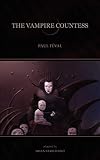
I need diversions from real life....this 1855 French vampire novel should do it. Feval wrote about seventy novels. Mostly outrageous pulpy stuff about diabolical criminal masterminds.
Lists
You May Also Like


Associated Authors
Statistics
- Works
- 81
- Members
- 599
- Popularity
- #41,951
- Rating
- 3.9
- Reviews
- 27
- ISBNs
- 172
- Languages
- 11
- Favorited
- 2
