Octavia Butler: American Author Challenge
Talk 75 Books Challenge for 2017
This group has been archived. Find out more.
Join LibraryThing to post.
1msf59

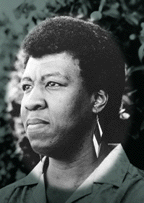
"Octavia Estelle Butler was born in Pasadena, California, on June 22, 1947, later breaking new ground as a woman and an African American in the realm of science fiction. Butler thrived in a genre typically dominated by white males. She lost her father at a young age and was raised by her mother. To support the family, her mother worked as a maid.
As a child, Octavia E. Butler was known for her shyness and her impressive height. She was dyslexic, but she didn't let this challenge deter her from developing a love of books. Butler started creating her own stories early on, and she decided to make writing her life's work around the age of 10.
Her novels include Patternmaster, Kindred, Dawn and Parable of the Sower. She was won various Hugo and Nebula awards.
She died on February 24, 2006 at the age of 58 in Lake Forest Park, Washington, outside her house. The cause of her death is unknown.
**This is part of our American Author Challenge 2017. This author will be read in January. The general discussion thread can be found right here:
http://www.librarything.com/topic/244600
2msf59
"I was attracted to science fiction because it was so wide open. I was able to do anything and there were no walls to hem you in and there was no human condition that you were stopped from examining."
"I wasn't trying to work out my own ancestry. I was trying to get people to feel slavery. I was trying to get across the kind of emotional and psychological stones that slavery threw at people."

"I wasn't trying to work out my own ancestry. I was trying to get people to feel slavery. I was trying to get across the kind of emotional and psychological stones that slavery threw at people."

3msf59
I have not read much science fiction, over the decades, just a few of the classics. I would eventually like to read many more. It is on my bookish Bucket List. I have never read Ms. Butler but I have been aware of her work, over the years and now, that I am reading about her, as an author, I am more and more intrigued.
I will start with Kindred and I may try to read another one by the end of the month.
What will you be reading?
I will start with Kindred and I may try to read another one by the end of the month.
What will you be reading?


8Storeetllr
I may join you this month as I've loved what I've read of Butler's work so far, which includes Fledgling, Wild Seed (so good, Roberta!), and the first two of Lilith's Brood. I've had Parable of the Sower on my Kindle for awhile, and it's about time I got to it!
9Caroline_McElwee
I have Kindred on my Kindle and am looking forward to my first introduction to this writer.
11dallenbaugh
I'm transferring this message from the general thread:
I've already read Kindred which was excellent so I picked up Seed to Harvest for my Kindle. Thanks for the tip. I will be joining you from time to time
I've already read Kindred which was excellent so I picked up Seed to Harvest for my Kindle. Thanks for the tip. I will be joining you from time to time
12The_Hibernator
I'm reading Kindred.
14nittnut
I'm going to start small - trying Unexpected Stories, which is about $3 on Kindle, if anyone else is interested.
16ronincats
I picked up the Seed to Harvest omnibus for my Kindle in October, so I will be doing Wild Seed, although I really should read the Xenogenesis trilogy that I have physically on my shelves. Either way, it will probably be later in the month when I get to it.
17Caroline_McElwee
Started Kindred and am scared.... Vivid writing.
18klobrien2
>14 nittnut: Thank you so much for listing Unexpected Stories! I just finished it, and absolutely loved it. It was a like a delicious little taste of an author whose writings I'd never "tasted" before. I'm sure I'll be reading more Butler this year.
And, Mark, great pick!
Karen O.
And, Mark, great pick!
Karen O.
19msf59
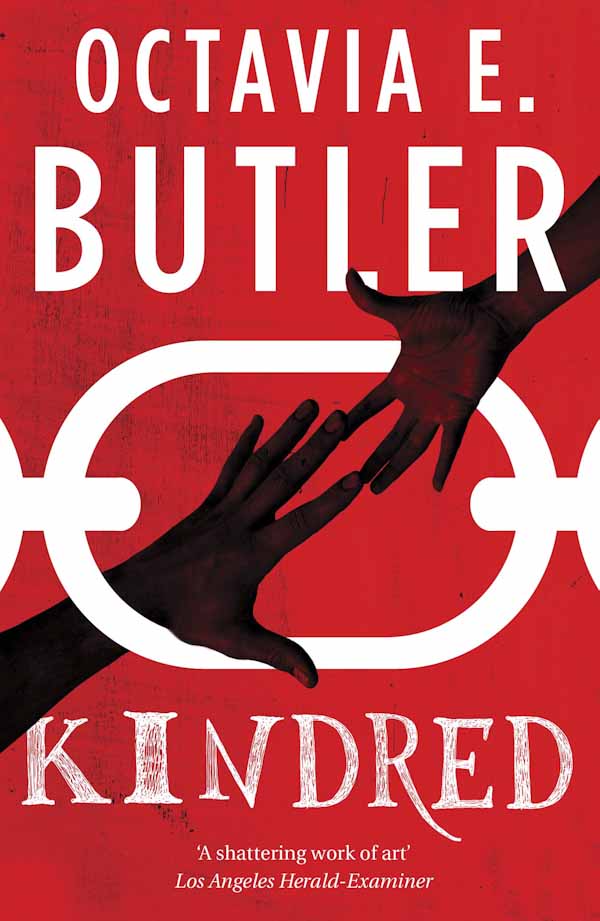
"I lost an arm on my last trip home. My left arm."
^I started Kindred. It begins very well and the narrative flows easily. I think I will be very happy, with my first Butler. I can see this as a companion to The Underground Railroad. They share many important themes...
20msf59
>18 klobrien2: I think we have a hit here, Karen. Grins...
And Unexpected Stories sounds really good too.
And Unexpected Stories sounds really good too.
21Storeetllr
I just got Unexpected Stories from the library and can't wait to dive into it! Thanks for the reccie, Jenn and Karen!
22GerrysBookshelf
I finished Lilith's Brood, the xenogenesis trilogy containing Dawn, Adulthood Rites, and Imago. Following a nuclear war on earth, an alien race visits earth to "trade" and save humanity from its inherited contradictions of survival and destruction.
I rarely read science fiction and had never heard of Octavia E. Butler. Thank you for choosing this author for the AA challenge!
I LOVED this series (especially the first two books). I zipped right through it because I kept wanting to know what happened next and it had some very thought provoking ideas about human characteristics and behavior.
I rarely read science fiction and had never heard of Octavia E. Butler. Thank you for choosing this author for the AA challenge!
I LOVED this series (especially the first two books). I zipped right through it because I kept wanting to know what happened next and it had some very thought provoking ideas about human characteristics and behavior.
23benitastrnad
Octavia E. Butler is a rarity in the Sci/Fi world. She was a woman and a woman of color and when she started writing she was alone for both of those reasons. There are now plenty of women who have made a mark in the world of Sci/Fi but sadly, she still stands out because there are few authors of color in this genre. It was so painfully obvious that being a minority was a severe disadvantage in the publishing world, that several groups have been formed to try to rectify that situation.
"We Need Diverse Books" was a group formed to try to get publishers to find and promote books by and about diverse groups of people. They formed soon after Walter Dean Meyers wrote an op ed piece for the New York Times about the lack of diversity in children's and young adult books. Within two months a great hue and cry went up when a panel discussion on YA SciFi/Fantasy was announced at BookExpo. All the panelists were white men. Not a woman among them, (even though Suzanne Collins and Veronica Roth had huge Sci/Fi Fantasy hits by that time and had out sold most of the men publishing in that genre) let alone a woman of color.
Finding works of Science Fiction and Fantasy by diverse authors is still a challenge. However, this last year Binti by Nnedi Okorafor won a Hugo award, and she has several other works of Sci/Fi that feature diverse heroes and heroines. There is another YA Sci/Fi series the Tankborn Trilogy by Karen Sandler that has been well received and I hope it finds more readers. The Native American YA author Joseph Bruchac also has a Fantasy series that features Native Americans, and the Canadian First Nations Author Drew Hayden Taylor also as a fantasy book for YA's that has been reviewed well. Matt de la Pena is also writing good Sci/Fi featuring diverse characters.
Octavia Butler is not so alone anymore, but make no mistake, it is still a lonely place for a woman who is also a Sci/Fi author.
"We Need Diverse Books" was a group formed to try to get publishers to find and promote books by and about diverse groups of people. They formed soon after Walter Dean Meyers wrote an op ed piece for the New York Times about the lack of diversity in children's and young adult books. Within two months a great hue and cry went up when a panel discussion on YA SciFi/Fantasy was announced at BookExpo. All the panelists were white men. Not a woman among them, (even though Suzanne Collins and Veronica Roth had huge Sci/Fi Fantasy hits by that time and had out sold most of the men publishing in that genre) let alone a woman of color.
Finding works of Science Fiction and Fantasy by diverse authors is still a challenge. However, this last year Binti by Nnedi Okorafor won a Hugo award, and she has several other works of Sci/Fi that feature diverse heroes and heroines. There is another YA Sci/Fi series the Tankborn Trilogy by Karen Sandler that has been well received and I hope it finds more readers. The Native American YA author Joseph Bruchac also has a Fantasy series that features Native Americans, and the Canadian First Nations Author Drew Hayden Taylor also as a fantasy book for YA's that has been reviewed well. Matt de la Pena is also writing good Sci/Fi featuring diverse characters.
Octavia Butler is not so alone anymore, but make no mistake, it is still a lonely place for a woman who is also a Sci/Fi author.
24karspeak
>23 benitastrnad: Also, N. K. Jemisin won the 2016 Hugo Award for Best Novel. I have really enjoyed her books. Here is a comment from her on Octavia Butler: "In almost every interview, I get asked how I feel about Octavia Butler — even when I don’t mention her as a literary influence. (She’s not, ya’ll. She’s a career influence; knowing she made it in this business made me realize I could do the same. But in terms of her subject matter and writing style? No.)"
I blew through Parable of the Sower, which I really enjoyed, and am now reading the sequel Parable of the Talents. In Parable of the Talents, there is a bad-guy politician running for president, and he keeps promising to "make America great again." Really.
I blew through Parable of the Sower, which I really enjoyed, and am now reading the sequel Parable of the Talents. In Parable of the Talents, there is a bad-guy politician running for president, and he keeps promising to "make America great again." Really.
25Storeetllr
>24 karspeak: Oh, my. I'm not sure I'd be up to reading the second Parable book yet. I'm still suffering from PTSD over the election, and it could be a trigger. (Not kidding.) Maybe next year.
26jessibud2
Hi Mark, and happy new year! I hope to finish my current read later this afternoon, then I will begin Kindred. It sits atop the pile on the bedside table, next in line!
27Storeetllr
Read A Necessary Being, the first short novella in Unexpected Stories, last night before bed. It tells the story of a group of otherwise decent people whose need causes them to embark on the enslavement and torture of one whose very difference is crucial to their survival. Thought-provoking, as are all Butler's work.
28EBT1002
I've completed the first two books of Lilith's Brood, the xenogenesis trilogy. I'm loving this series! I took a break between the first two books to read The Association of Small Bombs and now I'm taking a break between the second and third books to read Ian McEwan's Nutshell. What a great January it has been so far!
29amanda4242
I finished Wild Seed today and wholeheartedly recommend it. I've read a few of Butler's books before and continue to be amazed by her characters and how she writes relationships with unequal power dynamics.
31rosalita
I finished Kindred today and gave it  . It was my first Butler, but definitely not my last. It was really compelling and was the first book in months that I had a hard time putting down. I'd almost given up on ever feeling that way again so thanks, Ms. Butler!
 . It was my first Butler, but definitely not my last. It was really compelling and was the first book in months that I had a hard time putting down. I'd almost given up on ever feeling that way again so thanks, Ms. Butler!
32jessibud2
I finished my first book this afternoon and have begun Kindred. Good to hear the praise for it
33msf59
Glad everyone seems to be happy with their Butler readings...
I finished Kindred. A good book. I would give it 4 stars. I still might try to bookhorn in another Butler toward the end of the month.
>31 rosalita: Glad you enjoyed it so much, Julia!
I finished Kindred. A good book. I would give it 4 stars. I still might try to bookhorn in another Butler toward the end of the month.
>31 rosalita: Glad you enjoyed it so much, Julia!
34benitastrnad
#31
I am glad to hear that you liked this book. It is one that I have to steer students towards and sometimes it is a hard sell. However, once they get started it seems to grab them, and then they are off and running.
I am glad to hear that you liked this book. It is one that I have to steer students towards and sometimes it is a hard sell. However, once they get started it seems to grab them, and then they are off and running.
35katiekrug
>31 rosalita: - Great endorsement, Julia! I'm looking forward to it even more now!
36Caroline_McElwee
Kindred (Octavia E Butler) ****1/2
Not sure how I managed to miss Octavia Butler. Read this novel for the AAC, and thank you Mark. What a great find. I will be reading more of this writer's work.
An unusual Sci-Fi novel where a young woman in the 1970s is pulled back into the slave era by an old ancestor, every time his life is in danger. A clever way of telling the slave story by forcing a modern character to experience it - cautious enough to make it clear that that character is in some way 'favoured' so her treatment, seemingly horrific, is not as bad as others would be.
There is an interesting mismatch in time, as in hours, at maximum days pass in the 'modern world' part of the story, where as months and years pass in the slave era.
Someone Above said this would be a good companion book to Colson Whitehead's The Underground Railroad and I would agree.
Not sure how I managed to miss Octavia Butler. Read this novel for the AAC, and thank you Mark. What a great find. I will be reading more of this writer's work.
An unusual Sci-Fi novel where a young woman in the 1970s is pulled back into the slave era by an old ancestor, every time his life is in danger. A clever way of telling the slave story by forcing a modern character to experience it - cautious enough to make it clear that that character is in some way 'favoured' so her treatment, seemingly horrific, is not as bad as others would be.
There is an interesting mismatch in time, as in hours, at maximum days pass in the 'modern world' part of the story, where as months and years pass in the slave era.
Someone Above said this would be a good companion book to Colson Whitehead's The Underground Railroad and I would agree.
37streamsong
>30 Caroline_McElwee: Thanks so much for the link! What a wonderful woman. The Charlie Rose interviews on Youtube are great, too. She talks about her lifelong love of learning.
39amanda4242
I was surprised to find that my local library had a copy of Survivor, the long out of print entry in the Patternist series. I was even more surprised to find that, despite the author's dislike of it, it's a really good book. It sits uncomfartably with the rest of the series as it takes place on another planet and barely mentions the psionics that dominate the other books, but it's still a great story.
"A Necessary Being" from Unexpected Stories is a prequel to Survivor.
"A Necessary Being" from Unexpected Stories is a prequel to Survivor.
40Caroline_McElwee
Here's my review of Kindred (Octavia E Butler) ****1/2
Not sure how I managed to miss Octavia Butler. Read this novel for the AAC, and thank you Mark. What a great find. I will be reading more of this writer's work.
An unusual Sci-Fi novel where a young woman in the 1970s is pulled back into the slave era by an old ancestor, every time his life is in danger. A clever way of telling the slave story by forcing a modern character to experience it - cautious enough to make it clear that that character is in some way 'favoured' so her treatment, seemingly horrific, is not as bad as others would be.
There is an interesting mismatch in time, as in hours, at maximum days pass in the 'modern world' part of the story, where as months and years pass in the slave era.
Someone in another thread said this would be a good companion book to Colson Whitehead's The Underground Railroad and I would agree.
>37 streamsong: I shall definitely take a look at those videos. I have watched a few of his interviews.
Not sure how I managed to miss Octavia Butler. Read this novel for the AAC, and thank you Mark. What a great find. I will be reading more of this writer's work.
An unusual Sci-Fi novel where a young woman in the 1970s is pulled back into the slave era by an old ancestor, every time his life is in danger. A clever way of telling the slave story by forcing a modern character to experience it - cautious enough to make it clear that that character is in some way 'favoured' so her treatment, seemingly horrific, is not as bad as others would be.
There is an interesting mismatch in time, as in hours, at maximum days pass in the 'modern world' part of the story, where as months and years pass in the slave era.
Someone in another thread said this would be a good companion book to Colson Whitehead's The Underground Railroad and I would agree.
>37 streamsong: I shall definitely take a look at those videos. I have watched a few of his interviews.
41EBT1002
Lilith's Brood by Octavia Butler


"The Human Contradiction again. The Contradiction, it was more often called among the Oankali. Intelligence and hierarchical behavior. It was fascinating, seductive, and lethal. It had brought humans to their final war."
Three short novels combine to create one long one. In the final war, the Americans and the Russians nearly destroyed the earth and brought humans to near extinction. A few surviving humans are rescued by the Oankali, an extraterrestrial race of beings who acquire other species through reproductive combination, salvaging the best of the species and blending it with their own life-loving curiosity. Lilith is the human chosen by the Oankali to regain her fertility and begin the process of creating a new race of beings.
Originally published in the 1980s, this trilogy is timely in the current era. Butler exposes human foibles but also our strengths. She messes with gender in ways that were radical at the time and still interesting today. She describes other worlds and fantastic creatures vividly, and she creates just enough suspense to keep the pages turning. The characters, human and Oankali, are compassionately developed and the speculative aspects are intriguing. I'm not a huge reader of science fiction and I loved this trilogy. Definitely recommended.


"The Human Contradiction again. The Contradiction, it was more often called among the Oankali. Intelligence and hierarchical behavior. It was fascinating, seductive, and lethal. It had brought humans to their final war."
Three short novels combine to create one long one. In the final war, the Americans and the Russians nearly destroyed the earth and brought humans to near extinction. A few surviving humans are rescued by the Oankali, an extraterrestrial race of beings who acquire other species through reproductive combination, salvaging the best of the species and blending it with their own life-loving curiosity. Lilith is the human chosen by the Oankali to regain her fertility and begin the process of creating a new race of beings.
Originally published in the 1980s, this trilogy is timely in the current era. Butler exposes human foibles but also our strengths. She messes with gender in ways that were radical at the time and still interesting today. She describes other worlds and fantastic creatures vividly, and she creates just enough suspense to keep the pages turning. The characters, human and Oankali, are compassionately developed and the speculative aspects are intriguing. I'm not a huge reader of science fiction and I loved this trilogy. Definitely recommended.
42PaulCranswick
Blood Child and Other Stories by Octavia E. Butler
 >
>
I loved Kindred and was looking forward to this immensely.
I found it patchy to be honest which I guess is the likely case with a mixed bag of stories and essays. I only got into the opening title story as it came to a close and the longer additional story, "Amnesty", not at all. On the other hand I thought that "Speech Sounds", "The Evening, The Morning and the Night" and the closing story "The Book of Martha" made the entire piece worthwhile.
A lot of ideas and definitely much missed by the Science Fiction reading community as she somehow humanises the science and takes it on unexpected journeys.
 >
>I loved Kindred and was looking forward to this immensely.
I found it patchy to be honest which I guess is the likely case with a mixed bag of stories and essays. I only got into the opening title story as it came to a close and the longer additional story, "Amnesty", not at all. On the other hand I thought that "Speech Sounds", "The Evening, The Morning and the Night" and the closing story "The Book of Martha" made the entire piece worthwhile.
A lot of ideas and definitely much missed by the Science Fiction reading community as she somehow humanises the science and takes it on unexpected journeys.
43nittnut
I really enjoyed Unexpected Stories. The stories are from Ms. Butler's early writing days, but as I have not read anything else by her, I cannot compare.
The two stories, A Necessary Being and Childfinder were striking in that the first implies hope, and the second, while not exactly hopeless, is much more despairing. Octavia Butler's writing is descriptive and compelling, and once I started, I had a hard time stepping back. I will definitely be reading more of her work. I am including a quote by the author that I read in the Afterword of Childfinder, which I thought illustrated her point of view beautifully.
When I was little my mother worked and I was often left with one of my aunts or my grandmother. Sometimes when this happened, I would disagree with whichever of my cousins I found myself with. If the disagreement was noisy enough, whoever was in charge of us would come to the door and warn, "Now you all get along out there! No fighting!" We would stop obediently and wait until she went away before we resumed the fight. Aunt or grandmother, she always seemed surprised when one of us came in bloody.
After such an experience, I am surprised to find myself writing the same kind of warning in "Childfinder." "Get along out there! No fighting!" But in at least one way I'm different from my aunts and my grandmother. I know no one's listening.
The two stories, A Necessary Being and Childfinder were striking in that the first implies hope, and the second, while not exactly hopeless, is much more despairing. Octavia Butler's writing is descriptive and compelling, and once I started, I had a hard time stepping back. I will definitely be reading more of her work. I am including a quote by the author that I read in the Afterword of Childfinder, which I thought illustrated her point of view beautifully.
When I was little my mother worked and I was often left with one of my aunts or my grandmother. Sometimes when this happened, I would disagree with whichever of my cousins I found myself with. If the disagreement was noisy enough, whoever was in charge of us would come to the door and warn, "Now you all get along out there! No fighting!" We would stop obediently and wait until she went away before we resumed the fight. Aunt or grandmother, she always seemed surprised when one of us came in bloody.
After such an experience, I am surprised to find myself writing the same kind of warning in "Childfinder." "Get along out there! No fighting!" But in at least one way I'm different from my aunts and my grandmother. I know no one's listening.
44RBeffa
I started Kindred last night before bed. A little didactic as it felt like "here's a blow by blow lesson on how slavery was," but the story itself is intriguing. Seems aimed at a young audience but I'm only 45 pages in.
45RBeffa
I think we are far enough along in the month to throw a possible spoil in here. Here are my thoughts.
Kindred by Octavia Butler, finished January 19, 2017, 3 - 3 1/2 stars
 .
.
Kindred is a 1979 novel that is labelled science fiction but I wouldn't call it that. There's nothing science in the fiction here - it is more sort of a mystical woo-woo thing. Fantasy time travel historical fiction, like "Outlander" perhaps.
On her 26th birthday in 1976, Dana, a black woman in Los Angeles has the first of several trips back in time to as early as 1810 Maryland. She rather quickly determines (On her second trip) that it is a connection to a then young boy Rufus who was her ancestor. She soon briefly meets Alice, a young free (non-slave) black girl who was destined to become one of her several times great grandmothers. Dana knows all this because of a family bible that had been kept with the names of the people. The story strikes me more than anything as a history lesson for middle school children on "This is how bad it was to be black, a freeman or slave, in the early 1800's." This is Maryland, not exactly the deep south, but a slave state. In fact, the lesson really was how nasty the white masters, the patrols, were to anyone, since her young ancestor Rufus is a white boy, the son of a slaveholder, and he bears the scars on his body of horsewhippings by his father for misdeeds. We are told several times that the father is not such a bad sort compared to others.
There is more to the story; I enjoyed the telling and it was interesting to follow what happens between Dana, her husband Kevin, the folks on the plantation and Rufus as Rufus grows older. The interactions between the two were not exactly believable to me towards the beginning of the novel, esp when I tried to puzzle why Dana had been pulled back in time - perhaps it was to make Rufus a better, more informed person, although the book plays it that Dana is called back when Rufus is in danger one way or another. But, this eventually went elsewhere. I wasn't too happy with how this ended.
Butler does though show the reader something to think about. Perhaps most notable was how Dana and her husband Kevin started shaping themselves to the environment they were stuck in. They did this for survival but there was more to it. Food for thought in here. This book gets a lot of love here on LT, but I'd rate this maybe at the higher end of an OK read, more of historical interest to the genre than anything else.
Kindred by Octavia Butler, finished January 19, 2017, 3 - 3 1/2 stars
 .
.Kindred is a 1979 novel that is labelled science fiction but I wouldn't call it that. There's nothing science in the fiction here - it is more sort of a mystical woo-woo thing. Fantasy time travel historical fiction, like "Outlander" perhaps.
On her 26th birthday in 1976, Dana, a black woman in Los Angeles has the first of several trips back in time to as early as 1810 Maryland. She rather quickly determines (On her second trip) that it is a connection to a then young boy Rufus who was her ancestor. She soon briefly meets Alice, a young free (non-slave) black girl who was destined to become one of her several times great grandmothers. Dana knows all this because of a family bible that had been kept with the names of the people. The story strikes me more than anything as a history lesson for middle school children on "This is how bad it was to be black, a freeman or slave, in the early 1800's." This is Maryland, not exactly the deep south, but a slave state. In fact, the lesson really was how nasty the white masters, the patrols, were to anyone, since her young ancestor Rufus is a white boy, the son of a slaveholder, and he bears the scars on his body of horsewhippings by his father for misdeeds. We are told several times that the father is not such a bad sort compared to others.
There is more to the story; I enjoyed the telling and it was interesting to follow what happens between Dana, her husband Kevin, the folks on the plantation and Rufus as Rufus grows older. The interactions between the two were not exactly believable to me towards the beginning of the novel, esp when I tried to puzzle why Dana had been pulled back in time - perhaps it was to make Rufus a better, more informed person, although the book plays it that Dana is called back when Rufus is in danger one way or another. But, this eventually went elsewhere. I wasn't too happy with how this ended.
Butler does though show the reader something to think about. Perhaps most notable was how Dana and her husband Kevin started shaping themselves to the environment they were stuck in. They did this for survival but there was more to it. Food for thought in here. This book gets a lot of love here on LT, but I'd rate this maybe at the higher end of an OK read, more of historical interest to the genre than anything else.
46Storeetllr
I started Kindred a couple of years ago but couldn't get past the first couple of chapters. It just didn't grab me, though I have greatly enjoyed the other Butler work I've read. I put it down to the fact that I just don't care for time-travel novels - I wasn't even able to finish King's wildly popular 11/22/63.
47RBeffa
>46 Storeetllr: I loved 11/22/63 so for me it isn't the time travel thing per se that bothers me about Kindred. I "almost" hate the book in a love/hate sort of way. It was needlessly brutal and all I can figure is that was the point of it.
eta: At the risk of sounding a little stupid, I kept thinking the author wrote this book in response to Alex Haley's Roots and the miniseries which were huge events in the late '70s.
eta: At the risk of sounding a little stupid, I kept thinking the author wrote this book in response to Alex Haley's Roots and the miniseries which were huge events in the late '70s.
48streamsong
I finished The Parable of the Sower and left my thoughts on this dystopian novel on the review page. I really enjoyed it. Unfortunately this future, imagined as 2024, sounds only too possible to me as it is a result of climate problems caused by global pollution and social problems spinning out of control.
Everyone will be happy to know that however grim the future, the box stores still survived.
I'll definitely be reading the sequel Parable of the Talents and probably more of Butler's work.
Everyone will be happy to know that however grim the future, the box stores still survived.
I'll definitely be reading the sequel Parable of the Talents and probably more of Butler's work.
49ronincats
I ended up moving from Wild Seed to Dawn. This is the first book of the Xenogenesis Trilogy, which I have owned for years and never read until the Octavia Butler challenge this month provoked me into pulling it off my shelf. It is perhaps the most science-fictional of her books and explores themes of the nature of humanity, sexuality and aggression. Humanity has destroyed itself and an alien race has rescued the few who have survived. What price survival? As always with Butler, thought-provoking and disturbing.
50laytonwoman3rd
I read Kindred, and I must stand with Ron on the slightly contrarian side of this one. I enjoyed it, but didn't love it, and had some issues with credibility--and it wasn't the time travel that bothered me most. Here's the review I posted:
Dana Franklin, a black woman, inexplicably finds herself whisked away from her home and her white husband in 1976, back to the early 19th century, and a Maryland plantation where she arrives just in time to save a young boy from drowning. Over a relatively short period of modern time, she is hauled through that same black hole to save him from certain death (usually because of his own irresponsible actions) again and again. He grows older, moving through time normally, and somehow summoning her to his aid whenever necessary. For Dana, her incursions into the past may span months of 19th century time, but upon her return to her present, she finds she has been gone only minutes, or hours, or days. She cannot return at will, and finds she must be in mortal danger herself to return home. The only explanation offered for what is happening is that Dana must keep this man alive long enough for him to father one of her ancestors. Never a fan of time travel stories, I had reservations about that element of Kindred, but I found nothing in the story itself hindered by the usual complications attendant on having characters moving around in time. The author solved the problem (for me, anyway) by making it a supernatural occurrence rather than a technical scientific process, and by setting her characters in the present in such a way that no one ever missed them while they were "away". SO the only problem left is managing those 19th century people who happen to observe her appearing from nowhere, and disappearing before their very eyes. Even granted that some of those people had beliefs that would have inclined them to accept the "super" natural as part of the natural order of things, and that within the story others had reason to be so grateful for Dana's interventions that they shrugged off what they could not understand, this remained a problem for my suspension of disbelief. Furthermore, the idea that a 20th century black woman could integrate herself in any way into the life of an ante-bellum Southern plantation without ending up dead pretty damned soon is awfully hard to swallow. The mistakes she would be prone to, the diseases and infections she would have no resistance to...drinking the water would probably have killed her. There was some interesting exploration of the way a person comes to accept being a slave (a corollary of the Stockholm syndrome, I suppose); some of the personal interaction among the characters was quite complex and probably accounts for the fact that I kept turning the pages with interest. All in all, though, I think this book is more flawed than fabulous, and I can't give it more than 3 stars.
Dana Franklin, a black woman, inexplicably finds herself whisked away from her home and her white husband in 1976, back to the early 19th century, and a Maryland plantation where she arrives just in time to save a young boy from drowning. Over a relatively short period of modern time, she is hauled through that same black hole to save him from certain death (usually because of his own irresponsible actions) again and again. He grows older, moving through time normally, and somehow summoning her to his aid whenever necessary. For Dana, her incursions into the past may span months of 19th century time, but upon her return to her present, she finds she has been gone only minutes, or hours, or days. She cannot return at will, and finds she must be in mortal danger herself to return home. The only explanation offered for what is happening is that Dana must keep this man alive long enough for him to father one of her ancestors. Never a fan of time travel stories, I had reservations about that element of Kindred, but I found nothing in the story itself hindered by the usual complications attendant on having characters moving around in time. The author solved the problem (for me, anyway) by making it a supernatural occurrence rather than a technical scientific process, and by setting her characters in the present in such a way that no one ever missed them while they were "away". SO the only problem left is managing those 19th century people who happen to observe her appearing from nowhere, and disappearing before their very eyes. Even granted that some of those people had beliefs that would have inclined them to accept the "super" natural as part of the natural order of things, and that within the story others had reason to be so grateful for Dana's interventions that they shrugged off what they could not understand, this remained a problem for my suspension of disbelief. Furthermore, the idea that a 20th century black woman could integrate herself in any way into the life of an ante-bellum Southern plantation without ending up dead pretty damned soon is awfully hard to swallow. The mistakes she would be prone to, the diseases and infections she would have no resistance to...drinking the water would probably have killed her. There was some interesting exploration of the way a person comes to accept being a slave (a corollary of the Stockholm syndrome, I suppose); some of the personal interaction among the characters was quite complex and probably accounts for the fact that I kept turning the pages with interest. All in all, though, I think this book is more flawed than fabulous, and I can't give it more than 3 stars.
51msf59
>45 RBeffa: >50 laytonwoman3rd: I liked Kindred more than both of you did, but I can completely understand the shortcomings you mentioned. I think it does fall short of greatness. Several readers, have mentioned that her strengths lie in her SF writing. I will not have a chance to try any of it, this month but I am planning on visiting one of her SF books, in the coming months.
Is everyone having better luck with her SF?
Is everyone having better luck with her SF?
52luvamystery65
I finished Wild Seed and it was very good, but boy did it make me incredibly uncomfortable. One of her main characters is so amoral it truly sickened me. It's a testament to her writing, and the other main character being so compassionate that I forged ahead.
53Familyhistorian
The story that I read by Octavia Butler was part of a collection called Seed to Harvest which is made up of four books by the author. It was the only book by Ms. Butler that I could find in the library as all others are in use. I only read one of the stories Wild Seed and I am going to call it for the challenge with just that one story. Sci-fi is not one of my preferred genres and, besides, there is a hold on the book so I can't renew it. Good to know that Ms. Butler is still popular.
Wild Seed was an interesting tale of superior beings who can be benign or destructive forces in human lives. It is also the story of a male and female superior being who learn that they need each other as their human companions have relatively short lifespans. I am not sure why the story reminded me of the tales of Gloosecap. Maybe it is the idea of gods creating havoc by their actions.
The writing was good but the genre didn't suit. It was unfortunate that Kindred was not available because it sounds like that would have been more to my liking.
Wild Seed was an interesting tale of superior beings who can be benign or destructive forces in human lives. It is also the story of a male and female superior being who learn that they need each other as their human companions have relatively short lifespans. I am not sure why the story reminded me of the tales of Gloosecap. Maybe it is the idea of gods creating havoc by their actions.
The writing was good but the genre didn't suit. It was unfortunate that Kindred was not available because it sounds like that would have been more to my liking.
54dallenbaugh
I tried to finish Wild Seed from the collection Seed to Harvest, but it just didn't grab my interest. A shame since I really liked Kindred. I made it to over 100 pages (way past the Nancy Pearl rule), but I really didn't care to know any more about these people. Maybe I will try another SF from Butler sometime in the future.
55karspeak
I really enjoyed Parable of the Sower, which I read earlier this month. I just finished the sequel, Parable of the Talents. I skimmed parts of it, because it seemed to drag on at times. Also, there was a LOT of suffering in this book. The main character and various other characters are enslaved for a period of time and suffer greatly. Ugh. I haven't read Kindred, but it seems like it perhaps echoed in this book.
56jessibud2
I admit that I have not yet got to my Butler book as I was immersed in others this month. However, since I do not have any O'Nan books to read for February, I will read my copy of Kindred in February.
57Berly

Kindred by Octavia Butler 4.0
Back cover summary: "Dana, a modern black woman, is celebrating her twenty-sixth birthday with her new husband when she is snatched abruptly from her home in California and transported to the antebellum South. Rufus, the white son of a plantation owner, is drowning, and Dana has been summoned across the years to save him. After this first summons, Dana is drawn back, again and again, to the plantation to protect Rufus and ensure that he will grow to manhood and father the daughter who will become Dana's ancestor. Yet each time Dana's sojourns become longer and more dangerous, until it is uncertain whether or not her life will end, long before it has even begun."
For those of you who are science geeks, forget it. This is not at all about the "how" of time travel. It just happens in this book. Accept it and move on!
Rather, it is a glimpse into the interactions between master and slave and the ties between slaves. The view is slanted because it is filtered through the eyes of a 21st century person, but still very effective.
But I have two quibbles:
#1 I didn't completely buy the love between Dana and her husband. It just fell flat for me.
#2 When Dana ends her journey back in the present, but loses her arm because her arm was trapped in the wall, I thought that was an unnecessary price to pay and that she shouldn't have to carry any more scars than the ones she already had from the whip on her back. But the author wanted a jarring end. To make it perfectly clear that Dana was a changed woman and that life could never be the same for her. (This condensed from an interview I read.) Well, duh! Her soul is changed forever!! And to have it happen when there had never been a hint of this danger in any of the preceding time shifts? I didn't like it. Okay, rant over.
I thought the book was quite good and very readable. I mean, I gave it a 4.0!
58RBeffa
There's a recent NPR piece on Octavia ... http://www.npr.org/sections/codeswitch/2017/07/10/535879364/octavia-butler-writi...
59amanda4242
 Clay's Ark ★★★
Not bad, but I think it's the weakest of the Patternist series. The clayark mutants from Patternmaster get their origin story here: the lone survivor of an interstellar exploration returns to a dystopian Earth carrying an extraterrestrial pathogen that gives him enhanced physical abilities and an overwhelming need to spread the contagion through bites/scratches and sexual contact. Sounds great, but a good chunk of the book is the infected explaining to the people they're about to infect why they're not evil rapists when they really kind of are.

